How to Seal Tent Seams Using Glue: A Field-Ready Guide
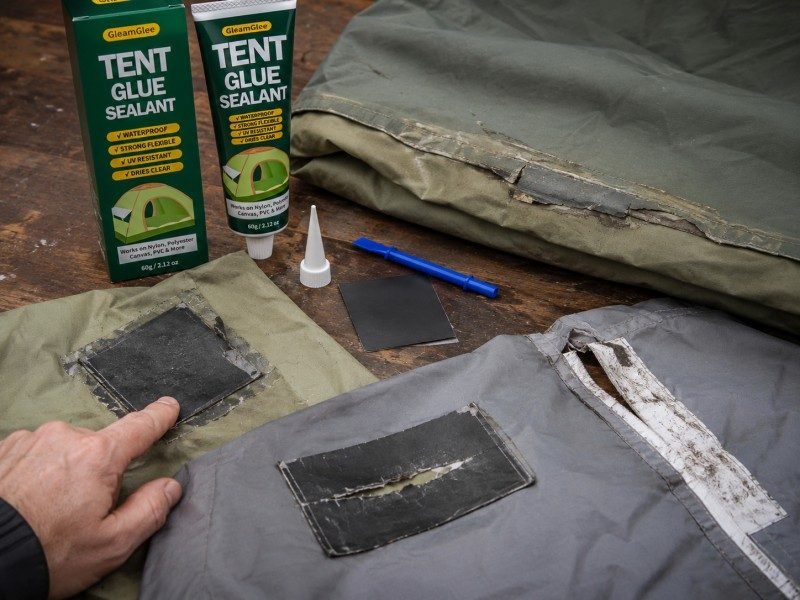
To seal tent seams using glue, identify the leaking stitches, confirm whether the fabric is silicone-, polyurethane-, PVC-, or acrylic-coated, clean and dry the area, then brush on a thin, continuous layer of compatible flexible waterproof adhesive. Keep the seam open while the glue cures fully, inspect for gaps or tackiness, and perform a controlled water test before packing the shelter.
How Do You Apply Floral Adhesive: A Step-by-Step Guide
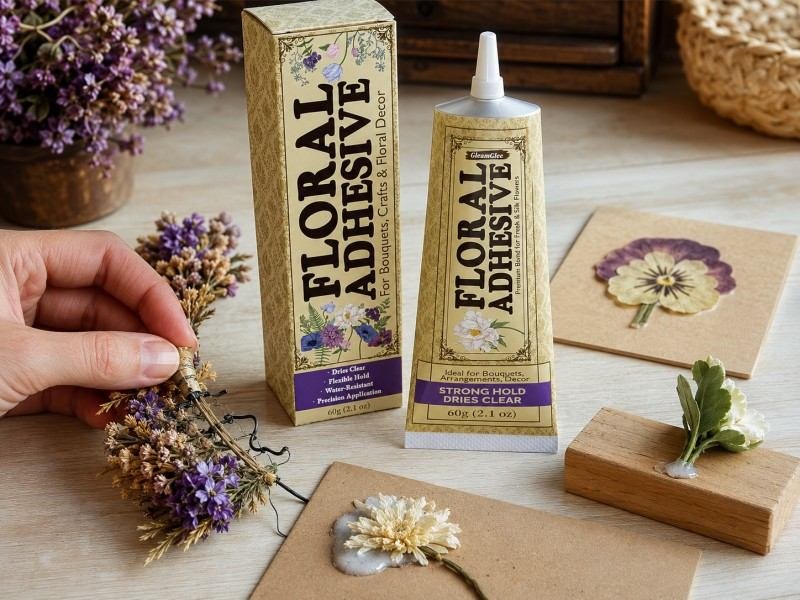
Floral adhesive is most dependable when it is treated as part of a complete design process rather than a shortcut. Fresh flowers must remain hydrated, yet the exact bonding point needs to be clean and dry. The adhesive should match the flower and base material, while its quantity, tack stage, placement angle, and drying conditions must be controlled.
Best Non-Toxic Floral Glue for Kids: Safe Crafting Guide
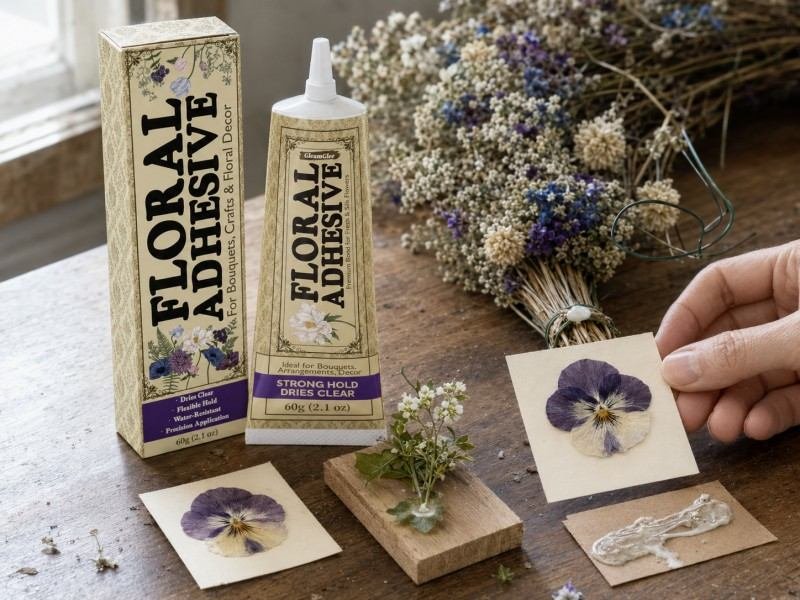
The best non-toxic floral glue for most children’s crafts is a clearly labeled, water-based adhesive designed for art use, packaged in a controlled applicator, and matched to the material being bonded. Washable white glue is a dependable choice for paper and card, glue sticks reduce mess on flat projects, thicker tacky glue supports felt and foam, while clear craft glue is often better for pressed flowers and visible joints.
Eco-Friendly Floral Glue for Home Projects: A Definitive Guide
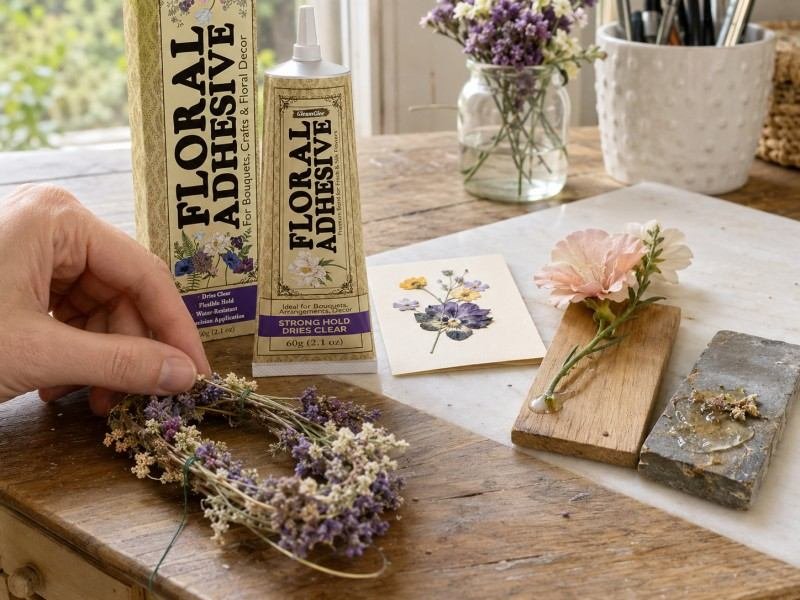
A floral project often begins with an appealingly simple idea: preserve flowers from a special occasion, refresh a seasonal wreath, decorate a glass jar, or turn pressed leaves into framed botanical art. The difficulty usually appears after the glue is opened. A formula may soak through thin petals, dry with a glossy halo, slide down a vertical frame, release from smooth plastic, or fill a room with an unpleasant smell. Reliable results depend less on choosing the strongest bottle and more on matching the adhesive to the flower, supporting material, display environment, and expected project life.
How to Secure Flowers on Hair Accessories: A Practical Guide
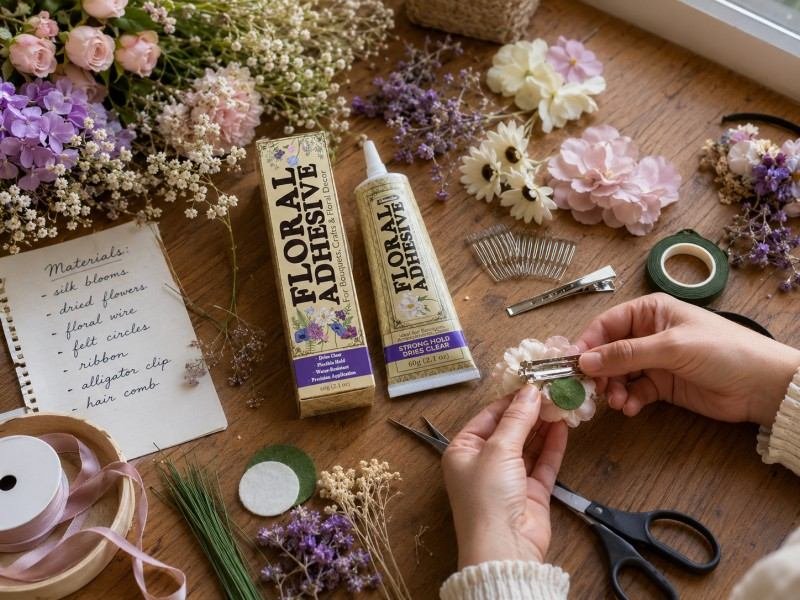
To secure flowers on hair accessories, match the attachment method to the flower material, accessory base, weight, and wearing conditions. Clean and prepare the contact area, keep each flower close to the base, use a compatible floral or craft adhesive, add wire, ribbon, stitching, or felt reinforcement where needed, allow the bond to cure fully, and test both the construction and the accessory’s grip in the intended hairstyle.
Floral Glue for Miniature Flower Decorations: A Precise Guide
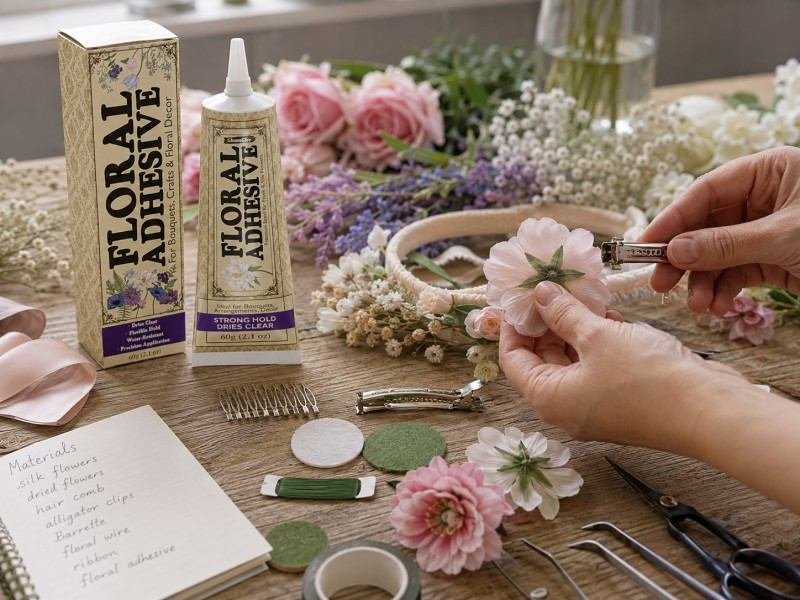
Floral glue for miniature flower decorations should dispense in controlled micro-dots, hold lightweight parts without prolonged clamping, dry with minimal visible residue, and remain compatible with paper, fabric, clay, resin, plastic, wire, wood, or foam. The cleanest results come from testing materials first, hiding adhesive beneath overlaps, reinforcing load-bearing joints, and allowing the full recommended cure time before handling or packaging.
Adhesive Removal for Beginners: A Hands-On Guide

To remove adhesive safely, identify the residue and surface, test a hidden area, peel away loose material, apply a compatible remover, wait for the adhesive to soften, lift it with a plastic scraper, and wipe the area clean. Begin with the gentlest suitable method, increase strength only when necessary, and stop immediately if the surface becomes cloudy, soft, discolored, or damaged.
Removing Glue Residue from Countertops: A Practical Guide

To remove glue residue from a countertop safely, identify the adhesive and surface first, begin with warm soapy water, and move gradually to oil, rubbing alcohol, controlled temperature, or a compatible adhesive remover. Soften the residue before lifting it with a smooth plastic scraper, use short contact periods, test a hidden area, and stop immediately if the finish changes color, gloss, texture, or hardness.
Tips for Removing Glue From Painted Surfaces: A Definitive Guide

To remove glue from a painted surface safely, identify the adhesive, inspect the paint, test a hidden area, remove loose material, and begin with the mildest effective treatment. Use short heat or cleaner applications, soft cloths, and low-angle plastic tools. Move to a suitable adhesive remover only when gentle rolling, mild moisture, or controlled warmth cannot release the residue.
How to Remove Sticky Labels Using Adhesive Remover: A Surface-Safe Guide

To remove a sticky label with adhesive remover, peel away loose paper, test the remover on a hidden part of the surface, apply a controlled amount to the remaining label or glue, and allow the adhesive to soften. Lift the residue with a smooth plastic scraper or clean cloth, repeat when necessary, and finish with a surface-appropriate cleaner.