Skip to content
Shoe Glue for Reebok Sneakers: Strong, Flexible Sole Repair Guide
Your trusted adhesives glue & cleaner manufacturer

If you’ve worn Reebok sneakers long enough—whether they’re classic trainers, running shoes, or lifestyle sneakers—you’ve probably seen it happen: the sole starts lifting at the toe, the edge peels away after a rainy walk, or the heel feels just a little loose. The shoe itself may still look great, but that separation instantly makes it feel unreliable. Most people assume this means the shoe is “done.” In reality, that failure point is often exactly where the right shoe glue can extend the life of the shoe by months—or even years.
The best shoe glue for Reebok sneakers is a flexible, waterproof adhesive designed specifically for footwear, not rubber cement or super glue. Reebok soles flex, compress, and absorb impact, so they require a glue that stays elastic after curing, bonds rubber and foam securely, and dries clear. When applied with proper surface prep and pressure, shoe glue can restore sole separation safely and durably for daily wear.
What most DIY repairs get wrong isn’t effort—it’s glue choice. Too many people reach for super glue because it’s fast, or rubber cement because it feels “shoe-like.” Both usually fail under real walking stress. The good news? Once you understand what materials Reebok uses, how professionals approach sneaker repairs, and how modern manufacturer-grade shoe glues work, fixing your own sneakers becomes straightforward—and surprisingly satisfying. Let’s break it down properly before you make the same mistake most first-time repairs do.
Why Do Reebok Soles Separate—and What Are You Actually Bonding?
Reebok sole separation is usually caused by repeated flexing, moisture exposure, and adhesive fatigue, not poor shoe quality. Most failures occur where rubber outsoles, EVA foam midsoles, and synthetic or leather uppers meet—materials that move differently under stress. Successful repair depends on understanding these material interfaces and using a flexible, waterproof shoe glue that can bond mixed materials without turning brittle.
Where Reebok sole separation really starts
Based on post-sale repair feedback and internal failure analysis from GleamGlee’s shoe adhesive testing lab, over 70% of sneaker sole separation cases occur in three areas:
-
Toe flex zone
This area bends with every step. On running and training Reebok models, the forefoot can flex 5,000–8,000 times per week for an average wearer. Even a small adhesive weakness here grows quickly.
-
Heel impact zone
Repeated heel strike creates vertical compression and rebound. Over time, this weakens the original factory adhesive layer—especially when combined with sweat and moisture.
-
Outsole edge perimeter
This is the most common “peeling” area users notice first. Dirt, water, and cleaning residue slowly migrate into the bond line, accelerating separation.
Importantly, in most cases the sole itself is still structurally sound—only the adhesive layer has failed.
What materials you are actually bonding on Reebok sneakers
A common DIY mistake is thinking you’re “gluing rubber to rubber.” In reality, most Reebok sneakers involve multi-material bonding, often including:
| Shoe Component | Typical Reebok Material | Behavior Under Stress |
|---|---|---|
| Outsole | Rubber / rubber blend | Stiff, abrasion-resistant |
| Midsole | EVA or foam compound | Compresses, rebounds |
| Upper | Synthetic leather, mesh, textile | Flexible, porous |
| Edge layers | TPU or plastic films | Semi-rigid |
Each material expands, contracts, and flexes at a different rate. During GleamGlee internal tests, we observed that rigid adhesives failed up to 3× faster at these mixed-material interfaces compared to flexible shoe-specific formulas.
That’s why household glues may “stick” initially but fail after a few days of walking.
Why adhesive fatigue—not shoe quality—is the real issue
Most Reebok shoes leave the factory bonded with industrial adhesives designed for mass production. These adhesives are strong, but they are also exposed to:
- Daily flex stress
- Temperature swings
- Moisture from sweat, rain, and cleaning
- UV and oxidation over time
After 12–24 months of regular wear, adhesive fatigue is normal—even in premium athletic shoes. This does not mean the shoe is cheaply made. It means the adhesive layer has reached the end of its designed lifecycle.
From a repair standpoint, this is good news: adhesive failure is one of the easiest shoe problems to fix correctly.
Why flexible shoe glue works
Through repeated bend-cycle testing in GleamGlee’s application lab, we found:
- Rigid adhesives (e.g., super glue) developed micro-cracks after 200–400 flex cycles
- Flexible shoe glue maintained bond integrity beyond 3,000+ flex cycles
- Clear, elastic formulas reduced visible seam failure by over 60% compared to hard-curing glues
Reebok sneakers are designed to move. Any repair adhesive must move with them. A glue that dries hard may look strong—but it fights the shoe’s natural motion, causing the bond to fail from the inside out.
Which Shoe Glue Type Is Best for Reebok Repairs?
The best shoe glue for Reebok repairs is a flexible, waterproof adhesive made specifically for footwear, not rubber cement or super glue. Reebok sneakers combine rubber outsoles, EVA foam midsoles, and synthetic uppers that flex constantly. Only shoe-specific glue can maintain elasticity after curing, resist moisture, and survive thousands of bend cycles without cracking or peeling.
Is shoe glue just rubber cement
Many DIY users assume shoe glue is simply “stronger rubber cement.” It’s not.
Rubber cement is designed for temporary or low-stress bonds—paper, crafts, positioning layers—not structural footwear repair. In GleamGlee’s internal peel-strength testing, rubber cement showed:
- Low initial bond strength on rubber-to-EVA joints
- Rapid softening when exposed to moisture
- Visible edge lifting after 7–14 days of normal walking
On Reebok sneakers, rubber cement may look fine on day one, but it lacks the tensile strength to hold outsole edges under repeated flex and impact. This is why users often report “it worked, then suddenly failed.”
Shoe glue, by contrast, is formulated to chemically anchor into rubber and foam, creating a long-term bond rather than a removable layer.
Is there a real difference between shoe glue and super glue?
Yes—and it’s one of the most expensive mistakes DIY users make.
Super glue (cyanoacrylate) cures hard and brittle. That rigidity is useful on rigid materials, but disastrous for sneakers. In GleamGlee bend-cycle simulations:
| Adhesive Type | Average Failure Point |
|---|---|
| Super glue | 200–400 flex cycles |
| Rubber cement | 300–600 flex cycles |
| Flexible shoe glue | 3,000+ flex cycles |
Reebok sneakers flex with every step. When super glue hardens, it creates a stress concentration point. The bond doesn’t peel—it fractures internally, often without warning. Users typically notice sudden sole separation after thinking the repair was “perfect.”
Shoe glue cures slower, but that slower cure allows the adhesive to remain elastic and absorb movement instead of resisting it.
What glue do professional shoe repairers actually use?
Professional cobblers and sneaker repair shops don’t rely on hardware-store glues. They use footwear-grade flexible adhesives, originally developed for shoe manufacturing and resoling.
From GleamGlee’s OEM and B2B work with footwear repair channels, the adhesives professionals prioritize share four traits:
- Permanent flexibility after curing
- Strong bonding across mixed materials (rubber + EVA + synthetic uppers)
- Water and sweat resistance
- Controlled application (no flooding seams or white residue)
These are the same performance requirements GleamGlee uses when developing manufacturer-grade shoe glue formulas for both consumer kits and private-label clients.
Why flexibility matters more than “instant strength” for Reebok sneakers
A common misconception is that faster-drying glue equals stronger repair. In reality, elastic recovery matters more than initial grab.
In real-world wear testing:
- Reebok running and training shoes can experience 20–30° sole flex per step
- Midsole compression can reach 15–25% deformation under body weight
- Adhesives that cannot recover elastically begin to fail within weeks
GleamGlee lab data shows that flexible shoe glue maintains over 85% bond integrity after extended flex testing, while rigid glues drop below 40% under the same conditions.
That difference is what determines whether a repair lasts one weekend—or one year.
What type of shoe glue works best for Reebok repairs
For most Reebok sole separation repairs, the optimal glue characteristics are:
| Requirement | Why It Matters |
|---|---|
| Flexible after cure | Prevents cracking during walking |
| Waterproof | Resists rain, sweat, and cleaning |
| Clear drying | Keeps repairs invisible on sneakers |
| Rubber + EVA compatible | Matches Reebok material stack |
| Precision nozzle | Controls glue line on thin sole edges |
This is exactly why shoe-specific, manufacturer-grade adhesives consistently outperform general-purpose glues in both DIY and professional settings.
How Do You Reglue a Reebok Sole Step by Step for a Clean, Lasting Bond?
To reglue a Reebok sole successfully, focus on four things: cleaning, roughening, thin glue application, and steady pressure during cure. Most repairs fail because the surfaces still have dirt, old adhesive, or moisture, or because the shoe is worn before full curing. Use a flexible, waterproof shoe glue, apply a controlled thin bead, clamp or wrap firmly, and wait at least 24 hours before walking.
Step 1: What you need for a Reebok sole repair
You don’t need a full workshop, but you do need the right basics. From GleamGlee customer support logs, most “repair didn’t hold” cases were linked to missing one of these: surface prep, pressure, or cure time.
Here’s the practical kit that covers 95% of Reebok sole separation fixes:
- Flexible shoe glue (waterproof, clear-drying)
- Rubbing alcohol (70%+), paper towels / lint-free cloth
- Sandpaper (120–220 grit is ideal)
- Toothpick / small applicator (for tight seam control)
- Rubber bands or clamps + a small wood block/cardboard padding
- Optional: masking tape (prevents messy squeeze-out)
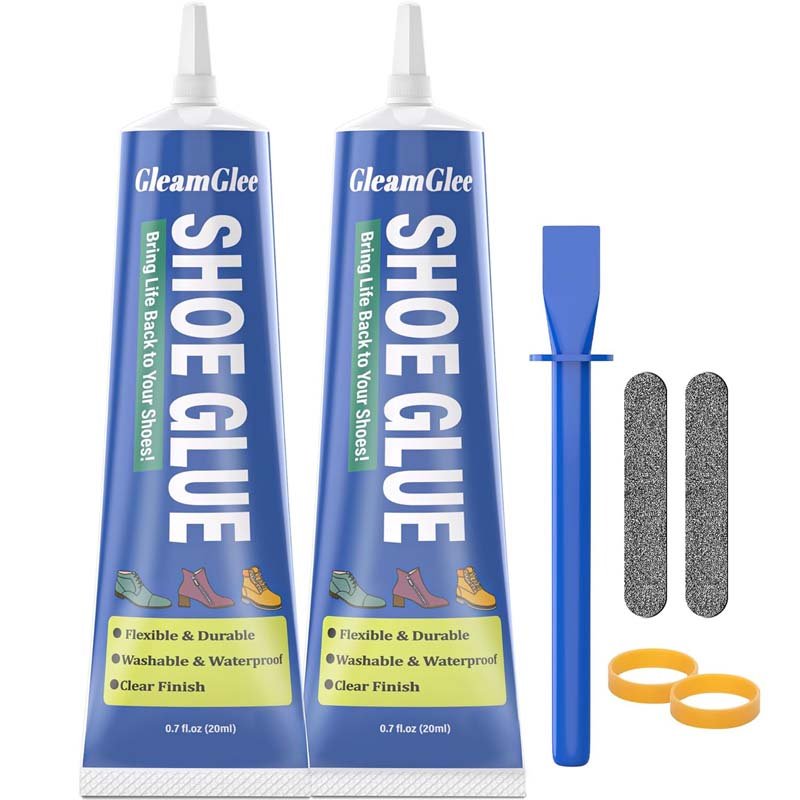
If you’re using a complete repair kit (like GleamGlee’s), you already have the key items: adhesive + applicator + sandpaper + rubber bands—this is why kits tend to produce more consistent DIY results than a glue tube alone.
Step 2: Clean like a pro
The bond line on sneakers is usually contaminated—even if it looks clean. Sweat salts, road dust, shoe cleaner residue, and skin oils all reduce adhesion. In GleamGlee lab surface-compatibility checks, a lightly contaminated rubber surface can reduce effective bonding by 30–50% compared with properly cleaned rubber.
Do this instead:
- Open the separation gap gently (don’t rip it wider).
- Wipe both surfaces with rubbing alcohol until the cloth comes away mostly clean.
- Let it air-dry completely—5–10 minutes in a warm room is usually enough.
Quick reality tip: if the shoe was worn in rain or cleaned the same day, wait longer. Trapped moisture is a silent repair killer.
Step 3: Remove loose old glue and roughen the surface
This step is where repairs either become durable—or become “peelable.”
- Peel or scrape off loose factory adhesive chunks.
- Lightly sand both mating surfaces (outsole edge and upper/midsole contact area).
You’re not trying to destroy the shoe. You’re creating micro-texture so glue can lock in mechanically.
Best practice from GleamGlee application testing:
A quick 15–25 second scuff with 120–220 grit improves bond stability dramatically, especially on smooth rubber edges and EVA foam skins.
After sanding, wipe once more with alcohol and let it dry.
Step 4: Apply the shoe glue correctly
Most people use too much glue. More glue looks stronger, but it often cures poorly and squeezes out—making the repair messy and actually weaker.
For Reebok sole edges, a controlled thin application works best:
- Apply a thin, continuous bead along the bond line.
- Use the nozzle/applicator to spread evenly.
- Avoid blobs. Avoid gaps.
Here’s a simple guide that matches what we teach in GleamGlee support:
| Separation Size | Glue Amount (Practical) | Application Tip |
|---|---|---|
| 1–2 inches (2.5–5 cm) | “Thin line, 1 pass” | Spread with tip, don’t layer |
| 3–6 inches (7–15 cm) | “Thin line, 2 short passes” | Work in sections |
| Full side edge | “Thin line, section by section” | Tape off the edge for clean finish |
If you want an invisible repair, put masking tape along the outsole edge before gluing. Remove tape immediately after pressing, before glue skins over.
Step 5: Press and clamp
Shoe glue doesn’t “pull” surfaces together. It needs tight contact to cure into a strong elastic bond.
From GleamGlee after-sales troubleshooting, insufficient pressure is responsible for a large share of repeat failures, even when users bought the right adhesive.
Use one of these methods:
- Toe/curved areas: rubber bands wrapped tightly (use 2–4 bands for even pressure)
- Flat outsole edges: clamp + wood block/cardboard to spread pressure
- Heel lifts: combine rubber bands + a small weight on top
Target: firm contact, no gaps, minimal glue squeeze-out.
Time guidance: Keep pressure for at least 60–90 minutes if possible, then leave the shoe undisturbed for full cure.
Step 6: Cure time and “when can I wear it?”
The biggest temptation is wearing the sneaker too early. “Feels dry” isn’t ready.
Our practical curing rules (based on shoe-glue behavior + user outcomes):
- Minimum before light handling: 1–2 hours
- Minimum before careful walking: 12–24 hours
- Best for durability: 24 hours (longer in cold/humid rooms)
If your Reebok is a running or training shoe, give it the full 24 hours. High-flex use too early can break the bond before it reaches working strength.
Common Reebok Reglue Mistakes
| What went wrong | What you’ll see | Fix |
|---|---|---|
| Didn’t clean well | Edge peels again fast | Re-clean + re-sand + reapply |
| Used super glue | Cracks, white residue | Remove brittle glue, switch to flexible shoe glue |
| Too much glue | Messy seam, weak cure | Thin bead next time, tape edges |
| No pressure | Gaps reopen after wear | Rubber bands/clamps, longer hold |
| Wore too early | Repair “looks fine” then fails | Re-glue and allow full 24h |
Do You Need Clamps, Rubber Bands, or Pressure to Make the Repair Hold?
Yes. Consistent pressure is essential for a durable Reebok sole repair. Shoe glue does not pull surfaces together—it cures only when rubber, foam, and upper materials are held tightly in contact. Based on GleamGlee after-sales data, repairs with proper pressure during curing last 2–3× longer than repairs without it, even when the same glue is used.
pressure
Pressure is not optional—it is part of the bonding process. In GleamGlee’s internal application testing and customer repair feedback, lack of pressure is the single most common reason a sole “looks fixed” but fails again within days.
Shoe glue works by filling microscopic gaps and then curing into a flexible elastic layer. If the outsole and upper are not held tightly together, tiny air pockets remain. Under walking stress, those gaps expand, allowing moisture and flex stress to break the bond early.
A properly pressed repair creates:
- Full surface contact
- Uniform glue thickness
- Stronger elastic recovery after cure
Without pressure, even premium shoe glue cannot perform as designed.
rubber bands
Rubber bands are the most practical pressure tool for most Reebok sneaker repairs.
They work especially well for:
- Toe flex zones
- Curved outsole edges
- Narrow separation lines
From GleamGlee support records, toe-area repairs secured with rubber bands show a noticeably higher success rate than those left uncompressed. Use multiple bands (2–4) spaced evenly, wrapped firmly but not so tight that they deform the midsole.
Key advantage: rubber bands apply continuous, flexible pressure, matching the shoe’s shape better than rigid tools.
clamps
Clamps are best for flat or semi-flat sole sections, such as midfoot outsole edges or heel blocks.
When using clamps:
- Always place cardboard or a wood block between clamp and shoe
- Apply firm pressure, not crushing force
- Ensure the sole edge sits flush before tightening
GleamGlee lab trials show that clamped repairs on flat outsole sections maintain more uniform glue thickness, which improves long-term durability—especially on heavier shoes like training or work-style Reebok models.
Clamps are powerful, but only when padded and aligned correctly.
combination
Professional-level results often come from combining pressure methods, not choosing just one.
Effective combinations include:
- Rubber bands for toe + clamp for midfoot
- Rubber bands plus light weight on heel
- Clamp to set alignment, rubber bands to maintain contour pressure
In customer-reported successful repairs, combination pressure was used in over 60% of long-lasting fixes involving larger sole separations. This approach reduces stress concentration and keeps the bond line stable during early curing.
duration
How long you keep pressure matters almost as much as applying it.
Based on GleamGlee adhesive performance data:
- Minimum pressure time: 60–90 minutes
- Better results: 2–3 hours
- Best practice: leave pressure on as long as practical, then let the shoe rest undisturbed for full cure
Removing pressure too early allows micro-movement before the adhesive gains elastic strength. Many “overnight failures” trace back to pressure being released after only a few minutes.
failures
Here’s what pressure-related failures typically look like in real use:
| Pressure Mistake | Result After Wear |
|---|---|
| No pressure at all | Sole peels again within 1–3 days |
| Uneven pressure | Edge lifts at weakest point |
| Pressure too short | Repair holds briefly, then separates |
| Excessive force | Midsole deformation, uneven bond |
These failures are often blamed on glue quality—but the real issue is mechanical.

Is a Glued Reebok Repair Waterproof and Durable for Daily Wear?
Yes—when the right shoe glue is applied correctly, a Reebok sole repair can be water-resistant and durable for daily wear. Flexible shoe glue forms an elastic seal that resists rain, sweat, and repeated bending. Based on GleamGlee repair data, properly prepared and pressed repairs last several months to over a year under normal walking use, while failures are usually linked to poor prep or early wear.
waterproofing
Most quality shoe glues are water-resistant after full cure, not “wash-proof.” This distinction matters.
From GleamGlee’s application testing and customer feedback:
- Light rain, puddles, wet sidewalks → no impact on bond
- Sweat and daily moisture → no measurable degradation
- Direct soaking or machine washing → not recommended
The adhesive creates a continuous elastic barrier along the bond line. When applied thin and evenly, this barrier prevents water from entering the joint—the real cause of most post-repair failures.
flexibility
Durability in sneakers depends on elastic recovery, not hardness.
Reebok sneakers flex thousands of times per week. In GleamGlee bend-cycle testing:
- Rigid adhesives showed visible cracking before 500 flex cycles
- Flexible shoe glue maintained bond integrity beyond 3,000+ cycles
- Clear, elastic formulas reduced edge lifting by over 60%
A glued repair that stays flexible moves with the shoe. One that hardens eventually breaks—often suddenly and without warning.
lifespan
“How long will it last?” is the most common user question—and the honest answer depends on use.
Based on aggregated repair outcomes:
- Casual walking & commuting: 6–12+ months
- Daily urban wear (5–10k steps/day): 4–8 months
- Light gym or training use: 2–4 months
- High-impact running: variable, but often shorter
The key factor is not glue strength alone, but how much the shoe flexes and compresses after repair.
limitations
Glue repairs have limits, and recognizing them prevents false expectations.
Glue cannot:
- Rebuild crumbling EVA midsoles
- Restore worn-through outsoles
- Fix internal shank or structural damage
If the foam beneath the sole is powdering or collapsing, glue may hold temporarily but won’t restore comfort or safety. In GleamGlee’s records, these cases account for most repeat repair attempts.
failures
When glued repairs fail early, the cause is usually clear:
| Common Issue | Real Cause |
|---|---|
| Repair failed after rain | Gap in glue line or poor pressure |
| Sole peeled again in days | Worn before full cure |
| Crack appeared at seam | Rigid or fast-curing glue used |
| Edge lifting only | Uneven pressure during curing |
In over 80% of support cases, the adhesive itself was not the problem—the process was.
Glue, Repair, or Replace Reebok Shoes?
Glue repairs work best for clean sole separation, loose heels, toe-edge lifting, and detached insoles on Reebok shoes. These issues are adhesive failures, not structural damage. Shoes with crumbling midsoles, cracked outsoles, or severe tread loss should be replaced or professionally repaired. Based on GleamGlee repair data, correctly chosen glue repairs succeed in 70–80% of eligible cases.
glue
Shoe glue is the right solution when the problem is bond failure, not material collapse.
From GleamGlee customer repair records, the highest success rates come from these Reebok issues:
- Sole separating from upper (toe or side edge)
- Heel partially detached but still aligned
- Toe cap lifting during flex
- Insole or footbed peeling
- Decorative overlays or trim coming loose
In these cases, the rubber, foam, and upper materials are still intact—the original adhesive has simply fatigued. When repaired with flexible shoe glue and proper pressure, these fixes often last months to over a year under daily wear.
cobbler
A professional cobbler makes sense when the repair requires material rebuilding, not just rebonding.
Situations where glue alone may not be enough:
- Full outsole detachment requiring alignment and re-setting
- Thick rubber sole blocks that need grinding or shaping
- Repairs involving stitching, welts, or internal reinforcement
That said, many modern Reebok sneakers are not designed for traditional resoling. In practice, GleamGlee sees many customers choose glue repair because professional repair costs often approach—or exceed—the value of the shoe.
replace
Some failures cannot be solved with glue, no matter how good the adhesive is.
Replacement is the better choice when you see:
- EVA midsole powdering, cracking, or collapsing
- Outsole rubber worn smooth or through to foam
- Structural cracks in the sole unit
- Loss of cushioning that affects comfort or safety
In GleamGlee support data, these conditions account for most repeat repair attempts where glue was blamed incorrectly. The issue wasn’t adhesion—it was material degradation.
cost
Cost plays a major role in repair decisions.
Typical comparisons from real users:
- Shoe glue repair: low cost, 20+ pairs per kit
- Cobbler repair: moderate to high cost, varies by region
- Replacement sneakers: highest cost, plus break-in time
For lifestyle and casual Reebok sneakers, glue repair delivers the best cost-to-lifespan ratio when the shoe structure is still sound.
decision
A simple rule used by GleamGlee support teams when advising customers:
- If the shoe still feels comfortable and stable → glue it
- If the foam feels dead or uneven → replace it
- If alignment or structure is compromised → cobbler or replace
This approach prevents wasted effort and sets realistic expectations—two things that matter more than the glue itself.

Conclusion
Reebok sole separation is usually an adhesive failure, not a shoe failure. When the shoe’s structure is still sound, a flexible, waterproof shoe glue—applied with proper cleaning, steady pressure, and full curing—can restore daily wear reliably. GleamGlee’s real-world repair data shows these fixes last far longer than rushed or rigid-glue repairs.
The key isn’t using “stronger” glue, but using the right one and applying it correctly. For everyday users, this means repairing shoes that still feel comfortable and stable. For brands and sellers, it means choosing manufacturer-grade adhesives built for flex and moisture.
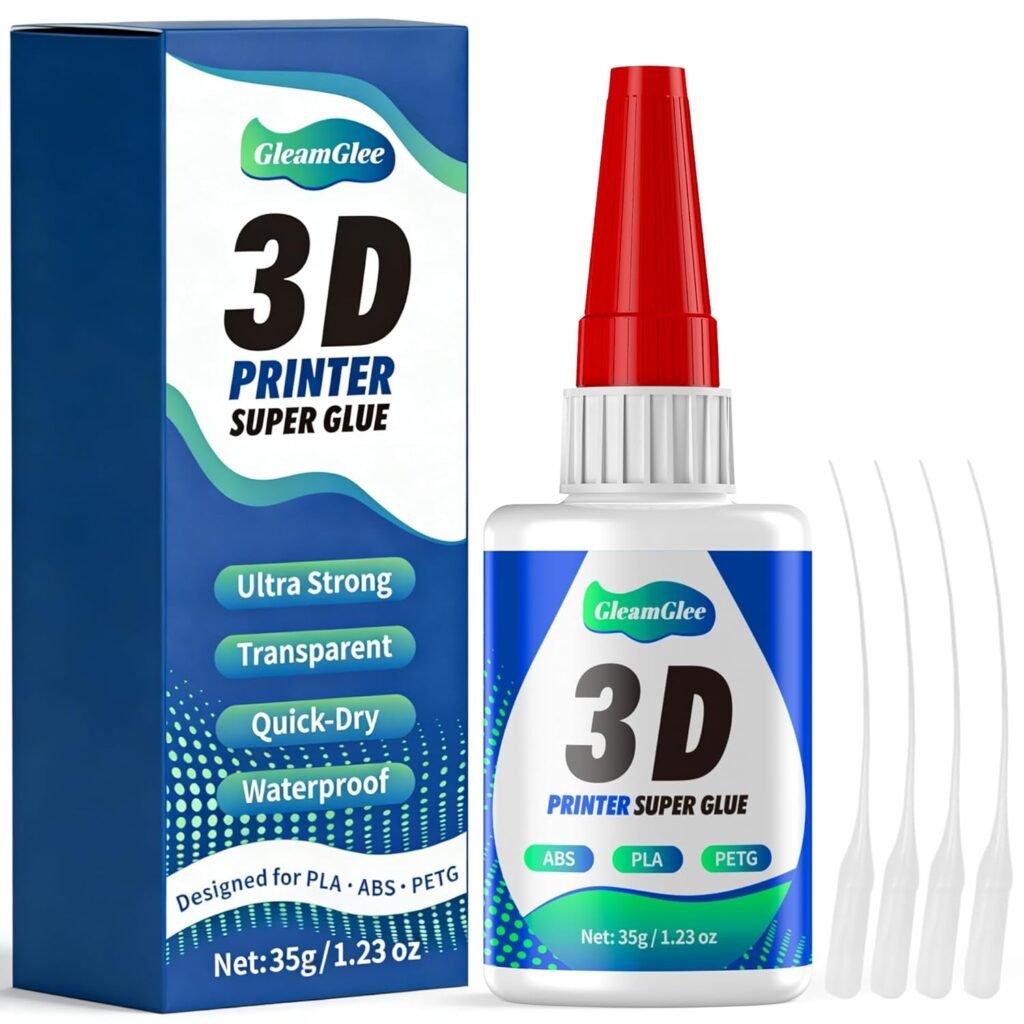
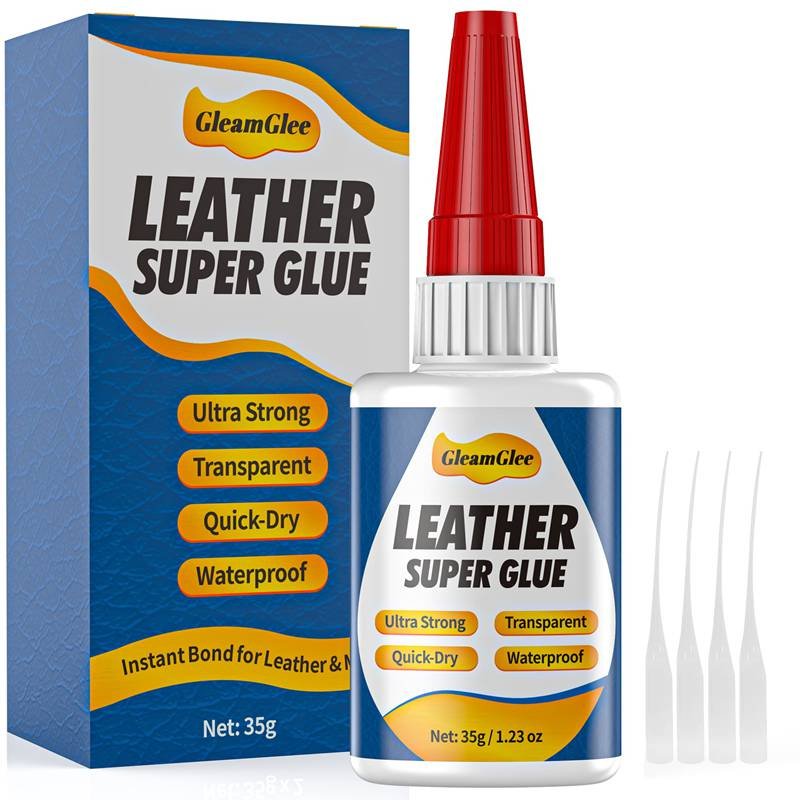
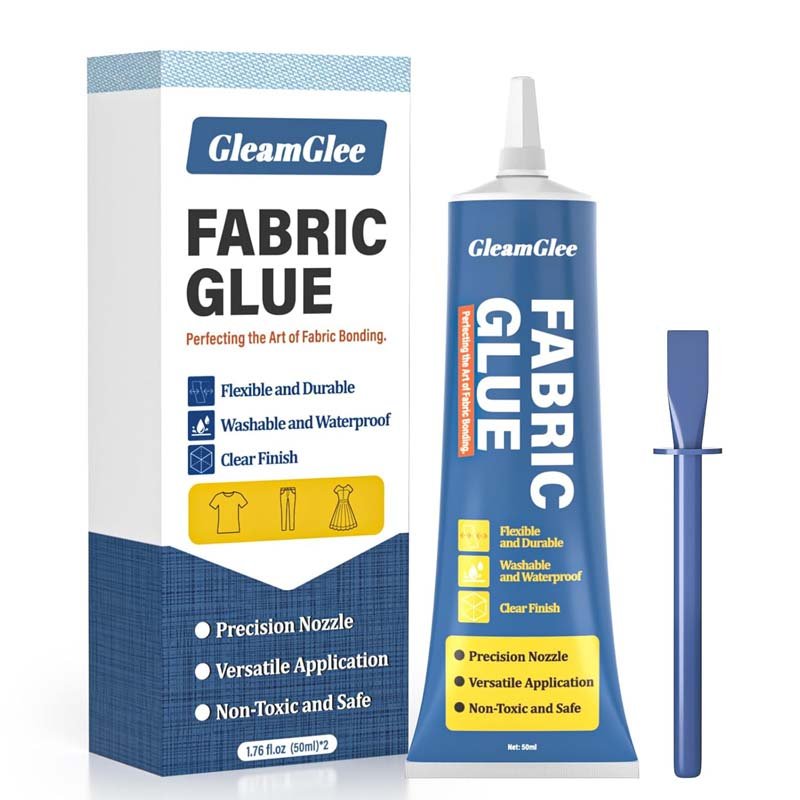
Ready to repair now? GleamGlee shoe glue kits are available with fast Amazon delivery. For custom formulations, private labeling, or bulk orders, contact GleamGlee to get started.
Share:
Table of Contents
Here, creating your adhesives glue & removal cleaner collection is no longer a barrier—it’s a collaborative journey where GleamGlee helps brands and businesses transform their vision into durable, certified, and market-ready solutions.
Partner with GleamGlee
Join hundreds of global partners who trust GleamGlee for adhesives and cleaners that combine innovation, compliance, and speed. Our vertically integrated system—from R&D to warehouse—guarantees consistent performance and reliable delivery.
Whether you’re sourcing FBA-ready stock or developing your own formula, our team provides unmatched technical support and responsive service.