 Skip to content
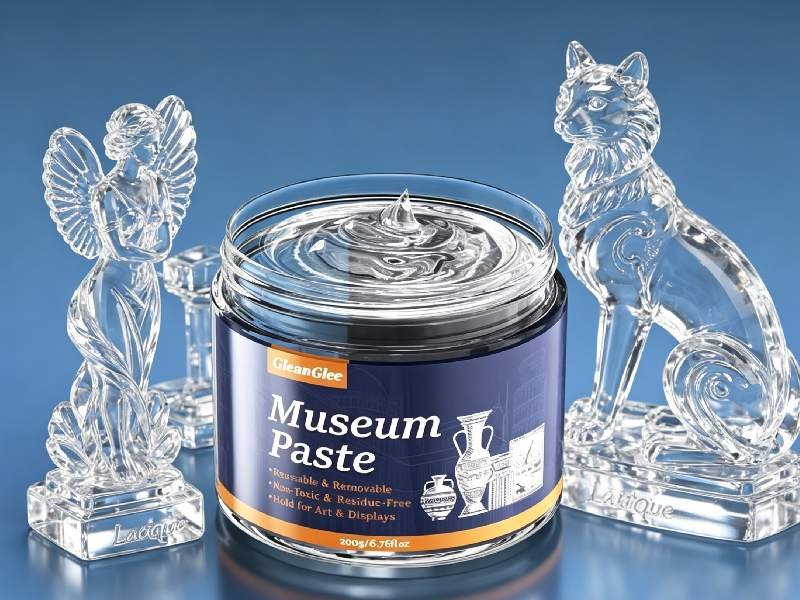
A vase does not always fall because of a big accident. More often, it starts with tiny movement: a shelf shakes when a cabinet door closes, a pet brushes against the table leg, a child reaches for another object, or a cleaning cloth catches the corner of a figurine. The item moves only a little at first. After several days, it sits closer to the edge. After a few weeks, it no longer faces the same direction. By the time the risk is obvious, the item may already be in the danger zone.
Museum putty is used by rolling a small amount into dots, pressing the dots under the object’s base, setting the item on a clean flat surface, and checking that it sits level. It helps reduce sliding, light tipping, and vibration on shelves, cabinets, mantels, counters, and display stands. It should stay hidden and remain removable.
Safe display is not about making every object feel permanently locked in place. It is about reducing the small daily movements that make collectibles, figurines, ceramics, trophies, candles, frames, and décor pieces less secure over time. A small hidden dot of museum putty can protect a handmade ceramic bird, a resin collectible, a glass ornament, or a retail sample without nails, screws, drilling, or messy glue. That simple detail can keep a display looking neat and help prevent the kind of breakage people usually regret after it happens.
What Is Museum Putty?
Museum putty is a soft, tacky, removable material used to keep small display items from sliding, tipping, rotating, or drifting out of place. It is commonly placed under figurines, ceramics, collectibles, small vases, trophies, picture frames, candle holders, model pieces, and shelf décor. Unlike glue, it does not harden into a permanent bond. Unlike screws or brackets, it does not require drilling or tools.
Museum putty works best on clean, dry, smooth, horizontal surfaces where the item already sits fairly flat. It adds extra grip between the object base and the shelf, helping reduce movement caused by cabinet vibration, dusting, light bumps, pets, children, drawer movement, or nearby foot traffic. It is useful for display safety, but it should not be treated as a structural fastener for heavy objects, wall mounting, unstable furniture, or slanted shelves.
The best use of museum putty is controlled and minimal. A small object may only need 1–2 dots. A medium object may need 3–4 dots. A wide base may need several smaller dots spread evenly instead of one thick lump. The putty should stay hidden, hold the item level, and remain easy to remove later by gentle twisting.
| Museum Putty Feature | Practical Meaning | Best Use |
|---|---|---|
| Soft and tacky | Adds grip without hard curing | Figurines, ceramics, small décor |
| Removable | Can be lifted off with careful twisting | Displays that need cleaning or rearranging |
| Reusable when clean | Can be rolled again if free from dust and fibers | Seasonal décor, model layouts, retail shelves |
| Non-permanent | Does not bond like glue | Collectibles, shelves, display cabinets |
| Hand-applied | No tools, drilling, screws, or curing time | Home shelves, offices, craft displays |
| Surface-sensitive | Needs smooth, clean, compatible surfaces | Sealed wood, laminate, metal, ceramic, acrylic |
Museum Putty Hold
Museum putty hold comes from surface grip, not from curing, drying, or chemical bonding. The putty stays soft and presses between the item base and the display surface, creating resistance against small movements. This makes it useful for items that slide a little when a shelf is touched, rotate during cleaning, or move closer to the edge over time. A small ceramic animal on a polished shelf, a resin figure on an acrylic riser, or a trophy on an office cabinet may not need permanent fixing, but it often needs extra grip. Museum putty adds that grip while keeping the item removable.
The hold works best when the item has a stable base. A flat round base, square base, oval base, or wide ceramic bottom usually gives better contact than tiny feet, curved bottoms, or sharp points. If the base is uneven, several tiny dots placed under real contact points work better than one large piece in the center.
Good uses for museum putty hold include:
● Ceramic figurines on living room shelves.
● Resin collectibles in display cabinets.
● Small vases on sideboards.
● Trophies on office shelves.
● Picture frames on mantels.
● Candle holders on smooth tabletops.
● Holiday décor on entry tables.
● Model buildings on hobby layouts.
Museum putty should not be expected to hold very heavy items, tall unstable objects, or pieces placed on slanted surfaces. If an item can injure someone or cause serious damage when falling, stronger safety hardware is needed.
Museum Putty Removable
Museum putty is removable when it is used in small amounts and taken off with the right motion. The safest method is to hold the object near the base, twist gently, and lift only after the putty begins to release. Pulling straight upward can stretch the putty, create sudden release, or put stress on fragile parts such as handles, wings, thin legs, decorative stems, or delicate edges. After removal, leftover putty can often be rolled away with fingers. Scrapers, knives, metal tools, rough pads, or hard brushes should not be used on delicate décor or finished furniture.
Removability matters for everyday display care. Shelves need dusting. Holiday decorations need packing. Retail displays need changing. Collectibles may need rearranging. A removable product keeps those normal tasks simple without leaving objects permanently attached to the surface.
To keep museum putty easier to remove:
● Use small dots instead of thick pads.
● Keep putty away from paper labels.
● Avoid pressing it into felt or fabric.
● Do not use it on weak paint or peeling coatings.
● Keep it away from heat and strong sunlight.
● Remove by twisting slowly.
● Replace putty if it becomes dusty or stretched.
If putty becomes dirty, oily, full of fibers, or soft from heat, it should not be reused under clean display pieces. Fresh putty gives a cleaner hold and a neater display.
Museum Putty Safe
Museum putty is safe for many display uses when it is used on suitable surfaces and with realistic expectations. It is meant to reduce small movements, not to replace furniture anchors, wall brackets, earthquake straps, or repair adhesives. A few small dots can help keep a figurine steady during dusting or cabinet vibration, but they cannot make a top-heavy vase safe on a narrow ledge or secure a heavy sculpture during a strong impact. Safe use begins with smart placement: the shelf should be level, the item should sit away from the edge, and the base should have enough contact area for the putty to grip.
Surface compatibility is the biggest safety concern. Museum putty may mark or behave unpredictably on porous, unfinished, delicate, or weakly coated materials. A hidden test is recommended before use on valuable furniture, antique finishes, painted shelves, natural stone, leather, wallpaper, or decorative coatings.
Use museum putty carefully on:
● Unfinished wood.
● Porous marble or stone.
● Fresh paint.
● Antique varnish.
● Paper-backed frames.
● Felt-bottom objects.
● Fabric shelf liners.
● Leather surfaces.
● Delicate painted décor.
Museum putty is safer on smooth sealed surfaces than on absorbent or textured materials. When the surface is uncertain, use a tiny test dot first, remove it gently, and inspect the area before placing valuable objects.
Museum Putty Surfaces
Museum putty surfaces should be clean, dry, smooth, and horizontal. The putty needs direct contact with both the object base and the shelf. Dust, wax, furniture polish, cooking grease, cleaner residue, moisture, and loose fibers can reduce grip. A shelf may look clean but still feel slick from polish or glass cleaner. That thin layer can make the putty slide instead of holding firmly. Before application, wipe the surface with a soft lint-free cloth and let it dry fully. The base of the object should also be free from dust, old adhesive, loose paint, or fabric fibers.
Suitable surfaces often include:
● Sealed wood shelves.
● Laminate furniture.
● Smooth ceramic trays.
● Metal display stands.
● Acrylic risers.
● Finished cabinet shelves.
● Smooth desks.
● Stable retail counters.
● Glossy sideboards.
Surfaces that need caution include glass, marble, painted wood, antique furniture, rough stone, unfinished wood, fabric liners, paper, and porous materials. Glass can work when the putty is hidden, but visible putty may look untidy under clear objects. Marble and stone may vary because some areas are more porous than others. Painted surfaces may lift if the coating is weak.
A simple surface check helps prevent problems:
| Surface Type | Suitability | Use Note |
|---|---|---|
| Sealed wood | Good | Avoid freshly polished areas |
| Laminate | Good | Clean off oil and dust first |
| Metal | Good | Works best when dry and smooth |
| Acrylic | Good | Check for visibility under clear bases |
| Glazed ceramic | Good | Use small hidden dots |
| Glass | Medium | Putty may show; clear gel may look cleaner |
| Marble or stone | Medium | Test first for staining risk |
| Painted wood | Medium | Avoid weak or fresh paint |
| Fabric or felt | Poor | Fibers stick to putty |
| Unfinished wood | Poor to medium | May stain or grip poorly |
Which Items Need Museum Putty?
Museum putty is most useful for small to medium display items that slide, rotate, lean, or tip during normal daily activity. Figurines, collectibles, ceramics, resin models, small vases, trophies, picture frames, candle holders, holiday décor, model pieces, and shelf decorations often need museum putty when placed on smooth shelves, mantels, cabinets, counters, or display stands.
The need depends on three simple factors: shape, surface, and room activity. A short, wide ceramic bowl on a deep shelf may not need extra support. A tall porcelain bird on a polished sideboard needs more care. A resin collectible on an acrylic riser may stay upright most days, but cabinet vibration, dusting, pets, or children can still shift it over time.
Museum putty should be used when an item must stay aligned but still remain removable. It is especially helpful for objects placed near shelf edges, glass cabinet doors, entry tables, office shelves, retail counters, seasonal displays, or open bookshelves. If an item has to be straightened every few days, it is a strong sign that museum putty can improve display stability.
| Item Type | Museum Putty Need | Best Putty Use | Main Risk |
|---|---|---|---|
| Small figurines | High | 2–3 small dots under base or feet | Tipping, rotation, dusting movement |
| Resin collectibles | Medium to high | Dots under display base | Lightweight body, smooth shelf contact |
| Small ceramic vases | Medium | 3–4 dots under flat base | Sliding, tipping when empty |
| Picture frames | Medium | Small dots at lower back or shelf contact | Leaning, shifting, falling forward |
| Trophies and awards | Medium | 3–4 dots under wide base | Desk vibration, office shelf movement |
| Candle holders | Medium | Small dots only on cool base areas | Heat, sliding on polished tables |
| Holiday décor | Medium to high | Small hidden dots under stable areas | Crowded displays, children, pets |
| Miniature models | Medium | Tiny dots under contact points | Small parts shifting |
| Heavy stone décor | Low to medium | Use caution; may need stronger support | Weight and impact risk |
| Fabric-bottom items | Low suitability | Avoid or test first | Fibers stick to putty |
Museum Putty Figurines
Figurines often need museum putty because they are usually light, detailed, and easier to disturb than they appear. A ceramic bird, porcelain angel, resin character, anime figure, holiday statue, dollhouse piece, or small animal ornament may stand perfectly when first placed on a shelf, but the base may have very little grip. Smooth glazed bottoms, narrow feet, tall shapes, raised arms, wings, ears, tails, or decorative flowers can make these pieces more vulnerable during dusting or shelf vibration. The biggest risk is often slow movement, not an instant fall. A figurine may rotate a few degrees after every cleaning, slide forward after a cabinet door closes, or lean slightly because one foot has less contact with the surface.
Figurines with narrow bases need putty more than low, wide pieces. A tall figurine with a base width under half of its height should be placed deeper on the shelf before putty is added. Museum putty should support the natural contact points instead of filling the entire bottom.
| Figurine Shape | Putty Need | Suggested Pattern |
|---|---|---|
| Two-foot figurine | High | 1 tiny dot under each stable foot |
| Round-base figurine | Medium to high | 3 small dots in a triangle |
| Tall narrow figurine | High | 2–4 dots, plus deeper shelf placement |
| Wide low figurine | Medium | 2–3 small dots |
| Fragile raised-detail figurine | High | Hold by base only during placement |
Good figurine placement should meet three checks:
● The figurine sits flat after pressing.
● No putty shows from the front.
● The piece does not rotate when the shelf is lightly touched.
If the figurine still rocks after careful dot placement, the shelf, base shape, or location may be the real issue. Adding a larger lump of putty can make the item lean more.
Museum Putty Collectibles
Collectibles need museum putty when display position matters. Action figures, model kits, sports memorabilia, souvenir pieces, limited-edition statues, gaming figures, handmade crafts, miniature scenes, and display models are often arranged by size, color, series, theme, or brand. Once one item shifts, the whole shelf can look untidy. Many collectibles are also lighter than they look because they are made from resin, plastic, vinyl, or hollow materials. On acrylic risers, laminate shelves, glass cabinets, or painted display boards, these pieces can slide or rotate with very little force. Museum putty helps keep the display aligned without making the item permanently attached.
Collectibles usually need small, precise dots rather than thick pads. A display base may look flat, but many collectible bases have molded details, small feet, uneven edges, or printed labels underneath. Putty should avoid labels, painted markings, barcode stickers, and delicate decorative surfaces.
| Collectible Type | Common Display Problem | Putty Advice |
|---|---|---|
| Action figures | Feet shift or figure leans | Use tiny dots under display stand |
| Resin statues | Top-heavy shape | Use 3–4 dots under the base |
| Model kits | Small parts move easily | Use very small dots only |
| Miniature buildings | Slide on layout board | Place dots under corners |
| Sports memorabilia | Needs fixed display angle | Keep dots hidden under base |
| Souvenir décor | Lightweight and smooth | Use 2–3 small dots |
Museum putty is most helpful for collectibles in open shelves, frequently dusted cabinets, homes with pets, and display areas used for photos. Clear objects or transparent bases may look better with clear gel, because putty can be visible under glass or acrylic.
Museum Putty Décor
Home décor needs museum putty when it sits in busy areas where furniture is touched, cleaned, opened, bumped, or used daily. Small vases, candle holders, picture frames, ceramic dishes, decorative jars, tabletop ornaments, bookends, seasonal decorations, and small lampshade bases can all shift over time. Entry tables are bumped by bags and keys. Fireplace mantels are often narrow. Dining sideboards move when drawers open. Office shelves vibrate when cabinets are used. Holiday displays become crowded and are touched more often. Museum putty is useful in these places because it reduces the small movement that slowly pushes items out of alignment or closer to an edge.
The best décor items for museum putty have a hidden base and a stable shape. For visible bases, only very small dots should be used. For candle holders, the base must remain cool. Putty should not be exposed to flame heat, melted wax, or hot metal.
| Home Area | Items That Often Need Putty | Reason |
|---|---|---|
| Entry table | Vases, jars, small sculptures | Bags, keys, and daily contact |
| Fireplace mantel | Frames, ornaments, candles | Narrow shelf depth |
| Bookshelf | Figurines, bookends, ceramics | Dusting and reaching |
| Dining sideboard | Candle holders, trays, décor bowls | Drawer and chair movement |
| Office shelf | Trophies, frames, desk décor | Cabinet and desk vibration |
| Kids’ room | Light ornaments, small décor | Accidental contact |
| Pet-accessible furniture | Vases, figurines, frames | Tail movement, jumping, brushing |
Museum putty should not be used to make poor placement acceptable. A vase sitting on the very edge of a console table should be moved back first. A candle holder near heat should be relocated. A heavy object that could injure someone should use a stronger safety method.
Museum Putty Displays
Displays need museum putty when objects must stay upright, aligned, and presentable for long periods. This applies to home display cabinets, retail shelves, gallery plinths, craft fair tables, model train layouts, office reception counters, product photography sets, gift shop shelves, and trade show tables. Display areas face more movement than normal storage. Items are cleaned, touched, repositioned, photographed, transported, or viewed from several angles. A small product sample that rotates 15 degrees can make a retail shelf look careless. A miniature building that shifts on a model layout can break the visual scene. Museum putty helps keep items in place while still allowing later adjustment.
Display use requires more frequent checking than quiet home storage. Putty can collect dust, stretch, soften from heat, or loosen after transport. In public or commercial display areas, the product should be inspected regularly instead of left untouched for months.
| Display Type | Putty Use | Check Frequency |
|---|---|---|
| Closed home cabinet | Keeps figurines aligned | Monthly |
| Open home shelf | Reduces dusting movement | Every 2–4 weeks |
| Retail counter | Holds samples in place | Weekly |
| Gift shop shelf | Keeps décor facing forward | Weekly |
| Gallery plinth | Reduces light movement | Before events |
| Trade show table | Stabilizes display items | Daily |
| Model layout | Holds miniature scenery | Before use or photos |
| Photography setup | Keeps props fixed | Every shoot |
A safe display setup should leave space between items. Crowded shelves increase the chance of one object knocking into another during cleaning or adjustment. Putty helps stabilize each piece, but proper spacing prevents chain-reaction damage.
How Do You Use Museum Putty?
Museum putty should be used on a clean, dry, smooth, and horizontal surface. Roll a small amount into dots, press the dots under the item’s base, set the item down gently, and check that it sits level. For most small to medium display items, 2–4 small dots are enough.
The process should stay neat and controlled. A thick lump of putty can make a figurine lean, show around the base, or collect dust. Smaller dots are easier to hide, easier to balance, and easier to remove later. Dot size usually starts around 3–8 mm wide, depending on the item weight, base size, and surface type.
Museum putty is not meant for slanted shelves, wall mounting, very heavy objects, hot surfaces, fabric bases, or weak painted finishes. It works best as a light display stabilizer for figurines, collectibles, ceramics, small vases, trophies, frames, candle holders, and shelf décor that already sit safely on a flat surface.
| Step | Action | Suggested Detail | Check Point |
|---|---|---|---|
| Step 1 | Clean before museum putty | 1–2 minutes | No dust, wax, oil, or moisture |
| Step 2 | Roll museum putty | 2–4 dots for most items | Dots are small and clean |
| Step 3 | Press museum putty | Under contact points | Putty stays hidden |
| Step 4 | Set with museum putty | Gentle downward pressure | Item sits level |
| Final check | Inspect display | Same day and after cleaning | No sliding or squeeze-out |
Step 1: Clean Before Museum Putty
Cleaning before museum putty is the most important step because putty needs direct contact with the item base and the display surface. Dust, wax, furniture polish, cleaner residue, hand oil, moisture, pet hair, paper fibers, and loose paint can all reduce grip. A shelf may look clean from across the room but still have a thin slick layer from polish or glass spray. That layer can make the putty slide instead of hold. A dry, smooth, lint-free surface gives the putty better contact and makes removal cleaner later.
Use a soft lint-free cloth to wipe the shelf and the item base. If the surface was cleaned with water or spray cleaner, wait until it is fully dry. Do not apply museum putty to damp wood, wet glass, recently polished furniture, or freshly painted shelves.
Avoid putting museum putty on:
● Paper labels.
● Felt pads.
● Fabric bottoms.
● Loose paint.
● Old adhesive residue.
● Cracked or peeling coatings.
● Delicate antique finishes.
● Porous unfinished wood.
| Surface Condition | Putty Result | Better Action |
|---|---|---|
| Dry sealed wood | Good grip | Wipe dust first |
| Smooth laminate | Good grip | Remove oil marks |
| Metal shelf | Good grip | Make sure it is dry |
| Acrylic riser | Good grip | Check visibility |
| Glass shelf | Medium | Use only if hidden |
| Waxed furniture | Weak grip | Clean wax film first |
| Fabric liner | Poor grip | Avoid or use another method |
| Fresh paint | Risky | Wait until fully cured |
The item should also be placed away from the front edge before putty is added. A good rule is to keep breakable décor at least 5–10 cm from the shelf edge when space allows.
Step 2: Roll Museum Putty
Rolling museum putty into small dots gives better control than pressing one large piece under the item. Small dots spread weight more evenly, stay hidden, and reduce the chance of visible squeeze-out. For a tiny ornament, one or two dots may be enough. For a small figurine, two or three dots usually work well. For a round or oval base, three or four dots often give better balance. The goal is to support the object’s natural contact points, not cover the whole base with putty.
Dot size should match the object. A small lightweight figurine may only need 3–5 mm dots. A medium vase, frame, or trophy may need 5–8 mm dots. A wider base may need more dots, but the dots should not become thick pads.
| Item Type | Starting Dot Count | Dot Size Guide |
|---|---|---|
| Mini ornament | 1–2 dots | 2–4 mm |
| Small figurine | 2–3 dots | 3–5 mm |
| Round-base décor | 3 dots | 4–6 mm |
| Oval-base décor | 3–4 dots | 4–8 mm |
| Picture frame | 2 dots | 3–6 mm |
| Small vase | 3–4 dots | 5–8 mm |
| Trophy base | 3–4 dots | 5–8 mm |
Keep the putty clean while rolling. If it falls on carpet, fabric, dusty cardboard, pet hair, or rough wood, replace it with a clean piece. Dirty putty may not grip well and may leave a messy look around the base.
Step 3: Press Museum Putty
Press museum putty under the item’s base where the object naturally touches the shelf. Do not press it onto visible decorative areas, painted detail, paper backing, fabric, felt, or fragile edges. The dot pattern should match the base shape. A round base works well with three dots in a triangle. A square base can use four dots near the corners. A two-foot figurine may need one tiny dot under each stable foot. A frame may need small dots near the lower back support area.
Good placement prevents leaning. Poor placement can make the object sit higher on one side, rotate after a few hours, or squeeze putty out around the base. If one dot is much larger than the others, resize it before setting the item down.
| Base Shape | Best Dot Placement | Common Mistake |
|---|---|---|
| Round base | 3 dots in triangle shape | One big center lump |
| Oval base | 3–4 dots along long side | Dots too close to edge |
| Square base | 4 hidden corner dots | Uneven dot size |
| Two-foot figurine | 1 dot under each foot | Center dot that does not touch feet |
| Frame base | 2 lower support dots | Putty on paper backing |
| Curved base | Test with tiny dots | Thick putty causing wobble |
After pressing the putty onto the base, look at it from the side before setting the item down. The dots should be balanced and not placed so close to the edge that they will be visible.
Step 4: Set With Museum Putty
Set the item down slowly after the museum putty dots are in place. Lower it straight onto the surface instead of dragging it across the shelf. Dragging can smear putty, move the dots, and leave streaks on glass, acrylic, painted wood, or polished furniture. Press gently near the strongest part of the object, usually close to the base. Do not press on thin handles, wings, stems, raised arms, delicate legs, loose lids, or decorative edges.
After placement, check the item from the front and side. It should sit level, stay aligned, and show no putty around the base. If putty squeezes out, too much was used. If the item leans, the dot pattern is uneven. If the item still slides, the surface may be dirty, too smooth, too warm, or unsuitable.
Use this quick check after setting:
● The object is not near the shelf edge.
● The base sits flat.
● Putty is not visible from normal viewing height.
● No putty has squeezed out.
● The object does not rotate when the shelf is lightly touched.
● The surface does not feel warm.
● Nearby items have enough spacing for dusting.
For valuable or fragile items, check again after 24 hours and after the next cleaning. For retail shelves, trade shows, or open displays, check more often because vibration and handling are higher.

What Museum Putty Tips Help?
Museum putty works better when it is used in small, clean, balanced dots rather than large thick pieces. The best results usually come from matching the putty amount to the object’s base shape, keeping the item on a flat surface, and checking the display after cleaning, movement, or heat exposure. A neat application should stay hidden, hold the item level, and remain easy to remove.
The most useful tip is to treat museum putty as a display stabilizer, not a heavy-duty fastener. It helps reduce sliding, light tipping, small vibration, and slow movement, but it cannot make a slanted shelf safe or hold a heavy object in place during strong impact. The shelf should already be stable, level, and deep enough before putty is applied.
Good museum putty use also depends on regular care. Putty can pick up dust, fibers, pet hair, wax, or polish residue over time. Once it becomes dirty or stretched, the hold may weaken and the display may look untidy. Open shelves, retail counters, pet-accessible furniture, and seasonal displays need more frequent checks than closed cabinets or quiet office shelves.
| Museum Putty Tip | Best Practice | What It Prevents |
|---|---|---|
| Use less putty | Start with small dots | Squeeze-out, dust buildup, uneven height |
| Match the base | Place dots under real contact points | Leaning, rocking, weak hold |
| Keep it hidden | Avoid outer edges | Visible putty around the base |
| Avoid heat | Keep away from hot sun, lamps, mantels | Softening, slipping, residue |
| Check regularly | Inspect after cleaning or movement | Slow shifting and edge risk |
| Replace dirty putty | Use fresh putty when dusty or stretched | Weak grip and messy display |
| Remove gently | Twist before lifting | Sudden release and object stress |
Museum Putty Amount
The right museum putty amount is usually smaller than most people expect. A thick piece may feel stronger in the hand, but it can create more problems on the shelf. Too much putty can lift one side of a figurine, make a picture frame lean, squeeze out around a vase base, or collect dust along the visible edge. A small amount works better because it gives grip without turning into a soft cushion. For most small décor pieces, the starting size should be around 3–5 mm per dot. For medium items, 5–8 mm dots are usually enough. Wider objects need more dots, not oversized lumps.
A practical rule is to start with the minimum amount needed to stop movement. If the item still slides, first check the surface, base shape, and dot placement before adding more putty. Dirty shelves, polished furniture, rough bases, or poor dot placement often cause weak hold even when enough putty is used.
| Item Size | Suggested Starting Amount | Best Use |
|---|---|---|
| Mini ornament | 1–2 tiny dots, 2–4 mm each | Small model pieces, tiny décor |
| Small figurine | 2–3 dots, 3–5 mm each | Ceramic animals, resin figures |
| Medium décor | 3–4 dots, 5–8 mm each | Small vases, candle holders |
| Picture frame | 2 small dots | Lower support area |
| Trophy base | 3–4 dots, 5–8 mm each | Office shelves, award displays |
| Wide base item | 4–6 small dots | Decorative trays, wider display bases |
| Tall narrow item | Use caution | Move deeper on shelf first |
A good putty amount should pass three checks: the item sits flat, the putty does not show, and no material squeezes out after gentle pressure. If any of these fail, reduce the amount and reset the item.
Museum Putty Dots
Museum putty dots should follow the object’s real contact points. A display item may look flat from above, but the underside may have feet, curved edges, raised rings, labels, recessed areas, or uneven molding. If putty is placed in the wrong spot, it may not touch the shelf properly. A large center lump under a two-foot figurine does not support the feet. A dot placed too close to the edge may squeeze out. A thick dot under one side of a round base can make the object lean. Good dot placement spreads support evenly and keeps the object sitting naturally.
The best method is to examine the base before applying putty. Place the item on the shelf without putty and see where it naturally touches. Those contact areas should guide the dot pattern. Putty should not cover paper labels, fabric pads, felt bottoms, signatures, weak paint, or decorative detail.
| Base Shape | Best Dot Pattern | Placement Note |
|---|---|---|
| Round base | 3 dots in a triangle | Helps reduce rotation |
| Oval base | 3–4 dots along the long side | Keeps the base balanced |
| Square base | 4 dots near corners | Keep dots away from visible edge |
| Rectangular base | 4–6 dots along long sides | Useful for frames or trays |
| Two-foot figurine | 1 tiny dot under each foot | Avoid center-only placement |
| Three-foot object | 1 dot under each stable foot | Prevents rocking |
| Curved base | Test with tiny dots | Too much putty may cause wobble |
After setting the item down, check it from the front and side. The object should not lean, tilt, or appear raised. If it does, one or more dots are too large or poorly placed.
Museum Putty Checks
Museum putty should be checked after placement and during regular display care. A display can look stable on the first day, then shift after dusting, shelf vibration, heat exposure, or repeated contact. Open shelves need closer attention because objects are touched, cleaned, and exposed to dust more often. Closed cabinets need fewer checks, but cabinet doors can still create vibration. Trade show displays, retail counters, craft booths, and photography sets should be checked more frequently because objects are moved, adjusted, and handled more often.
The first check should happen immediately after placement. The item should sit level, with no visible squeeze-out. A second check after 24 hours is useful for taller figurines, smooth shelves, warmer rooms, or delicate items. After that, the schedule depends on the display area.
| Display Area | Check Frequency | What to Watch |
|---|---|---|
| Closed display cabinet | Monthly | Dust, small rotation, cabinet vibration |
| Open bookshelf | Every 2–4 weeks | Dusting movement, edge distance |
| Entry table | Weekly | Bags, keys, daily bumps |
| Pet-accessible furniture | Weekly | Tail movement, jumping, brushing |
| Office shelf | Monthly | Drawer and desk vibration |
| Retail counter | Weekly | Handling, shifting, dust |
| Trade show table | Daily | Transport and crowd movement |
| Photography setup | Before every shoot | Alignment and prop position |
During each check, look for small warning signs: the item has moved closer to the edge, the putty is visible, dust has collected around the base, the object leans, or the surface feels warm. Replace dirty or stretched putty instead of pressing it back into place.
Museum Putty Removal
Museum putty should be removed slowly by twisting the item before lifting it. A straight upward pull can stretch the putty, create sudden release, or put stress on fragile details. The safest grip is near the base of the object, not on handles, stems, wings, thin legs, loose lids, raised arms, or decorative edges. Once the putty begins to release, the item can be lifted gently. Any leftover putty should be rolled away with fingers. Hard tools, knives, metal scrapers, rough pads, or abrasive cloths should not be used on décor, furniture, glass, ceramic, resin, painted surfaces, or delicate finishes.
Safe removal is especially important when the object has been in place for a long time or has been exposed to heat. Warm or aged putty may stretch more than fresh putty. If it feels soft, remove it slowly and discard it after lifting.
| Removal Situation | Best Method | Avoid |
|---|---|---|
| Small figurine | Hold near base, twist slowly | Pulling by head, arms, wings, or legs |
| Vase or candle holder | Twist from the base | Rocking side to side with force |
| Picture frame | Support frame, peel gently from contact area | Pulling paper backing |
| Trophy base | Use two hands, twist gradually | Lifting by narrow top section |
| Delicate surface | Roll putty away with fingers | Scrapers or solvents |
| Dirty putty | Discard after removal | Reusing dusty material |
After removal, inspect both the item base and shelf. If the surface looks clean and the putty is still soft and free from dust, it may be reused. If it contains fibers, grit, polish residue, pet hair, or dirt, replace it with fresh putty before setting the display again.
What Museum Putty Mistakes Hurt?
Museum putty mistakes usually happen when the material is treated like glue instead of a light display stabilizer. The most common problems are using too much putty, applying it to dusty or unsuitable surfaces, placing items on angled shelves, and exposing the putty to heat. These mistakes can make the item lean, slide, collect dust, or become harder to remove cleanly.
A safe display starts with the shelf, not the putty. The surface should be flat, clean, dry, smooth, and stable before anything is applied. If a figurine already rocks, a vase sits too close to the edge, or a shelf slopes forward, putty should not be used to hide the problem. The display position needs to be corrected first.
Most problems can be prevented with smaller dots, better placement, and regular checks. Museum putty should stay hidden under the item, support real contact points, and remain easy to remove by gentle twisting. If the putty squeezes out, feels dirty, softens from heat, or makes the object sit unevenly, it should be removed and replaced.
| Mistake | What Happens | Risk Level | Better Method |
|---|---|---|---|
| Too much museum putty | Visible edges, dust buildup, uneven height | Medium | Use smaller dots |
| Dirty surface | Weak grip, sliding, residue marks | Medium | Clean and dry first |
| Rough surface | Poor contact, messy removal | Medium to high | Use smooth sealed surfaces |
| Angled shelf | Slow sliding or sudden release | High | Use flat horizontal shelves |
| Near shelf edge | Higher breakage risk | High | Move item deeper |
| Strong heat | Softening, shifting, sticky residue | Medium to high | Keep away from hot areas |
| Pulling upward | Sudden release, object stress | Medium to high | Twist before lifting |
| Very heavy object | Putty may not hold enough | High | Use stronger safety hardware |
Is Too Much Museum Putty Bad?
Too much museum putty is one of the most common display mistakes because it feels safer at first. A thick lump may seem stronger in the hand, but once the item is placed on top, it can act like a soft cushion instead of a stable grip layer. The object may sit slightly higher on one side, lean forward, or rotate after a few hours. On open shelves, excess putty can squeeze out around the base and collect dust, pet hair, lint, and small fibers. On dark furniture, white shelves, glass shelves, and polished wood, that exposed edge becomes easy to see and makes the display look messy.
The better method is to use several small dots instead of one large piece. Small dots spread the hold more evenly and stay hidden under the base. If the object still moves after correct dot placement, check the surface condition, shelf angle, item weight, and base shape before adding more putty.
| Item Type | Common Overuse Problem | Better Amount |
|---|---|---|
| Small figurine | Putty shows around feet | 2–3 tiny dots |
| Round-base décor | Item rocks on center lump | 3 small dots in triangle pattern |
| Small vase | Putty squeezes out from base | 3–4 small dots |
| Picture frame | Frame leans backward unevenly | 2 small lower support dots |
| Trophy base | One side lifts higher | 3–4 balanced dots |
| Holiday décor | Dust sticks to exposed putty | Small hidden dots only |
A good application should pass three checks:
● The item sits flat.
● Putty is not visible from normal viewing height.
● No material squeezes out after gentle pressure.
If one of these checks fails, remove the item, reduce the amount, and reset it.
Are Dirty Surfaces Bad for Museum Putty?
Dirty surfaces are bad for museum putty because the material needs direct contact with both the item base and the shelf. Dust, hand oil, wax, furniture polish, glass cleaner residue, kitchen grease, moisture, pet hair, and loose paint can create a weak layer between the putty and the surface. When that happens, the putty may stick to the dirt instead of the shelf. The item may still slide even when enough putty was used. This problem often appears on furniture that looks clean but has a thin polish film, or on glass shelves that were sprayed but not wiped fully dry.
The surface should be wiped with a soft lint-free cloth before use. If water or cleaner is used, the shelf must dry completely. Museum putty should not be applied over old tape residue, paper stickers, felt pads, loose coatings, or fabric liners. These materials reduce contact and can make removal messy.
| Surface Condition | Putty Performance | Recommended Action |
|---|---|---|
| Dry sealed wood | Good | Wipe dust first |
| Smooth laminate | Good | Remove oil marks |
| Metal shelf | Good | Make sure it is dry |
| Acrylic riser | Good | Check visibility |
| Glass shelf | Medium | Use only if hidden |
| Waxed furniture | Weak | Remove polish film first |
| Fabric liner | Poor | Avoid putty use |
| Fresh paint | Risky | Wait until fully cured |
| Unfinished wood | Risky | Test first |
| Porous stone | Risky | Test in hidden area |
A small surface test is useful on antique furniture, painted shelves, natural stone, leather, wallpaper, and delicate finishes. Press a tiny dot in a hidden area, remove it gently, and check for marking before placing valuable items.
Do Angled Shelves Suit Museum Putty?
Angled shelves do not suit museum putty for long-term safe display. Museum putty is made to reduce sliding, tipping, and small vibration when an object rests on a flat horizontal surface. On an angled shelf, gravity keeps pulling the item downward all day. The putty may stretch, shift, or release over time, especially when the object is tall, smooth-bottomed, heavy, or placed in a warm area. A display can look stable for the first few minutes and still become unsafe after several hours or days.
This mistake often happens with decorative shelves, forward-tilted risers, picture ledges, shop displays, and photography setups. The angle may make an item easier to see, but it also moves the weight forward. Museum putty should not be used as the only support on a tilted surface.
| Angled Display Type | Risk | Safer Option |
|---|---|---|
| Slanted shelf | Slow sliding | Use a level shelf |
| Tilted acrylic riser | Forward pull | Use flat riser or mechanical support |
| Wall ledge | Item may fall forward | Use proper wall-safe hardware |
| Narrow mantel | Edge risk | Move item deeper or use wider surface |
| Trade show tilted stand | Movement during traffic | Use flat display base |
| Photography angle setup | Temporary instability | Supervise and support manually |
Avoid museum putty on:
● Slanted display shelves.
● Wall-mounted vertical displays.
● Hanging décor.
● Forward-angled retail stands.
● Leaning picture ledges.
● Narrow angled mantels.
For long-term display, the object should sit level first. Museum putty can then add extra grip.
Does Heat Affect Museum Putty?
Heat can affect museum putty by making it softer, stickier, or less stable. Many display items are placed where they look best: sunny windows, fireplace mantels, bright retail shelves, glass cabinets, and decorative lighting areas. These locations can warm the shelf more than expected. Once museum putty softens, the object may rotate, lean, slide slightly, or leave more material behind during removal. Heat can also make exposed putty collect dust faster and look less clean around the base.
A simple heat check helps prevent problems. Touch the shelf during the warmest part of the day. If the surface feels warm, it is not ideal for long-term museum putty use. Bright but cool locations are better than hot display spots. LED lighting, deeper shelf placement, curtains, or a different shelf can reduce heat risk.
| Heat Source | Possible Problem | Safer Practice |
|---|---|---|
| Direct afternoon sun | Putty softens and item shifts | Move display or use curtains |
| Fireplace mantel | Heat buildup under décor | Avoid warm mantel areas |
| Radiator shelf | Constant warmth | Use another location |
| Strong halogen lamp | Local surface heating | Use cooler LED lighting |
| Enclosed glass cabinet | Poor airflow traps heat | Check temperature regularly |
| Kitchen shelf | Appliance heat and grease | Keep display away from heat sources |
| Retail window | Sun and lighting combined | Inspect putty more often |
Replace putty if it becomes overly soft, stretched, oily, dusty, or difficult to roll cleanly. Heat-damaged putty should not be reused under delicate décor, collectibles, glass, ceramic, or painted items.

How Does Museum Putty Compare?
Museum putty is best for opaque or hidden-base display items that need removable support on flat surfaces. It is easier to shape than tape, less permanent than glue, and often better for general shelf décor than wax. It works well under figurines, ceramics, frames, trophies, resin collectibles, and small household ornaments when the putty can stay hidden.
The right choice depends on visibility, surface type, object weight, heat exposure, and removal needs. Museum putty is practical when the base hides the material. Museum gel is usually cleaner for glass, crystal, and transparent acrylic. Museum wax may suit some heavier opaque objects. Tape is convenient but often leaves adhesive residue. Glue should be kept for repair, not display stabilization.
Strength alone is not the best way to compare display products. A product that holds too permanently may damage the item or shelf during removal. A product that is too visible may ruin the display look. A product that softens with heat may shift over time. The best display method should hold the item neatly, stay compatible with the surface, and allow safe removal when the display needs cleaning or rearranging.
| Product | Best Use | Visibility | Removable | Reusable | Main Risk |
|---|---|---|---|---|---|
| Museum putty | Opaque décor, figurines, frames, collectibles | Medium if exposed | High | High when clean | Can show under clear items |
| Museum gel | Glass, crystal, acrylic, clear displays | Low | High | High when clean | Needs smooth horizontal surfaces |
| Museum wax | Heavier opaque display pieces | Medium | Medium | Medium | Can soften or leave film |
| Double-sided tape | Low-value temporary fixing | Medium to high | Low to medium | Low | Sticky residue |
| Permanent glue | Broken item repair | Variable | None | None | Permanent damage risk |
| No support | Heavy low-risk objects | None | Not needed | Not needed | Sliding or tipping remains possible |
Museum Putty vs Gel
Museum putty and museum gel are both used for removable display support, but they solve slightly different display problems. Museum putty is usually better when the item has an opaque base that fully hides the material, such as a ceramic figurine, resin statue, wooden ornament, trophy, frame, or painted collectible. Museum gel is usually better when the support material might be seen, such as under crystal, clear glass, transparent acrylic, polished display pieces, or glass shelves viewed from below. Putty has a firmer hand feel and is easy to pinch into small dots. Gel is clearer and often looks cleaner in high-visibility displays. Both should be used on clean, dry, smooth, horizontal surfaces, and neither should be used to make a slanted shelf safe.
| Display Need | Museum Putty | Museum Gel |
|---|---|---|
| Opaque figurines | Strong choice | Also works, but less necessary |
| Clear crystal or glass | May show | Cleaner visual choice |
| Acrylic display risers | May be visible | Better when viewed from sides |
| General shelf décor | Practical and easy | Works if clear finish is preferred |
| Model scenery | Easy to shape | Useful for clear parts |
| Removal | Twist and lift | Twist and lift |
| Reuse | Reuse when clean | Reuse when clean |
| Heat exposure | Avoid heat | Avoid heat |
Museum putty is often the better everyday option for ceramic animals, resin collectibles, picture frames, and small décor with hidden bases. Museum gel is often better for glass ornaments, crystal figurines, clear acrylic stands, product photography, and premium display shelves where visible fixing material would look messy.
Museum Putty vs Wax
Museum putty and museum wax are both used to reduce movement on display shelves, but wax usually feels firmer while putty is easier to shape, adjust, and reuse. Museum wax can work well under some heavier opaque objects, especially when the base fully hides the material and the item does not need frequent repositioning. Museum putty is often easier for small figurines, frames, model pieces, and seasonal décor because it can be rolled into small dots quickly and removed with less effort. Heat is a concern for both products. Warm mantels, direct sunlight, display lamps, and enclosed glass cabinets can soften wax or putty and reduce stability. On sensitive surfaces, both should be tested in a hidden area first.
| Comparison Point | Museum Putty | Museum Wax |
|---|---|---|
| Texture | Soft and tacky | Firmer and waxier |
| Best object type | Small to medium décor | Heavier opaque décor |
| Repositioning | Easier | Less convenient |
| Visibility | Medium if exposed | Medium if exposed |
| Heat sensitivity | Avoid hot areas | Avoid hot areas |
| Removal | Usually easier | May leave more film |
| Best display surface | Smooth sealed surfaces | Smooth sealed surfaces |
| Frequent display changes | Better suited | Less suited |
Museum putty is better for displays that change often, such as holiday shelves, retail counters, craft tables, model layouts, and collectible arrangements. Museum wax may be useful for heavier decorative pieces that stay in one place for longer periods, but it should not be used carelessly on porous stone, antique furniture, weak paint, fabric, or hot shelves.
Museum Putty vs Tape
Museum putty is usually safer and cleaner than double-sided tape for removable display support. Tape uses an adhesive layer that can dry out, yellow, soften, become gummy, or leave residue after removal. It can also show as a visible strip under clear or thin bases. Museum putty is easier to reposition because it can be lifted, rolled, and reset when the display angle changes. Tape usually loses strength after removal and often needs to be replaced. Putty also fits uneven bases better because small dots can be placed under specific contact points, while tape needs a flatter area to stick properly. For delicate shelves, painted furniture, paper labels, or collectible bases, tape can create more removal risk than putty.
| Issue | Museum Putty | Double-Sided Tape |
|---|---|---|
| Repositioning | Easy when clean | Usually poor after removal |
| Residue risk | Lower on suitable surfaces | Higher, especially over time |
| Visibility | Hidden if placed well | Strip edges may show |
| Curved bases | Small dots can adapt | Poor fit |
| Heat exposure | Can soften | Adhesive can become gummy |
| Painted surfaces | Test first | Higher lifting risk |
| Paper labels | Avoid contact | High risk of tearing |
| Long-term clean look | Good if hidden | Edges can collect dust |
Tape may be acceptable for low-value, short-term, hidden fixing where surface damage does not matter. Museum putty is better for items that need to stay removable, such as figurines, seasonal décor, model pieces, picture frames, lightweight vases, collectibles, and shelf decorations.
Museum Putty vs Glue
Museum putty and glue should not be used for the same purpose. Museum putty is for holding intact display items more securely on flat shelves while keeping them removable. Glue is for bonding broken parts, repairing materials, or creating a permanent connection. Using glue to secure a collectible, figurine, frame, vase, or shelf decoration can create serious problems later. The item may need cleaning, moving, packing, selling, photographing, or rearranging, and permanent glue makes those normal tasks difficult. Glue can also damage the shelf surface, leave hard residue, dry cloudy, or tear away paint, paper, labels, or coatings during removal. For safe display, museum putty is usually the cleaner and more flexible option.
| Use Case | Museum Putty | Glue |
|---|---|---|
| Keep figurine from sliding | Suitable | Too permanent |
| Repair broken ceramic | Not suitable | Suitable with correct adhesive |
| Hold picture frame on shelf | Suitable | Too permanent |
| Secure seasonal décor | Suitable | Poor choice |
| Attach item to wall | Not ideal | Depends on material, but not for delicate display |
| Move item later | Easy | Difficult |
| Clean shelf later | Easy | Difficult |
| Protect collectible value | Better | Risky if used on intact items |
Avoid using super glue, hot glue, epoxy, construction adhesive, silicone, craft glue, or mounting adhesive as display support for intact décor. These products belong in repair or installation work, not removable shelf display. Museum putty is better when the item is still in good condition and only needs extra grip against everyday sliding, tipping, or vibration.
Why Choose GleamGlee Museum Putty?
GleamGlee Museum Putty is designed for safe display use on smooth, dry, horizontal surfaces. It helps reduce sliding, light tipping, shelf vibration, and small daily movement for figurines, ceramics, collectibles, trophies, picture frames, candle holders, model pieces, seasonal décor, office ornaments, and retail display items. It gives extra grip without drilling, screws, nails, brackets, permanent glue, or messy tape.
The product is made for practical display situations where items need to stay neat but still remain movable. A display shelf may need cleaning. A holiday setup may need packing away. A collectible shelf may need rearranging. A shop counter may need product rotation. Museum putty fits these situations because it can be rolled by hand, placed under the base, removed carefully, and reused when clean.
GleamGlee also brings manufacturing strength to the product. The company works across adhesives, repair products, cleaners, packaging materials, label printing, raw materials, and finished product supply. That means the museum putty can be supported with clear packaging, surface-use guidance, multilingual instructions, custom product formats, stable production, and packaging options suitable for online stores, retail shelves, gift shops, craft displays, home décor ranges, and collectible accessory lines.
| Need | GleamGlee Museum Putty Value | Practical Result |
|---|---|---|
| Safer shelf display | Adds grip under small objects | Less sliding and rotation |
| Clean appearance | Small hidden dots | Display looks neat from the front |
| Easy setup | Roll, press, set, check | No tools or curing time |
| Removable use | Twist and lift carefully | Easier cleaning and rearranging |
| Reusable value | Reuse when clean and soft | Better long-term display value |
| Multi-surface use | Works on many smooth sealed surfaces | Fits home, office, and display shelves |
| Product packaging | Clear labels and instructions | Fewer use mistakes |
| Custom projects | Logo, label, box, size, set options | Easier product line development |
How Does GleamGlee Museum Putty Hold?
GleamGlee Museum Putty holds by creating a soft gripping layer between the object base and the display surface. It does not harden like glue and does not need curing time. The hold is meant for small display movement: sliding, light tipping, rotation, shelf vibration, and minor accidental contact. It is most effective when the object already sits safely on a flat surface and the putty is placed under real contact points. A ceramic figurine, resin collectible, picture frame, small vase, trophy, or model piece can often be stabilized with 2–4 small dots. A wide base may need more dots, but the dots should stay small and hidden.
The hold works best on smooth, clean, dry, sealed surfaces. Dust, wax, polish, fabric fibers, heat, and moisture can reduce grip. The display item should also be placed away from the shelf edge before putty is added.
| Display Item | Suggested Starting Use | Hold Focus |
|---|---|---|
| Mini ornament | 1–2 tiny dots | Stop small sliding |
| Ceramic figurine | 2–3 small dots | Reduce tipping and rotation |
| Resin collectible | 3 small dots | Keep display angle fixed |
| Small vase | 3–4 small dots | Reduce sliding on smooth tables |
| Picture frame | 2 small dots | Reduce leaning and shifting |
| Trophy base | 3–4 dots | Improve shelf stability |
| Model scenery | Tiny dots as needed | Keep small parts aligned |
GleamGlee Museum Putty should not be used as heavy-duty safety hardware. Very heavy sculptures, wall-mounted objects, hanging décor, large mirrors, tall unstable items, or slanted shelves need stronger support methods.
Is GleamGlee Museum Putty Easy?
GleamGlee Museum Putty is easy to use because it requires no tools, no drilling, no mixing, no drying time, and no complicated setup. The basic process is clean, roll, press, set, and check. That simple use flow matters in real homes and displays because most people use museum putty while arranging shelves, preparing seasonal décor, organizing collectibles, setting up a reception desk, or stabilizing small objects before guests arrive. A product that needs special tools or long curing time would not fit these quick display tasks. Museum putty can be applied in minutes, adjusted if the first position is not right, and removed later when the item needs to move.
Correct use still matters. Easy does not mean careless. The putty should be rolled into small dots and kept away from labels, fabric, felt, weak paint, paper backing, rough surfaces, and hot areas.
A practical use flow:
| Step | Action | Good Sign |
|---|---|---|
| 1 | Wipe shelf and object base | Surface feels dry and clean |
| 2 | Roll small dots | Putty stays clean and soft |
| 3 | Press under contact points | Dots are balanced |
| 4 | Place item down gently | No dragging or smearing |
| 5 | Check from front and side | Item sits level |
| 6 | Recheck after cleaning | No shifting or squeeze-out |
A clean application should look almost invisible from normal viewing height. If putty is showing around the base, the amount is too large or placed too close to the edge.
Is GleamGlee Museum Putty Reusable?
GleamGlee Museum Putty can often be reused when it remains clean, soft, and free from dust, fibers, pet hair, grit, wax, polish residue, or oil. Reusability is valuable for displays that change often, such as holiday decorations, craft shelves, model layouts, product photography, shop counters, collectible cabinets, and office shelves. Unlike double-sided tape, which usually loses strength after peeling, clean putty can be lifted, rolled again, and placed under another suitable item. This helps reduce waste and makes the product more practical for repeated display changes.
Reuse depends on surface and handling. Putty that has touched carpet, fabric liners, dusty shelves, unfinished wood, paper, or pet hair should not be reused under clean décor. Dirty putty may look messy around the base and may not grip properly. Heat-softened putty should also be replaced.
| Putty Condition | Reuse? | Reason |
|---|---|---|
| Clean, soft, flexible | Yes | Still grips and rolls well |
| Slightly stretched but clean | Usually yes | Roll again before use |
| Dusty or hairy | No | Weak hold and messy look |
| Oily or waxy | No | Reduced surface grip |
| Softened by heat | No | May spread or leave residue |
| Full of fibers | No | Poor contact with shelf |
| Used on rough surface | Usually no | May hold grit or debris |
Good storage also improves reuse. Keep unused putty sealed, away from dust, direct sun, high heat, and loose packaging fibers.
Why Trust GleamGlee Museum Putty?
GleamGlee Museum Putty is backed by a manufacturer with direct experience in adhesives, cleaners, repair products, packaging design, filling, label printing, and international product supply. The company is located in Dongguan, Guangdong, China, and works with products used in homes, craft spaces, offices, shops, hardware channels, cleaning categories, repair categories, and display protection categories. This gives the product a stronger foundation than a simple generic shelf putty. A useful museum putty needs stable texture, easy hand application, suitable packaging, clear instructions, and reliable repeat production. These details affect daily use more than people realize.
GleamGlee’s manufacturing system includes technical staff, packaging support, and scalable production capacity. Product packaging can be designed with step-by-step use instructions, surface warnings, removal guidance, and market-specific language.
| GleamGlee Capability | Detail | Value for Museum Putty |
|---|---|---|
| R&D team | 25+ chemists, material specialists, and process engineers | Formula and material performance support |
| Design team | 18+ product, packaging, and graphic designers | Clear packaging and display-friendly branding |
| Sales support | 30+ international product specialists | Faster product communication |
| Factory system | 4 specialized factories | Better control from material to packaging |
| Filling capacity | 12M+ units annually | Stable supply for growing orders |
| Packaging molds | 3000+ options | More jar, tube, box, and set choices |
| Language support | English, German, French, Italian, Spanish, Dutch, Japanese, Chinese | Easier multi-market packaging |
| Standards support | ISO 9001, ISO 14001, CLP, REACH, UKCA, GHS-related packaging knowledge | More reliable market preparation |
GleamGlee Museum Putty can be supplied as a finished product or developed with custom packaging, logo, label, outer box, instruction card, multi-pack format, or e-commerce-ready carton packing. For product orders or customized museum putty projects, GleamGlee can provide quotation support, sample discussion, packaging options, and production planning.
Conclusion
Museum putty is a simple but useful tool for safer display when it is used correctly. It helps reduce sliding, light tipping, rotation, and small daily movement for figurines, collectibles, ceramics, frames, small vases, trophies, candle holders, seasonal décor, model pieces, and shelf displays. The best results come from clean surfaces, small hidden dots, correct base placement, and regular checks. It should be used on smooth, dry, horizontal surfaces, not on slanted shelves, hot areas, fabric bases, weak paint, or very heavy objects that need stronger support.
GleamGlee Museum Putty is designed for practical display protection in homes, offices, craft spaces, retail counters, galleries, gift shops, and collectible displays. With easy hand application, removable use, reusable value when clean, and strong manufacturing support behind packaging and product supply, it is a reliable choice for display safety products. For ready-to-order museum putty, wholesale supply, custom packaging, private label products, multilingual instructions, or tailored display-stabilizing product projects, GleamGlee can provide product sourcing and quotation support.





















