Skip to content
Stretch fabric is comfortable because it moves with the body, but that movement also makes repairs more difficult. A small hole in leggings may reopen after one workout. A loose sportswear hem may peel again after stretching. A costume trim may lift when the wearer bends, dances, or sits. Regular glue may feel strong when first applied, but if it dries stiff, the repair can crack, peel, rub against skin, or leave a hard patch that looks obvious from the outside.
To fix stretch fabrics using fabric glue, clean and dry the fabric, keep the damaged area flat without stretching it, apply a thin layer of flexible fabric glue, press the repair firmly, let it set for 6–10 minutes, and allow 24 hours for full curing before washing or ironing. For weak or high-stretch areas, add a matching backing patch.
A good stretch fabric repair should not only close the tear. It should stay soft enough to wear, clear enough to look neat, and flexible enough to move with the garment. This is why the amount of glue, fabric tension, patch support, and curing time all matter. A tiny inner-thigh hole in leggings, a peeling gym-shirt hem, or a loose dance costume appliqué can often be saved with a careful no-sew repair instead of being thrown away.
What Is Fabric Glue for Stretch Fabrics?
Fabric glue for stretch fabrics is a flexible adhesive used to bond, patch, hem, decorate, or reinforce stretchy materials without sewing. It is used on fabrics that move during wear, such as leggings, sportswear, swimwear, dancewear, stretch T-shirts, costumes, elastic waistbands, soft linings, and fabric accessories. The glue needs to dry soft, clear, and flexible so the repaired area can bend and move with the garment instead of becoming stiff.
Stretch fabric repairs need more care than regular cotton or denim repairs. The fabric may stretch when walking, sitting, exercising, dancing, swimming, or washing. If the glue dries too hard, the repair can crack, peel, pucker, or feel uncomfortable against the skin. A proper fabric glue repair should stay thin and smooth, with enough bond strength to hold the damaged area but not so much adhesive that the fabric loses its natural movement.
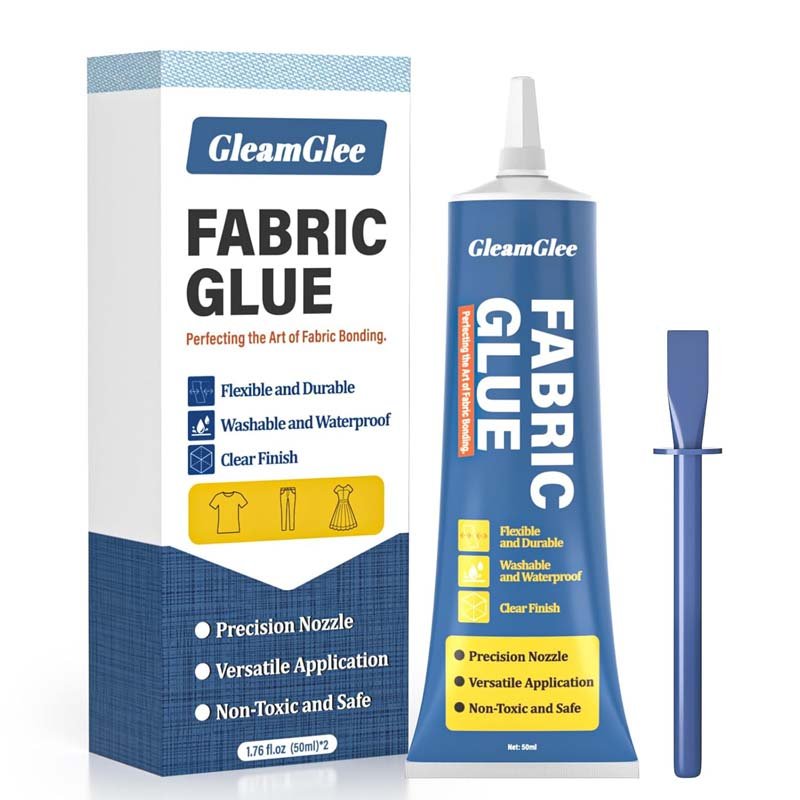
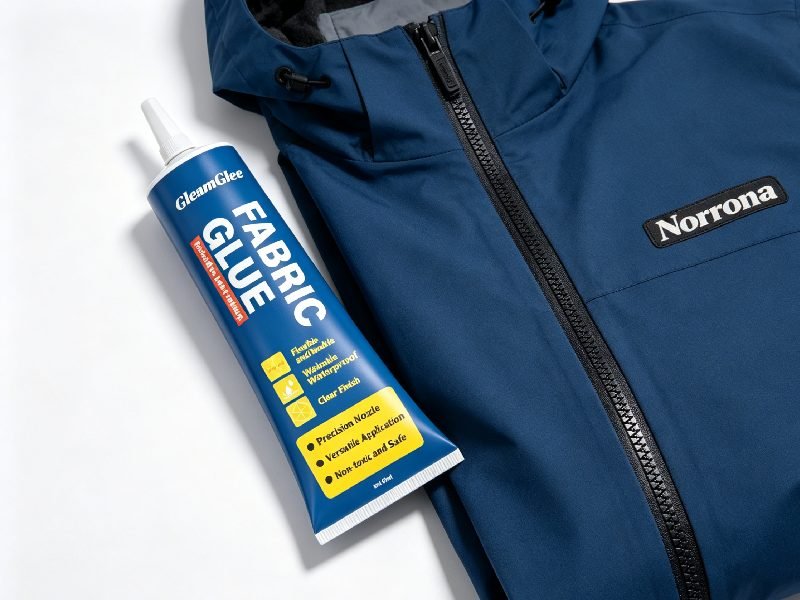
GleamGlee Fabric Glue is designed for flexible fabric bonding, no-sew repairs, hems, patches, trims, appliqués, sequins, ribbons, costumes, home textiles, and daily clothing fixes. It dries transparent and non-yellowing, stays soft after drying, supports machine washing and ironing after full cure, and reaches full cure in about 24 hours. The 50g tube size is suitable for multiple small repairs without needing a sewing machine.
Fabric Glue Basics
Fabric glue is a liquid adhesive made to bond fabric surfaces together by creating a flexible layer between fibers or fabric pieces. On stretch fabrics, the glue should be applied thinly because the repaired area still needs to bend, pull, recover, and sit comfortably against the body. A thick glue bead may look strong while wet, but after drying it can feel hard, create a shiny mark, bleed through thin fabric, or restrict movement. A good fabric glue repair should sit mostly between fabric layers, not as a raised patch on top of the garment. It works best for small tears, loose hems, fabric patches, trims, ribbons, lace, rhinestones, appliqués, cuffs, collars, and decorative details.
Key points to understand before using fabric glue:
- It is a no-sew repair option, not a full replacement for every stitch.
- It works best on clean, dry, flat fabric surfaces.
- It should dry flexible for stretch garments.
- It needs full curing time before washing or ironing.
| Fabric Glue Feature | Why It Matters on Stretch Fabrics | Practical Result |
|---|---|---|
| Flexible dry finish | Stretch fabrics move during wear | Less cracking and stiffness |
| Clear drying | Repairs may sit on visible areas | Cleaner repair appearance |
| Washable bond | Clothing needs regular care | Better long-term use after curing |
| Precision nozzle | Small repairs need control | Less overflow and mess |
| Soft cured feel | Skin-contact clothing must stay comfortable | Better wearability |
| 24-hour cure | Bond strength develops over time | Better wash resistance |
Fabric glue should be used with controlled pressure. Pressing helps the adhesive contact both fabric layers, but over-clamping can squeeze too much glue out and weaken the repair.
Stretch Fabric Fit
Stretch fabric fit matters because different garments stretch in different ways. A soft cotton-spandex T-shirt may stretch lightly, while leggings, swimwear, compression tops, dancewear, and fitted sportswear may stretch much more during normal use. A glue repair on a low-stretch hem has an easier job than a repair on an inner-thigh legging hole, waistband edge, swimsuit strap, or underarm sportswear seam. The more a fabric stretches, the thinner and more flexible the repair needs to be. The fabric should stay relaxed during repair, not pulled tight. If the glue cures while the fabric is stretched, the repair may wrinkle or pucker when the garment returns to its normal size.
Before applying fabric glue, check the repair area:
- Is the fabric thin, slick, coated, or sheer?
- Does the damage sit in a high-movement area?
- Will the repaired area rub against skin or another garment?
- Does the fabric stretch in one direction or several directions?
| Stretch Fabric Area | Repair Difficulty | Better Method |
|---|---|---|
| T-shirt hem | Low | Thin glue line inside fold |
| Costume trim | Low to medium | Small dots or narrow line |
| Legging ankle hem | Medium | Thin glue and firm pressing |
| Side seam gap | Medium to high | Glue support; sewing may help |
| Inner-thigh hole | High | Soft backing patch recommended |
| Waistband edge | High | Use sparingly to avoid stiffness |
| Swimwear strap | High | Sewing is often stronger |
| Compression seam | Very high | Glue alone is not ideal |
The safest fabric glue repair is one that follows the garment’s natural shape. The repaired area should not feel tighter, harder, or heavier than the fabric around it.
Fabric Glue Limits
Fabric glue has limits on stretch fabrics, especially in areas with heavy tension, friction, sweat, water, or repeated pulling. It can repair many small problems, but it cannot fully rebuild fabric that has become thin, overstretched, or structurally weak. Large tears, broken elastic, torn straps, compression seams, swimwear openings, and worn-out waistbands may need sewing, patch reinforcement, or replacement. Glue can help reinforce or hold parts in place, but using glue alone on a high-stress area may lead to peeling after movement or washing. Thin stretch fabrics also need care because excess glue can bleed through and leave a visible mark.
Fabric glue may not perform well when:
- The tear is too large for the surrounding fabric to support.
- The fabric is coated, oily, waterproof, or silicone-treated.
- The damaged area stretches heavily during wear.
- The garment rubs constantly against skin, shoes, bags, or furniture.
- The repair needs to carry body tension or load.
| Repair Situation | Fabric Glue Alone? | Better Choice |
|---|---|---|
| Loose T-shirt hem | Yes | Thin glue line |
| Small costume trim lift | Yes | Dots or narrow line |
| Tiny hole in low-stretch area | Yes | Light glue or small patch |
| Legging inner-thigh hole | Not ideal alone | Backing patch |
| Torn waistband elastic | No | Sewing or replacement |
| Split compression seam | Not ideal alone | Sewing plus glue support |
| Swimwear strap tear | No | Stitching or replacement |
| Large tear on thin spandex | No | Patch and stitching |
Fabric glue performs best when the damage is small, the fabric is clean, the glue layer is thin, and the repaired area is allowed to cure fully before washing or wearing.
Which Stretch Fabrics Need Fabric Glue?
Stretch fabrics need fabric glue when the damage is small, flat, and suitable for a flexible no-sew repair. Common examples include leggings, sportswear, swimwear, costumes, dancewear, stretch T-shirts, soft linings, elastic fabric trims, and lightweight accessories. Fabric glue works best on areas that need clean bonding, edge control, patch support, or decorative attachment without visible stitching.
Different stretch fabrics break down in different ways. Leggings often wear through at the inner thigh, knee, ankle hem, or waistband edge. Sportswear may peel at reflective trims, logos, pockets, or sleeve hems. Swimwear can separate near linings, decorative edges, and elastic areas. Costumes often lose sequins, rhinestones, appliqués, lace, ribbons, or trim after movement, storage, or washing.
Fabric glue is most useful when the repair area can lie flat and cure without heavy tension. A loose hem or trim lift is usually easier to repair than a stretched waistband or compression seam. High-friction areas often need a soft backing patch, while low-stress decorative repairs may only need a thin glue line or small dots.
| Stretch Fabric Item | Common Damage | Fabric Glue Fit | Extra Support Needed |
|---|---|---|---|
| Leggings | Inner-thigh holes, knee wear, hem lift | Good with care | Patch for worn areas |
| Sportswear | Loose trim, lifted logos, small tears | Good | Patch or sewing for high-stress seams |
| Swimwear | Lining lift, trim separation, small edge repair | Possible with testing | Sewing for straps and elastic |
| Costumes | Sequins, rhinestones, lace, appliqués | Strong fit | Patch only for fabric tears |
| Dancewear | Trim lift, rhinestones, small tears | Good with thin glue | Patch for movement zones |
| Stretch T-shirts | Hem lift, tiny holes, cuff repair | Good | Patch for larger holes |
| Soft accessories | Linings, straps, fabric patches | Good | Reinforcement for load-bearing parts |
Fabric Glue for Leggings
Fabric glue can help repair leggings, but the repair method must respect how much leggings stretch during wear. Leggings often sit tight against the body and move constantly at the knees, thighs, hips, waistband, and ankle openings. A tiny hole in a low-stress area may close well with a thin glue layer, but inner-thigh damage usually needs a soft backing patch because that area faces friction from walking, running, workouts, and repeated washing. A thick glue spot on leggings can feel stiff, rub against skin, or create a visible shiny mark from the outside, so the glue should stay thin and controlled.
Best legging repairs include:
- Loose ankle hems.
- Small knee holes.
- Tiny seam gaps.
- Waistband edge lift.
- Small inner-thigh holes with patch backing.
- Light fabric patch attachment.
| Legging Area | Repair Difficulty | Best Fabric Glue Method |
|---|---|---|
| Ankle hem | Low | Thin glue line inside the fold |
| Knee hole | Medium | Small inside patch and light glue |
| Side seam gap | Medium | Thin glue between fabric layers |
| Inner thigh | High | Soft backing patch required |
| Waistband edge | High | Very thin glue; avoid stiff buildup |
| Large worn area | High | Patch and sewing may be better |
Keep leggings relaxed and flat during repair. Do not stretch the fabric while applying glue. If the glue cures while the fabric is pulled tight, the area may pucker when the leggings return to normal size.
Fabric Glue for Sportswear
Fabric glue works well on many sportswear repairs because activewear often needs a flexible, clean, low-profile fix. Gym tops, running shirts, yoga wear, cycling jerseys, lightweight jackets, and training shorts may develop loose hems, lifted logos, peeling reflective strips, small holes, or detached fabric trims. These repairs often need a thin adhesive layer that stays soft after drying. Sportswear usually contains polyester, nylon, spandex, or elastane blends, so a stiff glue can feel uncomfortable and may peel when the garment stretches during movement.
Good sportswear repair uses include:
- Loose sleeve hems.
- Peeling reflective trims.
- Lifted fabric logos or labels.
- Small pocket edge repairs.
- Minor seam support.
- Small patches on low-stretch zones.
| Sportswear Area | Fabric Glue Fit | Better Repair Detail |
|---|---|---|
| Shirt hem | Strong | Thin glue line and firm pressing |
| Sleeve edge | Strong | Keep fabric flat while curing |
| Reflective trim | Good | Use small dots or narrow line |
| Logo patch | Good | Apply glue only under lifted area |
| Pocket edge | Medium | Press carefully; avoid bulky glue |
| Underarm seam | Caution | High movement; sewing may help |
| Compression panel | Weak alone | Patch or stitching preferred |
Sportswear repairs should cure fully before use. Sweat, body heat, stretching, and washing can weaken a repair if the glue has not cured for about 24 hours. Avoid heavy training immediately after repair.
Fabric Glue for Swimwear
Swimwear is more difficult to repair with fabric glue because it faces water, chlorine, salt, sunscreen, body oil, and high stretch. Small repairs can work when the fabric is clean, dry, tested first, and allowed to cure fully. Fabric glue is most useful for minor lining separation, decorative trim lift, small inner patch placement, or light edge repair. Straps, leg openings, waist elastic, and structural seams are harder because they stretch strongly and carry tension during swimming and movement.
Better swimwear glue uses include:
- Small lining lift.
- Decorative trim separation.
- Loose inner label or patch.
- Minor edge repair.
- Small low-tension fabric support.
| Swimwear Area | Fabric Glue Fit | Repair Warning |
|---|---|---|
| Inner lining | Good if clean and dry | Cure fully before water exposure |
| Decorative trim | Good | Use thin glue only |
| Small edge lift | Possible | Test first on hidden area |
| Leg opening elastic | Weak alone | Sewing is usually stronger |
| Shoulder strap | Weak alone | Replacement or stitching preferred |
| Waistband elastic | Weak alone | High stretch can peel glue |
| Large tear | Not ideal | Patch and stitching needed |
Swimwear should never be washed, soaked, or worn in water right after gluing. Allow at least 24 hours for full cure. A repaired swimsuit should also be rinsed gently after use and air-dried to reduce stress on the glue line.
Fabric Glue for Costumes
Fabric glue is very useful for costumes because many costume repairs involve decoration rather than heavy structural support. Stretch costumes used for dance, theater, Halloween, cosplay, skating, gymnastics, stage shows, and school performances often include sequins, rhinestones, lace, ribbons, appliqués, pearls, stretch mesh, satin, spandex, velvet, and synthetic trims. Sewing every small detail can be slow or visible, while fabric glue can hold decorative pieces neatly when applied in small dots or thin lines.
Best costume uses include:
- Reattaching rhinestones.
- Securing sequins.
- Bonding lace trim.
- Holding appliqués.
- Fixing ribbon or pearl details.
- Quick hem adjustment.
- Small patch repairs inside the costume.
| Costume Detail | Glue Method | Practical Tip |
|---|---|---|
| Rhinestones | Tiny dot under each stone | Avoid glue rings around edges |
| Sequins | Small dot | Press gently, do not flood |
| Lace trim | Thin line | Keep lace flat while drying |
| Ribbon | Narrow glue line | Press evenly along the strip |
| Appliqué | Thin even layer | Press from center outward |
| Stretch mesh | Very light glue | Test first; glue may show |
| Hem edge | Thin line inside fold | Cure before wearing |
Costume fabric often looks delicate or shiny, so testing is important. Too much glue can show through mesh, darken satin, stiffen lace, or leave a shiny mark. Use the precision nozzle and apply less than expected.
How to Fix Stretch Fabrics with Fabric Glue?
Fix stretch fabrics with fabric glue by keeping the fabric clean, dry, relaxed, and flat before applying adhesive. Use a thin glue layer, press the repair evenly, allow 6–10 minutes for the first set, and wait 24 hours for full curing before washing, ironing, wearing, or stretching the repaired area heavily.
Stretch fabric repair needs control. The fabric should not be pulled tight during application because the repair may wrinkle, pucker, or peel when the material returns to its normal shape. A thick glue bead is also risky. It can dry stiff, show through thin fabric, rub against skin, or make the repaired area feel different from the rest of the garment.
The best fabric glue repair depends on the damage location. A loose hem or costume trim can often be fixed with a thin glue line. A small tear in leggings, sportswear, or swimwear may need a soft backing patch. High-stretch areas such as inner thighs, waistbands, underarms, and straps need extra care because glue alone may not handle repeated pulling and friction.
| Repair Type | Best Fabric Glue Method | Patch Needed? | Full Cure Time |
|---|---|---|---|
| Loose hem | Thin glue line inside fold | No | 24 hours |
| Small seam gap | Thin glue between fabric layers | Sometimes | 24 hours |
| Tiny hole | Light glue around tear edge | Sometimes | 24 hours |
| Legging inner-thigh hole | Glue plus soft backing patch | Yes | 24 hours |
| Costume trim | Small dots or narrow glue line | No | 24 hours |
| Swimwear lining lift | Thin glue layer, test first | Sometimes | 24 hours |
| Sportswear logo lift | Small glue layer under lifted area | No | 24 hours |
Step 1: Clean Stretch Fabrics
Clean stretch fabrics before using fabric glue because residue can weaken the bond. Leggings, swimwear, sportswear, dancewear, and costumes often hold sweat, detergent, body oil, sunscreen, lotion, dust, lint, and fabric softener even when they look clean. If glue is applied over residue, the repair may stick at first but peel after movement or washing. The fabric should be fully dry before gluing. Wet or damp fabric can dilute the adhesive, reduce contact, and leave the repaired area uneven. For worn clothing, washing and air-drying before repair is usually safer. For quick fixes, gently wipe the damaged area and wait until it is completely dry.
Before applying glue:
- Trim loose threads carefully, but do not enlarge the hole.
- Lay the fabric flat without pulling it tight.
- Place parchment paper or plastic sheet inside the garment to stop layers sticking together.
- Check whether the fabric is thin, shiny, coated, or sheer before visible repairs.
- Test a hidden area if the garment is expensive or delicate.
| Fabric Condition | Repair Risk | Better Action |
|---|---|---|
| Clean and dry | Lower risk | Apply fabric glue normally |
| Sweaty sportswear | Medium risk | Wash and dry first |
| Swimwear with sunscreen | High risk | Clean residue carefully |
| Fabric softener residue | Medium risk | Rewash without softener if possible |
| Lint or loose fibers | Medium risk | Remove before gluing |
| Wet or damp fabric | High risk | Dry fully before repair |
A clean fabric surface gives the glue better contact with the fibers and helps the repaired area stay smoother after curing.
Step 2: Add Fabric Glue
Apply fabric glue in a thin, controlled layer. Stretch fabrics do not need a thick bead sitting on top of the material. Too much glue can dry hard, create a shiny outline, bleed through thin fabric, or feel uncomfortable against the skin. For hems and seams, place the glue between fabric layers. For small holes, apply a light ring around the damaged edge and add a soft backing patch if the fabric is weak. For rhinestones, sequins, lace, ribbons, appliqués, and trims, use tiny dots or a narrow line so the glue does not overflow onto the visible fabric surface.
Recommended glue amount:
| Repair Area | Glue Amount | Application Style |
|---|---|---|
| Small hem | Thin line | Inside the folded edge |
| Tiny tear | Light edge coating | Around the tear, not over the whole area |
| Patch repair | Thin even layer | On patch edge and contact area |
| Rhinestone | Tiny dot | Under each stone |
| Lace trim | Narrow line | Along the trim edge |
| Legging hole | Thin glue plus patch | Inside the garment |
| Sportswear logo | Light coating | Under the lifted logo only |
Better application habits:
- Use the precision nozzle for small areas.
- Spread glue thinly if the repair is wider than a seam.
- Avoid glue puddles on thin stretch fabric.
- Keep glue away from areas that stretch heavily.
- Wipe overflow before it dries.
The repair should look flat after pressing. If glue squeezes out heavily, too much adhesive was applied.
Step 3: Press Stretch Fabrics
Press stretch fabrics carefully after applying fabric glue. The fabric should stay relaxed, not stretched. Use fingers, sewing clips, a flat tool, a clean cloth-covered weight, or gentle clamps depending on the repair type. The goal is to bring fabric layers together without squeezing out all the glue. For curved garment areas such as knees, elbows, waistbands, underarms, and hips, keep the fabric close to its natural shape. Pulling the fabric flat too aggressively can make the cured repair feel tight or create wrinkles later. A repair should cure in the shape the garment normally holds when not being worn.
Pressing methods by repair type:
| Repair Type | Pressing Method | Initial Set Time |
|---|---|---|
| Hem repair | Fold and press flat | 6–10 minutes |
| Patch repair | Press from center outward | 6–10 minutes |
| Seam gap | Hold edges aligned | 6–10 minutes |
| Rhinestones | Press each piece gently | 1–2 minutes per section |
| Lace or ribbon | Press along the trim line | 6–10 minutes |
| Costume appliqué | Press from center to edge | 6–10 minutes |
Avoid these pressing mistakes:
- Pulling the fabric tight while the glue sets.
- Using heavy pressure that squeezes out too much glue.
- Moving the repair before the first set.
- Clamping so tightly that the fabric leaves pressure marks.
- Pressing decoration until glue spills around the edges.
A clean press creates better shape, smoother edges, and a more natural outside appearance after curing.
Step 4: Cure Fabric Glue
Curing fabric glue is the step that gives the repair its best chance to handle washing, ironing, bending, and repeated wear. GleamGlee Fabric Glue can set in 6–10 minutes, but full curing takes about 24 hours. The first set only means the fabric starts holding in place. Full cure means the adhesive has had enough time to build stronger bonding performance. Wearing, washing, stretching, ironing, or folding the garment too soon can weaken the repair before it is ready. Stretch fabrics need full curing more than many regular fabrics because the repaired area will move during wear.
Recommended curing plan:
| Time After Application | What Can Be Done | What to Avoid |
|---|---|---|
| 0–10 minutes | Keep repair pressed and still | Moving or stretching |
| 10–60 minutes | Handle gently if needed | Wearing or washing |
| 1–6 hours | Keep flat and undisturbed | Pulling the fabric |
| 6–24 hours | Let cure at room temperature | Heat, steam, water |
| After 24 hours | Normal light use and fabric care | Harsh washing if repair is delicate |
After curing:
- Wash inside out when possible.
- Use gentle cycles for delicate stretch garments.
- Avoid high heat drying on repaired areas.
- Iron only when the fabric label allows it.
- Check patch edges after the first wash.
Full curing helps the repair stay clearer, softer, and more durable through regular movement and garment care.

What Fabric Glue Tips Help Stretch Fabrics?
Fabric glue works better on stretch fabrics when the repair stays thin, soft, and properly supported. The most useful tips are: use less glue, keep the fabric relaxed, add a patch when the fabric is weak, and wait 24 hours before washing or ironing. Stretch fabrics move during wear, so the repair should move with the garment instead of creating a stiff spot.
Most failed repairs come from simple mistakes. Too much glue can dry hard. Stretching the fabric during repair can cause puckering. Washing too soon can weaken the bond. Repairing a worn-through area without a backing patch can make the hole reopen beside the glue line. These problems are common on leggings, sportswear, swimwear, dancewear, stretch T-shirts, and costumes because the fabric is pulled, bent, rubbed, and washed repeatedly.
A good fabric glue repair should look flat from the outside and feel smooth from the inside. The glue should sit between the fabric layers instead of forming a thick surface lump. High-stress areas such as inner thighs, waistbands, underarms, swimsuit edges, and compression seams need extra support. Low-stress areas such as hems, trims, appliqués, ribbons, sequins, and small edge repairs are usually easier to fix.
| Fabric Glue Tip | Best Practice | Problem It Helps Prevent |
|---|---|---|
| Use less glue | Apply a thin, even layer | Stiffness, shine, bleed-through |
| Keep fabric flat | Repair while relaxed, not stretched | Puckering and edge lifting |
| Add patch support | Use soft backing for weak areas | Holes reopening after wear |
| Wait before washing | Allow 24 hours for full cure | Peeling after first wash |
| Press evenly | Hold fabric layers together | Gaps and uneven bonding |
| Test first | Try hidden area on delicate fabric | Stains or visible marks |
Use Less Fabric Glue
Using less fabric glue is one of the most important tips for stretch fabrics. A thick glue layer may look stronger at first, but it often creates a worse repair after drying. Stretch fabrics need to bend, pull, and recover. If the glue dries into a heavy patch, the repaired area may feel hard, rub against the skin, or crack when the garment moves. Thin fabric such as spandex, nylon blends, polyester activewear, stretch mesh, and swimwear can also show glue marks more easily. Too much glue may darken the fabric, create a shiny outline, or bleed through to the outside.
The glue should be used as a thin bonding layer, not as a filler. For hems, a narrow line inside the fold is enough. For patches, use a light layer around the patch edge and a small amount across the contact area. For sequins, rhinestones, ribbons, and lace, use tiny dots or a narrow line.
- Start with less glue than expected.
- Add more only if the fabric does not make full contact.
- Keep glue inside the repair area, away from visible edges.
- Wipe overflow before it begins to set.
- Use the precision nozzle for seams, trims, and small details.
| Repair Type | Better Glue Amount | Common Overuse Problem |
|---|---|---|
| Small hem | Narrow line inside fold | Hard folded edge |
| Tiny tear | Light edge coating | Shiny spot on surface |
| Patch repair | Thin layer around patch edge | Bulky patch border |
| Rhinestone | Tiny dot | Visible glue ring |
| Lace trim | Thin line | Glue showing through lace |
| Stretch mesh | Very small dots | Glue marks through holes |
The repair should feel soft after drying. If the repaired area feels like a plastic patch, too much glue was used.
Keep Stretch Fabrics Flat
Stretch fabrics should stay relaxed and flat during repair. Pulling the fabric tight may seem helpful because it opens the damaged area, but it can make the repair fail later. If the glue cures while the fabric is stretched, the repaired spot may wrinkle or pucker when the garment returns to its natural shape. This is common on leggings, swimsuits, fitted tops, dancewear, compression clothing, and elastic costume pieces. The fabric should be smoothed gently, not stretched. The repair should dry in the same relaxed shape the garment has when it is not being worn.
For curved areas such as knees, elbows, hips, waistbands, and underarms, keep the fabric close to its natural curve. For tubular garments such as leggings, sleeves, and swimsuits, place parchment paper, plastic sheet, or a thin protective layer inside the garment. This prevents the front and back layers from sticking together.
- Lay the garment on a clean flat surface.
- Smooth wrinkles gently with fingers.
- Align torn edges without pulling.
- Use light clips only when needed.
- Avoid stretching fabric sideways while glue sets.
- Keep the garment still during the first 6–10 minutes.
| Fabric Position | Repair Result |
|---|---|
| Relaxed and flat | Smoother repair after curing |
| Pulled tight | Puckering when released |
| Wrinkled | Uneven glue contact |
| Curled edge | Higher peeling risk |
| Over-clamped | Pressure marks and glue squeeze-out |
| No inner barrier | Garment layers may stick together |
A flat relaxed repair helps the glue bond evenly and keeps the finished area more comfortable during wear.
Patch Weak Stretch Fabrics
Weak stretch fabrics often need patch support. Glue alone can close a small tear, but if the surrounding fabric is thin, worn, or frayed, the hole may reopen right beside the glue line. This happens often on leggings inner thighs, knee areas, sportswear seams, children’s clothes, dance costumes, swimwear linings, and stretch T-shirts with repeated friction. A soft backing patch spreads pulling force across a wider area, making the repair less dependent on one narrow glue line. The patch should be thin, flexible, and close to the stretch level of the original fabric.
Patch placement matters. For clothing, place the patch inside the garment when possible so the outside looks cleaner. Round the patch corners before gluing because sharp corners peel more easily. Apply a thin layer of glue to the patch edge and contact area, press from the center outward, and keep the fabric relaxed during curing.
- Use a soft knit or stretch patch for leggings and activewear.
- Match the patch color when the fabric is thin or light-colored.
- Round patch corners to reduce peeling.
- Make the patch larger than the damaged area.
- Press from center outward to remove air pockets.
- Let the patch cure for 24 hours before wearing.
| Damage Size | Suggested Patch Size | Repair Note |
|---|---|---|
| Pin hole | 0.5–1 inch around damage | Thin glue layer only |
| Small tear under 0.5 inch | 1–1.5 inches wide | Place patch inside garment |
| Tear 0.5–1 inch | 1.5–2 inches wide | Round patch corners |
| Thin worn area | Cover full weak zone | Spread stress beyond hole |
| Inner-thigh wear | Larger soft patch | High friction needs support |
| Swimwear lining lift | Small thin patch | Test fabric first |
Patch support makes the repair more durable without needing a thick glue layer on the outside.
Wait Before Washing
Waiting before washing is essential for stretch fabric repairs. Fabric glue may hold the fabric in place after several minutes, but that does not mean the repair is ready for water, detergent, spin cycles, heat, or heavy stretching. GleamGlee Fabric Glue sets in about 6–10 minutes and reaches full cure in about 24 hours. Washing before the full cure can weaken the repair, especially on leggings, sportswear, swimwear, dancewear, and costumes. Stretch fabrics twist and pull during washing, so the glue needs enough time to develop strength before the garment goes into a machine.
The first wash after repair should be gentle. Turn the garment inside out when possible. Use a mild cycle for delicate stretch items. Avoid washing repaired stretch garments with jeans, towels, zippers, or heavy clothing that can pull against the repair. High heat drying can also stress elastic fibers and glue edges.
- Wait 24 hours before washing or ironing.
- Wash inside out to reduce friction on the repair.
- Use gentle cycles for delicate stretch fabrics.
- Avoid bleach on repaired areas.
- Air dry or use low heat if the fabric label allows.
- Check patch edges after the first wash.
| Time After Repair | What to Do | What to Avoid |
|---|---|---|
| 0–10 minutes | Keep pressed and still | Moving the repair |
| 10–60 minutes | Handle gently only | Wearing or folding tightly |
| 1–6 hours | Keep flat and dry | Pulling or stretching |
| 6–24 hours | Let cure at room temperature | Washing, ironing, heat, steam |
| After 24 hours | Wash gently if needed | Harsh cycles on delicate repairs |
Full curing gives the repair a better chance to stay flexible, clear, and washable through regular use.
Is Fabric Glue Washable for Stretch Fabrics?
Fabric glue can be washable for stretch fabrics when it is fully cured, applied in a thin layer, and used on a repair area that does not take extreme pulling. On leggings, sportswear, swimwear, costumes, stretch T-shirts, and dancewear, the repair should cure for about 24 hours before washing. Washing too soon can weaken the bond, especially around patch edges and seams.
Washability depends on the fabric, glue thickness, repair location, wash temperature, and drying method. A thin glue line inside a T-shirt hem usually handles washing better than a thick glue patch on an inner-thigh legging hole. Stretch fabrics twist, rub, and pull inside the washing machine, so the repair needs enough time to cure and enough flexibility to move with the garment.
GleamGlee Fabric Glue is designed to be washable and flexible after full cure. It dries clear, stays soft, and can support normal clothing care when used correctly. For best results, wash repaired stretch fabrics inside out, use gentle cycles when possible, avoid high heat drying, and check the repaired area after the first wash. High-stress repairs may still need a backing patch or stitching for better long-term wear.
| Wash Factor | Better Choice | Risky Choice |
|---|---|---|
| Cure time | Wait 24 hours | Wash the same day |
| Glue layer | Thin and even | Thick raised glue line |
| Wash cycle | Gentle or normal light cycle | Heavy-duty cycle |
| Water temperature | Follow fabric label | Very hot water |
| Drying method | Air dry or low heat | High heat tumble dry |
| Repair position | Low-stress area | Inner thigh, waistband, strap, compression seam |
| Patch support | Soft backing patch for weak fabric | Glue alone on worn fabric |
Fabric Glue Wash Time
Fabric glue wash time matters because setting and curing are not the same. GleamGlee Fabric Glue can begin to set in about 6–10 minutes, which means the fabric layers start holding together. Full cure takes about 24 hours, which gives the adhesive time to build stronger wash resistance. Stretch fabrics need that full cure because the repaired area will be pulled, twisted, bent, and rubbed during washing. A repair that feels dry on the surface may still be weaker underneath. Washing too early can cause peeling at the edge, patch lifting, glue softening, or seam separation, especially on leggings, sportswear, swimwear, and dancewear.
A safer wash schedule:
| Time After Repair | What to Do | What to Avoid |
|---|---|---|
| 0–10 minutes | Keep the repair pressed and still | Moving, stretching, touching glue |
| 10–60 minutes | Handle gently only if needed | Wearing, folding tightly |
| 1–6 hours | Keep flat and dry | Pulling, ironing, water contact |
| 6–24 hours | Let cure at room temperature | Washing, steam, heat drying |
| After 24 hours | Wash gently if needed | Harsh cycles on delicate repairs |
Good wash-time habits:
- Wait a full 24 hours before the first wash.
- Let thicker patch repairs cure longer when possible.
- Keep swimwear away from water until fully cured.
- Do not test the repair by stretching it before curing.
- Check the repair edge before placing it in the washer.
For high-stretch areas, waiting longer than 24 hours before heavy wear gives the repair a better chance to hold.
Fabric Glue Flex
Fabric glue flex is important because washable stretch fabric repairs must survive both body movement and machine movement. During washing, stretch fabrics do not stay flat. Leggings twist around other clothing, sportswear rubs against zippers or towel fibers, swimwear stretches under water weight, and costumes may catch on trims or sequins. If the glue dries stiff, the repaired spot cannot move at the same rate as the fabric. The edge may lift first, then the tear can reopen. A flexible glue layer helps the repair bend with the garment instead of cracking or peeling.
A flexible repair should feel smooth, not plastic-like. It should not create a hard ridge that rubs against skin. This is especially important for fitted clothing because the repaired area may press directly against the body.
Signs of good fabric glue flex:
- The repair bends without cracking.
- The repaired area does not feel sharp or hard.
- Patch edges stay flat after light stretching.
- The glue line does not peel after the first wash.
- The garment still feels wearable after drying.
| Fabric Area | Flex Need | Repair Advice |
|---|---|---|
| T-shirt hem | Medium | Thin glue line works well |
| Legging knee | High | Use thin glue and soft patch if needed |
| Inner-thigh leggings | Very high | Backing patch recommended |
| Sportswear underarm | Very high | Sewing may help if seam carries tension |
| Swimwear edge | Very high | Test first; avoid thick glue |
| Costume trim | Medium | Small dots or narrow glue line |
| Dancewear panel | High | Keep repair thin and soft |
Flexibility also depends on glue amount. A flexible glue can still feel stiff if too much is applied. Thin application gives a softer washable repair.
Fabric Glue Heat Care
Fabric glue may be ironable after full cure, but stretch fabrics need careful heat control. Many stretch garments contain spandex, elastane, polyester, nylon, or synthetic blends that can be damaged by high heat. Heat can weaken elastic fibers, create shiny marks, flatten textures, or stress the glued edge. The fabric care label should always decide the ironing temperature. If the garment says low heat or no iron, do not use high heat on the repaired area. For delicate stretch items, air drying is usually safer than hot drying.
Heat should never be used before the glue fully cures. Steam, high heat, or tumble drying during the first 24 hours can weaken the repair. After curing, heat should still be mild and controlled.
Heat care guide:
| Fabric Type | Heat Risk | Better Care |
|---|---|---|
| Cotton-spandex | Medium | Low to medium heat if label allows |
| Polyester-spandex | Medium to high | Low heat with pressing cloth |
| Nylon-spandex | High | Avoid direct heat |
| Swimwear | High | Air dry; avoid ironing |
| Stretch mesh | High | Avoid direct iron contact |
| Dancewear fabric | Medium to high | Test hidden area first |
| Costume satin/stretch velvet | High | Avoid heat or use very low heat |
Safer heat habits:
- Wait 24 hours before ironing.
- Use a pressing cloth over the repair.
- Use low heat when the fabric label allows.
- Avoid steam on fresh repairs.
- Do not iron directly over rhinestones, sequins, lace, or glue overflow.
- Air dry repaired stretch fabrics when possible.
High heat is one of the easiest ways to damage both the fabric and the repair. Low heat and patience give better results.
Stretch Fabric Care
Stretch fabric care after glue repair should protect both the adhesive and the fabric fibers. Even washable fabric glue performs better when the repaired garment is not treated harshly. Stretch fabrics can lose shape from heat, rough washing, strong twisting, and heavy friction. A repaired area is usually more sensitive than the original fabric, especially if the repair is near a seam, patch edge, waistband, knee, underarm, or inner thigh. The first few washes are especially important because they show whether the glue amount, curing time, and patch support were correct.
Better care after fabric glue repair:
- Turn the garment inside out before washing.
- Use a gentle cycle for leggings, swimwear, costumes, and activewear.
- Wash repaired items with similar soft fabrics.
- Avoid heavy towels, jeans, zippers, and hooks in the same load.
- Air dry when possible.
- Avoid wringing swimwear or thin stretch fabric.
- Check patch edges after the first wash.
| Garment Type | Better Wash Care | Extra Note |
|---|---|---|
| Leggings | Inside out, gentle cycle, air dry | Watch inner-thigh patch edges |
| Sportswear | Gentle or light normal wash | Avoid high heat drying |
| Swimwear | Hand rinse and air dry | Avoid chlorine exposure before full cure |
| Costumes | Spot clean when possible | Protect trims and rhinestones |
| Stretch T-shirts | Inside out, low heat or air dry | Hem repairs usually hold better |
| Dancewear | Gentle wash or hand wash | Test movement before performance |
A washable repair lasts longer when the repaired area is not pulled aggressively after washing. If an edge starts lifting, clean the area, let it dry, and add a very thin glue layer rather than covering the repair with a thick second coat.
What Mistakes Hurt Fabric Glue on Stretch Fabrics?
Fabric glue repairs on stretch fabrics usually fail because the repair is too thick, too rushed, too stretched, or placed in the wrong area. Stretch fabrics need a thin, flexible bond that can move with the garment. When the glue dries into a hard lump or cures while the fabric is pulled tight, the repaired area may peel, pucker, crack, or feel uncomfortable during wear.
The most common problems happen before the garment is even worn. Dirty fabric weakens the bond. Too much glue creates stiffness. Washing too soon breaks down the repair before it has fully cured. A weak hole without a backing patch can reopen beside the glue line. High-stress areas such as inner thighs, waistbands, underarms, swimsuit straps, and compression seams often need more support than glue alone.
A good fabric glue repair should stay flat, soft, and controlled. The fabric should be clean and relaxed. The glue should sit between fabric layers, not on top as a thick patch. The repair should cure for about 24 hours before washing, ironing, or heavy stretching. If the garment area carries strong body movement, a soft backing patch or stitching may be needed.
| Mistake | What Happens | Better Method |
|---|---|---|
| Too much fabric glue | Stiff, shiny, bulky repair | Use a thin, even layer |
| Fabric stretched during repair | Puckering after drying | Keep fabric relaxed and flat |
| Washing too soon | Peeling, weak edges, patch lift | Wait 24 hours before washing |
| Wrong repair area | Glue fails under tension | Add patch support or sew high-stress areas |
| Dirty fabric | Poor adhesion | Clean and dry before gluing |
| No backing patch | Hole reopens beside glue line | Patch weak or worn fabric |
| High heat too early | Bond weakens or fabric warps | Cure fully before heat care |
Too Much Fabric Glue
Too much fabric glue can damage the feel, look, and durability of a stretch fabric repair. A thick bead may seem stronger when wet, but it often dries into a raised, stiff, or shiny patch. On leggings, activewear, swimwear, dancewear, and fitted T-shirts, that hard area may rub against the skin or pull against the surrounding fabric. Thin stretch fabrics can also show glue marks easily. Excess glue may bleed through, darken the material, or create a visible outline from the outside. A repair on stretch fabric should stay soft enough to bend and recover with the garment.
Use fabric glue as a bonding layer, not as a filler.
- For hems, use one narrow line inside the fold.
- For patches, apply a thin layer around the patch edge and light coverage across the contact area.
- For rhinestones or sequins, use a tiny dot under each piece.
- For lace or ribbon, use a fine line instead of coating the whole trim.
- Remove overflow before it begins to set.
| Repair Type | Better Glue Amount | Problem from Overuse |
|---|---|---|
| Hem | Narrow line inside fold | Hard folded edge |
| Patch | Thin layer, edge-focused | Bulky patch border |
| Tiny tear | Light glue around tear edge | Shiny surface spot |
| Rhinestone | Tiny dot | Visible glue ring |
| Lace trim | Thin line | Glue showing through lace |
| Stretch mesh | Very small dots | Glue marks through holes |
A flexible glue can still feel stiff if too much is applied. Less glue usually creates a cleaner and more wearable repair.
Too Much Stretch
Stretching the fabric during repair is one of the biggest causes of puckering and peeling. Stretch fabrics should be repaired while relaxed, not pulled tight. When leggings, swimwear, dancewear, or sportswear are stretched during glue application, the adhesive cures while the fibers are extended. Once the garment returns to its normal shape, the repaired area may wrinkle, curl, or pull inward. The glue line may also lift at the edges because the fabric is trying to recover while the repair stays fixed in the stretched position.
The fabric should be smooth, but not forced flat beyond its natural shape.
- Lay the garment on a clean, flat work surface.
- Smooth wrinkles gently with fingers.
- Align the damaged edges without pulling them apart.
- Use light clips only when needed.
- Place parchment paper or a plastic sheet inside sleeves, leggings, or swimwear to prevent layers sticking together.
- Keep the repair still during the first 6–10 minutes.
| Fabric Position | Repair Result |
|---|---|
| Relaxed and flat | Smooth repair after curing |
| Pulled tight | Puckering when fabric returns |
| Wrinkled | Uneven glue contact |
| Curled edge | Higher peeling risk |
| Over-clamped | Pressure marks and glue squeeze-out |
| No inner barrier | Garment layers may bond together |
For knees, elbows, underarms, hips, and waistbands, keep the fabric close to its natural shape. A repair that looks perfect while stretched may look messy when worn.
Washing Too Soon
Washing too soon can ruin a fabric glue repair before the bond reaches full strength. GleamGlee Fabric Glue can set in about 6–10 minutes, but full cure takes about 24 hours. The first set only means the fabric begins to hold in place. Full cure means the glue has had enough time to build stronger resistance to water, detergent, movement, and washing-machine friction. Stretch garments move heavily in the washer, so early washing can cause edge lift, patch separation, glue softening, or seam reopening.
The repaired area should stay dry and undisturbed during curing.
- Do not wash the garment on the same day.
- Do not iron or steam the repaired area before full cure.
- Do not wear leggings, swimwear, or sportswear immediately after repair.
- Keep the garment flat during the first few hours.
- Wait longer for thick patch repairs or high-stretch zones.
| Time After Repair | What to Do | What to Avoid |
|---|---|---|
| 0–10 minutes | Keep pressed and still | Moving, stretching, touching glue |
| 10–60 minutes | Handle gently only | Wearing or folding tightly |
| 1–6 hours | Let it rest flat | Pulling the repair |
| 6–24 hours | Keep dry at room temperature | Washing, ironing, steam, heat |
| After 24 hours | Wash gently if needed | Harsh cycles on delicate repairs |
After curing, wash stretch fabrics inside out when possible. Use gentle cycles for leggings, swimwear, dancewear, and delicate costumes. Air drying or low heat is safer than high heat drying.
Wrong Fabric Area
Some areas of stretch garments are difficult to repair with fabric glue alone because they handle heavy pulling, friction, sweat, or repeated bending. A loose T-shirt hem, costume trim, or appliqué can often be repaired with a thin glue line. An inner-thigh legging hole, waistband elastic, swimsuit strap, compression seam, or underarm sportswear seam is much harder. These areas move constantly and may pull the glue line apart if there is no patch support or stitching.
The repair method should match the stress level of the area.
- Low-stress areas can often use fabric glue alone.
- Medium-stress areas may need thinner glue, firm pressing, and full curing.
- High-stress areas usually need a backing patch, stitching, or both.
- Elastic, straps, and compression panels should not rely on glue alone.
- Frayed or worn-thin fabric should be reinforced before the hole grows.
| Fabric Area | Stress Level | Best Repair Choice |
|---|---|---|
| T-shirt hem | Low | Thin glue line |
| Costume trim | Low | Small dots or narrow line |
| Appliqué edge | Low to medium | Thin layer under appliqué |
| Legging knee | Medium | Patch if fabric is weak |
| Side seam gap | Medium to high | Glue support; sewing may help |
| Inner thigh | High | Soft backing patch recommended |
| Waistband elastic | High | Sewing or replacement often better |
| Swimwear strap | High | Stitching or replacement preferred |
| Compression seam | Very high | Glue alone is not recommended |
Fabric glue works best when the repair does not fight the garment’s movement. For high-pull areas, glue can support the repair, but it should not always be the only fixing method.

Why Choose GleamGlee Fabric Glue?
GleamGlee Fabric Glue is made for fabric repairs that need strength, softness, clean appearance, and everyday wear resistance. It works on clothing, stretch fabrics, jeans, curtains, ribbons, sequins, appliqués, costumes, soft accessories, home textiles, school projects, and craft repairs. For stretch fabrics, the key value is that the glue dries clear and flexible instead of leaving a hard, brittle, raised mark.
The product is available in 50g single-tube and 50g two-pack options, making it useful for small wardrobe fixes as well as repeated DIY projects. It can be applied through a precision nozzle, which helps control glue amount on hems, seams, patches, trims, rhinestones, and narrow fabric edges. After application, the glue can set in about 6–10 minutes and fully cure in about 24 hours before washing or ironing.
GleamGlee also has strong production support behind the product. The company operates across adhesive formulation, raw material control, packaging, label printing, filling, and global supply. With 25+ chemists and engineers, 18+ designers, 4 specialized factories, 3000+ packaging molds, and automated filling capacity above 12 million units per year, GleamGlee can support stable fabric glue quality, practical packaging, and scalable supply for fabric repair products.
| GleamGlee Fabric Glue Feature | Practical Benefit | Common Use |
|---|---|---|
| Strong fabric bond | Holds fabric layers, hems, trims, and patches | Clothing repair, costumes, crafts |
| Flexible dry finish | Reduces stiffness on stretch fabrics | Leggings, activewear, dancewear |
| Clear drying | Keeps repairs cleaner and less visible | Appliqués, seams, lace, ribbons |
| Washable after cure | Supports daily fabric care | T-shirts, sportswear, home textiles |
| Ironable after cure | Useful for some hems and flat repairs | Curtains, cuffs, collars |
| Precision nozzle | Helps avoid glue overflow | Rhinestones, sequins, trims |
| Anti-clog cap pin | Easier repeated use | Multiple repair projects |
| 50g tube size | Enough for many small repairs | Home, school, costume, DIY use |
Fabric Glue Strength
GleamGlee Fabric Glue is designed to create a strong fabric-to-fabric bond without needing sewing on many small repairs. Strength matters most when fabric layers are pulled, folded, washed, or worn repeatedly. On stretch fabrics, strength should not come from a thick glue lump. A heavy layer may feel strong at first, but it can dry stiff and peel at the edges when the garment moves. A thin, even layer with firm pressure usually creates a cleaner and more durable repair. This is useful for loose hems, small seam gaps, appliqués, ribbons, patches, costume trims, and light garment alterations.
GleamGlee Fabric Glue works best when the repair surface is clean, dry, and flat. For weak stretch areas, a soft backing patch gives the glue more surface area to grip and helps spread movement across the fabric.
- Use a thin glue layer for hems and seams.
- Add a backing patch for worn or high-friction areas.
- Press the repair firmly for the first 6–10 minutes.
- Allow 24 hours before washing, ironing, or heavy wear.
- Avoid using glue alone on torn elastic, swimsuit straps, or compression seams.
| Repair Use | Strength Need | Better Method |
|---|---|---|
| Hem repair | Medium | Thin line inside folded fabric |
| Patch repair | Medium to high | Thin layer plus firm pressing |
| Costume trim | Low to medium | Small dots or narrow glue line |
| Inner-thigh legging hole | High | Soft backing patch |
| Loose appliqué | Medium | Thin layer under appliqué |
| Curtain edge | Medium | Straight glue line and flat pressing |
The best strength comes from clean contact, correct glue amount, and full curing time, not from overapplying adhesive.
Fabric Glue Flexibility
GleamGlee Fabric Glue dries soft and flexible, which is especially important for stretch fabrics. Leggings, sportswear, dancewear, swimwear, costumes, stretch T-shirts, and soft accessories all move during wear. A repair that dries hard can feel uncomfortable, restrict movement, or start peeling where the fabric bends. Flexible glue helps the repaired area move more naturally with the garment. It also helps reduce cracking, raised edges, and scratchy glue spots that can rub against skin during walking, exercising, dancing, or sitting.
Flexibility depends on both the glue formula and the way it is applied. Even a flexible glue can feel stiff if too much is used. Thin layers remain softer than thick layers. Stretch fabric should also stay relaxed during repair. If the garment is pulled tight while the glue cures, the repaired area may pucker once the fabric returns to normal shape.
- Keep stretch fabrics flat but not stretched.
- Use less glue on high-movement areas.
- Choose a soft, flexible patch for worn fabric.
- Avoid thick surface coating on leggings or swimwear.
- Let the repair cure fully before stretching the garment.
| Stretch Fabric Item | Flexibility Need | Repair Note |
|---|---|---|
| Leggings | High | Thin glue plus patch for weak areas |
| Sportswear | High | Avoid thick glue in movement zones |
| Swimwear | Very high | Test first and cure fully |
| Dance costume | High | Use dots for stones and thin lines for trims |
| Stretch T-shirt | Medium | Hem and small patch repairs work well |
| Curtains with stretch blend | Low to medium | Flat hem repairs are easier |
A flexible repair should bend with the fabric and feel smooth after drying. If the repaired area feels like a plastic patch, the glue layer is too thick.
Fabric Glue Clear Finish
GleamGlee Fabric Glue dries transparent and non-yellowing, which helps repairs look cleaner on clothing, costumes, soft accessories, and home textiles. A clear finish is important on visible areas such as cuffs, collars, hems, ribbons, lace, appliqués, sequins, rhinestones, and fabric patches. Colored or cloudy glue can make a repair look messy even when the bond is strong. Clear fabric glue is also useful when working with light-colored fabrics, decorative trims, costume details, and DIY craft projects where visible stitching may not look right.
A clean finish depends on controlled application. Too much glue can still create shine, darken thin fabric, or bleed through lightweight stretch material. The precision nozzle helps place glue exactly where it is needed, especially around narrow hems, tiny embellishments, and patch edges. On sheer, shiny, mesh, satin, or delicate stretch fabrics, testing a hidden area first is safer.
- Use tiny dots for rhinestones and sequins.
- Use a narrow line for lace, ribbon, and trim.
- Keep glue behind appliqués and patches.
- Wipe overflow before it begins to set.
- Use less glue on thin or light-colored fabric.
| Repair Detail | Clear Finish Method | Mistake to Avoid |
|---|---|---|
| Lace trim | Thin line under lace edge | Glue flooding through lace |
| Rhinestones | Tiny dot under each stone | Visible glue ring |
| Appliqué | Thin layer behind appliqué | Thick raised border |
| Hem | Glue inside the fold | Glue showing on outer fabric |
| Patch | Glue around patch edge and contact area | Dark glue stain on thin fabric |
| Sequin repair | Small dot behind sequin | Glue spreading onto surface |
A good clear finish should make the repair look neat, not patched over. The glue should support the fabric without becoming the most visible part of the garment.
Fabric Glue Supply
GleamGlee Fabric Glue is available in 50g single-tube and 50g two-pack formats, giving enough capacity for repeated clothing repairs, costume work, home textile fixes, school projects, and DIY fabric crafts. The 50g size is practical because fabric glue repairs usually need thin layers, not heavy application. One tube can cover many small jobs, such as fixing loose hems, attaching appliqués, securing ribbons, repairing small tears, adding patches, restoring soft accessories, and handling last-minute costume repairs.
GleamGlee can also support branded fabric glue supply, wholesale orders, private label packaging, and custom product projects. The company has adhesive formulation experience, packaging design capability, raw material control, automated filling lines, and multilingual label support. These details matter for fabric glue because packaging needs to explain the real use clearly: apply thinly, press, set for 6–10 minutes, fully cure in 24 hours, and wash only after curing.
- 50g single-tube option for everyday fabric repairs.
- 50g two-pack option for repeated home, craft, and wardrobe use.
- Precision nozzle for controlled application.
- Built-in cap pin helps reduce clogging.
- Custom packaging, label, and instruction support available.
| Project Need | GleamGlee Support |
|---|---|
| Ready fabric glue products | 50g single-tube and 50g two-pack options |
| Custom packaging | Logo, label, box, and instruction design |
| Multi-language markets | English, German, French, Italian, Spanish, Dutch, Japanese, Chinese |
| Product development | Formula and packaging cooperation |
| Larger orders | Automated filling and production planning |
| E-commerce supply | Packaging suitable for online sales |
| Retail display | Clear use icons and high-contrast labels |
| Sample development | Usually 7–14 days depending on project |
| Bulk production | Around 20 days for standard production |
| Urgent orders | Around 15 days depending on project status |
For fabric glue products, clear instructions reduce wrong use. Packaging should show fabric types, repair steps, cure time, washable use after curing, and patch support for weak stretch areas.
Conclusion
Fixing stretch fabrics with fabric glue works best when the repair stays thin, soft, clean, and fully cured. Stretch fabrics such as leggings, sportswear, swimwear, costumes, dancewear, stretch T-shirts, and soft accessories move more than regular fabric, so the glue must remain flexible after drying. Clean the fabric first, keep it relaxed, apply a thin layer, press the repair firmly, allow 6–10 minutes for initial setting, and wait 24 hours before washing or ironing. For high-friction or weak areas, a soft backing patch gives the repair more support.
GleamGlee Fabric Glue is designed for strong, clear, flexible, washable fabric repairs without sewing. It works for clothing repairs, hems, trims, appliqués, sequins, ribbons, patches, curtains, cushions, costumes, crafts, and many daily fabric fixes. The precision nozzle helps control small repairs, while the clear flexible finish keeps the result neat and wearable. For branded fabric glue orders, wholesale supply, private label packaging, or custom product development, GleamGlee can support product design, packaging, samples, bulk production, and global supply planning.