Skip to content

DIY Home Collections Using Museum Gel: A Practical Guide to Safer, Cleaner Displays
Your trusted adhesives glue & cleaner manufacturer

A home collection is rarely valuable only because of what each piece costs. A resin figure may represent years of collecting, a crystal ornament may have arrived as a wedding gift, and a miniature scene may contain dozens of hours of patient work. Yet many of these objects eventually sit on glass shelves, polished cabinets, acrylic risers, stone tabletops, or other smooth surfaces where even a small bump can disturb the arrangement. The challenge is simple: collectors want their objects to stay where they were carefully placed without permanently gluing them to the furniture underneath.
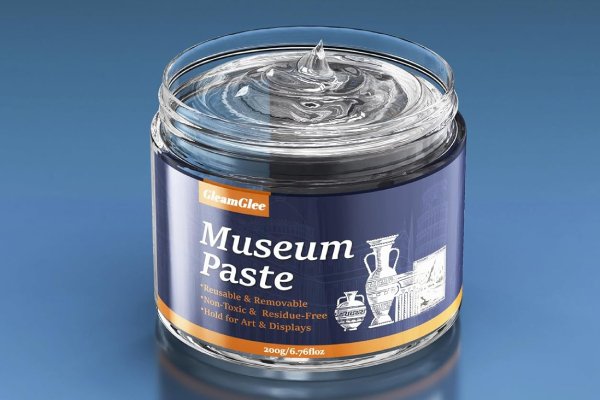
Museum gel is a clear, removable material placed beneath collectibles and decorative objects to help reduce sliding, light tipping, vibration-related movement, and accidental shifting on suitable horizontal surfaces. It is particularly useful with glass, glazed ceramic, polished metal, crystal, hard plastic, acrylic, and other smooth materials. Unlike permanent glue, it can be removed and repositioned when the display needs cleaning, photography, storage, or rearrangement.
That balance between stability and reversibility is what makes museum gel useful outside professional exhibitions. Imagine arranging a shelf of miniature buildings until every figure, tree, vehicle, and storefront is exactly where you want it, only to discover the next morning that closing the cabinet door moved half the scene. Museum gel does not turn a display into a permanent installation. Instead, it quietly helps preserve the arrangement while keeping the collection flexible enough to change whenever you decide the shelf needs a new story.
What Is Museum Gel Used For?
Museum gel is primarily used to stabilize figurines, collectibles, ornaments, miniatures, glass décor, trophies, antiques, and similar display objects on flat horizontal surfaces. A small amount beneath the base helps resist ordinary sliding and shifting caused by light vibration or accidental contact while allowing the object to remain removable and repositionable rather than permanently bonded.
What Problems Does Museum Gel Solve?
Most collectible-display accidents begin with small movements rather than dramatic impacts. A figurine may slide only a few millimeters each time a cabinet door closes, while a crystal ornament may rotate slightly whenever the shelf is dusted. After repeated movement, an object that originally sat safely in the middle can gradually reach a less stable position. Smooth glass, polished stone, acrylic, glazed ceramic, and finished furniture make these small changes especially common because the hard surfaces provide limited resistance to lateral movement.
Museum gel adds a soft, tacky contact layer beneath the object instead of relying only on the friction between two hard surfaces. In a normal household, this can help reduce movement caused by cleaning, footsteps, pets brushing furniture, light contact, cabinet vibration, or small accidental bumps. It is particularly useful when the collector cares about maintaining exact spacing and alignment between objects, because a display can look untidy long before anything actually falls.
The important limitation is that museum gel is a stabilizer rather than structural hardware. It does not make a top-heavy statue impossible to tip, and it should not be expected to secure an unstable cabinet, compensate for a narrow shelf, or protect a heavy object from a major impact. The most reliable results come when gel is added to an arrangement that is already reasonably safe and well balanced.
Which Home Collections Benefit Most?
Museum gel is especially useful for collections made up of small to medium display objects with defined bases. Action figures, anime statues, resin figurines, blind-box collectibles, model kits, miniature buildings, crystal ornaments, small glass sculptures, glazed ceramics, decorative candle holders, trophies, small vases, tabletop frames, seasonal decorations, and photography props are all common examples. These objects often need only enough additional grip to prevent casual movement rather than a permanent bond.
The shape of the collectible matters almost as much as the material. A low ceramic ornament with a broad flat base naturally gives the gel a larger contact area, while a tall character figure supported by one narrow foot may remain relatively vulnerable because its center of gravity sits high above the shelf. Collectors should therefore look at height, base width, weight distribution, and position on the shelf before deciding how much stabilization is appropriate.
Collections that are frequently changed benefit particularly well from a removable approach. Christmas villages, Halloween displays, miniature scenes, retail samples, home styling arrangements, model layouts, and photography props may be rearranged several times each year. Permanent adhesive would make those changes inconvenient, while a reusable gel lets the owner secure an arrangement today and redesign it later without treating every display decision as permanent.
How Is Museum Gel Different From Glue?
Museum gel and conventional glue are designed for fundamentally different jobs. A repair adhesive is selected because two materials need to remain bonded after the product cures. Shoe glue, glass glue, ceramic adhesive, and construction adhesive are intended to join parts that should normally stay together. Museum gel is used when the object itself is already intact but needs help remaining in a chosen position on a horizontal display surface.
For collectors, this difference is important because maximum bonding strength is not always desirable. Permanently gluing a limited-edition figurine to a glass shelf could solve one problem while creating another when the object needs to be cleaned, photographed, sold, moved, packed, or rearranged. A removable stabilizing material provides a different balance: enough resistance to ordinary movement without intentionally creating a permanent assembly.
A practical rule is to choose permanent adhesive for repairs, mechanical mounting for situations requiring structural restraint, and museum gel when a complete object simply needs discreet stabilization. Evaluating museum gel by that standard also prevents unrealistic expectations. Its value is not that the object can never move again, but that everyday movement becomes less likely while controlled removal remains possible.
What Makes Museum Gel Useful at Home?
Professional display methods often influence household collecting because both environments share the same basic concern: keeping an object stable without unnecessarily altering it. Home users, however, usually need a method that is simple enough to apply without tools and flexible enough to accommodate regular cleaning, redecorating, and seasonal changes. Clear museum gel fits this role because a small amount can remain hidden beneath the base rather than becoming part of the visible design.
Its transparency is particularly helpful on glass shelves, acrylic risers, polished stone, and crystal displays. Colored putty, foam tape, hook-and-loop strips, or visible mounting brackets can draw attention away from a carefully curated collection. Clear gel can stay within the footprint of the object and preserve a cleaner presentation when the amount is controlled correctly.
This makes the material useful not only for serious collectors but also for homeowners who simply want a vase, ornament, frame, trophy, candle holder, or decorative piece to remain aligned. The practical value comes from combining unobtrusive appearance, removability, and enough holding resistance for ordinary household disturbances rather than from trying to replace permanent fastening systems.

Which Items and Surfaces Work Best?
Museum gel performs most predictably when both contact surfaces are clean, dry, smooth, relatively non-porous, and horizontal. Glass, crystal, glazed ceramic, polished metal, acrylic, hard plastic, sealed stone, and some finished furniture are generally more suitable than raw wood, fabric, paper, unglazed pottery, or porous materials that may absorb components or complicate clean removal.
Which Collectibles Are Suitable?
A good candidate for museum gel usually has a stable physical base before any gel is added. Small figurines, model cars, resin characters, miniature scenery, crystal pieces, glazed ceramic décor, glass ornaments, decorative vases, trophies, candle holders, and tabletop accessories often work well because their bases provide enough contact area for a small portion of gel to spread slightly when pressed into position.
Geometry deserves more attention than many first-time users expect. Two objects weighing the same amount can have completely different stability characteristics. A compact 10-centimeter ceramic ornament with a broad base may be naturally difficult to tip, while a 25-centimeter character figure with an oversized head, extended weapon, cape, or narrow foot may create much greater leverage. Adding more gel does not fully overcome a poor center of gravity.
Shelf position also changes risk. A figure sitting well inside a cabinet has more margin for minor movement than an identical figure placed close to the front edge. High-value pieces should therefore be positioned with enough surrounding space that a small shift does not immediately become a fall. Museum gel works best when it improves a sensible arrangement rather than being used to justify risky placement.
Which Surfaces Provide Better Grip?
Smooth and sealed materials usually provide the most predictable contact because the gel remains at the interface instead of soaking into the surface. Glass shelves are a common example. When both the shelf and the object base are clean, a small amount of gel can stay hidden under the footprint and create useful resistance without adding a visible mounting component.
| Surface | Typical Suitability | Practical Check | Common Home Use |
|---|---|---|---|
| Glass | High | Remove fingerprints and dust | Display cabinets, shelves |
| Crystal | High | Keep gel fully hidden | Ornaments, decorative pieces |
| Glazed ceramic | High | Check painted decoration | Figurines, pottery décor |
| Polished metal | High | Remove oil and polish | Trophies, metal ornaments |
| Hard plastic | Moderate to high | Test specialty plastics | Models, collectible figures |
| Acrylic | Moderate to high | Test valuable clear pieces | Risers, display stands |
| Sealed marble | Moderate to high | Confirm surface is sealed | Tabletops, decorative shelves |
| Finished wood | Conditional | Identify finish if possible | Cabinets, bookcases |
| Raw wood | Low | Porosity creates uncertainty | Unfinished shelves |
| Fabric | Low | Fibers contaminate gel | Textile-covered surfaces |
| Paper/cardboard | Low | Easily marked or stained | Paper displays |
| Unglazed ceramic | Low | Porous body may absorb material | Handmade pottery |
These ratings are practical screening categories rather than guarantees. One finished wooden table may use a durable polyurethane coating, while another may be waxed, oiled, lacquered, painted, or decades old. Both can look smooth from a distance while behaving differently when a soft mounting material remains in contact for an extended period.
Which Surfaces Need Caution?
Porous and delicate materials deserve the most conservative approach because they can absorb components, retain marks, or lose weak surface coatings during removal. Raw timber, unsealed stone, fabric, paper, cardboard, unglazed ceramics, fragile paint, old lacquer, and restored surfaces should therefore not be treated as equivalent to modern glass or glazed ceramic simply because they are physically flat.
Antiques introduce additional uncertainty because their surface history is often unknown. A wooden object may have been waxed repeatedly, repaired with a different finish, exposed to cleaning chemicals, or coated with aged shellac. A painted resin figure may have a chemically resistant body but a delicate decorative coating on the underside. The contact surface is what matters, not only the material named on the product description.
When the finish is uncertain, a small test on an inconspicuous area is more useful than guessing. For genuinely rare, historically important, or financially significant pieces, the cost of professional conservation advice can be small compared with the cost of damaging an irreplaceable finish. Museum gel is an excellent everyday display tool, but good collecting also means knowing when a household solution is not the appropriate first choice.
What Makes a Good Contact Area?
A useful contact area is broad enough for the gel to distribute pressure and flat enough to avoid concentrating the entire hold on one tiny point. Broad ceramic bases, solid resin platforms, flat trophy bottoms, and smooth glass bases usually create more predictable contact than narrow feet, pointed supports, fabric pads, felt, loose labels, or heavily textured cast surfaces.
Before applying gel, turn the collectible over and inspect the underside. A paper authenticity label, loose felt pad, peeling paint layer, or fabric-covered base may be more vulnerable than the object itself. Placing gel directly against that weak layer can transfer the load to something that was never designed to hold it. In those cases, changing the display method may be more sensible than simply adding more material.
For wide or irregular objects, several small contact points can sometimes provide better balance than one oversized central lump. The aim is not to coat the entire base. It is to create controlled contact in areas that support the object while keeping the gel invisible from normal viewing angles and easy to inspect when the display is later moved.
How Do You Apply Museum Gel?
Applying museum gel is straightforward when preparation is done properly. Clean and dry both contact surfaces, roll a small amount of gel into a ball, position it beneath the object’s base, lower the object into its final location, and press gently. For many small collectibles, a pea-sized portion is a practical starting point, with the hold becoming more established after about 30 minutes.
How Should You Prepare the Surface?
Preparation matters because museum gel cannot make reliable contact through dust, grease, furniture polish, silicone residue, or loose debris. A shelf can look visually clean while still carrying a fine film of fingerprints or household polish. If the gel contacts that film instead of the actual surface, the display may feel less stable and the reusable material can become contaminated more quickly.
Remove the collectible first and clean the intended display area with a method appropriate for the shelf material. Allow it to dry completely. Then examine the bottom of the object for felt, loose labels, fabric, peeling paint, dust, or other materials that could interfere with contact. Valuable pieces should never be cleaned aggressively simply to prepare them for gel, because preserving the original surface is more important than maximizing tack.
A simple pre-application check is often enough to avoid most mistakes. Confirm that the shelf is horizontal, both contact areas are dry, the object already stands reasonably well, the base can accept direct contact, and the gel will remain hidden within the footprint. If one of those conditions is uncertain, testing or changing the display position is usually better than compensating with extra material.
How Much Museum Gel Should You Use?
More material does not automatically provide a better result. Excess gel can squeeze around the edge of the object, collect dust, become visible through clear shelving, and make later removal more awkward. For many small collectibles, starting with roughly a pea-sized amount gives enough material to test the contact without covering an unnecessarily large area.
| Object Type | Practical Starting Amount | Suggested Placement |
|---|---|---|
| Small figurine | About pea-sized | Under main base |
| Wide ornament | 2–3 smaller portions | Distributed across base |
| Small vase | Several small points | Balanced around bottom |
| Miniature building | Tiny portions | Stable corners or base points |
| Trophy | Multiple small portions | Spread evenly across base |
| Crystal décor | Minimal clear amount | Hidden inside footprint |
These are application references rather than load specifications. A small stone object can weigh substantially more than a larger hollow resin figure, and a tall collectible behaves differently from a low ornament even when their total weight is identical. Base geometry, shelf material, object height, weight distribution, and environmental movement all matter.
If clear gel becomes visible after the object is pressed into place, lift the item carefully, remove some material, and try again. A neat application usually uses less than a first-time user expects. The goal is a discreet support layer rather than a visible cushion underneath the collectible.
How Should You Position the Item?
Once the gel has been placed beneath the base, lower the object into its final location instead of sliding it sideways across the shelf. Sliding can smear the gel beyond the footprint and reduce the neat, nearly invisible appearance that makes clear museum gel especially useful on glass cabinets and acrylic displays.
Press through the strongest area of the object rather than delicate decorative parts. With figurines, avoid pushing on swords, wings, thin legs, hair details, antennas, capes, or raised accessories. With glass and ceramics, support the main body close to the base. The pressure required is generally modest; the purpose is to seat the gel evenly between the two contact surfaces, not force the object downward.
For the product specification discussed here, allowing approximately 30 minutes gives the gel time to develop a more settled grip. Check the alignment before leaving the piece undisturbed. Looking at the arrangement from the normal viewing angle, rather than only from directly above, can prevent repeated lifting and repositioning after the display has already begun to settle.
Which Application Mistakes Matter Most?
Using too much gel is probably the most common application error because beginners often assume that a larger quantity must produce proportionally greater protection. In practice, excessive material can become visible, collect dirt, and create a soft layer that is harder to control. A small, well-positioned portion on a clean base is generally more useful than an oversized blob.
Vertical use is another important mistake. Museum gel is intended for horizontal stabilization, not hanging pictures, mounting decorations on walls, securing objects upside down, or replacing mechanical brackets. Gravity acts differently in those situations, and a product designed to resist ordinary horizontal movement should not be treated as structural mounting hardware.
Another mistake is ignoring the furniture itself. If a cabinet rocks when someone walks past, or a shelf bows noticeably under load, stabilizing individual ornaments does not solve the underlying hazard. Safe displays start with stable furniture, sensible shelf loads, and enough space around valuable pieces. Museum gel becomes the finishing layer rather than the foundation of the whole safety system.

How Does It Protect Fragile Collections?
Museum gel helps fragile collections by increasing resistance to the small movements that often happen before an object slides, rotates, or tips. It is most useful for ordinary household risks such as cabinet vibration, dusting, footsteps, minor bumps, and pet contact. It can reduce movement risk, but it does not replace proper furniture anchoring or structural restraints for high-risk displays.
How Does Museum Gel Reduce Sliding?
Many display accidents begin with sliding rather than immediate tipping. A collectible may shift only a few millimeters during cleaning or when a cabinet door closes, but repeated movement can gradually move it toward an exposed edge. Glass-on-glass, hard plastic on acrylic, polished ceramic on stone, and metal on glossy furniture are particularly likely to move because both contact surfaces are hard and relatively smooth.
Museum gel changes this interface by introducing a soft, tacky layer between the object and shelf. Instead of relying only on the natural friction between two hard materials, the base gains additional resistance to lateral movement. This can help figurines stay aligned, crystal ornaments remain correctly oriented, and miniature scenery retain the spacing chosen by the collector.
The benefit is therefore partly visual as well as protective. A carefully organized display can appear disordered even when nothing has fallen. Figures may rotate, model buildings may drift out of line, and trophies may gradually move toward the front of a shelf. By reducing those small changes, clear gel helps preserve both the safety and the intended composition of the collection.
Does It Help With Pets and Bumps?
Museum gel can be particularly practical in homes with pets because a cat or dog does not need to strike a collectible directly to disturb it. Jumping onto a sideboard, brushing past a vase, landing on a nearby shelf, or moving furniture slightly can create enough vibration for lightweight objects to shift on a polished surface. Children, vacuuming, cleaning, opening doors, and everyday foot traffic can create similar disturbances.
| Household Risk | First Safety Measure | Museum Gel’s Role |
|---|---|---|
| Pet contact | Move fragile pieces away from exposed edges | Helps resist minor shifting |
| Cabinet vibration | Check cabinet stability | Helps maintain object position |
| Dusting | Leave enough space between pieces | Reduces accidental movement |
| Children nearby | Use enclosed or higher displays | Adds secondary stabilization |
| Foot traffic | Keep furniture stable and level | Helps with light vibration |
| Tall figurines | Position deeper on shelf | Adds resistance at the base |
| Valuable antiques | Consider professional mounts | May be only part of protection |
This layered approach is more dependable than treating gel as the entire safety strategy. A valuable figurine should still be placed far enough from the edge that a small shift does not immediately cause a fall. A tall cabinet should still be stabilized if necessary. Museum gel is most effective when it reduces everyday movement inside an arrangement that has already been planned sensibly.
Can Museum Gel Prevent Tipping?
Museum gel can reduce the likelihood of light tipping, but it cannot eliminate the basic effect of an object’s center of gravity. A short piece with a broad base is naturally more stable than a tall piece balanced on a narrow foot. Large heads, raised weapons, extended wings, long capes, uneven accessories, and dynamic poses can move a figurine’s center of mass away from the middle of its base.
Four factors deserve attention before relying on gel: base width, object height, weight distribution, and distance from the shelf edge. Improving any of those factors can be more valuable than simply using a larger quantity of material. Moving a tall figure five centimeters farther back on a deep shelf, for example, may give the display more practical safety margin than increasing the gel underneath it.
For earthquake-prone homes, the same principle becomes even more important. Museum gel may help small suitable objects resist limited movement, but cabinets, shelving, and heavy furniture can still require proper anchoring. The safest approach treats the building, furniture, shelf, object geometry, and stabilizing material as separate layers rather than expecting one removable product to control every possible force.
What Are the Limits of Museum Gel?
Museum gel is not intended to serve as structural fastening hardware. It should not be used to hang objects on walls, support suspended décor, secure shelving, hold objects upside down, or replace engineered mounts for heavy and high-value pieces. Its appropriate role is to stabilize suitable objects already resting on horizontal surfaces.
Large impacts can also overcome a removable hold. If someone directly pulls a collectible, a shelf collapses, furniture overturns, or the object receives a strong sideways impact, the forces involved may exceed what any removable gel is expected to resist. Describing the product realistically does not make it less useful; it helps users reserve it for the situations where its balance of stability and removability provides genuine value.
The most reliable display usually begins with stable furniture, appropriate shelf capacity, sensible spacing, and valuable items positioned away from exposed edges. Museum gel can then add another layer of resistance against the ordinary movements that happen in real homes. This combination is more practical than trying to turn a removable material into a substitute for structural mounting.
Is Museum Gel Safe and Reusable?
Museum gel can usually be removed, repositioned, and reused when it remains clean, flexible, and tacky and is applied to suitable smooth, sealed surfaces. Glass, glazed ceramic, crystal, polished metal, and similar materials are generally more predictable than porous or fragile finishes. Gel should be replaced when it becomes dirty, dry, contaminated, fragmented, or noticeably less tacky.
Does Museum Gel Leave Residue?
On appropriate smooth and non-porous surfaces, clear museum gel is intended to remove without the type of sticky film commonly associated with some tapes or permanent adhesives. Glass, glazed ceramic, polished metal, crystal, and similar materials are among the easier surfaces to inspect after removal because they do not readily absorb the material.
The answer becomes less predictable when surfaces are porous, aged, restored, or coated with fragile finishes. Raw wood, unglazed ceramics, paper, fabric, unfinished stone, old paint, waxed furniture, and unknown antique coatings can interact differently with any soft mounting material. This is why a statement such as “residue-free” should always be understood within the context of suitable surfaces and correct use.
Using the smallest effective amount also reduces unnecessary contact. For ordinary household collections, that habit improves appearance and simplifies later removal. For valuable antiques, handmade finishes, or objects where even slight staining would be unacceptable, a compatibility test or professional conservation method is more appropriate than relying on a broad material label alone.
How Do You Remove Museum Gel?
Removal should be controlled and patient, especially when the object itself is more fragile than the contact between the gel and shelf. Rather than pulling straight upward with force, support the item close to its strongest part near the base and apply a gentle twisting motion. This gradually reduces the contact area and usually makes separation easier.
After lifting the object, remaining material can often be gathered by rolling it together rather than scraping the surface. Metal blades or aggressive tools should not be used on delicate furniture, glass coatings, painted bases, or collectible finishes simply because a small trace of material remains. The removal method should always be gentler than the surface being protected.
An object that has remained in the same position for a long time should also be inspected during removal. Look at the contact area for dust accumulation, discoloration, softness, coating changes, or debris. Repositioning provides a useful opportunity to clean the display, inspect the gel, and decide whether the old material is still suitable or whether a small fresh portion would be more appropriate.
Can Museum Gel Be Reused?
Reusability is one of the most practical reasons collectors choose museum gel. Clean material that remains soft, flexible, and tacky can often be rolled again and used when a figurine, vase, model, or ornament is repositioned. This is useful for collections that change frequently, including seasonal arrangements, model scenes, photography props, shop displays, and hobby collections.
Reusable does not mean unlimited lifetime. Each handling cycle introduces opportunities for dust, fibers, pet hair, paint flakes, or other debris to become embedded in the surface. Once contamination reduces the clean contact area, the material may become less effective and can carry dirt onto the next shelf or object.
A simple visual and tactile check is more useful than relying on a fixed replacement schedule. If the gel still rolls smoothly, remains flexible, looks clean, and maintains useful tack, reuse may be practical. If it has become dirty, stiff, fragmented, discolored, or noticeably less tacky, replacing that small portion is a sensible part of maintaining the display.
When Should You Replace It?
There is no single universal replacement interval because home environments vary widely. A closed glass cabinet in a clean room exposes gel to much less contamination than an open bookshelf near a window, a frequently handled retail display, or a tabletop in a home with pets. Temperature changes, dust levels, cleaning routines, and how often objects are moved all influence practical service life.
Replacement is advisable when the material no longer behaves like clean, flexible gel. Embedded dust, textile fibers, pet hair, loose paint, or particles from unfinished surfaces are obvious reasons to discard it. Drying, fragmentation, reduced tack, unusual firmness, or significant discoloration are also useful warning signs.
The easiest maintenance habit is to inspect gel whenever the collection is already being cleaned or rearranged. That avoids unnecessary handling while ensuring that old material is not reused automatically. Because the amount required beneath most small objects is limited, replacing contaminated gel is usually simpler than trying to clean material that has already lost the characteristics that made it useful.
How Do You Build Better DIY Displays?
A better DIY collectible display combines museum gel with thoughtful object placement rather than depending on gel alone. Start with stable furniture, keep valuable items away from exposed edges, place taller pieces where they have more safety margin, leave enough space for cleaning, choose compatible surfaces, and use only enough clear gel to maintain alignment without making the support visible.
How Do You Secure a Glass Cabinet?
Glass cabinets are one of the most natural applications for clear museum gel because the shelves are smooth, horizontal, easy to clean, and visually exposed. Crystal ornaments, glass décor, resin figures, glazed ceramics, miniatures, and model collectibles can benefit from stabilization without introducing obvious tape, foam pads, or colored mounting material beneath them.
The arrangement should be designed before gel is applied. Heavier objects are generally better placed lower in the cabinet, while tall figures benefit from sitting deeper on the shelf rather than close to the door. Fragile pieces should have enough space that one object cannot easily strike several neighboring collectibles if it becomes unstable.
Not every piece needs stabilization. Prioritize tall figurines, smooth-bottomed ornaments, pieces close to cabinet doors, lightweight décor, narrow-base collectibles, and items with greater sentimental or financial value. Keep the gel fully inside the base footprint so the clear cabinet remains visually clean. The best result is one where visitors notice the collection and never think about how the pieces are being held in position.
How Do You Stabilize Figurines and Models?
Figurines often present unusual balance problems because visual design takes priority over engineering. Large heads, long weapons, flowing capes, wings, extended arms, dramatic poses, and one-leg supports can create a high or off-center center of gravity. Before adding museum gel, place the figure on the shelf and check whether it naturally rocks or feels unstable.
Model scenes and miniature layouts usually require a different approach. Dollhouse furniture, model railway buildings, miniature vehicles, small scenery pieces, craft displays, and photography props may need only enough grip to remain aligned while the surrounding arrangement is adjusted. Tiny contact points can provide useful positioning without turning a temporary creative layout into a permanent construction.
A sensible priority order is stable furniture first, safe shelf position second, adequate spacing third, balanced base contact fourth, and museum gel fifth. This order matters because the product works best as a finishing measure. It is especially convenient for collectors who regularly remove models for photography, cleaning, cataloging, or rotation because the arrangement does not need to become permanently bonded.
Which Is Better: Gel, Putty, Wax, or Tape?
No mounting material is automatically best for every display. The correct choice depends on whether the object needs to be permanently repaired, temporarily stabilized, frequently repositioned, displayed invisibly, or mechanically restrained. Museum gel is particularly attractive when transparency, clean appearance, horizontal use, and future repositioning are priorities.
| Option | Visibility | Repositioning | Typical Use | Main Limitation |
|---|---|---|---|---|
| Clear museum gel | Very low | Easy | Smooth horizontal displays | Porous surfaces need caution |
| Museum putty | Moderate | Easy | General lightweight décor | Color can remain visible |
| Museum wax | Low | Possible | Longer-term displays | Removal may require more care |
| Double-sided tape | Low to moderate | Limited | Low-value temporary mounting | Adhesive residue possible |
| Permanent glue | Usually low | Not practical | Repair and permanent bonding | Irreversible |
| Mechanical mount | Varies | Depends on design | Heavy or high-risk objects | More installation effort |
A useful decision begins by asking what problem actually needs to be solved. If an ornament is broken, use an adhesive formulated for the repair materials. If a large valuable object requires engineered restraint, choose an appropriate mechanical system. If an intact figurine or crystal piece simply keeps sliding on a glass shelf, a removable clear gel is often the simpler and more proportionate solution.
For brands and retailers developing their own collectible-care ranges, the same distinction matters when specifying a product. Museum gel needs consistent tack, clear appearance, controlled removability, suitable packaging, and practical instructions rather than the curing characteristics expected from a permanent adhesive. Manufacturers with in-house formulation, packaging, printing, and material testing can adjust presentation and packaging formats for different retail markets without changing the basic role of the product.
How Should You Maintain the Display?
A secured collection still needs periodic attention because dust, handling, temperature changes, furniture movement, and material aging continue after the gel is applied. Routine cleaning is a convenient time to check important objects. Rather than forcing a cloth underneath a stabilized base, clean around the item carefully and remove it only when a deeper inspection is useful.
When an object is lifted, inspect both the gel and the contact surfaces. Clean material can sometimes be rolled and reused, while contaminated or degraded gel should be replaced. Seasonal displays deserve particular attention because decorations are often stored in boxes where fibers, dust, and packaging debris can contaminate old material before the next installation.
The collection itself should also be reassessed as it grows. Adding more figures to a shelf changes spacing and can create domino risks. New taller pieces may require deeper placement, and heavier collectibles may be better moved to lower shelves. Good display maintenance is therefore not simply about replacing gel; it is about preserving a stable arrangement as the collection, room, and household habits evolve.

Conclusion
Museum gel works best when it disappears from both view and thought. A well-arranged collection should not look heavily secured or permanently fixed. Figurines should remain aligned, crystal pieces should stay where they were placed, miniature scenes should survive routine cabinet movement, and decorative objects should still be removable when the owner wants to clean, photograph, reorganize, or store them.
The most important lesson is that correct use begins before the gel touches the object. Surface compatibility, object balance, shelf position, furniture stability, and contact area all influence the outcome. Smooth, sealed, horizontal surfaces are generally the most suitable, while porous, historic, fragile, or uncertain finishes deserve more caution. Using a small amount on a carefully planned display is usually more effective than adding excessive gel to a poorly positioned object.
For everyday home collectors, this balance is what makes a clear reusable museum gel practical. It can help protect figurines, models, glass décor, crystal ornaments, trophies, miniatures, and seasonal arrangements from the small movements that happen in real homes without forcing those displays to become permanent. Whether the collection contains three favorite pieces or several full cabinets, thoughtful placement combined with discreet stabilization can make it easier to enjoy the objects rather than constantly worrying about where they might move next.

Frequently Asked Questions
Does Museum Gel Damage Wood?
Museum gel should be used cautiously on wood because “wood” can describe very different surfaces. A modern sealed shelf with a durable finish may behave differently from raw timber, waxed furniture, antique lacquer, or an oiled tabletop. Porous or uncertain finishes have a greater chance of staining or surface interaction. Test an inconspicuous area first, and avoid applying gel directly to valuable unfinished or historically significant wooden surfaces.
How Long Does Museum Gel Last?
There is no reliable universal service-life figure because performance depends on dust exposure, temperature, surface cleanliness, handling frequency, material quality, and how often the object is repositioned. Gel inside a closed display cabinet may remain clean longer than gel on an open shelf. Instead of relying on a fixed number of months, inspect it during cleaning and replace it when it becomes dirty, stiff, fragmented, or noticeably less tacky.
Can Museum Gel Be Used on Walls?
Museum gel is intended for horizontal display surfaces and should not be treated as a wall-mounting product. Vertical mounting places continuous gravitational force on the material in a way that differs from stabilizing an object resting on a shelf. Pictures, mirrors, wall décor, and suspended objects should use mounting hardware or another system specifically rated for that purpose rather than relying on museum gel.
Is Museum Gel Better Than Museum Putty?
Neither product is universally better because they suit different display priorities. Clear museum gel is especially useful when low visibility matters, such as beneath crystal, glass, acrylic, or objects displayed on transparent shelves. Museum putty can be convenient for many lightweight decorative objects but may remain more visible. Surface compatibility, object weight, display orientation, appearance, and how frequently the arrangement changes should guide the choice.
How Much Museum Gel Should I Use?
For many small figurines and decorative objects, a pea-sized amount is a practical starting point rather than a strict specification. Wide bases may benefit from two or three smaller contact points distributed across the underside. The correct quantity is the smallest amount that provides useful contact while remaining hidden. If gel squeezes visibly around the base after pressing, remove some material and reposition the object.
Can Museum Gel Be Reused?
Museum gel can often be reused when it remains clean, flexible, soft, and tacky. Roll the recovered material together and inspect it before placing it beneath another object. Dust, pet hair, textile fibers, paint flakes, and other contaminants reduce useful contact and may transfer debris to the next surface. Replace the gel when contamination, drying, fragmentation, discoloration, or a noticeable loss of tack becomes apparent.
Does Museum Gel Help Protect Collectibles During Earthquakes?
Museum gel can help suitable small objects resist limited sliding and light vibration, but it should not be treated as complete earthquake protection. Tall furniture, shelving, heavy objects, and valuable displays may require wall anchoring, mechanical restraints, deeper shelf placement, or other safety measures. Gel is best used as one layer within a broader display-protection plan rather than as a replacement for properly securing the furniture and structure around the collection.
Share:
Table of Contents
Here, creating your adhesives glue & removal cleaner collection is no longer a barrier—it’s a collaborative journey where GleamGlee helps brands and businesses transform their vision into durable, certified, and market-ready solutions.
Partner with GleamGlee
Join hundreds of global partners who trust GleamGlee for adhesives and cleaners that combine innovation, compliance, and speed. Our vertically integrated system—from R&D to warehouse—guarantees consistent performance and reliable delivery.
Whether you’re sourcing FBA-ready stock or developing your own formula, our team provides unmatched technical support and responsive service.