Skip to content

Adhesive Remover for Gym Floor Tape Residue: An Evidence-Based Guide
Your trusted adhesives glue & cleaner manufacturer

Tape residue on a gym floor can look like a minor cleaning problem until someone actually tries to remove it. A temporary court line, mat seam, event marker, or strip of double-sided tape can leave behind a thin sticky film, a dark gummy ridge, or hardened fragments that resist ordinary floor cleaner. Scrubbing harder is rarely the best answer. On finished hardwood, rubber, vinyl, or athletic mats, too much scraping or the wrong chemical may damage the surface long before the adhesive finally comes off.
The safest way to remove gym floor tape residue is to identify the flooring material first, test a compatible adhesive remover in a hidden area, soften the adhesive instead of aggressively scraping it, lift the loosened residue with a clean cloth or suitable plastic scraper, and remove any cleaner film before the floor returns to use. Hardwood, rubber, vinyl, and athletic mats should not automatically receive the same treatment.
This matters because a gym floor is not simply another hard surface. It is a working surface exposed to running, jumping, sudden stops, rolling equipment, cleaning machines, and repeated foot traffic. A cleaning method that leaves a dull patch, softened rubber, lifted finish, or slippery film may create a bigger problem than the original adhesive. Picture a school custodian walking onto a basketball court on Monday morning after a weekend tournament: the temporary tape is gone, but several long sticky shadows remain. The job is not simply to make those lines disappear. The real goal is to remove the residue while leaving the floor looking, feeling, and performing as close to its original condition as possible.
What Causes Tape Residue on Gym Floors?
Tape residue forms when part of a pressure-sensitive adhesive remains attached to the floor after the tape backing is removed. Contact time, repeated pressure, floor temperature, tape formulation, dirt contamination, and surface texture all affect how much residue is left behind. Older tape can become especially difficult because the adhesive may soften, harden, darken, or settle deeper into textured surfaces.
Why Tape Leaves Residue
Most temporary floor tapes rely on pressure-sensitive adhesives. These adhesives grip when pressure is applied rather than curing into a rigid bond in the way many structural glues do. That makes them useful for temporary markings, but it also means the adhesive remains relatively mobile while the tape is in place. Repeated pressure from shoes, carts, benches, exercise equipment, cleaning machines, or folding bleachers can gradually press the adhesive more firmly against microscopic irregularities in the floor.
Temperature and time can change the way the adhesive behaves. A warm sports hall, direct sunlight near large windows, or constant indoor heating may soften certain pressure-sensitive adhesives, making transfer more likely when the backing is removed. Later, when the residue cools or ages, it may become much firmer. Dirt can also work into exposed adhesive around the tape edges, which is one reason old residue often appears gray, brown, or nearly black even when the original adhesive was clear.
The floor condition matters just as much as the tape. A newly refinished hardwood sports floor may respond differently from a coating that has experienced years of traffic, cleaning, and recoating. Rubber floors can vary in density, recycled content, binder chemistry, texture, and surface treatment. For this reason, two pieces of identical tape can leave very different residue patterns when used on two floors that simply look similar from a distance.
| Factor | Typical Effect on Residue | Practical Concern |
|---|---|---|
| Longer contact time | Greater adhesive transfer | Old tape may need repeated treatment |
| Heavy foot traffic | Adhesive pressed into surface texture | More difficult removal on textured flooring |
| Warm conditions | Adhesive may soften and migrate | More smearing during removal |
| Dirt contamination | Residue becomes darker and thicker | Can be mistaken for permanent staining |
| High-tack tape | Stronger bond to the surface | Greater risk of finish damage |
| Textured flooring | Adhesive settles into recesses | Additional wiping may be needed |
Which Tapes Cause More Trouble?
Duct tape, general-purpose mounting tape, double-sided tape, aggressive masking tape, electrical tape, and construction tape usually deserve more caution than products specifically intended for temporary athletic applications. The problem is not simply whether a roll is marketed as removable. A tape that releases easily from glass may behave very differently on polyurethane-coated maple, textured rubber, flexible vinyl, or a printed athletic mat.
Double-sided tape can be particularly troublesome because it is designed to create adhesion on both sides. Thick foam-backed products may leave a raised adhesive layer when the carrier tears away. On smooth flooring, the result can look like a rubbery strip. On coarse rubber, softened adhesive may become trapped in the surface pattern, making aggressive scraping less effective than repeated controlled wiping with clean material.
Temporary court-marking tape can also create residue when it stays installed longer than intended. Even a relatively mild adhesive may become difficult to remove after days or weeks of pressure, warm conditions, cleaning cycles, and repeated athletic activity. On finished wood, the risk extends beyond residue. If adhesive interacts with the coating, the remaining line may include changes in gloss, staining, or actual finish damage that chemical cleaning cannot reverse.
Does Old Tape Behave Differently?
Yes. Fresh residue is often thin, soft, and easy to transfer onto a clean cloth after brief treatment. Aged adhesive may become gummy and stretch into strings, roll into small balls, harden into a thin film, or break away with fragments of tape backing still attached. In busy gyms, rubber particles from footwear, dust, floor-care residue, and general dirt can become embedded in the adhesive and make the mark look much more severe than it really is.
The appearance of an old mark can therefore be misleading. A dark line may contain both adhesive and contamination rather than permanent floor staining. The safest way to judge it is to clean a small test section first. If the area becomes clean and returns to the same color and gloss as the surrounding floor, the problem was mainly residue. If the stickiness disappears but the discoloration remains, repeated chemical treatment may no longer be appropriate because the remaining mark could be coating change, staining, or abrasion.
How Floor Type Changes the Problem
The phrase “gym floor” covers a wide range of materials, including finished maple, rolled rubber, rubber tiles, vinyl sports floors, polyurethane systems, sealed or painted concrete, wrestling mats, and flexible training mats. These surfaces do not respond to scraping or chemicals in the same way. Hardwood courts are especially sensitive because the protective finish is part of the playing surface, while rubber can tolerate heavy mechanical use but may react poorly to unsuitable solvents.
Texture also changes the removal process. A smooth hardwood court usually keeps residue close to the top of the finish, where controlled softening and wiping may work efficiently. A textured rubber surface can trap adhesive inside tiny recesses, so the operator may need more wiping cycles and more clean cloths instead of additional scraping force. Identifying the flooring material before choosing a remover is therefore not a formality; it is the first meaningful decision in the entire cleanup process.

Is Adhesive Remover Safe for Gym Floors?
Adhesive remover can be safe for gym flooring when the formula is compatible with the exact surface and used with controlled contact time. No cleaner should automatically be assumed safe for every hardwood finish, rubber compound, vinyl coating, or athletic mat. A small hidden-area test is essential, especially when the flooring manufacturer, coating system, or maintenance history is unknown.
Hardwood Floor Safety
Finished hardwood gym floors should be treated very differently from unfinished workshop timber. The visible surface normally contains a professional coating designed to protect the maple while maintaining the appearance and performance expected from a sports court. A chemical that does not visibly harm bare wood could still dull, soften, stain, or interact with that coating, which is why the condition of the finish matters as much as the wood underneath.
Before applying adhesive remover to a visible tape line, test a small hidden area using the same amount of product and the same approximate contact time planned for the full job. Wipe the test completely and allow it to dry before comparing it with the surrounding floor. Do not judge compatibility while the surface is still wet because temporary changes in gloss can disappear after drying, while genuine coating damage may become easier to see under reflected overhead lighting.
Useful warning signs include a loss of gloss, unusual shine, cloudy appearance, finish transfer onto the cloth, tackiness, color change, or a visible edge where the coating appears to have lifted. If any of these occur, stop. A stronger application rarely improves a surface that is already reacting. On valuable basketball and volleyball courts, the cost of professional finish repair can be far greater than the time saved by skipping a proper compatibility test.
Rubber Floor Safety
Rubber gym flooring is designed to handle weights, shoes, impact, and repeated traffic, but that mechanical durability should not be confused with unlimited chemical resistance. Different products may contain different binders, pigments, recycled rubber content, fillers, and surface treatments. Two black rubber floors can look almost identical while reacting very differently to the same cleaning chemistry.
When testing an adhesive remover on rubber, look beyond obvious discoloration. The earliest change may be a softer feel, increased tackiness, unusual shine, swelling, or black material transferring onto the cloth. A test area only needs to be small enough to reproduce the planned cleaning method. Apply a controlled amount, wait for the intended contact period, wipe thoroughly, allow it to dry, and compare the treated zone with an untreated section.
For thick residue on textured rubber, avoid the assumption that more liquid will automatically make removal easier. Heavy saturation can dissolve the adhesive and push the softened material deeper into the surface pattern. A repeated spray-and-wipe process is normally easier to control because each cycle removes part of the contamination instead of creating a larger sticky area.
| Surface | Main Risk | What to Check After Testing | Practical Approach |
|---|---|---|---|
| Finished maple | Finish damage | Gloss, color, coating transfer | Minimal liquid and gentle wiping |
| Rubber roll | Softening or color transfer | Texture, tack, cloth staining | Short contact and repeated wiping |
| Rubber tile | Binder or surface reaction | Swelling, edge change | Small-area compatibility test |
| Vinyl sports floor | Surface-treatment damage | Gloss, color, tackiness | Controlled spot application |
| Athletic mat | Delamination or print damage | Seams, graphics, surface feel | Test underside or hidden edge |
Vinyl and Synthetic Floors
Vinyl and synthetic sports floors may appear resistant because their surfaces are smooth and water-tolerant, but many are engineered systems with wear layers, printed graphics, coatings, or polyurethane surface treatments. A product described as safe for ordinary plastic therefore cannot automatically be assumed safe for every vinyl athletic floor. The coating and previous maintenance products may influence chemical resistance as much as the base material itself.
Athletic mats introduce another complication because the visible vinyl or flexible cover may be bonded to foam underneath. If an unsuitable cleaner reaches a seam or edge and affects the bonding system, the result could be bubbling or delamination rather than simple discoloration. For this reason, short exposure and controlled application are generally preferable to prolonged soaking.
A useful principle is to remove the cleaner once the adhesive has softened enough to lift. The goal is not to dissolve every trace of glue while the product remains sitting on the surface. The goal is to weaken the adhesive enough that it can be transferred onto a cloth or removed with minimal mechanical force. Longer contact after that point usually adds chemical exposure without adding meaningful cleaning value.
When to Stop
Knowing when to stop is one of the most valuable habits in floor maintenance. Adhesive removal should be paused immediately if the floor changes color, becomes cloudy, feels softer, develops unexpected tackiness, shows finish transfer on the cloth, or begins lifting around painted lines, seams, or coating edges. Continuing simply because some mark is still visible can turn a manageable cleaning task into a repair problem.
It is also important to stop when the remaining mark no longer feels sticky. A visible shadow that remains after the adhesive has been completely removed may represent staining, friction change, coating damage, or altered gloss rather than leftover glue. Repeated applications of remover will not necessarily correct those conditions and can make them worse.
For expensive commercial courts, unknown flooring systems, or large contaminated areas, checking the floor manufacturer’s maintenance instructions or consulting the installer is often more economical than experimenting with increasingly aggressive cleaners. A professional approach is not defined by how quickly a stain disappears; it is defined by how much of the original surface is preserved during the process.

Which Adhesive Remover Works Best for Tape Residue?
The best adhesive remover is the one that softens the actual tape residue effectively while remaining compatible with the floor underneath. Maximum chemical strength is not the most useful benchmark for gym applications. Controlled application, reduced scraping, suitable working time, clean wipe-off, and limited surface interaction usually matter more than choosing the most aggressive product available.
Match Remover to Residue
Begin by judging how severe the residue actually is. A light tacky film left by recently removed floor tape normally requires less chemical action than a raised layer of aged double-sided adhesive. If the mark is only slightly sticky, an aggressive industrial cleaner can introduce more risk without providing a meaningful advantage.
Thicker residue should be treated as a layered problem. Remove any loose backing or raised adhesive that can be lifted safely, then soften the remaining film. Trying to dissolve a thick mass in one application often creates a sticky liquid that spreads beyond the original footprint and becomes harder to control, particularly on textured rubber flooring.
This is also the point where visual diagnosis matters. If a dark line remains after the surface no longer feels tacky, do not automatically assume stronger chemistry is required. The mark could be staining or finish alteration. A good remover should reduce mechanical effort, not encourage repeated chemical treatment after the adhesive itself is already gone.
| Residue Level | Typical Condition | Practical Treatment |
|---|---|---|
| Light | Thin tacky film | Short treatment followed by cloth wipe |
| Moderate | Clear or dirty adhesive line | Remover, wipe, and repeat if needed |
| Heavy | Raised gummy layer | Lift bulk material first, then soften film |
| Aged | Brittle fragments or dark residue | Work in small sections with repeated cycles |
| Unknown mark | Visible discoloration without tack | Stop and inspect floor condition |
Fast Acting Without Overexposure
Working speed is important in schools, sports centers, martial arts facilities, and commercial gyms because maintenance may need to happen between classes, events, or scheduled training periods. A remover that begins softening residue quickly can reduce labor and limit the amount of scraping required, but fast action should not be interpreted as permission to leave the product on the floor for an unnecessarily long time.
Once the adhesive becomes soft enough to wipe or lift, the cleaner has achieved its purpose. Leaving it in contact for several additional minutes increases exposure to the flooring system without guaranteeing a better result. Repeated short cycles are usually more controllable than one heavy soaking treatment, especially on surfaces where chemical compatibility is not fully documented.
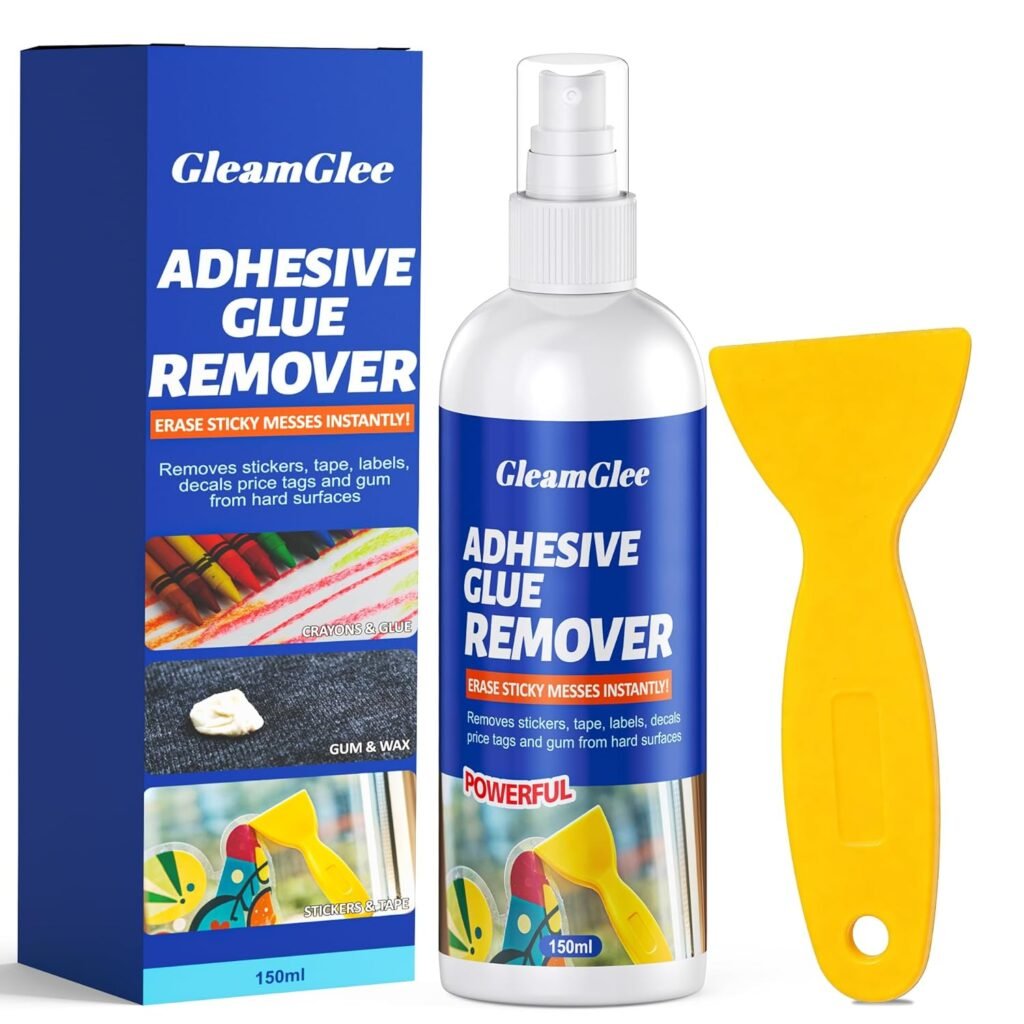
GleamGlee Adhesive Remover is designed for controlled spot treatment of sticky residue on suitable tested surfaces. Its normal process is to spray the affected area, allow roughly 15 seconds for initial softening, then wipe or carefully lift the loosened residue with the supplied scraper. That timing is a product-use reference rather than a universal rule for every floor, which is why a small compatibility test remains important.
Scraper and Application Control
An adhesive remover and scraper should work together rather than compensate for one another. The remover softens the adhesive so that less mechanical force is required, while the scraper helps lift material that has already loosened. If substantial pressure is needed, the residue probably needs further softening rather than harder scraping.
Plastic scrapers are generally easier to control on sensitive flooring than sharp metal blades, although even plastic tools need to be kept clean. Adhesive buildup can collect grit and turn the scraper edge into an abrasive surface. Checking and wiping the tool between sections reduces the chance of dragging contaminated material across the floor.
Spray application is particularly useful for long, narrow tape marks because the operator can treat the residue instead of flooding the surrounding clean area. Work in manageable sections, apply only enough product to cover the adhesive, wait until the residue begins to release, and wipe with a clean section of cloth. When the cloth becomes loaded with adhesive, replace or refold it so the material is removed rather than redistributed.
Choosing for Commercial Use
Commercial facilities usually evaluate cleaning products on more than removal strength. A school custodian, gym operator, cleaning contractor, or sports-center maintenance team may need repeatable results across many tape lines and several flooring systems. Clear instructions, predictable working time, manageable spray coverage, easy wipe-off, packaging reliability, and appropriate documentation can become just as important as the chemistry itself.
Facilities that purchase regularly should also consider whether the product is easy for multiple staff members to use consistently. A cleaner that performs well only when an experienced technician controls every detail can be harder to standardize than a product with a simple test, spray, soften, wipe, and inspect workflow.
For distributors, cleaning brands, and private-label projects, product evaluation becomes even broader. Formula performance should be tested on the actual surfaces the target customer is likely to encounter. Packaging, spray components, labeling, storage stability, production consistency, and regional compliance also matter. GleamGlee supports customized adhesive-remover formulas, packaging, and private-label projects, but sample validation on target substrates remains more meaningful than broad claims about universal surface compatibility.
How Do You Remove Gym Floor Tape Residue?
Identify the flooring material, remove loose tape, clear away grit, and test the adhesive remover in a hidden area. Apply only enough product to soften the residue, then wipe or lift it with a suitable plastic scraper. Work in small sections and repeat if needed. Finish by removing cleaner residue and allowing the floor to dry completely before normal traffic resumes.
Prepare the Area
Good preparation prevents many of the problems that later get blamed on the cleaner. Start by determining whether the surface is finished hardwood, rubber roll, rubber tile, vinyl sports flooring, polyurethane flooring, painted or sealed concrete, or a flexible athletic mat. If maintenance records are available, identify the floor brand and coating system before choosing a chemical.
Remove loose dust, sand, and rubber particles around the tape line. Fine grit caught beneath a cloth or scraper can scratch a coated surface even when the cleaning chemistry itself is perfectly compatible. Next, peel away as much tape backing as possible without digging under it with a sharp tool. Slow, controlled peeling is usually preferable to repeatedly tearing the backing into small fragments.
Before treating the visible area, perform the compatibility test using the same method you intend to use on the residue. Apply a small amount, allow the planned contact time, wipe it away thoroughly, and let the surface dry. Compare color, gloss, texture, and surface feel with the surrounding floor before continuing. In an active commercial facility, block the area temporarily so nobody walks across wet cleaner during the process.
Apply and Soften
Apply the remover directly to the adhesive rather than treating a large surrounding area. With a spray bottle, this usually means aiming at the narrow tape line and controlling the amount of liquid so that it does not spread across the entire floor. The purpose is to soften the glue, not to wash the room.
For suitable surfaces, GleamGlee Adhesive Remover follows a straightforward sequence: spray the residue, wait approximately 15 seconds, then wipe or gently lift the softened material. If the adhesive transfers readily onto the cloth, continue wiping rather than immediately adding more product. The first pass often tells you whether the residue is fresh and easy to remove or old enough to require another controlled cycle.
If the adhesive starts smearing instead of transferring cleanly, inspect the cloth. A cloth loaded with dissolved glue can behave like an applicator and spread residue beyond the original tape line. Refold or replace it frequently so that each wipe moves contamination away from the floor instead of redistributing it.
| Step | Typical Action | What to Observe |
|---|---|---|
| 1 | Remove loose tape | Finish stays intact |
| 2 | Test remover | No color or texture change |
| 3 | Apply controlled amount | Residue begins softening |
| 4 | Wait briefly | Avoid unnecessary soaking |
| 5 | Wipe or scrape | Adhesive transfers away |
| 6 | Repeat if required | Treat only remaining residue |
| 7 | Final clean | No tacky or slick film |
| 8 | Dry fully | Surface ready for normal use |
Scrape Without Damage
A scraper should remove adhesive that has already softened. It should not be used to force dry glue off the surface. Hold a suitable plastic scraper at a low working angle and apply light pressure. If the residue resists strongly, stop and soften it again instead of increasing force.
Sharp metal blades create unnecessary risk on finished hardwood, vinyl, rubber, and many synthetic surfaces. Fine scratches may be difficult to see immediately but can become obvious later under overhead court lighting. Abrasive pads should be approached with the same caution because a pad that is acceptable on bare concrete may permanently alter the gloss of a coated sports floor.
Textured rubber often needs a slightly different approach because adhesive can extend into the pattern where a flat scraper cannot reach effectively. Repeated wiping with clean material may work better than pushing harder. If a soft brush is considered, it should only be used where the flooring manufacturer permits it. The guiding principle is simple: reduce force as much as possible and let adhesive softening do most of the work.
Finish the Cleanup
The job is not complete when the visible glue disappears. A gym floor must also be free from dissolved adhesive, cleaner film, dirty cloth residue, and any surface slickness that could affect normal use. This is especially important on athletic surfaces where people run, stop suddenly, jump, and change direction.
Use a fresh cloth for the final wipe rather than the same one that has absorbed concentrated glue. Then clean the treated area according to the normal maintenance procedure recommended for that flooring system. Avoid flooding finished hardwood with rinse water simply because additional liquid seems like the easiest way to remove cleaner residue.
Before reopening the area, check that the adhesive is gone, the floor no longer feels tacky, no oily or slick film remains, no visible color or gloss change has occurred, and the area is fully dry. Walking around the cleaned section and looking at it from different angles can reveal streaks or finish changes that are difficult to see from directly above.
How Do You Remove Old or Stubborn Tape Residue?
Old or stubborn residue is best removed gradually. Take off loose backing first, soften a small section, lift the released adhesive, wipe it away with clean material, and repeat only where necessary. Thick or aged residue may require several short treatment cycles. If the floor changes color, gloss, hardness, or texture, stop instead of increasing solvent strength or scraping pressure.
When Tape Breaks Apart
Old tape frequently tears because the backing has become brittle or the adhesive bond to the floor is stronger than the internal strength of the tape. Instead of lifting in one long strip, it separates into small pieces that tempt the operator to reach for a sharp blade. That approach can remove the tape quickly while leaving scratches that are much harder to correct.
Work from any intact edge that remains and remove loose backing slowly. Once only fragments and adhesive are left, treat a short section rather than the entire line. Working in lengths of roughly 10 to 20 centimeters can make the process easier to control because the cleaner can be monitored, wiped away promptly, and prevented from spreading over a large surface.
Replace or refold cloths frequently as the adhesive transfers. If the cleaned area no longer feels sticky but a dark mark remains, stop and inspect it before applying more product. The remaining line may be discoloration or finish change rather than glue. Separating residue from actual surface damage is one of the most important parts of dealing with old tape.
Thick and Gummy Adhesive
A thick adhesive ridge should normally be treated as two separate layers: the raised bulk material and the remaining film underneath. Trying to dissolve the entire mass with a heavy application can create a sticky mixture that spreads into surrounding flooring and becomes especially difficult to remove from textured rubber.
Begin by lifting any loose raised material that can be removed without digging into the floor. Then apply remover to the thinner layer beneath it. A repeated soften, lift, wipe, inspect cycle usually gives better control than one long soak because each application deals with a smaller amount of adhesive.
This approach can also reduce chemical consumption. Once the softened top layer has been physically removed, the next treatment reaches the remaining adhesive more directly. On textured rubber, keep changing cloth surfaces so dissolved residue is pulled out of the texture rather than pushed into nearby recesses. If several controlled cycles produce almost no improvement, review the floor manufacturer’s maintenance instructions before escalating to stronger chemistry.
Is Heat a Good Idea?
Heat can soften some pressure-sensitive adhesives, but it should not be treated as a standard step for every gym floor. The same temperature that makes glue easier to peel may also affect coatings, vinyl layers, rubber, painted lines, printed graphics, or mat seams. Concentrated heat guns are particularly difficult to control because a small area can become much hotter than expected.
If a flooring or tape manufacturer permits mild warming, controlled heat may help loosen certain tape backings before chemical cleanup. Even then, heat should be introduced carefully and only when the cleaning product’s safety instructions allow it. Some adhesive removers contain volatile components, and increasing temperature can accelerate evaporation or introduce additional handling concerns.
For finished hardwood, a room-temperature method based on controlled chemical softening and light wiping is usually easier to manage than adding another variable. Heat is best considered an optional technique for specific, documented situations rather than the default response to every stubborn residue line.
Know When Residue Is Gone
One of the easiest ways to damage a gym floor is to continue cleaning after the adhesive itself has already been removed. A brownish shadow on a hardwood court or a change in sheen on rubber may remain even when no tacky material is present. At that point, additional solvent may attack the surface without removing the visible mark.
Use touch as well as sight. If a clean cloth moves freely across the area, no adhesive transfers, and the treated section no longer feels sticky, pause the chemical process. Inspect the area for permanent color change, exposed coating edges, lifted finish, softened rubber, vinyl distortion, fading graphics, or a gloss difference.
If these signs are present, the problem has moved from residue removal into floor maintenance or repair. For an expensive sports surface, asking the floor installer or finish manufacturer to assess a small damaged area is far safer than repeatedly applying stronger remover in the hope that a cosmetic mark will eventually disappear.

How Can Gyms Prevent Tape Residue and Floor Damage?
Gyms can reduce recurring residue by choosing surface-compatible tape, limiting how long temporary markings remain installed, cleaning the floor before tape application, and giving staff a standard removal procedure. Finished sports wood deserves particular caution. Purpose-made athletic tape, floor covers, permanent court lines, and documented maintenance routines usually cost less than repeated residue removal or finish repair.
Choose the Right Tape
Residue prevention starts before the tape ever touches the floor. Using an overly aggressive tape can create a predictable maintenance problem later. Duct tape, construction tape, strong mounting tape, electrical tape, and general workshop products may bond much more aggressively than needed for temporary sports markings.
Finished maple courts deserve especially careful tape selection because the protective finish can be affected during removal. If a school or recreation center needs temporary lines for a special event, checking the sports-floor manufacturer’s instructions is more reliable than choosing tape based on convenience or price alone.
Wrestling and martial arts mats also benefit from purpose-made tape designed for seams and repeated athletic use. In a home gym, using strong construction tape to stop rubber mats from moving may appear effective at first but can create a difficult removal problem months later. Before large events, applying a short test strip under realistic conditions can reveal whether the tape releases cleanly before hundreds of meters are installed.
Reduce Contact Time
Tape behavior changes with time, pressure, temperature, and repeated cleaning. A product that removes cleanly after a short event may become more difficult after several weeks. Foot traffic continues pressing the adhesive into the floor, while warmth and cleaning cycles can change the bond around exposed tape edges.
There is no single safe number of hours or days that applies to every tape and flooring combination, so the manufacturer’s intended application period should remain the main reference. From a practical maintenance perspective, temporary markings should be removed promptly once the event or activity ends rather than being left in place simply because they may be needed again later.
This is particularly relevant in multi-purpose school gyms that host examinations, assemblies, volleyball, basketball, exhibitions, and community events. If each event leaves behind temporary tape, different products and installation dates can accumulate rapidly. A simple procedure for recording when tape was installed can help staff identify which markings should be removed before they become harder to manage.
Standardize Floor Care
A consistent cleaning procedure is one of the easiest ways to reduce accidental damage in a commercial facility. Without a standard method, different employees may reach for alcohol, general degreasers, citrus cleaners, razor blades, abrasive pads, or strong solvents depending on what happens to be available. Even when each technique appears to work once, repeated inconsistency can gradually affect the floor.
A basic facility routine should identify the flooring material, photograph pre-existing damage, remove loose tape, test the approved residue remover, treat small sections, use an appropriate scraper where needed, remove cleaner film, dry the surface, and record any unexpected reaction. This becomes particularly useful in buildings that contain hardwood courts, rubber weight rooms, vinyl areas, and flexible mats.
Keeping an approved cleaning kit in the maintenance area can prevent improvisation. It may include the selected adhesive remover, plastic scraper, clean cloths, required protective equipment, temporary floor signage, and the manufacturer’s floor-care instructions. For facilities purchasing cleaning products regularly, dependable packaging, consistent formulation, and clear documentation are just as useful as removal strength.
Prevent Repeat Problems
If the same sticky lines appear after every event, the cleaner is not the only part of the process worth changing. Repeated residue usually signals an upstream issue involving tape choice, application duration, floor preparation, or the marking method itself.
Ask whether the tape is more aggressive than necessary, whether it is being left down too long, whether staff are applying excessive pressure, or whether the markings could be placed on a protective floor cover instead of the finished sports surface. Permanent court lines can also eliminate repeated temporary taping when the same layout is used frequently.
Protective floor covers are particularly valuable when basketball courts host exhibitions, ceremonies, exams, fairs, or other non-sport events. They separate tables, staging, temporary markings, shoes, and equipment from the actual sports finish. In many facilities, preventing direct tape contact altogether is more reliable than trying to identify the perfect remover after every event.
A good adhesive remover remains an important part of the maintenance kit, but long-term floor care works best when removal chemistry, tape selection, application practices, and staff procedures support one another.
Conclusion
Removing gym floor tape residue successfully is less about finding the strongest chemical and more about controlling the entire process. The floor must be identified first, because finished hardwood, rubber, vinyl, and athletic mats can respond very differently to the same cleaner. A small compatibility test, short working period, gentle lifting, frequent cloth changes, and careful final cleanup reduce the chance of turning a sticky tape line into a damaged coating or altered surface.
For ordinary tape marks on suitable tested surfaces, a fast-acting spray adhesive remover can make the work much easier by softening the adhesive before scraping becomes necessary. GleamGlee Adhesive Remover is designed for sticky residues such as tape marks, labels, stickers, wax, gum, grease, and related adhesive contamination, with an approximately 15-second initial working period and a supplied scraper for controlled spot cleaning. The product should still be tested first whenever the exact flooring material or coating is uncertain.
For schools, gyms, cleaning contractors, distributors, and private-label cleaning brands, the larger lesson is consistency. The best result comes from using floor-compatible tape, removing temporary markings promptly, standardizing the cleaning method, and testing products on the real materials customers will encounter. When those steps are followed, adhesive removal becomes a predictable maintenance task rather than an emergency response every time temporary tape comes off the floor.

Frequently Asked Questions
What is the best adhesive remover for gym floor tape residue?
The best remover is one that softens the particular tape adhesive while remaining compatible with the flooring system underneath it. A product should reduce the amount of scraping required, allow controlled application, and wipe away without leaving an oily or slippery film. Because finished maple, rubber, vinyl, and athletic mats have different chemical resistance, a hidden-area test is more important than choosing a product simply because it is marketed as extremely strong.
Can adhesive remover damage a hardwood basketball court?
Yes, an unsuitable remover can dull, soften, stain, or otherwise affect the protective finish on a hardwood basketball court. The risk depends on the coating system, cleaner chemistry, contact time, and the condition of the existing finish. Always test a small hidden area first, use only the minimum amount needed to soften the residue, and stop if gloss changes, coating transfers to the cloth, or the treated area becomes tacky or cloudy.
How do you remove tape residue from rubber gym flooring?
Begin by removing loose tape and testing the remover on a hidden section of rubber. Apply a small amount to the residue, allow a short working period, then wipe the softened adhesive away with a clean cloth. On textured rubber, repeated wiping is often more effective than heavy scraping because glue can settle into the surface pattern. Stop if the rubber becomes soft, unusually shiny, tacky, swollen, or transfers excessive color onto the cloth.
Can I use a scraper on gym floor tape residue?
A suitable plastic scraper can help lift adhesive after it has been softened, but it should not be used with heavy force on dry residue. Keep the scraper at a low angle and use light pressure. Sharp metal blades can scratch hardwood coatings, vinyl, rubber, or synthetic sports flooring, while dirty scraper edges can also become abrasive. If substantial force is required, apply another controlled softening cycle rather than pressing harder.
How long should adhesive remover sit on tape residue?
Working time depends on the product, adhesive thickness, age of the residue, and floor material. GleamGlee Adhesive Remover normally begins with an approximately 15-second working period on suitable tested surfaces before wiping or scraping. That time should not be treated as a universal rule for every floor. The product should be removed once the adhesive has softened sufficiently because unnecessary soaking increases chemical exposure without guaranteeing better results.
What should I do if a dark tape mark remains after the glue is gone?
If the surface no longer feels sticky and no adhesive transfers to a clean cloth, the remaining mark may be staining, abrasion, altered gloss, or finish damage rather than residue. Continuing to apply remover may worsen the area. Allow the surface to dry completely and inspect it under normal lighting. On valuable hardwood sports floors or specialized athletic surfaces, contact the flooring manufacturer, installer, or finish specialist if the discoloration remains.
How can gyms stop tape residue from coming back?
Use tape intended for the specific athletic surface, keep temporary installation periods as short as practical, remove markings promptly after events, and avoid general-purpose construction or mounting tapes unless the flooring manufacturer approves them. Facilities should also standardize residue-removal procedures and consider protective floor covers when extensive temporary markings are needed. Repeated residue after every event usually indicates that the tape choice or application process needs improvement, not simply that a stronger cleaner is required.
Share:
Table of Contents
Here, creating your adhesives glue & removal cleaner collection is no longer a barrier—it’s a collaborative journey where GleamGlee helps brands and businesses transform their vision into durable, certified, and market-ready solutions.
Partner with GleamGlee
Join hundreds of global partners who trust GleamGlee for adhesives and cleaners that combine innovation, compliance, and speed. Our vertically integrated system—from R&D to warehouse—guarantees consistent performance and reliable delivery.
Whether you’re sourcing FBA-ready stock or developing your own formula, our team provides unmatched technical support and responsive service.