Skip to content
Most fabric repairs look simple until two different materials are involved. A cotton patch may stick easily to a cotton shirt, but bonding polyester to canvas, leather to fabric, or nylon to stretch cloth can quickly become frustrating. One side absorbs glue too fast, the other side feels too smooth, and the finished repair may peel, crack, or become stiff after washing. This is why bonding mixed fabrics is not just about “adding more glue.” It is about choosing the right adhesive and using it in a way that matches the behavior of each fabric.
Bonding mixed fabrics using fabric glue works best when the adhesive is flexible, clear-drying, washable, and compatible with both absorbent and smooth textile surfaces. The fabric should be clean and dry, the glue should be applied in a thin even layer, and the bonded area should be pressed firmly and left to cure fully before washing or heavy use.
This matters for everyday life. A backpack lining comes loose before travel. A jacket cuff starts opening at the seam. A child’s costume needs fixing the night before a school event. A curtain needs hemming, but there is no sewing machine at home. In these moments, the right fabric glue can turn a difficult repair into a clean, practical fix that saves time, money, and the item itself.
Why Bond Mixed Fabrics?
Bonding mixed fabrics matters because many everyday textile products are no longer made from a single material. Jackets may combine cotton shells with polyester linings, sportswear may mix nylon with elastane, bags may use canvas with synthetic leather trims, and curtains may include cotton blends with decorative polyester edges. These fabric combinations improve comfort, durability, stretch, or appearance, but they also make repair more difficult when seams loosen, patches lift, or fabric layers separate.
A good fabric glue helps join different materials without sewing, while keeping the finished repair flexible, clean, and usable. The repair should not feel like a hard plastic strip, and it should not leave a thick visible mark on clothing, bags, home textiles, or craft projects. Mixed fabric bonding is useful for fixing small tears, adding patches, hemming fabric edges, attaching trims, repairing linings, and restoring textile products that still have plenty of life left.
The real challenge is that different fabrics react to adhesive in different ways. Cotton absorbs glue quickly. Polyester and nylon are smoother and need firmer contact. Denim needs enough coverage because it is thick. Stretch fabric needs a soft bond that can move. Leather-like surfaces may need testing before repair. Successful mixed fabric bonding depends on choosing a flexible fabric glue, applying the right amount, pressing the materials evenly, and allowing enough curing time before washing or use.
What Makes Fabrics Different?
Different fabrics bond differently because each material has its own fiber structure, surface texture, thickness, and movement behavior. Cotton has a more absorbent surface, so glue can soak into the fibers quickly. Polyester and nylon are smoother synthetic fabrics, so the adhesive needs better surface contact and firm pressing. Denim and canvas are thicker woven materials, so the glue must reach enough of the surface to hold securely. Stretch fabrics contain elastic fibers, so the adhesive must remain flexible after drying. These differences affect how much glue should be used, how long the fabric should be pressed, and whether the repaired area will stay soft after curing.
Key fabric differences to consider:
- Absorbency: Cotton absorbs faster; polyester and nylon absorb less.
- Thickness: Denim, canvas, and upholstery need more surface coverage than thin fabric.
- Stretch: Spandex and elastane blends need a flexible dried bond.
- Surface finish: Coated, waterproof, or leather-like materials may resist glue.
| Fabric Type | Bonding Behavior | Repair Tip |
|---|---|---|
| Cotton | Absorbs glue quickly | Use a thin even layer to avoid stiffness |
| Polyester | Smooth and less absorbent | Press firmly for better contact |
| Nylon | Lightweight and slick | Keep flat and cure fully |
| Denim | Thick woven structure | Cover edges carefully |
| Canvas | Heavy and textured | Use enough glue for full contact |
| Stretch fabric | Expands during movement | Avoid hard-drying glue |
| Leather-like fabric | Dense or coated surface | Test on a hidden area first |
Why Do Fabric Bonds Fail?
Fabric bonds often fail because the repair method does not match the material. A common example is applying too much glue to a thin fabric, which can leave a stiff, shiny patch. Another common issue is bonding smooth polyester or nylon without enough pressure, causing the edge to peel after drying. Washing too soon is also a major reason fabric repairs come apart. Even when the surface feels dry, the adhesive may still need more time to fully cure inside the bond line. Mixed fabrics add another problem: one material may hold well while the other side has poor contact, so the whole repair becomes weak.
Common reasons fabric glue repairs fail:
- Dirty fabric: Sweat, oil, dust, or detergent residue blocks adhesion.
- Too much glue: Thick adhesive layers can dry hard and peel at the edges.
- Poor pressing: Smooth fabrics need steady contact while setting.
- Early washing: Repairs should fully cure before laundry.
- Wrong glue type: Hard glues are not suitable for flexible textiles.
| Repair Problem | Likely Cause | Better Method |
|---|---|---|
| Edge peeling | Not enough pressure or glue near the edge | Press evenly and seal the border |
| Stiff repair | Too much adhesive | Use a thin controlled layer |
| Visible marks | Glue overflow | Apply less and clean excess early |
| Weak hold after washing | Cured too briefly | Wait 24 hours before washing |
| Cracking on stretch fabric | Glue dried too hard | Use flexible fabric glue |
| Poor hold on coated fabric | Surface resists adhesive | Test first and rough handling should be avoided |
Which Fabrics Are Difficult?
Some mixed fabric combinations are harder to bond because the two materials behave very differently. Cotton and polyester are common, but cotton absorbs glue while polyester stays smoother on the surface. Leather-like material and fabric are more difficult because one side is dense or coated while the other side is soft and woven. Nylon and stretch fabric also need care because both are flexible, and the repaired area may be pulled during wearing, folding, or washing. Thick-to-thin fabric combinations can also fail if the heavier material pulls away from the lighter one. These projects need controlled glue application, firm pressing, and full curing time.
Fabric combinations that need extra attention:
- Cotton + polyester: Different absorbency can create uneven bonding.
- Leather-like material + fabric: Dense surfaces need careful testing.
- Nylon + stretch fabric: Movement can weaken rigid repairs.
- Canvas + trim: Heavy fabric needs enough adhesive coverage.
- Lace + cotton: Open lace patterns need tiny glue dots, not heavy lines.
| Fabric Pair | Difficulty | Main Issue | Best Approach |
|---|---|---|---|
| Cotton + Polyester | Medium | One side absorbs more than the other | Apply thin glue and press firmly |
| Denim + Patch Fabric | Low to Medium | Thick fabric edges may lift | Seal patch edges well |
| Leather-like Material + Fabric | High | Dense surface may resist bonding | Test first and press longer |
| Nylon + Stretch Fabric | High | Movement stresses the bond | Keep relaxed and cure fully |
| Canvas + Polyester Trim | Medium | Different thickness and texture | Use steady pressure |
| Lace + Cotton | Medium | Glue can show through lace | Apply small dots only |
Best Fabric Glue for Mixed Fabrics
The best fabric glue for mixed fabrics should bond different textile surfaces while staying soft, flexible, clear, and washable after curing. Mixed fabric repairs often involve materials with different thickness, texture, and stretch levels, so the adhesive must do more than simply stick two surfaces together. It should hold securely without making the repaired area bulky, shiny, brittle, or uncomfortable.
A good mixed-fabric adhesive needs to work on both absorbent and smooth materials. Cotton, denim, and canvas allow glue to enter the fiber structure more easily, while polyester, nylon, and leather-like materials need better surface contact. If the glue dries too hard, stretch fabrics may crack or peel. If the glue is too watery, it may soak through thin fabric or fail to hold heavier pieces.
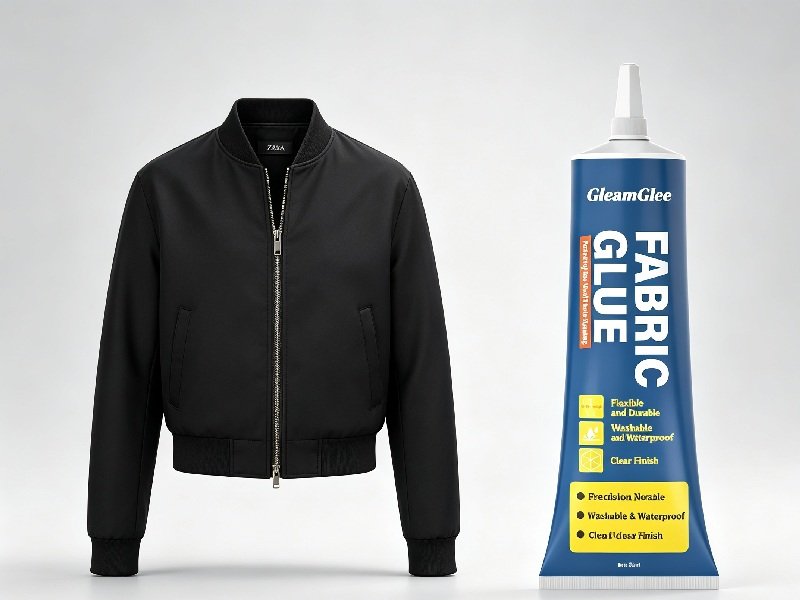
GleamGlee Fabric Glue is designed for practical textile repairs where strength, appearance, and comfort all matter. It dries clear and non-yellowing, remains soft and flexible after drying, supports washing and ironing after full curing, and uses a precision nozzle for controlled application. It is suitable for clothing repairs, hems, patches, curtains, ribbons, sequins, bags, home textiles, and DIY fabric projects.
What Makes Glue Work Better?
Fabric glue works better when it matches the fabric’s surface and the way the repaired item will be used. A repair on a curtain hem does not face the same stress as a repair on stretch activewear. A denim patch needs more edge coverage than a ribbon decoration. A polyester lining needs firmer pressing than cotton because smooth synthetic fibers do not absorb adhesive as easily. The best fabric glue should create a stable bond without changing the fabric’s natural feel. For mixed fabrics, the ideal formula should stay flexible, dry cleanly, and hold through normal movement, folding, light friction, and washing after full cure.
Important glue features:
- Flexible finish: Helps prevent cracking on moving fabric.
- Clear drying: Keeps visible repairs cleaner.
- Washable bond: Supports regular garment care after full cure.
- Soft texture: Reduces hard spots on clothing and accessories.
- Controlled application: Helps avoid glue overflow and visible marks.
| Glue Feature | Why It Matters | Best Use Case |
|---|---|---|
| Flexible after drying | Prevents cracking when fabric bends | Activewear, cuffs, bag linings |
| Transparent finish | Keeps repairs less visible | Clothing, curtains, decorations |
| Strong fabric adhesion | Holds fabric layers together | Patches, hems, seams |
| Wash resistance | Helps repair survive laundry | Shirts, jeans, uniforms |
| Precision nozzle | Controls glue amount | Lace, ribbons, small tears |
A strong fabric glue should not feel like hard plastic after drying. Mixed fabrics move differently, so the repair needs enough flexibility to absorb small movements instead of breaking at the glue line.
Which Glue Bonds Fabrics?
The best glue for bonding fabrics is a textile adhesive that works on common fabric types such as cotton, polyester, denim, nylon, canvas, ribbons, patches, lace, and stretch blends. General craft glue may work for light decoration, but clothing repair needs stronger hold, better flexibility, and better washing resistance. For mixed fabrics, fabric glue should bond both sides evenly. If one side is thick and the other is smooth, the glue should be applied carefully so the heavier side does not pull away. If one side is delicate, the glue should be thin enough to avoid soaking through.
Common repair needs:
- Cotton to polyester: Use a thin, even layer and press firmly.
- Denim to patch fabric: Cover the patch edges carefully.
- Nylon to stretch fabric: Keep the fabric relaxed and cure fully.
- Canvas to trim: Apply enough glue for contact across the weave.
- Lace to cotton: Use tiny dots instead of a thick line.
| Fabric Pair | Bonding Difficulty | Glue Requirement | Application Tip |
|---|---|---|---|
| Cotton + Polyester | Medium | Clear, flexible bond | Press longer on polyester side |
| Denim + Patch | Low to Medium | Strong edge hold | Seal all patch corners |
| Nylon + Stretch Fabric | High | Soft elastic finish | Avoid stretching before cure |
| Canvas + Fabric Trim | Medium | Strong surface coverage | Press into the weave |
| Lace + Cotton | Medium | Precise small amount | Apply dots, not heavy lines |
| Leather-like + Fabric | High | Strong surface contact | Test first on hidden area |
GleamGlee Fabric Glue is suitable for many daily mixed-fabric repairs because it combines strong adhesion with a flexible clear finish. It is not limited to one project type. It can be used for garment repair, DIY crafts, home textiles, bags, accessories, and decorative fabric work.
How Does GleamGlee Fabric Glue Help?
GleamGlee Fabric Glue helps mixed fabric repairs by reducing three common problems: weak bonding, messy application, and stiff repair marks. Its fine-point nozzle allows controlled placement on small areas such as seam gaps, patch edges, ribbons, buttons, lace, and decorative trims. The glue sets in about 6–10 minutes, which gives enough time to align fabrics before the bond begins holding. Full curing takes about 24 hours, allowing the adhesive to build stronger durability before washing, ironing, or regular use. After drying, the finish stays clear, flexible, and soft, making it useful for visible and wearable fabric repairs.
Product advantages:
- 50g tube size: Enough for multiple repairs and craft projects.
- Single tube and two-pack options: Useful for occasional or frequent fabric work.
- Clear non-yellowing finish: Helps repairs look cleaner.
- Soft flexible drying: Keeps fabric from feeling stiff.
- Washable and iron-compatible: Suitable after full curing.
- Built-in pin cap: Helps reduce nozzle clogging.
| GleamGlee Feature | Practical Benefit |
|---|---|
| Ultra-strong fabric bond | Repairs clothing, patches, curtains, and trims |
| Clear finish | Reduces visible glue marks |
| Flexible after drying | Better for clothing, bags, and moving fabric |
| Precision nozzle | Helps control glue on detailed repairs |
| 6–10 minute setting time | Allows faster handling on simple repairs |
| 24-hour full cure | Improves long-term repair stability |
| Washable formula | Supports daily-use fabric items |
GleamGlee Fabric Glue is especially useful when sewing is inconvenient or when visible stitches would affect the look of the item. It can help hem pants or curtains, secure loose seams, attach appliqués, repair small holes with patches, add ribbons or sequins, and restore fabric linings in bags or accessories.
How Should You Compare Fabric Glue Options?
Fabric glue should be compared by use case, not only by strength. A very strong adhesive may still be a poor choice if it dries hard, leaves residue, or cannot handle washing. A lightweight craft adhesive may look clean on paper projects but fail on clothing after movement. Mixed fabric bonding needs a balanced product that works across different textile surfaces while keeping the repaired item usable. Before choosing glue, check the fabric type, repair size, stress level, washing needs, and whether the repaired area will touch skin or remain visible.
Simple comparison guide:
| Repair Situation | Best Glue Type | What to Avoid |
|---|---|---|
| Clothing seam | Flexible washable fabric glue | Hard glue that rubs skin |
| Curtain hem | Clear fabric adhesive | Glue that yellows over time |
| Denim patch | Strong textile glue | Weak edge coverage |
| Stretch fabric | Soft flexible glue | Rigid adhesive |
| Lace decoration | Precision fabric glue | Thick glue lines |
| Bag lining | Strong flexible adhesive | Watery glue with poor hold |
A good choice should meet these checks:
- The repair must remain flexible after drying.
- The glue should dry clear on visible areas.
- The bond should survive normal washing after full cure.
- The application should be controlled and not messy.
- The repaired fabric should still feel natural in daily use.
For mixed fabrics, GleamGlee Fabric Glue offers a practical balance between strength, flexibility, appearance, and ease of use. It is suitable for small home repairs, clothing care, fabric crafts, and daily textile maintenance where a clean no-sew bond is needed.
How to Bond Mixed Fabrics?
Bonding mixed fabrics works best when the repair is treated as a step-by-step process, not a quick squeeze-and-press job. Different fabrics absorb, hold, and react to adhesive in different ways. Cotton may take in glue quickly, polyester may need firmer pressure, denim may require better edge coverage, and stretch fabric needs a flexible bond that does not crack during movement.
A clean surface, controlled glue amount, steady pressure, and full curing time are the four main factors behind a strong mixed-fabric bond. GleamGlee Fabric Glue is designed for this kind of work because it dries clear, stays soft and flexible, supports washing and ironing after full cure, and comes with a precision nozzle for accurate application on seams, hems, patches, trims, and fabric layers.
For most fabric projects, apply a thin even layer, press the materials together, allow 6–10 minutes for initial setting, and leave the repair for about 24 hours before washing, ironing, stretching, or heavy use. Small repairs may look finished quickly, but the bond becomes more stable when the fabric stays flat and undisturbed during the full curing period.
Step 1: Clean the Fabric
The first step is cleaning the fabric because glue bonds best when it touches the actual textile surface. Mixed fabrics often carry invisible residue that weakens adhesion. Clothing may have sweat, body oil, detergent, fabric softener, or deodorant residue. Curtains can collect dust, cooking oil, and air particles. Bags and backpacks often have dirt, lint, or friction marks around seams and linings. If glue is applied over these layers, it may bond to the residue instead of the fabric, causing peeling after drying or washing. The surface should be clean, fully dry, and laid flat before any adhesive is applied.
Key cleaning points:
- Remove dust, lint, and loose fibers before repair.
- Wash clothing first when the damaged area contains sweat or oil.
- Let fabric dry completely before applying glue.
- Avoid fabric softener before repair because it can reduce surface grip.
- Test coated or leather-like materials on a hidden area first.
| Fabric Type | Cleaning Method | What to Watch For |
|---|---|---|
| Cotton | Wash or wipe, then dry fully | Holds moisture longer than it appears |
| Polyester | Wipe well before bonding | Detergent residue may remain on surface |
| Nylon | Clean gently and keep flat | Smooth surface needs better contact |
| Denim | Brush away lint and dust | Thick weave may trap particles |
| Canvas | Remove dust from the weave | Press flat before repair |
| Leather-like fabric | Wipe lightly | Coated surfaces may resist glue |
For better alignment, place the fabric on a hard flat surface such as a table, cutting mat, or smooth board. Soft surfaces such as beds or sofas can make the fabric shift during application. If the repair area is small, use clips or light tape outside the glue zone to keep both materials aligned.
Step 2: Apply Fabric Glue
The second step is applying the right amount of fabric glue. More glue does not always create a stronger repair. On thin fabric, too much glue can soak through, leave a shiny mark, or dry into a hard patch. On thick fabric, too little glue can leave weak spots, especially near the edges. Mixed fabric repairs need controlled coverage because each side behaves differently. A cotton side may absorb adhesive quickly, while a polyester or nylon side needs firm surface contact. GleamGlee Fabric Glue’s fine-point nozzle helps place glue exactly along seams, patch borders, hems, trims, lace, ribbons, or small tears without flooding the fabric.
Glue amount by repair type:
- Use a thin line for small seam openings.
- Use small dots for lace, sequins, or delicate decorations.
- Use a medium layer for denim patches or canvas repairs.
- Seal patch edges carefully to prevent lifting.
- Keep stretch fabric repairs thin so the area stays flexible.
| Repair Type | Glue Amount | Application Tip |
|---|---|---|
| Loose seam | Thin line | Follow the seam edge closely |
| Small tear | Thin controlled layer | Align torn edges before pressing |
| Denim patch | Medium layer | Cover center and edges |
| Curtain hem | Controlled line | Work in short sections |
| Lace trim | Small dots | Avoid filling the lace pattern |
| Bag lining | Thin to medium layer | Spread evenly across the loose area |
| Stretch fabric | Thin flexible layer | Do not overload the repair |
After applying the glue, check for overflow before pressing. If excess glue squeezes out, remove it early with a clean cloth or cotton swab. Once dried, excess adhesive is harder to clean and may affect the appearance of visible fabric.
Step 3: Press and Cure
Pressing and curing decide whether the bond becomes stable enough for real use. After glue is applied, both fabrics should be pressed together firmly and evenly so the adhesive can grip both surfaces. Smooth fabrics such as polyester and nylon need especially steady pressure because they do not absorb glue as easily as cotton. Thick fabrics such as denim and canvas need enough pressure to push the adhesive into the weave. The first 6–10 minutes help the bond begin holding, but full curing takes about 24 hours. During that time, the repair should stay flat, still, and free from stretching, washing, ironing, or heavy handling.
Recommended pressing methods:
- Press seams with fingers, then keep flat.
- Place a clean cloth over patches before adding light weight.
- Use clips for bag linings or layered fabric.
- Press trims from one end to the other to avoid bubbles.
- Keep stretch fabric relaxed, not pulled tight.
| Project Type | Best Pressing Method | Curing Note |
|---|---|---|
| Clothing seam | Finger pressure, then flat drying | Avoid wearing for 24 hours |
| Fabric patch | Clean cloth plus light weight | Check edges after setting |
| Curtain hem | Press section by section | Keep fabric straight |
| Bag lining | Clips or light pressure | Do not fill the bag during cure |
| Ribbon trim | Press slowly along the length | Prevent wrinkles and bubbles |
| Stretch fabric | Gentle pressure only | Do not stretch while drying |
A simple timeline helps avoid early failure:
| Time After Gluing | What Happens | What to Avoid |
|---|---|---|
| 0–10 minutes | Initial hold begins | Do not move or lift the fabrics |
| 10–60 minutes | Surface starts stabilizing | Do not fold sharply |
| 1–6 hours | Bond continues strengthening | Do not wash or iron |
| Around 24 hours | Full cure is reached | Ready for normal use based on fabric type |
Waiting the full curing time matters most on hems, cuffs, activewear, bag linings, and fabric sections that bend or pull during use. A repair may look finished after a few minutes, but the inner bond still needs time to develop strength.
Step 4: Check the Bond
The final step is checking the bond before normal use. Mixed fabric repairs should be inspected gently because the edge, not the center, is usually where failure begins. A patch may look secure in the middle while one corner starts lifting. A lining may feel attached but separate when the bag is opened. A stretch fabric repair may hold flat but pull when the fabric bends. Check the repair after full curing by looking at the edges, touching the surface, and moving the fabric lightly. Avoid hard pulling because that can damage the repair and the fabric itself.
Check these areas first:
- Edges and corners of patches
- Start and end points of hems
- Seam openings under light movement
- Trim or ribbon ends
- Fabric areas that bend or stretch
- Any place where glue overflow dried unevenly
| Check Point | Good Result | Problem Sign | Fix |
|---|---|---|---|
| Edge hold | Flat and attached | Corner lifting | Add a small amount of glue and press again |
| Surface feel | Smooth and flexible | Hard lump | Use less glue next time |
| Appearance | Clear and neat | Visible overflow | Remove excess before drying on future repairs |
| Movement | Fabric bends normally | Cracking or pulling | Use a thinner flexible layer |
| Bond strength | Holds under gentle handling | Layers separate | Reclean and reglue with better pressure |
For clothing, try gentle movement before wearing the item for a full day. Bend a sleeve, fold a hem, or lightly stretch the repaired area only after full cure. For bags, open and close the repaired lining area before loading it with items. For curtains, hang the fabric and check whether the hem stays flat.
A repair on strong fabric usually lasts longer than a repair on fabric that is already worn thin or fraying. If the damaged area is weak, add a patch or increase the bonding area instead of relying on a narrow glue line alone.

What Can Fabric Glue Bond?
Fabric glue can bond many mixed fabric combinations used in clothing, bags, accessories, curtains, upholstery, costumes, and craft projects. It is especially useful for joining cotton with polyester, denim with patches, nylon with stretch fabrics, lace with cotton, canvas with trim, and fabric linings with leather-like materials. The strongest results come from matching the glue amount and pressing method to the fabric pair.
Mixed fabric repairs are common because many textile products use more than one material. A jacket may have a cotton outer layer and polyester lining. A backpack may use canvas with nylon pockets. A costume may combine lace, felt, ribbons, sequins, and stretch panels. A curtain may need a polyester trim bonded to a cotton-blend base. These repairs do not always need sewing, but they do need a flexible adhesive that can hold different surfaces without making the repair hard or messy.
GleamGlee Fabric Glue is suitable for a wide range of fabric bonding tasks because it dries clear, remains soft and flexible after drying, supports washing and ironing after full cure, and comes with a precision nozzle for small repair areas. It can be used for hems, seams, patches, trims, ribbons, appliqués, decorations, linings, home textiles, and everyday fabric fixes where a clean no-sew bond is needed.
Cotton and Polyester
Cotton and polyester are one of the most common mixed fabric combinations in everyday clothing and home textiles. Cotton is more absorbent, while polyester has a smoother synthetic surface. When these two fabrics are bonded together, the cotton side may take in glue quickly, but the polyester side usually needs firmer pressure to create good contact. A thin, even layer works better than a heavy layer because too much adhesive can make the cotton stiff and may leave marks on the polyester surface. This fabric pair appears in shirts, uniforms, pillowcases, curtains, tablecloths, fabric labels, school costumes, and light clothing repairs.
Useful repair areas:
- Shirt patches and small holes
- Polyester trims on cotton garments
- Fabric labels on uniforms
- Curtain hems and decorative edges
- Tablecloth or runner edge repairs
| Project | Common Problem | Better Glue Method |
|---|---|---|
| Cotton shirt + polyester patch | Patch edge lifts after washing | Apply glue around the full patch edge |
| Uniform + fabric label | Label corner curls | Press firmly during setting |
| Curtain + polyester trim | Long trim shifts while drying | Work in short sections |
| Pillowcase repair | Thin fabric becomes stiff | Use a light glue layer |
| Table runner edge | Fraying continues | Seal the edge evenly |
For cotton and polyester, the repair area should stay flat while curing. Long repairs, such as curtain hems, are easier to control in 20–30 cm sections instead of one long glue line. If the polyester side is very smooth, press it slightly longer so the adhesive has better surface contact.
Leather and Fabric
Leather and fabric bonding needs more care because the two surfaces behave very differently. Fabric has woven fibers that glue can grip, while genuine leather, PU leather, and coated leather-like materials are denser and less absorbent. The adhesive cannot rely on deep fiber penetration on the leather side, so clean surface contact becomes more important. This combination appears in handbags, wallets, backpacks, hats, belts, shoes, costumes, furniture trim, and decorative patches. Fabric glue can work well for light to medium repairs such as reattaching linings, securing trims, and fixing decorative textile sections, but heavy load-bearing repairs may need additional reinforcement.
Useful repair areas:
- Bag lining separation
- Wallet fabric lining repairs
- Fabric patches on leather-like panels
- Hat decorations or sweatband repairs
- Costume fabric trim on faux leather
| Item | Repair Area | Glue Consideration |
|---|---|---|
| Handbag | Loose inner lining | Clean both surfaces and press longer |
| Wallet | Fabric layer lifting | Use a thin layer to avoid bulk |
| Backpack | Decorative trim | Test coated areas first |
| Hat | Patch or sweatband | Apply carefully near curved areas |
| Costume | Fabric to faux leather | Keep flat until fully cured |
A hidden-area test is helpful before bonding fabric to leather-like materials because coatings can affect adhesion. The glue should be applied evenly without flooding the surface. If the repair area carries weight, such as a bag strap or handle connection, fabric glue should be used only when the structural stitching is still secure, or combined with a wider patch area.
Nylon and Stretch Fabric
Nylon and stretch fabric are common in activewear, sportswear, windbreakers, lightweight bags, swimwear details, and outdoor textiles. These materials are more difficult because they are smooth, flexible, and often exposed to sweat, washing, folding, and repeated movement. Stretch fabrics containing elastane or spandex need an adhesive that stays soft after drying. If the glue becomes rigid, the repaired section may crack, peel, or feel uncomfortable. Nylon also needs good pressure during setting because its smooth surface does not absorb adhesive as easily as cotton or canvas. A thin flexible layer and full curing time are important for this fabric pair.
Useful repair areas:
- Leggings and yoga pants seams
- Sports tops and stretch panels
- Windbreaker linings
- Nylon bag pockets
- Lightweight outdoor fabric repairs
| Fabric Pair | Main Challenge | Better Glue Method |
|---|---|---|
| Nylon + elastane | Stretch pulls the bond | Keep fabric relaxed while curing |
| Polyester sports mesh + nylon | Smooth surfaces slip | Press firmly and avoid movement |
| Windbreaker shell + lining | Thin layers shift easily | Apply small controlled lines |
| Stretch panel + trim | Hard glue may crack | Use a flexible adhesive layer |
| Nylon bag pocket + fabric base | Friction at edges | Seal edge points carefully |
Do not stretch the fabric while applying glue. The item should sit in its natural relaxed shape during bonding. After pressing, allow about 24 hours before wearing, washing, or stretching. For high-movement areas such as leggings, cuffs, or elastic panels, a small patch can spread tension across a wider area and improve repair stability.
Home Textile Repairs
Fabric glue is very useful for home textiles because many household fabric items are large, awkward to sew, or not worth replacing for one small problem. Curtains, cushion covers, table runners, sofa covers, duvet covers, pillowcases, chair fabric, and decorative textiles often develop loose hems, fraying edges, small tears, or detached trims. A washable, clear-drying fabric glue can repair these areas without needing a sewing machine. The main difference from clothing repair is size: home textile repairs often involve longer edges or thicker fabrics, so working in small sections and pressing evenly becomes more important.
Useful repair areas:
- Curtain hems and decorative trims
- Cushion cover seam openings
- Table runner edge reinforcement
- Bedding seam repairs
- Small upholstery surface fixes
| Home Textile | Common Damage | Better Glue Method |
|---|---|---|
| Curtains | Loose bottom hem | Bond in short sections |
| Cushion covers | Seam opening | Press flat without stretching |
| Table runners | Fraying edge | Apply a thin edge seal |
| Duvet covers | Small tear or seam gap | Use light glue to avoid stiffness |
| Sofa cover | Minor surface tear | Add a patch if fabric is weak |
| Chair fabric | Loose trim | Press evenly during setting |
For long hems, do not apply glue across the full length at once. Work slowly in manageable sections so the fabric stays straight. For cushions or upholstery, avoid repairing while the fabric is under strong tension. If the fabric is worn thin, a patch placed behind the tear can give the adhesive more surface area to hold.
Crafts and Decorative Fabric
Fabric glue can bond many decorative materials used in DIY projects, costumes, school crafts, holiday decorations, handmade bags, banners, and fabric art. These projects often combine lightweight fabrics, felt, lace, ribbons, sequins, rhinestones, buttons, appliqués, and printed fabric pieces. The main goal is usually a clean appearance rather than heavy structural strength. Small glue dots or thin lines work better than large amounts of adhesive because decorations can shift, stain, or become stiff if overloaded. GleamGlee Fabric Glue’s precision nozzle is useful for this type of work because detailed decoration often requires accurate placement.
Useful craft applications:
- Lace on fabric cards or costumes
- Ribbons on bags or garments
- Sequins and small decorations
- Felt shapes on banners
- Fabric appliqués on clothing
| Material | Best Application Style | What to Avoid |
|---|---|---|
| Lace | Tiny dots | Heavy lines that fill open patterns |
| Ribbon | Thin line along the center | Glue overflow at edges |
| Sequins | Small individual dots | Large wet patches |
| Felt | Light to medium layer | Uneven lumps |
| Appliqués | Edge and center coverage | Loose corners |
| Fabric letters | Thin border line | Shifting before set |
For decorative work, layout matters before gluing. Place all pieces in position first, then bond one section at a time. If the design is detailed, use tweezers or a small tool to place trims and sequins cleanly. Allow full curing before folding, wearing, packing, or hanging the finished project.
Fabric Glue Tips for Better Bonds
Better fabric glue bonds come from clean surfaces, controlled glue amount, steady pressure, and enough curing time. Mixed fabrics need extra care because each material reacts differently. Cotton absorbs glue quickly, polyester needs firmer contact, nylon can slip, denim needs edge coverage, and stretch fabric needs a soft bond that can move without cracking.
A strong repair should stay flat, flexible, and clean after drying. Too much adhesive can make fabric stiff, while too little adhesive can leave weak gaps near edges. The best result comes from matching the glue layer to the fabric type, repair size, and stress level. A small ribbon repair needs a different method from a denim patch or a curtain hem.
GleamGlee Fabric Glue is designed for these daily fabric repair situations. It sets in about 6–10 minutes, fully cures in about 24 hours, dries clear, stays flexible, and supports washing and ironing after full cure. With a precision nozzle, it is easier to apply glue in thin lines, small dots, or controlled layers without making the repair bulky or messy.
How Much Glue to Use?
The amount of fabric glue should match the thickness and texture of the materials being bonded. A thin cotton blouse, polyester ribbon, denim patch, nylon pocket, and curtain hem do not need the same amount of adhesive. Using too much glue can make lightweight fabric feel hard, create shiny marks, or cause seep-through. Using too little glue can leave dry spots that make the edge lift after washing or movement. A good fabric glue repair should cover the contact area evenly without flooding the fabric. Edges need special attention because most fabric repairs begin to fail from corners, seams, and borders rather than the center.
Key glue amount tips:
- Use a thin line for seams, hems, and small tears.
- Use small dots for lace, sequins, ribbons, and delicate trims.
- Use a medium layer for denim, canvas, patches, and thicker fabrics.
- Add glue carefully near edges to prevent lifting.
- Remove overflow before it dries.
| Repair Type | Glue Amount | Best Method |
|---|---|---|
| Small seam gap | Thin line | Follow the seam edge closely |
| Cotton patch | Thin to medium layer | Cover the center and border |
| Denim patch | Medium layer | Seal all corners and edges |
| Lace trim | Tiny dots | Keep glue away from open lace patterns |
| Polyester ribbon | Thin line | Press firmly to stop slipping |
| Curtain hem | Controlled line | Work in 20–30 cm sections |
| Nylon repair | Thin flexible layer | Avoid thick buildup |
| Stretch fabric | Very thin layer | Keep the repair soft and movable |
A simple test is to press the two fabrics together after applying glue. If adhesive heavily squeezes out from the edges, too much was used. If the fabric separates easily or dry areas appear, more coverage may be needed. For visible areas, less glue with better pressing usually gives a cleaner finish.
How Long to Cure?
Curing time affects how long the repair lasts. Fabric glue may begin holding within minutes, but that does not mean the repair is ready for washing, ironing, stretching, or heavy use. GleamGlee Fabric Glue sets in about 6–10 minutes, which helps keep fabric pieces in place, but full curing takes about 24 hours. During that time, the adhesive continues building strength between the fabric surfaces. Mixed fabrics need this waiting period because different materials pull on the bond differently. A polyester trim may shift, denim may lift at the edge, and stretch fabric may pull the glue line if handled too early.
Curing tips:
- Keep the repair flat during the first hour.
- Do not wash, iron, fold sharply, or stretch before full cure.
- Use light pressure for patches and hems while curing.
- Wait about 24 hours before normal use.
- Allow longer rest for thick fabrics or high-stress areas.
| Time After Application | Bond Condition | What to Do |
|---|---|---|
| 0–10 minutes | Initial setting starts | Press and keep aligned |
| 10–60 minutes | Surface begins to stabilize | Avoid lifting or repositioning |
| 1–6 hours | Bond continues strengthening | Keep flat and still |
| Around 24 hours | Full cure reached | Resume normal use based on fabric type |
For clothing repairs, curing time is especially important near cuffs, hems, seams, waistbands, and stretch panels. These areas bend and move frequently. For curtains, table runners, and home textiles, keep the repaired section flat overnight. For bags and accessories, avoid filling or carrying the item before the bond has fully cured.
What Mistakes to Avoid?
Most weak fabric glue repairs come from a few avoidable mistakes: dirty fabric, too much adhesive, poor pressing, early washing, or using glue that dries too hard. Mixed fabrics make these problems more noticeable because each side may react differently. Cotton may absorb glue while polyester stays slick. Denim may need stronger edge coverage, while lace needs tiny dots. Stretch fabric may look bonded at first but fail once pulled. A careful repair does not need complicated tools, but it does need clean preparation, controlled application, and patience before use.
Common mistakes to avoid:
- Applying glue over sweat, oil, dust, or detergent residue.
- Using a thick glue layer on lightweight fabric.
- Stretching elastic fabric while it cures.
- Washing before the 24-hour full cure.
- Ignoring edges and corners on patches.
- Using hard glue meant for plastic, metal, or glass.
| Mistake | Result | Better Method |
|---|---|---|
| Fabric not cleaned | Weak bond or peeling | Clean and dry before repair |
| Too much glue | Stiff, shiny, or bulky repair | Use a thin even layer |
| Poor edge coverage | Patch corners lift | Seal edges carefully |
| Fabric moved too early | Bond line weakens | Keep still during setting |
| Washed too soon | Repair opens after laundry | Wait about 24 hours |
| Stretch fabric pulled during cure | Distorted repair | Keep fabric relaxed |
| Wrong glue type | Cracking or discomfort | Use flexible fabric glue |
A hidden-area test is useful on dark fabric, coated fabric, delicate fabric, or expensive garments. It helps check whether the glue changes the color, texture, or surface appearance. For large tears or fabric that is already worn thin, a patch can spread the stress across a wider area and improve the repair.
How to Store Fabric Glue?
Proper storage keeps fabric glue ready for future repairs. Many fabric repair projects only need a small amount of adhesive, so one tube may be used across several months for clothing, curtains, bags, costumes, school projects, and home textiles. If the nozzle is left dirty or the cap is not closed tightly, dried glue can block the opening and make later application harder. GleamGlee Fabric Glue includes a fine-point nozzle and a built-in pin in the cap to help reduce clogging, but storage habits still affect how smoothly the product works after opening.
Storage tips:
- Wipe the nozzle after use.
- Close the cap tightly.
- Keep the tube upright when possible.
- Store in a cool, dry place.
- Keep dust, lint, and fabric fibers away from the opening.
- Do not leave the tube near heat or direct sunlight.
| Storage Issue | Possible Problem | Better Practice |
|---|---|---|
| Nozzle not cleaned | Glue buildup blocks the tip | Wipe before closing |
| Cap left loose | Glue dries inside the nozzle | Tighten after every use |
| Stored near heat | Product texture may change | Keep in a cool dry area |
| Fabric fibers enter nozzle | Uneven application | Keep repair area tidy |
| Tube squeezed too hard | Excess glue waste | Apply gentle pressure |
A 50g tube is enough for multiple small repairs when stored correctly. The two-pack option works well for frequent fabric work, craft rooms, family clothing repairs, school costumes, curtain hemming, and DIY textile projects. Clean storage helps preserve the precision application that makes small fabric repairs easier and neater.
Why Choose GleamGlee Fabric Glue?
GleamGlee Fabric Glue is designed for fabric repairs that need strength, softness, and a clean finish at the same time. Mixed fabrics are not easy to bond because one material may be thick and absorbent while the other may be smooth, thin, or flexible. A useful fabric glue should hold these surfaces together without making the repaired area stiff, bulky, or visually messy.
For daily repairs, the most important performance points are simple: the glue should be easy to apply, dry clear, stay flexible, support washing after full cure, and work on more than one type of fabric. GleamGlee Fabric Glue meets these needs with a strong textile bond, a transparent non-yellowing finish, a soft flexible texture after drying, and a precision nozzle that helps control the glue line on seams, hems, patches, ribbons, lace, and trims.
The product is available in 50g single-tube and 50g two-pack options, making it suitable for small clothing repairs, repeated home fixes, craft drawers, school projects, costume work, curtain hemming, and fabric accessory repairs. It sets in about 6–10 minutes and reaches full cure in about 24 hours, giving fabric repairs enough time to develop better strength before washing, ironing, folding, or regular use.
Strong Fabric Bond
A strong fabric bond should keep materials attached during normal use without turning the repair into a hard patch. Many fabric items bend, fold, stretch, rub, or move throughout the day. A shirt seam moves when the arm bends. A curtain hem hangs under its own weight. A bag lining shifts every time items are placed inside. A denim patch experiences friction when worn. GleamGlee Fabric Glue is made for these practical repair situations, where the bond must hold firmly but still allow the fabric to behave naturally. Its adhesive strength is useful for clothing repairs, home textiles, decorations, patches, trims, and fabric layers that need a no-sew solution.
Key repair uses:
- Fixing ripped seams on shirts, dresses, jackets, and light clothing.
- Attaching plain or decorative patches to jeans, uniforms, and children’s clothes.
- Securing curtain hems, fabric edges, and loose textile trims.
- Repairing bag linings, fabric panels, and soft accessories.
- Adding appliqués, ribbons, lace, sequins, rhinestones, and fabric decorations.
| Repair Area | Common Problem | GleamGlee Fabric Glue Advantage |
|---|---|---|
| Shirt seam | Small opening or loose edge | Thin glue line bonds cleanly |
| Denim patch | Patch corners lift | Strong edge coverage helps hold the patch |
| Curtain hem | Bottom edge comes loose | Clear flexible bond keeps the hem neat |
| Bag lining | Fabric separates inside | Adhesive holds fabric layers together |
| Costume trim | Decorations detach | Precision nozzle supports detailed placement |
A good result depends on using the right amount. Thin fabrics need a light glue layer. Thick fabrics need enough coverage around the edges. Moving fabrics should be left to cure fully before use.
Flexible Clear Repair
A fabric repair can hold strongly and still feel wrong if the dried glue is stiff, cloudy, yellow, or raised. Appearance and feel matter most on clothing, visible home textiles, accessories, and craft projects. GleamGlee Fabric Glue dries transparent and non-yellowing, helping repairs stay cleaner on visible areas. After drying, it remains soft and flexible instead of brittle. This is important for mixed fabrics because different materials move at different speeds and angles. A rigid repair line may crack, peel, or feel uncomfortable, especially on cuffs, hems, waistbands, bag linings, and stretch panels.
Main finish benefits:
- Dries clear for less visible repairs.
- Remains soft after drying, reducing hard glue spots.
- Helps fabric bend, fold, and move more naturally.
- Works well for visible repairs where appearance matters.
- Helps reduce yellowing on light-colored fabrics when applied correctly.
| Finish Feature | Why It Matters | Best Repair Example |
|---|---|---|
| Clear drying | Reduces visible glue marks | Curtains, shirts, patches |
| Non-yellowing finish | Keeps light fabrics cleaner-looking | White trim, lace, blouse fabric |
| Flexible texture | Prevents a hard repair feel | Clothing seams, cuffs, activewear |
| Soft after curing | Improves comfort | Wearable fabric repairs |
| Controlled application | Reduces overflow | Ribbons, appliqués, small holes |
For the cleanest finish, apply a thin even layer and remove any overflow before it dries. On dark, delicate, or coated fabric, test a hidden area first to check appearance and feel.
Washable Daily Use
Fabric glue used on clothing and home textiles must handle real life after the repair is finished. Shirts need washing. Jeans experience friction. Curtains may be cleaned occasionally. Kids’ clothes and school costumes often need quick repair before another round of wear. GleamGlee Fabric Glue is designed to be washable after full curing and can support ironing when used according to the fabric’s own care limits. The key is curing time. The glue may begin holding within 6–10 minutes, but the bond should rest for about 24 hours before washing, ironing, stretching, or heavy use.
Care points after repair:
- Wait about 24 hours before washing or ironing.
- Follow the fabric care label, especially for heat-sensitive materials.
- Turn garments inside out when washing repaired clothing.
- Avoid aggressive pulling on the repaired area while wet.
- Use gentle handling for stretch fabric and thin materials.
| Item Type | Use Condition | Care Recommendation |
|---|---|---|
| Shirt or blouse | Regular washing | Full cure before laundry |
| Jeans | Friction and movement | Seal patch edges carefully |
| Curtains | Hanging weight | Cure flat before hanging if possible |
| Kids’ clothing | Frequent wear and washing | Use enough glue on seams and patches |
| Activewear | Stretch and sweat | Keep repair thin and flexible |
| Table linen | Washing after use | Avoid washing before full cure |
Washable performance makes fabric glue more useful beyond one-time craft projects. A repair should return the item to normal use, not only hold temporarily while sitting on a table.
Easy Precision Application
Clean application is one of the biggest reasons to choose a well-designed fabric glue. Many fabric repairs are small and detailed: a 2 cm seam gap, a loose lace edge, a ribbon corner, a patch border, a detached lining, or a tiny hole. A wide opening or uncontrolled glue flow can make these repairs messy. GleamGlee Fabric Glue uses a fine-point nozzle that helps place adhesive exactly where it is needed. The cap includes a built-in pin to help reduce clogging, which is useful when one tube is used across many small repairs over time.
Application advantages:
- Fine nozzle helps control thin lines and small dots.
- Built-in pin cap helps reduce blocked tips.
- 50g tube provides enough glue for multiple repairs.
- Single tube suits occasional fixes.
- Two-pack suits frequent home repair and craft use.
| Application Need | Recommended Method | Product Benefit |
|---|---|---|
| Seam repair | Thin line along the open seam | Less overflow |
| Lace or ribbon | Small dots or fine line | Cleaner decoration work |
| Patch edge | Controlled border coverage | Helps prevent lifting |
| Curtain hem | Apply in short sections | Better alignment |
| Bag lining | Even layer on loose section | Better surface contact |
Controlled application also helps reduce waste. Instead of squeezing out a thick line and wiping away the excess, the nozzle allows slower, more accurate placement. This keeps the repair lighter, softer, and cleaner.

FAQs About Fabric Glue
Fabric glue is used for clothing repairs, mixed fabric bonding, hems, patches, trims, home textiles, accessories, costumes, and DIY projects. The most common questions focus on whether it can join different fabrics, whether the repair can be washed, how long the bond lasts, and when glue can replace sewing. The answer depends on fabric type, glue quality, surface preparation, curing time, and how much stress the repaired area receives.
A good fabric glue should dry clear, stay flexible, and bond well without making the fabric stiff or bulky. Mixed fabrics need extra attention because cotton, polyester, nylon, denim, leather-like materials, lace, canvas, and stretch fabrics all react differently to adhesive. A thin blouse needs lighter glue than denim. A smooth nylon panel needs firmer pressing than cotton. A stretch fabric repair needs a soft bond that can move.
GleamGlee Fabric Glue is designed for practical fabric repairs where strength, appearance, and flexibility all matter. It sets in about 6–10 minutes, reaches full cure in about 24 hours, dries transparent and non-yellowing, remains soft after drying, and supports washing and ironing after full curing. The precision nozzle helps control application on small repairs, trims, seams, patches, and detailed fabric projects.
Can Fabric Glue Join Different Fabrics?
Fabric glue can join different fabrics when the adhesive is suitable for textile bonding and both surfaces are clean, dry, and pressed properly. Mixed fabric bonding is common in daily repairs: cotton patches on polyester shirts, denim patches on jeans, fabric linings inside leather-like bags, lace trims on cotton dresses, and nylon panels on sportswear. The key is matching the application method to the fabric pair. Absorbent fabrics need controlled glue so they do not become stiff. Smooth fabrics need steady pressure because the glue sits closer to the surface. Stretch fabrics need a flexible dried bond so the repair does not crack or peel during movement.
Useful fabric pair guidance:
- Cotton + polyester: Apply a thin even layer and press firmly.
- Denim + patch fabric: Cover the full edge to prevent corner lifting.
- Nylon + stretch fabric: Keep the fabric relaxed during curing.
- Leather-like material + fabric: Test first on a hidden area.
- Lace + cotton: Use small dots, not heavy glue lines.
| Fabric Pair | Bonding Difficulty | Best Method |
|---|---|---|
| Cotton + Polyester | Medium | Thin layer, firm pressing |
| Denim + Patch | Low to Medium | Strong edge coverage |
| Nylon + Stretch Fabric | High | Flexible glue, full cure |
| Canvas + Trim | Medium | Enough coverage and steady pressure |
| Lace + Cotton | Medium | Small dots to avoid visible buildup |
| Leather-like + Fabric | High | Hidden-area test before repair |
Fabric glue works best when both materials have enough surface contact. If one fabric is heavily coated, waterproofed, oily, or worn thin, adhesion may be weaker. A hidden-area test is useful before repairing expensive, delicate, dark-colored, or coated fabrics.
Is Fabric Glue Washable?
Fabric glue can be washable when the formula is designed for fabric use and the repair has fully cured before laundering. GleamGlee Fabric Glue is made for washable fabric repairs, but the repair should rest for about 24 hours before washing. Washing too soon is one of the fastest ways to weaken a bond because the adhesive may look dry on the surface while the inner layer is still developing strength. Garments with repaired seams, patches, hems, or trims should be handled gently during the first wash. Turning clothing inside out can reduce friction on the repaired area and help the bond stay cleaner.
Wash care tips:
- Wait about 24 hours before the first wash.
- Turn repaired garments inside out.
- Follow the original fabric care label.
- Avoid aggressive pulling while the fabric is wet.
- Use gentle handling for thin, lace, nylon, or stretch materials.
| Washing Factor | Effect on Repair | Better Practice |
|---|---|---|
| Early washing | May weaken the bond | Wait for full cure |
| High heat | May affect sensitive fabrics | Follow fabric care label |
| Strong friction | Can lift edges | Turn garments inside out |
| Heavy detergent residue | May affect future repairs | Rinse fabric well before repair |
| Stretching while wet | Adds stress to glue line | Handle repaired areas gently |
Ironing is possible after full curing when the fabric itself allows heat. Heat-sensitive textiles such as nylon, polyester, lace, and stretch blends need careful temperature control. The fabric care label should guide ironing more than the glue claim alone.
How Long Does Fabric Glue Last?
The life of a fabric glue repair depends on the fabric condition, repair location, glue amount, curing time, washing frequency, and daily stress. A patch on a low-friction area may last much longer than a repair on a waistband, bag strap, inner thigh seam, or stretch panel. A repair on strong fabric also lasts longer than a repair on material that is already thin, fraying, or weakened. Full curing is important because a bond used too early may fail before it reaches its proper strength. Edge coverage also matters because most fabric repairs begin peeling from corners or borders rather than the center.
Main factors affecting repair life:
- Surface condition: Clean, dry fabric bonds better.
- Fabric strength: Weak or fraying fabric may continue tearing.
- Repair location: High-movement areas wear faster.
- Glue amount: Thin even layers stay more flexible.
- Curing time: About 24 hours helps improve bond stability.
| Repair Area | Stress Level | Expected Care Need |
|---|---|---|
| Decorative patch | Low | Seal edges neatly |
| Curtain hem | Low to Medium | Cure flat before hanging |
| Shirt seam | Medium | Avoid overloading the repair |
| Denim patch | Medium | Cover corners carefully |
| Bag lining | Medium to High | Press well and cure fully |
| Stretch panel | High | Use thin flexible glue and test movement |
For longer-lasting repairs, increase the bonding area when possible. A patch can spread tension over a wider surface and reduce stress on one narrow glue line. If the surrounding fabric is badly worn, glue can help temporarily, but reinforcement usually gives a better result.
Can Fabric Glue Replace Sewing?
Fabric glue can replace sewing for many small and medium fabric repairs, especially hems, patches, trims, appliqués, ribbons, lace, sequins, loose seams, and decorative fabric work. It is useful when sewing tools are not available, when stitching would be visible, or when a quick no-sew repair is needed. Fabric glue is also helpful on projects where a smooth surface is preferred, such as curtain hems, costume decorations, fabric crafts, and small clothing repairs. Sewing may still be stronger for heavy structural seams, thick load-bearing straps, large tears under tension, or garments that receive constant pulling. Glue and sewing can also work together when extra hold is needed.
Best uses for fabric glue:
- Hemming pants, skirts, and curtains.
- Attaching patches, ribbons, lace, and decorations.
- Fixing small seam openings.
- Repairing fabric linings in bags or accessories.
- Sealing frayed edges.
- Creating costumes and school projects.
| Repair Situation | Fabric Glue Works Well? | Sewing May Be Better? |
|---|---|---|
| Small hem | Yes | Optional |
| Decorative patch | Yes | Optional |
| Loose trim | Yes | Rarely needed |
| Small seam gap | Yes | For high-stress areas |
| Heavy strap | Limited | Yes |
| Large tear | With patch | Often yes |
| Stretch seam | Yes, if flexible | Sometimes |
| Thick upholstery seam | Limited | Often yes |
Fabric glue is not only a sewing replacement. It can hold pieces in place before stitching, seal edges after sewing, or repair areas where stitching would look bulky. GleamGlee Fabric Glue is especially useful for neat no-sew repairs because it dries clear, stays flexible, and allows controlled application with a fine nozzle.
Conclusion
Bonding mixed fabrics with fabric glue becomes much easier when the repair is treated as a fabric-matching task, not just a glue application. Cotton, polyester, nylon, denim, leather-like materials, lace, canvas, and stretch fabrics all behave differently. The strongest repair comes from choosing a flexible fabric adhesive, cleaning the surface, applying the right amount, pressing evenly, and allowing full curing time before washing or heavy use.
GleamGlee Fabric Glue is designed for real fabric repair situations: clothing, curtains, jeans, ribbons, sequins, patches, blouses, bags, accessories, home textiles, costumes, and DIY projects. Its strong fabric bond, clear non-yellowing finish, soft flexible texture, washable performance, precision nozzle, 6–10 minute initial setting time, and 24-hour full cure make it a practical choice for both household repairs and commercial fabric care products.
For retailers, distributors, Amazon sellers, craft brands, textile care companies, and private label partners, GleamGlee offers more than finished fabric glue. The company provides formula development, custom packaging, label design, OEM/ODM production, bulk supply, and global logistics support. Contact GleamGlee to order branded fabric glue products, request samples, discuss wholesale supply, or develop a customized fabric adhesive solution for your market.