Skip to content

White sneakers are not just shoes. For many people, they are the pair they wear to work, school, travel, weekend walks, gym sessions, coffee runs, and daily outfits. The problem is simple: white sneakers show damage faster than almost any other footwear. A small black scuff looks obvious. A yellowing sole edge makes the whole shoe look older. A tiny opening near the toe can collect dust and make the sneaker look poorly maintained. Even worse, once the sole starts lifting, every step pulls the gap wider.
To restore white sneakers using shoe glue, clean the shoes first, dry them fully, check loose soles, toe gaps, insoles, and heel edges, then apply a thin line of clear, flexible, waterproof shoe glue into the damaged area. Press the parts firmly together, hold the repair in place, remove excess glue, and allow the adhesive to cure fully before wearing.
The real value of shoe glue is not only saving money. It helps users keep shoes they already like. A pair of white sneakers may still have a clean upper, good outsole grip, and a comfortable shape, but one loose edge can make them feel ready for the trash. Repairing that edge early can extend the shoe’s life, reduce waste, and keep a favorite pair in rotation.
Imagine taking out a pair of white sneakers before a trip and noticing the front sole has opened slightly. They are not destroyed, but they no longer feel safe to wear. This is exactly where a clean shoe glue repair can make the difference between replacing them and wearing them confidently again.
What Can Shoe Glue Fix on White Sneakers?
Shoe glue can fix the most common white sneaker damage when the shoe material is still intact: loose soles, small toe gaps, slipping insoles, heel edge separation, and sidewall lifting. It is best for early repair, not for rebuilding shoes that are already badly worn through, crumbling, or structurally broken.
Most white sneaker damage begins at stress points. The toe bends with every step, the outsole rubs against pavement, the heel gets crushed when shoes are taken off carelessly, and the insole absorbs sweat and pressure. Once a small gap appears, dirt and water enter the opening. This makes the shoe look older and can weaken the bond faster. Repairing a 1–2 cm opening early is usually easier, cleaner, and more durable than waiting until half the sole has separated.
For customers, the value is simple: shoe glue helps save shoes that are still worth wearing. A pair of white sneakers may cost $50, $100, or much more, while a clean repair only uses a small amount of adhesive. The key is choosing the right repair target. If the sole is lifting, the toe cap is peeling, the insole is curling, or the heel edge is opening, shoe glue can help. If the outsole is worn flat, the foam is breaking apart, or the upper is badly torn, glue may only give short-term support.
| White Sneaker Damage | Good for Shoe Glue? | Best Repair Timing | Repair Goal |
|---|---|---|---|
| Loose sole edge | Yes | When the gap is under 3–5 cm | Rebond sole before it spreads |
| Toe gap | Yes | As soon as the front edge lifts | Stop dirt and water entering |
| Loose insole | Yes | When slipping or curling starts | Improve comfort and stability |
| Heel edge separation | Yes | Before the back collapses | Keep heel shape and support |
| Sidewall lifting | Yes | When seam opens slightly | Restore clean side profile |
| Cracked midsole | Sometimes | Only small surface cracks | Stabilize, not rebuild |
| Worn-through outsole | Limited | Short-term use only | May need replacement |
| Crumbling foam | Limited | Not ideal | Weak material may keep breaking |
Shoe Glue for Loose Soles
Shoe glue is very useful for loose soles on white sneakers, especially when the separation is still small or medium-sized. A loose sole usually starts at the toe, side edge, or heel. At first, the gap may look harmless, but daily walking pulls it open again and again. Once dust, rainwater, sand, or sweat gets into the opening, the original bond becomes weaker and harder to repair cleanly.
For white sneakers, loose soles are also a visual problem. A dark shadow line between the upper and the outsole can make the whole shoe look dirty, even after cleaning. If the gap grows, the sneaker may start making a flapping sound while walking, and the sole can catch on stairs or pavement.
A good loose sole repair should focus on three things:
- Cleaning inside the gap before gluing.
- Applying a thin, even line of shoe glue.
- Holding the sole closed until fully cured.
The repair area should be dry and free from loose old glue. If the outsole edge is smooth rubber, light sanding can help the glue grip better. After applying glue, press the sole firmly back into place and use rubber bands to keep pressure on the repair. For best results, let the shoe sit for 24 hours before wearing.
| Sole Gap Size | Repair Difficulty | Suggested Action |
|---|---|---|
| Under 1 cm | Easy | Repair immediately |
| 1–3 cm | Good repair chance | Clean, glue, press, and band |
| 3–5 cm | Needs more care | Use stronger pressure and full cure time |
| Over 5 cm | Harder repair | May need repeated pressure or repair shop help |
Shoe Glue for Toe Gaps
Toe gaps are one of the most common problems on white sneakers because the front of the shoe bends every time the wearer walks, runs, kneels, or climbs stairs. The toe area also hits the ground, furniture, gym equipment, bicycle pedals, and car footwells. Once the front rubber or toe cap starts lifting, it usually does not stop by itself.
A small toe gap should be repaired early. If it stays open, dust and water enter the front seam. The edge can curl upward, making it harder to press flat later. On white sneakers, this is easy to notice because the front outline no longer looks clean. Even a 1 cm lifted toe edge can make the shoes look old in photos or daily outfits.
The best repair method is controlled and neat. Clean the opening with a cotton swab or soft brush. Remove loose dirt and old glue flakes. Let the toe area dry completely. Then use a precision nozzle to place a thin line of shoe glue inside the gap. Do not cover the outside of the toe cap with thick glue.
After applying glue, press the toe cap down and check the shape from the front. The repaired shoe should match the other sneaker as closely as possible. Use rubber bands or gentle pressure to keep the toe closed during curing. Avoid bending the front for at least 24 hours.
Main points customers care about:
- Toe repair should not leave yellow or cloudy marks.
- The front edge should sit flat after curing.
- The repair must stay flexible because the toe bends often.
- Waterproof glue helps protect the seam from rain and cleaning moisture.
Shoe Glue for Insoles
Shoe glue can also fix loose insoles inside white sneakers. This problem is less visible than sole separation, but it affects comfort quickly. A loose insole may slide backward, curl at the toe, lift near the heel, or bunch under the arch. This can cause rubbing, pressure points, foot fatigue, and an unstable walking feel. For children’s shoes, school sneakers, work shoes, and travel sneakers, this can become annoying after only a few hours of wear.
Insole repair needs a different approach from outsole repair. The goal is not to use a large amount of glue. Too much adhesive under the insole can dry unevenly and create hard spots under the foot. A better method is to apply thin lines or small dots only where the insole is lifting.
Before gluing, remove the insole if possible. Clean the bottom of the insole and the inner shoe bed. Sweat, dust, sock fibers, and old adhesive can reduce bonding strength. Both surfaces should be dry before glue is applied. Then place the insole back carefully from heel to toe and press it flat.
A good insole repair should feel smooth after curing. If the customer can feel bumps under the foot, too much glue was used or the insole was not pressed evenly.
| Insole Problem | Best Glue Placement | Customer Benefit |
|---|---|---|
| Heel lifts | Thin glue near heel base | Reduces slipping |
| Toe curls | Small glue line near front | Keeps forefoot flat |
| Arch lifts | Light glue through center | Improves stability |
| Full insole shifts | Several thin glue lines | Holds footbed in place |
For white sneakers worn often, fixing the insole can make the shoes feel cleaner, steadier, and more comfortable without changing the outside appearance.
Shoe Glue for Heel Edges
Heel edge separation happens often because of the way people wear and remove sneakers. Many users step on the heel with the other foot to take shoes off. Others push their feet into sneakers without loosening the laces. Over time, the heel collar, outsole edge, lining, or back seam can begin to open. Once the heel loses shape, the shoe may feel loose, unstable, or uncomfortable.
Shoe glue can repair heel edge separation when the material is still strong enough to hold. This is important because the heel carries repeated pressure during walking. If the back edge opens, the sneaker may rub the foot, collect dirt, or collapse inward. On white sneakers, a damaged heel is especially noticeable from behind.
Heel repairs need careful cleaning. This area often contains sock lint, sweat residue, dust, and small fibers. These must be removed before gluing. Apply shoe glue in a thin line along the separated edge, then press the heel back into its original curve. The shape matters. If the heel dries crooked, it may rub or look uneven.
Useful heel repair tips:
- Clean the heel gap with a dry brush or cotton swab.
- Do not overfill the back seam with glue.
- Press the heel edge into its natural curve.
- Use rubber bands or padded clips to hold pressure.
- Check the back view before leaving it to cure.
- Avoid wearing the shoe for 24 hours.
| Heel Damage Type | Shoe Glue Use | Repair Result |
|---|---|---|
| Back sole lifts | Rebond outsole to heel | Restores walking stability |
| Heel lining peels | Secure loose inner layer | Reduces rubbing |
| Heel seam opens | Seal edge neatly | Keeps shape cleaner |
| Heel tab loosens | Reattach small part | Improves function and appearance |
A clean heel repair helps the sneaker look more complete and feel more secure during daily wear.

Which Shoe Glue Is Best for White Sneakers?
The best shoe glue for white sneakers should dry clear, stay flexible, resist water, bond mixed shoe materials, and allow precise application. White sneakers show glue marks easily, so the adhesive should not leave cloudy residue, yellow stains, hard ridges, or brittle cracks after drying.
A good sneaker repair glue is not only “strong.” It must match how sneakers are actually worn. White sneakers bend at the toe, twist at the side, absorb walking pressure, and often need cleaning after rain, dust, or daily wear. For this reason, the right shoe glue should create a thin, elastic, waterproof bond that keeps the repair neat and comfortable.
| Shoe Glue Feature | Why It Matters for White Sneakers | Customer Concern It Solves |
|---|---|---|
| Clear finish | White shoes show repair marks easily | Keeps repair less visible |
| Flexible bond | Sneakers bend during walking | Reduces cracking and reopening |
| Waterproof hold | White sneakers are cleaned often | Helps protect repair from moisture |
| Multi-material bonding | Sneakers mix rubber, leather, canvas, vinyl, and foam | Works on more repair areas |
| Precision nozzle | Small gaps need controlled glue flow | Reduces mess and waste |
| Full curing strength | Repairs need time to become stable | Improves long-term wear |
Clear Shoe Glue
Clear shoe glue is best for white sneakers because it helps the repair blend into white rubber, light-colored midsoles, toe caps, sidewalls, and heel edges. If the glue dries cloudy, yellow, or chalky, the sneaker may still look damaged even after the sole is firmly repaired. A clear finish is especially important for fashion sneakers, school shoes, white leather sneakers, canvas sneakers, and designer-style footwear where appearance matters as much as function.
Customers usually want the repair to be strong but not obvious. On white sneakers, even a 2 mm glue ridge can catch dust and become darker after several wears. Clear glue reduces this risk, but the application still needs to be thin and controlled.
Important points for clear shoe glue:
- It should dry transparent, not milky white.
- It should not leave white blooming or powdery marks.
- It should not turn yellow quickly after curing.
- It should not create thick shiny ridges along the sole.
- It should allow excess glue to be cleaned before fully hardening.
For best results, the glue should be applied inside the gap, not spread across the outside surface. After pressing the sole or toe cap closed, any squeezed-out glue should be removed immediately with a cotton swab or soft tool. This is the difference between a clean repair and a repair that looks patched.
| Repair Area | Why Clear Glue Matters |
|---|---|
| White toe cap | Keeps the front edge clean and less noticeable |
| Sidewall seam | Avoids visible glue lines from the side |
| Heel edge | Reduces marks seen from behind |
| Midsole gap | Keeps white sole edges looking neat |
| Insole edge | Prevents visible residue near opening |
Flexible Shoe Glue
Flexible shoe glue is best for white sneakers because sneakers are constantly moving. The toe bends while walking, the sole twists when turning, and the heel compresses under body weight. If the glue dries too hard, it may crack, pull away from the surface, or create an uncomfortable stiff area. A flexible bond helps the repaired part move with the sneaker instead of fighting against it.
This matters most in high-bend areas such as the toe cap, outsole edge, sidewall, and heel. A repair may look strong on the table, but the real test starts after 5,000–10,000 steps in daily wear. A brittle glue may reopen quickly, especially on running shoes, walking sneakers, children’s shoes, and work shoes.
Customers should choose flexible shoe glue when repairing:
- Toe gaps that bend every step.
- Loose soles on daily sneakers.
- Heel edges that compress during walking.
- Canvas sneakers that flex naturally.
- Rubber outsole edges that twist on uneven ground.
A flexible repair also feels better. Hard glue lumps can press against the foot, especially inside insoles or near the heel. Elastic shoe glue helps keep the sneaker closer to its original comfort.
| Sneaker Part | Movement Type | Why Flexibility Helps |
|---|---|---|
| Toe cap | Repeated bending | Reduces cracking at the front |
| Sidewall | Twisting and side pressure | Helps prevent edge lifting |
| Heel edge | Compression and rubbing | Keeps repair from feeling stiff |
| Outsole | Ground impact | Helps bond absorb movement |
| Insole | Foot pressure | Reduces hard spots underfoot |
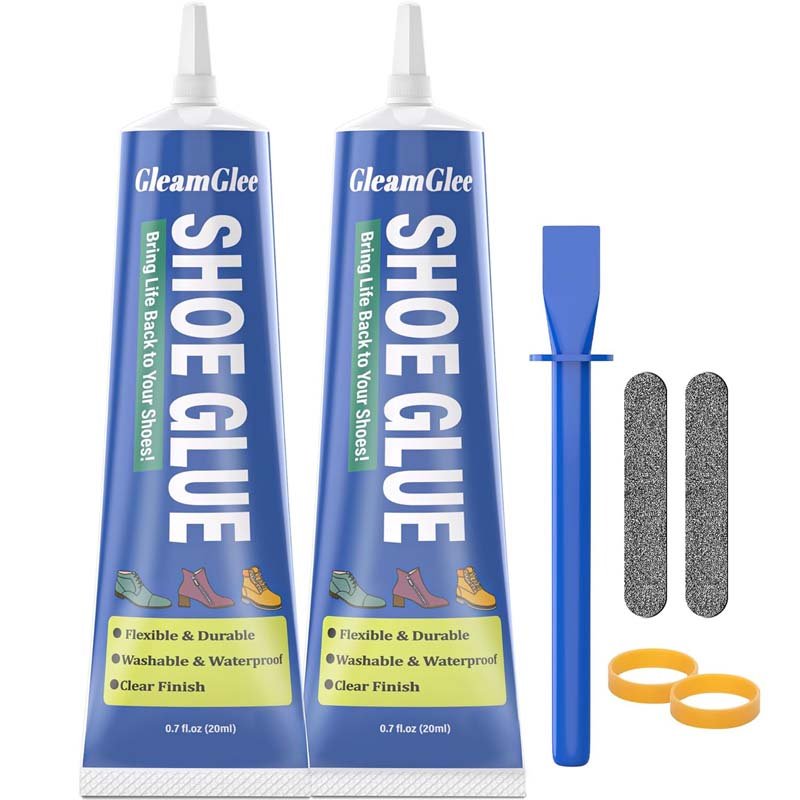
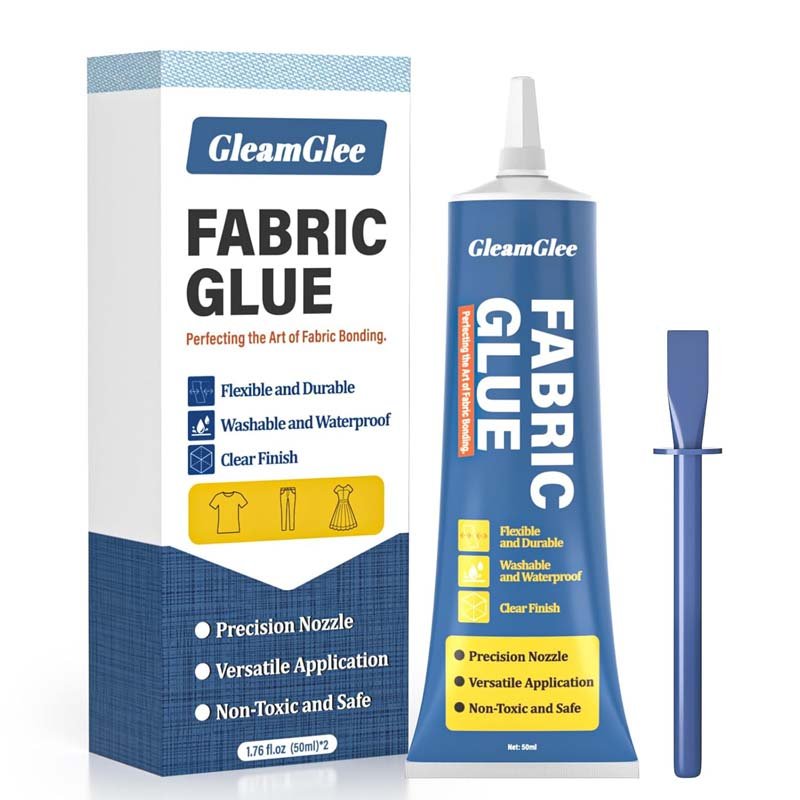
GleamGlee shoe glue dries with an elastic finish, making it more suitable for real shoe movement than rigid household glue. For white sneaker restoration, this flexibility helps the repair last longer while keeping the shoe comfortable.
Waterproof Shoe Glue
Waterproof shoe glue is best for white sneakers because white shoes are often exposed to water from rain, wet sidewalks, cleaning, sweat, and damp storage. If the repair weakens when moisture reaches the glued area, the sole gap or toe opening may return quickly. A waterproof bond helps protect the repair after full curing and keeps the damaged area from absorbing dirt and water again.
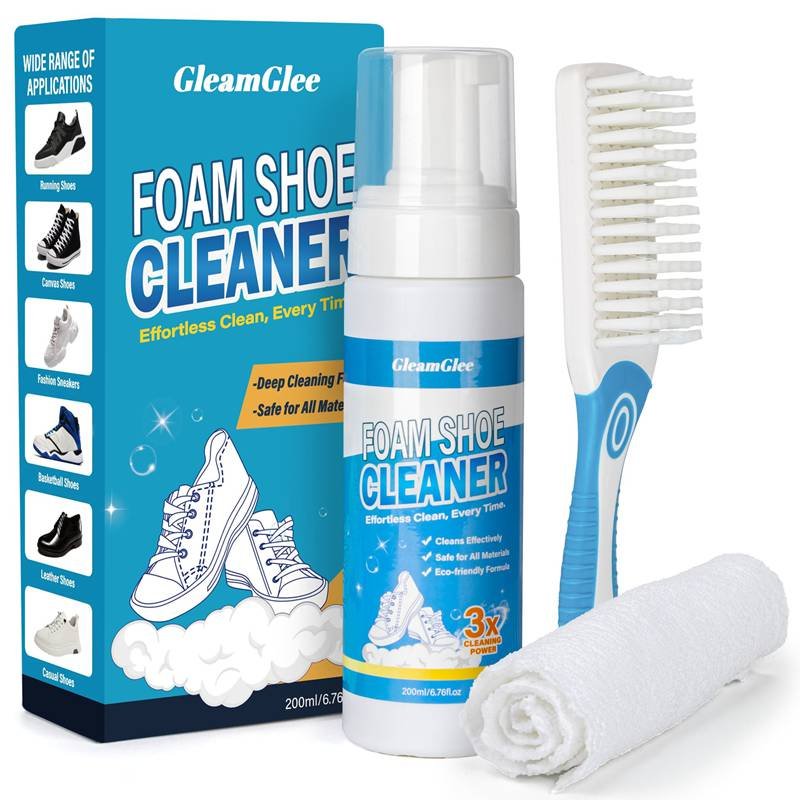
White sneakers usually need more frequent cleaning than dark shoes. Many users wipe the sole edge weekly or use foam cleaner when the upper becomes dirty. If the adhesive is not water-resistant, cleaning itself can shorten the repair life. This is why waterproof performance is important even for sneakers that are not marketed as waterproof shoes.
Customers should pay attention to curing time. Waterproof does not mean the shoe can be soaked immediately after gluing. The adhesive needs enough time to form a stable bond. Wearing the shoes too soon, washing them too early, or walking through rain before curing can weaken the repair.
Recommended moisture rules:
- Keep repaired sneakers dry during curing.
- Wait around 24 hours before normal wear.
- Avoid washing the repaired area too soon.
- Do not test the repair by soaking it.
- Clean gently after the bond has fully cured.
| Situation | Risk Without Waterproof Glue | Better Result With Waterproof Glue |
|---|---|---|
| Rainy walking | Sole gap may reopen | Bond resists normal moisture |
| Foam cleaning | Repair may soften | Glue line stays more stable |
| Sweaty insoles | Interior adhesive may loosen | Insole stays better secured |
| Wet pavement | Water enters sole gap | Repair helps seal the edge |
| Outdoor use | Dirt sticks inside opening | Closed seam stays cleaner |
GleamGlee shoe glue forms a waterproof, flexible bond after curing, which makes it suitable for white sneakers used in real daily conditions, not just dry indoor wear.
Precision Shoe Glue
Precision shoe glue is best for white sneakers because most sneaker damage appears in narrow, visible areas. A small toe gap, sidewall opening, heel seam, or insole corner does not need a large amount of glue. It needs accurate placement. A precision nozzle helps deliver the glue into the gap instead of spreading it over the white surface.
This is important because messy application is one of the main reasons DIY shoe repairs look bad. Too much glue can squeeze out, harden along the sole edge, collect dust, or create shiny marks. On white sneakers, these mistakes are easy to see. A metal needle nozzle gives the user more control, especially when repairing small edges.
Precision application is useful for:
- Narrow toe cap openings.
- Thin sole separations.
- Heel edge lifting.
- Loose insole corners.
- Sidewall seams.
- Small decorative parts.
- Designer-style white sneakers.
The nozzle should allow slow, controlled flow. It should also help reduce waste because the user can apply less glue exactly where it is needed. For families, sneaker collectors, repair shops, and online shoe care sellers, this improves the repair experience.
| Application Problem | What Happens With Poor Control | How Precision Helps |
|---|---|---|
| Too much glue | Thick visible residue | Thin, cleaner glue line |
| Wrong placement | Glue spreads onto upper | Glue reaches inside the gap |
| Small toe opening | Hard to reach seam | Needle tip enters narrow areas |
| Heel curve repair | Uneven glue flow | Better edge control |
| Insole repair | Hard lumps underfoot | Small dots or thin lines |
GleamGlee shoe glue uses a precision metal nozzle designed for detailed shoe repairs. For white sneakers, this helps users keep the repair neat, reduce overflow, and place the adhesive where the bond is actually needed.

How Do You Prepare White Sneakers?
White sneakers should be cleaned, dried, checked, and lightly prepared before shoe glue is applied. The repair area must be free from dust, mud, old loose glue, oil, moisture, and shoe cleaner residue. Good preparation helps the glue bond directly to the sneaker material instead of sticking to dirt or weak surface layers.
Preparation is where many home repairs succeed or fail. A strong shoe glue cannot perform well if it is applied over damp canvas, greasy rubber, loose old adhesive, or dust hidden inside the sole gap. For white sneakers, preparation also affects appearance. If black dirt mixes with fresh glue, the repair line may turn gray and become more visible.
| Preparation Step | What to Do | Why It Matters |
|---|---|---|
| Clean the repair area | Remove dirt, dust, oils, and old residue | Helps glue touch the real material |
| Dry the sneaker fully | Let canvas, leather, rubber, foam, and lining dry | Prevents weak bonding and cloudy marks |
| Remove loose old glue | Take away flakes, not strong original material | Stops the repair from bonding to weak layers |
| Lightly sand smooth edges | Roughen slick rubber or glossy surfaces | Improves grip in sole and toe repairs |
| Check alignment | Press parts together before gluing | Avoids crooked repair lines |
| Prepare pressure tools | Rubber bands, clips, or light weights | Holds the repair during curing |
Clean White Sneakers First
Clean white sneakers before using shoe glue because dirt, dust, mud, sweat, oil, and cleaner residue can block the adhesive from bonding to the shoe material. Focus on the exact repair area first, not only the visible upper. A loose sole gap, toe opening, heel edge, or insole corner may hide old dirt even when the outside looks clean.
Start by brushing away dry dirt from the sole edge, toe cap, and heel area. If the outsole is separating, open the gap gently and clean inside with a cotton swab, small brush, toothpick, or soft cloth. Do not pull the gap wider than necessary. Remove only loose old glue flakes, dust, sand, sock fibers, and debris. If old adhesive is still firmly attached and flat, it may not need aggressive scraping. Over-scraping can damage the shoe and make the gap larger.
For white midsoles and rubber edges, wipe away gray stains before gluing. If dark dirt stays inside the seam, it can mix with the glue and create a dirty repair line. For canvas or mesh sneakers, avoid soaking the fabric. Too much water can stay inside the material and delay the repair. For leather or synthetic leather, use gentle cleaning and avoid harsh solvents that may damage the finish.
A practical cleaning check:
| Area | What to Remove | Best Tool |
|---|---|---|
| Sole gap | Dust, sand, old glue flakes | Cotton swab or small brush |
| Toe cap | Mud, gray dirt, loose edge debris | Soft cloth or brush |
| Heel edge | Sock lint, sweat residue, dust | Dry brush or cotton swab |
| Insole area | Fibers, odor residue, loose adhesive | Cloth and light brushing |
| White midsole | Scuff dirt near repair line | Damp cloth, then dry fully |
The repair area is ready when it feels clean, stable, and free from loose particles. If the cotton swab still comes out gray or dusty, keep cleaning before applying glue.
Dry White Sneakers Fully
Dry white sneakers fully before using shoe glue because moisture can weaken the bond, slow curing, and create cloudy or uneven repair marks. Even if the surface feels dry, water can hide inside canvas, mesh, foam midsoles, insole layers, and narrow sole gaps. The repaired area should feel dry, firm, and room temperature before glue is applied.
This step is especially important if the sneakers were cleaned before repair. A damp cloth, foam cleaner, or rinse can leave moisture in seams and fabric. Canvas and mesh hold water longer than smooth leather or rubber. Foam midsoles can also trap moisture in small cracks. If shoe glue is applied too soon, the bond may not attach well to the material, and the gap may reopen after a few wears.
Do not use strong heat to rush drying. High heat from a hair dryer, heater, radiator, or direct sun can deform rubber, shrink materials, harden old glue, or yellow white sneaker surfaces. Air drying in a clean, ventilated place is safer. If the sneaker was lightly wiped, several hours may be enough. If canvas, mesh, or the inside of the shoe became damp, overnight drying is better.
Drying guide for white sneaker repair:
| Sneaker Material | Moisture Risk | Better Drying Method |
|---|---|---|
| Rubber sole | Water hides in grooves and seams | Wipe dry, then air dry |
| Canvas upper | Absorbs water deeply | Air dry longer, avoid soaking |
| Mesh upper | Holds water inside weave | Blot gently, then ventilate |
| Leather upper | Finish may be damaged by over-wetting | Use minimal water, dry naturally |
| Foam midsole | Moisture hides in cracks | Let dry fully before sanding or gluing |
| Insole | Sweat and cleaner can stay underneath | Remove if possible and dry separately |
| Sole gap | Hidden dampness is easy to miss | Keep gap slightly open for airflow |
Before gluing, touch the repair area and compare it with a dry part of the shoe. If it feels cooler, softer, or damp, wait longer. A dry repair surface gives the glue a much better chance to hold.
Sand White Sneaker Edges
Sand white sneaker edges lightly before gluing when the bonding surface is very smooth, glossy, or covered with old slick adhesive. Light sanding creates a slightly rougher surface so shoe glue can grip better. This is especially useful for rubber outsoles, smooth midsoles, vinyl panels, synthetic leather edges, and old factory glue areas.
The key is to sand only the bonding surface, not the visible design area. White sneakers can show scratches easily, so the goal is not to grind away material. The goal is to create fine surface texture inside the gap where the glue will sit. The sandpaper included in a complete shoe glue kit can be used for this step. A few gentle strokes are usually enough for small sole gaps or toe cap repairs.
Sanding is most helpful in these cases:
- The outsole edge feels slick or shiny.
- The old glue surface looks smooth and glassy.
- The toe cap keeps springing open.
- The rubber sole has no texture inside the gap.
- The repair failed before because the glue peeled off cleanly.
Do not over-sand soft foam, thin canvas, mesh, or fragile lining. These materials can tear, fuzz, or become weaker. For fabric areas, cleaning and drying are usually more important than sanding. For leather edges, sand very lightly only if the bonding point is hidden and needs more grip.
After sanding, remove all dust. Sanding dust left inside the seam can weaken the repair just like dirt. Use a dry brush, cotton swab, or soft cloth to clean the area before applying shoe glue.
| Surface Type | Should You Sand? | How Much? |
|---|---|---|
| Smooth rubber outsole | Yes | Lightly roughen hidden bonding area |
| Glossy synthetic leather | Sometimes | Very light sanding only where hidden |
| Vinyl edge | Sometimes | Gentle texture, no visible scratching |
| Canvas | Usually no | Avoid fraying fibers |
| Mesh | No | Fabric can tear easily |
| Foam midsole | Limited | Very gentle if surface is stable |
| Old glue layer | Yes, if loose or slick | Remove flakes and dull glossy spots |
Good sanding should not change the look of the sneaker. It should only help the adhesive grip where the repair will be closed.
Check White Sneaker Fit
Check the white sneaker fit before applying glue by pressing the damaged parts together without adhesive first. The sole, toe cap, insole, or heel edge should return to its natural position. This dry test prevents crooked repairs, raised edges, twisted toe caps, uncomfortable insoles, and visible misalignment after the glue cures.
White sneakers depend on clean lines. If the toe cap dries slightly lifted, the front still looks damaged. If the outsole shifts sideways, the shoe may feel uneven while walking. If the heel edge cures in the wrong curve, it may rub against the foot. Once the glue sets, these mistakes are harder to fix, so alignment should be checked before the repair begins.
During the fit check, press the damaged area closed and compare it with the other shoe. Look from the front, side, back, and top. The repaired edge should sit flat and natural. If the material refuses to close, check whether old glue, dirt, bent rubber, or curled fabric is blocking the seam. Clean or trim only loose debris. Do not force the shoe into a shape that creates strong tension, because it may reopen during curing.
Fit check points:
| Repair Area | What to Check Before Gluing | Why It Matters |
|---|---|---|
| Loose sole | Outsole lines up with upper | Prevents uneven walking and visible gaps |
| Toe cap | Front edge sits flat | Keeps sneaker shape clean |
| Insole | Footbed lies smooth | Avoids bumps under the foot |
| Heel edge | Back curve returns naturally | Reduces rubbing and collapse |
| Sidewall | Seam closes without twisting | Keeps side profile neat |
This is also the time to prepare rubber bands, padded clips, or light pressure tools. Test where they will sit before glue is applied. After adhesive is added, there is less time to adjust. A careful dry fit makes the actual repair cleaner, calmer, and more reliable.
How Do You Apply Shoe Glue?
Apply shoe glue in a thin, controlled layer inside the damaged area, press the sneaker parts together firmly, remove extra glue before it hardens, and hold the repair still until it cures. For white sneakers, the goal is not only a strong bond but also a clean repair line with no thick residue, crooked edges, or visible glue overflow.
The best repair usually follows a simple order: clean, dry, test-fit, glue, press, hold, cure. Do not rush from gluing to wearing. White sneakers bend heavily at the toe and sole, so the adhesive needs time to develop strength. A repair that is worn too early may reopen even if the glue is good.
| Application Step | What to Do | Why It Matters |
|---|---|---|
| Apply thinly | Use a narrow line inside the gap | Reduces overflow on white surfaces |
| Press firmly | Push both surfaces together evenly | Helps glue form a stronger bond |
| Clean excess | Remove squeezed-out glue early | Prevents shiny or dirty glue marks |
| Hold steady | Use rubber bands, clips, or light pressure | Stops the gap from reopening |
| Cure fully | Let the repair rest before wearing | Improves long-term strength |
| Check after curing | Inspect edge before daily use | Finds small weak spots early |
Apply Shoe Glue Thinly
Apply shoe glue thinly because white sneakers show excess adhesive very easily. A thin line placed inside the sole gap, toe opening, heel seam, or insole edge usually creates a cleaner and stronger repair than a thick layer spread across the outside. Too much glue can squeeze out, dry into a shiny ridge, collect dirt, or make the sneaker look patched instead of restored.
For loose soles, place the nozzle deep enough into the opening so the glue reaches the bonding surface. Work slowly from one end of the gap to the other. For toe gaps, use a small amount first because the front edge usually needs less glue than people expect. For insoles, use thin lines or small dots instead of coating the whole footbed. For heel edges, follow the seam carefully and avoid flooding the back curve.
A good rule is: cover the bonding surface, but do not fill the whole space like a sealant. Shoe glue works best when the two materials touch closely with adhesive between them. If the glue layer is too thick, the repair can feel bulky and may take longer to cure.
| Repair Area | Suggested Glue Amount | Common Mistake |
|---|---|---|
| Small toe gap | Thin line inside opening | Adding glue over the outside toe cap |
| 1–3 cm sole gap | Even line along inner seam | Overfilling until glue spills out |
| Loose insole corner | Small dots or short lines | Coating the full insole too thickly |
| Heel edge | Narrow line along lifted edge | Letting glue run onto the heel upper |
| Sidewall seam | Controlled bead inside gap | Smearing glue across the side panel |
Useful application habits:
- Start with less glue, then add a little more only if needed.
- Keep the nozzle close to the repair area.
- Avoid touching wet glue with fingers.
- Keep a cotton swab ready before pressing.
- Do not bend the shoe to “spread” the glue.
Thin application gives better control, cleaner appearance, and more comfortable wear after the repair cures.
Press White Sneakers Firmly
Press white sneakers firmly after applying shoe glue because adhesive needs close contact between both surfaces to form a dependable bond. If the sole, toe cap, insole, or heel edge is not pressed into place, the glue may dry as a thick filler rather than a tight repair layer. Firm pressure also helps restore the original sneaker shape.
For a loose sole, press the outsole upward against the upper and check that the edge lines up evenly. For a toe gap, press from the front and sides so the toe cap sits flat. For an insole, press from heel to toe to push out air pockets and avoid bumps. For a heel edge, press along the curve instead of only pushing one point.
The first 1–3 minutes after pressing are important. This is when glue may squeeze out and the repair may shift slightly. Check the edge from different angles. If the sole has moved sideways, adjust it before the glue starts to set. If extra glue appears on the white midsole or upper, remove it gently right away.
| Repair Type | How to Press | What to Check |
|---|---|---|
| Loose sole | Press along the full gap, not one spot | Edge sits flat with no open corner |
| Toe cap | Press front edge evenly | Toe shape matches the other shoe |
| Insole | Press heel to toe | No bubbles or raised areas |
| Heel edge | Press along the curve | Back line stays natural |
| Sidewall | Press seam straight | Side profile does not twist |
Do not test the bond by pulling it open after pressing. This is a common mistake. The glue needs curing time before strength can be judged. Pulling, bending, or flexing the repair too early can weaken it.
For white sneakers, good pressure does two things at once: it improves bond strength and keeps the repair line clean.
Hold With Rubber Bands
Hold the repair with rubber bands when the damaged area wants to spring open after pressing. Rubber bands give steady pressure while the shoe glue cures, which is especially useful for loose soles, toe gaps, sidewall openings, and heel edge repairs. Without steady pressure, the glued parts may slowly separate and dry in the wrong position.
Before applying glue, test where the rubber bands will sit. This prevents panic after the adhesive is already on the shoe. For a sole repair, wrap the bands around the sneaker so they pull the outsole and upper together. For a toe repair, position the band to keep the front edge closed. For heel repairs, bands may help, but padded clips or gentle wrapping may work better if the heel curve needs more direct pressure.
The bands should be firm but not so tight that they deform the shoe. If the sneaker upper is soft canvas, mesh, or leather, place a small cloth under the band if needed to prevent pressure marks. Make sure the band does not sit directly on wet glue, or it may stick to the repair.
| Repair Area | Best Holding Method | What to Avoid |
|---|---|---|
| Loose sole | Rubber bands around shoe body | Bands too loose to close the gap |
| Toe cap | Band across front section | Crushing or bending the toe shape |
| Heel edge | Rubber band, padded clip, or wrap | Sharp clips without padding |
| Insole | Light flat pressure inside shoe | Heavy object that deforms the shoe |
| Sidewall | Band placed across seam direction | Band touching wet glue |
Practical holding tips:
- Prepare bands before gluing.
- Use two bands for longer sole gaps.
- Check alignment after bands are placed.
- Keep pressure even, not twisted.
- Leave the repair still during curing.
GleamGlee shoe glue kit includes rubber bands because pressure is part of the repair, not an optional extra. For customers repairing white sneakers at home, this small tool can make the repair cleaner and more reliable.
Let Shoe Glue Cure
Let shoe glue cure fully before wearing white sneakers because surface dryness is not the same as repair strength. The outside may feel dry within a shorter time, but the bond inside the sole gap, toe cap, heel edge, or insole area still needs time to stabilize. For most sneaker repairs, waiting around 24 hours before normal wear gives the adhesive a much better chance to hold.
Curing should happen in a dry, ventilated place. Keep the sneaker on a flat surface and do not bend, twist, wash, or wear it during this time. If rubber bands or clips are holding the repair, check that they are not pulling the shoe out of shape. The repaired edge should stay closed and aligned while the glue sets.
The larger the repair, the more important curing becomes. A tiny insole corner may need less stress control than a 5 cm sole gap, but both still benefit from patience. Thick glue layers, damp materials, cold rooms, and high humidity can slow curing. This is another reason thin application and full drying before gluing matter.
| Time After Gluing | What to Do | What Not to Do |
|---|---|---|
| First 10 minutes | Keep pressure steady | Do not adjust repeatedly |
| First 1–3 hours | Keep shoe still and dry | Do not bend the toe or sole |
| Around 24 hours | Allow full rest before wear | Do not wash or soak |
| First wear after repair | Use for light daily walking first | Avoid sports or heavy rain immediately |
| After first use | Check repair line | Do not ignore small reopened edges |
Customers often want to know why they must wait if the glue already feels dry. The reason is simple: sneakers flex under body weight. A repair that can survive light touching may not be ready for walking pressure. Waiting helps the bond resist bending, moisture, and daily use.
For best results, repair white sneakers at night and wear another pair the next day. This gives the glue time to cure without temptation to test it too early.

How Do You Make White Sneakers Look New?
White sneakers look new again when the repair is clean, flat, aligned, and supported by gentle surface cleaning. After the shoe glue has cured, remove visible residue, clean the upper, reshape the toe and heel, and protect the repaired area from early stress. The goal is not only to make the sneaker hold together, but to make it look neat enough for daily wear.
For white sneakers, small details matter. A sole may be firmly glued, but if there is extra adhesive on the edge, gray dirt in the seam, a raised toe cap, or a bent heel, the shoe still looks old. A good restoration should bring back three things at the same time: clean color, natural shape, and stable structure.
| Restoration Area | What to Check | Good Result |
|---|---|---|
| Glue line | No thick ridge, gray dirt, or shiny overflow | Repair looks clean and controlled |
| White upper | Less dirt, fewer visible stains, no harsh damage | Sneaker looks fresher overall |
| Toe shape | Front edge sits flat and balanced | Shoe does not look curled or lifted |
| Heel shape | Back stands naturally, not crushed | Sneaker looks more structured |
| Sole edge | Closed seam with no open gaps | Shoe looks wearable again |
| Comfort | No hard glue lumps or rubbing points | Sneaker feels normal on foot |
Remove Extra Shoe Glue
Remove extra shoe glue carefully because white sneakers show dried adhesive more than dark shoes. Even clear glue can become visible if it dries as a thick ridge along the sole, toe cap, sidewall, or heel edge. The best time to clean overflow is right after pressing the repaired parts together, before the glue fully hardens. If excess glue is left on the surface, it can catch dust, turn gray over time, and make the repair look rough.
For clean results, keep a cotton swab, soft cloth, toothpick, or small plastic scraper ready before gluing. After pressing the sole or toe cap closed, check the repair line immediately. If glue squeezes out, lift it away gently instead of spreading it across the white surface. On rubber midsoles, a cotton swab can clean narrow edges well. On canvas or leather uppers, use a lighter touch to avoid damaging texture or finish.
| Extra Glue Area | Best Cleaning Method | What to Avoid |
|---|---|---|
| White midsole edge | Cotton swab or soft cloth | Smearing glue across the sole |
| Toe cap front | Small tool or swab | Pulling the repair open |
| Heel seam | Soft cloth with gentle pressure | Scraping delicate upper material |
| Sidewall | Wipe in one direction | Rubbing wet glue into fabric |
| Insole edge | Remove lumps before cure | Leaving hard spots underfoot |
Important points customers should remember:
- Clean overflow before it fully cures.
- Do not use fingers to smear wet glue.
- Keep the repair pressed while cleaning excess.
- Avoid harsh solvents on leather, canvas, mesh, or printed areas.
- Check the shoe under good light, because clear glue can be hard to see at first.
A clean glue line makes the difference between a repair that looks homemade and a repair that looks cared for.
Clean White Sneaker Uppers
Clean white sneaker uppers after the glued repair has cured, because fresh-looking uppers help the whole repair look more complete. If the sole is fixed but the upper still has gray marks, yellow stains, or dirt around the eyelets and toe box, the sneaker will not feel fully restored. Cleaning should be gentle, controlled, and matched to the material.
Do not soak the shoes immediately after repair. Even waterproof shoe glue needs full curing before moisture exposure. Once the repair is stable, clean the upper with a soft brush, microfiber cloth, or gentle shoe cleaner. Smooth leather and synthetic leather can usually be wiped with a damp cloth. Canvas may need light brushing, but it should not be over-wetted. Mesh needs patience because dirt can sit inside the weave. Rubber toe caps and midsoles can handle slightly firmer cleaning, but avoid sharp tools that scratch the surface.
| Upper Material | Best Cleaning Method | Customer Warning |
|---|---|---|
| Smooth leather | Soft damp cloth, gentle cleaner | Do not soak or use harsh alcohol |
| Synthetic leather | Light wiping and foam cleaner | Avoid strong solvents |
| Canvas | Soft brush with controlled moisture | Do not over-wet before drying |
| Mesh | Gentle brushing and blotting | Avoid hard scrubbing |
| Rubber toe cap | Cloth or soft brush | Do not scratch with metal tools |
| Vinyl panels | Mild wiping | Avoid high heat and solvent-heavy products |
For better results, clean in this order:
- Brush away dry dust first.
- Clean the upper gently.
- Wipe the midsole edge.
- Avoid bending the repaired gap.
- Let the shoe dry naturally before storage or wear.
White sneaker cleaning should improve the look without creating new damage. A careful clean makes the repaired shoe feel fresher, brighter, and more ready to wear.
Fix White Sneaker Shape
Fix white sneaker shape by supporting the toe, heel, and upper while the shoe glue cures and after cleaning. A sneaker can be clean and strongly bonded, but still look worn out if the toe box is collapsed, the heel is crushed, or the sole edge dries out of alignment. Shape is one of the biggest visual differences between “old shoes” and “restored shoes.”
Before the glue cures, check that the repaired part sits in its natural position. The toe cap should lie flat, the sole should follow the original edge, and the heel should stand upright. If the shoe dries while twisted or compressed, the repair may hold but still look uneven. For white sneakers, this is easy to notice because clean white edges reveal shape problems clearly.
Simple ways to support sneaker shape:
- Place clean paper, soft cloth, or a shoe tree inside the sneaker.
- Fill the toe box lightly, but do not stretch it.
- Keep the sneaker on a flat surface during curing.
- Use rubber bands to hold the sole without crushing the upper.
- Check the shoe from the front, side, and back before leaving it to dry.
- Compare the repaired shoe with the other shoe.
| Shape Problem | Cause | How to Improve It |
|---|---|---|
| Collapsed toe box | Soft upper, long wear, poor storage | Lightly stuff toe area while drying |
| Raised toe cap | Poor alignment during repair | Press and hold flat during curing |
| Crooked sole edge | Sole shifted while glue was wet | Check side profile before curing |
| Crushed heel | Stepping on heel when removing shoes | Support heel and avoid folding |
| Wrinkled upper | Moisture, pressure, or poor storage | Dry naturally with light inner support |
Good shape support does not need expensive tools. Even clean tissue paper or a soft cloth can help, as long as it does not overstretch the shoe. The aim is to bring back the sneaker’s natural outline, not force it into a new shape.
Protect the Shoe Glue Repair
Protect the shoe glue repair after curing because the first few wears can decide whether the bond stays neat and strong. A flexible waterproof glue is designed for daily use, but the repaired area should still be treated carefully at the beginning. Avoid heavy sports, soaking, aggressive brushing, or long wet walks immediately after repair.
For the first wear, choose light daily use rather than running, basketball, hiking, or rainy outdoor activity. Check the repaired area after wearing. If the edge remains closed and flat, the repair is performing well. If a tiny section starts to lift, fix it early with a small amount of glue instead of waiting for the gap to spread.
Repair protection tips:
- Wait around 24 hours before normal wear.
- Avoid washing the repaired area too soon.
- Do not bend the repaired toe gap by hand to test it.
- Clean dirt from the sole edge after outdoor use.
- Store sneakers in a dry place.
- Use a shoehorn or loosen laces instead of crushing the heel.
- Repair small gaps early before they grow.
| Daily Habit | Damage It Can Cause | Better Habit |
|---|---|---|
| Kicking shoes off by the heel | Heel edge separation | Loosen laces and remove by hand |
| Wearing in rain right after repair | Weakens uncured bond | Let glue cure fully first |
| Machine washing too soon | Stresses glue and shoe materials | Clean gently by hand |
| Ignoring small toe gaps | Gap grows with every step | Repair early |
| Storing shoes damp | Odor, yellowing, weak seams | Air dry before storage |
| Pulling on sole to test repair | Breaks early bond | Check visually instead |
For customers who wear white sneakers often, a repair kit should be part of regular shoe care. Small problems are cheaper, cleaner, and easier to fix when handled early. This helps keep favorite sneakers in rotation longer and reduces the need to replace shoes that are still comfortable and stylish.
Conclusion
Restoring white sneakers using shoe glue is a practical way to keep a favorite pair clean, wearable, and useful for longer. Many white sneakers do not need to be replaced just because the sole starts lifting, the toe cap opens, the insole curls, or the heel edge separates. With proper cleaning, full drying, light sanding, thin glue application, firm pressure, and enough curing time, these common problems can often be repaired at home in a clean and cost-effective way.
GleamGlee shoe glue is designed for real sneaker repair needs: clear drying, flexible bonding, waterproof performance, precise application, and use on materials such as leather, rubber, vinyl, canvas, soles, heels, and insoles. Whether you want to order GleamGlee branded shoe glue for daily repair or develop a private-label shoe repair kit with custom packaging, formula support, and bulk supply, GleamGlee can support product orders, samples, customization, and wholesale inquiries.