Skip to content
Tent Glue for Hiking and Hunting Gear: A Repair Guide
Your trusted adhesives glue & cleaner manufacturer

A tent often fails in small ways before it fails completely. A tiny hole appears on the rainfly after rubbing against a branch. A seam starts to drip during a night of steady rain. A groundsheet gets punctured by a sharp stone. A hunting shelter tears near the corner after being folded, pulled, and packed many times. At first, these problems may look minor, but outdoors they can quickly affect sleep, warmth, dryness, safety, and comfort.
Tent glue is a waterproof, flexible repair adhesive used to fix holes, tears, seam leaks, worn fabric, and small cracks in tents and outdoor gear. It works on many common outdoor materials, including nylon, polyester, canvas, vinyl, PVC-coated fabric, tarps, rainflies, groundsheets, awnings, and hunting shelters. A good tent glue should dry clear, stay flexible, resist water, and move with the fabric after curing.
For hikers and hunters, tent glue is not just a small tube in a repair kit. It is a way to save expensive gear before a small tear becomes a large replacement cost. A good tent may cost hundreds of dollars. A rooftop tent, hunting blind, or event canopy can cost even more. When the damage is local and the fabric is still strong, a clean glue repair can help extend gear life, reduce waste, and keep the next trip on schedule.
What Is Tent Glue?
Tent glue is a waterproof repair adhesive made for flexible outdoor fabric. It is used to fix small holes, tears, seam leaks, worn corners, and cracked waterproof layers on tents, rainflies, tarps, groundsheets, awnings, hunting shelters, and similar gear. Unlike ordinary glue, tent glue must stay flexible after curing because outdoor gear is folded, packed, stretched, pulled, and exposed to rain, dirt, wind, and friction.
For hiking and hunting gear, flexibility is just as important as strength. A tent wall may flap for hours in strong wind. A rainfly may stretch when wet and tighten again when dry. A tarp may be pulled over gear, tied down with rope, dragged across rough ground, and folded after use. If the glue dries too hard, the repair can crack along the edge. A better tent glue forms a clear rubber-like seal that bends with the material and helps block water from entering the damaged area.
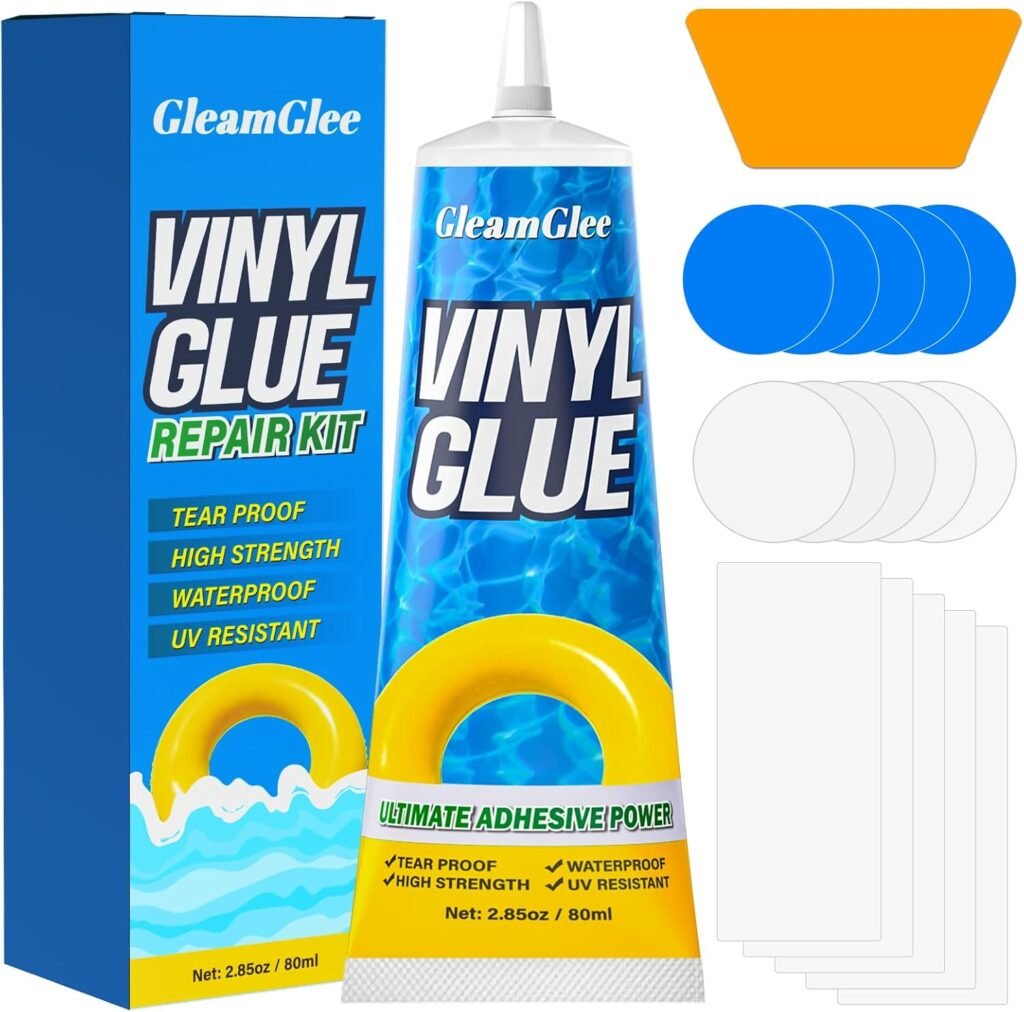
GleamGlee tent glue is designed for tent repair and outdoor surface sealing. It works on common outdoor materials such as nylon, vinyl, canvas, PVC-coated fabric, tarps, rainflies, awnings, groundsheets, sleeping bags, and related gear. After full curing, it forms a flexible waterproof seal that helps resist cracking, hardening, peeling, scraping, and repeated folding. Each 2.12 fl oz / 60 ml tube can seal up to 60 feet of seams or fabric, depending on the thickness of application and the type of repair.
What does tent glue repair?
Tent glue repairs the small damage that usually makes outdoor gear uncomfortable before it becomes completely unusable. This includes pinholes in tent floors, small tears in rainflies, seam leaks, cracked coating on tarps, worn awning edges, and punctures in groundsheets. These problems may look minor in dry weather, but they can become serious when rain, wind, mud, or cold ground is involved.
Common repair areas include:
| Gear Area | Common Damage | Repair Purpose |
|---|---|---|
| Tent floor | Pinholes, stone punctures, worn spots | Reduce water entering from wet ground |
| Rainfly | Small tears, seam leaks, branch scratches | Restore rain protection |
| Tent seams | Stitch-hole leaks, weak coating | Seal water entry points |
| Tarp edges | Fraying, splits, small holes | Stop damage from spreading |
| Hunting blind fabric | Corner tears, folding cracks | Keep shelter covered and usable |
| Awnings | Fabric cracks, edge wear | Extend service life |
| Groundsheets | Sharp-object punctures | Add waterproof protection |
| Sleeping bag shell | Small nylon holes | Prevent further tearing |
A small hole does not always need a large repair. A pinhole or tiny puncture may only need a thin layer of glue that extends slightly beyond the damaged spot. A longer tear usually needs patch material because the patch spreads pulling force across a larger area. For seam leaks, the glue should be applied along the full leaking section rather than only on one visible drip point.
Tent glue is most useful when the surrounding fabric is still strong. If the fabric is rotten, powdery, heavily sun-damaged, or shredded across a wide area, glue alone may not give a lasting result. But for normal camping, hiking, hunting, and travel damage, it can often save gear from early replacement.
Why is tent glue different?
Tent glue is different from ordinary glue because it is made for movement, moisture, and outdoor fabric. Many common household glues are designed for hard or indoor materials. They may bond wood, plastic, paper, or small craft items well, but they often become too stiff for tents and tarps. Outdoor fabric needs an adhesive that can bend, seal, and survive repeated packing.
A useful tent glue should have several outdoor-focused features:
| Feature | Why It Matters |
|---|---|
| Waterproof sealing | Helps stop rain, dew, and ground moisture from entering |
| Flexible curing | Allows the repair to bend when the fabric folds |
| Clear finish | Keeps visible repairs cleaner on tents and rainflies |
| Abrasion resistance | Helps the repair handle rubbing from ground, branches, poles, and bags |
| Material compatibility | Works on nylon, vinyl, canvas, PVC-coated fabric, and tarps |
| Controlled application | Reduces waste and makes small repairs neater |
For example, a rainfly repair needs more than simple bonding. The glue must seal water, stay attached to coated fabric, and remain flexible when the fly is folded into a stuff sack. A tarp repair needs enough toughness to handle rope tension, dragging, and repeated folding. A hunting blind repair needs flexibility because the fabric may be opened, closed, packed, and stored many times during one season.
This is why using the wrong glue can create new problems. A stiff glue can crack. A non-waterproof glue can soften or fail in rain. A glue that does not bond coated fabric may peel away. A messy glue can leave thick marks on visible tent panels. Tent glue is made to avoid these problems by combining adhesive strength with waterproof sealing and flexible movement.
When should tent glue be used?
Tent glue should be used when the damage is small to moderate, local, and repairable. It is ideal for holes, seam leaks, surface cracks, small tears, worn coating, and weak fabric areas that need sealing or reinforcement. It is best used before a trip, after gear inspection, or as part of an outdoor repair kit for unexpected damage.
Good moments to use tent glue include:
| Situation | Why Repair Early |
|---|---|
| Before camping season | Stops old seam leaks before heavy rain |
| Before a hiking trip | Reduces the risk of gear failure away from home |
| After a hunting trip | Fixes blind or tarp tears before storage |
| After windy weather | Checks stress points before damage spreads |
| After finding floor moisture | Seals pinholes in the tent base |
| Before storing gear | Prevents small tears from growing during the next use |
Repairing at home is usually better than repairing outdoors because the fabric can be cleaned, dried, laid flat, and cured properly. A repair made on wet, dusty, cold, or dirty fabric may not bond as well. If the glue must be used outdoors, the area should still be dried and cleaned as much as possible before application.
A simple rule is to repair damage as soon as it is noticed. A 0.5-inch tear is easier to fix than a 3-inch tear. A weak seam is easier to seal before rain enters the tent. A tarp edge is easier to reinforce before the corner splits under rope tension. Tent glue works best as early protection, not only as last-minute emergency repair.

Which Gear Needs Tent Glue?
Tent glue is most useful for outdoor gear made from flexible fabric, coated fabric, or waterproof layers. It is commonly used on tents, rainflies, tarps, groundsheets, awnings, hunting shelters, sleeping bags, dry bags, pop-up canopies, and similar gear that may develop small holes, tears, seam leaks, edge wear, or coating cracks.
The gear that needs tent glue usually has one thing in common: it is still usable, but one damaged area is reducing its protection. A tent may still stand properly, but one seam leaks. A tarp may still cover equipment, but one corner is splitting. A hunting blind may still open and close, but the fabric near the window has torn. In these cases, repair is often more practical than replacement.
Tent glue works best when the damaged area is local and the surrounding fabric is still strong. It is not meant to rebuild rotten fabric, replace broken poles, repair large shredded panels, or carry heavy structural load by itself. Its main value is sealing and reinforcing flexible outdoor material before small damage becomes larger.
Which tent parts need tent glue?
Tent glue is useful on tent floors, rainflies, seams, corners, door edges, mesh-to-fabric joints, pole sleeve areas, and fabric panels. These areas receive the most stress from folding, wind, foot pressure, moisture, zipper movement, and repeated setup. Small damage in these places can quickly affect comfort and weather protection.
Tent floors are one of the most common repair areas. They sit against ground moisture, stones, roots, sand, mud, and campsite debris. Even a tiny puncture can allow dampness to rise into the sleeping area, especially during long rain or wet-ground camping. For small floor holes, tent glue can seal the puncture directly. If the hole is larger or the floor is worn thin, a patch plus glue gives better support.
Rainflies and seams are another key area. A rainfly may be damaged by branches, packing friction, old coating, or strong wind. Seam leaks often appear around stitch holes or worn seam tape. A thin, continuous layer of tent glue over the leaking section helps create a waterproof barrier. For better results, the glue should cover the full weak seam area, not only the exact drip point.
Common tent repair areas include:
| Tent Area | Common Damage | Why It Matters | Repair Method |
|---|---|---|---|
| Tent floor | Pinholes, punctures, worn coating | Moisture enters from wet ground | Seal hole; patch if worn thin |
| Rainfly | Tears, scratches, seam leaks | Reduces rain protection | Glue seal or patch repair |
| Seams | Stitch-hole leaks, coating cracks | Water follows seam lines | Apply thin continuous glue line |
| Corners | Stress tears, fabric pulling | Damage spreads under tension | Patch plus glue |
| Door edges | Pulling, zipper-area tears | Repeated movement enlarges tears | Reinforce with patch |
| Pole sleeves | Abrasion, fabric stress | Pole pressure can worsen damage | Patch and seal edges |
| Mesh joints | Small separation at fabric edge | Insects enter through gaps | Light glue repair if material allows |
| Tent window vinyl | Small cracks or splits | Rain and wind enter shelter | Clear glue sealing |
High-stress areas need extra care. A small pinhole in a flat panel may only need a thin glue coat. A tear near a corner, zipper, pole sleeve, or door should usually be patched because these areas keep moving during use. Patch size matters. For a tear, the patch should extend beyond the damaged edge, ideally at least 0.5–1 inch on all sides when the fabric allows.
Which hiking gear needs tent glue?
Hiking gear that may need tent glue includes ultralight tents, backpacking shelters, rainflies, tent footprints, groundsheets, tarps, bivvy bags, dry bags, rain jackets, ponchos, sleeping pad covers, and backpacks. These items are often made from thin, coated, or water-resistant materials that can be punctured, scraped, or worn during trail use.
Backpacking gear is built to save weight, but lighter materials can be more vulnerable to abrasion and sharp contact. A tent footprint may be scratched by stones. A rainfly may catch on a branch. A dry bag may scrape against rock. A pack fabric panel may rub against buckles, trail debris, or rough ground. Tent glue is useful because it can seal these local weak points without adding much weight or bulk.
For hiking repairs, the repair goal is usually water protection and damage control. A small leak may not seem urgent in dry weather, but it becomes important in rain, snowmelt, heavy dew, or wet forest campsites. A groundsheet puncture can transfer moisture upward. A rainfly hole can drip onto sleeping bags. A tarp tear can grow when tied tight between trees.
Practical hiking gear repair examples:
| Hiking Gear | Damage Type | Why Tent Glue Helps |
|---|---|---|
| Ultralight tent | Small fabric tear | Seals damage without heavy stitching |
| Tent footprint | Stone puncture | Reduces ground moisture entry |
| Rainfly | Branch scratch or pinhole | Helps restore rain protection |
| Backpacking tarp | Edge split or seam opening | Bonds patch and seals tear |
| Bivvy bag | Coated fabric crack | Helps protect against moisture |
| Dry bag | Small cut or scrape | Seals local damage on waterproof surface |
| Poncho | Small hole near shoulder | Helps block rain entry |
| Backpack | Fabric rip or worn strap area | Reinforces before damage spreads |
For trail use, tent glue should ideally be applied before the trip or during a dry rest period. Wet or dirty fabric can reduce bonding quality. A small repair kit for hiking can include tent glue, pre-cut fabric patches, alcohol wipes, small scissors, gloves, and a flat card for spreading. This lightweight kit can handle many common fabric emergencies without taking much pack space.
Which hunting gear needs tent glue?
Hunting gear that may need tent glue includes hunting blinds, camouflage shelters, ground tarps, rain covers, gear covers, ATV tarps, tree stand covers, portable toilet tents, decoy bags, and field shelters. These items often face brush, mud, rain, cold weather, repeated folding, and rough transport, which can create tears and worn fabric areas.
Hunting shelters and blinds are especially exposed to fabric stress. They are set up, collapsed, packed, carried, opened, and stored many times during the season. Window edges, door openings, roof corners, lower fabric panels, and floor-contact areas are common damage points. A small tear near a window can spread when the panel is pulled. A roof seam can leak during rain. A ground tarp can split where boots, chairs, or gear boxes rub against it.
Tent glue is useful because it can repair fabric while keeping the shelter weather-resistant. Clear flexible glue is also helpful on camouflage gear because it does not create a large bright repair mark when used carefully. For tears in camo fabric, a matching patch plus clear glue gives a stronger and cleaner repair than glue alone.
Common hunting repair areas include:
| Hunting Gear | Common Damage | Repair Tip |
|---|---|---|
| Hunting blind roof | Rain leaks, seam wear | Seal seam line before next rainy use |
| Blind window edge | Pull tears, fabric split | Use patch plus glue for strength |
| Camouflage shelter wall | Branch tear | Seal and reinforce from inside if possible |
| Ground tarp | Boot abrasion, punctures | Patch high-wear area |
| Gear cover | Small holes or cracks | Apply thin flexible glue layer |
| ATV tarp | Edge tear from tie-downs | Use wider patch coverage |
| Decoy bag | Fabric rip | Reinforce before carrying heavy load |
| Tree stand cover | Weather cracks | Seal local cracks before storage |
Seasonal inspection is important. Before hunting season, lay out shelters and tarps, check seams, corners, windows, roof panels, and tie-down areas. After the season, clean and dry the gear before repairing and storing it. Repairing before storage prevents small tears from becoming worse when the material is folded for months.
Which home and travel gear needs tent glue?
Home and travel gear that may need tent glue includes backyard tents, kids’ play tents, beach shelters, sunshades, picnic mats, pop-up canopies, gazebos, car awnings, rooftop tents, motorcycle touring tents, outdoor storage covers, and construction tarps. These items often suffer from wind damage, sun wear, folding cracks, corner stress, and accidental punctures.
Backyard and family gear is often damaged by daily use rather than extreme outdoor conditions. Children may pull play tents roughly. Beach shelters may flap in wind. Picnic mats may crack along the waterproof backing. Pop-up canopy corners may tear during setup. These problems are usually local, so tent glue can help extend the life of the item without a difficult repair process.
Travel gear can be more expensive and harder to replace quickly. Rooftop tents, car awnings, motorcycle shelters, and expedition tarps are exposed to vibration, folding, road dust, weather, and repeated packing. A small crack in an awning panel or a tear near a rooftop tent window should be repaired early before wind pressure makes it larger.
Useful home and travel repair examples:
| Gear Type | Common Damage | Why Repair Early |
|---|---|---|
| Backyard tent | Fabric tear from play | Prevents larger ripping |
| Beach shelter | Wind tear or pole-area stress | Keeps shade usable |
| Picnic mat | Waterproof layer crack | Reduces moisture seepage |
| Pop-up canopy | Corner split | Prevents roof panel tearing |
| Gazebo sidewall | Zipper-edge tear | Keeps sidewall functional |
| Car awning | Folding crack | Protects expensive travel gear |
| Rooftop tent | Window or panel tear | Prevents rain and wind entry |
| Outdoor cover | Puncture or edge wear | Protects stored tools or vehicles |
For these repairs, appearance often matters. A clear glue line is useful on visible surfaces because it keeps the repair neat. On larger tears, rounded patches are better than square patches because sharp corners lift more easily during folding. After repair, the gear should stay flat and dry until the glue has fully cured.

How Do You Use Tent Glue?
Tent glue works best when the damaged fabric is clean, dry, flat, and not under tension. The basic process is simple: find the full damaged area, clean away dirt and loose coating, let the surface dry, apply a thin even layer of glue, add a patch when needed, press firmly, and allow the repair to cure fully before folding or using the gear outdoors.
Good tent repair depends more on surface preparation than on using a large amount of glue. Outdoor gear often carries mud, dust, sunscreen, tree sap, smoke residue, body oil, mildew, sand, or old waterproof coating. These layers may be hard to see, but they can prevent the adhesive from bonding properly. When glue is applied over dirt, it may stick to the dirt instead of the tent fabric.
For hiking and hunting gear, the safest repair habit is to fix damage before the next trip, not during the trip. A home repair gives more control over cleaning, drying, pressure, and curing time. Field repairs can still help in urgent situations, but rain, low temperature, poor light, and dirty fabric can reduce repair quality. When possible, repair the tent at least 24 hours before packing it again.
How should tent glue be applied?
Tent glue should be applied in a thin, smooth, controlled layer that fully covers the damaged area and slightly overlaps the surrounding fabric. For small holes or seam leaks, the glue can be applied directly. For longer tears, corner damage, tarp splits, and high-stress areas, use a patch and seal the patch edges with glue.
Before applying glue, place the fabric on a flat surface. If the material is wrinkled, twisted, or stretched too tightly, the repair may dry in the wrong shape. This is especially important for tent floors, rainflies, awnings, tarps, and hunting blind panels. A repair that cures flat usually folds better and looks cleaner after use.
A simple application guide:
| Repair Type | Application Method | Extra Tip |
|---|---|---|
| Tiny pinhole | Apply a small dot or thin coat | Cover slightly beyond the hole |
| Seam leak | Apply a thin continuous line | Follow the full leaking seam, not only the drip point |
| 1–2 inch tear | Apply glue under a patch | Patch should extend beyond the tear |
| Tarp split | Use patch plus edge sealing | Wider patch is better for tension areas |
| Groundsheet puncture | Apply glue over puncture; patch if worn thin | Repair both sides if possible |
| Rainfly scratch | Apply a thin clear layer | Avoid thick buildup on visible panels |
| Hunting blind tear | Patch from inside if possible | Seal edges to prevent lifting |
| Awning crack | Apply glue and press fabric flat | Let cure before rolling or folding |
The glue layer should be wide enough to seal the damaged area. For small holes, extend the glue about 0.25–0.5 inch beyond the damaged spot when space allows. For tears, patch coverage matters more. A patch should ideally extend at least 0.5–1 inch beyond the tear on all sides. This gives the glue more bonding area and reduces stress on the damaged line.
Avoid applying one thick lump of glue. Thick glue can dry slowly, collect dirt, look messy, and create a stiff raised area. A thin layer that wets the surface evenly is usually stronger and cleaner. If the repair needs more strength, use a patch rather than adding a heavy glue blob.
A practical application sequence:
| Step | Action | Reason |
|---|---|---|
| 1 | Mark the damaged area | Makes the full repair area easier to see |
| 2 | Lay fabric flat | Prevents wrinkles from drying into the repair |
| 3 | Clean the surface | Removes dirt, oil, and loose coating |
| 4 | Trim loose threads | Stops fraying from interfering with the seal |
| 5 | Apply glue evenly | Creates full contact with the material |
| 6 | Add patch if needed | Spreads stress across a wider area |
| 7 | Press firmly | Removes air pockets and improves bonding |
| 8 | Seal patch edges | Helps reduce peeling and water entry |
| 9 | Cure fully | Allows the repair to reach stronger performance |
Common mistakes to avoid:
- Applying glue to wet fabric.
- Repairing over mud, dust, oil, or mildew.
- Using too much glue in one spot.
- Folding the fabric before the glue has cured.
- Stretching the repair while it is still soft.
- Using glue alone on a large tear that needs a patch.
- Ignoring hidden damage at the end of a tear.
- Packing the tent tightly too soon after repair.
For neat repairs on visible panels, use less glue and spread it evenly. For rough-use repairs on tarps, groundsheets, and hunting shelters, focus more on patch size, edge sealing, and curing time.
How do you clean the fabric first?
Clean the fabric before using tent glue because adhesive bonds best to the actual material, not to dirt, oil, moisture, or loose coating. Use a dry cloth first to remove dust and sand. For tougher dirt, wipe gently with a damp cloth and let the area dry completely. Do not apply glue until the surface feels clean, dry, and stable.
Outdoor fabric can look clean while still carrying materials that reduce adhesion. Common hidden contaminants include:
| Contaminant | Where It Comes From | How It Affects Repair |
|---|---|---|
| Fine dust | Trails, campsites, dry soil | Creates a weak layer between glue and fabric |
| Mud | Wet ground, hunting fields | Prevents smooth contact |
| Body oil | Hands, sleeping areas, gear handling | Reduces bonding on coated fabric |
| Sunscreen | Hands, beach shelters, summer gear | Can make glue lift or spread unevenly |
| Tree sap | Forest campsites, branches | Creates sticky uneven spots |
| Mildew | Damp storage | Weakens surface cleanliness |
| Loose coating | Old tents, old tarps | Glue may bond to peeling coating instead of fabric |
| Smoke residue | Campfires | Leaves film on fabric |
| Sand | Beaches, desert camps | Causes rough, unstable bonding |
If old coating is flaking, remove loose pieces gently. Do not scrape so aggressively that the fabric becomes thinner or torn. If the area smells musty or has mildew, clean and dry it before repair. Glue should not be used to trap moisture or mildew inside the fabric.
For small repairs at home, cleaning can be done with a soft cloth, mild water-based cleaning method, and enough drying time. For field repairs, use the cleanest cloth available and let the surface air dry as much as possible. If the fabric is wet from rain, try to dry it with a towel and wait until the surface is no longer damp.
Cleaning matters most on:
- Tent floors that touch soil.
- Groundsheets exposed to mud and stones.
- Tarps used for firewood, tools, or vehicles.
- Hunting blinds stored in sheds or garages.
- Beach shelters exposed to sand and sunscreen.
- Rainflies stored damp after trips.
- Awnings exposed to road dust.
- Rooftop tent fabric exposed to travel grime.
A clean surface saves time later. Many repair failures are not caused by weak glue but by poor surface preparation.
How much tent glue should you use?
Use enough tent glue to fully cover the damaged area and slightly overlap the surrounding fabric, but avoid thick buildup. A thin, even layer is usually best for holes, seams, and visible panels. Larger tears and high-stress areas need patch material and edge sealing, not simply more glue.
The right amount depends on the repair type:
| Damage Size or Type | Glue Amount | Best Repair Method |
|---|---|---|
| Pin-sized hole | Very small dot | Direct seal |
| 0.25–0.5 inch hole | Thin coat around hole | Direct seal or small patch |
| 1 inch tear | Thin glue layer under patch | Patch plus edge seal |
| 2–4 inch tear | Moderate glue under larger patch | Patch both sides if needed |
| Seam leak under 6 inches | Thin continuous line | Seal the full seam section |
| Long seam maintenance | Thin controlled bead | Work in sections |
| Tarp corner tear | Moderate glue plus large patch | Wider patch for pulling force |
| Groundsheet worn spot | Thin-to-medium layer | Patch if material is thinning |
| Awning crack | Thin layer plus reinforcement | Avoid stiff buildup |
A 2.12 fl oz / 60 ml tube of GleamGlee tent glue can seal up to 60 feet of seams or fabric when applied properly. This means one tube can handle multiple small repairs or a longer seam-sealing task. Actual coverage depends on fabric texture, damage size, glue thickness, and whether patches are used.
A simple way to estimate use:
| Repair Plan | Approximate Use Level |
|---|---|
| 3–5 pinholes | Very low |
| One small rainfly tear | Low |
| One groundsheet puncture plus patch | Low to medium |
| Several short seam leaks | Medium |
| One tarp corner repair | Medium |
| Seasonal seam touch-up on one tent | Medium to high |
| Large canopy or awning repair | Higher, depending on tear size |
More glue does not always create a better repair. If the glue is too thick, the outside may dry while the inside stays soft longer. Thick glue can also create a raised ridge that catches during folding. A smooth layer with full contact is usually more reliable.
For patch repairs, place enough glue under the patch to wet the bonding area evenly. After pressing the patch, seal the outer edge. Edge sealing is important because water, dirt, and folding pressure often attack the patch edge first.
How long should tent glue cure?
Tent glue should be allowed to cure fully before the gear is folded, packed, stretched, washed, or exposed to rain. For outdoor repair, a 24-hour curing period is a safer working rule for stronger results, especially on tents, tarps, rainflies, groundsheets, awnings, and hunting shelters.
Surface dry and fully cured are not the same. Surface dry means the outside no longer feels wet. Full curing means the adhesive has developed stronger bonding and sealing through the repair layer. A repair can look dry but still be weak inside, especially if the glue was applied thickly or the weather is cold and humid.
Drying and curing can be affected by:
| Condition | Effect on Cure | What to Do |
|---|---|---|
| Thick glue layer | Slower curing | Apply thinner layers when possible |
| Cold temperature | Slower drying | Repair indoors or allow more time |
| High humidity | Slower evaporation | Keep gear in a dry ventilated area |
| Poor airflow | Slower curing | Lay fabric open, not bundled |
| Coated fabric | May need longer curing | Test gently before folding |
| Large patch | Slower center drying | Press flat and leave undisturbed |
| Damp fabric | Weak bonding risk | Dry completely before application |
| Tight folding | Can wrinkle soft glue | Wait before packing |
Best curing practice:
- Lay the repaired fabric flat.
- Keep the area clean and dry.
- Avoid touching the glue while it cures.
- Do not pack the gear tightly too soon.
- Do not stretch the repaired section early.
- Check patch edges before outdoor use.
- Allow extra time in cold or humid conditions.
For planned trips, repair the gear at least one day before leaving. For bigger patches, thicker repairs, or coated materials, allowing extra curing time is better. A tent repaired the night before a trip should be left open and flat, not folded immediately after the glue stops feeling wet.
If a field repair must be made outdoors, give the glue as much dry time as possible. A field repair may reduce immediate leaking or stop a tear from spreading, but it should be inspected again at home. If the first repair was done in rain, dirt, or cold weather, it may need cleaning, reinforcement, or a second sealing layer later.
A good curing habit protects the repair. Many failed repairs happen not because the glue was unsuitable, but because the gear was folded, stretched, or exposed to rain too early.

Is Tent Glue Waterproof?
Tent glue should be waterproof after full curing because most tent damage becomes serious only when water enters. A small pinhole may not matter on a dry afternoon, but it can let moisture into the sleeping area during overnight rain. A weak seam may look normal when the tent is packed away, but it can drip steadily once wind pushes rain against the fabric. A cracked tarp coating may seem harmless until it fails during a storm.
Waterproof tent glue works by forming a sealed layer over holes, seams, cracks, worn coating, or patch edges. The repair layer must do two jobs at the same time: block water and stay flexible. If the glue seals water but becomes too stiff, it may crack when the tent is folded. If the glue stays soft but does not seal well, rain may still pass through the damaged area. For hiking and hunting gear, a good repair needs both water resistance and movement resistance.
GleamGlee tent glue is designed to form a clear, flexible, waterproof rubber seal after curing. It can be used on nylon, vinyl, canvas, PVC-coated fabric, tarps, rainflies, awnings, groundsheets, sleeping bags, hunting shelters, and similar outdoor gear. It is suitable for sealing seam leaks, repairing punctures, reinforcing worn areas, and bonding patches. Each 2.12 fl oz / 60 ml tube can cover up to 60 feet of seams or fabric, making it useful for both spot repairs and seasonal gear maintenance.
Can tent glue stop leaks?
Tent glue can stop many small leaks when the leak comes from a repairable hole, seam, puncture, coating crack, or fabric tear. It works best when the damaged area is clean, dry, fully covered, and allowed to cure before rain exposure. For seam leaks, the glue should cover the full weak section instead of only the visible drip point.
Water does not always enter exactly where it appears inside the tent. A drip near the wall may come from a seam higher up. Dampness on the floor may come from a pinhole, worn coating, ground condensation, or water running underneath the tent. Before applying glue, inspect the outside surface carefully. If possible, lightly spray water over the suspected area and mark the leak path after it appears.
For seam leaks, apply glue along the seam line where stitch holes, old seam tape, or coating wear may allow water to pass. For pinholes, cover slightly beyond the hole so the seal overlaps sound fabric. For tears, use a patch when the fabric is split, then seal the patch edges. The edge is often the first place water and dirt try to enter.
Common leak repair guide:
| Leak Area | Common Cause | Best Tent Glue Use |
|---|---|---|
| Rainfly seam | Worn seam coating, stitch holes | Apply a thin continuous line along the seam |
| Tent floor | Stone puncture, worn waterproof layer | Seal puncture; patch if fabric is thin |
| Tarp surface | Small hole, coating crack | Apply glue over the hole or under patch |
| Hunting blind roof | Rain pressure, fabric split | Patch from inside and seal outer edge |
| Awning fold line | Repeated folding crack | Apply thin flexible seal over crack |
| Pop-up canopy corner | Stress tear from frame tension | Patch plus edge sealing |
| Groundsheet | Sharp stick or rock puncture | Seal both sides if accessible |
| Vinyl window | Small crack or split | Use clear glue layer over crack |
Tent glue is most effective on local leaks. If the whole fabric panel has lost waterproof coating, one small glue repair will not restore the entire surface. If the tent has widespread condensation problems, glue will not solve ventilation issues. If water enters because the tent was pitched in a low area where water pools, repair adhesive will not fix the site problem. Tent glue works best when the water path is specific and repairable.
Does tent glue resist rain and ground moisture?
Good tent glue should resist rain, dew, wet grass, mud, and ground moisture after curing. This is important because outdoor gear rarely stays dry for long. A tent floor may press against wet soil for hours. A rainfly may face continuous rain overnight. A hunting blind may sit in morning dew and then dry under sun. A tarp may cover equipment through changing weather.
Different parts of outdoor gear face different water pressure:
| Gear Area | Water Exposure | Repair Challenge |
|---|---|---|
| Rainfly | Direct rainfall, wind-driven rain | Needs smooth waterproof seal |
| Tent floor | Wet ground, body pressure, gear pressure | Needs moisture barrier and abrasion resistance |
| Groundsheet | Mud, stones, standing dampness | Needs puncture sealing |
| Tarp roof | Rain pooling, runoff | Needs sealed patch edges |
| Hunting shelter roof | Dew, rain, falling leaves | Needs flexible waterproof repair |
| Awnings | Rain, folding after wet weather | Needs seal that does not crack |
| Dry bags | Splashing, wet surfaces | Needs local seal on waterproof fabric |
| Canopies | Wind and rain stress | Needs reinforcement and sealing |
Ground moisture is harder on repairs than many people expect. When a tent floor is pressed against wet soil, the repair may face both moisture and pressure. If the repair is on the underside of the floor, abrasion from ground surfaces can also affect it. For floor and groundsheet damage, a patch is often helpful because it adds a protective layer over the sealed area.
Rainfly and tarp repairs need smoother application. A thick glue bump can interrupt water runoff or collect dirt. A thin, even seal helps water move over the surface more naturally. For larger tears, the patch should be pressed flat and the edges should be sealed carefully so water does not work underneath the repair.
To improve water resistance:
- Clean away dirt, oil, sand, and loose coating before repair.
- Let the fabric dry completely before applying glue.
- Cover the full leak path, not only the center of the hole.
- Use patch material for tears and high-stress areas.
- Seal patch edges to reduce water entry.
- Allow full curing before rain exposure.
- Inspect the repair after the first wet use.
- Store gear dry after each trip.
Waterproof performance is not only about the formula. Application quality matters. A good waterproof glue can still leak if the repair has dry gaps, uncovered stitch holes, lifted patch edges, or trapped dirt.
Will tent glue stay flexible after water exposure?
Good tent glue should stay flexible after water exposure because tents, tarps, rainflies, and hunting shelters continue to fold, flap, stretch, and pack after getting wet. A waterproof repair that becomes stiff can crack along the edge. A flexible repair is better for fabric gear because it moves with the material instead of breaking away from it.
Outdoor fabric changes shape during use. Rain can make a rainfly sag slightly. Wind can make tent walls flap for hours. A tarp can stretch under rope tension. A hunting blind can be folded while still slightly damp. A rooftop tent may be packed and reopened repeatedly during travel. These conditions place stress on the repair.
Flexibility is especially important in these areas:
| Repair Area | Why Flexibility Matters |
|---|---|
| Rainfly corners | Fabric tightens and loosens with weather |
| Tent door edges | Repeated opening and zipper movement |
| Tent floor | Pressure from knees, sleeping pads, and gear |
| Tarp tie-down areas | Rope tension pulls the fabric |
| Hunting blind windows | Fabric bends during opening and closing |
| Awning fold lines | Repeated rolling and folding |
| Pop-up canopy corners | Frame tension moves the fabric |
| Rooftop tent panels | Travel packing creates repeated folds |
A stiff repair may look strong at first because it feels hard. But hardness is not always an advantage on outdoor fabric. A hard patch edge can become a break point. When the fabric folds, stress gathers along the stiff line and the repair may peel or crack. A rubber-like tent glue seal is more suitable because it can bend with the fabric.
GleamGlee tent glue is made to cure into a clear flexible seal that helps resist cracking, hardening, and peeling. This makes it suitable for gear that is repeatedly folded, packed, carried, and exposed to outdoor conditions. For best flexibility, apply the glue in a smooth layer and avoid unnecessary thickness. A thick repair can become less flexible than a thin, even one.
How can you test waterproof repair?
A waterproof repair can be tested after the tent glue has fully cured. Do not test too early, because water exposure before curing can weaken the repair. Once cured, inspect the surface, check patch edges, and use a light water test before taking the gear into heavy rain. Testing is especially useful for rainflies, tent floors, tarps, groundsheets, and hunting shelters.
A simple home test can follow this process:
| Step | Test Method | What to Check |
|---|---|---|
| 1 | Inspect the repair visually | Look for gaps, bubbles, lifted edges, or uncovered holes |
| 2 | Press gently around the repair | Make sure patch edges are bonded |
| 3 | Spray light water on the outside | Check if water beads or passes through |
| 4 | Wait several minutes | Look for slow leaks, not just instant drips |
| 5 | Check the inside surface | Feel for dampness around the repair |
| 6 | Dry the area fully | Do not store wet gear |
| 7 | Add a second light layer if needed | Cover missed gaps or weak edges |
For tent floors and groundsheets, the test should consider pressure. A floor hole may not leak when sprayed lightly, but it may leak when pressed against wet ground. If possible, place a dry towel under the repaired area and apply light pressure from above after spraying water. This can help reveal small gaps.
For rainflies and tarps, check water runoff. Water should not collect at a raised repair edge. If a patch edge begins to lift, dry the area and reseal the edge. For seam repairs, check beyond the exact repair spot because water can travel along stitch lines.
After testing, always dry the gear before storage. Storing tents, tarps, or hunting shelters while damp can create mildew, odor, coating damage, and future repair problems. A waterproof repair lasts longer when the whole piece of gear is cleaned, dried, and packed properly.

How Do You Choose Tent Glue?
Choose tent glue by checking material compatibility, waterproof sealing, flexibility after curing, coverage, application control, and outdoor durability. For hiking and hunting gear, the glue should work on common outdoor fabrics such as nylon, polyester, canvas, vinyl, PVC-coated fabric, tarps, rainflies, awnings, and groundsheets. It should also stay flexible after drying because outdoor gear is folded, stretched, packed, and exposed to rain, dirt, and abrasion.
The right tent glue should match the repair job. A rainfly needs a thin, clear, waterproof seal that does not become bulky. A tarp corner needs stronger patch bonding because rope tension can pull the fabric. A tent floor needs moisture resistance and abrasion protection because it touches wet ground, stones, and body weight. A hunting blind needs a repair that can survive folding, brush contact, cold mornings, and repeated seasonal use.
GleamGlee tent glue is designed for tent repair and outdoor surface sealing. It works as both adhesive and sealant, helping repair holes, seam leaks, tears, coating cracks, worn corners, and patch edges. After curing, it forms a clear, flexible, waterproof rubber seal that helps resist cracking, peeling, hardening, scraping, and normal outdoor wear. Each 2.12 fl oz / 60 ml tube can cover up to 60 feet of seams or fabric, making it suitable for spot repairs, seasonal seam sealing, and multi-area gear maintenance.
Which tent glue works best?
The best tent glue is one that bonds outdoor fabric firmly, seals water entry points, and stays flexible after curing. It should not dry into a hard plastic-like layer. Outdoor gear moves too much for a brittle repair. A good repair should bend when the fabric folds, hold when the fabric is pulled, and remain sealed when exposed to rain or ground moisture.
A practical tent glue should meet these performance needs:
| Feature | Why It Matters Outdoors | What to Look For |
|---|---|---|
| Waterproof seal | Rain, dew, and wet ground can enter small holes | Forms a sealed layer after full curing |
| Flexibility | Tents and tarps fold, stretch, and flap | Dries into a rubber-like flexible film |
| Fabric compatibility | Outdoor gear uses many materials | Works on nylon, polyester, canvas, vinyl, PVC-coated fabric |
| Patch bonding | Larger tears need reinforcement | Bonds patch material and seals edges |
| Clear finish | Visible repairs should look clean | Dries clear or nearly clear |
| Abrasion resistance | Gear rubs on rocks, poles, trees, bags, and ground | Resists scraping during normal use |
| Controlled application | Small repairs need accuracy | Easy to apply in thin lines or layers |
| Useful coverage | Many repairs are seam-based | Covers long seams without wasting product |
A strong tent glue should handle different repair types, not only one material. Tents may combine coated fabric, mesh, vinyl windows, seam tape, floor fabric, and reinforced corners. Tarps may be canvas, PE, PVC-coated, or vinyl. Hunting shelters may use camouflage polyester or coated fabric. A glue with wider material use is more practical for outdoor repair kits.
For small holes and pinholes, the glue should spread smoothly and seal the opening. For seams, it should form a thin line that covers stitch holes without making a bulky ridge. For tears, it should bond a patch securely and seal the patch edge. For high-stress areas, the patch size and edge sealing are just as important as the glue itself.
A poor tent glue often fails in predictable ways:
| Problem | What Happens During Use |
|---|---|
| Dries too hard | Cracks when the tent is folded |
| Poor water resistance | Softens or leaks during rain |
| Weak on coated fabric | Peels from rainflies, tarps, or groundsheets |
| Too runny | Spreads beyond the repair and looks messy |
| Too thick | Creates raised stiff spots |
| Not abrasion-resistant | Wears off on tent floors or tarp surfaces |
| Unclear instructions | Leads to overuse, early folding, or failed curing |
The best choice is not simply the “strongest” glue on the label. For outdoor gear, the better choice is the glue that balances bond strength, waterproof sealing, flexibility, and clean application.
Is clear tent glue better?
Clear tent glue is usually better for visible repairs because it keeps tents, rainflies, awnings, hunting shelters, and tarps looking cleaner after repair. Outdoor gear is often expensive, and a messy repair can make it look older or less reliable even when the function is restored. A clear seal is easier to use across different fabric colors without needing color matching.
Clear glue is especially useful for:
| Gear Area | Why Clear Glue Helps |
|---|---|
| Rainfly panels | Keeps visible waterproof repairs neat |
| Tent doors | Reduces obvious repair marks near entry areas |
| Vinyl windows | Allows cleaner-looking crack sealing |
| Light-colored tents | Avoids dark or mismatched repair stains |
| Rooftop tents | Maintains a cleaner premium appearance |
| Awnings | Looks better on large visible fabric surfaces |
| Pop-up canopy walls | Keeps event or backyard shelters presentable |
| Hunting blinds | Avoids bright or unnatural repair marks when applied carefully |
Clear does not always mean invisible. Final appearance depends on glue thickness, fabric color, coating texture, lighting, and repair method. A thick layer may still look glossy or raised. A thin, smooth layer usually looks cleaner. On rough canvas or textured tarps, the repair may still be visible because the surface texture changes.
For visible areas, a clean repair method matters:
- Clean the surface before applying glue.
- Use a thin layer instead of a thick lump.
- Spread the glue smoothly.
- Wipe away accidental excess before it cures, if safe for the material.
- Use rounded patch corners.
- Press patch edges flat.
- Let the repair cure without folding.
- Avoid touching the glue while it dries.
On hidden areas such as tent floors, groundsheet undersides, and utility tarps, appearance may matter less than durability. In those areas, patch size, sealing coverage, and abrasion resistance are more important. A clear glue is still useful because one tube can be used across both visible and hidden repairs.
For retail products, a clear glue formula also makes packaging communication easier. It can be described as suitable for many colors of tents, tarps, rainflies, awnings, and outdoor covers. This reduces hesitation when someone owns several types of gear.
How much tent glue do you need?
The amount of tent glue needed depends on the repair size, fabric texture, glue thickness, and whether a patch is used. Small pinholes need very little glue. Long seams need a thin continuous line. Larger tears need enough glue to bond the patch and seal the edges. A 2.12 fl oz / 60 ml tube that covers up to 60 feet of seams or fabric is practical for multiple repairs.
A rough usage guide:
| Repair Job | Suggested Glue Use | Notes |
|---|---|---|
| 1–3 pinholes | Very low | Apply small dots or thin coats |
| 1-inch rainfly tear | Low | Use patch if fabric is split |
| 6-inch seam leak | Low to medium | Apply a thin continuous line |
| Tent floor puncture | Low to medium | Patch if the floor is worn thin |
| Tarp corner tear | Medium | Needs wider patch coverage |
| Hunting blind window tear | Medium | Patch from inside when possible |
| Awning fold crack | Low to medium | Keep the layer flexible and thin |
| Pop-up canopy roof split | Medium to high | Patch and seal edges carefully |
| Seasonal seam maintenance | Medium to high | Work slowly along weak seam areas |
One 60 ml tube may handle:
| Possible Repair Combination | Suitable Use Level |
|---|---|
| Several small pinholes plus one short seam leak | Light use |
| One rainfly tear, one floor puncture, and one tarp hole | Moderate use |
| Multiple tent seam touch-ups before camping season | Moderate to high use |
| One larger canopy or tarp repair with patching | Higher use |
| Full maintenance on several large outdoor items | May require more than one tube |
Using too much glue can reduce repair quality. Thick layers take longer to cure and may become raised or stiff. If strength is needed, a patch is usually better than simply adding more adhesive. The patch spreads stress across more fabric, while the glue seals and bonds the surface.
Patch size also affects glue use. A larger patch uses more adhesive, but it often produces a stronger repair. For tears, a patch should extend beyond the damaged area by at least 0.5–1 inch on all sides when space allows. On tarp corners, awning edges, and high-stress areas, a wider patch may be necessary.
A practical rule is:
| Damage Type | Better Solution |
|---|---|
| Tiny hole | Small glue seal |
| Seam leak | Thin glue line |
| Short tear | Patch plus glue |
| Long tear | Larger patch plus glue |
| High-tension corner | Reinforced patch plus edge sealing |
| Worn fabric area | Patch or protective glue layer |
| Widespread coating failure | Larger maintenance or replacement may be needed |
Keeping one tube in a home repair box and another in an outdoor kit is practical for frequent campers, hunters, and overlanders. Home repairs are cleaner and stronger because there is more time to clean and cure the fabric. Field repairs are useful for urgent problems but may need inspection or reinforcement later.
What should a tent glue label include?
A good tent glue label should clearly explain compatible materials, repair uses, waterproof and flexible performance, curing guidance, coverage, and safety information. Outdoor repair products are often used by people who are not professional repairers, so the label must be simple, direct, and specific.
Important label points include:
| Label Information | Why It Matters |
|---|---|
| Compatible materials | Helps avoid wrong-surface use |
| Main repair uses | Shows exactly what the product fixes |
| Waterproof claim | Explains weather protection after curing |
| Flexible seal | Shows suitability for folding fabric |
| Coverage amount | Helps estimate value and use |
| Application steps | Reduces failed repairs |
| Curing time | Prevents early folding or rain exposure |
| Storage guidance | Keeps product usable longer |
| Safety warnings | Supports responsible use |
| Batch or production code | Helps trace quality issues |
Useful wording should be specific:
| Less Helpful Wording | Better Wording |
|---|---|
| Strong glue | Waterproof flexible repair glue for tents and tarps |
| Works on fabric | Suitable for nylon, vinyl, canvas, PVC-coated fabric, and outdoor textiles |
| Easy to use | Clean, dry, apply, press, and allow to cure before folding |
| Outdoor repair | Repairs seam leaks, holes, tears, tarps, rainflies, and groundsheets |
| Durable | Resists folding, scraping, and normal outdoor wear after curing |
For private label or retail products, instructions should be visual and easy to follow. A small step-by-step diagram can reduce mistakes. Common issues such as “apply to clean dry surface,” “use patch for larger tears,” and “allow full curing before rain exposure” should be easy to notice.
GleamGlee can support branded and private-label tent glue projects with formulation development, packaging design, multilingual instructions, label printing, compliance support, and bulk production. Packaging can be adapted for Amazon, outdoor retail, hardware stores, camping accessory kits, hunting gear bundles, and emergency repair sets.
For B2B orders, useful customization options may include:
| Custom Option | Business Value |
|---|---|
| Private label tube | Builds own brand identity |
| Custom box design | Improves shelf and online presentation |
| Multilingual instructions | Supports EU, UK, US, Canada, Japan, and other markets |
| Repair kit packaging | Increases perceived value |
| Patch bundle | Makes the product easier to use |
| Different pack counts | Supports single packs, 2-packs, and seasonal bundles |
| Marketplace-ready labels | Helps Amazon, Shopify, and retail launch |
| Compliance document support | Helps product review and import process |
Choosing tent glue is not only about buying a tube of adhesive. It is about choosing a repair solution that matches how outdoor gear actually fails: water leaks, small tears, folding stress, rough handling, and seasonal use. A well-designed tent glue should be easy to understand, easy to apply, and reliable enough to keep gear working longer.
Conclusion
Tent glue is a practical repair solution for hikers, hunters, campers, and anyone who uses outdoor fabric gear. It helps fix small holes, tears, seam leaks, worn corners, and coating cracks on tents, rainflies, tarps, groundsheets, awnings, hunting shelters, and similar equipment. A good tent glue should do more than simply stick fabric together. It should form a waterproof, flexible seal that can move with the gear during folding, packing, stretching, and outdoor use.
The best repair results come from using tent glue correctly. The damaged area should be clean, dry, flat, and free from dirt, oil, loose coating, and moisture before application. Small holes may only need a thin glue layer, while larger tears, tarp corners, tent floors, and high-stress areas usually need a patch plus edge sealing. Full curing time is also important. Folding, packing, or exposing the repair to rain too early can weaken the bond and reduce waterproof performance.
For outdoor brands, Amazon sellers, retailers, and private label businesses, tent glue is a useful product because it solves clear, common repair problems. GleamGlee provides tent glue for outdoor fabric repair and surface sealing, with support for branded orders, wholesale supply, private label packaging, multilingual instructions, and custom product solutions. To order GleamGlee tent glue or request a customized outdoor repair adhesive, contact the GleamGlee team with your target market, quantity, packaging needs, and product requirements.
Share:
Table of Contents
Here, creating your adhesives glue & removal cleaner collection is no longer a barrier—it’s a collaborative journey where GleamGlee helps brands and businesses transform their vision into durable, certified, and market-ready solutions.
Partner with GleamGlee
Join hundreds of global partners who trust GleamGlee for adhesives and cleaners that combine innovation, compliance, and speed. Our vertically integrated system—from R&D to warehouse—guarantees consistent performance and reliable delivery.
Whether you’re sourcing FBA-ready stock or developing your own formula, our team provides unmatched technical support and responsive service.