Skip to content
Sticky residues from shoes are small marks that can make a clean pair look dirty, old, or poorly cared for. They often come from price labels, size stickers, packaging tape, gum, road dirt, adhesive from shoe repairs, spilled drinks, or sticky dust collected during daily wear. The frustrating part is that the residue may sit on the surface of rubber but sink into fabric, suede, canvas, mesh, or leather grain. That is why one cleaning trick cannot work safely on every shoe.
To remove sticky residues from shoes, identify the material first, remove loose residue gently, test the cleaner on a hidden area, soften the sticky film, brush lightly, wipe with a microfiber towel, and air dry naturally. Rubber soles can handle more cleaning pressure, while suede, leather, mesh, and canvas need lighter moisture and softer tools.
Many people damage shoes while trying to clean them quickly. A strong solvent may remove sticker glue but also fade leather color. Too much water may spread glue into canvas. A sharp blade may clean the sole but scratch the rubber. Heat may soften gum but weaken the shoe’s glued seams. A safer method takes a few more minutes, but it protects the shape, color, texture, and comfort of the shoe. If the pair is a white sneaker, a child’s school shoe, a running shoe, or a limited-edition sneaker, slow cleaning is usually cheaper than replacement.
What Are Sticky Residues from Shoes?
Sticky residues from shoes are tacky marks left behind by glue, stickers, tape, gum, drink spills, road grime, body oil, sweat, or old cleaning buildup. They often appear on rubber soles, white midsoles, canvas uppers, leather panels, suede sections, mesh fabric, PU trims, and plastic details. Some residue stays on the surface and can be lifted quickly, while some sinks into the material and needs slower cleaning.
The biggest problem is that sticky residue keeps attracting dirt. A clear sticker mark can turn grey after one walk. A small gum film under the sole can collect dust and grit. A tape line on a white midsole can become a dark streak. If the shoe is worn daily, the residue may harden, spread, or mix with sweat and outdoor dirt, making the shoe look older than it really is.
Before cleaning, check two things: what caused the sticky mark and where it sits. Rubber can usually handle more brushing, while suede, leather, canvas, and mesh need lighter pressure and less moisture. A safe routine starts by removing loose residue first, then cleaning the remaining film with controlled foam, a suitable brush, and a microfiber towel.
| Residue Type | Common Look | Most Seen On | Clean Early Because |
|---|---|---|---|
| Sticker glue | Clear or grey tacky film | Sole, insole, box label area | Dust sticks fast and turns dark |
| Tape marks | Long sticky lines | Midsole, heel, side panel | Rubbing can spread the adhesive |
| Gum | Thick, elastic, dirty patch | Outsole grooves, heel edge | It pushes deeper when walked on |
| Old dirt | Grey, oily, sticky layer | Toe box, rubber edge, mesh | It can look like yellowing |
| Drink residue | Shiny or tacky patch | Canvas, mesh, lining | Sugar attracts dust and odor |
| Repair glue | Raised or tacky edge | Sole seam, upper edge | Pulling may open the shoe seam |
Sticky Residues from Shoes: Sticker Glue
Sticker glue is one of the most common sticky residues from shoes because many shoes arrive with size labels, barcode stickers, price labels, or protective stickers on the sole or insole. When the paper label peels off but the adhesive stays behind, the mark may feel slightly tacky but look almost invisible. After the shoe touches floors, streets, dust, or pet hair, the same clear glue quickly turns grey or black. On rubber soles, sticker glue usually sits on top and is easier to lift. On canvas, suede, leather grain, or textured midsoles, it can hold dirt in small surface lines and become harder to clean evenly.
- Peel the sticker slowly at a low angle instead of pulling straight upward.
- Roll soft glue with a fingertip or microfiber towel before adding cleaner.
- Use a plastic card only on rubber or hard sole areas, not soft uppers.
- Clean the leftover film with light foam and wipe before it dries.
| Shoe Area | Removal Difficulty | Safer Tool | Avoid |
|---|---|---|---|
| Rubber outsole | Easy | Microfiber towel, plastic card | Metal blade |
| White midsole | Medium | Foam cleaner, soft brush | Hard scrubbing |
| Leather upper | Medium | Soft cloth | Strong solvent |
| Suede panel | High | Suede brush first | Wet rubbing |
| Canvas upper | Medium | Light foam, towel | Soaking |
A fresh sticker glue mark may clean in 2–5 minutes. Once dust builds up, it may take 8–12 minutes and two light cleaning rounds.
Sticky Residues from Shoes: Tape Marks
Tape marks usually appear as thin sticky lines, cloudy patches, or dull streaks on midsoles, heel edges, plastic trims, or side panels. They often come from packing tape, storage tape, shipping protection, DIY repair tape, or tape used to hold shoes together during moving. Tape residue behaves differently from sticker glue because it spreads in a thinner layer. If rubbed too fast, it warms up and smears, making the mark wider. On white rubber, the mark may look like a grey shadow. On leather or PU, it may leave a shiny strip. On fabric shoes, dust can attach to the tape line and settle into the weave.
- Press a microfiber towel onto the tape mark and lift instead of dragging.
- Work from the outside of the mark toward the center to avoid spreading.
- Use foam cleaner only after loose adhesive has been lifted.
- Clean slightly beyond the tape line so the area dries evenly.
| Tape Mark Location | Common Cause | Best First Move | Risk If Cleaned Too Hard |
|---|---|---|---|
| Rubber midsole | Packaging tape | Press and lift | Patchy white surface |
| PU side panel | Storage tape | Soft towel wipe | Shiny strip |
| Canvas upper | Protective wrapping | Blot and foam lightly | Wider stain |
| Leather heel | Label or tape edge | Low-moisture wipe | Finish dullness |
| Suede trim | Tape contact | Dry brush gently | Flattened nap |
Tape residue is easier to remove when it is still clean. If the shoe has already been worn outside, clean the mark before brushing the entire shoe, or the adhesive may pull more dirt into the surface.
Sticky Residues from Shoes: Gum
Gum is one of the messiest sticky residues from shoes because it stretches, traps grit, and presses into outsole grooves. It usually appears on the bottom of sneakers, school shoes, running shoes, casual trainers, and outdoor shoes. If the wearer keeps walking, gum becomes flat and dirty, sometimes spreading toward the heel edge or sidewall. Soft gum should not be scrubbed right away because brushing can push it deeper into the tread. The better method is to make the gum firm first, lift the thick part, then clean the thin sticky film left behind. Rubber soles can usually handle this process well, but gum on canvas, suede, or mesh needs much more care.
- Hold ice in a plastic bag against the gum until it firms up.
- Lift hardened gum with a plastic scraper or old card.
- Pick gum from grooves slowly instead of cutting the rubber.
- Clean the remaining film with foam cleaner, brush, and towel.
| Gum Condition | What It Means | Cleaning Action |
|---|---|---|
| Soft and stretchy | Fresh gum or warm surface | Chill first, do not scrub |
| Flat and dirty | Walked-on gum | Scrape in small sections |
| Stuck in grooves | Pressed into outsole tread | Use brush tip or blunt tool |
| Thin sticky film | Bulk gum removed | Foam clean and wipe |
| Gum on fabric | Higher stain risk | Blot, test, use minimal moisture |
Gum removal may take 10–20 minutes depending on tread depth. The deeper the outsole pattern, the more time is needed to clear the grooves without damaging the rubber.
Sticky Residues from Shoes: Old Dirt
Old dirt can feel sticky even when there is no visible glue. Shoes collect sweat, skin oil, mud, dust, grass stains, road film, food spills, drink sugar, gym floor residue, and outdoor grime. When these layers dry and build up, they create a tacky coating on white midsoles, toe caps, mesh uppers, outsole edges, canvas fabric, and inner collars. This kind of residue is common on daily white sneakers, kids’ school shoes, travel shoes, festival shoes, gym trainers, and pet owners’ shoes. Many people mistake old sticky dirt for permanent yellowing, but part of the dull color is often removable buildup sitting on the surface.
- Remove dry mud and loose dust before adding cleaner.
- Use foam cleaner to loosen sticky dirt without soaking the shoe.
- Brush lightly, then wipe away dirty foam before it dries.
- Repeat in light rounds instead of scrubbing hard once.
| Shoe Use | Sticky Dirt Source | Area to Check | Care Timing |
|---|---|---|---|
| Daily sneakers | Street dust, sweat, oil | Toe box, midsole | Every 1–2 weeks |
| Kids’ shoes | Playground mud, food spills | Sole edge, upper front | Weekly |
| Running shoes | Wet roads, sweat, trail dirt | Mesh, outsole | After dirty runs |
| Gym shoes | Floor dust, body oil | Outsole, inner collar | Every few uses |
| Travel shoes | Airport floors, city grime | Heel, sidewall | After each trip |
| Canvas shoes | Dust, drink spills | Fabric upper | Clean before storage |
Old sticky dirt should be cleaned early because it keeps collecting more grime. A light 5–8 minute cleaning routine can prevent a heavier 20-minute restoration job later.
Which Sticky Residues from Shoes Need Care?
Sticky residues from shoes need extra care when they appear on materials that absorb moisture, lose texture, or show color changes easily. Rubber soles are usually easier to clean, while suede, nubuck, leather, canvas, mesh, knit fabric, PU, painted midsoles, and printed logos need gentler handling. The same sticky mark may take 3 minutes to remove from rubber but leave a visible stain on suede if cleaned with too much liquid.
Before choosing a cleaning method, look closely at where the sticky residue sits. A gum patch under the outsole can usually be hardened, scraped, and foam cleaned. A tape mark on a white midsole needs light brushing to avoid patchy whitening. A sticker glue stain on leather needs low moisture. A sticky drink spill on canvas or mesh may need repeated light cleaning because the sugar can sink into the fibers.
Many shoe materials are layered together, especially sneakers. One pair may include leather overlays, suede panels, mesh vents, rubber soles, plastic logos, painted midsoles, fabric lining, and glued seams. Clean each area based on its own material instead of brushing across the whole shoe with the same pressure. This protects the shoe’s color, texture, shape, and finish.
| Shoe Material | Care Level | Moisture Use | Brush Pressure | Main Risk |
|---|---|---|---|---|
| Rubber outsole | Low | Medium | Medium | Scratches from sharp tools |
| White midsole | Medium | Low to medium | Light to medium | Patchy or dull finish |
| Smooth leather | Medium | Low | Light | Finish loss or dryness |
| Suede | High | Very low | Very light | Dark patches, flat nap |
| Canvas | Medium | Low to medium | Light | Stain spreading |
| Mesh | Medium | Low | Light | Pulled fibers |
| Knit fabric | High | Very low | Very light | Stretching or fuzzing |
| PU leather | Medium | Low | Light | Peeling or shiny marks |
| Printed logos | High | Very low | Very light | Fading or cracking |
Sticky Residues from Shoes on Leather
Sticky residues from shoes on leather should be handled slowly because leather has both surface finish and natural texture. Smooth leather may look strong, but aggressive cleaning can remove shine, fade color, or leave a dull patch. White leather sneakers are especially sensitive because grey sticky residue is very visible, yet heavy scrubbing can make the cleaned spot look brighter or rougher than the surrounding area. Sticky marks from stickers, tape, old glue, drink spills, or oily dirt often sit on top of leather at first. If left too long, the residue can collect dust and settle into grain lines, seams, and stitching. A low-moisture foam cleaner, soft cloth, and light brush pressure work better than soaking or solvent rubbing.
- Remove loose residue first with a fingertip or microfiber towel.
- Apply cleaner to the cloth or brush, not directly in a large amount.
- Wipe in short strokes and avoid rubbing one spot until it heats up.
- Let leather air dry, then check if the area feels dry or dull.
| Leather Area | Common Residue | Best Tool | Cleaning Time |
|---|---|---|---|
| White leather toe box | Sticky dirt, drink marks | Soft brush, foam cleaner | 5–8 minutes |
| Leather side panel | Tape film, sticker glue | Microfiber towel | 4–7 minutes |
| Leather heel | Road grime, adhesive dust | Soft cloth, light foam | 5–10 minutes |
| Stitching area | Dirt mixed with glue | Brush tip, towel edge | 8–12 minutes |
Leather should never be soaked during residue cleaning. Too much liquid can leave rings, stiffen the surface, or move dirt into seams. If the leather feels slightly dry after cleaning, use a suitable leather care product only after the shoe is fully dry.
Sticky Residues from Shoes on Suede
Sticky residues from shoes on suede need the highest level of care because suede is valued for its soft raised texture. The problem is not only the sticky mark itself; it is also the risk of changing the nap. Water, oil, solvent, and hard brushing can flatten suede, darken it, or create a patch that looks different from the rest of the shoe. Gum, tape marks, sticker glue, spilled drinks, or oily dirt on suede should never be scrubbed immediately. Start dry whenever possible. Use a suede brush or suede eraser to loosen the residue from the surface. If the sticky mark is thick, try to lift the raised part first before applying any cleaner. A small improvement with the texture preserved is better than chasing a perfect clean and damaging the suede.
- Dry brush first in one direction, then lightly lift the nap.
- Avoid oil-based home methods because they can leave dark marks.
- Use only a tiny amount of cleaner after testing in a hidden area.
- Brush again after drying to restore the suede texture.
| Suede Problem | Safer First Step | Avoid | Risk Level |
|---|---|---|---|
| Light sticky dust | Dry suede brush | Wet cloth rubbing | Medium |
| Tape contact mark | Suede eraser | Strong solvent | High |
| Gum edge | Firm and lift slowly | Scrubbing soft gum | High |
| Drink residue | Blot carefully | Soaking with water | High |
| Sticky dirt on nap | Dry brush, test cleaner | Hard circular brushing | High |
Suede cleaning takes patience. A small suede mark may need 10–15 minutes because the cleaning must protect texture as much as appearance. If the suede turns darker while wet, stop and let it dry before judging the result. Many suede areas look better after drying and brushing.
Sticky Residues from Shoes on Canvas
Sticky residues from shoes on canvas can be tricky because canvas is durable but absorbent. Sticker glue, gum film, drink residue, mud, grass stains, and old sticky dirt can settle between the woven fibers. If too much water is used at the beginning, the residue may spread outward and leave a larger stain. White canvas shoes can also dry unevenly, creating rings or yellowish patches. A controlled foam cleaner is useful because it keeps moisture closer to the dirty area and gives more time to lift residue with a brush and towel. The safest method is not one heavy scrub. It is a series of light cleaning passes, with wiping between each pass so dirty foam does not dry back into the fabric.
- Remove dry dirt before applying cleaner.
- Blot sticky residue first instead of rubbing it across the fabric.
- Brush with the fabric direction using light to medium pressure.
- Wipe away dirty foam quickly and let the shoe dry evenly.
| Canvas Shoe Type | Common Sticky Residue | Cleaning Tip | Extra Care |
|---|---|---|---|
| White canvas sneakers | Drink sugar, sticky dirt | Clean slightly wider than the mark | Prevent rings |
| Colored canvas shoes | Tape or glue marks | Test for dye transfer first | Avoid fading |
| Kids’ canvas shoes | Food spills, gum film | Repeat light passes | Do not soak |
| Slip-ons | Dust and body oil | Brush gently near seams | Keep shape while drying |
| Festival shoes | Mud and drink residue | Remove dry mud first | Air dry fully |
For canvas, drying matters as much as cleaning. Stuff the shoe lightly with clean paper to help hold shape, but do not overfill it. Keep the shoes in airflow and away from strong heat. If a grey shadow remains after the first round, wait until the shoe dries, then repeat a small foam-cleaning pass.
Sticky Residues from Shoes on Rubber
Sticky residues from shoes on rubber are usually easier to clean because rubber is less absorbent than fabric, leather, or suede. Sticker glue, gum, tape marks, road grime, sticky dust, and old dirt often stay near the surface. Rubber outsoles can handle more brushing, while white midsoles need lighter pressure because they may have painted, coated, or foam-like surfaces. The main mistake is using metal blades or scrubbing so hard that the rubber looks scratched, dull, or patchy. Gum in outsole grooves may need a plastic scraper and brush tip. Sticker glue on a midsole may need foam cleaner and a microfiber towel. Always remove thick residue first, then clean the remaining sticky film.
- Use a plastic scraper or old card for raised gum or glue.
- Brush outsole grooves from more than one direction.
- Use lighter pressure on white midsoles than on black outsoles.
- Wipe dirty foam away before it dries into grey streaks.
| Rubber Area | Residue Type | Tool Choice | Cleaning Time |
|---|---|---|---|
| Outsole bottom | Gum, road grime | Plastic scraper, medium brush | 8–20 minutes |
| White midsole | Tape film, sticky dirt | Foam cleaner, microfiber towel | 5–10 minutes |
| Toe cap | Dust, old glue, scuffs | Soft to medium brush | 5–8 minutes |
| Heel edge | Gum film, sticky dirt | Brush tip, towel edge | 6–12 minutes |
| Rubber sidewall | Grey residue | Foam cleaner, towel | 4–8 minutes |
Rubber can usually tolerate repeat cleaning, but it still needs control. If the cleaned spot looks much brighter than the rest of the sole, lightly clean the surrounding area so the finish looks even. For collectible sneakers, avoid aggressive outsole cutting or scraping because visible tool marks can reduce the shoe’s appearance and value.
Sticky Residues from Shoes on Mesh
Sticky residues from shoes on mesh need gentle cleaning because mesh has tiny openings that can trap dirt, sugar, adhesive film, and sweat. Running shoes, gym shoes, basketball shoes, and breathable sneakers often use mesh because it keeps the shoe light and ventilated. That same structure makes sticky residue harder to remove. If the user scrubs too hard, the fibers can pull, fuzz, or stretch. If the shoe is soaked, dirty liquid may move into the inner lining and create odor. Mesh sticky marks usually come from drink spills, road dust, sticky mud, body oil, or residue transferred from floors and gym mats. The goal is to loosen the tacky layer without deforming the fabric.
- Blot fresh sticky spills before brushing.
- Use foam cleaner in small amounts to avoid soaking the lining.
- Brush lightly with soft strokes, not deep pressure.
- Wipe and air dry fully before wearing again.
| Mesh Residue | Common Cause | Safer Method | Avoid |
|---|---|---|---|
| Sticky drink spot | Soda, juice, sports drink | Blot, foam clean lightly | Soaking |
| Grey mesh dirt | Road dust, sweat | Soft brush and towel | Hard scrubbing |
| Sticky toe area | Mud and body oil | Repeat light passes | Pulling fibers |
| Inner collar tackiness | Sweat, skin oil | Cloth wipe, air dry | Heavy water |
| Gym floor residue | Dust and grip residue | Foam, soft brush | Strong solvent |
Mesh shoes should dry fully because damp inner layers can hold odor. If the mesh still feels tacky after drying, clean again with a smaller amount of foam and wipe more thoroughly. For white mesh, avoid heavy scrubbing in one small spot because it may create an uneven bright patch.
Sticky Residues from Shoes on PU
Sticky residues from shoes on PU or synthetic leather need careful cleaning because the surface may have a coating that can peel, dull, or turn shiny if treated too harshly. PU is common on fashion sneakers, school shoes, casual trainers, and budget-friendly shoes because it looks clean and is easy to shape. However, it does not react like natural leather. Strong solvents, rough brushes, and repeated rubbing can weaken the top layer. Sticky tape marks and sticker glue often sit on top of PU, so they can usually be removed with a soft towel and controlled foam cleaner. The key is to wipe gently and avoid soaking seams where the upper connects to the sole.
- Start with a dry microfiber towel to lift surface tackiness.
- Use a small amount of foam cleaner and soft pressure.
- Avoid alcohol-heavy cleaning unless the surface is tested first.
- Stop if the PU feels tacky, peels, or becomes shiny.
| PU Area | Common Sticky Mark | Best Cleaning Style | Warning Sign |
|---|---|---|---|
| Side panel | Tape residue | Soft towel wipe | Shiny strip |
| Toe area | Sticky dirt | Light foam and wipe | Surface dullness |
| Heel counter | Label glue | Press and lift | Peeling edge |
| PU trim | Road film | Gentle brush | Coating softness |
| Near sole seam | Old glue residue | Careful towel edge | Seam lifting |
PU shoes clean best with low pressure and fast wiping. If dirty foam sits too long, it can dry into streaks. Clean in small sections and use a clean towel area for the final wipe.
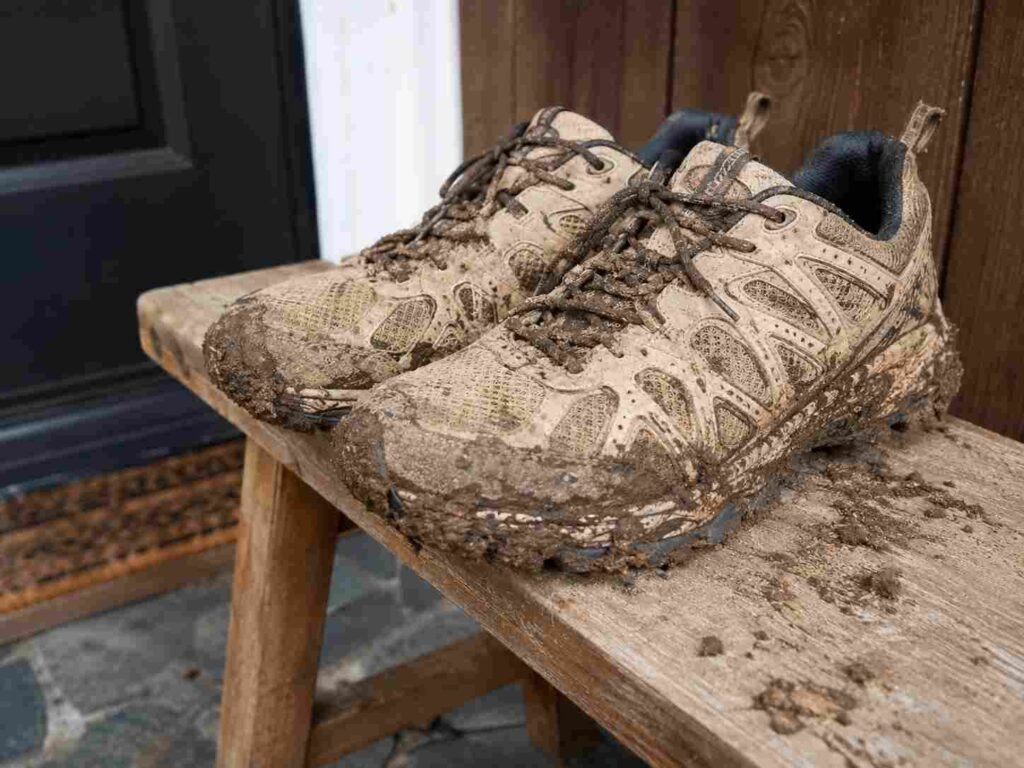
How to Remove Sticky Residues from Shoes?
To remove sticky residues from shoes safely, start by checking the shoe material, then remove loose residue before adding cleaner. Use a plastic scraper, microfiber towel, foam shoe cleaner, soft brush, and controlled hand pressure. The goal is to lift the sticky film without spreading it into leather grain, suede nap, canvas weave, mesh openings, or rubber grooves.
A safe cleaning process should move from dry to slightly damp, not the other way around. Many sticky marks become worse when water or cleaner is added too early. Gum should be hardened first. Sticker glue should be rolled or lifted first. Tape marks should be pressed and lifted before brushing. Old sticky dirt should be loosened in small sections, then wiped before the dirty foam dries back onto the shoe.
Most light sticky residues from shoes can be improved in 5–15 minutes. Gum in outsole grooves, tape residue on white midsoles, or sticky dirt on canvas may take 15–25 minutes and more than one cleaning round. Repeat gentle steps instead of using strong pressure. If the shoe is suede, dyed leather, mesh, knit fabric, luxury sneakers, or a limited-edition pair, take more time with testing and drying.
| Step | Main Action | Best Tool | Time Needed | Main Purpose |
|---|---|---|---|---|
| Step 1 | Check material | Eyes, hand feel, care label | 1 minute | Avoid wrong cleaning method |
| Step 2 | Test first | Cotton swab, towel | 3–5 minutes | Check color and texture safety |
| Step 3 | Remove loose residue | Plastic card, towel | 2–8 minutes | Stop residue from spreading |
| Step 4 | Apply cleaner | Foam cleaner, brush | 1–2 minutes | Soften sticky film |
| Step 5 | Brush lightly | Soft or medium brush | 1–5 minutes | Lift residue from surface |
| Step 6 | Wipe and dry | Microfiber towel, airflow | Several hours | Remove dirty foam and protect shape |
Step 1: Check Sticky Residues from Shoes
Before cleaning sticky residues from shoes, look closely at the material and the type of residue. This one-minute check decides the whole cleaning method. Rubber soles can usually handle more brushing and light scraping, while suede, nubuck, mesh, knit fabric, and dyed leather need much softer treatment. A sticky mark on a white rubber midsole may be easy to remove, but the same mark on suede can turn into a dark patch if cleaned with too much liquid. Also check whether the residue is fresh, dry, thick, oily, stretchy, or mixed with dirt. Fresh sticker glue is easier than old glue covered in dust. Gum pressed into outsole grooves needs a different method from drink residue on canvas.
- Check whether the sticky mark is on rubber, leather, suede, canvas, mesh, PU, or plastic.
- Touch lightly to see if the residue is soft, hard, oily, or dry.
- Look for nearby seams, logos, painted details, or delicate trim.
- Do not apply cleaner until the material and residue type are clear.
| Residue Look | Likely Cause | First Move |
|---|---|---|
| Clear tacky film | Sticker glue | Roll or lift gently |
| Grey sticky line | Tape residue | Press and lift with towel |
| Thick elastic patch | Gum | Harden before scraping |
| Oily grey film | Dirt, sweat, road grime | Foam clean after dry brushing |
| Raised glue edge | Old repair glue | Lift carefully, avoid pulling seam |
| Shiny sticky spot | Drink spill | Blot first, clean lightly |
A good check prevents the most common mistake: treating the whole shoe like rubber. Many sneakers are mixed-material, so clean each part separately.
Step 2: Test Sticky Residues from Shoes First
Testing is important because sticky residues from shoes often sit near sensitive surfaces. A cleaner may work well on a rubber sole but affect suede, colored canvas, PU coating, leather finish, or printed logos. Choose a hidden area, such as the inner tongue, inside heel edge, lower sole edge, or a small back section. Apply a tiny amount of foam cleaner with a cotton swab, soft cloth, or brush tip. Wait a few minutes, then wipe and let the area dry. Check for color transfer, darkening, shine, peeling, roughness, or texture change. The test should be judged after drying, not only while the area is wet, because canvas and suede may look normal at first and change later.
- Test colored, suede, leather, mesh, knit, and PU shoes before full cleaning.
- Use only a small amount of cleaner in the test area.
- Wait until the test spot dries before cleaning the visible mark.
- Stop if color transfers onto the towel or the surface turns shiny.
| Test Result | Meaning | What to Do |
|---|---|---|
| No change after drying | Safer to continue | Clean with light pressure |
| Slight darkening while wet, normal after dry | Moisture is acceptable | Use small amounts |
| Color on towel | Dye may bleed | Stop or use dry method |
| Surface turns shiny | Finish may be affected | Do not continue |
| Suede nap flattens | Too much moisture or pressure | Dry brush only |
| PU feels tacky | Coating is sensitive | Stop cleaning that area |
A 3–5 minute test can save the shoe from a larger visible mark. This step matters even more for white sneakers, luxury sneakers, suede shoes, vintage shoes, and colored canvas shoes.
Step 3: Scrape Sticky Residues from Shoes Gently
Scraping sticky residues from shoes should always be gentle and controlled. The goal is to remove raised material, not cut into the shoe. Use a plastic card, plastic scraper, spoon edge, or blunt wooden stick. Keep the tool low and flat, then push slowly under the residue. This works well for gum, thick sticker glue, dried mud mixed with adhesive, and old glue on rubber sole edges. If the residue is soft and stretchy, do not scrape aggressively because it may smear. Gum should be hardened with ice first. Sticker glue can often be rolled with a finger or towel before scraping. Old repair glue near the sole seam should never be pulled hard because it may open the shoe edge.
- Use plastic tools instead of metal blades.
- Scrape rubber soles more firmly than uppers.
- Work in small sections instead of forcing the whole mark off at once.
- Stop if the surface scratches, peels, or changes texture.
| Shoe Area | Safe Scraping Level | Best Tool | Avoid |
|---|---|---|---|
| Rubber outsole | Medium | Plastic scraper | Razor blade |
| White midsole | Light to medium | Old card | Metal knife |
| Leather upper | Very light | Fingertip or towel | Hard scraping |
| Suede | Avoid scraping | Suede brush | Plastic edge pressure |
| Canvas | Very light | Towel first | Pulling fabric threads |
| Mesh | Avoid scraping | Soft brush | Sharp tools |
Scraping may remove 70–90% of gum or thick glue from rubber, but it often leaves a thin sticky film. That is normal. The cleaner and towel will handle the remaining layer.
Step 4: Apply Cleaner to Sticky Residues from Shoes
Cleaner should be applied after the raised residue is removed. Sticky residues from shoes do not need to be soaked. Too much cleaner can spread adhesive, push dirt into fabric, or leave rings on absorbent materials. Foam shoe cleaner is helpful because it stays close to the cleaning area and gives better control than watery mixtures. For rubber soles, a small direct amount can be used. For leather, canvas, mesh, PU, and suede, apply foam to the brush or microfiber towel first, then touch the sticky area. Let the foam contact the residue briefly, usually 20–60 seconds, before brushing. Do not let dirty foam dry on the shoe.
- Use a small amount first; add more only if needed.
- Apply cleaner to the tool, not heavily onto delicate uppers.
- Keep foam away from open seams and damaged shoe edges.
- Wipe off dirty foam before it dries back onto the surface.
| Sticky Area Size | Cleaner Amount | Contact Time | Notes |
|---|---|---|---|
| Small sticker mark | Pea-sized foam | 20–30 seconds | Wipe quickly |
| Tape line on midsole | Thin foam strip | 30–60 seconds | Work in sections |
| Gum film on sole | Light layer | 30–60 seconds | Brush grooves |
| Canvas sticky patch | Small foam on brush | 20–40 seconds | Avoid soaking |
| Leather residue | Small foam on cloth | 20–30 seconds | Wipe low moisture |
| Suede residue | Tiny amount after test | Very short | Dry brush first |
For GleamGlee shoe cleaner, the foam format is useful for white sneakers, rubber midsoles, leather panels, canvas shoes, PU trims, plastic details, and daily sticky dirt. Always adjust pressure based on the shoe material.
Step 5: Brush Sticky Residues from Shoes Lightly
Brushing sticky residues from shoes should be done with short, light movements. A brush helps loosen the film, but heavy pressure can damage the shoe before the residue is gone. Rubber outsoles can handle medium brushing, especially in tread grooves. White midsoles need lighter pressure to avoid patchy areas. Leather should be brushed gently or wiped with a cloth. Canvas can take light to medium brushing, but too much force can fuzz the surface. Mesh and knit need soft strokes because the fibers can pull or stretch. Suede should be brushed with a suede brush and very little moisture.
- Brush for 10–20 seconds, then wipe and check.
- Use short strokes instead of long aggressive scrubbing.
- Brush rubber grooves from more than one direction.
- Stop if fabric fuzzes, suede flattens, or leather turns shiny.
| Material | Brush Pressure | Brush Motion | Warning Sign |
|---|---|---|---|
| Rubber outsole | Medium | Small circles, groove strokes | Rubber starts roughening |
| White midsole | Light to medium | Short strokes | Surface looks patchy |
| Leather | Light | Smooth strokes | Finish turns shiny |
| Canvas | Light to medium | With fabric direction | Fabric becomes fuzzy |
| Mesh | Light | Soft lifting strokes | Fibers pull |
| Suede | Very light | Nap direction | Texture flattens |
| PU | Light | Smooth wipe-brush | Coating peels or shines |
Do not brush dirty foam around the shoe. Wipe between passes so loosened residue leaves the surface. Two gentle rounds usually look better than one hard scrub.
Step 6: Wipe Sticky Residues from Shoes Dry
Wiping is the step that removes the sticky residue from shoes after the cleaner loosens it. If the dirty foam stays on the shoe, it can dry into a dull film or leave the surface tacky again. Use a clean microfiber towel and fold it often so a fresh section touches the shoe. On rubber, wipe until the surface feels smooth. On leather, wipe in one direction with low pressure. On canvas and mesh, blot more than drag. On suede, use minimal moisture and let the material dry before brushing the nap. Check seams, sole edges, and outsole grooves because dirty foam often collects there.
- Use a clean microfiber towel, not paper towel that may tear.
- Fold the towel to a clean side as soon as it gets dirty.
- Blot fabric areas instead of dragging residue across the surface.
- Wipe grooves, seams, and sole edges before drying.
| Area | Wiping Method | Common Issue If Skipped |
|---|---|---|
| Rubber sole | Firm towel wipe | Tacky film returns |
| White midsole | Clean towel sections | Grey streaks dry in place |
| Leather | Light one-way wipe | Dull or sticky patch |
| Canvas | Blot and lift | Water rings or spread stain |
| Mesh | Press and lift | Dirt stays in openings |
| Suede | Minimal blotting | Nap clumps after drying |
After wiping, the shoe should not feel slippery or heavily wet. If it still feels sticky, wait until it dries, then repeat a light cleaning pass.
Step 7: Dry Sticky Residues from Shoes Naturally
Drying sticky residues from shoes naturally protects the shoe’s shape, glue seams, color, and texture. Do not use a hair dryer, tumble dryer, heater, or strong sunlight. Heat can warp rubber, stiffen leather, shrink fabric, weaken glued edges, or make PU coatings feel tacky. Place the shoes in a shaded, ventilated area and let them dry fully. For canvas, mesh, or running shoes, place clean paper inside to help hold the shape and absorb moisture. Do not overstuff because too much pressure can stretch the upper. Suede should be brushed again only after it is dry.
- Air dry shoes in shade with good airflow.
- Keep shoes away from heaters, dryers, and direct hot sunlight.
- Use clean paper inside fabric shoes to help keep shape.
- Check the cleaned spot only after the shoe is fully dry.
| Dry Result | Likely Cause | Next Step |
|---|---|---|
| Still tacky | Thin residue remains | Repeat light foam cleaning |
| Grey shadow | Dirt still trapped | Brush and wipe again |
| Fabric ring | Too much moisture | Clean wider area lightly |
| Suede looks flat | Nap pressed down | Dry brush gently |
| Leather feels dry | Surface lost moisture | Use suitable leather care |
| Rubber looks patchy | Uneven cleaning | Clean full sidewall lightly |
Natural drying may take several hours depending on material and weather. The shoe should be fully dry before wearing or storing, especially if it is mesh, canvas, suede, or a running shoe with inner padding.
What Mistakes Make Sticky Residues from Shoes Worse?
Sticky residues from shoes often become harder to remove because of rushed cleaning, not because the residue is impossible to clean. Strong solvents, too much water, hot air, sharp tools, and rough scrubbing can spread glue, push dirt deeper, damage shoe color, flatten suede, scratch rubber, or weaken the glued parts of the shoe. A small sticky mark can turn into a larger visible stain if cleaned the wrong way.
Most sticky residue should be treated in light stages. First remove raised gum, sticker glue, or tape film. Then apply a small amount of suitable cleaner. After that, brush gently, wipe away dirty foam, and let the shoe dry naturally. This order matters because wet cleaning too early can turn thick residue into a smeared layer, especially on canvas, mesh, suede, and white midsoles.
A good rule is to stop as soon as the shoe surface starts changing. If leather becomes shiny, suede turns flat, canvas begins to fuzz, mesh fibers start pulling, or rubber looks patchy, the cleaning pressure is too strong. Repeat a gentle cleaning round after drying instead of forcing the residue off in one attempt.
| Mistake | What Happens | High-Risk Materials | Safer Choice |
|---|---|---|---|
| Strong solvent first | Color fade, finish damage, shiny patches | Leather, PU, printed logos, suede | Test first, use shoe cleaner lightly |
| Too much water | Stain spreading, rings, odor | Canvas, mesh, suede, inner lining | Use controlled foam and towel |
| Strong heat | Warped rubber, weak glue seams, dry leather | Rubber, foam soles, leather, PU | Air dry in shade |
| Sharp tools | Cuts, scratches, lifted seams | Rubber midsoles, leather, mesh | Use plastic card or blunt scraper |
| Rough scrubbing | Fuzzing, flat nap, dull finish | Canvas, suede, leather, mesh | Brush in short light passes |
Sticky Residues from Shoes and Harsh Solvents
Harsh solvents can seem attractive when sticky residues from shoes look stubborn, especially on white soles, tape marks, sticker glue, or old adhesive near a repair area. The problem is that many shoe surfaces are coated, dyed, painted, printed, or glued together. A strong solvent may soften the sticky residue, but it may also soften the finish underneath. On smooth leather, it can leave a dull or shiny patch. On PU, it can make the surface tacky or peel. On suede and canvas, it can carry the sticky material deeper into the fibers. On printed logos or painted midsoles, it can fade details that cannot be restored easily.
- Do not use strong solvent as the first cleaning step.
- Keep solvent away from suede, mesh, canvas, PU, and printed logos.
- If cleaning rubber only, test a hidden edge first.
- Use foam cleaner, microfiber towel, and light brushing before stronger methods.
| Surface | Solvent Risk | Visible Damage |
|---|---|---|
| Smooth leather | Finish removal | Dull or shiny patch |
| PU leather | Coating damage | Peeling or sticky surface |
| Suede | Absorption and darkening | Flat, dark area |
| Canvas | Stain spreading | Larger grey or oily patch |
| Printed logo | Ink breakdown | Faded or cracked print |
| Painted midsole | Coating wear | Uneven white or patchy finish |
If the sticky mark is on a durable rubber outsole, stronger cleaning may sometimes be less risky, but rubber near painted midsoles still needs caution. A safer cleaning path is to lift thick residue first, apply a small amount of shoe cleaner, brush for 10–20 seconds, wipe, and repeat only if needed.
Sticky Residues from Shoes and Too Much Water
Too much water can make sticky residues from shoes spread instead of disappear. This is especially common when cleaning canvas sneakers, mesh running shoes, suede panels, knit uppers, and white fabric shoes. Sticky residue often contains glue, sugar, oil, dust, or gum film. When soaked, these substances can move outward into nearby fibers and dry as a wider mark. Water can also carry dirt into seams, stitching, tongue padding, and inner lining. If the shoe does not dry fully, odor may develop inside. On suede, heavy water can leave dark patches. On leather, it can create rings or stiffness after drying.
- Do not soak shoes just to remove a small sticky mark.
- Use foam cleaner in small amounts for better control.
- Blot fabric areas instead of dragging wet residue around.
- Dry shoes completely before wearing or storing them.
| Material | Water Risk | Better Method |
|---|---|---|
| Canvas | Residue spreads into weave | Light foam, short brushing, blot dry |
| Mesh | Dirty liquid enters lining | Small foam amount, soft brush |
| Suede | Dark patches and flat nap | Dry brush first, minimal moisture |
| Leather | Rings or stiffness | Low-moisture cloth wipe |
| Knit fabric | Stretching and fuzzing | Blot, do not scrub |
| Inner collar | Odor if damp | Wipe lightly, air dry fully |
A useful amount guide is simple: the shoe should feel slightly damp after cleaning, not wet. If foam or water is dripping, too much has been used. Clean in small zones, wipe dirty foam immediately, then let the shoe dry in airflow.
Sticky Residues from Shoes and Strong Heat
Strong heat can make sticky residues from shoes worse because it may soften the residue and the shoe materials at the same time. A hair dryer might loosen sticker glue, but it can also soften the adhesive holding the sole edge, toe cap, heel trim, or decorative panel. Hot air can dry leather too quickly, warp rubber, shrink fabric, affect foam cushioning, or make PU surfaces feel tacky. Heat can also make gum more elastic, causing it to stretch into outsole grooves instead of lifting cleanly. For sticky residue, cold and patience are often safer than heat.
- Do not use a hair dryer directly on sticky shoe residue.
- Do not place shoes near heaters, radiators, or strong sun to dry.
- Use ice to firm gum before lifting it from rubber soles.
- Air dry shoes naturally after cleaning.
| Heat Source | Possible Damage | Safer Option |
|---|---|---|
| Hair dryer | Weakens glue seams, dries leather | Shade drying with airflow |
| Tumble dryer | Warps shape and cushioning | Room-temperature drying |
| Radiator | Stiff leather, cracked coating | Ventilated area |
| Direct hot sun | Yellowing, fading, hardening | Cool shaded place |
| Hot water | Spreads glue or sugar residue | Foam cleaner, towel wipe |
Drying time depends on material. Rubber soles may feel dry within 30–60 minutes, while canvas, mesh, and padded running shoes may need several hours. The shoe should be fully dry before wearing because leftover moisture can attract more dirt and make the cleaned area feel tacky again.
Sticky Residues from Shoes and Rough Scrubbing
Rough scrubbing is one of the fastest ways to turn sticky residues from shoes into surface damage. Many people scrub harder when the mark does not disappear quickly, but sticky residue often needs time to loosen. Heavy pressure can spread tape glue, push gum film into rubber grooves, fuzz canvas, pull mesh fibers, flatten suede, or make leather look shiny. On white midsoles, rough scrubbing can create one overly bright patch that stands out against the rest of the shoe. A cleaner result usually comes from short brushing rounds and towel wiping between each round.
- Brush for 10–20 seconds, then wipe and inspect.
- Match brush pressure to the material, not the stain size.
- Use medium pressure only on durable rubber outsoles.
- Stop if texture, color, or surface shine changes.
| Shoe Material | Brush Pressure | Best Motion | Stop If |
|---|---|---|---|
| Rubber outsole | Medium | Small circles, groove strokes | Rubber roughens or tears |
| White midsole | Light to medium | Short controlled strokes | Finish looks patchy |
| Leather | Light | Smooth one-way strokes | Surface turns shiny |
| Suede | Very light | Nap direction | Nap flattens |
| Canvas | Light to medium | With fabric direction | Fabric starts fuzzing |
| Mesh | Light | Soft lifting strokes | Fibers pull |
| PU | Light | Gentle wipe-brush | Coating peels or dulls |
A better method is to clean in two or three gentle passes. After each pass, wipe away dirty foam with a clean microfiber towel section. This removes loosened residue instead of moving it around the shoe. If the mark remains after drying, repeat lightly rather than scrubbing harder while the material is damp.
Sticky Residues from Shoes and Sharp Tools
Sharp tools can remove gum, glue, or hard residue quickly, but they can also leave permanent cuts. Rubber soles, white midsoles, foam sidewalls, leather panels, and mesh uppers are not built for razor blades or kitchen knives. Even a small scratch on a white midsole can collect dirt and become more visible later. On leather, a blade can cut through the finish. On mesh or canvas, it can break threads. Around sole seams, sharp pulling can open the bond between the upper and the sole.
- Use a plastic card, plastic scraper, or blunt tool first.
- Keep the tool flat and scrape slowly under the residue.
- Do not dig downward into rubber, foam, or fabric.
- Avoid scraping near stitching, logos, and glued seams.
| Tool | Use Level | Good For | Risk |
|---|---|---|---|
| Plastic card | Safer | Sticker glue, gum on rubber | Low scratch risk |
| Plastic scraper | Safer | Outsole residue | Low to medium risk |
| Spoon edge | Moderate | Thick gum on outsole | Can dent soft foam |
| Toothpick | Careful use | Small sole grooves | Can break or scratch |
| Metal blade | High risk | Not recommended for most shoes | Cuts and scratches |
| Kitchen knife | High risk | Not recommended | Deep surface damage |
If raised residue does not lift with a plastic tool, change the condition of the residue instead of using a sharper tool. Gum should be chilled. Sticker glue should be softened with controlled cleaner. Old dirt should be loosened with foam and a brush. Cutting should never be the normal cleaning method for everyday shoes.
Sticky Residues from Shoes and Oil-Based Tricks
Oil-based home tricks can create bigger problems on sticky residues from shoes. Cooking oil, peanut butter, heavy lotion, and greasy removers may loosen adhesive on hard surfaces, but shoes are often absorbent. Suede, nubuck, canvas, mesh, knit fabric, and unfinished leather can absorb oil quickly and leave a dark patch. Once oil enters the fibers, it can attract more dust and become harder to remove than the original sticky residue. Even on rubber midsoles, oil can leave a slick feel if not cleaned fully.
- Avoid oil on suede, canvas, mesh, knit, and porous leather.
- Do not use food-based cleaning tricks on shoes.
- If oil touches the shoe, blot immediately with a clean towel.
- Use shoe cleaner to remove oily film after testing.
| Material | Oil Risk | What May Happen |
|---|---|---|
| Suede | Very high | Dark greasy patch |
| Canvas | High | Spread stain and dust attraction |
| Mesh | High | Oily residue inside fibers |
| Knit | High | Stretched, greasy fabric |
| Leather | Medium | Darkened grain or dull finish |
| Rubber | Low to medium | Slick surface, dirt pickup |
Oil may seem useful for sticky glue, but it is not worth the risk on most shoe uppers. A cleaner, safer method is to remove bulk residue first, use controlled foam, wipe thoroughly, and repeat after drying if needed.
Is GleamGlee Good for Sticky Residues from Shoes?
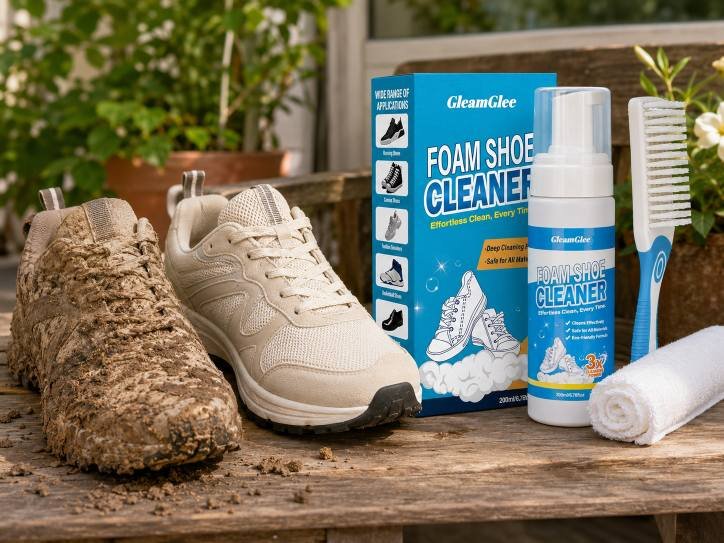
GleamGlee shoe cleaner is a practical choice for sticky residues from shoes because it uses a fast-drying foam format that helps loosen tacky dirt, light adhesive film, oil marks, and everyday grime without soaking the shoe. It works well for many common shoe areas, including white midsoles, rubber soles, leather panels, PU trims, canvas uppers, plastic details, and daily sneakers when tested first.
Sticky residue cleaning is not only about removing one visible mark. The cleaner also needs to help the shoe look even after drying. A sticky line on a white midsole, grey dirt around the toe cap, or residue film under the outsole can look worse if the cleaner spreads dirty water or leaves streaks. GleamGlee’s foam texture gives better control because it stays near the dirty spot, allowing the brush and microfiber towel to lift residue in small sections.
The kit format also makes the process easier at home. One bottle of foam cleaner, one multi-purpose brush, and one microfiber towel cover most daily shoe cleaning tasks. A pair of white sneakers can usually be refreshed in 5–10 minutes, while thicker gum film, tape residue, or old sticky dirt may need 10–20 minutes and two light cleaning rounds. The key is still simple: test first, use light pressure, wipe away dirty foam, and air dry naturally.
| Shoe Problem | GleamGlee Use | Best Tool in Kit | Expected Cleaning Time |
|---|---|---|---|
| Sticky dirt on white midsoles | Foam loosens grey film | Brush + towel | 5–10 minutes |
| Sticker glue on rubber sole | Cleans leftover tacky layer | Towel + brush | 3–8 minutes |
| Tape mark on PU or rubber | Helps remove thin adhesive film | Microfiber towel | 5–12 minutes |
| Gum film after scraping | Cleans remaining sticky feel | Brush | 8–15 minutes |
| Canvas sticky dirt | Controlled foam cleaning | Soft brush + towel | 8–15 minutes |
| Leather sneaker residue | Low-moisture surface cleaning | Towel | 5–10 minutes |
| Daily shoe grime | Quick refresh | Full kit | 5–8 minutes |
Sticky Residues from Shoes and Foam Cleaning
Foam cleaning is useful for sticky residues from shoes because it gives more control than watery cleaning. Sticky residue often sits in small, specific areas: a sticker mark under the sole, a tape line on the midsole, a gum film near the heel, or sticky dirt around the toe cap. If the cleaner runs everywhere, the dirt can spread into seams, fabric, mesh, or suede edges. GleamGlee foam stays closer to the area being cleaned, making it easier to work in short sections and wipe away dirty foam before it dries.
- Apply foam to the brush or towel first for delicate areas.
- Use direct foam only on stronger areas like rubber soles.
- Brush for 10–20 seconds, then wipe and check.
- Repeat lightly if the surface still feels tacky after drying.
| Foam Cleaning Benefit | Why It Matters on Shoes |
|---|---|
| Better control | Helps avoid soaking seams and fabric |
| Less mess | Easier to use indoors or before going out |
| Short contact time | Suitable for quick sneaker care |
| Easy wiping | Dirty foam can be removed with a towel |
| Good for white midsoles | Helps lift grey sticky film evenly |
Foam cleaning works best after thick residue is removed. Gum should be hardened and lifted first. Large sticker glue should be rolled away first. Old mud should be brushed off dry first. Then the foam can focus on the thin sticky film left behind.
Sticky Residues from Shoes and Safe Materials
GleamGlee shoe cleaner is suitable for many common shoe materials, including suede, leather, PU, rubber, canvas, plastic, and more when used properly. This matters because most shoes are not made from one surface. A single sneaker may have a rubber outsole, white foam midsole, leather side panel, mesh upper, PU trim, fabric tongue, and plastic logo. A cleaner for daily shoe care needs to handle mixed materials without making the cleaning process complicated.
- Use lighter pressure on leather, PU, mesh, and canvas.
- Use dry brushing first on suede before applying any cleaner.
- Use medium pressure only on durable rubber soles.
- Always test colored, delicate, luxury, or vintage shoes first.
| Material | How to Use GleamGlee | Care Tip |
|---|---|---|
| Rubber | Foam directly, brush lightly to medium | Wipe grooves well |
| Leather | Foam on towel, low pressure | Avoid soaking seams |
| Canvas | Foam on brush, short passes | Blot before drying |
| Mesh | Small foam amount, soft brushing | Do not pull fibers |
| Suede | Dry brush first, tiny test amount | Re-brush after drying |
| PU | Foam on towel, gentle wipe | Stop if surface turns shiny |
| Plastic trims | Foam and towel wipe | Avoid logo edges if printed |
The formula is designed for everyday shoe cleaning, but the user’s hand pressure still matters. A safe cleaner can still cause marks if the brush is too hard or the material is overworked. For best results, clean in small zones and wipe each area before moving to the next.
Sticky Residues from Shoes and White Sneakers
White sneakers show sticky residues faster than almost any other shoe type. A clear glue mark can become grey after one walk. Sticky dirt around the midsole can make the shoe look yellowed. Tape residue near the heel can collect lint. Gum film on the outsole edge can leave dark streaks when the shoe touches floors. GleamGlee shoe cleaner is helpful for white sneakers because the foam can be placed exactly where the mark appears, while the brush and towel help lift dirty residue without soaking the full shoe.
- Clean white midsoles before sticky marks turn grey-black.
- Use two light rounds instead of one hard scrub.
- Wipe dirty foam immediately so it does not dry into streaks.
- Clean slightly beyond the mark for a more even finish.
| White Sneaker Area | Common Sticky Issue | GleamGlee Cleaning Method |
|---|---|---|
| Rubber midsole | Grey sticky film | Foam, brush, towel wipe |
| Toe cap | Old dirt and oil | Light brushing |
| Outsole edge | Gum film | Scrape first, then foam clean |
| Leather upper | Sticker or tape touch | Foam on towel, gentle wipe |
| Canvas upper | Sticky drink or dust | Foam on brush, blot dry |
| Lace area | Sweat and dirt buildup | Light foam and towel |
For white sneakers worn daily, a light clean every 1–2 weeks helps prevent sticky dirt from building into a darker stain. Shoes used for school, commuting, gym, travel, or outdoor events may need cleaning sooner, especially around the sole edge.
Sticky Residues from Shoes and Daily Care
GleamGlee is useful for daily care because sticky residues from shoes are easier to remove when they are fresh. A small sticker glue mark, gum film, or sticky dirt line may take only a few minutes if cleaned early. If left for weeks, the residue collects dust, sweat, mud, and road grime, making the shoe look older and harder to clean. Daily care does not mean deep cleaning every pair after every wear. It means checking the high-contact areas and cleaning small problems before they become large ones.
- Check rubber sidewalls, toe caps, heel edges, and outsole grooves.
- Clean sticky spots after rain, travel, sports, playground use, or festivals.
- Let shoes dry before storage to avoid odor and tacky buildup.
- Use light cleaning more often instead of heavy scrubbing later.
| Shoe Type | Common Sticky Area | Suggested Care Timing |
|---|---|---|
| Daily white sneakers | Midsole, toe box | Every 1–2 weeks |
| Kids’ school shoes | Front upper, sole edge | Weekly |
| Running shoes | Mesh, outsole grooves | After muddy runs |
| Basketball shoes | Outsole, sidewall | Every few wears |
| Canvas shoes | Fabric upper, heel | Every 2–3 weeks |
| Travel shoes | Heel, outsole, side panel | After each trip |
| Gym shoes | Outsole, inner collar | Every few uses |
A quick routine can be finished in about 5 minutes for light dirt: remove loose dust, apply foam, brush gently, wipe with the microfiber towel, and air dry. This simple habit helps shoes stay cleaner and reduces the need for harsh cleaning.
Sticky Residues from Shoes and Shoe Care Kit
A complete shoe care kit is helpful because sticky residue removal needs more than cleaner alone. A bottle can soften the residue, but the brush and towel decide how clean the shoe looks after wiping. Without the right tools, people often use paper towels that tear, rough sponges that scratch, old cloths that spread dirt, or hard brushes that damage the upper. GleamGlee includes a foam cleaner, multi-purpose brush, and microfiber towel, so the cleaning process is easier to control from start to finish.
- Foam cleaner helps loosen sticky film and dirt.
- The brush helps lift residue from rubber, canvas, and textured areas.
- The microfiber towel removes dirty foam before it dries.
- The kit is easy to store for home, dorm, travel, or family shoe care.
| Kit Item | Main Use | Best For |
|---|---|---|
| Foam cleaner | Loosens sticky residue and dirt | White sneakers, midsoles, canvas, leather panels |
| Multi-purpose brush | Lifts grime from texture | Rubber soles, toe caps, canvas |
| Microfiber towel | Removes dirty foam and moisture | Leather, PU, midsoles, final wipe |
The kit is especially useful for people who clean several types of shoes at home: white sneakers, school shoes, running shoes, slip-ons, casual trainers, golf shoes, synthetic sports shoes, and canvas sneakers. One set covers quick cleaning, spot cleaning, and regular shoe refresh work.
Sticky Residues from Shoes and Product Value
GleamGlee shoe cleaner gives practical value because it solves several common shoe problems with one easy routine. It can help with sticky dirt, light adhesive film, rubber midsole grime, white sneaker marks, canvas buildup, leather sneaker residue, and daily shoe refresh. The no-water foam format also saves time because users do not need a basin, heavy rinsing, or long preparation. This makes the product more convenient for busy mornings, school nights, travel packing, sneaker photos, or quick cleaning before going out.
- Fast-drying foam reduces waiting time compared with soaking methods.
- Multi-material use fits most household shoe collections.
- Included tools reduce the need for separate cleaning accessories.
- Regular use can help extend the wearable life of daily shoes.
| User Situation | Cleaning Need | GleamGlee Advantage |
|---|---|---|
| Parent cleaning school shoes | Fast, simple, low mess | Foam + brush + towel |
| Sneaker owner | Cleaner white midsoles | Controlled foam cleaning |
| Runner | Remove sticky road dirt | Light brush and wipe |
| Traveler | Refresh shoes after trips | No basin needed |
| Student | Dorm-friendly cleaning | Compact kit |
| Resale prep | Improve photo appearance | Even midsole cleaning |
Good shoe care is often about consistency. A cleaner that is easy to use is more likely to be used early, before sticky residue turns dark or hard. GleamGlee fits that routine by making small cleaning tasks quick, controlled, and less messy.

FAQ About Sticky Residues from Shoes
Sticky residues from shoes can usually be cleaned at home if the shoe material is checked first and the cleaning method is gentle. Rubber soles, white midsoles, and plastic trims are easier to handle. Suede, leather, mesh, canvas, knit fabric, and PU need more care because they may absorb residue, change color, flatten, fuzz, or show cleaning marks if rubbed too hard.
The safest answer for most sticky shoe problems is not “use the strongest remover.” It is to remove loose residue first, apply a small amount of suitable cleaner, brush lightly, wipe away dirty foam, and air dry naturally. Thick gum, heavy sticker glue, or old tape marks may need extra time, but slow cleaning protects the shoe better than harsh shortcuts.
A good cleaning result should leave the shoe smooth, dry, and even-looking. If the cleaned area still feels tacky after drying, repeat a light cleaning pass. If the material starts changing texture, stop and switch to a gentler method. Most daily sticky marks can be improved in 5–20 minutes, depending on residue type, material, and how long the mark has been there.
| Question | Quick Answer | Extra Care Needed |
|---|---|---|
| Are sticky residues hard to clean? | Usually not if cleaned early | Old gum and dried tape marks take longer |
| Can leather be damaged? | Yes, if soaked or rubbed harshly | Use low moisture and soft cloth |
| Do residues come off rubber? | Usually yes | Avoid metal blades and strong heat |
| Is foam cleaner safe? | Often safe after testing | Suede, dyed fabric, and PU need caution |
| Can shoes be cleaned without water? | Many sticky marks can | Foam and dry tools help |
| How often should shoes be cleaned? | Clean sticky marks early | Daily shoes need regular checks |
Are Sticky Residues from Shoes Hard to Clean?
Sticky residues from shoes are not always hard to clean, but they become harder when they are ignored. A fresh sticker glue mark on a rubber sole may take only 2–5 minutes. A tape line on a white midsole may take 5–12 minutes. Gum pressed into outsole grooves may take 10–20 minutes because the gum needs to be hardened, lifted, and cleaned from the tread pattern. Old sticky dirt on canvas or mesh can take longer because dust, sweat, oil, and outdoor grime may sink into the fibers. The cleaning difficulty depends on three things: what caused the residue, where it sits, and how long it has stayed on the shoe.
- Fresh residue is easier because it has not collected much dust.
- Rubber residue is usually easier than suede, canvas, or mesh residue.
- Thick gum or old repair glue should be lifted before using cleaner.
- Repeat light cleaning is safer than one heavy scrub.
| Residue Situation | Difficulty | Average Cleaning Time | Best First Step |
|---|---|---|---|
| Fresh sticker glue on outsole | Low | 2–5 minutes | Roll and wipe |
| Tape mark on white midsole | Medium | 5–12 minutes | Press and lift |
| Gum in outsole grooves | Medium to high | 10–20 minutes | Chill and scrape |
| Sticky drink on canvas | Medium | 8–15 minutes | Blot first |
| Old dirt on mesh | Medium | 8–18 minutes | Dry brush lightly |
| Sticky glue near sole seam | High | 10–25 minutes | Lift carefully |
The best time to clean sticky residues from shoes is as soon as they appear. Once the residue turns grey, dusty, or hard, it usually needs more cleaning rounds.
Can Sticky Residues from Shoes Damage Leather?
Sticky residues from shoes can damage leather when they are left too long or removed with the wrong method. Leather often has a protective surface finish, and that finish can be affected by harsh solvents, too much water, strong rubbing, or sharp scraping. A small tape mark on leather may look harmless, but if it collects dust and oil, it can settle into grain lines and stitching. White leather sneakers show this quickly because the sticky area turns grey. The residue itself is not always the biggest problem; the cleaning method often causes more visible damage. Heavy scrubbing can make leather shiny, dull, faded, or rough in one spot.
- Use a microfiber towel before using any scraper.
- Apply foam cleaner to the cloth, not heavily onto the leather.
- Keep moisture low around stitching and sole seams.
- Let leather air dry before judging the final result.
| Leather Problem | Cause | Safer Cleaning Method | Avoid |
|---|---|---|---|
| Grey sticky patch | Dirt stuck to glue | Foam on towel, light wipe | Harsh solvent |
| Dull area | Over-rubbing | Stop and let dry | More scrubbing |
| Sticky seam | Old glue or dirt | Towel edge, small foam amount | Pulling seam |
| White leather mark | Tape or sticker residue | Press, lift, wipe | Soaking |
| Dry feel after cleaning | Moisture loss | Use suitable leather care after drying | Heat drying |
For leather shoes, the cleaned area should feel smooth, not wet or slippery. If the residue remains after one pass, wait until dry and repeat gently.
Do Sticky Residues from Shoes Come Off Rubber?
Sticky residues from shoes usually come off rubber more easily than fabric, suede, or leather because rubber does not absorb residue as deeply. Outsoles, midsoles, heel edges, toe caps, and rubber sidewalls often collect sticker glue, gum, tape film, tar-like dirt, and sticky dust. Rubber outsoles can handle moderate brushing and gentle scraping, while white midsoles need lighter pressure because they may be painted, coated, or made from softer foam-like material. The biggest mistake is using a metal blade or scrubbing one small spot too hard. That can leave scratches, dull patches, or uneven whiteness.
- Use a plastic card or plastic scraper for raised gum and glue.
- Brush outsole grooves from more than one direction.
- Wipe dirty foam before it dries into grey streaks.
- Clean slightly beyond the sticky mark so the rubber looks even.
| Rubber Area | Common Residue | Cleaning Tool | Care Tip |
|---|---|---|---|
| Outsole bottom | Gum, road grime | Plastic scraper, medium brush | Work groove by groove |
| White midsole | Tape film, sticky dirt | Foam cleaner, towel | Use light pressure |
| Toe cap | Scuffs, glue dust | Brush and towel | Clean evenly |
| Heel edge | Gum film | Brush tip, towel edge | Do not cut rubber |
| Rubber sidewall | Grey sticky film | Foam and microfiber towel | Repeat lightly |
Rubber may feel slightly tacky while damp, so check it again after drying. If it still feels sticky, clean once more with foam and wipe thoroughly.
Is Foam Cleaner Safe for Sticky Residues from Shoes?
Foam cleaner is often a safer choice for sticky residues from shoes because it gives better control than watery cleaning. Sticky marks are usually small and specific, so the cleaner should stay where it is needed. Foam is helpful on white midsoles, rubber sidewalls, leather panels, PU trims, canvas spots, and daily sneaker dirt because it loosens residue without flooding the shoe. However, no cleaner should be used blindly on every material. Suede, nubuck, dyed canvas, knit fabric, PU coatings, vintage sneakers, and printed logos should be tested first. A cleaner can be gentle, but too much product or rough brushing can still create marks.
- Test foam cleaner on a hidden area before full cleaning.
- Use a small amount first, especially on fabric and leather.
- Apply foam to the brush or towel for better control.
- Wipe dirty foam away before it dries.
| Material | Foam Cleaner Use | Brush Pressure | Extra Note |
|---|---|---|---|
| Rubber | Direct foam is usually fine | Medium | Wipe grooves clean |
| White midsole | Small foam amount | Light to medium | Avoid patchy cleaning |
| Leather | Foam on towel | Light | Keep moisture low |
| Canvas | Foam on brush | Light | Blot after brushing |
| Mesh | Small foam amount | Very light | Avoid pulling fibers |
| Suede | Test first, minimal use | Very light | Dry brush first |
| PU | Foam on towel | Light | Stop if shiny or tacky |
Foam cleaner works best after thick residue is removed. It is ideal for the remaining sticky film, grey dirt, and surface grime.
Can You Remove Sticky Residues from Shoes Without Water?
Yes, many sticky residues from shoes can be improved with little or no water. Dry brushing, towel lifting, gum chilling, plastic scraping, and foam cleaning can handle many common sticky marks without soaking the shoe. This is useful for suede, leather, mesh, canvas, and mixed-material sneakers because too much water can spread residue, leave rings, or make the inside damp. Water is not always harmful, but it should be controlled. A no-water foam cleaner gives moisture in a more targeted way, which helps the user clean small areas without turning the whole shoe wet.
- Use a dry towel to lift sticker glue or tape film first.
- Chill gum before scraping instead of using hot water.
- Dry brush suede and canvas before applying cleaner.
- Use foam cleaner for the remaining film, then wipe dry.
| Water-Free Method | Best For | Time Needed |
|---|---|---|
| Finger rolling | Soft sticker glue | 1–3 minutes |
| Microfiber pressing | Tape marks | 3–6 minutes |
| Ice hardening | Gum | 5–10 minutes |
| Plastic scraping | Rubber outsole residue | 2–8 minutes |
| Dry brushing | Suede, canvas dust | 2–5 minutes |
| Foam cleaning | Sticky film and dirt | 5–12 minutes |
A low-water process is especially helpful for quick cleaning before school, work, travel, photos, or storage.
How Often Should You Clean Sticky Residues from Shoes?
Sticky residues from shoes should be cleaned as soon as they are noticed. A small clear glue mark can turn grey after one outdoor walk. Gum becomes harder to remove once it is pressed deep into outsole grooves. Sticky dirt around a white midsole can slowly look like yellowing. Regular light cleaning is easier than waiting until the shoes look heavily stained. For daily white sneakers, checking every 1–2 weeks is practical. Kids’ school shoes may need a weekly check. Running shoes, basketball shoes, gym shoes, and travel shoes should be cleaned after dirty or sticky use.
- Clean fresh sticky marks before they collect dust.
- Check high-contact areas: sole edge, toe cap, heel, and outsole grooves.
- Do quick light cleaning more often instead of harsh deep cleaning later.
- Always dry shoes fully before storage.
| Shoe Type | Check Frequency | Clean When You See |
|---|---|---|
| Daily white sneakers | Every 1–2 weeks | Grey midsole film, toe dirt |
| Kids’ school shoes | Weekly | Gum, mud, food residue |
| Running shoes | After muddy runs | Mesh dirt, outsole buildup |
| Basketball shoes | Every few wears | Sole dust, sidewall grime |
| Canvas shoes | Every 2–3 weeks | Sticky fabric spots |
| Travel shoes | After each trip | Heel dirt, floor residue |
| Suede shoes | As needed | Nap clumps or sticky dust |
Cleaning early protects the shoe and saves time. A 5-minute light clean can prevent a 20-minute heavy cleanup later.
What Is the Safest Tool for Sticky Residues from Shoes?
The safest tools for sticky residues from shoes are a microfiber towel, soft brush, medium brush, plastic scraper, suede brush, and cotton swab. Each tool has a different purpose. A microfiber towel lifts residue and removes dirty foam. A soft brush works on leather, mesh, and canvas. A medium brush is better for rubber outsoles. A plastic scraper helps with gum or thick glue on rubber. A suede brush protects nap texture. A cotton swab reaches small grooves and seam edges. The wrong tool can damage the shoe faster than the residue itself, so avoid steel brushes, razor blades, rough kitchen scrubbers, and dirty rags.
- Use soft tools on uppers and stronger tools only on rubber.
- Keep a clean towel section ready for each wipe.
- Use plastic instead of metal when scraping.
- Match the brush to the material, not the stain size.
| Tool | Best Use | Not Ideal For |
|---|---|---|
| Microfiber towel | Wiping glue film, foam, moisture | Deep outsole grooves |
| Soft brush | Leather, mesh, canvas | Thick gum |
| Medium brush | Rubber sole and toe cap | Suede or delicate uppers |
| Plastic scraper | Gum and sticker glue on rubber | Leather, suede, mesh |
| Suede brush | Suede and nubuck texture | Wet gum |
| Cotton swab | Small grooves and seam edges | Large dirty areas |
A complete shoe care kit is helpful because it keeps the right cleaner, brush, and towel together. This makes the cleaning process easier and reduces tool mistakes.
Conclusion
Sticky residues from shoes are easier to remove when they are handled early and cleaned with the right method for the material. Sticker glue, tape marks, gum, old dirt, and sticky drink residue should not be treated the same way. Rubber soles can usually handle more brushing, while suede, leather, canvas, mesh, PU, and painted midsoles need lighter pressure and controlled moisture. A safe routine is simple: check the material, remove loose residue, test first, apply a small amount of cleaner, brush gently, wipe with a microfiber towel, and air dry naturally. This helps remove the sticky film without spreading stains, damaging texture, or making the shoe look patchy after drying.
GleamGlee shoe cleaner gives daily shoe care a cleaner and easier process. Its fast-drying foam formula helps loosen sticky dirt, light adhesive film, oil marks, and common shoe stains without soaking the shoe. With the included brush and microfiber towel, it works well for white sneakers, school shoes, running shoes, casual trainers, canvas shoes, rubber soles, leather panels, PU trims, plastic details, and more when used correctly. For anyone who wants shoes to stay cleaner, fresher, and ready to wear, keeping a complete shoe care kit at home is a smart habit. For product orders, branded shoe cleaner supply, or customized shoe care formulas and packaging, GleamGlee can provide reliable product options and quotation support.