Skip to content

Artificial flowers are easy to buy, but making them look polished is a different skill. That is where many people struggle. The flowers may look beautiful in the package, yet once they are added to a bouquet, wreath, gift box, flower wall, or wedding arrangement, the whole design can start to feel cheap if the blooms sit at the wrong angle, show glue marks, shift during transport, or fall off after a few hours. In most cases, the problem is not the flower itself. It is the way it was attached. A clean floral design depends on control, placement, and a glue line that stays nearly invisible. That is why floral glue matters so much in real projects.
The short answer is simple: to attach artificial flowers with floral glue, clean the contact area, test the position first, apply a small amount of glue, press the flower into place, and allow enough time for the bond to set before moving the arrangement. The best results come from using less glue, not more, and from matching the method to the material, whether that is ribbon, foam, fabric, plastic, glass, or decorative packaging.
This sounds straightforward, but the details matter. A flower that looks secure on a worktable may loosen during shipping. A bouquet that looks fine from far away may show messy glue in close-up photos. A wreath that survives indoor display may fail at an outdoor event if the bond is too stiff or poorly placed. If you sell finished floral designs, these are not small issues. They affect reviews, repeat orders, and how professional your work looks online. If you are making flowers for a wedding or a personal project, they affect whether the final piece feels elegant or homemade in the wrong way. The good news is that once you understand the right process, the difference is immediate and visible.
What Is Floral Glue for Artificial Flowers?
Floral glue for artificial flowers is a specialty adhesive used to secure faux blooms, leaves, stems, ribbon, and decorative pieces in a cleaner and more controlled way than many ordinary craft glues. For most customers, the real value is not just “strong bonding.” It is the combination of neat appearance, easier handling, and fewer failures after the arrangement is moved. When people make wreaths, bouquets, flower boxes, corsages, wedding décor, or gift packaging, they usually care about three things at the same time: the flower must stay in place, the glue should not show, and the whole design should still look soft and elegant instead of stiff or homemade in a rough way. Floral glue is chosen because it serves those practical needs better.
In real use, customers usually notice the difference in the finished result rather than in the bottle. A bouquet can look full on the table, but once it is carried, wrapped, or photographed, weak flower placement becomes obvious. A wreath may look acceptable from far away, but close-up photos can reveal thick glue marks, messy edges, or flowers sitting unnaturally high above the surface. A flower box may survive assembly but arrive with two tilted blooms because the bond was not stable enough for shipping. These are the small problems that lower the value of a floral piece. A good floral glue reduces that risk by helping flowers stay where they were designed to sit.
For customers, floral glue is most useful when the floral work includes visible detail. It is not only about “holding.” It is about holding neatly. This is why it is widely used in projects where the attachment point can easily be seen, such as ribbon flower details, small accent blooms, corsages, boutonnieres, gift packaging, box arrangements, flower crowns, and decorative retail display work. In these projects, a bulky or stringy adhesive line can make the product look cheaper even if it does not fall apart. The cleaner the glue line, the more premium the floral design looks.
From a production point of view, floral glue also solves efficiency problems. Rework is expensive. If even 5 out of every 100 finished pieces need to be corrected because flowers shift, lean, or show glue residue, labor time increases quickly. In a small studio making 200 pieces, that can mean 10 extra repairs. If each repair takes only 6 to 8 minutes, that is already about 1 to 1.3 extra labor hours lost to preventable assembly issues. For handmade sellers, florists, and e-commerce businesses, that kind of waste matters. A more controlled adhesive reduces those corrections and helps keep the output more consistent.
Another reason floral glue matters is surface variety. Artificial flowers are rarely attached only to one thing. A single project may include polyester petals, plastic stems, floral foam, ribbon, fabric, coated paperboard, glass, ceramic, wire, and decorative packaging. Customers do not want one glue for ribbon, another for foam, and a third for gift boxes if they can avoid it. A versatile floral glue is attractive because it simplifies the workflow. That is especially important for:
- Home users who want one easy product for different craft projects
- Florists who need faster assembly during seasonal peaks
- Wedding suppliers producing bouquets, corsages, and display pieces
- Handmade sellers who want cleaner product photos
- Private-label customers who want one adhesive with broad market appeal
This is also why floral glue has strong retail potential. It sits in a product category that crosses floral design, décor, gifting, weddings, and DIY crafts. Customers can buy it for one project, then reuse it for another. That makes it more useful than a single-purpose specialty tool. In online marketplaces, products with broader use often perform better because customers can more easily justify the purchase.
A simple comparison shows what customers usually expect from this type of product:
| Customer concern | What they really mean | What floral glue should do |
|---|---|---|
| “Will it hold?” | They do not want flowers falling off after assembly | Create a stable bond at the contact point |
| “Will it look messy?” | They do not want visible glue lines in close-up work | Dry clean and stay low-profile |
| “Is it easy to use?” | They want less waste and better control | Dispense in small, accurate amounts |
| “Can I use it on other materials too?” | They want more value from one bottle | Work across floral and craft surfaces |
| “Will it survive moving or shipping?” | They do not want flowers shifting later | Help keep the arrangement stable after handling |
The biggest misunderstanding customers have is thinking floral glue is only for professionals. In reality, it is often more helpful for beginners and small sellers because it reduces the most visible mistakes. A person with perfect technique can make many tools work. A person with normal skill benefits much more from a product that gives cleaner control from the start. That is why floral glue is not only a florist’s supply. It is also a practical problem-solving adhesive for everyday decorative work.
Why use floral glue instead of hot glue?
Most customers compare floral glue with hot glue first, because hot glue is familiar, cheap, and easy to find. The reason many of them switch is simple: hot glue often works structurally, but it does not always look good. In floral work, especially on visible decorative areas, appearance matters just as much as bond strength.
The first problem is glue bulk. Hot glue builds thickness quickly. On heavier home décor that may not matter, but on artificial flowers it often creates a bloom that sits too high above the surface. Instead of looking naturally attached, the flower can look like it was stuck on as an afterthought. This is especially noticeable in corsages, ribbon work, flower crowns, small wreath details, and gift box decorations.
The second problem is glue strings. Many customers know this frustration well. You finish placing a flower, then notice thin glue threads stretched across petals, leaves, ribbon, or packaging. Even if the piece is otherwise attractive, those strings lower the overall finish quality. They also show badly in product photos. For online sellers, that matters because customers often zoom in on images before deciding whether a product looks premium enough to buy.
The third problem is heat. Some artificial flowers and decorative materials do not handle high heat gracefully. Even when they do not visibly melt, the process can feel less controlled. Users work faster, fingers get messier, and smaller decorative areas become harder to finish neatly. Floral glue is preferred in those situations because it allows slower, cleaner placement without the same bulky buildup.
The fourth issue is flexibility. Many floral projects are not fully rigid. Bouquets are carried, wreaths hang vertically, ribbon pieces bend, and wearable flowers move during use. A stiff bond can hold at first but become unreliable when the project flexes. Floral glue is often a better match because it is designed for decorative work where some movement is expected.
Customers also care about cost, but the real cost is not only the price of the bottle or glue stick. It includes:
- Waste from over-application
- Cleanup time
- Remakes caused by messy finish
- Product photos that need to be redone
- Customer complaints about low-quality appearance
That is why a glue that seems “cheaper” at first can become more expensive during production.
A practical comparison makes the difference clearer:
| Factor | Floral Glue | Hot Glue |
|---|---|---|
| Finish on visible floral work | Cleaner and lower-profile | Often bulkier |
| Stringing risk | Low | High |
| Control on small details | Better | Less precise |
| Suitability for ribbon and delicate décor | Better | Often harder to keep neat |
| Movement after bonding | More adaptable | Often stiffer |
| Speed for heavy hidden construction | Moderate | Better |
| Appearance in close-up photos | Better | Less consistent |
For many sellers and crafters, the best approach is not “never use hot glue.” It is knowing where each tool makes sense. Hidden structural areas may still use other methods. But in visible floral detailing, floral glue usually gives a better-looking result.
Which artificial flowers work best?
Artificial flowers work best with floral glue when they have a clear, stable attachment point and do not place too much weight on a tiny contact area. That sounds technical, but in practice it is easy to understand: lightweight flowers with a neat base are usually the easiest to attach well.
Silk-style and polyester flowers are among the best performers. They are light, widely used, and generally easy to position in bouquets, wreaths, flower boxes, and decorative packaging. Foam flowers also work well because they are light and can be attached neatly, though they should be pressed gently to avoid surface dents. Decorative mixed-material flowers often work fine too, but they require a bit more patience because the texture and weight may vary from one section to another.
The projects customers care about most usually involve one of these floral uses:
- Accent blooms on bouquets
- Front-facing flowers on wreaths
- Decorative blooms on gift boxes
- Ribbon-based floral pieces
- Flower crowns and wearable accessories
- Seasonal and wedding decorative arrangements
The hardest flowers to manage are usually large or heavy blooms glued onto very smooth surfaces with very little support. In those cases, the problem is not always the glue itself. The issue is that the design needs more structure. A heavier bloom may need support from surrounding greenery, a backing pad, a wire, a pick, or a stronger base arrangement so the glue is not carrying the full burden alone.
Customers also often ask whether flower type affects how much glue is needed. The answer is yes. Light flowers usually need less glue and look better with a smaller bonding point. Heavier flowers may still use a small amount of glue, but they often need better physical support.
A useful flower guide looks like this:
| Artificial flower type | Ease of use | Best projects | Main caution |
|---|---|---|---|
| Silk / polyester flowers | High | Bouquets, wreaths, gift boxes | Avoid excess glue at the base |
| Foam flowers | High | Craft décor, crowns, packaging | Do not press too hard |
| Plastic flowers | Medium | Displays, event pieces, centerpieces | Clean smooth contact areas first |
| Paper flowers | Medium | Cards, wall art, gift décor | Test first to prevent marking |
| Mixed-material flowers | Medium | Premium handmade décor | Glue one section at a time |
For customers making products to sell, the easiest flower to glue is often the best commercial option, even if another bloom looks slightly more impressive in raw form. A design that assembles quickly, stays neat, and photographs well usually creates better business results than a design that looks beautiful in theory but causes repeated assembly issues.
Is floral glue safe for delicate petals?
For most customers, “safe” really means two things: will it damage the flower, and will it ruin the look. Both concerns are valid. Artificial petals, ribbon edges, and decorative surfaces can lose their premium feel very quickly if the glue is overused or poorly placed.
The first thing to understand is that most visible damage comes from application mistakes, not from the idea of using floral glue itself. Too much adhesive, poor nozzle control, or trying to bond directly on a visible petal area are usually the real problems. A controlled amount at the hidden base of the flower is very different from glue spreading up into the decorative surface.
This is why nozzle design matters so much. A precision metal nozzle is not a small packaging detail. It directly affects whether users can place the glue where it belongs instead of flooding a delicate contact point. For beginners especially, that changes the whole experience. It reduces panic, lowers mess, and improves first-pass success.
Another thing customers should know is that different “delicate” flowers have different risks. A large silk peony may hide the bonding point fairly well because its petal structure covers the base. A tiny satin flower on a wrist corsage has almost no room for error. A little excess glue on a small visible piece is much more damaging to the finish. That means smaller decorative work often requires even more careful glue control than larger arrangements.
A safer floral-glue workflow usually includes:
- Keeping glue at the hidden base, not the visible petal face
- Using the smallest amount that fully covers the contact point
- Testing one spare flower first if the material is unfamiliar
- Letting the glue set before handling the piece again
- Avoiding the urge to “add a little more” after placement unless truly needed
This matters commercially because delicate floral work often sits in premium price categories. Wedding accessories, floral gift packaging, handmade décor, and boutique floral pieces are judged closely by customers. If the finish looks careful, customers feel the product is worth more. If the finish looks messy, even a beautiful flower can feel cheap.
A quick risk table helps explain it:
| Situation | Risk level | Safer approach |
|---|---|---|
| Glueing at flower base | Low | Best standard method |
| Glue near visible petals | High | Avoid unless absolutely necessary |
| Small ribbon flower detail | Medium to high | Use very small controlled dots |
| Large bouquet accent | Low to medium | Hide the contact point in the arrangement |
| Mixed decorative floral piece | Medium | Test placement first, glue second |
For customers, the key message is simple: floral glue can be very safe for delicate artificial flowers when it is used with control and placed in the right area. The more refined the project, the more important neat application becomes. That is exactly why many users choose a specialized floral glue instead of treating it like an ordinary all-purpose craft adhesive.
How to Attach Artificial Flowers?
Attaching artificial flowers well is less about using a large amount of glue and more about using the right process. Most customers run into the same problems: the flower sits at the wrong angle, the glue shows at the base, the bloom shifts during transport, or the finished piece looks good on the table but comes apart once it is carried or boxed. In real floral work, those problems usually come from rushing. A cleaner result comes from four simple steps done in the right order: prepare the flower, test the position, apply a controlled amount of floral glue, and give the bond enough time to settle before moving the project.
This matters because artificial flowers are used in very different ways. A flower on a gift box only needs to stay neat and secure during normal handling. A flower on a wreath may need to resist gravity for weeks while hanging vertically. A bouquet accent may be photographed, wrapped, lifted, and turned several times in one day. The method stays similar, but the level of support and patience needed changes with the project. Customers who understand this usually get fewer failures and a more premium-looking result.
From a practical point of view, a better attachment process also reduces waste. In a small handmade business producing 100 floral pieces, if just 8% need rework because flowers were glued crooked, shifted early, or showed visible residue, that means 8 repairs. If each repair takes 5 to 7 minutes, that adds roughly 40 to 56 extra minutes of labor for work that should have been avoided. For home users, the cost is frustration. For sellers, it is time, packaging delay, and lower consistency across finished pieces.
How do you prepare the flowers first?
Preparation is where strong, neat floral work begins. Many customers think the gluing step is the main job, but most attachment problems actually start before the glue is opened. If the flower base is uneven, dusty, too bulky, or poorly matched to the target surface, the bond is already at a disadvantage. Good preparation helps the flower sit flatter, look cleaner, and require less glue to stay in place.
The first part of preparation is dry fitting. Place the flower exactly where you think it should go before using any adhesive. Check the angle, height, spacing, and how it looks from the front. This is especially important in bouquets, wreaths, flower boxes, and wedding accessories, where even a small shift in direction can make the piece look unbalanced. A flower that looks centered when viewed from above may look slightly tilted once the item is held upright or photographed from the front.
The next step is trimming and cleaning. Many artificial flowers come with plastic nubs, wrapped thread, rough stem ends, or decorative material at the back that is not ideal for glueing. Trimming that area creates a flatter, more stable contact point. On smooth surfaces like plastic, glass, ceramic, or coated boxes, cleaning also matters. Dust, packaging residue, and oils from handling can weaken the first grip and make the flower slide before the glue has a chance to settle.
A well-prepared flower usually gives three clear benefits:
- It sits closer to the surface instead of looking “stuck on”
- It needs less adhesive to create a secure bond
- It is easier to align neatly on the first attempt
A useful prep checklist looks like this:
- Test the flower position before glueing
- Trim away uneven plastic or bulky backing
- Flatten the attachment area if possible
- Wipe smooth surfaces before assembly
- Group flowers by size and order of placement
- Keep visible petals away from the bonding zone
Here is a simple preparation guide customers can follow:
| Prep step | Why it matters | What happens if skipped |
|---|---|---|
| Dry-fit the flower | Helps set the right angle and spacing | More repositioning while glue is wet |
| Trim the base | Creates a cleaner contact point | Flower sits unevenly |
| Clean the surface | Improves early grip | Flower may slip or rotate |
| Check front view | Keeps design balanced | Finished piece may look crooked |
| Organize pieces first | Speeds up assembly | More mess and slower workflow |
For customers making products to sell, this step has measurable value. If preparation reduces mistakes by even 5 pieces per 100 units, and each correction would have taken 6 minutes, that saves about 30 minutes of labor. That may not sound huge on one batch, but over repeated production runs it becomes meaningful.
How much floral glue should you use?
Most customers use too much glue the first time. It feels safer, but in floral work extra glue often creates the opposite result. It squeezes out around the flower base, becomes visible on ribbon or decorative surfaces, raises the flower too high above the surface, and sometimes even makes the flower slide slightly before the bond starts to hold. A cleaner and stronger result usually comes from using enough glue to cover the contact point, but not so much that it spills beyond it.
The right amount depends on the size of the flower and the type of surface. A small satin flower on a ribbon band may only need a tiny dot or thin line. A medium silk bloom on a wreath base may need a little more, but still not a large blob. The goal is to create full contact, not excess volume. Customers should think in terms of coverage rather than thickness.
One practical rule works well: if the flower base is small, the glue amount should also stay small. On many visible floral projects, two neat contact points look better than one oversized bond area. This is especially true in corsages, boutonnieres, gift boxes, flower crowns, and other close-up decorative pieces.
A few signs that too much glue was used:
- Glue becomes visible around the base
- The flower shifts before settling
- The bloom sits unnaturally high
- The finish looks shiny or messy in close-up
- The user needs to wipe away excess after pressing
A few signs that too little glue was used:
- Only part of the flower base is making contact
- The flower rotates easily after release
- One side lifts sooner than the other
- The flower feels stable on the table but loosens during movement
A practical glue-amount table helps make this clearer:
| Project type | Recommended glue amount | Main reason |
|---|---|---|
| Small ribbon flower | Very small | Visible area is tight and easy to overfill |
| Corsage detail | Small | Finish must stay neat at close range |
| Bouquet accent | Small | Flower is often supported by the arrangement |
| Gift box floral top | Small to medium | Needs stability without visible squeeze-out |
| Wreath front flower | Small to medium | Must look clean while staying secure |
The nozzle also affects glue usage a lot. A precision metal nozzle helps customers apply a narrower, more controlled line, which lowers waste. In small-scale production, that can make a noticeable difference. If a business produces 200 floral units and over-applies only 0.15 grams of extra glue per unit, that becomes 30 grams of wasted product in one batch. Over time, better control improves both appearance and cost efficiency.
How long should you hold them in place?
Holding time is one of the most overlooked parts of attaching artificial flowers. Many people press the flower down, feel a little resistance, and assume the job is finished. Then the item is lifted, turned, wrapped, or packed too quickly, and the flower shifts. The result is often a tilted bloom, a weak bond, or a flower that comes off later even though the glue itself was not the main problem.
In real use, holding time has two stages. The first is the initial hold, when the flower is pressed into position so the glue can begin to grab. The second is the resting period after release, when the item should stay still long enough for the bond to stabilize. Both stages matter. A flower may feel attached after a few seconds, but that does not always mean it is ready to be handled.
The exact time depends on several things:
- The flower material
- The surface material
- The amount of glue used
- The room temperature
- The weight of the bloom
- Whether the flower is already supported by the arrangement
For example, a small silk flower on felt may settle faster than a plastic flower on a smooth coated gift lid. A bloom tucked into foam with glue for stabilization usually needs less support than a large flower attached to a smooth decorative surface with no surrounding structure.
Customers usually get better results when they follow a simple sequence:
- Press the flower exactly into its final position
- Hold it steady for a few seconds without twisting
- Release gently instead of dragging your fingers away
- Leave the project undisturbed before moving to the next stage
- Check the bond later, not immediately
A holding-time guide makes the logic easier to follow:
| Situation | Initial hold | Extra rest time needed | Why |
|---|---|---|---|
| Small flower on ribbon | Short | Low to moderate | Light piece, small contact area |
| Medium bloom on box surface | Moderate | Moderate | Decorative surface needs stable setting |
| Flower on foam base | Short to moderate | Moderate | Glue helps lock angle rather than carry all weight |
| Wreath flower on front face | Moderate | Moderate to high | Vertical display adds stress later |
| Smooth plastic or ceramic surface | Moderate | High | Early movement can weaken alignment |
For customers making items for delivery or sale, this step is especially important. A piece that looks finished too early may not actually be ready for packaging. If flowers are packed before the bond has had enough time to settle, the product may arrive shifted even though it looked fine in the workshop. That is why a little extra patience at this stage often prevents a much bigger problem later.
Where Can You Glue Artificial Flowers?
Artificial flowers can be glued to far more surfaces than most customers expect, but the result depends on matching the method to the surface. This is where many attachment failures begin. A flower fixed to foam behaves differently from a flower fixed to satin ribbon, plastic packaging, glass, or a vertical wreath frame. When customers use the same glue amount and the same pressure on every material, they often get mixed results: one piece holds perfectly, another tilts, and another looks messy even if it does not fall off. The surface changes how quickly the glue grabs, how visible the bond becomes, and how much support the flower needs.
From a practical point of view, most floral surfaces fall into two main groups. The first group includes softer or slightly textured materials such as foam, ribbon, felt, fabric, and some wreath bases. These surfaces are often easier to work with, but they can deform if pressed too hard. The second group includes smoother and less forgiving materials such as plastic, glass, ceramic, acrylic, and coated gift boxes. These can create a very premium look, but they usually require cleaner prep and more careful glue control because even a small mistake is easier to see. Customers who understand this usually get stronger results and waste less time fixing crooked flowers later.
This matters for both hobby users and businesses. If you make one flower box at home, a small mistake is annoying. If you produce 80 or 100 floral items for a holiday launch, wedding season, or retail display order, surface mistakes become a cost problem. If just 10% of units need to be repaired because of slipping blooms, visible residue, or poor alignment, and each repair takes 5 minutes, a 100-piece batch already loses around 50 minutes of labor. That is why good surface planning is not only about strength. It is also about efficiency, consistency, and how premium the finished product looks.
Can you glue artificial flowers to foam?
Yes, and foam is one of the most common surfaces for artificial flower work. It is widely used in flower boxes, hat boxes, centerpieces, floral letters, decorative trays, and many seasonal or wedding arrangements. Foam works well because it gives the flower some physical support before the glue even starts doing its job. That is one reason many customers like foam-based floral projects: the arrangement feels easier to build and easier to shape.
But foam can also be misleading. A flower may look secure simply because it is sitting inside the foam at the moment, even though the angle is weak or the contact point is poor. Once the arrangement is moved, the bloom may rotate, lean, or loosen. In foam work, glue is often doing a stabilizing job as much as a bonding job. It helps lock the flower into the exact position you want and reduces movement during transport, boxing, shelf display, or event setup.
The biggest mistake on foam is pressing too hard. Soft floral foam and decorative foam bases can crush, dent, or crumble if too much force is used. That damage weakens the structure around the flower and makes the arrangement harder to correct neatly. Another common mistake is expecting glue alone to carry a large heavy bloom with no support. In that case, it is better to combine methods. Let the foam carry part of the structure, and let the glue help hold the final angle and finish.
Foam is especially popular in products where presentation matters:
- Hat box flower arrangements
- Boxed floral gifts
- Table centerpieces
- Floral initials and shapes
- Seasonal floral décor
- Boutique arrangement tops
A practical foam guide helps customers work more cleanly:
| Foam project | Main challenge | Better method |
|---|---|---|
| Hat box flowers | Flowers rotate during transport | Test angle first, then glue |
| Centerpieces | Large flowers lean over time | Use structure plus glue |
| Floral letters | Uneven spacing and tilt | Work section by section |
| Gift flower boxes | Top surface looks messy if overfilled | Use smaller glue points |
| Seasonal foam décor | Vertical flowers can shift | Check from the front before setting |
Customers usually get the best result on foam when they remember three things:
- Use glue to stabilize, not to flood the surface
- Press firmly but not aggressively
- Check the flower from the viewing angle, not only from above
For sellers, foam-based projects are commercially attractive because they are widely used in gifting, weddings, and boutique floral décor. A glue that helps foam designs stay neat during delivery and display has clear value in those categories.
Can you glue artificial flowers to fabric?
Yes, but fabric needs more control than many customers expect. Fabric appears easy because it is soft, but the real challenge is appearance. A flower may hold well on fabric and still look low quality if the glue spreads too far, creates shine around the base, stiffens the ribbon, or leaves residue in visible areas. In fabric-based floral work, the bond must be both secure and neat.
Fabric shows up in many floral projects: ribbon wraps, corsage bands, felt circles, floral crowns, bow details, gift packaging, chair decorations, and decorative floral accessories. These are usually close-up items. People see them from short distance, which means mistakes are easier to notice. A bulky bond on the back of a large wreath may not matter much. The same bond on a satin wrist corsage or ribbon flower box lid looks much more obvious.
Different fabrics behave differently. Satin is smooth and can show glue shine easily. Felt gives a more forgiving surface, but thick glue can still create a raised bulky look. Mesh and sheer ribbon offer less solid contact area, so placement becomes more important. The smartest method is usually to create small, intentional bond points instead of spreading glue broadly. In many cases, two neat points are better than one oversized glue patch.
Fabric work also involves movement. A ribbon bends. A corsage band flexes. A gift wrap ribbon gets pulled or handled. This is why a flexible bond matters. The flower should stay attached without looking rigid or forcing the fabric to crease unnaturally.
Customers usually care about fabric use in these areas:
- Corsages and boutonnieres
- Ribbon bouquet wraps
- Floral gift boxes
- Decorative bows with flowers
- Flower crowns and headpieces
- Chair or event ribbon décor
A fabric-use table makes the differences clearer:
| Fabric surface | What often goes wrong | Better approach |
|---|---|---|
| Satin ribbon | Glue shows or leaves shine | Use very small controlled amounts |
| Felt pad | Flower sits too high | Trim base and flatten contact point |
| Mesh ribbon | Weak grip in loose areas | Bond where the structure is tighter |
| Bouquet wrap ribbon | Decorative flower shifts | Glue after final wrap position is set |
| Wearable floral band | Movement loosens the flower | Keep the bond compact and centered |
Customers usually get cleaner fabric results when they follow these points:
- Keep the glue at the flower base, not spread into visible fabric
- Let folds, ribbon shape, or backing material help support the flower
- Test the flower position before glueing, especially on wearable items
- Use less glue than you think you need
For businesses, fabric-based floral work often sits in higher-value categories such as weddings, gifting, and boutique accessories. In these categories, neatness can directly affect price perception.
Can you glue artificial flowers to glass or plastic?
Yes, and these are some of the most valuable surfaces in premium floral décor, but they are also less forgiving. Glass, plastic, acrylic, ceramic, and coated decorative packaging are widely used in flower boxes, domes, trays, signage, centerpieces, display pieces, and retail presentation. They look elegant, but they reveal every mistake. A little extra glue that might be hidden on foam or greenery becomes much easier to see on a smooth reflective surface.
The first issue with smooth surfaces is preparation. Dust, oils from fingers, leftover packaging film, and glossy residue can reduce the first grip. A flower may appear attached for the moment but still shift slightly while setting. That small shift can ruin alignment, especially in symmetrical gift packaging or premium floral décor. Cleaning the contact area first is one of the easiest ways to improve consistency.
The second issue is glue visibility. Because the surface does not absorb anything, excess glue has nowhere to go. It spreads outward and forms a visible ring or edge around the flower base. This is a major reason why customers complain that a decorative piece “looks cheap” even when the flower itself is attractive. On glass and plastic, glue control matters more than ever.
The third issue is early movement. Smooth surfaces often need a more careful resting stage after the flower is pressed into place. A customer may glue a bloom onto a clear box lid, then immediately turn the box to continue working on another side. That is a common reason for slight slipping or crooked placement. On these surfaces, patience often matters more than strength.
These surfaces are common in:
- Clear flower boxes
- Acrylic display panels
- Glass vases with decorative floral accents
- Ceramic floral décor pieces
- Plastic gift lids and branded packaging
- Retail or boutique display installations
A practical smooth-surface table helps explain the risks:
| Surface | Common problem | Better method |
|---|---|---|
| Glass vase | Visible glue line | Smaller glue amount and precise alignment |
| Clear acrylic lid | Flower slides early | Clean surface first and allow rest time |
| Plastic gift box | Residue lowers the premium look | Keep glue tightly within contact area |
| Ceramic décor base | Crooked placement shows easily | Dry-fit before glueing |
| Coated packaging board | Weak early grip | Wipe surface and hold steadily |
Customers usually get better results on glass or plastic when they:
- Clean the target area first
- Use a smaller amount of glue than on textured surfaces
- Press steadily without sliding the flower around
- Leave the item undisturbed longer before moving it
- Check the finish from close range before packing or photographing
For sellers, these surfaces matter because they are tied to premium presentation. Decorative glass, acrylic, and plastic packaging often appear in wedding products, boutique gift items, floral display kits, and higher-end retail décor. A glue that helps flowers sit cleanly on these surfaces supports a more polished final product, which can directly improve customer confidence and reduce complaints about finish quality.

Why Do Artificial Flowers Fall Off?
Artificial flowers usually fall off for a few practical reasons, and most of them have nothing to do with the flower “being bad.” In real projects, failure usually comes from weak surface prep, the wrong glue amount, poor flower positioning, early handling, or asking a small glue point to carry more weight than it realistically can. Customers often notice the problem only at the end: the bloom leans in the box, rotates on the wreath, drops from the ribbon, or arrives loose after shipping. But the real cause almost always starts earlier in the assembly process.
This is important because floral failure is not only annoying. It affects how the entire product is judged. If one flower falls off a bouquet accent, customers may assume the whole piece was made carelessly. If a gift box arrives with two tilted flowers, the design immediately feels less premium. For handmade sellers and small workshops, even a modest failure rate becomes expensive. If 100 floral units are produced and just 6% develop loose flowers before shipping or after light handling, that is 6 repairs. At 5 to 8 minutes per repair, that adds about 30 to 48 minutes of extra labor, not counting repacking or customer service time.
The good news is that most falling-flower problems are predictable and preventable. Once customers understand why flowers fail, they usually start making better choices with flower size, bonding points, glue amount, and set time. In other words, a stronger result does not usually come from adding more glue. It comes from reducing the mistakes that weaken the bond before it ever has a chance to perform well.
What are the most common glue mistakes?
The most common glue mistakes are simple, but they create a large share of attachment failures. Many customers think a flower falls off because the glue “was not strong enough.” In practice, the problem is often that the glue was not given a fair chance to work. A poor contact point, too much movement, or a messy application can weaken even a good adhesive.
One major mistake is skipping the dry fit. If the flower position is not tested first, customers often start adjusting angle and placement while the glue is already wet. That movement weakens the forming bond and spreads glue into places where it should not go. A flower that could have been attached cleanly on the first try ends up being dragged, lifted, turned, and pressed again. Every extra movement increases the chance of future failure.
Another common mistake is using too much glue. Customers often think more glue means more security, but in floral work too much glue can actually reduce stability. The flower may slide slightly before the bond starts to grab, especially on smooth surfaces. Extra glue also increases squeeze-out, which makes the finish look messy and can leave a visible ring around the flower base. On the other side, too little glue creates partial contact, so one side of the bloom may seem attached while the other side is barely supported.
A third mistake is choosing a poor bonding point. Some flowers are glued at an uneven stem wrap, a decorative petal edge, or a tiny off-center contact point that was never meant to carry stress. This creates weak balance from the start. A flatter, more centered contact point almost always performs better and looks neater too.
The most frequent mistakes are:
- No dry-fit before glueing
- Too much glue on a small flower base
- Too little glue on a wide contact area
- Glue placed on an uneven or decorative part of the flower
- Dirty or glossy target surface
- Touching or moving the item too soon after placement
- Expecting glue alone to support a heavy bloom
A simple mistake table helps customers recognize the pattern:
| Mistake | What customers usually see later | Why it happens |
|---|---|---|
| No dry-fit | Flower sits crooked or off-center | Position was guessed during glueing |
| Too much glue | Flower shifts, glue shows | Excess glue reduces control |
| Too little glue | One side lifts or rotates | Contact area was not fully covered |
| Poor bonding point | Flower pops off cleanly | The glue had little real support |
| Dirty surface | Bond feels weak from the start | Dust or oils reduce early grip |
| Early handling | Flower leans after “seeming fine” | Bond was disturbed before settling |
For customers making products to sell, these mistakes matter because they create inconsistency. Two pieces may look almost identical at first, but the one made with cleaner method usually stays stable longer and photographs better.
How do you make the bond stronger?
A stronger bond usually comes from better setup, not from more force. Customers often focus on glue strength as if it is the only factor, but in floral work the real strength comes from the whole system: flower base, surface condition, support from surrounding materials, glue amount, and enough time for the bond to settle. When those parts work together, the result is much more reliable.
The first way to improve strength is to give the flower a better contact point. Trim bulky plastic ends, remove loose wrapping, and flatten the base where possible. A flower that sits flush against the surface is easier to secure than one that touches at only one narrow high spot. This small prep step often makes a bigger difference than changing the glue amount.
The second way is to use structure, not just adhesive. Many customers try to make glue solve everything, but that is not always realistic. A heavy bloom on a wreath, a large flower on a box lid, or a decorative stem on a moving ribbon should not always rely on glue alone. Surrounding greenery, foam support, picks, wire, backing pads, or ribbon folds can help share the load. When the arrangement itself helps hold the flower, the bond stays more stable.
The third way is to match glue amount to the size of the contact point. A small flower does not need a large blob of glue. A medium flower may need slightly more, but still in a controlled area. The goal is full contact, not excess volume. In many visible projects, two small stable contact points work better than one oversized central glue patch.
Customers usually get a stronger bond when they:
- Flatten and clean the flower base
- Clean smooth surfaces before glueing
- Let the arrangement support part of the flower weight
- Use only enough glue to cover the contact area
- Hold the flower steady instead of pressing aggressively
- Leave the project undisturbed before moving it
A stronger-bond guide makes this clearer:
| Improvement | Why it works | Best use case |
|---|---|---|
| Flattening the base | Increases surface contact | Box flowers, ribbon flowers, wreath accents |
| Cleaning the surface | Improves early grip | Plastic, glass, ceramic, coated packaging |
| Using structural support | Reduces stress on glue point | Heavy blooms, vertical displays |
| Controlled glue amount | Prevents sliding and mess | All close-up decorative work |
| Longer undisturbed rest | Helps the bond stabilize | Shipping, packaging, event pieces |
For workshops and handmade sellers, this matters directly in labor savings. If stronger methods reduce failure from 8 pieces per 100 down to 3 pieces per 100, that cuts repair volume by more than half. Over repeated batches, that is a meaningful improvement in both time and consistency.
How do you keep the finish clean?
Keeping the finish clean is just as important as keeping the flower attached. In floral work, customers judge quality visually first. A flower may be bonded firmly, but if there is visible glue around the base, shine on the ribbon, or a bulky raised edge under the bloom, the product often feels less premium. This is why neat application matters so much in bouquets, gift boxes, corsages, flower crowns, wreath details, and decorative packaging.
The first rule is to use less glue. Most messy finishes come from over-application. Extra glue has nowhere to hide, especially on small visible projects. It pushes outward, catches light, and creates a ring or edge that the customer may notice immediately. In many cases, the cleaner-looking piece is also the better-made piece because the user had enough control to keep the glue within the real contact point.
The second rule is to protect the visible beauty area. Glue should stay at the hidden base, backing point, stem wrap, or support layer whenever possible. The more the adhesive moves into visible petals, ribbon loops, or decorative face areas, the more likely the piece will look rough. This is especially important on products sold online, where close-up photography reveals things that may be missed during assembly.
The third rule is to slow the order of work. A lot of messy pieces happen because customers glue one flower, then immediately reach across it to place another before the first one has settled. Their hands pick up glue, ribbon gets touched, petals collect residue, and small decorative marks appear across the arrangement. A slightly slower sequence often produces a much cleaner finish even if the total build time feels only a little longer.
A clean-finish checklist is useful in real production:
- Use the smallest amount that fully covers the contact point
- Keep glue away from visible petals and ribbon surfaces
- Wipe the nozzle if flow becomes uneven
- Work in sections instead of rushing the whole piece at once
- Check the item from close range, not just from far away
- Inspect before photography, packing, or display
A practical finish table helps explain the difference:
| Finish problem | What caused it | Better habit |
|---|---|---|
| Visible glue ring | Too much glue | Reduce application size |
| Shiny mark on ribbon | Glue spread beyond base | Keep bond point tighter |
| Flower sits too high | Bulky glue patch | Flatten base and use less glue |
| Sticky petals or leaves | Hands touched wet glue areas | Work more slowly in stages |
| Messy close-up photos | Small flaws were missed in inspection | Check at short distance before packing |
For sellers, clean finish has real commercial value. If listing images show neat, soft-looking floral work, the product feels more trustworthy. If the glue is easy to see, customers may hesitate even if the design itself is attractive. That is why clean attachment is not only a craft issue. It is also part of product presentation, pricing power, and customer confidence.
How Do You Use Floral Glue in Projects?
Floral glue becomes much more useful when customers understand where it fits in real work. Most people do not buy this kind of adhesive because they want another general craft product sitting in a drawer. They buy it because they are trying to solve visible problems: flowers that shift in bouquets, wreath details that look bulky, gift box decorations that fall off, or wedding pieces that need to look clean at close range. That is why project-based use matters. Once customers can picture the glue inside actual bouquets, wreaths, flower crowns, floral gift packaging, and retail display work, the value becomes much easier to understand.
Another reason project use matters is that different floral pieces put pressure on the bond in different ways. A bouquet is handled, lifted, wrapped, and photographed. A wreath hangs vertically and carries weight in a forward direction. A corsage bends with fabric and body movement. A flower box may look fine during assembly, then shift inside packaging during transit. The adhesive is the same product, but the job is not the same. Customers who understand this usually make better choices about support, glue amount, and resting time, and they end up with fewer failures.
From a commercial point of view, broad project use also makes floral glue more attractive to repeat customers. If one bottle can help with bouquets, wreaths, wedding accessories, gift wrapping, floral crowns, and decorative packaging, the purchase feels more worthwhile. That matters for both retail sales and private-label opportunities. A product with several realistic uses is easier to market, easier to bundle, and more likely to be repurchased than a product customers see as too narrow.
How do you make bouquets with floral glue?
Bouquets are one of the most common and most important uses for floral glue because bouquets combine beauty, movement, and close-up viewing. A bouquet is rarely left untouched. It is lifted, carried, rotated for photos, wrapped, tied, boxed, handed to the customer, and sometimes transported for hours before use. That means even small decorative flowers or ribbon details need to stay in place without making the bouquet look stiff or over-glued.
In bouquet work, floral glue is often most useful for the finishing stage rather than the basic structural stage. The main bouquet shape is usually built first, then the glue helps secure smaller blooms, accent flowers, decorative leaves, ribbon points, floral picks, or surface-level refinements that need to stay exactly where they were designed. This is especially valuable in artificial bouquets and mixed floral arrangements where the final appearance has to remain neat after repeated handling.
Customers also care a lot about bouquet appearance in photos. A bouquet can look elegant from a distance, but close-up images often reveal whether the finishing work was done carefully. Visible glue, tilted accent flowers, or ribbon decorations lifting at the edge can quickly lower the perceived value. For sellers using product photography, this matters directly. If bouquet images look clean and balanced, customers are more likely to trust the product.
Floral glue helps most in bouquets when customers use it for:
- Securing small accent blooms into the final arrangement
- Fixing ribbon ends or decorative wrap details
- Holding floral clusters in a cleaner front-facing position
- Stabilizing lightweight leaves or decorative fillers
- Improving the finish on boxed bouquet tops
A bouquet planning table makes this easier to see:
| Bouquet area | Common problem | How floral glue helps |
|---|---|---|
| Accent flower cluster | Flowers rotate after handling | Locks small blooms into final position |
| Ribbon wrap detail | Ribbon lifts or looks loose | Creates a cleaner finish |
| Decorative filler | Small pieces shift in transport | Reduces movement |
| Front-facing focal area | Bouquet loses visual balance | Helps maintain the intended look |
| Boxed bouquet surface | Flowers settle unevenly | Stabilizes the visible top layer |
Customers usually get better bouquet results when they:
- Build the main bouquet shape before glueing small decorative pieces
- Check the bouquet from the front, not only from above
- Use glue for neat finishing points rather than large structural fixes
- Let the bouquet rest before wrapping or boxing it
For sellers and workshop owners, bouquet use has strong business value. If a shop produces 60 boxed bouquets in a seasonal run and even 10% arrive with shifted accent flowers, that means 6 products need repair or replacement. If each correction takes 7 minutes, that adds about 42 minutes of extra labor, not counting repacking. Cleaner bouquet assembly helps reduce that waste.
How do you make wreaths with floral glue?
Wreaths are a different kind of floral project because they are usually displayed vertically. That means the flowers are not only being held in place; they are being asked to resist gravity from a forward-facing angle over time. A bloom that looks perfectly placed on a table can slowly lean, twist, or pull away once the wreath is hung on a door, wall, or display stand. This is one reason wreath work benefits from a more thoughtful glue strategy.
Floral glue is especially useful on wreaths in visible decorative areas. Customers often want the front of the wreath to look polished and balanced, especially when it is being sold as a premium handmade item, used for weddings, or displayed in a boutique setting. In these front-facing zones, a bulky bond line can make the design look rough. Floral glue works well here because it helps secure smaller flowers, decorative clusters, ribbon-flower combinations, and lightweight seasonal details without making the surface look heavy.
Wreaths also involve several different materials in one piece. A single design may include artificial flowers, greenery, ribbon, grapevine, foam sections, fabric bows, small ornaments, signs, and decorative accessories. This is where a multi-surface floral glue becomes very useful. Customers do not want to change products every time the material changes. They want one adhesive that helps keep the visible decorative layer neat across different project parts.
A common wreath workflow that works well is:
- Build the wreath base and main structure first
- Place the largest flowers and greenery without glue to test balance
- Identify the visible flowers that need neat, controlled attachment
- Use floral glue on those decorative areas
- Recheck the wreath while it is hanging upright, not only lying flat
That last step matters more than many customers realize. Wreath balance often changes once the piece is vertical. Flowers that looked centered on the table may appear slightly lower or heavier on one side after hanging. Glueing with the final display angle in mind helps avoid rework later.
A wreath-use table shows where floral glue adds value:
| Wreath section | Main concern | Better use of floral glue |
|---|---|---|
| Front floral cluster | Visible messy glue | Cleaner decorative attachment |
| Ribbon flower accent | Lifted edges or bulky join | More precise finishing |
| Seasonal lightweight décor | Pieces shift over time | Better stability |
| Small flowers on signs or frames | Uneven placement | Controlled detail work |
| Premium handmade front surface | Rough-looking finish | Cleaner product appearance |
Customers usually get stronger wreath results when they:
- Use glue mainly in visible decorative zones
- Let the wreath structure support heavier elements when possible
- Check flower placement while the wreath is upright
- Avoid using too much glue on the front face
For seasonal sellers, wreaths are a strong category because they repeat across spring, summer, fall, Christmas, Valentine’s Day, weddings, baby showers, and home décor trends. A glue that helps wreaths stay neat across these categories has long-term retail value.
How do you use floral glue for weddings and décor?
Wedding and event décor is where floral glue often proves its value fastest because the visual standard is higher. Customers notice small details more in weddings than in ordinary home décor. A boutonniere, corsage, chair flower, sign accent, flower crown, gift table decoration, or decorative bouquet wrap is often seen from close distance and photographed under good lighting. In that setting, even a small glue mistake becomes easier to notice.
Floral glue is useful in wedding work because weddings often mix soft materials and decorative surfaces in one project. Ribbon, fabric bands, floral foam, boxes, acrylic signs, ceramic containers, bouquet wraps, and artificial flowers may all appear in one event. A glue that works neatly across these materials saves time and helps the overall style stay more consistent. This is particularly valuable for wedding florists, event stylists, and small brands producing floral accessories in batches.
Another major issue in wedding use is time pressure. Pieces are often made in groups, packed for transport, unpacked again, set up on site, and sometimes touched up quickly before the event starts. A glue that dries clean and works well in controlled small amounts is much easier to manage in that environment than a bulkier adhesive that leaves strings or requires more cleanup.
Customers most often use floral glue in wedding and décor projects for:
- Boutonnieres and corsages
- Flower crowns and headpieces
- Bridal and bridesmaid bouquet details
- Floral gift boxes and keepsake packaging
- Decorative flowers on signage and welcome boards
- Chair flowers and table accents
- Small decorative floral accessories for favors or display items
A wedding-use guide helps show where it matters:
| Wedding item | What customers care about most | Why floral glue helps |
|---|---|---|
| Boutonniere | Neat finish at close range | Keeps small details clean |
| Wrist corsage | Flexible hold on soft materials | Better for movement and wear |
| Bridal bouquet detail | Elegant front-facing appearance | Supports cleaner finishing |
| Flower crown | Lightness and stability | Helps small flowers stay in place |
| Gift box floral décor | Premium presentation | Creates a cleaner surface look |
| Welcome sign flowers | Quick setup and neat display | Easier detailed placement |
Customers usually get better wedding and décor results when they:
- Separate structural work from visible finishing work
- Use floral glue mainly where close-up neatness matters most
- Build and test pieces in groups before final glueing
- Leave enough rest time before packing or transport
For businesses, wedding use is one of the strongest selling angles because customers are willing to pay more when the result looks refined. If a glue helps wedding pieces look cleaner and survive transport with fewer repairs, the product becomes easier to recommend, easier to repurchase, and easier to position as a premium floral supply item.

Why Choose GleamGlee Floral Glue?
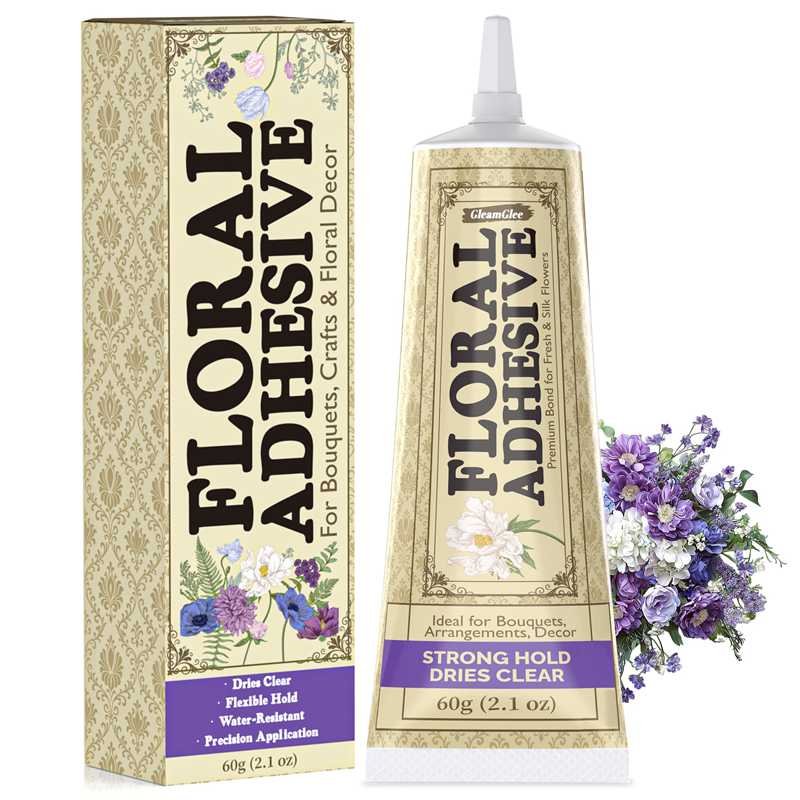
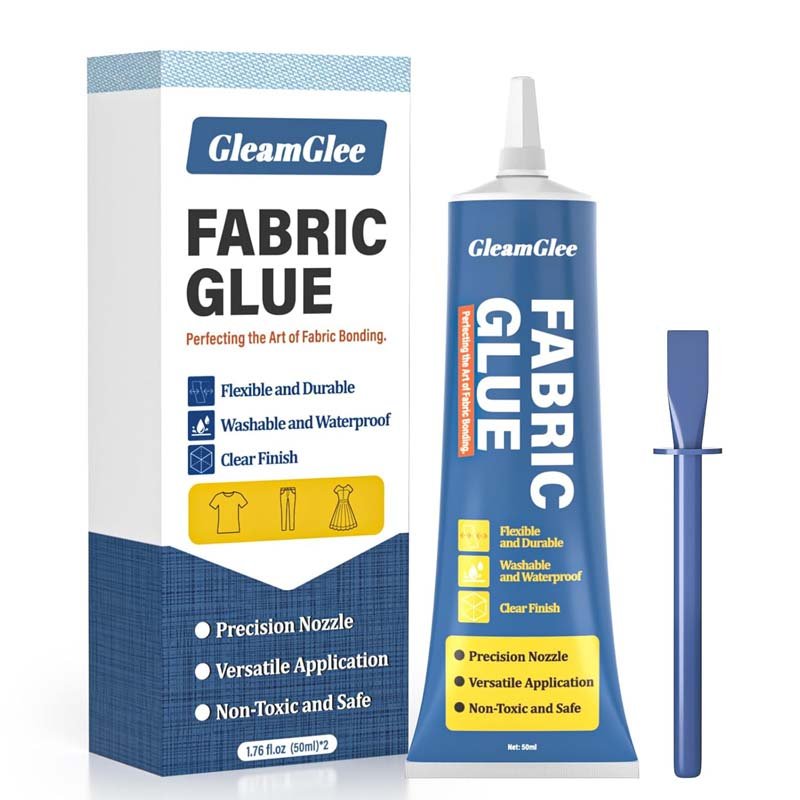
Customers do not choose a floral glue only because it says “strong hold” on the label. In real use, they choose it because they want fewer messy flowers, fewer repairs, better-looking finished pieces, and a product that feels easier to control from the first project. That is where GleamGlee Floral Glue has a clear advantage. Based on the product facts you provided, it is positioned not just as a general adhesive, but as a floral work tool designed for bouquets, corsages, boutonnieres, centerpieces, floral crowns, ribbon work, floral foam, artificial flowers, silk flowers, and decorative craft surfaces. That wider usability matters because customers want one product that solves multiple floral problems without forcing them to switch between several glues.
Another important reason is that GleamGlee’s product story matches what customers actually care about during assembly. They want a glue that dries clear, works quickly, stays flexible instead of becoming brittle, handles delicate-looking floral work more neatly, and can be applied with precision. In premium floral categories, those details affect the final selling price of the finished product. A bouquet or flower box that looks clean and polished is easier to sell than one with visible glue, uneven flower angles, or bulky bond points. That is why the value of GleamGlee is not only in bonding strength. It is in helping the finished product look more professional.
For business customers, the appeal goes beyond the bottle. GleamGlee is backed by integrated R&D, packaging, printing, and manufacturing capability. That means a buyer is not only choosing a floral glue formula. They are also choosing a supplier that can support private label, custom packaging, multilingual labels, low-MOQ development, and scalable production. For an Amazon seller, Shopify brand, wholesaler, or distributor, that is often more important than the formula alone. A good product is important, but a good supply partner is what makes long-term growth possible.
What makes GleamGlee floral glue easier to use?
Ease of use matters because many customers are not full-time florists. Some are DIY users making flower boxes at home. Some are small workshop owners producing 30, 50, or 100 pieces in a batch. Some are wedding stylists working quickly during setup. In all of those cases, the glue has to feel manageable, not stressful. GleamGlee stands out here because its design addresses the practical handling problems customers complain about most: messy flow, poor control, too much waste, and difficulty applying glue neatly to small floral details.
The precision metal nozzle is one of the strongest usability features. In floral work, many bonding points are tiny. Customers may need to attach:
- A small flower base onto ribbon
- A silk bloom onto a gift box lid
- Decorative petals onto a crown base
- Accent flowers into a bouquet cluster
- A boutonniere detail onto a backing point
In each of these cases, too much flow is a problem. If the opening is too large or the glue comes out unevenly, customers use more than they need, the finish looks messy, and product waste increases. A precision nozzle helps solve that by making the flow narrower and easier to direct.
This becomes more valuable when you look at production. If a small business makes 120 floral pieces in one run and overuses only 0.2 grams of glue per piece because the nozzle is hard to control, that becomes 24 grams of wasted product in one batch. More importantly, it also increases cleanup and correction time. If better nozzle control prevents visible glue mistakes on even 8 out of 120 items, and each correction would have taken 4 to 6 minutes, that saves roughly 32 to 48 minutes of labor.
Customers usually describe “easy to use” in very practical terms:
- The glue comes out where they want it
- It does not flood the contact point
- They can work on small decorative areas without panic
- Their hands stay cleaner
- The finished piece looks better with less effort
A simple usability table makes the benefit clearer:
| Customer need | Why it matters | How GleamGlee helps |
|---|---|---|
| Better control | Small floral details are easy to ruin with excess glue | Precision metal nozzle |
| Less mess | Visible glue lowers perceived value | Controlled flow and clear finish |
| Faster learning curve | Many users are not professionals | Easier application on small projects |
| Lower product waste | Over-application increases cost | More accurate dispensing |
| Cleaner workflow | Faster output matters in batch work | Better handling during repeated use |
For customers, this is often the difference between a glue they buy once and a glue they continue using. Products that feel easy in the hand tend to build loyalty faster than products that only sound strong on paper.
Why is GleamGlee better for clean and clear floral work?
In floral design, clean work sells. Customers may not always explain it this way, but they react to it immediately. A flower arrangement with invisible or nearly invisible bond points feels more premium. A flower arrangement with visible glue rings, thick attachment blobs, or shiny residue feels less refined even if it technically holds together. GleamGlee is better positioned for clean floral work because the formula is described as clear-drying, fast-drying, and suitable for detailed floral applications where appearance matters just as much as hold.
This matters most in categories where customers view the product from short distance:
- Corsages and boutonnieres
- Bridal bouquet details
- Flower crowns
- Floral gift packaging
- Decorative flower boxes
- Ribbon-based floral accessories
- Premium wreath fronts
- Retail floral display accents
In these uses, a bulky finish can directly reduce perceived value. For example, if a gift box flower arrangement sells in a premium range, customers expect the flowers to look neatly placed, not obviously glued on. If the finish looks cleaner, customers are more likely to describe the product as elegant, professional, or worth the price.
A clear-drying formula is important because it reduces the visual impact of the bond line. A fast-drying formula is important because it reduces the chance of flowers drifting while the user waits for the glue to settle. A flexible bond is important because many floral projects are not fully rigid. Bouquets are carried, flower crowns bend slightly, ribbon details move, and wreaths hang vertically. A bond that stays too stiff can create tension points over time.
From a commercial perspective, cleaner finish also improves product photography. This is especially important for:
- Amazon listings
- Etsy handmade products
- Shopify storefronts
- Wholesale sample presentations
- Boutique gift and décor brands
If close-up images show neat floral work, the product looks more trustworthy. If the glue is obvious in photos, customers hesitate faster. Even a 1% to 3% improvement in conversion can matter in e-commerce. For a listing with 10,000 monthly views, a 2% lift means 200 more converting actions. That is why finish quality is not just a craft issue. It is also a sales issue.
A clean-finish value table makes that easier to see:
| Finish quality factor | What customers notice | Why it helps sales |
|---|---|---|
| Clear-drying glue | Less visible bond line | Product looks more refined |
| Fast set | Fewer shifted flowers | Better consistency in finished pieces |
| Flexible hold | Better long-term appearance during movement | Fewer complaints after handling |
| Precision application | Less cleanup and fewer glue marks | Better close-up product photos |
| Cleaner decorative surface | More premium look | Supports stronger pricing |
This is where GleamGlee’s positioning works well. It is not just promising strength. It is promising a cleaner visual result, and that is exactly what floral customers care about.
Conclusion
In the end, attaching artificial flowers well is not about using the most glue. It is about using the right glue in the right way. A clean bond, a stable flower angle, and a finish that still looks elegant after handling are what separate a rushed project from one that feels truly professional. Whether the work is a bouquet, wreath, corsage, flower box, wedding accessory, or decorative gift piece, the same principle holds: careful preparation, controlled application, and the right floral adhesive make the final design stronger and more beautiful.
For florists, handmade sellers, and home crafters, that difference shows up quickly in daily work. Flowers stay where they are meant to stay, visible glue marks are reduced, and the finished product looks more polished in photos and in person. For store owners, online sellers, and other commercial customers, the value is even broader. A floral glue that is easier to control, suitable for multiple surfaces, and supported by stable production can improve product consistency, reduce rework, and make it easier to build a more attractive floral product line.
GleamGlee Floral Glue fits that need well because it combines practical floral performance with stronger supply-side support. If you want to purchase a ready-to-sell floral glue for bouquets, wreaths, floral décor, gift packaging, and wedding work, it offers a clear and marketable solution. If you want to create your own branded floral adhesive, GleamGlee can also support customization, packaging, and production development. A better floral finish starts with better attachment, and that is exactly where the right glue — and the right manufacturing partner — can make a lasting difference.