Skip to content
A fraying seam rarely looks serious at first. It may start as a few loose threads near a shirt hem, a fuzzy edge on a curtain, or a small split inside a tote bag lining. The fabric still looks usable, so many people ignore it. After several washes, a day of friction, or one strong pull, that small rough edge can turn into an open seam. At that point, the repair becomes harder, more visible, and sometimes impossible without patching or sewing.
To reinforce fraying seams using fabric glue, first make sure the fabric is clean, dry, and flat. Trim loose threads without cutting into the seam. Apply a thin, even line of clear flexible fabric glue along the frayed edge, then press the seam into place for several minutes. Let the repair set for 6–10 minutes and allow 24 hours for full curing before washing, ironing, stretching, or daily wear.
For many everyday fabric problems, glue is not just a quick shortcut. It is a practical way to stop loose fibers before they spread. A neat glue repair can help save clothes, curtains, cushions, costumes, bags, and home textiles that still have plenty of life left. The most important part is knowing when to use glue, how much to apply, and when a seam needs extra support.
What Are Fraying Seams?
Fraying seams are fabric edges where threads begin to loosen, separate, or break away around a stitched or folded area. At first, the problem may only look like a few loose fibers or a fuzzy edge, but after repeated washing, rubbing, or stretching, the seam can slowly open wider and become much harder to repair.
Fraying usually starts in places that receive constant movement or friction. Shirt hems rub against the body, jeans cuffs scrape shoes and floors, curtain edges move during opening and closing, and bag linings rub against keys, wallets, and daily items. Once the outer threads loosen, the surrounding fibers become weaker and the seam continues spreading.
Fabric glue works best during the early and middle stages of fraying, before the seam becomes a large tear. A thin glue line can help lock the fibers together, reduce further unraveling, and keep the edge cleaner during normal use.
| Fraying Level | What It Looks Like | Repair Difficulty |
|---|---|---|
| Light | A few loose threads | Easy |
| Mild | Fuzzy seam edge | Easy |
| Medium | Small seam opening | Medium |
| Heavy | Long visible split | Harder |
| Severe | Missing fabric or large tear | Difficult |
Why Seams Fray
Seams fray because fabric fibers slowly weaken through friction, washing, folding, stretching, sunlight, or repeated pressure. Even strong fabric eventually wears down if the same area keeps rubbing against skin, furniture, bags, shoes, or washing machine surfaces.
Certain fabrics fray faster than others. Lightweight cotton, linen, satin-like fabric, loose-weave fabric, and thin polyester blends often develop fuzzy edges more quickly than thick denim or canvas. However, thick fabric can still fray heavily in high-friction areas such as jeans hems or workwear seams.
- Washing machines create strong rubbing and spinning on seam edges.
- Repeated folding weakens hems, cuffs, collars, and curtain edges.
- Sunlight can dry out and weaken curtain and outdoor fabric fibers.
- Tight clothing seams experience more pulling during movement.
- Bag linings fray from repeated contact with objects inside.
| Common Cause | Typical Damage Area |
|---|---|
| Washing friction | Shirt hems, pillowcases |
| Floor rubbing | Jeans hems, curtains |
| Repeated folding | Cuffs, collars |
| Weight pressure | Bag corners, seams |
| Sun exposure | Curtain edges |
| Stretching | Sportswear seams |
Many people only notice the problem once threads become clearly visible, but fraying usually starts much earlier inside the seam edge. Repairing at the loose-thread stage often prevents a larger seam opening later.
Where Seams Fray
Fraying seams usually appear in places that move frequently, carry weight, or touch rough surfaces. Clothing, curtains, bags, costumes, and home textiles all have “stress points” where fabric wears faster than the surrounding material.
On clothing, the most common areas are cuffs, hems, side seams, collars, underarms, pocket edges, waistbands, and lining seams. These areas bend and rub during walking, sitting, washing, and everyday movement. Jeans hems are especially vulnerable because they scrape against shoes and floors many times each day.
On home textiles, fraying often appears on curtain bottoms, tablecloth edges, cushion covers, sofa covers, duvet covers, and pillowcases. Curtains near the floor collect dust and friction, while cushion seams wear down from repeated pressure.
- Clothing seams fray from movement and repeated washing.
- Curtain seams fray from sunlight, dust, and floor contact.
- Bag seams fray from weight and daily handling.
- Costume seams fray from stretching and frequent changing.
- Cushion seams fray from body pressure and washing.
| Fabric Item | Common Fray Area |
|---|---|
| T-shirt | Bottom hem |
| Jeans | Hem, pocket edge |
| Curtain | Bottom edge |
| Tote bag | Inner lining |
| Costume | Decorative trim |
| Cushion cover | Corner seam |
Knowing where seams usually fail helps repair them earlier before the damage spreads deeper into the fabric structure.
When to Repair
The best time to repair a fraying seam is before the seam opens widely. Once fabric threads begin separating, every wash and every movement can pull the edge farther apart. A small fuzzy seam can become a visible split within a few weeks of regular use.
For most clothing and home fabrics, repairs are easier when the frayed area is still under 1–2 cm long. At this stage, the fabric usually still lines up naturally and only needs loose fibers sealed and reinforced. Longer seam damage may still be repairable, but it often needs more glue, more pressing, and sometimes extra support.
- Repair before washing whenever possible.
- Fix loose threads early before they spread.
- Check hems and cuffs regularly on heavily used clothing.
- Repair curtain edges before sunlight weakens the fabric further.
- Do not wait until the seam completely opens.
| Seam Condition | Recommended Action |
|---|---|
| 2–5 loose threads | Trim and glue |
| Fuzzy edge under 1 cm | Glue and press |
| Small seam gap | Glue carefully and cure fully |
| Long open seam | Add patch or stitching |
| Thin worn fabric | Reinforce before larger tear forms |
A quick repair done early usually looks cleaner, feels softer, and lasts longer than a repair done after the fabric has already started tearing apart.
Which Fabric Glue Works?
The best fabric glue for fraying seams should dry clear, stay flexible, hold through normal washing, and apply in a thin controlled line. Fraying seams are usually small, narrow, and close to stitched areas, so the glue should seal loose fibers without spreading too far into the fabric.
A good seam glue should not make clothing feel hard, scratchy, or bulky. It should bend with cuffs, hems, collars, curtains, bag linings, and costume trims after drying. For daily fabric repair, flexibility and clean application are just as important as strong bonding.
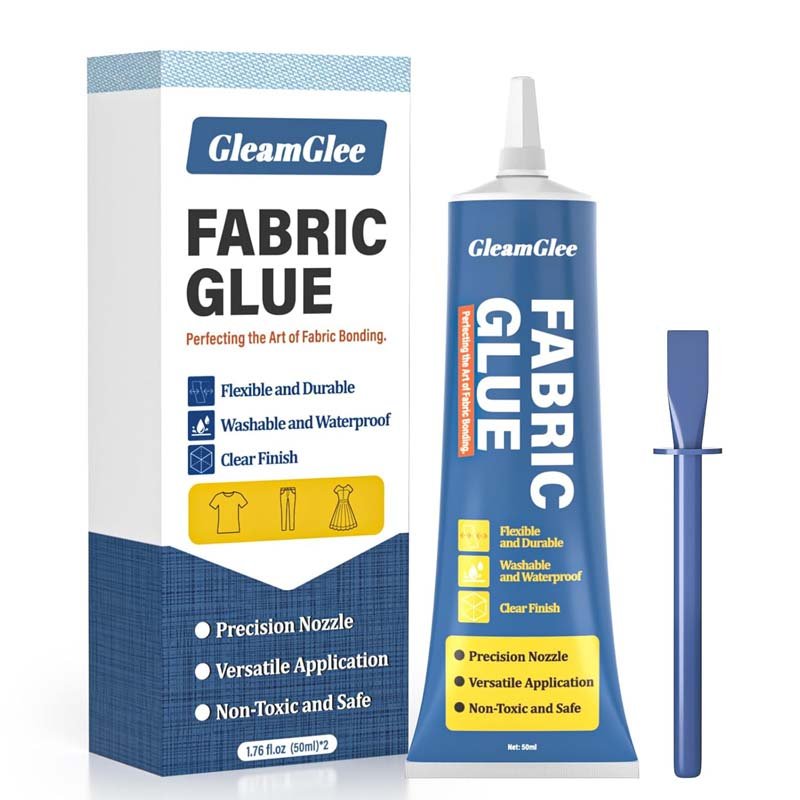
GleamGlee Fabric Glue is designed for clear, flexible, washable fabric repairs. It sets in about 6–10 minutes and fully cures in 24 hours, making it practical for small repairs on clothes, curtains, jeans, bags, costumes, ribbons, sequins, and home textiles.
Soft Fabric Glue
Soft fabric glue is better for fraying seams because fabric needs to move after repair. A seam may bend hundreds of times during normal wear, especially around cuffs, hems, waistbands, underarms, pockets, and collars. If the glue dries too hard, the repaired area may crack, rub the skin, or change how the fabric hangs.
For clothing, softness affects comfort. A stiff glue line on a shirt cuff or collar can feel rough after a few hours. On curtains, a hard glue strip may create an unnatural fold. On costumes, stiff repairs can pull against the fabric when moving.
- Best for clothing seams that touch skin or bend often.
- Helps repaired fabric stay comfortable and natural.
- Reduces cracking when fabric is folded or packed.
- Works well for cuffs, hems, linings, curtains, and costumes.
| Repair Area | Why Soft Glue Helps |
|---|---|
| Shirt cuff | Bends often during wear |
| Collar edge | Touches the neck |
| Jeans hem | Folds near shoes |
| Curtain edge | Needs soft hanging folds |
| Costume seam | Moves during events |
| Bag lining | Folds inside the bag |
Clear Fabric Glue
Clear fabric glue is important because fraying seams often appear in visible places. A repair may be strong, but if it leaves white marks, yellow stains, cloudy residue, or shiny patches, the item still looks damaged. Clear glue helps the seam look cleaner after drying.
This matters most on dark clothing, printed fabric, jeans, school uniforms, curtain edges, lace, ribbons, decorative trims, and costume fabric. A clear finish also makes one glue useful for different fabric colors without needing color matching.
- Better for visible hems, cuffs, trims, and curtain edges.
- Helps reduce repair marks on dark or printed fabric.
- Useful for mixed-color items such as costumes and patterned curtains.
- Apply thinly because even clear glue can show if too much is used.
| Fabric Type | Clear Glue Benefit | Application Tip |
|---|---|---|
| Black cotton | Avoids white marks | Use a very thin line |
| Blue denim | Blends into seam edge | Press firmly |
| Printed fabric | Reduces color mismatch | Test hidden area first |
| Lace | Keeps delicate look | Use tiny dots |
| Curtain fabric | Looks cleaner in daylight | Avoid thick buildup |
| Costume trim | Less visible under lights | Work in small sections |
Washable Fabric Glue
Washable fabric glue is needed when the repaired item will be used again after cleaning. Clothing, curtains, pillowcases, costumes, tablecloths, children’s clothes, and cushion covers often need washing after repair. If the glue cannot handle moisture and movement, the seam may fray again after laundry.
The curing time is very important. GleamGlee Fabric Glue sets in about 6–10 minutes, but the repair should rest for 24 hours before washing, ironing, stretching, or heavy use. This gives the glue enough time to bond with the fibers.
- Suitable for clothing, curtains, cushions, school uniforms, and costumes.
- Wait 24 hours before washing or ironing.
- Turn clothing inside out for the first wash after repair.
- Use gentle care for thin, delicate, or decorative fabrics.
| Time After Repair | What It Means | What to Avoid |
|---|---|---|
| 0–10 minutes | Initial setting | Pulling or folding |
| 1 hour | Light hold | Wearing the item |
| 24 hours | Full cure | Washing too early |
| First wash | Repair begins normal use | Harsh scrubbing |
| Ironing | Use low heat first | Direct high heat without testing |
Easy Fabric Glue
Easy fabric glue should be simple to control. Fraying seams are usually narrow, so too much glue can quickly create a stiff patch, dark spot, or raised line. A fine nozzle helps place glue only on the loose threads and seam edge.
GleamGlee Fabric Glue has a precision nozzle for small repairs. The cap includes a built-in pin design to help reduce clogging, which is useful when the tube is opened many times for household repairs. This makes it easier to repair small frays without wasting glue.
- Good for narrow seam edges and small fraying areas.
- Helps avoid messy over-application.
- Useful for pockets, cuffs, hems, bag linings, and costume details.
- Better control means a softer, cleaner repair.
| Feature | Practical Use |
|---|---|
| Fine nozzle | Places glue exactly on the seam |
| Controlled flow | Reduces glue waste |
| Built-in pin cap | Helps prevent clogging |
| 50g tube | Enough for repeated small repairs |
| 50g × 2 pack | Useful for home repair kits |
How to Prepare Seams?
Preparing the seam makes the repair cleaner, softer, and stronger. Fabric glue works best when it touches the actual fibers, not dust, lint, body oil, detergent residue, pet hair, or loose threads. Before applying glue, the seam should be clean, dry, flat, and easy to press into shape.
A good preparation step can prevent many common repair problems, such as glue peeling, dark marks, stiff patches, uneven drying, or visible glue buildup. For clothing, curtains, bags, costumes, and home textiles, preparation usually takes only 3–8 minutes, but it can make the repair last much longer.
The goal is simple: remove anything that blocks bonding, trim anything that may create bumps, and test the fabric if the repair area is visible or delicate. Once the seam is ready, fabric glue can spread more evenly and hold the frayed fibers in place with less product.
Clean the Seam
A fraying seam should be cleaned before glue is applied. Even if the fabric looks clean, the seam may still contain lint, dust, sweat, skin oil, detergent film, fabric softener, pet hair, makeup, food residue, or outdoor dirt. These small layers can stop the glue from reaching the fibers properly.
For clothing, the dirtiest seam areas are usually cuffs, collars, waistbands, underarms, pocket edges, and hems. For curtains and home textiles, dust and pet hair are more common. For bags, the inner lining may contain crumbs, powder, keys scratches, cosmetics, or hand oil.
Use a cleaning method that matches the fabric:
- For cotton shirts: wipe lightly with a damp cloth and let dry fully.
- For jeans: brush off dust first, then wipe the seam if needed.
- For curtains: use a lint roller or soft brush before applying glue.
- For bag linings: empty the bag, shake out debris, then brush the seam.
- For costumes: clean gently so sequins, prints, glitter, or trims do not lift.
- For cushion covers: remove pet hair and dust before pressing the seam flat.
If the seam has oil or sweat residue, use a small amount of mild soap on a damp cloth. Do not soak the fabric. After cleaning, remove soap residue with a clean damp cloth and allow the area to dry completely.
A dry seam is important. If the fabric feels cool, damp, or heavy, wait longer. Thick fabric such as denim, canvas, upholstery fabric, or layered curtain hems may need 20–40 minutes to dry after wiping, even if the surface looks dry.
| Item | Common Seam Dirt | Best Cleaning Step | Drying Need |
|---|---|---|---|
| Shirt cuff | Sweat, skin oil, lint | Damp cloth | Fully air dry |
| Jeans hem | Dust, mud, floor dirt | Brush then wipe | Longer drying |
| Curtain edge | Dust, pet hair | Lint roller | Lay flat |
| Bag lining | Crumbs, powder, hand oil | Brush or vacuum | Keep bag open |
| Costume seam | Makeup, glitter, spray | Gentle spot clean | Avoid rubbing |
| Cushion cover | Pet hair, household dust | Lint roller | Dry before gluing |
Trim Loose Threads
Loose threads should be trimmed, not pulled. Pulling a thread may open the seam further, especially on woven cotton, denim, linen, canvas, and curtain fabric. A single thread can be connected to a longer part of the weave. If it is pulled too hard, a small fray can become a longer damaged line.
Use small sharp scissors for cleaner trimming. Cut only the long hanging threads that extend beyond the seam. Do not cut the main seam stitching unless it is already broken and no longer holding anything. The purpose is to remove messy fibers, not weaken the seam.
A neat trimming process:
- Lay the fabric flat on a table.
- Smooth the seam with your fingers.
- Find threads that are hanging loose.
- Cut long threads close to the edge.
- Leave short fibers in place for the glue to seal.
- Do not pull thread loops by hand.
- Do not cut into the stitched seam line.
- Remove tiny fibers with tape or a lint roller.
For light fraying, trimming may take less than one minute. For medium fraying, check the seam from both sides. Sometimes the outside looks clean, but the inside edge has more loose fibers. This often happens on hems, curtains, pockets, and lining seams.
If the frayed area is longer than 3–5 cm, trim in small sections. Do not cut aggressively across the whole seam. The seam may need glue plus a small backing strip if the edge has become thin. For cuffs, collars, costume trims, and decorative seams, trim slowly because those areas may include intentional thread details, embroidery, lace, or stitched decoration.
| Thread Condition | What to Do | What to Avoid |
|---|---|---|
| Long loose thread | Trim with scissors | Pulling by hand |
| Fuzzy edge | Leave short fibers | Cutting too close |
| Broken stitch | Trim only if loose | Cutting active stitches |
| Decorative thread | Check carefully | Removing design detail |
| Thin edge | Trim lightly | Over-cutting fabric |
| Thread loop | Cut only if broken | Pulling loop wider |
Test the Fabric
Testing the fabric is helpful when the repair is visible, delicate, thin, dark, printed, stretchy, coated, or expensive. Fabric glue is made for fabric bonding, but not every fabric absorbs glue in the same way. Some materials may darken slightly if too much glue is used. Some thin fabrics may show glue from the front. Some coated fabrics may need extra pressing because glue stays more on the surface.
Choose a hidden area first, such as an inside hem, inner seam, back edge, lining corner, or fabric fold. Apply a tiny dot of glue, press it lightly, and let it dry. The test spot does not need to be large. A dot about 2–3 mm is enough for most checks.
Check the test area for:
- Color change after drying
- Shiny surface marks
- Stiff feel
- Glue bleed-through
- Poor grip
- Wrinkling
- Texture change
- Visible residue
Testing is especially useful for satin, lace, chiffon, thin polyester, silk-like fabric, printed costumes, dark cotton, coated curtains, delicate linings, stretch fabric, and decorative trims. For basic cotton, denim, canvas, and many curtain fabrics, testing is still a good habit when the seam is visible.
| Test Result | What It Means | Best Next Step |
|---|---|---|
| Dries clear | Fabric reacts well | Continue with thin glue |
| Slight dark mark | Too much glue may show | Use less glue or apply inside |
| Stiff patch | Layer is too thick | Reduce glue amount |
| Bleed-through | Fabric is thin | Glue from back side only |
| Glue peels | Surface has poor grip | Add patch or stitching |
| Shiny line | Excess glue on surface | Apply smaller amount |
| Wrinkling | Fabric is sensitive | Press gently, test again |
After testing, wait until the glue is fully dry before judging the result. Wet glue can look different from cured glue. If the item will be ironed later, test heat only after full curing and use a pressing cloth. Do not place a hot iron directly on a fresh glue line.

How to Glue Seams?
To glue fraying seams correctly, the fabric should be clean, trimmed, flat, and fully dry before the adhesive is applied. The glue should cover the loose fibers and seam edge in a thin controlled layer, not flood the surrounding fabric. Most fraying seams need far less glue than people expect.
A clean repair usually comes from three things: accurate glue placement, steady pressure, and enough curing time. If too much glue is applied, the seam may dry stiff or leave visible marks. If the seam moves too early, the repair may weaken before the bond fully forms. For clothing, curtains, bags, costumes, and home textiles, slow careful application gives better results than rushing.
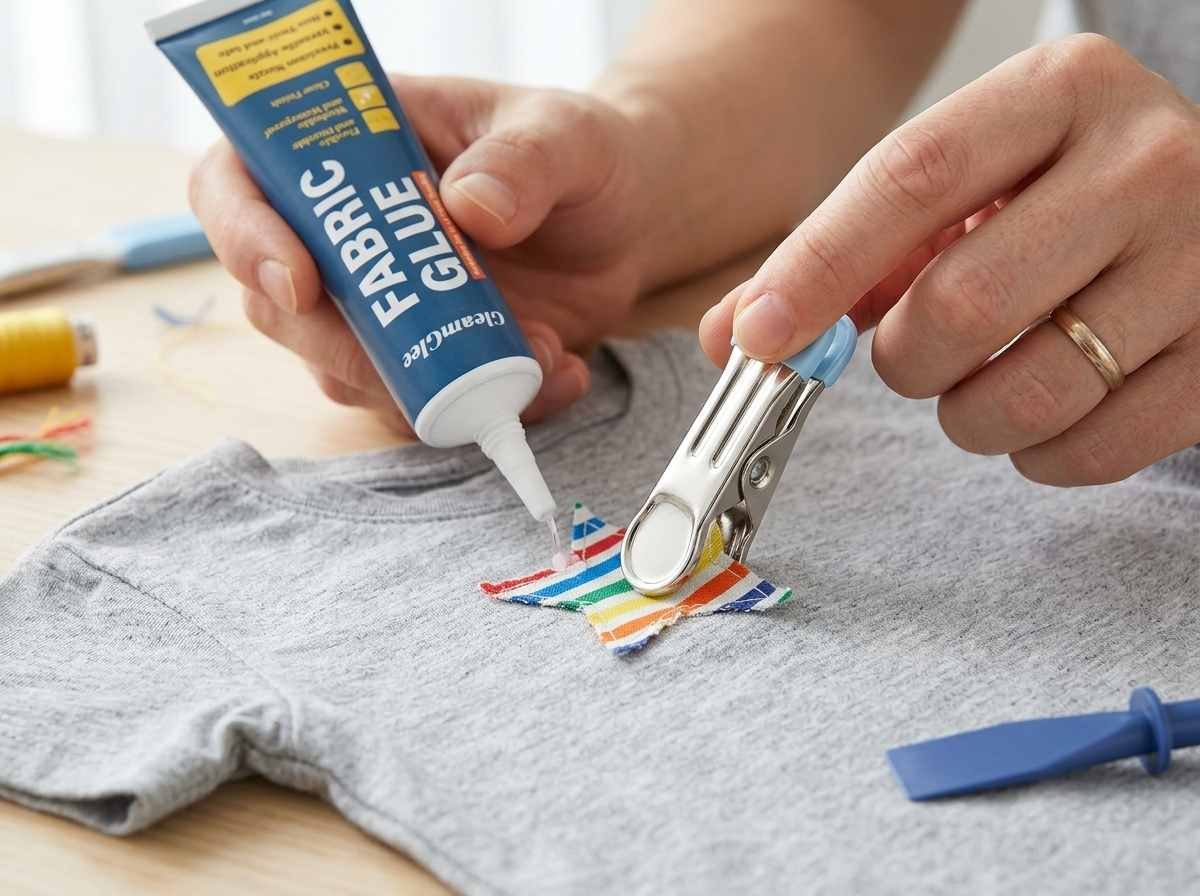
GleamGlee Fabric Glue is designed for controlled seam repairs with a precision nozzle that helps guide glue directly along narrow fabric edges. For most light and medium fraying, a thin line and proper pressing are enough to hold the seam neatly without making the fabric uncomfortable.
Apply Thin Glue
The amount of glue matters more than many people realize. A seam repair is not meant to look coated or heavy. The adhesive should sit mainly inside the fibers and along the frayed edge. Thick glue layers can soak through fabric, leave shiny marks, stiffen the seam, or create uneven drying.
For small frays, work in sections instead of trying to repair the whole seam at once. A 2–5 cm section is easier to control and press neatly. This is especially useful on shirt hems, curtain edges, bag linings, cuffs, costume seams, and decorative trims.
A good application method:
- Place the fabric on a flat stable surface.
- Hold the nozzle close to the seam.
- Apply a thin line directly along the frayed edge.
- Spread lightly only if needed.
- Keep glue away from large clean fabric areas.
- Remove excess before it starts setting.
- Work slowly on visible seams.
- Keep the seam aligned naturally while gluing.
The thickness of the fabric changes how much glue is needed. Thin cotton, polyester lining, satin, chiffon, or costume fabric usually need very small amounts. Denim, canvas, upholstery fabric, and thick curtain hems may need slightly more glue because the fibers absorb more adhesive.
| Fabric Type | Glue Amount | Application Style |
|---|---|---|
| Thin cotton | Very thin line | Apply from inside if possible |
| Denim | Thin-medium line | Press firmly |
| Curtain hem | Thin continuous line | Work section by section |
| Satin lining | Tiny controlled dots | Avoid spreading widely |
| Canvas bag | Medium controlled line | Support while drying |
| Costume trim | Small detail line | Use nozzle carefully |
For inside seams, applying glue from the back side often creates a cleaner appearance. On visible outer seams, use the smallest amount that still holds the fibers together. A neat repair should look smooth after pressing, not thick or glossy.
Press the Seam
Pressing is what helps the glue bond evenly with the fibers. Without pressure, the adhesive may sit mainly on the surface instead of locking the seam together. Proper pressing also helps flatten loose threads so the repair dries cleaner and softer.
The pressure does not need to be extremely strong. The goal is steady contact, not crushing the fabric. Most clothing seams only need finger pressure for 30–90 seconds. Larger items such as curtains, table runners, cushion covers, or bag linings may benefit from clips, clothespins, sewing clips, or light weights.
Useful pressing methods:
- Use fingers for small clothing seams.
- Use clips for long curtain hems.
- Place parchment paper over the seam before adding weight.
- Press curved seams in short sections.
- Hold lining seams closed until they stop lifting.
- Keep decorative fabric flat during pressing.
- Avoid over-squeezing thin fabrics.
- Check seam alignment before the glue sets.
For curved seams such as collars, armholes, plush toys, hat edges, or rounded bags, press gradually along the natural shape instead of forcing the seam flat. Forcing the fabric into the wrong position may create wrinkles or tension after drying.
If glue squeezes out heavily during pressing, too much adhesive was used. Wipe away excess immediately before it begins curing. A properly pressed seam should feel flat and controlled, not bulky or rubbery.
| Repair Area | Best Pressing Tool | Recommended Pressure |
|---|---|---|
| Shirt cuff | Fingers | Light-medium |
| Jeans hem | Fingers or clips | Medium |
| Curtain seam | Clips or light weight | Even pressure |
| Bag lining | Clips | Medium |
| Costume trim | Fingers | Gentle |
| Cushion cover | Flat weight | Medium-even |
For larger repairs, checking the seam every few minutes during the early setting stage helps prevent lifting edges. Some fabrics naturally curl while drying, especially lightweight polyester or thin curtain fabric.
Wait to Dry
Drying time affects repair strength more than many people expect. Even if the seam feels dry after several minutes, the inner adhesive layer may still be soft. Moving, stretching, folding, or wearing the item too early can weaken the bond before it fully develops.
GleamGlee Fabric Glue usually sets within about 6–10 minutes under normal room conditions. During this stage, the seam should remain flat and undisturbed. Full curing takes about 24 hours, which is when the repair reaches stronger washable performance.
Good drying conditions:
- Room temperature around 20–25°C
- Dry environment
- Good airflow
- Flat repair position
- Thin glue application
- Minimal seam movement
- No direct water exposure
- No heavy folding
Thicker fabrics and layered seams may need longer resting time because glue inside the fold dries more slowly. Humid rooms can also slow drying. Avoid using strong direct heat such as high hair dryer settings because uneven heating may cause stiff spots, bubbling, or fabric distortion.
A practical drying timeline:
| Time After Application | Seam Condition | What to Avoid |
|---|---|---|
| First 2 minutes | Glue still movable | Pulling or adjusting heavily |
| 6–10 minutes | Initial setting | Wearing or folding |
| 1 hour | Light hold formed | Stretching or washing |
| 3–6 hours | Stronger surface hold | Heavy pressure |
| 24 hours | Full cure reached | Harsh scrubbing immediately |
During curing:
- Keep clothing hanging naturally or flat.
- Avoid stacking heavy items on repaired fabric.
- Do not wash before full curing.
- Avoid ironing fresh repairs.
- Check that the seam stays aligned while drying.
- Let thicker seams cure longer if needed.
After full curing, the repair should feel flexible rather than wet, sticky, or overly hard. A properly cured seam usually bends with the fabric and keeps the frayed edge from spreading during daily use.
Cure for 24 Hours
The 24-hour curing period is one of the biggest differences between a repair that lasts and one that fails after the first wash. Many people touch or wear the item too early because the glue feels dry on the surface. Inside the seam, however, the adhesive still needs time to bond deeply with the fibers.
For clothing repairs, avoid wearing the item during curing. Movement from walking, sitting, bending, or stretching may weaken the forming bond. For curtains, leave the repaired section flat if possible before rehanging. For bags, avoid carrying weight inside until curing is complete.
A proper curing routine:
- Leave the seam untouched as much as possible.
- Keep the fabric flat or naturally shaped.
- Avoid water, steam, and heavy heat.
- Do not test strength by pulling the seam.
- Let thicker fabrics rest longer if needed.
- Wait fully before laundering.
- Use gentle washing for the first clean after repair.
- Iron carefully with a pressing cloth if necessary.
After curing, most repaired seams can return to normal household use. For delicate fabric, gentle care still improves lifespan. Turning garments inside out before washing and avoiding aggressive scrubbing on the repaired edge can help preserve the seam longer.
For many home users, patience during curing is what creates the difference between a temporary fix and a repair that stays neat through repeated wear and washing.
What Seams Can You Fix?
Fabric glue can fix many small and medium fraying seams on clothing, curtains, bags, costumes, cushions, and everyday fabric items. It works best when the fabric is still present, the seam edges can still touch, and the main problem is loose threads, fuzzy edges, or light seam opening.
For low-stress and medium-stress seams, a thin line of clear flexible glue can seal the fibers and help stop the damage from spreading. These areas include shirt hems, curtain sides, bag linings, costume trims, pillowcase seams, tablecloth edges, and cushion cover corners.
For high-stress seams, such as backpack straps, jeans inner seams, workwear knees, or sofa seat seams, fabric glue can help control fraying, but extra support may be needed. A patch, backing strip, or stitching can make the repair stronger when the seam carries weight or repeated pulling.
| Seam Area | Common Problem | Glue Suitability | Repair Tip |
|---|---|---|---|
| Shirt hem | Loose threads | High | Thin glue line |
| Curtain edge | Fuzzy seam | High | Press flat while drying |
| Bag lining | Inner fraying | High | Glue from inside |
| Costume trim | Loose edge | High | Use tiny glue dots |
| Jeans hem | Thick fray | Medium | Press firmly |
| Cushion corner | Seam wear | Medium | Cure flat |
| Backpack strap | Heavy pulling | Low-medium | Add stitching |
| Sofa seam | Pressure split | Low-medium | Add patch support |
Clothing Seams
Clothing seams are good candidates for fabric glue because many garment repairs are small, visible, and need to stay soft after drying. Common areas include shirt hems, sleeve cuffs, pocket corners, skirt hems, dress linings, collars, waistbands, school uniforms, work shirts, children’s clothes, and jeans hems.
A light clothing fray should be repaired before the next wash. Washing can pull loose threads farther out and turn a small fuzzy edge into a wider opening. For a 1–2 cm fray, trimming the thread, applying a thin glue line, pressing the seam, and curing for 24 hours is usually enough.
- Best for hems, cuffs, pocket edges, collars, linings, and small seam openings.
- Use less glue on thin clothing to avoid stiffness or dark marks.
- Turn garments inside out for the first wash after repair.
- Add stitching if the seam is under strong body movement or stretch.
| Clothing Item | Common Fray Area | Repair Difficulty |
|---|---|---|
| T-shirt | Hem, side seam | Easy |
| Jeans | Hem, pocket edge | Medium |
| Dress | Lining, skirt edge | Easy |
| Jacket | Cuff, inner seam | Medium |
| Uniform | Collar, cuff, hem | Easy |
| Children’s clothes | Knees, cuffs, pocket edge | Medium |
Curtain Seams
Curtain seams often fray along the bottom hem, side edge, rod pocket, lining edge, or decorative trim. The damage usually comes from washing, sunlight, dust, repeated opening, or the curtain edge touching the floor. Fabric glue works well here because many curtain seams are long, straight, and not under heavy pulling pressure.
A curtain repair should stay soft enough for the fabric to hang naturally. Too much glue can create a stiff strip that becomes visible in daylight. The best method is to lay the curtain flat, apply a thin line along the frayed edge, press the seam evenly, and let it cure before rehanging.
- Good for bottom hems, side seams, lining edges, and decorative trims.
- Work in short sections to avoid uneven glue lines.
- Use clips or light weights to keep long seams flat.
- Test sheer or light-colored curtains first because glue marks may show more easily.
| Curtain Type | Repair Concern | Better Method |
|---|---|---|
| Sheer curtain | Glue may show | Use tiny amount |
| Blackout curtain | Thick lining | Press longer |
| Cotton curtain | Edge fraying | Thin line along hem |
| Decorative curtain | Trim lifting | Small controlled dots |
| Floor-length curtain | Bottom wear | Reinforce early |
Bag Seams
Bag seams can be repaired with fabric glue when the damage appears on linings, zipper edges, pocket seams, fabric corners, cosmetic pouches, tote bag hems, or decorative panels. These areas often fray because of daily hand contact, keys, wallets, makeup, books, and repeated opening and closing.
Fabric glue works especially well on inner linings because the repair is usually hidden and does not need to carry the full bag weight. For zipper edges, apply glue carefully so it does not touch the zipper teeth or slider. For tote bag corners, press firmly and allow full curing before carrying heavy items again.
- Best for linings, pockets, zipper fabric edges, and decorative panels.
- Place cardboard inside the bag to stop glue from sticking to other layers.
- Avoid applying glue to zipper teeth, metal parts, or moving hardware.
- Use stitching or a patch for handle bases and load-bearing seams.
| Bag Area | Glue Use | Extra Care |
|---|---|---|
| Inner lining | Very suitable | Apply from inside |
| Pocket corner | Suitable | Press flat |
| Zipper fabric edge | Suitable | Avoid zipper teeth |
| Tote hem | Medium | Cure before carrying |
| Strap base | Limited | Add stitching |
| Bottom corner | Medium | Add backing if thin |
Costume Seams
Costume seams are often repaired with fabric glue because speed and appearance both matter. School costumes, cosplay outfits, theater clothing, dancewear, Halloween outfits, and party garments often use fabrics that are difficult to sew neatly, such as lace, satin-like fabric, mesh, felt, ribbons, sequins, and printed panels.
Fabric glue is useful for frayed costume hems, loose trims, cape edges, sleeve seams, lining openings, ribbon ends, and appliqué edges. A thin clear glue line can hold the seam without visible stitching, which helps the costume look cleaner in photos or under lights.
- Best for hems, trims, ribbons, appliqués, cape edges, and lining seams.
- Use very small amounts on shiny, thin, or decorative fabrics.
- Work in short sections so details do not shift while drying.
- Add stitching for tight dancewear or high-movement cosplay seams.
| Costume Material | Risk | Application Tip |
|---|---|---|
| Satin-like fabric | Glue marks | Test first |
| Lace | Delicate edge | Use tiny dots |
| Felt | Absorbs glue | Apply thin line |
| Sequins | Decoration may shift | Press gently |
| Mesh | Glue can pass through | Use backing paper |
| Ribbon | Frayed ends | Seal edge lightly |

Why GleamGlee Fabric Glue?
GleamGlee Fabric Glue is made for people who want a clean, no-sew way to repair fraying seams, loose hems, fabric edges, trims, patches, and small clothing damage at home. It is suitable for clothing, jeans, curtains, cushions, costumes, ribbons, sequins, bags, and daily fabric projects where the repair needs to stay neat and flexible.
For fraying seams, the glue must do more than “stick fabric together.” It should seal loose threads, dry clear, stay soft after curing, and handle normal washing and ironing. GleamGlee Fabric Glue is designed around these real repair needs, especially for small seam areas where too much glue can make the fabric stiff or visible.
The 50g tube size is practical for repeated household repairs. One tube can be used for many small seam fixes, while the 50g × 2 pack is useful for families, craft users, costume repairs, curtain fixes, or anyone who wants one tube in the laundry area and one in the sewing box.
Clear Finish
GleamGlee Fabric Glue dries transparent and non-yellowing, which helps the repaired seam blend into the fabric instead of looking patched or stained. This is important for visible clothing edges, dark fabrics, printed curtains, costume trims, jeans hems, and decorative fabric items.
A clear finish is especially useful when the fabric color is hard to match. Many people repair black shirts, blue jeans, patterned curtains, school uniforms, or multicolor costumes. A colored thread repair may stand out, while a thin clear glue line can keep the original look cleaner.
- Helps reduce visible repair marks on hems, cuffs, curtains, and trims.
- Works well for dark, light, printed, and mixed-color fabrics.
- Better for small visible repairs where stitching may look too obvious.
- Helps keep decorative fabric, ribbons, sequins, and appliqués looking neat.
| Repair Area | Why Clear Finish Helps |
|---|---|
| Shirt cuff | Avoids visible white glue marks |
| Jeans hem | Blends better with denim edges |
| Curtain side seam | Looks cleaner in daylight |
| Costume trim | Reduces obvious repair lines |
| Bag lining | Keeps the inside seam tidy |
Flexible Hold
GleamGlee Fabric Glue dries soft and flexible, so the repaired seam can still bend, fold, and move with the fabric. This matters because seams are not flat plastic parts. Clothes stretch during wear, curtains fold when opened, bags bend when carried, and cushions shift under pressure.
A stiff repair may feel uncomfortable on clothing or crack after repeated folding. Flexible hold is better for areas close to the skin, such as collars, cuffs, waistbands, underarms, and side seams. It also helps curtains and costumes keep a more natural drape after repair.
- Keeps repaired seams softer and more wearable.
- Helps reduce cracking when the fabric bends or folds.
- Suitable for clothing, costumes, curtains, linings, and soft home textiles.
- Helps avoid a hard raised strip on small seam repairs.
| Fabric Item | Flexible Hold Benefit |
|---|---|
| Shirt hem | Moves naturally during wear |
| Curtain hem | Hangs with softer folds |
| Costume seam | Handles movement during events |
| Cushion cover | Bends without hard edges |
| Bag lining | Folds without cracking easily |
Washable Repair
GleamGlee Fabric Glue is made for durable fabric repairs that can handle normal washing and ironing after full curing. This is important for clothing, curtains, pillowcases, tablecloths, school uniforms, costumes, and other items that return to regular use after repair.
The glue sets in about 6–10 minutes, but the repair should be left for 24 hours before washing, ironing, stretching, or heavy use. This waiting time allows the adhesive to bond more fully with the fibers. Rushing this step can reduce the life of the repair.
- Suitable for washable fabric repairs after full 24-hour curing.
- Helps reinforce seams on items used repeatedly.
- Useful for clothing, home textiles, school projects, and costumes.
- Can support longer fabric life when the seam is repaired early.
| Time After Use | What It Means |
|---|---|
| 6–10 minutes | Initial setting time |
| 1 hour | Light hold, still needs care |
| 24 hours | Full curing for stronger use |
| After curing | Ready for normal handling based on fabric care |
Fine Nozzle
The fine nozzle makes GleamGlee Fabric Glue easier to use on narrow seam edges, loose threads, small hems, pockets, trims, and detailed fabric repairs. Fraying seams do not need large amounts of glue. They need accurate placement.
The precision tip helps place a thin line directly where the fibers are loose. This reduces waste, lowers the risk of stiff glue buildup, and helps keep the repair cleaner. The cap also includes a built-in pin design to help prevent clogging, making the tube easier to reuse for future repairs.
- Helps control glue on small seam areas.
- Reduces messy over-application.
- Useful for cuffs, hems, bag linings, curtain edges, and costume details.
- Built-in pin cap helps keep the nozzle ready for repeat use.
| Feature | Practical Value |
|---|---|
| Fine-point nozzle | More accurate seam repair |
| Controlled flow | Less glue waste |
| Built-in pin cap | Helps reduce clogging |
| 50g tube | Enough for multiple small projects |
| 50g × 2 pack | Useful for frequent household repairs |
Conclusion
Fraying seams are one of the most common fabric problems in daily life, but they are also one of the easiest to control when repaired early. A few loose threads on a shirt hem, curtain edge, bag lining, or costume seam can quickly spread after washing, folding, or repeated use. With the right preparation and a thin, flexible glue application, fabric glue can help seal loose fibers, reinforce weak seam edges, and keep fabric items usable for much longer without bulky stitching or expensive repairs. Clean application, proper pressing, and full 24-hour curing are the key steps that make the repair look softer, neater, and more durable.
GleamGlee Fabric Glue is designed for practical everyday fabric repair across clothing, curtains, costumes, bags, cushions, jeans, decorative fabric, and home textiles. Its clear, flexible, washable formula and precision nozzle make it suitable for both quick household fixes and detailed fabric projects. Whether repairing a favorite shirt, reinforcing a curtain hem, fixing a school costume, or stopping a bag lining from unraveling further, a controlled no-sew repair can help extend fabric life, reduce waste, and keep daily-use items looking cleaner and more reliable.