Skip to content
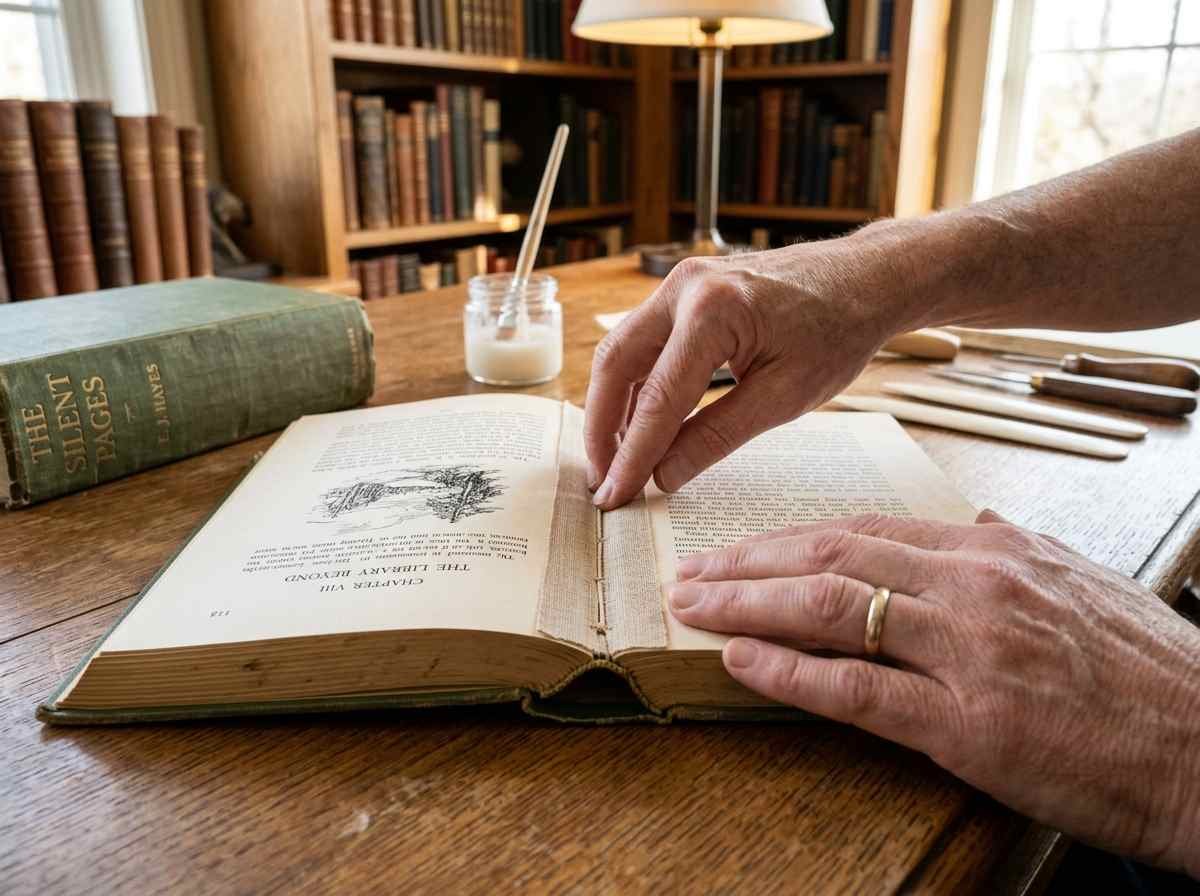
A book repair often fails for one simple reason: people use too much glue. The page may be loose, the spine may be cracked, or the cover may be lifting, but the real damage happens when a thick blob of glue spreads into the wrong place. Paper is thin, absorbent, and easy to stain. Once glue seeps too far, it can wrinkle the page, stick two pages together, leave shiny marks, or make the spine feel hard when the book opens.
To apply book glue without mess, use a clean flat workspace, protect nearby pages with release paper, test the glue flow first, and apply a thin controlled line only where the paper needs contact. Press the repair evenly, wipe away excess glue before it dries, and let the book cure flat under light pressure. A clear-drying book glue with a fine metal nozzle gives better control and helps reduce overflow.
This matters because most books are not repaired only for function. A cookbook with family notes, a child’s favorite picture book, a school textbook, a work manual, a prayer book, a journal, or an old novel may carry personal value. A repair should make the book usable again without making it look dirty or patched. Clean book repair is not about being professional with special tools. It is about using the right amount, in the right place, at the right speed.
What Is Book Glue?
Book glue is a paper-safe adhesive used to repair loose pages, cracked spines, detached covers, notebooks, journals, albums, and handmade paper projects. Unlike general craft glue, book glue should dry clear, stay neat on paper, and hold the repaired area without making the book feel hard, bulky, or dirty.
For most customers, the real value of book glue is not only “sticking paper together.” It is saving a book without making the repair look worse than the damage. A good book glue should help users control three things: where the glue goes, how the paper looks after drying, and whether the book can still open comfortably.
| What Customers Care About | Why It Matters in Book Repair | Better Glue Result |
|---|---|---|
| Clear drying | Visible glue can make pages look dirty | Repair looks cleaner |
| Thin application | Too much glue wrinkles paper | Pages stay flatter |
| Flexible bond | Book spines need to open and close | Book feels easier to read |
| Fine nozzle | Narrow areas are hard to reach | Less overflow and waste |
| Paper compatibility | Paper absorbs liquid quickly | Lower risk of stains |
| Strong edge hold | Loose pages pull from the spine | Longer-lasting repair |
What can book glue fix?
Book glue can fix small to medium book damage such as loose pages, weak spines, detached covers, lifted corners, broken notebooks, loose planner sheets, worn journals, children’s books, cookbooks, manuals, magazines, and paper craft projects. It works best when the damaged part can still be aligned and pressed flat.
Common repair uses include:
- Reattaching one loose page that has fallen out of a novel, textbook, or workbook.
- Strengthening a paperback spine that has started to split from repeated opening.
- Reconnecting a softcover or hardcover that is lifting at the hinge.
- Repairing children’s books where pages or covers pull loose from daily use.
- Fixing cookbooks, manuals, planners, and notebooks that are opened often.
- Bonding paper crafts such as scrapbooks, cards, invitations, albums, and handmade journals.
Book glue is not ideal for every situation. If a book is moldy, wet, badly warped, missing large pieces, or highly valuable as an antique, simple glue repair may not be enough. In those cases, careful restoration or professional repair may be safer.
Why use book glue?
Book glue is used because books need a cleaner and more flexible bond than many ordinary paper projects. A book is opened, pressed, stacked, carried, and bent many times, so the glue must hold the paper while still allowing natural movement.
Customers usually choose book glue for practical reasons:
- It can help avoid replacing expensive textbooks, manuals, cookbooks, or collectible books.
- It keeps sentimental items usable, such as family books, journals, photo albums, and children’s favorites.
- It creates a cleaner repair than tape, which can yellow, peel, or leave sticky residue over time.
- It is easier to control than wide-mouth craft glue when working near narrow spines and page edges.
- It can be used for both repair and DIY projects, so one bottle has more value at home.
For example, a loose textbook page may only need a thin glue line along the inner edge. A cracked spine may need a narrow bead inside the split. If the user applies the right amount, the book can often return to daily use without obvious glue marks.
Where can book glue work?
Book glue can work on paper, kraft paper, cardstock, book pages, softcovers, some hardcover repair areas, notebooks, journals, planners, scrapbooks, photo albums, cards, postcards, invitations, manuals, and handmade bookbinding projects. It performs best on clean, dry surfaces that can be pressed together evenly.
Use book glue differently depending on the material:
- Thin book pages: use very little glue to avoid wrinkles.
- Thicker paper or cardstock: apply a slightly fuller but still controlled line.
- Book spines: place glue inside the damaged gap, not across the whole outside surface.
- Covers and hinges: apply glue under the lifted area, then press from the center outward.
- Photos or glossy paper: test first, because coated surfaces may dry or bond differently.
- Old or brittle paper: use extra caution and avoid heavy pressure.
A simple rule helps customers avoid mistakes: if the repair area can be cleaned, aligned, glued thinly, and pressed flat, book glue is usually useful. If the book is severely broken, soaked, crumbling, or structurally unstable, glue alone may not solve the problem.
Which Book Glue Works Best?
The best book glue for clean repair should dry clear, apply in a thin controlled line, hold paper firmly, and stay slightly flexible after drying. For most users, the easiest book glue to use is one with a fine nozzle, because loose pages, cracked spines, and lifted covers usually need small, accurate glue placement rather than a large amount.
A good book glue should solve the real problems customers face during repair: glue overflow, page sticking, paper wrinkling, visible stains, stiff spines, and weak bonding after drying. For book repair, “strong” does not mean “thick.” The best result usually comes from a small amount of glue placed exactly where the paper, spine, or cover needs contact.
| Book Glue Feature | Why Customers Need It | What It Helps Prevent |
|---|---|---|
| Clear drying | Keeps pages and covers looking clean | White marks, yellow stains, cloudy glue lines |
| Fine nozzle | Places glue into narrow areas | Overflow, wasted glue, sticky fingers |
| Flexible finish | Allows books to open and close | Hard spine, cracking, uncomfortable reading |
| Smooth flow | Makes application easier for beginners | Sudden glue blobs, uneven repair |
| Paper-safe use | Reduces visible damage on paper | Wrinkles, soaking, surface marks |
| Strong edge hold | Keeps loose pages in place | Pages falling out again |
Which book glue dries clear?
A clear-drying book glue works best for visible repairs because it helps the book keep its original appearance after drying. This is important for novels, textbooks, cookbooks, children’s books, photo albums, journals, religious books, invitations, scrapbooks, and collectible paper items where a white or yellow glue line would look messy.
Clear drying matters most in areas the reader will see often, such as the inner page edge, spine gutter, cover hinge, and corners. If glue dries cloudy, the repair may look dirty even when the bond is strong. If glue dries yellow, it can make older paper look more damaged than before.
For clean results, customers should still apply clear book glue in a thin layer. Clear glue can become visible if it is used too heavily because thick glue may leave shine, texture, or raised edges. A small controlled line usually looks better than a wide glue patch.
GleamGlee book glue is designed to dry transparent, helping users repair books and paper projects with less visible residue. This is especially useful for sentimental books, craft projects, albums, and pages where appearance matters as much as strength.
Which book glue feels flexible?
Flexible book glue is best for spines, covers, notebooks, journals, planners, and paperbacks because these areas move every time the book is opened. If the glue dries too hard, the repaired section may feel stiff, crack again, or make the book difficult to read.
Books need movement. A paperback spine bends. A notebook cover folds back. A cookbook may stay open on the same page for a long time. A children’s book may be opened roughly many times a day. In these situations, the glue should hold the paper together without turning the repair area into a hard strip.
A flexible finish is especially important for spine repair. If too much rigid glue is added to a spine, the book may not open naturally. The repair may look strong at first, but repeated bending can cause new cracks beside the glue line.
To keep the repaired area flexible, customers should use a thin amount of glue and avoid filling the whole spine with adhesive. The glue should connect the loose surfaces, not create a thick block. A good book repair should feel secure, but the book should still open comfortably.
Which book glue is easy to control?
Book glue is easy to control when it comes out smoothly, stops cleanly, and can be applied in small dots or thin lines. This is especially important because most book repairs happen in narrow areas, such as page edges, spine cracks, cover hinges, and notebook folds.
A fine nozzle is one of the most useful features for clean book repair. Wide bottle openings often release too much glue at once. Once too much glue lands on paper, it is difficult to remove without spreading it. A precision nozzle helps customers place glue only where it is needed.
Easy control helps with common repair tasks:
| Repair Task | Why Control Matters |
|---|---|
| Loose page repair | Glue should stay on the inner edge only |
| Spine repair | Glue needs to enter the crack without flooding pages |
| Cover repair | Glue should stay under the lifted area |
| Children’s book repair | Small areas need clean, quick placement |
| Scrapbook or album work | Visible paper needs neat bonding |
| Handmade journal binding | Even glue lines help the finished book look cleaner |
GleamGlee book glue uses a fine metal nozzle to help users apply glue more accurately and reduce mess. This is helpful for beginners, parents, students, teachers, librarians, craft users, and anyone who wants a book repair to look neat instead of patched.
How Do You Prep Book Glue?
To prep book glue correctly, set the book on a clean flat surface, remove dust from the damaged area, protect nearby pages, test the glue flow, and check that the page or cover lines up before applying glue. Most messy repairs happen because the user starts gluing too quickly, not because the repair is difficult.
Good preparation helps prevent four common problems: glue stains, stuck pages, crooked pages, and stiff spines. For most home book repairs, the preparation only takes 2–5 minutes, but it can make the difference between a clean repair and a book that looks dirty after drying.
| Prep Step | Why It Matters | Best Practice |
|---|---|---|
| Clean the surface | Dust weakens the bond | Use a dry cloth or soft brush |
| Align the page | Crooked pages are hard to fix later | Check page number, top edge, and outer edge |
| Protect nearby pages | Wet glue can spread under pressure | Use wax paper or baking parchment |
| Test glue flow | First squeeze may release too much glue | Test on scrap paper first |
| Prepare pressing tools | The book must stay still while drying | Use a flat board or light book stack |
| Keep hands clean | Glue transfers easily from fingers | Wipe hands and nozzle before touching pages |
How do you clean the book?
Clean the book by gently removing dust, loose fibers, crumbs, and old dry glue from the repair area before applying new book glue. Use a soft dry cloth, small clean brush, cotton swab, or folded paper edge. Do not wet the paper unless you are sure the material can handle moisture.
For loose pages, clean the inner edge where the page will return to the spine. For a cracked spine, remove loose paper dust inside the gap without forcing the book open wider. For a lifted cover, clean under the loose area carefully so the new glue touches the actual cover material, not dust or old flakes.
Useful cleaning tips:
- Remove only loose old glue; do not scrape firmly attached glue if it may tear paper.
- Avoid alcohol, household cleaner, or water on ordinary book pages.
- Do not use oily cloths, because oil can weaken adhesion.
- For fragile old books, brush lightly and test first.
- Make sure the repair area is dry before gluing.
A clean surface helps the glue bond better and reduces the chance of uneven bumps under the page or cover.
How do you protect pages?
Protect pages by placing wax paper, baking parchment, release paper, or clean scrap paper between the glued area and the pages that should stay dry. This is one of the most important steps when using book glue, especially for loose pages and spine repairs.
When pressure is applied, glue can spread farther than expected. Even a small amount may squeeze out and touch the next page. If there is no barrier sheet, two pages may dry together. For a loose page, place the protective sheet behind the page before applying glue. For a spine repair, use narrow strips near the inner gutter. For a cover repair, protect the first or last page where the cover meets the book block.
Better page protection tips:
- Use wax paper or baking parchment for safer release.
- Avoid newspaper because ink can transfer.
- Avoid colored tissue because fibers and dye may stick.
- Make the barrier sheet larger than the glue area.
- Check the barrier after pressing to make sure it has not shifted.
- Replace the barrier if it gets wet with glue.
This simple step is especially useful for children’s books, photo albums, notebooks, cookbooks, religious books, and glossy paper projects.
How do you test book glue?
Test book glue by squeezing a tiny amount onto scrap paper before applying it to the book. This helps you check the glue flow, nozzle condition, line thickness, and hand pressure. It also prevents the first unexpected drop from landing directly on the book.
A good test line should be thin, smooth, and easy to stop. If the glue comes out too fast, use lighter pressure. If the nozzle feels blocked, clean the tip before using it on the book. If the glue line is too thick on scrap paper, it will likely be too thick for the spine or page edge.
When testing book glue, check these details:
- Does the glue come out smoothly?
- Can you make a thin line instead of a blob?
- Does the nozzle stop cleanly when pressure is released?
- Does the glue spread too much on similar paper?
- Does it dry clear on the test surface?
- Does the paper wrinkle after drying?
For valuable books, old paper, glossy pages, photo albums, or handmade projects, testing is even more important. GleamGlee book glue uses a fine metal nozzle for better control, but testing before repair still helps users apply the right amount with less mess.

How Do You Apply Book Glue?
Apply book glue in a thin, controlled layer only where the paper, spine, or cover needs contact. Do not spread glue across a large area unless the repair truly requires it. For most book repairs, a narrow line, small dots, or a light hidden layer works better than a thick amount.
The cleanest book glue repair follows one rule: use the smallest amount that can still create full contact. Too much glue can cause overflow, page sticking, paper waves, shiny marks, and stiff spines. Before pressing the book, always check whether the glue is staying inside the repair area. If excess glue appears, remove it while it is still wet.
| Repair Type | Best Glue Method | Suggested Amount | Main Risk to Avoid |
|---|---|---|---|
| One loose page | Thin line on inner edge | Very small | Page sticking to next page |
| Several loose pages | Glue in small sections | Small | Uneven page block |
| Cracked spine | Narrow line inside crack | Small to medium | Hard, bulky spine |
| Lifted cover | Thin hidden layer | Light and even | Visible cover stain |
| Notebook hinge | Small dots or thin line | Small | Cover drying crooked |
| Scrapbook page | Dots or short lines | Very small | Wrinkled paper |
| Photo album page | Tiny dots after testing | Very small | Glossy marks |
How much book glue is enough?
Enough book glue means the repair area has light, even contact without glue pooling, dripping, or squeezing out heavily when pressed. For most loose pages, one thin line along the inner edge is enough. For spine repair, the glue should sit inside the crack, not flood the whole binding.
A simple customer-friendly rule is: if glue clearly pushes out when you press the page, you used too much. A tiny amount of squeeze-out can be wiped away, but a thick bead means the book may dry with bumps, stiffness, or stuck pages.
Use different amounts for different materials:
- Thin book pages: use the least amount, because thin paper absorbs glue quickly.
- Textbook pages: use a thin but continuous line for stronger edge hold.
- Paperback spines: use a narrow line inside the split, then press gently.
- Hardcover hinges: use a light layer under the loose cover area.
- Cardstock or craft paper: use slightly more than thin paper, but still avoid wet patches.
- Photo paper or glossy paper: test first and use tiny dots to reduce visible marks.
For clean repair, it is safer to apply less glue first. If the repair does not have enough contact, add a tiny amount before drying. Removing excess glue from paper is much harder than adding a little more.
How do you glue loose pages?
Glue loose pages by first checking the page order, aligning the loose page with the top, bottom, and outer edges, then applying a thin line of book glue along the inner edge where the page meets the spine. Place release paper behind the page before gluing so the next page does not stick.
Do not apply glue across the full page surface. Loose pages usually need edge bonding, not full-sheet bonding. After applying the glue, slide the page gently into the gutter and press the inner edge with clean fingers, a folded sheet of paper, or a flat tool. Keep the pressure close to the spine rather than rubbing across the printed page.
Better loose-page repair steps:
- Check page number and direction before gluing.
- Place wax paper or baking parchment behind the loose page.
- Apply a thin glue line only on the inner edge.
- Align the page with nearby pages before pressing.
- Press the glued edge for 30–60 seconds to help contact.
- Wipe away any overflow immediately with a cotton swab.
- Leave release paper in place while drying.
If several pages are loose, repair them in small groups instead of gluing a large stack at once. Large stacks can shift easily and dry unevenly.
How do you glue a spine?
Glue a spine by opening the book just enough to reach the cracked or loose area, then applying a narrow line of book glue inside the split. The goal is to reconnect the loose binding area without creating a thick glue ridge that makes the book hard to open.
For paperback books, place the nozzle into the spine gap carefully and run a thin line along the damaged section. Close the book gently, align the text block, and press the spine back into its natural shape. Do not force the book flat while the glue is wet, because this can widen the crack.
For hardcover books, check whether the problem is the cover hinge, inner paper lining, or text block. Apply glue only under the loose part, then press from the center outward to remove air pockets.
Useful spine repair tips:
- Do not fill the entire spine with glue unless the whole binding has failed.
- Avoid putting glue on the outside of the spine unless it is part of the design repair.
- Use light pressure so glue does not squeeze into the pages.
- Keep the spine straight while drying.
- Let spine repairs dry longer than single-page repairs.
- Avoid opening the book widely for the first 24 hours after repair.
A clean spine repair should feel secure but still flexible. If the spine feels like a hard block after drying, too much glue was likely used.
How do you stop glue mess?
Stop glue mess by testing the nozzle first, using thin lines instead of blobs, protecting nearby pages, and cleaning excess glue before it dries. Most mess happens because glue is applied too fast or too heavily. Slow, light pressure gives better control.
Keep a small cleanup kit beside the book before starting:
| Cleanup Item | What It Does |
|---|---|
| Cotton swabs | Lift small wet glue spots |
| Dry soft cloth | Clean fingers and bottle tip |
| Folded scrap paper | Remove glue from tight spine areas |
| Wax paper | Prevent pages from sticking |
| Toothpick or fine tool | Move tiny glue amounts into place |
| Flat board | Press repair evenly while drying |
If glue spreads too far, do not wipe hard across the page. Blot or lift the wet glue gently. Rolling a cotton swab over the excess glue works better than smearing it. Avoid adding water unless the material has been tested, because water can spread the adhesive and wrinkle paper.
GleamGlee book glue’s precision metal nozzle helps reduce mess because it allows users to apply small amounts in narrow repair areas. This is especially helpful for loose pages, spine cracks, cover hinges, journals, albums, cards, and handmade paper projects where clean appearance matters.
How Do You Dry Book Glue?
Dry book glue by keeping the repaired area flat, aligned, protected, and still until the adhesive has set. Place wax paper or baking parchment between nearby pages, press the book with light even weight, and avoid opening the repaired section too early. For spine and cover repairs, waiting longer usually gives a cleaner, stronger result.
Drying is not just “waiting for glue to stop feeling wet.” It is the stage where the repair shape becomes fixed. If the page is crooked, the spine is twisted, or excess glue touches nearby paper, the book may dry with permanent problems. A clean drying process helps prevent stuck pages, warped paper, hard glue ridges, and repairs that reopen after a few uses.
| Drying Detail | Why It Matters | Better Practice |
|---|---|---|
| Page alignment | Crooked pages dry in the wrong position | Check top, bottom, and outer edges before pressing |
| Release paper | Wet glue can transfer to nearby pages | Use wax paper or baking parchment |
| Light pressure | Keeps surfaces in contact | Use a flat board or light book stack |
| Enough time | Inner glue may still be soft | Wait longer for spines and covers |
| Dry room | Humidity slows drying | Avoid damp rooms or cold basements |
| Clean hands | Wet glue transfers easily | Wipe fingers and tools before checking |
How long does book glue dry?
Book glue drying time depends on the glue amount, paper thickness, repair size, room temperature, and humidity. A small loose-page repair may feel stable after several hours, but spine repairs, cover repairs, handmade journals, notebooks, and frequently used books are best left overnight or around 24 hours before regular use.
Use this as a practical drying guide:
| Repair Type | Suggested Rest Time | Better Before Heavy Use |
|---|---|---|
| One loose page | Several hours | Overnight |
| Small page edge repair | Several hours | Overnight |
| Several loose pages | Overnight | Around 24 hours |
| Paperback spine repair | Overnight | Around 24 hours |
| Hardcover cover repair | Overnight | Around 24 hours |
| Notebook or planner hinge | Overnight | 24 hours if used daily |
| Scrapbook or album page | Several hours | Overnight before stacking |
| Handmade bookbinding | Overnight | 24 hours before trimming or gifting |
Do not judge drying only by touching the surface. The outside may feel dry while the glue inside the spine or page edge is still soft. If the book is opened too early, the fresh bond can stretch, shift, or break. For books that will be opened often, such as textbooks, cookbooks, planners, and library books, longer drying time is safer.
How do you press the book?
Press the book by placing it on a clean flat surface, adding release paper near the repaired area, closing or positioning the book carefully, and placing light even weight on top. The goal is to keep the glued surfaces touching while they dry, not to crush the book.
Better pressing tips:
- Use a flat board, clean hardcover book, or light book stack for even pressure.
- Keep wax paper or baking parchment between any pages near wet glue.
- Check page edges before adding weight, because misaligned pages may dry crooked.
- For spine repair, keep the spine in its natural shape instead of flattening it too hard.
- For cover repair, press from the center outward first to remove air pockets.
- Avoid metal clips directly on covers or pages; use cardboard padding if clips are needed.
- Do not use very heavy pressure, because it can squeeze glue out and create a messy edge.
For small loose-page repairs, light pressure is usually enough. For spines and covers, even pressure matters more than heavy pressure. If glue appears along the page edge after pressing, lift the book carefully and remove excess glue before it dries.
How do you stop page sticking?
Stop page sticking by using release paper, applying only a thin amount of book glue, and checking for glue overflow before leaving the book to dry. Page sticking usually happens when wet glue spreads under pressure and touches the next page.
Useful page-protection steps:
- Place wax paper or baking parchment behind the loose page before gluing.
- For spine repair, use narrow strips of release paper near the inner gutter.
- Make the protection sheet larger than the glue area so it does not shift out of place.
- Replace the sheet if it becomes wet with glue.
- Avoid newspaper, colored tissue, or printed paper because ink and fibers may transfer.
- After initial pressing, check gently that nearby pages are still separate.
- Do not open the book widely while the glue is still curing.
If two pages begin to stick while the glue is still wet, separate them slowly and insert a clean release sheet. If the glue has already dried, pulling too hard may tear the paper. In that case, work carefully from the edge and avoid forcing the pages apart.
A clean drying setup is especially important for children’s books, glossy pages, photo albums, religious books, journals, and cookbooks. These books are handled often, so a neat dry finish helps the repair stay useful and comfortable to read.

What Book Glue Mistakes Happen?
The most common book glue mistakes are using too much glue, skipping page protection, applying glue on dusty paper, pressing the book too hard, opening the repair too early, and using the wrong glue for paper. Most of these mistakes do not happen because book repair is difficult. They happen because the repair is rushed.
A clean book repair should look almost invisible after drying. If the page wrinkles, the spine feels hard, the glue line turns shiny, or two pages stick together, the problem is usually application control rather than glue strength. For books, more glue does not always mean a stronger repair. A thin, accurate glue line usually gives a cleaner and more comfortable result.
| Mistake | What Usually Happens | How to Avoid It |
|---|---|---|
| Using too much glue | Paper wrinkles, glue overflows, pages stick | Apply a thin line or small dots |
| No release paper | Nearby pages dry together | Use wax paper or baking parchment |
| Dirty repair area | Weak bond or bumpy finish | Brush away dust and loose fibers first |
| Pressing too hard | Glue squeezes out, spine becomes flat | Use light, even pressure |
| Opening too early | Repair shifts or breaks again | Wait overnight or around 24 hours for spines |
| Wrong glue type | Yellowing, stiffness, stains, poor flexibility | Use clear book glue made for paper |
| Gluing too wide | Book feels stiff and bulky | Glue only the damaged contact area |
| Not checking alignment | Pages dry crooked | Align before pressing |
What if book glue spills?
If book glue spills, remove the excess while it is still wet. Use a clean cotton swab, folded scrap paper, or soft dry cloth to lift the glue gently. Do not rub hard across the page, because this can spread the glue into a wider shiny mark or push it deeper into the paper fibers.
For small spills near the spine, roll a cotton swab over the glue instead of wiping side to side. For glue on a protective sheet, replace the sheet before pressing the book again. For glue on a cover, blot from the outside edge of the spill toward the center so the mark does not grow.
Useful cleanup tips:
- Keep cotton swabs ready before applying glue.
- Do not add water unless you have tested the paper first.
- Avoid scraping wet paper, because it can tear easily.
- Clean the nozzle tip before continuing.
- Use lighter pressure on the glue bottle after a spill.
- If glue has already dried, do not pull or scratch aggressively.
A spill usually means one of three things: the glue line was too thick, the nozzle was not tested, or the bottle was squeezed too hard. Test again on scrap paper before continuing the repair.
What if book glue feels stiff?
If book glue feels stiff after drying, the repair may have too much adhesive or the glue may have dried in a thick line across a bending area. This often happens on paperback spines, journals, notebooks, planners, and cover hinges where the book needs to open and close smoothly.
A small amount of firmness near the repaired area is normal, especially after fixing a spine. However, the book should not feel like it has a hard strip inside. If the book resists opening, cracks beside the repair, or will not lie naturally, too much glue may have been used.
How to reduce stiffness in future repairs:
- Use a thin glue line instead of a thick bead.
- Apply glue inside the crack, not across the whole spine.
- Do not fill the entire binding gap unless necessary.
- Press the book in its natural shape while drying.
- Allow full drying before opening the book widely.
- For notebooks and journals, keep glue away from the folding line when possible.
If the stiff area is minor, the book may loosen slightly with gentle use after full curing. If the glue dried as a thick hard ridge, adding more glue will not help. A better repair usually comes from using less glue and placing it more accurately.
What if book glue fails?
If book glue fails, check the cause before applying more glue. The surface may have been dusty, the page may not have been aligned, the book may have been opened too soon, or the damaged area may need a deeper repair than a simple edge bond.
Do not immediately add a thick second layer. Too much glue can make the book messy, stiff, and harder to repair later. Instead, remove only loose dried glue, clean the area gently, realign the page or cover, and apply a fresh thin line in the correct place.
Common reasons book glue fails:
| Failure Sign | Possible Cause | Better Fix |
|---|---|---|
| Page falls out again | Glue did not reach the inner edge | Reapply a thin line at the spine edge |
| Spine opens again | Crack is deeper than expected | Place glue inside the split, then press evenly |
| Cover lifts again | Pressure was uneven | Press with a flat board and release paper |
| Glue peels away | Surface was dusty or coated | Clean first and test adhesion |
| Repair shifts | Book moved before drying | Let it cure longer under light pressure |
| Paper tears near repair | Too much force or brittle paper | Use less pressure and handle gently |
For valuable, rare, antique, or very fragile books, repeated home repairs may cause more damage. In that case, use book glue only for small stabilization work, or consider professional restoration. For everyday books, notebooks, cookbooks, textbooks, manuals, and craft projects, a second careful repair can usually work well if the surface is clean and the book is allowed to dry fully.

Conclusion
Applying book glue without mess is mainly about control, not speed. A clean repair starts with a dry surface, protected pages, a tested glue flow, and a thin amount of adhesive placed only where the page, spine, or cover needs contact. Using too much glue can cause wrinkled paper, stuck pages, visible marks, or a stiff spine, while a small, accurate line often gives a neater and longer-lasting result. Whether repairing a loose textbook page, a cracked cookbook spine, a child’s picture book, a journal, or a handmade album, careful preparation and patient drying help the book return to daily use without looking heavily repaired.
GleamGlee book glue is designed for customers who want cleaner, easier book repair at home, in schools, libraries, offices, craft rooms, and paper product workshops. Its clear-drying finish and precision metal nozzle help users apply glue more accurately, reduce overflow, and keep pages looking neat. For consumers, it is a practical choice for repairing books, notebooks, albums, cards, invitations, and DIY paper projects. For business customers, GleamGlee also supports branded book glue orders, bulk supply, private label packaging, formula customization, multilingual labels, and FBA-ready solutions.