Skip to content
Can You Super Glue Glass: A Practical Guide
Your trusted adhesives glue & cleaner manufacturer

Glass repairs often look simple—but glass is one of the least forgiving materials to bond. Many people reach for super glue because it’s fast, clear, and easy to find. In some cases, it appears to work immediately. The pieces stick, the crack looks invisible, and the repair feels solid. But glass doesn’t flex, absorbs vibration poorly, and reacts strongly to heat and moisture. These traits mean that a repair that feels strong at first can fail later under normal daily use.
So, can you super glue glass? Yes—but only in limited situations. Super glue can work for small, low-stress, cosmetic repairs where the glass is rarely handled, never washed with hot water, and not exposed to moisture or temperature changes. It bonds glass mainly by surface contact, not by deep structural strength. As a result, it struggles with twisting, lifting, repeated handling, and environments like kitchens, bathrooms, or outdoors.
For glass items that matter—those you lift, wash, rely on, or want to keep looking clean—super glue is usually not the best long-term solution. Glass-specific adhesives are designed to spread better on smooth glass, cure clearer, and handle real-world stress more reliably. Choosing the right adhesive from the start is what turns a quick fix into a repair that actually lasts.
Can You Super Glue Glass at All?
Yes—super glue can stick glass when the break is clean, the parts fit tightly, and the repair won’t be stressed. But glass is smooth and non-porous, so the bond is mostly “skin-deep.” It may look perfect at first and still fail later from humidity, temperature changes, or small bumps. The smaller and lighter the repair, the better the odds.
Cyanoacrylate on glass
Most “super glue” is cyanoacrylate (CA). It cures fast using tiny amounts of moisture on surfaces and in the air. On materials with texture, CA can seep into micro-pores and lock in. On glass, it can’t penetrate—so the bond depends heavily on perfect surface contact.
What customers usually notice:
- Fast grab (5–30 seconds) feels strong immediately.
- The joint is often rigid and brittle once cured.
- If the break has tiny gaps, CA tends to bridge poorly and the joint becomes weaker than expected.
When CA works best on glass:
- Flat-to-flat contact with tight fit (no wobble).
- Small parts with very low leverage (like a tiny trim piece).
When CA struggles:
- Any joint that experiences twisting (handles, stems).
- Any joint that will be washed or exposed to steam.
Instant grip vs true long-term strength
A glass repair can “feel strong” in your fingers and still be weak in real use. That’s because glass failures rarely come from pulling straight apart. They come from peel, twist, and impact—the kind of forces you create without realizing it.
Real-world examples:
- Wine glass stem: twisting + leverage every lift.
- Glass lid knob: repeated push/pull + heat/steam.
- Mirror corner chip: vibration from door closing + humidity.
A strong long-term bond usually needs:
- Enough working time for proper alignment (not just a quick tack)
- A bond line that can handle movement (micro-flex) without cracking
- Good wetting/spreading across glass (not beading up)
CA is great at speed, but speed can reduce:
- reposition time
- even glue spread
- final durability under mixed forces
Smooth surface problem
Glass is very smooth and offers almost no mechanical “tooth.” That means the joint strength changes dramatically based on surface condition—something customers often overlook.
Big factors that reduce bonding on glass:
- Finger oils (even invisible skin oils can reduce adhesion)
- Silicone residues (common on glassware, bathroom items, “water-repellent” surfaces)
- Cleaner residues (some leave films that interfere with bonding)
- Dust in the break line (creates micro-gaps)
Practical takeaway:
If you don’t clean and degrease, you’re often gluing oil to oil, not glass to glass.
Fast prep checklist customers actually use:
- Wash and dry
- Degrease (alcohol wipe)
- Handle edges with a clean cloth (avoid touching bond area)
- Dry completely before gluing
Clear finish and haze risk
Super glue can dry clear yet still leave a visible “problem area” on glass. Two common issues:
White fog/haze around the repair
CA releases fumes during cure. Those fumes can settle on glass and react with moisture, leaving a chalky haze—especially in humid rooms or when too much glue is used.
Glue line distortions
If the bond line is uneven or thick, it can look like:
- a shiny ridge
- a cloudy edge
- a refractive “wave” in the glass
What increases haze risk:
- using too much CA
- curing in a humid bathroom/kitchen
- not ventilating
- pressing parts together after CA has started to skin over
Customer-first tip:
For visible glass (crystal, decor, mirrors), haze is often the #1 complaint—sometimes worse than the break itself.
Is Super Glue Strong Enough for Glass Repairs?
For most everyday glass items, super glue is usually not strong enough for long-term, real-life repairs. It may hold briefly, but it struggles with the forces glass experiences in daily use—twisting, temperature changes, moisture, and repeated handling. That’s why many glass repairs done with super glue fail days or weeks later, even if they looked perfect at first.
Below is what actually happens in real use, not lab claims.
Shear strength vs real-world glass stress
Many super glue labels highlight “high strength,” but they rarely explain what kind of strength that is.
In practice, glass repairs fail under peel and torsion, not straight pulling.
| Type of force | What it feels like in use | Common glass example | Super glue performance |
|---|---|---|---|
| Shear (sideways slide) | Light sideways pressure | Flat trim on glass | Moderate (if fit is perfect) |
| Tensile (pull apart) | Pulling straight back | Two flat glass plates | Good initially |
| Peel (lifting from edge) | Lever action | Lid knobs, glass corners | Poor |
| Torsion (twisting) | Rotating force | Wine glass stem, handle | Very poor |
Why customers get misled:
When you test a repair by pulling gently with your fingers, you mostly apply tensile force. But when you actually use the item—lift it, twist it, wash it—you introduce peel and torsion. Super glue fails quickly under those forces.
Heat and temperature changes
Glass expands and contracts with temperature. Super glue does not adapt well to that movement.
Real-life situations customers report:
- Washing glassware with hot water, then placing it on a cool counter
- Sunlight heating one side of a glass panel or vase
- Dishwasher cycles (hot water + drying heat)
- Hot drinks in glass cups or mugs
Super glue cures into a rigid, brittle layer. When glass expands or contracts, stress builds at the glue line. Over time, this creates micro-cracks inside the bond.
What customers typically experience:
- “It held fine until I washed it.”
- “The crack reappeared after a few uses.”
- “It snapped suddenly, not gradually.”
Moisture and humidity exposure
Moisture is one of the biggest weaknesses of super glue on glass.
Common high-risk environments:
- Bathrooms (steam, condensation)
- Kitchens (washing, splashes)
- Outdoor use (rain, humidity)
- Aquariums or terrariums
- Items cleaned frequently with water
Over time, moisture can:
- Penetrate the bond line
- Reduce adhesion at the glass interface
- Cause whitening or cloudiness
- Accelerate bond failure
Customer-relevant ranking:
| Environment | Expected durability with super glue |
|---|---|
| Dry, indoor, decorative | Fair (short to medium term) |
| Hand-washed kitchen items | Low |
| Bathroom glass | Very low |
| Outdoor glass | Very low |
| Constant water contact | Not suitable |
This is why many users report that the repair “worked at first” but loosened after a few cleanings.
Vibration, impact, and daily handling
Glass transfers vibration extremely well. Super glue does not absorb it.
Situations that quietly weaken super glue bonds:
- Cabinet doors closing
- Glass shelves being loaded and unloaded
- Car vibration (mirrors, lights)
- Small bumps during cleaning
- Repeated picking up and setting down
Because super glue is brittle, vibration energy goes straight into the bond line. Over time, that energy causes internal cracking—even if nothing looks wrong on the surface.
Why failures feel sudden:
Unlike flexible adhesives, super glue does not “stretch and warn.” It holds until it doesn’t—then fails cleanly and suddenly.
How strong is “strong enough” in daily use?
A practical way to think about it:
- If the glass item is rarely touched, super glue might be strong enough.
- If the glass item is handled, lifted, twisted, washed, or bumped, super glue is usually not strong enough long-term.
Examples:
| Glass item | Super glue suitability |
|---|---|
| Decorative glass ornament | Sometimes acceptable |
| Picture frame glass trim | Sometimes acceptable |
| Wine glass stem | Not strong enough |
| Glass lid knob | Not strong enough |
| Bathroom glass shelf | Not strong enough |
| Drinking glass rim | Not recommended |
When Does Super Glue Work on Glass — and When Does It Fail?
Super glue works on glass only when the repair is small, dry, rarely handled, and carries no load. It fails when the glass is lifted, twisted, washed, heated, or exposed to moisture. Most failures don’t happen immediately—they appear after repeated everyday use that the user didn’t realize was stressing the joint.
Below is how this plays out in real homes, not in product claims.
Typical cases where users report acceptable results:
- Tiny decorative chips on non-structural glass
- Small trim pieces that sit flat and don’t move
- Display-only glass ornaments
- Glass parts bonded to another rigid surface and never handled
Why it works here:
- No leverage or twisting force
- Minimal vibration
- Dry indoor environment
- Failure would not create a safety issue
In these cases, the bond is mostly under static conditions. As long as nothing changes—no heat, no water, no handling—the repair may last months or longer.
When super glue usually fails on glass
Most glass repairs fall into this category, even if users don’t realize it at first.
1. Handles, stems, and anything you lift
Common examples:
- Wine glass stems
- Glass mug or teapot handles
- Lid knobs on pots and pans
- Drawer or cabinet glass pulls
What customers notice:
- “It felt solid at first.”
- “It broke again in the same place.”
- “It snapped while I was using it.”
Why this happens:
- Lifting creates leverage, not straight pull
- Even light weight becomes strong stress at the joint
- Repeated use compounds damage
Rule users understand quickly:
If you lift it with your hand, super glue is rarely enough.
2. Washed or frequently cleaned glass
Washing adds three stresses at once:
- Water exposure
- Heat (hot water, steam)
- Mechanical movement during handling
Examples that fail often:
- Drinking glasses
- Glass lids
- Kitchen jars
- Bathroom shelves and accessories
Data from customer feedback patterns:
- Repairs exposed to hot water fail 2–4× faster than dry indoor repairs
- Dishwasher use shortens bond life dramatically, often to a few cycles
Even if the glue itself claims to be “water resistant,” the glass–glue interface is usually the weak point.
3. Bathroom and humid environments
Bathrooms are one of the worst places for super-glued glass.
Common failures:
- Mirrors separating from frames
- Glass shelves loosening
- Shower accessories detaching
Why humidity matters:
- Moisture slowly weakens adhesion
- Temperature swings stress the joint
- Condensation cycles repeat daily
Users often report:
- Gradual loosening
- White or cloudy glue residue
- Failure after weeks, not days
If steam or condensation regularly reaches the repair, super glue reliability drops sharply.
4. Outdoor glass or sunlight exposure
Outdoor conditions combine multiple stress factors:
- UV exposure
- Temperature swings
- Rain or humidity
- Vibration (wind, movement)
Examples:
- Outdoor lantern glass
- Garden décor
- Balcony or patio glass accents
Super glue bonds often:
- Become brittle in sunlight
- Lose clarity
- Fail faster in warm seasons
Outdoor glass repairs almost always need adhesives designed for environmental exposure.
5. Food-contact glassware
This is where super glue should be avoided entirely.
High-risk items:
- Drinking glasses
- Bowls and plates
- Pitchers and carafes
Problems users don’t anticipate:
- Heat accelerates bond breakdown
- Detergents attack the glue line
- Micro-gaps can trap bacteria
- Safety and hygiene concerns
Practical advice:
If lips, food, or hot liquid touch the repair area, super glue is not a reliable or safe long-term choice.
Quick decision table customers find useful
| Glass repair situation | Super glue result |
|---|---|
| Small decorative chip | Sometimes works |
| Display-only ornament | Sometimes works |
| Wine glass stem | Fails |
| Lid knob or handle | Fails |
| Bathroom glass | Fails |
| Outdoor glass | Fails |
| Food-contact glassware | Not recommended |

Which Glue Works Better Than Super Glue for Glass?
Glass-specific adhesives work better than super glue because they bond more evenly, tolerate moisture and temperature changes, and handle real-world stress. Depending on the job, UV resin, epoxy, silicone, or dedicated glass glue offers stronger, clearer, and longer-lasting results than standard cyanoacrylate.
Glass-specific adhesives
Adhesives formulated specifically for glass are designed around glass’s weaknesses: smooth surface, rigidity, and sensitivity to stress.
What customers notice immediately:
- Better spreading instead of beading
- Cleaner, clearer bond line
- Less fogging or haze
- Stronger hold without instant brittleness
Key advantages over super glue:
- Designed surface wetting on glass
- Controlled cure (not instant snap)
- Better moisture resistance
- More predictable strength
Best uses:
- Glass-to-glass bonding
- Visible repairs where clarity matters
- Small load-bearing repairs
- Items washed or handled regularly
These adhesives are often what professionals reach for first when the repair must last, not just stick.
UV resin for glass
UV-curing adhesive is popular for precision and appearance.
Why customers like it:
- Crystal-clear finish
- Long working time before curing
- Instant hardening once UV light is applied
- Excellent for thin, tight joints
Where UV glue works best:
- Flat glass surfaces
- Jewelry and decorative glass
- Small cracks or chips
- Repairs requiring perfect alignment
Limitations customers should understand:
- Needs UV light access
- Not ideal for thick or hidden joints
- Can still be rigid if the glass flexes
UV resin shines when visibility matters more than shock resistance.
Epoxy for gap filling
Epoxy is often chosen when the break isn’t perfect.
Why customers switch to epoxy:
- Fills gaps better than super glue
- Higher overall strength
- Better tolerance of uneven breaks
Good uses:
- Glass bonded to metal or wood
- Thicker glass parts
- Structural but non-visible areas
Trade-offs:
- Longer cure time
- Can yellow over time
- Less invisible than glass-specific clear adhesives
Epoxy is about strength first, appearance second.
Silicone for sealing
Silicone is flexible, not rigid — and that’s the point.
Where silicone excels:
- Aquariums (when rated for it)
- Bathroom glass fixtures
- Outdoor lanterns
- Glass-to-frame sealing
Why customers choose it:
- Handles movement well
- Excellent water resistance
- Absorbs vibration
Why it’s not always ideal:
- Not invisible
- Lower structural strength
- More like sealing than bonding
Silicone is best when flexibility and waterproofing matter more than appearance.
Comparison Table Customers Find Helpful
| Adhesive Type | Best For | Weakness |
|---|---|---|
| Super Glue (CA) | Tiny, dry, static repairs | Brittle, moisture-sensitive |
| Glass-Specific Glue | Clear, durable glass bonds | Slightly longer cure |
| UV Resin | Invisible precision repairs | Needs UV light |
| Epoxy | Gap filling, strength | Visibility, yellowing |
| Silicone | Wet, flexible joints | Not structural |
How Do You Glue Glass Correctly for Clean, Invisible Results?
Correct glass bonding depends more on preparation and technique than on the glue itself. Proper cleaning, controlled application, correct curing time, and stress management determine whether a repair lasts months or fails in days. Even the best glass adhesive will fail if surfaces are contaminated or the bond is stressed before full cure.
Cleaning and degreasing
Most glass repair failures happen before glue is even applied.
Glass looks clean when it isn’t. Invisible residues dramatically reduce bond strength:
- Finger oils
- Silicone from cleaners or polishes
- Dishwasher rinse agents
- Soap film
- Dust trapped in cracks
What works in real homes and workshops:
- Wash with mild detergent and warm water
- Rinse thoroughly
- Degrease using isopropyl alcohol or acetone
- Let surfaces air-dry completely
- Handle edges with gloves or clean cloth
Customer insight:
- Touching the bonding area after cleaning can reduce adhesion by 30–50%
- Alcohol wipes outperform “glass cleaner” for bonding prep
If a repair fails quickly, contamination is usually the reason.
Sanding and scoring
Light surface roughening can dramatically improve bonding — but only when used correctly.
When sanding helps:
- Non-visible joints
- Thick glass edges
- Glass bonded to metal or wood
- Structural, load-bearing repairs
When sanding hurts:
- Decorative glass
- Crystal
- Visible glass faces
- Thin glass where chipping may spread cracks
Best practice:
- Use very fine grit (600–1000)
- Lightly scuff only the bonding zone
- Remove all sanding dust before gluing
Important note customers often miss:
- Sanding increases strength but reduces clarity
- Never sand areas you expect to remain invisible
Clamp time and curing
Many users confuse initial set with full cure.
What really happens:
- Adhesive “grabs” quickly
- Internal polymer structure continues forming
- Strength increases over hours or days
Typical curing realities customers encounter:
- Moving the joint too soon weakens the bond
- Washing before full cure cuts strength dramatically
- Heat before cure causes internal stress
General timing guidance:
- Initial hold: seconds to minutes (varies by adhesive)
- Functional strength: 1–6 hours
- Full cure: 12–24 hours (sometimes longer)
Customer rule:
If you can wait longer than the label says, you usually should.
Excess glue removal
Glue ruins more glass items after the bond than during the break.
Common mistakes:
- Over-applying adhesive
- Wiping too early
- Smearing partially cured glue
Better approach:
- Apply the smallest amount needed
- Allow slight squeeze-out
- Let it partially cure
- Remove excess carefully with a blade or solvent (if compatible)
Why professionals look cleaner:
- Less glue, not more
- Better control tips
- Patience during curing
Invisible repairs come from precision, not strength alone.
Why Choose Manufacturer-Grade Glass Glue for Professional Results?
Manufacturer-grade glass glue is chosen when you want the repair to be predictable, clean-looking, and durable in real life—not just “stuck for now.” It’s formulated specifically for glass (a smooth, low-porosity surface), so it spreads better, cures clearer, and holds up longer against heat, moisture, vibration, and repeated handling. You also get more consistent results from tube to tube and batch to batch.
Below is what that means in practical, everyday terms.
What “manufacturer-grade” actually changes
Most customer frustration comes from two things: repeat repairs and ugly repairs. Manufacturer-grade glass glue is designed to reduce both.
Where people notice the difference immediately:
- Less fogging/whitening around the bond line (fewer “chalky halos” on glass)
- Cleaner application (less mess, less waste)
- More even curing (fewer “hard lumps” that snap later)
- Stronger hold under daily stress (washing, light bumps, twisting)
Faster set, less rework
Customers often think “fastest glue” is best. In glass repair, the best glue is fast enough to be convenient, but slow enough to align perfectly.
Why rework happens with common super glue:
- It grabs before parts are perfectly seated
- The joint sets with micro-gaps
- Micro-gaps become weak points, so the repair fails in the same place
A good glass glue aims for a better balance:
- Short set time (so you aren’t clamping forever)
- Enough working time (so alignment is accurate)
- Better final strength (so you don’t redo the same repair)
Practical outcome for customers:
- Fewer crooked bonds
- Fewer “stuck wrong, now I’m screwed” moments
- Lower chance of the joint popping after the first wash
Mini time expectations (what people plan around):
| Adhesive type | Typical “holds in place” time | Typical full cure planning |
|---|---|---|
| Super glue (CA) | 5–30 seconds | 12–24 hours (often ignored) |
| Glass-specific glue | ~10–60 seconds (job-dependent) | 12–24 hours for full durability |
Even when both “set fast,” glass glue tends to deliver more usable strength after cure, not just instant grab.
Precision tips and control
If you sell to consumers, you already know: people don’t want a “strong glue.” They want a glue that is easy to apply without ruining the item.
Manufacturer-grade glass glues often include:
- Multiple fine-tip nozzles for narrow cracks
- Controlled flow (less sudden flooding)
- Anti-clog cap systems
- Designs that reduce drying-out between uses
Why customers care (in plain terms):
- They can hit a hairline crack without smearing the surface
- They use less glue per repair (less waste)
- The repair looks cleaner, especially on clear glass and mirrors
Real complaint this solves:
“I used too much and now there’s a shiny blob I can’t remove.”
Clear, invisible repairs
Most glass repairs are visible. People fix glass because it’s in front of them all day—on the table, in the kitchen, on a shelf.
Super glue issues customers frequently mention:
- White fog or haze near the bond area (especially in humid rooms)
- Cloudy bond lines on clear glass
- Visible ridges from thick glue
- Light distortion (“wavy” look through the joint)
Manufacturer-grade glass glue is formulated to improve:
- Optical clarity (more transparent after curing)
- Lower bloom/fog risk (less haze in normal indoor humidity)
- Smoother bond lines (less refractive distortion)
When clarity matters most:
- Crystal figurines and collectibles
- Glass décor, vases, ornaments
- Mirrors
- Glass shelves and tabletops
- Light fixtures and chandeliers
Customer-first reality check:
A repair that’s strong but looks ugly is still a “fail” to many buyers.
Reliable batch consistency
For single-use shoppers, consistency means:
“If it worked last time, I want it to work again.”
For B2B buyers (Amazon sellers, retailers, distributors), consistency means fewer:
- Returns
- Complaints
- Listing rating drops
- Customer service headaches
Manufacturer-controlled production improves:
- Viscosity consistency (flow and coverage)
- Cure behavior consistency (no random “never cured” issues)
- Packaging consistency (nozzle fit, sealing, shelf stability)
Why cheap/globally sourced glues vary:
- Raw material variation
- Less stable additives
- Poor moisture control in packaging
- Inconsistent filling and sealing
What consistency looks like in customer results:
- Similar set time each use
- Similar clarity and finish
- Similar strength after full cure
What customers should choose based on the job
| Your repair goal | What usually works best | Why |
|---|---|---|
| Quick, tiny, cosmetic fix | Super glue (CA) | Fast grab, minimal handling |
| Clear + durable everyday repair | Glass-specific glue | Better clarity + real-life durability |
| Perfect alignment on visible glass | Glass glue or UV adhesive | Controlled placement, clean look |
| Gap filling / uneven break | Epoxy | Fills voids, higher structural strength |
| Wet environment sealing | Silicone (rated) | Flex + water resistance |

Conclusion
Super glue can bond glass, but in real life it works best as a short-term or cosmetic solution, not a dependable repair for everyday use. Glass items are exposed to forces people rarely think about—twisting, temperature changes, moisture, and repeated handling. These stresses are exactly where super glue struggles. That’s why many glass repairs look perfect at first, only to fail later during normal use, washing, or cleaning.
For repairs that matter—because the item is used daily, exposed to water or heat, or needs to look clean and invisible—the type of adhesive makes a real difference. Glass-specific, manufacturer-grade glues are designed to spread evenly on smooth glass, cure clearer, and hold up better under real-world conditions. They reduce common problems like whitening, rebreaks, and sudden failure, and they save time by avoiding repeat repairs.
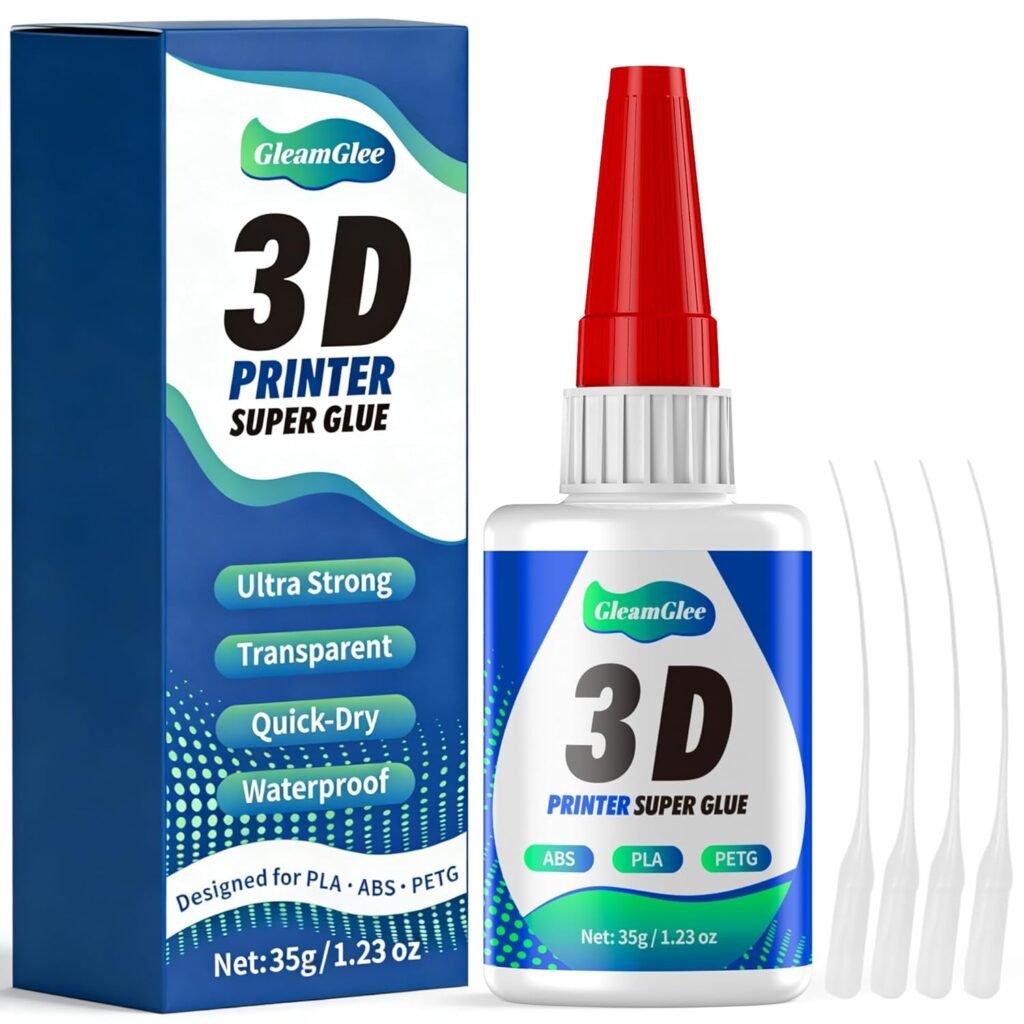
If you want glass repairs that last, this is where GleamGlee fits in. Whether you are a consumer fixing household glass, an Amazon seller building a private-label product, or a brand looking for custom adhesive solutions, GleamGlee offers professional-grade glass glue, consistent manufacturing, and flexible customization. Reach out to order ready-to-use products, request samples, or discuss custom formulations tailored to your specific glass repair needs.
Share:
Table of Contents
Here, creating your adhesives glue & removal cleaner collection is no longer a barrier—it’s a collaborative journey where GleamGlee helps brands and businesses transform their vision into durable, certified, and market-ready solutions.
Partner with GleamGlee
Join hundreds of global partners who trust GleamGlee for adhesives and cleaners that combine innovation, compliance, and speed. Our vertically integrated system—from R&D to warehouse—guarantees consistent performance and reliable delivery.
Whether you’re sourcing FBA-ready stock or developing your own formula, our team provides unmatched technical support and responsive service.