Skip to content
Eco-Friendly Leather Super Glue Options : A Detailed Guide
Your trusted adhesives glue & cleaner manufacturer

A small leather repair often starts with a very ordinary moment. A handbag strap begins to lift at the edge. A favorite pair of boots opens slightly near the upper. A sofa corner peels after years of sitting, rubbing, and cleaning. Many people do not want to throw these items away, but they also do not want a harsh-smelling glue that leaves a white stain, turns stiff, or ruins the surface. This is why eco-friendly leather super glue has become more than a niche repair product. It answers a very practical question: how can people repair leather cleanly, safely, and without creating more waste?
The best eco-friendly leather super glue should bond leather strongly, dry clear, apply neatly, and help extend the life of shoes, bags, sofas, jackets, wallets, and car interiors. A good option should also reduce mess through controlled application, work in small amounts, and offer clear safety and material guidance before use.
The real value is not only in the glue itself. It is in what the glue prevents. One repaired shoe means one less replacement. One saved handbag means less waste and less money spent. One sofa seam fixed early can prevent a larger tear later. For daily users, the right glue is a small tool that protects useful items. For sellers and product developers, it is a category with strong repeat demand because leather damage is common, visible, and often emotionally tied to items people still want to keep.
What Is Eco-Friendly Leather Super Glue?
Eco-friendly leather super glue is a repair adhesive made for leather and leather-like materials with a stronger focus on cleaner use, reduced waste, controlled application, and longer product life. It is not only about whether the formula sounds “green.” In real repair work, the more important question is whether the glue helps a shoe, bag, sofa, jacket, wallet, or car-seat trim stay usable for longer without leaving a harsh smell, obvious glue mark, or stiff repair area.
A practical eco-friendly leather super glue should do several things at the same time. It should bond quickly enough for small repairs, dry clear enough for visible surfaces, apply in a thin and controlled line, and avoid unnecessary mess. It should also provide clear use instructions, material guidance, storage advice, and safety warnings. These details matter because most leather repair mistakes happen at home, not in a workshop. Too much glue, wet leather, oily surfaces, or skipped testing can turn a small repair into a visible problem.
The eco value of leather super glue often comes from repair efficiency. A 1 cm lifted shoe edge, a cracked handbag corner, or a peeling sofa seam may look minor, but if ignored, the damage can spread. Repairing early can prevent replacement, reduce product waste, and save money. A small tube that can handle several repairs becomes more useful when it stays usable after opening, includes fine nozzles, and works across leather, vinyl, fabric, rubber, and plastic.
What Is Eco-Friendly Leather Super Glue?
Eco-friendly leather super glue is a fast-bonding adhesive designed for small leather repairs while reducing waste through precise, durable repair. It is commonly used on finished leather, faux leather, vinyl leather, leather trims, shoe uppers, handbag corners, wallet seams, belt edges, sofa cracks, car-seat trims, and DIY leather crafts. The key difference is not only the word “eco.” The real difference is whether the glue helps repair an item cleanly with less excess product and fewer failed attempts.
For leather repair, a thin glue line is usually better than a thick layer. A thick layer may harden, show through the surface, or create a stiff raised edge. A good eco-friendly leather super glue should let the user apply a narrow amount exactly where the surfaces meet. This is why fine-tip nozzles matter. They reduce glue overflow, help reach small cracks, and make the repair less wasteful.
| Feature | Why It Matters in Leather Repair |
|---|---|
| Clear drying | Reduces visible glue marks on shoes, bags, sofas, and seats |
| Low odor | More comfortable for indoor repair |
| Thin application | Helps avoid stiff spots and glue ridges |
| Precision nozzle | Reduces waste and improves control |
| Multi-material bonding | Useful for leather, vinyl, fabric, rubber, and plastic parts |
| Strong small-area bond | Helps stop early damage from spreading |
Is Eco-Friendly Leather Super Glue Safe?
Eco-friendly leather super glue can be suitable for home repair when it is used carefully, but it still needs proper handling. Low odor does not mean the glue should be used without ventilation. Clear drying does not mean it can be applied to every leather surface without testing. A safe repair starts with a hidden-area test, clean surface preparation, careful application, and enough curing time before use.
Leather surfaces vary a lot. Finished leather is usually more resistant to liquid than suede or nubuck. Faux leather may have a coating that reacts differently from genuine leather. Car interiors may contain vinyl blends. Handbags may include leather, synthetic backing, fabric lining, and painted edges. Because of these differences, the same glue may behave differently on different items. Testing a tiny hidden spot helps check color change, shine, stiffness, and absorption before repairing the visible area.
Safe use also includes storage. The cap should be closed tightly after use, the nozzle should be wiped clean, and the tube should be kept away from heat, direct sunlight, and children. If the nozzle clogs, forcing the tube can cause sudden overflow. Extra precision nozzles can reduce this problem and make the glue easier to reuse for later repairs.
| Safety Check | Practical Reason |
|---|---|
| Test hidden area first | Helps prevent color or texture damage |
| Use in ventilated space | Reduces discomfort during indoor repair |
| Avoid skin and eyes | Super glue can bond skin quickly |
| Keep leather dry | Moisture can affect repair quality |
| Close cap tightly | Helps prevent drying and waste |
| Keep away from children | Prevents accidental contact or misuse |
Why Choose Eco-Friendly Leather Super Glue?
Eco-friendly leather super glue is worth choosing when the goal is to repair useful items instead of replacing them too quickly. Leather goods often fail in small areas first: a shoe upper lifts, a sofa edge peels, a wallet corner opens, a belt layer separates, or a handbag strap starts to crack. These repairs do not always need a professional service. A controlled, clear-drying leather glue can often solve the problem before it becomes larger.
The cost difference is also easy to understand. A small leather glue tube can repair several minor issues, while replacing a pair of boots, a handbag, a sofa cushion, or a car-seat trim can cost much more. Even when the item is not expensive, repair still has value because it saves time, avoids waste, and keeps familiar items in use. This is especially true for broken-in shoes, favorite bags, daily wallets, and furniture that still looks good except for one damaged area.
Eco-friendly leather super glue also fits modern repair habits. More people want practical products that help maintain what they already own. They want glue that is easy to apply, does not make a mess, and gives a clean result. For a brand like GleamGlee, the product value is strongest when the glue combines fast setting, crystal-clear drying, multi-material bonding, and precision nozzles. These features turn a small adhesive tube into a daily repair tool for shoes, bags, sofas, car interiors, accessories, and craft projects.
Which Eco-Friendly Leather Super Glue Works?
The eco-friendly leather super glue that works best is the one that matches the repair job, not simply the one with the strongest claim on the label. Leather is flexible, coated, textured, and often exposed to friction, heat, moisture, and body oil. A good glue should bond quickly, dry clear, stay neat, and avoid making the repaired area hard or ugly.
For small leather repairs, the most useful features are fast grab, transparent drying, fine control, and enough flexibility for daily movement. A handbag corner needs a clean finish. A shoe upper needs bending resistance. A sofa edge needs smooth pressure and low mess. A car-seat trim needs clean drying and better comfort during indoor use. The right glue depends on where the leather is damaged and how much stress that area receives after repair.
Eco-friendly leather super glue should also reduce waste in a practical way. A tube that lets out too much glue can ruin a visible repair and waste product. A glue that fails after one day creates more work and more waste. A better option uses a thin layer, bonds the surfaces closely, and helps extend the life of the item. This is why clear instructions, fine-tip nozzles, material compatibility, and correct curing time are as important as formula strength.
| Repair Area | Most Important Glue Feature | Why It Matters |
|---|---|---|
| Shoe upper | Flexible hold | The area bends every time the shoe is worn |
| Handbag corner | Clear drying | The repair is visible and close to the eye |
| Sofa peeling edge | Controlled flow | Too much glue can stain the surface |
| Car-seat trim | Low odor and clean finish | Repairs happen in enclosed spaces |
| Wallet seam | Fast grab | Small edges need quick alignment |
| Belt layer | Thin bond line | Thick glue can feel stiff and crack |
| Jacket tear | Soft repair feel | The leather folds during movement |
Which Eco-Friendly Leather Super Glue Bonds Fast?
Eco-friendly leather super glue should bond fast enough to hold small edges before they shift. This is important for repairs such as wallet corners, handbag trims, loose shoe uppers, belt layers, leather glove seams, and jacket panels. These areas are often narrow, curved, or hard to clamp. If the glue takes too long to grab, the material may slide out of position and dry unevenly.
Fast bonding does not mean careless bonding. A few extra seconds of working time can actually make the repair cleaner because the leather can be aligned before the bond locks in. The best result comes from applying a thin layer, pressing the surfaces together, and holding steady pressure until the edge stays in place. A fast initial bond is useful, but the repaired item should still rest before normal use.
For footwear, this point is especially important. A shoe upper may look fixed after a quick press, but walking too soon can weaken the repair. A fast bond helps with positioning; curing time helps with durability.
| Fast-Bond Repair | Better Method |
|---|---|
| Loose wallet edge | Apply tiny dots, press flat, avoid overfilling |
| Handbag trim | Add a thin line under the trim, then press evenly |
| Shoe upper gap | Apply glue inside the opening, hold shape firmly |
| Belt split | Press the layers flat and keep them aligned |
| Jacket seam | Keep the leather relaxed and avoid stretching early |
Which Eco-Friendly Leather Super Glue Dries Clear?
Clear drying is one of the strongest signs of a useful leather repair glue. Leather goods are usually repaired because they are still worth using, so appearance matters. A glue that leaves a white film, yellow edge, cloudy patch, or shiny lump can make the item look more damaged even if the bond is strong. For visible repairs, clear drying is often as important as strength.
This matters across many leather colors. On black leather, cloudy residue can look gray. On brown leather, yellow glue can look dirty. On white or beige leather, thick glue marks can stand out quickly. On colored leather, an uneven gloss can catch the light and expose the repair line. A transparent finish helps reduce these problems, especially when the glue is applied thinly and kept inside the repair area.
Clear drying is most useful for handbags, wallets, shoes, sofas, car seats, belts, watch straps, and jackets. It is also helpful for mixed-material items where leather meets fabric, rubber, plastic, or vinyl. The glue should repair the item without drawing attention to itself.
| Leather Color or Finish | Main Risk | Why Clear Drying Helps |
|---|---|---|
| Black leather | Gray or cloudy residue | Keeps the repair less noticeable |
| Brown leather | Yellowing or dark glue lines | Blends better with natural tones |
| White leather | Visible stains | Reduces obvious repair marks |
| Smooth leather | Shiny glue ridges | Thin clear glue looks cleaner |
| Faux leather | Surface marks | Cleaner finish improves appearance |
| Car-seat leather | Visible edge lines | Helps interior repairs look neater |
Which Eco-Friendly Leather Super Glue Stays Flexible?
Eco-friendly leather super glue should not make the repaired area overly stiff. Leather is used because it moves, bends, folds, and feels comfortable. If a repair becomes too hard, it may crack beside the glue line or feel unpleasant during use. This is a common issue on shoes, sofas, jackets, belts, gloves, and car seats.
Flexibility depends on both the glue and the repair method. Even a suitable adhesive can become stiff if too much is applied. A thick bead of glue creates a hard ridge. A thin layer allows the leather surfaces to stay closer together and move more naturally. For this reason, the correct amount of glue is often the difference between a clean repair and a bulky repair.
Different leather items need different flexibility levels. A wallet corner has low movement. A shoe upper bends constantly. A sofa seat compresses under body weight. A jacket sleeve folds again and again. A car seat faces stretching, heat, and friction. Repairs in these moving areas should be thin, well-pressed, and fully cured before use.
| Item | Movement Level | Repair Advice |
|---|---|---|
| Wallet corner | Low | Small glue dots are usually enough |
| Handbag trim | Medium | Keep the layer thin and press evenly |
| Shoe upper | High | Allow longer curing before walking |
| Sofa seat edge | High | Use backing support for larger tears |
| Jacket sleeve | High | Avoid thick glue that stiffens folds |
| Car seat | High | Let the repair cure before sitting pressure |
Which Eco-Friendly Leather Super Glue Matches Materials?
The best eco-friendly leather super glue should match the actual materials in the item. Many leather goods are not made from leather alone. Shoes may include leather, rubber, fabric lining, foam, and plastic trim. Bags may include leather panels, synthetic backing, fabric lining, painted edges, and metal hardware. Car interiors may combine leather, vinyl, plastic, and coated surfaces.
This is why multi-material bonding is important. A glue that works only on one surface may not solve the real repair. For example, a leather shoe upper may need to bond to fabric lining or rubber trim. A handbag strap may have leather on the outside and synthetic support inside. A car-seat detail may be leather-like vinyl rather than genuine leather. A versatile adhesive gives more room for practical repair.
Still, matching materials does not remove the need for testing. Suede, nubuck, unfinished leather, luxury dyed leather, and soft absorbent surfaces can react differently from smooth finished leather. A hidden-area test helps check whether the glue darkens, stiffens, or changes the surface. Good repair starts with knowing what the material is, not guessing.
| Material Type | Glue Suitability | Important Note |
|---|---|---|
| Finished leather | Good | Test for shine or color change |
| Faux leather | Good | Check coating stability first |
| Vinyl | Good | Useful for car interiors and furniture |
| Fabric lining | Good | Apply lightly to avoid soaking |
| Rubber trim | Good | Clean dust and oil before bonding |
| Plastic parts | Good | Rough or smooth plastic may behave differently |
| Suede or nubuck | Use caution | High risk of staining or darkening |
| Crumbling bonded leather | Limited | Glue may not stop surface breakdown |
What Can Eco-Friendly Leather Super Glue Fix?
Eco-friendly leather super glue can fix many small leather and leather-like material problems, especially when the damaged parts still fit back together. It works well for lifted edges, peeling trims, loose seams, cracked corners, small tears, separated layers, and narrow gaps on shoes, bags, sofas, jackets, wallets, belts, gloves, car interiors, and DIY leather goods.
The best results usually come from early repair. A 1–2 cm lifted shoe upper is much easier to bond than a fully separated sole. A small sofa edge peel is easier to control than a large cracked panel. A handbag strap layer that has just started opening can often be fixed neatly, while a strap that has lost material or become powdery may need stitching, patching, or replacement. Glue works best when it can bring two stable surfaces back together.
Eco-friendly leather super glue should be seen as a precision repair tool, not a full leather restoration system. It can bond, seal, reinforce, and reattach. It cannot fully rebuild missing leather grain, recolor faded areas, or stop badly deteriorated bonded leather from continuing to flake. For clean, small repairs, it can save money and extend product life. For larger structural damage, it may need to be combined with patches, filler, stitching, or professional repair.
| Repair Item | Common Damage | Glue Suitability | Best Repair Method |
|---|---|---|---|
| Leather shoes | Loose upper, trim lift, cracked panel | High | Thin bead inside the gap, press firmly |
| Handbags | Strap layer, corner peel, lining edge | High | Apply under lifted edge, avoid surface overflow |
| Wallets | Open seam, worn corner, split layer | High | Small dots or thin line, press flat |
| Sofas | Small rip, peeling edge, loose upholstery | Medium to high | Clean oils first, use backing patch for tears |
| Car seats | Trim lift, small tear, vinyl edge | Medium to high | Low amount, tape in place, cure before use |
| Jackets | Seam split, patch edge, leather trim | Medium | Keep leather relaxed, avoid thick glue |
| Belts | Layer separation, cracked end | Medium | Press evenly, avoid bending too soon |
| Suede/Nubuck | Surface tear or loose edge | Low to cautious | Hidden test required; stain risk is higher |
Can Eco-Friendly Leather Super Glue Fix Shoes?
Eco-friendly leather super glue can fix many shoe repairs, especially loose leather uppers, peeling side panels, cracked trims, lifted insoles, loose linings, and small tears near stitched areas. These problems often appear before the shoe is truly worn out. A neat glue repair can keep boots, sneakers, dress shoes, golf shoes, cycling shoes, and work shoes usable for longer.
The most suitable shoe repairs are small bonding areas where the leather can be pressed back into its original position. For example, when the upper begins to separate from a side trim, the glue should be placed inside the opening instead of spread across the outside. The area should be cleaned first because shoes collect dust, sweat, polish, rainwater, and road dirt. Even a strong glue may fail if it is applied over dirty or oily material.
Sole repair needs more caution. If only a small leather edge is lifting, eco-friendly leather super glue can help. If the full outsole has separated, a dedicated shoe glue with stronger flexibility and larger-surface bonding may be better. Shoes bend thousands of times during normal wear, so repaired areas should be left to cure before walking. For high-stress repairs, 12–24 hours of rest is usually safer than wearing the shoes immediately after the glue feels dry.
| Shoe Area | Can It Be Fixed? | Repair Note |
|---|---|---|
| Leather upper | Yes | Best for small splits and lifted panels |
| Shoe trim | Yes | Apply thinly to avoid visible glue marks |
| Insole or lining | Yes | Use light glue so the repair does not feel hard |
| Dress shoe edge | Yes | Clear drying is important for appearance |
| Work boot panel | Yes, if damage is small | Clean dirt and let cure longer |
| Full outsole separation | Sometimes limited | Shoe-specific adhesive may be stronger |
| Wet leather shoe | Not immediately | Dry fully before repair |
Can Eco-Friendly Leather Super Glue Fix Bags?
Eco-friendly leather super glue is very useful for handbags, purses, backpacks, travel bags, wallets, belts, watch straps, and leather gloves. Bag and accessory repairs often involve small visible areas, so neat application matters as much as bond strength. A fine-tip nozzle is helpful because the glue can be placed under the lifted material rather than smeared across the leather surface.
Common bag repairs include cracked corners, lifting leather trim, split strap layers, loose lining edges, peeling decorative patches, and worn wallet seams. These repairs are usually narrow and controlled, making them a good match for super glue. The leather should be dry and clean before bonding. If the bag has been treated with polish, conditioner, wax, or waterproofing spray, residue can weaken the repair unless the surface is cleaned carefully.
High-value bags need extra testing. Smooth leather, patent leather, painted edges, faux leather, and luxury dyed leather may react differently. A hidden test under the strap, inside a flap, or near an inner seam can show whether the glue changes color or shine. For straps that carry weight, glue alone may not be enough if the stitching has failed. In that case, glue can help hold layers together, but stitching or reinforcement may be needed for long-term strength.
| Bag or Accessory | Common Repair | Best Glue Approach |
|---|---|---|
| Handbag corner | Peeling or cracked edge | Tiny amount under the lifted area |
| Purse strap | Split leather layer | Press flat and cure before carrying weight |
| Backpack trim | Loose leather detail | Clean dust and apply a thin line |
| Wallet seam | Open edge | Use small dots, avoid hard ridges |
| Belt end | Layer separation | Press evenly, avoid bending early |
| Watch strap | Small split | Use very little glue to keep flexibility |
| Leather gloves | Loose seam | Keep glove flat while curing |
Can Eco-Friendly Leather Super Glue Fix Sofas?
Eco-friendly leather super glue can fix small sofa rips, peeling edges, loose upholstery, cracked corners, ottoman seams, dining chair pads, and headboard trims. Furniture repair is often valuable because replacing a sofa, chair, or headboard is expensive and inconvenient. A small repair done early can prevent a larger tear from spreading across the seating area.
Sofa repairs require careful surface preparation. Leather furniture often holds body oil, dust, cleaning spray, conditioner, and sweat. These residues may sit exactly where the glue needs to bond. The repair area should be wiped gently and dried fully before applying glue. For peeling edges, the glue should go underneath the lifted leather, not across the top. For small tears, a backing patch can spread pressure and make the repair stronger.
Large peeling areas need realistic expectations. Bonded leather that is flaking in wide sheets may continue to break down because the surface layer itself is failing. In this situation, glue may hold one loose section temporarily but cannot restore the entire material. For genuine leather or stable faux leather with a small tear, the repair potential is much better. After bonding, the area should not be sat on, stretched, or rubbed until it has rested long enough.
| Furniture Area | Repair Difficulty | Useful Tip |
|---|---|---|
| Sofa arm edge | Medium | Clean body oil before gluing |
| Seat cushion tear | Medium to hard | Use backing patch if possible |
| Ottoman corner | Medium | Hold shape with tape or light weight |
| Dining chair pad | Medium | Press upholstery flat while curing |
| Headboard trim | Easy to medium | Use thin glue to avoid surface marks |
| Large bonded leather peel | Hard | Glue may not stop ongoing flaking |
| Recliner seam | Medium to hard | Avoid movement during cure time |
Can Eco-Friendly Leather Super Glue Fix Car Seats?
Eco-friendly leather super glue can repair small car-seat tears, loose leather trims, dashboard leather details, steering wheel cover edges, gear shift covers, motorcycle seats, and interior vinyl panels. Vehicle interiors are a strong use case because small damage can look very obvious, and professional repair may be costly for minor issues.
Car-seat repair needs clean application and enough curing time. Seats face pressure, friction, heat, sunlight, and repeated movement. A repair that feels secure after a few minutes may still fail if someone sits on it too soon. The damaged edge should be cleaned, glued with a thin layer, pressed into place, and left undisturbed. Painter’s tape can help hold a trim edge, but it should be tested first to avoid lifting weak finishes.
Heat is another factor. A car parked in direct sunlight can become much hotter than a normal room. Repairs should be allowed to cure before high heat exposure. If the tear is on a seat area that stretches when sitting, a backing patch may improve strength. For steering wheel covers, gear shift areas, and dashboard trims, only a small amount should be used because excess glue can create hard spots or visible shine.
| Car Interior Part | Common Damage | Repair Advice |
|---|---|---|
| Car seat side bolster | Small tear or lifted edge | Use backing support for stress areas |
| Seat trim | Loose leather or vinyl edge | Tape gently while curing |
| Steering wheel cover | Edge lift | Apply very thinly to avoid hard grip spots |
| Gear shift cover | Loose seam | Press evenly and avoid early use |
| Dashboard leather trim | Peeling edge | Keep glue hidden under the trim |
| Motorcycle seat | Small split | Cure fully before riding |
| Luxury interior panel | Visible trim lift | Test hidden area first |

How to Use Eco-Friendly Leather Super Glue?
Eco-friendly leather super glue should be used in a thin, controlled layer on clean, dry leather. The best repair process is simple: inspect the damage, clean the surface, test a hidden area, apply a small amount of glue, press the repair firmly, and allow enough curing time before normal use. Most leather glue failures come from dirty surfaces, too much glue, poor alignment, or using the repaired item too soon.
Leather repair is different from bonding hard plastic or paper. Leather bends, stretches, absorbs oils, and often has a coated or dyed finish. A shoe upper moves with every step. A sofa edge takes pressure from sitting. A handbag strap carries weight. A car seat faces heat, friction, and body movement. This is why a neat repair is not only about applying glue. It is about placing the glue exactly where the two surfaces meet and keeping that area still until the bond has formed properly.
A good repair should look clean and feel natural after drying. Thick glue can create hard spots, shiny marks, raised edges, or visible residue. A thin glue line is usually enough for small cracks, lifted edges, loose trims, wallet seams, handbag corners, and peeling leather panels. For larger tears or high-stress areas, a backing patch, longer cure time, or extra pressure support may be needed. The goal is not to cover the damage with glue, but to bring the leather back into position with as little visible adhesive as possible.
| Repair Step | Main Purpose | Practical Time | Mistake to Avoid |
|---|---|---|---|
| Inspect damage | Check if edges can meet | 1–2 minutes | Gluing missing material without support |
| Clean surface | Remove oil, dust, wax, conditioner | 2–5 minutes | Applying glue over residue |
| Hidden test | Check color, shine, texture | 5–10 minutes | Testing after visible repair |
| Apply glue | Create a thin bond line | Under 1 minute | Squeezing too much glue |
| Press repair | Keep edges aligned | 30–120 seconds | Letting edges shift |
| Rest and cure | Build stronger hold | Several hours to 24 hours | Using item immediately |
Step 1: Clean Leather Before Eco-Friendly Leather Super Glue
Clean leather is the base of a strong repair. Leather surfaces often carry dust, hand oil, sweat, shoe polish, leather conditioner, silicone spray, wax, road dirt, food grease, or cleaning residue. These layers can sit between the glue and the leather. If eco-friendly leather super glue bonds to residue instead of the real surface, the repair may lift after a few bends or days of use.
Start by wiping the damaged area with a dry microfiber cloth. For shoes, remove grit from seams and edges. For sofas and car seats, pay extra attention to armrests, seat edges, side bolsters, and steering wheel covers because these areas collect body oil. If the surface feels greasy, use a slightly damp cloth, then let the leather dry fully. Do not soak the leather. Wet leather can darken, soften, or weaken the repair area.
Trim only loose fibers that stop the surface from lying flat. Do not pull peeling leather aggressively because it may enlarge the damage. For a narrow crack or lifted panel, use a cotton swab or toothpick to remove dust from inside the gap. Before moving to glue, the area should be dry, stable, and able to close naturally.
| Leather Item | Common Surface Problem | Cleaning Tip |
|---|---|---|
| Shoes | Dust, sweat, polish, road dirt | Brush or wipe seams before gluing |
| Handbags | Hand oil, wax, conditioner | Clean corners and strap edges lightly |
| Sofas | Body oil, dust, cleaner residue | Wipe and dry before applying glue |
| Car seats | Sweat, heat residue, vinyl cleaner | Clean trim edges and side bolsters |
| Wallets | Hand oil, pocket dust | Wipe seams and corners carefully |
| Jackets | Rain, conditioner, fabric lint | Dry fully before repair |
Step 2: Apply Thin Eco-Friendly Leather Super Glue
A thin layer of eco-friendly leather super glue gives a cleaner repair than a thick bead. Super glue is designed to bond close-fitting surfaces. It is not meant to fill large empty spaces like putty. Too much glue can squeeze out, dry into a shiny line, stiffen the leather, or make the repaired area feel raised. On visible leather, excess glue is often more noticeable than the original damage.
Use the nozzle to place glue inside the damaged area, not across the outer surface. For a handbag corner, lift the edge slightly and apply a tiny line underneath. For a shoe upper, guide the nozzle into the opening and run a thin bead along the bonding surface. For a wallet seam, use small dots instead of flooding the edge. For a sofa peel, work in short sections so each part can be pressed flat before the glue spreads.
Control is more important than speed. Squeeze the tube gently. If the glue starts flowing too fast, stop and wipe the nozzle before continuing. For very small cracks, put a small drop on a toothpick first, then transfer it into the crack. This reduces the chance of overflow and helps keep the repair flexible.
| Repair Area | Better Glue Amount | Application Method |
|---|---|---|
| Wallet corner | 1–2 tiny dots | Toothpick or fine nozzle |
| Bag strap layer | Thin 1–2 cm line | Apply between layers |
| Shoe upper | Thin bead inside gap | Press from both sides |
| Sofa peeling edge | Short thin sections | Press each section flat |
| Car-seat trim | Narrow line under trim | Tape gently while curing |
| Jacket seam | Small dots or thin line | Keep leather relaxed |
Step 3: Press Eco-Friendly Leather Super Glue Repair
Pressing keeps the leather aligned while the glue forms its first hold. The goal is even contact, not heavy force. If the leather shifts during pressing, the repair may dry crooked, raised, or uneven. This is common on curved repairs such as shoe uppers, handbag straps, sofa corners, steering wheel covers, and motorcycle seats.
After applying eco-friendly leather super glue, bring the edges together carefully. Check that seams, trims, corners, or panels sit in their natural position. Hold steady pressure for the first bond. For small items, fingers can work, but gloves, wax paper, plastic film, or a small flat tool can help avoid skin contact. For shoes, a shoe tree or soft paper stuffing can keep the shape while the upper is pressed. For sofa edges, a light weight or tape can stop curling. For car-seat trim, painter’s tape can hold the edge, but it should be tested first on fragile finishes.
Do not press so hard that all glue is forced out. A little pressure brings the surfaces together; too much pressure can push the adhesive away from the bond line. If a small amount appears at the edge, remove it carefully before it hardens. Avoid wide wiping motions because they can smear glue into the leather grain.
| Item | Holding Method | Repair Benefit |
|---|---|---|
| Wallet | Small clip with soft protection | Keeps seam closed |
| Handbag strap | Rubber band or light clamp | Holds layers evenly |
| Shoe upper | Shoe tree or soft stuffing | Maintains shape |
| Sofa edge | Tape or light weight | Prevents curling |
| Car-seat trim | Painter’s tape | Holds edge during curing |
| Jacket seam | Flat surface and light weight | Prevents wrinkles |
Step 4: Cure Eco-Friendly Leather Super Glue Repair
Curing time protects the repair from early failure. Eco-friendly leather super glue may hold quickly, but quick hold is not the same as full repair strength. Shoes should not be worn right away. Sofa seats should not be sat on immediately. Car seats should not face pressure, heat, or stretching too soon. Bags should not be loaded with weight before the repaired strap or corner has rested.
The amount of resting time depends on stress level. A wallet corner or decorative trim may need less time than a shoe upper or car-seat side bolster. A shoe bends thousands of times during normal use, so early walking can weaken the bond before it has settled. A sofa or car seat faces body weight and friction, so longer curing is safer. When possible, leave high-stress repairs overnight or up to 24 hours before normal use.
Keep the repaired area dry during curing. Avoid rain, cleaning foam, leather conditioner, heat exposure, or repeated touching. After curing, check the repair gently by looking at the edge and pressing lightly. Do not pull hard as a test. If one small section is still loose, add a tiny amount of glue only to that spot instead of reopening the whole repair.
| Repair Type | Stress Level | Safer Waiting Time |
|---|---|---|
| Wallet edge | Low | Several hours |
| Bag trim | Low to medium | Overnight if possible |
| Belt layer | Medium | 12 hours preferred |
| Shoe upper | High | 12–24 hours preferred |
| Sofa seat edge | High | 12–24 hours preferred |
| Car-seat trim | High | 24 hours preferred |
| Motorcycle seat | High | 24 hours preferred |
What Eco-Friendly Leather Super Glue Tips Help?
The most useful eco-friendly leather super glue tips are not complicated: use less glue, test first, avoid wet leather, and store the tube correctly. These small habits can decide whether a repair looks clean or messy. Leather is visible, flexible, and often expensive, so careful handling matters more than using a large amount of adhesive.
A good repair should leave the leather close to its original feel. The repaired area should not look cloudy, feel hard, or show thick glue around the edge. This is especially important on shoes, handbags, sofas, wallets, belts, jackets, and car seats. Most repair problems come from three simple mistakes: applying too much glue, bonding over oil or moisture, and moving the item before the repair has settled.
Eco-friendly leather super glue also works better when it is treated as a precision repair tool. A fine-tip nozzle, clean surface, small glue amount, steady pressure, and proper storage can reduce waste and improve repair life. The goal is not to cover damage with glue. The goal is to place a thin adhesive layer between two surfaces so the item can stay useful for longer.
| Repair Tip | Why It Matters | What Usually Goes Wrong |
|---|---|---|
| Use less glue | Keeps repair flexible and clean | Thick glue becomes stiff or visible |
| Test first | Helps avoid stains or finish damage | Glue changes color or shine |
| Avoid wet leather | Improves bonding quality | Moisture weakens or darkens repair |
| Store properly | Keeps glue usable longer | Tube dries, clogs, or leaks |
| Press evenly | Keeps surfaces aligned | Edges dry crooked or raised |
| Cure before use | Protects bond strength | Repair opens after early stress |
Use Less Eco-Friendly Leather Super Glue
Using less eco-friendly leather super glue usually gives a stronger-looking and cleaner repair. Leather repairs do not need a thick bead of glue. In most cases, a thin line or a few small dots are enough. Super glue works best when the two surfaces sit close together. If too much glue is added, the adhesive can push the leather apart, squeeze out from the edge, and dry into a hard raised line.
This matters most on visible leather items. A handbag corner, wallet seam, shoe upper, sofa edge, or car-seat trim can look worse if excess glue spreads onto the surface. Thick glue can also reduce flexibility. Shoes, straps, jackets, belts, and seats need to bend during use. A heavy glue layer may create a stiff point that cracks later.
A practical rule is to start with a smaller amount than expected. For a 1–2 cm lifted edge, a narrow line is usually enough. For a tiny corner, one or two small dots may work better than a full squeeze. If the repair still has a loose spot after pressing, add a tiny amount only to that area instead of reopening the full repair.
| Repair Area | Better Glue Amount | Cleaner Method |
|---|---|---|
| Wallet corner | 1–2 small dots | Apply with toothpick or fine tip |
| Handbag edge | Thin short line | Place glue under the lifted layer |
| Shoe upper | Thin bead inside gap | Press from both sides |
| Belt split | Light line between layers | Keep belt straight while curing |
| Sofa peel | Short sections | Press each section before moving on |
| Car-seat trim | Narrow line under trim | Hold with tape during curing |
Test Eco-Friendly Leather Super Glue First
Testing eco-friendly leather super glue before the main repair is one of the safest habits, especially on expensive, dyed, coated, suede, nubuck, or luxury leather. Leather surfaces can react differently even when they look similar. Some finishes absorb liquid quickly. Some become shiny. Some darken. Some faux leather coatings may soften or lift if the wrong amount of glue is used.
A hidden test should be very small. Good spots include the underside of a strap, inside a wallet edge, under a sofa flap, behind a car-seat trim, or inside a shoe tongue area. Apply a tiny dot, let it dry, and check the surface. Look for color change, stiffness, shine, cloudiness, or spreading. If the test spot looks clean after drying, the visible repair is safer to attempt.
Testing also helps understand the glue flow. Some tubes release adhesive faster than expected when first opened. Practicing on scrap material, cardboard, or a hidden area can prevent sudden overflow during the real repair. This is especially useful for narrow cracks and high-visibility items.
| Test Result | What It Means | Next Step |
|---|---|---|
| No color change | Surface may be suitable | Continue with thin application |
| Slight darkening | Leather may absorb glue | Use less glue or avoid visible area |
| Shiny mark | Finish may show residue | Keep glue hidden under the edge |
| Stiff spot | Too much glue or absorbent leather | Apply thinner layer |
| Cloudy residue | Finish may not suit the glue | Try another method or hidden repair only |
| Spreading into leather | Material is absorbent | Avoid suede/nubuck visible repair |
Avoid Wet Eco-Friendly Leather Super Glue Repairs
Eco-friendly leather super glue should be applied only when the repair area is dry. Wet leather, damp seams, rain-soaked shoes, sweaty gear, recently cleaned sofas, or conditioned leather can weaken the bond. Moisture and oily products can sit between the glue and the surface, making the repair less stable. In some cases, wet leather may also darken or stain more easily after glue is applied.
This is common with shoes and car interiors. Shoes may look dry outside but still hold moisture in seams, linings, or upper edges. Car seats may contain sweat, vinyl cleaner, leather conditioner, or heat-softened residue. Sofas and armchairs may carry body oil and cleaning spray. Bags may have waxes, oils, or polishing products near corners and straps. These layers should be removed or allowed to dry before repair.
A simple check is to press the area with a clean white cloth. If the cloth picks up moisture, oil, color, or residue, the surface is not ready. Let the item air dry in a shaded, ventilated area. Do not use high heat on leather because heat can deform, crack, or stiffen the material. For high-stress repairs such as shoe uppers, sofa seats, and car-seat bolsters, waiting longer before gluing is safer than rushing.
| Leather Condition | Repair Risk | Better Action |
|---|---|---|
| Rain-wet shoes | Weak bond, darkened leather | Dry fully before repair |
| Freshly cleaned sofa | Residue under glue | Let surface dry and wipe lightly |
| Conditioned leather | Oil blocks adhesion | Wait and clean repair area |
| Sweaty car seat | Poor bonding at trim edge | Wipe, dry, and ventilate |
| Damp jacket cuff | Glue may spread unevenly | Air dry flat first |
| Suede or nubuck | High stain risk | Test hidden area carefully |
Store Eco-Friendly Leather Super Glue Well
Proper storage helps eco-friendly leather super glue stay useful after the first repair. Many leather glue tubes are used for small repairs over time, not finished in one use. If the nozzle clogs or the cap is not closed tightly, the glue may dry inside the tube. This creates waste and makes the next repair harder.
After each use, wipe the nozzle tip clean before closing the cap. Do not leave wet glue around the opening. Keep the tube upright when possible. Store it away from direct sunlight, high heat, moisture, and children. Avoid leaving it inside a hot car, near a window, or beside heating equipment. Heat and air exposure can shorten the usable life of the glue.
Extra nozzles are helpful because they allow cleaner reuse. If one nozzle becomes clogged, replacing it is easier than forcing the tube and causing sudden overflow. This is why precision nozzle design matters. A glue tube that stays usable across several repairs can fix more items, reduce product waste, and provide better value.
| Storage Habit | Benefit |
|---|---|
| Wipe nozzle after use | Reduces clogging |
| Close cap tightly | Limits air exposure |
| Store upright | Helps prevent leaks |
| Keep away from heat | Protects glue consistency |
| Avoid humid places | Reduces moisture exposure |
| Keep spare nozzles clean | Makes later repairs easier |
| Do not squeeze clogged tube hard | Prevents sudden glue burst |
A well-stored tube is especially useful for households with shoes, bags, furniture, jackets, belts, sports gear, and car interiors. Small leather damage appears at different times. Keeping the glue ready for the next repair helps fix problems early, before a small lifted edge becomes a larger tear.
Is GleamGlee Eco-Friendly Leather Super Glue Good?
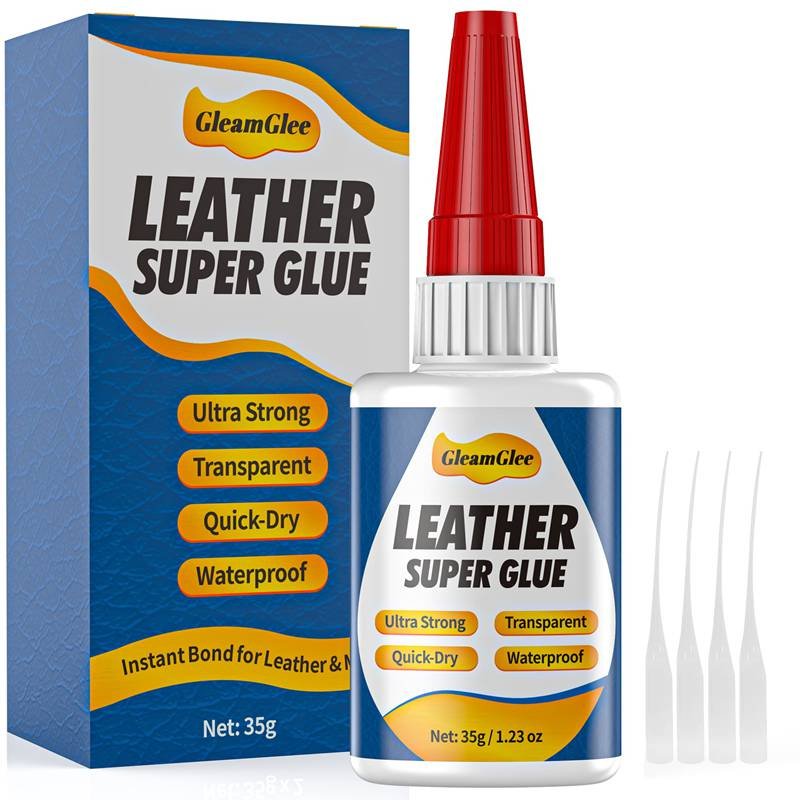
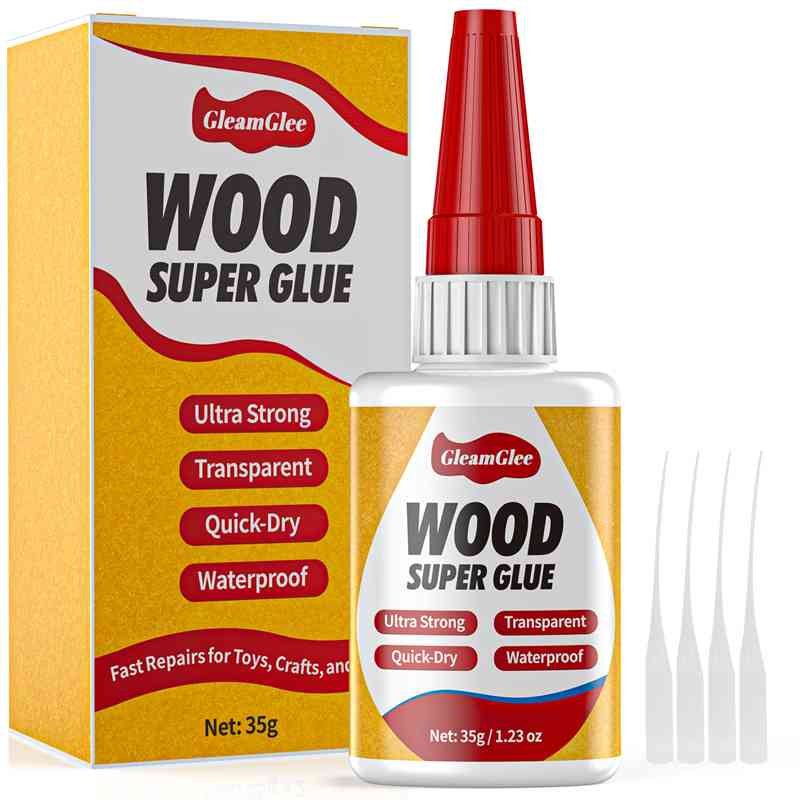
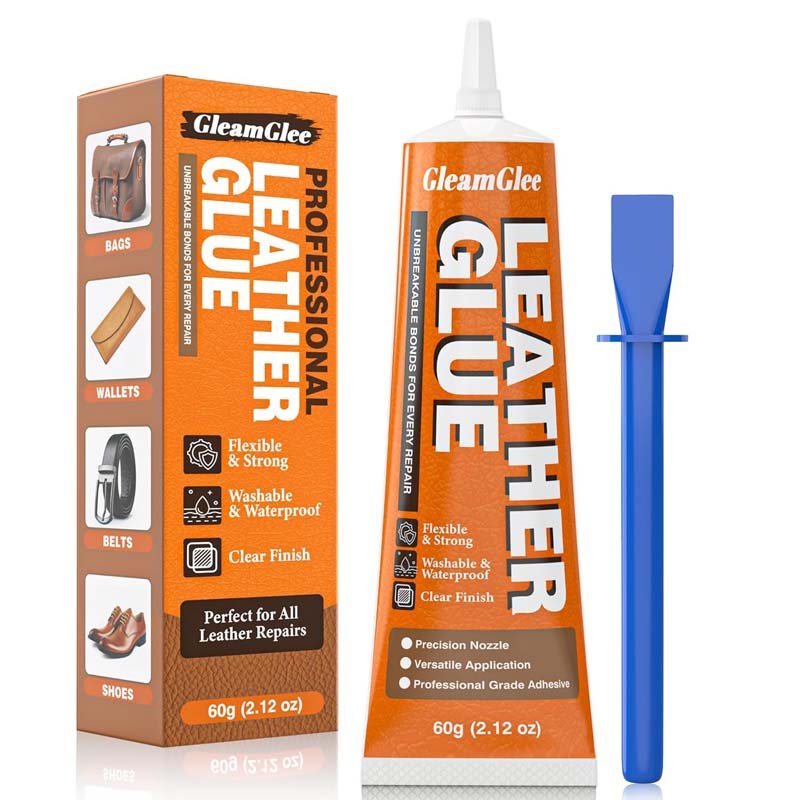
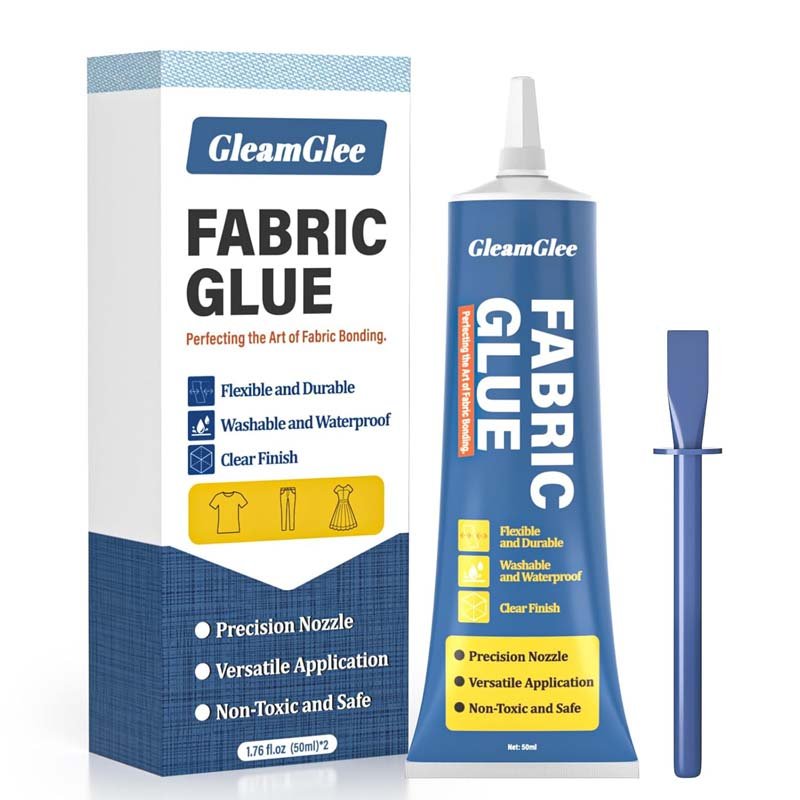
GleamGlee Eco-Friendly Leather Super Glue is a good option for small, visible leather repairs that need a fast bond, clear drying, and controlled application. It is made for torn, cracked, peeling, or lifted leather areas on shoes, handbags, sofas, car seats, jackets, wallets, belts, gloves, and leather crafts. It also bonds vinyl, fabric, rubber, and plastic, which makes it useful for mixed-material repairs found in everyday items.
The strongest value is not only speed. A leather repair glue must also help the repair look clean after drying. Many leather items are expensive, visible, or used daily, so a thick glue mark can be just as frustrating as the original damage. GleamGlee focuses on a crystal-clear finish and fine-tip application, helping place a small amount of glue inside cracks, seams, corners, and narrow gaps instead of spreading it across the surface.
GleamGlee is also suitable for brands, distributors, Amazon sellers, and private-label projects because the company has adhesive R&D, packaging design, label printing, automated filling, raw material support, and global shipping experience. With 25+ chemists and engineers, 18+ designers, 4 integrated factories, annual capacity above 12 million pieces, and compliance support for CLP, REACH, UKCA, GHS, and SDS needs, GleamGlee can support both ready-made leather glue orders and custom eco-positioned leather glue projects.
| GleamGlee Leather Glue Point | What It Means in Real Repair |
|---|---|
| Fast setting | Helps hold small tears, trims, and lifted edges quickly |
| Crystal-clear drying | Reduces visible glue marks on shoes, bags, sofas, and seats |
| Multi-material bonding | Works on leather, vinyl, fabric, rubber, and plastic |
| 4 fine-tip nozzles per tube | Helps control glue amount in small cracks and seams |
| 8 nozzles in 2-pack | Better for repeated repairs and less clogging trouble |
| Useful on many items | Shoes, handbags, sofas, car interiors, jackets, wallets, belts |
| Manufacturer support | Formula, packaging, labels, samples, and bulk production |
| Low MOQ customization | Custom projects can start from 200 units |
Is GleamGlee Eco-Friendly Leather Super Glue Clear?
GleamGlee Eco-Friendly Leather Super Glue dries crystal clear, which is important for leather repair because most repaired areas are easy to see. Shoes, handbags, wallets, belts, sofas, jackets, and car seats are not hidden objects. If the glue dries white, yellow, cloudy, or thick, the repair may still look unfinished even when the bond is strong. A clear finish helps the repaired area blend better with black, brown, tan, beige, white, red, and other colored leather surfaces.
Clear drying is especially useful for small repairs such as handbag corners, wallet seams, leather shoe uppers, sofa peeling edges, and car-seat trims. These areas usually need a thin line of adhesive placed under the lifted leather, not a heavy layer on top. The cleaner the glue line, the less visible the repair becomes after drying.
| Repair Area | Why Clear Drying Matters |
|---|---|
| Black leather shoes | Avoids gray or dusty-looking residue |
| Brown handbags | Reduces yellow or uneven repair marks |
| White sneakers | Helps avoid obvious glue staining |
| Sofa edges | Keeps living-room repairs less noticeable |
| Car seats | Cleaner finish in high-visibility interiors |
| Wallet corners | Prevents thick glue lines near hand contact |
For product images and listings, this feature should be shown with close-up repair scenes. A before-and-after image of a lifted handbag corner or peeling shoe upper can explain “clear drying” better than a long sentence. For private-label projects, this feature can also become a front-label selling point because it answers a common concern before purchase.
Is GleamGlee Eco-Friendly Leather Super Glue Precise?
GleamGlee Eco-Friendly Leather Super Glue includes precision nozzles for cleaner control. Each tube comes with 4 fine-tip nozzles, and a 2-pack includes 8 nozzles. This is a practical design detail because leather repairs are often narrow, curved, or close to visible stitching. A wide glue opening can release too much adhesive at once, while a fine nozzle helps place glue directly inside the repair gap.
Precision matters on items such as wallets, handbag straps, watch bands, shoe uppers, car-seat trims, sofa seams, and jacket edges. These areas do not need a large amount of glue. They need a thin line in the right position. Too much glue can squeeze out, dry into a hard ridge, or leave a shiny mark on smooth leather.
| Repair Situation | How the Fine Nozzle Helps |
|---|---|
| Small cracks | Places glue inside the crack without flooding |
| Handbag corners | Helps avoid glue marks on the outer surface |
| Shoe uppers | Reaches into narrow openings |
| Sofa peeling edges | Allows section-by-section repair |
| Wallet seams | Helps apply small dots instead of thick lines |
| Car-seat trims | Keeps glue hidden under the lifted edge |
Extra nozzles also improve reuse. Leather glue is often used for several small repairs over weeks or months. If one nozzle clogs after use, a spare nozzle keeps the tube usable. This helps reduce waste and improves the product experience, especially for households with shoes, bags, furniture, jackets, belts, and car interiors that may need occasional repair.
Is GleamGlee Eco-Friendly Leather Super Glue Versatile?
GleamGlee Eco-Friendly Leather Super Glue is versatile because it is not limited to genuine leather. It can bond leather, vinyl, fabric, rubber, and plastic, which matches the way many daily-use items are actually made. A shoe may include leather uppers, rubber trim, fabric lining, foam, and plastic details. A handbag may combine leather panels, fabric lining, synthetic backing, and coated edges. A car interior may include leather, vinyl, plastic trim, and stitched panels.
This multi-material bonding makes one tube useful across many repair scenes. It can help fix loose shoe uppers, cracked handbag corners, peeling sofa edges, belt layers, wallet seams, jacket trims, leather gloves, motorcycle seats, pet accessories, cosplay pieces, and DIY leather goods. For many homes, one versatile glue is easier than storing several separate adhesives for every material.
| Item Type | Common Repair |
|---|---|
| Shoes and boots | Uppers, trims, insoles, linings, small leather splits |
| Bags and wallets | Corners, straps, seams, linings, worn edges |
| Furniture | Sofa peel, ottoman corners, chair pads, headboard trims |
| Car interiors | Seat trims, steering wheel cover edges, dashboard details |
| Clothing | Jackets, coats, leather pants, costumes, motorcycle gear |
| Crafts | Keychains, bookmarks, bracelets, pet collars, leather patches |
For online sales, this versatility also supports stronger product positioning. The same glue can appear in shoe repair content, handbag repair content, sofa repair content, car interior repair content, and craft repair content without feeling forced. For custom brands, this means one leather glue SKU can cover a wider set of keywords, images, and use cases.
Is GleamGlee Eco-Friendly Leather Super Glue Reliable?
GleamGlee Eco-Friendly Leather Super Glue is backed by a manufacturing system built for adhesive and cleaner products, not by a single short-term product idea. GleamGlee belongs to LingWang (Dongguan) Technology Co., Ltd., located in Dongguan, Guangdong, China. The company covers formula development, packaging design, production, label printing, raw materials, quality control, and international sales support.
This matters because leather glue performance must stay consistent from sample to bulk order. A good first sample is not enough for Amazon sellers, distributors, retail brands, or repair product lines. The formula, tube, nozzle, label, carton, and instructions all need to remain stable across repeat production. GleamGlee’s 4-factory structure helps control these details from raw materials to finished packaging.
| Manufacturing Area | GleamGlee Capability |
|---|---|
| R&D | 25+ chemists, material specialists, and process engineers |
| Design | 18+ product, packaging, and graphic designers |
| Production | Automated filling and assembly lines |
| Annual capacity | More than 12 million finished products |
| Packaging | 3,000+ molds and eco packaging options |
| Label printing | Waterproof, chemical-resistant, multilingual labels |
| Quality systems | ISO 9001 and ISO 14001 support |
| Compliance | CLP, REACH, UKCA, GHS, SDS support |
| Custom MOQ | From 200 units for many projects |
| Sample time | Usually 7–14 days |
| Bulk production | Around 20 days, rush options available |
For ready-made product orders, GleamGlee Leather Glue can be positioned around fast repair, clear drying, precision nozzles, and multi-material bonding. For private-label projects, it can be developed into different directions: premium handbag repair glue, low-odor home leather repair glue, shoe and leather repair set, car interior leather glue, or an eco-positioned repair adhesive line. This flexibility gives brands more room to build a product that fits their market instead of simply copying a generic glue tube.

Are Eco-Friendly Leather Super Glue Claims Real?
Eco-friendly leather super glue claims are real only when the product explains what the claim means in daily repair. Words such as “eco,” “green,” “safe,” or “clean” are not enough on their own. A useful claim should connect to something visible or practical: low odor, clear drying, thin application, less overflow, longer item life, recyclable packaging, safety labeling, or proper material guidance.
Leather repair products should be judged by both formula and repair result. A glue that smells lighter but fails after two uses creates more waste because the item may need another repair or replacement. A glue that bonds strongly but leaves a thick white mark may not be acceptable on a handbag, sofa, or car seat. A better eco-friendly leather super glue should balance strength, finish, control, comfort during use, and realistic instructions.
Clear claims are also important for online product pages, retail packaging, and private-label projects. People want to know what the glue can fix, where it should not be used, how long it should cure, and whether it may affect delicate leather. A product that explains these details feels more trustworthy than one that only uses broad environmental wording. In leather glue, honesty often sells better than exaggerated promises.
| Claim on Package | What It Should Explain | Why It Matters |
|---|---|---|
| Eco-friendly | Helps repair leather goods instead of replacing them too early | Connects the claim to real waste reduction |
| Low odor | More comfortable for indoor repair with ventilation | Useful for sofas, bags, shoes, and car interiors |
| Clear drying | Dries transparent when applied thinly | Reduces visible repair marks |
| Strong bond | Works best on clean, dry, close-fitting surfaces | Sets realistic repair expectations |
| Multi-material | Bonds leather, vinyl, fabric, rubber, and plastic | Matches real mixed-material items |
| Easy to use | Fine nozzle controls glue placement | Reduces overflow and waste |
| Safe use | Test hidden area and avoid skin contact | Protects valuable leather items |
Are Low-Odor Eco-Friendly Leather Super Glue Claims Useful?
Low-odor eco-friendly leather super glue claims are useful when the repair happens indoors or in small spaces. Many leather repairs are done on a kitchen table, near a shoe rack, inside a living room, or inside a parked car. A strong chemical smell can make the repair unpleasant, especially when fixing sofas, handbags, shoes, jackets, or car-seat trims. Low odor does not make the glue risk-free, but it does make the repair process more comfortable.
A strong low-odor claim should still include basic use guidance. Ventilation is still recommended. The cap should be closed after use. Skin and eye contact should be avoided. The product should be kept away from children. This kind of wording feels more responsible because it does not pretend that glue is harmless. It gives people the comfort benefit while still respecting safe handling.
| Repair Scene | Why Low Odor Matters | Better Use Habit |
|---|---|---|
| Sofa repair | Used in shared living spaces | Open windows if possible |
| Car-seat repair | Vehicle interiors trap smell | Keep doors open during repair |
| Shoe repair | Often done indoors | Use on a protected surface |
| Handbag repair | Done close to the face and hands | Apply small amounts only |
| Jacket repair | Clothing is worn close to the body | Let glue cure before wearing |
Are Eco-Friendly Leather Super Glue Labels Clear?
Eco-friendly leather super glue labels should be simple, specific, and practical. A clear label should show suitable materials, repair examples, drying finish, application steps, curing advice, storage method, and warnings. Many people decide quickly while shopping, so the front label must explain the main value fast, while the back label should prevent misuse. Vague wording creates hesitation and can lead to poor repair results.
A good label should not only say “for leather.” It should list real use cases such as shoes, bags, sofas, wallets, belts, jackets, car seats, vinyl trims, rubber parts, fabric linings, and plastic details. It should also mention hidden-area testing for delicate leather, suede, nubuck, dyed leather, and luxury items. For international markets, multilingual instructions are important because leather glue is often used by non-professional users at home.
| Label Area | Better Content |
|---|---|
| Front label | Clear leather repair glue, fast set, dries clear, fine-tip nozzle |
| Back label | Clean, apply thinly, press, cure before use |
| Material list | Leather, vinyl, fabric, rubber, plastic |
| Use cases | Shoes, bags, sofas, car seats, jackets, wallets |
| Warning section | Test hidden area, avoid skin and eyes, ventilate |
| Storage section | Wipe nozzle, close cap, store upright, avoid heat |
| Business packaging | Include SDS, compliance icons, barcode, local language instructions |
Are Eco-Friendly Leather Super Glue Repairs Long-Lasting?
Eco-friendly leather super glue repairs can last when the repair type fits the glue and the surface is prepared correctly. Long repair life depends on clean leather, a thin glue layer, steady pressure, and enough curing time. If the leather is oily, damp, dusty, badly peeling, or missing material, even strong glue may not hold well. Repair strength is not only in the tube; it also depends on the condition of the item.
Different leather goods face different stress levels. A wallet corner may only need light bonding. A shoe upper bends with every step. A sofa seat handles body weight. A car seat faces heat, friction, and stretching. These high-stress areas need more curing time and sometimes backing support. A realistic repair guide should explain that small lifted edges are easier to fix than large tears or crumbling bonded leather.
| Factor | Effect on Repair Life | Better Practice |
|---|---|---|
| Clean surface | Improves adhesion | Remove dust, oil, wax, and residue |
| Thin glue layer | Keeps repair flexible | Avoid thick beads |
| Proper pressure | Keeps edges aligned | Use clips, tape, or light weight if needed |
| Cure time | Prevents early failure | Let high-stress repairs rest longer |
| Leather type | Affects absorption and finish | Test hidden area first |
| Damage size | Larger damage needs support | Use patching when needed |
| Heat and moisture | Can stress fresh repairs | Avoid early exposure |
Are Eco-Friendly Leather Super Glue Claims Specific?
Eco-friendly leather super glue claims should be specific enough to guide a purchase and prevent misuse. “Strong and green” is too broad. “Dries clear for visible leather repairs” is better. “Fine-tip nozzle helps reduce overflow” is better. “Bonds leather, vinyl, fabric, rubber, and plastic” is better. Specific claims tell people exactly what the glue does and where it fits.
For a product like GleamGlee Leather Glue, the strongest claims are connected to repair experience: crystal-clear drying, fast setting, multi-material bonding, and precision nozzles. These features answer real concerns before use. Will it show? Will it hold? Can it reach small cracks? Can it fix more than one item? Can it be used again later? When a claim answers a real question, it becomes more trustworthy.
| Broad Claim | Stronger Claim |
|---|---|
| Eco-friendly glue | Helps extend the life of shoes, bags, sofas, and leather goods |
| Easy to apply | Includes fine-tip nozzles for cracks, seams, and narrow edges |
| Invisible repair | Dries clear when applied in a thin layer |
| Multi-purpose | Bonds leather, vinyl, fabric, rubber, and plastic |
| Strong hold | Best for clean, dry, close-fitting leather repairs |
| Less waste | Precision application helps reduce overuse |
| Good for home repair | Suitable for shoes, handbags, sofas, wallets, jackets, and car interiors |
Specific claims also help business products perform better across packaging, Amazon listings, retail shelves, and independent websites. A leather glue product should not sound like every other adhesive. It should show exactly why it is useful for visible leather repair, why the nozzle design matters, why clear drying matters, and why repairing early can reduce replacement. This creates a stronger reason to choose the product and a clearer path from product interest to order or inquiry.
Conclusion
Eco-friendly leather super glue is most useful when it helps repair valuable leather goods cleanly, quickly, and with less waste. A good leather glue should not rely on vague green wording. It should offer practical repair benefits: clear drying, low odor, thin application, strong small-area bonding, and precise control. For shoes, handbags, sofas, wallets, jackets, belts, and car interiors, early repair can stop small damage from becoming expensive replacement.
The best results come from matching the glue to the repair. Small lifted edges, cracked corners, loose trims, and peeling seams are ideal for a controlled leather super glue repair. Clean the surface, test a hidden area, apply only a thin amount, press the repair firmly, and allow enough curing time before normal use. These steps help the repaired area stay neater, more flexible, and more durable.
GleamGlee Eco-Friendly Leather Super Glue is designed for practical leather repair needs, with crystal-clear drying, fast setting, multi-material bonding, and precision nozzles for cleaner application. For individual orders, branded product supply, Amazon sales, retail distribution, or private-label custom projects, GleamGlee can support leather glue solutions from formula and packaging to samples, bulk production, and global shipping.
Share:
Table of Contents
Here, creating your adhesives glue & removal cleaner collection is no longer a barrier—it’s a collaborative journey where GleamGlee helps brands and businesses transform their vision into durable, certified, and market-ready solutions.
Partner with GleamGlee
Join hundreds of global partners who trust GleamGlee for adhesives and cleaners that combine innovation, compliance, and speed. Our vertically integrated system—from R&D to warehouse—guarantees consistent performance and reliable delivery.
Whether you’re sourcing FBA-ready stock or developing your own formula, our team provides unmatched technical support and responsive service.