Skip to content

Creative Uses for Plastic Glue at Home: An Ingenious Guide
Your trusted adhesives glue & cleaner manufacturer

Plastic glue is easy to overlook until something small breaks. A cracked acrylic picture-frame stand, a loose model component, a split storage organizer, or a damaged plastic decoration may still have years of useful life left, yet replacing the whole object often feels easier than figuring out whether the plastic can actually be repaired. That is where a good plastic adhesive becomes more than an emergency product. Used carefully, it can support everyday repairs, hobby projects, home décor, model building, repurposing, and many other small jobs where accurate bonding matters more than using a large amount of glue.
Plastic glue can be used at home to repair compatible rigid-plastic objects, assemble models and decorations, restore cracked accessories, bond selected DIY components, and reuse plastic pieces that would otherwise be discarded. The most reliable results come from identifying the plastic first, matching the adhesive to that material, cleaning both surfaces, applying a controlled amount, aligning the joint accurately, and allowing enough time for the bond to cure before normal use.
A useful repair is rarely dramatic. Sometimes it is simply an acrylic stand that no longer falls over, a favorite model that looks complete again, or a storage box that does not need to be thrown away because one corner cracked. Those small wins are exactly where plastic glue earns its place in a home toolkit. The interesting part is that once you understand which plastics can be bonded and how joint design affects the result, the same tube of adhesive can solve far more problems than most people first expect.
What Can You Use Plastic Glue for at Home?
Plastic glue can be used for small household repairs, decorative projects, model making, hobby work, acrylic displays, organizers, and other jobs involving compatible plastics. The best applications usually have clean mating surfaces, moderate loads, and enough bonding area for the adhesive to work effectively. Material identification remains important because PVC, ABS, acrylic, PP, PE, and other plastics do not behave the same way when bonded.
Which Everyday Plastic Items Can You Repair?
Plastic objects frequently fail at one small point while the rest of the item remains perfectly usable. Storage containers may split around a corner, a remote-control battery cover may lose a tab, a plastic drawer organizer may crack at the edge, or an acrylic display stand may separate from its base. These localized failures are usually the most practical adhesive repairs because both pieces can still be aligned and the damaged area is easy to reach.
Good candidates include rigid bathroom accessories, desktop organizers, stationery holders, vacuum attachments, decorative ornaments, acrylic picture frames, model components, non-structural appliance trim, plastic covers, and small household fittings. A clean fracture with matching surfaces generally provides a better starting point than a heavily crushed break, because a tight joint allows the adhesive to contact a larger percentage of the original surface.
Joint geometry matters just as much as the name on the glue bottle. A broad overlapping joint spreads force across more bonded area, while a tiny edge or narrow tab concentrates stress in one location. A plastic part that is repeatedly peeled, twisted, or flexed will normally challenge an adhesive more than one that remains stationary after repair.
The goal is not to prove that every broken plastic object can be saved. A useful home repair begins by asking whether the object can return to normal use safely, whether the plastic around the fracture is still sound, and whether the joint can be positioned correctly while the adhesive cures.
What Small Breaks Are Worth Fixing?
A break is generally worth considering when the surrounding plastic is still strong, the original pieces fit together closely, and failure of the repaired part would not create a serious hazard. Cracked organizers, detached model details, decorative components, stationery accessories, display stands, and non-load-bearing housings are good examples. By contrast, safety guards, structural furniture components, pressure-containing parts, or products supporting body weight require a much more cautious decision.
Inspect the material around the break before applying anything. Fresh impact damage often gives a better repair opportunity than plastic that has become brittle after years of ultraviolet exposure, chemical contact, heat, or repeated mechanical stress. If the surrounding area flakes, turns powdery, shows many fine cracks, or breaks easily when lightly flexed, bonding one visible fracture may simply move the next failure to a nearby area.
The pieces should also meet without being forced heavily back into shape. When two parts must be bent considerably to close the crack, the repaired joint remains under internal stress even before normal use begins. That tension can reduce service life and make a technically strong adhesive look weaker than it really is.
Repairing rather than replacing a useful object can reduce unnecessary waste and save money, but the best decision depends on material condition, function, appearance, load, and risk. A ten-minute repair is valuable only when the finished item can continue doing its job reliably.
How Can Plastic Glue Help With Quick Home Fixes?
Fast-setting plastic adhesives are especially convenient when small parts are difficult to hold for long periods. Model components, acrylic accessories, decorative pieces, narrow cracks, and broken tabs can benefit from rapid initial bonding because the pieces spend less time drifting out of alignment. However, a bond that feels fixed after a few seconds should not automatically be treated as fully cured and ready for maximum stress.
Application control is equally important. Many household repairs need far less glue than people expect. A narrow crack or small model component may require only a thin bead or drop-sized amount. Applying too much can create squeeze-out, visible residue, clogged moving parts, or a raised adhesive line that makes the repair look less professional than the original damage.
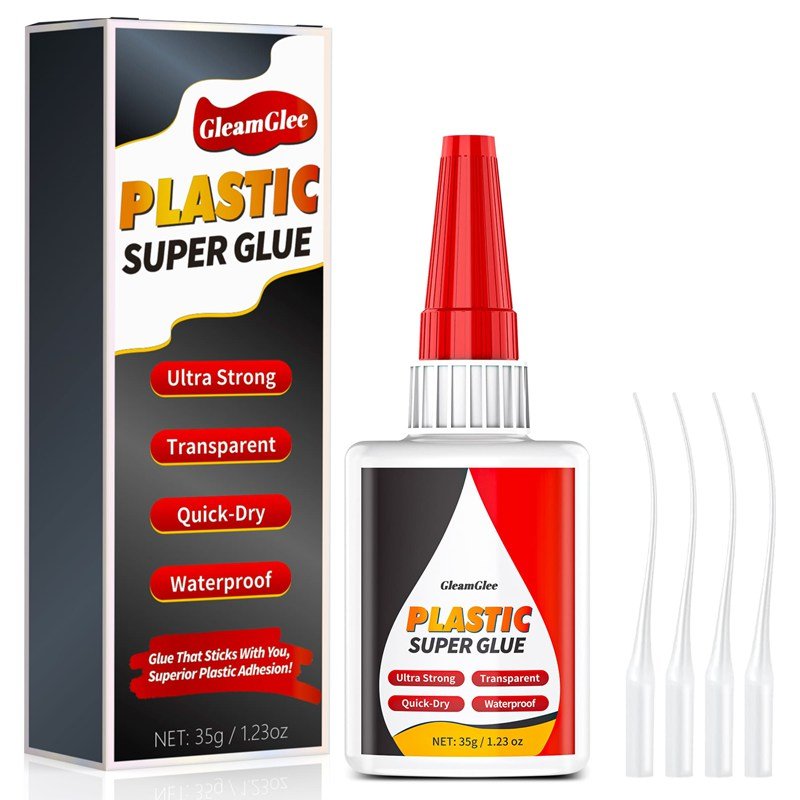
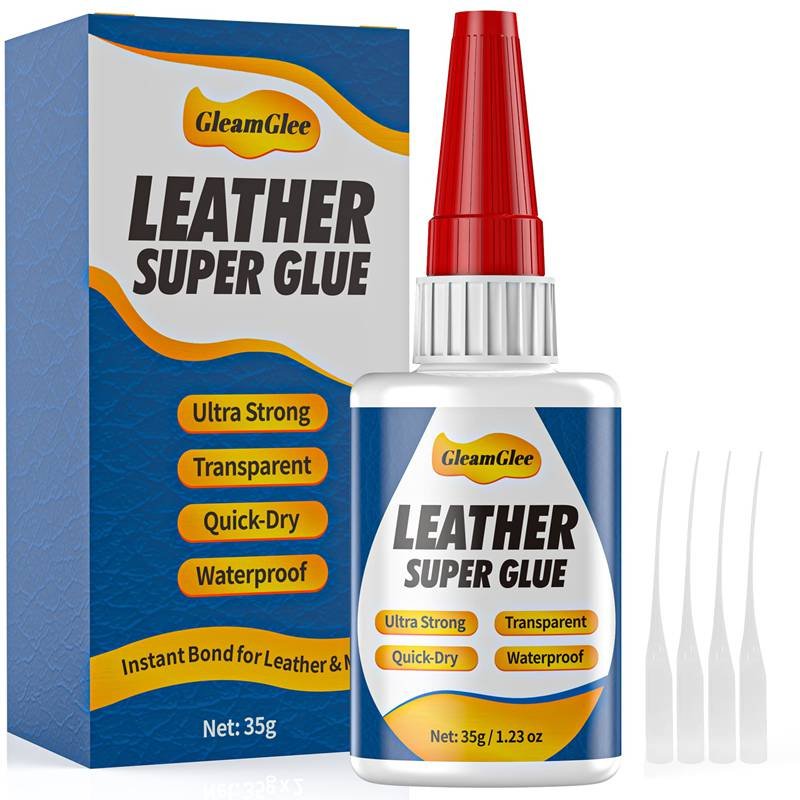
GleamGlee Plastic Glue uses a fast-drying formulation and includes four precision nozzles with each tube. The combination is particularly useful for suitable PVC, ABS, acrylic, model, and household repairs where the joint is small or clearly visible. Its transparent finish also helps when the repaired object has a polished, light-colored, or clear surface.
For quick repairs, most of the useful work happens before the glue is dispensed. Identifying the material, cleaning the surfaces, dry fitting the pieces, and planning the alignment may take longer than application itself. That preparation is usually what separates a neat ten-second bond from a messy repair that needs to be redone.
| Typical Home Repair | Approximate Bond Area | Main Challenge | Helpful Adhesive Feature |
|---|---|---|---|
| Acrylic frame stand | 5–30 mm contact length | Visible bond line | Transparent curing |
| Storage-box crack | 20–100 mm crack length | Crack reopening | Durable material bond |
| Remote battery cover | 3–20 mm contact length | Small joint | Fine-tip dispensing |
| Decorative ornament | 2–15 mm component size | Accurate alignment | Fast initial setting |
| Model component | 1–10 mm component size | Excess adhesive | Precision nozzle |
| Rigid PVC accessory | 10–50 mm contact length | Repeated handling | PVC compatibility |

Which Household Items Can Plastic Glue Repair?
Plastic glue can repair many non-critical household items, including storage accessories, bathroom organizers, decorative pieces, exterior electronic housings, hobby equipment, garden accessories, and selected appliance components. Reliable repairs usually involve rigid plastic, clean fracture surfaces, moderate mechanical loads, and materials confirmed as compatible with the adhesive. Heat, pressure, electricity, food contact, and body-weight-bearing applications require additional caution before adhesive repair is attempted.
How Can You Repair Storage and Bathroom Items?
Storage containers, drawer organizers, toothbrush holders, soap dispensers, shower caddies, and similar accessories often fail around corners, tabs, dividers, or small attachment points. These items can be good repair candidates because they normally carry modest loads, but they also collect exactly the kind of contamination that adhesives dislike. Soap film, moisture, skin oils, dust, household cleaners, and manufacturing residue can all interfere with reliable surface contact.
Begin by cleaning and completely drying the bonding area. A crack may look dry on the outside while retaining moisture along its inner surfaces, especially in bathroom items. Once clean, fit the pieces together without adhesive and check whether the original shape can be restored naturally. If the joint closes closely, the adhesive has a better opportunity to work across the intended contact area.
Moisture exposure should also be considered realistically. An organizer that receives an occasional splash is very different from a plastic fitting exposed continuously to water pressure. General household plastic glue should not be substituted for an approved plumbing system where leakage could cause property damage or hidden moisture problems.
Clear acrylic bathroom accessories and visible storage pieces also make appearance important. Transparent adhesive and controlled dispensing can help keep the repair discreet, especially when the damaged joint remains in the user’s direct line of sight every day.
Can You Repair Electronics Casings and Controls?
External plastic housings on remote controls, computer mice, headphones, keyboards, battery covers, and small consumer electronics may be repairable when the damage is limited to the non-electrical shell. Cracks at corners or detached cosmetic trim are generally less complicated than damage near circuit boards, batteries, ventilation paths, charging ports, switches, or heat-producing components.
When practical, disconnect the device from power and remove batteries before repairing an exterior housing. The item should be positioned so liquid adhesive cannot flow inward. Fine dispensing becomes particularly useful around battery-cover tabs, narrow seams, and small cracks because one uncontrolled drop may travel farther than expected and reach parts that should remain free of adhesive.
Repeated flexing can be a bigger problem than the crack itself. Snap-fit clips, headphone hinges, flexible latches, and battery-door tabs are designed to move many times during normal use. A rigid adhesive may work well on a stationary housing crack yet perform poorly when the joint must bend every day. Replacing a molded clip or hinge can therefore be more reliable than bonding it.
Adhesive should never cover ventilation openings, sensors, removable safety panels, thermal pathways, or manufacturer-designed access points. The purpose of a casing repair is to restore the enclosure while preserving the device’s original function, not permanently seal something that was intended to open, move, or release heat.
Which Outdoor Plastic Items Can Be Repaired?
Outdoor plastic has a harder life than most indoor household items. Planters, storage boxes, watering accessories, lantern covers, garden ornaments, cooler components, and non-structural furniture trim can face ultraviolet light, rain, temperature changes, soil, impact, and repeated handling. An adhesive may bond the crack successfully, but the repair will still depend on the condition of the surrounding plastic.
Long-term sunlight can make certain plastics chalky, faded, or brittle. If the area around the break crumbles, shows many fine cracks, or snaps easily, the substrate may already be degrading. In that situation, applying a stronger adhesive does not restore strength to material that is failing beyond the visible fracture.
A cracked planter rim, storage-box lid, garden ornament, or decorative accessory may still be a sensible project when the joint is accessible and the consequences of failure are small. A damaged chair seat, ladder part, lawn-equipment safety guard, or structural component deserves much more caution because the same adhesive failure could lead to injury.
Whenever possible, outdoor repairs should cure indoors or in a dry, protected place. Rain, large temperature swings, and dirt should not be allowed to interfere with the early bonding period. The adhesive’s actual instructions should determine when the repaired object is ready to return outside.
What Creative Projects Can You Make With Plastic Glue?
Plastic glue can support acrylic displays, miniatures, decorations, organizers, reused-plastic crafts, hobby models, and compatible 3D-printed assemblies. Creative work benefits from the same habits as good repair work: identify the material, create enough contact area, keep the surfaces clean, apply only the required amount, and let the bond cure properly. Clear-curing adhesives are especially useful when the joint remains visible.
How Can You Make Home Décor With Plastic?
Acrylic and rigid plastic pieces can be used to create lightweight photo displays, decorative stands, small organizers, layered signs, ornament holders, mini shelves, and other home accessories. These projects may carry less mechanical load than a repair, but they often demand a cleaner finish because any excess adhesive remains visible on the completed object.
Transparent materials reveal application mistakes immediately. Adhesive should stay inside the joint rather than spread across polished surfaces. Overlapping joints are often easier to bond cleanly than two extremely narrow edges because the larger contact area distributes stress and provides more surface for adhesion. Whenever possible, design a decorative assembly so the adhesive line sits behind another component or inside the structure.
A simple comparison shows how much joint geometry can change the project. A 15 × 20 mm overlapping acrylic base provides about 300 mm² of nominal contact area, while a 2 × 20 mm edge provides only about 40 mm². Actual strength depends on adhesive chemistry, plastic condition, and loading, but the broader joint is usually more forgiving.
A crystal-clear adhesive is particularly useful for acrylic displays and visible decorative parts. GleamGlee’s transparent formulation and precision nozzles suit projects where compatible plastics are used and the finished appearance matters almost as much as the bond.
What Can You Create With Reused Plastic?
Reusing a plastic object does not always mean restoring its original function. Sometimes the more practical option is giving an intact portion of the material a new job. A damaged organizer can become a workshop divider, rigid plastic offcuts can become plant labels, and clear acrylic scraps can be turned into display supports, craft templates, signs, or decorative layers.
The condition of the material should still be examined carefully. Sections that are brittle, chemically damaged, deeply cracked, or permanently warped are poor foundations for a new project. Stable pieces with broad bonding surfaces make better building blocks, especially when the new use involves repeated handling.
Joint design becomes a creative tool in repurposing. Two thin edges are difficult to bond well because the available contact area is small. Overlapping the pieces, adding a compatible backing strip, or creating a simple tab-and-slot arrangement can produce a much stronger assembly without adding a noticeable amount of adhesive.
Reused plastic is also an excellent material for compatibility testing. When offcuts from the same object are available, a small trial bond can reveal poor wetting, discoloration, clouding, or unexpected brittleness before adhesive is placed on the final project. That small experiment can save a much more valuable object from an avoidable mistake.
| Creative Project | Common Plastic | Typical Piece Size | Main Priority |
|---|---|---|---|
| Acrylic photo stand | Acrylic | 20–150 mm | Clear bond line |
| Miniature model | ABS or polystyrene | 2–50 mm | Precision |
| Desk organizer | ABS, acrylic, rigid plastic | 50–300 mm | Joint area |
| Seasonal ornament | Mixed rigid plastic | 5–100 mm | Appearance |
| Reused plastic divider | Rigid plastic sheet | 50–400 mm | Stable overlap |
| 3D-printed component | ABS, PLA, PETG, other | 10–200 mm | Material compatibility |
Can You Use Plastic Glue for Models and 3D Prints?
Model cars, aircraft, trains, miniatures, prototypes, architectural pieces, and 3D-printed objects are ideal examples of precision bonding. Their components can be only a few millimeters wide, so excess adhesive may cover engraved detail, lock a moving section, or create a visible ridge that is difficult to remove after curing.
Material identification becomes particularly important with 3D printing. Printed parts may use ABS, PLA, PETG, nylon, resin-based materials, or specialty blends. Two finished parts can look nearly identical while presenting very different surfaces to an adhesive. Compatibility should therefore be confirmed rather than inferred from color, texture, or printing method alone.
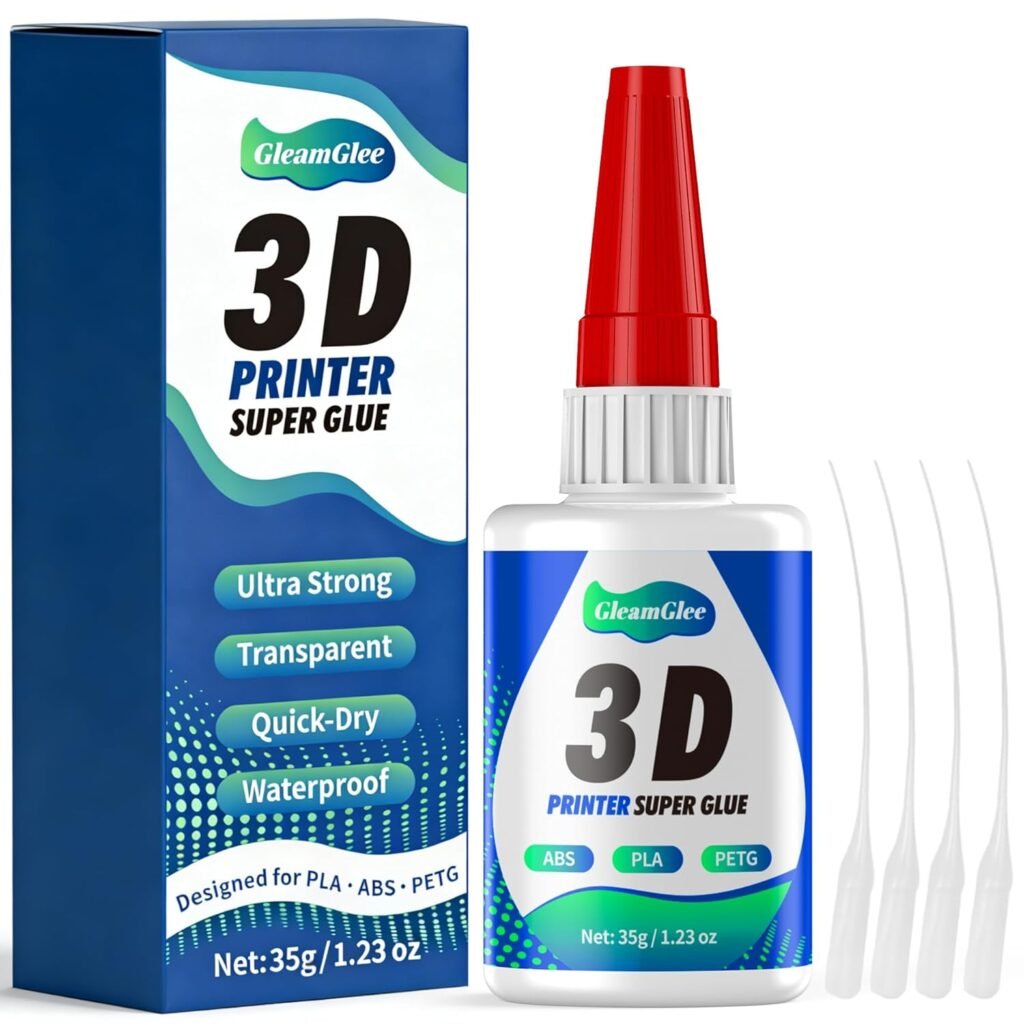
ABS is one of the materials specified for GleamGlee Plastic Glue, making the formula relevant to suitable ABS printed parts and model repairs. Other printing materials should be tested individually, especially when surface coatings, paint, or finishing agents are present.
Dry assembly is one of the best habits in model work. Fit each piece before applying adhesive, understand the order of assembly, and decide which faces must remain clean. A 1 mm positioning error might be insignificant on a storage box, but on a miniature wheel, aircraft wing, or architectural model, the same error can be immediately visible.
Which Materials Can Plastic Glue Bond?
Plastic glue can bond materials such as PVC, ABS, acrylic, and other compatible polymers, but no adhesive should be assumed to perform equally well on every plastic. Polypropylene and polyethylene are usually more difficult because of their relatively low surface energy, while mixed-material projects create additional challenges. Reliable bonding starts by identifying both surfaces and confirming that the adhesive is intended for them.

Does Plastic Glue Work on PVC, ABS, and Acrylic?
PVC, ABS, and acrylic are widely used in household products, displays, models, accessories, decorative pieces, and DIY projects, but they are not identical materials. ABS commonly appears in rigid housings, automotive trim, models, toys, and consumer products. Acrylic is widely chosen for transparent displays, signs, frames, and decorative structures, while rigid PVC appears in numerous fabricated accessories and household components.
The adhesive should specifically support the material rather than relying on a broad statement such as “works on plastic.” GleamGlee Plastic Glue is formulated for PVC, ABS, acrylic, and other stated compatible plastics, making these materials appropriate targets for many household and hobby applications within the product’s intended use.
Appearance can also influence the decision. Acrylic projects often benefit from transparent curing because a dark or cloudy adhesive line can remain visible through the material. ABS housings and model parts may depend more heavily on dispensing control and resistance to normal handling.
Even with a compatible adhesive, surface cleanliness remains critical. Fingerprints, polishing compounds, mold-release residue, oil, dust, and some household cleaners can interfere with direct adhesive-to-plastic contact. Cleaning and dry fitting therefore remain important even when the material is considered relatively straightforward to bond.
Are PP and PE Harder to Glue?
Polypropylene and polyethylene are generally harder to bond than plastics such as ABS or acrylic because they have relatively low surface energy. Many conventional adhesives do not wet these surfaces easily, which means the adhesive may struggle to make intimate contact even when its cured material is mechanically strong.
Typical published surface-energy values vary with grade, treatment, contamination, and measurement method, but untreated PP is often reported around the high-20s to low-30s mN/m, while PE commonly falls in a broadly similar low range. ABS and acrylic are typically somewhat higher. These figures should be treated as approximate material characteristics rather than universal pass-or-fail numbers.
PP is common in molded containers, caps, household products, automotive components, and flexible parts. PE and HDPE appear in bottles, bins, outdoor products, and many blow-molded or injection-molded items. Because these materials are so common, people frequently discover that a glue performing very well on another plastic gives a much weaker result on a PP or PE object.
Specialized systems may use primers, activators, surface treatment, or adhesive chemistry designed specifically for low-surface-energy plastics. If PP or PE is suspected and the adhesive does not explicitly claim compatibility, a test should be performed before relying on the repair.
Can You Bond Plastic to Metal or Wood?
Mixed-material projects are common in home décor, model building, organizers, hobby work, and small repairs. A plastic component may need to attach to wood, metal, painted surfaces, or another material, which makes the joint more complicated because the adhesive must perform on both sides rather than just one type of plastic.
Wood can absorb liquid adhesive because it is porous, while plastic is usually non-porous. Metal may be polished, oxidized, oily, anodized, plated, painted, or powder coated. When adhesive is applied to painted metal, it is actually bonding to the coating, so the finished joint cannot be stronger than the coating’s own attachment to the underlying metal.
Temperature change can also introduce stress. Plastic, wood, and metal may expand and contract at different rates. A small indoor craft object might tolerate that movement easily, while a large outdoor assembly exposed to direct sun can experience much more demanding cycles.
For mixed-material work, the actual combination should be tested whenever possible. “Plastic to metal” is not a complete technical description because the polymer, alloy, coating, joint geometry, and environment can all change the result. A small sample bond often provides better practical evidence than a general compatibility assumption.
| Material | Typical Household Uses | Approximate Bonding Challenge | Practical Check |
|---|---|---|---|
| ABS | Housings, models, trim | Moderate | Confirm ABS compatibility |
| Acrylic | Frames, displays, décor | Moderate | Check clarity and surface finish |
| Rigid PVC | DIY parts, accessories | Moderate | Confirm PVC compatibility |
| PP | Containers, clips, molded parts | Higher | Specialty system may be needed |
| PE / HDPE | Bins, bottles, outdoor products | Higher | Look for explicit PE compatibility |
| Polystyrene | Models and craft parts | Variable | Test for surface sensitivity |
| PETG | 3D prints and clear parts | Variable | Test the actual print first |
How Do You Use Plastic Glue Correctly?
Correct plastic bonding follows a straightforward process: identify the material, inspect the fracture, clean and dry both surfaces, test the fit, apply a controlled amount of compatible adhesive, align the pieces accurately, hold them as required, and protect the joint until curing is complete. Many avoidable failures happen because the wrong plastic was assumed, surfaces were contaminated, too much adhesive was used, or the repair was stressed too soon.
How Do You Identify and Prepare the Plastic?
Start by looking for a molded material abbreviation, recycling symbol, product specification, replacement-part description, or manufacturer information. Even basic identification such as ABS, acrylic, PVC, PP, or PE can greatly improve adhesive selection because those polymers can respond differently to the same adhesive system.
Preparation should remove anything sitting between the glue and the plastic. Dust, grease, fingerprints, soap residue, wax, polishing compounds, silicone-based cleaners, and mold-release agents can all create a weak boundary layer. The intended bond surfaces should be completely dry before adhesive is applied.
Stronger cleaning is not automatically better. Aggressive solvents can craze, soften, stain, or cloud certain plastics, particularly transparent acrylic and other appearance-sensitive materials. Heavy sanding can also change the fit of a precision component or turn a polished edge visibly dull. Any preparation method should be appropriate for both the adhesive and the substrate.
Dry fitting deserves more attention than it usually receives. Put the pieces together without adhesive, check whether the fracture closes correctly, decide where pressure will be applied, and identify the surfaces that need to remain clean. If accurate alignment is difficult before adhesive is added, it is unlikely to become easier once a fast-setting glue is on the joint.
How Much Plastic Glue Should You Apply?
The objective is to cover the useful bonding area without flooding it. More adhesive does not automatically create more strength. In a closely fitted joint, excess material can squeeze onto the visible surface, enter moving sections, build a raised ridge, or make cleanup far more difficult than the actual repair.
Scale matters. A model component with a 5 × 5 mm contact face has only 25 mm² of nominal bonding area. Dispensing adhesive across several square centimeters around that joint does not increase the useful contact area. It simply places product where it is not needed.
Fine-tip applicators can make these repairs easier. GleamGlee Plastic Glue includes four precision nozzles per tube, helping direct adhesive into small cracks, narrow edges, and miniature joints. This is particularly useful on transparent or decorative plastic because reducing squeeze-out protects the visible finish.
Once the pieces are joined, avoid repeatedly separating them to check whether the bond has started working. Disturbing the early interface can interrupt alignment and curing. Cleanup materials should also be prepared before application so any accidental excess can be managed according to the adhesive instructions without reaching immediately for a solvent or sharp tool that might damage the plastic.
How Long Should the Bond Cure?
Curing should be understood as a process rather than one instant moment. Some fast-setting plastic adhesives begin holding small parts within seconds or minutes, while their final performance develops over a longer period. Working time, initial set, handling strength, and full cure describe different stages and should not be treated as interchangeable.
A practical user can think of the process in three simple stages. During initial set, the pieces should remain accurately positioned. Once handling strength develops, the repaired object may be movable with care, but the joint should still avoid unnecessary bending, impact, moisture, or load. Full service should resume only after the cure period specified for the adhesive and application.
Temperature and environment can also influence curing behavior. A repair performed in a cold garage or damp outdoor space may not behave exactly like the same repair at normal indoor conditions. This is another reason to follow the actual product instructions rather than applying one universal waiting period to every adhesive.
One simple habit improves results considerably: perform the repair when the item can be left alone. Constantly twisting, pulling, washing, or loading a new bond to see whether it is “already strong” can damage the joint before the adhesive has had enough time to finish its work.
| Bonding Stage | What Is Happening | Practical Action |
|---|---|---|
| Identification | Material is confirmed | Choose compatible adhesive |
| Preparation | Surfaces are cleaned and dried | Remove contamination |
| Dry fit | Alignment is checked | Plan pressure and positioning |
| Application | Adhesive covers the intended area | Avoid excess product |
| Initial set | Joint begins holding | Do not move or stress it |
| Handling stage | Bond has developed partial strength | Move carefully if necessary |
| Full cure | Recommended curing process is complete | Return to suitable normal use |
How Can You Avoid Common Bonding Mistakes?
Most failed household plastic repairs are not caused by one dramatic mistake. They usually result from several small issues: the material was not identified, the surface was still oily, too much adhesive was used, the pieces were not dry fitted, the joint moved during curing, or the user expected a tiny glued edge to replace the strength of the original molded structure.
It is also important to understand the reason a part broke. A cabinet handle that fractured because the mounting hardware was loose may fail again unless the mechanical issue is corrected. An outdoor component that cracked because the entire polymer has become brittle may continue breaking beside the newly repaired area.
Testing a repair immediately by pulling hard on it is another common mistake. This may damage a partially cured bond and tells very little about how the joint would perform after its proper cure period. A more useful evaluation is whether the repaired object performs its normal job after the stated curing process.
Finally, adhesive should not turn a minor household repair into a safety risk. Components that support significant body weight, contain pressure, protect moving blades, provide electrical insulation, or perform a medical or protective function deserve a higher level of evaluation than a decorative accessory or storage organizer.
What Makes a Plastic Glue Reliable for Home Projects?
A reliable plastic glue combines confirmed material compatibility, controlled dispensing, suitable bond strength, predictable curing, and a finish that matches the project. The strongest or fastest adhesive is not automatically the best choice. Reliability depends on how the formula behaves on the actual polymer, how the joint is designed, what environment it faces, and what type of stress the repaired object experiences in everyday use.
Is a Clear Finish and Precision Tip Important?
For many household projects, appearance is part of the repair result. Acrylic frames, transparent displays, decorative pieces, miniatures, models, and polished plastic housings may remain visible every day. A joint that is mechanically strong but surrounded by cloudy residue, thick squeeze-out, or a rough adhesive ridge can still feel unsuccessful.
Transparent curing is particularly useful for clear and light-colored plastic. GleamGlee Plastic Glue is designed to dry clear, helping the adhesive line remain less visually intrusive on suitable acrylic and other compatible materials. A clear finish cannot hide missing plastic or poor alignment, but it can prevent the adhesive itself from becoming the most noticeable part of a neat repair.
Precision dispensing solves another common problem. Narrow cracks and miniature parts may need only a small bead. A fine nozzle helps place adhesive inside the intended bond line instead of spreading it across the finished surface. It can also reduce product waste because the user has more control over each application.
For visible work, the most reliable routine combines several small habits: clean the surfaces, dry fit carefully, protect polished areas, apply the minimum practical amount, align the pieces once, and avoid touching the joint while it develops strength.
How Important Are Strength and Material Testing?
Bond strength is useful only when the test conditions resemble the real application. Adhesive joints can experience tension, shear, peel, impact, vibration, humidity, temperature cycling, or repeated flexing, and these forces do not challenge the bond in the same way. A formula that performs strongly in one test may still need additional evaluation before being used in a completely different joint design.
Professional adhesive development therefore involves more than gluing two plastic samples together and pulling them apart once. Useful evaluation can include substrate-specific adhesion tests, aging, repeated loading, humidity exposure, temperature changes, dispensing behavior, storage stability, and visual inspection of how the joint fails.
GleamGlee’s adhesive development activities are supported by more than 25 chemists, material specialists, and process engineers, with application testing focused on real substrates and practical use conditions. For customized products, customer material samples can also be tested so performance is evaluated on something much closer to the final application rather than on an unrelated generic plastic.
This is particularly important because a request for “plastic glue” can mean very different things in practice. Clear acrylic displays, rigid ABS housings, PVC accessories, 3D-printed parts, and low-surface-energy PP components are not technically identical bonding problems.
How Do You Choose the Right Plastic Glue?
Begin with the object, not the marketing claim. Identify the polymer, estimate the available contact area, decide whether the bond will be visible, check whether the component flexes, and consider moisture, temperature, vibration, impact, and repeated handling. The consequences of failure should also be considered before convenience, packaging, or price becomes the deciding factor.
A clear acrylic ornament needs visual quality and precision. An ABS model component needs accurate dispensing and good compatibility. An outdoor accessory may require stronger resistance to changing conditions. A PP container may need a specialized adhesive system. A flexible clip may require very different mechanical behavior from a rigid decorative frame.
Packaging matters more than many users realize. Nozzles, cap design, container stiffness, dispensing control, and resealing all influence the actual experience of applying the adhesive. A high-performing formulation is much less convenient if the package releases too much product onto a tiny repair.
For retailers, private-label brands, and other companies developing their own plastic adhesive, product selection becomes broader still. The formula, nozzle, bottle, labeling, shelf stability, transport behavior, and real substrate testing should function as one system. Reliable product development is ultimately about matching claims to tested applications rather than placing the broadest possible promises on the package.
Conclusion

Plastic glue becomes far more useful when it is treated as a precision repair material rather than an all-purpose answer to anything made of plastic. Around the home, its best opportunities often involve small but frustrating problems: a cracked acrylic stand, a broken model component, a split organizer, an ABS housing, a decorative piece, or a compatible plastic part that would otherwise cause an entire product to be thrown away.
The strongest household results come from a repeatable process. Identify the plastic, examine the condition of the surrounding material, create as much useful contact area as possible, clean and dry the joint, apply a controlled amount of adhesive, and allow enough curing time before returning the object to normal use. These steps are simple, but skipping even one can have a much greater effect than choosing an adhesive based only on a headline strength claim.
Creative projects follow the same logic. Acrylic displays, reused-plastic organizers, miniature models, seasonal decorations, and selected 3D-printed components become easier to assemble when the adhesive matches the polymer and the joint has been designed with bonding in mind. A transparent finish and precision nozzle can further improve projects where appearance matters. Used with realistic expectations, plastic glue is not simply a way to hide a crack; it is a practical tool for repairing, making, adapting, and extending the useful life of everyday plastic objects.

Frequently Asked Questions
What is plastic glue commonly used for at home?
Plastic glue is commonly used for repairing storage accessories, acrylic frames, decorative items, rigid plastic housings, models, hobby components, office accessories, and many small household objects. It can also support craft projects and reused-plastic assemblies. The exact application should always match the adhesive’s listed materials, because a product suitable for PVC, ABS, or acrylic may not automatically provide the same performance on PP, PE, or another polymer.
What is the best plastic glue for ABS and acrylic?
The best choice is an adhesive that explicitly lists ABS or acrylic as compatible materials and provides the application characteristics needed for the project. Acrylic repairs often benefit from a transparent finish because the joint remains visible, while small ABS components may benefit from precision dispensing. Surface preparation, joint area, curing conditions, and actual use are just as important as the adhesive label, so a small test is sensible on valuable or appearance-sensitive objects.
Can plastic glue repair cracked storage containers?
Plastic glue can repair some cracked rigid storage containers when the polymer is compatible, the surrounding material remains strong, and the crack can be closed accurately. The repair becomes less reliable when the container is made from difficult-to-bond PP or PE, when the plastic has become brittle, or when the container is expected to carry heavy loads. Material markings on the base of the container can help determine whether adhesive repair is realistic.
Can plastic glue bond plastic to metal or wood?
Some plastic adhesives can bond plastic to metal, wood, or other materials, but the adhesive must work effectively on both surfaces. Raw wood, painted wood, stainless steel, coated metal, and polished metal all present different bonding conditions. A mixed-material joint should therefore be tested using the actual materials whenever possible. Cleaning, surface condition, overlap area, temperature changes, and the coating on the metal or wood can all influence the finished result.
Is polypropylene or polyethylene difficult to glue?
Yes. Polypropylene and polyethylene are generally considered more difficult to bond than many other common plastics because their surfaces have relatively low surface energy. Standard adhesives may not wet them effectively, which can lead to weak or inconsistent results. Specialized adhesives, primers, activators, or surface treatments are often used for these polymers. If an object is marked PP, PE, or HDPE, check for explicit adhesive compatibility rather than assuming any plastic glue will work.
How long should plastic glue cure before use?
Curing time depends on the adhesive chemistry, joint design, temperature, humidity, and materials being bonded. A fast-setting glue may hold small pieces in place within seconds or minutes while continuing to build strength afterward. Initial setting should therefore not be confused with full cure. The repaired object should remain free from unnecessary bending, impact, washing, vibration, or heavy loading until the manufacturer’s recommended curing process has been completed.
Share:
Table of Contents
Here, creating your adhesives glue & removal cleaner collection is no longer a barrier—it’s a collaborative journey where GleamGlee helps brands and businesses transform their vision into durable, certified, and market-ready solutions.
Partner with GleamGlee
Join hundreds of global partners who trust GleamGlee for adhesives and cleaners that combine innovation, compliance, and speed. Our vertically integrated system—from R&D to warehouse—guarantees consistent performance and reliable delivery.
Whether you’re sourcing FBA-ready stock or developing your own formula, our team provides unmatched technical support and responsive service.