 Skip to content
Most people looking to attach fabric to fabric temporarily are not trying to “cheat” sewing—they’re trying to avoid making the wrong permanent decision. It might be a last-minute hem before an event, a patch you’re not sure you want to keep, a costume fix that only needs to last one night, or a clothing adjustment you want to test before stitching. In these moments, the real need is control: holding fabric securely now, without locking yourself into something you can’t undo later.
In practical terms, attaching fabric temporarily means choosing a method that balances hold strength, flexibility, and removability. Fabric tape, flexible fabric glue, iron-on bonding, and even clips or pins can all work—but only when matched to the fabric type, movement, heat exposure, and how long the bond needs to last. A method that works perfectly on cotton for a few hours may fail quickly on stretch fabric or become permanent after heat or washing. “Temporary” is defined by real use conditions, not by how strong something feels at first touch.
The good news is that temporary fabric attachment is not guesswork anymore. When you understand how fabrics behave, how adhesives react to movement and heat, and how much hold you actually need, you can choose solutions that look clean, feel secure, and still give you an exit later. The sections below break down exactly how each method works in real life—so your next fabric fix looks intentional, not improvised.
What Does Temporary Fabric to Fabric Attachment Mean?
Temporary fabric-to-fabric attachment means holding two pieces of fabric together securely for a limited period without permanently altering the fibers. The bond is strong enough for wear, display, or movement, but designed to be removed, adjusted, or weakened later—usually through peeling, washing, or time. “Temporary” is defined by use conditions, not by weak adhesion.
When people search for temporary fabric attachment, they are rarely asking for something vague or experimental. They are asking a very practical question:
“Will this hold long enough to do what I need—and can I undo it later without ruining the fabric?”
Understanding “temporary” in fabric bonding starts by breaking it down into real-world expectations, not labels.
What “Temporary” Means in Real Use
In everyday fabric projects, temporary usually falls into three measurable categories:
| Type of “temporary” | What users actually expect | Typical examples |
|---|---|---|
| Time-limited hold | Holds through an event or short period | Wedding hems, costumes, school plays |
| Reversible hold | Can be removed cleanly later | Testing patch placement, garment fitting |
| Low-damage hold | No fiber tearing, minimal residue | Delicate clothing, expensive fabrics |
A temporary bond may still feel strong to the touch. Strength alone does not make it permanent. What matters is how the bond behaves under stress and removal.
How Long Is “Temporary” for Most Users?
Based on customer feedback from clothing repair, crafts, and DIY use, most people define “temporary” within these ranges:
| Use case | What users expect |
|---|---|
| Decorative attachment (no wear) | Several days to weeks |
| Light clothing wear | One day to several wears |
| Active movement (walking, sitting) | Several hours |
| After first wash (cold) | Bond weakens noticeably |
| After heat (dryer / iron) | Bond may become permanent or fail |
This is why confusion happens:
the same fabric glue can be temporary in one situation and permanent in another, depending on heat, friction, and fabric type.
Why Temporary Fabric Attachment Exists at All
Temporary fabric bonding exists because sewing is not always the safest or smartest first step.
Real reasons customers choose temporary attachment include:
- They want to test before committing A hem that looks right standing up may look wrong once you walk or sit.
- They don’t want needle damage Needle holes can permanently mark silk, synthetics, coated fabrics, or thin knits.
- They are short on time Many fixes are done minutes or hours before use—not days.
- They expect future changes Children grow, costumes get reused, décor gets replaced.
Temporary methods reduce decision risk. They let users move forward without locking themselves into a permanent outcome too early.
What Temporary Does Not Mean
Temporary does not mean:
- Weak
- Sloppy
- Unreliable
- “Just for crafts”
A well-chosen temporary fabric bond should still:
- Look clean
- Feel secure
- Survive normal handling
- Fail gradually, not suddenly
Most complaints about temporary fabric attachment come from using the wrong method, not from the concept itself.
The Key Factors That Decide Whether a Bond Is Temporary
Whether a fabric-to-fabric bond stays temporary depends on four controllable factors:
- Fabric structure Cotton and denim release more easily than smooth synthetics.
- Movement and friction Flat décor behaves differently than waistbands or knees.
- Heat exposure Heat can permanently set or weaken adhesives.
- Amount of adhesive used Over-application turns temporary into permanent very fast.
Temporary attachment works best when users decide removal strategy before application, not after.
What Are the Best Ways to Attach Fabric to Fabric Temporarily?
The best way to attach fabric to fabric temporarily depends on how long the bond needs to last, how much movement the fabric will experience, and how cleanly you want to remove it later. Fabric tape works for fast, light-duty fixes. Flexible fabric glue handles movement and short-term wear better. Iron-on bonding holds longer but risks heat damage. Pins and clips are safest when zero residue matters more than appearance.
What matters most is not which method is strongest, but which method fails in a way you can accept.
Understanding “Best” from a User’s Point of View
When people ask for the best temporary fabric attachment method, they are usually trying to avoid one of these outcomes:
- The fabric comes loose too soon
- The fix looks obvious or sloppy
- Removal leaves residue or marks
- The “temporary” fix turns permanent by accident
So instead of ranking methods by strength, it’s more useful to rank them by risk and predictability.
1. Fabric Tape: Fast, Clean, and Short-Lived
Fabric tape is the most commonly tried solution because it feels safe and familiar.
Where fabric tape performs well:
- Emergency hems
- Flat fabric layers with little movement
- Lightweight cotton or polyester
- Décor or display pieces
What users typically experience:
- Hold duration: 2–12 hours under light movement
- Appearance: clean at first, edges may lift later
- Removal: usually clean on cotton, mixed results on synthetics
Where it fails most often:
- Warm environments (body heat softens adhesive)
- Textured or fuzzy fabrics (adhesive can’t grip evenly)
- Sitting, bending, or walking long distances
Fabric tape is best treated as a short window solution—great when you need something done now, not something that needs to survive a full day of wear.
2. Flexible Fabric Glue: The Most Versatile Temporary Option
Flexible fabric glue sits in the middle ground between tape and permanent bonding, which is why many experienced users prefer it.
Why fabric glue works better for temporary wear:
- Bonds fibers instead of sticking only to the surface
- Dries soft and flexible rather than stiff
- Less edge lift during movement
Typical real-world performance:
- Light wear: 1–3 days
- Decorative use: days to weeks
- After cold washing: bond weakens noticeably
- After heat: bond may become permanent or uneven
Common mistakes that cause problems:
- Using too much glue
- Applying heat too early
- Expecting it to behave like tape
When used sparingly and allowed to set properly, fabric glue gives the most balanced combination of hold, appearance, and reversibility for temporary fabric-to-fabric attachment.
3. Iron-On Bonding: Strong but Not Forgiving
Iron-on bonding (fusible web, hemming tape) is often marketed as easy, but it’s the least flexible option.
What iron-on bonding does well:
- Strong, even hold
- Clean visual finish
- No drying time
What users often regret later:
- Fabric shine or scorch marks
- Stiff hems that don’t move naturally
- Difficulty removing without damage
Once heat is applied, the bond is no longer truly temporary. Iron-on methods are best when:
- Fabric tolerates heat well
- You are comfortable with a semi-permanent result
- Clean removal is not a priority
For people specifically seeking temporary attachment, iron-on solutions are often more commitment than needed.
4. Pins, Clips, and Basting: Zero Residue, Lower Stability
Mechanical methods are still useful—but mainly before final attachment.
Best use cases:
- Fitting and alignment
- Testing placement
- Quilting and layout work
Limitations in real use:
- Visible hardware
- Shifting during movement
- Pin holes in delicate fabrics
Many experienced DIY users combine methods:
pins or clips for positioning, fabric glue for the temporary hold.
Side-by-Side Comparison
| Method | Hold Time | Movement Handling | Removal Risk | Best For |
|---|---|---|---|---|
| Fabric Tape | Hours | Low | Medium | Quick hems, décor |
| Flexible Fabric Glue | Days | Medium–High | Medium | Wearable fixes |
| Iron-On Bonding | Long | Low | High | Semi-permanent hems |
| Pins / Clips | Immediate | N/A | Very Low | Fitting & testing |

How Do You Choose the Right Temporary Fabric Method?
Choose the right temporary fabric method by matching the fabric type and real-life stress (stretch, friction, heat, and wear time) to the attachment option. Tape works for flat, short-term jobs with little movement. Flexible fabric glue works best for wearable fixes because it moves with the fabric. Iron-on methods hold longest but are hardest to undo. Pins/clips are safest when clean removal matters most.
Most “temporary fabric” problems aren’t about the product being bad. They happen because people pick a method based on speed—then the fabric experiences movement, heat, sweat, friction, or washing and the bond behaves differently than expected.
A good choice comes from answering four practical questions:
- How long does it need to hold? (minutes, hours, days)
- Will it be stretched, rubbed, or bent? (wear vs display)
- Will it face heat or washing? (iron, dryer, hot water)
- How clean does removal need to be? (no residue vs “good enough”)
Below is the simple, real-world way to choose correctly.
Quick Decision Table
| Your situation | Best method | Why it works | Most common mistake |
|---|---|---|---|
| Needs to hold a few hours (event hem) | Fabric tape | Fast, clean, no drying | Using it on high-friction areas |
| Needs to hold through wear (patch, trim) | Flexible fabric glue | Stays soft, handles movement | Applying too much glue |
| You’re okay with semi-permanent | Iron-on bonding | Strong, even hold | Trying to “undo” it later cleanly |
| Must remove perfectly clean | Pins/clips/basting | No residue risk | Expecting it to survive heavy movement |
Temporary Fabric to Fabric Attachment for Cotton and Denim
Cotton and denim are the easiest fabrics to work with because they’re fibrous and grippy. Adhesives can “grab” the fibers instead of sliding around.
Best choices
- Flexible fabric glue for wearable fixes (patches, hems, seam reinforcement)
- Fabric tape for very short-term, low-movement tasks (quick hems, décor)
What users usually experience
- Tape holds 2–12 hours on cotton with light movement
- Flexible fabric glue holds 1–3 days for wear (longer if the area has low friction)
- After a cold wash, many temporary bonds weaken noticeably
Avoid
- Thick glue lines on denim hems (can feel stiff and show through)
- Tape on rough denim edges (edges lift sooner)
Practical tip: For denim patches, a thin glue layer + firm pressing for 30–60 seconds often looks cleaner than sewing for beginners, especially if the patch sits on a low-stretch area (like the thigh, not the knee).
Temporary Fabric Attachment for Stretch Fabrics
Stretch fabrics (knits, spandex blends, leggings material) are where most “it didn’t hold” complaints come from.
Stretch fabric puts the bond under repeated stress: pull → rebound → pull → rebound. If the adhesive dries stiff, it will crack, lift, or pop.
Best choices
- Flexible fabric glue (must dry elastic)
- For fitting only: clips or basting (so you can adjust easily)
Typical reality
- Tape often fails fast because edges lift as the fabric flexes
- Iron-on bonds can feel stiff and uncomfortable in wear zones
- Glue works best when applied thin and cured enough to flex
Avoid
- Using tape on knee, elbow, waist, or underarm zones
- Over-gluing (thick glue = stiff edge = early failure)
Quick rule: If you can stretch the fabric 20–30% by hand, treat it like a “high-stress” fabric and favor flexible glue or non-adhesive holding for testing.
Temporary Fabric Adhesives for Delicate Materials
Delicate fabrics (silk, chiffon, lace, rayon, thin polyester) don’t forgive mistakes. They show residue, shine, distortion, and glue bleed-through easily.
Best choices
- Pins/clips or basting for placement and fitting
- If you must use adhesive: tiny glue dots, not lines
- If using tape: test first and remove slowly
What users usually care about most
- No staining
- No texture change
- No visible shadowing behind the fabric
High-risk behaviors
- Pressing hard with glue under thin fabric (bleed-through)
- Using heat (can permanently mark or stiffen delicate fibers)
Practical tip: For lace trims, many users get the cleanest “temporary” result by using minimal glue only at anchor points (every 1–2 inches), rather than coating the entire edge.
Avoiding Residue in Temporary Fabric to Fabric Bonds
Residue is the #1 reason people regret a temporary method. It’s also predictable—because residue usually comes from two causes:
- Too much adhesive (tape or glue)
- Heat exposure (dryer, iron, hot water)
Here’s what reduces residue in real life:
- Use the minimum amount needed to hold
- Keep adhesive inside the seam/edge line (so it doesn’t spread outward)
- Press with steady pressure, not forceful rubbing
- Avoid heat until you’re sure you don’t need removal
- When removing: go slow and support the fabric fibers
Residue risk by method (general pattern users see):
- Pins/clips: very low
- Tape: medium (higher on smooth synthetics)
- Flexible glue: medium (higher if over-applied)
- Iron-on: high (because it’s heat-set)
Simple removal mindset: If you want clean removal later, act like you’re “placing” fabric—not “cementing” it.
How Do You Attach Fabric to Fabric Temporarily with Glue?
To attach fabric to fabric temporarily with glue, use a flexible fabric glue in a thin layer, press the fabrics together firmly, and let it set before moving the item. The bond can be “temporary” if you avoid heat, avoid heavy washing, and don’t over-apply. Most failures come from using too much glue, skipping prep, or putting the fabric under high stretch or friction too soon.
Temporary fabric gluing is not complicated—but it is sensitive to small details. If you get three things right (prep, amount, and timing), you’ll usually get a clean, secure hold that still gives you the option to undo it later.
Below is the practical, step-by-step way people use fabric glue successfully for short-term attachment.
Prep Steps for Temporary Fabric Glue
Good prep sounds boring, but it’s where most “glue didn’t work” problems start.
1) Clean the bonding area (takes 30–60 seconds)
- Make sure the fabric is dry and free of lint, skin oils, or fabric softener residue.
- If the fabric feels “slippery” (common on synthetics), wipe gently with a damp cloth and let it fully dry.
Why this matters:
On fabrics with surface residue (softener, oils, heavy detergent build-up), users commonly see edge lift within hours—even with strong glue—because the glue bonds to residue instead of fibers.
2) Flatten and align before glue touches fabric
- Dry-fit the fabrics exactly where you want them.
- If it’s a hem or a patch, fold and press by hand first.
3) Do a quick test spot
- Especially for delicate fabrics, do a tiny glue dot inside a seam allowance.
- Check for discoloration, stiffness, or bleed-through after it dries.
4) Choose the “bond zone”
- Temporary bonding works best when the glue stays inside the seam/edge line.
- If glue spreads past the edge, it’s more visible and harder to remove cleanly.
How Much Temporary Fabric Glue to Use
This is the #1 difference between a clean temporary result and a stiff, messy one.
The goal:
A glue layer that wets the fibers but does not pool or soak through.
Practical dosage rules that match real user success:
- Hems: a thin line about 1–2 mm wide along the fold
- Patches: a thin line around the edge + a few dots in the center (not full coverage)
- Small embellishments: micro-dots, not smears
Signs you used too much:
- Wet shine outside the bond line after pressing
- Glue squeezes out at the edges
- The fabric edge dries stiff or crunchy
- You can feel a “ridge” when you run a finger over the bond
Why too much glue backfires
- It increases stiffness (so the bond cracks under movement)
- It raises bleed-through risk (especially on thin fabrics)
- It increases residue risk on removal
- It can turn “temporary” into “permanent” after heat or washing
Set Time vs Cure Time for Temporary Fabric Bonds
Many users think “dry” equals “done.” In fabric glue, timing has stages.
| Stage | What you can safely do | Typical time range |
|---|---|---|
| Set time | Fabric won’t slide when you release it | 5–10 minutes |
| Handling time | Light movement with care | 15–30 minutes |
| Full cure | Maximum strength and flexibility | Up to 24 hours |
For temporary attachment, you often don’t need full cure—unless the area will face friction or movement. But you do need at least:
- full set time, and
- a reasonable handling window before wear.
Two timing mistakes that cause early failure:
- Wearing the item while the glue is still soft (edges shift and break the bond)
- Trying to “speed dry” with heat (can set glue into fibers and reduce removability)
Pressing and Holding: The Part People Skip
Pressing creates real fiber contact. Without pressure, glue sits on top and fails.
Simple pressure method
- Press firmly for 30–60 seconds
- Keep the fabrics aligned (no sliding)
- If possible, place a clean flat object on top for added contact
What users notice when pressing is done right
- Cleaner edges
- Less glue squeeze-out
- More even hold
- Better appearance (no ripples)
Avoid
- Rubbing side-to-side (spreads glue past the edge)
- Pressing so hard that glue bleeds through thin fabric
How Long Does Temporary Fabric Glue Last?
People want a straight number. The honest answer is: it lasts as long as the fabric isn’t stressed beyond what you planned.
Here’s what users typically experience in everyday situations:
| Situation | Typical hold duration |
|---|---|
| Decorative attachment (no wear) | Days to weeks |
| Light wear (shirts, skirts) | 1–3 days |
| High movement areas (knees, elbows) | Hours to 1 day |
| After cold gentle wash | Bond weakens noticeably |
| After hot wash or dryer | May become permanent or fail unevenly |
Three factors that shorten hold time the most
- Stretch (knits, leggings)
- Friction (inner thighs, underarms)
- Heat (ironing, dryer, hot water)
If you want the bond to remain removable, treat heat like a “one-way door.”
Removing Later Without Making a Mess
If temporary removal matters, plan for it early.
Removal habits that work best
- Peel slowly while supporting the fabric fibers
- If resistance is high, soak the area in cold water first
- Avoid scraping with hard tools (can roughen fibers)
Why removal fails
- Too much glue
- Heat exposure
- Removing fast and tearing fibers instead of releasing the bond
A good temporary glue job should separate like this:
the bond weakens gradually, not suddenly, and the fabric stays intact.
Quick “Glue Method” Checklist
- Clean + dry fabric
- Dry-fit alignment first
- Use a thin glue layer (1–2 mm line for hems)
- Press 30–60 seconds
- Let set 5–10 minutes before moving
- Avoid heat until you’re sure you don’t need clean removal
- Expect shorter hold in stretch/friction zones

Is Temporary Fabric Glue Safe and Removable?
Temporary fabric glue is generally safe for clothing when it’s designed for textiles, applied in thin amounts, and fully dried before wear. Removability depends less on the glue name and more on how it’s used—fabric type, glue quantity, heat exposure, and washing all matter. Most “removal problems” happen after heat or over-application, not because the glue itself is unsafe.
For most users, “safe and removable” doesn’t mean lab-grade safety claims. It means three very practical things:
- Will it damage my clothes?
- Will it irritate my skin during wear?
- Can I take it off later without ruining the fabric?
Let’s answer those honestly, using real usage patterns—not ideal conditions.
Is Temporary Fabric Glue Safe for Clothing and Skin?
For everyday use, fabric glue safety comes down to formulation and curing, not strength.
Most modern fabric glues made for clothing are:
- Water-based or low-solvent
- Low odor once dry
- Non-irritating after full cure
What users actually notice in real life
- No skin irritation once glue is fully dry
- No stiffness or “plastic feel” when glue is applied thinly
- No visible color change on cotton, denim, or blends
Where safety issues usually come from
- Using non-fabric adhesives (super glue, craft glue, construction adhesive)
- Wearing garments before glue has set
- Applying glue too thick, so it never dries evenly
Practical rule:
If the glue is still tacky or cool to the touch, it’s not ready for wear. Most irritation complaints happen when people rush this step.
What Makes Fabric Glue Easy—or Hard—to Remove Later
Fabric glue does not behave like tape. Once it dries, it bonds to fibers, not just the surface. Whether that bond is removable depends on four controllable factors.
1) Fabric type
Some fabrics release glue more easily than others.
| Fabric type | Removal difficulty | Why |
|---|---|---|
| Cotton, denim | Low | Fibers absorb and release evenly |
| Canvas, felt | Low–Medium | Thick fibers mask residue |
| Polyester (smooth) | Medium | Glue sits on surface |
| Stretch knits | Medium–High | Glue flexes repeatedly |
| Silk, chiffon | High | Thin fibers show residue easily |
2) Amount of glue
This matters more than the brand.
- Thin layer → flexible bond → easier release
- Thick layer → stiff bond → harder to remove
Users who apply 2–3× more glue than needed are far more likely to report residue or fabric damage during removal.
3) Heat exposure
Heat is the biggest turning point.
- No heat: glue usually stays removable
- Iron / dryer: glue may set deeper into fibers
Many people accidentally make a temporary bond permanent by putting the garment into a dryer “just once.”
4) Time and stress
Longer wear + friction = tighter fiber bonding.
A glue joint worn for 3 days behaves differently than one worn for 3 hours.
Can You Wash or Iron Fabric with Temporary Fabric Glue?
This is where expectations often clash with reality.
Washing
- Cold, gentle wash: bond usually weakens
- Hot wash: unpredictable—may weaken or permanently set glue
Drying
- Air dry: safest option if removal is planned
- Tumble dry: high risk of locking glue into fibers
Ironing
- Ironing before removal is the fastest way to lose removability
- Shine marks or stiffness can appear, especially on dark fabrics
Real-user takeaway:
If you think you might remove the glue later, treat heat as a final step, not a test step.
How to Remove Temporary Fabric Glue Safely
Removal works best when it’s slow and controlled, not forced.
Methods that work for most users
- Gently peel while supporting the fabric underneath
- Soak the bonded area in cold water for 10–30 minutes
- Massage fibers lightly with fingers or a soft cloth
- Use mild detergent if needed (no scrubbing)
What usually causes damage
- Pulling quickly
- Scraping with hard tools
- Applying heat to “loosen” the glue
- Rubbing aggressively on delicate fabrics
What successful removal looks like
- The bond weakens gradually
- Fibers separate without tearing
- Any residue is minimal and often washes out later
Common Myths About Safety and Removal
- “If it’s strong, it must be permanent.” Not true. Flexibility matters more than strength.
- “All residue means failure.” Light residue on some fabrics is normal and often removable with washing.
- “Glue ruins clothes.” Most damage comes from using the wrong adhesive—or heat—at the wrong time.
What Most Users Get Wrong—and How to Avoid It
| Mistake | What happens | Better choice |
|---|---|---|
| Too much glue | Stiff bond, hard removal | Thin, controlled layer |
| Heat too early | Glue sets permanently | Delay ironing/drying |
| Wrong fabric | Visible residue | Test spot first |
| Rushing wear | Bond shifts or irritates | Wait full set time |
Why Professional Fabric Glue Works Better for Temporary Use
Professional fabric glue works better for temporary use because it’s engineered to bond fabric fibers evenly while staying flexible, clear, and predictable. Compared with generic craft glues or “super” adhesives, it’s less likely to turn stiff, bleed through, yellow, or fail when the fabric moves. Better packaging (precision nozzle, anti-clog cap) also reduces over-application—one of the biggest reasons temporary fixes become messy or permanent.
When someone is trying to attach fabric to fabric temporarily, they usually care about practical outcomes, not chemistry:
- “Will it hold through the day?”
- “Will it feel stiff?”
- “Will it show through or stain?”
- “Can I remove it later without ruining the fabric?”
This is exactly where professional fabric glue earns its place. It’s not about bragging rights—it’s about fewer surprises.
What “Professional” Actually Means to the User
In real use, “professional” fabric glue usually delivers improvements in four areas that customers immediately notice:
- More consistent hold across different fabrics
- Cleaner look (clear, less bleed-through, less edge shine)
- Better flexibility (moves with the fabric instead of cracking)
- More controlled application (less mess, less residue, easier removal)
A temporary fabric fix fails when the glue behaves unpredictably. “Professional” means predictability.
Flexible Hold for Temporary Fabric to Fabric Attachment
Flexibility is the difference between a comfortable temporary fix and a stiff patch that cracks in a few hours.
What users feel when the glue is too rigid:
- The bonded edge feels crunchy
- The fabric doesn’t drape naturally
- The seam pops open when you sit or bend
- The bond looks fine at first, then lifts at the edges
Professional fabric glue is typically formulated to dry soft and elastic, so it can handle:
- bending and folding (typical clothing movement)
- light stretching (minor tension)
- vibration and friction from walking
Real-life performance expectation (what most users report):
- Light wear: holds 1–3 days when applied thinly
- Low-friction decorative use: holds days to weeks
- High-friction zones: holds hours to 1 day, depending on placement and fabric
This isn’t “marketing talk.” It’s how flexible bonds behave: the more movement and rubbing, the shorter the life. A better glue simply fails later and cleaner.
Cleaner Results: Less Bleed-Through, Less Yellowing, Less Shine
Temporary fabric attachment often happens on visible areas: hems, collars, costume pieces, decorative patches. Users care about appearance as much as strength.
Professional fabric glue tends to perform better in these visible ways:
- Dries clear so repairs don’t show as white marks
- Lower yellowing risk so light fabrics stay clean-looking over time
- Less bleed-through when applied correctly (thin layer)
- Less “edge shine” that can happen when glue pools
Here’s what customers usually experience when using the wrong glue (like basic craft glue or rigid adhesives):
| Visual issue | What it looks like | Why it happens |
|---|---|---|
| White haze | Cloudy line near the bond | glue film sits on surface |
| Yellow tint | Off-white or warm stain | aging / oxidation of some formulas |
| Bleed-through | Dark wet spot on the front | too thin fabric + too much glue |
| Stiff ridge | Hard edge you can feel | glue dries brittle or too thick |
Professional fabric glue doesn’t magically ignore user mistakes—but it typically gives a wider “safe zone” before these problems appear.
Easier Temporary Use Because Application Is More Controlled
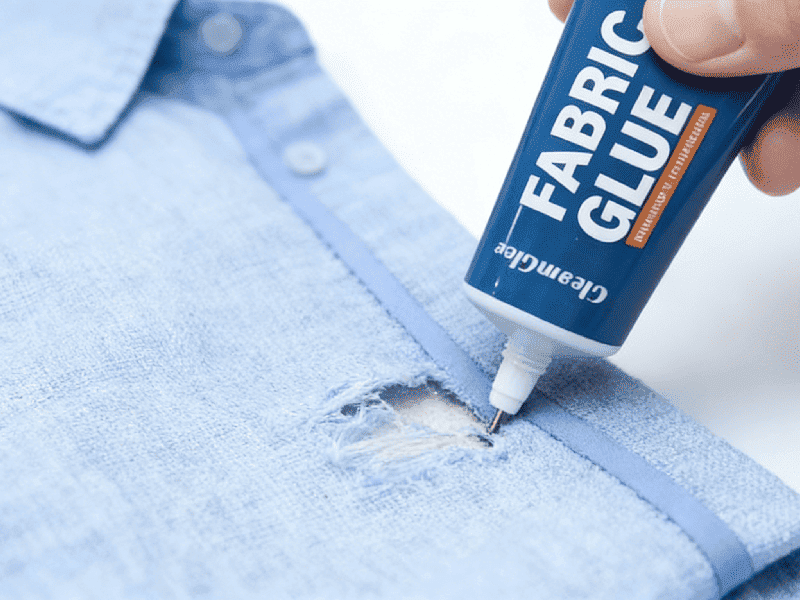
One reason professional fabric glue works better for temporary fixes is simple: the package helps you use less.
Most removal complaints come from over-application:
- glue squeezes out
- spreads past the edge
- gets pressed into fibers too deeply
- becomes harder to remove later
Professional designs often include:
- fine-point precision nozzle (accurate line, not a blob)
- anti-clog cap pin (so you don’t squeeze harder next time)
- smooth flow control (less spurting, less waste)
From a user perspective, controlled application produces measurable benefits:
- less mess to clean up
- lower residue risk
- more consistent hold
- better-looking hems and patches
A practical example:
If you reduce glue volume by even 30–50%, you usually improve both appearance and removability—because a thinner bond stays flexible and is less likely to soak through.
More Reliable Results Across Fabrics
Many low-end glues work “great” on one fabric and fail on another. That’s frustrating for users because clothing and crafts often involve blends: cotton-poly, denim with stretch, canvas + ribbon, etc.
Professional fabric glue is typically tested and optimized for:
- cotton and denim
- canvas and felt
- mixed blends
- common crafting materials (ribbons, trims, appliqués)
That means fewer cases where the user thinks it’s their fault when the bond fails.
Why This Matters for Brands and Bulk Buyers
If you’re a business customer (retailer, brand owner, Amazon seller, or private label buyer), “professional-grade” matters for reasons that show up in reviews and returns:
- fewer complaints about nozzle clogging
- fewer “stained my shirt” claims
- fewer “didn’t hold” cases due to inconsistent batches
- better customer satisfaction because results are repeatable
In practical terms, better glue performance reduces:
- negative reviews
- replacement requests
- refund pressure
- customer service workload
GleamGlee Perspective: Why Users Trust Manufacturer-Grade Fabric Glue
GleamGlee is a vertically integrated adhesives manufacturer (R&D, formulation, packaging, printing, compliance), which matters to customers because it improves consistency:
- formulas are tested for flexibility and clear drying
- packaging is designed for clean, controlled application
- production scale supports repeatable performance batch to batch
- multi-market compliance experience supports global sales channels
If you’re looking to stock a reliable fabric glue under the GleamGlee brand—or you want to create your own private label version with custom packaging, nozzle style, or formula targets—GleamGlee supports both ready-to-ship products and low-MOQ customization.
Conclusion
Attaching fabric to fabric temporarily is less about finding a “magic product” and more about making a smart, situation-based choice. When you understand how fabric type, movement, heat, and time affect an adhesive, temporary solutions stop feeling risky and start feeling intentional. Whether it’s a quick hem, a patch you want to test, or a short-term fix for an event, the right method can hold securely and still give you a clean exit later.
Across real-world use, one pattern is clear: flexibility and control matter more than raw strength. Fabric tape works when time is short and movement is minimal. Flexible fabric glue performs best when wear and comfort matter. Iron-on methods suit users who accept a higher level of commitment. Problems usually don’t come from “bad glue,” but from over-application, heat exposure, or choosing a method that doesn’t match how the fabric will actually be used.
If you’re looking for consistent, predictable results—whether as a DIY user, a retailer, or a brand owner—manufacturer-grade fabric glue makes that process easier. GleamGlee develops fabric adhesives designed to stay flexible, apply cleanly, and behave reliably across common fabrics and real usage scenarios. You can order ready-to-use products, request samples, or inquire about low-MOQ custom formulas and private-label solutions. When temporary fabric attachment is done right, it doesn’t feel like a compromise—it feels like control.





















