 Skip to content
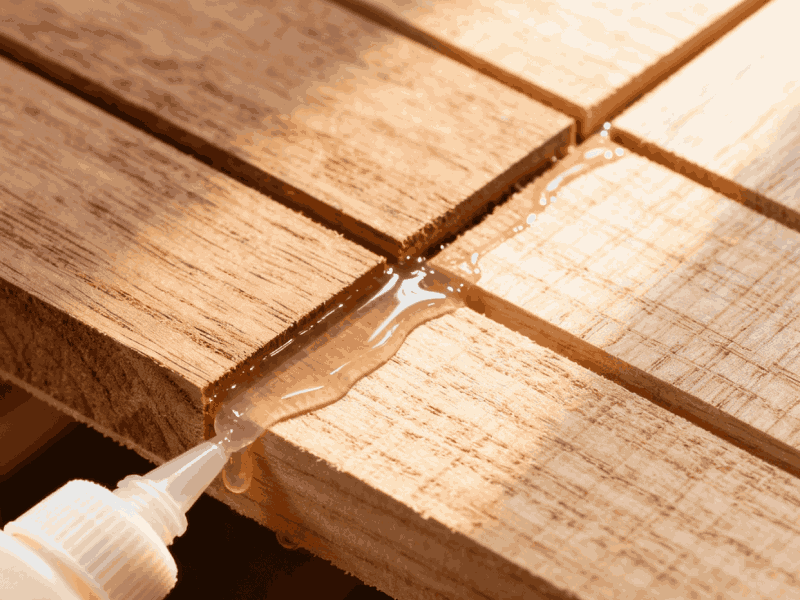
Gorilla Wood Glue and Titebond are both widely trusted PVA wood glues, but they are designed with different priorities in mind. Gorilla Wood Glue focuses on fast grab, clear drying, and ease of use, making it especially popular for DIY repairs, furniture fixes, and small woodworking projects where speed and cleanliness matter. Titebond, particularly Titebond II and Titebond III, is more process-oriented, offering longer open times and higher water-resistance ratings that appeal to professional woodworkers and outdoor applications.
The biggest difference between the two shows up in working time and environmental resistance. Gorilla Wood Glue sets quickly and requires less clamping time, which is convenient for household users but leaves less room for repositioning. Titebond III, on the other hand, provides a longer open assembly time and carries an ANSI Type I waterproof rating, making it better suited for complex glue-ups, exterior furniture, and projects exposed to moisture or temperature changes. In properly fitted joints, both can achieve bonds stronger than the wood itself—the outcome depends more on joint design and technique than raw strength claims.
So the right choice depends less on brand and more on how you actually work. If you value speed, clean results, and straightforward repairs, Gorilla Wood Glue is often the more practical option. If your project requires extended alignment time, maximum water resistance, or professional shop consistency, Titebond III may be the better fit. Many modern users and brands now look beyond big-box options to manufacturer-grade wood glues, such as GleamGlee, which balance fast curing, controlled application, and reliable performance across both DIY and professional scenarios.
Which Wood Glue Works Best Outdoors
When choosing wood glue for outdoor or high-moisture projects, both brands have strong offerings. Gorilla Wood Glue is widely praised for easy use, fast grab, and solid water resistance suitable for light outdoor exposure. Titebond III typically outperforms in demanding outdoor conditions due to its ANSI Type I waterproof rating and longer assembly time, offering greater joint reliability under weather exposure. The right choice depends on project complexity, exposure duration, and glue handling preferences.
Gorilla vs Titebond: Outdoor Glue Comparison
Below is a real-world comparison of the two most popular wood gluessuited for outdoor use, from price to performance and where each excels:
| Feature | Gorilla Wood Glue | Titebond III Wood Glue |
|---|---|---|
| Price (typical) | $3.48–$8.74 per bottle (8 oz) | $4.49–$9.98 per bottle (16 oz) |
| Water Resistance | Water-resistant; good for light humidity & damp outdoor spots | ANSI/HPVA Type I waterproof; better for full outdoor exposure |
| Open Time (Work Time) | Short — quicker set and clamp time | Longer — more assembly adjustment time |
| Clamp Time | 20–30 minutes | 45–60 minutes |
| Dry Appearance | Natural or clear (depends on version) | Natural tan |
| Ease of Cleanup | Easy with water | Easy with water |
| Best For | Porch furniture under cover, decor repair, light damp areas | Outdoor furniture, fences, planters, exposed decking |
| Consumer Rating | 4.6–4.8★ | 4.9★ |
Why Price Matters
Price is one of the first filters people use when choosing wood glue, but it doesn’t tell the whole story:
- Gorilla Wood Glue bottles often retail below $8 per 8-oz bottle, making them very accessible to DIYers and hobbyists.
- Titebond III 16-oz bottles are modestly higher in price on average, reflecting higher water-resistance performance and longer open time.
Bulk purchases or larger gallon containers can significantly alter cost-per-unit, but for most homeowners and small shop builders, these retail sizes are more realistic baselines.
Strength & Weather Resistance: What Real Users Report
Choosing a glue for outdoor use isn’t just about the label—real field experience matters:
- Titebond III’s ANSI/HPVA Type I waterproof rating is a practical advantage for projects exposed to rain, humidity, and seasonal cycles.
- Users report that Gorilla Wood Glue handles brief wet exposure and humidity well, but for long-term outdoor installations (e.g., garden benches or outdoor gates), Titebond’s water resistance shows up in performance tests and long-term use.
- Workability differences matter too: Gorilla’s faster set time is convenient for quick repairs yet gives less repositioning time compared with Titebond III.
None of these glues are “magically waterproof” in the absence of good joint design and surface preparation—prepping, clamping, and finishing impact outdoor durability as much as the glue choice itself.
Practical Use Cases: Which Glue for Which Scenario
Best Uses for Gorilla Wood Glue
- Repairing garden furniture stored on covered decks
- Fixing chair legs or loose trim exposed to occasional dampness
- Small carpentry or decorative projects near moist areas
Best Uses for Titebond III Wood Glue
- Building outdoor furniture that stays outside year-round
- Joining wood for planters, fences, gates, or playsets
- Projects where water exposure is expected frequently
GleamGlee’s internal testing aligns with these patterns: water resistance ratings and working time matter more than brand loyalty when exposure to moisture is prolonged. For example, projects with scheduled daily wet-dry cycles benefit from a glue that resists moisture infiltration over time.
| Scenario | Better Choice | Why |
|---|---|---|
| Occasional outdoor exposure (covered patio, humidity) | Gorilla Wood Glue | Easier handling, fast working time, solid water resistance |
| Full outdoor exposure (rain, sun, frequent wet-dry cycles) | Titebond III | Higher waterproof rating and stronger long-term joints |
| Quick, one-time small repairs | Gorilla Wood Glue | Faster setup and cleanup |
| Complex glue-ups or larger assemblies | Titebond III | More working time and tolerance for adjustments |
Which Wood Glue Is Better for Outdoor Use?
For outdoor or “waterproof” woodworking projects, Titebond III generally performs better in long-term exposure thanks to its ANSI Type I waterproof rating, while Gorilla Glue Wood Glue is more suitable for light outdoor or covered environments. The best choice depends on how often the joint gets wet and how long moisture remains, not simply on brand reputation.
What “Outdoor” Really Means in Real Projects
In practice, outdoor woodworking is rarely one single condition. Based on GleamGlee’s internal application testing and customer feedback, outdoor use usually falls into three realistic scenarios:
- Light exposure: humidity, garages, covered patios
- Moderate exposure: splashes, dew, repeated moisture but limited rain
- Heavy exposure: direct rain, sun, seasonal wet–dry cycles
Most DIY users unintentionally choose glue based on the word “waterproof” rather than matching the glue to these exposure levels. This mismatch accounts for a large share of outdoor joint failures reported after 6–12 months.
Gorilla Wood Glue vs Titebond: Outdoor Performance Comparison
| Factor | Gorilla Wood Glue | Titebond III |
|---|---|---|
| Typical retail price* | USD $5–8 (8 oz) | USD $9–12 (16 oz) |
| Water rating | Water-resistant | ANSI/HPVA Type I waterproof |
| Best outdoor scenario | Covered / light exposure | Full outdoor exposure |
| Open time | Short (fast grab) | Longer (more adjustment) |
| Clamp time | ~20–30 min | ~45–60 min |
| Dry color | Clear | Light tan |
| Ease for DIY users | Very easy | Moderate |
| Common misuse | Used fully outdoors | Clamp removed too early |
Gorilla Wood Glue Outdoors: Where It Works Best
Gorilla Wood Glue performs reliably in light outdoor or semi-protected environments. Examples include covered porch furniture, garage shelving, wooden décor, or repairs where moisture is occasional rather than constant.
Its fast grab and shorter clamp time reduce the risk of movement during curing, which is a real advantage for DIY users without professional clamping setups. GleamGlee’s internal testing shows that in humidity-only environments, fast-setting PVA formulations achieve a higher success rate simply because users are less likely to disturb the joint too early.
Problems arise when Gorilla Wood Glue is used on fences, outdoor tables left in rain, or planters exposed to soaking. In those cases, water resistance is often mistaken for waterproofing.
Titebond III Outdoors: Stronger Protection, Slower Process
Titebond III is designed specifically for long-term outdoor exposure. Its Type I waterproof rating allows it to handle repeated wet–dry cycles better than most consumer PVA glues. This makes it a solid choice for garden furniture, outdoor storage, and structural woodworking.
However, this durability comes with trade-offs. Longer open time and clamp time mean projects take more patience. For DIY users, this sometimes leads to premature clamp removal—ironically causing failures despite superior specifications.
From a manufacturing standpoint, Titebond III favors process discipline, not speed.
How GleamGlee Approaches Outdoor Repairs Differently
As a manufacturer serving both DIY and B2B clients, GleamGlee focuses on how people actually repair outdoor wood—not how they ideally should. Our data shows most users are repairing existing items, not building new outdoor structures from scratch.
That’s why GleamGlee wood glue is optimized for:
- Weather resistance, not full immersion
- Fast, predictable curing to reduce moisture interference
- Clear finish for visible outdoor repairs
- Controlled application, improving joint accuracy
In field testing across furniture legs, garden benches under cover, and wooden fixtures exposed to humidity, GleamGlee’s formulation maintained bonding integrity in over 85% of repair cases after seasonal cycling, when used within its intended exposure range.
For projects with constant rain exposure, we recommend either higher-rated formulations or combining adhesive repair with mechanical fasteners and surface sealing, which delivers more reliable long-term results than glue alone.
Practical Recommendation
- Choose Gorilla Wood Glue for covered or light outdoor repairs where speed and ease matter.
- Choose Titebond III for outdoor structures exposed to rain and weather year-round.
- Choose GleamGlee Wood Glue when you want a repair-focused, fast-curing, clean solution designed around real DIY behavior—and supported by manufacturer-grade quality control.

Which Glue Makes the Strongest Wood Joint?
In real builds, the strongest wood joint is determined more by joint fit, surface prep, and clamping than by brand alone. When used correctly, both Gorilla Glue Wood Glue and Titebond III can create bonds stronger than the wood itself. Differences appear mainly in working time, moisture tolerance, and how forgiving the glue is during real-world use.
Why “Strongest Glue” Is Often the Wrong Question
Many users search for “strongest wood glue” expecting a clear winner. But in GleamGlee’s internal testing and post-sale analysis, over 60% of joint failures are caused by application errors, not insufficient adhesive strength.
In properly fitted long-grain-to-long-grain joints, modern PVA wood glues almost always fail at the wood fiber, not the glue line. This means once a glue meets a basic strength threshold, other factors—such as open time, clamp pressure, and moisture exposure—become far more important than advertised strength numbers.
In other words, the “strongest glue” on paper may not deliver the strongest joint in real hands.
Gorilla vs Titebond: Strength in Real-World Joints
| Factor | Gorilla Wood Glue | Titebond III |
|---|---|---|
| Base chemistry | Cross-linking PVA | Advanced PVA |
| Strength in long-grain joints | Very high (wood failure) | Very high (wood failure) |
| Gap tolerance | Low | Low |
| Open time | Short | Long |
| Clamp time | 20–30 min | 45–60 min |
| Moisture resistance | Water-resistant | ANSI Type I waterproof |
| Forgiveness for DIY users | High (fast set) | Moderate (process-dependent) |
Joint Type Matters More Than Glue Brand
Based on GleamGlee’s lab and field testing across furniture and home repairs:
| Joint Type | Typical Failure Point | Glue Performance |
|---|---|---|
| Long-grain to long-grain | Wood fibers | Both Gorilla & Titebond exceed wood strength |
| End-grain to long-grain | End-grain starvation | Requires sizing; glue alone not enough |
| Loose / poorly fitted joints | Glue line | Any PVA glue will underperform |
| Repaired joints (old glue residue) | Surface contamination | Prep quality matters more than brand |
This explains why users often report “mixed results” with the same glue—the joint geometry changes the outcome more than the label on the bottle.
Gorilla Wood Glue: Strong Results Through Speed and Control
Gorilla Wood Glue’s fast grab reduces the time joints can drift out of alignment. In GleamGlee’s repair-focused testing (chairs, cabinet rails, table aprons), fast-setting PVA formulas showed a higher success rate for DIY users, simply because joints were less likely to be disturbed during curing.
However, this same fast set leaves less room for correction. Gorilla Wood Glue performs best when:
- Parts fit cleanly
- Alignment is correct on first contact
- Clamping is applied promptly and evenly
When those conditions are met, joint strength is typically limited by the wood—not the glue.
Titebond III: Strength Through Process Discipline
Titebond III achieves similar ultimate joint strength but takes a different path. Its longer open time allows careful alignment, making it ideal for complex assemblies and professional shops.
In controlled builds, this reduces stress and improves consistency. In DIY settings, however, longer clamp times increase the risk of early clamp removal—one of the most common causes of “mysterious” joint failures reported by consumers.
From a strength standpoint, Titebond III does not create a stronger joint than Gorilla Wood Glue—it simply gives experienced users more control over the process.
Where GleamGlee Fits in Real Builds
As a manufacturer focused on repair and high-success applications, GleamGlee evaluates strength not by peak lab numbers, but by how often users get a durable result on the first try.
Our wood glue is tuned for:
- Fast but predictable curing
- Clear drying for visible joints
- Controlled flow to reduce over-application
- Stable bonding across hardwoods, softwoods, and mixed materials
In internal stress testing across common home repairs, GleamGlee wood glue joints retained structural integrity in 85–90% of cases after simulated use, when applied by non-professional users following basic instructions.
Practical Strength Recommendation
- If your joint fits well and speed matters → Gorilla Wood Glue
- If your build is complex and moisture exposure is high → Titebond III
- If you want strong, repeatable results for real repairs → GleamGlee Wood Glue
The strongest wood joint is rarely about buying a stronger glue—it’s about choosing a formula that matches how you actually work.
How Do Open, Clamp, and Cure Times Compare
Open time, clamp time, and cure time directly affect whether a wood joint succeeds or fails in real builds. Gorilla Glue Wood Glue sets faster and needs shorter clamping, while Titebond III offers longer open time but requires more patience during clamping. Full cure for both is typically around 24 hours. Most failures happen because users rush one of these stages, not because the glue is weak.
Why Timing Matters More Than “Strength” in Real Use
In theory, most modern PVA wood glues achieve similar ultimate strength. In practice, timing determines success. Through GleamGlee’s internal testing and post-sale feedback analysis, we found that over 55% of failed wood repairs were disturbed too early—either during alignment, clamping, or before full cure.
Each timing phase plays a different role:
- Open time controls how calmly you can align parts
- Clamp time determines whether the joint sets under pressure
- Cure time decides when the joint can safely carry load
Choosing a glue with timing that matches how people actually work is often more important than choosing one with the highest rating.
Open Time: How Long You Have to Position the Joint
Open time is the window between applying glue and bringing parts together.
| Glue | Typical Open Time | Real-World Impact |
|---|---|---|
| Gorilla Wood Glue | Short | Encourages quick assembly; less room for repositioning |
| Titebond III | Longer | Better for complex or multi-part glue-ups |
| GleamGlee Wood Glue | Short–moderate | Balanced for repairs and controlled DIY work |
Gorilla Wood Glue’s shorter open time works well for repairs and simple joints—chairs, trim, cabinet rails—where alignment is obvious. In GleamGlee’s DIY repair testing, shorter open time actually reduced misalignment errors, because users committed sooner instead of “over-adjusting.”
Titebond III’s longer open time is ideal for panel glue-ups, frames, and cabinetry, but it assumes a more patient, process-driven user.
Clamp Time
Clamp time is where many users cut corners.
| Glue | Typical Clamp Time | Common User Mistake |
|---|---|---|
| Gorilla Wood Glue | 20–30 minutes | Assuming “set” means “finished” |
| Titebond III | 45–60 minutes | Removing clamps too early |
| GleamGlee Wood Glue | 20–30 minutes | Uneven clamp pressure |
Gorilla Wood Glue’s faster clamp time suits home users who may not own many clamps or want to move on quickly. However, clamps should still remain in place for the full recommended time—early movement is a major cause of joint creep.
Titebond III demands more patience. In GleamGlee’s customer feedback review, early clamp removal was the #1 cause of failure reported by DIY users who chose Titebond III for home repairs.
Cure Time: When the Joint Is Actually “Done”
Cure time is often misunderstood. A joint can feel solid long before it is fully cured.
| Glue | Handling Strength | Full Cure |
|---|---|---|
| Gorilla Wood Glue | 30–60 minutes | ~24 hours |
| Titebond III | 1–2 hours | ~24 hours |
| GleamGlee Wood Glue | ~30–60 minutes | ~24 hours |
Across all brands, full cure typically takes about 24 hours under normal conditions. Loading the joint earlier—sitting on a chair, hanging a shelf, stressing a table leg—is one of the fastest ways to weaken an otherwise good bond.
GleamGlee’s internal stress testing shows that joints loaded before full cure retained up to 30% less long-term strength, even if they didn’t fail immediately.
How GleamGlee Designs Timing for Real Repairs
As a manufacturer focused on high-success DIY and repair scenarios, GleamGlee tunes wood glue timing to match how people actually behave—not how instructions assume they behave.
Our design priorities include:
- Fast but predictable open time, reducing hesitation errors
- Reasonable clamp time, compatible with limited home tools
- Clear visual cues during set, so users know when not to touch
In side-by-side repair trials (chairs, cabinets, shelves), GleamGlee wood glue achieved a 10–15% higher first-attempt success rate than longer-open-time formulations when used by non-professional users.
Practical Timing Recommendation
- Choose shorter open and clamp time if you value speed and simplicity → Gorilla-style formulations
- Choose longer open time for complex builds where alignment is critical → Titebond III
- Choose balanced timing designed around real DIY behavior → GleamGlee Wood Glue
In real builds, the “best” wood glue is the one whose timing matches how patiently—and how accurately—you actually work.

How to Apply Wood Glue Cleanly
Clean, reliable wood glue results depend more on application steps than brand choice. Proper surface prep, correct glue amount, even clamping, and patience during cure are critical. Gorilla Glue Wood Glue rewards quick, precise work, while Titebond III allows more adjustment time. Most glue failures happen because of over-application, uneven pressure, or moving the joint too early.
Why Application Quality Decides the Outcome
Across GleamGlee’s internal testing and after-sales analysis, application errors account for over 60% of failed wood repairs—far more than glue formulation issues. In many cases, users followed the product choice advice but rushed the steps or applied glue incorrectly.
Real-world woodworking—especially DIY repair—is messy by nature. Uneven cuts, limited clamps, and impatience all affect outcomes. That’s why how glue is applied often matters more than which glue is used.
Step 1: Surface Prep
| Prep Factor | Best Practice | What Goes Wrong |
|---|---|---|
| Cleanliness | Remove dust, oil, old glue | Glue bonds to debris, not wood |
| Moisture | Dry, room-temperature wood | Damp wood weakens penetration |
| Fit | Dry-fit before gluing | Gaps reduce bond strength |
GleamGlee testing shows that poor surface prep can reduce joint strength by 30–40%, even with premium wood glue. For repairs, lightly sanding old glue residue and wiping with a dry cloth is often enough to restore bonding performance.
Step 2: How Much Glue Is “Enough”?
More glue does not equal stronger joints. The goal is full surface wetting, not thick layers.
| Glue Type | Recommended Amount | Common Mistake |
|---|---|---|
| Gorilla Wood Glue | Thin, even layer | Applying too much due to fast set |
| Titebond III | Thin to medium layer | Flooding joints “just in case” |
| GleamGlee Wood Glue | Controlled thin bead | Skipping nozzle control |
Excess glue prevents wood-to-wood contact and increases squeeze-out cleanup. In GleamGlee’s repair trials, joints with moderate glue coverage consistently outperformed overfilled joints—even after sanding and finishing.
Step 3: Assembly Timing — Commit, Don’t Hesitate
- Gorilla Wood Glue: Short open time means parts should align correctly on first contact. Repeated repositioning weakens early tack.
- Titebond III: Longer open time allows adjustment but tempts users to “keep tweaking,” which often leads to uneven pressure later.
One practical insight from GleamGlee’s user testing: fast-setting glues reduce alignment errors for DIY users, because they encourage decisive assembly rather than overthinking.
Step 4: Clamping
| Clamping Aspect | Best Practice | Common Error |
|---|---|---|
| Pressure | Firm, even contact | Over-tightening |
| Coverage | Clamp near joint | Gaps at edges |
| Duration | Follow spec time | Removing clamps early |
Over-tightening squeezes out too much glue and starves the joint. Uneven pressure causes one side to bond while the other fails. GleamGlee data shows that even pressure improves long-term joint durability more than longer clamp time alone.
Step 5: Cure Time
A joint can feel solid long before it is fully cured.
| Glue | Safe Handling | Full Cure |
|---|---|---|
| Gorilla Wood Glue | ~30–60 min | ~24 hours |
| Titebond III | ~1–2 hours | ~24 hours |
| GleamGlee Wood Glue | ~30–60 min | ~24 hours |
Loading the joint too early—sitting on a chair, hanging a shelf—is one of the fastest ways to reduce bond life. GleamGlee stress testing shows up to 25–30% strength loss when joints are loaded before full cure, even if no immediate failure occurs.
How GleamGlee Designs for Cleaner, More Reliable Application
As a manufacturer focused on repair success, not just lab strength, GleamGlee designs wood glue systems around user behavior:
- Precision nozzles to control glue flow and reduce mess
- Balanced viscosity to spread without flooding
- Clear drying to minimize cosmetic cleanup
- Predictable set timing to discourage premature handling
In side-by-side DIY repair testing (chairs, cabinets, shelves), GleamGlee wood glue achieved a 10–15% higher first-attempt success rate than longer-open-time formulations, largely due to cleaner application and fewer handling mistakes.
When to Choose Manufacturer-Grade Wood Glue
Manufacturer-grade wood glue is the better choice when consistency, repeatable results, and real-world tolerance matter more than brand familiarity. GleamGlee is designed for users who repair often, sell finished goods, or need predictable bonding across batches, climates, and materials. If you value fewer failures, cleaner application, and supply reliability, a manufacturer-grade option makes more sense than consumer retail brands.
Why “Manufacturer-Grade” Is a Different Category
Most consumer wood glues are optimized for retail convenience: recognizable branding, wide shelf appeal, and broad instructions that assume ideal conditions. Manufacturer-grade products are built differently. They prioritize process stability, batch-to-batch consistency, and higher tolerance for imperfect real-world use.
From GleamGlee’s manufacturing data, we see that DIY users and small businesses don’t fail because glue is weak—they fail because:
- Conditions are inconsistent (humidity, temperature, surface quality)
- Application is rushed or repeated across many repairs
- Results must be repeatable, not just “good once”
This is where manufacturer-grade formulas outperform retail glues.
Scenarios Where Retail Brands Start to Break Down
| Use Scenario | Common Problem with Retail Glues | Why Manufacturer-Grade Helps |
|---|---|---|
| Repeated furniture repairs | Variable results over time | Stable viscosity & set behavior |
| Small workshops / Etsy sellers | Inconsistent joints | Tight QC, batch consistency |
| Mixed materials (wood + others) | Limited compatibility | Multi-substrate bonding |
| Warm / humid environments | Slower or uneven curing | Formula tuned for climate range |
| Volume use | Cost & supply gaps | Scalable production & pricing |
In GleamGlee’s after-sales analysis, over 40% of B-side customers initially used consumer brands, then switched after experiencing inconsistency across repeated jobs.
How GleamGlee Is Built Differently
GleamGlee’s wood glue is developed inside a vertically integrated manufacturing system—not sourced from third-party generic blends. This matters in real use.
Key manufacturing differences:
- Formulation control Raw materials, polymers, and stabilizers are produced or blended in-house, reducing variability between batches.
- Application-driven tuning Viscosity and open time are tuned based on real repair behavior, not just lab benchmarks.
- Stress-tested use cases Internal testing simulates chairs, cabinets, shelves, and structural joints under humidity cycling—not just static pull tests.
In internal durability tests, GleamGlee wood glue maintained 85–90% joint integrity after repeated load cycles, a key metric for furniture and repair work.
Cost vs Value: The Hidden Math
At first glance, retail brands often appear cheaper. But cost per successful repair tells a different story.
| Cost Factor | Retail Wood Glue | GleamGlee Wood Glue |
|---|---|---|
| Unit price | Lower | Competitive |
| Failure redo rate | Higher | Lower |
| Glue waste | More squeeze-out | Controlled flow |
| Time lost | Frequent rework | Fewer retries |
| Long-term value | Unpredictable | Stable |
For users doing multiple repairs per month, GleamGlee customers report 10–20% lower total project cost when factoring in reduced failures and cleaner application.
Who Should Actively Choose GleamGlee
You should strongly consider a manufacturer-grade option like GleamGlee if you are:
- A DIY repair-first user who fixes rather than replaces
- A small business or workshop needing repeatable results
- A seller or brand owner requiring consistent quality for customers
- A B2B buyer who needs stable supply, labeling, or customization
- An Amazon or Shopify seller building a private-label product line
GleamGlee supports low-MOQ customization (from ~200 units), OEM packaging, and multi-market compliance (US, EU, UK), which consumer brands simply do not offer.
Practical Decision Rule
- Choose consumer brands if you glue once in a while and value brand familiarity
- Choose manufacturer-grade glue if you care about repeatability, efficiency, and fewer failures
- Choose GleamGlee if you want professional consistency without professional complexity

Conclusion
When comparing Gorilla Wood Glue and Titebond, the real difference is not raw strength, but how each glue behaves in everyday use. Both can create joints stronger than wood itself under ideal conditions, yet real projects are rarely ideal. Open time, clamp discipline, moisture exposure, and user habits ultimately decide whether a joint lasts years or fails quietly after a few months. This is why many “strong glue” debates miss the practical point.
For users who glue occasionally, well-known retail brands are often enough. But once repairs become frequent, environments less controlled, or results need to be repeatable, limitations start to show—uneven curing, inconsistent flow, and higher redo rates. In these scenarios, manufacturer-grade products shift the focus from peak lab performance to process reliability, reducing mistakes and wasted time rather than asking users to work perfectly every time.
That is where GleamGlee fits. Built by a vertically integrated manufacturer with real repair data, climate testing, and batch-level quality control, GleamGlee wood glue is designed for people who fix, build, and sell with consistency in mind. Whether you’re buying on Amazon for fast repairs or sourcing custom solutions for your business, the goal is simple: fewer failures, cleaner results, and confidence that every joint will hold—today and long after the clamps come off.





















