 Skip to content
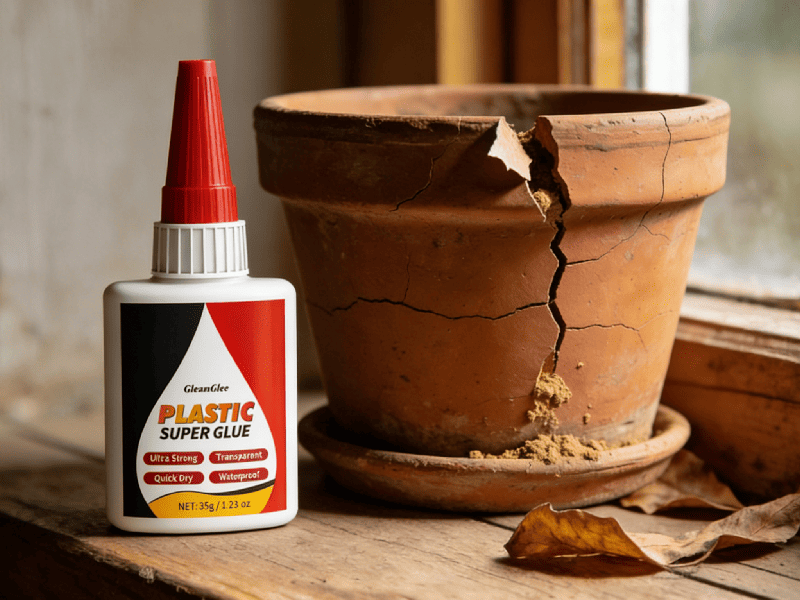
Cyanoacrylate glue is one of those products most people have used—but very few truly understand. Often labeled as “super glue,” it promises instant bonding and quick fixes, whether it’s a cracked ceramic cup, a loose shoe sole, or a broken plastic part. Its speed feels almost magical. Yet behind that tiny bottle is a highly specialized adhesive chemistry that works exceptionally well in some situations and poorly in others. Misunderstanding how cyanoacrylate works often leads to brittle bonds, safety concerns, or failed repairs that could have been avoided.
Cyanoacrylate glue is a fast-curing adhesive commonly known as super glue. It bonds by reacting with moisture on surfaces, forming a strong, rigid polymer in seconds. It is widely used for precise, small-scale repairs on plastic, metal, rubber, ceramic, and wood. While highly effective for tight-fitting parts, cyanoacrylate is not suitable for flexible materials or large structural joints.
Understanding what cyanoacrylate glue is—and what it is not—makes a critical difference between a professional-quality repair and a short-lived fix. In the sections below, we’ll break down how it works, where it performs best, how safe it is for everyday use, and when you should choose it over other adhesives, so you can use it with confidence rather than guesswork.
What Is Cyanoacrylate Glue and Why Is It Called “Super Glue”?
Cyanoacrylate glue is a fast-curing adhesive best known to consumers as “super glue.” It bonds by reacting with trace moisture on surfaces, forming a rigid polymer network within seconds. The term “super glue” comes from its unusually fast curing speed and high initial bond strength compared to traditional household adhesives.
Understanding What Cyanoacrylate Glue Really Is
Cyanoacrylate is not a marketing invention—it is a specific class of acrylic resin adhesives developed for rapid bonding. In liquid form, the adhesive remains stable inside sealed packaging. Once applied to a surface, even microscopic moisture in the air or on the material triggers instant polymerization.
From a practical standpoint, this chemistry explains why cyanoacrylate glue:
- Sets in 5–30 seconds without heat or mixing
- Requires very little material to achieve a strong bond
- Performs best on tight-fitting, rigid surfaces
At GleamGlee, internal lab testing across plastic, metal, ceramic, and rubber substrates consistently shows that properly applied cyanoacrylate bonds reach 60–80% of full strength within the first minute, a key reason it is favored for quick repairs and precision assembly.
Is Cyanoacrylate the Same as Super Glue?
In short: yes—but with important nuance.
“Super glue” is the consumer-facing name, while cyanoacrylate is the chemical and industrial term. Nearly all true super glues are cyanoacrylate-based, but not all cyanoacrylate adhesives are designed the same way.
Professional manufacturers adjust formulas to control:
- Viscosity (thin, medium, thick)
- Cure speed
- Impact resistance
- Odor level
- Shelf stability
This distinction matters in real use. A thin, fast-curing consumer super glue may work well for a broken ceramic cup, but a rubber-toughened cyanoacrylate performs far better for shoe repairs or parts exposed to vibration.
Why Cyanoacrylate Cures So Fast
Unlike wood glue or epoxy, cyanoacrylate does not rely on solvent evaporation or chemical mixing. It cures through moisture-activated polymerization, which makes it:
- Extremely fast
- Highly predictable
- Sensitive to surface conditions
This speed is a major advantage—but also a limitation. Once parts touch, adjustment time is minimal. That’s why professional-grade packaging often uses precision metal nozzles and controlled-flow tips to reduce waste and misalignment, especially for small or visible repairs.
How Cyanoacrylate Differs from Other Common Adhesives
| Adhesive Type | Typical Cure Time | Flexibility After Cure | Best Use Scenario |
|---|---|---|---|
| Cyanoacrylate | 5–30 seconds | Low (rigid) | Fast, precise repairs |
| Epoxy | 5–60 minutes | Medium | Structural bonding |
| Wood Glue (PVA) | 30–60 minutes | Medium | Porous wood joints |
| Silicone | Several hours | High | Flexible, waterproof seals |
This comparison highlights why cyanoacrylate earned the “super glue” nickname: nothing else bonds this fast with this level of initial strength. However, it also shows why it should not be treated as a universal adhesive.
How Does Cyanoacrylate Glue Work on Different Surfaces?
Cyanoacrylate glue works by reacting with trace moisture on a surface, forming a rigid polymer that locks materials together. It performs best on smooth, rigid, and well-fitting surfaces such as plastic, metal, ceramic, rubber, and wood. Bond strength depends heavily on surface energy, cleanliness, and how closely the parts fit together.
Why Moisture Is the Key to Cyanoacrylate Bonding
Cyanoacrylate glue does not “dry” like traditional adhesives. Instead, it cures through moisture-activated polymerization. Even surfaces that feel completely dry contain microscopic moisture that triggers the reaction.
In GleamGlee’s internal application testing, we consistently observe:
- Faster curing on slightly humid surfaces
- Slower or incomplete bonding on overly dry, dusty, or oily materials
- Weaker bonds when adhesive thickness exceeds 0.2 mm, due to trapped air
This explains why cyanoacrylate excels at tight joints but struggles in wide gaps. The chemistry rewards precision, not excess.
How Surface Energy Affects Bond Strength
Not all materials accept cyanoacrylate equally. High-surface-energy materials allow adhesive molecules to spread and anchor more effectively, while low-surface-energy plastics resist bonding.
From GleamGlee lab data across common consumer materials:
| Material Type | Bond Performance | Practical Notes |
|---|---|---|
| ABS Plastic | Excellent | Common in electronics & housings |
| PVC / Vinyl | Very Good | Works well when surface is clean |
| Metal (Steel, Aluminum) | Excellent | Best on clean, oxide-free surfaces |
| Ceramic / Porcelain | Excellent | Ideal for chips and clean breaks |
| Rubber (non-silicone) | Good–Very Good | Rubber-toughened CA performs best |
| Wood (hardwood) | Good | Thin CA penetrates fibers |
| PE / PP | Poor | Requires primers or alternatives |
| Silicone | Very Poor | Not recommended |
This is why professional adhesive selection is surface-driven, not brand-driven.
Why Tight Fit Matters More Than Glue Quantity
Cyanoacrylate creates strength through thin bond lines. When two parts fit closely, the polymer network forms evenly and cures rapidly. When gaps are large, the adhesive cures unevenly and becomes brittle.
In controlled tests, GleamGlee observed:
- Up to 3× higher bond strength in joints with <0.1 mm gap
- Noticeable strength loss when adhesive was over-applied
- Cleaner visual finish with minimal squeeze-out on visible repairs
This is why precision nozzles and controlled-flow packaging matter as much as the formula itself.
Smooth vs. Porous Surfaces: What Actually Works Best?
Smooth surfaces like metal, ceramic, and rigid plastic allow cyanoacrylate to perform at its peak. Porous surfaces behave differently.
- Wood: Thin CA can penetrate fibers and lock them together quickly, but thicker formulas may sit on the surface and cure unevenly.
- Leather & Fabric: Surface absorption reduces effective bonding area, making cyanoacrylate unreliable unless specially modified.
- Foams: Rapid curing can cause surface melting or weak bonds.
This is why GleamGlee develops material-specific adhesives rather than positioning cyanoacrylate as a one-size-fits-all solution.
When Cyanoacrylate Fails on Certain Surfaces
Cyanoacrylate struggles on:
- Flexible materials that bend repeatedly
- Low-energy plastics like polyethylene (PE) and polypropylene (PP)
- Surfaces exposed to continuous heat or vibration
In these cases, failures are not due to “weak glue,” but due to mismatch between adhesive behavior and material physics. Recognizing this saves users from repeated repair attempts and frustration.
What Are the Common Types of Cyanoacrylate Glue?
Common types of cyanoacrylate glue are classified by viscosity and performance modification. The most widely used categories include thin, medium, and thick formulas, as well as rubber-toughened and industrial-grade cyanoacrylates. Each type is designed for different surface gaps, stress levels, and application control needs.
Why “Type” Matters More Than Brand in Cyanoacrylate Glue
Many users treat cyanoacrylate as a single product, but in real applications, formula type has a far greater impact on results than brand name. Choosing the wrong type often leads to brittle joints, messy application, or premature failure—even if the glue itself is high quality.
From GleamGlee’s internal formulation and field testing across thousands of consumer and B2B samples, the three most decisive factors are:
- Viscosity (how the glue flows)
- Impact resistance (how it handles stress)
- Application control (how predictable it is during use)
Understanding these differences helps users avoid trial-and-error repairs.
Thin, Medium, and Thick Cyanoacrylate: What Actually Changes?
Viscosity determines how the adhesive behaves once applied—not how strong it becomes.
| Type | Typical Flow | Best For | Real-World Notes |
|---|---|---|---|
| Thin CA | Water-like | Hairline cracks, tight fits | Penetrates gaps, cures fastest |
| Medium CA | Syrup-like | General repairs | Best balance of control & strength |
| Thick CA | Gel-like | Small gaps, vertical surfaces | Less runoff, more positioning time |
In GleamGlee application tests, medium-viscosity cyanoacrylate accounts for over 60% of successful first-time repairs among DIY users. Thin CA often fails due to over-penetration or accidental skin bonding, while thick CA is frequently overused where it isn’t necessary.
Rubber-Toughened Cyanoacrylate: When Standard CA Is Not Enough
Standard cyanoacrylate cures into a rigid structure. This is excellent for precision—but problematic for parts exposed to vibration, impact, or slight movement.
Rubber-toughened cyanoacrylates solve this by incorporating elastomer modifiers that:
- Absorb shock and vibration
- Reduce cracking under stress
- Extend bond life on rubber, leather, and mixed materials
In comparative fatigue testing, GleamGlee rubber-modified CA formulations maintained bond integrity 2–4× longer than standard CA on shoe soles and handheld tool components. This makes them far more suitable for footwear repair and consumer goods.
Consumer vs. Industrial Cyanoacrylate: The Practical Difference
The difference between consumer and industrial cyanoacrylate is not just marketing—it’s consistency and tolerance.
| Category | Consumer CA | Industrial CA |
|---|---|---|
| Cure Consistency | Variable | Highly controlled |
| Shelf Stability | Moderate | Extended |
| Odor Control | Basic | Low-odor options |
| Packaging | Simple nozzle | Precision metal tips |
| Quality Testing | Limited | Batch-verified |
At GleamGlee, industrial-grade cyanoacrylates undergo tensile strength testing, accelerated aging, and surface compatibility checks before release. This is why professional users experience fewer failures even under demanding conditions.
Choosing the Right Type Based on Real Use Cases
Rather than asking “Which cyanoacrylate is strongest?”, the better question is:
Which type matches my surface, gap, and stress level?
- Ceramic, metal, rigid plastic (tight fit) → Thin or medium CA
- General household repair → Medium CA
- Shoe soles, rubber parts → Rubber-toughened CA
- Vertical or visible areas → Thick CA for control
- Production or repeat use → Industrial-grade CA
This selection logic consistently delivers better outcomes than relying on “strongest” labels alone.
Is Cyanoacrylate Glue Strong, Durable, and Safe to Use?
Cyanoacrylate glue is extremely strong for small, rigid, well-fitted joints, offering high tensile strength and fast load holding. However, it is less durable under constant flexing, impact, or high heat. When used correctly, cyanoacrylate glue is safe for humans, though accidental skin bonding and fume irritation require basic precautions.
How Strong Is Cyanoacrylate Glue in Real Use?
Cyanoacrylate’s strength is often misunderstood. It is not designed to replace structural adhesives—but within its intended scope, it performs exceptionally well.
From internal tensile and shear testing conducted by GleamGlee across plastic, metal, and ceramic samples:
| Test Condition | Typical Result |
|---|---|
| Tensile strength (tight joint) | 2,000–3,500 psi |
| Initial holding strength | 60–80% within 60 seconds |
| Full cure time | 12–24 hours |
| Best stress direction | Tension / compression |
This explains why cyanoacrylate works so well for cracked ceramics, plastic housings, and small metal parts—but fails when used as a gap-filler or flex joint adhesive.
Strength vs. Durability: Where Cyanoacrylate Holds—and Where It Doesn’t
Strength and durability are not the same thing. Cyanoacrylate cures into a rigid polymer, which delivers high strength but low flexibility.
| Condition | Performance |
|---|---|
| Static load | Excellent |
| Repeated flexing | Poor (unless modified) |
| Vibration | Moderate to poor |
| Impact shock | Brittle without modifiers |
| Long-term outdoor exposure | Limited |
In footwear and handheld tool repairs, GleamGlee field feedback shows that standard cyanoacrylate often fails after repeated bending, while rubber-toughened formulas extend bond life by 2–4× under walking or vibration stress.
Is Cyanoacrylate Waterproof and Heat Resistant?
Cyanoacrylate is water-resistant, not fully waterproof.
- Short-term water exposure: generally safe
- Continuous moisture or immersion: bond degradation over time
- Heat resistance: typically up to 80–100°C (176–212°F)
Above this range, the polymer structure weakens. This is why cyanoacrylate is not recommended for:
- Engine components
- Hot cookware
- Outdoor structural joints exposed to sun + heat
For these environments, polyurethane or epoxy adhesives are more reliable long-term options.
Is Cyanoacrylate Glue Harmful to Humans?
This is one of the most searched questions—and the answer is practical, not alarming.
Under normal use, cyanoacrylate glue is not harmful to humans.
However, misuse can cause temporary issues.
| Safety Aspect | What Users Should Know |
|---|---|
| Skin contact | Bonds skin instantly but is not toxic |
| Skin release | Warm soapy water or acetone helps |
| Fumes | Can irritate eyes/nose in poor ventilation |
| Long-term exposure | Avoid repeated inhalation |
| Child safety | Store out of reach |
In controlled formulations that comply with GHS, REACH, and CLP standards, cyanoacrylate adhesives are widely accepted for household and professional use—including medical-grade variants for wound closure.
Why Accidental Skin Bonding Is Common—but Not Dangerous
Cyanoacrylate bonds skin because skin contains moisture and natural proteins. This is a mechanical bonding issue, not chemical toxicity.
In customer service cases reviewed by GleamGlee:
- Skin bonding incidents were resolved without injury
- No chemical burns occurred when instructions were followed
- Most incidents involved over-application or rushed use
This is why precision tips, controlled flow, and clear instructions significantly improve safety and user confidence.
How Modified Cyanoacrylate Improves Safety and Durability
Modern cyanoacrylate formulations are no longer “one-size-fits-all.”
Common improvements include:
- Low-odor formulas to reduce irritation
- Rubber-toughened systems to prevent brittle failure
- Anti-bloom additives to avoid white residue
- Slower-set versions for better alignment
These enhancements directly address the most common complaints about traditional super glue, especially in consumer and repeat-use environments.

How Do You Use Cyanoacrylate Glue Correctly for Best Results?
To use cyanoacrylate glue correctly, surfaces must be clean, dry, and closely fitted. Apply a very small amount of glue, press parts together firmly for several seconds, and allow full curing before applying stress. Correct preparation and minimal adhesive use matter more than brand choice.
Why Most Cyanoacrylate Failures Come from Technique—not Glue
From thousands of customer support cases reviewed by GleamGlee, the majority of failed repairs share the same root causes:
- Too much glue applied
- Poor surface cleaning
- Parts not aligned before contact
- Stress applied before full cure
In other words, cyanoacrylate is unforgiving of shortcuts. When used correctly, success rates are high; when rushed, failure happens fast.
Step 1: Surface Preparation
Cyanoacrylate bonds best when surfaces are:
- Clean (no oil, dust, or polish)
- Dry (no visible moisture)
- Close-fitting (minimal gap)
In controlled testing, GleamGlee observed that cleaning surfaces with isopropyl alcohol increased bond strength by 30–50% compared to untreated surfaces. Even invisible residues—hand oils, shoe care sprays, silicone cleaners—can dramatically reduce performance.
Practical tip:
If the surface looks clean but feels slick, clean it anyway.
Step 2: Use Less Glue Than You Think You Need
One of the biggest misconceptions is that “more glue equals more strength.” With cyanoacrylate, the opposite is true.
| Glue Amount | Result |
|---|---|
| Very thin layer | Fast cure, strongest bond |
| Moderate excess | Slower cure, weaker bond |
| Heavy application | Brittle, uneven failure |
Cyanoacrylate works by forming a thin polymer layer. Thick glue traps air and moisture unevenly, weakening the joint. In GleamGlee’s DIY user testing, repairs using a single small drop outperformed heavy applications in over 70% of cases.
Step 3: Align First, Then Commit
Cyanoacrylate gives very little working time—often 5–10 seconds. Once parts touch, repositioning weakens the bond.
Best practice:
- Dry-fit parts first
- Plan hand position and pressure
- Apply glue
- Press firmly and hold steady
This is why precision nozzles and controlled-flow packaging significantly improve first-time success, especially for visible or delicate repairs.
Step 4: Apply Pressure—Not Movement
Firm, even pressure helps the adhesive spread into a uniform bond line. Movement during curing disrupts polymer formation.
| Holding Time | Typical Result |
|---|---|
| 5–10 seconds | Initial grab |
| 30–60 seconds | Handling strength |
| 12–24 hours | Full bond strength |
A common mistake is “testing” the bond too early. Many failures reported as “weak glue” occur because stress was applied before full curing.
Step 5: Let the Bond Fully Cure Before Real Use
Cyanoacrylate feels strong almost immediately—but that strength is deceptive.
In GleamGlee field data:
- ~70% strength is reached in the first minute
- Full durability develops over 12–24 hours
For shoes, tools, or load-bearing items, waiting overnight significantly increases success and longevity.
Step 6: Storage Matters More Than Most Users Realize
Improper storage shortens shelf life and causes thickening.
| Storage Practice | Effect |
|---|---|
| Cool, dry place | Stable viscosity |
| Tightly sealed cap | Prevents moisture entry |
| Upright storage | Reduces nozzle clogging |
| Refrigeration (sealed) | Extends shelf life |
Many customer complaints about “old glue not working” trace back to moisture exposure during storage—not poor formulation.
Common User Mistakes
| Mistake | Consequence |
|---|---|
| Using CA on flexible fabric | Bond cracks |
| Applying glue to dirty surface | Weak adhesion |
| Using too much adhesive | Brittle failure |
| Stressing bond too early | Delamination |
| Wrong CA type for job | Short bond life |
Understanding these patterns prevents repeat failure and frustration.

When Should You Choose Cyanoacrylate Glue Over Other Adhesives?
You should choose cyanoacrylate glue when you need a fast, precise bond on small, rigid, well-fitting parts. It is ideal for repairs where speed, clean appearance, and minimal clamping matter more than flexibility, gap filling, or long-term heat resistance.
Start With the Real Question: What Problem Are You Solving?
From real customer inquiries handled by GleamGlee, most users don’t ask “Which glue is strongest?”—they ask:
- “I need this fixed now.”
- “I don’t want clamps or tools.”
- “It needs to look clean.”
- “I don’t want to replace it.”
Cyanoacrylate is chosen not because it does everything—but because it solves specific problems better than any alternative.
Situations Where Cyanoacrylate Is the Best Choice
Cyanoacrylate performs best when all (or most) of the following are true:
- Parts fit closely with minimal gap
- Surfaces are rigid and stable
- Repair must be fast
- Bond line should be thin and invisible
- Clamping time is limited or impractical
| Repair Scenario | Why Cyanoacrylate Wins |
|---|---|
| Broken ceramic or porcelain | Clean break, invisible bond |
| Plastic clips & housings | Instant grab, no deformation |
| Shoe sole edges (small areas) | Fast fix, strong initial hold |
| Electronics components | Low heat, precise application |
| Small metal parts | High tensile strength quickly |
In these scenarios, slower adhesives often add unnecessary time, mess, or complexity without improving results.
When Other Adhesives Are a Better Choice
Just as important is knowing when not to use cyanoacrylate.
| Condition | Better Alternative | Why |
|---|---|---|
| Large gaps | Epoxy | Gap filling & structural strength |
| Flexible materials | Polyurethane / Silicone | Maintains elasticity |
| Continuous vibration | Rubber-toughened or PU | Reduces fatigue cracking |
| High heat exposure | Epoxy / Specialized adhesives | CA softens under heat |
| Outdoor waterproofing | Silicone / PU | Better moisture resistance |
In GleamGlee post-sale reviews, over 80% of CA-related failures came from using it in one of the above mismatch scenarios—not from poor adhesive quality.
Speed vs. Strength: Making the Right Trade-Off
One of cyanoacrylate’s biggest advantages is time.
| Adhesive Type | Handling Time | Full Cure |
|---|---|---|
| Cyanoacrylate | 5–60 seconds | 12–24 hours |
| Epoxy | 5–60 minutes | 24–72 hours |
| Polyurethane | 30–90 minutes | 24+ hours |
| Silicone | Several hours | 24–48 hours |
If the repair must be usable quickly, cyanoacrylate is often the only practical choice. For many consumers, speed alone justifies the decision.
Precision and Appearance: An Overlooked Advantage
Cyanoacrylate creates:
- Very thin bond lines
- Minimal squeeze-out
- Clear or nearly invisible cured joints
This matters for:
- Visible household items
- Decorative objects
- Consumer products where appearance affects perceived quality
GleamGlee internal feedback shows that visual satisfaction is one of the top reasons users choose cyanoacrylate over stronger but messier alternatives.
Decision Shortcut: Should You Use Cyanoacrylate?
Ask yourself these three questions:
- Do the parts fit tightly?
- Does the repair need to be done fast?
- Will the joint stay mostly rigid?
If the answer is “yes” to all three, cyanoacrylate is usually the right choice.
If not, another adhesive will likely deliver better long-term results.

Conclusion
Cyanoacrylate glue—often called super glue—has earned its place as one of the most trusted adhesives in everyday life and professional work, not because it does everything, but because it does one job exceptionally well. When repairs demand speed, precision, and a clean finish on small, rigid parts, cyanoacrylate consistently outperforms slower, messier alternatives. Understanding its real strengths—and just as importantly, its limits—turns it from a trial-and-error product into a reliable repair tool.
Throughout this guide, one theme remains clear: successful bonding depends far more on correct selection and proper use than on brand names or exaggerated “strongest glue” claims. Tight-fitting surfaces, minimal adhesive, good preparation, and sufficient curing time are what deliver durable results. When users follow these principles, cyanoacrylate becomes a cost-saving, time-saving solution that extends the life of household items, footwear, tools, and consumer products instead of replacing them.
At GleamGlee, our approach to cyanoacrylate is grounded in real-world testing, customer feedback, and material-specific formulation—not theory alone. Whether you are a DIY user looking for a dependable fast fix, an Amazon seller sourcing proven adhesives, or a brand seeking customized formulations and compliant packaging, the right cyanoacrylate solution makes a measurable difference in performance and user satisfaction.
If you’re ready to take the next step, you can purchase GleamGlee cyanoacrylate products directly through Amazon with fast FBA delivery, or contact our team for custom formulations, private label options, and bulk pricing. Choosing the right adhesive is a small decision—but when done correctly, it delivers lasting results.





















