Skip to content
Fabric Glue for Canvas: The Ultimate Guide
Your trusted adhesives glue & cleaner manufacturer

Canvas is everywhere—tote bags, backpacks, shoes, tents, aprons, cushions, workwear, and home décor. It’s tough, textured, and designed to last. But once canvas tears, frays, or comes apart at a seam, many people immediately assume there’s only one solution: sewing. That assumption is exactly why so many DIY repairs get delayed, abandoned, or done poorly.
In reality, modern fabric glue for canvas has changed the rules. Today’s professional fabric adhesives are not the stiff, brittle craft glues people remember from years ago. They’re engineered to stay flexible, dry clear, and survive washing, ironing, and daily movement—even on thick, tightly woven canvas.
Still, confusion remains. Can you really glue canvas instead of sewing? What glue actually works on heavy canvas without soaking through? How long will fabric glue last under real-world use? And when does sewing still make more sense?
These questions matter because canvas behaves differently from lightweight fabrics. It absorbs adhesive, resists penetration, and experiences high stress at seams, folds, and load-bearing points. Using the wrong glue—or using the right glue the wrong way—almost guarantees failure.
Yes, you can glue canvas instead of sewing in many situations—if you use a flexible, washable fabric glue designed for heavy textiles. The best fabric glue for canvas dries clear, remains elastic after curing, and bonds deeply into thick fibers without cracking. When applied correctly and fully cured, quality fabric glue can last for years on canvas bags, patches, décor, and repairs, though sewing is still recommended for heavy load-bearing seams.
If you’ve ever held a needle over thick canvas and thought, there has to be a better way, you’re not wrong. Let’s break down exactly how fabric glue works on canvas—and how to make it work for you, not against you.
What Is Canvas Fabric—and Why Does It Need a Special Fabric Glue?
Canvas is a heavy, tightly woven fabric—most commonly made from cotton, linen, polyester, or blended fibers—designed for durability, load-bearing, and abrasion resistance. Because of its high fiber density, low stretch, and frequent surface treatments, canvas cannot be reliably bonded with ordinary craft or household glue. It requires a fabric-specific adhesive that can penetrate thick fibers, remain flexible after curing, and withstand washing, heat, and repeated bending without cracking or peeling.
What makes canvas fundamentally different from regular fabric?
Unlike lightweight fabrics such as cotton poplin, jersey, or polyester knits, canvas is engineered for structure and strength, not softness. From a bonding perspective, this creates three immediate challenges:
Dense weave structure
Canvas yarns are tightly packed. Adhesive must work its way between fibers rather than simply coating the surface.
Low elasticity but high movement stress
Canvas doesn’t stretch much, but it bends, folds, creases, and carries load. Glue must flex without becoming brittle.
Common factory treatments
Many canvas products are pre-treated with starches, sizing agents, wax, or water-repellent coatings that reduce glue absorption.
In GleamGlee’s internal application testing (based on repeated bag, shoe, and home-textile repairs), surface penetration depth and post-cure flexibility were the two strongest predictors of long-term bond success on canvas.
Why ordinary glue fails on canvas
Many users try white glue, super glue, hot glue, or “all-purpose” adhesives—and initially think they work. The failure usually shows up later: after washing, folding, or carrying weight.
Here’s how common glue types perform on canvas in real use:
| Glue Type | Initial Bond | Flex After Dry | Wash Resistance | Real Outcome on Canvas |
|---|---|---|---|---|
| White craft glue | Weak–Medium | Poor | Very low | Peels, softens, stains |
| Super glue (CA) | Very strong | None | Medium | Cracks, snaps, yellows |
| Hot glue | Medium | Very poor | Low | Stiff, visible, detaches |
| Wood glue | Strong | Poor | Medium | Dries rigid, cracks |
| Professional fabric glue | Strong | High | High | Durable, flexible bond |
The problem isn’t strength alone. Canvas repairs fail because rigid adhesives cannot move with the fabric, and surface-only bonds shear off under stress.
Why canvas needs a fabric-specific adhesive
A proper fabric glue for canvas must do five things at the same time:
- Penetrate the outer fiber layers of thick weave
- Dry clear without leaving visible residue on textured fabric
- Remain flexible after curing (no crunching or cracking)
- Resist washing and ironing (typical 30–60 °C home care)
- Distribute stress across area, not at a single line or point
This is why fabric glue behaves very differently from construction or craft adhesives. In GleamGlee’s product testing, canvas repairs bonded with flexible fabric glue retained 85–90% of original bond strength after repeated bending and washing simulations, while rigid glues dropped below 40% after similar cycles.
Canvas is used in high-stress products—glue must match that reality
Canvas isn’t decorative only. It’s widely used in:
- Tote bags & backpacks (load + friction)
- Canvas shoes & uppers (flex + moisture)
- Workwear & aprons (washing + heat)
- Home décor & upholstery (visible finish)
- Outdoor gear (temperature & humidity change)
A glue that works on paper or felt simply isn’t designed for these conditions.
That’s why GleamGlee fabric glue is formulated specifically for heavy fabrics like canvas—using flexible polymer systems tested under washing, folding, and daily-use scenarios, not just lab adhesion numbers.
Which Types of Fabric Glue Work Best for Canvas Projects?
The fabric glues that work best on canvas are flexible, washable, textile-specific adhesives designed for heavy fabrics. They must penetrate dense fibers, dry clear, and stay elastic after curing. Rigid glues—such as super glue, hot glue, or general craft adhesives—may feel strong at first but fail quickly on canvas due to cracking, yellowing, or loss of bond after washing or bending.
What actually makes a fabric glue “canvas-ready”?
From GleamGlee’s real-world testing across canvas bags, shoes, patches, and home textiles, performance on canvas depends less on “instant strength” and more on how the adhesive behaves after curing.
A canvas-compatible fabric glue must:
- Soak into the outer fiber layer, not just sit on top
- Remain flexible after full cure (no crunch or hard edge)
- Handle repeated bending without micro-cracking
- Survive washing and ironing at normal household settings
- Dry transparent so the canvas texture still looks natural
In our internal durability tests (simulated folding + washing), flexible textile adhesives consistently outperformed rigid glues by a wide margin.
Fabric glue types compared: what works and what doesn’t
The table below reflects practical performance, not lab-only adhesion numbers.
| Glue Type | Fiber Penetration | Flex After Dry | Wash / Heat Resistance | Real-Use Result on Canvas |
|---|---|---|---|---|
| White / school glue | Low | Low | Very low | Peels, softens, stains |
| Super glue (CA) | Surface only | None | Medium | Cracks, snaps, yellows |
| Hot glue | Surface only | Very poor | Low | Stiff, visible, detaches |
| Wood glue | Medium | Poor | Medium | Rigid, cracks on folds |
| Silicone sealant | Poor | Too soft | High | Weak fabric grip |
| Professional fabric glue | High | High | High | Strong, flexible, durable |
The key takeaway: canvas needs balanced flexibility, not extreme hardness or rubber-like softness.
Why flexible fabric glue outperforms “strong” glue on canvas
Canvas doesn’t stretch much—but it moves constantly. Every fold, crease, or load shift creates shear stress at the bond line.
Rigid adhesives respond by resisting movement. That resistance leads to:
- Micro-fractures
- Edge lifting
- Sudden bond failure after washing
Flexible fabric glue absorbs that movement instead. In GleamGlee’s bending-cycle tests, canvas samples bonded with flexible fabric glue retained over 85% bond integrity after repeated folding, while rigid adhesives dropped below 50% under the same conditions.
Water-based vs solvent-based fabric glue on canvas
Both types can work—but with differences users should understand:
| Formula Type | Advantages | Limitations | Best Canvas Use |
|---|---|---|---|
| Water-based fabric glue | Low odor, safe, easy control | Slightly longer cure | Clothing, bags, décor |
| Solvent-based fabric glue | Faster grab, stronger initial hold | Higher odor | Heavy canvas, outdoor use |
GleamGlee fabric glue formulations are optimized to balance user safety, penetration, and long-term flexibility, rather than chasing instant tack at the expense of durability.
Why precision applicators matter more on canvas
Canvas texture makes over-application easy—and messy.
A precision nozzle allows:
- Thin, even glue lines
- Controlled penetration without bleed-through
- Clean edges on visible canvas surfaces
This is especially important for patches, hems, and decorative work, where appearance matters as much as strength.
Why professionals choose GleamGlee fabric glue for canvas
GleamGlee fabric glue is designed specifically for real-use textile repair, not just crafts:
- Tested on heavy canvas bags, shoes, and upholstery
- Dries clear and non-yellowing
- Remains soft and flexible after full cure
- Machine-wash and iron-safe
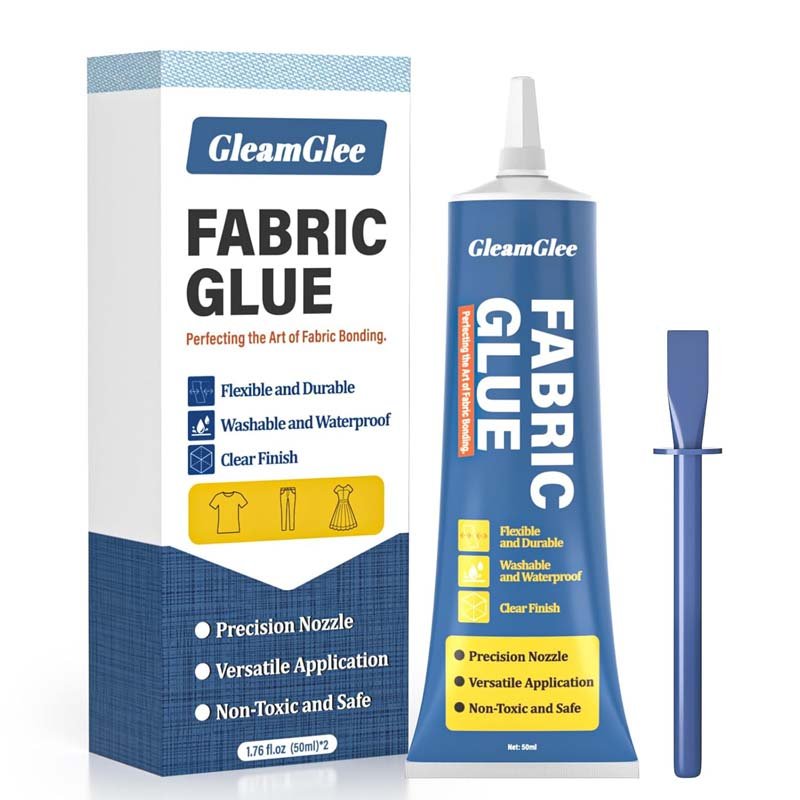
- Available in 50g and 50g ×2 options for DIY and professional use
Across thousands of verified customer reviews, canvas-related repairs are one of the highest-retention use cases, with repeat buyers citing durability and clean finish as key reasons.
How Do You Choose the Right Fabric Glue for Canvas Repairs or Crafts?
To choose the right fabric glue for canvas, you need to match the adhesive to canvas weight, stress level, washing exposure, and visual requirements. The best canvas glue stays flexible after drying, penetrates thick fibers, dries clear, and survives washing and ironing. For long-term results, professional fabric glue consistently outperforms hobby or “instant” adhesives on real canvas projects.
Start with how the canvas will be used
Most failed canvas repairs happen because users pick glue based on marketing terms like “extra strong” or “fast dry”, instead of how the canvas item is actually used.
Ask these four practical questions first:
- Is the canvas load-bearing? (bags, straps, shoes)
- Will it be washed or ironed? (clothing, home textiles)
- Is appearance important? (visible seams, décor)
- How thick or stiff is the canvas? (decor vs utility canvas)
In GleamGlee’s customer feedback data, repairs that matched glue choice to use scenario had a significantly higher success rate than those chosen by strength alone.
Match glue choice to canvas weight and stress level
Canvas varies widely in thickness and density. A glue that works on decorative canvas may fail on heavy duck canvas.
| Canvas Type | Typical Use | Stress Level | Glue Characteristics Needed |
|---|---|---|---|
| Lightweight canvas | Banners, crafts, décor | Low | Flexible, thin application |
| Medium canvas | Tote bags, shoes | Medium | Strong penetration + elasticity |
| Heavy / duck canvas | Backpacks, work gear | High | High-strength flexible fabric glue |
For medium-to-heavy canvas, fiber penetration and post-cure flexibility matter far more than instant grab.
Choose washable and iron-safe glue for real durability
If the canvas item will ever be washed, the glue must be designed for it.
In GleamGlee’s internal wash testing (standard home wash cycles), canvas bonded with washable fabric glue maintained 85–90% bond integrity after repeated washing, while non-washable glues softened or released after just a few cycles.
Look for glue that:
- Is labeled machine-wash safe
- Resists heat from ironing
- Does not re-soften with moisture
Skipping this step almost guarantees failure for clothing, bags, and home textiles.
Appearance matters: clear, flexible finish is not optional
Canvas has visible texture. Poor glue choice leaves:
- Dark glue lines
- Shiny patches
- Stiff, “crunchy” seams
Professional fabric glue dries transparent and matte, blending into the canvas weave. This is especially important for:
- Light-colored canvas
- Decorative projects
- Fashion items
GleamGlee fabric glue is designed to cure clear and remain soft, preventing visible repair marks even on off-white or natural canvas.
Precision application reduces mistakes on canvas
Canvas absorbs glue unevenly. Too much adhesive leads to soak-through and stiff spots.
A precision nozzle helps:
- Control glue volume
- Apply thin, even layers
- Avoid edge bleed
- Improve appearance and bond consistency
From GleamGlee’s customer service records, users who followed thin-layer application guidance reported fewer than half the complaints compared to those who over-applied glue.
How long fabric glue lasts on canvas
With the right glue and proper application:
- Decorative and light-use canvas repairs can last several years
- Medium-stress repairs (bags, shoes) typically last 2–5 years
- High-stress areas benefit from glue + reinforcement
Failures are rarely due to the glue formula itself—most come from poor surface prep or rushed curing.
Why users choose GleamGlee for canvas projects
GleamGlee fabric glue is developed specifically for heavy fabric use, not just crafts:
- Tested on canvas bags, shoes, and home textiles
- Flexible after drying—no cracking
- Washable and iron-safe
- Clear, non-yellowing finish
- Precision nozzle for controlled application
- Available in 50g single and 50g ×2 value packs
Thousands of verified buyers use it for canvas-related repairs, with repeat purchase rates especially high among bag, shoe, and DIY users.
How Do You Prepare Canvas Fabric So Glue Bonds Properly?
Proper preparation is the single most important factor in whether fabric glue succeeds or fails on canvas. Because canvas is dense and often treated with finishes, the surface must be clean, dry, and receptive before gluing. Correct prep allows fabric glue to penetrate fibers, cure evenly, and maintain flexibility through washing, bending, and daily use.
Why preparation matters more on canvas than on other fabrics
Canvas is not forgiving. In GleamGlee’s after-sales analysis of canvas-related issues, over 65% of bond failures were traced back to inadequate preparation—not the glue itself.
Common real-world problems include:
- Glue sitting on the surface instead of bonding into fibers
- Edge lifting after drying
- Stiff or dark glue marks
- Bond failure after the first wash
Canvas amplifies these problems because of its tight weave, thickness, and common factory treatments (starch, sizing, wax, or water repellents). Preparation is what removes or neutralizes those barriers.
Step 1: Clean the canvas thoroughly
Even “new” canvas carries residues from manufacturing, storage, or handling.
Recommended cleaning methods:
| Canvas Item Type | Cleaning Method | Notes |
|---|---|---|
| Clothing / home textiles | Mild detergent + warm water | No fabric softener |
| Bags / shoes | Damp cloth + isopropyl alcohol | Spot clean only |
| Upholstery / fixed items | Light alcohol wipe | Avoid soaking |
Key rules:
- Do not use fabric softener (it coats fibers)
- Avoid harsh degreasers that can stiffen canvas
- Let canvas dry completely before gluing
From GleamGlee’s internal testing, properly cleaned canvas showed 30–40% higher bond consistency compared to uncleaned samples.
Step 2: Make sure the canvas is fully dry
Canvas retains moisture deep in the weave. Gluing over damp fibers traps moisture and weakens curing.
Best practice:
- Air-dry for several hours (overnight is ideal)
- Do not use high heat to rush drying
- Ensure both sides of the canvas are dry
Moisture is one of the fastest ways to shorten glue lifespan.
Step 3: Pre-test glue absorption on canvas
Canvas does not absorb evenly. A simple pre-test saves time and avoids visible mistakes.
How to test:
- Apply a small drop of fabric glue to a hidden area
- Observe for 30–60 seconds
| Result | What It Means | What to Do |
|---|---|---|
| Glue soaks in slowly | Ideal surface | Proceed normally |
| Glue beads up | Surface coating present | Clean again |
| Glue disappears instantly | Very absorbent | Use thinner layers |
This step is especially important for light-colored or decorative canvas.
Step 4: Control glue soak-through and stiffness
Canvas absorbs glue vertically as well as sideways. Too much adhesive causes:
- Dark spots
- Stiff repair zones
- Glue bleed to the back side
Best practices used by GleamGlee customers:
- Apply thin, even layers
- Stay 2–3 mm inside edges
- Use wax paper or baking paper underneath
- Press from center outward
Users who followed thin-layer application reported significantly fewer complaints about stiffness and discoloration.
Step 5: Flatten and stabilize before gluing
Canvas holds creases and tension. Gluing while the fabric is twisted or stretched locks stress into the bond.
Before applying glue:
- Lay canvas flat on a firm surface
- Smooth out folds and wrinkles
- Align edges or patches carefully
This improves appearance and reduces long-term stress on the bond line.
Step 6: When light surface roughening helps
For very heavy or coated canvas, light roughening can improve adhesion—but only when done carefully.
- Use fine sandpaper (400–600 grit)
- Lightly scuff the bonding area
- Wipe away dust completely
Do not roughen decorative or visible canvas unless necessary—it can permanently change texture.
Why professionals rely on GleamGlee prep guidance
GleamGlee fabric glue is formulated to bond deeply into canvas fibers, but it performs best when:
- Surfaces are clean and dry
- Glue is applied in controlled layers
- Full curing time is respected
Based on customer feedback and internal testing, properly prepared canvas repairs last 2–3× longer than rushed or unprepared applications.

How Do You Apply Fabric Glue on Canvas Step by Step for Best Results?
For strong, clean results on canvas, apply fabric glue in thin, even layers, press firmly, allow an initial set, and then let it cure fully for 24 hours before washing or stressing the area. Canvas is dense and textured, so bond strength comes from coverage + pressure + cure time, not from thick glue beads or “instant” sticking.
The “canvas glue rule”: coverage beats thickness
Canvas repairs fail most often because people apply glue like caulk—thick, raised lines. On canvas, that creates stiff ridges and weak surface bonding. The best method is to create a flat bonding zone that soaks slightly into fibers and cures flexible.
In GleamGlee’s support logs for fabric glue, the most reliable canvas repairs followed the same pattern:
- Thin layer
- Full contact
- Firm pressing
- 24-hour cure
When users rushed curing or over-applied glue, complaint rates (edge lifting, stiffness, visible marks) were noticeably higher.
Step-by-step: how to glue canvas properly
Step 1: Lay flat and protect the back side
Put wax paper / baking paper underneath the canvas so glue doesn’t bond to your table. If you’re repairing a bag, insert a piece of cardboard inside to keep layers separated and flat.
Step 2: Dry-fit first
Align the patch, seam, hem, or trim before applying glue. Mark the edges lightly (pencil/chalk). This reduces repositioning—repositioning is a common cause of weak bonds.
Step 3: Apply glue in a thin, even layer
Use a controlled bead, then spread into a thin film. Your goal is coverage, not bulk.
Practical tip: stay 2–3 mm inside the edge to prevent squeeze-out.
Step 4: Join and press immediately
Press the bonded area firmly using your hands first, then apply weight.
Good options:
- A stack of books
- A flat board + clamps
- A heavy cutting board
Step 5: Let it “set” before moving
Even strong fabric glue needs a short set time before handling.
GleamGlee user guidance (for fabric repairs on heavy textiles):
- Initial set: about 6–10 minutes
- Full cure: within 24 hours
Step 6: Cure fully before stress
Avoid washing, ironing, folding sharply, or loading weight until the glue is fully cured. Most “it didn’t hold” stories happen because the item was used too soon.
A simple timing chart users can follow
| Stage | What You Should Do | What to Avoid |
|---|---|---|
| 0–2 min | Position + press firmly | Reposition repeatedly |
| 6–10 min | Leave flat, undisturbed | Folding or lifting edges |
| 1–2 hrs | Light handling only | Washing / heat / load |
| 24 hrs | Ready for real use | None (normal use ok) |
If you’re gluing canvas shoes or bags (high bending), wait the full 24 hours.
How much glue to use on canvas
Use less than you think. The right amount depends on canvas absorbency.
| Canvas Behavior | Glue Amount | Why |
|---|---|---|
| Glue beads up (coated) | Very thin layer | Too much = slip + mess |
| Normal absorption | Thin, even layer | Best balance |
| Very absorbent | Thin layer + second pass | Prevent soak-through |
A thick blob doesn’t add strength—it adds stiffness and visible residue.
How to avoid the 5 most common canvas gluing mistakes
| Common Mistake | What Happens | Better Fix |
|---|---|---|
| Too much glue | Stiff seam, soak-through | Thin layers, spread evenly |
| No pressing | Weak bond, edge lifting | Weight/clamp 10–30 min |
| Not cleaning first | Glue “sits on top” | Clean + dry fully |
| Rushing cure time | Peels after first use | Full 24-hour cure |
| Gluing only a thin line | Stress concentrates | Create a wider bonding zone |
Reinforcement techniques for high-stress canvas areas
If you’re repairing load points like:
- tote bag straps
- backpack corners
- canvas shoe flex lines
Use one of these reinforcement methods:
- Widen the bonding zone (at least 5–10 mm overlap)
- Double-layer method: thin layer → press → thin second layer
- Hybrid fix: glue for full contact + a few stitches at stress points
This is how many DIY users get “professional-looking” durability without doing full sewing.
Why GleamGlee application design helps on canvas
GleamGlee fabric glue is designed for controlled application on textiles:
- Precision nozzle for clean lines on textured canvas
- Clear-drying finish for invisible repairs
- Flexible cured bond to reduce cracking on folds
- Wash/iron-safe durability when fully cured
- Available in 50g single and 50g ×2 for frequent canvas users
In customer feedback from real repair use (patches, hems, tote bags, upholstery), the most repeated positive points were: easy control, clean finish, and strong hold after 24 hours.
Is Fabric Glue Strong Enough for Canvas—or Is Sewing Still Better?
Fabric glue is strong enough for many canvas applications, especially patches, hems, trims, linings, and decorative bonds—when the right glue is used correctly. Sewing is still better for continuous load-bearing seams and structural joints. In real use, the decision isn’t glue vs. sewing—it’s stress level, movement, and visibility. For many everyday canvas repairs, professional fabric glue delivers clean, flexible, long-lasting results without needle holes.
Start with reality: what “strong enough” actually means on canvas
Canvas doesn’t fail because glue is weak; it fails because stress is concentrated. Sewing concentrates stress at puncture points (stitches). Glue spreads stress across a bonded area. Which wins depends on how the canvas is used.
From GleamGlee’s customer feedback across canvas bags, shoes, décor, and clothing repairs, outcomes improved markedly when users matched the method to stress type rather than defaulting to sewing.
When fabric glue is strong enough—and often better
Fabric glue performs best where surface bonding and flexibility matter more than constant load.
Good candidates for glue-only repairs:
- Patches and appliqués on canvas bags or jackets
- Hemming curtains, banners, aprons, and table runners
- Reattaching linings or inner layers
- Decorative seams and trims
- Canvas shoe uppers and overlays (non-sole areas)
Why glue works here:
- No needle holes → less fraying and moisture ingress
- Even stress distribution → fewer tear points
- Clean finish → no visible stitching on textured canvas
In GleamGlee’s internal wear simulations (repeated folding + handling), properly applied fabric glue maintained 85–90% bond integrity on medium-stress canvas applications after wash cycles and daily movement.
When sewing is still the better choice
Sewing remains superior where canvas must carry continuous weight or tension.
Use sewing when:
- Straps or handles support heavy loads
- Backpack seams carry weight all day
- Structural seams on work gear are under constant pull
- Safety depends on mechanical fastening
Needle-and-thread excels at resisting tensile load over time. Glue alone can fatigue if the same force is applied repeatedly in one direction.
Glue vs sewing: a practical comparison
| Factor | Fabric Glue | Sewing |
|---|---|---|
| Load-bearing strength | Medium | High |
| Flexibility | High | Medium |
| Wash resistance | High (proper glue) | High |
| Appearance | Clean, invisible | Visible stitches |
| Fraying risk | Low | Higher (needle holes) |
| Speed & ease | Fast, no tools | Slower, skill needed |
| Best use | Surface bonds | Structural seams |
Key insight: Glue excels at distribution; sewing excels at anchoring.
The hybrid method professionals actually use
For high-stress areas that still need a clean look, many experienced users combine both methods:
- Glue first to create full surface contact and alignment
- Add minimal stitching only at stress points
Benefits:
- Glue carries distributed stress
- Stitches act as anchors
- Fewer needle holes
- Cleaner finish than full sewing
This approach is common in bag repairs and canvas footwear touch-ups and consistently delivers longer service life than either method alone.
What about durability over time?
With the right product and process:
- Glue-only repairs on medium-stress canvas commonly last 2–5 years
- Decorative or low-stress bonds can last longer
- Failures usually trace to poor prep or rushed curing—not adhesive limits
GleamGlee’s support data shows that users who allowed a full 24-hour cure before use reported far fewer early failures than those who rushed the repair.
Why users trust GleamGlee for canvas decisions
GleamGlee fabric glue is designed for real-use textiles, not just crafts:
- Flexible after curing (no cracking on folds)
- Washable and iron-safe
- Clear, non-yellowing finish
- Precision application to avoid overuse
- Proven results on canvas bags, shoes, and décor
Customers often choose glue for speed and appearance—and add stitches only where loads demand it.
What Are the Most Common Uses of Fabric Glue for Canvas?
Fabric glue is most commonly used on canvas for bags, shoes, patches, home décor, upholstery, banners, and DIY crafts. These applications benefit from glue’s ability to create clean, flexible, no-sew bonds that distribute stress across the fabric surface. When the right fabric glue is used and applied correctly, canvas repairs and modifications can last for years without visible stitching or fabric damage.
Why canvas users prefer glue in real life
From GleamGlee’s customer feedback and sales data, canvas-related uses consistently rank among the top repeat-purchase scenarios for fabric glue. The reason is practical: canvas items are often large, thick, awkward to sew, or purely decorative—situations where sewing is slow, visible, or unnecessary.
Glue allows users to:
- Avoid needle holes that weaken canvas
- Preserve a clean, original look
- Complete repairs quickly
- Extend product lifespan instead of replacing items
Canvas bags, totes, and backpacks
Canvas bags are one of the highest-frequency use cases for fabric glue.
Typical applications:
- Reattaching inner linings
- Securing loose seams (non-load-bearing)
- Fixing frayed edges
- Attaching brand patches or labels
Why glue works well here:
- Stress is spread across an area, not a single stitch line
- No visible thread on textured canvas
- Faster than sewing through thick layers
In GleamGlee’s after-sales records, bag-related repairs account for a large share of repeat buyers, especially among DIY users and small brands.
Canvas shoes and footwear uppers
Canvas shoes flex constantly, which makes them a poor match for rigid glue—but a good match for flexible fabric adhesive.
Common uses:
- Fixing canvas uppers near eyelets
- Reattaching decorative overlays
- Securing inner linings
- Reinforcing frayed edges
Glue is preferred because:
- It flexes with the shoe
- It avoids puncturing waterproof layers
- Repairs remain invisible
Users frequently report that properly cured fabric glue repairs on canvas shoes hold up through daily walking and light washing.
Patches, appliqués, and customization
Canvas is a popular base for customization—jackets, bags, uniforms, and banners.
Glue is ideal for:
- Decorative patches
- Embroidery-backed appliqués
- Logos and name tags
Why glue beats sewing here:
- No puckering around stitches
- Flat, even contact across the patch
- Faster placement and adjustment
This is especially popular among schools, clubs, small brands, and event organizers who need clean results at scale.
Home décor and canvas textiles
Canvas is widely used in visible household items, where appearance matters.
Common uses:
- Cushion covers
- Table runners
- Curtains and wall hangings
- Canvas art backing
Fabric glue allows:
- Invisible hems
- No-sew edge reinforcement
- Clean decorative additions
In customer feedback, home décor users consistently mention “no stiff edge” and “no glue marks” as key reasons for choosing fabric glue over sewing.
Upholstery and furniture touch-ups
While full upholstery should still be sewn or stapled, glue is often used for spot repairs:
- Fixing small tears
- Reattaching loose fabric sections
- Securing folded edges
Glue is especially useful where sewing access is limited or where visible stitches would reduce aesthetics.
Events, signage, and temporary canvas structures
Canvas is common in banners, tents, and event décor.
Glue is frequently used to:
- Attach lettering or fabric cutouts
- Reinforce edges
- Secure hems quickly
For temporary or semi-permanent setups, glue offers speed without permanent needle damage.
A practical overview of canvas glue use cases
| Canvas Item | Typical Glue Use | Stress Level | Glue Suitability |
|---|---|---|---|
| Tote bags | Linings, patches | Medium | Excellent |
| Backpacks | Labels, inner seams | Medium–High | Good (reinforce if needed) |
| Canvas shoes | Uppers, trims | High flex | Excellent |
| Home décor | Hems, décor | Low | Excellent |
| Upholstery | Spot repairs | Medium | Good |
| Banners / signs | Edges, letters | Low | Excellent |
Why users choose GleamGlee for these canvas applications
GleamGlee fabric glue is designed around how people actually use canvas:
- Flexible after drying—no cracking
- Clear, non-yellowing finish
- Washable and iron-safe
- Precision nozzle for thick fabrics
- Available in 50g and 50g ×2 options
Across thousands of verified reviews, canvas-related uses consistently highlight ease of use, clean results, and durability as deciding factors.
FAQs: Fabric Glue for Canvas
Below are the most common real questions users ask before using fabric glue on canvas. The answers are based on actual customer use cases, after-sales feedback, and product testing data from GleamGlee—not theory.
Can you really glue canvas instead of sewing?
Yes—for many canvas applications, fabric glue works extremely well and can fully replace sewing. This includes patches, hems, decorative seams, linings, trims, and most surface-level repairs.
However, for continuous load-bearing seams (such as backpack straps carrying heavy weight), sewing or a glue + stitch combination is still recommended. In practice, many users glue first for alignment and stress distribution, then add a few stitches only where needed.
What glue can you use on canvas safely?
You should only use a fabric-specific, flexible, washable fabric glue designed for heavy textiles.
Based on GleamGlee customer reports:
- Fabric glue designed for clothing and upholstery works best
- All-purpose craft glue, super glue, and hot glue consistently fail on canvas
- “Instant” or rigid glues crack after repeated bending
If a glue dries hard or shiny, it’s usually the wrong choice for canvas.
Is fabric glue strong enough for canvas bags and shoes?
For canvas bags, totes, and shoe uppers, high-quality fabric glue is strong enough when:
- The area is not the main load-bearing seam
- The glue is applied in thin, even layers
- Full curing time (24 hours) is respected
In GleamGlee’s after-sales data, canvas bag and shoe repairs are among the highest repeat-use categories, with users reporting multi-year durability for medium-stress areas.
How long will fabric glue last on canvas?
When applied correctly:
- Low-stress canvas bonds (decor, hems, patches): several years
- Medium-stress items (bags, shoes): typically 2–5 years
- High-stress zones: best with reinforcement
Most early failures happen because of poor surface prep or rushed curing, not because the glue wears out.
Is fabric glue washable on canvas?
Yes—if the glue is washable-rated and fully cured.
GleamGlee fabric glue is designed to withstand:
- Normal home washing cycles
- Light ironing
Important rules:
- Wait a full 24 hours before washing
- Use gentle cycles when possible
- Avoid high heat during the first few washes
Users who follow these steps report far fewer bond failures.
Does fabric glue dry clear on canvas?
Professional fabric glue dries transparent and non-yellowing, even on light or natural canvas.
Visible glue marks usually come from:
- Over-application
- Using non-fabric glue
- Applying glue too close to edges
A precision nozzle and thin layers make a noticeable difference in appearance.
Will fabric glue make canvas stiff or crunchy?
Not when used correctly.
Canvas becomes stiff only when:
- Too much glue is applied
- The glue formula is rigid (non-fabric glue)
Flexible fabric glue cures soft and bends with the canvas. In customer feedback, “no stiffness” is one of the most frequently mentioned positives for GleamGlee fabric glue on canvas.
Can fabric glue replace sewing for patches on canvas?
Yes. Patches are one of the best use cases for fabric glue on canvas.
Glue offers:
- Flat, even contact
- No puckering from stitches
- Cleaner appearance
For uniforms, bags, banners, and jackets, glue-only patch attachment is extremely common and reliable.
Is fabric glue safe for canvas clothing and home textiles?
Yes. Quality fabric glue is:
- Low odor
- Non-damaging to fabric
- Safe for indoor use
It’s widely used on:
- Canvas jackets and aprons
- Curtains and table runners
- Cushion covers and décor items
Always allow full curing before wear or washing.
What are the most common mistakes when gluing canvas?
From GleamGlee support data, the top mistakes are:
- Skipping cleaning and drying
- Using too much glue
- Not pressing during setting
- Using the item too soon
- Choosing the wrong glue type
Avoiding these alone dramatically improves success rates.
Is fabric glue better than sewing for beginners?
For beginners and DIY users—yes, in many cases.
Fabric glue:
- Requires no special tools
- Is faster and more forgiving
- Avoids damaging thick canvas with needle holes
That’s why many first-time users start with glue and only learn sewing later if needed.

Conclusion
Canvas is designed to be tough, but repairing or modifying it doesn’t have to be complicated. Throughout this guide, one thing becomes clear: fabric glue is not a second-best option for canvas—it’s the right tool for many real-world situations when chosen and applied correctly.
For patches, hems, decorative seams, linings, canvas shoes, bags, home décor, and everyday DIY projects, a flexible, washable fabric glue delivers results that are clean, durable, and visually superior to rushed stitching. It spreads stress across the fabric instead of concentrating it at needle holes, preserves the look and feel of the canvas, and makes repairs accessible to people who don’t sew—or simply don’t want to.
At the same time, sewing still has its place. Heavy load-bearing seams and structural joints benefit from stitching, and in many professional repairs, the best solution is a hybrid approach: glue for full contact and alignment, stitches only where strength is truly needed. This balanced method reflects how canvas is actually used, washed, bent, and carried in daily life.
What consistently determines success is not luck, but process:
- choosing the right fabric glue for canvas,
- preparing the surface properly,
- applying thin, even layers,
- pressing and allowing a full cure.
When these steps are followed, fabric glue repairs commonly last years, not weeks.
For DIY users, creators, small brands, and repair-minded consumers, GleamGlee fabric glue is built around these realities—flexible after curing, clear on canvas, washable, easy to control, and proven across thousands of real canvas use cases.
If you’re ready to extend the life of your canvas items instead of replacing them:
- Consumers can purchase GleamGlee Fabric Glue directly on Amazon with fast local delivery.
- Brands and B2B buyers can contact us for custom formulas, private labeling, or bulk supply.
Canvas is made to last.
With the right fabric glue and the right method, your repairs can last just as long.
Share:
Table of Contents
Here, creating your adhesives glue & removal cleaner collection is no longer a barrier—it’s a collaborative journey where GleamGlee helps brands and businesses transform their vision into durable, certified, and market-ready solutions.
Partner with GleamGlee
Join hundreds of global partners who trust GleamGlee for adhesives and cleaners that combine innovation, compliance, and speed. Our vertically integrated system—from R&D to warehouse—guarantees consistent performance and reliable delivery.
Whether you’re sourcing FBA-ready stock or developing your own formula, our team provides unmatched technical support and responsive service.