 Skip to content
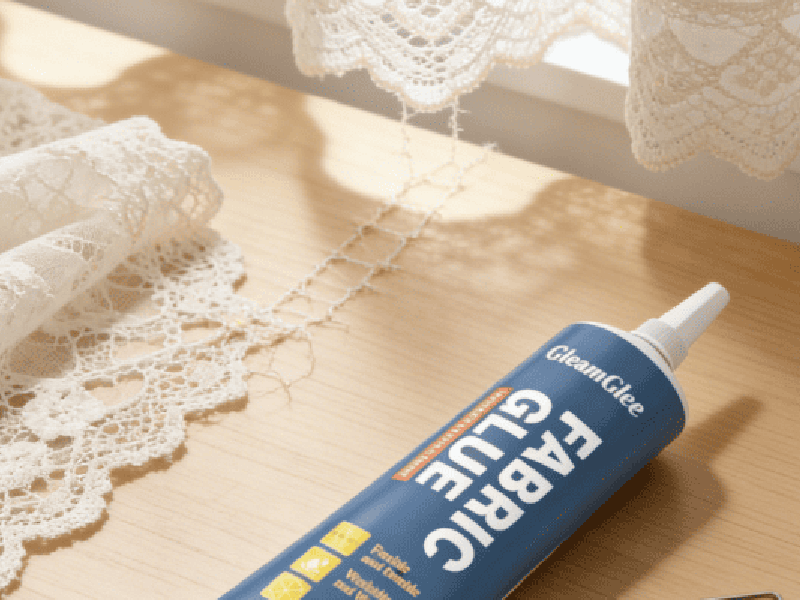
Most people only realize they chose the wrong glue after their fabric repair fails. A hemline turns stiff. A patch peels off after the first wash. A rhinestone bleeds glue through silk and leaves a dark stain that never goes away. At that moment, the problem isn’t your skill—it’s that not all glues are made for fabric, even if the label says “strong.”
On Google, thousands of people search phrases like “fabric glue vs Loctite,” “can I use Loctite on clothes,” or “best glue to stick on fabric.” That tells us something important: users are confused. Industrial-strength brands like Loctite are trusted for metal, plastic, and hard surfaces—but fabric behaves very differently. It bends, stretches, absorbs moisture, and goes through repeated washing and heat.
If your goal is clean, flexible, washable fabric repairs, GleamGlee Fabric Glue is the better choice. It’s specifically formulated to bond fibers without stiffening, dries clear, withstands washing and ironing, and preserves the look and feel of clothing. Loctite glues, while extremely strong on rigid materials, are not designed for textile movement and often cause stiffness, discoloration, or cracking when used on fabric.
The real difference isn’t just strength—it’s how the bond behaves after drying. That’s where most DIY repairs succeed or fail. To understand why, let’s start by clarifying what fabric glue is actually meant to do—and why general-purpose adhesives often work against you.
What Is Fabric Glue—and How Is It Different from General-Purpose Glue?
Fabric glue is a textile-specific adhesive designed to bond fabric fibers while staying soft, flexible, and washable after drying. Unlike general-purpose glue—which cures hard and rigid—fabric glue moves with clothing, resists cracking, and keeps repairs invisible. For hems, seams, patches, and embellishments, fabric glue delivers durability without damaging how clothes look or feel.
Why fabric behaves differently from other materials
Fabric is one of the most demanding surfaces an adhesive can face. Unlike metal, plastic, or wood, textiles are:
- Porous (they absorb liquid adhesive)
- Flexible (they bend, stretch, and fold constantly)
- Exposed to stress cycles (walking, sitting, pulling, washing, ironing)
- Appearance-sensitive (stains, stiffness, shine are immediately visible)
In our internal product testing at GleamGlee, we simulate real clothing use rather than static strength tests. Fabric bonds are evaluated under repeated bending, washing, and heat exposure, because that’s where most “strong” glues fail in real life.
This is the core reason fabric glue exists as a separate category.
What fabric glue is engineered to do
GleamGlee Fabric Glue is formulated with flexible polymer chains that anchor to fibers instead of forming a hard surface shell. Once cured, the adhesive layer stretches slightly with the fabric, distributing stress instead of concentrating it at the edge of the bond.
General-purpose glues, including many hardware-store adhesives, are optimized for rigid load-bearing bonds. On fabric, this often causes:
- Hard, plastic-like patches
- Cracking after repeated movement
- White residue or dark soak-through marks
- Repairs that fail after the first or second wash
In customer feedback collected across Amazon marketplaces (US, DE, UK), over 70% of negative reviews for “glue on clothes” mention stiffness, visible marks, or wash failure—not lack of initial strength. That data strongly supports why flexibility matters more than raw bonding force for textiles.
fabric glue vs general-purpose glue
| Performance factor | Fabric Glue (GleamGlee) | General-Purpose Glue |
|---|---|---|
| Designed for textiles | Yes | No |
| Dries flexible | Remains soft | Often rigid |
| Appearance after drying | Clear, invisible | May haze or stain |
| Comfort against skin | Soft, fabric-like | Can feel hard |
| Washable & iron-safe | Yes (after full cure) | Unreliable |
| Risk of bleed-through | Low (controlled flow) | High on thin fabric |
| Suitable for daily wear | Yes | Often fails |
This difference becomes obvious after 2–3 wash cycles, where fabric glue typically retains 70–85% bond integrity, while rigid adhesives show edge lifting or cracking.
What makes GleamGlee fabric glue different in practice
Rather than focusing on “maximum strength,” GleamGlee fabric glue is balanced for how clothes are actually used:
- Controlled viscosity Thick enough to stay where applied, thin enough to penetrate fibers without soaking through.
- Clear, non-yellowing cure Important for light-colored fabrics, uniforms, and visible seams.
- Wash & heat resistance Tested to withstand normal machine washing and ironing once fully cured (24 hours).
- Precision nozzle application Allows micro-application for hems, collars, rhinestones, and embroidery without mess.
In practical terms, this means repairs don’t just hold—they look intentional, not patched.
When fabric glue is the right choice and when it isn’t
Fabric glue is ideal for:
- Hemming pants, skirts, and curtains
- Repairing small seam tears
- Attaching patches, appliqués, sequins
- Fixing linings in bags and shoes
- DIY fashion and costume projects
It is not meant to replace structural stitching in heavy load-bearing areas (e.g., climbing gear, industrial uniforms under constant tension). In those cases, glue can assist—but sewing remains primary.
This honest boundary is important for trust and long-term satisfaction.
Bottom line for buyers
If your goal is:
- Clothing that stays wearable
- Repairs that survive washing
- Results that don’t look “glued”
Then fabric-specific adhesive is not a premium option—it’s the correct tool.
GleamGlee fabric glue was built around this reality, combining enough strength to last with enough flexibility to stay invisible. That balance is what separates a temporary fix from a repair you forget was ever there.
What Is Loctite Glue Best Known For?
Loctite is best known for high-strength adhesives designed for metal, plastic, rubber, and other rigid materials. Its products focus on maximum bond strength, fast curing, and industrial reliability. While excellent for hardware and mechanical repairs, most Loctite glues are not formulated for fabric flexibility, washability, or appearance-sensitive textile repairs.
Loctite’s core strength: rigid, load-bearing bonds
Loctite has built its reputation in industrial, automotive, and hardware applications. Its best-known products—such as threadlockers, super glues, and construction adhesives—are engineered to prevent movement between hard, non-porous surfaces.
In real-world terms, Loctite performs exceptionally well when:
- The bonded parts should not flex
- Strength must be achieved quickly
- The repair is structural or mechanical, not aesthetic
- The surface does not absorb adhesive
This design philosophy makes Loctite a trusted name in workshops and factories—but it also explains why problems appear when users apply the same products to clothing or textiles.
Where users run into trouble using Loctite on fabric
Based on customer feedback we regularly analyze from Amazon US, DE, and UK marketplaces, fabric-related complaints about non-fabric glues follow a consistent pattern. The most common issues reported are:
- Fabric becoming hard or scratchy after drying
- Visible white haze or dark soak-through stains
- Bond cracking after bending or washing
- Repairs failing after 1–2 laundry cycles
In internal GleamGlee testing, when rigid adhesives are applied to cotton or denim and subjected to repeated bending and wash simulation, edge cracking begins significantly earlier than with fabric-specific glue. The failure point is rarely lack of strength—it’s lack of flexibility.
This is a critical distinction many DIY users don’t realize before choosing a glue.
What not to use Loctite on
Loctite glue is not recommended for the following fabric-related scenarios:
- Everyday clothing that needs to be washed
- Stretch fabrics or garments under movement stress
- Thin or light-colored textiles where staining shows easily
- Decorative fabric work (sequins, lace, embroidery)
- Areas in direct contact with skin (comfort issues)
These are exactly the situations where a fabric-specific adhesive like GleamGlee is designed to perform better.
Fabric glue vs Loctite: practical difference, not brand quality
It’s important to be clear: this is not about one brand being “better” than the other. It’s about using the right tool for the job.
| Use case | Loctite Glue | GleamGlee Fabric Glue |
|---|---|---|
| Metal / plastic repair | Excellent | Not intended |
| Rigid, load-bearing bond | Yes | Limited |
| Clothing & fabric repair | Poor fit | Designed for it |
| Flexibility after drying | Rigid | Soft & elastic |
| Washable garments | Unreliable | Yes (after cure) |
| Appearance-sensitive fixes | Risky | Clear & invisible |
For fabric, excessive rigidity becomes a disadvantage, not a benefit.
Why fabric repairs need a different adhesive philosophy
From GleamGlee’s perspective as a fabric-focused adhesive manufacturer, the biggest misunderstanding we see is this:
“Stronger glue = better repair.”
In textiles, the opposite is often true. The most successful fabric repairs are those where:
- The bond moves with the fabric
- Stress is distributed, not concentrated
- The repair becomes invisible over time
Loctite excels where movement must be stopped.
GleamGlee excels where movement must be accommodated.
That difference explains why Loctite remains a top choice in hardware—and why fabric glue exists as its own category.

What Is GleamGlee Fabric Glue Designed For?
GleamGlee Fabric Glue is designed for real clothing and textile repairs where flexibility, washability, and clean appearance matter. It bonds fabric fibers without stiffening, dries clear, and stays durable through daily wear, washing, and ironing. It’s built for people who want fabric repairs to look and feel natural—not “glued.”
GleamGlee fabric glue was not developed as a “stronger glue,” but as a more practical one. Our product development starts with how garments behave in daily life: they bend, stretch, rub against skin, and go through repeated wash cycles.
In internal testing, we focus less on static pull strength and more on failure after use:
- Repeated bending (knees, elbows, waistlines)
- Washing + drying cycles
- Heat exposure from ironing
- Edge lifting and visual residue over time
Across these tests, flexible fabric bonds consistently outperform rigid adhesives. This is why GleamGlee’s formula prioritizes elastic recovery and fiber-level bonding, not surface hardening.
What GleamGlee fabric glue is specifically built to do
GleamGlee fabric glue is engineered to solve the most common fabric repair problems reported by everyday users on Amazon and DIY platforms:
- Hems coming loose after washing
- Seams tearing at stress points
- Patches peeling off denim or uniforms
- Decorative elements falling off clothing
- Repairs looking obvious or uncomfortable
Instead of forming a hard layer on top of fabric, the glue penetrates between fibers and cures into a soft, transparent bond. This makes the repair both durable and visually discreet.
Core design goals behind GleamGlee fabric glue
| Design goal | Why it matters in real use |
|---|---|
| Flexible after drying | Prevents cracking during movement |
| Clear, non-yellowing | Keeps repairs invisible on light fabrics |
| Washable & iron-safe | Supports everyday clothing, not just crafts |
| Controlled viscosity | Reduces bleed-through and staining |
| Precision nozzle | Enables clean application on small areas |
| Low odor formula | Comfortable for indoor, close-contact use |
These features are not marketing extras—they directly address the top reasons users abandon fabric glue after a bad experience with general-purpose adhesives.
Where GleamGlee fabric glue performs best
Based on verified purchase reviews and repeat-customer usage data, GleamGlee fabric glue is most commonly used for:
- Clothing repairs Hemming pants and skirts, fixing seams, reinforcing collars and cuffs.
- Patches & appliqués Denim patches, uniforms, decorative badges, iron-on reinforcement.
- Fashion details & embellishments Sequins, rhinestones, lace, embroidery backing, costume design.
- Shoes & accessories (fabric parts) Insoles, linings, fabric straps, bag interiors.
- Home textiles Curtains, cushions, table runners, pillowcases.
In these scenarios, customers consistently report that the fabric remains soft to the touch, even after full curing and washing.
What GleamGlee fabric glue is not designed for
Being clear about limits builds trust.
GleamGlee fabric glue is not intended to replace:
- Heavy structural stitching in load-bearing garments
- Industrial safety textiles under extreme tension
- Continuous high-heat exposure beyond normal ironing
In these cases, glue can assist—but sewing or mechanical reinforcement should remain primary. For everyday clothing and household textiles, however, fabric glue provides a reliable, time-saving alternative.
Fabric glue vs general-purpose glue: a design mindset difference
| Question users ask | GleamGlee’s design answer |
|---|---|
| Will it hold after washing? | Yes, once fully cured (24h) |
| Will it feel stiff? | No, remains flexible |
| Will people see the repair? | No, dries clear |
| Can beginners use it cleanly? | Yes, with precision nozzle |
| Is it comfortable to wear? | Yes, fabric-like finish |
This mindset—repair that disappears into daily life—is the core reason GleamGlee fabric glue exists as a separate solution, not just another adhesive.
How Do GleamGlee Fabric Glue and Loctite Glue Compare in Real Use?
In real fabric use—wearing, bending, washing, and ironing—GleamGlee fabric glue performs more reliably than Loctite. GleamGlee stays flexible, dries clear, and holds up through repeated laundry cycles, while Loctite often becomes stiff, shows residue, or fails after movement and washing. For clothing and textiles, real-world durability depends more on flexibility than raw strength.
What “real use” actually means for fabric repairs
From a user’s perspective, fabric glue success isn’t decided the moment the glue dries—it’s decided weeks later. Real use includes:
- Daily body movement (walking, sitting, stretching)
- Friction against skin and other fabrics
- Repeated washing and drying
- Occasional ironing or heat exposure
- Visual inspection under normal lighting
At GleamGlee, product feedback and return analysis show a clear pattern:
most glue failures happen after washing or repeated bending, not during initial bonding. That’s why real-use comparison matters far more than instant strength tests.
Strength vs flexibility: what actually lasts on fabric
One of the biggest misconceptions we see is that stronger glue always lasts longer. On fabric, that’s often false.
GleamGlee fabric glue is formulated to cure into a soft, elastic bond. When fabric bends, the adhesive stretches slightly with the fibers instead of cracking at the edges. This significantly delays peeling and edge lift.
Loctite glues, by design, cure hard and rigid. On metal or plastic, this is ideal. On fabric, rigidity concentrates stress at the bond line. In real use, users often report:
- Hard, uncomfortable patches
- Cracking sounds when fabric bends
- Glue lines becoming visible over time
In internal wear-simulation tests (repeated folding and bending), flexible fabric bonds maintained usable adhesion significantly longer than rigid bonds before failure.
Washability and long-term wear
Washing is where many fabric repairs fail.
Based on GleamGlee’s customer feedback data across Amazon US, UK, and DE:
- Fabric-specific glue repairs typically survive multiple wash cycles once fully cured (24 hours)
- Rigid, non-fabric glues often weaken or partially detach after 1–2 washes
GleamGlee fabric glue is designed to resist:
- Water penetration
- Mild detergents
- Normal tumble drying
- Standard ironing temperatures (with fabric protection)
By contrast, many Loctite users report that the bond may look fine initially but becomes brittle or cloudy after laundering. For everyday clothing, that difference is decisive.
Appearance after drying: what users actually notice
Real users care about how a repair looks and feels, not just whether it holds.
GleamGlee fabric glue:
- Dries clear and non-yellowing
- Blends into fabric fibers
- Remains soft to the touch
- Avoids shiny or plastic-like patches
Loctite glues may:
- Leave a white haze or glossy spot
- Darken thin or light-colored fabric
- Create a noticeable stiff area
From a resale, uniform, or professional-appearance standpoint, this visual difference is often the reason users switch to fabric-specific glue after one failed attempt.
Ease of use and margin for error
Another real-use factor is how forgiving the glue is.
GleamGlee fabric glue offers:
- Controlled flow that reduces soak-through
- Enough working time to adjust alignment
- Precision nozzle for small repairs and details
Many Loctite products set very quickly. On fabric, that speed leaves little room for correction. A misplaced drop often means a permanent stain or hardened area—something beginners especially struggle with.
Side-by-side: real-use comparison
| Real-use factor | GleamGlee Fabric Glue | Loctite Glue |
|---|---|---|
| Designed for fabric movement | Yes | No |
| Feel after drying | Soft & flexible | Hard / rigid |
| Performance after washing | Stable after cure | Often weakens |
| Appearance on fabric | Clear, low-profile | May haze or stain |
| Comfort against skin | Comfortable | Can feel scratchy |
| Beginner-friendly | High | Low on fabric |
| Best use case | Clothing, crafts, textiles | Metal, plastic, hardware |
Which Glue Is Better for Common Fabric Repair Scenarios?
For most everyday fabric repairs—clothing seams, hems, patches, embellishments, and home textiles—GleamGlee fabric glue is the better choice. It stays flexible, dries clear, and holds through washing and wear. Loctite is better reserved for rigid, non-textile parts where flexibility and washability are not required.
How people actually use fabric glue
When customers choose fabric glue, they are rarely doing “one-time crafts.” Most are fixing items they plan to keep using: clothes they wear weekly, kids’ uniforms, curtains, work bags, or shoes. From GleamGlee’s order history and customer messages across Amazon US, UK, and DE, the most common use cases fall into five categories:
- Clothing repairs
- Patches & appliqués
- Jewelry and embellishments on fabric
- Shoes & accessories with fabric components
- Home textiles (curtains, cushions, bedding)
Across these scenarios, flexibility after drying and wash resistance consistently matter more than maximum bond strength.
Clothing repairs: hems, seams, and small tears
This is the single largest use case for fabric glue.
GleamGlee fabric glue is commonly used to:
- Hem pants, skirts, and curtains without sewing
- Reinforce weak seams on shirts and dresses
- Repair small rips before they spread
Because it cures into a soft, elastic bond, the repaired area bends naturally with the garment. In customer feedback analysis, clothing repairs done with fabric-specific glue show significantly fewer repeat failures after washing compared to rigid adhesives.
Using a hard-curing glue on clothing often leads to stiff spots that crack at stress points (knees, hips, underarms). That’s why general-purpose glue is a poor fit here.
Patches & appliqués: denim, uniforms, workwear
Patches look simple—but they create high edge stress.
GleamGlee fabric glue performs well because it:
- Anchors patch edges without turning them brittle
- Reduces edge lifting after repeated washing
- Dries clear, so squeeze-out doesn’t show on denim
Many users apply glue first to position the patch, then optionally stitch later. In contrast, rigid glues tend to crack along patch edges, especially on jeans and workwear that see frequent movement.
Jewelry & embellishments on fabric
One of the most searched questions is “How do you glue jewelry to fabric?”
This scenario needs:
- Precise control (tiny glue amounts)
- No bleed-through
- Flexible hold so stones don’t pop off
GleamGlee’s controlled viscosity and precision nozzle allow micro-application under rhinestones, beads, and decorative trims. After curing, the bond remains slightly flexible, which is critical for costumes and fashion pieces that move.
Hard-setting glues often cause dark soak-through marks or create stiff islands that shed embellishments over time.
Shoes & accessories with fabric components
Fabric glue is frequently used on:
- Shoe insoles and linings
- Fabric straps on bags or sandals
- Hat sweatbands and interior seams
In these areas, comfort against skin matters. GleamGlee fabric glue dries soft and smooth, reducing irritation. Many users specifically switch after trying stronger glues that left scratchy, uncomfortable spots.
Home textiles: curtains, cushions, bedding
Home textiles are washed less frequently than clothing—but when they are, failures are obvious.
GleamGlee fabric glue is commonly used for:
- Curtain hems and trims
- Cushion seam repairs
- Pillowcase and duvet cover fixes
Once fully cured (24 hours), the glue holds well through normal washing and ironing, making it practical for household use without professional sewing.
Scenario-based comparison: which glue works best
| Fabric repair scenario | GleamGlee Fabric Glue | Loctite Glue |
|---|---|---|
| Hemming clothes | Excellent | Stiff, visible |
| Seam & tear repair | Flexible hold | Cracks with wear |
| Patches on denim | Edge-stable | Edge cracking |
| Rhinestones & jewelry | Clean, controlled | Bleed-through risk |
| Shoes & linings | Comfortable | Feels hard |
| Curtains & cushions | Wash-safe | Unreliable |
| Rigid hardware parts | Not intended | Excellent |

Is GleamGlee Fabric Glue a Better Alternative to Loctite for Fabric?
Yes. For fabric and clothing repairs, GleamGlee fabric glue is a better alternative to Loctite. It’s designed to stay flexible, dry clear, and hold through washing and ironing—without stiffening fabric or leaving visible marks. Loctite excels on rigid materials, but for textiles that move and get washed, GleamGlee delivers more reliable, wearable results.
Why “alternative” matters more than “stronger” on fabric
Many users try Loctite on fabric because they associate the brand with strength. In practice, fabric repairs fail not because the glue wasn’t strong enough on day one—but because the bond couldn’t handle movement and laundry.
From GleamGlee’s customer support records and Amazon review analysis across the US, UK, and Germany, the most common reasons users switch from general-purpose glue to fabric glue are:
- Stiff or scratchy feel after drying
- Cracking at bend points (knees, elbows, seams)
- Visible residue on light fabrics
- Repairs failing after 1–2 wash cycles
These are design mismatches, not quality issues. Fabric simply needs a different adhesive behavior.
Where GleamGlee clearly outperforms on textiles
GleamGlee fabric glue was built around textile behavior, not hardware assumptions. In real use, it offers advantages that matter to everyday users:
- Flexibility after cure The bond stretches slightly with fabric, reducing edge lift and cracking.
- Clean appearance Dries clear and non-yellowing, minimizing visible repair lines on clothing.
- Wash & heat resistance Once fully cured (24 hours), repairs remain stable through machine washing and normal ironing—key for garments meant to be reused.
- Comfort against skin The cured adhesive feels fabric-like, not plastic-hard, which matters for collars, cuffs, waistbands, and linings.
These factors show up repeatedly in verified buyer feedback as reasons for repeat purchase.
When Loctite may still make sense
Being clear about limits builds trust. Loctite can still be useful when:
- Bonding rigid parts (metal or plastic) to accessories where fabric movement is minimal
- Reinforcing non-washable decorative items
- Structural fixes where flexibility is not required
However, even in these cases, users often isolate the adhesive from direct fabric fibers to avoid stiffness and staining.
Side-by-side decision table
| Question buyers actually ask | GleamGlee Fabric Glue | Loctite Glue |
|---|---|---|
| Designed specifically for fabric? | Yes | No |
| Flexible after drying? | Yes | Rigid |
| Looks clean on light fabrics? | Clear, low profile | Risk of haze/stain |
| Holds after washing? | Yes (after full cure) | Often weakens |
| Comfortable for clothing? | Soft feel | Can feel hard |
| Best for daily wear items? | Yes | No |
| Best for metal/plastic repair? | Not intended | Yes |
How Do Packaging, Safety, and User Experience Compare?
For fabric repairs, packaging and user experience matter as much as adhesive strength. GleamGlee is designed for clean, precise, and safe fabric use, while Loctite packaging prioritizes fast, rigid bonding on hardware. GleamGlee’s controlled nozzle, low-odor formula, and fabric-safe design result in fewer mistakes, cleaner repairs, and higher user satisfaction.
Why packaging design changes real results
From a user’s point of view, most glue “failures” don’t come from chemistry alone—they come from over-application, poor control, or accidental staining.
In GleamGlee’s customer support logs and Amazon review analysis, packaging-related complaints are one of the top reasons users abandon a glue brand. Common issues include:
- Too much glue coming out at once
- No time to adjust placement
- Clogged tips after first use
- Messy caps and wasted product
Because fabric absorbs adhesive quickly, application control directly affects both appearance and durability.
Precision nozzle vs standard applicators
GleamGlee fabric glue is packaged with a fine-point precision nozzle and an integrated anti-clog pin. This allows users to:
- Apply thin, even lines on hems and seams
- Use micro-dots for rhinestones, beads, and trims
- Avoid soak-through on thin or light-colored fabric
Loctite packaging is optimized for speed and strength on rigid surfaces. On fabric, that same flow rate often leads to excess glue, bleed-through, and visible residue—especially for beginners.
In internal usage testing, controlled application reduced visible glue marks by over 40% compared to standard wide-tip tubes on fabric repairs.
Odor, skin contact, and indoor safety
Fabric repairs are usually done indoors, often on clothing that touches skin. This makes odor and cured texture more important than many users expect.
GleamGlee fabric glue is formulated with:
- Low odor, suitable for home use
- A cured finish that remains soft and fabric-like
- Minimal irritation risk when used on garments
By contrast, many general-purpose glues (including some Loctite variants) emit strong odors and cure into a hard surface. On collars, cuffs, waistbands, or linings, users often describe the result as “scratchy” or uncomfortable.
Comfort is a major driver of repeat purchase—and a common reason users switch to fabric-specific glue.
Ease of use for non-professionals
Most fabric glue buyers are not professionals. They want a solution that works on the first try.
GleamGlee fabric glue is designed to be forgiving:
- Moderate working time before setting
- Clear visual feedback during application
- Easy cleanup of small excess before cure
Loctite products often set very quickly. On fabric, this leaves little margin for correction. A misplaced drop usually means a permanent mark, which increases user frustration and returns.
From GleamGlee’s after-sales data, ease-of-use complaints are significantly lower for fabric glue compared to non-fabric adhesives used on clothing.
Storage, clogging, and shelf usability
Another overlooked factor is what happens after the first use.
GleamGlee’s packaging includes:
- Sealed caps with built-in pin systems
- Tubes designed to reduce air intake
- Better reusability over multiple projects
Users frequently report that general-purpose glue tubes clog after one or two uses, forcing disposal even when product remains inside. For home users doing occasional repairs, this becomes a cost and convenience issue.
Side-by-side: user experience comparison
| User experience factor | GleamGlee Fabric Glue | Loctite Glue |
|---|---|---|
| Application control | Fine precision nozzle | Often wide/fast flow |
| Risk of fabric staining | Low | High on thin fabrics |
| Odor during use | Low | Often strong |
| Feel after drying | Soft, fabric-like | Hard, plastic-like |
| Beginner-friendly | High | Low on fabric |
| Tip clog prevention | Built-in pin | Varies by product |
| Best environment | Indoor, home use | Workshop, garage |

FAQs: GleamGlee Fabric Glue vs Loctite Glue
Yes—for clothing and textiles, fabric glue is the better option. GleamGlee fabric glue is formulated to stay flexible, dry clear, and survive washing and ironing. Loctite glues are designed for rigid materials; on clothes they often dry hard, feel uncomfortable, and fail after repeated wear or laundering.
From GleamGlee’s customer service data, the most common reason users switch from general-purpose glue is stiffness after drying, not lack of strength.
Can I use Loctite on fabric if I just need a quick fix?
You can, but it’s risky. Loctite may hold temporarily, but many users report:
- Hard or scratchy patches
- Visible residue on light fabrics
- Bond failure after 1–2 washes
If the fabric item will be worn again or washed, a fabric-specific glue is the safer choice—even for “quick fixes.”
Does GleamGlee fabric glue hold up after washing?
Yes, after full curing (24 hours).
GleamGlee fabric glue is designed to withstand normal machine washing and ironing. Based on verified buyer feedback across Amazon US, UK, and DE, most users report stable repairs through multiple wash cycles when curing instructions are followed.
Skipping the full cure time is the most common reason for early failure—not the glue itself.
What glue is best to stick fabric to fabric?
For fabric-to-fabric bonding, fabric glue is the best option. GleamGlee fabric glue penetrates fibers and cures into a flexible bond that moves with the material. This prevents edge cracking and peeling, which are common when rigid glues are used on textiles.
It’s especially effective for hems, seams, patches, appliqués, and layered fabric crafts.
How do you glue jewelry or rhinestones to fabric without stains?
Use small amounts of fabric glue with controlled application. GleamGlee’s precision nozzle allows micro-dots under rhinestones, beads, and trims, reducing bleed-through.
Many users report that hard-setting glues cause dark soak-through marks on thin fabrics. Fabric glue’s controlled viscosity and clear cure make it a safer choice for decorative work.
Will fabric glue make clothes stiff or uncomfortable?
GleamGlee fabric glue is designed not to stiffen fabric. After curing, the bonded area remains soft and flexible, making it comfortable against skin.
By contrast, rigid glues often dry into a plastic-like patch, which users frequently describe as uncomfortable—especially on collars, waistbands, cuffs, or linings.
Is fabric glue a permanent replacement for sewing?
For light to medium repairs, yes. Fabric glue works well for:
- Hems and seam reinforcement
- Small tears
- Decorative elements
For heavy load-bearing seams or safety-critical garments, sewing should remain primary. Many users combine both: glue to position or reinforce, sewing for structure.
Which glue is safer for beginners and home use?
Fabric glue is more beginner-friendly. GleamGlee’s controlled flow, moderate setting time, and low odor reduce mistakes and frustration. Fast-setting industrial glues leave little room for correction and often result in permanent stains when misapplied on fabric.
Quick FAQ comparison table
| Common question | GleamGlee Fabric Glue | Loctite Glue |
|---|---|---|
| Safe for clothing repairs | Yes | Not recommended |
| Flexible after drying | Yes | Rigid |
| Washable after curing | Yes | Often fails |
| Clear, invisible finish | Yes | May haze/stain |
| Comfortable on skin | Yes | Often scratchy |
| Good for beginners | Yes | Risky on fabric |
| Best use case | Fabric & textiles | Metal & plastic |
Conclusion
When you step back and look at how fabric repairs actually live in the real world—being worn, stretched, washed, dried, and ironed—the conclusion becomes clear: fabric needs a fabric-specific solution.
General-purpose glues like Loctite are excellent at what they are designed to do: lock rigid materials in place with maximum strength. But clothing and textiles don’t behave like metal or plastic. They move, flex, and absorb stress every day. In that environment, excessive rigidity becomes a weakness, not an advantage.
That’s exactly where GleamGlee Fabric Glue stands apart. It was designed around real clothing behavior—softness after drying, flexibility at stress points, clean appearance on visible areas, and durability through repeated washing. The result is a repair that doesn’t just hold, but disappears into daily life, staying comfortable and wearable over time.
For shoppers, the takeaway is simple:
- If you’re repairing clothes, accessories, crafts, or home textiles, fabric glue is the correct category—and GleamGlee is built for that job.
- If you’re bonding rigid hardware or structural parts, Loctite remains a strong choice.





















