 Skip to content
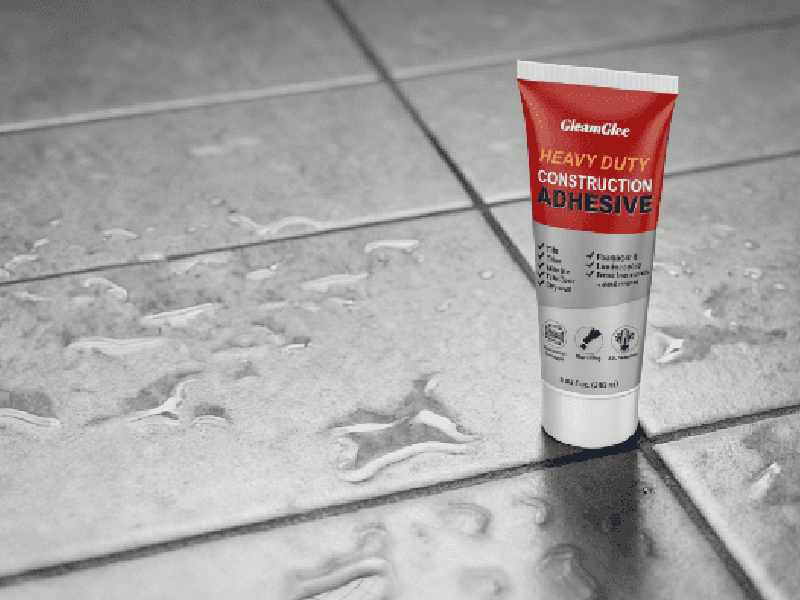
Modern construction doesn’t look like it did 30 years ago. Homes are built faster, materials are lighter, surfaces are more varied, and homeowners expect cleaner finishes with fewer visible fasteners. In this environment, construction adhesive has quietly become one of the most relied-upon materials in both professional building and everyday DIY repairs—even though many people still underestimate what it actually does.
If you’ve ever wondered why wall tiles stay in place without thick mortar, how outdoor stone survives freeze–thaw cycles, or why contractors increasingly combine adhesive with mechanical fasteners, the answer usually comes back to construction adhesive. It fills gaps, absorbs vibration, spreads load stress, and bonds materials that screws alone simply can’t secure long-term. From bathrooms and kitchens to patios, basements, and vertical wall installations, construction adhesive is now everywhere—often hidden, but doing critical work.
Yet confusion remains. Many homeowners ask: Is construction adhesive really strong enough? Does it work on every surface? Can it be removed? What does it not stick to? These questions matter, because choosing the wrong adhesive—or using it incorrectly—can lead to failures that are costly and hard to fix.
Construction adhesive is used to bond heavy building materials such as concrete, tile, stone, wood, drywall, and brick in both indoor and outdoor projects. It provides strong, durable adhesion, fills gaps between uneven surfaces, and reduces reliance on nails or screws. Unlike regular glue, construction adhesive is designed to handle load stress, moisture, temperature changes, and vertical applications, making it essential for modern construction and long-lasting repairs.
What Is Construction Adhesive, Exactly?
Construction adhesive is a heavy-duty bonding material designed to permanently join common building materials such as concrete, tile, stone, brick, wood, drywall, and stucco. Unlike household glue, it is formulated to handle load stress, uneven surfaces, moisture, vibration, and temperature changes, making it suitable for both indoor and outdoor construction, renovation, and repair projects.
What makes construction adhesive different from regular glue?
At first glance, construction adhesive may look like “just another glue,” but functionally it belongs to an entirely different category.
Regular glues—such as craft glue, super glue, or household multipurpose adhesive—are designed for small-scale, low-load bonding on smooth, well-matched surfaces. They perform best when two surfaces fit tightly together and remain relatively stable over time.
Construction adhesive, by contrast, is engineered for the real conditions of buildings:
- Surfaces are often rough, porous, or uneven
- Materials expand and contract with temperature and humidity
- Loads are distributed across large areas, not single points
- Installations may be vertical or overhead
To address this, construction adhesive uses thicker, high-viscosity formulations that fill gaps, maintain contact under stress, and cure into a bond that is both strong and slightly flexible. This flexibility is critical—it allows the adhesive to absorb vibration and movement without cracking or detaching.
In short, regular glue connects objects; construction adhesive integrates materials into a structure.
How good is construction adhesive for strength, durability, and gap-filling?
From a performance standpoint, construction adhesive is designed to be reliable, not fragile.
High-quality construction adhesives offer strong tensile and shear strength, but their real advantage lies in how they manage stress over time. Instead of concentrating force at screws or nails, adhesive spreads load evenly across the bonded surface. This reduces cracking in tiles, loosening of stone, and noise in flooring systems.
Gap-filling is another defining feature. Walls, concrete slabs, and masonry surfaces are rarely perfectly flat. Construction adhesive compensates for these imperfections, ensuring continuous bonding even where mechanical fasteners would leave voids.
Durability is equally important. Professional-grade construction adhesives are formulated to resist:
- Moisture and humidity
- Freeze–thaw cycles
- Heat and sunlight exposure
- Long-term vibration
That’s why they are trusted for bathrooms, kitchens, basements, patios, and exterior installations where ordinary adhesives fail prematurely.
Is construction adhesive a structural or non-structural bonding solution?
This is a common—and important—question.
Construction adhesive is not a substitute for load-bearing structural components such as beams, anchors, or engineered fasteners. However, it plays a critical supporting structural role in modern construction.
In professional practice, construction adhesive is often used together with screws or anchors. The fasteners provide immediate mechanical hold, while the adhesive:
- Reinforces the bond long-term
- Reduces movement and vibration
- Prevents loosening over time
- Improves overall system durability
For non-load-bearing applications—such as wall tiles, stone veneer, decorative panels, stair risers, and flooring—construction adhesive can act as the primary bonding method when used correctly.
Understanding this distinction helps users apply construction adhesive confidently and safely, without overestimating or underutilizing its capabilities.
Why is construction adhesive considered essential in modern building and renovation?
Modern buildings use more materials, thinner assemblies, and cleaner finishes than ever before. Visible fasteners are often undesirable, and many designs rely on mixed materials that traditional methods struggle to secure.
Construction adhesive solves these modern challenges by offering:
- Hidden, clean bonding without visible hardware
- Compatibility with mixed materials (e.g., tile to drywall, stone to concrete)
- Faster installation and fewer penetrations
- Reduced long-term maintenance and repair
For both DIY homeowners and professional contractors, construction adhesive has shifted from a “backup option” to a core tool—one that enables better-looking, longer-lasting results with less risk.

Which Materials Can Construction Adhesive Bond Effectively?
Construction adhesive bonds effectively to concrete, tile, stone, brick, wood, drywall, stucco, and many mixed-material surfaces. It performs best on porous or slightly rough substrates and is ideal for uneven, vertical, or load-spreading applications. However, it may not bond well to low-energy plastics, silicone-treated surfaces, oily metals, or constantly moving joints without special preparation or alternative adhesives.
Can construction adhesive bond concrete, tile, stone, and brick?
Yes—and these materials represent the core use case for construction adhesive.
Concrete, stone, brick, and ceramic tile are heavy, porous, and often irregular. Traditional thin adhesives struggle because they require near-perfect surface contact. Construction adhesive works differently: it penetrates micro-pores and mechanically locks into the surface while curing, creating a combined chemical + mechanical bond.
This is why construction adhesive is widely used for:
- Resetting loose tiles without removing surrounding ones
- Bonding stone veneer to concrete walls
- Installing decorative brick or masonry panels
- Securing stepping stones and outdoor pavers
Another advantage is stress tolerance. These materials experience thermal expansion, moisture absorption, and vibration. Construction adhesive’s slight flexibility allows it to absorb that movement without cracking—something rigid mortars or brittle glues cannot do consistently.
Does it work on wood, drywall, stucco, and interior wall materials?
Construction adhesive performs exceptionally well on wood-based and wall substrates, especially when fasteners alone would cause splitting, cracking, or visible damage.
Wood naturally expands and contracts with humidity. Drywall and stucco are relatively soft and prone to crumbling around screws. Construction adhesive compensates by spreading load evenly across the bonded area rather than concentrating force at single points.
Common successful applications include:
- Baseboards and trim installation
- Stair risers and decorative wall panels
- Wood-to-concrete or wood-to-drywall bonding
- Stucco-backed decorative elements
For renovation projects involving older walls or mixed materials, construction adhesive often delivers more reliable long-term stability than mechanical fastening alone.
How well does construction adhesive bond mixed or dissimilar materials?
Bonding dissimilar materials is one of construction adhesive’s biggest strengths.
In real projects, you rarely bond “wood to wood” or “tile to tile” in isolation. Instead, you encounter combinations like:
- Tile to drywall
- Stone to concrete
- Wood to masonry
- Ceramic to metal framing
These materials expand, contract, and respond to temperature differently. Construction adhesive’s elastic cured structure allows it to bridge those differences, maintaining adhesion even as materials move at different rates.
This capability is why professionals rely on construction adhesive in kitchens, bathrooms, basements, and outdoor installations where mixed substrates are unavoidable.
What will construction adhesive not stick to—and why does it fail on some surfaces?
Despite its versatility, construction adhesive is not universal, and understanding its limitations is critical.
It typically performs poorly on:
- Low-surface-energy plastics (PE, PP, PTFE/Teflon)
- Silicone-treated or waxed surfaces
- Oily, greasy, or dusty metals
- Constantly moving joints or expansion gaps
The reason is physics, not quality. These surfaces resist wetting and mechanical interlocking, preventing the adhesive from forming a stable bond. In such cases, specialized plastic adhesives, primers, or flexible sealants are required.
Many “adhesive failures” are actually material mismatch problems, not product defects.
How does surface condition affect material bonding success?
Even compatible materials can fail if surface conditions are ignored.
Construction adhesive bonds best when surfaces are:
- Clean and free of dust or debris
- Dry (unless the adhesive is specifically moisture-tolerant)
- Structurally sound, not crumbling or delaminating
For repairs, bonding over old adhesive residue often reduces strength. Professionals usually remove loose material and bond directly to the substrate to ensure full performance.
In practice, surface preparation matters as much as adhesive choice.
Material Compatibility Overview
| Material | Bonding Performance | Notes |
|---|---|---|
| Concrete | Excellent | Porous, ideal substrate |
| Ceramic / Porcelain Tile | Excellent | Strong mechanical lock |
| Natural Stone | Excellent | Handles weight & vibration |
| Brick / Masonry | Excellent | Outdoor & indoor use |
| Wood | Very Good | Flexible bond absorbs movement |
| Drywall | Very Good | Reduces cracking vs screws |
| Stucco | Very Good | Needs clean, solid surface |
| Glass | Limited | Requires specialty adhesive |
| PE / PP Plastics | Poor | Low surface energy |
| Silicone Surfaces | Poor | Adhesive cannot wet surface |
Why material compatibility matters for long-term results
Choosing construction adhesive without considering the material is like choosing screws without checking wall type. When matched correctly, construction adhesive delivers years of silent, invisible performance. When mismatched, even the best adhesive will fail.
This is why professional manufacturers like GleamGlee design formulations specifically for real-world construction materials, not ideal lab conditions—ensuring consistent results across concrete, tile, stone, wood, and mixed surfaces.
What Is Construction Adhesive Used For in Real Projects?
Construction adhesive is used in real projects to securely bond tiles, stone, wood panels, drywall, and masonry in bathrooms, kitchens, flooring systems, walls, outdoor spaces, and repair work. It is especially valuable for vertical, uneven, or weather-exposed applications where nails or screws alone are insufficient, helping create cleaner finishes, stronger bonds, and longer-lasting installations.
Where is construction adhesive used in bathrooms and kitchens?
Bathrooms and kitchens are among the most demanding environments in residential and commercial buildings. High humidity, frequent temperature changes, water exposure, and daily use place constant stress on bonded materials.
Construction adhesive is commonly used for:
- Wall tiles and mosaic backsplashes
- Bathtub and shower surrounds
- Vanity backsplashes and side panels
- Decorative wall accents near sinks and stoves
Unlike traditional thinset alone, construction adhesive provides gap-filling support and vibration resistance, especially on uneven walls or renovation surfaces where old substrates are imperfect. Its moisture-resistant properties help maintain adhesion even in wet zones, reducing tile loosening and long-term maintenance issues.
For DIY users, construction adhesive also simplifies installation by reducing mixing, mess, and working-time pressure—while still delivering professional-grade results.
How is construction adhesive used for flooring, walls, and vertical installations?
Vertical and overhead installations are where construction adhesive proves its real value.
Gravity works against the installer, and mechanical fasteners may crack tiles, split wood, or leave visible marks. Construction adhesive’s medium-to-thick consistency prevents sagging and slipping during curing, allowing materials to stay in position with minimal support.
Common applications include:
- Stair risers and stair wall accents
- Decorative feature walls (tile, stone, or panel systems)
- Basement floors and moisture-prone subfloors
- Living room or hallway tiled accent walls
In flooring systems, adhesive helps reduce movement, squeaking, and vibration. It distributes stress evenly across the surface, improving long-term stability—especially in high-traffic areas such as entryways and corridors.
What outdoor and weather-exposed projects rely on construction adhesive?
Outdoor environments introduce challenges that standard adhesives cannot handle: rain, UV exposure, freeze–thaw cycles, and wide temperature swings.
Construction adhesive is widely used for:
- Patios and terraces
- Balconies and rooftop walkways
- Garden paths and stepping stones
- Pool surrounds and outdoor kitchens
- Exterior decorative stone or tile cladding
Professional-grade construction adhesives are formulated to remain flexible after curing, allowing them to absorb expansion and contraction without cracking. This flexibility is essential outdoors, where rigid bonds often fail after seasonal changes.
When used correctly, construction adhesive can significantly extend the lifespan of outdoor installations—reducing rework and repair costs over time.
How is construction adhesive used for repairs and renovation work?
Repair and renovation are some of the most practical and cost-saving uses of construction adhesive.
Instead of removing entire sections, adhesive allows targeted fixes such as:
- Reattaching loose or cracked tiles
- Stabilizing stone or masonry elements
- Reinforcing weakened joints before regrouting
- Bonding replacement panels or trim
For homeowners, this means avoiding demolition. For professionals, it means faster turnaround and lower labor costs. Construction adhesive’s controlled curing time allows precise repositioning, making it ideal for visible repairs where alignment matters.
In renovation projects involving older buildings, adhesive is especially valuable because surfaces are rarely uniform—and fasteners alone often cause more damage than they solve.
Why do professionals combine construction adhesive with fasteners in real projects?
One of the most common professional strategies is hybrid installation—using construction adhesive together with screws or anchors.
Fasteners provide immediate holding strength, while adhesive:
- Reduces long-term movement
- Absorbs vibration and thermal stress
- Prevents loosening over time
- Improves overall load distribution
This approach is widely used in wall panels, flooring systems, stone veneer, and commercial installations. It reflects a key industry insight: construction adhesive doesn’t replace fasteners—it makes them work better.
Which Types of Construction Adhesive Are Available—and How Do They Differ?
Construction adhesives are commonly available as solvent-based, water-based, and hybrid or polymer formulations. Solvent-based adhesives offer strong initial grab, water-based types emphasize low odor and indoor safety, while hybrid/polymer adhesives provide the best balance of strength, flexibility, and weather resistance. The right choice depends on materials, environment, curing time, and safety requirements.
What is solvent-based construction adhesive—and when is it used?
Solvent-based construction adhesives are among the oldest and most traditional options on the market. They rely on organic solvents to carry the adhesive polymers, which evaporate during curing.
Their main advantage is strong initial tack—the ability to grab and hold materials almost immediately. This makes them useful in fast-paced construction environments or applications where immediate holding strength is required.
However, these benefits come with trade-offs:
- Strong odors and higher VOC levels
- Requirement for good ventilation
- Less comfortable for indoor residential use
- Potential compatibility issues with sensitive materials
As a result, solvent-based adhesives are now more common in industrial or open-air applications rather than modern indoor residential projects.
What is water-based construction adhesive—and who should choose it?
Water-based construction adhesives are designed with user safety and ease of use as priorities. They use water as the carrier instead of solvents, resulting in significantly lower odor and easier cleanup.
These adhesives are especially suitable for:
- Indoor projects
- DIY home repairs
- Areas with limited ventilation
- Users sensitive to strong smells
Earlier generations of water-based adhesives sometimes lacked moisture resistance or long-term durability. However, modern formulations have improved dramatically, offering reliable bonding on many common substrates when properly cured.
That said, water-based adhesives may still require longer curing times and careful environmental control during application, especially in very humid or cold conditions.
Why are hybrid and polymer construction adhesives considered the modern standard?
Hybrid and polymer-based construction adhesives represent the current evolution of adhesive technology.
They are engineered to combine:
- Strong bonding power
- Flexibility after curing
- Excellent weather and moisture resistance
- Low odor and safer handling
These adhesives perform consistently across a wide range of materials, including concrete, tile, stone, wood, drywall, and mixed surfaces. Their cured flexibility allows them to absorb thermal expansion and vibration—key factors in long-term bond stability.
This is why professionals increasingly choose hybrid adhesives for bathrooms, kitchens, basements, outdoor patios, and vertical installations. For most users, hybrid formulations offer the widest margin for error and the most reliable real-world results.
How do different construction adhesive types compare in real use?
Understanding differences on paper is helpful, but users care about what happens on the job.
Solvent-based adhesives may hold instantly, but their rigidity can lead to cracking over time. Water-based adhesives are comfortable to use, but may struggle outdoors if not fully cured. Hybrid adhesives strike a balance—providing manageable open time, clean application, and long-term durability.
The choice often comes down to:
- Indoor vs outdoor use
- Material movement expectations
- User experience level
- Safety and ventilation constraints
Professionals tend to prioritize performance under stress, while DIY users often prioritize ease of use and safety. Hybrid adhesives serve both.
Construction Adhesive Type Comparison Table
| Adhesive Type | Strength | Flexibility | Odor | Weather Resistance | Best Use Cases |
|---|---|---|---|---|---|
| Solvent-Based | Very High | Low | Strong | Good | Industrial, fast-grab needs |
| Water-Based | Medium–High | Medium | Low | Moderate | Indoor DIY projects |
| Hybrid / Polymer | High | High | Low | Excellent | Bathrooms, kitchens, outdoor, mixed materials |
Which type is easiest to apply, clean up, or remove later?
Ease of application matters more than many users realize.
Water-based and hybrid adhesives typically feature smoother extrusion, better control, and cleaner cleanup during application. Precision nozzles and medium viscosity reduce mess and waste—especially important for visible surfaces like tiles or decorative panels.
Once fully cured, all construction adhesives become difficult to remove. However, hybrid adhesives often peel or scrape more cleanly than brittle solvent residues, reducing surface damage during future renovations.

How Do You Use Construction Adhesive Correctly for Best Results?
To use construction adhesive correctly, clean and dry all surfaces, apply the adhesive evenly with controlled pressure, press materials firmly together, and allow adequate curing time before applying load. Proper surface preparation, correct bead pattern, and patience during curing are essential to achieve maximum strength, durability, and long-term performance.
How should surfaces be prepared before applying construction adhesive?
Surface preparation is the single most important factor in successful adhesion—and the most common reason bonds fail when skipped.
Before applying construction adhesive, surfaces should be:
- Clean: Remove dust, debris, loose mortar, paint flakes, or old adhesive
- Dry: Moisture trapped beneath adhesive weakens the bond unless the product is explicitly moisture-tolerant
- Stable: Crumbling drywall, loose tiles, or degraded concrete must be repaired first
For renovation or repair projects, bonding over old adhesive is risky. Professionals usually scrape or sand down to a solid substrate so the new adhesive bonds directly to the material—not to a weakened layer underneath.
Think of surface prep as building the foundation for the bond. No adhesive can compensate for a poor base.
How much construction adhesive should you apply—and in what pattern?
More adhesive does not mean a stronger bond. In fact, over-application can trap air, delay curing, and reduce overall strength.
Best practices include:
- Apply adhesive in continuous beads, zigzag patterns, or parallel lines
- Avoid large solid blobs that prevent proper compression
- Leave space for air to escape when materials are pressed together
The goal is even distribution, not thickness. When compressed, the adhesive should spread to fill gaps without oozing excessively from the edges.
Medium-consistency adhesives with precision nozzles—like professional-grade formulations—make controlled application much easier, especially on vertical or visible surfaces.
How do you press, position, and secure materials during curing?
Once adhesive is applied, firm and consistent pressure is critical.
Steps professionals follow:
- Press materials together firmly to spread the adhesive
- Slightly reposition if needed during open working time
- Hold or brace the materials in place
- Use painter’s tape, clamps, or temporary supports if necessary
For vertical installations, temporary fixing is often required until the adhesive sets. This prevents slippage and ensures alignment stays true while curing begins.
Rushing this stage leads to misalignment, weak contact, and long-term failure—especially in tile and stone work.
How long does construction adhesive take to set and fully cure?
Understanding curing time prevents one of the most common user mistakes: loading too early.
Most construction adhesives follow this timeline:
- Initial set: Minutes to a few hours (materials stay in place)
- Handling strength: Several hours (light movement possible)
- Full cure: 24–48 hours (maximum strength achieved)
Environmental factors matter. Cold temperatures slow curing, while high humidity may extend it. Professionals often allow extra curing time before applying full load—especially for outdoor or heavy installations.
Patience here directly translates into durability.
Does construction adhesive come off—and how do you remove it safely?
Yes, but removal depends on timing and surface type.
- Before curing: Excess adhesive can usually be wiped away with a cloth and suitable cleaner
- After curing: Removal requires mechanical scraping, sanding, or a dedicated adhesive remover
This is why clean application matters. Precision nozzles, controlled bead patterns, and masking tape near visible edges can significantly reduce cleanup needs.
For finished surfaces like tile or stone, removing cured adhesive can damage the substrate—making prevention far better than correction.
What common mistakes cause construction adhesive failures?
Many failures blamed on “bad adhesive” are actually application errors.
The most common mistakes include:
- Skipping surface cleaning
- Applying adhesive to wet or dusty materials
- Using too much adhesive
- Not applying enough pressure
- Loading the bond before full cure
Construction adhesive is forgiving—but not magical. Following basic process discipline separates professional results from short-lived fixes.
Is Construction Adhesive Strong, Safe, and Weather-Resistant?
High-quality construction adhesive is strong, safe, and designed to withstand moisture, temperature changes, and vibration. It provides durable bonding for heavy materials, remains slightly flexible after curing, and is available in low-odor, non-toxic formulations suitable for indoor use. When applied correctly, construction adhesive delivers long-lasting performance in both indoor and outdoor environments.
How strong is construction adhesive in real-world use?
Construction adhesive strength is often misunderstood because people compare it directly to screws, nails, or mortar. In reality, it works differently—but just as effectively in the right applications.
Rather than concentrating force at single points, construction adhesive spreads load across the entire bonded surface. This dramatically reduces stress concentration, cracking, and loosening over time. In tile, stone, and panel installations, this load distribution is often more important than raw pull-out strength.
High-quality construction adhesives are engineered to provide:
- Strong shear and tensile resistance
- Long-term stability under static load
- Resistance to vibration and micro-movement
This is why professionals trust construction adhesive for wall tiles, stone veneer, stair components, and mixed-material assemblies—especially when combined with mechanical fasteners for added security.
Is construction adhesive safe to use indoors and around people?
Modern construction adhesives are designed with user safety as a core requirement, not an afterthought.
Many current formulations are:
- Low-odor or odor-controlled
- Non-toxic once cured
- Free from harsh solvents commonly used in older products
This makes them suitable for use in kitchens, bathrooms, basements, and other enclosed spaces where ventilation may be limited. For homeowners and DIY users, this safety improvement is critical—it allows projects to be completed without discomfort or health concerns.
That said, safety still depends on proper use. Following label instructions, allowing adequate ventilation during application, and respecting curing times ensures the adhesive performs safely and as intended.
Is construction adhesive waterproof and moisture resistant?
Most professional-grade construction adhesives are formulated to be moisture-resistant, meaning they maintain bond integrity in humid or wet environments once cured.
This is why they are widely used in:
- Bathrooms and shower areas
- Kitchens and backsplashes
- Basements and utility rooms
- Outdoor patios and balconies
However, “water-resistant” does not mean “waterproof in all conditions.” Continuous water immersion or improper curing can still compromise performance. Correct application and sufficient curing time are essential for achieving full moisture resistance.
Hybrid and polymer-based adhesives generally outperform older rigid formulas in wet environments because they remain flexible rather than cracking under stress.
How does construction adhesive perform in heat, cold, and outdoor conditions?
Temperature changes are one of the biggest challenges in construction.
Construction adhesive is specifically designed to handle:
- Heat expansion during summer
- Contraction in freezing temperatures
- Repeated freeze–thaw cycles
- UV exposure in outdoor installations
Flexibility after curing is the key. Instead of becoming brittle, quality construction adhesive moves slightly with the materials it bonds. This prevents separation, cracking, and long-term failure—especially outdoors.
This performance makes construction adhesive suitable for patios, exterior cladding, garden paths, and pool surrounds where environmental stress is unavoidable.
How do you know if a construction adhesive bond is “good enough”?
Professionals don’t rely on guesswork—they verify.
After the recommended curing period:
- The bonded materials should show no visible movement
- There should be no hollow sound when tapped
- Edges should remain firmly seated without lifting
For critical applications, experienced installers often allow additional curing time beyond the minimum recommendation. This conservative approach significantly increases reliability, especially for load-bearing or weather-exposed installations.
Testing patience is often the final step in ensuring performance.
Strength, Safety, and Durability Overview
| Performance Aspect | What to Expect |
|---|---|
| Bond strength | High load distribution, long-term stability |
| Indoor safety | Low odor, non-toxic (modern formulas) |
| Moisture resistance | Excellent after full cure |
| Temperature tolerance | Designed for heat & freeze cycles |
| Outdoor durability | Strong with proper application |

Conclusion
Construction adhesive is no longer just a supporting product—it has become a core solution in modern construction, renovation, and DIY repair. As buildings use more mixed materials, demand cleaner finishes, and face harsher environmental conditions, traditional fasteners and basic glues alone are no longer enough. Construction adhesive fills that gap by delivering strong, durable, and flexible bonding across concrete, tile, stone, wood, drywall, and many other common substrates.
Throughout this guide, one theme stands out: performance depends on choosing the right adhesive and using it correctly. When matched with compatible materials, applied on properly prepared surfaces, and given adequate curing time, construction adhesive provides long-lasting results that resist moisture, temperature changes, vibration, and daily wear. It reduces visible hardware, improves aesthetics, and extends the life of both new installations and repairs.
Equally important, today’s high-quality construction adhesives are designed with user safety and convenience in mind. Low-odor, non-toxic formulations make them suitable for indoor use, while weather-resistant chemistries ensure reliable outdoor performance. This balance of strength, safety, and durability is what makes construction adhesive a trusted choice for homeowners, contractors, and commercial users alike.
If you are looking for a construction adhesive that reflects how people actually build today—on uneven surfaces, with mixed materials, and under real-world conditions—GleamGlee offers professional-grade solutions you can rely on.
- Buy GleamGlee Construction Adhesive with fast Amazon FBA delivery
- Request custom formulations, private label options, or bulk pricing for your brand or project
- Contact our expert team for samples, technical guidance, and compliance support
Strong results start with the right bond—and the right partner.





















