 Skip to content
A broken ceramic figurine is rarely “just a broken object.” It may be a porcelain angel from a family shelf, a small ceramic dog from a holiday trip, a Christmas figure brought out every year, or a garden statue that has sat by the door for several seasons. The damage is often small: one hand, one wing, one ear, one base corner. But because figurines are decorative, even a small repair mistake can be obvious.
To fix ceramic figurines at home, collect every broken piece, clean the broken edges, let the ceramic dry fully, test the fit before gluing, apply a thin layer of clear ceramic glue, press the parts together for 5–10 seconds, and support the repair while it cures. A strong, clear glue with a fine nozzle works best for small arms, legs, ears, wings, bases, and detailed ceramic parts.
The repair should look clean, not thick or rushed. The real challenge is not only making the piece stick; it is keeping the angle right, avoiding glue overflow, and making the figurine look natural when it goes back on the shelf. A careful 10-minute repair can save a keepsake that would otherwise sit broken in a drawer for years.
What Ceramic Figurines Break?
Ceramic figurines usually break at thin, raised, narrow, or weight-bearing parts. These areas include arms, legs, fingers, ears, tails, wings, flower petals, hats, halos, and base corners. The main body of a figurine is often thicker, while small decorative parts are more exposed during falls, cleaning, packing, and daily handling.
A clean break is much easier to repair than a crushed break. If both broken edges still match closely, clear ceramic glue can usually create a neat bond. If the broken area has missing chips, old glue, dust, or uneven ceramic powder, the repair may need extra cleaning and more careful alignment.
Before gluing, check how the broken part affects the figurine. A broken ear is mostly cosmetic. A broken leg may affect balance. A cracked base can make the whole figurine unstable. The repair method should match the part, not just the material.
Small Arms
Small arms break often because they extend away from the body and catch impact first. Angel figures, dancers, children figures, fairies, musicians, holiday characters, and animal figures often have raised hands, sleeves, tools, flowers, candles, or gifts attached to the arm area. These parts can snap during a fall or even during dusting.
- Check the arm angle before applying glue.
- Match painted sleeve lines, fingers, or hand details first.
- Use a very thin glue layer to avoid a shiny ring around the joint.
- Use tweezers for tiny hands, wrists, or fingers.
- Support the arm while curing if it keeps dropping.
| Arm Break Area | Common Problem | Repair Focus |
|---|---|---|
| Shoulder | Wrong angle after gluing | Test from front and side |
| Wrist | Small contact area | Use fine nozzle |
| Hand | Glue overflow | Apply a tiny dot |
| Sleeve edge | Visible repair line | Align painted pattern |
| Finger | Very fragile piece | Hold with tweezers |
For small arms, the biggest mistake is using too much glue. Excess glue can push the arm away from the correct position and leave visible residue. A precise dot or thin line is usually enough when the broken edges fit well.
Thin Legs
Thin legs are more difficult because they may support the figurine’s weight. Ceramic horses, deer, cats, dogs, rabbits, ballerinas, garden animals, and standing dolls often break at ankles, paws, knees, or the point where the leg meets the base. A repaired leg must look natural and keep the figurine balanced.
- Test the figurine on a flat table before gluing.
- Check whether the foot touches the base naturally.
- Do not let the repaired leg carry weight too early.
- Lay the figurine on a soft towel during curing if needed.
- Add support if the ceramic body is heavy.
| Figurine Type | Common Leg Break | Repair Risk |
|---|---|---|
| Horse | Ankle or lower leg | Leaning after repair |
| Deer | Thin legs | Misalignment |
| Ballerina | Foot or ankle | Small bond area |
| Cat/Dog | Paw or leg | Uneven standing |
| Garden animal | Leg-base joint | Dirt and moisture |
| Standing doll | Shoe or base | Balance issue |
A leg repair should not be rushed. Even if the glue grips quickly, the joint needs time before the figurine stands normally again. Standing it too early can twist the leg slightly and weaken the bond.
Cracked Bases
Cracked bases happen when a figurine lands on its bottom edge, is placed on an uneven surface, or is packed under pressure. The base may split across the bottom, chip at a corner, loosen from the body, or develop a hairline crack. A base crack should be repaired early because it affects stability.
- Place the base on a level surface before gluing.
- Clean dust, felt fibers, labels, soil, or old glue from the crack.
- Keep glue away from maker’s marks, dates, signatures, or labels.
- Press the base evenly so the figurine does not dry crooked.
- Let the repair cure fully before putting it back on display.
| Base Damage | What You See | Best Repair Step |
|---|---|---|
| Hairline crack | Thin line across bottom | Apply glue into crack |
| Edge chip | Broken corner | Glue chip back first |
| Split base | Base in two parts | Align on flat surface |
| Loose body joint | Figurine wobbles | Glue contact point carefully |
| Outdoor base crack | Dirt inside break | Clean and dry longer |
A cracked base may look less noticeable than a broken arm, but it can cause repeat damage. If the figurine rocks after repair, add soft pads only after the glue has cured, not while the base is still drying.
Which Glue Fixes Ceramic Figurines?
The best glue for ceramic figurines should dry clear, bond strongly, apply through a fine tip, and resist moisture after curing. Figurine repair is detailed work. A small arm, wing, ear, tail, or base chip often has a narrow contact area, so the glue must go exactly where the broken ceramic surfaces meet.
A good ceramic glue should not leave thick white marks, cloudy residue, or raised glue rings. The repair should stay neat enough for display shelves, cabinets, holiday décor, collectibles, and garden ornaments. For most figurines, a thin controlled glue layer works better than a heavy bead.
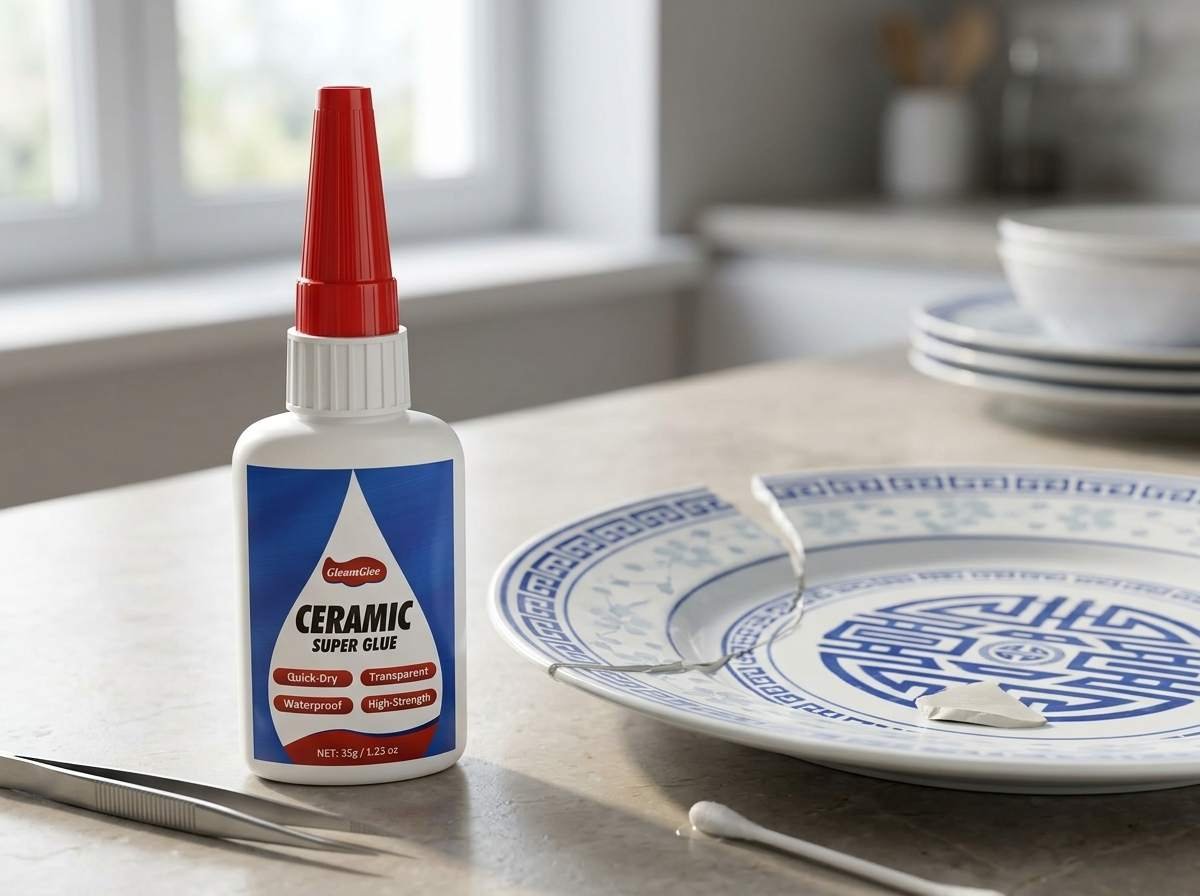
GleamGlee Ceramic Glue is designed for ceramic, porcelain, pottery, mugs, plates, vases, figurines, ornaments, sculptures, and small household repairs. It creates a crystal-clear, high-strength bond, includes precision nozzles, and is suitable for both indoor and outdoor ceramic repair needs.
Clear Glue
Clear glue is important because ceramic figurines are decorative. A repair line on a white porcelain angel, painted animal, glossy ornament, or collectible figure can be easy to notice if the glue dries cloudy, yellow, or thick. Clear ceramic glue helps the broken joint blend better with the original surface.
- Use clear glue for visible repairs on arms, wings, ears, tails, bases, and decorative edges.
- Apply only to the broken ceramic edge, not the glazed surface around it.
- Use a thin layer to reduce shiny overflow.
- Wipe extra glue before it hardens.
- Test fit painted pieces so patterns line up before bonding.
| Figurine Surface | Repair Concern | Clear Glue Benefit |
|---|---|---|
| White porcelain | Yellow repair marks | Cleaner-looking joint |
| Painted ceramic | Color mismatch | Less visible repair line |
| Glossy glaze | Shiny glue buildup | Better surface finish |
| Gold trim | Covered decoration | More controlled repair |
| Mini collectibles | Tiny visible joints | Neater display result |
GleamGlee Ceramic Glue dries crystal clear, making it suitable for decorative pieces where the final appearance matters. For sentimental figurines, the repair should hold the piece and still keep it display-worthy.
Strong Glue
Strong glue matters because ceramic is hard but brittle. Once it breaks, the bond depends on how well the two broken edges meet. Many figurine parts are small and exposed, so the contact area may only be a few millimeters wide. Weak glue may fail when the figurine is dusted, moved, packed, or touched.
- Use strong glue for legs, bases, wings, arms, tails, and outdoor ornaments.
- Press the pieces firmly for 5–10 seconds after applying glue.
- Keep the repair still while the bond develops.
- Do not test the strength by pulling the part too early.
- Let weight-bearing parts cure before standing the figurine upright.
| Broken Part | Strength Need | Repair Risk |
|---|---|---|
| Arm | Medium | Easy to bump during cleaning |
| Thin leg | High | May affect balance |
| Base corner | High | Can cause wobbling |
| Wing | Medium-high | Thin edge may shift |
| Tail | Medium | Exposed and fragile |
| Garden figurine | High | Outdoor stress and vibration |
GleamGlee Ceramic Glue creates a high-strength bond in seconds. Strong repair still depends on clean edges, proper fit, thin glue application, steady pressure, and enough curing time.
Fine Tip
A fine tip is very useful for ceramic figurines because most broken areas are small. A wide glue opening can release too much adhesive and make the repair messy. Tiny parts such as fingers, ears, flower petals, wings, halos, and animal tails need controlled placement.
- Use a fine tip for tiny cracks and narrow broken edges.
- Hold the nozzle close to the break before squeezing.
- Apply a dot or thin line instead of flooding the joint.
- Keep glue away from painted faces, eyes, trims, and textured details.
- Replace the nozzle if dried glue blocks smooth flow.
| Small Repair Area | Fine Tip Benefit |
|---|---|
| Angel hand | Reduces glue overflow |
| Animal ear | Places a tiny amount accurately |
| Bird beak | Helps avoid surface smears |
| Base crack | Guides glue into the line |
| Ceramic flower | Protects small petals |
| Ornament loop | Controls glue near the hook |
GleamGlee Ceramic Glue includes multiple precision nozzles. Each pack includes 4 nozzles, while a 2-pack includes 8 nozzles. This helps with detailed repairs and repeated household use.
Waterproof Hold
Waterproof hold is useful when ceramic figurines are placed in bathrooms, kitchens, patios, gardens, planters, windowsills, or seasonal outdoor displays. Indoor figurines may face humidity, cleaning cloths, spills, or heat from sunlight. Outdoor figurines may face rain, soil moisture, and temperature changes.
- Choose waterproof glue for garden statues, planters, bathroom décor, and kitchen ornaments.
- Dry ceramic fully before applying glue.
- Let the repair cure before exposing it to water.
- Clean soil, moss, soap residue, or dust from outdoor cracks.
- Avoid putting repaired outdoor pieces back in rain too soon.
| Use Location | Main Risk | Glue Requirement |
|---|---|---|
| Display cabinet | Low moisture | Clear strong bond |
| Bathroom shelf | Humidity | Waterproof bond |
| Kitchen counter | Moisture and heat | Heat-resistant hold |
| Windowsill | Sun warmth | Stable cured bond |
| Garden statue | Rain and soil | Outdoor durability |
| Planter décor | Water exposure | Moisture resistance |
GleamGlee Ceramic Glue is waterproof and heat-resistant after curing, making it suitable for both indoor and outdoor ceramic figurine repairs. The surface must still be clean and dry during application for the bond to form properly.
How to Prep Ceramic Figurines?
Preparing ceramic figurines correctly before gluing has a major effect on how clean and strong the final repair looks. Many ceramic repairs fail because the figurine is dusty, damp, oily, poorly aligned, or missing small fragments. Even strong glue cannot bond well if the broken surfaces are dirty or do not fit tightly together.
Before opening the glue, place all broken ceramic pieces on a clean flat surface and inspect the damage carefully. Check whether the break is clean, whether small chips are missing, and whether the figurine can still stand properly after repair. Most ceramic figurine repairs become easier when the preparation is slow and organized.
For decorative porcelain, collectible figures, garden statues, and holiday ornaments, careful preparation also helps reduce visible repair lines. A few extra minutes spent cleaning and testing the fit often improves the final appearance much more than adding extra glue later.
Find Pieces
Finding every broken piece is important because even a tiny missing chip can affect the fit, angle, and stability of the repair. Small ceramic fragments often hide in carpet fibers, shelf corners, packaging paper, storage boxes, towels, or under furniture after a figurine falls.
- Lay a white towel or sheet of paper on the table so small fragments are easier to see.
- Separate large body pieces from tiny decorative pieces.
- Match painted lines, glaze patterns, or textured edges before gluing.
- Keep small parts like fingers, petals, tails, and ears in a small dish.
- Take a quick phone photo before moving pieces around repeatedly.
| Broken Piece | Easy to Lose? | Repair Importance |
|---|---|---|
| Base chip | Medium | High |
| Finger | Very high | Medium |
| Tail tip | High | Medium |
| Ear | Medium-high | High |
| Petal | Very high | Low-medium |
| Wing edge | Medium | High |
If several parts broke at once, repair the main structural area first. For example, if a ceramic angel has a cracked base and a broken wing, stabilize the base before attaching the wing. Small decorative pieces are easier to align once the main body is secure.
Clean Edges
Clean ceramic edges help glue bond directly to the broken surface. Dust, ceramic powder, old glue, skin oil, garden dirt, soap residue, or moisture can weaken the repair and create uneven gaps between the pieces.
- Use a soft brush to remove loose ceramic powder.
- Use a cotton swab for narrow cracks or small corners.
- Wipe greasy surfaces lightly with a damp cloth, then dry fully.
- Remove thick old glue only if it blocks the fit.
- Avoid scraping painted glaze aggressively.
| Surface Problem | What It Causes | Cleaning Method |
|---|---|---|
| Ceramic dust | Weak bonding | Soft dry brush |
| Finger oil | Slippery surface | Light wipe |
| Old glue | Poor alignment | Careful removal |
| Garden dirt | Bond failure | Brush and dry |
| Soap residue | Glue separation | Damp wipe |
| Loose paint flakes | Uneven surface | Remove loose flakes only |
Old repairs are common on collectible figurines. If dried adhesive prevents the pieces from fitting naturally, remove only the raised excess. Forcing ceramic pieces together over old glue can create crooked joints and visible gaps.
Dry First
Ceramic should be completely dry before glue is applied. Moisture trapped inside cracks, unglazed ceramic, outdoor figurines, or planter surfaces can weaken the bond. Even if the outside feels dry, the inside of the break may still contain moisture.
- Let recently cleaned figurines air dry fully.
- Allow extra drying time for outdoor ceramics and planters.
- Keep repaired pieces away from humid bathrooms during prep.
- Do not use strong heat directly on fragile porcelain.
- Check the crack with a tissue if unsure about moisture.
| Ceramic Item | Moisture Risk | Suggested Drying Time |
|---|---|---|
| Small glazed figurine | Low | 10–20 minutes |
| Porcelain ornament | Low | 10–20 minutes |
| Unglazed ceramic | Medium | 1–2 hours |
| Ceramic planter | High | Several hours |
| Garden statue | High | Half day or longer |
| Bathroom décor | Medium-high | 1–3 hours |
A dry surface gives ceramic glue a better chance to grip tightly. Damp ceramic may look normal at first, but the repair can weaken later if moisture stays trapped inside the joint.
Test Fit
Testing the fit before gluing helps prevent crooked repairs, visible gaps, and alignment mistakes. Once glue is applied, there is usually only a short time to position the piece correctly. A dry test makes the actual bonding step much easier.
- Place the broken piece into position without glue first.
- Check the figurine from the front, side, and top.
- Match painted details and decorative patterns carefully.
- Make sure the base sits flat if the figurine stands upright.
- Use tweezers for very small decorative parts.
| Fit Problem | Possible Cause | What to Check |
|---|---|---|
| Visible gap | Missing chip | Inspect edge closely |
| Figurine leans | Wrong base angle | Test on flat table |
| Painted lines mismatch | Wrong rotation | Adjust position |
| Piece rocks | Dirt or old glue | Clean edge again |
| Small part slips | Tiny contact area | Use support during repair |
| Crack won’t close | Ceramic debris | Brush edge carefully |
Do not force pieces together if they resist fitting naturally. Ceramic edges should meet closely without pressure. If the fit feels wrong, check for hidden dirt, old adhesive, or a missing fragment before gluing.

How to Fix Ceramic Figurines?
To fix ceramic figurines, apply a small amount of clear ceramic glue to the broken edge, press the pieces together for 5–10 seconds, keep the repair steady, and let it cure before normal handling. The glue should stay on the raw broken ceramic surface, not spread over painted or glazed areas.
A good repair depends on control. Too much glue can leave shiny overflow, while too little glue may not cover the contact surface. For small arms, legs, ears, wings, tails, base chips, and decorative details, thin glue placement usually gives the cleanest result.
GleamGlee Ceramic Glue is designed for fast, clear, high-strength repairs with precision nozzles. It is suitable for ceramic figurines, porcelain ornaments, small statues, decorative pieces, garden figures, and mixed-material household repairs.
Add Thin Glue
A thin glue layer works best for most ceramic figurine repairs. Broken ceramic edges usually fit together like puzzle pieces. If too much glue sits between them, the part may shift, leave a gap, or dry with a visible raised ring.
- Apply glue to one broken edge first.
- Use a dot for tiny parts and a thin line for larger breaks.
- Keep glue away from painted faces, gold trim, and glazed surfaces.
- Add more only if the contact area is large.
- Wipe extra glue before it hardens.
| Repair Area | Glue Amount | Application Tip |
|---|---|---|
| Tiny ear | Small dot | Use fine nozzle |
| Finger or petal | Very small dot | Hold with tweezers |
| Arm joint | Thin coat | Keep angle aligned |
| Leg joint | Thin line | Support during curing |
| Base chip | Thin-medium layer | Press on flat surface |
| Hairline crack | Narrow line | Guide glue into crack |
For detailed figurines, start with less glue than expected. A clean repair often comes from accurate placement, not extra adhesive.
Press Pieces
After applying glue, press the broken parts together firmly and accurately. GleamGlee Ceramic Glue can grip quickly, so the first 5–10 seconds are important. The piece should be lined up before full pressure is applied.
- Press straight into the break, not sideways.
- Hold the piece at its natural angle.
- Match painted lines and surface texture before pressing.
- Avoid twisting after contact.
- Remove overflow while the glue is still fresh.
| Broken Part | Pressing Method | Main Risk |
|---|---|---|
| Arm | Hold at shoulder angle | Rotation |
| Wing | Press along full edge | Gap at tip |
| Leg | Press and support body | Leaning |
| Tail | Hold gently | Sliding |
| Base | Press on flat table | Uneven bottom |
| Ornament loop | Press carefully | Weak hanging point |
If the piece moves during pressing, correct it immediately before the glue starts setting. Repeated adjustment after the glue thickens can smear the joint and reduce strength.
Hold Steady
Small ceramic parts often need support after pressing. Fast grip helps, but gravity can still pull a wing, arm, tail, or thin leg out of place before the repair fully strengthens.
- Use soft tape only if it will not damage paint.
- Support wings or arms with cotton, foam, or folded cloth.
- Lay leg repairs on a soft towel instead of standing them upright.
- Use modeling clay to support small base chips.
- Keep pets, children, and vibration away from the repair.
| Repair Part | Good Support | Avoid |
|---|---|---|
| Thin leg | Soft towel support | Standing too early |
| Wing | Cotton or foam | Heavy pressure |
| Arm | Light tape or cloth support | Strong tape on paint |
| Tail | Folded cloth | Letting it hang |
| Base chip | Flat table | Uneven surface |
| Tiny detail | Tweezers, then soft rest | Repeated touching |
Do not keep testing the bond with your fingers. Let the piece rest in one safe position so the joint can strengthen without movement.
Let Cure
Curing gives the repaired figurine time to become stronger. A quick grip does not mean the piece is ready for display, cleaning, packing, or outdoor use. Handling too early can weaken the joint or shift the part slightly.
- Keep the figurine still after gluing.
- Avoid dusting, washing, or moving the repaired area too soon.
- Leave weight-bearing parts longer before standing upright.
- Keep outdoor pieces indoors until fully cured.
- Avoid water exposure before the repair has strengthened.
| Time After Gluing | What to Do | What to Avoid |
|---|---|---|
| 0–10 seconds | Press firmly | Sliding or twisting |
| 1–5 minutes | Keep steady | Touching the joint |
| 30 minutes | Let rest | Displaying too soon |
| Several hours | Handle lightly if needed | Cleaning or packing |
| 24 hours | Safer for normal handling | Outdoor rain too early |
For garden statues, bathroom décor, planters, or outdoor ornaments, allow extra curing time before moisture exposure. Waterproof performance matters after the glue has cured, not while the surface is still wet or freshly bonded.
What Ceramic Figurines Can You Fix?
Many ceramic figurines can be repaired successfully at home if the broken pieces are still available and the ceramic edges fit together properly. Decorative figures, collectible ornaments, porcelain animals, holiday décor, garden statues, and small shelf decorations are among the most common repairs. Clean breaks usually repair much better than crushed ceramic or missing sections.
Different figurines break in different ways. Lightweight indoor ornaments often crack at small decorative areas such as wings or tails. Outdoor figures usually break at bases, legs, or thicker support areas because of weight and weather exposure. The repair method should match the size, shape, and placement of the figurine.
GleamGlee Ceramic Glue is designed for ceramic, porcelain, pottery, and mixed-material decorative repairs. It creates a clear, strong bond suitable for household figurines, collectibles, seasonal decorations, planters, and small ceramic statues.
Animal Figures
Ceramic animal figurines are very common in homes because they work well as shelf décor, garden ornaments, table decorations, seasonal gifts, and collectibles. These figurines usually include thin raised details such as tails, ears, paws, horns, wings, whiskers, and legs, which makes them more likely to break during cleaning, moving, or accidental drops.
- Ceramic horses often break at the ankle or lower leg.
- Ceramic cats and dogs commonly break tails or ears.
- Bird figurines may crack at wings or beaks.
- Deer figurines often break antlers or thin legs.
- Rabbit figures usually crack at long ears.
| Animal Figurine | Common Break Area | Repair Difficulty |
|---|---|---|
| Horse | Legs, ears | Medium-high |
| Bird | Wings, beak | Medium |
| Cat | Tail, paw | Medium |
| Deer | Antlers, legs | High |
| Rabbit | Ears | Easy-medium |
| Owl | Wing edge | Medium |
Animal figurines often have painted fur details, textured feathers, glossy glaze, or hand-painted eyes. Thin glue application is important because visible overflow can stand out under indoor lighting. For outdoor ceramic animals, remove dirt and moisture completely before repair.
Angel Figures
Ceramic angel figurines are delicate because they combine several fragile decorative parts in one piece. Wings, hands, halos, flowers, candles, ribbons, robes, and musical instruments are all common break points. Many angel figurines are also sentimental decorations used for memorial displays, holiday décor, or family keepsakes.
- Wings are one of the most common breaks because they extend outward.
- Hands and candles often have very small contact areas.
- Halos can snap during storage or packing.
- Flowing robe edges may chip at corners.
- Decorative gold trim requires careful glue control.
| Angel Detail | Common Damage | Repair Focus |
|---|---|---|
| Wing | Crack or separation | Correct angle |
| Halo | Small break point | Precision glue |
| Hand | Tiny joint area | Minimal overflow |
| Candle | Thin attachment | Steady support |
| Robe edge | Chipped ceramic | Clean alignment |
Angel figurines usually look best when the repair line stays nearly invisible. Support during curing is important because wings and raised arms may slowly shift downward before the glue fully strengthens.
Holiday Décor
Holiday ceramic figurines are handled more often than everyday decorations because they are unpacked, displayed, stored, and moved every season. Ceramic Santas, snowmen, Easter figures, nativity pieces, pumpkins, ceramic trees, and seasonal ornaments commonly break during storage or transport.
- Santa figurines often break at hats, arms, or gifts.
- Snowmen commonly crack at noses or scarf edges.
- Nativity figures may lose hands, staffs, or decorative details.
- Ceramic Christmas trees can chip at branches.
- Easter decorations often break basket handles or ears.
| Holiday Item | Common Break Area | Main Concern |
|---|---|---|
| Santa figurine | Arm, hat tip | Visible repair |
| Snowman | Nose, scarf edge | Small contact area |
| Ceramic tree | Branches | Fragile tips |
| Nativity figure | Hands, base | Tiny details |
| Easter décor | Ears or basket | Thin ceramic parts |
| Halloween décor | Decorative edge | Storage damage |
Holiday décor should be packed carefully after repair. Even a strong glue bond can weaken if ceramic figurines knock into each other inside crowded storage boxes year after year.
Garden Statues
Garden statues and outdoor ceramic figurines face harder conditions than indoor décor. Rain, moisture, sunlight, dirt, temperature changes, and accidental impacts can weaken damaged ceramic over time. Outdoor figurines are usually heavier, so the repair may need more support during curing.
- Garden gnomes often break at hats, hands, or bases.
- Ceramic frogs and animals may crack at legs or feet.
- Bird bath decorations commonly chip at edges.
- Planter figurines may split near soil lines.
- Patio ornaments often crack at thick support points.
| Garden Figurine | Common Damage | Repair Concern |
|---|---|---|
| Garden gnome | Hat, hand, base | Outdoor exposure |
| Bird bath décor | Rim crack | Waterproof hold |
| Ceramic frog | Leg or foot | Weight support |
| Patio ornament | Base split | Heavy ceramic |
| Planter figure | Soil-line crack | Moisture exposure |
| Outdoor animal | Tail or ear | Dirt inside crack |
Outdoor ceramic should always be cleaned and dried fully before gluing. Garden dirt, moss, and moisture trapped inside cracks are common reasons outdoor repairs fail. After repair, allow the figurine to cure indoors before placing it back outside.
Why GleamGlee Fixes Ceramic Figurines?
GleamGlee Ceramic Glue is designed for small ceramic repairs where the result needs to be strong, clean, and easy to control. Ceramic figurines often have narrow cracks, tiny broken parts, painted details, glossy glaze, and visible display surfaces, so the glue must do more than simply stick pieces together.
For home repairs, users usually care about four things: will the broken part stay attached, will the repair line look clean, can the glue reach small cracks, and can the figurine return to normal display without feeling fragile? GleamGlee Ceramic Glue focuses on these practical repair needs with a crystal-clear bond, fast grip, precision nozzles, and multi-material use.
It can be used on ceramic figurines, porcelain ornaments, holiday décor, garden statues, mugs, vases, planters, plates, mosaic crafts, and mixed-material household items. For broken figurines with small arms, wings, legs, ears, bases, or decorative edges, controlled application makes the repair easier and cleaner.
Clear Bond
A clear bond is important because ceramic figurines are made to be seen. A thick white mark, cloudy line, or yellow residue can make a repaired angel, animal figure, holiday ornament, or collectible look obviously damaged. GleamGlee Ceramic Glue dries crystal clear, helping the joint blend better with the original ceramic surface.
- Better for white porcelain, painted ceramic, glossy glaze, and light-colored décor.
- Helps reduce visible repair lines on shelves, cabinets, and display tables.
- Suitable for small visible parts such as wings, ears, hands, tails, and bases.
- Works best when applied in a thin controlled layer.
| Figurine Surface | Common Concern | Clear Bond Benefit |
|---|---|---|
| White porcelain | Yellow glue marks | Cleaner repair line |
| Painted ceramic | Color detail covered | Less visible residue |
| Glossy glaze | Cloudy joint | Neater display finish |
| Gold trim | Decoration damage | More controlled repair |
| Mini collectible | Tiny visible crack | Cleaner close-up look |
For the cleanest finish, use less glue first. If the broken edges fit tightly, a thin layer is usually enough to create a neat repair without overflow.
Fast Grip
Fast grip helps when repairing small ceramic parts that are difficult to hold by hand. A tiny wing, ear, tail, finger, halo, flower petal, or ornament loop can shift easily if the glue takes too long to catch. GleamGlee Ceramic Glue is made for quick bonding, helping pieces stay aligned after pressing.
- Press pieces firmly for about 5–10 seconds after applying glue.
- Useful for tiny details that are hard to clamp.
- Helps reduce slipping during arm, wing, tail, and base repairs.
- Still requires resting time before heavy handling or outdoor use.
| Broken Part | Why Fast Grip Helps |
|---|---|
| Angel wing | Reduces downward slipping |
| Animal ear | Keeps tiny part aligned |
| Tail | Helps hold curved shape |
| Base chip | Holds edge in place quickly |
| Ornament loop | Makes positioning easier |
| Ceramic flower | Reduces movement during repair |
Fast grip does not mean the figurine is ready immediately. After the first hold, place the item in a safe position and let the bond strengthen before moving, cleaning, or displaying it.
Precise Nozzles
Precise nozzles make ceramic figurine repair easier because many broken areas are very small. A wide glue opening can release too much adhesive and leave messy marks around painted faces, glazed edges, carved details, or decorative trims. GleamGlee Ceramic Glue includes precision nozzles for cleaner application.
- One pack includes 4 precision nozzles.
- A 2-pack includes 8 precision nozzles.
- Good for tiny cracks, small joints, narrow base lines, and hard-to-reach areas.
- Helps reduce glue waste and visible overflow.
| Repair Detail | Nozzle Benefit |
|---|---|
| Finger or hand | Places a tiny glue dot |
| Animal ear | Controls glue on small edge |
| Wing joint | Reaches curved break lines |
| Hairline crack | Guides glue into narrow gap |
| Base corner | Adds glue without flooding |
| Ornament hook | Keeps glue away from loop opening |
A fine nozzle gives users better control, especially when repairing collectible figures or sentimental decorations where appearance matters.
Multi-Use Glue
Multi-use glue is practical because ceramic figurines are often part of mixed-material décor. A broken ornament may include metal hooks, wooden bases, glass accents, plastic details, or concrete garden elements. GleamGlee Ceramic Glue can bond ceramic with several common materials, making it useful beyond one repair.
- Works on ceramic, porcelain, glass, metal, wood, plastic, rubber, PVC, and concrete.
- Suitable for figurines, mugs, vases, planters, plates, frames, mosaics, and crafts.
- Useful for both indoor décor and selected outdoor repairs after proper curing.
- Helps reduce the need for several different household glues.
| Material Combination | Possible Repair Use |
|---|---|
| Ceramic + ceramic | Figurines, mugs, plates |
| Ceramic + glass | Decorative ornaments |
| Ceramic + metal | Hooks, trims, badges |
| Ceramic + wood | Display bases, crafts |
| Ceramic + concrete | Garden décor |
| Ceramic + plastic | Mixed-material ornaments |
For families, collectors, DIY users, and home repair needs, one reliable multi-use glue can handle many small problems around the house while keeping ceramic figurine repairs clean and controlled.

Conclusion
Fixing ceramic figurines at home is often much easier than people expect when the repair is done carefully. Most breaks happen at thin decorative areas such as arms, wings, ears, tails, legs, and bases, and many of these pieces can be restored successfully with clean preparation, precise glue placement, steady pressure, and proper curing time. A careful repair not only saves money, but also preserves sentimental decorations, collectibles, holiday ornaments, and favorite display pieces that would be difficult or impossible to replace.
GleamGlee Ceramic Glue is designed to help make those repairs cleaner, stronger, and easier. With its crystal-clear bond, fast grip, waterproof hold, and precision nozzles, it is suitable for ceramic figurines, porcelain collectibles, garden statues, holiday décor, vases, mugs, and many other household repairs. Whether you are looking for reliable ceramic glue for personal use, planning to order branded products, or searching for a customized adhesive solution for your own business, GleamGlee can provide professional support, stable manufacturing capability, custom packaging options, and global delivery solutions for long-term cooperation.





















