 Skip to content
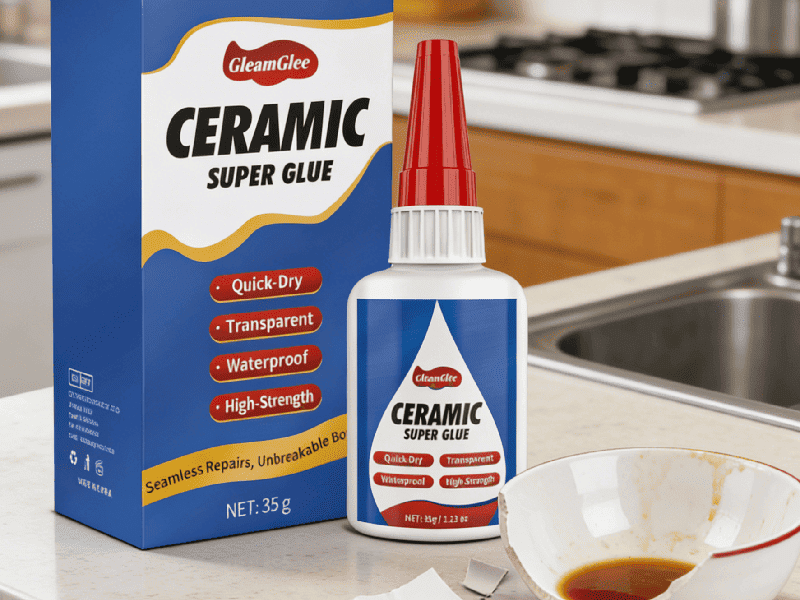
Ceramic items are everywhere in daily life—coffee mugs, dinner plates, decorative vases, bathroom accessories, garden pots, and treasured figurines passed down through generations. When one of these items cracks or breaks, many people hesitate. Should you repair it or throw it away? And if you choose to repair it, what glue actually works on ceramics without failing days later?
The challenge is that ceramics are deceptively difficult to bond. Their smooth, glazed surfaces resist adhesion, while their brittleness means even small stress points—like a mug handle or plate rim—can cause a repair to fail. Many consumers instinctively reach for super glue, only to find the bond weakens under heat, moisture, or repeated use. Others try random household adhesives that leave visible residue or crack over time.
The best glue for ceramics depends on how the item is used. Ceramic-specific glue offers the strongest, cleanest, and most durable bond for mugs, plates, and decorative pieces. Epoxy works well for heavy-duty or outdoor repairs, while super glue is suitable only for small, low-stress fixes. For heat, water, and daily handling, professional ceramic glue delivers the most reliable results.
Behind every successful ceramic repair is not just the glue itself, but understanding how ceramics behave, where stress occurs, and which adhesive chemistry is designed to handle those conditions. In the sections below, we’ll break this down clearly—so your next repair actually lasts.
What Makes Ceramic Materials Difficult to Glue?
Ceramic materials are difficult to glue because they are rigid, non-porous, and often glazed, which limits adhesive penetration. Their brittle structure concentrates stress at repair points, while heat, moisture, and daily handling further weaken unsuitable adhesives. Successful ceramic bonding requires glue specifically designed for smooth, hard surfaces and thermal stress.
Ceramics appear solid and durable, but from an adhesive perspective, they are one of the least forgiving materials to bond. Many ceramic repairs fail not because the glue is weak, but because the material properties of ceramics actively work against common adhesives. Understanding these properties helps explain why ceramic-specific glue consistently outperforms general-purpose options.
What types of ceramics are most commonly repaired?
Most household ceramic repairs fall into several predictable categories, each with different bonding challenges:
- Porcelain mugs and cups – thin walls, frequent heat exposure, handle stress
- Plates and bowls – rim chipping, clean breaks, food-contact concerns
- Decorative ceramics and figurines – small fracture points, visibility matters
- Ceramic planters and pots – thicker walls, outdoor exposure, moisture stress
- Tiles and mosaic ceramics – flat bonding surfaces, shear stress over time
Functional ceramics (mugs, plates) experience repeated thermal cycling and mechanical load, while decorative ceramics prioritize invisible bonding and precision. A single “all-purpose” glue rarely performs well across all these use cases.
Why do smooth, glazed surfaces affect adhesion?
Most finished ceramics are coated with a high-temperature glaze, creating a surface similar to glass. This glaze introduces three major problems for adhesives:
- Low surface energy – glue struggles to wet and spread evenly
- No porosity – adhesives cannot penetrate or anchor mechanically
- Chemical inertness – fewer molecular bonding opportunities
As a result, many glues simply sit on top of the surface instead of forming a durable bond. Ceramic-specific adhesives are formulated with polymers that maximize surface contact and adhesion on these non-porous substrates.
What kind of glue will stick to clay and why clay behaves differently than glazed ceramics?
Clay behaves differently depending on whether it is fired and glazed:
- Unglazed clay / air-dry clay is porous and absorbs adhesive
- Glazed clay behaves like porcelain or glass
Porous clay allows some penetration, but this also creates risk: absorbed glue can dry unevenly, leading to brittle bonds or cracking. Ceramic glue balances controlled penetration with surface bonding, making it more reliable than craft glue or super glue for clay-based repairs.
How do brittleness and rigidity increase stress at repair points?
Unlike flexible materials (rubber, leather, fabric), ceramics do not flex. When stress is applied—lifting a mug by its handle, tapping a plate edge, or temperature expansion—it concentrates at the repair line.
If the adhesive cures too rigidly:
- Micro-cracks form
- Bonds snap suddenly rather than deforming
- Repairs fail without warning
High-quality ceramic glue maintains micro-flexibility, allowing it to absorb small stresses instead of transferring them directly to the ceramic.
How heat, moisture, and daily use accelerate adhesive failure
Ceramics often live in harsh conditions:
- Hot coffee → cooling cycles
- Dishwashing detergents
- Bathroom humidity
- Outdoor rain and UV exposure
Many common adhesives degrade under these conditions. Ceramic glue is engineered to resist:
- Thermal expansion mismatch
- Hydrolysis (water breakdown)
- Repeated vibration and handling
This is why a repair that “looks fine” on day one may fail weeks later if the adhesive chemistry isn’t suitable.
Material & Adhesion Challenge Comparison Table
| Ceramic Property | Why It Causes Problems | What the Glue Must Do |
|---|---|---|
| Glazed surface | Non-porous, slippery | Maximize surface adhesion |
| Brittleness | No flex under stress | Provide micro-flexibility |
| Heat exposure | Expands/contracts | Resist thermal cycling |
| Moisture contact | Weakens many glues | Be waterproof after curing |
| Visible repairs | Aesthetic sensitivity | Dry clear and cleanWhy this matters for users |
Which Types of Glue Work Best for Ceramic Repairs?
The best glue for ceramic repairs depends on the item’s use and stress level. Ceramic-specific glue offers the best balance of strength, clarity, heat resistance, and ease of use for most household repairs. Epoxy works best for heavy-duty or outdoor ceramics, while super glue is only suitable for small, low-stress decorative fixes.
Choosing the right glue for ceramics is not about picking the “strongest” adhesive on the shelf—it’s about matching adhesive chemistry to ceramic behavior. Below are the three most commonly used glue categories for ceramic repairs, how they perform, and where they fail.
Which ceramic glue is best for plates, mugs, and bowls?
For everyday household ceramics, ceramic-specific glue is the most reliable and user-friendly option.
These adhesives are formulated to:
- Bond non-porous, glazed surfaces
- Dry crystal clear for invisible repairs
- Resist heat, moisture, and mild detergents
- Maintain slight flexibility to absorb daily stress
This makes ceramic glue ideal for:
- Coffee mug handles
- Plates and bowls
- Teapots and lids
- Decorative but functional items
Unlike epoxy, ceramic glue does not require mixing, cures cleanly, and allows precise application—especially when paired with fine-tip nozzles. For most users repairing items at home, ceramic glue delivers the highest success rate with the least complexity.
Will super glue hold pottery (and when it fails vs when it works)?
Super glue (cyanoacrylate) bonds quickly, which makes it appealing—but speed comes at a cost.
When super glue works:
- Small decorative pottery
- Lightweight ceramic ornaments
- Non-load-bearing repairs
- Items not exposed to heat or water
When super glue fails:
- Mug handles
- Plates and bowls
- Items exposed to hot liquids
- Repairs under vibration or repeated handling
Super glue cures very hard and brittle. On ceramics, this means stress transfers directly to the bond line, often causing sudden failure. It is best viewed as a temporary or cosmetic fix, not a long-term solution for functional ceramics.
When is epoxy better than ceramic-specific glue?
Epoxy adhesives consist of two parts (resin + hardener) and create an extremely strong bond when mixed correctly.
Epoxy is best for:
- Large ceramic planters
- Outdoor statues and garden décor
- Thick ceramic pieces
- Repairs with missing material or gaps
However, epoxy has drawbacks:
- Often dries opaque or yellowish
- Can be messy and difficult to control
- Excess rigidity may cause stress cracking
- Longer curing time and more user error
For visible indoor repairs, epoxy is usually overkill. For structural, outdoor, or high-impact ceramic repairs, epoxy can outperform ceramic glue—provided appearance is not the priority.
How do different glues compare for common ceramic repair scenarios?
The table below summarizes real-world performance differences to help users decide quickly:
| Glue Type | Best For | Heat Resistance | Waterproof | Flexibility | Visibility |
|---|---|---|---|---|---|
| Ceramic Glue | Mugs, plates, décor | High | Yes | Medium | Clear |
| Epoxy | Outdoor & heavy-duty | Very High | Yes | Low | Opaque |
| Super Glue | Small décor only | Low | Limited | Very Low | Clear |
Why “all-purpose” household glue usually fails on ceramics
General-purpose adhesives are designed to work acceptably on many materials—but excel at none. On ceramics, they often fail because:
- They are optimized for porous materials (wood, fabric)
- They soften under heat
- They degrade with moisture
- They lack precision for clean application
Users often report that these glues “worked at first,” only to fail weeks later. This delayed failure is common when the adhesive chemistry does not match ceramic requirements.
How professional ceramic glue is engineered differently
Ceramic glue is developed using polymer systems specifically tuned for hard, smooth substrates. Manufacturers test these adhesives through:
- Tensile strength testing on glazed surfaces
- Thermal cycling (hot → cold → hot)
- Accelerated aging under humidity
- Vibration and impact simulations
This engineering approach explains why ceramic glue consistently delivers longer-lasting, cleaner, and safer repairs than DIY alternatives.

How Do You Choose the Right Glue for Your Ceramic Item?
To choose the right glue for a ceramic item, consider how the item is used, whether it is exposed to heat or water, how much stress it carries, and how visible the repair will be. Ceramic-specific glue is best for most household items, while epoxy suits heavy-duty or outdoor use, and super glue works only for small decorative repairs.
Selecting the correct glue for ceramics is less about brand names and more about usage context. Many failed repairs happen because users choose glue based on convenience rather than how the ceramic item actually behaves in daily life. The sections below walk through the key decision factors step by step.
How does indoor vs outdoor use change glue selection?
The environment where the ceramic item is used dramatically affects adhesive performance.
- Indoor ceramics (mugs, plates, figurines) experience stable temperatures but frequent handling, washing, and occasional impacts.
- Outdoor ceramics (planters, statues, tiles) face rain, UV exposure, temperature swings, and freeze–thaw cycles.
Indoor items benefit most from ceramic-specific glue, which balances strength, clarity, and flexibility. Outdoor items require epoxy or industrial-grade ceramic glue with enhanced weather resistance. Using indoor glue outdoors is one of the most common reasons ceramic repairs fail prematurely.
Which glue is best for food-contact ceramics?
Food-contact items—such as mugs, bowls, plates, and teapots—require extra caution.
Key requirements include:
- Stability after full curing
- Resistance to hot liquids
- No odor or softening during use
- Clean, residue-free finish
Ceramic glue designed for household use performs best here. While epoxy is strong, it often cures opaque and may not be ideal for visible foodware repairs. Super glue is generally not recommended for food-contact items due to brittleness and heat sensitivity.
Important: Always allow the adhesive to cure fully (typically 24 hours) before use.
What is the best glue for ceramic mug handles (weight-bearing, heat, daily washing)?
Ceramic mug handles are among the most demanding repair scenarios. They combine:
- Concentrated mechanical stress
- Repeated heat cycles
- Frequent washing
- Small bonding surface areas
The best glue for mug handles must be:
- Heat-resistant
- Waterproof
- Slightly flexible after curing
- Capable of precision application
Ceramic-specific glue meets these requirements better than super glue (too brittle) or epoxy (too bulky and rigid). For most users, it provides the highest long-term success rate.
How much does repair visibility affect glue choice?
Visibility matters more than many users expect. A structurally strong repair that looks messy often feels like a failure.
- Highly visible areas (mug rims, figurine faces) require clear-drying adhesives.
- Hidden or structural areas (planter bases) can tolerate opaque glues.
Ceramic glue is optimized for invisible bonding, while epoxy often leaves visible seams. Choosing the wrong glue can permanently alter the appearance of the item—even if the bond holds.
How do stress level and item weight influence glue selection?
Not all ceramic items experience the same stress.
- Low-stress items: small ornaments, display-only pottery
- Medium-stress items: mugs, bowls, plates
- High-stress items: large planters, outdoor sculptures
Using super glue on medium- or high-stress ceramics often results in sudden failure. Epoxy excels under high load, while ceramic glue handles medium stress with better aesthetics and ease of use.
Glue Selection Decision Table
| Ceramic Item Type | Key Stress Factors | Best Glue Choice | Why |
|---|---|---|---|
| Coffee mug handle | Heat, weight, washing | Ceramic glue | Heat-resistant, flexible |
| Decorative figurine | Visibility | Ceramic glue | Dries clear |
| Outdoor planter | Weather, impact | Epoxy | Maximum durability |
| Small ornament | Low stress | Super glue | Quick, minimal load |
| Plate or bowl | Food contact, washing | Ceramic glue | Clean, safe after cure |
How Do You Glue Broken Ceramics Step by Step for Best Results?
For the best ceramic repair, dry-fit the pieces first, clean and degrease the surfaces, lightly roughen glazed areas, apply a thin, controlled layer of ceramic glue, press and hold for the recommended time, secure alignment with tape or gentle clamps, and let the repair fully cure (often 24 hours) before exposing it to heat or water. Most failures come from excess glue, poor alignment, or rushing cure time.
Ceramic repairs succeed when you treat them like a simple “micro-assembly” project: fit → prep → bond → stabilize → cure. The glue matters, but your process matters just as much. Below is a practical, repeatable method that works for mugs, plates, figurines, planters, and most household ceramics.
How much glue should be applied to ceramic cracks? (The “thin film” rule)
The most common mistake is using too much glue. More glue does not mean more strength—especially on smooth, glazed ceramics. A thick glue layer can:
- prevent tight contact between pieces
- ooze out and create visible lines
- cure unevenly and weaken the joint
A better approach is the thin film rule: apply a thin, even coat that wets the surface but doesn’t form a puddle. Precision nozzles help you place glue exactly where it’s needed, especially on hairline cracks and small decorative parts.
Pro tip: If glue squeezes out heavily, you applied too much. Wipe excess immediately (before it cures).
How long should ceramic glue cure before use? (Set time vs full cure)
Many ceramic glues bond quickly, but “sticks fast” is not the same as “ready for real life.”
- Initial set: the piece holds together (seconds to minutes)
- Handling time: safe to move carefully (often 10–30 minutes)
- Full cure: maximum strength + water/heat resistance (commonly 12–24 hours)
For mugs, plates, bowls, or anything exposed to water/heat, you should wait for full cure. If you rush, the bond can soften, shift, or fail later—even if it felt strong at first.
How do you clamp or hold ceramic pieces correctly?
Clamping is about holding alignment, not crushing the ceramic. Gentle, even pressure works best:
- Painter’s tape for clean breaks and smooth seams
- Rubber bands for circular items like mugs or small bowls
- Soft clamps with padding for thicker ceramics
- Foam blocks / towels to prevent rolling or shifting
Avoid over-tight clamps on thin ceramics—too much force can create micro-cracks at the edge of the repair line.
Step-by-Step Ceramic Repair Process
Step 1: Dry-fit first (before any glue)
Test how pieces meet. Identify missing chips, tight corners, and alignment points. Dry-fitting prevents panic once glue is applied.
Step 2: Clean + degrease
Wash with mild soap and water, then dry completely. Wipe bonding areas with isopropyl alcohol to remove invisible oils.
Step 3: Lightly roughen glazed areas
Use 400–600 grit sandpaper on the bonding edges only (not the visible face). Wipe dust away.
Step 4: Apply glue precisely
Apply a thin layer to one side, then join pieces. Avoid spreading glue across visible surfaces.
Step 5: Press and hold
Hold with steady pressure for the recommended time (commonly 5–10 seconds for fast bonding formulas).
Step 6: Stabilize alignment
Tape or clamp gently so the seam stays tight and doesn’t drift while curing.
Step 7: Cure fully
Leave undisturbed in a stable, room-temperature environment. Do not wash, heat, or stress until full cure.
Ceramic Repair Timing & Handling Table
| Repair Stage | What It Means | What You Can Do | What You Should Avoid |
|---|---|---|---|
| Initial Set | Glue grabs quickly | Lightly release hands | Reposition repeatedly |
| Handling Time | Holds under gentle movement | Move carefully to safe spot | Washing, heat, heavy load |
| Full Cure | Max strength achieved | Begin normal use (with care) | Dishwasher (unless rated) |
Troubleshooting: Why ceramic repairs fail
Problem: The pieces slip out of alignment
- Cause: Too much glue or no stabilization
- Fix: Use less glue + tape or foam support while curing
Problem: The seam looks cloudy or messy
- Cause: Excess glue squeezed out and cured
- Fix: Apply thinner layer; wipe immediately before curing
Problem: Repair breaks again after a few days
- Cause: Used too early; heat/water exposure before full cure
- Fix: Re-do repair with full curing time and correct glue type
Problem: The bond seems weak on glossy glaze
- Cause: No surface abrasion or poor degreasing
- Fix: Lightly roughen edges + alcohol wipe + re-bond

Is Ceramic Glue Waterproof, Heat-Resistant, and Long-Lasting?
High-quality ceramic glue is waterproof, heat-resistant, and long-lasting once fully cured. It is designed to withstand hot liquids, daily washing, humidity, and normal handling. Durability depends on proper surface preparation, correct glue selection, and allowing full curing time. Low-quality or unsuitable adhesives often fail under heat or moisture stress.
When users ask whether ceramic glue is “really waterproof” or “safe for hot coffee,” they are usually trying to avoid one thing: a repair that looks fine today but fails weeks later. Understanding how ceramic glue handles water, heat, and time helps set realistic expectations—and prevents common disappointment.
Can ceramic glue handle hot coffee, tea, and boiling liquids?
Yes—when the glue is specifically formulated for ceramics.
Ceramic glue is engineered to tolerate repeated thermal cycling:
- Hot liquid poured into a mug
- Cooling to room temperature
- Reheating the next day
These expansion–contraction cycles place stress directly on the bond line. Ceramic glue maintains micro-flexibility, allowing it to absorb small movements without cracking. In contrast, super glue cures rigid and often fractures under repeated heat exposure.
Important note: While ceramic glue handles hot beverages well, it should not be exposed to open flame or stovetop heating.
Is ceramic glue truly waterproof after curing?
Once fully cured, ceramic glue forms a water-resistant polymer network that does not dissolve, swell, or soften during normal exposure to water.
This makes it suitable for:
- Coffee mugs and teacups
- Plates and bowls (hand washing recommended)
- Bathroom accessories (soap dishes, toothbrush holders)
- Vases and planters
However, curing time matters. Exposing the repair to water before full cure is one of the main reasons users believe a glue is “not waterproof,” when in reality it was simply used too early.
Are ceramic glue repairs dishwasher safe?
Most ceramic glues tolerate occasional moisture but are not designed for repeated dishwasher cycles involving:
- High heat
- Strong alkaline detergents
- Prolonged soaking
For maximum lifespan:
- Hand wash repaired ceramics gently
- Avoid soaking for long periods
- Do not use abrasive cleaners
If dishwasher safety is critical, epoxy may last longer—but at the cost of appearance and ease of use.
How long do professional ceramic glue repairs typically last?
With correct application and normal use, ceramic glue repairs can last several years.
Longevity depends on:
- Stress level of the item
- Heat and moisture exposure
- Quality of surface preparation
- Full curing before use
In many real-world cases, the repair lasts longer than the remaining life of the original ceramic, especially for decorative or lightly used items.
Performance Comparison Table
| Property | Ceramic Glue | Epoxy | Super Glue |
|---|---|---|---|
| Heat resistance (hot drinks) | High | Very High | Low |
| Waterproof after cure | Yes | Yes | Limited |
| Flexibility | Medium | Low | Very Low |
| Dishwasher tolerance | Limited | Moderate | Poor |
| Long-term durability | High | High (structural) | Low |
Why some ceramic glue repairs fail over time
When ceramic repairs fail, it is rarely due to “bad glue.” Common reasons include:
- Using the item before full cure
- Applying too thick a glue layer
- Skipping surface degreasing
- Using super glue for load-bearing repairs
- Exposing the repair to dishwashers or boiling water repeatedly
Ceramic glue performs best when its design limits are respected.
How ceramic glue is engineered for long-term durability
Professional ceramic adhesives are tested using:
- Accelerated aging under humidity
- Thermal cycling simulations
- Tensile and shear strength testing on glazed ceramics
- Impact and vibration resistance tests
This testing ensures ceramic glue maintains bond integrity over time, even in demanding daily-use scenarios.
Do Ceramic Repairs Hold Up Over Time—or Should You Replace the Item?
Ceramic repairs can hold up for years when the right glue is used and the item is properly prepared and cured. Repair is usually worth it for functional household items, sentimental pieces, or discontinued designs. Replacement is recommended only when the ceramic’s structure is compromised or safety is a concern.
When a ceramic item breaks, most people face the same question: Is it worth fixing, or will it just break again?
The answer depends less on luck and more on stress level, usage habits, and repair method. Understanding these factors helps you decide confidently—and avoid wasted effort.
When is ceramic repair better than replacement?
Repairing a ceramic item is usually the better choice when:
- The break is clean and pieces fit well
- The item has sentimental or aesthetic value
- Replacement is expensive or unavailable
- The ceramic is used occasionally or gently
Items like mugs, bowls, vases, figurines, and heirlooms often perform perfectly well after repair—especially when ceramic glue is used correctly. From an environmental standpoint, repair also reduces waste and extends product life.
Which ceramic items are not worth gluing?
Not all ceramics should be repaired. Replacement is the safer option when:
- Large sections are missing
- The item bears significant weight or structural load
- Cracks run through critical stress points repeatedly
- The repair would compromise food safety or user safety
Examples include shattered cookware, cracked load-bearing shelves, or ceramics with repeated fracture history. No adhesive can compensate for lost structure.
How can proper glue choice extend ceramic lifespan?
Using the right adhesive makes a dramatic difference in long-term durability.
- Ceramic glue absorbs small stresses instead of transferring them
- It resists moisture and heat degradation
- It maintains bond clarity and flexibility over time
In contrast, super glue often fails suddenly, while epoxy can create new stress points due to rigidity. Correct glue selection can extend a ceramic item’s usable life by years, not weeks.
How does usage frequency affect long-term repair success?
Frequency matters more than people realize.
- Daily-use items (mugs, bowls): require high-quality ceramic glue and gentle care
- Occasional-use items (serving platters, décor): repairs last significantly longer
- Display-only items: often last indefinitely after repair
Matching glue type to usage frequency prevents over-engineering or underperformance.
Repair vs Replacement Decision Table
| Factor | Repair Is Recommended | Replace Is Recommended |
|---|---|---|
| Break type | Clean break, good fit | Shattered, missing pieces |
| Stress level | Low to medium | High or structural |
| Heat exposure | Moderate | Extreme or open flame |
| Sentimental value | High | Low |
| Cost & availability | Hard to replace | Easy & inexpensive |
What do long-term users report after ceramic repairs?
Across household and decorative repairs, users consistently report:
- Repairs remain intact for months to years
- Failure usually traces back to early misuse or wrong glue
- Visual appearance often remains “nearly invisible”
Many users continue using repaired mugs and plates daily with no noticeable performance loss—especially when hand-washed and treated with basic care.
When should you re-glue instead of replacing?
If a repair fails, replacement is not always necessary. Re-gluing may succeed if:
- The original adhesive was unsuitable
- The surface was not prepared correctly
- The item was used before full cure
Removing old glue, re-prepping the surface, and using ceramic-specific glue often produces a much stronger second repair.
Is Professional Ceramic Glue Better Than DIY Alternatives?
Yes. Professional ceramic glue is specifically engineered for smooth, glazed ceramic surfaces, offering better adhesion, heat and water resistance, controlled flexibility, and cleaner results than DIY or household alternatives. While DIY glues may work temporarily, ceramic-specific glue delivers more reliable, long-lasting repairs for functional and visible ceramic items.
At first glance, many DIY adhesives promise “strong bonding” or “multi-surface use.” This leads users to ask a reasonable question: Why buy a ceramic-specific glue when I already have something at home?
The difference lies not in marketing—but in material science, testing standards, and real-world performance.
Why household and DIY glues often fail on ceramics
Most household glues are designed for porous or flexible materials, such as wood, fabric, paper, or soft plastics. Ceramics present the opposite challenge: they are hard, smooth, non-porous, and brittle.
Common failure reasons include:
- Poor wetting on glazed surfaces
- Excessive rigidity after curing
- Softening under heat or moisture
- Inability to absorb vibration or daily handling stress
As a result, DIY glues may “stick” initially but often fail weeks or months later—especially on mugs, plates, or handles.
How professional ceramic glue is engineered differently
Professional ceramic glue is not just stronger—it is purpose-built.
Key engineering differences include:
- Polymers optimized for low-surface-energy materials
- Controlled curing that balances strength with micro-flexibility
- Additives that improve thermal cycling resistance
- Stable performance in humid or wet environments
These glues are developed and tested specifically on glazed ceramics and porcelain, not generalized surfaces.
What performance advantages matter most in real use
From a user’s perspective, the most noticeable differences appear after repeated use:
- Ceramic glue maintains bond integrity after dozens of hot/cold cycles
- It resists softening during washing or humidity exposure
- It avoids brittle fracture under normal handling
- It dries clear, preserving appearance
DIY alternatives often fail silently—until one day the repair simply gives way.
How professional testing separates ceramic glue from DIY options
Professional ceramic adhesives undergo application-specific testing, including:
- Tensile and shear testing on glazed ceramics
- Accelerated aging under heat and humidity
- Repeated thermal shock simulations
- Long-term storage stability tests
DIY glues are rarely tested under these conditions, which explains the performance gap users experience over time.
When DIY alternatives might still be acceptable
DIY glues can be acceptable in very limited scenarios:
- Small decorative items with no handling
- Temporary fixes
- Non-visible areas under zero stress
Even in these cases, users should expect reduced lifespan and potential rework later.
Why professionals and repeat users consistently choose ceramic glue
Users who repair ceramics regularly—DIY enthusiasts, restorers, crafters, and professionals—tend to converge on the same conclusion:
- Fewer failures
- Less cleanup
- More predictable results
- Better appearance
The small cost difference between ceramic glue and DIY alternatives is often outweighed by time saved and repair longevity gained.

FAQs: What Else Should You Know About Gluing Ceramics?
Below are the most common questions people ask when repairing ceramic items at home. These answers are written to be clear, practical, and easy to apply—no technical background required.
Is ceramic glue food safe after curing?
Most high-quality ceramic glues are chemically stable once fully cured, meaning they do not soften, dissolve, or release odors during normal use. For food-contact items like mugs, bowls, or plates, ceramic glue is generally considered safe for external structural repairs after full curing (usually 24 hours).
However, ceramic glue should not be used to seal surfaces that directly touch food or liquids, such as the inside of a cracked mug or bowl. For safety and hygiene, repairs should remain on exterior seams only.
Will super glue hold pottery long term?
Super glue can hold pottery temporarily, but it is not ideal for long-term durability. It cures very hard and brittle, which makes it prone to failure under heat, vibration, or repeated handling.
Super glue works best for:
- Small decorative pottery
- Display-only items
- Low-stress, non-visible repairs
For functional pottery, mugs, or items exposed to heat or water, ceramic-specific glue is far more reliable over time.
What is the best glue for ceramic mug handles?
Ceramic mug handles experience concentrated stress, heat cycling, and frequent washing, making them one of the toughest repairs.
The best glue for ceramic mug handles should be:
- Heat-resistant
- Waterproof after curing
- Slightly flexible
- Capable of precise application
Ceramic-specific glue meets these requirements better than super glue or epoxy and offers the highest long-term success rate for daily-use mugs.
What kind of glue will stick to clay?
The best glue for clay depends on whether the clay is glazed or unglazed.
- Unglazed or air-dry clay: Ceramic glue or epoxy works well due to slight porosity.
- Glazed clay: Treat it like ceramic or porcelain—ceramic-specific glue performs best.
Craft glue may work temporarily on clay projects, but it lacks durability for functional or long-term repairs.
Can ceramic glue be painted or sanded after curing?
Yes. Once fully cured, most ceramic glues can be:
- Lightly sanded to smooth seams
- Painted over with acrylic or ceramic paint
This makes ceramic glue suitable for decorative restoration, crafts, and visible repairs where appearance matters.
How do you remove excess glue without damaging ceramic glaze?
If glue is still wet, wipe it gently with a cloth or cotton swab. If it has cured:
- Use a plastic scraper or wooden toothpick
- Avoid metal blades on glazed surfaces
- Lightly sand only if necessary
Ceramic glue is designed to dry clear, so minimal cleanup is usually needed when applied correctly.
Are ceramic glue repairs dishwasher safe?
Most ceramic glue repairs are not recommended for repeated dishwasher use. High heat and strong detergents can shorten the life of the bond.
For best results:
- Hand wash repaired ceramics
- Avoid long soaking
- Let items cool naturally after hot use
If dishwasher use is unavoidable, epoxy may last longer—but at the expense of appearance and ease of use.
How long should you wait before using a repaired ceramic item?
Although ceramic glue often bonds quickly, you should wait for full curing, typically 12–24 hours, before using the item.
Using the item too early—especially with heat or water—is one of the most common causes of repair failure.
Can ceramic glue be used outdoors?
Yes, but only for moderate outdoor exposure. Ceramic glue works well for planters, ornaments, and décor protected from extreme weather.
For:
- Heavy rain
- Freeze–thaw cycles
- Direct sunlight over long periods
Epoxy or outdoor-rated ceramic glue is a better choice.
Why did my ceramic repair fail even though the glue felt strong at first?
Early strength does not equal long-term durability. Common reasons for delayed failure include:
- Using the item before full cure
- Skipping surface degreasing
- Using super glue for load-bearing repairs
- Exposure to heat or water too soon
Re-doing the repair with proper preparation and ceramic-specific glue usually solves the problem.
Conclusion
Ceramic repairs don’t have to be fragile, temporary, or disappointing. As you’ve seen throughout this guide, the success of a ceramic repair depends far more on choosing the right glue and following the right process than on luck or guesswork. When ceramics break, the problem isn’t that they can’t be repaired—it’s that they’re often repaired with adhesives never designed for smooth, glazed, heat-exposed surfaces.
Professional ceramic glue is engineered to solve these exact challenges. It bonds non-porous ceramics reliably, resists heat and moisture, maintains subtle flexibility under daily stress, and dries clean and nearly invisible. Whether you’re repairing a coffee mug handle, restoring a decorative figurine, fixing a planter, or preserving a sentimental piece, ceramic-specific glue consistently delivers longer-lasting and more predictable results than DIY or general-purpose alternatives.
In many cases, a properly repaired ceramic item can remain functional and beautiful for years, reducing unnecessary waste and saving the cost of replacement. Repairing isn’t just practical—it’s sustainable, economical, and often deeply satisfying.





















