 Skip to content
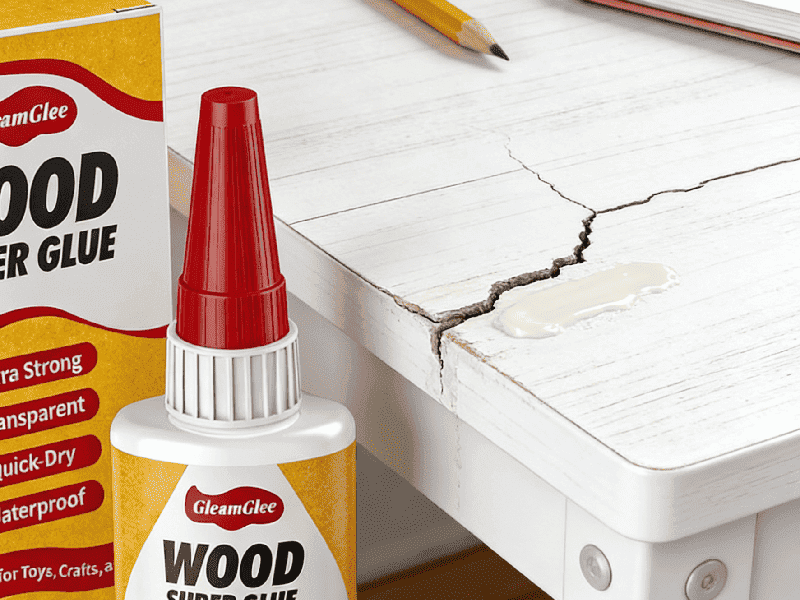
Wood is one of the most forgiving materials to work with—until it isn’t.
A chair leg snaps, a drawer joint loosens, or a tabletop splits right down the grain. Many people assume the fix is simple: “Just grab some glue.” But in reality, choosing the wrong glue is the #1 reason wood repairs fail—not poor craftsmanship.
Some glues soak into wood fibers and become stronger than the wood itself. Others harden beautifully but crack the moment the wood expands with humidity. Some claim to be “waterproof,” yet fail outdoors after one season. And some are incredibly strong—but impossible to sand, stain, or repair later.
The problem isn’t that wood glue is complicated.
The problem is that different wood problems demand different glue chemistry—and most guides never explain why.
This article breaks down every major glue type used for wood, explains how they actually behave inside wood fibers, and shows you how to choose the right glue based on strength, permanence, waterproof rating, wood species, and real-world use. Whether you’re fixing furniture, building cabinets, repairing outdoor items, or sourcing products for resale, this guide is designed to give you confident, mistake-free decisions.
The best glue for wood depends on the job, not just strength.
PVA wood glues are ideal for most indoor furniture and tight joints. Type 3 wood glue offers waterproof performance for outdoor use. Epoxy provides maximum gap-filling strength, while polyurethane works on mixed materials. Choosing the right glue requires matching water resistance, flexibility, and permanence to the wood type and application.
Woodworking problems rarely fail loudly—they fail slowly. A joint that looks perfect today can loosen months later. Up next, we’ll start with the most misunderstood question of all: what “wood glue” actually means, and how it differs from wood adhesive.
What Are the Main Glue Types for Wood—and How Do They Differ?
The main glue types for wood include PVA wood glue, polyurethane glue, epoxy, cyanoacrylate (CA), and specialty adhesives like hide glue. Wood glue typically refers to PVA-based formulas designed to penetrate wood fibers, while “wood adhesive” is a broader category that includes structural and multi-material bonding products. Each type differs in strength, flexibility, water resistance, and repairability.
What is the difference between wood adhesive and wood glue?
Many people use wood glue and wood adhesive interchangeably, but technically they are not the same.
Wood glue usually refers to PVA (polyvinyl acetate) or aliphatic resin glue, designed specifically for bonding wood to wood. These glues penetrate porous wood fibers, creating a bond that can be as strong—or stronger—than the wood itself. They are optimized for sanding, staining, and long-term stability.
Wood adhesive, on the other hand, is a broader category. It includes epoxies, polyurethane adhesives, construction adhesives, and hybrid polymers. These products may bond wood to metal, plastic, or stone—but often sacrifice flexibility or reparability.
In short:
- Use wood glue when both surfaces are wood
- Use wood adhesive when materials or conditions are complex
What is “wood glue” (PVA/aliphatic resin) and why is it the default?
PVA-based wood glue dominates woodworking for good reason.
It:
- Soaks into wood fibers instead of sitting on the surface
- Cures flexible enough to move with seasonal expansion
- Sands cleanly and accepts stain/paint
- Cleans up with water
- Is non-toxic and odor-free
For tight-fitting joints, PVA wood glue creates what’s known as a fiber-tear bond—meaning the wood will break before the glue does. This is why nearly all furniture factories, cabinet shops, and carpentry professionals rely on it.
However, not all PVA glues are equal. Indoor, water-resistant, and waterproof versions behave very differently—something we’ll explore in later sections.
How do polyurethane, epoxy, and CA behave differently on wood?
Each alternative glue solves problems PVA can’t:
- Polyurethane glue expands slightly and bonds wood to non-porous materials. It’s waterproof, but messy and harder to sand.
- Epoxy offers extreme strength and gap-filling ability, ideal for cracked or missing wood—but cures rigid and may crack with movement.
- Cyanoacrylate (super glue) bonds instantly, making it useful for small repairs, but it’s brittle and unsuitable for structural joints.
These are problem-solving glues, not everyday solutions.
What are specialty wood adhesives used for?
Certain projects demand traditional or industrial formulas:
- Hide glue (used in antiques and instruments) allows reversibility
- Urea-formaldehyde glue resists creep in veneers
- Resorcinol glue handles marine and structural loads
They’re powerful—but overkill for most consumers.
Which Wood Glue Type Is Best for Indoor Furniture, Cabinets, and Trim?
For indoor furniture, cabinets, and trim, PVA-based wood glue (aliphatic resin glue) is the best choice. It penetrates wood fibers deeply, creates bonds stronger than the wood itself, remains slightly flexible over time, and dries clean for sanding, staining, or painting. Unlike epoxy or super glue, it accommodates seasonal wood movement, making it ideal for long-term indoor use.
Why PVA wood glue is the gold standard for indoor furniture
Most indoor furniture failures don’t happen because glue is “too weak”—they happen because wood moves. Changes in humidity and temperature cause expansion and contraction, especially in solid wood panels, frames, and cabinet carcasses.
PVA (polyvinyl acetate) wood glue works so well indoors because it:
- Soaks into wood fibers, creating mechanical interlocking
- Dries with controlled flexibility, not brittleness
- Fails by wood fiber tear, not glue separation
That’s why professional furniture factories, cabinet shops, and millwork installers overwhelmingly rely on PVA glue rather than “stronger” alternatives like epoxy.
Best wood glue for cabinets, drawers, and face frames
Cabinets and built-ins introduce three challenges:
- Repeated load (drawers opening/closing)
- Tight tolerances
- Visible surfaces
For these applications, the ideal glue must:
- Grab quickly but allow short repositioning
- Dry clear without visible glue lines
- Sand flush without clogging abrasives
High-quality PVA wood glue excels here. It allows clean joinery, supports clamping pressure evenly, and won’t telegraph through paint or stain—something polyurethane and epoxy often fail at.
Which glue works best for trim, moldings, and baseboards?
Trim and moldings often combine:
- Wood-to-wood joints
- Wood-to-MDF or plywood
- Small surface areas
For these, PVA glue is still the first choice because:
- It bonds well to porous materials (wood, MDF)
- Excess glue cleans up easily with water
- It doesn’t foam or expand like polyurethane
Many professionals pair PVA glue with brad nails or pins—not for strength, but to hold alignment while the glue cures.
Why epoxy and super glue are usually wrong indoors
It’s common for DIY users to assume:
“Stronger glue = better furniture repair”
In reality:
- Epoxy is rigid and unforgiving—great for gaps, bad for seasonal movement
- Super glue (CA) is brittle and surface-only—prone to sudden failure
Both can cause furniture joints to crack around the glue line over time. For indoor furniture meant to last years or decades, controlled flexibility beats raw tensile strength every time.
What about MDF, plywood, and engineered wood?
Indoor furniture today often mixes materials. PVA wood glue performs exceptionally well on:
- MDF (deep fiber penetration)
- Plywood (strong bond to veneers)
- Particleboard (when surfaces are intact)
For stripped or crumbly areas, reinforcement may be needed—but the primary adhesive should still be wood glue, not construction adhesive or epoxy.
What Is Type 3 Wood Glue—and When Should You Use It?
Type 3 wood glue is a waterproof wood adhesive that meets ANSI Type III standards, meaning it can withstand prolonged water exposure and repeated wet–dry cycles without losing bond strength. It is best used for outdoor furniture, garden structures, kitchens, bathrooms, and any wood application exposed to moisture, humidity, or temperature changes where standard wood glue may fail.
What does “Type 3” actually mean in wood glue classifications?
Many users see “Type 3” on a label without understanding what it guarantees.
Wood glue “types” are defined by ANSI (American National Standards Institute) water-resistance testing:
| Glue Rating | Water Resistance Level | Typical Use |
|---|---|---|
| Type I | Low | Dry indoor furniture |
| Type II | Water-resistant | Kitchens, bathrooms |
| Type III | Waterproof | Outdoor & wet environments |
A Type 3 wood glue must survive:
- Extended soaking in water
- Multiple wet–dry cycles
- Heat exposure combined with moisture
Without bond separation or significant strength loss. This makes it the highest waterproof rating available for PVA-based wood glue.
How Type 3 wood glue differs from regular wood glue
At a chemical level, Type 3 wood glue is still a PVA-based adhesive, but it is modified with:
- Cross-linking polymers
- Moisture-resistant additives
- Enhanced curing mechanisms
This allows it to:
- Maintain flexibility while resisting water
- Prevent glue line softening in humidity
- Reduce joint creep in fluctuating climates
Unlike epoxy, it does not become rigid or brittle—an essential advantage for wood that naturally expands and contracts.
When should you choose Type 3 wood glue instead of standard PVA?
Type 3 wood glue is the correct choice when moisture is unavoidable, including:
- Outdoor furniture (benches, tables, chairs)
- Garden planters and raised beds
- Exterior trim and wooden frames
- Kitchen cabinets near sinks
- Bathroom shelving and vanities
- Laundry room and basement furniture
If water, condensation, or humidity is part of the environment—even occasionally—Type 3 glue dramatically reduces long-term failure risk.
Is Type 3 wood glue truly “waterproof” in real life?
Yes—but with realistic expectations.
Type 3 wood glue:
- Resists rain, spills, and high humidity
- Does not dissolve or soften when wet
- Retains structural bond strength after drying
However, it is not designed to seal gaps or cracks. Tight joint fit is still essential. For broken, missing, or uneven wood, epoxy may still be required—but for well-made joints, Type 3 glue outperforms epoxy over time due to its flexibility.
Type 3 wood glue vs epoxy vs polyurethane for outdoor use
This is where many users get confused.
| Property | Type 3 Wood Glue | Epoxy | Polyurethane |
|---|---|---|---|
| Waterproof | Yes | Yes | Yes |
| Flexibility | High | Low | Medium |
| Gap filling | Low | High | Medium |
| Wood movement tolerance | Excellent | Poor | Fair |
| Clean finish | Excellent | Moderate | Poor |
| Ease of use | Easy | Complex | Messy |
For well-fitted wood joints exposed to weather, Type 3 wood glue is usually the most durable long-term solution.
Common mistakes when using Type 3 wood glue
Even with the right glue, failures happen when users:
- Use it on loose or poorly fitted joints
- Skip surface prep (dust, oil, moisture)
- Under-clamp or over-clamp joints
- Expose the joint to water before full cure
Type 3 glue needs proper clamping and full curing time to achieve its waterproof performance.

What Type of Glue Is Best for Wood—Based on Use Case?
The best glue for wood depends on how and where the wood will be used. PVA wood glue is ideal for indoor furniture and tight joints, Type 3 waterproof wood glue is best for outdoor or humid environments, epoxy works for damaged or gap-filled repairs, and polyurethane glue is suitable for mixed-material bonding. Choosing by use case—not strength alone—ensures long-lasting results.
Why “best glue for wood” depends on use, not strength
One of the biggest misconceptions users have is asking:
“Which glue is strongest for wood?”
In reality, strength is only one variable. Wood is a living material that:
- Expands and contracts with humidity
- Transfers load through joints, not surfaces
- Fails gradually, not instantly
The “best” glue is the one that:
- Matches wood movement
- Fits the joint quality
- Survives the environment
- Allows clean finishing or future repair
That’s why professionals choose glue by application scenario, not marketing claims.
Best glue for indoor furniture, cabinets, and trim
Recommended: PVA wood glue (aliphatic resin)
Why it works best:
- Penetrates wood fibers deeply
- Creates bonds stronger than the wood itself
- Remains slightly flexible over time
- Sands, stains, and paints cleanly
Typical uses:
- Chairs, tables, shelves
- Cabinets and drawers
- Face frames, trim, moldings
This is the glue used in most furniture factories worldwide, because it balances strength, flexibility, and appearance.
Best glue for outdoor wood and moisture-prone areas
Recommended: Type 3 waterproof wood glue
Why it works:
- Withstands rain, spills, and humidity
- Survives repeated wet–dry cycles
- Maintains flexibility outdoors
- Does not soften or creep in heat
Best for:
- Garden furniture
- Planters and raised beds
- Exterior doors and trim
- Kitchen and bathroom woodwork
Compared to epoxy, Type 3 glue lasts longer in real outdoor conditions because it moves with the wood.
Best glue for cracked, broken, or missing wood
Recommended: Epoxy (two-part)
Why epoxy is needed here:
- Fills gaps and voids
- Bonds uneven or damaged surfaces
- Reinforces weak structural areas
Use epoxy when:
- Wood fibers are broken or missing
- Joints cannot be tightened
- Structural strength is compromised
Trade-offs:
- Rigid, brittle bond
- Harder sanding
- Visible glue lines if not controlled
Epoxy is a repair solution, not a general-purpose wood glue.
Best glue for wood-to-metal or wood-to-plastic joints
Recommended: Polyurethane glue
Why it works:
- Bonds porous to non-porous materials
- Waterproof
- Slight expansion fills micro gaps
Common uses:
- Wood to metal brackets
- Wood to plastic components
- Outdoor mixed-material assemblies
Limitations:
- Foams and expands
- Can stain wood
- Requires careful cleanup
For clean furniture work, polyurethane is usually a secondary choice—not a primary one.
Best glue for engineered wood (MDF, plywood, particleboard)
Recommended: PVA or Type 3 wood glue (depending on environment)
Why:
- MDF and plywood are highly absorbent
- PVA penetrates fibers effectively
- Provides uniform stress distribution
Use Type 3 if:
- The piece is near moisture
- It’s used in kitchens, bathrooms, or basements
Avoid:
- Super glue (brittle, surface-only bond)
- Construction adhesive (too thick, poor penetration)
Decision Table: Best Wood Glue by Use Case
| Use Case | Best Glue Type | Why |
|---|---|---|
| Indoor furniture | PVA wood glue | Strong, flexible, clean finish |
| Cabinets & trim | PVA wood glue | Easy sanding & painting |
| Outdoor furniture | Type 3 wood glue | Waterproof + flexible |
| Kitchens/bathrooms | Type 3 wood glue | Moisture resistance |
| Broken/missing wood | Epoxy | Gap filling & reinforcement |
| Wood + metal/plastic | Polyurethane | Mixed-material bonding |
| MDF & plywood | PVA / Type 3 | Deep fiber penetration |
Which Wood Glue Is the Strongest—and What Does “Permanent” Really Mean?
The “strongest” wood glue depends on how strength is defined. PVA wood glue creates the strongest wood-to-wood fiber bond, epoxy offers the highest gap-filling strength, and polyurethane glue provides durable mixed-material bonding. “Permanent” means a bond that lasts longer than the wood itself—but overly rigid glues often fail sooner in real wood applications due to movement and stress.
Why “strongest wood glue” is the wrong first question
Most users ask:
Which wood glue is the strongest?
Professionals ask:
Which glue stays strong for years under real conditions?
Wood is not static. It expands, contracts, flexes, and transfers load through joints. A glue that tests “strongest” in a lab can fail faster in furniture, cabinetry, or outdoor use if it cannot accommodate movement.
So strength must be evaluated in context, not in isolation.
PVA wood glue: strongest where it matters most
In properly fitted wood joints, PVA wood glue is often stronger than epoxy in real-world use.
Why?
- It penetrates deep into wood fibers
- Creates a mechanical + chemical bond
- Causes failure in the wood, not the glue line
This is why furniture joints glued with PVA often tear wood fibers when broken—the glue bond itself remains intact.
For tight joints (mortise & tenon, dowels, panels), PVA is functionally the strongest choice.
Epoxy: strongest for gaps, weakest for movement
Epoxy has extremely high tensile and compressive strength, which makes it ideal when:
- Wood fibers are missing or damaged
- Joints cannot be tightened
- Structural reinforcement is needed
However, epoxy:
- Does not penetrate wood fibers
- Cures rigid and inflexible
- Transfers stress to surrounding wood
Over time, seasonal wood movement often causes cracks around epoxy joints, not through them. That’s why epoxy excels in repairs—but is rarely used in fine furniture manufacturing.
Polyurethane glue: strong but misunderstood
Polyurethane glue is often marketed as “super strong,” but its strength lies in versatility, not pure wood performance.
Pros:
- Bonds wood to metal, plastic, stone
- Waterproof
- Slight expansion fills micro gaps
Cons:
- Foaming weakens structural density
- Messy squeeze-out
- Less fiber penetration than PVA
For pure wood-to-wood joints, polyurethane is usually not stronger than PVA—just more adaptable.
What does “permanent” really mean in wood glue?
“Permanent” does not mean:
- Unbreakable
- Impossible to repair
- Better in all cases
In woodworking, a permanent bond means:
- The glue lasts longer than the wood
- The joint survives environmental stress
- The failure point is predictable
Ironically, overly permanent (rigid) glues often shorten the lifespan of wood furniture, because they prevent natural movement and concentrate stress.
That’s why restorers, cabinetmakers, and manufacturers prefer controlled-flexibility glues over “forever hard” ones.
Strength vs durability: what users should prioritize
| Glue Type | Lab Strength | Real-World Durability | Flexibility | Best Use |
|---|---|---|---|---|
| PVA wood glue | High | Excellent | High | Furniture, cabinets |
| Type 3 wood glue | High | Excellent | High | Outdoor wood |
| Epoxy | Very high | Moderate | Low | Structural repairs |
| Polyurethane | Moderate | Good | Medium | Mixed materials |
| Super glue (CA) | High (initial) | Poor | Very low | Temporary fixes |
The most durable wood joints are rarely made with the “strongest” glue on paper—they’re made with the right glue.

What Mistakes Make Wood Glue Fail—and How Do You Avoid Them?
Wood glue most often fails due to poor surface preparation, loose joints, incorrect glue selection, improper clamping, or exposing the joint before full cure. Even the strongest wood glue cannot compensate for gaps, dust, oil, or wood movement. Avoiding these common mistakes—and matching glue type to environment and joint quality—is essential for durable, long-lasting wood repairs.
Using wood glue to compensate for loose or poorly fitted joints
This is the number one cause of wood glue failure.
A common myth:
“More glue will fix a loose joint.”
In reality:
- Wood glue is designed to bond tight-fitting surfaces
- Excess glue does not increase strength
- Gaps prevent fiber-to-fiber contact
When a joint wiggles before gluing, it will almost always fail later—especially under load or humidity changes.
How to avoid it
- Dry-fit every joint before gluing
- Tighten joints mechanically (shims, dowels, clamps)
- Use epoxy only when material loss makes tight fit impossible
Skipping proper surface preparation
Glue bonds to wood fibers, not dirt, dust, oil, or old finish.
Common prep mistakes:
- Gluing over sawdust
- Ignoring oily hardwoods
- Leaving old glue residue
- Applying glue to damp wood
Even premium glue cannot penetrate contaminated surfaces.
How to avoid it
- Sand lightly to expose fresh wood
- Remove dust with a dry brush or vacuum
- Degrease oily woods with solvent (if needed)
- Ensure wood moisture content is appropriate for the environment
Choosing the wrong glue for the environment
Many failures happen months later—not immediately.
Examples:
- Indoor PVA glue used outdoors
- Non-waterproof glue used near sinks or bathrooms
- Rigid epoxy used where wood moves seasonally
The bond may look fine at first, then weaken after humidity cycles.
How to avoid it
- Use Type 3 wood glue for moisture exposure
- Match glue flexibility to wood movement
- Don’t assume “stronger” means “more durable”
Over-clamping or under-clamping joints
Clamping mistakes are subtle but destructive.
- Over-clamping squeezes glue out, starving the joint
- Under-clamping leaves gaps and uneven contact
In both cases, the glue line becomes weak.
How to avoid it
- Apply even pressure, not maximum force
- Look for a thin, consistent glue squeeze-out
- Use cauls to distribute pressure evenly
- Follow recommended clamp times—don’t rush
Not allowing full curing before stress or moisture
Many users confuse set time with full cure.
Mistakes include:
- Removing clamps too early
- Sanding or loading joints too soon
- Exposing glued wood to water or heat prematurely
This interrupts polymer formation and weakens the bond permanently.
How to avoid it
- Respect full cure time, not just “dry to touch”
- Keep joints dry and stable during curing
- Delay heavy use until curing is complete
Expecting super glue or construction adhesive to behave like wood glue
Another frequent error is using the wrong category of adhesive.
- Super glue (CA) → brittle, surface-only bond
- Construction adhesive → too thick, poor penetration
- Hot glue → temporary positioning only
These adhesives may “stick,” but they do not create durable wood joints.
How to avoid it
- Use wood glue for wood
- Reserve specialty adhesives for specialty problems
- Don’t substitute convenience for compatibility
Failure Prevention Checklist
| Common Mistake | Result | Correct Approach |
|---|---|---|
| Loose joints | Early failure | Tight fit or epoxy repair |
| Dirty surfaces | Weak bond | Clean, sanded wood |
| Wrong glue type | Delayed failure | Match glue to environment |
| Over-clamping | Glue starvation | Even pressure |
| Early use | Incomplete cure | Allow full curing |
| Wrong adhesive | Brittle joint | Use proper wood glue |
Is GleamGlee Wood Glue a Good Option for Modern Wood Repairs?
Yes — GleamGlee Wood Glue is a highly capable choice for modern wood repairs, furniture assembly, cabinetry, trim work, and even outdoor applications when using waterproof variants. It combines strong fiber-penetrating adhesion with water resistance, fast set time, clean finish, and ease of use. Designed for both DIY users and professional woodworkers, it balances strength, flexibility, and durability for long-lasting wood joints.
What Makes GleamGlee Wood Glue Effective for Wood-to-Wood Bonds?
GleamGlee Wood Glue is engineered around the fundamental requirements of wood bonding:
- Deep Penetration: Its formula is designed to penetrate wood fibers, increasing mechanical interlocking and bond strength—especially important for solid wood, plywood, and engineered wood.
- Fiber Tear Strength: In well-fitted joints, the adhesive bond often becomes stronger than the wood fibers themselves. This means joints often fail in the wood rather than at the glue line—an indicator of quality.
- Controlled Flexibility: Unlike brittle adhesives (e.g., super glue), GleamGlee Wood Glue remains slightly flexible after curing—a critical trait for wood that expands and contracts with humidity changes.
- Ease of Finish: It dries with a clean finish that sands well and accepts stain or paint uniformly, which is crucial for furniture, trim, and cabinetry projects.
These characteristics align with what professional woodworkers look for: a bond that is as strong as the wood itself, adaptable, and cosmetically clean.
How Does GleamGlee Compare to Standard PVA and Other Adhesive Types?
| Feature | GleamGlee Wood Glue | Standard PVA | Epoxy | Polyurethane | Super Glue (CA) |
|---|---|---|---|---|---|
| Fiber Penetration | ★★★★★ | ★★★★☆ | ☆☆☆☆☆ | ★★★☆☆ | ☆☆☆☆☆ |
| Water Resistance (Type 2/3) | ★★★★☆ | ★★★☆☆ | ★★★★★ | ★★★★★ | ★☆☆☆☆ |
| Flexibility After Cure | ★★★★☆ | ★★★☆☆ | ☆☆☆☆☆ | ★★☆☆☆ | ☆☆☆☆☆ |
| Sandability & Finish | ★★★★★ | ★★★★☆ | ★★☆☆☆ | ★☆☆☆☆ | ★☆☆☆☆ |
| Gap Filling Ability | ★★☆☆☆ | ☆☆☆☆☆ | ★★★★★ | ★★☆☆☆ | ☆☆☆☆☆ |
| Mixed Material Bonding | ★★☆☆☆ | ★☆☆☆☆ | ★★★★★ | ★★★★☆ | ★☆☆☆☆ |
Why Users Choose GleamGlee for Daily Wood Repairs and Projects
Modern wood repairs span a wide range: from simple chair leg fixes to large built-in cabinets. GleamGlee addresses these with design choices:
- Fast Initial Tack: Reduces clamp time without premature brittleness.
- Clear Drying: Reduces visible glue lines, aids finishing and staining.
- Precision Applicator Tips: Enables clean glue placement even on tight or small joints.
- Water-Resistant Variants: Suitable for kitchens, basements, and occasional splashes.
- Consistent Quality: Ideal for repeated use without variation between batches.
This ease of use—without sacrificing performance—is why even professionals adopt it for everyday jobs.
Which Projects Are Best Suited for GleamGlee Wood Glue?
GleamGlee excels especially in:
- Furniture Assembly & Repair: Tables, chairs, benches, shelving
- Cabinetry & Trim: Crown molding, baseboards, face frames
- Home Repairs: Door frames, window sills, loose trims
- DIY Projects: Birdhouses, boxes, décor pieces
- Mixed Material Woodwork: Wood to MDF or plywood joints (when paired with mechanical fasteners)
For structural reinforcements or gap filling, epoxy or construction adhesives remain appropriate—but for day-to-day wood bonding tasks, GleamGlee delivers optimal performance.
How GleamGlee Wood Glue Saves Time and Money
From a cost-benefit perspective:
- Reduced clamp times mean quicker project turnaround
- Less sanding and touch-up equates to lower finishing labor
- Waterproof variants reduce future repair needs
- Precision nozzles reduce glue waste
For DIYers, this means faster, cleaner, more predictable results. For B2B buyers or brands, this translates to consistent performance at scale with minimal rework.

Conclusion
When it comes to wood repairs and woodworking projects, there is no single “best” glue for every situation. The right choice depends on where the repair is used, how much stress it will face, and what “permanent” truly means in real life. Traditional PVA wood glues remain excellent for indoor furniture, cabinets, and trim because they penetrate wood fibers, sand cleanly, and create joints that are often stronger than the wood itself. Type 3 wood glue takes this a step further, offering water resistance suitable for kitchens, bathrooms, and outdoor environments where moisture is unavoidable.
At the same time, stronger does not always mean better. Epoxy and polyurethane adhesives may deliver extreme strength or gap-filling power, but they often sacrifice flexibility, finish quality, and ease of use—key factors for modern wood repairs and DIY projects. Super glue, while fast, simply cannot handle the movement and long-term stress that wood naturally experiences.
This is where GleamGlee Wood Glue fits naturally into modern needs. Designed to balance strength, flexibility, water resistance, and user-friendly application, it supports both everyday home repairs and professional-grade woodworking without unnecessary complexity. Whether you are fixing furniture, reinforcing joints, or working on custom projects, the goal is not just to bond wood—but to create a repair that lasts, looks clean, and performs reliably over time.
If you’re ready to upgrade from trial-and-error repairs to a proven solution, GleamGlee Wood Glue is available with fast Amazon fulfillment, and we also support custom formulations, private labeling, and bulk inquiries for brands and businesses worldwide.
Repair smarter, build stronger, and let your wood projects stand the test of time.





















