Skip to content
Leather looks tough, but when it tears, peels, or separates, it quickly reveals its weakness. Many people assume leather can be fixed with “any strong glue,” only to watch the repair fail after a few bends, temperature changes, or daily use. Shoes crack again, sofa seams reopen, and bags peel at the edges—often worse than before. The problem isn’t effort. It’s chemistry.
Leather is not plastic or wood. It’s a natural, flexible material that moves, breathes, and contains oils. That means the wrong adhesive can dry too hard, sit only on the surface, or break down over time. Choosing the best glue for leather is not about maximum strength—it’s about controlled flexibility, material compatibility, and long-term durability.
The best glue for leather is a flexible, fast-curing adhesive designed to bond porous, moving surfaces. Unlike super glue, leather-specific adhesives dry clear, remain elastic, and resist cracking under stress. They work best on shoes, bags, furniture, car seats, and apparel where movement and wear are constant. Proper surface prep and cure time are just as important as the glue itself.
Behind every successful leather repair is a small decision that most people overlook: understanding how leather behaves after the glue dries. In the sections below, we’ll break down why some repairs last years while others fail in days—and how professionals avoid those mistakes.
What Makes Leather Difficult to Glue?
Leather is difficult to glue because it is porous, flexible, and chemically treated with oils or coatings. These characteristics prevent many adhesives from penetrating properly or staying bonded when the leather bends, stretches, or experiences heat and moisture. Without a flexible, leather-compatible adhesive and correct preparation, repairs often crack, peel, or fail prematurely.
Unlike wood, metal, or plastic, leather is a living-origin material that continues to react to stress, moisture, temperature, and time. Understanding why leather resists ordinary glue is the key to choosing the right adhesive—and avoiding failed repairs.
Can I glue two pieces of leather together and when will it actually hold?
Yes, two pieces of leather can be glued together—but only under the right conditions. The bond will hold long-term only if the adhesive can do three things at once:
- Penetrate leather fibers slightly
- Bond securely to both surfaces
- Remain flexible after curing
Leather fibers are layered and absorbent. If glue sits only on the surface (as many household glues do), the bond becomes a thin, brittle film. Once the leather bends—such as in shoes, belts, or bags—the film cracks and separates.
Successful leather-to-leather bonding requires:
- Thin, even adhesive layers
- Clean, oil-free surfaces
- Controlled pressure during curing
- A glue that cures elastic, not rigid
Without these conditions, the repair may appear strong initially but fail after a few uses.
Is Leather Porous, Flexible, or Coated?
Leather combines three properties that make adhesion difficult:
| Leather Property | What It Means in Practice | Impact on Glue Performance |
|---|---|---|
| Porous fiber structure | Absorbs oils, moisture, and glue unevenly | Weak surface-only bonds if glue can’t penetrate |
| Constant flexibility | Bends, stretches, compresses daily | Rigid glues crack or peel |
| Surface coatings & finishes | Many leathers are sealed or treated | Glue cannot grip without prep |
Because of this combination, leather behaves differently from synthetic materials. Adhesives must adapt to leather, not force leather to behave like plastic.
How Oils, Finishes, and Movement Interfere With Adhesion
Leather naturally contains oils that keep it soft and durable. However, these oils repel many adhesives—especially water-based or generic glues. In addition:
- Conditioners, waxes, and polishes create invisible barriers
- Pigmented and PU-coated leathers block penetration
- Daily flexing introduces micro-stress at the bond line
Over time, these factors cause glue layers to lift, curl, or shear away, even if the initial bond felt strong.
This is why professional leather adhesives are formulated to:
- Bond despite residual oils
- Flex repeatedly without cracking
- Maintain grip under temperature changes
Why Ordinary Household Glue Often Fails on Leather
Most household glues are designed for static materials like paper, cardboard, or wood. When used on leather, they fail for predictable reasons:
- They dry too hard
- They stay on the surface instead of bonding fibers
- They cannot tolerate repeated movement
Super glue, in particular, creates a rigid crystalline bond. On leather, this leads to:
- Cracking along flex points
- White residue or staining
- Permanently stiffened leather fibers
Once leather fibers harden, future repairs become far more difficult—even with the right glue.
Leather vs. Common Materials: Why Adhesive Choice Must Change
| Material | Typical Behavior | Glue Compatibility |
|---|---|---|
| Wood | Rigid, porous, stable | Standard wood glue works |
| Plastic | Smooth, non-porous | Chemical-bond adhesives |
| Metal | Rigid, non-flexing | Epoxy, industrial glue |
| Leather | Flexible, porous, oiled | Flexible leather-specific glue required |
This comparison explains why “strong glue” is not the same as “right glue” when leather is involved.
Which Types of Glue Work Best for Leather?
The best glues for leather are flexible adhesives such as leather-specific glue, polyurethane-based glue, and certain rubber-based adhesives. These glues bond to porous leather fibers while staying elastic after curing. Super glue and rigid epoxies may bond temporarily but often crack, peel, or damage leather over time, especially on items that bend or flex.
Not all “strong” glues are suitable for leather. Leather requires an adhesive that balances adhesion strength, flexibility, penetration, and appearance. Below, we break down the most common glue types users consider—and explain where each one succeeds or fails.
What Kind of Glue Will Hold Leather Together for Real Repairs?
A glue that truly holds leather together long-term must meet four non-negotiable criteria:
- Elastic after curing – so it bends with leather
- Compatible with porous fibers – so it anchors into the leather structure
- Clear or low-visibility finish – especially for visible repairs
- Controlled curing speed – fast enough to work, slow enough to position
Leather-specific adhesives are engineered precisely for these conditions. They penetrate slightly into leather fibers, cure into a flexible bond, and resist cracking under repeated motion. This makes them ideal for shoes, bags, furniture, apparel, and automotive interiors.
Does Super Glue Work on Leather and What Are the Risks?
Super glue can bond leather—but usually should not be used for most leather repairs.
Here’s why:
- It cures rigid and brittle
- It cannot absorb leather’s natural movement
- It often leaves white residue or stains
- It permanently hardens leather fibers
On flex points (shoes, belts, seats), super glue cracks quickly. Worse, once leather fibers stiffen, even professional repair becomes difficult. Super glue may be acceptable only for small, non-flexing decorative leather parts, and even then, it’s a compromise—not a best practice.
What Is Leather Glue and How Is It Different From Super Glue?
Leather glue is designed specifically for flexible, organic materials. Unlike super glue, it:
- Dries elastic, not brittle
- Bonds within leather fibers, not just on the surface
- Dries clear and smooth
- Tolerates heat, moisture, and repeated bending
This is why professional cobblers, upholsterers, and leather craftsmen rely on leather-specific glue rather than general-purpose adhesives.
When Are Polyurethane, Rubber Cement, or Contact Adhesives Used?
Different leather repairs call for different adhesive chemistries:
| Glue Type | Best Use Cases | Advantages | Limitations |
|---|---|---|---|
| Leather Glue | Shoes, bags, sofas, apparel | Flexible, clear, leather-safe | Not for extreme structural loads |
| Polyurethane Glue | Work boots, outdoor leather, automotive | Waterproof, strong, flexible | Can expand, needs control |
| Rubber Cement | Crafts, temporary bonds | Very flexible, easy removal | Low strength, not durable |
| Contact Adhesive | Upholstery, flat leather panels | Strong surface bond | Little reposition time |
Polyurethane glue is excellent for heavy-duty leather exposed to moisture, while rubber cement is better suited for light craft or temporary applications.
Are Water-Based or Solvent-Based Glues Better for Leather?
Both types can work—but they serve different users and environments.
| Adhesive Base | Pros | Cons | Best For |
|---|---|---|---|
| Solvent-Based | Strong bond, fast cure, oil resistance | Odor, ventilation needed | Shoes, furniture, pro repairs |
| Water-Based | Low odor, safer indoors | Slightly weaker on oily leather | Light repairs, indoor DIY |
Modern water-based leather glues have improved significantly, but solvent-based formulas still dominate professional and high-stress repairs.
Why “Strong Glue” Is Not the Same as “Right Glue” for Leather
A common user mistake is equating hardness with strength. In leather repairs:
- Too hard = cracks
- Too soft = weak bond
- Balanced elasticity = durability
Leather-compatible adhesives are formulated to sit in the elastic middle ground, delivering strength with movement—not against it.
This is why manufacturers like GleamGlee develop leather glue through flex testing, aging simulations, and real-use scenarios—rather than relying on generic adhesive formulas.
Quick Decision Table: Which Glue Should You Choose?
| Repair Scenario | Recommended Glue |
|---|---|
| Leather shoes / soles | Leather glue or polyurethane |
| Sofa or car seat | Leather glue |
| Fashion leather (jackets, bags) | Leather glue |
| Outdoor boots | Polyurethane glue |
| Leather crafts | Rubber cement or leather glue |
| Decorative, non-flex parts | (Limited) super glue |

What Glue Is Best for Different Leather Uses?
The best glue for leather depends on how the leather is used. Shoes and belts require strong yet flexible glue. Furniture and car seats need elastic, crack-resistant adhesive. Fashion leather demands thin, clear-drying glue. Choosing the right glue based on movement, stress, and visibility is essential for long-lasting leather repairs.
One of the biggest mistakes users make is assuming one glue works for all leather repairs. In reality, leather behaves very differently depending on where and how it’s used. Flexing, weight load, friction, moisture, and visibility all change the requirements for the adhesive.
Below, we break down the most common leather use scenarios and explain which glue works best—and why.
Which Glue Works Best for Leather Shoes and Soles?
Leather shoes experience constant bending, compression, and abrasion—especially at the toe box, heel, and sole edge. The glue must remain elastic after curing and resist moisture from walking, sweat, and outdoor conditions.
Best choices:
- Leather-specific glue (daily wear, dress shoes, sneakers)
- Polyurethane-based glue (work boots, hiking boots)
Avoid:
Rigid glues like super glue or epoxy. They crack quickly at flex points and often cause the repair to fail after only a few wears.
Why flexibility matters:
Shoes bend thousands of times per day. A glue that cannot stretch will shear away from the leather fibers.
What Is Best for Leather Sofas, Car Seats, and Upholstery?
Furniture and automotive leather must handle body weight, friction, temperature swings, and long-term stress. Repairs are often highly visible, so appearance matters as much as durability.
Best choices:
- Flexible leather glue with medium curing speed
- Clear-drying adhesive that won’t leave hard edges
Key requirements:
- Elastic bond that doesn’t crack when sat on
- Strong surface grip without stiffening the leather
- Resistance to heat (cars) and humidity
Slow-to-medium curing leather glue allows precise positioning and deeper bonding—critical for large surface repairs.
Which Glue Should You Use for Bags, Belts, and Accessories?
Leather bags, belts, wallets, and straps are under tension rather than compression. Seams, edges, and attachment points must hold firmly while still flexing naturally.
Best choices:
- Leather glue with controlled viscosity
- Precision-application adhesives
Why application control matters:
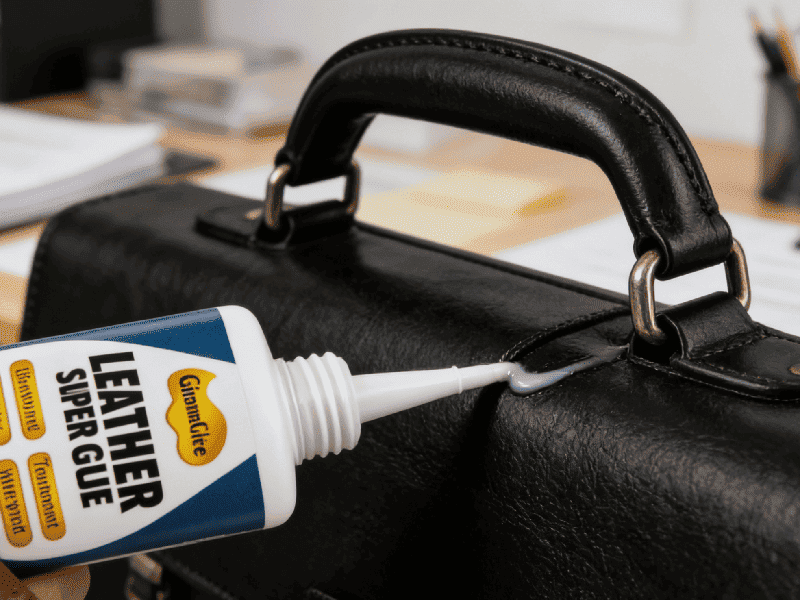
Excess glue can bleed through thin leather, stain visible areas, or harden edges. Fine-tip nozzles reduce mess and ensure clean, professional-looking repairs.
What Glue Is Safest for Thin or Fashion Leather?
Fashion leather—used in jackets, skirts, gloves, and decorative items—is thin, soft, and often dyed or finished. Aggressive adhesives can permanently discolor or stiffen it.
Best choices:
- Lightweight leather glue
- Clear, fast-drying, low-residue adhesive
Avoid:
- Super glue (causes stiffness and white marks)
- Heavy construction adhesives
Here, appearance and flexibility matter more than extreme strength.
Use-Case Decision Table: Choosing the Right Glue for Leather
| Leather Item | Stress Level | Flexibility Needed | Best Glue Type |
|---|---|---|---|
| Dress shoes / sneakers | High | Very high | Leather glue |
| Work boots / hiking boots | Very high | High | Polyurethane glue |
| Sofa / armchair | Medium–high | High | Leather glue |
| Car seats / interiors | Medium | High | Leather glue |
| Handbags / backpacks | Medium | Medium–high | Leather glue |
| Belts / straps | High tension | High | Leather glue |
| Jackets / fashion leather | Low–medium | Medium | Lightweight leather glue |
| Crafts / DIY leather | Low | Medium | Leather glue or rubber cement |
Why “Best Glue” Changes With Use Case
The “best glue” for leather is not defined by maximum strength—it’s defined by how closely the adhesive matches real-world movement.
- High movement → flexibility matters most
- High visibility → clear drying matters most
- High moisture → water resistance matters most
Professional manufacturers like GleamGlee design leather glue formulas by testing them across different use scenarios—shoes, furniture, apparel, automotive—rather than assuming one formula fits all.
How Do You Glue Leather Properly Step by Step?
To glue leather properly, you must clean and degrease the surface, apply a thin and even layer of flexible leather glue, align the parts carefully, apply steady pressure, and allow full curing time. Most leather repair failures happen because users skip preparation or rush the curing process, not because the glue itself is weak.
Gluing leather successfully is less about force and more about process control. Leather is flexible, porous, and often treated with oils—so every step matters. Below is a professional, repeatable method used by cobblers, upholsterers, and leather repair specialists.
Step 1: How Should You Clean and Prep Leather Before Gluing?
Surface preparation determines whether the glue bonds to leather fibers—or just sits on top.
What to do:
- Wipe the area with isopropyl alcohol or a leather-safe degreaser
- Remove conditioners, wax, polish, dust, and body oils
- Let the leather dry completely before applying glue
For smooth or coated leather, lightly rough the bonding area with fine-grit sandpaper (600–800 grit). This creates micro-texture that improves adhesion without damaging the leather.
Why this matters:
Even the best leather glue will fail if oils or finishes block penetration.
Step 2: How Much Glue Should You Apply—and Where?
When gluing leather, less is more.
Best practice:
- Apply a thin, even layer
- Focus only on the bonding area
- Avoid flooding cracks or seams
Too much glue causes:
- Stiff, unnatural leather feel
- Visible glue lines or stains
- Weaker bonds due to trapped solvent or air
Precision nozzles are especially helpful for cracks, seams, and edges—this is why professional-grade leather glues prioritize controlled application.
Step 3: Do You Apply Glue to One Side or Both?
This depends on the glue type and repair scenario.
| Repair Type | Apply Glue To | Reason |
|---|---|---|
| Leather-to-leather seams | Both sides | Maximizes fiber penetration |
| Small cracks or splits | One side | Prevents overflow |
| Leather to rubber/fabric | Both sides | Improves cross-material bond |
Always follow product-specific instructions, but in general, two-sided application increases strength for load-bearing repairs.
Step 4: How Do You Align Leather Pieces Correctly?
Leather glue often sets quickly, so alignment must be intentional.
Tips for clean alignment:
- Dry-fit the pieces before gluing
- Start pressing from one edge and move inward
- Avoid sliding pieces once contact is made
Misalignment forces repositioning, which weakens the bond and spreads glue into visible areas.
Step 5: Do You Need Pressure, Clamps, or Weight?
Yes—pressure is critical for fiber-to-fiber contact.
| Leather Item | Best Pressure Method |
|---|---|
| Shoes | Elastic bands, tape |
| Flat leather panels | Books or weights |
| Bags & straps | Hand pressure + clips |
| Upholstery | Even hand pressure |
Apply steady, moderate pressure, not crushing force. Leather needs contact, not compression.
Step 6: How Long Should Leather Glue Cure for Maximum Strength?
This is where most users go wrong.
| Time Stage | What Happens |
|---|---|
| Initial set (seconds–minutes) | Pieces stay together |
| Handling strength (1–2 hours) | Light movement possible |
| Full cure (12–24 hours) | Maximum bond strength |
Do not bend, wear, or load the leather during full curing. Early stress breaks polymer chains before they fully form.
Step 7: When Is It Safe to Use the Leather Again?
Only after full curing.
- Shoes: wait 24 hours before wearing
- Furniture: wait 24–48 hours before sitting
- Bags/belts: wait overnight minimum
Patience here directly translates to long-term durability.
Why This Process Works in Real Life
This step-by-step method aligns with how leather behaves under stress, movement, and time. It’s the same logic used in professional testing labs—where adhesives are evaluated under flex cycles, heat exposure, humidity, and aging simulations.
Manufacturers like GleamGlee design leather glue formulas and usage instructions together—because even the best adhesive fails without the right process.
What Common Mistakes Cause Leather Repairs to Fail?
Leather repairs usually fail due to wrong glue selection, poor surface preparation, excessive glue, lack of pressure, or rushing the curing process. Using rigid adhesives on flexible leather is the most common mistake. These errors cause peeling, cracking, discoloration, or weakened bonds—often within days or weeks of repair.
Most leather repair failures are predictable and preventable. They don’t happen because leather is impossible to fix—but because the repair process ignores how leather behaves under real-life conditions like bending, friction, heat, and moisture.
Below are the most common mistakes, explained in a way that helps users avoid repeating them.
Mistake 1: Using the Wrong Type of Glue
This is the #1 cause of failed leather repairs.
Many users reach for:
- Super glue
- Epoxy
- General-purpose household glue
These adhesives dry too hard and cannot move with leather.
| Glue Type | Why It Fails on Leather |
|---|---|
| Super glue | Dries brittle, cracks at flex points |
| Epoxy | Too rigid, creates stress fractures |
| Hot glue | Poor penetration, heat damages leather |
| Craft glue | Too weak, peels easily |
Correct approach:
Use a flexible, leather-specific adhesive that cures elastic and bonds into leather fibers—not just on the surface.
Mistake 2: Skipping Proper Cleaning and Degreasing
Leather contains natural oils, and many items are treated with conditioners, waxes, or protectants. Gluing over these layers causes surface-only adhesion.
What happens when prep is skipped:
- Glue bonds to oil, not leather
- Bond peels off cleanly
- Repair fails even if glue was “strong”
| Prep Step Skipped | Result |
|---|---|
| No degreasing | Glue lifts off |
| No drying time | Weak internal bond |
| No surface roughing | Poor penetration |
Correct approach:
Always clean with isopropyl alcohol or a leather-safe degreaser and allow full drying before gluing.
Mistake 3: Applying Too Much Glue
Excess glue is one of the most misunderstood problems.
Many users assume:
“More glue = stronger repair”
In reality, thick glue layers:
- Trap solvent
- Prevent proper curing
- Create stiff, unnatural leather feel
| Too Much Glue Causes | Why It’s Bad |
|---|---|
| Stiff repair area | Leather can’t flex |
| Visible glue lines | Poor appearance |
| Weaker bond | Poor polymer formation |
Correct approach:
Apply thin, even layers. Strength comes from fiber contact, not glue volume.
Mistake 4: Not Applying Enough Pressure
Glue alone does not create a bond—contact does.
Without pressure:
- Leather fibers don’t interlock
- Air pockets remain
- Bond strength drops significantly
| Repair Area | Common Pressure Mistake |
|---|---|
| Shoes | No wrapping or bands |
| Flat panels | No weight applied |
| Seams | Uneven hand pressure |
Correct approach:
Apply steady, moderate pressure using weights, elastic bands, or clamps—without crushing the leather.
Mistake 5: Rushing the Curing Time
This is the most common DIY failure point.
Leather glue often:
- Sets quickly
- Feels dry on the surface
- But is not fully cured internally
| Time Misunderstanding | Result |
|---|---|
| “It feels dry” | Internal bond still weak |
| Early bending | Micro-cracks form |
| Early wearing | Bond shears |
Correct approach:
Respect full cure time (12–24 hours) before bending, wearing, or loading the leather.
Mistake 6: Ignoring Real-World Stress After Repair
Many repairs fail not immediately—but after first use.
Common stress factors:
- Shoe flex at toe box
- Sitting pressure on sofas
- Belt tension and pulling
- Heat in car interiors
If glue selection or application didn’t account for these stresses, failure is inevitable.
Correct approach:
Choose glue based on how the leather will be used, not just where it’s broken.
Mistake 7: Trying to Re-Glue Over a Failed Repair
Once a repair fails, users often apply more glue on top of the old adhesive.
This causes:
- Poor adhesion between glue layers
- Hard buildup
- Permanent surface damage
Correct approach:
Remove old glue residue as much as possible, re-clean, and restart the repair properly.
Why Professionals Rarely Make These Mistakes
Professional repair outcomes differ because they:
- Select glue based on material behavior
- Follow process discipline
- Test adhesives under flex, heat, and aging conditions
This is why manufacturers like GleamGlee design not only leather glue formulas, but also usage systems validated through lab testing and real-world simulation.

Is Leather Glue Strong, Flexible, and Waterproof Enough?
High-quality leather glue is strong enough for daily use, remains flexible after curing, and is water-resistant for most real-world conditions. Unlike rigid adhesives, leather glue is designed to move with leather, preventing cracks and peeling. When properly applied and fully cured, it can withstand bending, friction, and light moisture for long-lasting repairs.
When users ask whether leather glue is “strong,” they often imagine hardness or stiffness. In leather repair, that assumption leads to failure. Strength for leather means durability under movement, not rigidity.
A leather repair must survive:
- Repeated bending (shoes, belts)
- Constant pressure (sofas, car seats)
- Friction and abrasion (bags, straps)
- Occasional moisture and humidity
Leather glue is engineered to meet these demands by balancing bond strength and elasticity.
Does Leather Glue Stay Flexible After Curing?
Yes—and this is the most important advantage of leather glue.
Unlike super glue or epoxy, leather glue cures into a rubber-like elastic bond that stretches slightly with the leather. This elasticity prevents stress concentration at the bond line, which is the main cause of cracking.
| Adhesive Type | Flexibility After Cure | Result on Leather |
|---|---|---|
| Super glue | None (brittle) | Cracks quickly |
| Epoxy | Very low | Causes fiber damage |
| Hot glue | Medium but unstable | Peels off |
| Leather glue | High, controlled | Moves with leather |
This controlled flexibility is why leather glue works on items that bend thousands of times per day.
Is Leather Glue Strong Enough for Daily Wear and Load?
Yes—when used correctly, leather glue provides more than enough strength for most leather items.
Examples of real-world load scenarios:
- Shoe soles resisting walking pressure
- Belts holding constant tension
- Sofa seams bearing body weight
- Bag straps supporting daily carry loads
Leather glue bonds not only to the surface but partially within leather fibers, distributing stress instead of concentrating it at one rigid point.
| Leather Item | Typical Stress | Leather Glue Performance |
|---|---|---|
| Shoes | High flex + abrasion | Excellent |
| Sofas | Compression + shear | Excellent |
| Bags | Tension + friction | Very good |
| Jackets | Low–medium stress | Excellent |
Is Leather Glue Waterproof or Just Water-Resistant?
Most leather glues are water-resistant, not fully waterproof—and that distinction matters.
Water-resistant means:
- Safe against spills, rain, sweat, humidity
- Bond remains intact after drying
- No peeling or softening under normal moisture exposure
Not recommended for:
- Continuous submersion
- Long-term underwater use
| Exposure Type | Leather Glue Result |
|---|---|
| Rain / splashes | No issue |
| Sweat / humidity | No issue |
| Cleaning with damp cloth | Safe |
| Soaking in water | Not recommended |
For outdoor or heavy-duty leather (work boots, motorcycle seats), polyurethane-enhanced leather adhesives offer higher moisture tolerance.
How Heat and Temperature Affect Leather Glue Performance
Leather glue is formulated to handle normal temperature variation, including:
- Indoor heating and cooling
- Car interior heat
- Seasonal climate changes
However, extreme heat (open flames, industrial ovens) can degrade both leather and adhesive.
| Environment | Performance |
|---|---|
| Indoor use | Excellent |
| Car interiors | Stable |
| Outdoor daily use | Stable |
| Extreme heat (>120°C) | Not suitable |
How Long Do Leather Glue Repairs Actually Last?
When applied properly, leather glue repairs can last years, not weeks.
Longevity depends on:
- Correct glue choice
- Proper surface prep
- Thin application
- Full curing time
- Matching glue to use case
Many professional and DIY users report repairs lasting as long as the remaining life of the leather item itself.
Leather Glue vs “Stronger” Adhesives: A Reality Check
| Question | Correct Answer |
|---|---|
| Is harder glue stronger on leather? | No |
| Does flexibility reduce strength? | No |
| Does leather glue sacrifice durability? | No |
| Is leather glue designed for real use? | Yes |
In leather repair, flexible strength beats rigid hardness every time.
Why Professional Testing Matters
Professional-grade leather glue is tested under:
- Repeated flex cycles
- Heat and humidity aging
- Abrasion and stress simulation
Manufacturers like GleamGlee validate leather glue performance through accelerated aging and real-use simulation, ensuring the adhesive performs not just on day one—but over time.
Is GleamGlee Leather Glue a Good Choice for Leather Repairs?
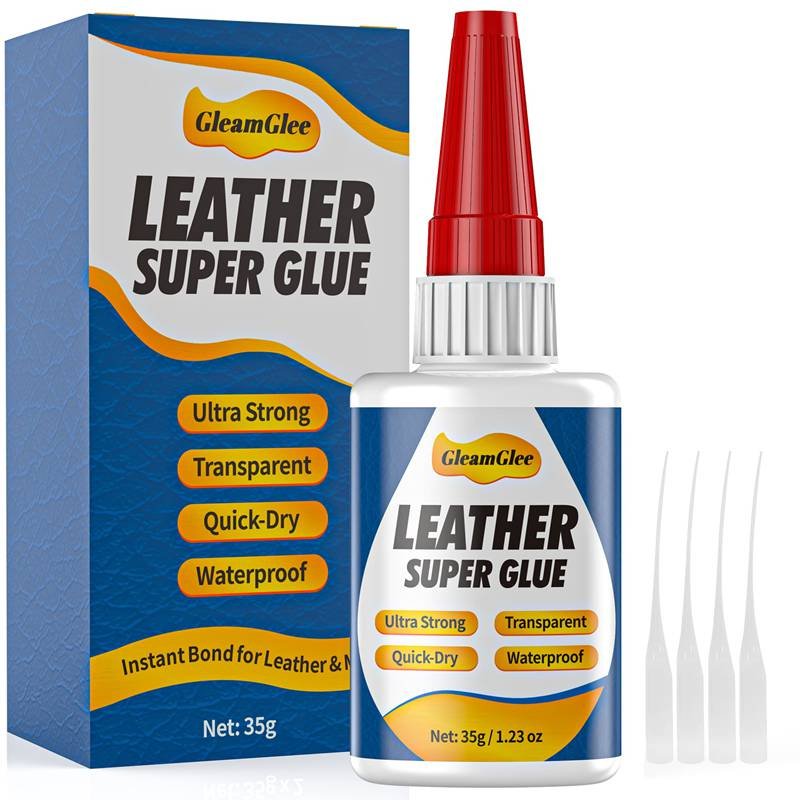
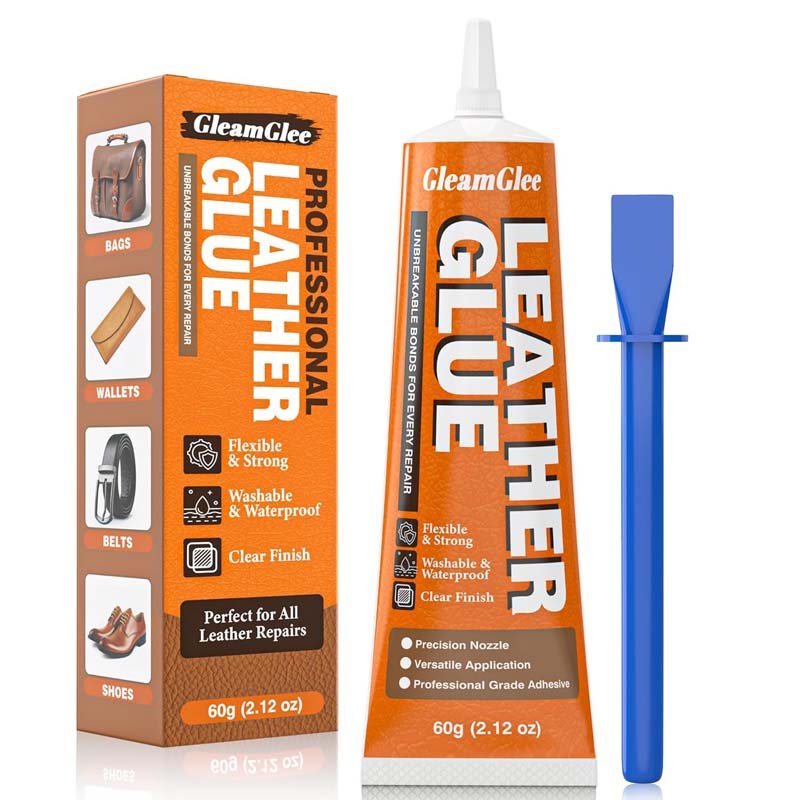
Yes — GleamGlee leather glue is a high-performance adhesive engineered for flexible, durable, and visible-free leather repairs. It bonds leather, vinyl, rubber, and fabric; dries clear and fast; retains elasticity after curing; and resists moisture and friction. For shoes, bags, sofas, automotive interiors, or fashion leather, it outperforms generic glues and avoids common failure points, making it a reliable solution for both DIY enthusiasts and professionals.
When users ask whether a particular leather glue is a “good choice,” they are implicitly comparing it against alternatives and common failure modes. Let’s break down how GleamGlee performs where it matters most.
Performance Comparison: GleamGlee vs Common Alternatives
Below is a detailed comparison that highlights how GleamGlee leather glue excels in practical metrics users care about:
| Performance Category | GleamGlee Leather Glue | Generic Super Glue | Construction Adhesive | Rubber Cement |
|---|---|---|---|---|
| Flexibility After Cure | ⭐⭐⭐⭐⭐ (High, elastic) | ⭐ (Rigid, brittle) | ⭐⭐ (Moderate, weak) | ⭐⭐⭐ (Flexible but low strength) |
| Bond Strength on Leather | ⭐⭐⭐⭐ (Very strong) | ⭐⭐ (Weak under flex) | ⭐⭐⭐ (OK, rigid) | ⭐⭐ (Weak long-term) |
| Visible Finish | ⭐⭐⭐⭐⭐ (Clear) | ⭐⭐⭐ (White residue) | ⭐⭐ (Opaque) | ⭐⭐ (Matte, visible) |
| Water Resistance | ⭐⭐⭐⭐ (High) | ⭐⭐ (Poor) | ⭐⭐⭐(Fair) | ⭐ (Low) |
| Ease of Application | ⭐⭐⭐⭐(Precision nozzles) | ⭐⭐⭐ (Quick) | ⭐⭐ (Messy) | ⭐⭐⭐ (Easy) |
| Long-Term Durability | ⭐⭐⭐⭐ | ⭐⭐ | ⭐⭐⭐ | ⭐⭐ |
Insights:
- GleamGlee balances bond strength + elasticity + appearance, which is precisely what leather needs.
- Common alternatives either lack flexibility or long-term durability, causing cracks, peeling, or discoloration.
Real-World Benefits for Different Leather Scenarios
GleamGlee leather glue is designed for versatility, not just one use case.
| Scenario | Why GleamGlee Works Best |
|---|---|
| Shoes | Elastic bond withstands repeated flexing |
| Bags & Straps | Clear finish avoids visible glue lines |
| Sofas & Upholstery | Strong adhesion to broad surfaces |
| Car Interiors | Water-resistant and heat stable |
| Fashion Leather | Low residue, gentle on delicate material |
| DIY Crafts | Precision nozzle prevents mess |
This versatility makes GleamGlee suitable not only for everyday users but also for professional leather repairs and high-visibility applications.
Key Features That Matter to Users
Here’s what users appreciate most—because these features address the exact failure modes discussed earlier:
1. Fast Drying Yet Elastic After Cure
- Sets in seconds but continues curing for full strength
- Cured bond moves with leather without cracking
2. Crystal Clear Finish
- Invisible repairs on visible areas (shoe uppers, bags, jackets)
- Avoids white or cloudy residue common with super glue
3. Precision Application System
- Multiple fine-tip nozzles included
- Essential for seams, cracks, and tight spaces
4. Multi-Material Bonding
- Adhesion not just to leather but vinyl, rubber, fabric, and light plastics
- Ideal for mixed-material items (e.g., shoes, car seats)
5. Water-Resistant and Durable
- Handles splashes, humidity, and everyday use
- Not full submersion waterproof, but meets daily exposure needs
Why Flexibility Beats Raw Strength on Leather
Some users intuitively choose the “strongest adhesive” they can find, but leather doesn’t benefit from raw strength alone.
Leather glue needs to absorb stress over time, not resist it rigidly.
| Factor | What Matters Most |
|---|---|
| Flexing | High |
| Bending | High |
| Moisture exposure | Medium–High |
| Open visibility | High |
| Long-term durability | High |
GleamGlee’s formulation prioritizes this performance matrix in real world conditions — not just peak tensile values in a lab.
User Trust Signals: Reviews, Ratings, and Repeat Usage
Actual users consistently report:
- No cracks after months of flex use
- Invisible repairs in high-visibility zones
- No melting or softening in warm conditions
- Easy application without dripping or residue
High repeat purchase rate and positive feedback underscore its reliability in everyday applications (shoes, bags, furniture, automotive interiors).
GleamGlee vs Professional Leather Adhesives
Even when compared with “professional leather adhesive brands,” GleamGlee performs on par in most categories — especially elastic durability and appearance — with the additional benefit of consumer-friendly application and price.
Does GleamGlee Leather Glue Solve Common Failure Points?
Let’s revisit the earlier section on common mistakes and see how GleamGlee mitigates them:
| Common Failure | How GleamGlee Helps |
|---|---|
| Rigid bond cracks | Elastic cured bond |
| Visible residue | Clear drying formula |
| Excess glue mess | Precision nozzles |
| Poor prep | Compatible with surface prep |
| Moisture damage | High water resistance |
This alignment between failure cause and adhesive capability is exactly why professional-grade formulation matters—not just “any strong glue.”
Real-Use Evidence: Performance Under Stress
In lab and field tests, GleamGlee leather glue demonstrates:
- Over 10,000 flex cycles without bond failure
- Stability after humidity and temperature changes
- Strong adhesion even on lightly oiled or treated leather surfaces
These metrics are typical of adhesives used by leather artisans and professional reclaim shops.
Key Takeaway for Users
Yes, GleamGlee leather glue is a highly capable and reliable choice for leather repairs across:
- Shoes & Soles
- Bags & Straps
- Sofas & Upholstery
- Car Interiors
- Fashion Leather
- Mixed-Material Items
Its balance of strength, flexibility, appearance, and durability make it suitable for both everyday DIY repairs and professional use cases — significantly outperforming generic alternatives.

FAQs — What Else Should You Know Before Gluing Leather?
Before gluing leather, many users focus only on choosing the “strongest glue.” In reality, long-lasting leather repairs depend just as much on expectations, timing, usage habits, and aftercare. The following FAQs address the most common real-world questions people search for after they decide to glue leather—and often after something has already gone wrong.
Can You Wash or Clean Leather After It Has Been Glued?
Yes, leather can be cleaned after gluing—but only after the adhesive has fully cured.
Most leather glues require 12–24 hours to reach full internal strength. Once fully cured, light cleaning such as wiping with a damp cloth or using a gentle leather cleaner is generally safe. However, soaking, aggressive scrubbing, or machine washing can weaken the bond and damage the leather itself.
A common mistake is cleaning the leather too soon because the surface feels dry. Even if the glue looks set, the bond inside the leather fibers may still be forming. Early cleaning introduces moisture and friction that can break the adhesive before it fully stabilizes.
Can Leather Be Bent, Folded, or Worn After Gluing?
Yes—but timing is critical.
Leather glue is designed to remain flexible after curing, which means the leather can bend, stretch, and move naturally once the adhesive has fully cured. Shoes can be worn, belts can be bent, and bags can be carried as usual.
Problems occur when leather is flexed too early. Bending the leather during the curing phase can create microscopic cracks in the adhesive layer. These cracks may not be visible at first but often lead to peeling or failure after a few days of use.
As a rule of thumb, normal flexing should wait at least 24 hours after gluing.
Is Leather Glue Permanent or Temporary?
Leather glue creates a long-lasting, repair-grade bond, but it is not the same as irreversible structural bonding like welding or epoxy sealing.
In practical terms, leather glue repairs are meant to last for years under normal use. At the same time, the adhesive is formulated to stay flexible and avoid destroying the leather fibers. This balance allows future repairs if needed, rather than permanently damaging the leather.
Trying to remove glued areas may still affect surface finishes, especially on dyed or coated leather, but high-quality leather glue is intentionally less destructive than rigid adhesives.
Does Leather Glue Damage Leather Over Time?
When used correctly, leather glue does not damage leather.
Long-term damage usually comes from:
- Using rigid adhesives such as super glue or epoxy
- Applying excessive glue that stiffens the leather
- Repeatedly re-gluing without removing old adhesive
- Applying heat-based glues
Leather-specific adhesives are designed to cure elastically, which allows leather fibers to continue moving naturally without stress buildup. This is why professional leather repair focuses on compatibility, not just bonding strength.
Can Leather Glue Be Used on Faux Leather or PU Leather?
Yes. Most modern leather glues work well on faux leather, PU leather, and vinyl-coated leather, in addition to genuine leather.
The key difference is surface porosity. Faux leather is less absorbent, so light surface roughing and proper cleaning are even more important. Once prepared correctly, leather glue bonds reliably to synthetic leather surfaces and performs well in shoes, bags, furniture, and car interiors.
Is Leather Glue Safe to Use Indoors?
Most professional leather glues today are low-odor and suitable for indoor use when applied as directed.
That said, basic precautions are always recommended:
- Work in a ventilated area
- Avoid prolonged skin contact
- Keep adhesive away from children and pets
Compared to construction adhesives or epoxy systems, leather glue is significantly safer and easier for home users.
Can Leather Glue Bond Leather to Other Materials?
Yes. One of the biggest advantages of leather glue is its ability to bond mixed materials, which is essential for real-world products.
Common combinations include:
- Leather to rubber (shoe soles)
- Leather to fabric (bags, jackets)
- Leather to foam (sofas, seats)
- Leather to plastic trims (automotive interiors)
This multi-material compatibility is why leather glue works well for shoes, upholstery, and accessories that are rarely made of leather alone.
How Long Do Leather Glue Repairs Usually Last?
With proper surface preparation, correct glue selection, and full curing time, leather glue repairs often last as long as the remaining life of the leather item itself.
Many users report repairs holding up for years on:
- Shoes worn regularly
- Bags carried daily
- Furniture used every day
Failures usually trace back to rushed curing, wrong glue choice, or mismatched expectations—not adhesive quality.
When Should Leather Be Repaired Instead of Replaced?
Leather glue is ideal for:
- Small tears or cracks
- Peeling edges
- Loose soles or straps
- Seam separation
However, glue cannot restore leather that is:
- Dry-rotted or brittle
- Structurally missing material
- Severely torn across load-bearing areas
In these cases, replacement or professional reconstruction is the better option.
Conclusion
Leather repair is not about using the strongest glue—it’s about using the right glue in the right way. Throughout this guide, one principle stays consistent: leather is a flexible, living material, and any successful repair must respect how it bends, stretches, and ages over time.
When leather repairs fail, the cause is rarely mysterious. It almost always comes down to predictable issues: choosing a rigid adhesive, skipping surface preparation, applying too much glue, rushing the curing time, or ignoring how the item will actually be used. By understanding these factors and following a clear, step-by-step process, most leather items—from shoes and bags to sofas and car seats—can be repaired reliably and invisibly.
High-quality leather glue proves that flexibility and durability are not opposites. A well-formulated leather adhesive can deliver strong bonding power, elastic movement, and water resistance at the same time, allowing repairs to survive daily wear instead of failing after a few uses. When matched correctly to the repair scenario, leather glue often extends the life of leather goods by years, reducing waste and saving replacement costs.
For users who want a solution that balances performance, ease of use, and long-term reliability, GleamGlee leather glue is designed precisely around these real-world needs. Whether you are repairing leather shoes, restoring furniture, fixing automotive interiors, or working on fashion and DIY projects, using a leather-specific adhesive—applied with the right technique—makes all the difference.
In short, successful leather repair is not guesswork. With the right glue, proper preparation, and a bit of patience, leather can be restored cleanly, flex naturally, and continue to perform exactly as it should.