 Skip to content
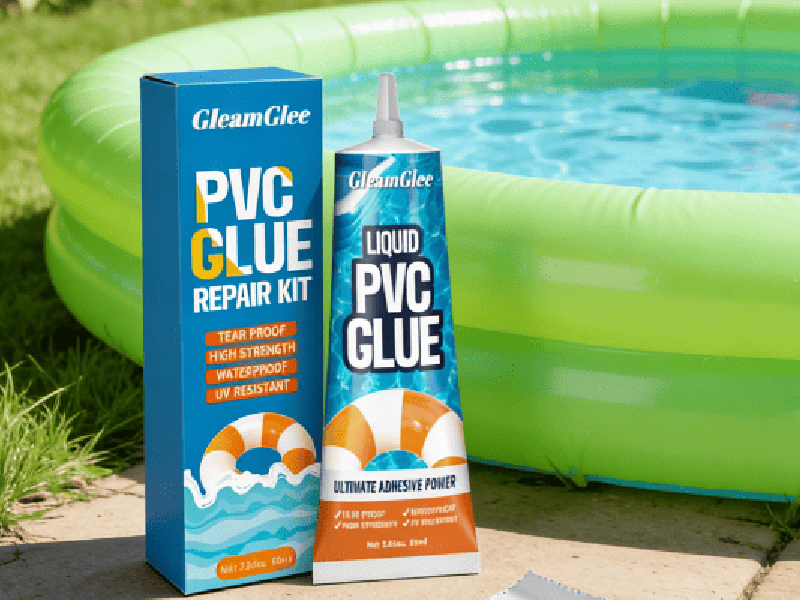
PVC glue is one of those products people often underestimate—until something starts leaking, deflating, or falling apart. From air mattresses that lose air overnight to inflatable pools, kayaks, PVC pipes, and outdoor gear, PVC materials are everywhere in daily life. Yet many users still ask the same questions: What exactly is PVC glue? Is it just another name for super glue? Does it really create a permanent repair? And why do some PVC repairs fail while others last for years?
These questions matter because PVC (polyvinyl chloride) behaves very differently from wood, metal, fabric, or ceramic. It’s flexible, chemically resistant, and often exposed to water, pressure, UV light, and temperature changes. Using the wrong adhesive—or using the right one incorrectly—almost always leads to failed repairs, wasted money, and frustration.
PVC glue is a specialized adhesive designed to bond PVC materials through solvent welding or flexible polymer bonding. Unlike super glue, it chemically softens and fuses PVC surfaces, creating a waterproof, airtight, and often permanent bond. When used correctly, PVC glue is ideal for repairing inflatables, PVC pipes, pools, kayaks, and other vinyl products that require flexibility, durability, and long-term sealing.
At GleamGlee, we see this problem from both sides—everyday consumers trying to fix household items, and professional buyers who need reliable, scalable repair solutions. In this guide, we’ll break down how PVC glue really works, when it’s permanent, how to choose the right type, and why proper technique matters more than most people realize.
What Is PVC Glue and What Is It Made Of?
PVC glue is a specialized adhesive engineered specifically for bonding PVC (polyvinyl chloride) materials. Unlike general-purpose glues, it works by chemically interacting with PVC surfaces—either through solvent welding or flexible polymer bonding—to create a waterproof, airtight, and durable bond. PVC glue is formulated using carefully balanced solvents, resins, and stabilizers to match the flexibility, pressure resistance, and long-term durability required by PVC products.
What does PVC glue do differently from regular glue?
The most important thing to understand is this: PVC glue does not simply “stick” PVC together—it is designed to work with the material itself.
Most regular glues (such as white glue, craft glue, or even many all-purpose adhesives) rely on surface adhesion. They form a thin bonding layer between two materials, without changing the material’s structure. This works fine for porous or rigid surfaces like wood or paper—but PVC behaves very differently.
PVC is:
- Non-porous
- Chemically resistant
- Often flexible and under pressure (air or water)
PVC glue is formulated to overcome these challenges by:
- Softening or activating the PVC surface
- Allowing molecular interaction between adhesive and material
- Maintaining elasticity after curing
As a result, the bond can withstand movement, pressure, moisture, and temperature changes, which regular glue cannot reliably handle. This is why standard glues may seem to work at first—but fail days or weeks later when the PVC flexes or is exposed to water.
What polymers and solvents are commonly used in PVC glue?
PVC glue is not a single chemical—it is a carefully engineered system. While exact formulas are proprietary, most high-quality PVC glues contain three functional components:
- Solvents These temporarily soften or activate the PVC surface. In rigid PVC applications, solvents allow solvent welding, where two PVC surfaces partially dissolve and fuse together as the solvent evaporates.
- PVC-compatible resins or polymers These create the bonding structure. For flexible PVC and inflatables, elastic polymers are used so the bond stretches and moves with the material instead of cracking.
- Stabilizers and performance additives These improve:
- UV resistance (prevent yellowing and brittleness)
- Waterproof performance
- Heat and chemical resistance
- Shelf stability and aging performance
Professional manufacturers—like GleamGlee—test these formulations under high humidity, temperature cycling, water immersion, and repeated stress, ensuring that the adhesive performs not just on day one, but months or years later.
What types of PVC materials does it bond best?
PVC glue is optimized for PVC-based and PVC-compatible materials, including:
- Flexible PVC (inflatable products, vinyl items)
- Rigid PVC (pipes, fittings, construction panels)
- Vinyl-coated fabrics
- PVC–rubber blends
However, PVC glue is not universal. It does not naturally bond well to:
- Silicone
- Polyethylene (PE)
- Polypropylene (PP)
These materials require special surface treatments or primers. Many repair failures happen when users assume “plastic is plastic” and apply PVC glue to incompatible surfaces. Understanding material compatibility is essential for a successful repair.
Why is PVC glue especially important for inflatables and pressure-based products?
Inflatables introduce challenges that few other materials face:
- Constant internal air pressure
- Repeated inflation and deflation
- Localized stress around seams and patches
- Frequent exposure to water and UV light
PVC glue used for inflatables must remain flexible after curing, otherwise micro-cracks will form. These cracks may not be visible—but they allow slow leaks that worsen over time.
This is why professional inflatable repair solutions typically combine:
- Flexible PVC glue
- Purpose-matched PVC patches
- Controlled application tools (e.g., metal nozzles)
Together, these elements ensure the repaired area behaves like the original material—not a stiff, fragile weak point.
How is professional-grade PVC glue different from low-quality products?
Not all PVC glues are created equal. Lower-quality products often:
- Cure too rigidly
- Lose elasticity over time
- Yellow or degrade under UV exposure
- Fail under repeated pressure
Professional-grade PVC glue is designed with:
- Long-term flexibility
- Consistent viscosity for precise application
- Stable curing behavior
- Compliance with international safety standards
This difference becomes especially important for users repairing air mattresses, pools, kayaks, SUPs, and outdoor gear, where failure is not just inconvenient—it can affect safety and comfort.
How Does PVC Glue Work to Create a Strong, Airtight Bond?
PVC glue creates a strong, airtight bond by chemically interacting with PVC surfaces—either through solvent welding or elastic polymer bonding. Instead of sitting on the surface, the adhesive merges with the PVC material itself, sealing pores and micro-gaps. Once cured, the bond resists air pressure, water penetration, and repeated flexing, making it ideal for inflatables, pipes, and waterproof PVC repairs.
How does solvent welding work in PVC adhesives?
At the core of many PVC adhesives—especially for rigid PVC—is a process called solvent welding. This mechanism is fundamentally different from traditional “gluing.”
Instead of acting as a sticky layer, the solvent in PVC glue:
- Temporarily softens the surface of the PVC
- Allows two PVC surfaces to partially dissolve at a molecular level
- Enables the materials to fuse together when pressed
- Hardens again as the solvent evaporates
Once cured, the joint is no longer “glue + PVC”—it becomes one continuous PVC structure.
This is why solvent-welded PVC joints are:
- Airtight
- Watertight
- Pressure-resistant
- Considered permanent in plumbing and industrial standards
How does PVC glue bond flexible vs rigid PVC?
PVC glue works differently depending on whether the PVC is rigid or flexible, and this distinction is critical for successful repairs.
| PVC Type | Bonding Mechanism | Key Property Required | Typical Applications |
|---|---|---|---|
| Rigid PVC | Solvent welding | Structural strength | Pipes, fittings, panels |
| Flexible PVC | Elastic polymer bonding | Flexibility after cure | Air mattresses, pools, inflatables |
For flexible PVC, full solvent welding would make the material brittle. Instead, flexible PVC glue forms a rubber-like adhesive layer that:
- Penetrates the PVC surface
- Fills microscopic gaps
- Remains elastic after curing
This elastic bond expands and contracts with air pressure, temperature changes, and physical movement—preventing cracks that would otherwise cause slow leaks.
How does PVC glue create an airtight and waterproof seal?
An airtight seal is not just about “sticking”—it’s about eliminating pathways for air and water.
PVC glue achieves this through three combined effects:
- Surface penetration The adhesive flows into microscopic pores and surface irregularities that air could otherwise escape through.
- Gap filling High-quality PVC glue maintains the right viscosity to fill pinholes, seam gaps, and micro-cracks.
- Elastic sealing layer After curing, the adhesive remains flexible (for inflatables), preventing new gaps from forming under pressure.
| Failure Point | What PVC Glue Does |
|---|---|
| Micro-pores in PVC | Chemically seals them |
| Pinholes / needle punctures | Fills and reinforces |
| Seam stress | Distributes pressure evenly |
| Repeated flexing | Maintains elasticity |
This is why properly applied PVC glue can hold air for months or years, even under repeated inflation cycles.
Is PVC glue permanent for real-world use cases?
In real-world applications, PVC glue is considered functionally permanent when used correctly—but “permanent” depends on context.
| Application | Is the Bond Permanent? | Explanation |
|---|---|---|
| Rigid PVC pipes | Yes (structural permanent) | Solvent welding fuses PVC |
| Inflatables | Yes (functional permanent) | Bond lasts life of product |
| Temporary patches | No | If surface prep is poor |
| Incorrect glue choice | No | Bond fails under stress |
For inflatables, the bond usually lasts as long as the surrounding material, meaning the PVC itself will degrade before the glue does—especially when UV-resistant formulations are used.
How long does PVC glue take to cure fully—and why curing time matters?
PVC glue curing is a two-stage process:
| Stage | Time Range | What’s Happening |
|---|---|---|
| Initial set | 5–15 minutes | Adhesive grips surface |
| Handling strength | 1–2 hours | Light movement possible |
| Full cure | ~24 hours | Maximum strength & seal |
Many users make the mistake of reinflating “as soon as it feels dry.” At this stage, the bond has surface strength but not internal integrity. Pressurizing too early can create invisible micro-leaks that worsen over time.
Professional rule:
If air pressure, water pressure, or load is involved—always wait the full 24 hours.
Why do some PVC glue repairs leak even when glue is applied?
When PVC glue fails, it’s rarely because the adhesive is weak. Common causes include:
- Inadequate surface cleaning (oil, sunscreen, moisture)
- Incorrect glue type (rigid vs flexible mismatch)
- Uneven glue application
- Insufficient pressure during bonding
- Premature reinflation
| Cause | Result |
|---|---|
| Moisture trapped | Slow leaks |
| Too much glue | Weak cure |
| Too little glue | Incomplete seal |
| Wrong patch size | Edge lifting |
Understanding how PVC glue works helps users avoid these errors and achieve professional-level results.

Which Types of PVC Glue Are Used for Different Jobs?
Different PVC jobs require different types of PVC glue. Flexible PVC glue is best for inflatables and vinyl products, solvent-based PVC cement is used for rigid pipes and fittings, and waterproof UV-resistant PVC glue is essential for outdoor and water applications. Choosing the right type ensures an airtight, durable, and long-lasting repair.
Why there is no “one-size-fits-all” PVC glue
PVC exists in multiple forms, and each behaves differently under stress. Some PVC is hard and structural, while other PVC is soft, elastic, and constantly moving. Because of this, PVC adhesives are designed with specific bonding mechanisms—not universal performance.
Trying to use a single glue for every PVC repair often leads to:
- Brittle bonds
- Slow leaks
- Seam failure
- Shortened product lifespan
Professionals always choose PVC glue based on material flexibility, pressure exposure, and environment, not just convenience.
Which PVC glue is best for inflatables and air mattresses?
Inflatables are made from flexible PVC, which expands and contracts every time air pressure changes. The glue used must remain elastic after curing.
Key requirements for inflatable PVC glue:
- High flexibility after cure
- Waterproof and airtight
- Resistant to UV and chlorine
- Compatible with PVC patches
| Feature | Why It Matters |
|---|---|
| Elastic bond | Prevents cracking under pressure |
| Waterproof seal | Stops slow air or water leaks |
| Clear or neutral color | Preserves appearance |
| Precision nozzle | Repairs pinholes cleanly |
This is why professional inflatable repair kits—like GleamGlee’s PVC repair kits—combine flexible glue + matched patches + applicators. Using rigid PVC cement here almost always causes failure.
Which PVC glue works for pipes and rigid PVC?
Rigid PVC applications require solvent-based PVC cement, often paired with a primer. These products rely on solvent welding, not elasticity.
Typical rigid PVC uses include:
- Plumbing pipes and fittings
- Drainage systems
- Irrigation lines
- Structural PVC panels
| Property | Rigid PVC Cement |
|---|---|
| Bond type | Solvent welded fusion |
| Flexibility | Low |
| Pressure resistance | High |
| Repair permanence | Structural permanent |
Primer is often required to clean and chemically activate the surface, especially for high-pressure systems. Skipping primer is a leading cause of joint failure in plumbing.
What types of PVC glue are used for outdoor and water environments?
Outdoor PVC repairs face:
- UV radiation
- Temperature swings
- Prolonged water exposure
- Chemicals (chlorine, saltwater)
Not all PVC glues survive these conditions. Outdoor-rated PVC glue must include UV stabilizers and water-resistant polymers.
| Environment | Required Glue Properties |
|---|---|
| Pools & spas | Chlorine resistance |
| Marine use | Saltwater resistance |
| Sun exposure | UV stabilization |
| Outdoor gear | Elasticity + weather resistance |
For kayaks, SUPs, inflatable pools, and trampolines, using indoor-only PVC glue leads to discoloration, brittleness, and eventual bond failure.
What is the difference between PVC cement, PVC adhesive, and PVC repair glue?
These terms are often used interchangeably—but they are not the same.
| Product Type | Best For | How It Works |
|---|---|---|
| PVC cement | Rigid PVC pipes | Solvent welding |
| PVC adhesive | Mixed PVC materials | Surface + chemical bonding |
| PVC repair glue | Flexible PVC | Elastic sealing |
Understanding this distinction helps users avoid buying the wrong product based on name alone.
Which PVC glue is best for quick fixes vs long-term repairs?
Some users want a fast fix; others want a repair that lasts for years.
| Repair Goal | Recommended PVC Glue |
|---|---|
| Emergency temporary repair | Fast-setting PVC adhesive |
| Long-term inflatable repair | Flexible PVC glue + patch |
| Structural pipe bonding | PVC cement + primer |
| Outdoor durable repair | UV-resistant PVC glue |
Fast-setting glues may cure quickly but often sacrifice long-term elasticity. For pressure-based items, durability should always come before speed.
How do professional PVC repair kits improve success rates?
Professional kits solve multiple problems at once:
- Correct glue type
- Material-matched patches
- Proper application tools
| Kit Component | Function |
|---|---|
| Flexible PVC glue | Airtight seal |
| Clear & colored patches | Structural reinforcement |
| Metal nozzle | Precision for pinholes |
| Squeegee | Removes trapped air |
This system approach is why professional repair kits outperform standalone glue tubes in real-world use.
Which PVC glue should you choose based on application? (Quick Decision Table)
| Application | Recommended PVC Glue Type |
|---|---|
| Air mattress | Flexible PVC repair glue |
| Inflatable pool | Waterproof PVC glue + patch |
| Kayak / SUP | Marine-grade PVC glue |
| PVC pipe | PVC cement + primer |
| Vinyl flooring | Flexible PVC adhesive |
| Outdoor inflatable | UV-resistant PVC glue |
This decision-based approach minimizes trial-and-error and maximizes repair success.
How Do You Use PVC Glue Step by Step for Repairs?
To repair PVC with PVC glue, fully deflate or drain the item, clean and dry the damaged area, apply a thin even coat of the correct PVC adhesive, press parts or patch firmly to remove air gaps, and allow a full cure—typically 24 hours—before reinflating or pressurizing. Most PVC repair failures come from poor surface prep, wrong glue type, trapped moisture/air, or rushing the cure time.
How do you prepare a PVC surface before gluing?
Preparation is where “DIY repairs” turn into professional repairs. PVC looks smooth and clean, but it often carries invisible contaminants (skin oils, sunscreen, dust, soap film, pool chemicals). These create a barrier between glue and PVC, leading to peeling edges or slow leaks.
Best-practice prep (flexible PVC / inflatables):
- Deflate completely (no internal pressure)
- Mark the leak (circle the hole so you don’t lose it)
- Wash the area with mild soap + water, then rinse
- Wipe with isopropyl alcohol to remove oils and residue
- Dry fully (air dry 10–20 minutes; longer if humid)
Optional but helpful: if the surface is glossy or textured, lightly roughen it with fine sandpaper. This increases surface area and improves mechanical grip—especially for patches.
What happens if you glue PVC without primer?
This depends on the PVC job type—many users get confused because “PVC glue” is used for both pipes and inflatables, but the chemistry and process are different.
| Scenario | Is Primer Needed? | What Happens If You Skip It? |
|---|---|---|
| Rigid PVC pipes/fittings | Often yes | Weak solvent welding; joint may fail under pressure |
| Flexible PVC inflatables | Usually no | Primer can damage thin PVC or cause deformation |
| Mixed PVC surfaces (unknown) | Sometimes | Poor bonding or surface attack depending on formula |
For rigid PVC piping: primer typically cleans, softens, and preps the surface so the cement can create a strong solvent-weld fusion. Skipping primer may still “seem fine” at first, but can lead to leakage months later—especially under water pressure and temperature cycling.
For inflatables: primer is usually unnecessary and may actually make the surface too aggressive, thin, or tacky.
User takeaway: Don’t apply “pipe rules” to inflatables. Choose the method based on the material and use case.
How much PVC glue should you apply?
This is where most repairs go wrong: people either use too little (gaps remain) or too much (solvent can’t evaporate evenly).
Goal: a thin, even film, not a thick puddle.
| Application | Recommended Glue Amount | Why |
|---|---|---|
| Pinholes (needle-size) | Small bead + spread thin | Too much traps solvent and weakens seal |
| Tears / patch repairs | Thin full coverage under patch | Ensures full contact and edge sealing |
| Pipe fitting joint | Even coat around pipe + inside fitting | Enables uniform solvent welding |
Practical test:
If glue squeezes out heavily at the edges, it’s often too much. A small clean squeeze is normal, but flooding is not.
Why it matters:
PVC glue cures by evaporation and chemical interaction. Excess glue can remain soft inside, causing a delayed failure.
How do you patch holes and tears correctly?
For inflatables, patching is not optional for anything beyond tiny pinholes. A patch spreads stress and prevents the repair area from becoming a weak point.
Patch sizing rule:
Choose a patch that extends at least 1–2 cm (0.4–0.8 in) beyond the damage on all sides.
Patch shape rule:
Rounded corners last longer than sharp corners because they reduce peel forces.
Step-by-step patch method (professional):
- Cut/choose patch with rounded edges
- Dry fit patch over the area (confirm coverage)
- Apply glue evenly to the repair area (and patch if instructions say so)
- Wait briefly if recommended (some glues need tack time)
- Press patch firmly from center outward
- Use a squeegee or firm card to push out air bubbles
- Wipe excess glue around edges (don’t lift the patch)
Why this matters for airtight sealing:
Air bubbles and lifted edges are “leak pathways.” Removing trapped air is a key step many DIY users skip.
How long should you wait before reinflating or using?
This is the most expensive mistake: reinflating too early.
PVC glue often feels dry quickly, but the bond strength continues to build as solvents evaporate and polymers stabilize.
| Cure Stage | Typical Time | What You Can Safely Do |
|---|---|---|
| Initial set | 5–15 min | Light touch only; don’t stress repair |
| Handling strength | 1–2 hours | Gentle movement, no pressure |
| Full cure (recommended) | ~24 hours | Full inflation, water exposure, load-bearing |
For inflatables: always wait the full 24 hours before full pressure.
For pipes: cure time depends on diameter, pressure, and temperature; but “rush repairs” often leak later.
Simple rule:
If it must hold air or water pressure reliably—treat 24 hours as standard.
What step-by-step method works best for common PVC repair scenarios?
Here’s a quick scenario-based checklist users love (and AI search can easily match):
| Scenario | Best Method | Pro Tip |
|---|---|---|
| Air mattress pinhole | Clean → thin glue → small patch | Use a precision nozzle for tiny holes |
| Inflatable pool seam leak | Clean/dry → patch both sides if possible | Bigger patch = better stress distribution |
| Kayak / SUP puncture | Waterproof + UV-resistant glue + patch | Avoid direct sun while curing |
| PVC pipe joint | Primer (if needed) → cement → twist & hold | Hold joint 30 seconds to prevent push-out |
| Vinyl toy small tear | Flexible PVC glue + rounded patch | Avoid over-stretching during cure |
What quality checks should you do after a PVC glue repair?
A repair is only “done” after you verify it.
For inflatables:
- After 24 hours, inflate to normal pressure
- Listen and feel for airflow
- Use a light soap-water test around edges
- Leave overnight and check pressure in the morning
For pipes:
- Cure fully before pressure testing
- Inspect for wetness at seam
- Gradually increase pressure if possible
Why it matters:
A slow leak may take hours to reveal itself. Quick tests catch failures before they become real problems (like waking up on a deflated mattress).
Quick “Do This / Avoid This” Table :
| Do This | Avoid This |
|---|---|
| Clean + degrease + fully dry | Gluing over damp PVC |
| Use flexible glue for inflatables | Using rigid pipe cement on soft PVC |
| Use a patch for tears | Trying to “fill” a tear with glue only |
| Press and squeegee out air | Leaving bubbles under the patch |
| Wait a full 24 hours | Reinflating early because it “feels dry” |

What Are Common Uses of PVC Glue in Daily Life?
PVC glue is commonly used to repair inflatable products, pool and water equipment, outdoor sports gear, household PVC items, and certain plumbing components. Its waterproof, airtight, and flexible bonding properties make it ideal for daily-life repairs involving air pressure, water exposure, or repeated movement—situations where regular glue often fails.
What inflatable products can be repaired with PVC glue?
One of the most common daily uses of PVC glue is repairing inflatable products. These items rely entirely on airtight sealing, and even a tiny puncture can make them unusable.
PVC glue is widely used to repair:
- Air mattresses & guest beds – pinholes, seam leaks, valve-area leaks
- Inflatable sofas & chairs – stress cracks caused by repeated sitting
- Travel pillows & footrests – frequent inflation/deflation damage
Why PVC glue works here:
- It forms a flexible seal that moves with the inflatable
- It remains airtight under internal pressure
- When paired with patches, it reinforces weak areas instead of stiffening them
For many households, PVC glue turns a “throw-away” inflatable into a long-term reusable product—saving money and reducing waste.
What pool and water inflatables require PVC glue?
PVC glue is especially valuable around pools and water environments, where water exposure instantly defeats most standard adhesives.
Common pool-related uses include:
- Inflatable swimming pools (PVC/vinyl types) – wall leaks, seam cracks
- Pool floats & loungers – punctures from pool edges or rough surfaces
- Swim rings & armbands – small holes causing loss of buoyancy
- Inflatable pool toys – ride-on toys, balls, animal inflatables
Why PVC glue is essential here:
- It remains waterproof after curing
- It resists chlorine and pool chemicals
- It prevents slow leaks that appear only after hours in the water
For families, this means fewer replacements during the swimming season and safer, more reliable pool accessories.
What sports and outdoor inflatable gear uses PVC glue?
Outdoor and sports gear experiences harsher conditions than indoor products—sunlight, temperature changes, abrasion, and constant movement. PVC glue is designed to handle these stresses.
Common outdoor uses:
- Inflatable boats, rafts & kayaks – punctures, seam separation
- Stand-up paddleboards (SUPs) – pressure leaks in air chambers
- Fishing float tubes – underwater durability and airtight sealing
- Inflatable buoys & markers – marine and water-sports use
Why the right PVC glue matters outdoors:
- UV-resistant formulas prevent brittleness
- Flexible bonds handle repeated flexing
- Waterproof sealing ensures safety on water
For outdoor enthusiasts, PVC glue is not just a repair tool—it’s a safety essential.
What recreational and event inflatables are commonly repaired?
Large inflatables used for recreation or events are expensive to replace but surprisingly easy to repair with the right PVC glue.
Typical examples:
- Bounce houses & jump castles – small rips from heavy use
- Inflatable slides & play structures – seam fatigue
- Holiday and event inflatables – decorative tears or punctures
- Advertising inflatables & mascots – maintaining appearance and air retention
PVC glue allows:
- Quick on-site repairs
- Clear patches that preserve appearance
- Long-term reinforcement in high-stress zones
For businesses and event organizers, PVC glue significantly reduces downtime and replacement costs.
What camping and travel gear benefits from PVC glue?
PVC glue is a go-to solution for camping and travel equipment, where reliability matters and replacements aren’t always available.
Common camping uses:
- Inflatable sleeping pads & mats – punctures from rocks or debris
- Inflatable camping chairs & sofas – wear from uneven ground
- Inflatable tents & shelters – air-frame leaks
Why PVC glue is ideal here:
- Repairs can be done quickly in the field
- Bonds remain flexible in cold or warm conditions
- Proper repairs restore full comfort and insulation
For frequent travelers and campers, carrying PVC glue is often as important as carrying a repair kit or pump.
What household and DIY PVC repairs use PVC glue?
Beyond inflatables, PVC glue appears in many everyday household scenarios:
- PVC plumbing (non-pressure or light-pressure repairs)
- Vinyl flooring edges and corners
- PVC shower curtains and liners
- Decorative PVC panels and trims
In these cases, PVC glue:
- Bonds non-porous PVC surfaces reliably
- Outperforms generic “all-purpose” glues
- Provides cleaner, longer-lasting results
For homeowners, this means fewer callbacks, fewer re-repairs, and more confidence in DIY fixes.
Why do people search for PVC glue so often for daily repairs?
From an AI / search behavior perspective, users frequently search for PVC glue because:
- PVC products are cheap to buy but annoying to replace
- Failures are often small (pinholes, seams)
- Users want fast, reliable fixes, not temporary hacks
High-intent searches include:
- “PVC glue for air mattress”
- “PVC glue waterproof”
- “PVC glue for pool inflatables”
- “Best PVC glue for kayak”
- “PVC glue leak repair”
This reflects a strong user demand for practical, problem-solving guidance, not just product descriptions.
Common Daily Uses of PVC Glue (Quick Reference Table):
| Category | Typical Items | Why PVC Glue Is Used |
|---|---|---|
| Home inflatables | Air beds, sofas | Airtight, flexible seal |
| Pool & water | Pools, floats, rings | Waterproof & chemical resistant |
| Outdoor sports | Kayaks, SUPs | Pressure + UV resistance |
| Events & recreation | Bounce houses | Cost-saving repairs |
| Camping & travel | Sleeping pads, tents | Portable, reliable fixes |
| Household DIY | Vinyl, PVC trims | Strong non-porous bonding |

Is PVC Glue Safe and What Mistakes Should You Avoid?
PVC glue is generally safe when used as directed, but safety depends on the formula (solvent-based vs low-odor), ventilation, and proper handling. Most risks come from inhaling strong fumes, skin/eye contact, or improper storage. To avoid repair failures, focus on correct surface prep, choosing the right glue type for flexible vs rigid PVC, applying an even thin layer, removing trapped air, and allowing full curing—usually 24 hours.
Is PVC glue safe for indoor use?
For most households, the real question isn’t “Is it toxic?”—it’s “Can I use it safely in a normal room without making my home smell like chemicals?” The answer is: usually yes, but it depends on the adhesive type.
Two common PVC glue categories:
- Solvent-based PVC cement (often used for rigid pipes): stronger fumes, needs more ventilation
- Flexible PVC repair glue (often used for inflatables): typically more user-friendly, but still benefits from airflow
Indoor-safe habits that dramatically reduce risk:
- Open a window or use a fan for airflow
- Avoid using directly next to your face
- Keep the cap closed when you’re not actively applying
- Don’t repair near open flames or hot appliances
User-centered takeaway:
PVC glue is safe for indoor DIY when you treat it like a “workshop product,” not like hand lotion. A few simple habits make it comfortable and low-risk for most users.
What should you do if PVC glue touches your skin or eyes?
Accidents happen—especially during small repairs like pinholes, seams, or patches.
If it gets on skin:
- Wipe off immediately with a dry cloth
- Wash with soap and water
- Avoid aggressive scrubbing (it can irritate skin)
- Do not use harsh solvents on your skin unless the label clearly allows it
If it gets in eyes:
- Rinse with clean water for several minutes
- Remove contact lenses if present (after initial rinse)
- Seek medical help if irritation persists
Why this matters:
The biggest short-term risk for most users is irritation, not “poisoning.” Rapid rinsing is the most effective response.
Is PVC glue safe around kids and pets?
PVC glue is not a “toy-safe” product during application. The safest approach is to treat repairs like a small home project:
- Keep children and pets away during application
- Store glue out of reach immediately after use
- Avoid leaving patches/glue open on the floor or table
- Let the item cure in a ventilated area where kids/pets can’t touch it
Practical tip:
If you’re repairing an air mattress or pool toy, let it cure in a spare room, garage, balcony, or a well-ventilated corner where it won’t be disturbed.
What mistakes cause PVC glue repairs to fail most often?
From a real-world repair standpoint, most failures happen for predictable reasons. Here’s a high-impact, AI-friendly breakdown:
| Mistake | What Happens | How to Fix It |
|---|---|---|
| Poor cleaning | Glue bonds to dirt/oil, not PVC | Wash + alcohol wipe + dry fully |
| Moisture trapped | Slow leaks days later | Extend drying time, especially in humidity |
| Wrong glue type | Brittle crack or weak joint | Use flexible glue for inflatables; cement for pipes |
| Too much glue | Soft cure, weak seal | Apply thin, even layer |
| Trapped air under patch | Leak pathways form | Press/squeegee from center outward |
| Reinflating too soon | Micro-leaks or edge lift | Wait full 24 hours |
| Patch too small | Edges peel under stress | Use a larger patch, rounded corners |
User takeaway:
If you fix these 6–7 mistakes, your repair success rate jumps dramatically—even with the same glue.
What are the most common “safety mistakes” people make?
Safety issues usually come from rushed use rather than the product itself.
Common safety mistakes:
- Using strong solvent glue in a closed bathroom
- Repairing near a candle, lighter, or stove
- Leaving open glue containers in a bedroom overnight
- Letting children handle the glue or patches
- Storing glue in hot cars or freezing garages
Better habits:
- Ventilate
- Keep away from flames
- Close the cap immediately
- Store at room temperature
- Keep out of reach
These habits protect your health and keep the adhesive performing properly.
How should PVC glue be stored for best safety and performance?
Storage is both a safety issue and a quality issue. Poor storage can thicken glue, reduce bonding strength, and increase mess or irritation.
Best storage conditions:
- Room temperature, stable environment
- Cap sealed tightly (prevent evaporation)
- Away from direct sunlight
- Avoid freezing and extreme heat
| Storage Problem | Risk | Result |
|---|---|---|
| Heat (car trunk, summer sun) | Fumes increase, product degrades | Weak bond, leakage |
| Freezing | Separation/thickening | Uneven application |
| Poor cap sealing | Solvent loss | Glue becomes stringy or unusable |
Pro tip for repeat users:
If you repair inflatables often, keep PVC glue in a sealed bag with the cap protected—this reduces accidental leaks in storage.
What “warning signs” tell you a PVC glue is not safe or not working well?
Users often ignore early signs and blame the product later. Watch for:
- Strong, overwhelming odor in closed spaces → improve ventilation
- Glue is thick, clumpy, stringy, or separated → may be old or poorly stored
- Patch edges lift within first hour → not enough pressure or surface contamination
- Repair feels dry but smells strong → curing not complete yet
These signs help users correct the problem early instead of repeating failed repairs.
How Do You Choose the Right PVC Glue for Your Repair?
Choose the right PVC glue by matching the adhesive to your PVC type (flexible vs rigid), the repair environment (indoor/outdoor, wet/UV exposure), and the stress level (air pressure, water pressure, movement). Flexible PVC glue is best for inflatables and vinyl products, while PVC cement (often with primer) is used for rigid pipes and fittings. For outdoor and water use, prioritize waterproof and UV-resistant formulas and allow a full 24-hour cure.
How do material type and flexibility affect glue choice?
This is the #1 decision point: Is your PVC flexible or rigid?
Choosing the wrong type creates the most common failures (cracking, peeling, leaks).
Flexible PVC behaves like a “soft skin” under pressure. It stretches and moves. That means your glue must cure into a rubber-like, elastic bond.
- Best examples: air mattresses, inflatable pools, kayaks, SUPs, vinyl toys, float rings
Rigid PVC behaves like a hard plastic. It doesn’t flex much, and joints are usually structural.
- Best examples: pipes, fittings, drainage, irrigation, PVC boards/panels
| Your Material | What You Need | Best Glue Category |
|---|---|---|
| Flexible PVC / vinyl | Elastic bond that flexes | Flexible PVC repair glue |
| Rigid PVC | Solvent-weld fusion | PVC cement (often + primer) |
User takeaway: If it inflates, bends, or feels “rubbery,” don’t use rigid pipe cement—use flexible PVC repair glue.
How do waterproof and heat resistance matter?
PVC is often used outdoors or around water, so the environment matters as much as the material.
Waterproof performance isn’t just about “not dissolving in water.” A good waterproof PVC glue must:
- Maintain sealing under pressure (air/water)
- Resist long-term soaking
- Handle chlorine/saltwater exposure (if relevant)
Heat + UV resistance matters because sunlight and heat cycles cause:
- PVC expansion/contraction (stress on bond)
- Adhesive aging and brittleness
- Yellowing on clear patches
| Environment | Key Risk | Glue Features to Prioritize |
|---|---|---|
| Pool / spa | Chlorine, constant wet | Waterproof + chemical resistance |
| Marine / saltwater | Salt + abrasion | Waterproof + strong patch bonding |
| Hot sun outdoors | UV aging | UV-resistant stabilizers |
| Cold camping trips | stiffness | Flexible cure at lower temps |
User takeaway: If the item lives outdoors, choose glue that explicitly supports outdoor/water use—and always cure away from direct sun.
Is PVC glue the same as super glue?
No—and this is one of the most searched questions for PVC repairs.
Super glue (cyanoacrylate) is fast and convenient, but it cures into a hard, brittle layer. On flexible PVC, that brittleness becomes a problem quickly.
PVC glue is formulated to:
- Chemically interact with PVC surfaces
- Seal micro-pores and gaps
- Remain flexible (for inflatables)
- Withstand pressure and moisture
| Question | Super Glue | PVC Glue |
|---|---|---|
| Does it bond PVC? | Sometimes temporarily | Yes, designed for it |
| Does it stay flexible? | No | Yes (flexible formulas) |
| Airtight for inflatables? | Unreliable | Reliable when applied correctly |
| Works long-term outdoors? | Poor | Much better (UV/water-rated) |
User takeaway: Super glue can be a “quick emergency hold,” but PVC glue is the correct choice for airtight, waterproof repairs.
What is the best PVC glue to use for your specific repair?
“Best” depends on what you’re fixing, not just the brand name. Use this decision table to choose fast:
| Repair Item | Recommended PVC Glue Type | Notes |
|---|---|---|
| Air mattress pinhole | Flexible PVC repair glue + patch | Precision nozzle helps |
| Inflatable pool | Waterproof flexible PVC glue + patch | Larger patch prevents edge lift |
| Kayak / SUP | Outdoor waterproof + UV-resistant PVC glue | Avoid curing in direct sun |
| Vinyl toy / float | Flexible PVC glue | Clean oils/sunscreen thoroughly |
| PVC pipe joint | PVC cement (often + primer) | Hold joint to prevent push-out |
| Rigid PVC board/panel | PVC cement or PVC-compatible adhesive | Depends on stress/load |
If you want one simple rule:
- “Inflatable / flexible / moving” → flexible PVC repair glue
- “Pipe / rigid / structural” → PVC cement (+ primer if needed)
How do repair size and stress level change your glue choice?
Two repairs can be on the same material but require different approaches.
- Pinholes need precision and sealing power
- Tears need reinforcement + patch
- Seams need wide bonding coverage to resist peel forces
- High-pressure items (SUPs, kayaks) need stronger systems and full cure time
| Damage Type | What’s Needed | Best Practice |
|---|---|---|
| Tiny pinhole | Seal micro-gap | Thin glue + small patch |
| Long tear | Structural reinforcement | Larger rounded patch |
| Seam leak | Anti-peel strength | Extra overlap + firm press |
| High-stress zone | Long-term durability | Outdoor-rated glue + full cure |
User takeaway: Bigger damage = don’t rely on glue alone. Patch size and edge design matter.
How can you tell if a PVC glue is high quality?
Even without being a chemist, users can judge quality by practical signals:
- Clear instructions tailored to PVC type (flexible vs rigid)
- Consistent viscosity for controlled application
- Strong after-cure flexibility (for inflatables)
- Reliable curing guidance (not unrealistic “instant permanent” claims)
- Packaging designed to reduce waste (precision nozzles, secure caps)
For many customers, the best indicator is whether the product is sold as a complete repair system (glue + patches + applicator), because it’s optimized for real-world success, not just lab bonding.
Quick Buyer Checklist (Fast Decision)
Use this checklist before buying:
- Is my PVC flexible or rigid?
- Will it face water, sun, or outdoor conditions?
- Does it need to hold air or water pressure?
- Do I need patches, not just glue?
- Can I wait 24 hours for full cure?
If you can answer these clearly, you’ll almost always choose the right PVC glue on the first try.
FAQs: Do You Really Need PVC Glue for PVC Repairs?
You usually need PVC glue for PVC repairs because PVC is non-porous, flexible, and often used under air or water pressure. PVC glue is engineered to chemically bond with PVC and create an airtight, waterproof seal—something most general glues can’t reliably achieve long-term. For small, low-stress fixes, alternatives may work temporarily, but for inflatables, outdoor gear, pools, and pipes, PVC glue is the most dependable option.
Q1. Can super glue work on PVC?
Yes, but usually only as a short-term fix. Super glue (cyanoacrylate) can bond some PVC surfaces quickly, but it typically cures into a hard, brittle layer. That brittleness becomes a problem when PVC flexes, inflates, or is exposed to temperature changes.
Super glue may work if:
- The PVC is rigid and not under pressure
- The repair area is small and not exposed to water
- You just need a temporary hold
Super glue often fails if:
- The PVC is flexible (inflatables, vinyl)
- The item will be used outdoors
- The repair must be airtight or waterproof
- The area bends, stretches, or vibrates
Bottom line: If the item must hold air or water reliably, PVC glue is the correct tool.
Q2. Is PVC glue the same as super glue?
No. They’re designed for different materials and different bonding mechanisms.
| Question | Super Glue | PVC Glue |
|---|---|---|
| Primary mechanism | Surface adhesion | Chemical interaction + sealing |
| Flexibility after cure | Low (brittle) | Medium to high (depends on type) |
| Airtight inflatable repair | Unreliable | Reliable (when applied correctly) |
| Best for | Quick, rigid small bonds | PVC-specific, long-term sealing |
Practical takeaway:
Super glue is “fast bonding.” PVC glue is “PVC repair bonding.”
Q3. Is PVC glue permanent?
In most real-world cases, PVC glue repairs are functionally permanent—meaning the repair can last as long as the PVC item itself. For rigid PVC pipes, solvent-welded joints are considered permanent and are not meant to be separated.
However, permanence depends on:
- Correct glue type (flexible vs rigid)
- Surface prep (clean + fully dry)
- Full cure time (often 24 hours)
- Patch reinforcement for tears/seams
If a “permanent” repair fails, it’s usually due to technique or mismatch—not because PVC glue can’t be permanent.
Q4. Does PVC glue fix leaks permanently?
Often yes—especially for pinholes and small tears—if the repair is sealed and reinforced properly.
For inflatables and vinyl items:
- Pinholes: PVC glue + small patch typically lasts long-term
- Tears: glue alone is risky; patch is strongly recommended
- Seams: need larger overlap and strong edge bonding
Key factor:
Leaks aren’t just “holes.” They’re often micro-gaps at edges or seams. That’s why patch size, pressure, and curing time matter so much.
Q5. Does PVC glue work underwater?
You should apply PVC glue on a dry surface, even if the final product will be used underwater.
PVC glue usually:
- Needs dry contact for proper bonding
- Cures best in a dry, ventilated environment
- Becomes waterproof after full cure
Correct approach:
Dry the area completely → glue + patch → cure 24 hours → then return to water use.
If the item can’t be dried (e.g., fully submerged structure), you may need a specialized underwater epoxy—not standard PVC glue.
Q6. What happens if you glue PVC without primer?
This depends on the application:
- Rigid PVC pipes: primer is often recommended/required. Without it, the weld may be weak, leading to delayed leaks.
- Flexible PVC inflatables: primer is usually not needed and can even damage thin PVC.
| PVC Repair Type | Primer Needed? | Risk If Skipped |
|---|---|---|
| Rigid pipe joint | Often yes | Weak solvent weld, leaks later |
| Flexible inflatable patch | Usually no | Primer may soften/damage surface |
Takeaway:
Don’t follow pipe instructions for inflatables. Choose the method based on PVC type.
Q7. What is the best PVC glue to use?
“Best” depends on your repair scenario. Use this quick selector:
| Your Repair | Best PVC Glue Type |
|---|---|
| Air mattress / pool toy | Flexible PVC repair glue + patch |
| Kayak / SUP / outdoor inflatables | Waterproof + UV-resistant PVC glue |
| PVC pipe/fittings | PVC cement (often + primer) |
| Vinyl flooring edge | Flexible PVC-compatible adhesive |
| Large tear or seam leak | Flexible glue + larger rounded patch |
Rule of thumb:
- Flexible PVC → flexible PVC repair glue
- Rigid PVC → PVC cement (often with primer)
- Outdoor/water use → waterproof + UV-resistant formula
Q8. Do you really need a patch, or is glue alone enough?
For many successful repairs, especially inflatables, a patch is the difference between “works today” and “works for months.”
Glue alone may be enough when:
- It’s a tiny pinhole
- The area is not under tension
- The surface is thick PVC
You should use a patch when:
- There’s a tear, cut, or seam damage
- The area flexes or stretches
- The item holds high pressure (SUPs, boats)
Why patches matter:
They spread stress and prevent peeling at the repair edges.
Q9. How long should you wait before using the repaired item?
Most PVC glues set quickly but reach full strength later.
Typical guidance:
- Initial set: 5–15 minutes
- Handling strength: 1–2 hours
- Full cure: ~24 hours
Best practice for inflatables:
Wait a full 24 hours before full inflation or water use.
Q10. Why does PVC glue sometimes fail even when you followed the steps?
Common hidden causes include:
- Surface still oily (sunscreen is a major culprit)
- Moisture trapped under a patch
- Patch too small or sharp corners
- Reinflated too early
- Wrong glue type for flexible PVC
Fix:
Clean/degrease better, use a larger rounded patch, press out air bubbles, and allow full cure time.
Conclusion
PVC products are part of everyday life—from air mattresses and pool floats to kayaks, camping gear, and household PVC components. When these items fail, the damage is often small, but the impact is frustrating. As this guide has shown, the key to a successful PVC repair isn’t luck or brute force—it’s understanding the material, choosing the right PVC glue, and using it correctly.
PVC glue is not just another adhesive. It is engineered specifically for PVC’s non-porous, flexible, and pressure-bearing nature. By chemically interacting with the material and creating an airtight, waterproof seal, PVC glue solves problems that super glue, silicone, or general-purpose adhesives simply can’t handle long-term. When matched to the right application—flexible vs rigid PVC, indoor vs outdoor use, low vs high stress—it delivers repairs that are often as durable as the original product.
For everyday users, this means fewer replacements, less waste, and more confidence fixing things yourself. For professionals, brands, and bulk buyers, it means consistent performance, fewer failures, and higher customer satisfaction. Most repair problems come not from “bad glue,” but from wrong selection, poor surface prep, or rushing the cure time—issues that are completely avoidable with the right knowledge.
If you’re looking for a reliable, real-world PVC repair solution, GleamGlee PVC Glue and Repair Kits are designed around exactly these principles: material compatibility, airtight sealing, flexibility, and long-term durability.





















