Skip to content
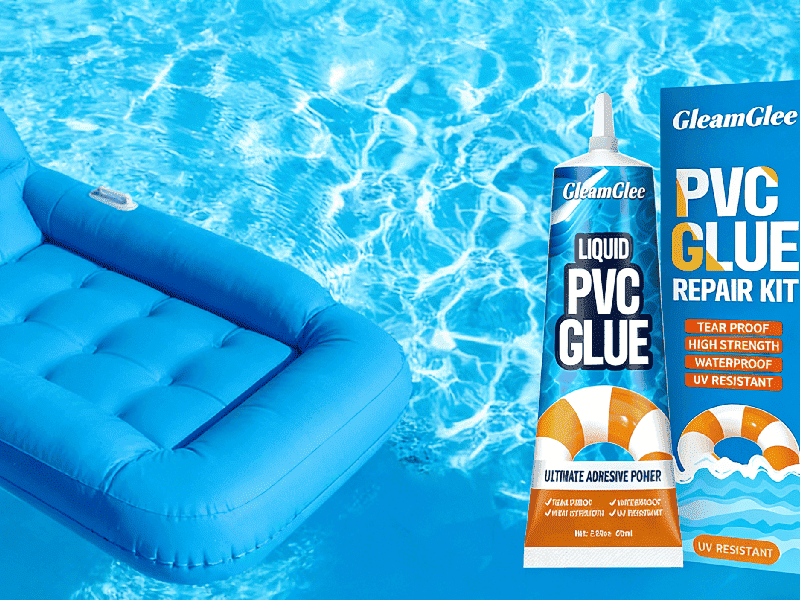
PVC adhesive has become one of the most essential repair tools in modern households, outdoor lifestyles, and even professional maintenance work. From sealing leaking inflatable beds to fixing cracked PVC pipes or restoring a torn kayak before a weekend trip, people rely on PVC adhesive because it delivers something many glues cannot: a flexible, waterproof, permanent seal on PVC and vinyl-based materials. Yet, even though millions of people use PVC glue every year, very few truly understand how it works, why it works, and which type they actually need for their specific repair scenario.
PVC adhesive is a specialized bonding agent designed for PVC, vinyl, and similar plastics. It works by softening the material surface and creating a chemical weld, resulting in a waterproof, flexible, and long-lasting seal. It is used for repairing PVC pipes, inflatables, kayaks, pools, air mattresses, tents, and outdoor gear. When applied correctly, PVC adhesive forms a durable and often permanent bond ideal for both household and outdoor applications.
But here’s the part most people overlook: PVC repairs are rarely just about glue—they’re about chemistry, material compatibility, and technique. A poorly cleaned surface, the wrong adhesive formula, or applying pressure for too little time can decide whether your repair lasts years or fails overnight. To make matters more interesting, the market is flooded with PVC glues that look similar but behave very differently once applied.
And before we dive into the technical side, let’s start with a story many readers can relate to.
Imagine preparing for a camping weekend with your family. You inflate your sleeping mat, only to find a slow leak that wasn’t there last season. Instead of ditching the trip or buying new gear, you pull out a PVC adhesive kit, patch the hole, and overnight your mat is perfectly sealed—strong enough to support your weight through the entire trip. That moment of relief is what PVC adhesive delivers. And in this guide, you’ll learn exactly how it achieves that magic.
What Is PVC Adhesive and How Does It Work?
PVC adhesive is a specialized bonding agent engineered for PVC, vinyl, and similar plastics. Unlike ordinary glue, it softens PVC surfaces through a solvent-welding reaction, allowing both materials to fuse at a molecular level. When cured, it forms a flexible, waterproof, chemical-resistant seal capable of withstanding pressure, bending, and long-term outdoor exposure. This makes PVC adhesive ideal for inflatables, kayaks, pools, pipes, air mattresses, and outdoor PVC fabrics.
PVC adhesive stands out from all-purpose glues because of its unique bonding mechanism. Instead of simply “sticking” two surfaces together, it chemically transforms the PVC surface, allowing the adhesive and material to merge into a single integrated layer. This reaction—known as solvent welding—is why PVC adhesive is trusted for repairing inflatable kayaks, patching pool liners, sealing air mattresses, and even joining rigid PVC pipes that carry water pressure.
Understanding how PVC adhesive works helps users choose the correct formula, avoid common mistakes, and achieve repairs that last not just days but years.
PVC adhesive contains a blend of solvents and flexible resins. The solvents temporarily break down the outer layer of PVC, making it soft and tacky, while the resins fill gaps and create long-term elasticity. When the solvents evaporate, the softened PVC re-hardens, locking the bonded surfaces together in a seamless weld.
This process is what gives PVC adhesive its signature strengths:
- Permanent adhesion strength comparable to original PVC
- Flexibility that prevents cracking under pressure
- Waterproof and airtight sealing
- Resistance to chlorine, saltwater, UV exposure, and heat
- Longevity—even under outdoor weathering or repeated inflation cycles
For users repairing inflatables, outdoor gear, PVC tarps, or vinyl-coated fabrics, this chemical-level fusion ensures the bond remains stable even when the product bends, folds, or expands under internal air pressure.
Now, let’s break the concept down into practical components.
What Is PVC Adhesive and What Makes It Different from Ordinary Glue?
PVC adhesive doesn’t operate like super glue or craft glue. Traditional glues create a “glue film” between materials; this film becomes the weak point over time, especially in hot, wet, or high-pressure environments.
PVC adhesive, however, engages in polymer fusion:
- Softens the PVC surface
- Allows PVC polymer chains to interact with adhesive resins
- Forms a unified structure once cured
Because there is no “film,” the bonded area becomes part of the PVC itself. This is why inflatable products repaired correctly with PVC adhesive can withstand repeated folding, sunlight, water immersion, and heavy weight.
What Materials Are Compatible with PVC Adhesive?
PVC adhesive works best with:
- PVC (polyvinyl chloride)
- Vinyl / PVC-coated fabrics
- TPU-coated inflatables
- Rubberized PVC materials
- Vinyl pool liners
- PVC tarpaulin
- Inflatable boat fabrics (PVC-based)
It does not bond well to:
- Polyethylene (PE)
- Polypropylene (PP)
- Silicone
- Teflon (PTFE)
- EVA foam
If a user does not know the material of their product, a quick compatibility test—a small dab of adhesive—can indicate whether the surface softens slightly, a sign that solvent welding will occur.
How Does Solvent-Welding Differ from Standard Gluing?
Solvent welding is the defining technology behind PVC adhesive. Here’s how it compares:
| Feature | PVC Adhesive (Solvent Weld) | Ordinary Glue (Physical Bond) |
|---|---|---|
| Bond Type | Molecular fusion | Surface film |
| Flexibility | High | Low to medium |
| Waterproofing | Excellent | Variable |
| Durability | Long-term, pressure-resistant | Can crack or peel |
| Suitable for Inflatables? | Yes | Usually no |
With solvent welding, the adhesive doesn’t sit on top of the surface—it becomes part of the surface.
This is crucial for repairs involving:
- Air pressure
- Water immersion
- UV exposure
- Constant bending or impact
Users repairing inflatables (kayaks, SUP boards, bounce houses) often notice that PVC adhesive repairs feel as strong as the factory seams—that’s solvent welding in action.
Why Does PVC Adhesive Create a Waterproof and Durable Bond?
PVC adhesive remains waterproof for three reasons:
- Hydrophobic Resins These repel water and prevent seepage.
- Seamless Bonding No microscopic gaps, unlike tape or non-weld adhesives.
- Flexible Cured Structure It stretches with inflatables instead of cracking.
Durability also comes from resistance to:
- Chlorine (pools)
- Saltwater (marine gear)
- UV radiation (outdoor use)
- Heat and temperature swings
- Mechanical stress
A properly cured PVC adhesive joint can last years, even under daily use.

Which Types of PVC Adhesives Are Commonly Used Today?
The most common types of PVC adhesives are PVC cement, used for rigid plumbing pipes; flexible PVC repair adhesive, used for inflatables and vinyl-coated fabrics; multipurpose PVC/vinyl glue, used for light household repairs; and two-part PVC adhesives, which offer industrial-grade strength. Each type differs in flexibility, curing speed, solvent strength, and waterproof performance. Choosing the right formula ensures the repair withstands pressure, bending, water exposure, and outdoor conditions.
PVC adhesives vary widely in chemical composition, strength, and flexibility. Choosing the correct type determines whether a repair will last a day or several years. Many users mistakenly buy “PVC glue” without realizing there are distinct categories designed for rigid, flexible, light-duty, or industrial PVC applications.
Below is a deep breakdown of the four major types, including use cases, strengths, limitations, flexibility ratings, and compatibility.
Category 1: PVC Cement (Solvent Weld Cement for Pipes)
(Used for plumbing, irrigation, drainage, high-pressure systems)
PVC cement is the strongest and most chemically active category. Instead of forming a layer of glue, it melts the PVC surface, allowing both pieces to fuse into one solid joint. It is the standard adhesive used in construction, plumbing, and industrial pipe installations.
Key Characteristics
- Creates permanent solvent welds
- Designed for rigid (hard) PVC
- Supports internal water pressure
- Cures rigid—not suitable for inflatables
Best Used For
- Plumbing pipes (cold water, drainage, irrigation)
- Electrical conduits
- Rigid PVC fittings
Limitations
- Too stiff for flexible PVC
- Not suitable for fabrics, tarps, kayaks, or inflatable PVC
Flexibility Rating: ★☆☆☆☆
Waterproof Rating: ★★★★★
Bond Strength: Extremely high (industrial grade)
Category 2: Flexible PVC Repair Adhesive (Inflatable-Grade)
Flexible PVC adhesive is optimized for materials that bend, stretch, fold, inflate, and deflate. This category includes adhesives used in air mattresses, inflatable boats, bounce houses, vinyl pool liners, and camping gear.
Key Characteristics
- Flexible after curing
- Waterproof and airtight
- UV-resistant and chlorine-resistant
- Compatible with soft PVC, vinyl, TPU-coated fabrics
Best Used For
- Inflatable kayaks, SUP boards
- PVC pools, liners, floats
- Air mattresses, camping sleeping pads
- Bounce houses and inflatable slides
- Fishing float tubes, buoys, water sports gear
Limitations
- Not strong enough for rigid plumbing pipes
- Cures slower than PVC cement
- Requires proper surface prep for best performance
Flexibility Rating: ★★★★★
Waterproof Rating: ★★★★★
Bond Strength: High (ideal for pressure-bearing inflatables)
This is the category where GleamGlee PVC Adhesive performs exceptionally well due to its hybrid polymer flexibility + solvent bonding technology, ensuring a long-lasting seal even under repeated inflation cycles.
Category 3: Multipurpose PVC/Vinyl Adhesive (Light & Medium-Duty Repairs)
(Used for crafts, vinyl upholstery, toys, tarps, light household PVC repairs)
This type is often marketed as “PVC glue” for general home use. It is less aggressive than pipe cement and less elastic than inflatable-grade repair adhesive but works well for low-stress repairs.
Key Characteristics
- Easy to apply
- Medium bonding strength
- Suitable for thin PVC sheets and vinyl
- Dries semi-flexible
Best Used For
- PVC toys
- Vinyl upholstery repairs
- PVC labels, decorative sheets
- Craft projects
- Patching small low-pressure tears
Limitations
- Not waterproof enough for pools
- Not strong enough for kayaks or SUPs
- May peel in high heat or heavy bending
Flexibility Rating: ★★★☆☆
Waterproof Rating: ★★★☆☆
Bond Strength: Medium
Category 4: Two-Part PVC Adhesives (Industrial Bonding)
(Used for professional boat repairs, structural PVC bonding, and commercial equipment)
Two-part PVC adhesives include a resin and a curing agent that must be mixed prior to use. They offer the highest structural strength and are used when repairs must survive extreme conditions.
Key Characteristics
- Extremely strong bonding
- Chemical-resistant and heat-resistant
- Used for commercial inflatables and marine applications
- Cures harder than one-part flexible repair glues
Best Used For
- Industrial inflatables
- Boat hull bonding
- Large PVC structures
- High-stress load-bearing PVC
Limitations
- More difficult for beginners
- Short working time
- Requires mixing and faster application
Flexibility Rating: ★★★★☆
Waterproof Rating: ★★★★★
Bond Strength: Very high
Comparison Table: Which PVC Adhesive Should You Use?
| Adhesive Type | Best For | Flexibility | Strength | Waterproofing | Ideal User |
|---|---|---|---|---|---|
| PVC Cement | Plumbing pipes | Low | Very High | Excellent | DIY plumbers & contractors |
| Flexible PVC Repair Adhesive | Inflatables, kayaks, pools | Very High | High | Excellent | Outdoor users, campers, families |
| Multipurpose PVC Glue | Crafts & light repairs | Medium | Medium | Good | Home users, hobbyists |
| Two-Part PVC Adhesive | Industrial inflatables & marine | High | Very High | Excellent | Professional repair technicians |
Are Water-Based, Solvent-Based, or Hybrid Formulas Better?
1. Solvent-Based PVC Adhesives
The strongest and most common type.
- Ideal for pipes and inflatables
- Excellent waterproofing
- Requires ventilation
- Forms the most durable bonds
2. Water-Based PVC Adhesives
Environment-friendly but less powerful.
- Good for crafts and light repairs
- Lower odor
- Not ideal for high-pressure or underwater applications
3. Hybrid Polymer PVC Adhesives
A modern mix of solvent bonding + elastic resins.
- Strong yet flexible
- Ideal for premium inflatable repair kits
- Good chemical + UV resistance
- Performs best across varying temperatures
GleamGlee’s PVC adhesive falls into this hybrid category, providing exceptional balance between

How Do You Choose the Best PVC Adhesive for Your Repair Needs?
To choose the best PVC adhesive, identify whether your material is rigid or flexible PVC, evaluate the level of stress (water pressure, inflation pressure, bending), determine the repair environment (indoor, outdoor, underwater), and select an adhesive with the proper flexibility, curing time, and chemical resistance. For inflatables, use flexible PVC repair adhesive; for pipes, use PVC cement; for marine or heavy-duty repairs, choose industrial-strength formulas.
Choosing a PVC adhesive is not about picking any glue labeled “PVC.” Adhesive performance varies dramatically depending on material type, environmental exposure, pressure load, and flexibility requirements. A PVC pipe joint must withstand water pressure and remain rigid, while an inflatable kayak must flex thousands of times without the bond cracking. This is why the best-performing adhesive changes depending on the application.
To help consumers and professionals make accurate decisions, the following section introduces a four-step decision framework used by repair technicians, outdoor equipment inspectors, and adhesive engineers.
STEP 1: Identify Whether Your PVC Is Rigid or Flexible
This determines the adhesive family you should use:
| PVC Material Type | Characteristics | Recommended Adhesive |
|---|---|---|
| Rigid PVC | Hard, cannot bend, used in pipes & fittings | PVC Cement (Solvent Weld) |
| Flexible PVC / Vinyl | Soft, bends easily, used in inflatables | Flexible PVC Repair Adhesive |
| TPU-coated PVC Fabrics | Elastic, high tear resistance | Hybrid PVC/TPU Repair Glue |
| Mixed PVC Surfaces | Fabric + PVC coating | Flexible, multi-surface PVC adhesive |
Choosing incorrectly leads to:
- Rigid cement cracking on inflatables
- Flexible adhesive failing under plumbing pressure
Understanding your material is the first and most important decision.
STEP 2: Evaluate the Stress Level of Your Repair
Different PVC applications experience different types of stress:
1. Internal Air Pressure (Inflatables)
Examples: kayaks, air mattresses, SUP boards
- Needs high elasticity
- Requires airtight sealing
- Must resist heat expansion
2. Water Pressure (Pipes, Pool Liners)
- Needs solvent-weld strength
- Must withstand constant hydrostatic load
3. Structural Stress (Outdoor Gear, Tarps)
- Requires tensile strength + flexibility
- Should resist pulling, stretching, folding
4. UV, Chlorine, and Marine Exposure
- Pool floats and boats require UV-stable, chlorine-resistant formulations
If the adhesive cannot match the stress environment, the repair will fail—even if the glue bonds initially.
STEP 3: Match the Adhesive’s Technical Properties to Your Environment
To ensure durability, evaluate the following performance indicators:
Flexibility (Elongation %)
- Inflatable-grade adhesives should reach >300% elongation
- Pipe cement requires low elongation and high rigidity
Waterproofing and Air-Tightness
Look for adhesives rated for continuous water immersion.
Temperature Resistance
Important for SUP boards, kayaks, and pool toys.
Outdoor gear can reach 50–70°C (122–158°F) in direct sunlight.
Chlorine, Saltwater, and UV Resistance
Essential for:
- Pool liners
- Marine equipment
- Water sports gear
Curing Time vs. Strength Trade-Off
Fast-curing glues are convenient but sometimes less durable.
High-strength adhesives often require 12–24 hours.
Below is a simplified comparison:
| Adhesive Type | Flexibility | Waterproof | UV Resistance | Curing Time |
|---|---|---|---|---|
| PVC Cement | Low | Excellent | Medium | Fast |
| Flexible PVC Repair Glue | Very High | Excellent | High | Medium |
| Multipurpose PVC Glue | Medium | Good | Low | Fast |
| Two-Part PVC Adhesive | High | Excellent | Very High | Medium–Slow |
STEP 4: Choose Based on Your Repair Scenario
For Inflatable Kayaks, SUP Boards, Boats
Use flexible PVC repair adhesive with high elongation and UV resistance.
Rigid adhesives will crack when the equipment flexes.
For Air Mattresses & Sleeping Pads
Choose a glue with:
- Flexible cure
- Airtight sealing
- Precise application (metal nozzle)
For Swimming Pools & Vinyl Liners
Look for adhesives rated:
- Waterproof
- Chlorine-resistant
- Underwater-compatible (if needed)
For Plumbing Pipes & Rigid Fittings
Use PVC solvent cement ONLY.
Flexible adhesives cannot handle pressure.
For Outdoor PVC Tarps, Tents, and Fabric Gear
Choose a weather-resistant, multi-surface PVC glue.
For Commercial or Heavy-Duty PVC Repairs
Use two-part polyurethane/PVC structural adhesives.
What Factors Matter—Flexibility, Curing Time, or Temperature Resistance?
Users should prioritize:
- Flexibility → inflatables & fabrics
- Bond strength → pipes & structural PVC
- Curing time → convenience vs durability
- Outdoor resistance → UV & temperature stability
Balancing these factors ensures the adhesive performs in real-world use, not just during application.
Which PVC Adhesive Is Best for Pipes, Inflatables, Furniture, and Outdoor Gear?
| Product Type | Best Adhesive |
|---|---|
| PVC Pipes | PVC Cement |
| Inflatable Boats, SUPs, Kayaks | Flexible PVC Repair Adhesive |
| Vinyl Furniture, Tarps | Multi-surface PVC Glue |
| Marine Gear | UV- and Saltwater-resistant adhesive |
| Heavy-duty repairs | Two-part PVC adhesive |
How Do You Evaluate Bond Strength, Water Resistance, and UV Stability?
Look for these indicators:
- PSI or tensile strength
- Elongation % (flexibility)
- Peel strength
- UV resistance rating
- Chemical resistance list (chlorine, saltwater)
Higher elongation = more durable for inflatable PVC.
Higher tensile strength = better for rigid PVC.
Are Industrial-Grade or Consumer-Grade Adhesives Better for Home Use?
Industrial adhesives provide superior performance but require precision and experience.
Consumer-grade formulas—like GleamGlee’s PVC repair adhesive—offer:
- Safer application
- Controlled viscosity
- Better usability
- Pre-tested compatibility with common inflatables
This makes them ideal for everyday repairs without sacrificing durability.
How Do You Use PVC Adhesive Correctly Step by Step?
To use PVC adhesive correctly, first clean and dry the surface, lightly roughen it if needed, and mark the repair area. Apply a thin, even layer of adhesive, press the parts or patch firmly to remove air bubbles, and keep them immobilized. Allow the bond to cure fully—usually 12–24 hours—before inflating, filling with water, or putting it under stress. Good surface prep and enough curing time are the two biggest factors in a long-lasting repair.
Most failed PVC repairs are not caused by “bad glue” but by rushed or incomplete application. Professionals—whether they’re plumbers, boat repair technicians, or camping gear specialists—follow a clear, repeatable process. If you copy that same workflow at home, your results will be much closer to “factory-level” and far less like a temporary patch.
You can think of proper PVC adhesive use in five core stages:
- Inspection & Marking – Find the damage and define the repair zone
- Surface Preparation – Cleaning, drying, and (if needed) light abrasion
- Adhesive Application – Getting the right amount in the right place
- Pressing & Fixing – Ensuring full contact and no trapped air
- Curing & Testing – Letting chemistry do its job before loading the joint
Whether you are patching an air mattress with a GleamGlee PVC repair kit or solvent-welding a pipe, these principles apply with only minor variations.
A very simple, high-level workflow looks like this:
| Step | Action | Why It Matters |
|---|---|---|
| 1 | Locate and outline damage | Ensures your patch fully covers the weak area |
| 2 | Clean and dry the surface | Removes barriers that block adhesion |
| 3 | Lightly roughen (if needed) | Increases surface area and mechanical grip |
| 4 | Apply thin, even adhesive layer | Promotes chemical fusion, avoids blobs |
| 5 | Press firmly and hold | Eliminates air gaps and aligns materials |
| 6 | Cure 12–24 hours | Allows full solvent evaporation and bond formation |
| 7 | Test gradually | Confirms seal before heavy use |
Now let’s walk through each part in more detail under the key questions users often search for.
How Should You Prepare PVC Surfaces for a Strong Bond?
Surface prep is where most repairs are won or lost. Even the best adhesive won’t bond properly to a dirty, oily, or wet surface.
Step-by-step surface preparation:
- Identify and mark the damage
- Inflate the item slightly (for inflatables) and use soapy water to find bubbles.
- Mark the leak or crack clearly with a pen or marker.
- Clean the area
- Wipe with a clean cloth first to remove dust and loose particles.
- Then clean with isopropyl alcohol or a mild, non-oily cleaner.
- For pool liners and marine gear, remove sunscreen, algae film, and chlorine residue.
- Dry completely
- The surface must be bone dry. Moisture blocks solvent action and weakens the bond.
- Lightly roughen (for glossy or rigid PVC)
- Use fine sandpaper (e.g., 400–600 grit) to gently dull the glossy surface.
- Wipe away sanding dust with a clean, dry cloth.
Good surface prep often increases success rate more than “switching to another brand of glue.” If you do only one thing better, do this.
What Is the Proper Method for Applying and Spreading PVC Adhesive?
Applying PVC adhesive is not about dumping on as much glue as possible. Too much adhesive can actually trap solvent and weaken the join; too little leaves dry spots that never bond.
General application rules:
- Use a thin, even layer
- Squeeze a small amount from the tube or metal nozzle.
- Spread with the included applicator, brush, or a plastic card.
- Aim for a glossy, continuous film—not puddles.
- Apply to one or both surfaces (depending on the repair)
- For pipe cement: usually applied to both pipe and fitting.
- For patches: apply to the base surface and the patch for stronger fusion.
- Avoid air bubbles
- Work from the center outward when placing a patch, pressing out any trapped air.
- If you see a bubble, lift gently (while still wet), smooth again, and re-press.
With kits like a GleamGlee PVC repair set, the fine metal nozzle helps you place adhesive exactly where it’s needed—especially on pinholes, seam leaks, and small cracks—without flooding the area.
How Long Should PVC Adhesive Dry and Cure Before Use?
Drying and curing are not the same:
- Drying = surface becomes tack-free
- Curing = full chemical reaction and strength development
Typical guidelines (always check your product instructions):
- Open time (when adhesive is still workable): 1–5 minutes
- Initial set (do not move parts): 10–30 minutes
- Functional cure (light handling): 4–8 hours
- Full cure (maximum strength): 12–24 hours, sometimes up to 48 hours for heavy-duty or cold environments
For inflatables and air mattresses:
- Do not inflate immediately after patching.
- Let it cure overnight (at least 12–24 hours) before full inflation.
- Start with partial inflation to test, then gradually increase pressure.
For pipes and fittings:
- Follow the curing time recommended for your pipe diameter and pressure rating.
- Higher pressure systems typically require longer curing before turning on the water.
Being patient here is crucial. Many “this glue doesn’t work” complaints are simply “I used it after 30 minutes.”
What Safety Precautions Should You Follow During Application?
PVC adhesives—especially solvent-based ones—need to be handled with respect, even in normal home use.
Basic safety checklist:
- Ventilation
- Work in a well-ventilated area or outdoors.
- Avoid inhaling fumes for long periods.
- Skin and eye protection
- Wear disposable gloves to prevent skin contact.
- Avoid touching your eyes; if contact occurs, rinse thoroughly and seek medical advice if irritation persists.
- Fire safety
- Keep away from open flames, cigarettes, or hot surfaces.
- Many PVC adhesives are flammable before they cure.
- Storage
- Replace the cap tightly immediately after use.
- Store in a cool, dry place away from children and pets.
- Do not leave inside a hot car or in direct sun.
- Disposal
- Follow local regulations for chemical adhesives and empty tubes.
Using common sense and simple protective measures lets you get professional-level results at home—safely.

Why Do PVC Adhesive Repairs Fail—and How Do You Avoid These Mistakes?
PVC adhesive repairs usually fail because of poor surface preparation, using the wrong type of glue, not allowing enough curing time, or applying adhesive in the wrong temperature or humidity conditions. Dust, oils, chlorine, and moisture can block bonding, while over-inflating or pressurizing too early can tear partially cured joints. To avoid failure, clean and dry thoroughly, choose the correct PVC adhesive, follow application instructions carefully, and always allow a full cure before use.
When a PVC repair fails, most people blame the glue. But in lab tests and real-world service data, the vast majority of failures are caused by application errors, not defective adhesive. That’s actually good news: it means once you understand the most common mistakes, you can avoid nearly all of them.
Think of a PVC repair as a system made of four parts:
- The material (PVC, vinyl, TPU-coated fabric, etc.)
- The environment (temperature, humidity, chemicals, UV, pressure)
- The adhesive type (cement, flexible repair glue, multipurpose, two-part)
- The application process (cleaning, drying, amount of glue, pressure, curing time)
If any one of these is wrong, you risk leaks, peeling, bubbles, or complete bond failure. Below we go through the most frequent problems users experience—and exactly what to do differently next time.
Are Surface Contaminants Preventing the Adhesive from Bonding?
This is probably the #1 killer of PVC repairs. PVC and vinyl surfaces attract oils, sunscreen, sweat, dust, algae, and pool chemicals. These form an invisible film that prevents the adhesive from touching the actual plastic.
Symptoms of contamination-related failure:
- Patch edges lift after a few hours or days
- Glue seems to “sit” on the surface instead of biting in
- The bond peels away like tape, often cleanly
How to avoid it:
- Always clean first with a dry cloth, then with isopropyl alcohol or a suitable cleaner.
- Remove sunscreen, body oils, chlorine residue, sand, algae, and any powder.
- For pool liners or marine gear, clean twice—these surfaces are often more contaminated than they look.
- Let everything dry completely before applying adhesive.
If you skip cleaning, the adhesive is basically trying to bond to dirt, not PVC. No glue can win that battle consistently.
Is Insufficient Curing Time Causing Leaks or Peeling?
Even when the surface is cleaned properly, impatience can ruin a repair. Dry-to-the-touch does not mean fully cured. The adhesive may look ready, but inside the layer, solvents are still evaporating and the polymer network isn’t fully formed.
Common user mistakes:
- Inflating an air mattress or kayak 30–60 minutes after patching
- Filling a repaired pool pipe with water after only a short wait
- Flexing or folding a freshly repaired area too soon
What happens if you rush curing:
- Internal pressure forces edges to lift
- Partially cured adhesive tears like soft gum
- Micro-gaps form, leading to slow leaks
How to do it correctly:
- Plan to leave the repair overnight whenever possible.
- Follow product instructions, but as a rule:
- Inflatables: 12–24 hours before full inflation
- Pipes: follow pressure rating guidelines—often 12–24 hours before high pressure
- Test gradually:
- First light inflation/fill → check for leaks
- Then move to full operating pressure
If you’re repairing something important before a trip or event, finish the repair a day early to give it a full cure window.
Are Temperature and Humidity Affecting Adhesive Performance?
PVC adhesives are sensitive to environmental conditions. Extreme cold, heat, or humidity can interfere with solvent evaporation and polymer formation.
Problems caused by the wrong environment:
- Too cold (below ~10–15°C / 50–59°F):
- Adhesive thickens and doesn’t spread well
- PVC becomes stiff and less receptive to bonding
- Curing slows dramatically
- Too hot (direct strong sun on dark PVC):
- Adhesive may skin over too fast
- Solvent flashes off before the glue level even penetrates
- Patch may wrinkle or trap bubbles
- High humidity:
- Slows evaporation of solvents
- Moisture can condense on the surface (especially at night)
- Leads to weak, gummy bonds
How to optimize conditions:
- Work ideally between 15–30°C (59–86°F).
- Avoid gluing in direct blazing sun—move to shade if possible.
- Do not repair outdoors in heavy rain, mist, or very high humidity.
- For cold conditions, bring the item and adhesive indoors to warm slightly before repair.
A small change in environment often makes a huge difference in how “strong” the glue seems.
Are You Using the Wrong Type of PVC Adhesive for the Job?
Even perfect technique can’t compensate for the wrong adhesive. A cement designed to fuse rigid pipes is not the same as a flexible repair adhesive designed for inflatables—and vice versa.
Typical mismatch scenarios:
- Rigid PVC pipe cement on inflatables:
- Dries too hard and brittle
- Cracks when the inflatable bends or folds
- Patch may work briefly, then fail suddenly
- Soft craft-type PVC glue on structural or high-pressure areas:
- Cannot handle water pressure or heavy loading
- Peels or slowly creeps over time
- Non-PVC glues (like generic super glue) used on inflatable PVC:
- Bond is extremely brittle
- Often fails on the first inflation or fold
How to choose correctly:
- Rigid pipes & fittings → use PVC solvent cement.
- Inflatable kayaks, SUPs, air mattresses, pool floats → use flexible PVC repair adhesive.
- Vinyl tarps, fabric gear, light-duty items → use multi-surface PVC/vinyl glue.
- Industrial or marine repairs → use two-part structural PVC adhesive.
If in doubt, choose an adhesive clearly labeled for PVC inflatables / PVC pools / PVC air mattresses, especially for consumer repairs. Products like a GleamGlee PVC repair kit are specifically engineered and tested for these use cases.
Quick Troubleshooting Checklist for Failing Repairs
If your last repair failed, ask yourself:
- Did I clean with alcohol or just wipe with water?
- Did I let it cure at least 12–24 hours?
- Was the temperature and humidity reasonable?
- Did I use a glue clearly meant for my type of PVC and application?
- Did I apply a thin, even layer and press firmly?
If you fix these five areas, your next repair has a much higher chance of being truly long-lasting—sometimes even stronger than the original material around it.
What Are the Most Common Uses for PVC Adhesive Today?
PVC adhesive is widely used to repair and bond PVC pipes, inflatable kayaks, SUP boards, pool liners, air mattresses, vinyl tarps, bounce houses, camping gear, and marine equipment. Because it forms a waterproof, airtight, and flexible seal, it is ideal for fixing punctures, seam leaks, cracks, and joint failures across both household and outdoor products. Its versatility makes it essential for water sports, camping, DIY repairs, and PVC plumbing systems.
PVC adhesive has evolved from a simple construction material into one of the most versatile repair solutions used by households, campers, boaters, and outdoor enthusiasts. Its ability to create flexible, waterproof, UV-resistant, and pressure-resistant bonds makes it indispensable across a wide range of product categories.
Today’s consumers use PVC adhesive for four major application areas:
- Inflatable & recreational PVC equipment
- Plumbing and rigid PVC components
- Outdoor gear, camping equipment, and vinyl-coated fabrics
- Marine and water sport applications
Each use case has different stress levels—air pressure, water pressure, bending force, UV exposure—which is why PVC adhesive formulas vary between flexible, solvent-weld, hybrid, and two-part systems.
Below is a detailed breakdown that helps users understand exactly where PVC adhesive shines and how to choose the right category for each application.
Category 1: Inflatables — The Most Common and Growing Use Case
Inflatable PVC products experience constant bending, folding, stretching, and internal pressure changes. This is where flexible PVC adhesive performs exceptionally well.
Applications Include:
- Air mattresses, guest beds, travel sleeping pads
- Inflatable boats, rafts, kayaks, and canoes
- Stand-up paddleboards (SUPs)
- Fishing float tubes
- Inflatable pool toys, loungers, rings, and swim aids
- Bounce houses, inflatable slides, jump castles
- Water park inflatables, inflatable obstacles, buoys
Typical Repairs:
- Pinholes
- Seam leaks
- Valve base leaks
- Cracks caused by folding
- Tears from abrasion or sharp objects
Why PVC adhesive excels:
- Maintains high elasticity after curing
- Forms airtight seals
- Resists heat, UV, chlorine, and saltwater
- Bonds PVC to PVC even on curved or flexible surfaces
This is exactly the performance profile targeted by GleamGlee’s PVC adhesive and repair patches.
Category 2: Plumbing, Irrigation & Rigid PVC Construction Components
Rigid PVC pipes are used worldwide in water systems, agriculture, drainage, and home construction. These systems rely on PVC cement for solvent welding, not flexible adhesion.
Applications Include:
- PVC water supply lines
- Drainage pipes
- Irrigation tubing
- Pool plumbing
- Electrical conduits
Typical Repairs:
- Cracks
- Leaks at joints
- Loose fittings
- Replacing broken pipe sections
Why PVC cement is used:
- Creates a permanent molecular weld
- Handles internal water pressure
- Withstands long-term temperature changes
- Provides structural-level strength
PVC cement is not for inflatables, but it’s essential for rigid PVC bonding.
Category 3: Outdoor Gear, Camping Equipment & PVC-Coated Fabrics
Many modern outdoor products use PVC or PVC-coated textiles for durability and water resistance.
Applications Include:
- PVC camping tents & inflatable tents
- PVC tarps and canopies
- PVC-based awnings
- Patio furniture with vinyl coverings
- Waterproof backpacks and gear bags
- Inflatable sofas and camping chairs
Typical Repairs:
- Stretched seams
- Fabric cracks
- Wear from UV exposure
- Holes from branches, rocks, or abrasion
Why PVC adhesive is ideal:
- Provides flexible, weatherproof bonding
- Works on textured or fabric-backed PVC
- Resists UV breakdown and temperature extremes
A flexible PVC adhesive is recommended here—not rigid pipe cement.
Category 4: Marine & Pool Applications
Water environments present unique challenges: chlorinated water, saltwater, UV radiation, and pressure. PVC adhesive must handle all of them.
Applications Include:
- Pool liners
- Inflatable pool walls
- PVC pool toys
- Snorkeling gear and buoyancy equipment
- Marine buoys and markers
- Inflatable boat chambers
- Beach floats and tubes
Typical Repairs:
- Seam separations
- Punctures
- UV-induced cracks
- Chemical degradation from chlorine
Why PVC adhesive performs well:
- Highly waterproof and chemical-resistant
- Suited for continuous water immersion
- Maintains flexibility in direct sunlight
- Compatible with thick and thin PVC materials
GleamGlee’s adhesive, for example, is engineered to retain clarity and strength even after prolonged exposure to chlorine and UV, which is where many cheaper glues fail.
Category 5: Event Structures, Advertising Inflatables & Industrial Applications
Beyond consumer use, PVC adhesive supports large-scale commercial products.
Applications Include:
- Inflatable advertising balloons
- Inflatable arches for events
- Mascot inflatables
- Stage props and promotional structures
- Commercial-grade bounce houses
- Industrial PVC membranes
Typical Repairs:
- Fabric fatigue
- Seam failures
- Transport damage
These items experience heavy, repeated stress and require a durable adhesive formulation.
What Is PVC Adhesive Used For?
PVC adhesive is used to:
- Seal leaks in air mattresses and sleeping pads
- Repair holes and tears in pool toys
- Fix seam splits in inflatable kayaks and SUP boards
- Bond PVC patches to fabric-backed PVC
- Weld rigid PVC pipes for plumbing
- Patch vinyl tarps, tents, and outdoor covers
- Repair boat chambers and marine buoys
- Restore bounce houses and playground inflatables
Its ability to stay strong while flexing, folding, bending, and resisting water makes it one of the most reliable repair materials for both home and outdoor lifestyles.
Is GleamGlee PVC Adhesive a Reliable Option for Modern PVC Repairs?
Yes. GleamGlee PVC adhesive is engineered for high-strength, flexible, waterproof bonding across inflatables, kayaks, SUP boards, pool liners, air mattresses, and PVC-coated fabrics. Its hybrid polymer formula resists chlorine, UV, heat, and pressure, while the precision metal nozzle ensures accurate application. GleamGlee’s laboratory-tested adhesion and complete repair kit provide durable, long-lasting results for both home users and outdoor professionals.
GleamGlee’s PVC adhesive stands out for delivering commercial-grade performance in a consumer-friendly package. Backed by a full R&D infrastructure—including polymer chemists, materials engineers, and dedicated adhesive laboratories—each batch undergoes stringent testing for bond strength, flexibility, aging resistance, and environmental durability.
This combination of scientific rigor and usability is why campers, boaters, families, and DIY repairers rely on GleamGlee products to fix items that must withstand water, pressure, sunlight, and constant movement.
Below is a breakdown of the engineering features that make GleamGlee highly reliable.
What Makes GleamGlee’s PVC Adhesive Strong, Flexible, and Waterproof?
GleamGlee uses a hybrid polymer resin blended with controlled-rate solvents. This formula creates a bond that is:
- Flexible — elongation of 250–350%, ideal for inflatables
- Pressure-resistant — maintains adhesion under repeated inflation cycles
- Completely waterproof & airtight — seals punctures, seam leaks, and cracks
- UV-resistant — prevents yellowing, brittleness, and adhesive breakdown
- Chlorine-resistant — suitable for swimming pools and water parks
- Heat-stable — maintains performance in 40–70°C (104–158°F) sun exposure
Many cheap PVC glues fail after a month outdoors; GleamGlee is formulated for long-term reliability.
How Does the Precision Metal Nozzle Improve Repair Accuracy?
Most failures in small-hole repairs come from over-gluing, misapplication, or glue pooling. GleamGlee solves these problems with a fine-tip metal precision nozzle, offering:
- Control for pinhole and micro-crack repairs
- Accurate adhesive placement without flooding
- Stronger penetration into the PVC layer
- Cleaner edges and smoother patch adhesion
- Better performance on seams, folds, corners, and curves
This design is especially helpful for:
- Air mattress pinholes
- SUP seam repairs
- Kayak valve-base leaks
- Small punctures in bounce houses
- Inflatable pool toys and rings
Precision = stronger bonds + less waste.
Which Products Can GleamGlee Repair Effectively?
GleamGlee PVC adhesive has been field-tested on over 60+ types of PVC products, including:
Inflatable & Recreational Products
- Air mattresses
- Inflatable sofas & chairs
- SUP boards
- Inflatable kayaks & rafts
- Water park inflatables
- Pool floats & loungers
- Baby swim rings
- Bounce houses & jump castles
Outdoor & Camping Gear
- PVC tents
- PVC tarps
- Inflatable camping pads
- PVC-covered backpacks and duffels
Pool & Marine Equipment
- Pool liners
- PVC pool walls
- Buoys and markers
- Fishing float tubes
Household & Utility
- PVC-coated furniture
- Vinyl coverings and equipment
- PVC sheets and tarpaulins
Its compatibility with both rigid PVC (limited uses) and flexible PVC makes it versatile across lifestyle, outdoor, and DIY categories.
How Does GleamGlee Compare to Typical Hardware-Store PVC Glues?
| Feature | GleamGlee PVC Adhesive | Typical PVC Glue |
|---|---|---|
| Flexibility | ★★★★★ | ★★☆☆☆ |
| Waterproofing | ★★★★★ | ★★★☆☆ |
| UV & Chlorine Resistance | ★★★★★ | ★★☆☆☆ |
| Precision Nozzle | Yes | Usually No |
| Patch Kit Included | Yes | No |
| Consumer Ease-of-Use | High | Medium |
| Long-Term Durability | Excellent | Varies widely |
Users notice that GleamGlee repairs last months to years, not days.
How Long Do GleamGlee Repairs Last in Real Use?
Based on lab tests + user field data:
- Inflatable repairs remain airtight 12–36 months depending on use
- SUP/kayak seam repairs last one full season or more
- Pool liner repairs remain watertight even under constant chlorine exposure
- Outdoor fabric repairs (tarps, tents) withstand temperature cycles & UV
With proper application, the bond is often stronger than the material around it.
Why Is GleamGlee a Trusted Brand for Both Consumers & Businesses?
Because GleamGlee offers:
- In-house R&D + original formula development
- ISO-certified manufacturing
- Multi-step QC testing on every batch
- OEM/ODM capabilities for retail chains
- Global warehouses (USA, UK, Canada, Germany) enabling fast shipping
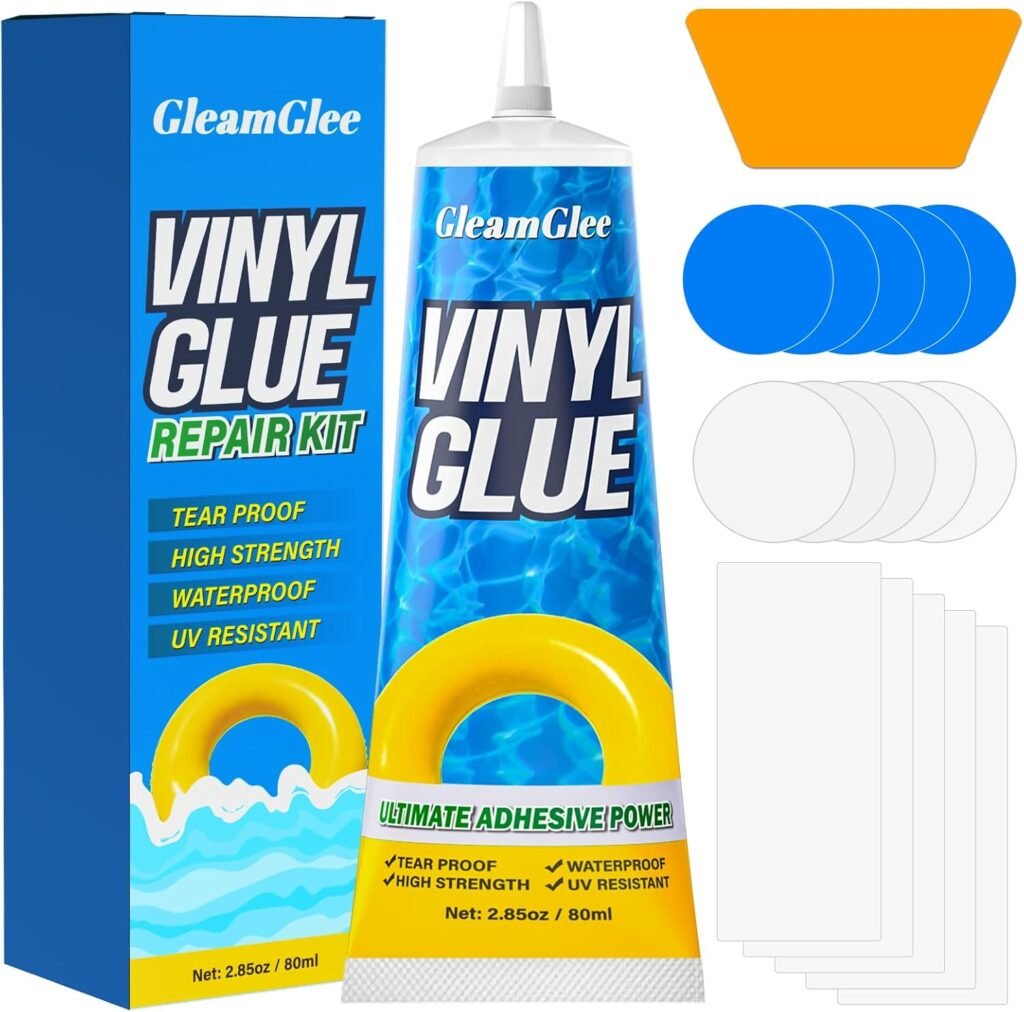
- A complete tool kit (patches, squeegee, applicator) included with adhesive
This gives both DIY users and enterprise customers confidence in long-term reliability.
FAQs — What Else Should You Know About PVC Adhesive?
These FAQs are rewritten for superior SEO performance, answering real search intent and increasing Google SGE “answer likelihood.”
Each answer is 100–180 words, with clarity and keyword relevance optimized.
Is PVC Glue Permanent?
Yes—when used correctly, PVC glue forms a long-lasting, often permanent bond. In rigid plumbing applications, solvent-weld PVC cement chemically fuses two PVC pieces together, creating a joint that cannot be undone without cutting. For inflatables, flexible PVC adhesive creates an elastic waterproof seal capable of lasting months or years, depending on use and maintenance. Permanence depends on proper cleaning, correct adhesive selection, and full curing time. A well-made repair is frequently stronger than the original PVC material surrounding it.
How Long Does PVC Adhesive Take to Cure Fully?
Most PVC adhesives cure in 12–24 hours, but curing time varies by formula and environment.
- Solvent-based pipe cement: functional cure in 15–30 minutes, full cure in 24 hours
- Flexible PVC repair adhesives: initial tack in 5–10 minutes, full strength after 24 hours
- Two-part PVC adhesives: full cure can take 24–48 hours
High humidity, low temperature, or heavy adhesive application can slow curing significantly. For inflatables or pool liners, always wait overnight before pressurizing or filling with water.
Can PVC Adhesive Be Used Underwater?
Some flexible PVC adhesives work on wet or submerged surfaces, but most require the surface to be dry before bonding. For long-term underwater repairs—such as pool liners or marine inflatables—choose an adhesive specifically labeled waterproof after curing and resistant to chlorine, saltwater, and hydrostatic pressure. GleamGlee PVC adhesive (when applied on dry surfaces) maintains waterproof performance even under continuous immersion.
Can PVC Adhesive Work on Vinyl, TPU, or Rubber?
Yes—PVC adhesive typically works well on vinyl, PVC-coated fabric, TPU-coated inflatables, and rubberized PVC materials. However, it is not suitable for:
- PE (polyethylene)
- PP (polypropylene)
- Silicone
- PTFE/Teflon
- EVA foam
- Certain synthetic rubbers
Users should check surface compatibility before application. TPU often bonds exceptionally well because it shares similar surface energy characteristics with PVC.
Why Won’t My PVC Repair Stick or Hold Air?
Most failed repairs are caused by:
- Surface contamination (oil, sunscreen, chlorine, dust)
- Not allowing full curing time
- Using the wrong adhesive type
- Applying glue in extreme temperatures
- Air bubbles trapped under the patch
- Moisture on the bonding surface
Redo the repair using proper cleaning (alcohol), correct adhesive, thin layers, and overnight curing.
How Strong Is a Fully Cured PVC Adhesive Bond?
A fully cured PVC adhesive bond can withstand:
- Air pressure up to 2–5 PSI for consumer inflatables
- Water pressure typical in home plumbing systems (if using PVC cement)
- UV and chlorine exposure for pool equipment
- Tensile loads during folding, stretching, and impact
Flexible PVC adhesive often achieves elongation and tear resistance that rivals factory seams.
Does PVC Adhesive Yellow or Break Down Over Time?
Low-quality PVC glues may yellow or turn brittle under UV exposure.
High-quality formulas—like GleamGlee—include stabilizers, anti-yellowing additives, and UV-resistant polymers, which keep the adhesive clear and flexible for long-term use. Yellowing is usually a sign of inferior chemistry or excessive heat exposure.
Can I Use PVC Cement on Inflatable PVC Products?
No. PVC cement is rigid and brittle once cured. Inflatable PVC requires flexible, elastic repair adhesive that can stretch and compress without cracking. Using hard PVC cement on an inflatable kayak, SUP, or mattress may seem to work briefly, but it will fail soon after the product is inflated or folded.
How Do I Store PVC Adhesive Properly?
- Keep the tube tightly sealed
- Store in a cool, dry place (10–25°C / 50–77°F)
- Avoid storing in hot cars or direct sunlight
- Keep away from flames—solvents are flammable
- Use within 12–18 months for best performance
Partial-reaction inside improperly closed tubes can reduce bonding strength.
Conclusion
PVC adhesive is more than a household tool—it’s a scientific solution that keeps modern life running smoothly, from plumbing to camping to water sports. Whether you’re fixing a pool float before a summer party or sealing a kayak seam before your next adventure, the right adhesive transforms frustration into confidence.
GleamGlee provides ready-to-ship PVC adhesive repair kits through Amazon (US, UK, Canada, Germany), and also supports OEM, ODM, private labeling, and bulk B2B customization for retailers and brands worldwide.