Skip to content

Fabric Glue for Quick Fixes Before Going Out: A Practical Guide to Fast No-Sew Clothing Repairs
Your trusted adhesives glue & cleaner manufacturer

Discovering a clothing problem just before leaving home can turn an ordinary morning into an unnecessarily stressful rush. A skirt hem may suddenly come loose, a decorative patch may begin peeling away, a shirt seam may open slightly, or a ribbon may detach from an outfit only minutes before work, dinner, a school performance, or a weekend trip. Most of these problems do not justify replacing the garment or searching for a tailor, yet they can still make the item uncomfortable, untidy, or difficult to wear with confidence.
Fabric glue offers a practical middle ground between doing nothing and setting up a sewing machine. A suitable textile adhesive can bond fabric surfaces, secure hems, attach patches, reinforce light damage, and restore decorative details without requiring advanced sewing skills. For quick fixes, the most useful formulas are not simply strong. They also need to dry clearly, remain flexible after curing, and allow the fabric to move naturally rather than turning the repaired area into a hard, uncomfortable patch.
Fabric glue is a convenient no-sew option for repairing small clothing problems before going out. It can secure loose hems, minor tears, decorative patches, ribbons, and fabric layers by creating a flexible bond between textile surfaces. For the cleanest result, use a thin, controlled layer, press the materials together carefully, and allow as much setting time as the situation permits before wearing the repaired item.
Imagine preparing for an evening event and noticing that the bottom edge of a favorite dress has started to separate. There may be no time to thread a needle, visit a tailor, or change the entire outfit. A small amount of fabric adhesive, carefully applied and pressed into position, can turn an annoying last-minute problem into a manageable repair. The sections below explain where fabric glue works well, where it does not, and how to use it more effectively when time matters.
What Is Fabric Glue for Quick Fixes?
Fabric glue for quick fixes is a textile adhesive designed to join, repair, or reinforce fabric without traditional stitching. It is especially useful for small clothing repairs, loose hems, patches, decorative pieces, and light fabric alterations where convenience matters, although full bond strength normally requires more curing time than the first few minutes of initial setting.
Fabric glue differs from ordinary household glue because fabrics are flexible structures made from woven, knitted, or nonwoven fibers that constantly move during wear. A rigid adhesive may hold two pieces together at first, but it can create a stiff repair area that feels uncomfortable, cracks under repeated bending, or becomes visually obvious on lightweight garments. A suitable fabric adhesive needs to grip fibers while remaining soft enough to accommodate routine movement.
For everyday repairs, the most useful formulations usually balance several characteristics rather than maximizing only one property. Bond strength matters, but so do flexibility, transparency, wash resistance, application control, and compatibility with different textiles. A clear adhesive that remains soft after curing is particularly useful on clothing because the repair should ideally blend into the garment instead of drawing attention to itself.
How Fabric Glue Helps With Emergency Repairs
Fabric glue becomes especially valuable when the repair problem is small but the timing is inconvenient. A loose trouser hem discovered before work, a costume decoration falling before a school performance, or a patch lifting from a denim jacket before a trip are examples where setting up a sewing machine may be unrealistic. In these situations, adhesive provides a fast way to position and secure materials while reducing the number of tools needed.
The word “quick” should still be understood carefully. Many fabric adhesives develop enough initial grip within minutes to hold lightweight materials in place, but full curing often takes considerably longer. GleamGlee Fabric Glue, for example, can be pressed into position and allowed to set for approximately 6–10 minutes, while complete curing takes about 24 hours. That distinction matters because an item may feel stable before the bond has reached its final durability.
For a last-minute repair, users should reduce movement around the repaired area as much as possible. A hem on a relatively loose skirt is easier to manage shortly after application than a repair located at an elbow, knee, shoulder, or other high-motion zone. Matching the repair method to the amount of stress helps prevent disappointment.
What Makes Fabric Glue Different From Sewing
Sewing connects textile layers mechanically with thread, while fabric glue bonds the surfaces through an adhesive layer. Neither method is universally better. Sewing remains the stronger option for structural seams, heavily loaded areas, and garments that experience frequent tension, while fabric adhesive is often more convenient for light repairs, decorative attachments, patches, edging, and situations where stitching would be difficult or visually undesirable.
For someone without sewing experience, adhesive can also lower the barrier to repairing rather than discarding clothing. A precise nozzle allows users to place a narrow bead of glue along a hem or beneath a decorative piece without learning stitch types, thread tension, or machine setup. This makes fabric glue useful not only for emergencies but also for straightforward household maintenance.
The best decision depends on the garment. A loose decorative trim may be perfectly suited to adhesive, whereas a split crotch seam in tightly fitted trousers should usually be sewn. Experienced repairers evaluate both the location and the mechanical load instead of treating all fabric damage in the same way.
Which Fabrics Work Best With Fabric Adhesive
Medium-weight, absorbent fabrics such as cotton, denim, canvas, felt, and many blended textiles generally provide favorable surfaces because their fibers give the adhesive enough area to grip. Smooth synthetic textiles may also bond effectively, but the exact result can vary according to surface treatment, coatings, stretch level, and adhesive chemistry. Delicate or highly finished materials should always be tested on a concealed area before visible application.
| Fabric Type | Typical Quick-Fix Uses | Practical Consideration |
|---|---|---|
| Cotton | hems, patches, small tears | usually easy to bond when clean and dry |
| Denim | patches, decorative repairs, hems | thicker layers may need firm pressure |
| Polyester blends | clothing details, light seams | test first on very smooth finishes |
| Canvas | bags, accessories, craft repairs | strong surface contact is important |
| Felt | crafts, appliqués, decorations | often bonds easily because of open fibers |
| Delicate fabrics | trim, light decoration | test for staining or texture change first |
GleamGlee Fabric Glue is intended for common textile applications such as clothing, jeans, curtains, ribbons, embroidery, sequins, patches, and decorative fabric work. Its transparent finish and flexible cured texture make it particularly relevant where the repair needs to remain visually discreet rather than looking like a hard plastic patch.

Which Clothing Problems Can Fabric Glue Fix Before Going Out?
Fabric glue works well for loose hems, small tears, separated decorative seams, lifting patches, detached ribbons, appliqués, and other light textile repairs. It is most reliable when the damaged area is not carrying heavy tension and when both fabric surfaces provide enough contact area for the adhesive to grip securely.
The easiest way to decide whether fabric glue is suitable is to consider what will happen to the repaired area during wear. If the area mainly needs to stay flat, aligned, or attached, adhesive can perform very well. If the area must repeatedly stretch, carry body weight, hold a bag strap, or withstand strong pulling force, sewing or another structural repair method may be safer.
Clothing repairs are particularly suitable when the user wants a discreet result. A lifted hem can often be bonded from the inside, while a small hole can be covered with a matching or decorative patch. Decorative materials such as lace, ribbon, sequins, or appliqués can also be attached without visible thread, which is one reason fabric glue is widely used in costumes, handmade fashion, and event preparation.
How to Repair Loose Hems and Open Seams Quickly
Loose hems are one of the most practical fabric glue applications because the repair area usually provides broad surface contact without carrying extreme tension. Pants, skirts, sleeves, and curtains can all develop loose folded edges after repeated wear, washing, or snagging. When the original stitching breaks but the fabric itself remains intact, adhesive can hold the folded section back in its intended position.
The repair should begin by recreating the original fold as accurately as possible. Pressing the hem flat with the fingers or a cool iron, when the fabric allows it, helps identify the correct alignment before glue is introduced. A thin, continuous layer is usually preferable to several thick blobs because excessive adhesive can migrate through fabric fibers and create visible hard spots.
Once the surfaces are aligned, gentle pressure helps spread the adhesive evenly. Small clips, clothespins, or flat weights can sometimes help keep a hem stable while it begins setting, provided they do not leave marks. The less the area moves during the early bonding stage, the cleaner the final result is likely to be.
Fixing Torn Clothes and Small Fabric Damage
A tear requires more judgment than a loose hem because the damage may reduce the structural strength of the material. Very small tears can sometimes be aligned edge to edge, but a backing patch is often more reliable because it increases the bonding surface. The patch can be placed behind the tear for a discreet repair or on top when the user wants a decorative effect.
Denim, jackets, workwear, children’s clothing, and casual shirts are common candidates for this approach. A decorative embroidered patch can cover a damaged area while adding personality, which makes repair feel intentional rather than merely corrective. This also supports a repair-first mindset by extending the useful life of garments that remain otherwise wearable.
However, tears located close to waistbands, armholes, knees, elbows, or tight-fitting seams deserve extra caution because movement places additional stress on the repair. Fabric glue can reinforce these areas, but stitching may still be the more durable choice if the garment is expected to experience repeated pulling.
Attaching Patches, Ribbons, and Decorations
Decorative attachment is one of the areas where fabric glue often offers a cleaner result than stitching. Embroidery patches, lace, ribbons, sequins, rhinestones, felt shapes, costume elements, and fabric flowers can be positioned without visible thread lines. This is especially helpful when several small pieces need to be attached quickly before a party, performance, themed event, or photo session.
The main challenge is controlling the quantity of adhesive. Small embellishments need enough glue to create surface contact, but a thick layer may squeeze around the edges and become visible. A fine nozzle helps place adhesive precisely, especially when attaching narrow ribbon, small fabric shapes, or individual decorative elements.
For a more professional finish, decorative components should be arranged before applying any glue. Once the layout is confirmed, each item can be lifted and bonded one at a time. This reduces repositioning and prevents glue from spreading across visible areas of the garment.
When Fabric Glue Is Not the Best Fix
Not every urgent clothing problem should be handled with adhesive. A zipper pulling away from a heavy jacket, a split seam on tightly fitted pants, a torn backpack shoulder strap, or a damaged waistband experiences much higher force than a hem or patch. These repairs may need stitching, replacement parts, or professional reinforcement rather than adhesive alone.
| Repair Situation | Fabric Glue Suitability | Better Approach When Needed |
|---|---|---|
| Loose skirt or pant hem | High | adhesive alone often works |
| Decorative patch | High | adhesive is convenient |
| Small low-tension tear | Good | backing patch can improve strength |
| Open fitted garment seam | Moderate | sewing may provide better durability |
| Backpack load-bearing strap | Low | structural stitching recommended |
| Zipper attachment failure | Low to moderate | professional or stitched repair preferred |
The practical rule is simple: use fabric glue where the surfaces need to stay together, but avoid relying on it as the only reinforcement where the repair must carry substantial mechanical load.
How Do You Use Fabric Glue for Fast Clothing Repairs?
For fast clothing repairs, clean and dry the fabric, test delicate materials first, align the surfaces before applying glue, spread a thin controlled layer, press the materials together, and keep the repaired area stable during setting. Even when the adhesive develops early grip within minutes, full curing time should still be respected whenever possible.
Good fabric glue results are usually determined before the tube is opened. Surface preparation, positioning, glue quantity, and drying conditions all influence whether the repair looks smooth or messy. People often blame the adhesive when a repair fails, but in practice, too much glue, damp fabric, fabric softener residue, and premature movement are among the most common causes of disappointing results.
A last-minute repair should also be kept as simple as possible. Trying to rebuild a large damaged area in ten minutes rarely works well. Focus on stabilizing the problem, keeping the garment wearable, and avoiding excessive stress on the repair until the adhesive has had enough time to cure properly.
Preparing the Fabric Surface
The fabric should be free from dust, lint, oil, makeup, moisture, and other contaminants that can interfere with adhesion. If the garment has recently been washed with fabric softener, residue may remain on the fibers, so a hidden-area test is sensible before committing to a visible repair. The repair area should also be completely dry because moisture can interfere with many adhesive systems.
Loose fibers around a tear or frayed edge can be trimmed carefully, but aggressive cutting should be avoided because removing too much material reduces the available bonding surface. For hems, the original fold should be recreated first. For patches, the patch should extend beyond the damaged area sufficiently to provide a stable bonding zone.
Delicate materials require extra caution because a liquid adhesive may darken or penetrate thin textiles before drying. Testing a small concealed section can reveal whether the glue changes the fabric’s color, surface texture, or hand feel before the main repair begins.
Applying Fabric Glue Correctly
A common mistake is assuming that more adhesive automatically means a stronger bond. In textile repair, excessive glue can saturate fibers, squeeze through to the visible side, or create a stiff patch after curing. A controlled, even layer is generally more effective because it allows the two fabric surfaces to contact each other closely.
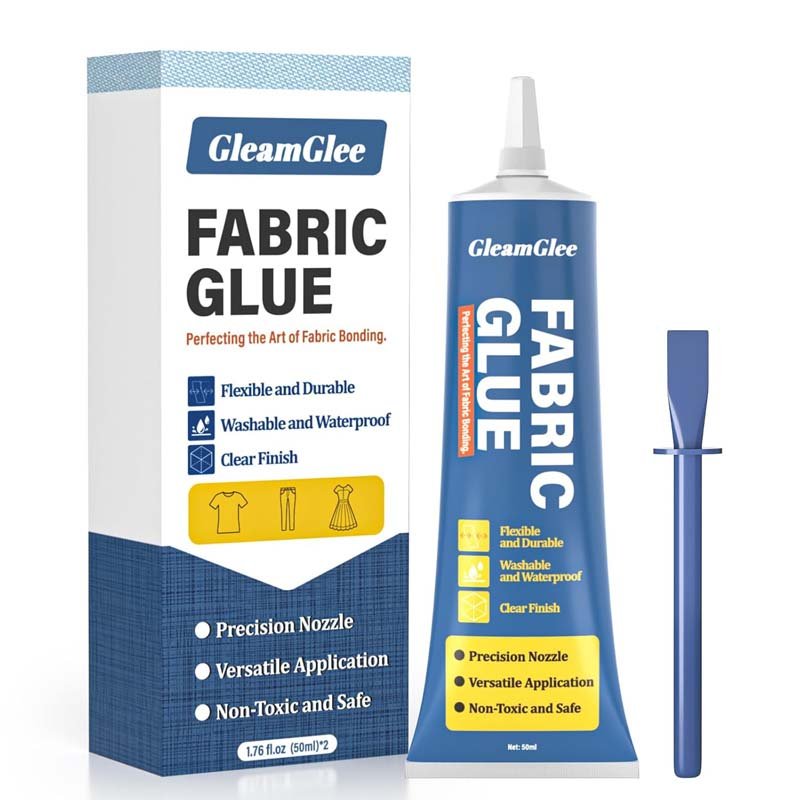
Precision nozzles are particularly useful for narrow seams, decorative details, and hems. GleamGlee Fabric Glue uses a fine-point tip that helps users place adhesive along small repair areas rather than spreading it across the surrounding fabric. The cap also includes a pin designed to reduce nozzle clogging between uses, which is useful for a product intended for repeated household repairs.
After application, press the surfaces together firmly enough to establish full contact without forcing adhesive out of the edges. If a small amount does escape, it should be handled according to the product instructions rather than rubbed widely across the fabric.
Drying and Setting Time Before Wearing
Setting time and curing time describe different stages. During initial setting, the adhesive may become tacky enough to keep materials from separating easily. During full curing, the adhesive develops its more complete strength, flexibility, and resistance to movement. Confusing these stages can lead users to put stress on a repair before it is ready.
For GleamGlee Fabric Glue, the bonded surfaces can be pressed and left to set for approximately 6–10 minutes, while full curing takes around 24 hours. A last-minute repair may therefore become stable enough for careful handling relatively quickly, but it should not immediately be treated as if the adhesive has completed its entire curing process.
| Stage | Typical Action | Practical Goal |
|---|---|---|
| Before application | clean, dry, align | improve adhesive contact |
| Application | use a thin, even layer | reduce stiffness and overflow |
| First 6–10 minutes | press and keep stable | establish initial positioning |
| Following hours | minimize pulling and washing | allow bond development |
| Around 24 hours | full cure for this product | reach intended final performance |
If an event is important, repairing the garment the evening before rather than minutes before departure gives the adhesive significantly more time to develop. When a truly last-minute repair is unavoidable, choose a low-stress area and avoid stretching or washing the item until curing is complete.
Keeping the Repair Neat
Clean repairs depend on restraint. Thin adhesive layers, precise placement, and careful alignment usually look better than aggressively covering the entire damaged area. For visible fabrics, working from the inside whenever practical helps preserve appearance, particularly on hems, seams, and backing patches.
A piece of disposable card can be placed behind thin fabric during application to prevent accidental transfer to the opposite side. The card should be removed before it becomes bonded to the garment. On decorative projects, tweezers can help position small sequins, rhinestones, or fabric pieces without spreading glue onto nearby surfaces.
The goal is not simply to make two pieces stick together. A useful clothing repair should also preserve the garment’s texture, drape, flexibility, and appearance as much as possible.

Is Fabric Glue Strong Enough for Last-Minute Repairs?
Fabric glue can be strong enough for many last-minute repairs when it is used on suitable fabrics and low-to-moderate stress areas. Hems, patches, decorative attachments, light tears, and fabric layers are good candidates, but heavily tensioned seams or load-bearing components usually need sewing or another form of reinforcement for dependable long-term performance.
Strength in fabric repair should not be understood only as the maximum force needed to pull two surfaces apart. Clothing adhesives also need to tolerate bending, folding, laundering, temperature changes, and repeated movement. An extremely hard bond may test well on a rigid sample but perform poorly on a shirt or pair of jeans because real garments rarely stay flat and motionless.
For this reason, flexibility is one of the most important indicators of whether a fabric adhesive is suitable for clothing. A bond that remains soft can move with the textile instead of concentrating stress along a stiff edge, which helps the repair feel more natural during normal wear.
How Strong and Flexible Fabric Glue Bonds Are
The bond created by fabric adhesive comes from the interaction between the adhesive and thousands of textile fibers across the bonded area. More surface contact generally improves holding ability, which is one reason patches and folded hems can perform well: they provide a broader adhesive zone than a narrow torn edge.
Flexibility after curing is equally important. If the adhesive becomes brittle, repeated movement can create cracks within the glue layer or along its boundary with the fabric. A flexible formulation distributes movement across a larger area and is less likely to feel like a rigid plate inside the garment.
GleamGlee Fabric Glue is designed to dry transparent while maintaining a soft, flexible finish rather than becoming hard and brittle. That characteristic makes it suitable for everyday textile repairs where the wearer expects the fabric to continue folding and moving naturally.
Can Fabric Glue Survive Washing and Daily Wear?
Washability depends on the adhesive formula, how well the repair was applied, how long it cured, and the conditions used during laundering. A washable fabric adhesive should never be washed immediately after application because early water exposure can weaken a bond that has not finished curing.
Once fully cured, GleamGlee Fabric Glue is intended to withstand normal washing and ironing. Even so, treating a repaired garment reasonably can extend the life of the bond. Aggressive washing cycles, repeated high-temperature treatment, or harsh mechanical abrasion can place additional stress on any repair, whether glued or sewn.
Users should also pay attention to the fabric itself. A durable adhesive cannot compensate for fibers that are already badly degraded. If the material surrounding a tear continues to fray, strengthening the repair with a broader patch may perform better than bonding only the damaged edge.
When Should You Choose Fabric Glue Instead of Sewing?
Fabric glue is a strong option when access, appearance, or convenience makes sewing impractical. Decorative patches, internal hems, narrow trims, fabric flowers, sequins, ribbon, and costume details are excellent examples because thread may be unnecessarily visible or time-consuming.
Sewing remains preferable for areas that repeatedly carry tension. Waistbands, backpack straps, fitted shoulder seams, trouser crotches, and other high-load zones benefit from the mechanical reinforcement created by thread. In some cases, adhesive can still be used as a temporary stabilizer or combined with stitching.
| Repair Factor | Fabric Glue | Sewing |
|---|---|---|
| Fast setup | Excellent | Moderate |
| No special skill required | Excellent | Depends on experience |
| Invisible decorative attachment | Excellent | Moderate |
| High-tension structural seams | Limited | Excellent |
| Flexible light repairs | Excellent | Excellent |
| Emergency travel use | Very convenient | Requires sewing kit |
A practical household repair kit benefits from having both options available. Fabric glue handles many low-stress problems quickly, while needle and thread remain useful when the damage becomes structural.
Temporary Fix or Permanent Repair?
The answer depends more on the repair design than on the word “glue.” A properly prepared, fully cured adhesive bond on an appropriate fabric may become a long-lasting repair. Conversely, applying glue hurriedly to a dirty, damp, or highly stressed seam may create only a temporary fix regardless of how strong the adhesive formulation is.
Users planning a last-minute repair should therefore think in two stages. First, stabilize the garment sufficiently for immediate use. Second, inspect the repair after full curing and determine whether additional reinforcement is appropriate. This approach prevents the common mistake of treating emergency application conditions as if they represent the adhesive’s final capability.
Which Everyday Items Can Be Repaired With Fabric Glue?
Fabric glue can be used on many everyday textile items, including clothing, jeans, bags, fabric shoes, curtains, cushions, table linens, costumes, patches, ribbons, and craft projects. The best applications are those where fabric surfaces overlap or provide enough contact area and where the repaired section is not exposed to heavy structural loads.
One of the advantages of keeping fabric adhesive at home is that it can move easily between repair and creative tasks. The same tube used to secure a loose trouser hem can later attach a decorative patch to a tote bag, reinforce the edge of a table runner, or restore a loose piece of felt on a school project. This versatility makes fabric glue useful even for households that do not regularly sew.
The material still matters more than the category. A light handbag lining may be easy to repair, while a heavily loaded handle should not depend on adhesive alone. A curtain edge may be simple to hem with glue, while structural upholstery damage can require professional stitching. Understanding load and movement is the key to choosing realistic applications.
Clothing and Fashion Accessories
Everyday clothing offers many practical uses, including pants, skirts, jackets, shirts, jeans, cuffs, collars, appliqués, decorative patches, and fabric trim. Users can also repair detached linings in handbags, reinforce fabric inside hats, or secure decorative textile elements on accessories.
Shoes require more caution because not all shoe components are made from fabric, and soles or high-stress structural areas require specialized shoe adhesive rather than ordinary fabric glue. However, fabric linings, decorative textile patches, and some lightweight fabric details can be appropriate candidates.
For fashion projects, transparent drying is particularly useful because visible residue can reduce the quality of an otherwise neat repair. A flexible finish also helps accessories maintain their intended shape instead of becoming stiff around the bonded section.
Home Textiles and DIY Projects
Curtains, cushion covers, tablecloths, table runners, pillowcases, fabric organizers, decorative banners, and lightweight textile accessories are common household applications. Fabric glue can help reinforce fraying edges, secure decorative trim, attach fabric patches, or create simple no-sew alterations.
Home textiles often provide larger bonding areas than clothing, which can make application easier. A curtain hem, for example, gives the adhesive a long, flat folded surface rather than a narrow torn edge. Users should still consider heat, washing, and cleaning conditions because household textiles may be laundered differently from clothing.
For upholstery or car interiors, small decorative fabric repairs may be manageable, while large structural tears or materials subjected to constant heat and tension may need more specialized products.
Crafts, Costumes, and School Projects
Fabric adhesive is especially useful for creative activities because it removes the need to stitch every decorative piece. Felt shapes, lace, ribbons, costume panels, sequins, rhinestones, fabric letters, holiday ornaments, wreaths, tote bags, and school crafts can all benefit from controlled adhesive application.
Costumes are a particularly good example because many projects need to be assembled quickly and may contain materials that would be tedious to sew individually. A performer can attach decorative trim, secure a loose appliqué, or reinforce a lightweight costume element before an event without creating visible thread lines.
Parents and teachers should still select materials and products appropriate for the age and supervision level involved. Adhesive should be handled according to its safety instructions, especially during children’s craft activities.
Events and Last-Minute Situations
Weddings, parties, theater performances, photo shoots, school plays, conventions, travel, and workplace events all create situations where small textile problems become unexpectedly urgent. A ribbon may come loose from a chair cover, a decorative element may detach from a costume, or a fabric banner may need a final adjustment shortly before guests arrive.
Fabric glue works well in these environments because the repair tools are compact. A tube, a few clips, a clean cloth, and a small card for protecting the opposite side of the fabric can form a simple emergency kit.
For users who regularly attend events or travel, storing a compact fabric repair kit can be more practical than discovering a problem at the last minute and having no suitable tools available.
How to Choose the Right Fabric Glue for Quick Repairs?
The right fabric glue for quick repairs should provide strong textile adhesion while drying flexible and visually discreet. Useful features include a clear finish, washable performance after curing, precise application, compatibility with common fabrics, practical setting time, and packaging that allows controlled use without creating unnecessary mess.
Choosing fabric glue only by the word “strong” can lead to poor results. Clothing and home textiles need a different type of performance from rigid materials such as metal or ceramic. A textile adhesive that cures extremely hard may hold firmly but make fabric uncomfortable, while a product that remains too soft may not maintain sufficient contact during wear.
The best choice therefore depends on the balance between strength, flexibility, appearance, and application control. Users should also compare curing requirements realistically. A product may begin holding quickly but still require many hours before washing, stretching, or ironing.
What Features Matter in a Fast Fabric Adhesive
For everyday clothing repairs, five characteristics are especially useful: textile compatibility, flexible cured texture, clear drying, wash durability, and precise application. These features address the problems that people actually notice after a repair rather than focusing only on laboratory strength values.
Precision is often underestimated. A large opening may dispense more adhesive than needed, especially on a narrow hem or small decoration. A fine nozzle gives the user more control, helping reduce waste and visible overflow. GleamGlee Fabric Glue is supplied in a 50 ml tube with a fine-point application tip and a cap design intended to help reduce clogging between uses.
Capacity also matters. A very small package may suit a single emergency, while a 50 ml tube provides enough material for repeated household repairs, clothing alterations, and craft projects without becoming inconvenient to store.
Why Flexible and Transparent Bonds Matter
Clothing is constantly moving against the body. Sleeves fold, knees bend, hems swing, and fabrics stretch as the wearer sits or walks. A repair that feels smooth while lying flat on a table may perform differently once the garment is worn.
Flexible adhesive helps the repaired section move with the surrounding textile. This reduces the noticeable stiffness that can make a garment uncomfortable and can also reduce concentrated stress along the bond edge.
Transparency matters for a different reason. Repairing a favorite garment is often as much about appearance as function. A clear, non-yellowing finish helps the repair remain discreet, particularly around decorative fabrics, visible edges, and light-colored garments.
Choosing Fabric Glue for Different Repair Situations
| Repair Need | Most Important Feature | Reason |
|---|---|---|
| Loose hem | flexible bond | hem needs to move naturally |
| Decorative patch | clear drying | visible finish should remain neat |
| Small tear | strong fiber contact | damaged area needs reinforcement |
| Sequins or ribbon | precision nozzle | prevents excess adhesive |
| Washable clothing | wash resistance after cure | repair faces repeated laundering |
| DIY crafts | versatile fabric compatibility | projects often combine materials |
A user repairing clothing before a night out may prioritize fast initial setting and clean application, while someone making curtains may value working time and flexibility over speed. Matching the formula to the job produces better results than buying solely on a broad “heavy duty” claim.
What to Check Before Buying
Read the product instructions for supported fabrics, full cure time, washing guidance, and application method. If ironing is important, check whether the adhesive is intended to tolerate ironing after complete curing rather than assuming every fabric glue performs the same way.
Packaging should also be considered. A fine nozzle is more practical for narrow hems and small repairs than a wide applicator. For repeated use, a cap designed to reduce clogging can make the product easier to store between projects.
GleamGlee’s fabric adhesive combines a flexible, transparent finish with washable performance after full cure and a precision application design. Those characteristics align particularly well with everyday clothing repairs, textile alterations, craft projects, and situations where the repaired area needs to remain visually clean.
Are There Any Tips for Using Fabric Glue Before Leaving Home?
For better last-minute fabric repairs, use the smallest amount of adhesive needed, work on clean and dry fabric, align the repair before applying glue, keep the area stable while it sets, and avoid washing or heavily stretching it before full cure. Choosing low-stress repairs for urgent use also reduces the chance of the bond opening prematurely.
The most important emergency-repair skill is knowing what not to attempt. Fabric glue can quickly stabilize many small problems, but rushing a complex structural repair immediately before leaving can create a worse result. A neat temporary solution on a low-stress area is often better than saturating a damaged seam with excessive adhesive and hoping for instant full strength.
Planning also matters. Keeping fabric glue, small clips, a few fabric patches, tweezers, and a clean piece of card together in a household or travel repair kit can save significant time when a problem appears unexpectedly. The tools are inexpensive, compact, and useful for both clothing and event-related repairs.
Quick Emergency Repair Tips
Begin by asking whether the problem can be stabilized without placing the repaired area under immediate heavy tension. A hem, patch, ribbon, or decorative piece is usually a better candidate than a waistband or load-bearing strap.
Next, dry-fit the repair. Fold the hem, position the patch, or arrange the decoration before applying adhesive. This prevents unnecessary repositioning once the glue is on the material.
Apply a thin, even layer and press the surfaces together. If the adhesive requires approximately 6–10 minutes for initial setting, use that period to keep the garment flat and stable rather than repeatedly lifting the edge to check whether it has bonded.
When possible, choose another activity while the repair sets. Finish getting ready, prepare a bag, or organize accessories instead of disturbing the fabric every minute.
Common Mistakes to Avoid
The most common mistake is applying too much adhesive. Excess glue can penetrate fabric, squeeze out around a patch, or form an unnecessarily stiff area. Another common mistake is wearing or stretching the garment as soon as the surfaces appear to hold together, before the bond has developed sufficient strength.
Applying glue over lint, makeup, body oil, moisture, or heavily treated fabric can also weaken the connection. If the area cannot be cleaned properly because time is extremely limited, the user should understand that the repair may be temporary.
Users should also avoid treating every fabric as identical. A dense pair of jeans and a thin formal blouse have very different absorbency, drape, and appearance requirements. Testing delicate fabrics before visible application remains one of the simplest ways to avoid damage.
How to Keep Repairs Clean and Invisible
For visible garments, repair from the inside whenever the construction allows it. A backing patch hidden beneath a tear or adhesive applied inside a folded hem can provide useful reinforcement without exposing the glue line.
Use a fine nozzle to keep application narrow and controlled. Small tweezers are helpful when positioning sequins, beads, lace, or other decorative elements because fingers can accidentally spread adhesive beyond the intended area.
If the material is thin, place a disposable card behind it so glue does not transfer to the opposite layer. Remove the card before the adhesive cures. These small habits often make the difference between a repair that looks improvised and one that blends naturally into the garment.
Build a Small Fabric Repair Kit
A compact repair kit can include fabric glue, matching fabric scraps, small decorative patches, clips, tweezers, scissors, and a few basic sewing items. Adhesive does not need to replace sewing completely; having both methods available gives the user more options when different problems appear.
For people who travel frequently, attend events, work with costumes, or regularly alter clothing, a small repair kit can prevent minor textile damage from becoming a major inconvenience. Store the adhesive according to its packaging instructions and keep the nozzle clean so it is ready when needed.
A reliable repair kit turns fabric glue from an occasional craft supply into a practical maintenance tool for clothing, accessories, and household textiles.

Conclusion
Fabric glue is most useful when it is treated as a specialized textile repair tool rather than as a universal replacement for sewing. Loose hems, decorative patches, ribbons, appliqués, small tears, lightweight fabric layers, and many household textile repairs can often be handled quickly and neatly with a flexible adhesive. Structural seams, heavily stretched areas, and load-bearing components deserve a more cautious approach and may still require traditional stitching.
The quality of the repair depends just as much on technique as on the adhesive itself. Clean and dry fabric, careful alignment, thin application, sufficient pressure, and realistic curing time all contribute to better performance. A product that begins setting within several minutes can be helpful when time is limited, but full cure should still be respected before washing, ironing, stretching, or subjecting the repair to regular wear.
For people who would rather repair a favorite garment than discard it over a loose hem or minor tear, keeping fabric glue nearby can make everyday maintenance much easier. A flexible, transparent, washable textile adhesive with a precise nozzle can handle a surprisingly broad range of small problems, whether they appear at home, while traveling, during a craft project, or just before walking out the door.

Frequently Asked Questions
Can I use fabric glue to fix a hem right before going out?
Yes, a loose hem is one of the most suitable quick applications for fabric glue because it normally provides a wide, low-stress bonding area. Apply a thin layer inside the folded hem, align the fabric carefully, press it flat, and allow as much setting time as possible. Avoid aggressively stretching the repaired area because the adhesive may have developed initial grip without reaching full cure.
How long should fabric glue dry before I wear the garment?
Drying time depends on the adhesive formula, but users should distinguish between initial setting and complete curing. GleamGlee Fabric Glue can begin setting after approximately 6–10 minutes, while full curing takes around 24 hours. If you need to wear the garment sooner, keep the repair in a low-movement area and avoid washing, ironing, stretching, or pulling it until the full curing period has passed.
Is fabric glue better than sewing for quick clothing repairs?
Fabric glue is often more convenient for hems, decorative pieces, patches, ribbons, appliqués, and lightweight repairs because it requires little setup and can produce a clean finish without visible stitches. Sewing is usually the better option for high-tension structural areas such as waistbands, fitted seams, backpack straps, and heavily stressed garment sections. Many households benefit from keeping both repair methods available.
Can fabric glue be washed after the repair?
Many textile adhesives are formulated for washable repairs, but laundering should only take place after the adhesive has completed its recommended curing period. GleamGlee Fabric Glue is intended to remain washable after full cure. Washing too early can weaken the bond before it has finished developing, so users should wait approximately 24 hours and follow the care requirements of both the adhesive and the garment.
Does fabric glue leave a visible mark on clothes?
A clear-drying fabric adhesive can make repairs much less noticeable, but appearance also depends on how much glue is used and how absorbent the fabric is. Applying excessive adhesive can saturate thin textiles and create visible dark or stiff areas. For delicate or light-colored fabrics, test the glue on a concealed section first and apply only a thin, controlled layer during the final repair.
What fabrics can I repair with fabric glue?
Fabric glue commonly works well with cotton, denim, canvas, felt, ribbons, many polyester blends, and similar everyday textiles. Highly delicate, coated, extremely stretchy, or unusually smooth fabrics can behave differently, so a hidden-area compatibility test is recommended before visible use. Repair design also matters: broad overlapping surfaces usually bond more reliably than narrow torn edges exposed to repeated tension.
What should I keep in an emergency clothing repair kit?
A useful fabric repair kit can include a precision-tip fabric adhesive, small fabric patches, clips, tweezers, compact scissors, safety pins, and a basic needle-and-thread set. Fabric glue handles many quick hems, decorative attachments, and lightweight repairs, while sewing supplies provide backup for structural damage. Keeping both options together makes it easier to choose the safest and cleanest repair method when a clothing problem appears unexpectedly.
Share:
Table of Contents
Here, creating your adhesives glue & removal cleaner collection is no longer a barrier—it’s a collaborative journey where GleamGlee helps brands and businesses transform their vision into durable, certified, and market-ready solutions.
Partner with GleamGlee
Join hundreds of global partners who trust GleamGlee for adhesives and cleaners that combine innovation, compliance, and speed. Our vertically integrated system—from R&D to warehouse—guarantees consistent performance and reliable delivery.
Whether you’re sourcing FBA-ready stock or developing your own formula, our team provides unmatched technical support and responsive service.