Skip to content
Quick-Dry Plastic Glue for Toys and Containers : Easy Repair Guide
Your trusted adhesives glue & cleaner manufacturer

A small plastic break can create a surprisingly big problem. One cracked storage box lid can make a whole container hard to close. One snapped toy wheel can turn a favorite toy into something a child refuses to use. One broken acrylic organizer corner can make a neat desk or bathroom shelf look messy. Plastic items are affordable and common, but replacing them again and again is wasteful, inconvenient, and often unnecessary.
Quick-dry plastic glue is made for fast, clean repairs on toys, storage containers, acrylic organizers, ABS parts, PVC pieces, model kits, household plastic parts, and small daily-use items. A good plastic glue should cure quickly, dry clear, apply neatly through a precision nozzle, and create a strong bond without leaving thick, cloudy, or messy marks.
For many homes, repair shops, online sellers, and DIY users, plastic glue is not just a backup product in a drawer. It is a practical way to keep useful items working longer. The real value is not only saving a few dollars on a broken container or toy. It is saving time, reducing waste, avoiding frustration, and getting a repair that looks clean enough to keep using with confidence.
What Is Plastic Glue?
Plastic glue is an adhesive made to bond plastic surfaces that ordinary household glue often cannot hold well. It is commonly used on rigid plastic parts such as PVC, ABS, acrylic, polystyrene, plastic containers, toy parts, appliance covers, model pieces, office organizers, and small household accessories. Unlike paper glue or craft glue, plastic glue must grip a smooth, non-porous surface, so the repair depends heavily on surface cleaning, correct glue amount, tight contact, and enough curing time.
Most plastic repairs fail for simple reasons: the surface is dusty, the plastic is too flexible, the glue is applied too thickly, or the repaired part is stressed too soon. A good plastic glue should solve the most common repair problems in daily use. It should set quickly enough to stop small parts from sliding, dry clear enough for visible repairs, and bond strongly enough for toys, containers, clips, lids, acrylic corners, and plastic casings. For small repairs, precision is often more important than using a large amount of glue.
Plastic glue is best for clean breaks, narrow cracks, small missing attachments, broken tabs, and hard plastic parts that can be pressed together closely. It is not the best choice for every plastic item. Flexible polyethylene, polypropylene, food-contact containers, baby chew toys, high-heat parts, and heavy load-bearing handles may need special adhesives or different repair methods. A realistic repair starts with one question: is the plastic hard, clean, dry, and able to stay still while curing?
What Makes Plastic Glue Different?
Plastic glue is different because it is designed for smooth materials that do not absorb adhesive easily. Wood, fabric, cardboard, and paper have fibers or pores that help glue sink in. Plastic usually has a dense surface, so the adhesive must form a surface bond. This is why plastic glue needs better wetting, faster grip, and stronger surface adhesion than basic craft glue.
In daily repairs, this difference becomes obvious. School glue may peel off a toy after one pull. Hot glue may sit on top of a storage box corner and pop off when bent. General-purpose glue may dry slowly and leave a rubbery layer that does not hold small plastic parts tightly. Plastic glue is made for tighter contact. It works better when the broken edges fit together and the adhesive forms a thin bond line between them.
For toys and containers, a thin bond line matters. If the glue layer is too thick, the two plastic pieces may not touch closely. The repair can become bulky, weak, and visible. This is why quick-dry plastic glue with a fine-tip nozzle is more practical for small repairs. It places glue exactly where needed instead of covering the whole surface.
| Glue Type | Best For | Weak Point on Plastic |
|---|---|---|
| School glue | Paper, light crafts | Poor hold on smooth plastic |
| Hot glue | Temporary craft fixing | Can peel off hard plastic |
| Epoxy | Large gaps, stronger fills | Slower, mixing needed, thicker finish |
| Plastic glue | Toys, cracks, containers, small hard plastic parts | Needs clean contact and proper curing |
| Super glue style plastic adhesive | Fast small repairs | Not ideal for flexible or food-contact parts |
Which Materials Need Plastic Glue?
Plastic glue is commonly used on PVC, ABS, acrylic, polystyrene, and many rigid household plastics. These materials appear in toy cars, action figures, storage boxes, clear organizers, display stands, appliance covers, remote-control shells, model kits, plastic clips, drawer parts, and small office or school items. The repair is usually easier when the plastic is hard and the broken edges still match.
ABS is often found in toys, electronics casings, car interior trim, appliance housings, and hard molded parts. It is usually a good repair target because it is rigid and can hold shape during bonding. Acrylic is common in clear organizers, picture frames, display boxes, shelves, craft sheets, and decorative parts. It needs a clear glue and careful application because any excess adhesive can show through the surface. PVC appears in some household parts, outdoor items, hobby materials, and repair pieces. It should be cleaned well before bonding.
Some plastics are harder to repair. Polypropylene and polyethylene are widely used in food containers, squeeze bottles, flexible lids, storage bins, and soft plastic packaging. These plastics have lower surface grip, so many adhesives do not bond them as strongly without special treatment. For this reason, not every container repair should be treated the same. A hard acrylic organizer crack is very different from a flexible lunch box lid.
| Plastic Material | Common Items | Repair Difficulty | Plastic Glue Use |
|---|---|---|---|
| ABS | Toys, appliance covers, electronics shells | Low to medium | Good for clean hard breaks |
| Acrylic | Clear boxes, organizers, frames | Medium | Good when applied thinly |
| PVC | Outdoor parts, hobby pieces, some accessories | Medium | Clean surface carefully |
| Polystyrene | Models, craft parts, lightweight plastic pieces | Low to medium | Good for precision work |
| Polypropylene | Food lids, flexible containers, storage bins | High | Test first; bond may be limited |
| Polyethylene | Bottles, soft containers, flexible plastic | High | Often needs special treatment |
What Repairs Fit Plastic Glue?
Plastic glue fits repairs where the broken surfaces can touch closely. Good examples include toy wheels, action figure parts, model pieces, storage box corners, cracked acrylic drawers, plastic lid tabs, remote-control covers, office organizers, small appliance knobs, and decorative plastic parts. These repairs usually have small contact areas, so a fast, controlled adhesive works better than a thick, slow product.
For toys, plastic glue is useful when the broken part is hard plastic and not likely to be chewed. It can reattach accessories, small arms, wheels, stands, and game pieces. For containers, it can repair cracks, clips, corners, handles, and lid tabs when the container is used for general storage. For acrylic items, it can repair corners, stands, frames, and drawers, but the glue amount must be controlled to avoid visible marks.
The strength of the repair depends on stress after curing. A repaired desk organizer may last a long time because it stays still. A repaired storage lid tab may last if it is opened gently. A repaired toy part may hold well under light play, but rough twisting or repeated dropping can break it again. Heavy handles, flexible hinges, and moving joints need more caution because those areas are under repeated force.
| Repair Item | Plastic Glue Suitability | Repair Advice |
|---|---|---|
| Action figure arm | Good | Avoid moving the joint too soon |
| Toy car wheel cover | Good | Align before applying glue |
| Acrylic organizer corner | Good | Use a very thin glue line |
| Storage box crack | Good | Empty box before repair |
| Lid tab | Good to medium | Keep glue out of locking channel |
| Remote battery cover | Good | Keep glue away from contacts |
| Heavy bin handle | Medium to low | Reinforcement may be needed |
| Food container body | Limited | Avoid food-contact areas unless certified |
What Should Plastic Glue Offer?
A useful plastic glue should offer speed, clarity, strength, control, and practical compatibility. Speed helps small parts stay in place without long holding time. Clarity keeps visible repairs cleaner. Strength helps the repaired item handle normal daily use after full curing. Control reduces mess, especially on cracks, toy parts, acrylic edges, and container tabs. Compatibility matters because plastic items are made from many different materials.
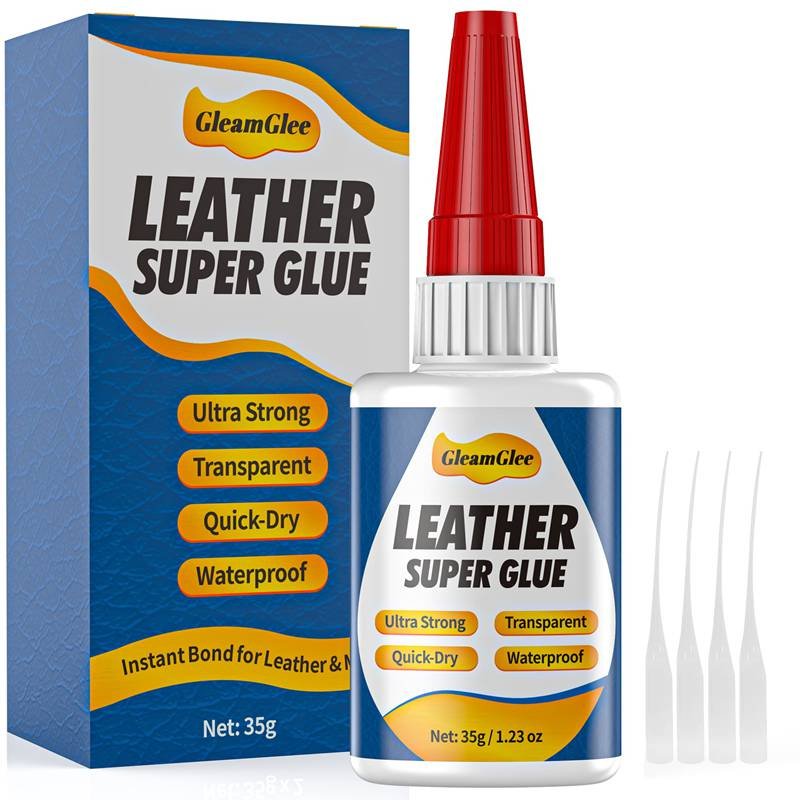
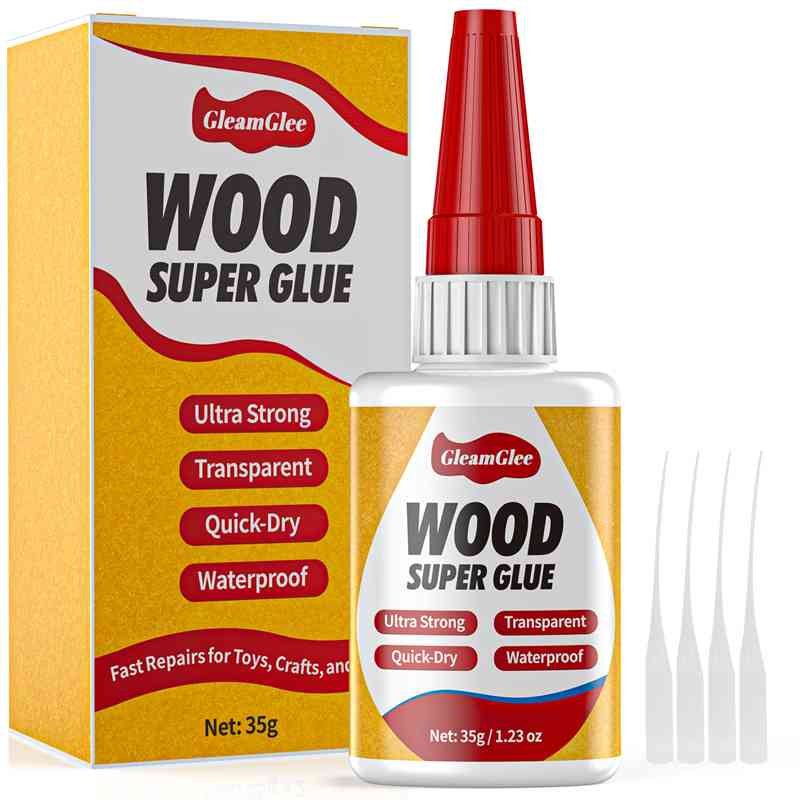
For home repairs, the most important feature is often control. A large opening can release too much glue, making the repair messy. Fine-tip nozzles help place a small bead inside the crack or along the broken edge. GleamGlee Plastic Glue includes multiple precision nozzles, which makes it easier to repair tiny cracks, delicate toy parts, detailed model pieces, and narrow container splits without flooding the surface.
For visible repairs, clear drying is also important. A cloudy repair on acrylic or transparent plastic can make the item look worse even if it is bonded. A crystal-clear formula helps the repair blend better when applied correctly. For daily-use repairs, the bond should be strong enough for normal handling, but the item still needs proper curing before pulling, washing, stacking, or rough use.
| Key Feature | Why It Matters | Good Result |
|---|---|---|
| Fast setting | Reduces part movement | Easier toy and clip repair |
| Clear drying | Keeps visible plastic neat | Better acrylic and container repairs |
| Strong bond | Supports daily handling | Longer use after full cure |
| Precision nozzle | Controls glue amount | Less mess and cleaner edges |
| Multi-plastic use | Covers common repair needs | Useful for PVC, ABS, acrylic, and more |
| Clean application | Reduces waste | Better for small cracks and detailed parts |
Which Toys Need Plastic Glue?
Plastic glue is useful for hard plastic toys with clean breaks, small cracks, loose parts, snapped clips, broken accessories, model pieces, and display parts. It works best on rigid toy plastics such as ABS, acrylic-like hard plastic, polystyrene model parts, and many molded plastic pieces. It is less suitable for soft rubber toys, chew toys, baby teethers, and parts that bend heavily during play.
Toy repair is often more urgent than other plastic repairs because the broken item may still be emotionally important. A toy car with one loose wheel, an action figure with a broken arm, a doll accessory with a cracked handle, or a board game piece that snapped in half can make the whole toy feel unusable. Replacing the full toy may cost much more than the broken part is worth, especially if the toy is discontinued, part of a set, or a child’s favorite item. Plastic glue gives these small repairs a practical second chance when the broken edges still fit together.
The best toy repairs usually have three conditions: the plastic is hard, the broken surfaces match closely, and the repaired part will not be chewed, twisted, or overloaded after curing. A clean toy repair should also stay neat. Thick glue marks, cloudy residue, stuck joints, and blocked wheel areas can make the toy look worse or stop it from working properly. This is why a quick-dry formula and precision nozzle are important for toy repair. A small, controlled amount of plastic glue can reattach a tiny part without flooding the surrounding details.
| Toy Type | Common Damage | Plastic Glue Fit | Repair Notes |
|---|---|---|---|
| Action figures | Arms, hands, stands, accessories | Good | Best for hard plastic parts |
| Toy cars | Wheels, bumpers, body cracks | Good | Keep glue away from axles |
| Dolls | Accessories, shoes, small props | Good | Avoid fabric, hair, and soft vinyl areas |
| Building blocks | Cracked specialty pieces | Medium to good | Fit must be tight |
| Board games | Pawns, trays, towers, tokens | Good | Usually low-stress after repair |
| Model kits | Wings, wheels, frames, details | Good | Needs fine-tip application |
| Ride-on toys | Pedals, wheels, frames | Medium | Stress level is higher |
| Baby toys | Chewable parts, teethers | Not recommended | Mouth-contact risk |
Which Toy Parts Need Plastic Glue?
The toy parts that need plastic glue most often are small hard plastic pieces that snap off during play or storage. These include toy car wheels, bumpers, action figure arms, doll accessories, model parts, board game pieces, building block details, plastic clips, toy stands, and playset doors. These parts usually break because they are thin, molded, and handled repeatedly. A small contact point may take a lot of stress when the toy is pulled, dropped, or twisted.
Plastic glue works best when the broken piece is still available and the edges fit together without large gaps. A clean snap on a toy sword, figure stand, game token, or model car mirror is usually easier to repair than a crushed or missing section. Before applying glue, the broken part should be placed back into position without adhesive to check the fit. If it rocks, tilts, or leaves a wide gap, the repair may need extra support.
For tiny toy parts, too much glue is a common mistake. A thick bead can squeeze out, cover painted details, harden into a visible lump, or freeze a moving part. A fine nozzle helps place a small drop exactly on the contact point.
| Toy Part | Repair Difficulty | Best Practice |
|---|---|---|
| Figure hand or arm | Medium | Align carefully and avoid joint areas |
| Toy car wheel cover | Medium | Keep glue away from rotating axle |
| Game pawn or token | Easy | Press flat and cure before use |
| Model kit detail | Medium | Use a very small amount |
| Playset door or fence | Medium | Check hinge movement after cure |
| Ride-on toy pedal | High | Stress may be too strong for glue alone |
Which Toy Plastic Bonds?
Hard plastic bonds better than soft, bendable, or rubber-like toy material. Many toy cars, action figures, board game parts, model kits, and building block accessories are made from rigid plastic that can hold its shape during repair. This gives the glue a tighter contact line and better stability while curing. ABS-style hard plastic and polystyrene model parts are often more suitable for neat repairs than flexible plastic.
Soft toy plastics are more difficult because they bend during use. Every bend pulls against the glue line. A repair may look strong at first, but repeated stretching can open the bond again. This is common on flexible doll parts, rubbery toy animals, soft wheels, and bendable accessories. Painted toy parts also need care because the glue may bond to the paint layer instead of the plastic underneath. If the paint flakes, the repair can fail.
For better results, the bonding area should be clean and dry. Toy surfaces often carry hand oil, dust, snack residue, or cleaning spray. These small residues can reduce adhesion. A quick wipe before gluing can make a real difference, especially on glossy toys.
| Toy Plastic Condition | Bond Result | Repair Advice |
|---|---|---|
| Hard, clean plastic | Stronger | Good fit for plastic glue |
| Glossy plastic | Medium to good | Clean surface first |
| Painted plastic | Medium | Avoid bonding only to paint |
| Soft flexible plastic | Limited | Bond may open under bending |
| Oily or dusty plastic | Weak | Clean and dry before gluing |
| Cracked clear plastic | Good if controlled | Use thin glue line |
Which Toy Cracks Need Plastic Glue?
Plastic glue is suitable for narrow toy cracks, split seams, clean breaks, loose accessories, broken pegs, cracked plastic shells, and small parts that can be pressed together closely. A crack in a toy car body, model airplane wing, plastic game tray, building block edge, or action figure stand can often be repaired cleanly if the crack has not spread too far.
The size and location of the crack matter. A short crack in a low-stress area is usually easier to repair. A long crack near a hinge, wheel, handle, or joint is harder because that area moves or carries force. For hollow plastic toys, glue should not be poured inside the crack. Excess glue can run into hidden spaces, create hard lumps, block moving parts, or leave white residue around the opening.
A good crack repair uses a thin line of glue along the full damaged area. If only the visible opening is glued, the crack may keep spreading from the unbonded section. The toy should then stay still while the glue sets. After the first hold forms, the toy should still rest before normal play. Fast setting helps alignment, but curing time helps the bond survive handling.
| Crack Location | Repair Outlook | Extra Care Needed |
|---|---|---|
| Decorative surface | Good | Keep glue line thin |
| Toy shell crack | Good | Bond full crack length |
| Wheel area | Medium | Avoid axle and rotation space |
| Joint area | Medium to low | Movement can weaken repair |
| Handle or grip | Medium | Wait longer before use |
| Bendable part | Low | Flexing may reopen crack |
Which Toy Repairs Need Care?
Toy repairs need extra care when the item is used by toddlers, has small removable parts, contains batteries, includes moving joints, or may be placed in the mouth. Plastic glue should not be used on baby teethers, chew toys, pacifier-like items, food-play items used with real food, or any part likely to be bitten. Even after curing, the repaired area should be checked for sharp edges, loose fragments, and hardened excess glue.
Battery-operated toys require careful placement. Batteries should be removed before repair if the broken area is near the battery door or electronic parts. Glue should stay away from contacts, speaker holes, buttons, light openings, charging ports, and switches. A tiny amount of glue in the wrong place can stop the toy from working. For a cracked battery cover, the glue should be applied only along the broken plastic edge, not inside the contact area.
Moving parts also need care. Wheels, hinges, arms, doors, and rotating parts can become stuck if glue flows into the joint. After curing, movement should be tested gently. For valuable collectibles or model toys, appearance matters as much as strength. A hidden test area can help check whether the glue dries cleanly on that specific plastic.
| Care Point | Why It Matters | Safe Repair Habit |
|---|---|---|
| Small children | Mouth contact risk | Avoid chewable parts |
| Battery areas | Glue can block contacts | Remove batteries first |
| Moving joints | Glue can freeze movement | Apply away from hinge line |
| Painted details | Marks are visible | Use minimal glue |
| Collectibles | Appearance affects value | Test hidden area first |
| Rough play | Impact stresses repair | Allow full cure before use |
Which Containers Need Plastic Glue?
Plastic glue is useful for hard plastic containers with cracked corners, broken lid tabs, split rims, loose clips, damaged hinges, snapped handles, and clear acrylic cracks. It works best on rigid storage boxes, desk organizers, bathroom holders, craft bins, tool trays, display cases, and non-food-contact containers where the broken plastic edges can fit closely together. The strongest repairs usually happen on clean, dry, hard plastic surfaces with light to medium daily use.
Container repair needs more judgment than toy repair because containers often carry weight, hold items, stack under pressure, or open and close many times. A cracked acrylic drawer on a vanity table may only hold cotton pads or makeup brushes, so the repair has a good chance of lasting. A large storage bin filled with heavy tools creates much more stress on the repaired corner or handle. The same plastic glue can perform very differently depending on how the container is used after curing.
Plastic glue should be used carefully around food, drink, heat, and water pressure. A storage box for clothes, toys, craft supplies, office items, cables, bathroom accessories, holiday decorations, or light tools is usually a better repair target than a lunch box, water bottle, baby snack cup, or microwave container. Unless the adhesive is specifically rated for direct food contact, repairs should stay away from eating surfaces, drinking areas, and heated food containers.
| Container Type | Common Damage | Plastic Glue Fit | Repair Advice |
|---|---|---|---|
| Storage box | Corner crack, split rim | Good | Empty before repair and avoid heavy loading too soon |
| Acrylic organizer | Drawer crack, corner split | Good | Use a thin glue line to keep the repair clear |
| Plastic lid | Broken tab, cracked edge | Good | Keep glue away from locking channels |
| Bathroom holder | Base crack, clip break | Good | Let cure fully before wet use |
| Office tray | Frame split, corner break | Good | Usually low-stress after repair |
| Tool box tray | Divider crack, clip break | Medium | Avoid heavy pressure on repaired area |
| Food container | Body crack, lid crack | Limited | Avoid food-contact repair unless certified |
| Water bottle | Crack, leak point | Poor | Water pressure and mouth contact are concerns |
Which Storage Boxes Need Plastic Glue?
Storage boxes often need plastic glue when the damage appears on corners, rims, lid edges, snap clips, side walls, or small handle areas. These points break because storage boxes are frequently stacked, dragged, lifted, dropped, or filled past their comfortable weight limit. A small crack on a corner may look harmless, but it can spread quickly when the box is lifted while full. Repairing early helps stop the split from becoming a larger break.
Plastic glue works best when the storage box is emptied before repair. Weight inside the box can keep the crack open and make the adhesive cure under stress. The broken area should be wiped clean, dried, aligned, and held steady while the glue sets. For a narrow crack, a thin line along the full split is usually better than a thick patch only on the outside. If the box carries heavier items such as tools, books, hardware, or cleaning supplies, the repaired section may need extra support from the inside.
| Storage Box Area | Repair Difficulty | Practical Tip |
|---|---|---|
| Corner crack | Medium | Bond the full crack line, not only the opening |
| Split top rim | Medium | Hold the rim in shape while curing |
| Snap clip | Medium | Keep glue out of the locking slot |
| Side wall crack | Easy to medium | Repair before the crack spreads |
| Bottom corner | Medium to high | Reduce load after repair |
| Carry handle | High | Reinforcement may be needed |
Which Lids Need Plastic Glue?
Plastic lids commonly break at locking tabs, hinge points, thin edges, snap corners, and raised sealing rims. These areas are small but important because they decide whether the container closes properly. A broken tab can make a box hard to stack. A cracked lid corner can leave the contents exposed to dust. A damaged hinge can make the lid loose even when the box itself is still usable.
Plastic glue can repair many lid parts when the broken piece is still available and the surfaces fit tightly. The main challenge is control. A lid has slots, grooves, snap areas, and moving points. Too much glue can harden in the wrong place and stop the lid from closing. The glue should be placed only on the broken contact surface, not inside the channel that needs to move or lock.
After repair, the lid should not be forced immediately. Snap lids create pressure every time they close. If the repaired tab is tested too early, the bond can break before it gains enough strength. A better approach is to let the lid cure fully, then close it gently the first few times. If the tab repaired area still feels weak, the lid can be used for light storage instead of heavy stacking.
| Lid Damage | Plastic Glue Fit | What to Avoid |
|---|---|---|
| Broken snap tab | Good | Do not overfill glue near the snap groove |
| Cracked lid corner | Good | Do not bend the corner while curing |
| Hinge crack | Medium | Do not let glue enter the hinge movement line |
| Thin sealing rim | Medium | Do not create raised glue lumps |
| Missing tab piece | Limited | Glue needs matching contact surfaces |
| Flexible lid edge | Medium to low | Repeated bending may weaken repair |
Which Clear Containers Need Plastic Glue?
Clear containers need plastic glue that dries transparent and can be applied in a very thin line. Acrylic organizers, display boxes, makeup drawers, desk trays, transparent storage bins, plastic photo frames, and craft supply cases are usually kept in visible places. A repair that leaves white residue, yellow marks, or a thick raised line can make the item look worse than the original crack.
For clear plastic, the broken area should be cleaned with extra care. Dust, fingerprints, and tiny fibers can become trapped in the glue line and remain visible after curing. The repair area should be dry, stable, and aligned before the glue is applied. Sliding the pieces after contact can smear adhesive across the surface, which is difficult to hide on transparent plastic.
A precision nozzle is especially useful on clear containers because the goal is to guide the adhesive into the crack, not cover the surface. A small amount of clear plastic glue along the cracked edge can restore shape while keeping the repair cleaner. This is important for acrylic bathroom organizers, cosmetic drawers, jewelry boxes, display cases, refrigerator bins, and clear office containers where appearance matters.
| Clear Container Item | Common Repair | Clean Repair Tip |
|---|---|---|
| Acrylic makeup drawer | Corner split | Apply from the inside edge if possible |
| Display box | Side crack | Keep the glue line narrow |
| Desk organizer | Drawer rail crack | Avoid glue near sliding track |
| Clear storage bin | Lid or corner crack | Test fit before applying glue |
| Photo frame stand | Snapped support | Hold at the original angle while curing |
| Craft case | Broken divider | Use a tiny bead to avoid cloudy buildup |
Which Containers Should Avoid Plastic Glue?
Some containers should not be repaired with ordinary plastic glue, especially when the repaired area touches food, drink, heat, or the mouth. Lunch boxes, baby food containers, water bottles, cups, straws, ice trays, microwave containers, and cookware-related plastic parts need special caution. Unless the adhesive is clearly certified for direct food contact and the intended temperature range, the repair should not be used on eating or drinking surfaces.
Containers made from flexible polypropylene or polyethylene can also be harder to repair. These plastics are common in food lids, squeeze bottles, soft storage boxes, detergent caps, and flexible bins. They often have low surface grip, so glue may peel off more easily. A repair may work for a small non-stressed crack, but it may fail if the plastic bends, flexes, or stretches during use.
High-pressure and high-heat containers are also poor repair targets. Water bottles, spray bottles, pressure sprayers, hot liquid containers, microwave trays, dishwasher-use containers, and outdoor bins exposed to strong sun may create conditions that ordinary plastic glue is not designed to handle. For these items, replacement is often safer than repair.
| Container Use | Repair Risk | Better Choice |
|---|---|---|
| Food contact | Adhesive may touch food | Use only certified food-safe adhesive |
| Drinking bottle | Mouth and liquid exposure | Replace the item |
| Microwave use | Heat can affect repair | Replace or use heat-rated solution |
| Dishwasher use | Heat and water stress | Avoid ordinary glue repair |
| Heavy tool storage | High load on crack | Add reinforcement or replace |
| Flexible lid | Repeated bending | Test first and use lightly |
| Pressure bottle | Internal pressure | Replace for safety |

How Do You Use Plastic Glue?
Plastic glue works best when the broken plastic is clean, dry, closely aligned, and held still during curing. The repair should start before the glue is opened: check the plastic type, test how the broken pieces fit, remove dust and oil, and prepare the item so it will not move after bonding. For toys, containers, acrylic organizers, and household plastic parts, careful preparation often decides whether the repair looks clean or fails after a few uses.
The right amount of glue is usually smaller than expected. A thin bead or tiny drop is enough for many toy parts, lid tabs, acrylic cracks, and plastic clips. Too much glue can overflow, turn into a raised edge, block moving parts, or make clear plastic look cloudy. A precision nozzle gives better control because the adhesive can be placed inside the crack or directly on the broken contact edge instead of spreading across the surface.
After pressing the parts together, the repair should stay still until the bond develops. Quick-dry plastic glue may grip fast, but normal handling, pulling, stacking, washing, or rough play should wait until the adhesive has cured more fully. A repaired toy wheel, storage box corner, lid tab, or acrylic drawer may look fixed within minutes, but stronger use should come later. This simple patience improves both strength and appearance.
| Repair Stage | What to Do | Why It Matters |
|---|---|---|
| Before gluing | Check fit and plastic condition | Prevents misalignment and weak contact |
| Cleaning | Remove dust, oil, moisture, and old residue | Helps glue bond to plastic, not dirt |
| Application | Use a thin line or small drop | Reduces overflow and visible marks |
| Pressing | Hold the pieces steady | Keeps the bond line tight |
| Curing | Wait before using the item | Builds better strength for daily handling |
Step 1: Clean Plastic
Cleaning the plastic is the first step because most broken plastic parts are not truly clean. Toys often have skin oil, dust, snack residue, or cleaning spray on the surface. Storage boxes may have garage dust, detergent residue, moisture, or old grime around the crack. Acrylic organizers may hold fingerprints, cosmetic powder, lotion, or tiny fibers that become visible if trapped under clear glue. If glue bonds to residue instead of the plastic itself, the repair can peel away even when the adhesive is strong.
Before applying plastic glue, wipe the broken area with a clean dry cloth. For dirtier items, use a suitable plastic-safe cleaner, then let the surface dry completely. Narrow cracks need extra attention because moisture can hide inside the split even when the outside feels dry.
- Remove loose plastic flakes before bonding
- Keep the broken edge free from oil and dust
- Avoid soaking electronic parts or battery covers
- Let washed plastic dry fully before gluing
| Plastic Item | Common Residue | Cleaning Focus |
|---|---|---|
| Toy parts | Hand oil, dust, snack residue | Wipe edges and small details |
| Storage boxes | Dirt, garage dust, detergent | Clean full crack line |
| Acrylic organizers | Fingerprints, cosmetic powder | Use a lint-free cloth |
| Remote covers | Skin oil, battery dust | Keep moisture away from contacts |
Step 2: Test Fit
Testing the fit before gluing prevents one of the most common repair problems: applying glue first and then discovering the parts do not align. Plastic glue sets quickly, so there is little time to adjust once the adhesive touches the surface. A dry fit shows whether the broken edges match, whether a missing piece creates a gap, and whether the repaired part can stay in the correct position during curing.
Place the broken pieces together without glue. Check the shape from several angles. For a toy wheel, confirm that the wheel can still rotate or sit straight. For a lid tab, check that it does not block the locking slot. For an acrylic corner, confirm that the corner closes cleanly without pressure. For a storage box crack, gently press the split back into shape and see whether the plastic resists.
- Good fit: edges touch closely and stay aligned
- Medium fit: small gaps may need careful pressure
- Poor fit: missing or warped plastic may need reinforcement
- Bad repair target: flexible or stressed parts may reopen after use
| Fit Condition | Repair Chance | Best Action |
|---|---|---|
| Clean snap | High | Apply thin glue and press tightly |
| Narrow crack | High | Bond along the full crack line |
| Small gap | Medium | Hold firmly and avoid excess glue |
| Missing piece | Low to medium | Add support if suitable |
| Warped plastic | Low | Repair may not stay aligned |
Step 3: Apply Plastic Glue
Apply plastic glue in a thin, controlled line. For small toy parts, a tiny drop is often enough. For a storage box crack, guide the adhesive along the split instead of coating the whole surface. For acrylic containers, apply from the inside edge if possible so the repair stays less visible. For lid tabs, keep glue away from snap grooves, hinge channels, and locking slots.
A precision nozzle is very useful at this stage. It controls the flow and helps place the glue only where the plastic needs bonding. GleamGlee Plastic Glue includes fine-tip nozzles, making it easier to repair narrow cracks, model parts, plastic clips, toy accessories, and transparent containers without flooding the surface.
A practical glue amount guide:
| Repair Area | Suggested Amount | Mistake to Avoid |
|---|---|---|
| Tiny toy accessory | Pinpoint drop | Covering painted details |
| Action figure part | Thin layer on contact edge | Letting glue enter the joint |
| Acrylic crack | Very thin bead | Smearing across clear surface |
| Storage box corner | Narrow line along crack | Thick lump on the outside |
| Lid tab | Small amount on broken edge | Blocking snap channel |
| Remote cover | Thin glue line | Letting glue touch contacts |
Less glue often gives a cleaner and stronger repair because the plastic pieces can touch closely. If too much glue squeezes out, do not rub it across the surface. Remove excess carefully before curing if it can be done without spreading the adhesive.
Step 4: Press and Cure
After applying plastic glue, press the broken parts together firmly and keep them still. Pressure helps the adhesive form a thin bond line between the two plastic surfaces. The parts should not slide after contact because sliding can smear the glue, weaken alignment, and leave visible marks. For small repairs, steady finger pressure may be enough. For larger cracks, tape, rubber bands, clamps, or a light weight can help hold the repair in place.
Curing time should match the stress level of the item. A decorative model piece can return to light display use sooner than a container lid tab or toy part that will be pulled repeatedly. A repaired storage box should not be filled and stacked immediately. A repaired toy should not go back into rough play too soon. A repaired bathroom holder should cure fully before water exposure.
- Keep parts still during the first setting stage
- Do not test the repair by pulling too early
- Avoid washing, stacking, bending, or snapping right away
- Give high-stress areas longer rest before use
| Repaired Item | Early Handling | Better Use Timing |
|---|---|---|
| Model part | Place still after bonding | Use after full curing |
| Toy accessory | Avoid twisting or pulling | Return to light play first |
| Acrylic organizer | Keep dust-free and stable | Load gently after curing |
| Storage box crack | Do not stack immediately | Use with lighter weight first |
| Lid tab | Do not snap repeatedly | Close gently after cure |
| Bathroom plastic part | Keep dry at first | Use after full cure |
What Plastic Glue Tips Help?
Plastic glue works better when the repair is treated like a small fitting job, not just a quick squeeze-and-stick task. The most helpful tips are simple: clean the surface, use a small amount, keep the broken edges tightly aligned, and allow enough curing time before the item is used again. These details matter more on plastic than on porous materials because plastic does not absorb glue deeply.
For toys, containers, acrylic organizers, model parts, plastic clips, and small household repairs, control is usually more important than volume. A thick layer of glue can make the repair weaker, not stronger, because the two plastic surfaces may no longer touch closely. It can also leave visible marks, block moving parts, or create hard bumps around the crack. A fine-tip nozzle helps place the glue exactly where the bond is needed.
The best plastic glue results usually come from matching the repair method to the item’s real use. A clear acrylic box needs a neat, thin glue line. A storage box corner needs full crack coverage and curing time before loading. A toy part needs careful placement so the glue does not enter joints or wheels. A lid tab needs just enough adhesive to bond the break without blocking the snap channel.
| Repair Goal | Helpful Tip | Why It Works |
|---|---|---|
| Cleaner repair | Use a small amount | Reduces overflow and surface marks |
| Stronger bond | Press parts tightly | Creates better plastic-to-plastic contact |
| Clear finish | Keep dust away | Prevents visible dirt in the glue line |
| Better durability | Wait before use | Allows the bond to strengthen |
| Less mess | Use a precision nozzle | Controls glue flow on tiny cracks |
| Safer repair | Avoid food and mouth-contact areas | Reduces unsuitable-use risks |
How Much Plastic Glue Works?
Most small plastic repairs need less glue than expected. A pinpoint drop can be enough for a toy accessory, model part, game piece, or small plastic clip. A narrow bead is usually enough for a storage box crack, acrylic corner, or lid tab. The goal is to cover the contact surface without flooding the surrounding plastic. When too much glue is added, the broken parts may sit on a thick adhesive layer instead of pressing closely together. That can reduce bond strength and create a raised, messy edge.
A practical rule is to apply glue only where the two broken surfaces actually touch. If the glue squeezes out heavily when pressed, too much was used. For clear plastic, extra glue is even more noticeable because it can form shiny ridges or cloudy spots. For moving parts, excess adhesive can harden in wheel gaps, hinges, buttons, or snap slots.
| Repair Size | Better Glue Amount | Common Mistake |
|---|---|---|
| Tiny toy part | 1 small drop | Covering nearby details |
| Short crack | Thin line | Gluing only the top edge |
| Acrylic corner | Very thin bead | Smearing across clear face |
| Lid tab | Small edge coating | Blocking snap groove |
| Storage box rim | Narrow full-length line | Thick outside patch |
How Can Plastic Glue Stay Neat?
Plastic glue stays neat when the broken part is aligned before glue is applied. A dry fit should always come first. Place the pieces together without adhesive and check whether the edges match. If the part does not fit correctly before gluing, it will not magically fit better after glue is added. This step is especially important for toy wheels, action figure parts, lid tabs, acrylic drawer corners, and model kit pieces.
The work surface should also be clean and steady. A moving table, dusty cloth, or crowded repair area can cause smears. For clear acrylic and decorative plastic, lint and dust can become trapped in the glue line. Use a clean surface, keep the nozzle close to the crack, and apply the glue in one controlled motion. After pressing the parts together, avoid sliding them around. Sliding spreads adhesive outside the bond line and can leave permanent marks.
Helpful neatness habits include:
- Test the fit before opening the glue
- Keep the nozzle close to the crack
- Apply glue to one side first for small breaks
- Press straight down instead of twisting
- Keep wipes nearby, but do not smear glue across the surface
- Let clear plastic cure in a dust-free place
How Can Plastic Glue Bond Better?
Plastic glue bonds better when the surface is clean, dry, and slightly prepared. Plastic often carries invisible residue from hands, packaging, cleaners, dust, or manufacturing oils. Even a thin layer can weaken the repair because the adhesive bonds to the residue instead of the plastic. Before gluing, wipe the broken area and make sure the inside of the crack is dry. Bathroom holders, outdoor containers, garden items, and freshly washed toys need extra drying time.
The shape of the break also affects strength. A clean snap with matching edges gives the glue more contact area. A missing piece, crushed edge, or warped plastic reduces strength. For smooth hard plastic in hidden areas, very light surface roughening can sometimes improve grip, but this should be avoided on visible clear plastic unless appearance is not important. Pressure also matters. Pressing the parts together creates a thinner bond line and improves contact.
| Bond Factor | Better Result | Weaker Result |
|---|---|---|
| Surface | Clean and dry | Oily, dusty, wet |
| Fit | Tight matching edges | Gaps or missing pieces |
| Glue layer | Thin and even | Thick and uneven |
| Pressure | Held steady | Moved during setting |
| Use after repair | Gentle first use | Immediate pulling or bending |
How Can Plastic Glue Avoid Marks?
Plastic glue marks usually come from excess adhesive, smearing, trapped dust, or movement during curing. On colored plastic, marks may appear as shiny ridges or hardened edges. On clear plastic, they may look cloudy, streaky, or raised. To reduce marks, use the smallest workable amount and keep the glue inside the crack or along the broken edge. The adhesive should not be brushed over the surrounding surface unless the repair specifically requires coverage.
Clear containers, acrylic organizers, display boxes, and model parts need the most careful application. Apply from the inside edge when possible. Keep the item still after pressing. Do not wipe widely across clear plastic because it can spread a thin film that becomes visible after curing. If excess glue appears at the edge, remove it carefully before it hardens, using a small controlled motion.
For toys and functional parts, avoiding marks also means avoiding blocked movement. Glue should stay away from axles, hinges, battery contacts, buttons, sliders, snap grooves, and rotating joints. A clean repair is not only about appearance. It also keeps the item usable after the bond cures.
Do Plastic Glue Repairs Last?
Plastic glue repairs can last when the plastic is hard, clean, dry, closely fitted, and given enough curing time before use. The best results usually come from rigid plastics such as ABS, acrylic, PVC, polystyrene, and molded household plastic parts. Repairs on flexible plastic, oily plastic, food-contact containers, hot surfaces, or heavily loaded handles are less predictable and may need a different repair method or reinforcement.
A lasting repair depends on how the item is used after bonding. A cracked acrylic organizer, board game piece, toy accessory, model part, or desk tray may last a long time because these items face light handling. A storage box corner, lid tab, appliance knob, or toy wheel faces more stress, so curing time and glue placement become more important. A heavy bin handle, flexible hinge, water bottle, or bendable container lid may fail faster because repeated pulling or bending puts constant force on the glue line.
Plastic glue should be judged by real use, not only by how firmly the parts feel attached in the first few minutes. A quick initial hold is helpful, but durability comes from full curing, tight surface contact, and reduced stress on the repaired area. A strong repair is usually thin, clean, well-aligned, and protected from early pulling, washing, stacking, or twisting.
| Repair Condition | Lasting Potential | Why It Matters |
|---|---|---|
| Clean hard plastic | High | Adhesive grips the plastic surface better |
| Close-fitting broken edges | High | More contact area improves strength |
| Thin glue layer | High | Parts press together tightly |
| Full curing before use | High | Bond has time to strengthen |
| Flexible plastic | Low to medium | Bending pulls the glue line open |
| Heavy load area | Low to medium | Repeated force can break the repair |
| Food or water contact | Limited | Needs certified adhesive and safer use |
| Dirty or oily surface | Low | Glue bonds to residue instead of plastic |
Do Plastic Glue Bonds Hold?
Plastic glue bonds hold best when the repair has enough surface contact. A clean break on a hard toy part, acrylic corner, plastic model, storage box rim, or ABS casing gives the adhesive a better bonding area. When the broken pieces fit closely, the glue forms a thin layer between the surfaces. This usually creates a stronger and cleaner repair than a thick blob placed over the outside.
Small contact points are more difficult. A thin peg, tiny toy joint, narrow lid tab, or broken clip may have limited bonding area. Even strong glue needs enough plastic surface to grip. If the item will be pulled often, the repair may need longer curing time, gentler handling, or extra support.
| Bond Area | Example | Repair Outlook |
|---|---|---|
| Wide contact surface | Acrylic corner, storage box rim | Stronger |
| Medium contact surface | Toy part, lid tab, model piece | Good with curing |
| Tiny contact point | Peg, clip tip, toy hand | Needs care |
| Moving contact point | Hinge, wheel axle, rotating joint | Higher failure risk |
| Missing plastic section | Crushed tab, broken handle gap | May need reinforcement |
A simple durability check is to look at the direction of force. If the repaired part is pressed together during use, the repair may hold better. If the part is pulled apart, bent sideways, twisted, or snapped open repeatedly, the repair faces more stress. This is why a repaired acrylic drawer corner usually lasts better than a repaired flexible lid hinge.
Do Plastic Glue Repairs Stay Clear?
Plastic glue repairs can stay clear when the adhesive dries transparent and the glue line is kept thin. Clear repairs work especially well on acrylic organizers, transparent storage boxes, display cases, picture frames, plastic drawers, ornaments, craft parts, and model details. A clear formula helps the repair blend into the plastic, but the final look depends heavily on how the glue is applied.
Cloudy marks usually come from excess glue, trapped dust, moisture, rubbing, or movement during curing. Clear plastic shows every mistake more easily than colored plastic. A thick glue layer can form shiny ridges. Dust can become locked inside the repair line. Sliding the pieces after contact can spread a thin film across the surface.
For clear plastic repairs, the best method is controlled and minimal:
| Clear Repair Rule | Reason |
|---|---|
| Clean the crack before bonding | Prevents dust and residue from showing |
| Apply from the inside edge if possible | Keeps the outer surface cleaner |
| Use a very thin glue line | Reduces cloudy buildup |
| Avoid sliding the parts | Prevents streaks |
| Let it cure in a clean place | Keeps fibers and dust away |
A repair may not become completely invisible if the plastic itself is scratched, stressed, or whitened around the crack. However, a transparent plastic glue can keep the result much cleaner than a cloudy adhesive, especially when used with a precision nozzle.
Do Plastic Glue Fixes Handle Use?
Plastic glue fixes can handle normal daily use when the repaired item is not overloaded, twisted, or bent too soon. A toy accessory, model part, desk organizer, acrylic drawer, board game piece, remote cover, or plastic frame usually faces light to moderate handling. These repairs often perform well when the bond is clean and fully cured.
Containers need more careful judgment because they often carry weight. A repaired storage box corner may hold well for clothes, cables, toys, craft supplies, or holiday decorations. The same repaired box may fail if filled with tools, books, or heavy cleaning products. A repaired lid tab may work for light storage, but snapping it open and closed with force can shorten the repair life.
| Repaired Item | Expected Stress | Better Use After Repair |
|---|---|---|
| Acrylic organizer | Low | Load gently after curing |
| Toy accessory | Low to medium | Start with light play |
| Storage box crack | Medium | Avoid heavy stacking |
| Lid tab | Medium | Close gently first |
| Remote cover | Low | Avoid bending the cover |
| Garden container | Medium to high | Cure before outdoor exposure |
| Heavy bin handle | High | Carry from the bottom instead |
A repaired item should be used more gently at first. This does not mean the repair is weak; it means the bond should be allowed to build strength before facing real-life stress. Early pulling is one of the fastest ways to ruin a repair that would otherwise hold.

Do Plastic Glue Mistakes Hurt?
Plastic glue mistakes can reduce strength, create visible marks, or stop the item from working correctly. The most common mistake is using too much glue. Extra glue can squeeze out, harden into lumps, block snap channels, freeze toy joints, seal lid grooves, or leave cloudy marks on clear plastic. More glue does not always mean more strength. On small plastic repairs, a thin controlled layer usually performs better.
Skipping surface cleaning is another common reason repairs fail. Plastic may look clean but still carry skin oil, dust, soap, lotion, food residue, or cleaning spray. If the adhesive bonds to that residue, the repair may peel off later. Moisture inside a crack can also weaken or mark the bond.
Common mistakes to avoid:
| Mistake | What Can Happen | Better Habit |
|---|---|---|
| Too much glue | Overflow, marks, weak bond line | Use a small drop or thin bead |
| No cleaning | Bond peels off residue | Wipe and dry before gluing |
| Poor fit | Gaps reduce strength | Test fit before application |
| Moving parts too soon | Misalignment and smears | Hold still during setting |
| Early stress | Bond breaks before full strength | Wait before pulling or loading |
| Wrong item use | Safety or durability issues | Avoid food, mouth, heat, and pressure areas |
Plastic glue works best when the repair is realistic. A clean crack on hard plastic is a good repair. A flexible food lid, baby chew toy, water bottle, microwave container, or high-load handle is not the same type of job. Choosing the right repair target is part of making the repair last.
Is GleamGlee Plastic Glue Good?
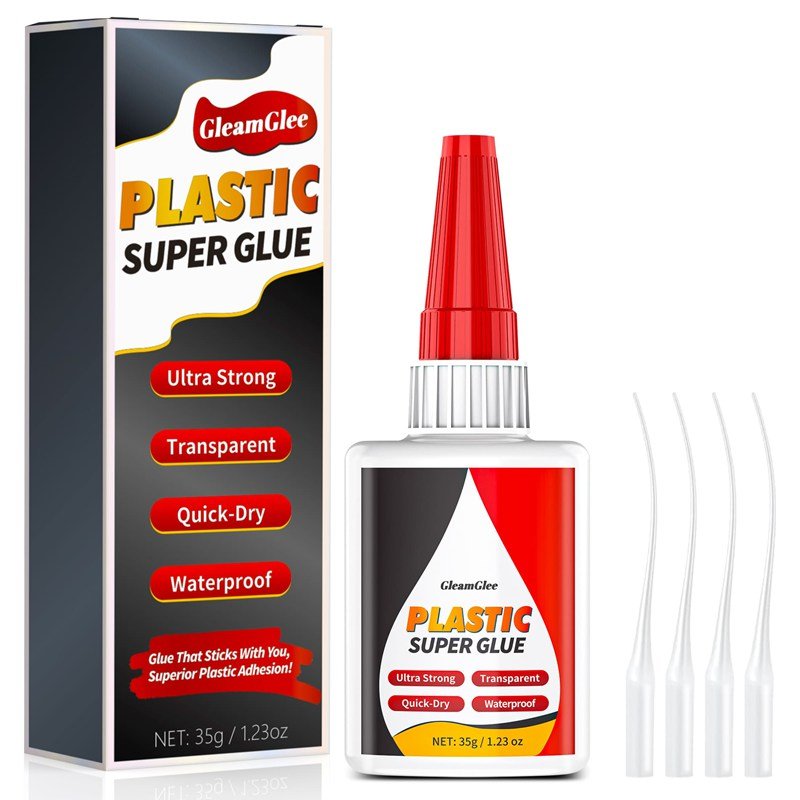
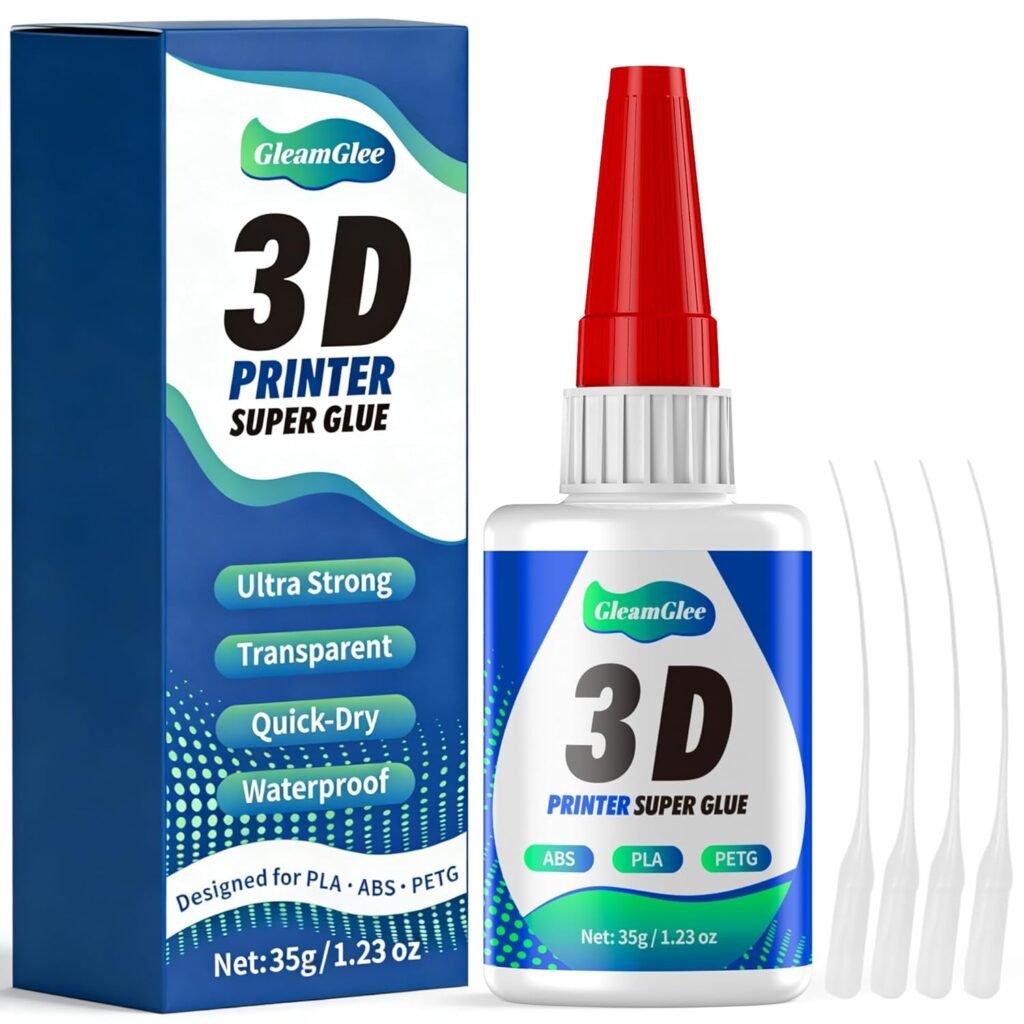
GleamGlee Plastic Glue is a practical choice for small and medium plastic repairs where speed, clean appearance, and controlled application matter. It is designed for toys, storage containers, acrylic organizers, PVC parts, ABS casings, model kits, household plastic accessories, and visible crack repairs. The formula cures quickly, dries transparent, and works best when the plastic is hard, clean, dry, and pressed together closely.
The product is especially useful for repairs that do not need a thick filler but do need accuracy. A toy wheel, broken action figure part, storage box crack, clear acrylic corner, remote battery cover, model piece, or plastic lid tab usually has a narrow bonding area. A large glue opening can release too much adhesive and leave a messy edge. GleamGlee includes 4 precision nozzles per tube, and a 2-pack format can include 8 nozzles, making it easier to place glue exactly where the repair needs it.
For retail sellers, repair brands, Amazon operators, and distributors, GleamGlee Plastic Glue also has strong product-line value. It covers many daily repair scenes in one SKU: toys, containers, office supplies, garden plastic, craft projects, electronics housings, appliance parts, automotive trim, and hobby models. Behind the product, GleamGlee has adhesive R&D, packaging design, filling production, label printing, compliance support, and export experience, making it suitable for branded sales, wholesale supply, and OEM/ODM customization.
| GleamGlee Feature | Practical Value | Best Repair Scene |
|---|---|---|
| Quick-dry formula | Helps small parts stay in place fast | Toys, clips, tabs, model parts |
| 100% clear drying | Keeps visible repairs cleaner | Acrylic, clear containers, decorations |
| Strong plastic bond | Supports normal daily handling after curing | PVC, ABS, acrylic, hard plastic |
| 4 precision nozzles per tube | Controls glue amount | Cracks, corners, small details |
| Multi-scene use | Covers many household repairs | Toys, containers, appliances, crafts |
| Manufacturer support | Suitable for bulk and custom projects | Amazon, retail, private label, wholesale |
Is GleamGlee Plastic Glue Fast?
GleamGlee Plastic Glue is made for repairs where waiting too long creates problems. Small plastic parts can shift easily before the adhesive grabs. A toy car wheel may tilt, a model part may slide, a lid tab may move out of line, or an acrylic corner may open again if the glue stays wet too long. The quick-dry formula helps create an early hold in seconds, making the repair easier to control during the first stage.
Fast setting is useful for these common jobs:
| Repair Item | Why Fast Setting Helps |
|---|---|
| Toy accessories | Small parts are hard to hold by hand |
| Model kits | Thin pieces need accurate placement |
| Lid tabs | Alignment must stay exact |
| Acrylic corners | Movement can create visible marks |
| Remote covers | Parts need to fit flush |
| Plastic clips | A quick grip reduces slipping |
Speed should still be paired with curing time. A part may feel attached quickly, but heavy pulling, rough play, stacking, washing, or outdoor exposure should wait until the bond has strengthened. For example, a repaired board game piece may return to light use sooner than a repaired storage box corner. A repaired toy part should not be twisted immediately, even if it already feels firm. This balance between fast setting and patient curing gives better long-term results.
Is GleamGlee Plastic Glue Clear?
GleamGlee Plastic Glue dries 100% transparent, which is important for visible plastic repairs. Clear acrylic organizers, storage boxes, display stands, picture frames, holiday decorations, model parts, toy accessories, and craft pieces can look unattractive if the glue dries white, yellow, or cloudy. A clear finish helps the repaired area blend into the original surface when the glue is applied in a thin, controlled line.
Clear drying is especially useful for:
| Clear or Visible Item | Common Repair |
|---|---|
| Acrylic makeup organizer | Corner crack, drawer split |
| Transparent storage box | Lid crack, side split |
| Display case | Edge crack, stand break |
| Toy window or clear part | Small crack, loose detail |
| Model kit part | Transparent detail bonding |
| Plastic ornament | Hook, edge, decorative part |
The final appearance still depends on technique. Too much glue can create a raised ridge, even if the formula is clear. Dust, fingerprints, and moisture can also become trapped inside the repair line. For the cleanest result, the surface should be wiped first, dried fully, and repaired with a fine nozzle. On clear plastic, it is usually better to apply from the inside edge when possible. A tiny bead placed directly into the crack often looks cleaner than a wide layer spread over the surface.
Is GleamGlee Plastic Glue Strong?
GleamGlee Plastic Glue is designed for a strong, lasting bond on common hard plastics such as PVC, ABS, acrylic, polystyrene, and many rigid household plastic materials. It is suitable for daily repairs where the broken edges fit closely and the item faces light to medium handling after curing. Good examples include toy parts, plastic clips, container corners, acrylic organizers, appliance covers, office organizers, craft parts, and model pieces.
The strongest results usually come from hard plastic with close contact:
| Plastic Material | Common Items | Repair Suitability |
|---|---|---|
| ABS | Toys, appliance shells, electronics casings | Good |
| Acrylic | Clear organizers, frames, displays | Good with careful application |
| PVC | Hobby parts, outdoor plastic pieces | Good after cleaning |
| Polystyrene | Model kits, craft pieces | Good for precision work |
| Hard molded plastic | Clips, covers, storage parts | Good if surfaces fit well |
| Flexible PE/PP | Food lids, soft containers | More difficult; test first |
Strength also depends on how the repaired item is used. A repaired acrylic drawer corner may last well because it carries light weight. A repaired lid tab may need gentle opening at first. A repaired heavy box handle may need reinforcement because the handle takes repeated pulling force. Glue can restore many plastic parts, but it cannot remove all stress from a weak design. The best repair has clean plastic, a thin glue layer, firm pressure, and enough curing time before real use.
Is GleamGlee Plastic Glue Easy?
GleamGlee Plastic Glue is easy to use because the repair process is simple: clean the plastic, dry it, test the fit, apply a small amount, press the parts together, and let the repair cure. The fine-tip nozzle makes the product easier to control than a wide-opening glue tube. This matters for narrow cracks, toy parts, small clips, acrylic corners, and model details, where too much glue can quickly ruin the repair.
The product is practical for many daily scenes:
| Use Scene | Why GleamGlee Helps |
|---|---|
| Parent repairing toy parts | Fast setting and small-area control |
| DIY repair drawer | Works on many household plastic items |
| Hobby model work | Fine nozzle supports small details |
| Office storage repair | Clear finish keeps organizers neat |
| Bathroom plastic repair | Controlled glue line reduces mess |
| E-commerce repair kit | Wide use cases make it easy to sell |
Ease of use also matters for repeat repairs. Quick-dry glue tips can block if not handled well, so extra nozzles help extend usability. GleamGlee’s multi-nozzle setup makes the product more convenient for people who repair several items over time instead of using the tube once. For business orders, this small packaging detail can reduce complaints and improve product value because the glue feels more complete, controlled, and ready for real household repair work.
Conclusion
Quick-dry plastic glue is a useful repair solution for the small plastic problems that happen every day: cracked storage boxes, broken toy parts, loose lid tabs, acrylic organizer corners, model pieces, clips, handles, and household plastic accessories. The best repairs usually come from hard plastic, clean broken edges, thin glue application, steady pressure, and enough curing time before use. A strong glue matters, but the repair method matters too. Less glue, better alignment, and patient curing often create a cleaner and longer-lasting result than applying a thick layer in a hurry.
For toys and containers, the right plastic glue should be fast, clear, strong, and easy to control. A quick-dry formula helps small parts stay in place. A transparent finish keeps visible plastic repairs neater. A precision nozzle makes it easier to repair tiny cracks, narrow edges, acrylic corners, toy accessories, and container tabs without messy overflow. At the same time, not every plastic item should be repaired with ordinary glue. Food-contact containers, baby chew toys, water bottles, high-heat parts, and heavy load-bearing handles need extra caution or a different repair method.
GleamGlee Plastic Glue is designed for practical plastic repair needs across homes, workshops, e-commerce, retail, and private-label product lines. It supports common repairs on PVC, ABS, acrylic, toys, containers, craft projects, model kits, office supplies, and household plastic parts, while offering quick drying, clear finish, strong bonding, and precision application. For branded product orders, wholesale supply, Amazon-ready packaging, or OEM/ODM plastic glue customization, GleamGlee can support formula development, packaging design, private-label production, samples, bulk manufacturing, and global delivery solutions.
Share:
Table of Contents
Here, creating your adhesives glue & removal cleaner collection is no longer a barrier—it’s a collaborative journey where GleamGlee helps brands and businesses transform their vision into durable, certified, and market-ready solutions.
Partner with GleamGlee
Join hundreds of global partners who trust GleamGlee for adhesives and cleaners that combine innovation, compliance, and speed. Our vertically integrated system—from R&D to warehouse—guarantees consistent performance and reliable delivery.
Whether you’re sourcing FBA-ready stock or developing your own formula, our team provides unmatched technical support and responsive service.