 Skip to content
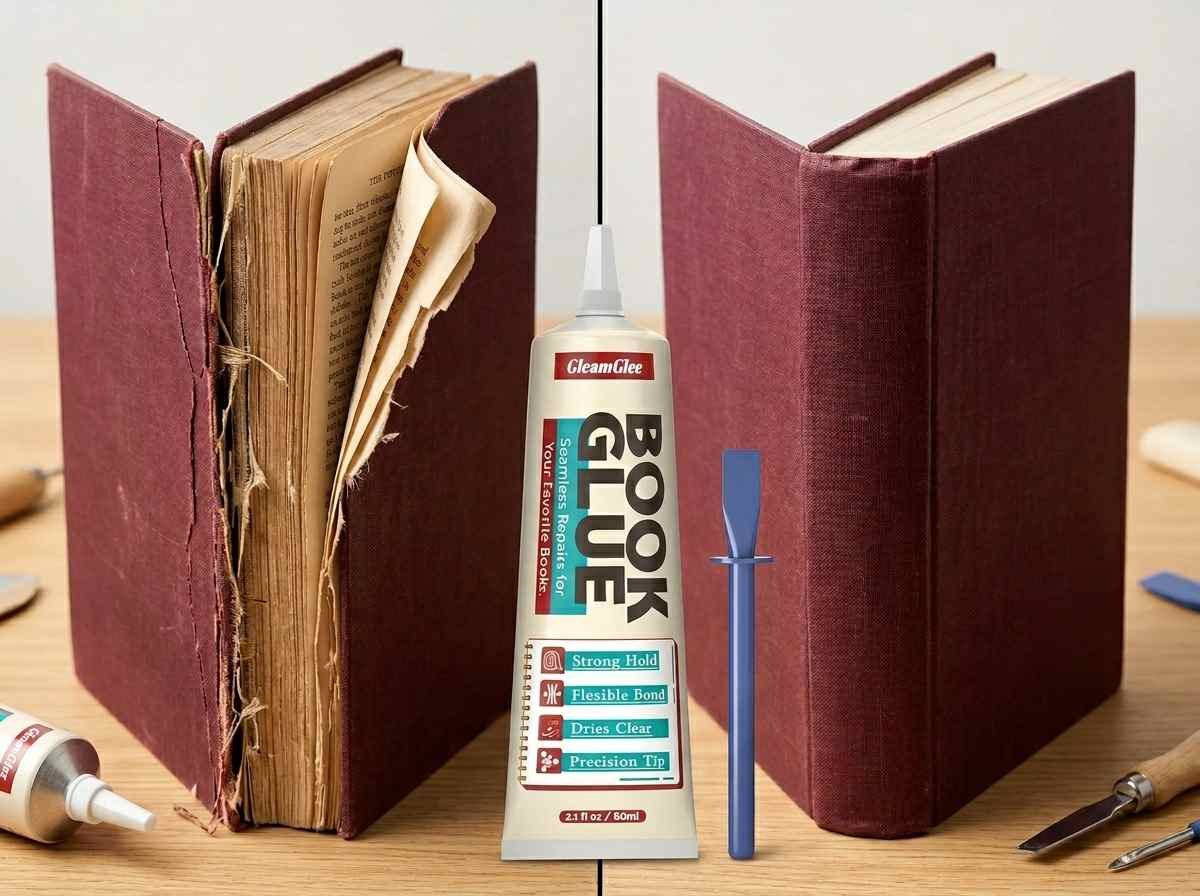
A damaged book spine does not always mean the book is ruined. In many cases, spine damage starts with a small crack, a loose page, a peeling cover, or a weak hinge that can still be repaired before the whole binding falls apart. The most important first step is to check the damage carefully: see whether the pages are still complete, whether the spine can close straight, and whether the paper is dry and strong enough to handle glue. If the book is rare, moldy, water-damaged, or very brittle, professional repair may be safer.
To fix spine damage in books, use a clear book glue made for paper and book repair. Clean away loose dust or old glue flakes, place any loose pages back in the correct order, and apply only a thin line of glue to the damaged spine area or inner page edge. Too much glue can make the spine stiff, wrinkle pages, or cause pages to stick together. After gluing, close the book gently, check that the page edges are straight, and press the book under even weight.
After repair, let the book dry fully before opening it again. For most spine repairs, 24 hours of drying under pressure is a safer choice, while thicker books may need longer. Once dry, open the book slowly and avoid pressing it completely flat. Store repaired books upright with support, away from heat and moisture. With careful glue placement, proper pressing, and gentle handling, many books can stay readable and useful for much longer.
What Is Spine Damage in Books?
Spine damage in books means the binding area can no longer hold the pages, cover, or page block firmly in place. It may show as a cracked inner spine, loose pages, a peeling cover, a weak hardcover hinge, or a book that no longer closes evenly. In many everyday books, early spine damage is repairable if the pages are still complete and the book can be aligned neatly.
Most spine problems start small. A paperback may first show a thin line inside the glued binding. A cookbook may lose pages near the most-used recipe section. A children’s book may split where the cover bends. A textbook may weaken because it is opened, carried, and stacked every day. Once the spine starts moving more than it should, the damage usually spreads faster unless it is repaired.
| Spine Damage Type | What You Notice | Common Books | Repair Difficulty |
|---|---|---|---|
| Light spine crack | Thin split inside the binding | Paperbacks, novels | Easy |
| Loose page | One page lifts or falls out | Cookbooks, journals | Easy |
| Loose page group | Several pages separate together | Textbooks, manuals | Medium |
| Peeling cover | Cover pulls away from page block | Paperbacks, kids’ books | Medium |
| Weak hinge | Hardcover cover feels loose | Hardcovers, old books | Medium |
| Broken outer spine | Spine cover tears or falls off | Old or heavily used books | Hard |
What Makes a Book Spine Break?
A book spine breaks when repeated bending, pulling, pressure, heat, moisture, or age weakens the glue, paper, thread, or cover material. The most common problem is not one single accident, but daily stress repeated many times.
For example, folding a paperback cover backward can create a sharp bend in the glued spine. Pressing a book flat on a desk, scanner, or kitchen counter can crack the inner binding. Pulling a hardcover from the shelf by the top of the spine can loosen the cover hinge. Books stored in hot cars, damp basements, or near windows may also weaken faster because glue can dry out, soften, or become brittle.
Key causes include:
- Opening the book completely flat too often.
- Folding paperback covers backward while reading.
- Pulling books from shelves by the spine edge.
- Carrying books loose in backpacks or work bags.
- Storing books in heat, sunlight, humidity, or damp rooms.
- Using tape, super glue, or thick glue in earlier repairs.
A useful warning sign is sound. If the book makes a cracking noise when opened, the binding is already under pressure. Repairing at this stage is usually much easier than waiting until pages fall out.
Which Spine Damage Can You Fix?
You can usually fix light to medium spine damage if the pages are still present, the paper is not crumbling, and the damaged area can be pressed back into shape. Loose pages, cracked paperback spines, peeling covers, and weak hinges are often suitable for careful book glue repair.
Simple repairs are usually the most successful. One loose page can often be reattached with a thin glue line. A narrow paperback spine crack can be reinforced before it spreads. A softcover that is beginning to peel can often be fixed before the cover separates completely.
Usually repairable at home:
- One loose page or a few loose pages.
- A thin crack inside a paperback spine.
- A cover beginning to peel from the page block.
- A notebook, planner, or journal with weak binding.
- A cookbook, manual, or textbook with loose inner pages.
Be more careful with rare, signed, antique, moldy, water-damaged, or brittle books. If the paper breaks when touched, the spine material is missing, or the book has strong collectible value, professional repair may be safer.
Is Spine Damage Worth Repairing?
Spine damage is worth repairing when the book is still readable, the pages are mostly complete, and the book has practical, emotional, school, work, or replacement value. A small repair can often extend the book’s life and prevent a loose spine from becoming a full binding failure.
For many customers, the reason to repair is not only price. A child may want the exact same bedtime book. A family cookbook may contain handwritten notes. A student may need a textbook to last one more semester. A library may want to keep a popular title in circulation. In these cases, repairing the spine is often more useful than replacing the book.
Repair is usually worth it when:
- The book is used often.
- The damage is limited to the spine or a few pages.
- The book is expensive or hard to replace.
- The book has notes, memories, or personal meaning.
- The repair can be done without covering text or images.
Repair may not be worth it if many pages are missing, the paper is wet or moldy, the spine is badly crushed, or the book is rare enough to need professional conservation. For normal household books, early repair is usually the best choice because a small crack is much easier to fix than a fully separated page block.
Which Glue Fixes Spine Damage in Books?
The best glue for spine damage in books is a clear book glue made for paper, bookbinding, and book repair. It should bond loose pages and cracked spines firmly, but it should not dry too hard, stain the paper, wrinkle pages, or leave a thick visible line inside the book.
A book spine is different from a hard household object because it needs to move every time the book opens and closes. For this reason, super glue, hot glue, heavy craft glue, and tape are usually poor choices for clean spine repair. GleamGlee book glue is designed for book restoration, bookbinding, loose pages, cracked spines, covers, paper crafts, journals, photos, and scrapbooks. It dries clear and uses a precision metal nozzle, which helps place glue in narrow spine gaps without flooding the pages.
| Glue Type | Good for Book Spine Repair? | What Happens in Real Use |
|---|---|---|
| Clear book glue | Yes | Bonds paper cleanly and works well for loose pages, cracked spines, and cover repair |
| Bookbinding glue | Yes | Good for paper and flexible spine areas if applied thinly |
| School glue | Limited | Easy to find, but may wrinkle pages or create a weaker repair |
| Super glue | No | Dries too hard and brittle; may stain paper or crack again |
| Hot glue | No | Too thick for book spines and can make the book hard to close |
| Tape | Temporary only | Fast emergency fix, but may yellow, peel, or leave sticky residue |
| Wood glue | Not ideal | Strong, but often too stiff for a book that needs to open and bend |
What Book Glue Works Best?
The best book glue works well on paper, dries clear, applies in a thin controlled line, and stays stable after the book is opened many times. For spine damage, the glue should hold the page block firmly without making the spine feel bulky or stiff.
A good book glue should solve real repair problems, not create new ones. When customers repair a book, they usually worry about three things: pages sticking together, visible glue marks, and the repaired spine breaking again. A proper book glue should help avoid all three.
Important features to look for:
- Clear drying finish: This is important because the inner spine is visible every time the book opens. Yellow, cloudy, or shiny glue marks can make the repair look messy, especially on white pages, old books, journals, photo books, and children’s books.
- Thin and controlled application: Spine cracks are often narrow. A fine nozzle helps place glue directly into the damaged area instead of spreading it across the page surface. This is especially useful for loose pages, paperback spine cracks, and small cover gaps.
- Paper-friendly bonding: The glue should bond paper, page edges, softcovers, and lightweight cover materials without soaking through too much. Too much wetness can cause page waves, wrinkles, or uneven drying.
- Enough working time: The user should have time to align loose pages before pressing the book. If glue sets too fast, pages may dry crooked. If it sets too slowly, pages may shift during pressing.
- Clean repair after pressing: After drying, the book should still open naturally. The spine should not feel like a hard plastic strip, and the pages should not feel glued into one block.
For most home users, school staff, library workers, and craft users, a clear book glue with a precision tip is more practical than a large bottle of general craft adhesive. It gives better control and reduces the chance of over-applying glue.
Is Clear Glue Better for Books?
Clear glue is better for most book repairs because it keeps the repaired area cleaner and less noticeable. This matters when fixing visible spine cracks, loose pages, covers, journals, old books, photo albums, and books with light-colored paper.
A book repair does not need to be invisible, but it should not distract the reader. If the glue dries yellow or cloudy, the book may look dirty even after it has been repaired. If the glue dries thick and glossy, the repaired spine may catch the eye every time the book opens.
Clear glue is especially useful for:
- Old books and keepsake books: These books often have emotional value. A clean repair helps preserve their appearance instead of making the damage look worse.
- Cookbooks and family books: Many cookbooks contain handwritten notes, stains, folded corners, and years of use. A clear repair keeps the focus on the content, not on a visible glue line.
- Children’s books: Bright illustrations and light pages can show glue marks easily. Clear glue helps the repair look neater.
- School books and library books: These books are handled by many people. A clean repair looks more acceptable and encourages continued use.
- Journals, planners, and photo albums: These items often carry personal or visual content. Clear glue helps avoid ugly marks near photos, writing, or decorative paper.
Clear glue still needs to be applied carefully. If too much is used, even transparent glue can create a shiny ridge, stiff page edge, or stuck pages. The best result usually comes from a thin line, accurate placement, and firm pressing while drying.
Which Glue Can Damage Books?
Glues that dry too hard, too thick, too wet, or too aggressively can damage books. Super glue, hot glue, rubber cement, heavy household glue, and ordinary tape can make pages brittle, stained, stiff, wrinkled, or difficult to open.
The wrong glue may seem useful at first because it feels strong or dries fast. But book repair is not only about quick strength. A book spine needs controlled bonding and flexible movement. If the repair is too rigid, the spine may crack again beside the glued area.
Avoid these common glue mistakes:
- Using super glue on book pages: Super glue dries very hard and can become brittle. It may soak into paper unevenly, darken the page edge, or create a hard spot that cracks when the book opens.
- Using hot glue inside the spine: Hot glue is too bulky for most book repairs. It cools quickly, forms thick ridges, and may stop the book from closing flat. It is also difficult to apply neatly inside a narrow spine gap.
- Using tape as a permanent repair: Tape can be useful for a temporary emergency, but many tapes yellow, peel, dry out, or leave sticky residue. Once adhesive residue enters paper fibers, it can be difficult to remove.
- Using too much school glue: School glue may work for simple paper crafts, but it can be too wet for spine repair. If overused, it may wrinkle pages or dry with a weak, uneven bond.
- Using thick craft glue across the whole spine: Covering the spine with a heavy glue layer may make the book stiff. A better repair uses a thin line only where the spine has separated.
For a cleaner and safer repair, use glue made for books and paper, apply only a small amount, align the pages before pressing, and let the repair dry fully before opening the book again.

How Do You Prepare Spine Damage in Books?
To prepare spine damage in books, check the damaged area first, remove loose dust or old glue, place loose pages back in the correct order, protect nearby pages, and make sure the spine is dry before applying book glue. Good preparation helps the repair bond better and prevents crooked pages, glue stains, and pages sticking together.
Most failed book repairs happen before the glue dries. The pages were not aligned, the old glue flakes were not removed, or too much glue spread into the wrong area. A few minutes of preparation can make the repair cleaner and stronger, especially for paperbacks, cookbooks, textbooks, children’s books, journals, manuals, and old household books.
| Preparation Step | Why It Matters | Common Mistake to Avoid |
|---|---|---|
| Check the spine | Finds the exact repair area | Gluing without knowing where the spine has failed |
| Clean loose debris | Helps glue touch paper, not dust | Scraping too hard and tearing paper fibers |
| Sort loose pages | Keeps page order correct | Gluing pages back upside down or out of order |
| Protect nearby pages | Stops unwanted glue transfer | Letting glue squeeze into readable pages |
| Dry the repair area | Improves bonding | Repairing damp or swollen paper too soon |
| Align before pressing | Keeps the book square | Pressing while pages stick out unevenly |
How Do You Check the Spine?
Check the spine by opening the book gently and looking for cracks, loose pages, cover separation, weak hinges, and gaps between the page block and the cover. The goal is to find the exact place where the book has lost strength before adding glue.
Do not force the book flat during inspection. If the spine is already cracked, opening it too wide can make the break longer. Place the book on a clean table, support both covers with your hands, and open only as far as needed to see the damaged area.
Look for these key signs:
- A thin crack inside the spine: This often appears in paperbacks where the glued binding has split. If the pages are still in order, this is usually a repairable problem.
- One or two loose pages: Check the page numbers first. A single loose page is usually easier to repair than a full separated section.
- A loose page group: If several pages move together, keep them as one section and check whether the edges still line up with the rest of the book.
- A peeling cover: If the softcover is pulling away from the page block, the repair should focus on the spine edge and cover contact area.
- A weak hardcover hinge: If the hardcover opens loosely near the front or back, the hinge may need careful reinforcement instead of glue across the whole page.
Before applying glue, close the book and check whether the page edges are straight. If the page block is already crooked, fix the alignment first. Glue will not correct a badly positioned book once it dries.
How Do You Clean the Spine?
Clean the spine by gently removing loose dust, paper crumbs, and dry glue flakes with a soft brush, cotton swab, or folded scrap paper. The spine should be clean enough for the new glue to touch solid paper or cover material, not loose debris.
Cleaning does not mean removing every trace of old binding glue. If old glue is still firmly attached and does not block the repair, it can usually stay. The main problem is loose material. New glue cannot hold well if it bonds to dust, crumbs, or flaking adhesive instead of the book structure.
Use simple tools:
- Soft brush: Good for removing dust from a narrow spine crack without pulling paper fibers.
- Cotton swab: Useful for lifting small glue flakes or cleaning along the inner spine edge.
- Folded scrap paper: Can slide carefully into a narrow gap to remove dry crumbs.
- Tweezers: Helpful for removing large loose pieces, but use them gently to avoid tearing pages.
Avoid water unless you are sure the paper can handle it. Water can swell pages, blur ink, weaken old adhesive, or make the spine dry unevenly. For most book spine repairs, dry cleaning is safer.
If the spine smells musty, feels damp, or shows mold spots, do not continue with normal glue repair immediately. Damp or moldy books need to be dried and assessed first, because glue may trap moisture and make the problem worse.
How Do You Protect the Pages?
Protect the pages by placing scrap paper, wax paper, or parchment paper near the repair area before applying glue. This prevents extra glue from spreading onto readable pages and keeps the book from drying with pages stuck together.
Page protection is especially important when repairing loose pages, glossy books, photo albums, children’s books, journals, planners, and books with illustrations near the spine. Even clear glue can leave a shiny mark or stiff area if it spreads too far.
Good protection habits include:
- Use clean white scrap paper during application: Place it behind the loose page or beside the repair area to catch small glue smears.
- Use wax paper during drying: Wax paper helps prevent accidental sticking when the book is closed and pressed.
- Do not use newspaper: Newspaper ink can transfer to damp glue or light-colored pages.
- Replace dirty barrier sheets: If glue touches the scrap paper, remove it before it dries into the repair.
- Keep glue away from printed text: Apply glue only to the inner page edge or spine gap, not across words, images, or margins.
A thin glue line is the best protection. If too much glue is applied, pressure will push it into nearby pages. For spine repair, controlled placement is safer than using a large amount of adhesive.
How Do You Align the Book Before Gluing?
Align the book before gluing by placing loose pages in the correct order, tapping the page block gently on a flat surface, and checking that the top, bottom, and outer page edges sit evenly. Proper alignment prevents the repaired book from drying crooked.
This step is easy to skip, but it matters a lot. A page that sticks out by even 1–2 mm can catch when the book is opened or placed on a shelf. Over time, that page may tear again. For textbooks, cookbooks, and manuals, poor alignment also makes the book harder to use.
Before gluing:
- Check the page numbers and direction.
- Place loose pages back without glue first as a test.
- Make sure the top and bottom edges match nearby pages.
- Close the book gently to see if the page block sits square.
- Adjust the cover position if it has shifted away from the spine.
- Use light clips only if needed, with paper padding to avoid marks.
For several loose pages, keep the section together if the pages are still connected. Do not glue a messy stack all at once. Align the pages first, then apply a thin line of book glue to the inner edge and press the book evenly while drying.
How Do You Fix Spine Damage in Books?
To fix spine damage in books, apply a thin line of clear book glue to the damaged spine area, align the pages and cover carefully, close the book, press it under even weight, and let it dry fully before opening. The repair should be neat, controlled, and thin enough that the book can still open naturally after drying.
Most spine repairs fail because too much glue is used, the pages are not straight, or the book is opened before the glue has cured. A good repair does not need a thick glue layer. It needs accurate placement, clean pressure, and enough drying time. For common household books, textbooks, cookbooks, manuals, journals, and children’s books, a careful repair can often make the book usable again for months or even years.
| Spine Problem | Where to Apply Glue | Pressure Needed | Safer Drying Time |
|---|---|---|---|
| Thin paperback crack | Inside the cracked spine line | Medium | 24 hours |
| One loose page | Inner edge of the loose page | Light to medium | 12–24 hours |
| Several loose pages | Inner edge of the page group | Medium | 24 hours |
| Peeling softcover | Between cover and page block | Medium | 24 hours |
| Loose hardcover hinge | Along the hinge gap | Medium | 24–48 hours |
| Thick textbook spine | Damaged spine section only | Firm and even | 24–48 hours |
How Do You Glue the Spine?
Glue the spine by placing a thin, even line of book glue inside the cracked or separated binding area, then closing the book carefully so the pages and cover return to their correct position. The glue should sit in the damaged spine gap, not spread across the readable page surface.
Use the smallest amount of glue that can cover the broken contact area. If the crack is narrow, do not force the book wide open. Open it only enough to place the glue. A precision nozzle is helpful because spine cracks are often only a few millimeters wide.
For a cleaner spine repair:
- Apply glue in a thin line: A thick glue layer can make the spine stiff, cause pages to stick together, or create a raised ridge. A thin line bonds better because it can dry evenly under pressure.
- Keep the page block straight: After applying glue, close the book and check the top, bottom, and outer page edges. If the pages are uneven, adjust them before pressing.
- Wipe excess glue early: If glue squeezes out from the spine, remove it before it dries. Dried glue is much harder to clean and may leave shiny marks.
- Do not test the repair too soon: Opening the book before the glue has cured can pull the spine apart again. Leave it pressed until fully dry.
A good spine repair should feel secure but not hard like plastic. The book should still open smoothly after drying.
How Do You Fix Loose Pages?
Fix loose pages by placing them back in the correct order, applying a thin glue line along the inner page edge, sliding the page into the spine, aligning it with nearby pages, and pressing the book closed until dry. Page order and edge alignment are more important than using extra glue.
Before gluing, always test the page position first. Check the page number, direction, top edge, bottom edge, and outer edge. If the page is inserted crooked, it may stick out, tear later, or make the book hard to close.
For loose page repair:
- Check the page order first: Loose pages often fall out in groups. Make sure every page is facing the right direction and sits in the correct place before glue touches it.
- Glue only the inner edge: Do not spread glue across the whole page. Apply glue only to the narrow edge that will sit inside the spine.
- Use a thin, controlled line: Too much glue can squeeze onto nearby pages. If repairing several pages, work in small sections instead of gluing a thick stack at once.
- Press the page into the spine: After inserting the page, close the book and press gently so the glued edge bonds into the binding.
- Let it dry before turning pages: A loose page may look fixed after a few minutes, but the bond is still weak. Give it enough drying time before reading that section again.
For cookbooks, textbooks, journals, and children’s books, this method is especially useful because these books often lose pages from repeated opening in the same area.
How Do You Press the Book?
Press the book by closing it carefully, checking that the spine and page edges are straight, placing it on a flat surface, and adding even weight on top while the glue dries. Pressing keeps the repair tight and prevents pages from drying crooked.
Pressure should be firm but not crushing. The goal is to hold the pages and spine in their natural position while the glue cures. If the book is pressed unevenly, the cover may warp or the page block may shift.
A simple pressing method:
- Use wax paper if glue may squeeze out: Place wax paper near the repaired area so nearby pages do not accidentally stick together during drying.
- Square the page block before adding weight: Tap the bottom edge of the closed book gently on the table. This helps align the pages before pressing.
- Use a flat board or large book on top: A flat surface spreads pressure evenly. This is helpful for textbooks, cookbooks, manuals, and larger paperbacks.
- Add steady weight: Use a few heavy books, not sharp or uneven objects. The pressure should cover the repaired area evenly.
- Leave the book still: Do not move, open, or flip through the book during drying. Movement can weaken the new bond.
For small books, overnight pressing may be enough. For thick textbooks, hardcovers, or wide spine cracks, 24–48 hours is safer.
How Do You Repair a Peeling Cover?
Repair a peeling cover by applying a thin layer of book glue between the cover and the page block, aligning the cover with the spine edge, wiping away extra glue, and pressing the book flat until dry. The cover should return to its original position without pulling or shifting.
Peeling covers are common on paperbacks, children’s books, workbooks, and manuals. The repair area is usually where the cover meets the glued spine. If repaired early, the cover can often be reattached before it separates completely.
For better cover repair:
- Dry-fit the cover first: Close the book without glue and check where the cover naturally sits. This helps avoid gluing it too high, too low, or off-center.
- Apply glue only to the contact area: Do not coat the whole inside cover unless necessary. Too much glue can wrinkle the cover or make the book stiff.
- Align the spine edge carefully: The cover should line up with the page block. If it dries crooked, the book may look twisted and may not close properly.
- Protect the first page: Use wax paper between the cover and the first page if there is a risk of glue spreading.
- Press with even weight: A peeling cover needs steady pressure while drying so the bond stays flat and smooth.
If the cover has already torn, glue alone may not fully rebuild the missing strength. In that case, the repair may need extra reinforcement, but for light peeling, book glue is usually enough.

How Do You Keep Spine Damage from Coming Back?
To keep spine damage from coming back, let the book glue dry fully, avoid opening the book flat, support the book while reading, and store it in a dry, upright position. A repaired spine can last much longer when the book is not forced to bend beyond its natural opening angle.
Most repeat spine damage happens because the book is used too soon after repair or handled the same way that caused the damage in the first place. A repaired book should be treated gently for the first few days. The glue bond needs time to settle, and the spine should be opened gradually instead of being pressed flat immediately.
| After-Repair Habit | Why It Matters | Better Practice |
|---|---|---|
| Let the book dry fully | Prevents the repair from pulling apart | Press for 24 hours, longer for thick books |
| Open slowly | Reduces sudden pressure on the spine | Start with small opening angles |
| Avoid laying flat | Prevents the glued spine from cracking again | Use a book stand or page holder |
| Store upright | Keeps the spine straight | Use bookends or nearby books for support |
| Avoid heat and moisture | Protects paper and glue strength | Store in a dry indoor room |
| Pull books out correctly | Prevents cover hinge damage | Grip both sides, not the top spine edge |
How Long Should Book Glue Dry?
Book glue should dry under pressure for at least 12–24 hours for most spine repairs, and thicker books may need 24–48 hours. The deeper the glue sits inside the spine, the longer it takes to dry fully.
A page may feel attached after a few minutes, but the inside bond may still be soft. If the book is opened too early, the repaired area can separate again before the glue has reached full strength. This is especially common with textbooks, cookbooks, hardcovers, manuals, and thick paperbacks because the page block is heavy.
For better drying:
- Press the book while drying: Close the book, check that the page edges are straight, then place it under even weight. This keeps the repair tight and helps the spine dry in the correct shape.
- Wait longer for thicker books: A single loose page may dry faster, but a cracked spine or detached cover needs more time because glue is hidden inside the binding.
- Avoid heat drying: Do not use a hair dryer, heater, or direct sunlight. Heat can warp pages, curl covers, and dry glue unevenly.
- Do not keep checking the repair: Opening the book repeatedly during drying weakens the bond. Check alignment once, then leave it still.
A practical rule is simple: if the repair involves the spine, give it a full day whenever possible.
How Should You Open the Book?
Open a repaired book slowly and avoid forcing it completely flat. Start with a small opening angle, support both covers, and let the spine flex gently instead of bending sharply in one place.
The first few openings after repair are important. If the book is opened too wide, the repaired spine may crack at the same spot or just beside the glued area. This is common when a paperback is folded backward or a cookbook is pressed flat on a counter.
Better opening habits include:
- Open the front and back covers gently first: Do not jump straight to the repaired section. Let the whole book loosen slightly.
- Support thick books with both hands: Heavy page blocks pull on the spine. Supporting both sides reduces pressure.
- Use a book stand for hands-free reading: Cookbooks, manuals, study guides, and music books often need to stay open. A stand holds the pages without flattening the spine.
- Never fold a paperback cover backward: This puts a sharp bend directly on the glued spine and is one of the fastest ways to cause another crack.
- Use a bookmark instead of placing the book face down: Leaving a book open upside down puts constant pressure on the spine and cover hinges.
If the book feels stiff after repair, do not force it. Open it a little at a time over several uses.
How Should You Store the Book?
Store a repaired book upright, dry, and supported so the spine stays straight. Avoid damp rooms, direct sunlight, heavy leaning, and tightly packed shelves because these conditions can weaken the repair over time.
Storage affects repaired books more than many people realize. A book that leans at an angle for weeks can twist at the spine. A book stored in a damp room can swell at the pages. A book packed too tightly may be damaged again when someone pulls it out by the spine.
Better storage habits include:
- Keep normal books upright: Store novels, paperbacks, manuals, and most hardcovers vertically with light support on both sides.
- Store large heavy books flat: Oversized textbooks, art books, photo albums, and large cookbooks may sag if stored upright. Flat storage can reduce spine strain.
- Avoid tight shelves: Leave enough space to remove books by gripping the sides, not pulling the top of the spine.
- Keep books away from damp areas: Basements, bathrooms, garages, and laundry rooms can expose books to moisture. Moisture weakens paper and can affect the repaired spine.
- Avoid direct sun and heat: Sunlight and heat can dry paper, fade covers, and make adhesive more brittle over time.
For books with sentimental value, use a protective box or sleeve. For school books and library books, a simple “handle gently” label near the inside cover can help reduce repeat damage.
How Can You Prevent Future Spine Cracks?
Prevent future spine cracks by reducing pressure on the binding during reading, carrying, and storage. Most spine cracks come from repeated bending, so the goal is to keep the book supported and avoid sharp folds.
This is especially important for books that are used often, such as textbooks, cookbooks, journals, Bibles, manuals, planners, and children’s books. These books usually fail because they are opened in the same place again and again.
Useful prevention habits:
- Do not force new books open flat: Let the spine loosen naturally over time. Pressing it flat can crack the glue line early.
- Carry books with support: In a backpack or work bag, keep books flat or upright against a firm surface. Avoid letting them bend around bottles, laptops, or tools.
- Repair small cracks early: A thin crack is much easier to fix than a loose page block. Early repair usually needs less glue and looks cleaner.
- Keep books clean and dry: Food, oil, water, and steam can weaken pages and covers, especially in cookbooks and children’s books.
- Teach careful handling: Children, students, and shared-book users should learn not to pull pages hard, fold covers backward, or press books open.
A repaired spine can stay usable for a long time when the book is treated as a flexible paper object, not a flat board. The less stress placed on the repaired area, the longer the repair is likely to hold.
Conclusion
Fixing spine damage in books is often easier when the problem is handled early. A small crack, one loose page, or a peeling cover can usually be repaired before the whole binding fails. The key is to check the spine carefully, clean away loose debris, use a thin line of clear book glue, align the pages correctly, press the book evenly, and let it dry fully before opening it again. A neat repair should help the book stay readable without making the spine stiff, bulky, or messy.
For families, schools, libraries, offices, craft users, and small businesses, book glue is a practical way to extend the life of books, journals, manuals, photo albums, and paper projects. GleamGlee book glue is designed for book repair, bookbinding, loose pages, cracked spines, covers, and paper crafts, with a clear finish and fine nozzle for controlled application. If you need ready-to-sell GleamGlee branded book glue, bulk supply, private-label packaging, or customized book repair glue solutions, you can contact the GleamGlee team for samples, pricing, and product customization support.





















