Skip to content
White sneakers are easy to love and hard to keep clean. A new pair can make jeans, joggers, school outfits, workwear, or travel clothes look fresh in seconds. But the same clean white surface also shows every problem quickly: gray dust on the midsole, black scuffs near the heel, yellow marks around the toe box, grass stains from parks, rain spots after commuting, and oil marks from everyday walking. That is why many people want a simple way to clean white sneakers without soaking them, bleaching them, or damaging the material.
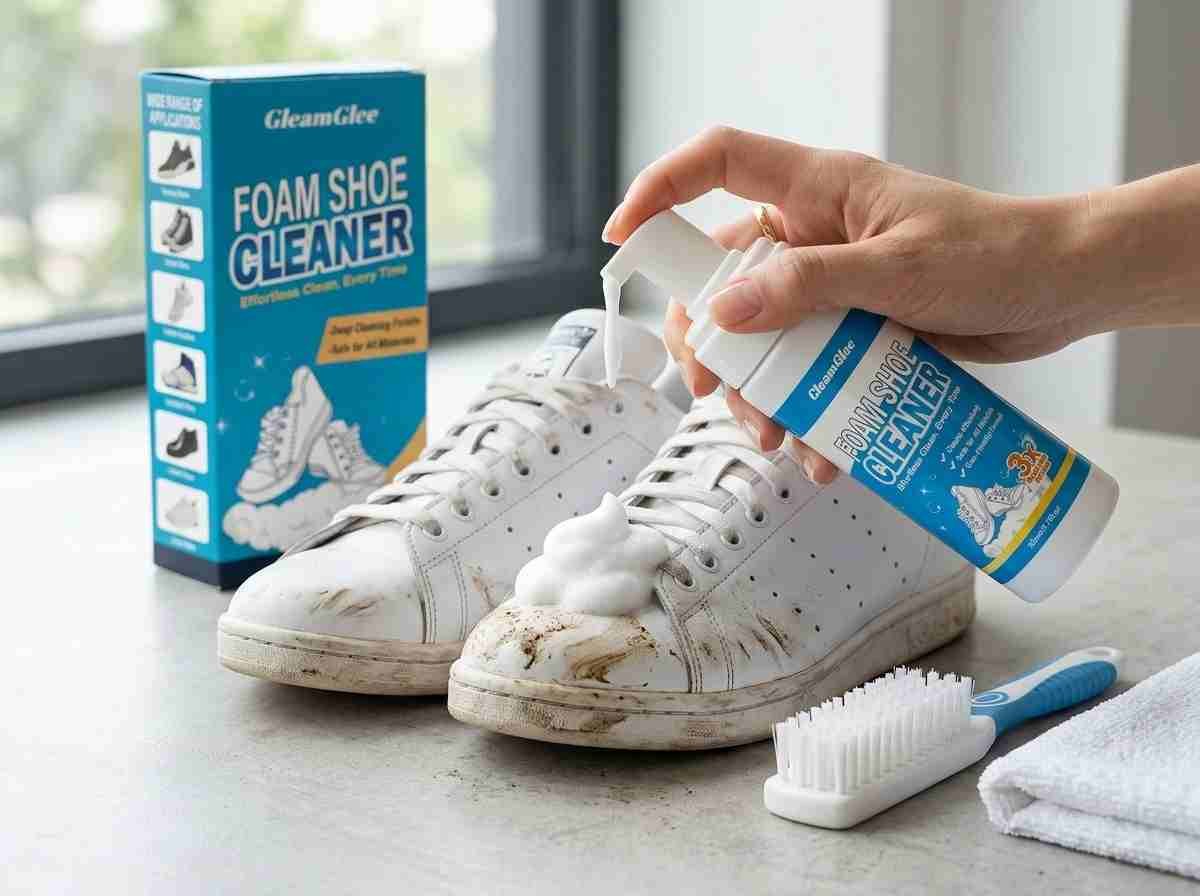
To clean white sneakers using shoe cleaner, remove loose dirt first, apply foam shoe cleaner to stained areas, brush gently with a suitable shoe brush, wipe away loosened dirt with a microfiber towel, and let the sneakers air-dry in a cool, ventilated place. For stubborn midsoles, yellowed edges, or canvas stains, repeat the same process instead of using harsh chemicals.
The best cleaning method is not always the strongest one. White sneakers are often made from leather, canvas, mesh, PU, rubber, plastic, suede trims, glue layers, stitching, and foam soles. A rough method may clean one area but harm another. If you have ever cleaned one white shoe and made it look patchy, wet, dull, or slightly yellow afterward, the problem was probably not your effort. It was the cleaning method. This guide shows how to clean white sneakers in a safer, easier, more repeatable way.
What Is White Sneakers Shoe Cleaner?
White sneakers shoe cleaner is a targeted cleaning product made for removing visible dirt, gray scuffs, oily marks, light yellowing, and daily stains from white sneakers without soaking the entire shoe. A good shoe cleaner should work on the areas people notice first: toe boxes, midsoles, heel edges, laces, stitching lines, and side panels. It should clean quickly, wipe away easily, and reduce the risk of surface damage on leather, canvas, mesh, PU, rubber, and mixed-material sneakers.
White sneakers get dirty faster because the color gives no hiding space. Road dust turns midsoles gray. Sweat and oxidation can make toe areas yellow. Mud can settle into canvas fibers. Black marks from pedals, stairs, or other shoes often appear on rubber edges. Compared with laundry detergent or random home mixtures, a dedicated shoe cleaner gives users a more controlled process: apply the cleaner, brush the stain, wipe away residue, and let the shoe dry naturally.
For everyday users, the biggest value is not only “strong cleaning.” It is safer repeat cleaning. Most white sneakers need light cleaning every 1–2 weeks if worn often, and after every heavy exposure to mud, rain, playground dirt, grass, or city dust. GleamGlee shoe cleaner uses a fast-drying no-water foam format, made with a coconut oil derivative, and is designed for common materials such as suede, leather, PU, rubber, canvas, plastic, and mesh.
White Sneakers Foam
White sneakers foam is useful because it gives more control than watery cleaners. When cleaning white shoes, too much liquid can spread dirt, create water rings, or make fabric dry unevenly. Foam sits on the stained area, so users can target the toe box, rubber midsole, heel edge, or stitching line without soaking the whole sneaker. This is especially helpful for quick cleaning before school, work, travel, photos, or resale preparation. GleamGlee’s foam shoe cleaner is made for a simple routine: press out foam, apply it to the dirty area, brush gently, wipe with a microfiber towel, and air-dry. For light dirt, the visible cleaning process can often be finished in a few minutes.
Key cleaning advantages:
- Better control on small stains and scuffs
- Less water exposure than full washing
- Easier cleaning around seams, laces, and midsoles
- Useful for mixed-material sneakers
- Good for fast touch-ups before wearing
| Foam Use Area | Common Problem | Suggested Method |
|---|---|---|
| Toe box | Dust, yellow tone, fabric marks | Light foam, gentle circular brushing |
| Midsole | Black scuffs, road dirt | Foam plus firmer brushing |
| Heel edge | Gray marks, driving scuffs | Foam, short brush strokes, towel wipe |
| Mesh upper | Dust inside tiny holes | Small foam amount, soft brushing |
| Canvas upper | Mud and daily stains | Medium foam amount, repeat gently |
White Sneakers Kit
A white sneakers kit makes cleaning easier because most users do not only need a cleaner bottle. They also need the right brush and towel. Using the wrong tool can damage the shoe even if the cleaner is safe. A rough household brush may scratch PU or leather. A low-quality cloth may leave lint on white fabric. A paper towel may tear and spread dirty liquid. GleamGlee shoe cleaner kit includes foaming cleaner, a multi-purpose brush, and a premium microfiber towel, giving users the basic tools needed for home sneaker care. This matters for families, sneaker collectors, students, commuters, and anyone who wants repeatable cleaning results without buying separate accessories.
What a complete white sneaker cleaning kit should solve:
- Cleaner removes dirt and oily residue
- Brush lifts dirt from texture, stitching, and rubber grooves
- Microfiber towel wipes away dirty foam cleanly
- Kit reduces guessing for first-time users
- Compact set is easier to store near the shoe rack
| Kit Item | Customer Benefit | Best Use |
|---|---|---|
| Foam cleaner | Loosens stains without full soaking | Uppers, midsoles, heel areas |
| Multi-purpose brush | Removes dirt from texture and grooves | Canvas, rubber, stitching, mesh |
| Microfiber towel | Wipes residue without heavy lint | Final wiping and polishing |
| Simple routine | Saves time for daily users | Weekly shoe care |
| Complete set | Higher value than cleaner alone | Home, travel, retail, gifting |
White Sneakers Brush
A white sneakers brush is important because many stains are not only on the flat surface. Dirt hides in rubber grooves, stitching lines, canvas weave, mesh holes, toe creases, and textured leather. Foam can soften and loosen the dirt, but brushing helps lift it so the towel can remove it. The key is using the right pressure. White sneakers should not be scrubbed like bathroom tiles. Use light pressure on leather, PU, mesh, printed logos, and suede trims. Use medium pressure on canvas and stitching. Use stronger pressure only on rubber midsoles and outsole edges, where black scuffs and road dirt are usually harder to remove.
Brush pressure guide:
| Material Area | Brush Pressure | Risk If Too Hard |
|---|---|---|
| Smooth leather | Light | Dull finish or small scratches |
| PU surface | Light | Coating damage |
| Mesh upper | Very light to light | Snagging or stretching |
| Canvas | Medium | Fuzzy fabric surface |
| Rubber midsole | Medium to firm | Surface roughness if overdone |
| Suede trim | Very light | Flattened texture or dark patches |
A practical rule is to clean twice gently instead of once aggressively. If the first round removes 70–80% of visible dirt, wipe the shoe, let the area settle, and repeat only where needed. This keeps the sneaker safer while still improving the final look.

Why Use Shoe Cleaner?
Use shoe cleaner because white sneakers need controlled cleaning, not random strong cleaning. A good shoe cleaner helps remove gray dust, oil marks, mud, grass stains, black scuffs, and light yellowing while reducing the risk of over-wetting, fabric roughening, color change, or glue damage. For most daily white sneakers, a foam cleaner, brush, and microfiber towel are safer than bleach, heavy soaking, or machine washing.
White sneakers usually get dirty in layers. The first layer is dry dust from streets, classrooms, offices, gyms, and shopping malls. The second layer is body contact: sweat around the tongue, oil from hands, and dirt from socks or pants. The third layer is outdoor staining, such as mud, rainwater, grass, food oil, and road residue. If these layers stay on the shoe for weeks, they become harder to remove and may make the sneaker look permanently gray or yellow.
Shoe cleaner is useful because it turns shoe care into a repeatable routine. Instead of waiting until the shoes look badly stained, users can clean visible areas every 1–2 weeks, or after heavy wear. GleamGlee shoe cleaner uses a no-water foam format, so the user can apply foam, brush gently, wipe with a microfiber towel, and air-dry. This is easier for homes, dorms, apartments, travel bags, shoe stores, and busy family routines.
White Sneakers Stains
White sneakers stains are not all the same, so they should not be cleaned with one rough method. Road dust usually sits on the surface and can be removed quickly. Mud may need to dry first, then be brushed off before foam cleaning. Grass stains need gentle repeated brushing because green pigment can settle into fabric. Food oil and street grease may need more contact time with the cleaner. Black scuffs on rubber midsoles usually need firmer brushing, but that same pressure would be too harsh for mesh or leather uppers.
Common stain guide:
| Stain Type | Where It Appears | Best Cleaning Move | Difficulty |
|---|---|---|---|
| Gray dust | Toe box, side panels, midsole | Foam, light brush, towel wipe | Easy |
| Mud | Sole edge, canvas, heel | Dry first, brush off, then foam clean | Medium |
| Grass marks | Kids’ shoes, sports shoes | Foam, medium brushing, repeat | Medium |
| Food oil | Toe box, side upper | Foam, gentle repeated cleaning | Medium–Hard |
| Black scuffs | Rubber midsole, heel edge | Foam, firmer brushing | Medium |
| Rain marks | Canvas, mesh, lower edge | Foam clean evenly, air-dry | Medium |
For best results, clean stains early. A fresh gray mark may take 2–3 minutes to improve, while an old stain that has sat for several weeks may need repeated cleaning and still may not fully disappear.
White Sneakers Yellowing
White sneakers yellowing can come from oxidation, sweat, old dirt, sunlight, glue aging, and wrong cleaning habits. Some yellowing is only on the surface, especially around the toe box, tongue, lace area, and midsole edge. This type can often look better after foam cleaning. Deeper yellowing from material aging, old glue, or long-term UV exposure is harder to reverse. That is why regular care is more practical than waiting until the sneaker turns visibly yellow.
A safer yellowing routine:
- Clean light dirt before it builds into gray or yellow layers
- Avoid strong bleach unless the shoe label clearly allows it
- Do not dry white sneakers under direct hot sun
- Wipe away dirty foam fully before drying
- Store shoes in a dry, shaded place with airflow
- Rotate shoes so sweat and moisture can dry between wears
GleamGlee shoe cleaner contains active cleaning and care ingredients designed to clean the upper and help reduce dullness, fading, and oxidation-related yellowing. It is especially useful for frequently worn white sneakers, school shoes, travel sneakers, canvas shoes, and lifestyle shoes.
White Sneakers Odor
White sneakers odor usually comes from moisture, sweat, bacteria-friendly dampness, dirty insoles, and poor drying habits. A surface shoe cleaner helps refresh the upper, tongue edge, collar area, and outer fabric, but odor control also depends on drying. If the outside looks clean but the inside remains damp, the smell can return quickly. This is common with gym shoes, running shoes, school sneakers, travel shoes, and sneakers worn all day in warm weather.
A practical odor-care routine:
| Step | Action | Why It Helps |
|---|---|---|
| 1 | Loosen laces and open the tongue | Improves airflow |
| 2 | Clean tongue edge and collar | Removes sweat and surface dirt |
| 3 | Wipe with microfiber towel | Removes dirty foam residue |
| 4 | Remove insoles if possible | Lets trapped moisture escape |
| 5 | Air-dry in shade | Reduces damp smell |
| 6 | Rotate shoes | Gives each pair more drying time |
For families, odor care is especially important for kids’ school shoes and sports shoes. For adults, it matters most after commuting, gym sessions, travel, and rainy-day wear. A simple cleaning and drying routine can make white sneakers look cleaner and feel fresher without over-washing the whole shoe.
How to Clean White Sneakers?
Clean white sneakers by working step by step instead of rushing. Remove loose dirt first, apply foam shoe cleaner to small sections, brush gently based on material, wipe away dirty residue with a microfiber towel, and let the shoes air-dry naturally. For most daily stains, one or two gentle cleaning rounds are enough.
White sneakers should be cleaned in layers, not all at once. If you apply cleaner directly onto dusty or muddy shoes, the foam mixes with dirt and spreads gray or brown marks across the surface. A better approach is to separate dry dirt removal, stain cleaning, and drying. This method reduces streaks, protects materials, and gives more consistent results.
For frequent wear sneakers, a light cleaning routine every 1–2 weeks is more effective than a heavy deep clean every few months. Most users notice that early cleaning takes 3–8 minutes per pair, while delayed cleaning can take 20–30 minutes and still leave visible marks.
Prep White Sneakers
Preparing white sneakers before cleaning helps avoid spreading dirt and reduces the total cleaning time. Many users skip this step and go straight to foam, which often leads to uneven results. Dust, dry mud, and loose debris should always be removed first so that the cleaner works directly on the stain instead of mixing with surface dirt.
A proper prep routine starts with removing laces if they look gray or stained. Laces trap dust and sweat near the eyelets, and leaving them in place can create shadow lines after cleaning. Next, tap or shake the shoes lightly to drop loose debris. Use a dry brush to clean the outsole edge, toe area, and stitching lines. If mud is wet, let it dry first before brushing it off. This prevents spreading brown stains across the upper.
Typical prep time is short but effective:
| Prep Action | Time Needed | Result |
|---|---|---|
| Remove laces | 30–60 sec | More even cleaning around eyelets |
| Shake off loose dirt | 20–30 sec | Less surface contamination |
| Dry brushing | 1–2 min | Cleaner foam application later |
| Check materials | 20 sec | Prevents damage on delicate areas |
For users cleaning multiple pairs (family shoes or sneaker rotation), this prep step can reduce total cleaning time by around 20–30% because the foam works faster on already-clean surfaces.
Apply Shoe Cleaner
Applying shoe cleaner correctly is more important than using a large amount of product. White sneakers do not need to be fully covered in foam. It is better to clean one section at a time, especially for toe boxes, midsoles, and visible stain areas. This prevents the foam from drying too quickly and allows users to control where dirt is lifted.
Start with the upper. Apply a small amount of foam to the toe box and side panels. For canvas or mesh, use a moderate amount so the cleaner can reach into the fabric. For leather or PU, use less foam and wipe sooner to avoid leaving moisture on the surface too long. After the upper, move to the midsole and outsole edge, where black scuffs are more common.
A controlled application method:
| Shoe Area | Foam Amount | Tip |
|---|---|---|
| Toe box | Small–medium | Focus on visible stains |
| Side panels | Small | Spread evenly, avoid overuse |
| Mesh upper | Small–medium | Do not oversaturate |
| Rubber midsole | Medium | Target black scuffs directly |
| Heel edge | Small | Clean after upper to avoid dirt transfer |
GleamGlee shoe cleaner is designed for this type of section-by-section cleaning. The no-water foam format makes it easier to apply in controlled amounts, which is helpful for home use, travel, or quick cleaning before going out.
Brush White Sneakers
Brushing is the step that actually lifts dirt out of the material. Foam alone softens stains, but brushing removes them. The key is to match brushing pressure to the material. Too little brushing leaves dirt behind. Too much brushing damages the surface. The right balance depends on whether the shoe is leather, canvas, mesh, or rubber.
For leather and PU surfaces, use light pressure and short strokes. The goal is to lift dirt without scratching the finish. For canvas, use medium pressure and small circular motions to reach into the fabric weave. For mesh, use very light pressure to avoid stretching or tearing the material. For rubber midsoles, use firmer strokes because the material is more durable and often holds black scuffs.
A practical brushing guide:
| Material | Pressure Level | Movement |
|---|---|---|
| Leather / PU | Light | Short strokes or soft circles |
| Canvas | Medium | Circular motion |
| Mesh | Very light | Gentle tapping or soft brushing |
| Rubber sole | Medium–firm | Back-and-forth strokes |
If a stain does not come out in one pass, repeat the process instead of pressing harder. Two light cleaning rounds usually give better results than one aggressive scrub. For most everyday dirt, brushing takes around 2–5 minutes per pair.
Dry White Sneakers
Drying white sneakers correctly helps preserve the cleaning result. Many users clean shoes well but lose the result during drying. Direct sunlight, heaters, or dryers can cause yellowing, stiffness, glue stress, or uneven color. Controlled air-drying is safer and keeps the shoe looking more natural.
After brushing, wipe away all dirty foam with a microfiber towel. Leaving residue on the surface can create marks after drying. Open the tongue to improve airflow, and remove insoles if they feel damp. Place the shoes in a shaded, ventilated area. Avoid hot environments such as radiators, car interiors, or direct sun exposure.
Drying time depends on material:
| Material | Average Dry Time | Notes |
|---|---|---|
| Leather / PU | 30–60 min | Quick drying due to low absorption |
| Canvas | 1–2 hours | May need more airflow |
| Mesh | 45–90 min | Dries faster but needs ventilation |
| Rubber sole | 20–40 min | Usually dries quickly |
For best results, make sure shoes are fully dry before wearing or storing them. Wearing damp sneakers can lead to odor and faster dirt buildup. For frequent users, rotating between two pairs can improve both cleanliness and comfort over time.

Which White Sneakers Fit?
White sneakers shoe cleaner fits most daily white sneakers made from leather, canvas, mesh, PU, rubber, plastic, suede trim, and synthetic materials. The key is not only whether the cleaner can be used, but how it is used. Different materials need different foam amounts, brush pressure, wiping speed, and drying time.
A pair of white sneakers may have several materials in one shoe: a leather side panel, mesh toe box, rubber midsole, plastic logo, canvas tongue, and suede heel detail. That is why cleaning should follow the material, not only the shoe style. Use lighter pressure on soft uppers and stronger brushing only on rubber soles.
GleamGlee shoe cleaner is suitable for common white sneakers, including lifestyle sneakers, school shoes, running shoes, basketball shoes, canvas shoes, designer sneakers, travel shoes, kids’ sneakers, and casual work shoes. For delicate, vintage, hand-painted, or luxury shoes, test first on a hidden area before full cleaning.
Leather White Sneakers
Leather white sneakers usually respond well to foam cleaner because most dirt sits on the surface instead of deep inside the material. Common examples include tennis-style sneakers, Nike Air Force 1-style shoes, Adidas Stan Smith-style shoes, school trainers, casual office sneakers, and smooth leather fashion shoes. The most visible dirty areas are usually the toe crease, side panel, heel tab, lace edge, and rubber midsole. Use a small amount of foam, brush lightly, and wipe quickly with a microfiber towel. Do not let cleaner sit too long on smooth leather or PU-coated leather.
For leather white sneakers, the goal is to refresh the surface without removing the finish. Too much pressure can make the leather look dull. Too much water can leave marks near stitching or glued parts. Clean in small sections and check the result after wiping.
Best-use tips:
- Use light brush pressure on the upper
- Wipe foam within 30–60 seconds after brushing
- Clean midsoles separately with firmer pressure
- Avoid rough pads on coated leather
- Test first on luxury leather or painted details
| Leather Area | Common Dirt | Best Action |
|---|---|---|
| Toe crease | Gray dust, oil marks | Light foam and soft brushing |
| Side panel | Fingerprints, city dust | Gentle wipe after foam |
| Heel tab | Dirt from handling | Small foam amount |
| Lace edge | Sweat and dust shadow | Remove laces first |
| Midsole | Black scuffs | Firmer brushing on rubber only |
Canvas White Sneakers
Canvas white sneakers need more patience because fabric absorbs dirt more deeply than smooth leather. Converse-style shoes, Superga-style sneakers, Keds-style canvas shoes, slip-ons, and summer casual sneakers often turn gray around the toe, sidewall, and lace area. Mud, food stains, rain marks, and dust can settle into the weave, so one quick wipe may not be enough. Apply a moderate amount of foam, brush with medium pressure in small circles, wipe thoroughly, and repeat only on stained areas.
Canvas can look darker while it is damp, so judge the result after drying. Avoid soaking the shoe because wet canvas may dry unevenly and leave rings. If the stain is old, two gentle cleaning rounds are safer than one hard scrub.
Useful canvas cleaning habits:
- Let wet mud dry before brushing it off
- Remove laces for cleaner eyelet areas
- Use circular brushing on the toe and side panels
- Wipe away dirty foam fully before it dries
- Air-dry in shade with good airflow
| Canvas Problem | Cleaning Difficulty | Suggested Routine |
|---|---|---|
| Light dust | Easy | Foam, brush, wipe once |
| Mud marks | Medium | Dry brush first, then foam clean |
| Food stain | Medium–Hard | Repeat gentle foam cleaning |
| Yellowed toe | Medium | Clean regularly; avoid bleach |
| Gray sidewall | Medium | Foam plus medium brushing |
Mesh White Sneakers
Mesh white sneakers are common in running shoes, gym shoes, walking shoes, and breathable lifestyle sneakers. Mesh is comfortable because it allows airflow, but it also traps fine dust inside tiny holes. The cleaning risk is different from leather or canvas: hard brushing can snag, stretch, or roughen the mesh. Use a small amount of foam, very light brush pressure, and a microfiber towel to lift dirt from the surface. Do not push bristles deep into the mesh.
For mesh sneakers, drying is especially important. Sweat, rain, and cleaner residue can stay inside the shoe if airflow is poor. Open the tongue, loosen the laces, and remove insoles if possible. This helps prevent odor and dampness after cleaning.
Best-use tips for mesh:
- Brush lightly, almost like dusting
- Use less foam first, then add more if needed
- Clean the tongue and collar gently
- Avoid soaking the upper
- Dry with airflow, not heat
| Mesh Area | Common Issue | Safe Cleaning Method |
|---|---|---|
| Toe box | Dust inside holes | Light foam and soft brushing |
| Side mesh | Sweat and gray marks | Gentle wipe after brushing |
| Tongue | Odor and dust | Small foam amount |
| Collar edge | Sweat residue | Wipe carefully |
| Overlays | Dirt around seams | Brush along the edge lightly |
Rubber White Sneakers
Rubber areas on white sneakers include midsoles, toe caps, outsole edges, heel guards, and sidewalls. These parts usually collect the darkest marks: black scuffs, road dirt, stair marks, bike pedal marks, car pedal marks, and mud lines. Rubber is tougher than fabric, so it can handle more brush pressure. Apply foam directly to the scuffed area, brush in short back-and-forth strokes, then wipe with a microfiber towel.
Cleaning rubber often makes the biggest visual difference. Even if the upper is only lightly refreshed, a clean white midsole can make the whole sneaker look newer. This is useful for Air Force-style shoes, basketball sneakers, kids’ trainers, travel shoes, and canvas sneakers with thick rubber sidewalls.
Rubber cleaning tips:
- Clean rubber after the upper to avoid dirt transfer
- Use medium to firm pressure only on rubber areas
- Focus on edges, grooves, and black scuffs
- Avoid knives, metal tools, and harsh abrasive pads
- Wipe immediately to remove lifted gray residue
| Rubber Area | Common Dirt | Cleaning Pressure |
|---|---|---|
| Midsole sidewall | Black scuffs, road dirt | Medium–firm |
| Toe cap | Mud, floor marks | Medium |
| Heel edge | Driving marks, dust | Medium |
| Outsole edge | Dirt and grit | Firm |
| Rubber logo area | Dust in grooves | Medium |

What Should You Avoid?
When cleaning white sneakers, avoid bleach, heavy soaking, rough scrubbing, direct heat, strong sunlight, and machine washing unless the care label clearly allows it. These methods may look fast, but they can cause yellowing, fabric fuzzing, glue weakening, surface scratches, shape loss, or uneven drying marks.
White sneakers are often made from mixed materials. One pair may include leather, mesh, canvas, PU coating, rubber, foam midsoles, printed logos, stitching, and glued layers. A cleaning method that works on one part may damage another. That is why safe cleaning is about control: small foam amounts, gentle brushing, complete wiping, and natural air-drying.
If a stain does not disappear in one round, repeat the same mild process instead of switching to stronger chemicals. Two or three gentle cleaning rounds are safer than one aggressive attempt, especially on canvas, mesh, suede trim, and coated leather.
White Sneakers Bleach
Bleach is one of the riskiest choices for white sneakers because shoes are not made like plain white towels. A sneaker may look fully white, but the materials can react differently. Canvas may weaken or turn patchy. Rubber can become chalky. PU coating may lose its smooth finish. Leather may dry out or discolor. Glue lines can turn yellow. Mesh may become brittle if the bleach is too strong or not rinsed evenly. The biggest problem is that bleach damage often appears after drying, not while cleaning.
For daily white sneaker stains, bleach is usually unnecessary. Road dust, gray midsoles, light yellowing, mud marks, and surface oil can often be improved with foam shoe cleaner and a brush. If the shoe is expensive, limited edition, designer, vintage, or mixed-material, avoiding bleach is the safer choice.
Safer options:
- Use foam shoe cleaner first for visible stains
- Repeat gentle brushing instead of increasing chemical strength
- Clean rubber midsoles separately with firmer brush pressure
- Avoid mixing bleach with vinegar, ammonia, alcohol, or other cleaners
- Test any strong method on a hidden area before using it widely
| Bleach Risk | Where It Happens | Better Method |
|---|---|---|
| Yellow patches | Canvas, glue edges | Foam cleaner and shade drying |
| Dull finish | Leather, PU | Light foam and quick wiping |
| Brittle texture | Mesh, fabric | Gentle brushing with less product |
| Chalky look | Rubber midsoles | Foam plus medium brush pressure |
| Uneven color | Mixed materials | Clean section by section |
White Sneakers Washer
Machine washing white sneakers can be convenient, but it is not always safe. The washer uses water, detergent, spinning, friction, and impact at the same time. This can bend the shoe shape, loosen glue, damage foam midsoles, roughen canvas, crack coatings, fade logos, or make the shoe dry unevenly. Some fabric sneakers may survive machine washing, but leather, suede, PU, designer sneakers, glued decorations, and older shoes are much higher risk.
Another problem is control. If only the rubber midsole is dirty, the washer still soaks the whole shoe. If only the toe box has a stain, the heel, tongue, lining, and glue layers all get wet too. After washing, sneakers may take many hours to dry, and trapped moisture can create odor.
Hand-cleaning with foam is usually better for regular care:
- It targets only dirty areas
- It uses less moisture
- It reduces drying time
- It protects mixed materials
- It lets users control brush pressure
- It avoids unnecessary stress on glue and shape
| Shoe Type | Washer Risk Level | Better Cleaning Choice |
|---|---|---|
| Leather sneakers | High | Foam clean by hand |
| Suede-trim sneakers | High | Spot clean carefully |
| Mesh running shoes | Medium | Light foam, soft brush |
| Canvas sneakers | Medium | Hand-clean first |
| Designer sneakers | High | Test and clean gently |
| Kids’ school shoes | Medium | Foam clean weekly |
White Sneakers Sunlight
Strong sunlight may seem useful because it dries shoes quickly, but it can create yellowing, stiff fabric, faded details, and glue stress. White canvas and mesh are especially sensitive to uneven drying. The shoe may look clean while wet, then show yellow edges, water rings, or dull patches after sitting in direct sun. Heat can also affect rubber and foam midsoles, making them age faster.
Drying should be slow and even. After cleaning, wipe away dirty foam fully with a microfiber towel. Open the tongue, loosen the laces, and remove insoles if they feel damp. Place the sneakers in a shaded, ventilated area. Airflow is more important than heat. For white sneakers, cool drying usually gives a cleaner final appearance.
Better drying habits:
- Dry in shade, not under direct sun
- Avoid heaters, radiators, dryers, and hot cars
- Open the tongue to improve airflow
- Remove insoles when needed
- Use clean white paper for shape support if necessary
- Wait until shoes are fully dry before storage
| Drying Method | Risk | Recommended? |
|---|---|---|
| Direct sunlight | Yellowing, heat stress | No |
| Hair dryer | Warping, glue stress | No |
| Clothes dryer | Shape loss, impact damage | No |
| Heater or radiator | Cracking, stiffness | No |
| Shade with airflow | Even drying | Yes |
| Indoor ventilated area | Safer for most shoes | Yes |
Why GleamGlee Shoe Cleaner?
GleamGlee shoe cleaner is built for people who want white sneakers to look clean again without turning shoe care into a complicated washing job. The foam cleaner, brush, and microfiber towel work together to remove daily dirt, gray marks, oil residue, light yellowing, and rubber scuffs from common sneaker materials. The no-water foam format also makes cleaning easier at home, in dorms, in apartments, before travel, or before taking product photos.
For product performance, GleamGlee focuses on three practical points: easy use, material compatibility, and repeat cleaning. White sneakers are usually not cleaned once a year; they need small cleaning sessions after rainy days, school use, commuting, gym sessions, outdoor activities, or long trips. A cleaner that feels quick and safe is more likely to be used often, which helps shoes stay brighter for longer.
For business customers, GleamGlee can support ready-to-order shoe cleaner products and private label customization. With in-house R&D, packaging, label printing, filling, raw material support, and global logistics experience, GleamGlee helps Amazon sellers, shoe care brands, retailers, distributors, and wholesalers develop shoe cleaner products that are easier to sell, explain, ship, and repeat-order.
White Sneakers Formula
GleamGlee shoe cleaner uses a fast-drying foam formula designed for visible sneaker dirt: gray dust, road marks, grass stains, oil residue, black midsole scuffs, and light yellowing. The formula is made with a coconut oil derivative and is suitable for many daily shoe materials, including leather, canvas, mesh, PU, rubber, plastic, suede, and synthetic uppers. This matters because many white sneakers are made from several materials in one pair, so users need one cleaner that can handle the upper, side panels, midsole, toe area, and heel edge with controlled use.
The formula is designed for a simple cleaning routine:
- Apply foam to the stained area
- Brush gently based on material
- Wipe away dirty residue
- Air-dry naturally
- Repeat on stubborn spots if needed
| Cleaning Need | GleamGlee Formula Support | Customer Benefit |
|---|---|---|
| Daily dust | Foam lifts surface dirt | Faster weekly cleaning |
| Oil residue | Active cleaning ingredients help loosen marks | Better result on city-worn shoes |
| Light yellowing | Helps clean and protect the upper | Fresher white appearance |
| Rubber scuffs | Works with brush action | Cleaner midsoles and sole edges |
| Mixed materials | Suitable for common sneaker surfaces | Less need for multiple cleaners |
| No-water cleaning | Foam format controls moisture | Easier home and travel use |
For end users, this means less mess and more control. For brand owners and retailers, it means the product can be explained with clear usage scenes: white sneakers, school shoes, running shoes, designer sneakers, canvas shoes, leather sneakers, kids’ shoes, and travel sneakers.
White Sneakers Care
GleamGlee shoe cleaner is designed around real shoe care habits, not complicated professional cleaning steps. Most people want shoes to look better in a few minutes. They do not want to mix cleaning powders, soak shoes overnight, or guess whether bleach will damage the material. The kit format solves this problem by putting the foam cleaner, multi-purpose brush, and microfiber towel together, so users can clean shoes with a clear and repeatable process.
A simple care routine can fit many lifestyles:
- Parents can clean children’s school sneakers once a week
- Commuters can remove road dust after rainy days
- Sneaker collectors can refresh rotation pairs before storage
- Fashion users can clean shoes before photos or outings
- Travelers can refresh shoes before packing them back into luggage
- Retail staff can demonstrate the product quickly in-store or on video
| User Type | Common Shoe Problem | Suggested GleamGlee Use |
|---|---|---|
| Parents | Mud, grass, school dirt | Weekly foam clean and air-dry |
| Students | Dust, food stains, gray midsoles | Quick cleaning before school week |
| Commuters | Rain marks, city dust | Clean visible areas after heavy wear |
| Sneaker fans | Scuffs, storage dust | Clean before display or rotation |
| Travelers | Airport and street dust | Refresh after trips |
| Sellers | Need easy product demos | Show foam, brush, wipe, result |
Good shoe care is also about prevention. When white sneakers are cleaned early, stains are usually easier to remove. When dirt stays on the surface for weeks, it can settle deeper and take more effort. GleamGlee’s foam format makes regular cleaning easier, which helps users keep sneakers looking cleaner without harsh treatment.
White Sneakers Orders
GleamGlee supports both finished shoe cleaner orders and customized private label shoe cleaner projects. This is important for Amazon sellers, Shopify brands, shoe care distributors, supermarkets, cleaning product retailers, fashion accessory brands, and regional wholesalers who want a product that is practical, easy to demonstrate, and suitable for repeat purchase.
Business customers can choose existing GleamGlee shoe cleaner products or request customized options based on their market. Customization can include bottle size, kit combination, brush style, towel option, label design, carton design, language layout, product instructions, and market positioning. For customers with their own brand, GleamGlee can help turn a shoe cleaner idea into a finished product ready for online or retail sale.
Common project options include:
- GleamGlee branded shoe cleaner supply
- Private label foam shoe cleaner
- Shoe cleaner kit with brush and microfiber towel
- Custom packaging and logo design
- English, German, French, Italian, Spanish, Dutch, Japanese, or Chinese label support
- Amazon FBA-ready packing plans
- Retail display packaging
- Formula adjustment for different shoe materials or markets
- Bulk orders for distributors and wholesalers
| Business Need | GleamGlee Support |
|---|---|
| Small brand launch | Low MOQ customization from around 200 units |
| Fast design start | Print-ready design draft as fast as 2 days when project details are clear |
| Product testing | Sample preparation usually around 7–14 days |
| Bulk supply | Mass production commonly around 20 days |
| Rush order | Faster production options around 15 days depending on order details |
| Compliance needs | SDS, CLP, REACH, UKCA, GHS-related label support where applicable |
| Global sales | US, UK, Germany, Canada, and FBA-related logistics experience |
| Stable production | Integrated formula, packaging, filling, and label printing system |
For buyers who want a ready product, GleamGlee can provide existing shoe cleaner solutions. For customers who want their own product line, GleamGlee can support formula, packaging, label, sampling, production, and export steps. This makes the company suitable for both direct product orders and long-term custom shoe care projects.
Conclusion
White sneakers do not stay clean by accident. They stay clean because the cleaning method is simple enough to repeat and gentle enough to protect the shoe. A foam shoe cleaner gives users a practical way to remove dirt, scuffs, oil marks, light yellowing, and daily stains without soaking the whole shoe or risking harsh cleaning damage. With the right brush, microfiber towel, and drying method, most white sneakers can look fresher in just a few minutes.
For daily users, the best routine is clear: clean stains early, use controlled foam, brush with the right pressure, wipe away dirty residue, and air-dry in shade. For families, this helps school shoes and kids’ sneakers last longer. For sneaker lovers, it keeps rotation pairs ready to wear. For fashion users, it keeps white shoes photo-ready. For travel and commuting, it makes shoe care easier after long days outside.
For brands, retailers, distributors, and Amazon sellers, GleamGlee offers both finished shoe cleaner products and private label customization. If you want to order GleamGlee shoe cleaner, build a shoe care kit, customize your own foam cleaner formula, design branded packaging, or request a bulk quotation, you can contact GleamGlee for product options, samples, MOQ details, packaging plans, and export support.