 Skip to content
PVC pipe problems usually start small. A little dampness under a sink, a slow drip beside a garden pipe, a wet mark near a pool line, or a tiny crack on a plastic fitting can look easy to ignore. But PVC leaks are different from many surface stains or cosmetic damage. Once water finds a weak point, pressure, vibration, temperature change, and daily use can make the leak worse. What begins as a few drops may become cabinet swelling, floor damage, mold smell, water waste, or a rushed emergency repair.
To repair PVC pipes using PVC glue, first stop water flow, drain the pipe, dry the damaged area completely, and check whether the problem is a small leak, crack, loose joint, or broken pipe section. Clean the surface, apply the right PVC glue evenly, press the repair area or fitting firmly, wipe away excess adhesive, and allow proper curing time before turning water pressure back on.
The real question is not only “Can PVC glue stick to the pipe?” A better question is: “Will this repair stay sealed after water pressure, bending, sunlight, heat, and repeated use?” A good repair depends on the damage size, pipe location, pipe pressure, surface preparation, and glue type. For a tiny pinhole, PVC glue and a patch-style repair may work well. For a cracked pressure pipe, cutting out and replacing the damaged section is often the safer choice. This guide walks through the repair logic clearly, so a homeowner, DIY user, Amazon shopper, distributor, or repair product seller can understand what works, what fails, and how a strong PVC glue product should be selected.
What Is PVC Glue?
PVC glue is an adhesive used to bond, seal, or repair PVC and similar plastic materials. For PVC pipes, it helps join fittings, close small leaks, or support patch-style repairs when the surface is clean, dry, and properly prepared. A good PVC glue should match the repair type, material hardness, water exposure, pressure level, and curing time.
Many users search for PVC glue because they want a quick answer to a stressful problem: “Can I stop this leak without replacing the whole pipe?” The answer depends on the damage. PVC glue can work well for small holes, light cracks, loose low-pressure joints, and flexible PVC repairs. But if the pipe is badly split, under strong pressure, or hidden inside a wall, glue alone may not be enough. In those cases, replacing the damaged section is usually safer.
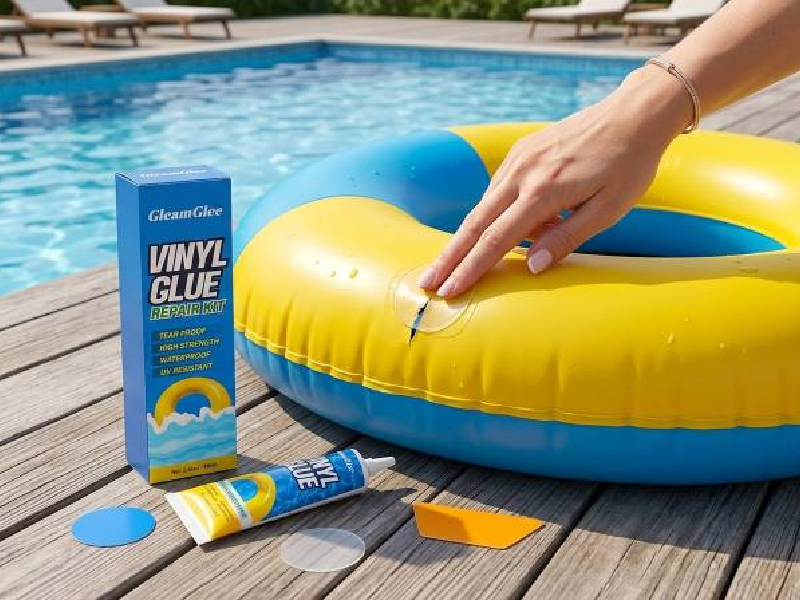
For flexible PVC and rubber products, such as air mattresses, inflatable pools, kayaks, pool floats, boats, and camping mats, PVC glue is often used with a patch. The patch increases the repair area and helps the glue hold under air pressure, water contact, bending, and outdoor use. GleamGlee PVC Glue is designed for this type of practical repair, with waterproof glue, multiple patch shapes, a rubber squeegee, an applicator, and a precision metal nozzle for small holes and narrow cracks.
What Does PVC Glue Do?
PVC glue helps create a sealed bond between PVC surfaces so water or air cannot easily escape through a hole, crack, seam, or joint. On rigid PVC pipes, it can support small leak repairs or help bond pipe fittings when the surfaces fit tightly together. On flexible PVC products, it works best when used with a patch that spreads stress beyond the damaged point. This is important because a tiny puncture on an air mattress, pool float, or kayak may look small, but once pressure builds inside, air or water will keep pushing through the weakest area. A patch gives the repair more surface contact, while the glue holds the patch firmly in place. For better results, the glue should cover both the damaged spot and the surrounding area, not just the exact hole. If the repair area is too small, the patch edge may lift, especially when the item bends or gets wet.
Key jobs of PVC glue include:
- Sealing pinholes where air or water slowly leaks out.
- Bonding PVC fittings or small pipe repair areas.
- Holding patches flat on flexible PVC or rubber surfaces.
- Reducing leak spread around cracks and seams.
- Creating a waterproof repair layer after proper curing.
- Helping extend the usable life of damaged PVC products.
For example, if an inflatable pool has a 3mm puncture, placing glue only on the hole may not last. A better repair is to clean a wider area, apply glue evenly, use a patch at least 25–30mm larger than the damage, press it flat with a squeegee, and wait long enough before adding air or water again.
Is PVC Glue Waterproof?
PVC glue can be waterproof after full curing, but the final result depends on the glue formula, surface dryness, patch size, pressure level, and curing time. A repair may feel dry after a short time, but that does not always mean it is ready for water, air pressure, or outdoor use. This is where many repairs fail. Users often apply glue, wait only a few minutes, then refill the pool, inflate the mattress, or turn the pipe back on. The repair may hold at first, then start leaking again because the inner glue layer has not built enough strength. For water-contact products, waiting around 24 hours before full use is often much safer. Outdoor PVC repairs also need resistance to sunlight, hot water, pool chemicals, and repeated bending.
A waterproof PVC glue repair needs:
| Factor | Good Practice | Why It Matters |
|---|---|---|
| Surface dryness | Wipe until no moisture remains | Water blocks glue contact |
| Clean area | Remove oil, dust, soap, algae, and old glue | Glue must bond to PVC, not residue |
| Patch coverage | Patch should extend beyond damage | Wider coverage reduces edge lifting |
| Pressure control | Do not inflate or run water too soon | Early pressure can break the seal |
| Cure time | Wait longer for water-use repairs | Strength develops over time |
GleamGlee PVC Glue is designed for waterproof repair needs on PVC and rubber items. It is suitable for air mattresses, inflatable pools, boats, kayaks, pool floats, sleeping pads, and similar products where the repair may face water, movement, and outdoor conditions.
Where Can PVC Glue Work?
PVC glue can work on many PVC and rubber repair situations, but the best result comes from matching the glue to the material and damage type. For rigid PVC pipes, it can help with small visible leaks, low-pressure pipe repairs, and fitting-related fixes when the pipe is clean, dry, and not structurally broken. For flexible PVC products, it is especially useful for punctures, short tears, seam leaks, and surface cracks when combined with a properly sized patch. The repair surface should be flat enough for the patch to sit smoothly, and the damaged area should not be stretched during application. If the item is inflatable, it should be deflated before repair. If the repair area is curved, press carefully from the center outward so the patch edges do not lift.
Common PVC glue repair uses include:
| Product or Area | Common Damage | Repair Tip |
|---|---|---|
| PVC drain pipe | Small seep or joint leak | Dry fully before applying glue |
| Garden PVC pipe | Minor crack or pinhole | Check water pressure before repair |
| Air mattress | Tiny puncture or seam leak | Deflate first, then patch flat |
| Inflatable pool | Wall leak or small tear | Use waterproof patch coverage |
| Kayak or inflatable boat | Scratch, puncture, or surface tear | Use larger patch and longer cure time |
| Pool float | Small air leak | Clear patch keeps repair cleaner-looking |
| Sleeping pad | Camping puncture | Press patch firmly and wait before use |
| Bounce house | Small rip or seam split | Use wide patch and strong pressure |
PVC glue should not be used blindly on every pipe problem. If the pipe is crushed, badly cracked, under high pressure, or hidden behind walls or ceilings, a safer repair is usually to replace the damaged section or ask a plumber to inspect it. For everyday PVC and rubber products, however, a complete repair kit like GleamGlee PVC Glue can help users fix leaks quickly, reduce waste, and avoid replacing items that still have plenty of life left.

Which PVC Pipes Can Be Fixed?
PVC glue can fix small, visible PVC pipe problems such as pinholes, light seepage, short hairline cracks, and some low-pressure joint leaks. It is not suitable for every pipe failure. If the pipe is split, crushed, hidden inside a wall, or carrying strong pressure, replacing the damaged section is usually safer.
The easiest repairs are low-risk and easy to monitor. For example, a small drip on an exposed drain pipe, a minor leak on an outdoor irrigation pipe, or a tiny crack on a non-critical PVC fitting may be repairable with careful cleaning, glue application, and enough curing time. The repair area should be dry, stable, and large enough for the glue or patch to grip.
Before applying PVC glue, users should check three things: how much pressure the pipe carries, how large the damage is, and what happens if the repair fails. A small leak on an outdoor pipe is very different from a leak under a kitchen cabinet or behind drywall. If a failed repair could damage flooring, cabinets, walls, or electrical areas, it is better to replace the pipe section or call a plumber.
Can PVC Glue Fix Leaks?
PVC glue can fix small leaks when the damaged area is clean, dry, and not under active pressure during repair. It works best for pinholes, slow drips, light seepage, and small visible leak points on low-pressure PVC pipes. The key is to stop the water first, drain the pipe, dry the area fully, and apply glue beyond the exact leak point. If water keeps pushing through while the glue is wet, the repair may form tiny channels inside the adhesive and leak again later. For a stronger result, the repair should cover a wider area around the leak instead of only sealing the hole itself. On flexible PVC items, such as inflatable pools, air mattresses, and kayaks, using glue with a patch is usually better because the patch spreads pressure over a larger surface.
Useful leak repair checks:
| Leak Type | Can PVC Glue Help? | Better Practice |
|---|---|---|
| Tiny pinhole | Yes | Clean, dry, glue, and cover wider than the hole |
| Slow drip on visible pipe | Sometimes | Check pressure and monitor after curing |
| Leak at pipe joint | Sometimes | Refit or replace joint if pressure is high |
| Spraying leak | Usually no | Shut off water and replace damaged part |
| Hidden leak | No | Inspect and repair properly |
| Flexible PVC leak | Yes | Use glue plus patch |
For small leaks, allow enough curing time before turning water back on. A repair may look dry on the surface after a short wait, but pressure can still break the seal if the inside has not cured.
Can PVC Glue Fix Cracks?
PVC glue can fix some short hairline cracks, especially on low-pressure or non-critical PVC pipes, but it should not be used as the only solution for long, deep, or spreading cracks. A crack is more serious than a pinhole because it shows that the pipe wall has already weakened along a line. If the pipe is old, brittle, sun-damaged, bent under stress, or exposed to pressure changes, the crack may continue growing even after glue is applied. For small cracks, the glue should cover the full crack and extend beyond both ends, because the ends of the crack are where splitting often continues. If the crack is near a fitting, valve, elbow, or high-stress area, a replacement section is usually more reliable.
A practical crack guide:
| Crack Condition | Repair Risk | Suggested Action |
|---|---|---|
| Short hairline crack | Low to medium | Glue and reinforce if pressure is low |
| Crack under 1 inch | Medium | Use wider coverage and monitor |
| Crack near fitting | Medium to high | Consider replacing fitting |
| Long crack along pipe | High | Replace pipe section |
| Crack on pressure line | High | Do not rely on surface glue only |
| Brittle or yellowed pipe | High | Replace damaged pipe |
For flexible PVC or rubber products, cracks and tears are often easier to repair with a patch. GleamGlee PVC Glue includes clear rectangular patches that help cover longer surface tears more evenly, making it useful for inflatable pools, kayaks, boats, sleeping pads, and similar items.
Can PVC Glue Fix Joints?
PVC glue can fix joints when the joint is being assembled correctly or replaced with a new fitting. It is less reliable when users simply brush glue around the outside of an already leaking joint. A PVC joint becomes strong when the pipe and fitting bond together inside the socket, where the surfaces overlap. If the original joint was not inserted deeply, was twisted after setting, had dirt inside, or did not receive enough adhesive, the leak may come from inside the connection. In that case, outside glue may reduce the drip for a while, but it may not create a true long-term repair. For low-pressure drain joints, an outside repair may sometimes help. For pressurized water lines, replacing the joint is safer.
Before fixing a PVC joint, check:
- Is the leak coming from the fitting edge or the pipe body?
- Is the pipe loose, misaligned, or moving?
- Does the joint leak only when water pressure rises?
- Is the joint easy to cut out and replace?
- Is the pipe carrying drain water or pressurized water?
Joint repair comparison:
| Joint Problem | Outside PVC Glue? | Better Repair |
|---|---|---|
| Tiny seep on drain joint | Maybe | Clean, dry, seal, and monitor |
| Loose fitting | No | Refit or replace joint |
| Pressure joint leak | No | Cut out and install new fitting |
| Misaligned pipe | No | Correct pipe position |
| Old failed glue joint | Risky | Replace joint |
| Flexible PVC seam leak | Yes | Glue plus patch or seam coverage |
For customers using PVC glue at home, this distinction is important. A strong glue cannot fix poor pipe alignment, constant vibration, or an improperly seated fitting. Good repair starts with understanding why the joint failed.

How Do You Use PVC Glue?
To use PVC glue correctly, you need a clean surface, a dry repair area, controlled glue application, and enough curing time before putting the pipe or product back into use. Most failed repairs happen because one of these steps was skipped or rushed. Whether you are fixing a small pipe leak or repairing an inflatable product, the process should feel controlled and steady, not rushed.
A good PVC glue repair is not about using more glue. It is about creating full contact between surfaces and giving the adhesive enough time to build strength. If the surface is wet, dusty, or oily, the glue will not bond well. If the glue layer is uneven or too thick, it may trap air or stay soft inside. If the repair is tested too early, water or air pressure can break the bond before it is ready.
For best results, follow a clear sequence: stop water or air pressure, locate the exact damage, clean and dry the area, apply glue evenly, press firmly (or apply a patch if needed), and wait before testing. GleamGlee PVC Glue helps simplify this process by including a precision nozzle, multiple patch shapes, and a squeegee to improve control during application.
How Do You Clean PVC Pipes?
Cleaning PVC pipes properly is one of the most important steps for a successful repair, yet it is often rushed. The goal is to remove anything that prevents glue from touching the actual PVC surface. This includes water, dust, grease, soap residue, algae, mineral deposits, and old adhesive. Even a thin invisible layer of residue can weaken the bond and cause the repair to fail later. Start by turning off the water supply and draining the pipe completely. Use a dry cloth to wipe the area, then clean at least 1–2 inches around the damaged point. For outdoor pipes, remove dirt and plant residue. For indoor pipes, remove soap film or grease from cleaning products. After cleaning, press a paper towel onto the surface. If the towel shows moisture or dirt, clean again. For flexible PVC items like air mattresses or pool floats, deflate the item first so the repair area stays flat and stable during cleaning.
How Do You Apply PVC Glue?
Applying PVC glue correctly means spreading a thin, even layer across the entire repair area, not just the visible hole or crack. Many users make the mistake of applying glue only to the exact leak point, which creates a weak, narrow bond. A stronger repair needs a wider bonding zone. For small leaks, extend the glue at least 1 inch beyond the damage. For cracks, cover the full length of the crack and extend past both ends. If you are using a patch, apply glue where the patch will sit, then place the patch carefully and press from the center outward to remove air bubbles. This step is critical because trapped air can create weak spots where leaks return. A rubber squeegee helps press the patch evenly and spread pressure across the surface. Avoid lifting and repositioning the patch after placement, as this can disturb the bond. The goal is a clean, flat repair with full contact, not a thick or messy glue layer.
How Long Does PVC Glue Dry?
PVC glue drying time depends on temperature, humidity, glue thickness, and the type of repair. A surface may feel dry within minutes, but that does not mean it is ready for use. The inside of the glue layer takes longer to build strength, especially for thicker applications or larger repairs. Many users test the repair too early, which is one of the main reasons leaks return. For small repairs, light handling may be possible after 30–60 minutes, but for anything involving water pressure or air pressure, waiting around 24 hours is much safer. Outdoor repairs or flexible PVC items should also be given enough time because they will face bending, stretching, and environmental stress. Cooler temperatures and higher humidity can slow down curing, so in those conditions, it is better to wait longer.
Drying and curing guide:
| Repair Type | Touch Dry | Safer Full Use |
|---|---|---|
| Small surface repair | 30–60 minutes | 12–24 hours |
| Patch repair (inflatables) | 1–2 hours | 24 hours |
| Low-pressure pipe repair | 1–2 hours | 24 hours |
| Outdoor PVC repair | 2–4 hours | 24+ hours |
| Larger tear or thick glue | 4+ hours | 24–48 hours |
Waiting longer reduces the risk of rework and helps the repair last under real conditions.
How Do You Test PVC Pipes?
Testing a PVC repair should be done slowly and carefully, especially if the pipe carries water pressure or the repair is in a sensitive location. Start by making sure the repair area is completely dry so you can easily see any new moisture. Turn on water at a low flow and observe the repair for a few minutes. If no leaks appear, increase the flow gradually. For pressurized pipes, avoid turning on full pressure immediately. Watch for signs such as small droplets, damp edges, or slow seepage. Using a paper towel around the repair area can help detect tiny leaks that are hard to see. For inflatable PVC items, add air slowly and listen for hissing sounds. You can also apply a light soap solution to check for bubbles. If bubbles appear, the patch edge may not be sealed properly. If the repair holds under gradual testing, it is more likely to perform well during normal use.

What PVC Glue Mistakes Matter?
The biggest PVC glue mistakes are applying glue on wet surfaces, using too much glue, ignoring curing time, using the wrong repair method, and expecting glue to fix serious pipe damage. A strong repair needs clean PVC contact, steady pressure, suitable glue thickness, and enough waiting time before water or air pressure returns.
Most failed PVC repairs are not caused by one dramatic mistake. They usually come from small rushed steps. A pipe looks “dry enough,” but moisture remains near the crack. A patch looks “big enough,” but the edge is too close to the puncture. The glue looks “dry,” but the inside has not cured. These small details matter because PVC repairs are often tested by pressure, movement, water, heat, and outdoor use.
For customers, the safest rule is simple: prepare wider, apply thinner, press longer, and wait more patiently. For flexible PVC items such as air mattresses, inflatable pools, kayaks, and pool floats, glue works better with a properly sized patch. For damaged PVC pipes under pressure, glue should not replace a proper fitting or pipe section replacement when the pipe is cracked, loose, or structurally weak.
Is the Pipe Too Wet?
A PVC pipe is too wet for glue if water keeps appearing after wiping, if the surface feels cool and damp, or if a paper towel pressed on the repair area comes away with moisture. PVC glue needs direct contact with the plastic surface. When water sits between the glue and pipe, the adhesive cannot grip properly, and the repair may peel, bubble, or leak again after pressure returns. This is especially common under sinks, around pool pipes, irrigation lines, and outdoor PVC areas where water continues to seep from inside the pipe after the surface is wiped. Before applying glue, shut off the water, drain the line, dry the repair area, and wait until the surface stays dry for several minutes. For flexible PVC products, deflate the item first and dry both the damaged point and the wider patch area.
Useful checks before gluing:
| Wet Surface Check | What It Means | What to Do |
|---|---|---|
| Paper towel gets damp | Water is still present | Keep drying before gluing |
| Water beads appear again | Pipe still holds water inside | Drain longer or reposition pipe |
| Surface feels greasy or slick | Residue may block bonding | Clean again before drying |
| Outdoor pipe has dew or rain | Surface moisture remains | Wait for dry conditions |
| Pool item feels slippery | Chlorine, algae, or soap may remain | Wash, rinse, and dry fully |
A good repair area should stay dry long enough for glue to settle and begin bonding. If the pipe cannot be dried because water keeps flowing through the crack, the repair should not be rushed. In that case, stop the source of water first or consider replacing the damaged part.
Is Too Much PVC Glue Bad?
Too much PVC glue can weaken a repair because thick glue layers may trap air, stay soft inside, slide under a patch, or take much longer to cure. Many users think a large amount of glue adds strength, but PVC repair strength comes from clean surface contact, even coverage, firm pressure, and curing time. A heavy glue pile can create the opposite result. On pipe repairs, excess glue may run away from the damaged area and leave uneven coverage. On patch repairs, too much glue can make the patch float, wrinkle, or shift out of place before curing. It can also squeeze out around the edges, leaving a sticky, messy finish that collects dust and looks unprofessional. A better method is to apply a controlled layer that fully wets the repair area without flooding it.
Better glue control habits:
- Apply glue wider than the damage, but not in a thick pile.
- Use enough glue to cover the full bonding area.
- Avoid dry spots under patch edges.
- Press the patch from the center outward.
- Remove heavy squeeze-out before it spreads.
- Keep the repair flat and still while curing.
For small pinholes, precision matters more than volume. GleamGlee PVC Glue uses a metal nozzle that helps place glue into small holes, narrow cracks, and seam areas without over-applying. The included rubber squeegee also helps flatten the patch and push out extra adhesive, which makes the repair cleaner and more stable.
Is Old PVC Glue Safe?
Old PVC glue may not be safe to rely on if it has become thick, stringy, clumpy, separated, rubbery, or hard around the bottle opening. Aged glue may still look usable at first, but it may not spread evenly or bond strongly after curing. This is a common problem when glue has been stored in a hot garage, outdoor shed, toolbox, warehouse, or half-opened bottle. Heat, air exposure, and poor sealing can reduce adhesive performance over time. For low-risk craft use, old glue may only cause inconvenience. For pipe leaks, pool repairs, inflatable beds, kayaks, or outdoor gear, weak glue can mean repeated leaks, wasted patches, and possible water damage. Before using PVC glue, check texture, smell, flow, and how smoothly it spreads.
PVC glue condition guide:
| Glue Condition | Can You Use It? | Risk Level |
|---|---|---|
| Smooth and easy to spread | Yes | Low |
| Slightly thicker than normal | Maybe | Medium |
| Stringy or clumpy | No | High |
| Dried around cap and nozzle | Risky | Medium to high |
| Separated liquid and solids | No | High |
| Rubber-like texture | No | High |
| Strong unusual odor change | Avoid | High |
Fresh, well-sealed glue gives a more predictable repair. For sellers and distributors, packaging quality is important because customers may store repair kits for emergency use. A secure cap, clear storage guidance, and reliable applicator design help keep the product usable for longer. GleamGlee supports this with practical packaging and repair-focused accessories, making the kit easier for home users, outdoor users, and retail customers to keep ready for future repairs.
Why Choose GleamGlee PVC Glue?
GleamGlee PVC Glue is designed for users who want a practical PVC repair solution that is easy to apply, strong after curing, and suitable for wet or outdoor conditions. It is especially useful for flexible PVC and rubber items such as air mattresses, inflatable pools, pool floats, kayaks, boats, trampolines, sleeping pads, and similar leak-prone products.
A good PVC glue should not only “stick.” It should help users solve the real problem: stopping air or water loss without making the repair messy, stiff, or short-lived. GleamGlee PVC Glue comes as a complete repair kit, including 80ml glue, 5 blue round patches, 5 clear round patches, 5 clear rectangular patches, a rubber squeegee, and an applicator. This gives users the basic tools needed to handle different hole sizes, patch shapes, and surface colors.
For business customers, GleamGlee can also support branded orders and custom projects. With in-house formula development, packaging design, label printing, raw material control, and large-scale production, GleamGlee can help Amazon sellers, outdoor brands, pool product brands, hardware retailers, and distributors build PVC glue repair kits with custom labels, multilingual instructions, FBA-ready packaging, and flexible order plans.
What Makes PVC Glue Strong?
PVC glue becomes strong when the formula can bond tightly to the surface while still matching the way the material moves during use. For flexible PVC and rubber items, strength does not mean the repair should become hard like stone. A hard repair may crack when an air mattress is folded, when a pool float bends, or when a kayak surface flexes in water. A stronger repair should seal the damaged area, hold the patch flat, and remain flexible enough to handle normal movement after curing. GleamGlee PVC Glue is made for leak and tear repair where waterproof strength, flexibility, and controlled application all matter. The included patches increase contact area, while the squeegee helps press out air bubbles that could weaken the bond.
Key strength factors include:
| Strength Factor | Why It Matters |
|---|---|
| Clean surface contact | Glue bonds better to PVC than to dust, oil, or moisture |
| Wider patch coverage | Reduces stress around the hole or tear |
| Even glue layer | Avoids weak dry spots and soft thick spots |
| Firm pressure | Helps remove bubbles and improves patch contact |
| Full curing time | Allows the repair to build lasting strength |
| Flexible bond | Helps the repair survive bending and inflation |
For best results, users should clean at least 1–2 inches around the damage, choose a patch larger than the hole, press from the center outward, and wait around 24 hours before full use. These steps make a visible difference in repair life.
Which PVC Items Fit?
GleamGlee PVC Glue fits many flexible PVC and rubber repair needs, especially products that lose air or water through small holes, short tears, seam leaks, or surface cracks. It is useful for air mattresses, guest beds, inflatable pools, pool floats, swim rings, inflatable boats, rafts, kayaks, inflatable paddleboards, fishing float tubes, bounce houses, inflatable slides, camping sleeping pads, travel pillows, inflatable chairs, inflatable decorations, and similar items. These products often fail from one small damaged point while the rest of the item is still usable. In that case, replacing the whole product is wasteful and expensive. A glue-and-patch repair can extend product life at a much lower cost.
Common uses include:
| Product Type | Common Damage | Suggested Repair |
|---|---|---|
| Air mattress | Pinholes, seam leaks | Clear round patch |
| Inflatable pool | Wall cracks, small tears | Clear rectangular patch |
| Pool float | Tiny punctures | Clear round patch |
| Kayak or boat | Surface tear, scrape leak | Larger patch with full curing |
| SUP board | Air leak | Wide patch coverage |
| Bounce house | Small rip, seam split | Strong pressure with patch |
| Sleeping pad | Camping puncture | Small patch, flat curing |
| Inflatable decoration | Fold tear | Patch before reinflating |
For rigid PVC pipes, users should still judge the situation carefully. Small visible leaks may be repairable, but serious plumbing damage, pressure-line cracks, or hidden pipe failures usually need pipe replacement or a proper fitting repair.
How Does PVC Glue Last?
PVC glue lasts longer when the repair is matched to the damage, applied on a clean dry surface, pressed firmly, and allowed to cure before use. Many repairs fail not because the glue is weak, but because the user inflates the item too soon, fills it with water too early, uses a patch that is too small, or leaves dirt and moisture under the repair. GleamGlee PVC Glue is designed for waterproof and outdoor repair needs, so it is suitable for products exposed to pool water, rain, sunlight, warm water, and regular bending. The clear patches also help keep the repair cleaner-looking, especially on light-colored or transparent PVC surfaces.
To make PVC glue repairs last longer:
- Keep the repair area fully dry before applying glue.
- Use a patch that extends well beyond the damaged spot.
- Press the patch flat with the rubber squeegee.
- Remove air bubbles from the center toward the edge.
- Let the repair cure for about 24 hours before full use.
- Avoid folding or stretching the repaired area too soon.
- Check patch edges before using the item in water.
For outdoor products, storage also matters. After repair, avoid leaving inflatables under strong sun for long periods when not in use. Clean off pool chemicals or dirt before storage. Fold repaired items gently instead of creasing directly across the patch.
What Comes with PVC Glue?
GleamGlee PVC Glue comes as a full repair kit, so users do not need to search for separate patches, spreaders, or application tools. The kit includes 80ml premium glue, 5 blue round patches, 5 clear round patches, 5 clear rectangular patches, a rubber squeegee, and an applicator. The precision metal nozzle helps users place glue neatly into small holes, narrow cracks, and hard-to-reach areas. This is especially helpful for people who are repairing a leak for the first time and do not want glue spreading everywhere.
Kit details:
| Kit Item | Practical Value |
|---|---|
| 80ml PVC glue | Supports multiple small repairs |
| 5 blue round patches | Good for colored PVC surfaces |
| 5 clear round patches | Good for small neat repairs |
| 5 clear rectangular patches | Better for longer cuts and seam leaks |
| Rubber squeegee | Presses patch flat and removes bubbles |
| Applicator | Helps spread glue with better control |
| Metal nozzle | Helps with pinholes and narrow repair areas |
This complete kit format is useful for both home users and retail customers. Home users get a simple repair process. Sellers get a product that is easier to explain with photos, instructions, and comparison charts. GleamGlee can also provide custom packaging, private-label support, multilingual instruction design, and bulk production for customers who want to sell PVC glue repair kits under their own brand.
What Should You Know Before Repairing PVC Pipes?
Before repairing PVC pipes with PVC glue, you should check the pipe pressure, damage size, pipe location, surface condition, and water use. PVC glue works best on small, visible, low-risk damage. If the pipe is hidden, pressurized, badly cracked, or connected to drinking water, replacement or professional repair is usually safer.
The most expensive repair mistake is not using the wrong glue. It is underestimating the risk. A small outdoor drip is easy to watch after repair. A leak under a cabinet, behind drywall, near electrical wiring, or above finished flooring can cause much bigger damage if the repair fails. Before opening the glue, ask yourself: “If this leaks again tomorrow, what will it damage?”
You should also separate rigid pipe repair from flexible PVC repair. Rigid PVC pipes often need correct fittings, tight joints, and pressure-safe methods. Flexible PVC products, such as air mattresses, inflatable pools, kayaks, and pool floats, usually need a waterproof glue-and-patch repair. GleamGlee PVC Glue is especially useful for these flexible PVC and rubber items, while serious plumbing pipe damage should be judged more carefully.
Is It a Temporary Fix?
PVC glue can be a short-term fix or a longer-lasting repair, depending on the damage type and repair method. A tiny pinhole on a visible low-pressure pipe may hold well if the surface is dry, the glue is applied correctly, and the repair is left to cure. A puncture on an air mattress or inflatable pool can also last well when glue is used with a patch. But a long crack on a pressurized pipe is different. In that case, glue may only cover the problem for a short time while the pipe continues to weaken. If the repair area moves, bends, or stays under constant pressure, you should treat the glue repair as a temporary measure unless the pipe section is properly reinforced or replaced.
A useful way to judge repair life:
| Repair Situation | Temporary or Longer-Lasting? | Safer Choice |
|---|---|---|
| Tiny pinhole on visible low-pressure pipe | Often longer-lasting if done well | Glue and monitor |
| Small flexible PVC puncture | Often longer-lasting | Glue plus patch |
| Short hairline crack | Depends on pressure | Reinforce or replace |
| Joint leak on pressure line | Usually temporary | Replace fitting |
| Long split along pipe | Temporary at best | Replace pipe section |
| Hidden pipe leak | Not recommended | Professional repair |
For peace of mind, check the repaired area after the first use, after 24 hours, and again after several days. If you see dampness, lifted edges, bubbling, or fresh cracking, do not keep adding more glue over the same weak spot. Find the cause and repair it properly.
Is Primer Needed?
Primer may be needed when repairing or joining rigid PVC pipe fittings with plumbing cement, especially where the pipe must handle pressure or follow local plumbing standards. Primer helps clean and soften the pipe surface so the fitting and pipe can bond more securely. However, primer is not usually part of simple flexible PVC patch repairs unless the glue system specifically asks for it. This difference matters because users often mix up pipe cement repair with inflatable PVC repair. A pipe joint needs a strong internal fit. An air mattress, pool float, or kayak puncture needs a clean surface, glue, patch coverage, pressure, and curing time.
Use this simple guide:
| Repair Type | Is Primer Usually Needed? | Main Focus |
|---|---|---|
| New rigid PVC pipe fitting | Often yes | Proper pipe-to-fitting bond |
| Pressurized PVC plumbing repair | Often yes | Code-safe joint strength |
| Low-pressure drain repair | Sometimes | Clean fit and leak prevention |
| Flexible PVC patch repair | Usually no | Clean, dry, glue, patch, press |
| Air mattress or pool float | No | Patch size and curing time |
| Kayak or inflatable boat | No | Waterproof flexible bonding |
If you are repairing household plumbing, read the adhesive label carefully and follow local rules, especially for pressure lines or drinking water systems. If you are repairing flexible PVC or rubber items with GleamGlee PVC Glue, the process is simpler: clean the area, dry it fully, apply glue, place the correct patch, press it flat, and allow enough curing time before use.
Is It Safe for Water Lines?
PVC glue repair on water lines depends on the pipe type, pressure level, water purpose, and adhesive rating. For drinking water lines, pressurized indoor pipes, or pipes hidden inside walls, you should not rely on an outside glue repair unless the product is specifically made and approved for that use. The risk is not only the leak itself, but what happens if the repair fails when nobody is watching.
A failed repair on a pool float is inconvenient. A failed repair under a sink can damage cabinets. A failed repair behind a wall can create damp insulation, mold smell, swollen drywall, and hidden flooring damage. That is why water lines need more caution than outdoor gear or inflatable products.
Use this risk check before repairing:
- Is the pipe carrying drinking water?
- Is the pipe under constant pressure?
- Is the pipe inside a wall, ceiling, or cabinet?
- Would a leak damage flooring, furniture, or wiring?
- Is the damage close to a valve, elbow, or fitting?
- Has the same area leaked before?
If you answer yes to several of these, a pipe replacement, proper coupling, or plumber repair is safer. GleamGlee PVC Glue is better suited for waterproof PVC and rubber repairs such as inflatable pools, boats, kayaks, air mattresses, and similar items where patch bonding is the right method.
When Should You Call a Plumber?
You should call a plumber when the PVC pipe is pressurized, hidden, badly cracked, repeatedly leaking, difficult to shut off, or connected to an important water system. PVC glue is useful for many small repairs, but it should not replace a proper plumbing repair when the failure could cause expensive damage.
A plumber is also helpful when you cannot find the true leak point. Water often travels along a pipe and drips from a different place. You may glue the wet spot, but the real leak may be several inches away at a joint, valve, or hidden crack. If the leak returns after one repair attempt, do not keep layering glue. That usually means the pipe needs a different repair method.
A simple decision table:
| Situation | DIY PVC Glue Repair? | Better Action |
|---|---|---|
| Small visible pinhole | Yes | Glue, cure, and monitor |
| Air mattress or pool float leak | Yes | Use GleamGlee glue and patch |
| Outdoor inflatable tear | Yes | Use wider patch coverage |
| Low-pressure drain seep | Maybe | Repair and watch carefully |
| Pressurized pipe leak | Risky | Replace fitting or call plumber |
| Pipe inside wall or ceiling | No | Call plumber |
| Long crack or crushed pipe | No | Replace section |
| Leak returns after repair | No | Inspect the full pipe system |
For everyday PVC and rubber repair needs, a complete kit like GleamGlee PVC Glue can save time, reduce waste, and help customers keep useful items in service longer. For serious plumbing risks, the smartest repair is the one that protects the home first.
Conclusion
Repairing PVC pipes using PVC glue is not difficult, but it does require the right judgment. The best results come from stopping water flow, drying the surface, cleaning the repair zone, applying glue evenly, pressing the repair firmly, and waiting long enough before testing. Small leaks, pinholes, and flexible PVC damage can often be repaired well. Large cracks, high-pressure pipe failures, and hidden plumbing leaks should be treated more carefully.
GleamGlee PVC Glue is built for customers who want a practical, clean, and reliable PVC repair solution. Its complete kit format includes 80ml glue, multiple patch styles, a squeegee, an applicator, and a precision metal nozzle, making it suitable for air mattresses, inflatable pools, kayaks, boats, trampolines, sleeping pads, pool floats, and many other PVC or rubber items. The waterproof, flexible, and outdoor-ready repair design helps users save damaged products instead of replacing them too quickly.
For distributors, Amazon sellers, Shopify brands, hardware retailers, outdoor product brands, pool accessory sellers, and private-label customers, GleamGlee can also support branded product orders and custom PVC glue repair kit projects. With in-house R&D, packaging design, label printing, raw material control, large-scale production, multilingual packaging support, and overseas warehouse resources, GleamGlee is ready to help partners build market-ready adhesive and repair products. To order GleamGlee branded PVC glue or request a custom formulation, packaging, or private-label quotation, contact GleamGlee for product samples, pricing, MOQ details, and cooperation options.





















