Skip to content
The strongest-looking adhesive is not always the best choice for leaking waders. A rigid glue may hold two dry samples together exceptionally well, yet crack after a few hours of kneeling, climbing a riverbank, or walking across uneven gravel. Waders create a demanding repair environment because their materials must remain waterproof while bending, stretching, rubbing against boots, and moving between warm storage spaces and cold water. The correct decision therefore depends on more than advertised bond strength. It requires a careful match between the damaged area, the wader material, the adhesive chemistry, the expected movement, and the available curing time. A small hook puncture in breathable fabric needs a different repair approach from a split neoprene stocking foot, a separating boot seam, or a worn section near the knees. Choosing correctly can restore dependable use without creating a heavy, uncomfortable patch, while choosing poorly can hide the leak for one trip and make the next repair more difficult.
Choose wader glue by matching the adhesive to the material and damage. Flexible polyurethane glue suits many punctures, seam leaks, coated fabrics, neoprene, PVC, and rubber. Use a reinforcing patch for larger tears or worn areas. Confirm that the cured adhesive remains waterproof and flexible, then allow the full stated curing time before folding, wearing, or submerging the waders.
Imagine repairing a barely visible puncture the evening before a fishing trip. The adhesive feels dry by morning, so the waders go straight into cold water. Twenty minutes later, one sock is wet because the thick outer skin had hardened while the glue underneath remained soft. Most failed repairs begin with a small decision like that. Understanding the material, damage, and cure process before opening the tube makes the difference between a temporary cover and a repair that can move naturally with the gear.
What Type of Wader Damage Are You Repairing?
Choose the repair method after identifying whether the problem is a pinhole, seam leak, tear, abrasion area, or boot-related failure. Small punctures often need only a thin adhesive seal, while long tears and weakened fabric usually require adhesive plus a patch. Damage in high-movement areas demands greater flexibility than damage on a flat chest panel.
Pinhole or Small Puncture
Pinhole leaks commonly come from fishing hooks, thorns, wire, sharp branches, and small stones trapped between the waders and surrounding equipment. They can be difficult to find because the opening may close when the material is lying flat. Water may enter slowly, leaving only a damp sock or localized cold spot after several minutes of use.
A reliable repair begins by locating the actual entry point instead of coating a broad area. The waders can be turned inside out and inspected under bright light, or the suspected area can be checked using a method approved by the garment manufacturer. Once located, the surface should be cleaned gently and allowed to dry completely.
For a single puncture, a thin, continuous layer of flexible polyurethane adhesive usually performs better than a thick mound. The glue should extend beyond the hole onto undamaged material, creating a small waterproof perimeter that moves with the surrounding fabric. Excessive thickness can produce a raised, stiff spot that rubs against clothing and requires more time to cure internally.
Repairs on breathable waders are often placed on the interior when practical. The inner surface receives less abrasion from rocks, branches, and river debris, although an exterior patch may still be necessary when the face fabric has been cut or weakened.
Seam Leak or Separation
A leaking seam is more complicated than a visible puncture because water can travel along stitching, seam tape, or a partially separated bonded edge. The damp area inside the waders may appear several inches away from the actual entry point, especially around the crotch, seat, inner legs, and stocking-foot connection.
Inspect the full length of the suspected seam rather than treating only the wettest point. Lifted tape, cracked sealant, loose stitching, discoloration, and hardened adhesive are useful warning signs. A short, isolated leak may be sealed with a narrow line of flexible repair glue that follows the seam and covers the affected stitching continuously.
Loose seam tape should not simply be buried beneath a thick layer of adhesive. When the tape remains strong and only a small edge has lifted, it may be bonded back into position. When a long section has peeled or the underlying waterproof membrane is separating, spot application may provide only temporary protection.
Movement is a major concern. Crotch and knee seams stretch every time the wearer steps, crouches, or climbs. Rigid household glue can appear strong during a dry inspection but crack along the seam after repeated movement. A cured rubber-like bond is more appropriate for these locations.
Tear, Abrasion, or Boot Damage
Long tears, missing material, and heavily abraded areas normally need reinforcement because glue alone cannot replace the lost strength of the fabric. Adhesive may seal the opening, but the tear can continue spreading when tension reaches the weakened edge. A compatible patch distributes pulling forces across a wider area of sound material.
Bootfoot and stocking-foot repairs deserve careful examination because several materials may meet within a small space. Neoprene can connect to breathable fabric, while molded rubber or PVC sections may be bonded to coated textiles. The selected glue must adhere to both surfaces and remain flexible despite their different rates of movement.
A crack in a rubber boot should be checked while the boot is gently flexed. A narrow localized split may be repairable, but widespread cracking often indicates aging or chemical degradation. Adhesive cannot restore dependable structure when the surrounding rubber has become brittle, sticky, powdery, or easy to tear.
The table below provides a practical starting point for matching visible damage with an appropriate repair approach.
| Damage Type | Common Appearance | Typical Repair | Main Risk |
|---|---|---|---|
| Pinhole | Tiny hook or thorn puncture | Thin flexible adhesive layer | Missing the true leak location |
| Short seam leak | Dampness along stitching | Narrow continuous seal | Water traveling along the seam |
| Small tear | Clean split with strong edges | Adhesive with optional patch | Tear extending under tension |
| Large tear | Stretched or missing material | Adhesive plus reinforcement | Insufficient structural support |
| Abrasion | Thin, fuzzy, or worn surface | Patch bonded to sound material | Weak surrounding fabric |
| Boot crack | Split in rubber or PVC | Flexible compatible adhesive | Repeated flexing and material fatigue |
Which Wader Material Do You Need to Bond?
Identify the wader material before comparing adhesives. Breathable laminates, neoprene, PVC, rubber, polyurethane coatings, and leather components do not bond in the same way. The product label should specifically list the relevant surface, while the cured layer should remain flexible enough to follow normal walking, kneeling, stretching, and boot movement.
Breathable Wader Fabrics
Breathable waders are normally constructed from several thin layers rather than a single waterproof sheet. A nylon or polyester face fabric protects a waterproof membrane, while an inner layer reduces wear against clothing. The finished material feels light and fabric-like, but the bond must work with a delicate laminated structure.
Repairs should remain as localized as possible. Spreading a heavy, non-breathable adhesive across a wide area may stop water, yet it can create a stiff panel that folds awkwardly and feels uncomfortable during long periods of walking. A small, controlled application on intact material generally produces a cleaner result.
Many ordinary fabric glues are unsuitable because they are designed for cotton, felt, decorative patches, or garments that are not continuously immersed. A suitable wader adhesive should state compatibility with breathable or coated outdoor fabrics and should cure into a waterproof, flexible film rather than a hard plastic layer.
Surface preparation must be gentle. Aggressive solvents, rough sanding, or high heat may damage the face fabric, membrane, or factory-applied coating. Clean only the affected area, remove visible dirt and oils, and follow the garment and adhesive instructions when selecting any cleaning product.
Neoprene and Stocking Feet
Neoprene stretches, compresses, and bends more than most breathable shell fabrics. Stocking feet are squeezed inside wading boots and flex repeatedly around the toes, heels, and ankles. A glue that becomes hard may appear secure while the bootie is flat but crack as soon as it is worn.
Inspect whether the damage is a clean split, surface cut, puncture, worn patch, or separated seam. Clean splits may be bonded edge to edge, while missing material and heavily abraded areas usually need reinforcement. The repair should remain smooth because bulky adhesive inside a wading boot can create pressure and discomfort.
Neoprene can retain moisture inside its foam structure even after the exterior feels dry. Allowing extra drying time before application helps prevent trapped moisture from weakening the bond. Direct high heat should be avoided because it can distort the foam or affect nearby laminated layers.
Where a patch is needed, rounded corners reduce the likelihood of edge lifting. The repair should extend onto sound neoprene without creating a large rigid zone. A polyurethane adhesive that cures into a flexible rubber-like film is useful when the repair must stretch and compress during normal use.
PVC, Rubber, and Mixed Materials
PVC and rubber waders often have smoother, less porous surfaces than breathable fabric. Adhesion can be weakened by plasticizers, oils, silicone residue, dirt, old dressing products, or manufacturing release agents. Cleaning therefore plays a particularly important role when working on molded boots and coated panels.
Light preparation may improve bonding, but aggressive sanding can thin the material or damage its waterproof layer. The goal is to remove contamination and create a stable surface, not to grind deeply into the PVC or rubber. Product-specific preparation instructions should always take priority over general repair habits.
Mixed-material joints are more demanding because both surfaces may move differently. A neoprene-to-rubber connection, coated-fabric boot seam, or leather-to-rubber upper requires an adhesive with verified compatibility across the complete joint. A product that grips one material strongly may still peel away from the other.
Material aging should also be considered. New adhesive cannot reverse widespread brittleness, cracking, stickiness, or delamination. Repairs depend on the strength of the surface beneath the glue, so the surrounding area must remain firm enough to carry the movement and pressure transferred through the bond.
| Wader Material | Common Location | Key Adhesive Requirement | Preparation Priority |
|---|---|---|---|
| Breathable laminate | Legs, chest, seat | Thin, flexible, waterproof film | Protect the membrane |
| Neoprene | Stocking feet, cuffs, panels | Stretchable and gap-filling bond | Dry completely |
| PVC or vinyl | Coated panels, budget waders | Grip on low-porosity surfaces | Remove oils and residue |
| Rubber | Bootfoot sections, molded boots | Flexible and abrasion-resistant | Check for brittleness |
| Polyurethane coating | Shell panels, reinforced zones | Compatibility with coated textiles | Avoid aggressive sanding |
| Mixed construction | Boot connections and accessories | Multi-material adhesion | Prepare each surface correctly |
When the precise material is uncertain, test a small concealed area first. Watch for discoloration, swelling, surface softening, delayed curing, or easy peeling before applying the adhesive to a visible or highly stressed part of the waders.
What Type of Wader Glue Fits the Job?
Flexible polyurethane repair glue is the most versatile option for many punctures, seam leaks, tears, and patches because it cures into a waterproof rubber-like layer. Neoprene contact cement works for certain close-fitting neoprene bonds, while UV-curing glue suits small accessible field repairs. Rigid general-purpose adhesives are usually unsuitable for moving wader materials.
Flexible Polyurethane Adhesive
Polyurethane repair adhesive is widely used for outdoor equipment because it combines bonding, sealing, and flexibility. After curing, a suitable formula forms a rubber-like layer that can move with coated fabric, neoprene, PVC, rubber, polyurethane, leather, and other flexible materials listed by the manufacturer.
The glue is useful for pinholes, short tears, seam leaks, patch bonding, and uneven damage where small gaps need to be filled. A controlled application can also cover exposed fibers and stitching while creating a continuous waterproof barrier around the damaged area.
Cure time should be treated seriously. A formula with an 8–12 hour curing period is suitable for overnight repairs but should not be mistaken for an instant solution. Temperature, airflow, humidity, and adhesive thickness can all influence how quickly the center of the repair reaches full strength.
A thick application is not necessarily stronger. Heavy beads can skin over on the surface while remaining soft underneath, particularly in cool or poorly ventilated conditions. A thin, complete layer generally produces less stiffness, more predictable curing, and better movement with the surrounding wader material.
Polyurethane glue does not replace missing fabric. Larger tears, worn panels, and weakened seams should be reinforced with a compatible patch that distributes stress across sound material while the adhesive provides the waterproof bond.
Neoprene Contact Cement
Neoprene contact cement is intended for repairs where two clean neoprene surfaces or split edges can meet closely. It is commonly applied as a thin film to both sides, allowed to reach the required tack stage, and then pressed together accurately to form an immediate contact bond.
The method can work well for clean bootie splits, cuffs, collars, and certain laminated foam seams. Accurate alignment is important because many contact adhesives allow little repositioning after the coated surfaces touch. Poor placement may create a fold, open edge, or uncomfortable raised section.
Contact cement is less useful for irregular punctures, deep gaps, missing material, or areas where a waterproof sealing layer must bridge uneven damage. A flexible polyurethane adhesive may perform better in those situations because it can fill and seal small spaces.
Some repairs may involve both functions. Contact cement can bring clean neoprene edges together, while a narrow flexible sealing layer is added after the first bond has stabilized. The products must be chemically compatible, so combining different adhesives should only be considered when their instructions permit it.
Ventilation and safe handling are also important. Some contact cements contain stronger solvents than water-based craft products and must be used away from ignition sources in a properly ventilated space.
UV, Instant, and General-Purpose Glue
UV-curing adhesive offers a useful advantage when a tiny puncture must be repaired quickly and the complete glue layer can be exposed to sunlight or an appropriate UV source. The user can position the material first, then begin curing when the repair is properly aligned.
Speed does not make UV glue suitable for every failure. Thick layers, deep gaps, shaded seams, long tears, and material hidden beneath a patch may not receive enough light for consistent curing. Field products are best reserved for small, accessible repairs within their stated material range.
Cyanoacrylate instant glue is generally a poor choice for flexible waders. It may create a hard bond line that performs well on rigid parts but cracks when fabric, rubber, or neoprene bends repeatedly. Some formulas can also discolor or stiffen surrounding material.
Hot-melt glue creates bulky edges, may soften when exposed to heat, and often bonds poorly to smooth waterproof coatings. Ordinary fabric or craft glue may resist occasional moisture without tolerating immersion, abrasion, and repeated outdoor movement.
| Adhesive Type | Best Use | Main Limitation | Typical Role |
|---|---|---|---|
| Flexible polyurethane | Punctures, seams, tears, patches | Requires curing time | Main home repair adhesive |
| Neoprene contact cement | Clean neoprene splits and edges | Limited repositioning | Material-specific bonding |
| UV-curing adhesive | Small accessible pinholes | Requires full UV exposure | Rapid field repair |
| Instant glue | Small rigid components | Often too brittle | Usually unsuitable for waders |
| Hot-melt glue | Temporary craft assembly | Bulky and heat-sensitive | Not recommended |
| General fabric glue | Decorative textile work | May lack immersion resistance | Suitable only when specifically rated |
The practical test is straightforward: the glue should bond the stated material, remain flexible after curing, form a waterproof seal, and tolerate the movement and abrasion expected at the repair location. Missing any one of those qualities creates a higher risk of early failure.

Which Performance Features Matter Most?
The most important properties are cured flexibility, waterproof sealing, verified material compatibility, abrasion resistance, manageable cure time, and accurate application. A powerful rigid glue can fail when the waders bend, while a flexible adhesive without immersion resistance can still leak. The best product balances strength with movement, outdoor exposure, and practical repair conditions.
Flexibility and Waterproofing
Waders bend around the knees, pull across the seat, flex at the crotch, and compress around the feet. The repaired area must move with these actions rather than resist them. An adhesive that feels exceptionally hard after curing may create a stress concentration along its outer edge.
Strength therefore cannot be judged only by how difficult it is to pull apart two stationary test samples. A practical wader bond must remain intact after repeated bending, stretching, wetting, drying, and exposure to the pressure created by standing in water.
Waterproofing should mean more than surviving rain or a quick splash. Waders may remain partially submerged for several hours, allowing water to search for tiny channels beneath a patch, along stitching, or through an incomplete adhesive line. A continuous seal without bubbles or dry gaps is essential.
Premature testing is a common cause of failure. Wearing, folding, or filling the waders before the adhesive reaches its stated cure can stretch the bond while its internal structure is still developing. Even when the surface feels dry, the layer underneath may not be ready for immersion.
A flexible polyurethane adhesive that cures into a rubber-like seal offers a practical balance for equipment that must remain waterproof without losing its ability to move naturally.
Abrasion and Temperature Resistance
Repair location influences the required durability. Inner thighs rub together during walking, knees contact gravel and soil, stocking feet experience pressure inside boots, and boot edges scrape against rocks. An adhesive that works on a protected chest panel may wear more quickly near the lower legs.
Abrasion resistance helps prevent the cured surface from being cut, scratched, or gradually worn away. Where the original fabric has already become thin, a patch may provide better protection than simply adding a thicker layer of glue.
Outdoor temperature changes also place stress on the bond. Waders may move from a warm vehicle or heated storage space into cold water within minutes. Rubber, coated fabric, neoprene, and cured adhesive can contract at different rates, especially when different materials meet at a boot seam.
UV resistance matters when equipment is dried outside, transported uncovered, or used for extended periods under direct sunlight. Some polymers gradually become harder or weaker with repeated exposure, while a repair formula designed for outdoor gear is more likely to maintain its flexibility.
No adhesive can overcome extensive material degradation. If the base layer is crumbling, delaminating, or easily torn, the glue may remain attached while the weakened surface separates underneath it.
Cure Time and Application Control
Cure time affects both convenience and repair quality. A fast UV product may be useful during a trip, while a polyurethane adhesive requiring approximately 8–12 hours is better suited to a controlled overnight repair. The correct choice depends on when the waders must return to service.
Temperature and layer thickness influence the actual curing process. Cool rooms, damp equipment, poor airflow, and heavy glue deposits may extend the wait. The product instructions should be treated as the minimum requirement under the stated conditions rather than a promise that every repair will cure identically.
Application control is equally important. A precision applicator helps place a small amount around a puncture, while a customizable nozzle can be cut to create the required flow for seams or patch bonding. Better control reduces waste and prevents unnecessary stiffness.
The following working ranges are practical references rather than universal specifications. The adhesive and wader manufacturers’ instructions should always take priority.
| Repair Factor | Practical Reference | Why It Matters |
|---|---|---|
| Polyurethane cure time | Commonly around 8–12 hours for suitable formulas | Reduces early movement and water exposure |
| Patch overlap | Approximately 12–25 mm beyond sound damage | Spreads stress into intact material |
| Adhesive layer | Thin, continuous, and free from gaps | Limits stiffness and water channels |
| Compatibility test | Small hidden area before full application | Checks coating reaction and curing |
| Water test | After the full stated cure | Protects the developing bond |
| Work environment | Clean, dry, and moderately warm | Supports consistent application and curing |
More adhesive does not automatically create a safer repair. A heavy bead can trap air, remain soft internally, and form a stiff edge that catches during folding. The most dependable application uses enough glue to wet, bond, and seal the surface without creating unnecessary bulk.
How Do Glue, Patch, and Kit Options Compare?
Glue alone is suitable for small punctures, narrow cracks, and short seam leaks when the surrounding material remains strong. A patch is more appropriate for long tears, abrasion, missing material, and high-stress areas. A complete kit provides greater flexibility by combining adhesive, reinforcement sheets, and controlled application tools in one compatible repair system.
When Glue Alone Is Enough
A localized puncture with firm, undamaged material around it often requires only a controlled adhesive seal. A short seam leak may also be treated without a patch when the stitching, seam tape, and surrounding waterproof layer remain secure.
The damage should be tested gently before deciding. If light tension causes the puncture or cut to widen, the base material has lost strength and reinforcement may be necessary. Glue can stop water from passing through an opening, but it cannot prevent weakened fabric from continuing to tear.
For pinholes, the adhesive should cover the opening and extend slightly onto sound material. For seam leaks, the layer should follow the affected line continuously rather than being applied as separate drops. Tiny unsealed spaces can allow water to travel beneath the cured glue.
A transparent repair layer may make future inspection easier, although clear adhesive is not invisible on every material. Differences in surface gloss, texture, and thickness may remain visible after curing.
Glue-only repairs are most successful when the area is small, the base material is structurally sound, and the location is not exposed to extreme pulling or abrasion. Larger applications often become unnecessarily stiff without providing the support of a real patch.
When a Patch Is Better
Patches help restore support when fabric has torn, stretched, or worn thin. They are especially useful around the knees, seat, lower legs, boot connections, and other locations where the damaged edges continue to move under tension.
The patch should extend beyond the visible damage onto sound material. An overlap of roughly 12–25 mm is often practical for small repairs, depending on the material and location. Placing the edge directly beside the tear can concentrate stress at the weakest point.
Rounded corners are less likely to lift than sharp square corners. The patch should lie flat without folds, trapped debris, or air channels. A thin, even layer beneath the complete patch normally performs better than thick glue applied only around the perimeter.
Clear patches suit colored fabrics and visible areas where the original appearance should remain noticeable. Black patches are useful on dark neoprene, rubber boots, and working equipment where durability is more important than concealment.
Color alone does not determine performance. Patch material, surface preparation, adhesive compatibility, overlap, and complete curing have a greater influence on the reliability of the repair.
Choosing a Complete Repair Kit
A complete kit reduces the risk of buying adhesive, patches, and applicators that do not work well together. It also allows the user to choose between a small glue-only repair and a reinforced patch without waiting for additional supplies.
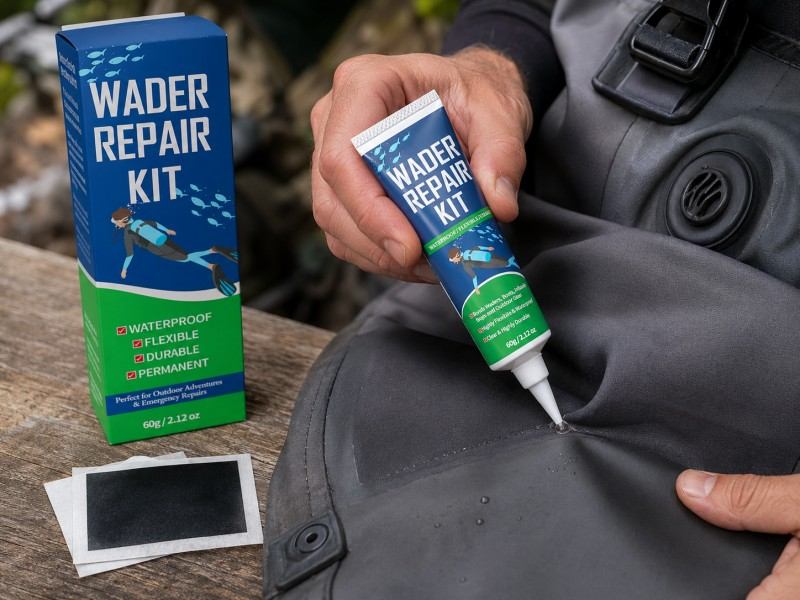
A 60 ml adhesive tube provides enough material for multiple punctures, seam work, patch bonding, and other outdoor equipment repairs while remaining compact enough for a fishing vehicle, workshop drawer, camping box, or seasonal maintenance kit.
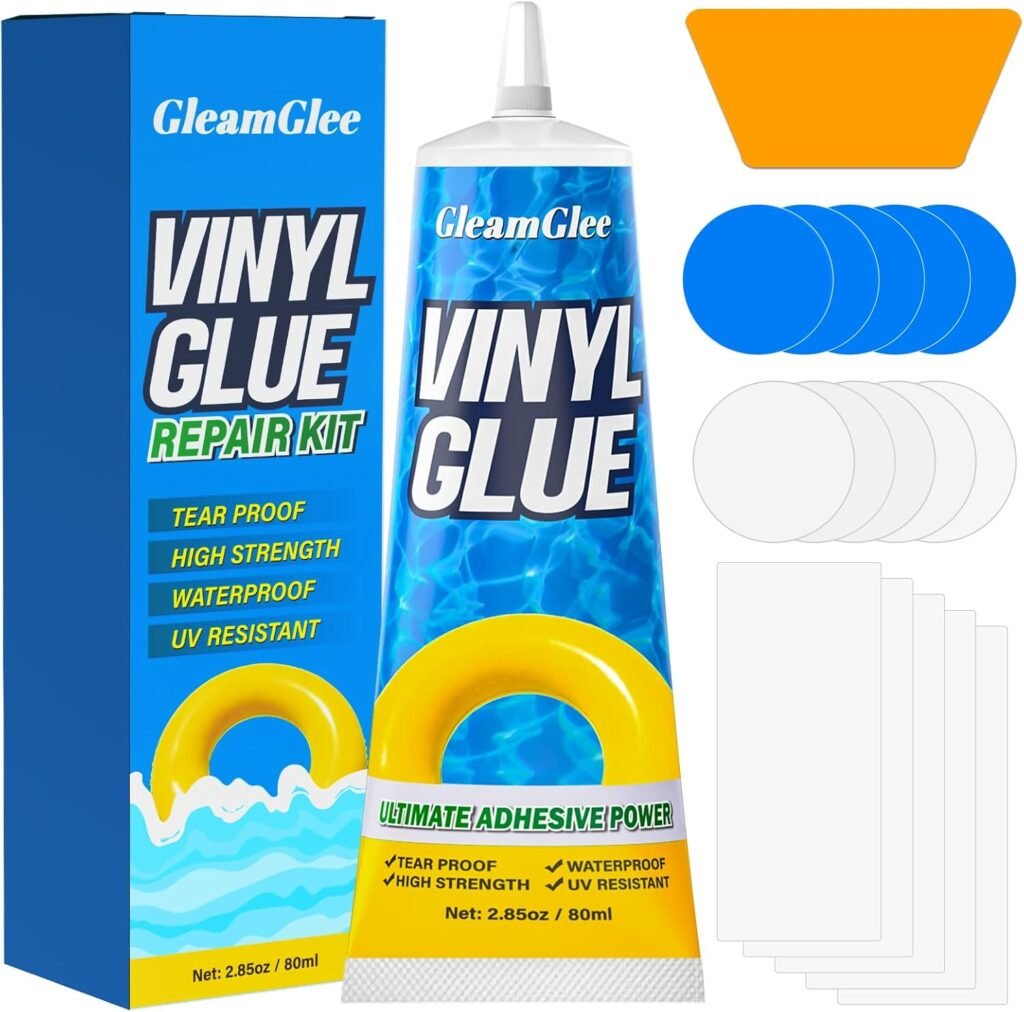
Black and clear patch sheets offer practical choices for neoprene, rubber, coated fabric, and visible shell panels. A precision applicator helps control small deposits, while a customizable nozzle can be cut to create a narrow opening for seams or a wider flow for larger patches.
The adhesive should list the materials it can bond, such as neoprene, rubber, PVC, polyurethane, leather, coated fabric, and breathable materials. Compatibility should still be confirmed against the specific construction of the waders.
A well-designed kit is also useful beyond fishing equipment. The same flexible repair approach may be suitable for waterproof boots, rainwear, dry bags, tents, tarps, gloves, gear bags, and other coated outdoor items when the listed material and repair conditions match.

Is the Damage Suitable for DIY Repair?
DIY repair is appropriate for isolated punctures, short tears, localized seam leaks, and small areas where the surrounding material remains strong. Widespread delamination, crumbling rubber, extensive seam-tape failure, repeated leakage, or damage involving weakened structural panels may require manufacturer service, professional repair, or replacement instead of additional glue.
Good Candidates for Home Repair
A small leak with a clearly identified source is the best candidate for home repair. Pinholes, hook punctures, narrow cuts, short seam leaks, and localized neoprene splits can often be treated successfully when the material around them remains flexible, firmly laminated, and free from widespread wear.
The damaged section should be accessible and capable of lying flat without excessive tension. Repairs made while the material is stretched may wrinkle, pull, or distort when the waders return to their natural shape.
Drying time must fit the repair schedule. Applying polyurethane glue in the morning and entering the water later that afternoon creates unnecessary risk when the formula requires 8–12 hours. A surface that no longer feels sticky may still contain uncured adhesive underneath.
After curing, flex the repair gently and inspect the perimeter for lifting, cracking, softness, or tackiness. A controlled water test should follow before the waders are used on a long trip or in deeper water.
Home repair is most dependable when the user can identify one limited failure, prepare the surface correctly, follow the cure instructions, and avoid placing immediate stress on the repaired location.
Warning Signs of Larger Failure
Delamination is different from an ordinary puncture. It may appear as bubbling, peeling, widespread darkening, or separation between fabric layers. Glue placed over a loose outer layer bonds to that layer rather than restoring the damaged laminate beneath it.
Long sections of peeling seam tape also indicate a broader problem. Sealing one visible opening may simply redirect water toward the next weak point. Extensive failure may require factory retaping, panel replacement, or professional assessment.
Rubber and PVC can age beyond practical repair. Multiple cracks, sticky surfaces, powdery residue, hardening, and easy tearing suggest that the material itself is deteriorating. A patch may hold temporarily while the nearby surface continues to split.
Repeated leakage from the same area deserves investigation. The repair may be rubbing inside a boot, folding sharply during storage, stretching under an incorrect fit, or sitting on a section where the coating has already failed.
Adding more adhesive without addressing the cause can create a larger stiff zone and make later service more complicated. When damage is widespread, professional repair or replacement may offer better value and safer performance.
Warranty, Testing, and Product Support
Check the wader manufacturer’s repair and warranty policy before applying third-party adhesive. Some brands provide factory inspection, authorized repairs, replacement panels, or coverage for certain seam and material failures. A large uncontrolled glue application can make later evaluation more difficult.
Photograph the damage before cleaning, record its location, and note the material, adhesive, application date, and cure conditions. These details are useful when monitoring the repair or discussing the failure with product support.
A dependable adhesive supplier should provide specific compatibility information, cure guidance, storage conditions, application instructions, and relevant safety documentation. Claims such as “super strong” or “works on everything” are less useful than clear information about materials, flexibility, waterproofing, and expected use.
Retailers, fishing brands, distributors, and private-label operators should evaluate samples under realistic conditions before approving a bulk order. Useful testing includes repeated flexing, water exposure, low-temperature conditioning, patch-edge inspection, abrasion checks, packaging compatibility, nozzle flow, and storage stability.
GleamGlee supports customized wader repair adhesives, 60 ml and alternative fill sizes, black and clear patch combinations, precision applicators, customizable nozzles, multilingual packaging, and private-label development. Production programs can be adapted for breathable fabric, neoprene, rubber, PVC, polyurethane, leather, and coated-material repair applications.
A productive quotation request should include the intended repair materials, target cure time, preferred package size, kit components, destination market, expected order volume, required languages, and compliance documentation. Clear specifications allow the formula, packaging, patch material, labeling, and testing plan to be matched to real fishing and outdoor repair conditions rather than a generic adhesive description.
Conclusion
Choosing the right wader glue starts with three practical questions: what material is being repaired, what type of damage has occurred, and how much movement the repaired area must tolerate. Small punctures and short seam leaks may only need a thin layer of flexible polyurethane adhesive, while larger tears, worn fabric, and boot connections often require both adhesive and reinforcement. The most dependable repair products remain waterproof, flexible, abrasion-resistant, and compatible with breathable fabrics, neoprene, PVC, rubber, polyurethane coatings, and other common outdoor materials.
A successful repair also depends on preparation and patience. Clean the damaged area carefully, keep the adhesive layer controlled, allow the full stated curing time, and avoid water testing before the bond has developed completely. When the surrounding material is badly delaminated, brittle, or weakened across a large area, professional repair or replacement may be more reliable than adding another layer of glue.
For outdoor brands, fishing-equipment retailers, distributors, and private-label businesses, GleamGlee can provide customized wader repair adhesives, patch combinations, precision applicators, multilingual packaging, and product testing support. Share the target materials, preferred cure time, package size, kit components, destination market, and estimated order volume to receive a more accurate quotation and product-development proposal.