Skip to content

Felt looks like one of the easiest materials to glue, but in real use it often exposes the difference between an average adhesive and a truly practical one. Many people try the first glue they find, press two felt pieces together, and assume the job is done. Then a few hours later they notice a dark stain where the glue soaked through, a hard patch that no longer feels soft, a corner that lifts after handling, or a decorative piece that looks messy from the front. That is why this topic matters so much. Felt is used in children’s school projects, holiday ornaments, costume trims, patch repairs, home decorations, quiet books, craft kits, handmade bags, and small clothing upgrades. In all of those uses, people are not only asking whether the glue can hold. They are asking whether the result will still look good, feel soft, and stay in place after normal use.
Yes, fabric glue can work very well on felt when the formula is chosen for textile bonding rather than rigid crafts. The best results usually come from a glue that dries clear, stays flexible, spreads in a controlled way, and does not flood the felt surface. For decorative felt projects, fabric glue is often enough on its own. For washable or wearable felt items, the glue needs better flexibility, cleaner drying, and stronger long-term hold.
What makes this question worth reading to the end is that felt projects usually fail in small but frustrating ways, not dramatic ones. A patch may stay attached but look stiff. A costume detail may hold for one night but peel on the second wear. A craft may look perfect on the table but cheap in the hand. These are exactly the points that matter to customers. A good felt glue result is not just about sticking power. It is about appearance, softness, ease of use, and confidence that the project will still look right tomorrow. That is also why more households, craft sellers, and private-label brands keep looking for fabric glues that feel simple in use but deliver a cleaner, more professional finish.
Does Fabric Glue Work On Felt For Crafts?
Yes, fabric glue works very well on felt for many craft projects, and this is one of the most common reasons people buy it in the first place. Felt is soft, easy to cut, and does not fray like many woven fabrics, so it is naturally suitable for no-sew making. In real customer use, fabric glue is often chosen for felt Christmas ornaments, quiet books, school projects, handmade flowers, wall decorations, felt letters, costume pieces, party banners, toy details, table décor, and DIY gift items. What most users really want is not just “stickiness.” They want a glue that keeps the felt flat, does not soak through badly, dries without obvious marks, and still leaves the felt soft enough to look good in the hand. For many decorative felt crafts, especially those with low pulling force and low wash exposure, fabric glue is often fully enough without sewing. This is why no-sew felt crafts remain popular with parents, teachers, Etsy sellers, and home crafters: the process is faster, easier, and usually cheaper than stitching every small piece by hand.
Does fabric glue work on felt for crafts?
For craft use, the biggest advantage of fabric glue is speed with a cleaner look. A felt ornament with 6 small layered shapes may take 15 to 25 minutes longer if each piece is hand stitched instead of glued. On a batch of 20 ornaments, that can mean 5 to 8 extra labor hours. For home users that means more work; for handmade sellers that directly affects profit. Glue is especially useful on flat craft elements such as stars, hearts, letters, circles, bows, animal shapes, and appliqués, because these parts usually need even placement more than seam strength. A good fabric glue also helps avoid puckering that sometimes happens when beginners sew small felt pieces too tightly. Another customer concern is front-side appearance. On felt, a poor glue job can leave dark wet-looking spots, hard ridges, or shiny residue. A better fabric glue reduces those risks by giving a more controlled bond line. In simple terms, fabric glue works on felt for crafts because most felt craft pieces are decorative, lightly handled, and depend more on neat assembly than on heavy-duty structural strength.
What craft projects work best with fabric glue on felt?
The best felt craft projects for fabric glue are the ones that stay mostly decorative or only face light bending and handling. These include ornaments, banners, scrapbooking accents, school craft boards, costume trims, felt flowers, felt name signs, soft book decorations, and holiday shapes. These projects usually do not carry weight, do not need load-bearing seams, and are not washed every week. That is why glue performs well here. In real use, many customers also prefer glue for felt crafts because it lowers the skill barrier. Someone with no sewing machine, no stitching experience, or limited time can still complete a clean-looking project. This matters a lot for parents preparing class materials, teachers managing 20 to 30 student projects, and small sellers producing seasonal stock in batches of 50, 100, or more units. The most successful craft glue jobs usually share the same conditions: flat contact area, moderate glue amount, full cure time, and a flexible clear-drying formula. When those conditions are met, felt craft results are often strong enough for normal display, storage, gifting, and repeated light handling.
| Felt Craft Type | Handling Level | Appearance Priority | Need for Flexibility | Glue-Only Suitability |
|---|---|---|---|---|
| Holiday ornaments | Low | High | Medium | Very high |
| Felt banners | Low | High | Medium | Very high |
| Felt flowers | Low to medium | High | High | High |
| Quiet book decorations | Medium | High | High | High |
| Costume trims | Medium | High | High | High |
| Classroom crafts | Medium | Medium | Medium | High |
| Plush toy surface details | Medium | High | High | High |
| Heavy felt seams | High | Medium | Medium | Low |
What problems do customers care about most in felt crafts?
Most customers are not asking technical glue questions. They are asking practical ones. Will the felt stay soft, or will it turn stiff? Will the glue show through pale felt? Will corners lift after two days? Will the ornament still look clean when I gift it? Will the craft survive being handled by a child? These are the real reasons people like or dislike a fabric glue. In felt crafts, appearance and touch matter almost as much as bond strength. A project can stay attached and still feel disappointing if the glued area becomes crunchy or messy. Over-application is one of the most common causes of poor results. Too much glue increases the chance of bleed-through, flattening, and hard patches. Uneven pressure can also create visible glue ridges. That is why many users get better results from a precision nozzle and a moderate glue amount rather than trying to cover the whole felt piece heavily. For most craft projects, a balanced glue line around the edge and a light interior application is enough. Customers also value curing time more than they first realize. A piece may feel secure after a few minutes, but if it is moved too early, edges can shift or weaken. Waiting the full cure period often makes the difference between a craft that “looks okay today” and one that still looks neat next week.
| Customer Concern | What Usually Causes the Problem | Better Practice |
|---|---|---|
| Glue shows through felt | Too much glue or thin felt | Use moderate amount and test first |
| Felt becomes hard | Heavy glue load or wrong formula | Choose flexible fabric glue |
| Corners lift | Too little edge coverage or early handling | Bond edges evenly and cure fully |
| Surface looks messy | Poor nozzle control | Use precision-tip application |
| Craft feels cheap | Stiff bond line or visible residue | Use clear-drying soft-finish glue |
| Piece fails after handling | Incomplete cure or weak pressure | Press evenly and wait full cure |
Overall, fabric glue works on felt for crafts because it matches what most craft users actually need: faster assembly, less skill required, lower tool cost, and a cleaner decorative finish on light- to medium-use projects. For customers making one item at home, this means less frustration and a better-looking result. For small craft sellers, it means better consistency, lower labor time, and easier batch production. For brands and bulk buyers, it means a product category with broad demand across school crafts, handmade décor, costume accessories, and no-sew DIY kits.
Why Does Fabric Glue Work on Felt?
Fabric glue works on felt because felt is one of the easier textile materials to bond without sewing. Unlike many woven fabrics, felt does not fray at the cut edge, so users do not have to fight loose threads while trying to attach shapes, trims, or patches. Its surface is made of compressed fibers, which gives the glue more texture to grip than smoother materials such as satin, coated fabric, or plastic-like surfaces. In everyday use, this means felt letters, felt flowers, ornaments, costume pieces, school crafts, and decorative patches are often easier to glue cleanly than many people expect. For customers, that translates into faster repairs, simpler craft work, and a much lower chance of the project falling apart just because they do not own a sewing machine.
Another reason fabric glue works well on felt is that most felt projects are not high-load applications. They are usually decorative, light-use, or medium-use items. A felt Christmas ornament is not being pulled like a backpack strap. A felt name banner is not taking the same stress as a trouser seam. A felt flower on a headband or a costume badge only needs enough bond strength to stay flat, survive handling, and keep a neat shape. That is exactly where a flexible fabric glue performs best. Customers usually care about three things at once: the piece stays attached, the front side still looks clean, and the bonded area does not turn hard like cardboard. When the glue dries clear and remains soft, felt keeps the fabric-like finish that customers actually want.
In real buying situations, people choose fabric glue for felt because it solves practical problems quickly. A teacher may need to finish 25 classroom felt pieces in one evening. A parent may need to repair a costume before the weekend. A small handmade seller may need to assemble 80 felt ornaments before holiday shipping deadlines. In those cases, glue is not just a substitute for sewing. It is often the most realistic method. The reason it works is simple: felt accepts adhesive well, the project type usually suits no-sew bonding, and a good fabric glue can save both time and effort without making the item look messy. That is why felt remains one of the strongest categories for no-sew fabric glue use.
Why does fabric glue work on felt so well?
The biggest reason is surface structure. Felt is made from fibers pressed together into a dense sheet rather than woven into a loose over-under pattern like cotton or linen. That gives glue a more stable surface to sit on and grip into. In simple customer terms, the glue has more “tiny fiber contact points” to hold than it would on a smoother material. This is also why felt usually feels easier to glue than silk, satin, or coated polyester. Those materials often let glue slide, spread, or sit too visibly on the surface. Felt, by contrast, is much more forgiving when the right amount of glue is used.
Another important point is edge behavior. Felt does not fray easily, which makes the whole bonding process more stable. On woven fabrics, once the edge starts loosening, the bond line can look untidy even if the glue is technically holding. With felt, the shape usually stays clean after cutting. That is a major benefit for felt stars, hearts, letters, flowers, circles, animal shapes, and layered craft panels. The user can focus on placement and finish instead of worrying about thread control. This is one reason felt is so widely used in beginner crafts and no-sew decoration kits.
It also works well because felt projects usually rely on surface bonding rather than seam engineering. Most customers are not trying to hold together a high-tension joint. They are attaching one felt layer to another, or felt to fabric, paperboard, ribbon, or another soft craft surface. In these cases, a good fabric glue has enough hold for normal use. The goal is stable attachment, not industrial assembly. That makes felt one of the most practical materials for glue-based crafting and light repair.
The table below shows why felt is easier to glue than many other soft materials.
| Material | Surface Texture | Fray Risk | Glue Control Difficulty | No-Sew Bonding Ease |
|---|---|---|---|---|
| Felt | Dense fibrous | Low | Low to medium | High |
| Cotton | Woven | Medium | Medium | Medium |
| Satin | Smooth woven | High | High | Low |
| Denim | Thick woven | Medium | Medium | Medium |
| Faux leather | Smooth coated | Low | High | Medium |
| Mesh fabric | Open structure | High | High | Low |
For most users, this means felt gives them a wider margin for error. Even if their glue line is not perfect, the project can still look good. That is one reason felt craft customers often become repeat buyers in the fabric glue category: the material itself helps them succeed faster.
Why does fabric glue work on felt for soft projects?
Soft projects need the glue to do more than create hold. They also need the finished area to stay flexible enough that the project still feels pleasant in the hand. This matters in felt flowers, quiet books, costume pieces, soft toy details, fabric decorations, decorative patches, and felt trims on clothing or accessories. If the glue dries too hard, the item may stay attached, but the customer still feels disappointed because the project loses its soft handmade quality. This is one of the main differences between a glue that merely works and a glue that customers actually like using.
Felt is naturally soft, slightly cushioned, and visually warm. That is why people choose it for children’s crafts, nursery décor, toy details, and seasonal handmade items. A stiff glue can ruin that effect very quickly. The best fabric glue for soft felt projects is one that bonds without creating a rigid board-like patch. In real-life use, customers notice softness immediately. A child touches the felt crown. A customer squeezes a felt ornament. A buyer bends a costume trim. If the glued section feels hard, the project immediately feels lower quality.
This is also why flexible formulas are more suitable for felt than many hard craft glues. Soft felt projects often bend during normal handling, storage, packaging, or wear. A costume patch folds at the shoulder. A quiet book piece is opened and closed many times. A felt flower petal curves when packed in a box. A fabric glue that stays slightly elastic after curing will move with the felt much better than one that becomes brittle. That improves not only comfort, but also edge performance. Flexible bonds are less likely to show stress whitening, cracking, or early lifting.
For craft sellers and bulk users, this matters financially as well. If a felt project looks good in photos but arrives with stiff edges or warped pieces, the customer may leave a low rating even if the item is still technically usable. That is why soft-project performance is directly tied to product reviews, reorder rates, and brand trust. A better glue reduces complaints and lowers remake costs.
The table below shows how softness affects customer satisfaction in felt projects.
| Soft Felt Project | Why Softness Matters | What Customers Notice First | Best Glue Trait |
|---|---|---|---|
| Quiet book pieces | Frequent bending | Edge feel and flexibility | Soft cured finish |
| Felt flowers | Shape and touch | Petal stiffness | Flexible hold |
| Costume trims | Body movement | Corner lift or crunchiness | Elastic bond |
| Plush toy details | Hand feel | Hard glue spots | Controlled application |
| Felt ornaments | Gift presentation | Neatness and softness | Clear soft-drying formula |
| Decorative patches | Wear comfort | Stiff border line | Flexible fabric bond |
For most customers, the project only feels successful when it still behaves like felt after the glue dries. That is why soft-project users tend to care more about finish and flexibility than about exaggerated strength claims.
Why does fabric glue work on felt without stiffness?
It works without stiffness when two things are correct: the glue formula and the glue amount. Most felt stiffness problems do not come from the felt itself. They come from using too much adhesive or choosing a glue that dries too rigid for textile use. In many failed projects, the user thinks the glue was “strong,” but what they really got was a hard patch. The felt no longer bends naturally, and the bonded zone feels thicker, flatter, and less attractive. For decorative felt work, that can ruin the result even if the bond does not break.
Over-application is one of the most common problems. Many customers assume more glue equals more security, but on felt that often creates the opposite of a premium finish. Felt can absorb liquid into its fiber body. If too much glue is used, the adhesive spreads deeper and wider than needed. Instead of holding the bond line only, it hardens a larger area. That is when customers notice darkened spots, flat shiny zones, rough texture, or crunchy edges. In light-colored felt, the effect is often even more obvious.
The second problem is formula mismatch. Some glues are designed more for rigid materials, hard craft assembly, or decorative surfaces that do not need flexibility. Those products may create a strong bond, but they are not ideal for felt because felt is expected to stay soft. A fabric glue designed for textiles is usually better because it is made to move more naturally with fibers. That helps the felt keep its original character after drying. For customers doing ornaments, trims, patches, costume pieces, or home décor, this matters far more than extreme bond language.
Application method also changes stiffness. A thin, even layer usually works better than a thick central blob. Many users get the best result by running a controlled line around the edge and adding only a light amount through the center. Even pressure matters too. Pressing too hard can force glue deeper into the felt and push it beyond the bond line. Gentle, even pressure usually gives a cleaner result.
The table below shows how glue amount changes the final feel of felt.
| Glue Amount | Hold Level | Soak-Through Risk | Stiffness Risk | Felt Feel After Drying |
|---|---|---|---|---|
| Very light | Medium | Low | Low | Soft, but edges may lift |
| Moderate | High | Low to medium | Low to medium | Best overall balance |
| Heavy | High | Medium to high | High | Strong but often stiff |
| Excessive | Unstable | High | Very high | Poor hand feel and messy finish |
This is why customers often prefer a precision-tip fabric glue for felt work. Better control means less waste, fewer visible marks, and a much better chance of keeping the project soft. In practical terms, a felt project looks more finished when the bond is almost invisible in use. The user should notice the design, not the glue.
Which Fabric Glue Works Best on Felt?
The best fabric glue for felt is usually not the one with the loudest strength claim. It is the one that gives the cleanest result after the project is finished and handled in real life. For most customers, that means four things matter most: the glue should dry clear, stay flexible, avoid heavy soak-through, and be easy to control on small shapes and edges. Felt is often used for ornaments, patches, letters, flowers, costume trims, school crafts, and decorative appliqués, so users care just as much about softness and appearance as they do about bond strength. A glue that holds but leaves hard dark patches is rarely seen as a good product by actual customers.
Different felt projects need different glue behavior. A felt flower for wall décor does not need the same bond as a felt patch on a child’s cardigan. A classroom craft piece does not face the same stress as a washable felt badge on a tote bag. This is why customers often get mixed results when they use one random glue for everything. The best fabric glue for felt-to-felt crafts is usually a flexible, clear-drying glue with a controlled nozzle. For felt patches and decorative repairs, the best choice is often a glue that combines clean appearance with stronger edge hold. For washable felt use, flexibility after drying becomes even more important because the bond has to survive bending, moisture, and movement without turning stiff or lifting.
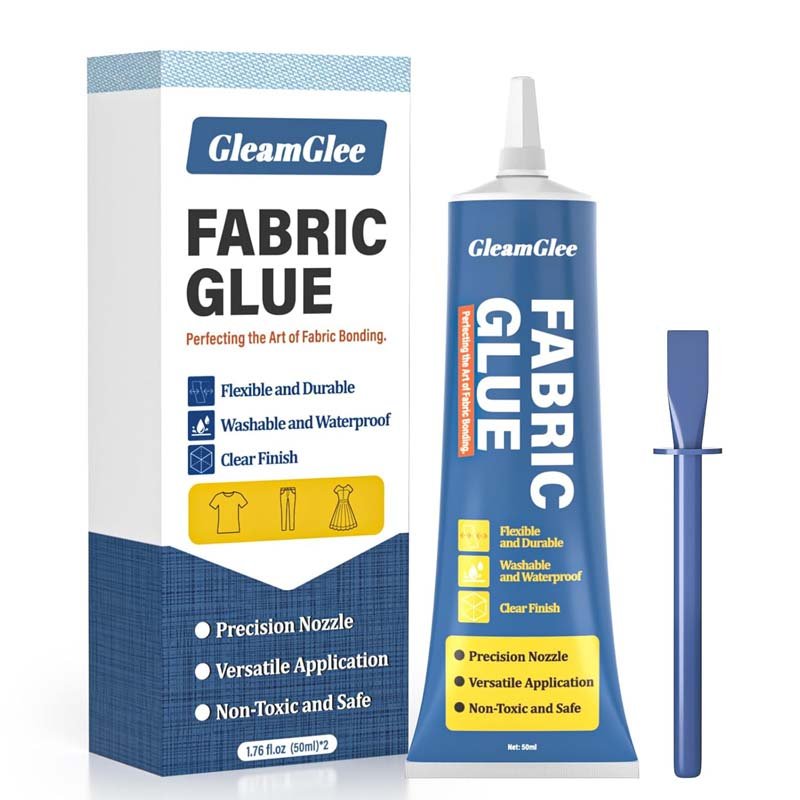
In practical buying terms, the best fabric glue for felt is one that lowers mistakes and gives repeatable results. Customers want less mess, less waste, and fewer failed projects. Small handmade sellers want fewer remakes. Parents want a project that still looks neat after a school event. Costume users want trims that stay flat. Private-label buyers want a formula that performs across a wide range of no-sew textile uses. That is why a fabric glue like GleamGlee, with clear drying, flexible curing, washable support, and precision application, matches felt work especially well. It covers the most common felt customer needs instead of focusing on only one narrow use case.
Which fabric glue work on felt for felt-to-felt bonding?
Felt-to-felt bonding is one of the easiest and most common uses for fabric glue, but the best result still depends on how neatly the glue behaves. Most felt-to-felt jobs are decorative. They include layered ornaments, felt flowers, banner letters, costume shapes, children’s crafts, quiet book parts, badges, and small accessories. These projects usually do not need industrial-level strength, but they do need consistency. If the glue grabs too slowly, the layers slide. If it spreads too much, the felt shows dark patches. If it dries too hard, the finished piece loses its soft textile feel. That is why the best glue for felt-to-felt bonding is usually one with a moderate body, a clear finish, and a flexible cure.
What customers notice first in felt-to-felt work is edge quality. A centered bond may still hold well, but if the corners lift, the item immediately looks cheap or unfinished. This is especially important in front-facing decorative products sold online. A handmade felt ornament or custom name banner can look beautiful from a distance, but edge lift becomes obvious in close-up photos and in customer hands. In batch production, this has a real cost. If a small seller produces 100 felt ornaments and 8% develop visible edge issues, that is 8 pieces needing repair or replacement. If each one takes 5 minutes to fix, that is 40 minutes of extra labor on one batch, not including lost material.
The best felt-to-felt glue also needs to help with small shape control. Felt letters, petals, stars, bows, and animal details often have curves or narrow points. A wide glue opening creates too much spread and makes the work look rough. A precision-tip nozzle improves placement and reduces over-application. That is why many users get better results from a textile-oriented fabric glue than from a thick craft glue meant for broad surfaces.
What matters most in felt-to-felt bonding:
- Clean edge hold
- Low seepage through the felt
- Soft finish after drying
- Enough working time to position the piece
- Controlled nozzle for small shapes
Best felt-to-felt use cases for fabric glue:
- Layered holiday ornaments
- Felt flowers
- Banner letters and numbers
- Quiet book decorations
- Costume shapes and badges
- Classroom felt craft pieces
| Felt-to-Felt Project | Stress Level | Appearance Priority | Best Glue Type | Main Risk if Glue Is Wrong |
|---|---|---|---|---|
| Layered ornaments | Low | High | Clear flexible fabric glue | Edge lifting |
| Felt letters | Low | High | Precision-tip fabric glue | Glue marks |
| Felt flowers | Low to medium | High | Soft flexible glue | Stiff petals |
| Quiet book pieces | Medium | High | Flexible stronger-hold glue | Uneven corners |
| Costume felt shapes | Medium | High | Elastic fabric glue | Curling edges |
| School crafts | Medium | Medium | Easy-flow fabric glue | Messy placement |
For most customers, the best felt-to-felt glue is the one that keeps the project looking soft and clean after 24 hours, not just the one that feels sticky in the first 2 minutes. That is why flexibility and application control matter more than raw thickness alone.
Which fabric glue work on felt for patches?
Felt patches put more pressure on the glue than simple felt crafts do because the patch has to stay flat while also blending into the item naturally. People use felt patches on costumes, children’s clothing, tote bags, hats, aprons, fabric bins, decorative pillows, and school projects. In all of these cases, the customer usually wants the same end result: the patch should look intentional, not temporary. That means the best glue for felt patches needs to do more than hold the center down. It needs strong edge performance, flexible movement, and a clean finish.
Patch jobs often fail at the perimeter first. A patch may look fine on day one, but after folding, wearing, or simple handling, one corner starts to lift. Once that happens, the whole piece looks weaker, even if 90% of the patch is still attached. This is why edge coverage is more important than many users think. A balanced application, especially around the patch outline, usually works better than flooding the middle. For medium-size patches, many users get cleaner results by applying a steady glue line around the edge and a lighter amount inside.
Patch size also changes what “best glue” means. A tiny decorative felt star patch on a tote bag does not need the same bond behavior as a larger felt elbow patch on a child’s sweater. The larger the patch, the more important flexibility becomes, because more surface area means more bending and more visible stress. Thin felt patches also need more care because over-application can show through from the front. On thick felt, the risk is different: users often apply too much glue, which creates a stiff border and makes the patch look bulky.
Best glue features for felt patches:
- Strong but flexible edge hold
- Clear drying finish
- Easy control on patch borders
- Low risk of bleed-through
- Comfortable feel after drying
Patch situations where glue works best:
- Decorative patches on bags
- Costume patches
- School project patches
- Felt badges on hats
- Light clothing appliqué patches
- Home décor textile patches
When to be more careful:
- High-movement areas like elbows and knees
- Washable patches on children’s clothing
- Large front-facing patches on thin felt
- Patches near seams or folds
| Patch Type | Movement Level | Wash Exposure | Best Glue Priority | Glue-Only Suitability |
|---|---|---|---|---|
| Decorative patch on bag | Medium | Low | Flexible clean finish | High |
| Costume patch | Medium | Low | Soft edge hold | High |
| School patch | Medium | Low | Easy application | High |
| Felt patch on light clothing | Medium | Medium | Washable flexibility | Good |
| Large felt patch on sweater | High | Medium | Strong flexible bond | Fair to good |
| Patch at seam/load point | High | Medium to high | Glue + stitch support | Low |
For customers, the best patch glue is not simply the one that makes the patch impossible to remove. It is the one that keeps the patch flat, comfortable, and good-looking after wear. That is why a flexible permanent fabric glue is usually the better choice for felt patches than a rigid general craft adhesive.
Which fabric glue work on felt for washable use?
Washable felt use is where glue choice becomes much more serious. Many glues can hold felt in a dry decorative setting, but far fewer stay neat after water, detergent, heat, and repeated movement are introduced. Customers usually discover this difference only after the first wash. The felt patch stays attached, but the edges start to lift. Or the bond survives, but the glued area becomes hard and unnatural. Or the patch still holds, but the front side shows a darker, flatter zone that looks obvious. That is why washable felt use needs a glue that balances hold, flexibility, and appearance.
The best glue for washable felt is usually a flexible permanent fabric glue that is made for textile movement rather than rigid assembly. Washable felt projects include decorative clothing patches, costume details, felt badges on bags, soft home textile accents, and light repair uses. In these projects, the glue must survive three common stresses:
- Moisture exposure
- Bending during wear
- Friction and movement during washing or handling
A practical way to judge washable felt use is by frequency. If the item is only cleaned occasionally, glue-only bonding can often work very well when the glue is flexible and fully cured. If the item is washed often, especially on children’s clothing or frequently used fabric accessories, the project needs more caution. The user should not only choose a washable glue, but also allow the full cure period before the first wash. This matters more than many people expect. A patch that is washed too early may fail not because the glue is weak, but because the bond was interrupted before it reached full strength.
For real customers, washable performance is closely linked to satisfaction. A glue that survives one photo-ready day but fails after one wash creates disappointment and negative reviews. A glue that stays clear, soft, and stable after care builds trust. This is one reason GleamGlee Fabric Glue is well suited to felt use. Its machine-washable and ironable positioning, combined with a clear and flexible finish, addresses exactly what washable felt customers care about most.
Best washable felt uses for fabric glue:
- Felt appliqué on light-use clothing
- Decorative felt badge on tote bags
- Felt trim on costume items
- Felt accent on cushion covers
- Light washable repairs on fabric accessories
Most common washable felt problems:
- Edge lift after first wash
- Hard feel after drying
- Patch curling on folds
- Visible glue shadow under light felt
- Weak bond from washing too soon
| Washable Felt Application | Wash Frequency | Risk Level | Best Approach | Expected Result |
|---|---|---|---|---|
| Decorative felt patch on clothing | Low to medium | Medium | Flexible washable fabric glue | Good |
| Felt costume detail | Low | Low | Glue only | Very good |
| Felt badge on tote | Low | Medium | Glue only with full cure | Good |
| Felt detail on pillow cover | Medium | Medium | Careful glue-only use | Good |
| Children’s washable felt patch | Medium to high | High | Glue + optional stitching | Better security |
| High-stress felt repair | High | High | Glue plus stitching | Best long-term result |
For washable felt use, the best glue is the one that still looks acceptable after care. Customers do not only judge whether the patch stayed attached. They judge whether the felt still looks soft, flat, and natural after the item comes out of the wash. That is why washable felt projects should always use a glue chosen for fabric performance, not just for quick stickiness.

How Does Fabric Glue Work on Felt?
Fabric glue works on felt by bonding to the felt’s compressed fiber surface and creating a flexible hold between two layers without sewing. Felt is easier to glue than many other fabrics because it does not fray much, it stays flat after cutting, and its surface gives the adhesive enough texture to grip. In real customer use, this is why felt ornaments, quiet book pieces, decorative patches, costume trims, letters, flowers, and school crafts can often be assembled successfully with glue alone. What matters most is not putting on a large amount of adhesive. It is applying the right amount in the right place so the felt stays soft, neat, and flat after drying.
For most users, the process works best when it follows three simple rules: keep the felt surface clean, use a controlled glue line, and allow enough curing time before handling, washing, or wearing. Many felt glue failures do not happen because the product is weak. They happen because the felt had lint on it, the glue was over-applied, the piece was pressed unevenly, or the item was used before the bond had fully cured. In daily life, that means a patch may curl at the corners, an ornament may shift slightly, or the felt may become stiff and dark where too much glue soaked through. These are usually application problems, not just glue problems.
Customers also need to understand that felt glue work has two stages: early hold and full cure. A project may feel attached in several minutes, but that does not mean it is ready for bending, packing, or washing. With a product like GleamGlee Fabric Glue, users can usually press the felt into place, let it set in about 6 to 10 minutes, and then allow around 24 hours for full cure. That time gap matters. For craft users, it improves appearance. For wearable items, it improves durability. For small sellers, it reduces remakes and customer complaints. In simple terms, fabric glue works on felt when the user treats the job like a textile project, not just a quick sticky fix.
How does fabric glue work on felt step by step?
The best felt glue result usually starts before the glue is opened. Many customers focus only on the adhesive, but preparation makes a big difference. Felt collects lint, dust, tiny loose fibers, and packaging debris very easily. If these stay on the bonding area, the glue may attach to the surface dust instead of the felt itself. That weakens the bond and increases the chance of edge lifting later. For a home user, one minute of prep often saves ten minutes of fixing.
A clean, step-by-step method gives more repeatable results, especially on patches, letters, flowers, costume parts, and decorative trims.
A practical felt-gluing process:
- Check the felt surface and remove lint or loose fibers
- Dry-fit the felt piece before applying glue
- Apply a controlled glue line, especially around edges
- Press evenly without forcing glue through the felt
- Let the piece set undisturbed
- Wait for full cure before bending, washing, or packing
Dry positioning is more important than many users think. If a user applies glue first and then starts adjusting the piece, the felt can shift by 1 to 3 mm. On a plain patch that may not matter much, but on letters, layered flowers, costume badges, and decorative ornaments, even a small shift can make the work look less professional. This is why experienced craft users often place all felt parts first, check spacing, and only then start gluing.
The amount of glue also changes the whole result. For many felt jobs, a moderate bead around the edge and a lighter amount through the middle works better than coating the entire back heavily. Too little glue can lead to edge lift. Too much glue can cause stiffness, dark seepage, and longer drying time. In real use, moderate application usually gives the best balance between hold and softness.
What customers should expect during the process:
- Small felt shapes usually need less glue than expected
- Thin felt shows over-application faster than thick felt
- Edges usually matter more than the center
- Full cure matters more than early tack
- Clean handling improves final appearance
| Step | What to Do | Why It Helps | Common Mistake |
|---|---|---|---|
| 1 | Remove lint and dust | Improves direct contact with felt fibers | Gluing over debris |
| 2 | Dry-fit the piece | Prevents misalignment | Moving parts after glue is applied |
| 3 | Apply moderate glue | Balances hold and softness | Flooding the felt |
| 4 | Press evenly | Improves bond consistency | Pressing too hard in one spot |
| 5 | Let it set | Keeps parts from shifting | Touching too early |
| 6 | Wait full cure | Improves long-term hold | Using or washing too soon |
For customers making one item at home, this process keeps the project cleaner and easier. For sellers making 50 or 100 felt items, this process also saves labor. If rework drops from 10 pieces per 100 to 3 pieces per 100, and each correction takes 4 minutes, that saves 28 minutes every 100 units. Over larger batches, that becomes meaningful production time.
How does fabric glue work on felt without soaking through?
Preventing soak-through is one of the biggest quality concerns in felt work. When glue soaks through, the front side can show darker patches, shiny spots, flattened fibers, or rough texture. Even if the bond is strong, customers often still dislike the result because the felt no longer looks soft or clean. This problem is especially obvious on white, cream, pastel, or thin felt, where extra glue becomes visible much faster.
The main cause of soak-through is usually not poor luck. It is too much glue, too much pressure, or a glue flow that is too hard to control. Felt can absorb adhesive into its fiber body, so once the glue amount goes past what the bond line actually needs, the extra liquid starts moving deeper and wider than intended. That is why many users get better results from a precision-tip nozzle and a moderate bead than from trying to spread a large amount across the full back surface.
Ways to reduce soak-through on felt:
- Use a moderate glue amount, not a heavy coat
- Focus glue around the edge and stress points
- Test first on thin or light-colored felt
- Use steady light pressure instead of hard pressing
- Let the adhesive sit undisturbed instead of squeezing it repeatedly
Thin felt needs extra care because it gives users less room for error. Thick felt can hide some glue better, but that often creates a false sense of safety. People then apply too much, which can leave a stiff border or a bulky feel. Decorative front-facing felt also needs more caution than hidden inner layers because any glue shadow becomes part of the visible finish.
Another issue is pressing method. Some users think harder pressing creates a stronger bond. On felt, overly heavy pressure often forces glue outward and downward, which increases the chance of front-side marks. Even light pressure usually works better than aggressive flattening.
Signs that soak-through may happen:
- The glue bead looks too wet or wide
- The felt darkens immediately after pressing
- The piece feels overly saturated before curing
- Glue spreads beyond the intended bond area
- The front surface looks flatter before it dries
| Cause of Soak-Through | What Happens | Better Practice |
|---|---|---|
| Too much glue | Dark patches, hard zones | Use moderate controlled application |
| Thin felt | Front-side marks show easily | Test on a scrap first |
| Heavy pressing | Glue forced deeper into felt | Use even gentle pressure |
| Poor nozzle control | Adhesive spreads too wide | Use precision-tip application |
| Full-back flooding | Uneven cure and visible shadowing | Focus on edges and light center coverage |
For customers, this matters because appearance is often the whole reason they choose fabric glue instead of rough stitching or a bulky craft adhesive. They want the project to look cleaner, not messier. A glue that works on felt without obvious soak-through protects the look of ornaments, patches, appliqués, costume parts, and decorative letters far better.
How does fabric glue work on felt after drying?
After drying, the real quality of the felt bond becomes much easier to judge. At this stage, customers can feel whether the glue matched the project or not. A good result usually has several clear signs: the felt stays attached, the edges remain flat, the front side still looks neat, and the bonded area still bends naturally. In other words, the felt should still feel like felt, not like thin cardboard with glue inside it.
Customers usually notice four things first after drying:
- Whether the edges stay down
- Whether the felt feels soft or hard
- Whether glue marks show on the front
- Whether the piece still bends naturally
A good dried result often feels almost unremarkable, and that is actually a good sign. The user notices the design, patch, flower, letter, or ornament itself, not the glue. A poor result feels different right away. The bond area may become crunchy, too flat, shiny, or thick. Corners may lift slightly when the felt bends. On wearable or washable projects, these problems become even more obvious after use.
Drying time also affects what users see. There is a big difference between “touch-safe” and “fully cured.” A felt patch may seem attached after a short set time, but still remain vulnerable if it is folded, packed, or worn too soon. For projects that matter visually, allowing the full cure window is one of the easiest ways to improve results without changing anything else. This is especially important for costume pieces, bag patches, light clothing repairs, and products prepared for sale.
What a good dried felt bond looks like:
- Clear or nearly invisible glue line
- Soft, slightly supported feel
- Flat edges with no obvious curling
- No dark seepage on the face side
- Stable hold after light bending
What a poor dried felt bond looks like:
- Crunchy or board-like area
- Corner lift after bending
- Shiny residue or dark marks
- Thick uneven glue line
- Distorted or flattened felt texture
| After-Drying Result | What It Means | Customer Reaction |
|---|---|---|
| Clear, soft, flat finish | Good glue match and good application | Very positive |
| Strong hold, slight stiffness | Acceptable for décor, less ideal for wear | Mixed |
| Visible dark marks | Too much glue or soak-through | Negative |
| Edge curl after bending | Weak edge bond or early handling | Negative |
| Hard patch feel | Over-application or rigid formula | Negative |
| Clean finish after use | Strong practical performance | Strongly positive |
For most customers, the dried stage is the real test. They are not buying glue only for the first 10 minutes. They are buying for how the project looks and feels the next day. That is why a fabric glue like GleamGlee, which is designed to dry clear, stay flexible, and support washable textile use, fits felt work well. It helps the finished felt piece stay closer to what customers wanted in the first place: soft, neat, and reliable.
Is The Fabric Glue Work on Felt Strong Enough?
Yes, fabric glue can be strong enough for felt, but the real answer depends on what “strong enough” means in daily use. For most decorative felt work, light repairs, costume pieces, felt patches, banners, ornaments, letters, quiet book parts, and many home crafts, a good flexible fabric glue is usually fully enough. In these projects, the felt does not need to carry heavy weight or survive constant pulling. What customers usually want is much more practical: the piece should stay flat, the edges should not lift, the felt should still feel soft, and the bond should still look neat after handling. In those conditions, fabric glue often performs very well.
The question becomes more serious when the felt piece is used on clothing, bags, children’s items, or anything that bends, rubs, folds, or gets washed. This is where customers often get confused. A glue can be “strong” in the sense that it bonds quickly, but still give disappointing results if the edge curls, the felt turns hard, or the patch loosens after movement. For felt, strength is not only about force. It is also about flexibility, edge stability, and how well the bond handles repeated use. A felt patch that stays attached but becomes stiff and uncomfortable does not feel like a good result to most users.
For that reason, the best way to judge felt glue strength is by project type, not by one single claim. Decorative felt projects usually need clean attachment and light durability. Wearable felt items need more flexibility and better long-term hold. Washable felt items need even more care in glue choice and curing time. High-stress seams and load points are different again, and sometimes stitching should be added. In simple terms, fabric glue is strong enough for a large part of real felt use, but the smartest results come when the user matches the glue method to the actual stress level of the project.
Is the fabric glue work on felt for daily wear?
For light daily wear, yes, fabric glue can be strong enough on felt when the felt piece is decorative or lightly functional. Good examples include felt badges, costume shapes, appliqué-style patches, decorative trims, soft labels, and flat felt accents on clothing or accessories. These projects usually do not carry heavy load, but they do face repeated bending and rubbing. In these situations, the bond needs to do more than simply stick on day one. It needs to stay flat after movement and keep the felt from looking damaged or awkward after normal wear.
The biggest challenge in daily wear is not usually the center of the bond. It is the edges. A felt patch can look perfect right after application, then start lifting at one corner after being worn several times. Once that happens, the item looks unfinished even if most of the patch is still attached. This is why edge bonding matters so much. A good flexible fabric glue usually performs better here than a rigid craft glue because it moves more naturally with the garment. If the felt sits on a flat, low-stress area, glue-only bonding is often enough. If the felt sits on elbows, knees, cuffs, or other high-motion zones, the job becomes more demanding.
Customers should also think about comfort. A stiff patch on a cardigan or children’s shirt may stay attached, but it can feel scratchy, thick, or unnatural. That often matters more to users than pure holding force. For daily wear felt, the best result is usually a bond that feels almost invisible in use.
Daily-wear felt uses where glue often works well:
- Felt badges on the chest or sleeve
- Decorative felt patches on tote bags
- Costume felt appliqués
- Soft felt trims on hats
- Flat felt labels on fabric organizers
- Light felt accents on aprons or craft wear
Daily-wear situations that need more caution:
- Elbows and knees
- Bag openings and fold points
- Areas near seams
- Children’s clothing with frequent movement
- Parts exposed to repeated pulling
| Daily-Wear Felt Use | Movement Level | Glue-Only Suitability | Main Customer Concern |
|---|---|---|---|
| Chest badge | Low | Very high | Neat appearance |
| Costume appliqué | Medium | High | Flexibility |
| Tote bag badge | Medium | High | Edge lift |
| Hat trim patch | Medium | High | Curved fit |
| Elbow patch | High | Fair | Repeated bending |
| Seam-adjacent felt piece | High | Low to fair | Long-term hold |
A useful way to think about it is this: for decorative daily-wear felt, fabric glue is often strong enough. For high-motion felt wear, it is better to be selective and sometimes combine glue with stitching if the item will be used often.
Is the fabric glue work on felt for décor and DIY?
This is the category where fabric glue is most often strong enough, and in many cases it is the most practical option. Felt décor and DIY projects usually need the bond to survive display, storage, packaging, gifting, and repeated light handling. They do not usually need to carry weight like a strap or hold tension like a seam. That is why fabric glue works so well for felt ornaments, flowers, banners, party decorations, wall hangings, quiet books, nursery decorations, table accents, and handmade seasonal crafts.
For these projects, customers care a lot about labor time. Sewing every small felt part by hand can slow down a project quickly. If one felt flower takes 6 extra minutes to stitch compared with gluing, then 50 flowers mean 300 extra minutes, or 5 extra hours of work. For a home crafter that may be tiring. For a small business, that directly affects cost and delivery speed. This is one reason glue remains so popular in felt décor work: it gives enough strength for the project while saving a large amount of time.
Another reason fabric glue is strong enough in décor and DIY is that most felt craft parts are flat or layered rather than load-bearing. A layered star ornament, a felt flower center, or a banner letter mostly needs stable surface bonding. These are exactly the kinds of jobs where a flexible clear-drying fabric glue performs best. When applied correctly, the bond is strong enough for normal handling, seasonal storage, and display across months or even longer.
Felt décor and DIY uses where glue performs very well:
- Christmas ornaments
- Felt flowers
- Name banners
- Quiet book shapes
- Wall décor elements
- Table decorations
- Handmade gift embellishments
- School display crafts
Why glue is often the better choice in this category:
- Faster than hand sewing
- Cleaner on flat decorative pieces
- Easier for beginners
- Lower tool cost
- Better for batch production
- Keeps small shapes flatter than some stitches
| Felt DIY or Décor Project | Stress Level | Appearance Priority | Glue Strength Need | Glue-Only Suitability |
|---|---|---|---|---|
| Holiday ornament | Low | High | Medium | Very high |
| Felt flower | Low | High | Medium | Very high |
| Banner letter | Low | High | Medium | Very high |
| Quiet book part | Medium | High | Medium to high | High |
| Party decoration | Low | High | Medium | Very high |
| Table décor trim | Low | High | Medium | Very high |
| Nursery wall décor | Low | High | Medium | Very high |
For décor and DIY, the main issue is usually not whether the glue is strong enough. It is whether the user applied it neatly enough to keep the felt soft and attractive. In this category, a good fabric glue is often more than enough.
Is the fabric glue work on felt after washing?
Yes, fabric glue can work on felt after washing, but this is where the project needs more careful judgment. Washable felt use is more demanding because water, detergent, friction, bending, and drying all put stress on the bond. A felt patch that looks excellent in a dry decorative setting may behave very differently after one or two washes. Customers often find that out too late. The patch is still attached, but the edges curl slightly. Or the bond survives, but the area turns hard. Or the patch holds, but the felt no longer looks natural. That is why washable felt work needs more than quick sticking power.
The strongest washable results usually come from three conditions working together:
- A flexible washable fabric glue
- Moderate and controlled application
- Full cure before the first wash
If one of these is missing, the result becomes less reliable. Many washable felt failures happen because the user washes too soon. A bond that feels secure after several minutes is not the same as a bond that has fully cured over about 24 hours. Another common problem is over-application. Too much glue may hold at first, but after washing it can leave the felt stiff or overly flattened. Customers often judge this as a failure even if the felt is technically still attached.
Washable felt use is usually most successful on decorative or light-use items rather than high-stress repair zones. A felt appliqué on a light garment can work well. A decorative badge on a fabric tote can work well. A felt accent on a costume used occasionally can also work well. But if the felt sits on a heavily flexed washable area, the job becomes much harder and sometimes benefits from glue plus stitching.
Washable felt projects where glue can work well:
- Decorative felt patch on light clothing
- Felt appliqué on costume wear
- Felt badge on tote bags
- Felt accent on pillow covers
- Light washable school or craft items
Reasons washable felt jobs fail:
- First wash happens too soon
- Too much glue makes the felt stiff
- Patch is placed in a high-stress area
- Edge coverage is uneven
- The wrong glue type is used for textile movement
| Washable Felt Application | Wash Stress | Glue-Only Suitability | Main Risk |
|---|---|---|---|
| Decorative patch on shirt | Medium | Good | Edge curl |
| Costume felt detail | Low | Very good | Minor lifting after folding |
| Tote bag felt badge | Medium | Good | Corner peel |
| Pillow cover felt accent | Medium | Good | Surface stiffness |
| Children’s felt patch | Medium to high | Fair to good | Rough handling |
| High-stress washable repair | High | Low | Bond fatigue |
For customers, washable strength should be judged by appearance after care, not just attachment alone. If the felt still looks soft, flat, and clean after washing, then the glue has done its job well. That is why a flexible, clear-drying, washable fabric glue is usually the best option for felt items that need to survive care.
What strength level should customers expect from fabric glue on felt?
Most customers do better when they stop thinking in only two extremes, “weak” or “super strong,” and instead judge felt glue by use level. Fabric glue on felt is usually strong enough for low-stress and medium-stress projects, and sometimes for washable use when the conditions are right. It is less suitable as the only method for high-stress seams, load points, or parts that take repeated hard pulling.
A simple customer-friendly way to think about felt glue strength is this:
Low-stress felt projects:
- Ornaments
- Banners
- Felt flowers
- Wall décor
- Gift decorations These are usually excellent for glue-only bonding.
Medium-stress felt projects:
- Costume appliqués
- Felt patches on bags
- Quiet book pieces
- Light clothing accents
- Decorative washable patches These are often good for glue-only bonding if the glue is flexible and fully cured.
High-stress felt projects:
- Elbow or knee patches on active wear
- Strap areas
- Felt parts near seams
- Frequently washed children’s repairs
- Load-bearing decorative attachments These may need glue plus stitching.
| Project Stress Level | Examples | Expected Glue Performance | Best Recommendation |
|---|---|---|---|
| Low | Ornaments, banners, flowers | Very strong for intended use | Glue only |
| Medium | Costumes, patches, quiet books | Strong enough in most cases | Glue only or reinforce if needed |
| High | Elbows, seams, straps | Less reliable alone | Glue + stitching |
For most real felt uses, fabric glue is strong enough when the felt is decorative, flat, lightly handled, or only moderately stressed. That covers a large share of what home users, craft businesses, and accessory makers actually do. The key is not expecting one no-sew method to replace every textile construction method. When customers match the glue to the project, felt bonding can be both practical and durable.
Does Fabric Glue Work on Felt with GleamGlee?
Yes, fabric glue can work very well on felt with GleamGlee, especially for customers who want a clean no-sew result without making the felt look stiff, messy, or overly glossy. Felt users usually care about a few very practical things: the glue should stay where they put it, dry without obvious marks, hold edges down, and still let the felt feel soft after curing. GleamGlee fits these needs well because its product facts are directly aligned with what felt customers actually complain about most in daily use. The glue is designed to dry clear, stay flexible, support machine washing and ironing, and come with an applicator for easier control. For felt ornaments, patches, costume shapes, letters, flowers, trims, and light fabric repairs, those features matter much more than exaggerated strength language.
Another reason GleamGlee works well on felt is that it matches how customers really use fabric glue at home and in small businesses. Many users are not doing industrial repairs. They are fixing a child’s costume, attaching a felt patch to a fabric item, assembling a batch of felt decorations, making school project materials, or creating handmade products for online sale. In these situations, the best glue is usually the one that reduces mistakes and gives a cleaner finish with less effort. GleamGlee’s 6 to 10 minute set time and full cure in about 24 hours also fit normal user behavior. People want a product they can use on the same day without needing sewing tools, while still getting a bond that becomes stronger and more stable by the next day.
From a product and sourcing point of view, GleamGlee is also attractive because it covers a wide range of felt-related use cases rather than only one narrow application. It can support clothing alterations, decorative craft work, patches, trims, ribbons, sequins, and felt-based DIY projects with one formula. That gives end users more value from one tube, and it gives B2B buyers a product that is easier to position in multiple sales channels. With 50g single-tube and 50g two-pack options, plus OEM and private-label support, GleamGlee is not only suitable for personal use but also commercially practical for online sellers, distributors, and retailers who want a felt-friendly fabric glue that solves real customer pain points.
Does fabric glue work on felt with a clear finish?
A clear finish is one of the most important reasons GleamGlee works well on felt. Felt is often chosen because it looks soft, warm, clean, and handmade in a good way. When the glue leaves visible white marks, yellowing, shiny crust, or dark seepage, the whole project looks cheaper, even if the bond still holds. This is especially true for light-colored felt, decorative patches, front-facing ornaments, felt flowers, letters, and layered craft pieces. Customers usually notice the appearance problem before they even judge the holding strength. That is why a clear-drying glue has such strong value in felt work.
GleamGlee is positioned as a transparent, non-yellowing fabric glue, which is a major advantage for felt projects that will be seen up close. In practical terms, this helps users keep the focus on the design itself instead of on the glue line. A felt heart on a gift decoration should look soft and neat. A felt letter on a banner should look centered and clean. A felt patch on a clothing item should look intentional, not obviously glued on in a rush. Clear drying helps achieve that.
For handmade sellers, this matters even more because appearance directly affects conversion. Close-up listing photos on Amazon, Etsy, Shopify, or social media can quickly reveal if a felt product has messy glue marks. A cleaner finish supports better product images, stronger perceived quality, and fewer complaints after delivery. If even 5 out of 100 handmade felt pieces are judged unattractive because of visible glue marks, that can already mean extra remake cost, wasted material, and lower review quality.
Why a clear finish matters on felt:
- Light-colored felt shows glue marks easily
- Decorative pieces are often viewed up close
- A visible glue line makes the item look less premium
- Clear drying supports gifting, selling, and display use
- Clean finish improves customer confidence
Where clear drying is especially important:
- Felt ornaments
- Felt flowers
- Banner letters
- Costume appliqués
- Decorative patches
- Children’s craft projects
- Handmade gift items
| Felt Project | Appearance Sensitivity | Why Clear Drying Matters |
|---|---|---|
| White or pastel felt ornament | Very high | Glue shadows show easily |
| Felt flower petals | High | Marks ruin softness and shape |
| Felt letters on banners | High | Edge lines are highly visible |
| Decorative clothing patch | High | Front-facing item must stay neat |
| Quiet book pieces | Medium to high | Children handle them up close |
| School craft felt boards | Medium | Cleaner finish looks more professional |
For customers, a good felt glue finish is often judged by what they do not see. If the glue line is hard to notice and the felt still looks natural, the product feels more trustworthy and easier to use again.
Does fabric glue work on felt with flexible hold?
Yes, and this is one of GleamGlee’s strongest advantages for felt use. Felt is soft by nature, so a glue that dries too hard often creates the biggest disappointment. The piece may still be attached, but it no longer feels pleasant. It can become crunchy, board-like, or awkward when bent. Customers often describe these results as “looking glued” rather than looking finished. For felt, flexibility is not a luxury feature. It is part of what makes the result feel right.
GleamGlee is designed to dry soft and elastic, which fits felt much better than a rigid craft-style adhesive. This matters in projects that bend during normal use, such as costume patches, quiet book shapes, felt trims, decorative labels, soft flowers, and felt pieces attached to fabric. A flexible bond moves more naturally with the felt instead of fighting against it. That helps reduce corner lift, visible stress lines, and the hard flat patches that often make projects feel lower quality.
For wearable felt, flexible hold becomes even more important. A felt patch on a child’s cardigan, a decorative appliqué on a tote bag, or a badge on a costume does not stay completely still. It folds, rubs, and moves with the fabric. If the glue cannot flex, the user may start seeing edge curl or discomfort even before the bond fully fails. In contrast, a flexible fabric glue usually keeps the felt flatter and more comfortable during normal use.
Why flexibility matters in felt bonding:
- Felt should stay soft after drying
- Decorative edges need to bend without cracking
- Wearable felt parts move during normal use
- Flexible hold helps reduce corner lifting
- Customers judge comfort as well as strength
Projects that benefit most from flexible hold:
- Costume felt patches
- Felt appliqués on clothing
- Felt badges on bags
- Quiet book pieces
- Felt flowers
- Decorative trims
- Plush toy details
| Felt Use Case | Movement Level | Why Flexible Hold Helps | Expected User Benefit |
|---|---|---|---|
| Costume patch | Medium to high | Reduces edge curl during wear | Better appearance |
| Felt badge on bag | Medium | Moves with fabric surface | Longer neat look |
| Quiet book shape | High | Handles repeated bending | Better durability |
| Felt flower | Low to medium | Prevents stiff petals | Softer touch |
| Decorative patch on clothing | Medium | Improves comfort | More natural feel |
| Plush toy detail | Medium | Avoids hard glue zones | Better hand feel |
For both end users and sellers, flexible hold is one of the biggest reasons a fabric glue keeps getting reordered. Customers may not always describe it with technical words, but they immediately notice when the felt still bends naturally and does not feel ruined after drying.
Does fabric glue work on felt for fast no-sew repairs?
Yes, and this is where GleamGlee becomes especially practical for everyday customers. Many people searching for fabric glue do so because they do not want to sew, do not know how to sew, or need a fix quickly. In felt use, this happens all the time. A school costume needs repair before tomorrow. A felt badge needs attaching before an event. A decorative patch needs to be fixed before gifting. A batch of felt ornaments needs finishing before shipping. In these situations, speed matters, but messy speed is not enough. Customers still want the final result to look clean.
GleamGlee is well suited to fast no-sew felt repairs because the use process is simple: apply a controlled amount, press the surfaces together, allow about 6 to 10 minutes for initial set, and give the bond around 24 hours to cure fully. That makes it realistic for home users and small sellers. The product is quick enough to fit a busy schedule, but not so fast that it becomes difficult to position the felt correctly. That balance is important. A glue that grabs too slowly wastes time. A glue that grabs too fast can lead to misalignment on letters, trims, and patches.
This is also where the applicator matters a lot. Felt work often includes small curved shapes, narrow edges, and decorative borders. A product that comes with better application control lowers the chance of waste and reduces cleanup time. For many users, that is one of the biggest real-life benefits. The repair feels manageable, even without sewing skill.
Why users choose no-sew felt repair:
- No sewing machine needed
- Faster for small decorative fixes
- Easier for beginners
- Better for flat appliqués and patches
- Useful for urgent school, costume, or craft needs
Fast felt jobs that suit GleamGlee well:
- Reattaching felt appliqués
- Fixing costume felt shapes
- Attaching decorative felt patches
- Repairing quiet book parts
- Assembling felt ornaments
- Finishing banner letters
- Small felt trim adjustments
| Repair or Project Type | Why Speed Matters | GleamGlee Benefit |
|---|---|---|
| Last-minute costume repair | Event deadline | Fast set time |
| School felt craft | Limited prep time | Easy no-sew use |
| Handmade ornament batch | Labor efficiency | Faster assembly |
| Felt patch on accessory | Quick touch-up need | Precision application |
| Quiet book repair | Child use and timing | Clean flexible fix |
| Decorative felt lettering | Small shape placement | Controlled bead and neat finish |
For real customers, “fast” only feels useful when the repair still looks good the next day. That is why a glue like GleamGlee works well on felt: it gives no-sew convenience without forcing the user to accept a rough-looking result.
Does fabric glue work on felt for washable and everyday use with GleamGlee?
Yes, GleamGlee is also a strong fit for felt projects that need more than decorative indoor use. Its machine-washable and ironable positioning gives it a clear advantage over glues that are fine for display but weak in everyday textile situations. For customers, this matters most on felt patches, felt appliqués on clothing, decorative felt labels, costume parts, and soft accessories that may be handled often or cleaned occasionally. A glue that only works while the item stays dry on a shelf has a much smaller value in real life.
The washable and flexible profile of GleamGlee makes it more useful for customers who want one product for several textile jobs, not just one craft project. This can reduce shopping hesitation. A customer is more likely to buy when one tube can handle felt decorations, fabric repairs, patches, trims, ribbons, sequins, and similar no-sew uses. For B2B buyers, this also creates a stronger selling story because the product serves multiple retail categories at once.
Why this matters for everyday use:
- Felt projects are often handled, folded, stored, or cleaned
- Customers prefer one glue that solves several textile problems
- Washable support increases trust in the product
- Better versatility improves perceived value
Everyday uses that match GleamGlee well:
- Felt patches on light clothing
- Decorative felt appliqués
- Felt details on tote bags
- Costume trims
- School and home craft repairs
- Fabric and felt mixed-material projects
| Everyday Felt Need | What Customers Want | How GleamGlee Helps |
|---|---|---|
| Clean decorative finish | No obvious residue | Dries clear |
| Soft final feel | No stiff hard patch | Flexible cure |
| Simple home use | Easy application | Applicator included |
| Washable support | Better durability after care | Machine washable |
| Multi-project value | One glue for many textile jobs | Broad use range |
| Faster completion | Less labor than sewing | 6–10 minute set |
For many customers, the best glue is not the one with the most dramatic promise. It is the one that works across normal home tasks without creating new problems. In felt use, GleamGlee does exactly that: it helps users bond, patch, decorate, and repair felt with a result that looks cleaner, feels softer, and fits everyday life much better.

Conclusion
Felt is one of the most glue-friendly textile materials, but the result depends heavily on the adhesive and the way it is used. A good felt bond should do more than stick. It should dry clean, stay soft, hold the edges down, and fit the real demands of the project. For decorative felt crafts, ornaments, banners, costume accents, appliqués, patches, and many light repairs, fabric glue can be more than strong enough when the formula is clear-drying, flexible, and easy to control.
The biggest mistakes in felt work are usually simple: using too much glue, choosing a rigid formula, or testing the bond before it has fully cured. When users avoid those mistakes, the difference in quality is obvious. The felt looks better, feels better, and lasts longer. That is why so many customers prefer a fabric glue designed for textiles rather than a generic hard-setting adhesive. In felt work, appearance and softness are part of strength, not separate from it.
If you are looking for a reliable branded fabric glue for felt, clothing repairs, crafts, and no-sew textile projects, GleamGlee is ready to support you. If you are a distributor, retailer, Amazon seller, private-label brand, or product developer looking for custom formulas, custom packaging, label design, or OEM/ODM cooperation, GleamGlee can also help you move faster. With integrated R&D, manufacturing, packaging, multilingual design, and global supply capability, GleamGlee can support both ready-to-sell branded orders and customized product development. Contact GleamGlee to discuss product selection, bulk pricing, samples, or a private-label fabric glue project tailored to your market.