Skip to content
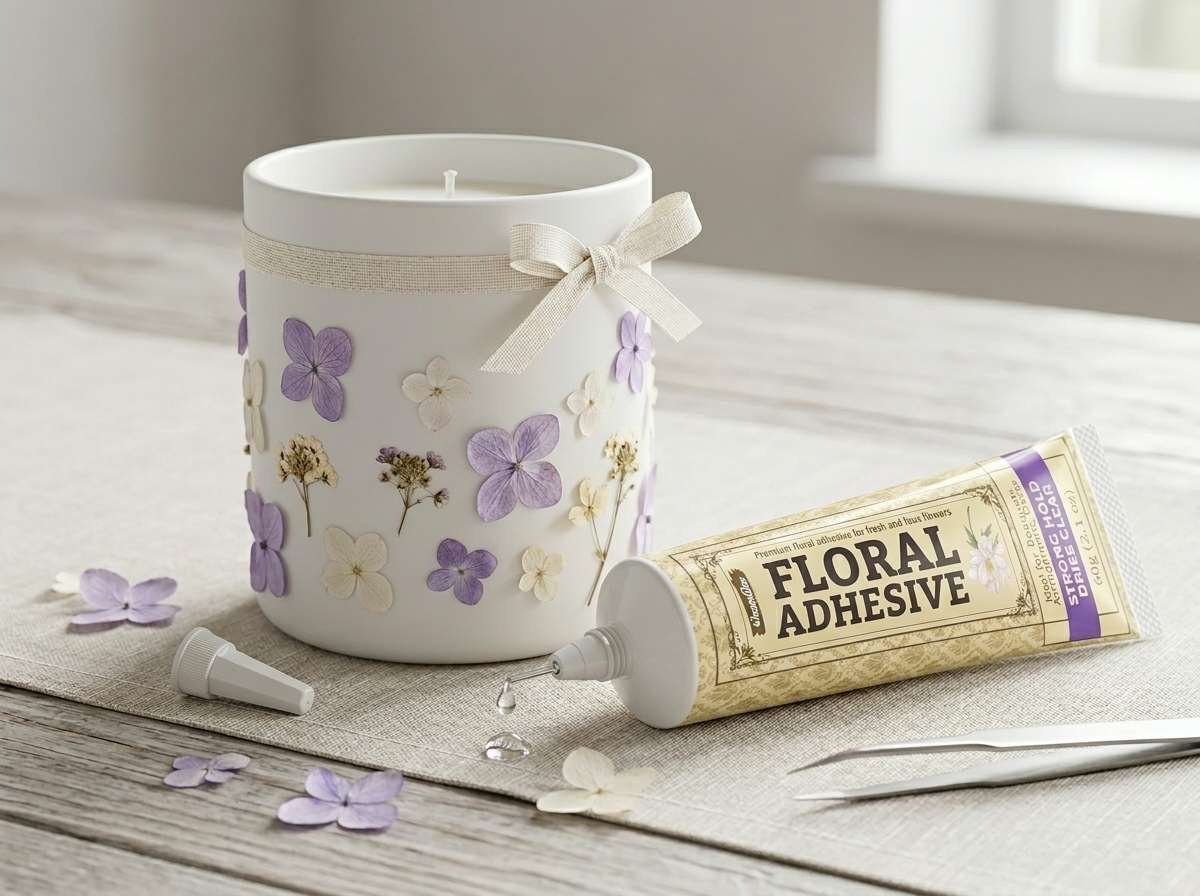
A lot of floral work looks expensive because it looks clean. That sounds obvious, but it is exactly where many bouquet makers, wedding studios, gift-packaging sellers, and DIY users lose quality. The flowers may be fresh, the ribbon may be beautiful, and the design may be well balanced, yet one small glue smear can make the whole piece look rushed. That is why transparent floral adhesive application matters so much. It is not only about making flowers stick. It is about keeping the front view clean, reducing visible glue marks, saving time during assembly, and lowering material waste. In real use, people usually notice glue problems in four places first: petal edges, stem joints, foam contact points, and ribbon corners. These are also the areas where many floral pieces either look polished or look homemade in the wrong way.
Transparent floral adhesive application means using a clear floral glue in small, controlled amounts so flowers, stems, petals, ribbon, foam, and decorative parts stay secure without leaving visible residue. The best results come from careful surface prep, low glue volume, accurate placement, and a clean set, not from using more adhesive.
A home crafter wants a bouquet or flower box that looks neat and lasts through display. A florist wants faster, cleaner finishing on corsages and boutonnieres. A retailer or private-label customer wants a product that feels easy to use, photographs well, and earns fewer complaints about mess, stringing, or poor control. In all three cases, the real question is the same: how do you make a clear floral adhesive look almost invisible while still doing its job?
What Is Transparent Floral Adhesive Application?
Transparent floral adhesive application means using a clear floral glue in a small, controlled way so flowers and decorative materials stay secure without leaving obvious glue marks. In real floral work, this is not just about sticking one piece to another. It is about keeping the arrangement neat, natural, and attractive from normal viewing distance. A bouquet, corsage, wreath, or flower box can lose a lot of value if the glue line looks shiny, thick, cloudy, or uneven, even when the flowers themselves are beautiful.
This is why transparent floral adhesive application matters so much in practical use. It helps solve a very common problem: people want a bond that is strong enough to hold stems, petals, ribbon, foam, or small decorative parts, but they do not want the glue to become part of the visual design. In most floral projects, especially wedding flowers, gift florals, boxed flowers, and wearable florals, the best result is the one where the flowers get noticed first and the adhesive is almost impossible to see.
How Does Transparent Floral Adhesive Application Work?
Transparent floral adhesive application works by placing a small amount of clear glue exactly on the contact point where support is needed, then setting the flower or decorative part in position before the glue spreads into visible areas. In simple terms, the glue should stay where the bond is needed and disappear visually after drying. The process sounds easy, but clean results depend on control. If the glue amount is too large, if the bond point is too exposed, or if the flower is moved too many times after contact, the finish quickly starts looking messy.
In real use, transparent floral adhesive application usually works best when these conditions are met:
- The contact area is prepared first The stem, petal base, ribbon edge, foam point, or decorative surface should already be ready before glue is applied.
- Only a small amount of glue is used In floral work, a large glue drop often creates shine, seepage, and visible buildup.
- The part is placed once with a clear angle Repeated adjustment is one of the biggest reasons glue becomes noticeable.
- The glued part is supported lightly during early set This helps the bond form cleanly without flattening petals or shifting nearby materials.
- The front view is checked before moving on A bond that looks acceptable up close may still sit too visibly from normal display distance.
A practical workflow looks like this:
| Step | What happens | Why it matters |
|---|---|---|
| Surface prep | Contact point is checked and cleaned | Better grip and cleaner finish |
| Small glue placement | Glue goes only where needed | Less overflow and less visible residue |
| Positioning | Flower or accessory is placed once | Better alignment and less rework |
| Light hold | Material is supported gently | Cleaner set and less slipping |
| Final check | Front view is reviewed | Keeps the design looking natural |
A useful way to judge success is this: from about 2 to 4 feet away, the flower should look naturally placed, not obviously glued. If the eye goes straight to a shiny bond line, the application was too heavy or too exposed.
Which Uses Need Transparent Floral Adhesive Application?
Transparent floral adhesive application is most needed in projects where the glued area is easy to see and easy to judge. That usually includes corsages, boutonnieres, bouquets, flower crowns, flower boxes, wreaths, centerpieces, gift packaging, and floral craft décor. These are the projects where the adhesive does more than hold structure. It affects whether the final piece looks elegant, clean, and worth the price.
The uses that need it most are usually:
- Corsages and boutonnieres These are small pieces seen at very close range, so even a tiny glue mark can stand out.
- Bouquets Especially where focal flowers, small accents, and ribbon details need to stay neat from the front.
- Flower boxes and hat boxes These are often viewed from above and from the front, so visible glue lowers the decorative value quickly.
- Wreaths Dried flowers, ribbon, wood, moss, and seasonal accents need controlled bonding across mixed surfaces.
- Gift packaging and floral accessories Boxes, baskets, tags, candles, and floral gift sets all need a cleaner finish because they are bought for presentation.
- DIY floral décor Shadow boxes, preserved flower art, resin prep, and floral wall décor all need low-visibility bonding to look polished.
This comparison shows where it matters most:
| Project | Why transparent application matters | What people notice first |
|---|---|---|
| Corsage | Very close viewing distance | Thick glue and stiff petals |
| Boutonniere | Small size, formal look | Overflow near flower edges |
| Bouquet | Photographed and carried by hand | Shine near focal blooms |
| Flower box | Decorative top view | Uneven placement and glue residue |
| Wreath | Open display on doors or walls | Glue strings and rough finish |
| Gift décor | Presentation value is everything | Cheap-looking visible adhesive |
In practical terms, transparent floral adhesive application becomes more important as the project becomes more decorative, more visible, and more giftable.
Why Is Transparent Floral Adhesive Application Important?
Transparent floral adhesive application is important because it directly affects appearance, efficiency, and product value. A floral piece can use beautiful flowers and still look unprofessional if the glue is easy to see. In customer-facing projects, especially weddings, gifting, retail display, and online selling, the finish is often what people judge first. A clean application makes the arrangement look more careful and more premium. A messy application makes it look rushed, even if the design itself is good.
The main reasons it matters are:
- It protects the visual finish Clear glue only helps when it stays low-visibility after drying.
- It reduces waste Cleaner application means fewer spoiled flowers, fewer stained ribbons, and fewer redo steps.
- It improves working speed When the glue is applied neatly the first time, less correction is needed later.
- It increases customer confidence A product that looks neat and easy to use feels more trustworthy.
- It helps premium floral products justify their price This is especially important for wedding florals, floral gifts, boxed arrangements, and boutique décor.
A simple value table makes this easier to see:
| Benefit | What it means in real use |
|---|---|
| Cleaner look | Better shelf appeal and better photos |
| Less rework | Faster production and fewer mistakes |
| Lower waste | Less ribbon, flower, and accessory loss |
| Better experience | Easier for beginners and smoother for professionals |
| Higher perceived value | More giftable and more premium-looking results |
For most users, the value is straightforward: when transparent floral adhesive is applied well, the flowers stay the focus. When it is applied badly, the glue becomes the first thing people notice.
How Do You Start Transparent Floral Adhesive Application?
You start transparent floral adhesive application by getting the surface, the glue amount, and the placement angle ready before the glue touches the flower. In real floral work, the beginning decides most of the final result. A clean application usually does not come from fixing mistakes later. It comes from a calm setup at the start. If the stem is too wet, the ribbon edge is dusty, the foam point is loose, or the flower position has not been tested first, even a good transparent floral adhesive can end up looking messy.
For most users, the first 3 to 5 minutes matter the most. That short setup time often decides whether the job looks neat or needs rework. A florist making corsages, a wedding studio building bouquets, or a home user decorating a flower box all benefit from the same basic rule: prepare first, glue second. In practical use, this usually means checking the contact area, deciding exactly where the bond should sit, using less glue than expected, and keeping the front view in mind before placing the first flower or decorative part.
What Should You Clean Before Transparent Floral Adhesive Application?
Before transparent floral adhesive application, you should clean the exact bonding point, not just the whole project. That includes stem tips, petal bases, foam holes, ribbon edges, plastic inserts, glass surfaces, ceramic accents, and decorative boards. In floral work, even a small amount of moisture, lint, dust, or loose foam debris can reduce grip and make the glue line look uneven. A lot of messy results happen because the surface looked “good enough,” but the actual contact area was not ready.
The most important prep points are:
- Fresh stems Trim away crushed ends and blot excess surface water. A stem that is dripping or slick often shifts more during placement.
- Dried or preserved flowers Remove loose dust and fragments lightly. Small debris can stop the adhesive from sitting neatly.
- Foam points Check whether the hole is too wide, crumbly, or unstable. One weak point in foam can affect several nearby flowers.
- Ribbon and fabric Look for lint, edge fray, or dust. These show up quickly once glue is added.
- Glass, plastic, or ceramic décor Wipe away residue or fingerprints near the bond area, especially if the surface will stay visible from the front.
A practical prep table is below:
| Surface | What to clean or check | Why it matters |
|---|---|---|
| Stem tip | Crushed cut, water | Better hold, cleaner set |
| Petal base | Dust, loose particles | Less visible glue edge |
| Foam | Loose hole, crumbs | More stable placement |
| Ribbon | Lint, fray | Cleaner decorative finish |
| Glass/ceramic | Residue, fingerprints | Better low-visibility bond |
| Plastic insert | Dust, slick surface | More controlled contact |
A useful rule is this: if the bond area is smaller than a fingernail, even a tiny amount of dirt or moisture can affect how clean the glue looks.
Which Flowers Fit Transparent Floral Adhesive Application?
The flowers that fit transparent floral adhesive application best are the ones that can hold a small, neat contact bond without collapsing, bruising, or showing obvious glue marks. In real use, this usually means medium or small blooms, trimmed floral accents, structured petals, and decorative greenery used in bouquets, corsages, boutonnieres, flower crowns, flower boxes, and wreaths. The best choices are not always the most delicate or the largest flowers. They are the flowers that combine beauty with enough structure to stay in place cleanly.
Flowers and floral materials that usually work well include:
- Spray roses Good for bouquets, flower boxes, and corsages because they are decorative but still manageable.
- Small roses Useful where neat focal placement matters.
- Orchids Popular in premium floral work because they look elegant and respond well to careful detail bonding.
- Carnations Helpful where fuller petal texture and stable shape are needed.
- Succulent accents Stronger structure makes them useful in boutonnieres and wreaths.
- Trimmed greenery and filler Useful for shaping and clean edge detailing.
- Preserved and dried flowers Good for decorative work, but they need lighter pressure and more careful placement.
This comparison helps:
| Flower/material | Best use | Application advantage |
|---|---|---|
| Spray rose | Corsage, bouquet, box | Good size and control |
| Orchid | Premium bouquet, wearable floral | Elegant focal detail |
| Carnation | Event floral, décor | Stable body, fuller look |
| Succulent accent | Boutonniere, wreath | Structured support point |
| Greenery | Fillers, outline work | Easy detail placement |
| Preserved flower | Box, wreath, framed décor | Long-lasting decorative use |
A practical point many users care about: not every flower part should be glued. Often, the cleanest result comes from bonding a hidden support point rather than the most visible petal area.
How Much Glue Does Transparent Floral Adhesive Application Need?
Transparent floral adhesive application usually needs less glue than beginners expect. In floral work, the right amount is enough to create a secure bond without leaving shine, seepage, stiffness, or visible buildup. Most messy applications happen because users think a little extra glue will make the bond safer. In reality, once the contact point is prepared correctly, too much glue often causes more problems than too little.
A practical way to judge glue amount is by task:
- Stem tip placement A small dab or light dip is usually enough.
- Petal base or petal edge Only a pinpoint amount should touch the hidden contact area.
- Ribbon corner A short, thin line works better than a large bead.
- Foam support point Use only enough to stabilize the insertion area, not soak it.
- Decorative accessory Apply glue only where the accessory touches the hidden support surface.
This table makes it easier to judge:
| Task | Too little glue | Correct amount | Too much glue |
|---|---|---|---|
| Stem placement | Weak hold | Clean secure bond | Visible ring around stem |
| Petal repair | May lift | Natural-looking attachment | Shiny stiff edge |
| Ribbon bond | Edge may open | Clean decorative line | Seepage and staining |
| Foam reset | Still loose | Stable support | Messy pooled area |
| Accent piece | May slip | Clean fixed point | Glue visible from front |
A useful rule for real work is to start with about 50% less glue than you first think you need, then add a little more only if necessary. In floral application, clean control almost always looks better than heavy bonding.

How Do You Apply Transparent Floral Adhesive Application Cleanly?
You apply transparent floral adhesive cleanly by controlling three things at the same time: glue volume, contact point, and hand pressure. In real floral work, a clean result usually comes from using less glue, placing it slightly behind the most visible edge, and setting the flower or material correctly the first time. Most messy results are not caused by weak adhesive. They are caused by over-application, rushed placement, or repeated adjustment after contact. If the bond line is visible from normal viewing distance, the application was usually too exposed or too heavy.
A good working habit is to treat every floral bond like a visible design detail. That is especially important for bouquets, corsages, boutonnieres, flower boxes, wreaths, and floral gift packaging, where the glued area may sit only a few centimeters away from the viewer’s eye. In practical use, the cleanest workflow is usually: prepare the surface, test the position dry, apply a very small amount of glue, place once, hold lightly, then check the front view before starting the next point. For many users, this one change alone cuts visible glue mistakes by a large margin.
How Do You Handle Stems in Transparent Floral Adhesive Application?
When handling stems in transparent floral adhesive application, the goal is to create a small, hidden, stable bond without building up glue around the base. Stem application often looks easy, but it is where many clean-looking floral pieces start to lose quality. A small extra drop at the stem base can create a shiny ring, attract dust later, or make the flower look artificially thick. This is especially noticeable on pale flowers, boxed blooms, and front-facing bouquet work.
The cleanest stem application usually works like this:
- Trim the stem cleanly first A fresh, even cut gives better contact and a neater bond than a crushed or split end.
- Blot away extra moisture The stem can be slightly damp, but it should not be wet enough to make the glue slide.
- Apply glue only to the contact area Do not coat the whole visible stem section.
- Support the bloom head while placing This keeps the stem from twisting and helps the bond line stay smaller.
- Set the angle once In practical use, repeated turning is one of the top reasons stem glue becomes visible.
Here is a useful guide:
| Stem situation | Cleaner method | What usually goes wrong |
|---|---|---|
| Fresh stem into foam | Small glue amount at support point | Glue pools around the opening |
| Stem-to-stem contact | Hide glue in overlap area | Glue seam shows from front |
| Heavy bloom on thin stem | Support flower head during set | Stem twists and drags glue outward |
| Short decorative stem | Glue at hidden base point | Visible shine on the stem face |
A practical benchmark is that the glue around a stem base should be hard to notice from 2 to 3 feet away. If it forms a visible ring or glossy patch, the amount was usually too high.
How Do You Handle Petals in Transparent Floral Adhesive Application?
Petals should be handled with the lightest touch in the whole process because they are thin, highly visible, and easy to flatten. Clean petal application usually means placing a pinpoint amount of glue at a hidden base or overlap point, not across the visible petal face. In real floral work, this is one of the biggest quality differences between a neat piece and an overworked one. A petal can be attached securely and still look wrong if it becomes stiff, shiny, or pressed too flat.
The most useful petal habits are:
- Use the natural attachment area The glue should sit where the petal would naturally rest, not in the middle of the visible surface.
- Keep the glue amount extremely small Petal work usually needs less than stem work.
- Support the curve, not just the bond A petal should keep its natural shape after placement.
- Work from the front view first Focus on the part people will actually see.
- Stop before over-correcting A flower that looks natural is better than one that looks heavily repaired.
A helpful table:
| Petal situation | Best method | Risk if overdone |
|---|---|---|
| Slightly loose petal edge | Tiny hidden glue spot | Shiny edge line |
| Decorative layered petal | Bond at overlap point | Flat, unnatural bloom face |
| Preserved petal | Very light pressure | Cracking or dark patch |
| Silk petal detail | Short hidden glue line | Seepage onto front surface |
In practical use, once glue spreads onto more than about 10% of a visible petal surface, the repair usually starts looking obvious.
How Do You Handle Foam in Transparent Floral Adhesive Application?
Foam should be handled as a support point, not as a place to pour glue into. Clean foam application means using adhesive only where extra grip is needed, while keeping the visible top surface neat. Many messy floral projects happen because the foam hole becomes the dumping point for too much glue. That often creates shine around the bloom base, pushes glue upward where it can be seen, and makes nearby flowers harder to place neatly.
The cleanest foam method usually includes:
- Check the insertion point first If the hole is too wide or crumbly, placement will be less stable even with glue.
- Apply glue inside the support area, not across the top surface This keeps the visible area cleaner.
- Reinsert the stem at the final angle immediately Waiting too long often makes the stem harder to seat neatly.
- Stabilize one weak point at a time In clustered designs, one sloppy reset can disturb 3 to 5 nearby stems.
- Check the top view after each placement Foam-based designs are often judged from above first.
This guide helps:
| Foam issue | Cleaner method | Common messy result |
|---|---|---|
| Loose hole | Small targeted glue inside support point | Glue pooling at bloom base |
| Widened opening | Reset stem once at correct angle | Repeated twisting and smearing |
| Flower box top view | Keep glue below visible surface | Shine around visible blooms |
| Clustered centerpiece | Repair one zone at a time | Nearby stems shift out of place |
A useful real-world rule is that if glue is visible on the foam surface after placement, there was probably more adhesive than needed.
How Do You Keep Transparent Floral Adhesive Application Neat?
You keep transparent floral adhesive application neat by making small clean decisions repeatedly, not by trying to fix the piece at the end. In practice, neat application comes from working slowly enough to protect the visible surfaces, but fast enough that the glue does not sit exposed too long before placement. Many users focus too much on bonding strength and not enough on finish quality. But in floral work, the finish is part of the value. If the arrangement looks cleaner, it usually looks more expensive.
The most effective neat-finish habits are:
- Use less glue than you think you need
- Keep the bond line slightly behind the most visible edge
- Dry-fit the flower or material before opening the glue
- Place once instead of adjusting again and again
- Check the front and side view after each small section
- Let one point settle before moving to the next
This final check table is useful:
| Check point | What neat application looks like |
|---|---|
| Front view | Glue is hard to see |
| Side view | No thick ridges or pooled adhesive |
| Petal shape | Flower still looks soft and natural |
| Stem base | No obvious glue ring |
| Ribbon edge | No seepage or darkened line |
| Top view | Flower spacing still looks clean |
A simple working standard is this: from normal display distance, the flowers should get the attention first, not the glue. If that happens, the application is doing its job well.
Which Mistakes Hurt Transparent Floral Adhesive Application?
The mistakes that hurt transparent floral adhesive application most are usually using too much glue, placing glue on the wrong visible area, handling the flower too heavily, and moving the part again before the adhesive has settled enough. In real floral work, the problem is often not that the glue fails to stick. The problem is that it sticks in a way that looks messy. A bond can be strong and still lower the value of the whole bouquet, corsage, flower box, or wreath if the finish looks shiny, thick, stiff, or uneven.
In practical use, most visible glue problems come from a few repeated habits rather than one major error. A florist making 20 to 30 corsages before an event, a seller assembling floral gift boxes, or a DIY user working on a wedding bouquet can all run into the same issues: rushing the start, skipping surface prep, over-squeezing the nozzle, and adjusting placement after contact. When those habits repeat, glue waste rises, flowers get damaged more easily, and the finished piece can look noticeably less premium from only 1 to 3 feet away.
Why Does Transparent Floral Adhesive Application Get Messy?
Transparent floral adhesive application gets messy when the glue moves outside the intended bond point and reaches a surface that people can easily see. In most cases, this happens because the contact point was too exposed, the glue amount was too high, the material was not ready, or the flower was repositioned after placement. The result is usually one of four things: a shiny patch, a dragged glue line, seepage at the edge, or a stiff-looking flower part.
The most common reasons are:
- Glue placed too close to the visible edge A bond line on the hidden side is often almost invisible. The same bond line on the front-facing petal edge can stand out immediately.
- Too much glue released at once Even an extra drop can spread farther than expected on petals, ribbon, or foam surfaces.
- Late repositioning Once the glue starts to set, moving the flower again often leaves a dragged line or uneven patch.
- Dust or moisture at the contact point These can make the glue spread less predictably and reduce the clean finish.
- Working too slowly after glue placement If the adhesive sits exposed too long before contact, the set can become uneven.
This quick guide helps show where the mess starts:
| Cause | What it usually looks like | Why it happens |
|---|---|---|
| Overexposed bond point | Glue visible from the front | Placement area chosen badly |
| Large glue bead | Shiny patch or seepage | Too much pressure on nozzle |
| Reposition after contact | Smeared glue line | Angle not tested first |
| Dust on surface | Rough, uneven edge | Contact point not cleaned |
| Moist stem or petal | Sliding or pooling glue | Surface not prepped properly |
A practical standard is this: if the glue can be seen clearly from normal display distance without looking for it, the application was probably too visible or too heavy.
How Does Too Much Glue Affect Transparent Floral Adhesive Application?
Too much glue affects transparent floral adhesive application by making the bond more visible, less natural-looking, and harder to control. In floral work, extra adhesive rarely gives a better finish. More often, it creates shine, seepage, stiffness, and cleanup problems. A petal may still stay attached, but the flower can start looking flattened or glossy. A stem may still hold, but a glue ring around the base can make the design look rough. This is one of the most common issues customers notice without knowing how to describe it. They just feel the floral piece looks less elegant.
The most common effects of over-application are:
- Visible shine Clear glue can still reflect light, especially on pale petals, silk flowers, ribbon, and plastic accents.
- Thick bond lines A heavier glue line is much easier to see from the front and side.
- Stiff petals or decorative parts Too much adhesive can reduce the soft, natural feel of the flower.
- Glue seepage onto visible surfaces This is especially common on ribbon corners, flower box tops, and wreath accents.
- Higher waste More adhesive usually means more cleanup, more ruined pieces, and more rework time.
This table makes the difference clear:
| Glue amount | What usually happens | Result |
|---|---|---|
| Too little | Bond may not hold properly | Weak placement |
| Correct amount | Clean hold with low visibility | Best finish |
| Too much | Overflow, shine, stiff edges, messy cleanup | Lower visual quality |
In practical use, over-application can raise rework time by a lot. A small flower placement that should take 10 to 20 seconds can turn into a 1 to 2 minute correction, especially if ribbon, petals, or nearby stems also get affected.
Which Habits Ruin Transparent Floral Adhesive Application?
The habits that ruin transparent floral adhesive application are usually the small habits people repeat without noticing. The biggest ones are skipping dry-fit placement, squeezing too hard, touching visible surfaces during placement, fixing the angle too many times, and trying to work too fast without checking the front view. These habits do not always cause instant failure, but they often make the finish look less clean with every step.
The most damaging habits are:
- No dry-fit before gluing If the user has not already tested where the flower or ribbon should sit, the chance of repositioning goes up sharply.
- Squeezing the nozzle too hard This creates a larger glue amount than the bond actually needs.
- Holding from the visible side Finger pressure on the front-facing petal or ribbon surface can flatten the material and spread the glue.
- Trying to perfect the angle after contact Once the glue starts setting, extra adjustment usually creates more visible marks.
- Working on too many points at once In bouquets, wreaths, and flower boxes, this often shifts nearby parts out of place.
- Ignoring the front and side view during the process A bond may feel secure but still look poor once the arrangement is viewed normally.
This habit-check table helps:
| Habit | What it causes | Better alternative |
|---|---|---|
| No dry-fit | More smearing and angle mistakes | Test placement before glue |
| Hard nozzle squeeze | Glue overflow | Use lighter pressure |
| Front-side handling | Flattened petals, visible marks | Hold from hidden support point |
| Repeated repositioning | Dragged glue lines | Place once at final angle |
| Multi-point rushing | More shifting and imbalance | Finish one point before the next |
| No front-view check | Visible glue from display distance | Pause and review each section |
A useful working rule is this: if you find yourself touching the same glued flower more than twice after placement, the process has probably already moved from clean application to correction mode. In floral work, the neatest results almost always come from better preparation and smaller, calmer movements rather than faster hands.

Which Projects Use Transparent Floral Adhesive Application Most?
Transparent floral adhesive application is used most in projects where the glued area is easy to see, easy to judge, and expected to look clean from close range. In real floral work, that usually means bouquets, corsages, boutonnieres, wreaths, flower boxes, centerpieces, and decorative gift packaging. These are the projects where adhesive is not hidden deep inside the structure. It often sits close to petals, ribbon, visible stems, foam tops, or decorative edges. That is why transparent application matters so much. A neat bond helps the product look polished. A messy bond can lower the perceived value in a few seconds, especially in weddings, gifting, retail display, and online product photos.
For most users, the projects that benefit most from transparent floral adhesive application share three traits: they are viewed from short distance, they include delicate visible materials, and they often combine more than one surface. A corsage may mix petals, ribbon, and backing. A bouquet may need small support points between blooms and wrap details. A wreath may combine dried flowers, ribbon, moss, wire, and wood. In all of these, clean glue control is not optional. It is part of the final finish.
How Does Transparent Floral Adhesive Application Help Bouquets?
Transparent floral adhesive application helps bouquets by giving cleaner support, better bloom positioning, and a more polished finish without making the arrangement look bulky. In bouquet work, the adhesive is often most useful in small but important areas: stabilizing an accent bloom, keeping a focal flower facing the right direction, securing ribbon or wrap details, or fixing a small gap where flowers and greenery need to sit more tightly together. These details may only take a few seconds each, but they strongly affect how the bouquet looks in the hand and in photos.
For bouquets, the biggest value usually comes from these points:
- Cleaner focal flower placement A focal rose, orchid, or preserved bloom can sit more neatly without obvious support.
- Better control of accent flowers Small blooms and fillers are less likely to shift out of position during handling.
- Neater ribbon and handle finishing Transparent glue helps keep decorative wrap details secure without thick visible bonding.
- Lower visual bulk This matters in bridal bouquets and premium boxed bouquets where the finish must look light and refined.
- Better photo appearance From about 2 to 5 feet away, bouquet glue should be hard to notice. That is especially important for wedding photography, e-commerce, and social content.
A practical bouquet-use table is below:
| Bouquet task | Why transparent application helps | What customers notice if it is messy |
|---|---|---|
| Focal bloom support | Keeps shape clean and controlled | Shine near the main flower |
| Accent bloom placement | Improves spacing and front view | Uneven flower angles |
| Ribbon detail | Cleaner decorative finish | Seepage on ribbon edge |
| Flower box bouquet top | Better top-view neatness | Visible glue around blooms |
| Preserved bouquet finishing | Lower-visibility detail work | Stiff or overworked look |
In practical bouquet work, small glue errors can spread visually fast because bouquets are often rotated, carried, photographed, and viewed from multiple angles.
How Does Transparent Floral Adhesive Application Help Corsages?
Transparent floral adhesive application helps corsages because corsages are small, close-view pieces where every detail is exposed. A corsage is usually seen from less than 1 foot away during wear, photos, and event greeting moments. That means a glue line that might go unnoticed on a large arrangement can stand out immediately on a corsage. Clean adhesive work helps the corsage look refined, lighter, and more wearable.
Corsages benefit most because they often combine several delicate materials in a very small space:
- flowers or petals
- ribbon loops
- backing or wrist attachment
- small greenery
- decorative accents such as beads or miniature fillers
The biggest advantages are:
- Less bulk in a tight design Clean transparent application helps the corsage stay compact instead of looking heavy.
- Better close-range appearance Since people often examine corsages up close, neatness matters more than in larger floral pieces.
- Cleaner ribbon connections Ribbon corners and loops are one of the first places people notice glue mistakes.
- Faster repeat production For event work, clean glue application can save time across 10, 20, or 50 corsages without lowering finish quality.
- Better wearability A neat bond is less likely to catch visually against clothing or distract from the flowers.
A useful corsage table:
| Corsage issue | Better result with clean transparent application |
|---|---|
| Visible petal edge | Lower-visibility bond |
| Ribbon loop attachment | Cleaner line, less seepage |
| Small floral grouping | More controlled shape |
| Wrist corsage detail | Lighter, neater appearance |
| Batch event work | Faster finishing with better consistency |
For many florists and event makers, corsages are one of the clearest examples of why adhesive technique matters. Small flaws look bigger on small pieces.
How Does Transparent Floral Adhesive Application Help Wreaths?
Transparent floral adhesive application helps wreaths by making mixed-material floral décor look cleaner and more intentional. Wreaths are one of the most demanding floral projects for adhesive because they often combine dried flowers, preserved flowers, foliage, ribbon, moss, wood, wire, ornaments, berries, and seasonal decorative pieces in one open display. If the glue is messy, wreaths show it quickly because they are usually hung at eye level on doors, walls, shop displays, and event backdrops.
The main value of transparent application in wreaths is that it supports decorative detail without making the wreath look rough or overbuilt. This is especially important for premium seasonal wreaths, gift wreaths, wedding wreaths, and retail wreaths, where customers notice finish quality fast.
The main benefits are:
- Cleaner bonding on visible surfaces Open wreath designs do not hide glue easily, so clear neat application matters more.
- Better mixed-surface control Wreaths often combine floral material with ribbon, wood, wire, and ornaments.
- Less visible glue stringing This is important because glue strings catch light and make wreaths look cheap.
- More natural-looking dried and preserved sections A small clean bond helps flowers and foliage sit in place without looking clumped.
- Better long-range and close-range appearance Wreaths need to look attractive from both 3 feet away and close up at the door or wall.
This guide helps:
| Wreath task | Why transparent application helps | What looks bad if it is messy |
|---|---|---|
| Dried flower accent | Keeps decorative section neat | Visible glue strings |
| Ribbon attachment | Cleaner edges | Seepage and dark spots |
| Ornament placement | Better low-visibility support | Bulky glue patch |
| Preserved foliage detail | More natural finish | Clumped decorative area |
| Seasonal add-on work | Cleaner mixed-material result | Rough craft-store look |
In real sales and home décor use, wreaths are often judged in seconds. A neat transparent bond helps them look decorative and premium instead of handmade in a careless way.

Why Choose GleamGlee for Transparent Floral Adhesive Application?
GleamGlee is a strong choice for transparent floral adhesive application because this kind of work depends on clean control, fast setting, and low-visibility finish, not just bond strength. In real floral use, people usually complain about four things first: glue that comes out too much, glue that leaves visible marks, glue that takes too long to settle, and glue that works on one floral surface but not on the next. GleamGlee is built around those practical concerns. Its transparent floral adhesive is designed for floral work that needs a clear finish, a precision metal nozzle, fast-drying performance, flexible hold, and compatibility with flowers, foam, ribbon, fabric, plastic, glass, and ceramic. That makes it more useful for actual floral work than a glue that is only strong on paper.
This also matters for different customer types. A DIY user wants a cleaner bouquet, flower box, or wreath without wasting flowers. A florist wants faster and more consistent work across corsages, boutonnieres, bouquets, and centerpieces. A retailer or private-label customer wants a product that looks premium, is easier to explain to users, and can fit more than one floral category. GleamGlee works well for all three because it combines product performance with manufacturing depth, packaging support, and customization ability. For many customers, that means fewer complaints about mess, better finished appearance, and a product that is easier to sell with confidence.
How Does GleamGlee Improve Transparent Floral Adhesive Application?
GleamGlee improves transparent floral adhesive application by making small, accurate, low-mess application easier in real work. The biggest advantage is not only that the glue dries clear. It is that the product helps users control where the glue goes in the first place. In floral work, that changes everything. A clean floral piece usually depends more on glue control than on glue strength. If too much adhesive comes out, even a clear formula can leave shine, seepage, or stiff-looking petals. GleamGlee reduces that risk because the product is designed for detailed floral use, not broad general-purpose spreading.
The most practical improvements are:
- Precision metal nozzle Helps users apply smaller amounts more accurately on stems, petal bases, ribbon edges, foam points, and decorative accents.
- Clear-drying finish Reduces the chance that the glue line becomes the first thing people notice on the flower piece.
- Fast-drying performance Shortens how long the user has to hold the flower, ribbon, or accessory in place, which lowers shifting and smear risk.
- Flexible hold Helps floral pieces keep a more natural look instead of feeling overly rigid after bonding.
- Lower waste in detailed work Better control usually means fewer spoiled flowers, fewer stained ribbons, and fewer redo steps.
This table shows the practical difference:
| Common problem | What users need | How GleamGlee helps |
|---|---|---|
| Too much glue comes out | Better dispensing control | Precision nozzle |
| Glue is visible after drying | Lower-visibility finish | Clear formula |
| Flower shifts before it settles | Faster early support | Fast drying |
| Bond looks too stiff | More natural finish | Flexible hold |
| Small floral pieces get wasted | More accurate use | Cleaner control |
For many users, this improves real working speed too. If a corsage flower, bouquet accent, or ribbon edge can be placed neatly the first time, the user avoids extra adjustment. Across 20 to 50 floral pieces, that can save a noticeable amount of time and reduce rework.
Which Surfaces Fit GleamGlee Transparent Floral Adhesive Application?
GleamGlee fits transparent floral adhesive application well because floral projects rarely involve flowers alone. In actual use, a floral design often combines fresh stems, damp stems, petals, preserved flowers, dried flowers, foam, ribbon, fabric, plastic inserts, glass surfaces, ceramic containers, and decorative craft materials in one product. A glue that works neatly on only one of those surfaces can create workflow problems very quickly. GleamGlee is more practical because it is suitable for a broader range of floral and decorative surfaces that people actually use in bouquets, corsages, boutonnieres, wreaths, flower boxes, centerpieces, and gift packaging.
The main compatible surface groups are:
- Fresh and damp stems Useful for bouquets, wearables, and event flowers where fresh floral material still needs detail control.
- Petals and bloom bases Important for visible decorative work where neat application matters most.
- Floral foam Helpful in flower boxes, centerpieces, and structured displays where bloom stability matters.
- Ribbon and fabric Useful for bouquet wraps, corsage details, wreath bows, and gift packaging.
- Silk and artificial flowers Practical for mixed décor, long-term displays, and decorative accessories.
- Plastic, glass, and ceramic Helpful for flower boxes, containers, domes, gift décor, and mixed-material projects.
A useful surface table:
| Surface | Why it matters in real floral work | Why GleamGlee fits |
|---|---|---|
| Stem | Needs small clean bond | Precision + fast set |
| Petal base | Needs low-visibility finish | Clear drying |
| Foam | Needs controlled support | Small targeted application |
| Ribbon | Needs neat edge bonding | Better flow control |
| Fabric | Needs less seepage on visible edges | Cleaner finish |
| Plastic | Common in inserts and packaging | Broad compatibility |
| Glass | Visible decorative surface | Lower-visibility result |
| Ceramic | Common in floral décor | Suitable for mixed-surface work |
For most customers, this means one product can support more project types without constantly switching adhesives. That is useful at home, and even more useful in a studio or retail setting.
Conclusion
Transparent floral adhesive application may look like a small technique, but it has a big effect on how floral work is judged. In bouquets, corsages, boutonnieres, wreaths, flower boxes, and floral gift packaging, the glue should support the design without becoming part of the visual problem. That is why clean prep, small glue volume, accurate placement, and controlled handling matter so much. When the application is done well, flowers look more natural, ribbon edges stay neater, foam points stay cleaner, and the whole piece feels more refined from both close range and normal display distance.
For anyone who wants cleaner floral results, the product choice matters just as much as the method. A transparent floral adhesive with a clear finish, fast drying, flexible hold, and precise control makes floral work easier, faster, and more professional-looking. GleamGlee is well suited to both needs: it helps individual users make better bouquets and floral décor at home, and it also gives florists, event studios, retailers, Amazon sellers, and private-label brands a practical product option for broader floral and craft use. If you are looking for a reliable floral adhesive or want to discuss branded orders, packaging, or custom development, GleamGlee is ready to support your next floral project.