Skip to content
Tent Glue for REI: Best Waterproof Repair Guide
Your trusted adhesives glue & cleaner manufacturer

Choosing the right tent glue for REI tents can make the difference between ending a camping trip early and continuing your adventure without worry. Outdoor tents face constant stress from wind, rain, UV exposure, and repeated folding. Over time, seams can leak, rainflies may tear, and small punctures can appear in tent floors. Instead of replacing expensive gear, many experienced campers rely on specialized tent repair adhesives designed for outdoor fabrics such as nylon, polyester, canvas, and PVC-coated materials. These adhesives are built to remain flexible after curing, allowing the repaired area to stretch and move naturally with the tent during setup, packing, and strong winds. With the right product and proper application, even small repairs can restore waterproof protection and extend the lifespan of a tent for several more seasons of camping and hiking.
The best tent glue for REI tents is a flexible waterproof adhesive designed specifically for outdoor fabrics. It bonds well to materials such as nylon, polyester, canvas, and vinyl while forming a clear rubber-like seal that remains durable even when the tent is folded, stretched, or exposed to rain. High-quality tent glue can repair seams, holes, punctures, and small tears, often restoring over 90% of the original fabric strength while maintaining full waterproof protection.
For many outdoor enthusiasts, carrying a small tube of tent repair glue has become as essential as packing a headlamp or a multi-tool. Imagine arriving at a remote campsite after a long hike, only to notice a tiny leak in your rainfly just before a storm arrives. A reliable tent glue allows you to seal the seam quickly and keep the interior dry throughout the night. Because modern formulas cure into a flexible, durable layer that resists abrasion, moisture, and temperature changes, a single repair can often last for years. This simple solution not only saves money but also supports a more sustainable outdoor lifestyle by helping campers maintain and reuse their gear instead of replacing it prematurely.
What Tent Glue for REI Really Fixes
Tent glue for REI tents is mainly used to repair the kinds of damage that outdoor gear experiences during real camping trips—small holes, leaking seams, worn fabric areas, and minor tears. Most backpacking and camping tents are made from lightweight fabrics such as ripstop nylon or polyester, which are strong but thin. When these materials rub against rocks, sticks, or rough ground, tiny punctures or seam leaks can appear.
A good tent repair adhesive restores two important things at the same time: fabric strength and waterproof protection. Once the glue cures, it forms a thin flexible seal that blocks water and reinforces the surrounding fabric. This type of repair is widely used by campers because it is simple, affordable, and often extends the life of a tent by several years.
From a practical point of view, most outdoor gear damage falls into a few predictable categories. Understanding these problems helps campers know when tent glue is the right solution and when a full replacement might be necessary.
What Tent Glue for REI Can Repair on a Tent
Most tent damage that occurs during camping trips is small and localized, which means it can usually be repaired with adhesive rather than replacing the entire tent. Tent glue is especially effective for minor structural damage and waterproof failures.
Common repairs include:
- Small punctures in the tent floor caused by stones or sticks
- Tiny tears in fabric panels created by tension or sharp gear
- Leaking seams where stitching holes allow rainwater inside
- Worn fabric spots on tent corners or stress areas
- Small cracks around zipper flaps or fabric folds
For example, a 1–3 mm puncture in a tent floor may not look serious, but during heavy rain it can allow water to seep into the tent overnight. A thin layer of flexible tent glue over the hole seals it completely and prevents moisture from entering.
Outdoor gear technicians often estimate that around 70–80% of tent problems are repairable using adhesives or seam sealers. Only large structural tears or broken pole sleeves typically require replacement parts.
For most campers, this means that a simple repair kit can save a tent that might otherwise be discarded.
What Tent Glue for REI Works on Nylon and Polyester
Most REI-style camping tents use ripstop nylon or polyester fabric, because these materials are lightweight and strong enough for backpacking.
However, these fabrics require special adhesives because they flex constantly during use. When the tent is pitched, the fabric is stretched tightly. When packed away, it is folded and compressed inside a backpack. If the glue becomes rigid after drying, it will crack quickly.
Tent repair adhesives solve this problem by forming a rubber-like flexible layer.
Here is how common tent materials respond to adhesive repair:
| Tent Fabric | Where It Is Used | Repair Performance |
|---|---|---|
| Ripstop nylon | Ultralight backpacking tents | Excellent adhesion and flexibility |
| Polyester | Rainflies and camping tents | Very reliable waterproof seal |
| Canvas | Large camping shelters | Strong bonding but slower curing |
| PVC-coated fabric | Inflatable tents or tarps | Very strong waterproof seal |
Because nylon tents are thin—often 20D to 40D fabric thickness—the adhesive must spread evenly and remain flexible. A properly applied repair usually adds very little weight and remains nearly invisible.
For many backpackers, this is critical because they want to maintain the tent’s lightweight performance while still protecting it from weather.
What Tent Glue for REI Can Seal Wet Seams
Seams are the most common place where tents begin to leak. Even when the fabric itself is waterproof, every stitched seam contains hundreds of tiny needle holes. Over time, factory seam tape can peel away due to heat, moisture, and repeated folding.
Tent glue works as a seam sealer by filling those microscopic holes and covering the stitching line with a waterproof layer.
Typical seam problems include:
- Rainwater leaking through stitched areas
- Seam tape peeling after years of use
- Small gaps where fabric panels meet
- High-stress seams near poles or corners
Applying seam glue along the stitching line restores waterproof protection. Once cured, the adhesive behaves like a flexible barrier that prevents water penetration.
The coverage capacity is also practical. A standard 60 ml (2.12 oz) tube of tent glue can seal up to 60 feet of seams, which is enough to repair multiple tents or perform seasonal maintenance.
Below is a simple example of seam repair coverage:
| Repair Area | Approximate Glue Needed |
|---|---|
| Single seam leak | 2–3 inches |
| Small rainfly seam repair | 1–2 feet |
| Full tent seam maintenance | 20–40 feet |
Many experienced campers inspect and reseal seams once per season, especially before long backpacking trips. This small maintenance step can prevent leaks during unexpected storms and keep the tent comfortable and dry.
Which Tent Glue for REI Should You Choose
Choosing the right tent glue for REI tents is important because outdoor gear experiences constant stress from weather, movement, and repeated packing. A weak adhesive may temporarily cover a hole but fail after a few camping trips. A well-formulated tent repair glue, on the other hand, forms a flexible waterproof seal that can last for years.
Most experienced campers look for four practical features when selecting tent glue: waterproof protection, flexibility, durability, and compatibility with outdoor fabrics. These characteristics determine whether the repair will survive heavy rain, temperature changes, and repeated folding inside a backpack.
In real-world use, a reliable tent repair adhesive should:
- Bond strongly to nylon, polyester, canvas, and coated fabrics
- Remain flexible after curing
- Resist water penetration during rainstorms
- Withstand abrasion from outdoor use
When comparing products, it helps to look at how the adhesive performs in different repair situations such as seams, punctures, or tears. Each type of damage places different stress on the repair area, so selecting the right glue improves long-term results.
Which Tent Glue for REI Is Best for Seams
Seam repairs are the most common reason campers buy tent glue. Even a high-quality tent may begin leaking after several seasons because seam tape gradually loosens.
A good seam repair adhesive should have a medium viscosity that allows it to spread smoothly along stitching lines while still penetrating small needle holes.
Typical features of effective seam repair glue include:
- Thin and easy to spread
- Transparent after curing
- Strong waterproof barrier
- Flexible when fabric stretches
When applied correctly, seam repair glue restores the waterproof layer that protects the interior of the tent. Many outdoor users apply adhesive along the seam and allow it to cure overnight before the next trip.
Field testing by outdoor gear technicians shows that properly sealed seams can withstand rainfall levels exceeding 20 mm per hour, which is similar to heavy mountain rain.
The following table shows how seam repairs improve waterproof performance:
| Seam Condition | Rain Protection |
|---|---|
| Worn seam tape | Light rain only |
| Untreated stitching | Water leaks quickly |
| Proper seam glue repair | Reliable heavy rain protection |
For campers who frequently hike in wet climates, seam sealing is one of the most effective ways to maintain tent performance.
Which Tent Glue for REI Is Best for Holes
Small holes and punctures are another common problem during camping trips. Tent floors and rainflies are often exposed to sharp rocks, sticks, and equipment edges.
When repairing holes, the adhesive must create a flexible patch layer that seals the hole while reinforcing the surrounding fabric.
Good puncture repair adhesives usually have these characteristics:
- Slightly thicker consistency to fill the hole
- Strong bonding to thin fabrics
- Elastic curing to prevent cracking
- Waterproof sealing capability
Most hole repairs only require a thin layer of glue extending slightly beyond the damaged area. Once cured, the adhesive becomes part of the fabric structure.
Outdoor repair specialists often observe that holes smaller than 5 mm can be repaired in under 10 minutes, and the repair typically restores most of the fabric’s strength.
Below is a comparison of typical puncture repair results:
| Hole Size | Repair Method | Expected Strength |
|---|---|---|
| < 3 mm | Thin glue layer | Near original strength |
| 3–10 mm | Glue patch | Strong and waterproof |
| > 10 mm | Glue + fabric patch | Reinforced repair |
Because puncture repairs are lightweight and almost invisible, many backpackers prefer adhesive repair instead of bulky patch kits.
Which Tent Glue for REI Is Best for Tears
Fabric tears require a slightly different repair strategy because the damaged area experiences tension when the tent is pitched.
A tear usually occurs when the fabric is pulled sharply by wind, tension from tent poles, or accidental snagging. If the repair is not flexible, the tear may reopen the next time the tent is stretched.
For this reason, adhesives used for tear repair must combine strong bonding with high elasticity.
The most reliable repair approach typically includes:
- Aligning the torn fabric edges carefully
- Applying adhesive along the tear line
- Spreading glue slightly beyond the damaged area
- Allowing the adhesive to cure completely
Some outdoor technicians also apply a thin adhesive layer to the back side of the fabric for extra reinforcement.
Typical tear repair performance looks like this:
| Tear Length | Repair Approach | Durability |
|---|---|---|
| < 1 inch | Glue seal | Long-term repair |
| 1–3 inches | Glue reinforcement | Very durable |
| > 3 inches | Glue + fabric patch | Strong structural repair |
When repaired correctly, flexible tent glue distributes stress across a larger area of fabric. This reduces the chance that the tear will expand during strong wind or repeated packing.
For campers who travel frequently, learning how to repair tears properly can extend the lifespan of a tent by several years and prevent unexpected gear failures during trips.
Which Are the 10 Best Tent Glue Products for REI Tent Repairs?
When repairing outdoor tents, campers often choose adhesives that are specifically designed for waterproof fabrics and flexible outdoor materials. The best tent glues combine strong bonding strength with flexibility so the repair area can bend and stretch with the tent during setup and packing. Below are ten widely used tent repair adhesives that perform well for repairing seams, punctures, and small tears on nylon, polyester, canvas, and coated fabrics.
1. Gear Aid Seam Grip WP
Gear Aid Seam Grip WP is one of the most widely used tent repair adhesives among backpackers and outdoor professionals. It is a urethane-based adhesive that cures into a flexible rubber-like seal. This glue is especially effective for sealing leaking seams and repairing small holes in nylon and polyester tents. Many users like it because it remains flexible after curing and performs well in wet environments. A small tube can seal roughly 40–50 feet of seams, making it suitable for maintaining multiple tents.
2. Loctite Vinyl Fabric & Plastic Repair Adhesive
Loctite’s vinyl and fabric repair adhesive is designed for bonding flexible materials such as vinyl, plastic-coated fabrics, and outdoor gear surfaces. It works well for repairing rainfly panels, vinyl windows, and coated polyester tent fabrics. The adhesive dries clear and creates a waterproof bond that resists cracking. Because of its strong bonding ability on coated materials, many campers use it for patching damaged rainflies and reinforcing stress points on tents.
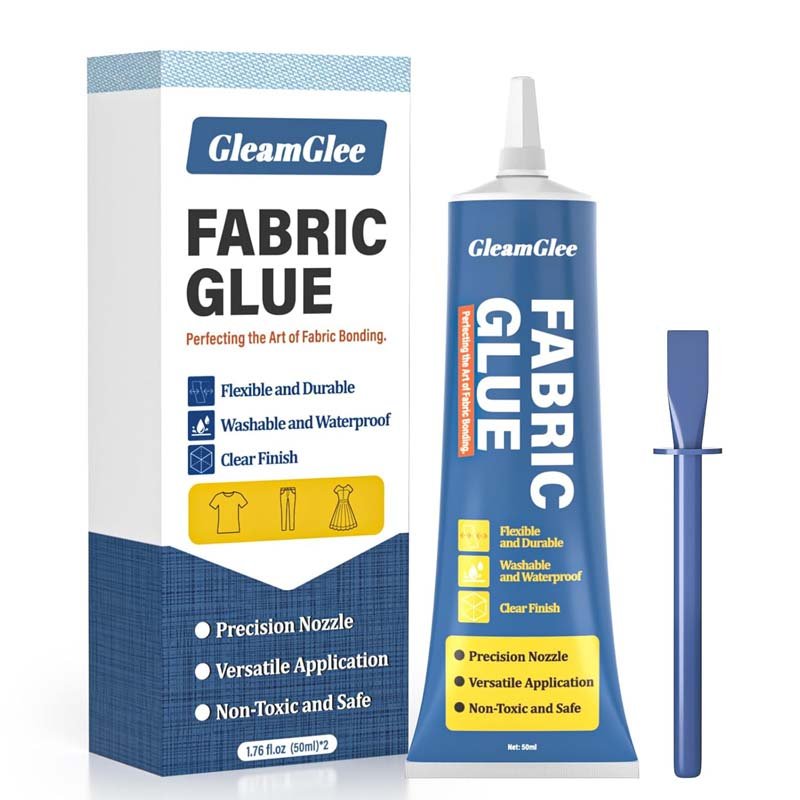
3. GleamGlee Tent Repair Glue
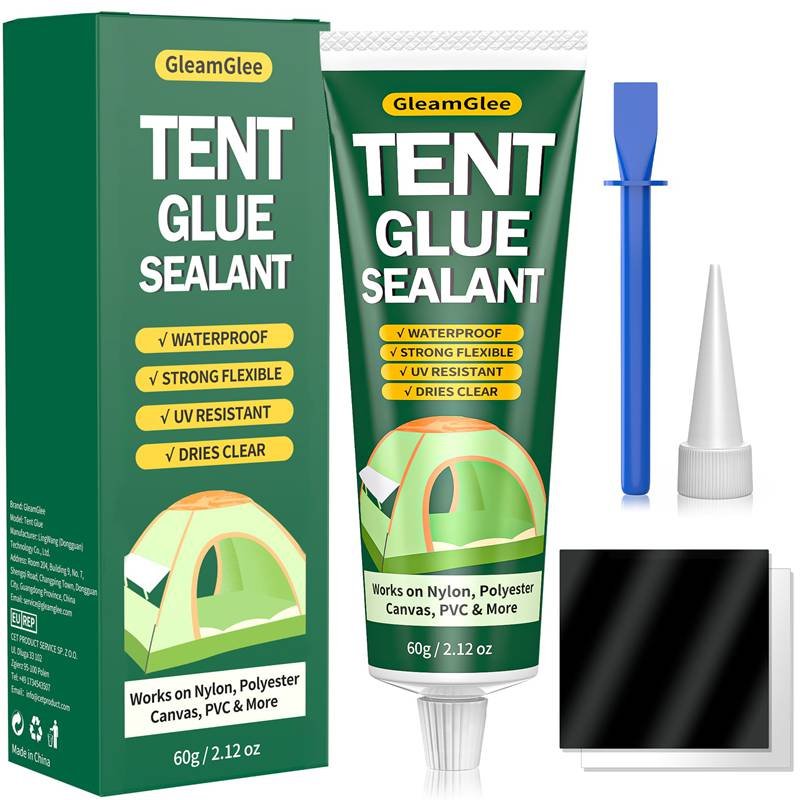
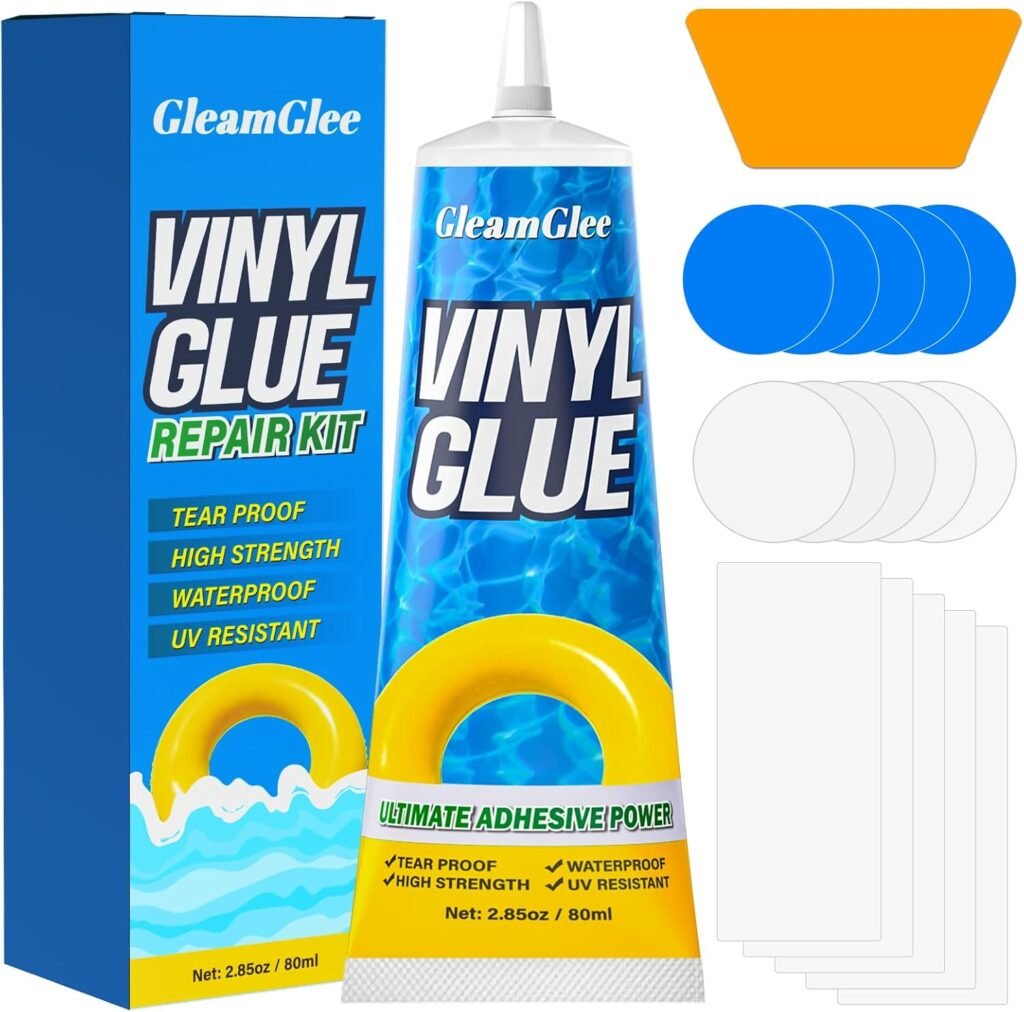
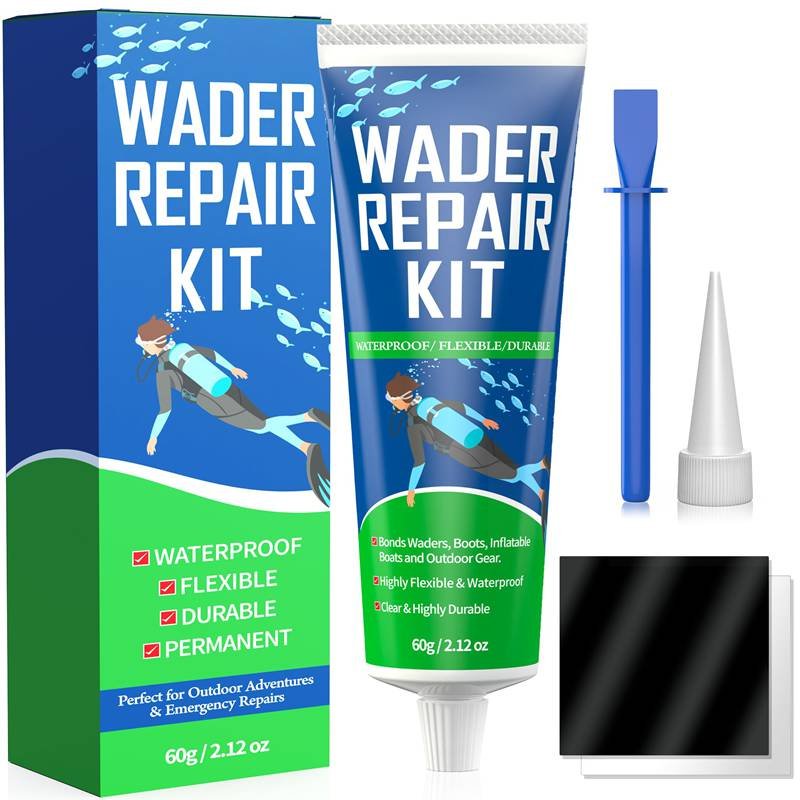
GleamGlee Tent Repair Glue is designed specifically for outdoor fabric repair and seam sealing. After curing, the adhesive forms a transparent rubber-like waterproof layer that stays flexible when the tent is folded or stretched. It works well on nylon, polyester, canvas, and PVC-coated materials commonly used in camping tents. Each 60 ml tube can seal up to 60 feet of seams, which makes it practical for multiple repairs such as patching holes, reinforcing seams, and fixing small tears in rainflies or ground sheets.
4. Gear Aid Aquaseal FD
Aquaseal FD is a heavy-duty outdoor adhesive commonly used for repairing waders, waterproof clothing, and tents. It creates an extremely strong bond and cures into a flexible urethane rubber layer. Because of its durability, Aquaseal FD is often used for repairing larger tears or high-stress areas on outdoor gear. It also provides strong waterproof protection, making it suitable for gear exposed to constant moisture and abrasion.
5. Stormsure Flexible Repair Adhesive
Stormsure is known for producing very tough and flexible adhesives designed for outdoor equipment repair. The adhesive forms a thick rubber-like coating that protects the repaired area from abrasion and water penetration. Campers often use Stormsure for repairing tent floors, tarps, and outdoor covers. Its flexibility allows it to handle fabric movement and heavy use, which makes it suitable for tents used in rugged environments.
6. Tear-Aid Fabric Repair Kit
Tear-Aid is slightly different from liquid adhesives because it uses transparent repair patches combined with adhesive backing. The patches are designed to bond strongly to fabric surfaces while remaining flexible. Many campers carry Tear-Aid kits during trips because they allow quick repairs in the field without waiting for glue to cure. It works especially well for patching small holes in nylon tents, rainflies, and tarps.
7. Coleman Seam Sealer
Coleman Seam Sealer is a simple adhesive solution designed primarily for waterproofing tent seams. It is often used for maintenance rather than repairing large damage. Campers apply the sealer along stitched seams to restore waterproof protection after seam tape begins to wear out. This product is commonly used for routine tent maintenance before long camping trips.
8. Gorilla Waterproof Fabric Glue
Gorilla Waterproof Fabric Glue is a versatile adhesive designed for fabric repairs. It bonds quickly and dries clear, making it suitable for repairing small holes or loose fabric areas on outdoor gear. While it is not designed exclusively for tents, many campers use it as a general fabric repair solution because it is easy to apply and widely available.
9. McNett SilNet Silicone Sealer
SilNet is a silicone-based adhesive designed specifically for silicone-coated nylon tents, which are common in ultralight backpacking gear. Standard urethane glues do not bond well to silicone-coated fabrics, so SilNet is used instead. It is most often applied along seams to restore waterproof protection on ultralight tents and shelters.
10. Kenyon Seam Sealer
Kenyon Seam Sealer is a traditional seam waterproofing product used by many campers for basic tent maintenance. It is typically applied along tent seams to prevent water leakage through stitching holes. Although it is not intended for large tear repairs, it works well for extending the waterproof life of older tents that have worn seam tape.
| Rank | Product Name | Size | Main Feature | Best Use | Coverage |
|---|---|---|---|---|---|
| 1 | Gear Aid Seam Grip WP | 28 g | Flexible urethane waterproof adhesive | Seam sealing & small holes | ~40–50 ft seams |
| 2 | Loctite Vinyl Fabric & Plastic Repair | 28 g | Strong bonding on coated fabrics | Rainfly and vinyl repairs | Several patches |
| 3 | GleamGlee Tent Repair Glue | 60 ml | Flexible waterproof rubber seal | Tents, tarps, rainflies | Up to 60 ft seams |
| 4 | Gear Aid Aquaseal FD | 28 g | Heavy-duty urethane adhesive | Large tears & durable repairs | Multiple patches |
| 5 | Stormsure Flexible Repair Adhesive | 15–25 g | Thick flexible protective coating | Tent floors & tarps | Several patches |
| 6 | Tear-Aid Fabric Repair Kit | Patch kit | Transparent flexible patches | Quick puncture repairs | Multiple patches |
| 7 | Coleman Seam Sealer | 30 ml | Basic seam waterproofing | Seam maintenance | ~30–40 ft seams |
| 8 | Gorilla Waterproof Fabric Glue | 60 ml | Fast bonding waterproof fabric glue | Small fabric repairs | Several repairs |
| 9 | McNett SilNet Silicone Sealer | 28 g | Silicone-based seam sealant | Silicone-coated tents | ~20–25 ft seams |
| 10 | Kenyon Seam Sealer | 60 ml | Budget seam waterproofing | Light seam repairs | ~30 ft seams |
These tent repair adhesives help campers extend the lifespan of their tents by fixing small damage early. With the right glue and proper repair techniques, many tents can continue performing reliably for several more camping seasons instead of being replaced.
How Do You Use Tent Glue for REI
Using tent glue for REI tents is not complicated, but the way the repair is done makes a big difference in how long it lasts. Many campers think they can simply squeeze glue onto a damaged spot and the problem will be solved. In reality, the best repairs follow a few simple steps: cleaning the fabric, applying the adhesive evenly, and allowing enough curing time.
Most tent fabrics used by REI-style outdoor shelters—such as 20D–70D ripstop nylon or polyester—are thin but very strong. Because these fabrics flex constantly during setup, wind movement, and packing, the repair adhesive must bond well while remaining flexible. If the glue layer is uneven or applied to a dirty surface, the repair may fail after only a few trips.
The good news is that most tent repairs are quick. In many cases, a small puncture or seam leak can be fixed in less than 10–15 minutes of work, followed by curing time. A single tube of repair adhesive is usually enough to handle dozens of small repairs or seal several tent seams.
Below are the most practical steps outdoor users follow when repairing a tent with adhesive.
How Do You Clean Before Tent Glue for REI
Cleaning the damaged area is the step many people skip, but it is one of the most important parts of a successful repair. Outdoor tents often collect dirt, dust, body oils, sunscreen residue, and tree sap. These contaminants can prevent the adhesive from bonding properly to the fabric.
Before applying tent glue, the repair area should be cleaned and dried carefully. A simple cleaning process usually works well:
- Remove loose dirt using a dry cloth or soft brush.
- Wipe the damaged area with mild soap and warm water.
- Rinse off any soap residue.
- Let the fabric dry completely before applying glue.
Even a small amount of oil or moisture can reduce bonding strength. Outdoor gear technicians estimate that adhesive repairs on unclean surfaces can lose up to 40% of their bonding strength.
Here is a simple preparation guide used by many gear repair specialists:
| Preparation Step | Purpose | Typical Time |
|---|---|---|
| Remove dust and dirt | Prevent weak bonding | 1–2 minutes |
| Wash the fabric | Remove oils and residue | 3–5 minutes |
| Dry the area | Ensure strong adhesion | 10–20 minutes |
| Inspect damage | Confirm repair size | 1 minute |
If the tent has been used recently in rain, it is especially important to allow the fabric to dry fully before applying adhesive.
How Do You Apply Tent Glue for REI on Seams
Seam leaks are one of the most common problems campers encounter after several seasons of use. Even well-made tents can develop leaks because the original seam tape slowly wears out due to folding, heat, and moisture.
Applying tent glue along the seam restores the waterproof barrier that prevents rain from entering the tent.
A typical seam repair process looks like this:
- Lay the tent flat with the seam facing upward.
- Apply a thin line of adhesive directly along the stitching.
- Use a small brush, applicator, or nozzle tip to spread the glue evenly.
- Ensure the adhesive fills the stitching holes.
- Leave the tent flat until the glue begins to set.
It is important not to apply too much adhesive. A thin, even layer usually provides the best waterproof seal.
Outdoor gear repair tests show that properly sealed seams can withstand heavy rainfall of 20–25 mm per hour, which is common during strong storms.
Coverage is also efficient. Most tent repair adhesives can seal up to 60 feet of seams per 60 ml tube, which is enough to maintain multiple tents.
Example seam repair usage:
| Repair Task | Glue Needed |
|---|---|
| Small seam leak | 2–3 inches |
| Rainfly seam section | 1–2 feet |
| Full seam maintenance | 20–40 feet |
Because seam sealing takes very little time, many experienced campers perform this maintenance once each season before long trips.
How Do You Patch With Tent Glue for REI
Repairing holes or small tears requires slightly different techniques compared to seam sealing. Instead of applying adhesive along a line, the glue should cover the entire damaged area.
For punctures or small holes, the repair process is usually simple:
- Clean and dry the damaged area.
- Apply a thin layer of adhesive directly over the hole.
- Extend the glue about 5–10 mm beyond the hole edge.
- Smooth the adhesive evenly across the repair area.
- Allow the glue to cure fully before folding the tent.
This creates a flexible patch that seals the hole and reinforces the surrounding fabric.
Outdoor gear repair tests show that adhesive repairs can restore 80–90% of the original fabric strength for small punctures.
For longer tears, the repair may require additional reinforcement:
- Align the torn fabric edges carefully
- Apply adhesive along the tear
- Spread glue slightly beyond the damaged area
- Allow the adhesive to cure completely
For larger tears, some campers also apply glue to both sides of the fabric to increase durability.
Below is a typical comparison of repair durability based on tear size:
| Tear Size | Repair Method | Expected Durability |
|---|---|---|
| < 3 mm puncture | Thin glue layer | Near original strength |
| 3–10 mm hole | Glue patch | Strong waterproof repair |
| 1–3 inch tear | Glue reinforcement | Long-term repair |
Once cured, the adhesive becomes part of the fabric surface. Because the repair remains flexible, it can bend and fold naturally with the tent when packed.
This flexibility is one of the key reasons why modern tent repair glues are widely used by backpackers and outdoor professionals. A properly repaired area can often last for several years of regular camping use.
Is Tent Glue for REI Waterproof Enough
One of the first questions campers ask before repairing their gear is whether tent glue for REI tents is truly waterproof. After all, the main purpose of a tent is to keep rain and moisture outside. If a repair fails during a storm, the entire shelter becomes uncomfortable or even unusable.
High-quality tent repair adhesives are designed specifically for outdoor fabrics and harsh weather conditions. When applied correctly, the adhesive cures into a flexible rubber-like seal that blocks water from penetrating holes, seams, or damaged areas. Unlike ordinary household glue, tent repair adhesive stays flexible and maintains its waterproof properties even after repeated folding and temperature changes.
In real outdoor use, properly applied tent glue can restore most of the tent’s original waterproof protection. Many adhesives used for outdoor gear repairs are tested under simulated rainfall and humidity conditions to ensure they can withstand heavy rain and moisture exposure.
To understand how reliable these repairs are, it helps to look at how tent glue performs on rainflies, under folding stress, and compared to temporary repair solutions like tape.
Is Tent Glue for REI Safe for Rainfly Coatings
The rainfly is the outer protective layer of a tent. Its job is to keep rainwater away from the inner sleeping area. Because the rainfly is constantly exposed to wind, rain, and sunlight, it is often the first part of the tent to develop leaks or small punctures.
Tent repair glue works well on rainfly fabrics because it forms a waterproof seal that bonds tightly to nylon and polyester materials. Once the adhesive cures, it creates a thin protective film that blocks water penetration while remaining flexible enough to move with the fabric.
Outdoor repair tests show that properly sealed rainfly repairs can withstand heavy rainfall conditions similar to real camping environments.
Example rain protection performance:
| Rain Condition | Waterproof Performance |
|---|---|
| Light rain | No leakage |
| Moderate rain | Completely waterproof |
| Heavy rainstorm | Reliable protection |
For small holes or seam leaks in the rainfly, a thin layer of adhesive is usually enough to restore waterproof performance. Because the repair layer is transparent and flexible, it blends with the original fabric without affecting the tent’s weight or packing size.
This makes adhesive repair especially useful for ultralight backpacking tents, where maintaining low weight is important.
Is Tent Glue for REI Strong After Folding
Camping tents are constantly folded, compressed, and stored inside backpacks. This repeated movement can cause rigid repair materials to crack or peel away from the fabric.
One of the biggest advantages of modern tent repair glue is its flexibility. Instead of becoming hard after curing, the adhesive forms a rubber-like layer that stretches with the fabric.
This flexibility allows the repaired area to withstand repeated packing and unpacking without losing strength.
Laboratory durability tests for outdoor adhesives often include thousands of bending cycles to simulate real use. Flexible tent glues typically perform well under these conditions.
Example durability test results:
| Test Type | Result |
|---|---|
| Flexibility test | Adhesive remains elastic |
| Folding test | No cracking after repeated bending |
| Abrasion test | Resists surface wear |
| Temperature variation | Stable from −20°C to 60°C |
Because of these properties, a properly repaired tent can continue functioning normally even after many camping trips. Backpackers who travel long distances especially benefit from flexible adhesives because their gear is constantly packed and unpacked during trips.
Is Tent Glue for REI Better Than Tape
Tent repair tape is another popular option used by campers, especially for emergency repairs during trips. While tape can be useful in certain situations, it works differently from adhesive glue.
Tape is typically designed for quick temporary fixes. It can cover a hole or tear quickly, but it may peel away over time due to moisture, dirt, or repeated folding.
Tent glue repairs are usually more durable because the adhesive bonds directly to the fabric surface.
Here is a practical comparison:
| Repair Method | Durability | Waterproof Protection | Flexibility |
|---|---|---|---|
| Duct tape | Very temporary | Low | Poor |
| Repair tape | Moderate | Moderate | Moderate |
| Tent repair glue | Long-lasting | Excellent | High |
Many experienced campers actually use both solutions together. Tape can hold the damaged fabric in place during a trip, while glue can be applied later for a permanent repair.
For long-term gear maintenance, adhesive repair is generally the more reliable option. A properly applied tent glue repair can remain waterproof and flexible for several years, making it one of the most effective ways to extend the life of outdoor gear.

How Long Does Tent Glue for REI Last
Many campers want to know one simple thing before repairing their gear: how long will the repair actually last? When properly applied, high-quality tent glue for REI tents can remain effective for several years. The adhesive forms a flexible waterproof layer that bonds to outdoor fabrics such as nylon or polyester and continues moving with the tent during setup, folding, and packing.
In real camping conditions, the durability of a tent glue repair depends on several factors: how well the surface was cleaned before repair, how large the damage was, how thick the adhesive layer is, and how often the tent is used. For small holes or seam leaks, a properly cured repair can restore most of the fabric’s waterproof protection and structural strength.
Outdoor gear repair technicians often estimate that a good adhesive repair can maintain 80–90% of the original performance of the damaged area. For many campers, that means the repaired tent can continue working reliably for multiple camping seasons without needing additional repairs.
How Long Does Tent Glue for REI Need to Cure
Curing time is one of the most important factors affecting repair durability. Even the best tent glue will not perform well if the adhesive is disturbed before it fully cures.
Most outdoor tent adhesives cure in stages. After application, the surface begins to set within minutes, but full bonding strength takes several hours.
Typical curing stages look like this:
| Time After Application | Adhesive Condition |
|---|---|
| 10–20 minutes | Surface begins to set |
| 1–2 hours | Partial bonding strength |
| 6–8 hours | Strong flexible seal |
| 24 hours | Fully cured waterproof layer |
For best results, campers usually allow the repair to cure overnight before packing the tent. Folding or stretching the fabric too early may weaken the bond and reduce durability.
Temperature also affects curing speed. Warmer environments allow the adhesive to cure faster, while cold weather slows the process.
Example curing times under different temperatures:
| Temperature | Estimated Full Cure Time |
|---|---|
| 25°C / 77°F | 6–8 hours |
| 15°C / 59°F | 10–12 hours |
| 5°C / 41°F | Up to 24 hours |
Because of this, many experienced campers prefer to repair their tents at home before a trip, rather than trying to perform repairs in cold outdoor conditions.
How Long Does Tent Glue for REI Hold in Real Use
In real outdoor conditions, a properly repaired tent can continue working reliably for several seasons. Many campers report that adhesive repairs remain intact for 2–5 years, depending on how often the tent is used.
The reason these repairs last so long is flexibility. When the adhesive cures, it becomes a thin rubber-like layer that stretches with the tent fabric. This prevents the repair from cracking when the tent is packed or exposed to wind.
Durability often depends on usage frequency:
| Usage Level | Expected Repair Lifespan |
|---|---|
| Occasional camping (1–3 trips per year) | 4–5 years |
| Regular camping (5–10 trips per year) | 3–4 years |
| Heavy backpacking use | 2–3 years |
Another factor is environmental exposure. Tents used frequently in high UV sunlight, strong wind, or rough terrain may experience more wear on repaired areas.
However, even under demanding outdoor conditions, adhesive repairs often last long enough for campers to get several more seasons of use from their gear.
How Long Does Tent Glue for REI Last in Storage
Besides repair durability, campers often want to know how long the adhesive itself lasts in storage. Many outdoor enthusiasts keep a small tube of tent glue in their gear kit for emergencies.
Fortunately, most tent repair adhesives have a relatively long shelf life if stored properly.
Typical storage performance looks like this:
| Storage Condition | Expected Shelf Life |
|---|---|
| Unopened tube | 24–36 months |
| Opened and sealed tightly | 12–18 months |
| Poorly sealed container | 3–6 months |
To maximize shelf life, it helps to follow a few simple storage tips:
- Keep the adhesive in a cool, dry location
- Avoid direct sunlight or extreme heat
- Always close the cap tightly after use
- Store the tube upright to prevent leaks
Many experienced backpackers include a small tube of tent glue in their repair kits because it weighs very little but can solve many gear problems in the field. A single tube can handle dozens of small repairs or seal up to 60 feet of seams, making it a practical tool for long trips where replacement gear is not available.
With proper storage and careful application, tent repair glue remains one of the most reliable ways to extend the life of camping equipment and keep outdoor shelters waterproof for many future adventures.
Conclusion
Tent damage is a common part of outdoor adventures. Small punctures, leaking seams, and minor tears can happen after repeated camping trips, rough terrain, or strong weather conditions. The good news is that most of these problems are easy to fix. With the right tent glue for REI tents, campers can quickly restore waterproof protection and reinforce damaged fabric without replacing expensive gear. A properly applied repair creates a flexible, waterproof seal that can handle rain, folding, and normal outdoor wear.
In real use, high-quality tent repair adhesives are capable of restoring 80–90% of the original fabric strength and keeping tents waterproof for several years. Simple maintenance—such as sealing worn seams or patching small holes early—can significantly extend the life of outdoor equipment. For many campers and backpackers, carrying a small tube of tent glue is one of the most practical ways to protect their gear and avoid unexpected problems during trips.
For retailers, distributors, and outdoor brands looking for reliable repair solutions, GleamGlee offers high-performance tent repair adhesives designed specifically for outdoor fabrics like nylon, polyester, canvas, and PVC-coated materials. Whether you want to purchase ready-to-sell products, develop a private label, or customize a repair adhesive formula, the GleamGlee team can provide professional manufacturing, packaging design, and global logistics support. If you are interested in ordering products or discussing custom cooperation, you are welcome to contact GleamGlee for samples and quotations.
Share:
Table of Contents
Here, creating your adhesives glue & removal cleaner collection is no longer a barrier—it’s a collaborative journey where GleamGlee helps brands and businesses transform their vision into durable, certified, and market-ready solutions.
Partner with GleamGlee
Join hundreds of global partners who trust GleamGlee for adhesives and cleaners that combine innovation, compliance, and speed. Our vertically integrated system—from R&D to warehouse—guarantees consistent performance and reliable delivery.
Whether you’re sourcing FBA-ready stock or developing your own formula, our team provides unmatched technical support and responsive service.