Skip to content

Museum Gel for Collectibles & Décor: A Definitive Guide
Your trusted adhesives glue & cleaner manufacturer

A collectible does not need to fall from a high shelf to suffer damage. In many homes, galleries, offices, hobby rooms, and display areas, the more common problem is repeated small movement. A cabinet door closes a little harder than usual, a pet brushes past a table, footsteps cause a lightweight shelf to vibrate, or a cleaning cloth catches the edge of a figurine. Over time, even a few millimeters of movement can disturb carefully arranged displays or place fragile glass, ceramic, resin, and crystal objects closer to the edge of a shelf than their owners realize.
Museum gel offers a practical way to improve the stability of suitable freestanding objects without permanently bonding them to a display surface. It is especially useful when collectors want a clear, removable solution that does not visually dominate the object being displayed.
Museum gel is applied by placing small amounts beneath the clean, dry base of a stable object, pressing the object gently onto a smooth horizontal surface, and allowing the gel time to conform beneath the base. It works best on suitable non-porous surfaces and helps reduce sliding, tipping, rotation, and movement while remaining removable and repositionable rather than creating a permanent structural bond.
The important point is that museum gel is not simply “clear glue for collectibles.” It works best when the object, shelf, placement, amount of gel, and expected level of movement are considered together. A tiny crystal ornament on a glass shelf may need only a few small contact points, while a tall resin figure with a narrow base may require more careful judgment. Understanding that difference is what separates a tidy, almost invisible installation from a messy application that uses too much product without actually improving the display.
What Is Museum Gel and How Does It Work?
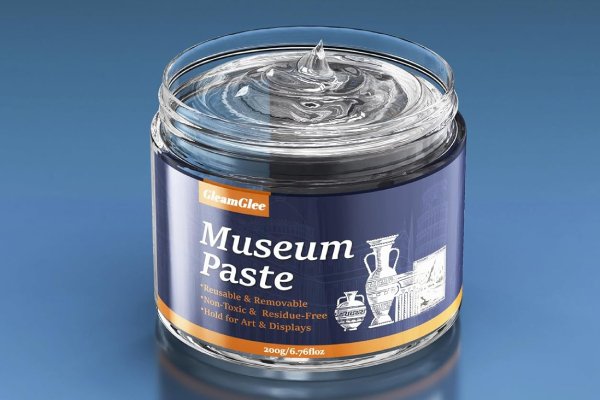
Museum gel is a clear, flexible display-stabilizing material placed beneath freestanding objects to help reduce unwanted movement on suitable horizontal surfaces. It is commonly used with figurines, collectibles, glassware, crystal décor, models, and decorative objects. Unlike permanent adhesives, museum gel remains removable and repositionable, making it useful when the goal is better display stability rather than structural repair or permanent attachment.
What Does Museum Gel Actually Do?
Museum gel improves contact between the underside of an object and the supporting surface beneath it. A small ball of gel may initially touch only a limited area, but gentle pressure causes the material to flatten and conform more closely to the base. As the contact area increases, the object generally becomes more resistant to the light sideways forces that can make a figurine rotate, a glass ornament slide, or a decorative object creep gradually across a smooth shelf.
This is an important distinction because museum gel does not change the fundamental balance of the object. A vase that already has a broad, flat base may become noticeably more stable during routine household movement, while a tall sculpture standing on a very narrow foot may still remain vulnerable because its center of gravity creates substantial leverage. The gel should therefore be viewed as an additional stabilizing layer rather than a substitute for good object geometry or responsible display placement.
For everyday applications, the most useful question is not simply how strongly the gel sticks. A better question is whether the object can already stand safely by itself and whether additional contact with the shelf would reduce routine movement. When the answer is yes, museum gel can provide a clean and practical solution without turning a temporary display arrangement into a permanent installation.
How Is Museum Gel Different From Glue or Tape?
Permanent glue is designed to join materials together for an extended period, which is appropriate when repairing a broken ceramic ornament, bonding a detached component, or assembling a structure. Museum gel serves a different purpose. It is intended to sit between an intact object and a supporting surface so the item remains more stable while still being removable when the display needs to be cleaned, rearranged, photographed, stored, or replaced.
Double-sided tape can also reduce movement, but it often creates a thinner and more permanent pressure-sensitive bond. Some tapes become harder to remove as they age, while visible foam tape may be distracting beneath glass or transparent objects. Museum putty provides another removable option, although colored or opaque putties may be more visible beneath crystal, clear acrylic, or glass display pieces where appearance matters.
Clear museum gel becomes especially useful when reversibility and discretion are both important. A collector can reorganize a cabinet without scraping hardened adhesive from every shelf, while a retailer can update a seasonal display without permanently fixing demonstration pieces to the fixture. Choosing among gel, putty, tape, and permanent glue therefore depends less on which product sounds strongest and more on whether the job involves repair, temporary positioning, or long-term structural attachment.
When Should You Use Museum Gel?
Museum gel is most useful with relatively small or medium freestanding objects that already have a stable base but need additional resistance to everyday movement. Common examples include resin figurines, anime statues with display bases, crystal ornaments, small glass vases, glazed ceramic decorations, miniature buildings, trophy displays, decorative candles, desk ornaments, product samples, photography props, and seasonal home décor placed on level shelves, cabinets, mantels, tables, or display stands.
The benefits become particularly noticeable when several objects are arranged close together. In a collectible cabinet, a movement of only a few millimeters can change the visual alignment of an entire row of figures. More importantly, one unstable figure can touch a neighboring item and create a chain reaction. Small, discreet gel contact points can reduce that routine movement without permanently modifying the collectibles or the display furniture.
For unusually heavy, top-heavy, irreplaceable, historically significant, or potentially dangerous objects, gel should not be treated as the only protective measure. Mechanical mounts, custom supports, enclosed display cases, padded restraints, or professional conservation mounting may be more appropriate. Museum gel is most effective when it supports good display decisions rather than being asked to compensate for a fundamentally unsafe arrangement.

Which Surfaces Work Best With Museum Gel?
Museum gel generally performs most predictably when the supporting surface and object base are clean, dry, smooth, stable, horizontal, and non-porous. Modern glass, glazed ceramic, coated metal, crystal, and many finished display surfaces are common candidates. Unfinished, absorbent, fragile, or poorly coated surfaces require greater caution because contact materials may behave differently or leave marks that are harder to remove.
Which Smooth Surfaces Are Most Suitable?
Modern glass shelves are among the easiest environments for clear museum gel because the surface is smooth, non-porous, and usually easy to clean. The transparent material is also difficult to notice beneath clear crystal, decorative glassware, or transparent display objects when only small amounts are used. Glazed ceramic, stable coated metal, polished acrylic, and other well-finished display surfaces can also provide predictable contact when they are free from dust and loose coatings.
Cleanliness matters more than many users expect. A shelf can look perfectly clean while still carrying a thin film of furniture polish, hand oils, glass cleaner, silicone-containing products, cooking grease, or other residues. These materials can create an invisible layer between the gel and the supporting surface, reducing the amount of useful contact that develops after the object has been installed.
A practical preparation routine does not need to be complicated. Remove visible dust, clean the surface using a method suitable for that material, and allow it to dry fully before applying the gel. The object base deserves the same inspection because loose dust, old adhesive, felt pads, labels, or oily contamination on the underside can become the weak point of the installation even when the shelf itself has been prepared correctly.
Can Museum Gel Be Used on Wood and Stone?
Wood requires more careful judgment because the word describes a material rather than a specific surface finish. A modern shelf with a stable factory-applied coating can behave very differently from unfinished oak, waxed antique furniture, oiled timber, painted wood, or a worn lacquered surface where the protective finish has already disappeared. Museum gel should therefore be evaluated against the actual finish that will touch it, not simply against the fact that the furniture is made of wood.
The same distinction applies to stone. A sealed decorative surface may offer a relatively controlled contact area, while untreated marble, limestone, or another porous stone may absorb oils or other components from materials placed against it. Once absorbed into a porous surface, a darkened mark can be much more difficult to address than ordinary residue remaining on modern glass.
When the surface is valuable or uncertain, test a very small hidden area first and inspect it after contact. For antique furniture, museum objects, signed pieces, rare collectibles, or surfaces with unknown coatings, a mechanical display support may be the more responsible choice. Protecting the object should never create a new risk for the furniture or shelf supporting it.
| Surface | Typical DIY Suitability | Main Consideration | Practical Approach |
|---|---|---|---|
| Modern glass | High | Dust or cleaner residue | Clean and dry before application |
| Glazed ceramic | Generally high | Cracked or weak glaze | Inspect the contact area first |
| Crystal | High | Visible excess gel | Use very small hidden portions |
| Coated metal | Generally high | Flaking coating | Avoid damaged finishes |
| Acrylic | Conditional | Plastic formulation varies | Test when appearance is critical |
| Sealed wood | Conditional | Quality of surface coating | Test a concealed area |
| Unfinished wood | Low | Potential absorption or staining | Prefer another stabilization method |
| Fabric or felt | Low | High porosity | Avoid direct gel contact |
| Unglazed ceramic | Low | Absorbent surface | Avoid direct application |
| Porous stone | Low | Possible migration into stone | Consider an alternative support |
Which Surfaces Should You Avoid?
Unfinished wood, paper, cardboard, fabric, felt, leather, unglazed ceramics, porous stone, weak paint, fragile coatings, and absorbent decorative finishes are generally poor candidates for direct museum gel contact. These materials can absorb substances that would otherwise remain on the surface of glass or coated metal. They can also be mechanically weaker, meaning the coating or label may detach before the gel itself releases.
The underside of the collectible deserves particular attention because objects often combine several different materials. A porcelain figurine may be glazed across most of its body while the foot ring remains unglazed. A resin statue may have an authenticity sticker covering the ideal contact point. A trophy may have felt pads, and an antique ornament may have handwritten markings or old repair material beneath the base. Placing gel directly over these areas can create an unnecessary risk even if the main object material appears compatible.
The safest approach is to inspect both surfaces before every installation. If either contact area is porous, weak, damaged, painted with an unstable coating, or difficult to replace, choose a different position or a different mounting method. A few seconds of inspection can prevent a much longer restoration problem later.
How Do You Apply Museum Gel Step by Step?
To apply museum gel correctly, clean and dry both contact surfaces, take a small amount of gel, divide it into several small balls or dots, position them beneath stable parts of the object base, and lower the object vertically onto a level surface. Press gently, avoid sliding the item after placement, and allow time for the gel to spread and conform before evaluating the final stability.
How Do You Prepare the Object and Surface?
Begin by removing the object completely from the shelf and confirming that it can stand safely without the gel. Museum gel should improve an already workable display rather than rescue an object that rocks dramatically or depends on adhesive to remain upright. If the object has a severely uneven or unusually narrow base, reconsider the display method before adding any contact material.
Next, inspect the underside carefully. Look for paper labels, felt pads, loose paint, damaged coatings, dust, old adhesive, manufacturing residue, or decorative material that could prevent the gel from contacting a stable part of the base. A strong connection between gel and a loose sticker does not create a stable installation because the sticker itself may detach from the object.
Clean the supporting surface using a method suitable for the material and let it dry completely. Avoid installing museum gel immediately after applying furniture polish or other products that intentionally leave a surface film. Once both surfaces are prepared, decide exactly where the object will sit. Planning the final position before application avoids repeatedly sliding the gel across the shelf and gives much greater control over the finished appearance.
How Do You Shape and Position the Gel?
Take a small amount of gel and roll it into several compact balls rather than forming one large central lump. The individual portions should normally be placed inside the outer edge of the base so that they can spread under pressure without becoming visible. Keeping the material hidden also reduces the amount of exposed gel available to collect dust, fibres, or other debris during normal use.
Placement should follow the geometry of the base. Three evenly spaced points often work well with a small round base, while a square base may benefit from four points positioned inside the corners. Long rectangular bases may require additional points along their length so that the center does not remain unsupported. Irregular objects should receive gel only beneath the stable zones that actually touch the shelf.
The objective is balanced contact rather than maximum volume. A few carefully positioned portions usually create a cleaner installation than a thick layer covering the entire underside. If the object is transparent or displayed on glass, smaller hidden points are even more important because large flattened areas may remain visible through the base.
| Step | Practical Action | What to Check |
|---|---|---|
| 1 | Inspect the object | It should stand safely before gel is added |
| 2 | Clean both surfaces | Remove dust, oil, moisture, and loose residue |
| 3 | Portion the gel | Start with small amounts |
| 4 | Position the gel | Keep contact points inside the base |
| 5 | Lower the object | Place vertically rather than dragging |
| 6 | Press gently | Apply pressure near the strongest lower area |
| 7 | Allow settling | Avoid repeated movement immediately afterward |
| 8 | Inspect stability | Check gently near the base |
How Do You Press and Let the Gel Settle?
Lower the object directly into its planned location instead of placing it nearby and sliding it across the shelf. Apply gentle downward pressure through the strongest portion of the lower body or base. Avoid pressing on fragile features such as thin figurine arms, decorative handles, narrow glass rims, miniature antennae, wings, ornamental leaves, or other projecting elements simply to increase pressure.
The gel spreads gradually after the object is placed, so the first few seconds do not necessarily represent the final contact area. For the GleamGlee museum gel described for this application, allowing approximately 30 minutes before expecting a noticeably stronger and more settled hold is a practical reference point. Other formulations and environmental conditions may behave differently, so users should always consider the specific instructions provided with the product.
During the settling period, avoid repeatedly twisting, nudging, lifting, and resetting the item. Each movement changes the contact pattern and may collect additional contamination. Once the gel has settled, test only with gentle pressure near the base. The purpose is to confirm improved resistance to ordinary movement, not to perform an aggressive strength test on a fragile collectible.
How Do You Check the Final Result?
A successful installation should look almost unchanged. The object should sit naturally on the shelf rather than appearing elevated on a thick transparent cushion. Gel should remain mostly or completely hidden beneath the footprint, and the item should feel more resistant to light lateral movement without becoming permanently bonded to the display surface.
If one side of the object rocks, the gel may be unevenly distributed. If the object still rotates easily, one portion of the base may not have enough contact. If large amounts of clear material have squeezed beyond the edge, too much gel was probably used. In that situation, adding even more product rarely solves the problem. Remove the object, gather the gel, reduce the quantity, and position the portions more evenly.
A clean result depends on restraint. The goal is not to make the museum gel visually obvious or prove how much adhesive is under the object. The ideal installation allows the collectible to remain the focus while the stabilization system quietly performs its job underneath.
How Much Museum Gel Should You Use?
There is no universal museum gel quantity that works for every object. Start with the smallest amount that creates balanced contact beneath the base, then increase gradually when necessary. Base area, shape, weight distribution, center of gravity, surface smoothness, and object geometry all influence the result. Several small portions are normally easier to control than one oversized lump beneath a collectible.
How Much Gel Does a Small Figurine Need?
For a small figurine, ornament, miniature, or light decorative object, a pea-sized total amount can serve as a practical starting reference, although very small objects may require less. The quantity should normally be divided into several contact points rather than being concentrated into one thick portion. Once pressure is applied, those small balls flatten and cover a larger area than their original size suggests.
This spreading effect is the reason beginners commonly use too much. A piece of gel that looks tiny between the fingers can become surprisingly broad beneath a smooth base. If the final application forms a visible ring around the object, the excess is not necessarily providing useful additional stability and may instead collect dust or spoil the appearance of the display.
It is easier to add a little more gel than to clean up an overapplication. Start conservatively, allow the material to conform beneath the base, and then assess ordinary movement. If the object remains easy to rotate or slide despite clean compatible surfaces, add another small portion or improve the distribution before substantially increasing the overall quantity.
How Does Base Shape Change Gel Placement?
Base geometry affects museum gel performance as much as total object weight. A figure weighing 300 grams with a broad square platform distributes its load differently from a decorative object of the same weight standing on a narrow circular foot. The first provides a large stable contact area, while the second creates more leverage and concentrates force into a much smaller footprint.
Round bases often respond well to three or four evenly spaced points. Square or rectangular bases can use contact points positioned inside several corners. Long objects may need four to six smaller portions distributed along their length so that the middle does not remain unsupported. Hollow bases require gel around the actual rim or contact points instead of placing material in the empty center where it cannot reach the shelf.
Center of gravity matters as well. A short, broad ornament is normally easier to stabilize than a tall figure with a heavy upper body. Museum gel can improve resistance to movement in both cases, but it cannot erase the mechanical disadvantage of a very narrow, top-heavy design.
| Base Shape | Practical Starting Pattern | Main Objective |
|---|---|---|
| Small round base | 3 small points | Balanced radial contact |
| Medium round base | 3–4 points | Even support around the base |
| Square base | 4 points inside corners | Reduce rocking and rotation |
| Long rectangular base | 4–6 small points | Distribute contact along length |
| Hollow base | Points around the real contact rim | Avoid unsupported center |
| Irregular base | 3 or more stable zones | Match actual contact points |
| Narrow top-heavy base | Small balanced points plus risk review | Do not rely on gel alone |
What Happens If You Use Too Much Gel?
Excess museum gel usually reveals itself quickly. The material squeezes beyond the edge of the base, becomes visible through glass, raises the object slightly above the shelf, or creates an uneven layer that allows one side to sit higher than the other. Exposed gel can also collect lint and dust, making an otherwise clean display appear neglected.
More material does not automatically mean proportionally greater useful stability. Once the available base area has developed adequate contact, additional gel may simply spread into locations where it contributes little. Overapplication can also make removal more inconvenient because a larger amount of material needs to be gathered and cleaned from the display.
When gel repeatedly appears around the perimeter, remove the object completely rather than trying to push the exposed material back underneath with a tool. Roll the gel together, reduce the amount, divide it into smaller portions, and reinstall the object. The cleanest displays usually use less material than first-time users expect.
What Happens If You Use Too Little Gel?
Underapplication usually produces continuing rotation, sliding, or uneven contact. A long display base may feel stable at one end but move at the other because only one portion is making meaningful contact. A round object may pivot around a single central ball of gel if the material was not distributed around the base.
The solution is not necessarily to double the total amount. First determine where the movement is occurring. Adding one small contact point to an unsupported side can be more effective than increasing every existing portion. The same principle applies to irregular bases: place material where the object actually meets the shelf rather than filling spaces that do not contribute to support.
Experienced users let the behavior of the object guide adjustment. If it remains aligned during normal cabinet use, cleaning, and everyday vibration, additional gel offers little practical benefit. The smallest controlled amount that achieves the desired stability is usually the best quantity.

What Can You Secure With Museum Gel?
Museum gel is useful for many intact freestanding objects that already stand safely but need additional stability on horizontal surfaces. Common applications include collectible figures, crystal ornaments, glass décor, glazed ceramics, miniatures, model scenery, trophies, desk accessories, retail samples, and photography props. It is particularly useful when users want discreet removable stabilization without permanently gluing the object to a shelf or display fixture.
How Do You Secure Collectibles and Figurines?
Collectible cabinets often combine smooth glass or acrylic shelving with resin figures, PVC accessories, model stands, and decorative lighting. These environments look stable, but repeated opening and closing of cabinet doors, nearby footsteps, furniture movement, or accidental contact can cause lightweight pieces to rotate or migrate gradually from their original positions.
Museum gel can help maintain alignment beneath action figures, anime statues, resin figurines, character collectibles, game merchandise, and other items with suitable bases. The gel should remain inside the base perimeter and should not cover authenticity labels, serial-number stickers, painted signatures, felt pads, or other sensitive markings on the underside.
For valuable collections, stabilization should be combined with thoughtful spacing. Leaving enough distance between neighboring figures reduces the chance that one movement becomes a chain reaction. Taller and heavier pieces can also be placed on lower shelves when practical. Museum gel is most effective when it complements these sensible display decisions rather than being expected to protect every object regardless of placement.
How Do You Secure Glass and Crystal Décor?
Glass and crystal are particularly attractive applications for clear museum gel because transparency helps preserve the appearance of the display. A small amount beneath the base of a crystal ornament, decorative glass vase, candle holder, sculpture, or other smooth object can be far less noticeable than colored putty or thick mounting tape.
These items often face small but repeated sources of movement. Cleaning a nearby surface can transfer force into the shelf. A cabinet door can create vibration. Pets can brush against furniture, and lightweight tables can shift slightly when someone walks past. The goal is not to make the object impossible to move, but to increase resistance to these normal disturbances while retaining the ability to remove and rearrange the item later.
Users should still consider the overall environment. A tall vase near the edge of a narrow table remains a higher-risk arrangement even with gel underneath it. Relocating the vase farther from the edge may reduce more risk than adding additional adhesive. Museum gel works best as one component of responsible display planning.
How Can Museum Gel Help With Miniatures and Hobby Displays?
Miniature displays often need temporary positioning rather than permanent assembly. Dollhouse furniture, model railway buildings, miniature scenery, scale-model accessories, craft pieces, small decorative components, and photography props may need to remain fixed during use while still being removable when the layout changes.
This flexibility is valuable for hobbyists because creative displays rarely remain unchanged forever. A model railway owner may move buildings after expanding a track layout, while a dollhouse collector may change the furniture for a seasonal scene. Product photographers may need a prop to remain in exactly the same position across dozens of photographs before moving it to create a second composition.
Small objects require especially controlled quantities. A miniature chair or model building may need only a fraction of a pea-sized amount. Excess gel can become more visually distracting than the item itself. If the miniature is made from unfinished wood, paper, fabric, or another porous material, direct contact should be reconsidered and an alternative stabilization method may be more appropriate.
Can Museum Gel Be Used in Offices and Retail Displays?
Museum gel is also practical in offices, retail environments, product showrooms, trade-show booths, reception areas, photography studios, and sample rooms. Awards, small product samples, desk ornaments, demonstration pieces, branded décor, and lightweight merchandising elements often need to remain neatly aligned while still being easy to reposition when a campaign or display layout changes.
For repeated commercial use, consistency becomes as important as the performance of a single installation. Retailers may need predictable clarity, texture, packaging size, instructions, and portioning across dozens or hundreds of locations. Clear usage diagrams and multilingual packaging can reduce application errors among staff who have never used museum gel before.
Brands and distributors developing their own museum gel ranges may also need customized packaging, private-label presentation, product sizing, and market-specific instructions. Integrated product design and manufacturing support can make these programs easier to standardize, particularly when the same museum gel needs to be supplied across North American, European, or Asian retail channels while maintaining a consistent user experience.
How Do You Remove and Reuse Museum Gel Safely?
Museum gel should be removed by supporting the object near its base, gently twisting it to reduce the contact area, and lifting gradually rather than pulling straight upward with force. Remaining gel can often be gathered from suitable smooth surfaces by rolling it together. Clean and flexible gel may be reused, while dusty, contaminated, discolored, or noticeably degraded material is better replaced.
How Do You Remove Museum Gel?
Before lifting a stabilized object, move nearby fragile pieces out of the way so that an unexpected release cannot cause a collision. Hold the object close to its strongest lower section rather than gripping a thin decorative feature. Apply a slow twisting motion to reduce the gel contact gradually, then lift once the grip begins to release.
Twisting is generally preferable to pulling directly upward because a hard vertical pull can create unnecessary leverage through fragile bases, old repairs, narrow resin supports, or delicate glass structures. A tall object should not be pulled from its upper body when the actual adhesion is occurring several centimeters lower at the base.
If the item feels resistant, avoid inserting a knife, screwdriver, scraper, or other sharp tool underneath it. The tool may scratch a glass shelf, chip ceramic, cut into acrylic, or damage the finish on the collectible. Patient release is almost always safer than mechanical force when working with display objects that may be much more valuable than the stabilization material beneath them.
How Do You Remove Leftover Gel?
Once the object has been lifted, gather the remaining museum gel gently rather than smearing it across the display surface. On compatible smooth materials, another clean piece of gel can often be used to lift or roll small remnants together. Working toward the center of the contact area keeps the residue localized and makes the cleanup easier to control.
After most of the material has been removed, inspect the shelf under good lighting. A clean glass surface should look essentially unchanged, while any darkening, softening of a coating, discoloration, or unexpected residue deserves attention. If a surface reacts poorly after contact, do not automatically reinstall the gel simply because the first removal appeared successful.
Long-term displays should occasionally be removed for inspection even when no obvious problem is visible. This gives collectors an opportunity to clean accumulated dust, check the condition of the gel, inspect the shelf finish, and ensure the base of the object has not changed. Maintenance is especially sensible for valuable pieces that remain in the same position for months.
Can Museum Gel Be Reused?
One of the practical advantages of museum gel is that clean material can often be reshaped and reused. After removal, gather the gel, roll it together, and inspect its condition. If it remains cohesive, flexible, reasonably clear, and free from dust, hair, fibres, or other contamination, it may be suitable for another application.
Reusable should not be interpreted as permanent. Every installation exposes the material to skin oils, dust, cleaning residue, temperature variation, and environmental contamination. Repeated handling can gradually change the way the gel feels and performs. Material that has become cloudy, unusually stiff, overly soft, fragmented, visibly dirty, or noticeably less tacky should be replaced rather than repeatedly returned to the display.
For ordinary home use, inspection whenever the collection is reorganized is normally sufficient. Retail displays or frequently handled exhibits may benefit from more regular checks because objects are moved more often. The value of a fresh portion of gel is typically small compared with the value of the collectible it is intended to help stabilize.
How Do You Reposition a Collectible?
Remove the object completely before moving it to a new position. Dragging a collectible across a shelf while museum gel remains underneath can spread the material, pick up dust, create a visible trail, and reduce control over where the final contact points end up.
After removal, gather the gel, check whether it is clean enough to reuse, and roll usable material into small portions again. Clean the new contact area if necessary and confirm the object can stand safely in its intended position before reinstalling the gel.
Repositioning is also a good opportunity to review the display layout. Moving a tall object away from the front edge, increasing space between neighboring figurines, placing heavier items lower in the cabinet, or avoiding frequently opened doors can reduce risk before the gel is applied. The strongest display strategy combines sensible placement with removable stabilization rather than relying on adhesive alone.
What Museum Gel Mistakes Should You Avoid?
The most common museum gel mistakes include using it on vertical or porous surfaces, treating it as structural glue, applying excessive quantities, skipping surface preparation, relying on it to stabilize an inherently unsafe object, dragging items across the shelf after application, and ignoring long-term maintenance. Correct use begins with compatible surfaces, modest gel amounts, balanced placement, realistic expectations, and careful removal.
Can You Use Museum Gel on Vertical Surfaces?
Museum gel is intended for objects resting on level horizontal surfaces rather than for wall mounting, hanging decorations, ceiling attachment, or other situations where the gel must support the object’s weight against gravity. An item standing on a shelf places most of its weight downward through the base, while an object fixed to a wall would constantly pull away from the contact surface.
This difference is fundamental. Using more gel does not convert a horizontal display stabilizer into a structural wall adhesive. Picture frames, wall ornaments, hanging collectibles, mounted tools, and suspended decorations should use hardware or adhesives designed specifically for those loading conditions.
A simple test can help users decide whether an application is appropriate. Imagine the museum gel suddenly disappearing. If the item would remain standing safely on the shelf, gel may be a suitable additional stabilizer. If the object would immediately fall, swing, or detach, the application depends on the gel for structural support and should be redesigned with a more appropriate mounting system.
Can Museum Gel Hold Heavy Objects?
Museum gel can improve contact beneath some larger freestanding objects, but weight should never be evaluated in isolation. A broad, low object may be mechanically stable even when relatively heavy, while a lighter but tall and narrow sculpture can create greater tipping risk because its center of gravity sits farther above a small base.
The consequences of failure should also influence the decision. A small decorative item tipping inside a cabinet is very different from a heavy object falling onto a person, pet, valuable floor, or glass shelf. When failure could cause injury or substantial damage, mechanical restraints or professional display supports are preferable to relying on removable gel.
Before using museum gel with a larger object, confirm that the furniture is structurally sound, the object can stand safely by itself, the surface is level, and the base provides adequate contact. If any of those conditions are doubtful, increasing the gel amount is not the right solution. Stabilization material should reduce routine movement, not become the sole element preventing a hazardous object from falling.
Can Museum Gel Repair Broken Collectibles?
Museum gel is not intended to repair cracks, rejoin broken glass, reattach ceramic fragments, bond detached resin components, or restore structural strength. A broken collectible requires an adhesive selected for the materials, joint design, appearance, curing conditions, and stress expected after the repair. Display gel and repair glue solve fundamentally different problems.
The distinction is especially important because online searches for museum adhesive, clear gel, ceramic glue, glass glue, and collectible repair products can overlap. Users who simply choose the clearest or strongest-looking material may end up using the wrong category. Museum gel belongs beneath an intact object when the goal is removable stabilization, while dedicated repair adhesives belong inside a damaged joint when the goal is permanent bonding.
For valuable antiques, signed collectibles, historically important pieces, or objects made from unknown materials, professional conservation advice may be more appropriate than a household repair attempt. Preserving the original surface and reversibility of treatment can matter more than achieving a quick bond.
Why Is My Museum Gel Not Holding?
Weak performance often comes from installation conditions rather than the gel alone. Dust, hand oils, furniture polish, moisture, weak coatings, a rough or porous surface, an uneven object base, poor point distribution, contaminated old gel, or repeated movement immediately after installation can all reduce useful contact.
Work through the problem systematically instead of immediately adding more product. Remove the object, inspect the underside, clean compatible surfaces, check whether the original contact points actually touched the shelf, and reinstall smaller portions in balanced positions. Allow the material time to conform before judging the result.
| Problem | Likely Cause | Practical Correction |
|---|---|---|
| Object slides after placement | Dirty or oily contact area | Clean, dry, and reinstall |
| One side rocks | Uneven gel distribution | Rebalance contact points |
| Gel squeezes outside the base | Too much material | Reduce the amount |
| Gel collects visible dust | Excess material is exposed | Reinstall with smaller portions |
| Hold weakens after repeated use | Contamination or aging | Replace with clean gel |
| Surface changes color | Possible incompatibility | Stop use and inspect material |
| Object remains unstable | Poor base geometry | Choose another support method |
| Gel sticks to a label or felt pad | Wrong contact location | Move gel to a stable base area |
A display should not be treated as maintenance-free simply because the object did not move during the first week. Periodic inspection during normal cleaning can reveal creeping gel, contamination, surface changes, or movement before they become serious problems. Museum gel performs best when users understand that it is part of an overall display system rather than a permanent guarantee against every possible accident.

Conclusion
Museum gel works best when its purpose is kept simple: improving the stability of an intact freestanding object without permanently bonding it to the display surface. The most reliable applications begin with a clean, smooth, horizontal contact area, a stable object base, and a small quantity of gel distributed intelligently beneath the points that actually touch the shelf. Allowing the material time to conform before evaluating the result often produces a cleaner and more predictable installation than immediately applying a large amount.
Material compatibility deserves just as much attention as placement. Modern glass, glazed ceramic, crystal, coated metal, and other stable finished surfaces are generally easier environments than unfinished wood, fabric, unglazed ceramic, porous stone, delicate paint, or unknown historic finishes. When the surface is valuable or difficult to replace, a small concealed test or an alternative mechanical support is a sensible precaution.
The practical appeal of museum gel comes from this combination of stability and reversibility. A collector can rearrange figurines, a hobbyist can change a miniature scene, a retailer can refresh a display, and a homeowner can reposition crystal or decorative objects without automatically making a permanent modification to the furniture beneath them. Clear museum gel is most successful when it remains almost unnoticed: the object stays where it was intended to stay, the shelf remains visually clean, and the display can still evolve when the owner decides it is time for a change.
For brands, retailers, distributors, and private-label projects, museum gel also benefits from clear instructions, consistent formulation, suitable packaging, and realistic compatibility guidance. Products designed around easy portioning, discreet application, straightforward removal, and multilingual user information are easier for ordinary customers to use correctly. The best museum gel experience is therefore not defined simply by how strongly the material holds, but by how confidently users can apply, inspect, remove, reuse, and reposition it while protecting the objects they care about.

Frequently Asked Questions
How long does museum gel take to set?
Museum gel begins making contact as soon as the object is pressed into position, but the contact area can continue to develop as the soft material spreads beneath the base. For the product application described in this guide, approximately 30 minutes is a useful reference point before expecting a noticeably more settled hold. Users should avoid repeatedly moving the object during this period because constant repositioning changes the contact pattern and may introduce dust or other contamination.
Can museum gel be used on wood furniture?
Museum gel can sometimes be used on stable, sealed wood finishes, but the condition of the coating matters more than the word “wood.” Unfinished, waxed, porous, antique, worn, or oil-finished timber may behave very differently from a modern factory-coated shelf. Because absorbent materials can be more vulnerable to staining or surface changes, test a concealed area first when compatibility is uncertain and avoid direct application to valuable or unfinished wood.
Does museum gel leave marks or residue?
On suitable clean, smooth, non-porous surfaces, museum gel is designed to be removable and is generally easier to clean than permanent adhesives. However, no contact material should be assumed to behave identically on every finish. Porous materials, unstable coatings, aged surfaces, contamination, long contact periods, and environmental conditions can affect the result. Inspect the surface after removal and avoid direct gel contact with absorbent or historically sensitive materials.
Can museum gel be reused after removal?
Clean museum gel can often be rolled together, reshaped, and reused after it is removed from a compatible display surface. Reuse is most practical when the material remains flexible, cohesive, reasonably clear, and free of dust, hair, fibres, paint flakes, or oily contamination. If the gel has become dirty, discolored, unusually stiff, excessively soft, fragmented, or noticeably less effective, replacing it is generally more sensible than trying to extend its service life indefinitely.
Is museum gel safe for valuable collectibles?
Museum gel can be useful for many valuable collectibles when both the object base and supporting surface are compatible, but value increases the need for careful inspection before application. Avoid placing gel over authenticity labels, serial-number stickers, felt pads, signatures, unfinished surfaces, delicate paint, or unknown historic finishes. For irreplaceable antiques, culturally significant objects, museum collections, or pieces with uncertain materials, professional conservation mounting may be preferable to routine DIY stabilization.
Can museum gel stop figurines from falling?
Museum gel can reduce sliding, rotation, tipping, and movement of appropriately sized figurines on suitable horizontal surfaces, but it should not be treated as a guarantee against every fall. A stable figure inside a display cabinet may benefit significantly from small gel contact points, while a tall top-heavy statue close to the edge of an unstable shelf remains risky. Good spacing, stable furniture, sensible positioning, and appropriate mounting methods should work together with the gel.
What is the difference between museum gel, museum putty, and museum wax?
Museum gel is typically clear and well suited to transparent or visually sensitive displays where an almost invisible contact material is preferred. Museum putty is usually opaque and can be convenient beneath non-transparent objects, while museum wax is another removable stabilization option with different handling characteristics. The correct choice depends on the object material, display surface, visibility requirements, expected contact duration, and whether the surface can safely tolerate the selected product.
Share:
Table of Contents
Here, creating your adhesives glue & removal cleaner collection is no longer a barrier—it’s a collaborative journey where GleamGlee helps brands and businesses transform their vision into durable, certified, and market-ready solutions.
Partner with GleamGlee
Join hundreds of global partners who trust GleamGlee for adhesives and cleaners that combine innovation, compliance, and speed. Our vertically integrated system—from R&D to warehouse—guarantees consistent performance and reliable delivery.
Whether you’re sourcing FBA-ready stock or developing your own formula, our team provides unmatched technical support and responsive service.