Skip to content

Shoe Glue for Running Shoes - Flexible Repairs for Repeated Impact
Keep local sole repairs moving with the shoe through daily training, wet pavement, repeated forefoot flexing, and ordinary landing stress.
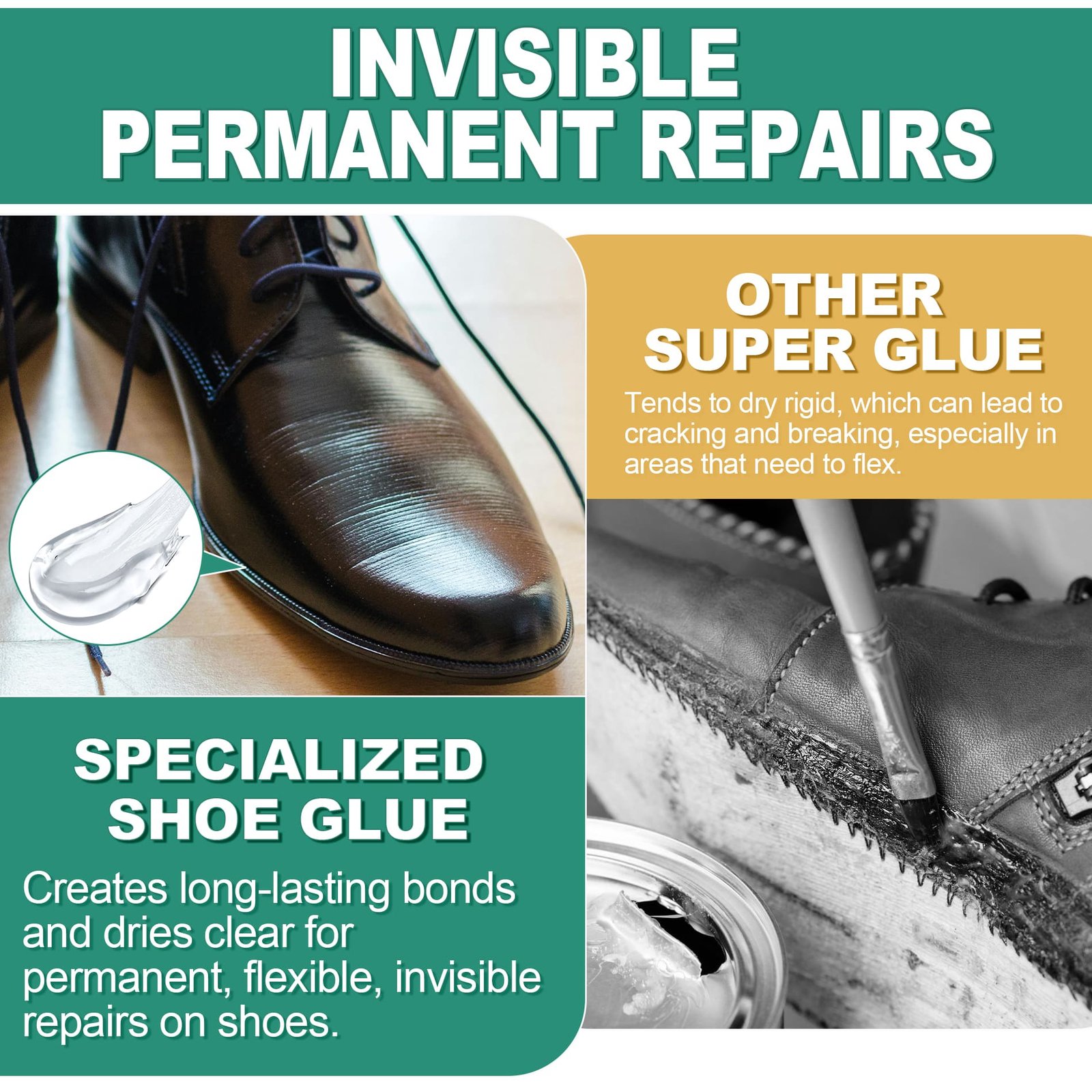
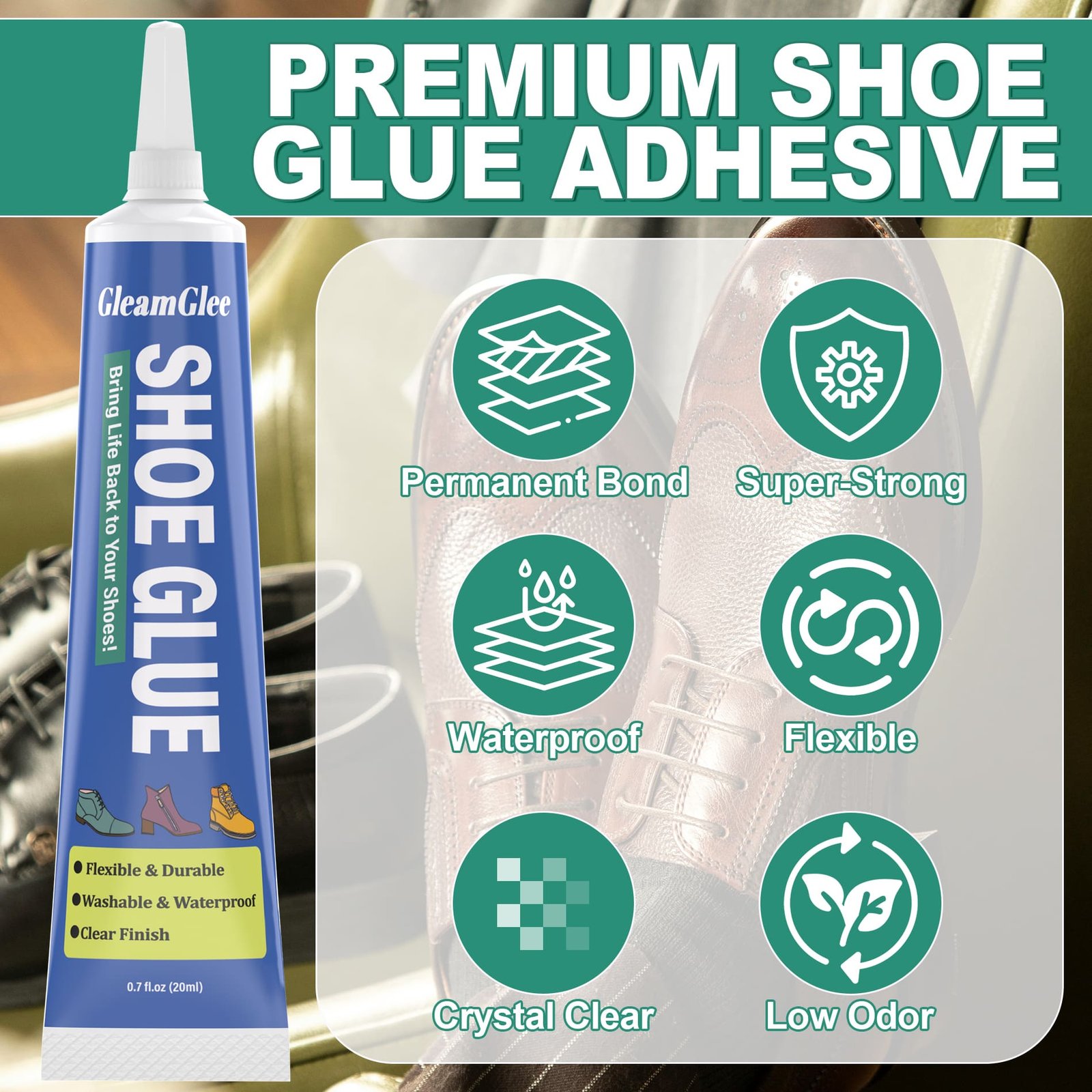
- Strong, flexible bond for compatible running-shoe materials and localized sole separation.
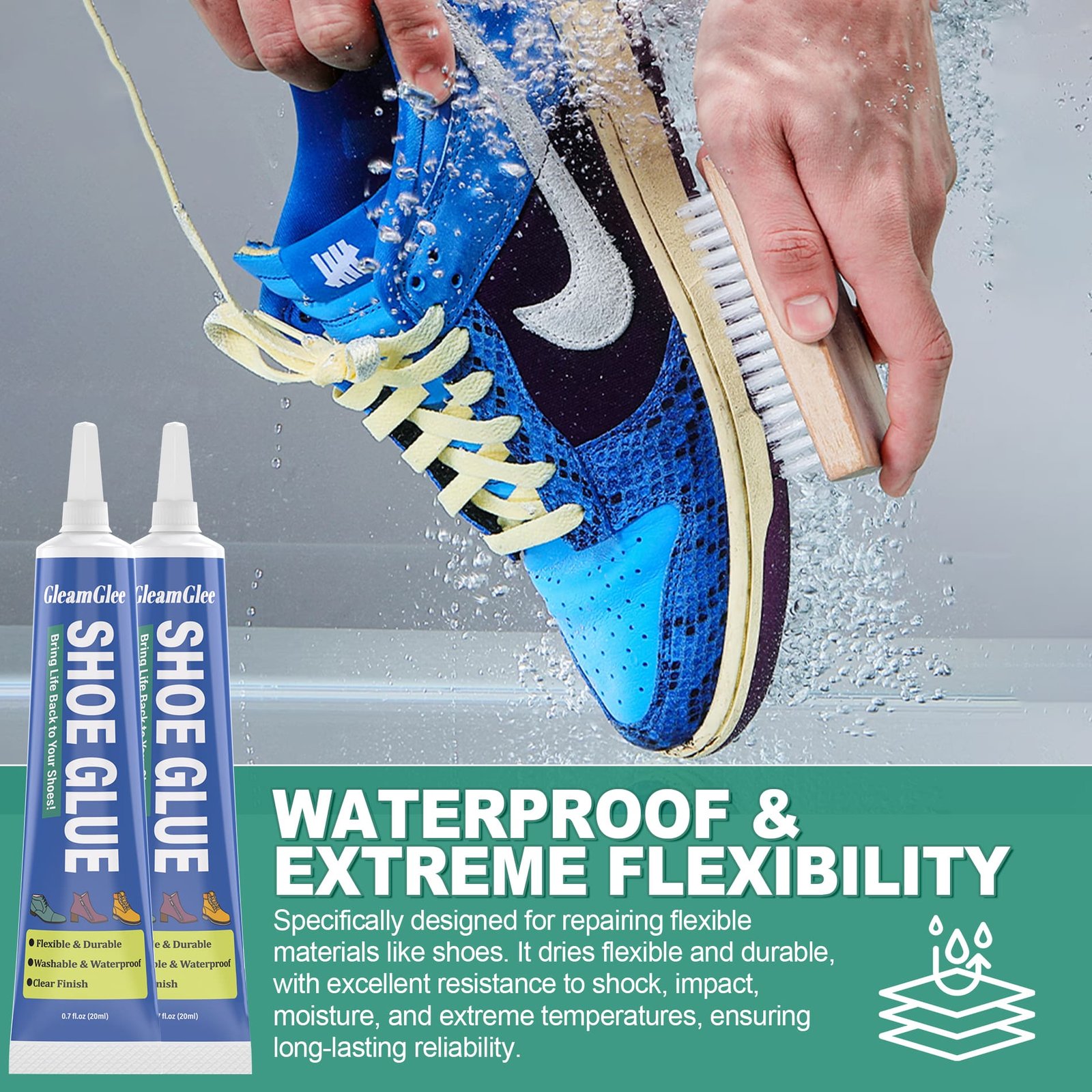
- Waterproof performance for normal rain, damp ground, and everyday moisture exposure.
- Clear-drying adhesive and a precision metal tip for cleaner work along visible edges.
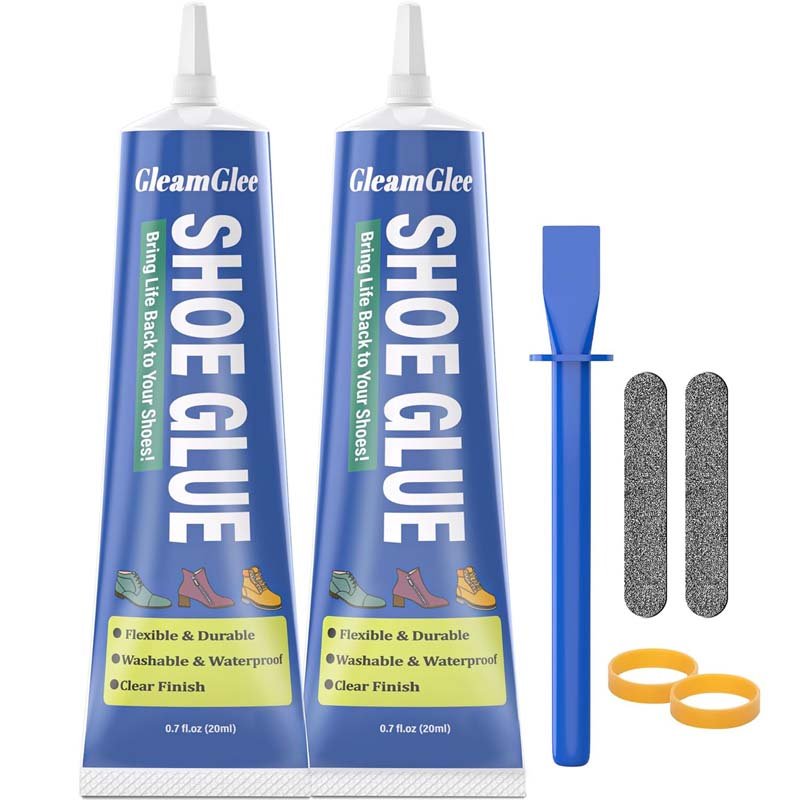
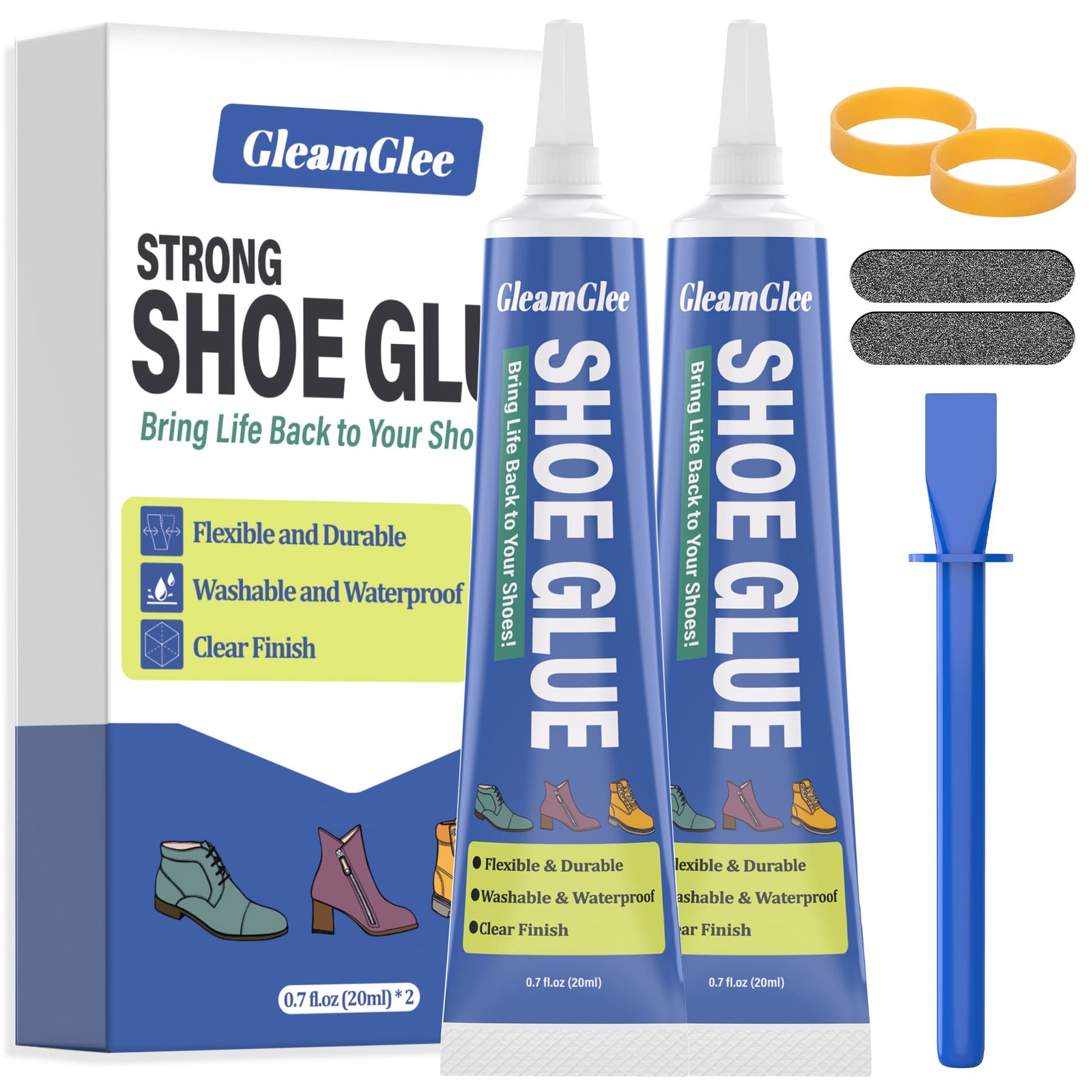
- Two 20 ml tubes plus an applicator, two sandpaper pieces, and two rubber bands.
What Running-Shoe Repairs Need From a Shoe Glue
Running shoes flex, compress, and meet the ground repeatedly, so a useful repair needs more than a hard bond that only holds while stationary.
Flexible Bond
A running-shoe repair should remain flexible after curing so the bonded area can follow normal forefoot bending and everyday shoe movement. Flexibility matters most at toe edges, outsole edges, and upper-to-sole joints. A bond that becomes excessively rigid may be poorly matched to a moving shoe. GleamGlee combines strong bonding with a flexible, crack-resistant cured character for compatible localized repairs.
Local Repair Fit
Shoe glue is most suitable when a separated section remains structurally intact, can return to its original position, and provides clean surfaces for bonding. Common examples include a lifting toe edge, a short outsole gap, or a loose side edge. Crumbling foam, a distorted sole, a damaged plate, or extensive separation requires a different decision and may need professional repair or replacement.
Complete Process
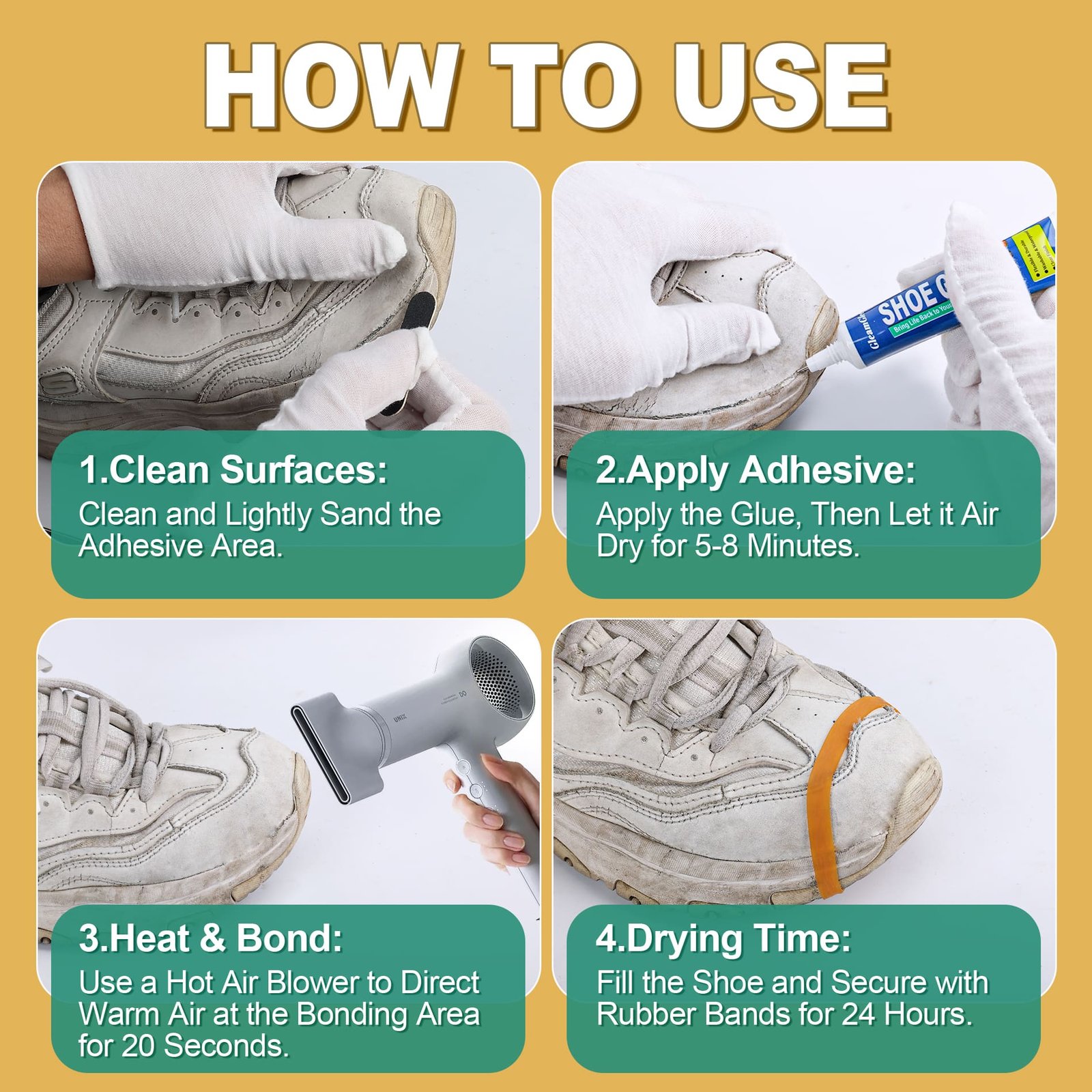
Reliable work depends on inspection, cleaning, surface preparation, controlled adhesive placement, accurate alignment, steady pressure, and sufficient curing. GleamGlee supplies two glue tubes, an applicator, two pieces of sandpaper, and two rubber bands to support those stages. Allow approximately 24 hours for a full repair cure before returning the footwear to normal wear or running activity.
Built Around the Ways Different Runners Use Shoes
Mileage, terrain, weather, and running frequency change where a shoe is stressed and which adhesive properties matter most during a localized repair.

Road Runners
Road running creates repeated, predictable flexing through the forefoot while the outsole meets firm pavement step after step. Small toe-edge lifts and short outsole separations need accurate alignment and a bond that does not become excessively rigid. A clear finish also matters on light-colored daily trainers where the sole line remains visible during normal wear.
Trail Runners
Trail shoes encounter damp soil, gravel, mud, uneven loading, and greater side-to-side movement. Local rubber edge separation may need strong bonding, flexibility, waterproof performance, and careful surface cleaning. Dirt trapped inside a gap can weaken contact, so preparation is as important as the adhesive. Extensive rand or midsole damage should be assessed before attempting a home repair.
Daily Trainers
High-frequency training shoes accumulate thousands of ordinary bends through repeated use, even without a dramatic single impact. A small opening at the forefoot can continue collecting dust and moisture. Early localized repair may help preserve a shoe that still fits and performs well, provided the materials remain sound and the repaired section receives enough undisturbed curing time.
Fitness Runners
Treadmill sessions, gym work, short road runs, and walking create mixed flexing and directional loads. Small sidewall or outsole-edge gaps benefit from controlled adhesive placement because excess glue can spread onto fabric or visible trim. A complete repair kit is useful for occasional users who do not already own preparation and securing supplies.
The Real Goal Is a Repair That Keeps Moving
Searching for running-shoe glue usually begins with a visible gap, but the decision depends on movement, materials, weather, appearance, and repair severity.

From a Loose Edge to a Wearable Shoe
A runner rarely wants adhesive for its own sake. The immediate goal is usually to close a lifting toe edge, reconnect a short piece of rubber outsole, or secure a small upper-to-sole opening before it becomes larger. The deeper concern is whether the repaired area will remain aligned when the shoe bends again.
Running footwear behaves differently from a rigid household item. The forefoot bends during toe-off, the sole compresses during loading, and the edge of the bond can experience repeated peeling forces. Wet pavement, perspiration, dirt, and temperature changes add more variables. For that reason, the selection criteria extend beyond initial grab. A suitable product should create a strong bond, remain flexible after curing, help resist cracking, tolerate normal moisture, and allow controlled placement where the gap is narrow.
Appearance also influences the choice. Excess adhesive on a white midsole, knit upper, or visible sidewall can make a functional repair look careless. Clear drying and a fine application point help place a thin layer inside the joint rather than across the outside of the shoe.
Finally, repair suitability matters. A localized opening with intact material and clean bonding surfaces is a reasonable DIY candidate. Powdering foam, a damaged stability structure, a warped sole, or extensive separation calls for a more cautious decision. The right outcome is not merely a closed gap; it is an accurately aligned, fully cured repair on a shoe that remains structurally suitable for use.
Identify the Type of Running-Shoe Sole Separation
Start with the size, location, material condition, and ability to realign the separated section before choosing adhesive or beginning surface preparation.
Minor Edge Lift
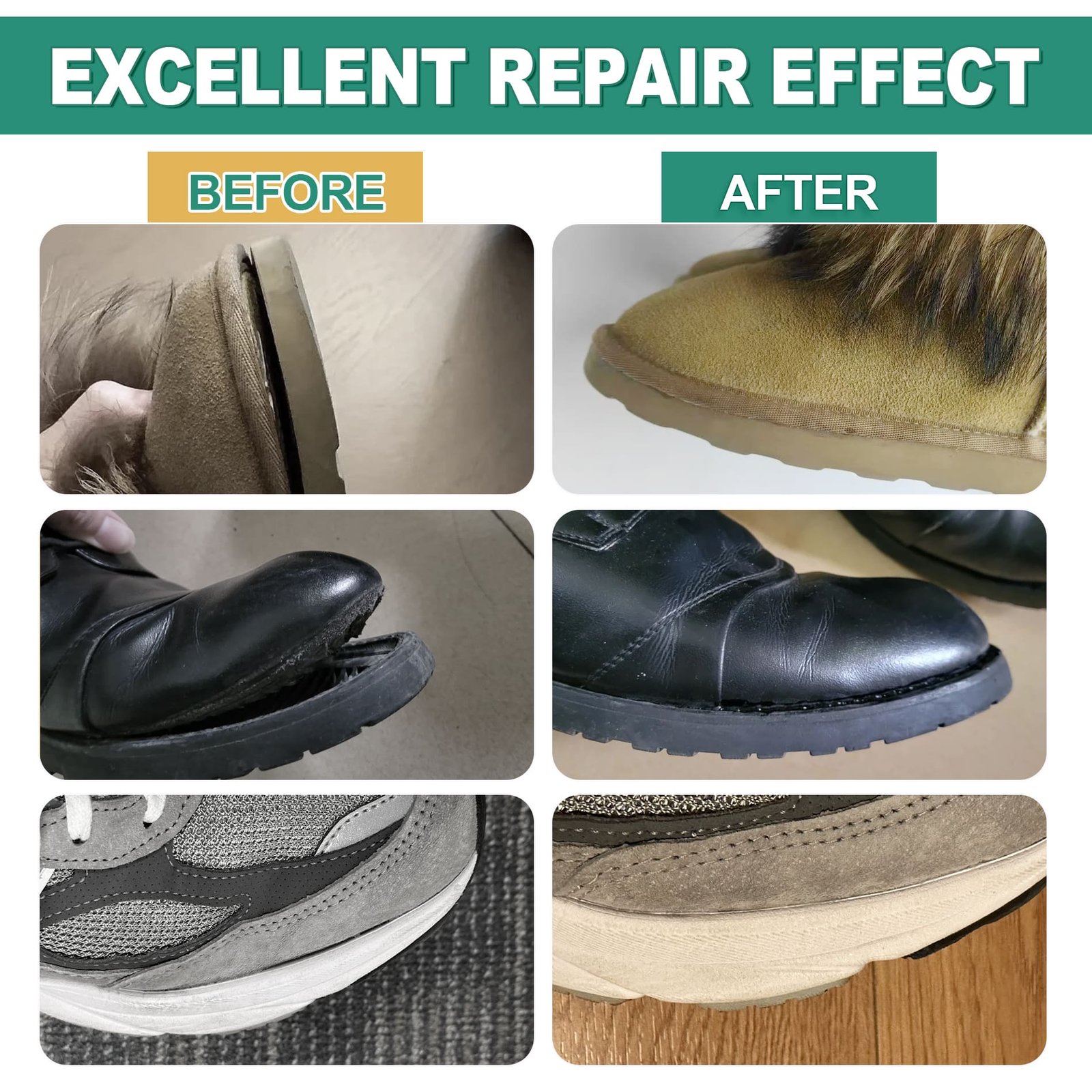
A small toe or outsole edge has started to lift, but both surfaces remain intact and return neatly to position with light finger pressure. This is the strongest DIY candidate. Clean the narrow joint, remove loose contamination, apply a thin controlled layer, align carefully, secure the area, and allow a full cure before bending or wearing the shoe.
Local Separation
A longer section has opened along the outsole or upper-to-sole joint, yet the components are not torn, distorted, or crumbling. Repair may still be reasonable, but surface access and even pressure become more important. Check both materials, remove loose old adhesive where appropriate, keep the sole aligned along its original line, and avoid filling the gap with an unnecessarily thick mass.
Structural Failure
The sole is extensively detached, the foam breaks apart when touched, the platform has changed shape, or a plate and stability component appears damaged. Adhesive cannot restore missing material or reverse foam degradation. Stop using the shoe for running until it is professionally assessed. Replacement may be the safer choice when alignment, support, or predictable ground contact has been compromised.
Decide Whether the Damage Still Fits a DIY Repair
A simple three-level check prevents wasted adhesive, poor alignment, and unsafe attempts to repair damage that goes beyond a localized bonded joint.
Level One
The opening is short, the materials look sound, and the separated piece returns exactly to its original position. There is no foam loss, sole distortion, or change in the shoe’s platform. A controlled DIY repair is generally appropriate after confirming material compatibility. Act before dirt and moisture accumulate deeper inside the joint, then protect the repair from movement during curing.
Level Two
The separation covers a wider edge but remains localized. The surfaces can still meet, although cleaning, preparation, and securing require more care. Inspect for hidden tearing, loose foam, or old adhesive ridges that prevent full contact. A repair may be reasonable when pressure can be applied evenly and the shoe remains structurally stable. Consider professional help if alignment is uncertain.
Level Three
The outsole is largely detached, the midsole crumbles, the upper is torn across a load-bearing area, or the shoe no longer sits level. A bottle of glue cannot rebuild a deteriorated midsole, repair a damaged plate, or guarantee safe running mechanics. Stop the project and compare professional repair with replacement, especially for footwear used at speed, on trails, or during long-distance training.
Four Running-Shoe Zones Where Movement Challenges Repairs
Each zone experiences a different mix of bending, peeling, compression, moisture, and visibility, so damage location should guide preparation and application.

Toe Edge
The toe edge bends upward during toe-off and can begin opening at the front lip. Small gaps are often narrow and visible, making precision and clear drying especially useful. Keep the bond line thin, restore the original alignment, and avoid placing a hard exterior lump where the shoe must continue rolling through the stride.
Forefoot Zone
The forefoot repeatedly bends across the widest flex line. Separation here experiences continuing peel stress as the outsole and upper move through each step. A flexible, crack-resistant cured bond is better aligned with the motion than an excessively rigid layer. Full curing is essential before the shoe returns to repeated bending under body weight.
Lateral Edge
The outer side of a running shoe may experience directional loading during turns, uneven terrain, or gym movement. Edge gaps can also collect grit that prevents proper surface contact. Clean carefully, check whether the sidewall material is supported, and use enough pressure to keep the edge against its original bonding surface without squeezing adhesive across visible trim.
Heel Edge
Heel-edge damage can involve landing stress, outsole wear, or a loose bonded rim. Confirm the problem is an adhesive joint rather than crushed foam or a worn heel platform. A localized intact edge may be repaired, but deformation or uneven wear changes the decision because adhesive cannot restore the original geometry of the sole.
Why Running Shoes Place Special Demands on Adhesive
Landing, load transfer, forefoot bending, and toe-off repeat throughout every run, placing dynamic stress on repaired edges and bonded material interfaces.

A Running Stride Is a Repeating Load Cycle
When a foot meets the ground, the shoe begins a short sequence of compression and movement. The outsole contacts the surface, the midsole compresses, weight travels forward, and the forefoot bends before toe-off. The exact pattern changes with gait, pace, terrain, and shoe design, but the adhesive joint does not remain static.
A small opening at the toe or outsole edge can be exposed to peel stress each time the sole bends away from the upper. A side edge may experience shear as surfaces try to slide along one another. Landing and uneven ground add impact and vibration. None of those forces requires a dramatic collision; ordinary repetition is enough to challenge a poorly prepared repair.
That is why initial hardness should not be treated as the only sign of quality. A running-shoe adhesive needs dependable contact between compatible materials and a cured character that remains flexible rather than excessively brittle. Surface preparation, thin application, accurate alignment, steady pressure, and sufficient curing all contribute to the result.
GleamGlee is designed for localized footwear repairs and cures with flexibility. Its waterproof, clear-drying, crack-resistant positioning supports common running-shoe concerns, while the precision metal tip helps place adhesive into narrow edge gaps. The claim remains specific: it can help reconnect compatible, structurally sound shoe components. It cannot restore collapsed foam, repair a damaged plate, or make a worn-out running shoe perform like a new pair.
Repeated Flexing Changes What a Strong Repair Means
A useful running-shoe bond must reconnect the joint while allowing normal shoe movement after the adhesive has fully cured and returned to service.

Strong Without Becoming Excessively Rigid
Strength in a stationary object is not the same as performance in a moving shoe. A repaired toe edge may look secure on a workbench, yet the same joint begins bending as soon as the wearer takes a step. During a run, that movement repeats through the forefoot and can concentrate stress at the edge of the repaired area.
An excessively hard glue line may resist movement rather than follow it. Stress can then collect where the rigid repair meets the flexible shoe material. A footwear-focused adhesive should combine strong bonding with flexibility after curing, giving the repaired joint a better match for normal bending and twisting.
GleamGlee is positioned around a flexible, crack-resistant cured bond. The benefit is not unlimited stretch, and no specific elongation percentage or flex-cycle count is claimed. The practical value is simpler: a localized repair is designed to move with compatible footwear instead of becoming a conspicuously brittle ridge.
Technique remains decisive. A thick mass of adhesive can behave differently from a thin, controlled bond line. Dirt, oil, old loose adhesive, moisture, and poor alignment reduce contact before flexibility can help. Apply only enough adhesive to cover the bonding area, press the components into their original position, secure them without distortion, and leave the shoe undisturbed for approximately 24 hours before normal wear.
What Impact Resistance Means During an Ordinary Run
Running impact is a repeated combination of landing, compression, vibration, and edge loading rather than a single laboratory strike against the adhesive.

Repeated Running Stress, Not an Invented Test Number
Each foot strike sends load through the outsole and midsole before the shoe rolls toward toe-off. The repaired joint may experience compression near the landing zone, shear along the side, and peeling near a flexing edge. Trail surfaces add irregular loading, while road running delivers a highly repetitive cycle on firmer ground.
Consumers often describe the desired property as impact resistance. For a shoe repair, the phrase should be understood as a bond suited to footwear areas exposed to ordinary running movement and repeated ground contact. It does not justify an unsupported claim about joules, drop height, mileage, or a guaranteed number of impacts.
The repair system matters as much as the adhesive label. Compatible materials must meet across a clean, dry surface. The separated section must return to its original shape. A controlled amount of glue must reach the actual joint, followed by steady pressure and enough time for curing. Running too early introduces bending and impact before the bond has developed fully.
GleamGlee contributes a strong, flexible, waterproof, and crack-resistant bond for compatible localized shoe repairs. Those verified properties address the conditions surrounding repeated running stress without overstating laboratory performance. When a shoe contains damaged cushioning, a cracked plate, an unstable platform, or a severely detached outsole, adhesive alone is not an appropriate route back to running.
Three Reasons Flexibility Matters After the Glue Cures
Flexibility supports normal movement at local repair zones, helps reduce brittle behavior, and keeps the bond better matched to the construction of footwear.
Follows Normal Bending
A repaired forefoot or toe edge returns to movement as soon as the shoe is worn. The adhesive should not be judged only by how hard it feels on a stationary surface. A flexible cured bond is better aligned with normal shoe bending and twisting.
- Best suited to localized, intact joints.
- Apply a thin, even layer.
- Restore the original sole position.
- Allow full curing before flexing.
Helps Resist Cracking
Cracks can develop when a cured layer is too brittle for a moving repair zone or when an unnecessarily thick bead sits outside the actual joint. GleamGlee is identified as crack resistant and remains flexible after curing, supporting everyday footwear movement when applied correctly.
- Remove loose contamination first.
- Avoid a thick exterior ridge.
- Keep pressure even during curing.
- Do not test the joint repeatedly while wet.
Matches Footwear Movement
Running shoes combine rubber, textile, vinyl, nylon, leather, and other components with different movement patterns. A flexible shoe adhesive can be more suitable than a rigid household bond, but compatibility still depends on the two actual surfaces being joined.
- Confirm both materials.
- Patch-test uncertain surfaces.
- Stop if foam is crumbling.
- Use professional help for structural damage.
Running Shoes Combine Materials With Different Bonding Needs
Identify the two surfaces inside the opening rather than relying on the general shoe name, color, or appearance of the outside finish.

Rubber Outsole
Rubber is a confirmed GleamGlee-compatible material and commonly appears at the ground-contact layer. Remove grit and loose residue, keep the surface dry, and prepare it where appropriate. Check whether the rubber piece is intact and able to return to its original position before bonding. Missing tread or severe wear cannot be rebuilt by a thin adhesive joint.
Textile Upper
Canvas and cotton are confirmed materials, and nylon is also included in the supported group. Textile edges require careful control because excessive liquid can soak into fibers or spread onto a visible upper. Place adhesive inside the joint rather than coating the outside. Frayed or torn load-bearing fabric may require reinforcement beyond simple reattachment.
Vinyl Trim
Vinyl can appear in overlays, decorative strips, or synthetic trim near the sole line. It is included among confirmed materials, but surface coatings and finishes can affect adhesion. Clean gently, avoid damaging the visible layer, and perform a small hidden-area check when the finish is uncertain. Keep the repaired piece aligned without stretching it out of shape.
Unconfirmed Foams
Many running shoes contain EVA, TPU, PEBA, polyurethane, or proprietary foam blends. Those materials are not all confirmed in the current GleamGlee fact set. Do not identify foam by appearance alone. Check the shoe maker’s material information and perform a compatibility test where appropriate. Crumbling or compressed foam is material failure, not merely an adhesive-joint problem.
Check the Running-Shoe Materials Before Applying Adhesive
Material names below separate confirmed GleamGlee compatibility from common running-shoe components that require identification, testing, or a different repair decision.
| Running-Shoe Area | Possible Material | GleamGlee Status | Repair Guidance |
|---|---|---|---|
| Ground-contact outsole | Rubber | Confirmed | Clean, dry, prepare where appropriate, and apply a thin controlled layer. |
| Fabric upper edge | Canvas or cotton | Confirmed | Avoid saturating fibers or spreading adhesive across visible fabric. |
| Lightweight woven upper | Nylon | Confirmed | Place adhesive inside the joint and keep the upper in its original shape. |
| Synthetic trim | Vinyl | Confirmed | Clean gently and patch-test when a surface finish or coating is uncertain. |
| Leather reinforcement | Leather | Confirmed | Remove wax, oil, dirt, or conditioner from the actual bonding surface. |
| Suede detail | Suede | Confirmed | Protect the nap and avoid exterior squeeze-out on visible material. |
| Cushioned midsole | EVA, TPU, PEBA, PUR, or blend | Not universally confirmed | Verify the specific material before use; stop if the foam is crumbling. |
| Plate or stability part | Carbon composite or rigid plastic | Not confirmed | Structural damage is not a routine localized glue repair. |
Six Checks Before Choosing Glue for Running Shoes
Use the damage, two bonding surfaces, movement zone, weather exposure, application access, and curing schedule to make a better repair decision.
Material Compatibility
Start with the two surfaces inside the separated joint. A rubber outsole may be joining nylon, canvas, vinyl, leather, or an unconfirmed foam. No adhesive should be selected only because the package says shoe glue.
- Confirm both materials.
- Check coatings and contamination.
- Test uncertain finishes.
- Reject crumbling substrates.
Flexible Cure
Toe and forefoot repairs return to bending during normal wear. Look for a cured bond intended to remain flexible rather than a product selected only for instant hardness. Flexibility should support movement without becoming an excuse for overapplication.
- Favor thin bond lines.
- Avoid a rigid exterior lump.
- Secure the original shape.
- Cure before flexing.
Bonding Strength
The adhesive must reconnect the separated surfaces and maintain contact under ordinary wear. Strength is influenced by surface cleanliness, preparation, area, pressure, and curing, not simply the strongest adjective printed on a label.
- Remove dirt and loose residue.
- Create full surface contact.
- Apply steady pressure.
- Follow cure guidance.
Moisture Exposure
Road spray, rain, damp ground, and perspiration can reach shoe edges. A waterproof bond is valuable for ordinary wet conditions, but it cannot compensate for bonding to a wet, dirty, or deteriorated surface.
- Dry before applying.
- Keep the joint clean.
- Cure away from water.
- Inspect after severe exposure.
Application Control
Running-shoe gaps are often narrow and close to visible textile or foam. A precision tip helps place adhesive where the surfaces meet, reducing unnecessary spread and making a clear repair line easier to maintain.
- Open only what is needed.
- Use a thin controlled layer.
- Protect visible surfaces.
- Wipe excess while uncured.
Cure Schedule
A bond can appear stationary before it is ready for running. Plan the repair around a period when the shoe can remain aligned and undisturbed. Approximately 24 hours is the conservative GleamGlee full-cure guidance for normal wear.
- Do not rush a training session.
- Keep pressure stable.
- Avoid repeated test bends.
- Inspect before wearing.
Compare Adhesive Types by the Repair They Suit
No adhesive category wins every repair; the better choice depends on gap size, movement, materials, access, appearance, and the area needing pressure.
| Adhesive Type | Typical Cured Character | Application Pattern | Best-Fit Repair | Main Limitation |
|---|---|---|---|---|
| Standard rigid instant glue | Hard, fast-setting | Very thin local application | Small rigid components | May be poorly matched to large flex zones. |
| Thick shoe repair sealant | Flexible and gap filling | Spread or build in layers | Worn edges, holes, protective coating | Can create a visible, bulky repair. |
| Contact cement | Flexible film | Coat both surfaces, wait, then press | Larger outsole or sole-area reattachment | Alignment and technique are less forgiving. |
| Precision shoe repair glue | Strong and flexible | Thin controlled application inside a joint | Narrow toe, heel, and sole-edge separation | Not intended to rebuild missing or crumbling material. |
Match Each Running-Shoe Problem to a Useful Feature
Product features become meaningful only when they answer a real repair problem involving movement, weather, appearance, access, or repeated household use.
Toe Keeps Opening
The front edge bends during toe-off, so a bond chosen only for hardness may be poorly matched to continued motion. GleamGlee remains flexible after curing and is identified as crack resistant. The benefit is a localized bond designed to follow normal shoe movement.
- Repair intact, alignable material.
- Apply a thin layer.
- Secure the toe shape.
- Cure before running.
Gap Is Too Narrow
A small opening may be difficult to reach with a broad tube mouth or brush. The GleamGlee precision metal tip directs adhesive into the joint, helping reduce unnecessary spread onto a knit upper, colored trim, or visible midsole.
- Clean the inside surfaces.
- Open only enough space to work.
- Place adhesive at the contact area.
- Avoid flooding the gap.
Shoes Meet Moisture
Training can involve rain, damp sidewalks, perspiration, and wet ground. GleamGlee is waterproof and supports repairs exposed to normal everyday moisture after full curing. The surface must still be clean and dry during application.
- Never bond over water or mud.
- Cure away from moisture.
- Keep the sole aligned.
- Reinspect after hard use.
Repair Line Shows
White midsoles and visible sidewalls make messy adhesive easy to notice. GleamGlee dries clear, and the fine metal tip helps keep the bond line inside the joint. Clear does not mean excess glue becomes invisible, so controlled quantity remains important.
- Mask sensitive edges if needed.
- Apply from inside the opening.
- Remove uncured squeeze-out carefully.
- Protect suede and fabric.
Several Shoes Need Repair
One household may have running shoes, walking shoes, school shoes, boots, and casual footwear with different localized problems. GleamGlee includes two 20 ml tubes, 40 ml total, and is positioned for 20+ pairs depending on repair size and use.
- Keep the second tube separate.
- Prepare each pair individually.
- Confirm materials every time.
- Store between repair projects.
Why GleamGlee Fits Local Running-Shoe Repairs
The product combines the properties, application control, quantity, and accessories most relevant to intact running-shoe components with localized bonded separation.

A Shoe Repair System, Not Only a Strong Adhesive
The selection criteria established above point toward a specific kind of repair system. Running-shoe edges move, encounter normal moisture, and often leave little room for application. A suitable adhesive must reconnect compatible surfaces without creating an unnecessarily rigid, conspicuous mass outside the joint.
GleamGlee brings six relevant strengths together. The adhesive forms a strong bond and remains flexible after curing. Waterproof positioning supports ordinary rain, damp ground, and everyday moisture once the repair has cured. Crack resistance aligns with areas exposed to repeated bending. A clear finish keeps visible repair lines more discreet, while the precision metal tip directs adhesive into toe and sole-edge gaps.
The package also supports the work around the adhesive. Two sandpaper pieces help prepare suitable surfaces. Two rubber bands can maintain alignment and pressure on repairs where their shape allows secure wrapping. An applicator supports controlled work. Two separate 20 ml tubes provide 40 ml total, leaving the second tube unopened until another project is ready.
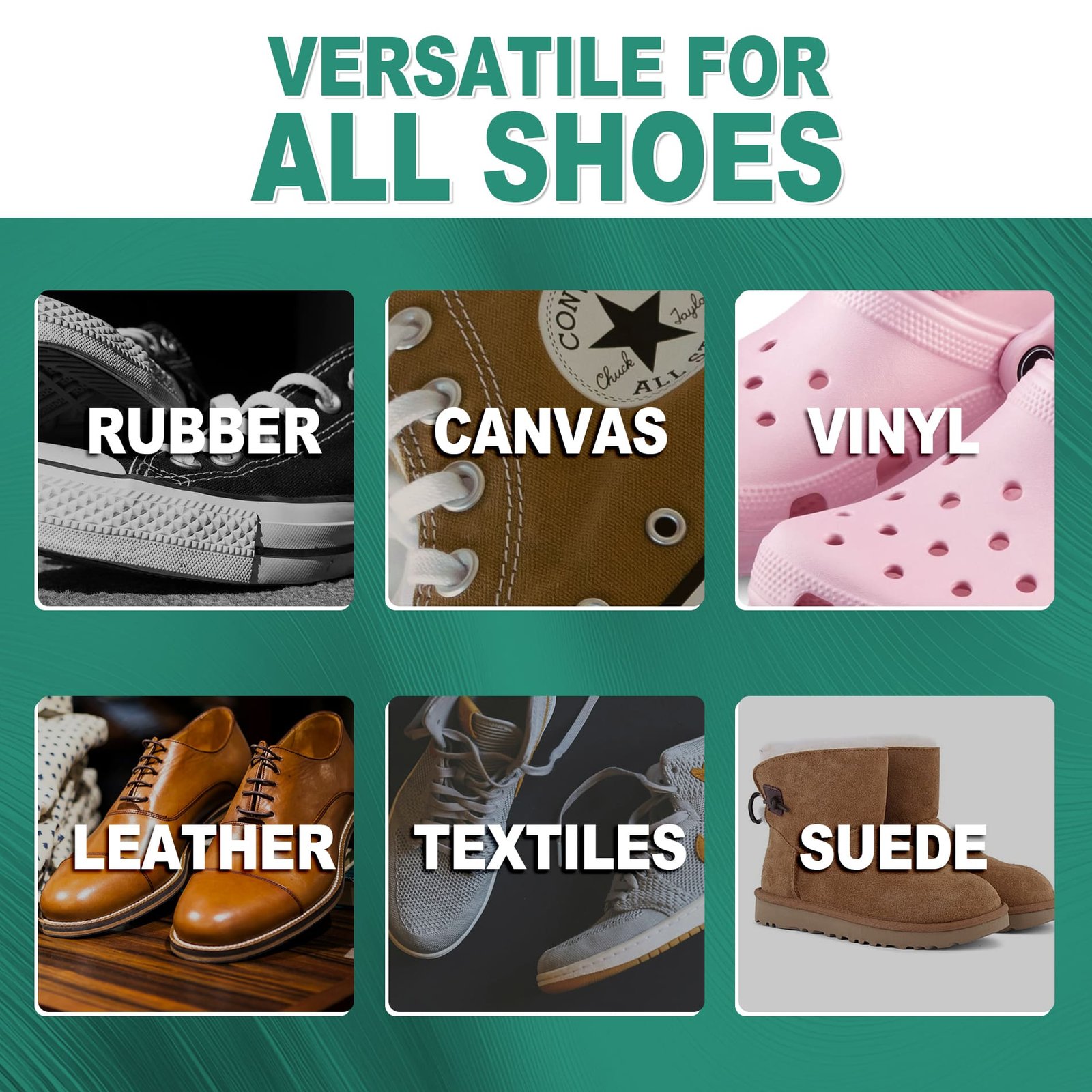
The recommendation remains bounded by facts. GleamGlee is confirmed for leather, rubber, vinyl, canvas, cotton, nylon, and suede. It should not be presented as universally compatible with every EVA, TPU, PEBA, PUR, plate, or proprietary running-shoe compound without verification. It is designed for localized bonding repairs, not collapsed cushioning, missing tread, damaged plates, or a complete sole rebuild.
Place Adhesive Inside Narrow Running-Shoe Repair Gaps
Precise placement helps create full contact while reducing excess glue on visible textiles, colored sidewalls, white midsoles, and detailed shoe edges.

Reach the Toe
Toe-edge openings may be only a few millimeters wide and can close as soon as hand pressure is released. The precision metal tip reaches into the actual bonding area without forcing the gap wider than necessary. Apply a thin layer, then restore the front edge to its original line before securing the shoe for curing.
Follow the Edge
Outsole separation often runs along a curved side. A fine application point can follow the joint more accurately than a broad opening, placing adhesive where the two surfaces meet. Work in a controlled sequence instead of filling the entire gap at once, and prevent cured adhesive from forming a thick ridge outside the flexing zone.
Protect the Finish
Clear drying improves appearance, but clear excess remains visible as texture or shine. Precision reduces the amount reaching a knit upper, suede detail, colored overlay, or white sole wall. Mask sensitive surfaces where necessary and remove uncured squeeze-out according to product guidance before it spreads into porous material.
Everything Needed for a Controlled Home Shoe Repair
The kit supports adhesive placement, surface preparation, alignment, pressure, curing, and future projects instead of supplying only a single tube of glue.
Two Glue Tubes
Two separate 20 ml tubes provide 40 ml total adhesive. The format supports multiple localized repairs while allowing the second tube to remain separate until needed. Quantity is positioned for 20+ pairs depending on repair size and application. A large separation naturally uses more material than a short toe-edge lift, so coverage should never be treated as an exact guarantee.
Precision Applicator
The application system helps direct adhesive into narrow sole edges, toe gaps, heel joints, and detailed bonded areas. Controlled placement matters on running shoes because textile uppers and visible midsoles sit close to the repair. Use the tip to coat the actual contact surface rather than creating a thick exterior patch where the shoe needs to bend.
Surface Preparation
Two sandpaper pieces are included for suitable preparation work. Light abrasion can help remove loose material and prepare compatible surfaces, but aggressive sanding can damage foam, fabric, finishes, or structural layers. Clean first, identify both surfaces, and use sandpaper only where the material and repair call for it. Remove resulting dust before applying adhesive.
Secure the Joint
Two rubber bands help maintain pressure and alignment while the adhesive cures. They are especially useful when a band can wrap around the shoe without distorting the upper or shifting the sole. Pressure should close the joint evenly, not squeeze out all adhesive or change the shoe shape. Use an alternative clamp method when bands cannot hold the area safely.
GleamGlee Shoe Glue Product Facts at a Glance
Use the verified specifications below when evaluating quantity, finish, application, confirmed materials, repair areas, accessories, and conservative curing guidance.
| Running-Shoe Area | Possible Material | GleamGlee Status | Repair Guidance |
|---|---|---|---|
| Ground-contact outsole | Rubber | Confirmed | Clean, dry, prepare where appropriate, and apply a thin controlled layer. |
| Fabric upper edge | Canvas or cotton | Confirmed | Avoid saturating fibers or spreading adhesive across visible fabric. |
| Lightweight woven upper | Nylon | Confirmed | Place adhesive inside the joint and keep the upper in its original shape. |
| Synthetic trim | Vinyl | Confirmed | Clean gently and patch-test when a surface finish or coating is uncertain. |
| Leather reinforcement | Leather | Confirmed | Remove wax, oil, dirt, or conditioner from the actual bonding surface. |
| Suede detail | Suede | Confirmed | Protect the nap and avoid exterior squeeze-out on visible material. |
| Cushioned midsole | EVA, TPU, PEBA, PUR, or blend | Not universally confirmed | Verify the specific material before use; stop if the foam is crumbling. |
| Plate or stability part | Carbon composite or rigid plastic | Not confirmed | Structural damage is not a routine localized glue repair. |
Repair a Local Running-Shoe Sole Gap Step by Step
Work slowly through inspection, material identification, cleaning, preparation, application, alignment, securing, and curing instead of squeezing glue into an unexamined opening.

Clean Surfaces
Remove mud, grit, dust, oil, and loose debris from the bonding area. Contamination blocks contact between adhesive and material. Use a cleaning method suitable for the shoe and avoid saturating foam or fabric inside the joint.
- Open the gap gently.
- Use clean tools.
- Remove loose residue.
- Keep visible fabric protected.

Apply Thinly
Guide the precision metal tip into the opening and place a thin, controlled layer across the actual contact area. More adhesive does not automatically create a stronger repair and may cause squeeze-out, slow curing, or a bulky ridge.
- Work along the joint.
- Avoid flooding porous fabric.
- Cover the contact surface.
- Keep glue off visible trim.

Align Parts
Return the outsole or edge to its original position and check the sole line from several angles. Correct alignment matters on a running shoe because a shifted edge can change appearance, contact, or comfort.
- Use the other shoe as a reference.
- Match the original curve.
- Correct alignment before securing.
- Do not stretch the upper.

Cure Fully
Place the shoe in a stable, ventilated location and leave the repair undisturbed. Do not repeatedly bend the toe to test progress. Allow approximately 24 hours for a full cure before normal wear or running.
- Keep the area dry.
- Maintain the original shape.
- Remove supports carefully.
- Inspect before returning to use.
Give the Repair Time Before Running Again
A joint that no longer moves under light finger pressure may still be developing the cured bond needed for repeated bending and ground contact.
Initial Hold Is Not the Finish Line
Adhesive begins changing as soon as the surfaces are joined, but visible stillness should not be confused with full curing. Running introduces body weight, forefoot bending, outsole compression, vibration, and repeated edge loading. Applying those forces too early can disturb alignment or weaken a bond before it has developed fully.
After application, keep the shoe in its original shape and maintain even pressure with rubber bands or another suitable securing method. Place it in a stable, ventilated area away from water and unnecessary handling. Do not speed the decision by flexing the toe every few minutes. Repeated testing is still movement.
For GleamGlee content, use approximately 24 hours as the conservative full-cure guidance before normal wear. A universal five-second, ten-second, thirty-second, or five-minute initial-set claim is not supported by the current product facts and should not be used. Temperature, adhesive quantity, joint access, and surface condition can also affect the repair experience.
Before returning to running, remove the securing method carefully and inspect the full edge. Check that the sole remains aligned, no section is still open, and no hardened squeeze-out creates an uncomfortable ridge. Begin with ordinary wear rather than immediately treating a repaired shoe as suitable for a long run, race, technical trail, or high-speed session. Any continuing instability, new separation, or change in the platform calls for stopping use and reassessing the shoe.
Six Factors That Shape Running-Shoe Repair Durability
Longer-lasting results come from compatible materials, clean surfaces, careful preparation, controlled quantity, accurate alignment, and adequate curing working together.
Material Match
Adhesive can only bond effectively when it is compatible with both surfaces. Running shoes often combine rubber, textiles, vinyl, foam, and proprietary compounds. Confirmed GleamGlee materials provide a reliable starting point, while unconfirmed foam requires identification and testing.
- Check both sides of the joint.
- Reject degraded material.
- Review shoe specifications.
- Test uncertain finishes.
Surface Cleanliness
Mud, road dust, perspiration, oil, and loose old adhesive interrupt contact. A narrow gap may look clean outside while holding grit deeper inside. Open it only enough to clean without tearing or stretching the shoe.
- Remove loose particles.
- Use material-safe cleaning.
- Keep fabric from soaking.
- Dry before bonding.
Surface Preparation
Light abrasion can help suitable smooth surfaces, but aggressive sanding may damage foam, fabric, or a finished sidewall. Preparation should expose a sound bonding surface without changing the shoe’s geometry or removing usable material.
- Sand only when appropriate.
- Preserve the edge shape.
- Clear sanding dust.
- Stop at sound material.
Controlled Quantity
A thin layer across the contact area is usually more useful than a large exterior bead. Excess adhesive can squeeze onto visible material, slow curing, or leave a stiff ridge at a flex line.
- Use the metal tip.
- Cover the joint evenly.
- Avoid empty pockets.
- Remove uncured excess.
Accurate Alignment
The sole must return to its original line before pressure is applied. A shifted toe lip or side edge may cure securely in the wrong position, affecting appearance and potentially changing how the shoe meets the ground.
- Compare with the other shoe.
- Match the original curve.
- Check from multiple angles.
- Secure without distortion.
Full Cure
The repair needs uninterrupted time to develop before normal running stress returns. Approximately 24 hours is the recommended conservative guidance. Keep the area aligned, dry, and free from repeated test bends during that period.
- Plan around training.
- Maintain even pressure.
- Inspect after curing.
- Stop if separation returns.
Know When Shoe Glue Is Not the Right Repair
Adhesive reconnects compatible surfaces; it cannot restore deteriorated cushioning, rebuild missing tread, straighten a distorted platform, or repair every safety-critical structure.
Crumbling Midsole
Foam that powders, tears away in chunks, or collapses under pressure no longer provides a stable bonding surface. Glue may stick to the loose outer layer while the material continues failing underneath. The issue is material degradation, not simply separation.
- Do not seal over crumbling foam.
- Check the entire midsole.
- Stop running in an unstable platform.
- Consider replacement.
Full-Sole Separation
A largely detached outsole requires broad, even adhesive coverage, precise alignment, and consistent pressure over a complex shape. It may involve materials or factory treatments not confirmed for a small DIY repair. Professional shoe repair may offer better preparation and pressing methods.
- Do not fill the cavity blindly.
- Check for hidden tearing.
- Compare repair cost and shoe age.
- Seek professional assessment.
Structural Damage
A cracked plate, distorted heel, torn load-bearing upper, uneven platform, or damaged stability component can affect how the shoe supports movement. Closing the visible gap does not restore the original engineering or verify safe running performance.
- Stop using the shoe for running.
- Do not make safety guarantees.
- Inspect both shoes for comparison.
- Replace when stability is uncertain.
What Amazon Feedback Commonly Highlights About GleamGlee
Verified marketplace feedback should be checked before publication, but recurring themes help explain which parts of the repair experience users value most.
Bonding Performance
Users have reported successful repairs across footwear such as sneakers, slippers, and specialty shoes. The relevant theme is restored contact at localized bonded areas rather than an unsupported claim that every shoe or every material can be repaired. Individual quotations should be copied only from the current Amazon listing and checked for exact wording before publication.
Controlled Application
Feedback around application frequently values the ability to direct adhesive into a repair area. Controlled placement matters along toe gaps, sole edges, and visible shoe lines where excess glue can create mess. Results still depend on cleaning, preparation, amount, alignment, pressure, and curing, so application convenience should not be presented as a substitute for correct technique.
Complete Kit Value
The included accessories give users more than a standalone adhesive tube. Two sandpaper pieces support suitable surface preparation, and two rubber bands can help hold compatible repairs during curing. Two separate 20 ml tubes provide 40 ml total for multiple projects. Coverage varies with damage size, and the 20+ pairs positioning should remain qualified by repair size and use.
Running Shoe Glue Frequently Asked Questions
Get direct answers about flexibility, repeated impact, materials, waterproof performance, application quantity, curing time, and the limits of a home repair.
1. Is GleamGlee suitable for running-shoe sole separation?
Yes, when the damage is localized, both materials are compatible, the separated section remains intact, and the surfaces can return to their original position. Common candidates include a lifting rubber toe edge or a short outsole gap. Extensive detachment, crumbling foam, a distorted platform, or damaged structural components may need professional assessment or replacement.
2. Will the adhesive stay flexible after curing?
GleamGlee is designed to remain flexible after curing rather than becoming excessively rigid. Flexibility is especially relevant at the forefoot, toe edge, and other areas that bend with each step. Apply a thin controlled layer, maintain alignment, and allow the repair to cure fully before normal wear.
3. Can it handle repeated running impact?
GleamGlee combines a strong, flexible, waterproof, and crack-resistant bond for compatible localized footwear repairs. Those properties suit areas exposed to normal running movement and repeated ground contact. No published laboratory impact value, mileage guarantee, drop-test result, or flex-cycle count is available, so such numerical claims should not be inferred.
4. Does it work on rubber running-shoe soles?
Rubber is a confirmed compatible material. The other side of the joint must also be identified because a rubber outsole may connect to nylon, canvas, vinyl, leather, or an unconfirmed foam. Clean and dry the surfaces, remove loose contamination, and confirm the rubber remains intact before applying adhesive.
5. Can it bond EVA, TPU, or PEBA foam?
The current GleamGlee fact set does not confirm universal compatibility with EVA, TPU, PEBA, PUR, or every proprietary running-shoe foam. Check the shoe maker’s material information and test compatibility where appropriate. Do not attempt to glue foam that is crumbling, compressed, or separating within its own structure.
6. Is the repaired bond waterproof?
GleamGlee is waterproof and is positioned for ordinary rain, damp ground, and everyday moisture after curing. Apply it only to clean, dry surfaces and keep the repair away from water during curing. Waterproof performance cannot compensate for mud, oil, moisture, or deteriorated material trapped inside the joint.
7. Will the glue dry clear?
Yes. The adhesive dries clear, helping visible repair lines remain more discreet on white midsoles, colored edges, and detailed footwear. Clear drying does not make excess adhesive disappear. Use the precision metal tip, apply a thin layer inside the joint, and protect porous fabric or suede from squeeze-out.
8. How much glue should I apply?
Apply a thin, controlled layer across the actual bonding surface. More glue does not automatically produce a stronger repair. Excess can spread onto visible material, slow curing, or create a stiff ridge outside the joint. The separated surfaces should meet fully without empty pockets or excessive squeeze-out.
9. How long should I wait before running?
Allow approximately 24 hours for a full repair cure before returning the footwear to normal wear. Running introduces more repeated bending and impact than a light handling check, so do not rush the schedule. Inspect alignment and the full repaired edge before gradually returning the shoe to use.
10. When should I replace the running shoes?
Consider replacement when the midsole crumbles, cushioning has collapsed, the platform is distorted, the outsole is extensively detached, a plate or stability structure is damaged, or the shoe no longer feels stable. Adhesive can reconnect compatible surfaces but cannot restore worn-out cushioning or verify structural running safety.
Repair Compatible Running-Shoe Gaps With a Complete Kit
Choose strong, flexible, waterproof, clear-drying shoe adhesive with precision application and the basic preparation and securing tools needed for localized repairs.

Why Choose GleamGlee
GleamGlee combines two 20 ml adhesive tubes, a precision metal application system, an applicator, two sandpaper pieces, and two rubber bands. The cured bond remains flexible and crack resistant, while the clear finish supports neater work along visible shoe edges. Use it for compatible, structurally sound areas such as a lifting rubber toe edge, localized outsole separation, loose heel edge, or other small bonded opening.
Check Before Buying
Confirm the two materials, damage severity, ability to realign the joint, and time available for approximately 24 hours of curing. Amazon provides the current price, availability, delivery estimate, and live review information. If foam is crumbling, the platform is distorted, or a structural part is damaged, choose professional assessment or replacement instead of relying on adhesive alone.
The guidance was prepared by the GleamGlee Shoe Repair Content Team using the current product fact library, confirmed package specifications, supported materials, application accessories, conservative curing guidance, and established footwear-repair principles.
No unnamed cobbler, laboratory scientist, chemical engineer, or medical professional is presented as a reviewer. Performance descriptions remain limited to verified GleamGlee properties: strong bonding, flexibility after curing, waterproof performance, clear drying, crack resistance, heat resistance, washable positioning, high viscosity, and precision application.
Product-specific laboratory values are intentionally excluded where no published data exists. The content does not invent PSI, MPa, impact energy, tensile strength, peel strength, temperature limits, chemical composition, flex-cycle counts, waterproof test duration, safety certification, toxicity status, or universal compatibility with every running-shoe foam.