 Skip to content
Shoe Glue for Leather Shoes That Stays Flexible and Dries Clear
Fix loose soles, lifting edges, heel gaps, and small leather shoe damage with a clean, flexible bond.
Leather shoes are worth repairing when the damage is still small. A lifting sole edge, a loose heel corner, or a tiny side gap does not always mean the shoes are finished. With the right shoe glue, many everyday leather shoe problems can be fixed at home before they turn into expensive repairs.
The real challenge is choosing a glue that matches how leather shoes are worn. Leather shoes bend, flex, rub, and meet moisture during daily use. A repair glue should not just feel strong when first applied. It should dry clear, stay flexible, and hold through normal walking.
- Clear finish for neater repairs around visible leather edges
- Flexible bond that moves with the shoe after curing
- Waterproof hold for daily wear and light moisture exposure
- Works on leather, rubber, vinyl, and canvas
- Precision metal tip for controlled application
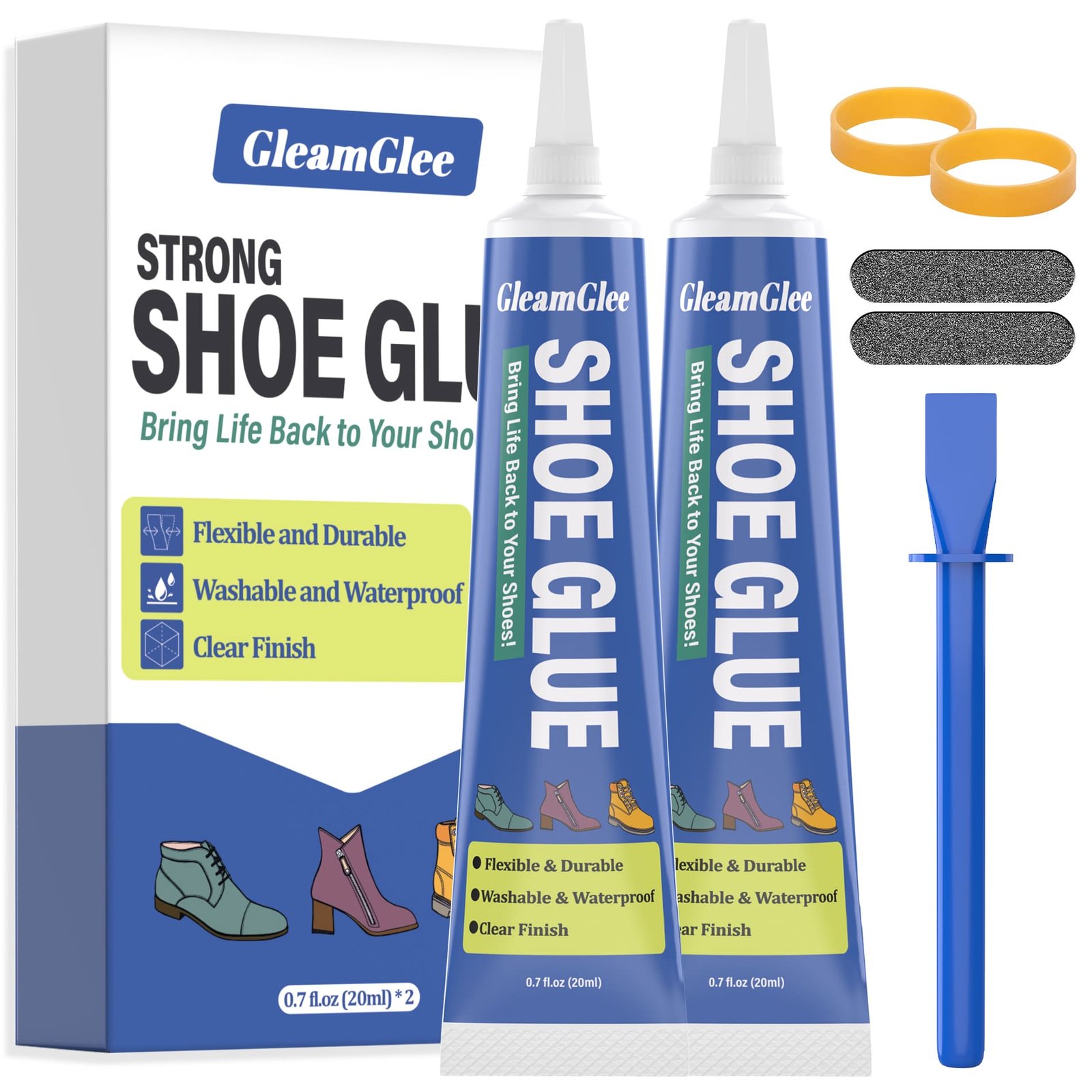
- 20ml x 2 PCS repair kit with applicator, sandpaper, and rubber bands
- Useful for soles, heels, patches, edge gaps, and small damaged areas

GleamGlee Shoe Glue is designed for everyday footwear repair, including leather shoes, rubber soles, vinyl, canvas, heels, patches, small holes, and lifting edges. It creates a clear, waterproof, flexible bond that helps keep repairs cleaner and more wearable.
WHY ORDINARY GLUE DISAPPOINTS
Leather Shoes Need More Than Just “Strong Glue”
A shoe repair has to survive walking, bending, pressure, and visible wear.
Leather shoes are different from hard plastic, wood, or craft repairs. They move every time you walk. The toe bends. The sole edge flexes. The heel takes repeated pressure. The leather upper can shift slightly with the foot.
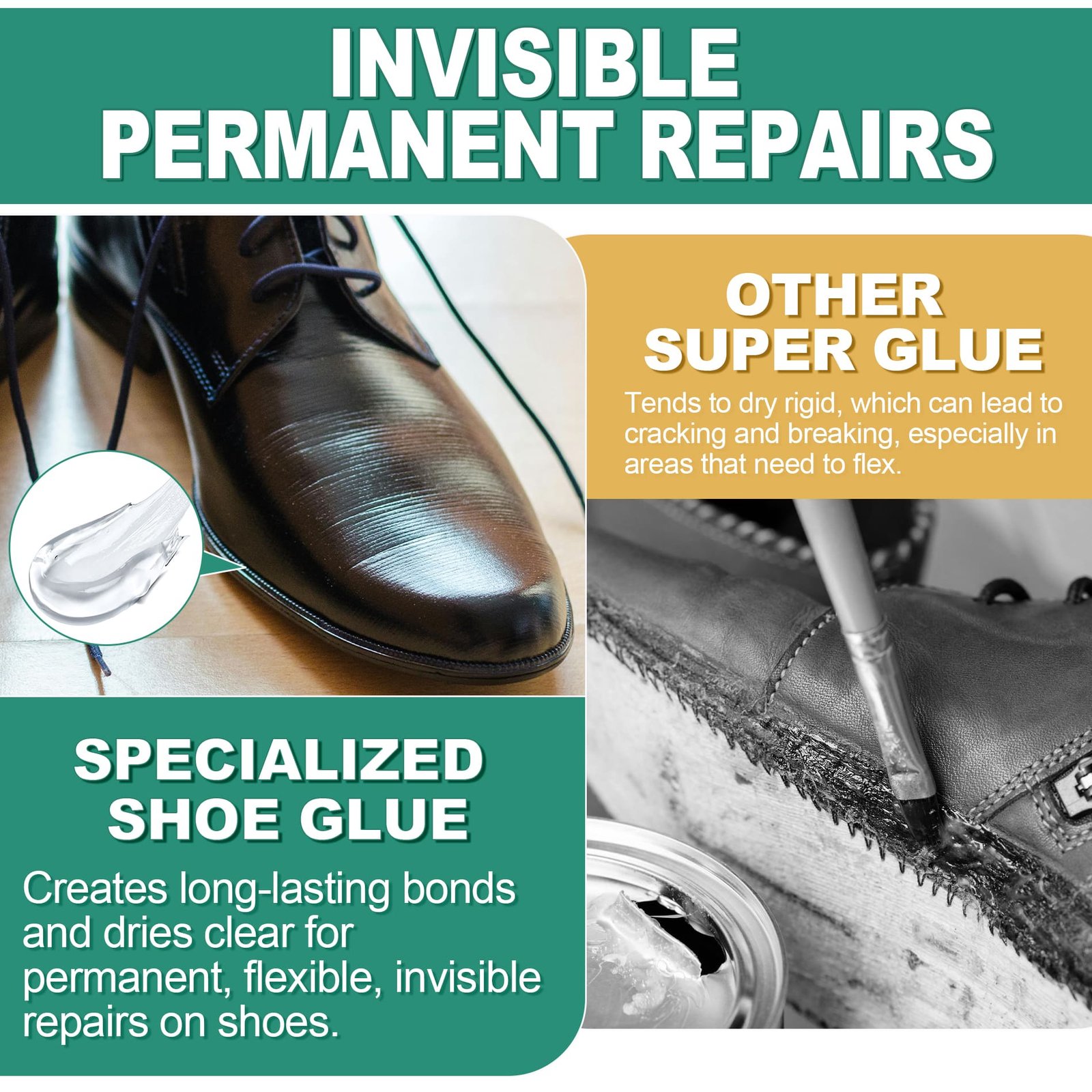
That is why ordinary hard glue often disappoints on leather shoes. It may feel strong at first, but once the shoe bends repeatedly, a stiff glue line can crack, peel, or separate again. Some fast-drying glues can also leave cloudy white marks around the repair area, which looks especially bad on polished leather shoes.
For leather shoes, the better choice is a shoe repair adhesive that can do three things at the same time:
- Hold firmly between leather and shoe materials
- Stay flexible after drying
- Look clean around visible edges and seams
A good repair should not make the shoe feel stiff, bulky, or obviously glued.

| Leather Shoe Problem | What Can Go Wrong |
|---|---|
| Loose sole edge | Hard glue may crack when the shoe bends |
| Leather-to-rubber gap | Weak bond may peel under walking pressure |
| Visible shoe edge repair | White residue can make the damage more noticeable |
| Heel separation | Brittle glue may fail under impact |
| Side opening on boots | Thick glue overflow can look messy |

For this kind of repair, the right glue is not always the one with the most aggressive “super strength” claim. The right glue is the one that fits the job: clear, flexible, waterproof, and easy to control.
What People Really Want from Shoe Glue for Leather Shoes
They are not looking for random glue. They want a repair that looks clean and actually holds.
Most people searching for shoe glue for leather shoes already have a real problem in front of them. A dress shoe may be separating at the toe. A leather boot may have a side gap. A leather sneaker sole may be starting to pull away. A heel edge may feel loose but not completely broken.
The goal is usually simple: fix the shoe without making it look worse.
A strong leather shoe glue should help with:
- Loose sole edges before the damage spreads
- Toe area lifting where shoes bend the most
- Heel edge gaps caused by pressure and repeated wear
- Leather-to-rubber bonding on common sole constructions
- Small holes or patch repairs on leather, vinyl, canvas, or rubber areas
- Cleaner visible repairs where thick white glue would look obvious
FLEXIBLE BOND
Why Flexible Bond Matters for Leather Shoe Repairs
A leather shoe repair needs to move with every step.
A shoe is always under movement. Even when the damage looks small, the repair area may bend hundreds of times in a single day. This is especially true around the toe, front sole edge, heel, and side seams.
If the glue dries too rigid, the repair may fail because the shoe keeps flexing while the glue stays stiff. That can lead to cracking, peeling, or a hard line that feels uncomfortable while walking.
A flexible shoe glue works better for leather footwear because it helps the bonded area move with the shoe instead of fighting against it.
Flexible shoe glue is especially useful for:
- Toe areas that bend during walking
- Sole edges that flex under body weight
- Heel gaps that absorb repeated impact
- Leather-to-rubber bonding areas
- Leather boots with side separation
- Leather sneakers with peeling sole edges
- Small patches that need to stay attached while the shoe moves
GleamGlee Shoe Glue is made to dry with elasticity, helping reduce cracking and hardening over time. That makes it a smart option for shoes that need to remain comfortable and wearable after repair.
Why an Invisible Bond Matters on Leather Shoes
A strong repair still feels disappointing if the glue line is obvious.
Leather shoes are appearance-sensitive. A messy repair can make a good pair of shoes look damaged, even if the bond is holding.
That is why clear shoe glue matters. A transparent finish helps reduce visible repair marks around the toe, side edge, heel, and sole seam. It is especially important for black dress shoes, brown leather boots, white leather sneakers, and polished shoes where a cloudy glue mark would stand out.
A clean repair is not only about the glue formula. Application also matters.
For a cleaner-looking repair:
- Apply a thin, controlled layer instead of a thick bead
- Press the repaired area evenly so the glue spreads inside the gap
- Wipe away excess glue before it cures
- Keep the shoe still while the bond sets
- Avoid wearing the shoes before the repair has cured
Clean Repair Rule: Use enough glue to bond the surfaces, not so much that it squeezes out and dries around the edge.
GleamGlee’s precision metal tip helps control the amount of glue, which is helpful when repairing visible leather shoe edges where a neat finish matters.
Common Leather Shoe Repairs GleamGlee Is Built For
Small damage is easier to fix before it spreads.
Leather shoe damage often starts quietly. A tiny gap near the toe. A small heel edge lifting. A side seam starting to separate. Once dirt, water, and walking pressure get inside, that small opening can grow quickly.
GleamGlee Shoe Glue is useful for everyday leather shoe repairs where the shoe is still wearable but needs a strong, flexible bond.
01
Loose sole edge
Reattaches the lifted edge before separation spreads
02
Lifting toe area
Helps hold a high-bending front zone
03
Heel edge gap
Bonds small openings around the heel
04
Leather upper gap
Helps close minor side openings cleanly
05
Leather-to-rubber repair
Useful for common shoe sole construction
06
Leather boot separation
Helps with flexible boot edge repairs
07
Leather sneaker sole repair
Works for casual leather footwear
08
Small patches or holes
Helps attach small repair pieces neatly
09
Loose insole area
Helps secure small interior shoe repairs
10
Vinyl or canvas shoe parts
Useful for mixed-material footwear
A small gap today can become a bigger repair later. Fixing it early helps keep good shoes in rotation longer.
Why GleamGlee Shoe Glue Makes Sense for Leather Shoe Repairs
A practical repair kit for people who want strength, flexibility, and a cleaner finish.
GleamGlee Shoe Glue is made for real shoe repair problems: loose soles, heels, patches, small holes, leather shoes, rubber soles, vinyl, and canvas. It dries clear, stays flexible, and forms a waterproof bond for daily wear.
The kit is also more complete than a basic single tube. It includes two 20ml tubes, an applicator, sandpaper, and rubber bands. That matters because a better shoe repair is not just about adding glue. It also depends on surface prep and steady pressure while the bond cures.
GleamGlee is not only a shoe glue product. It is part of a broader adhesive repair lineup covering fabric, leather, plastic, glass, books, construction materials, and more. That background matters because shoe repair is a material problem: leather, rubber, pressure, movement, water, and application all have to work together.
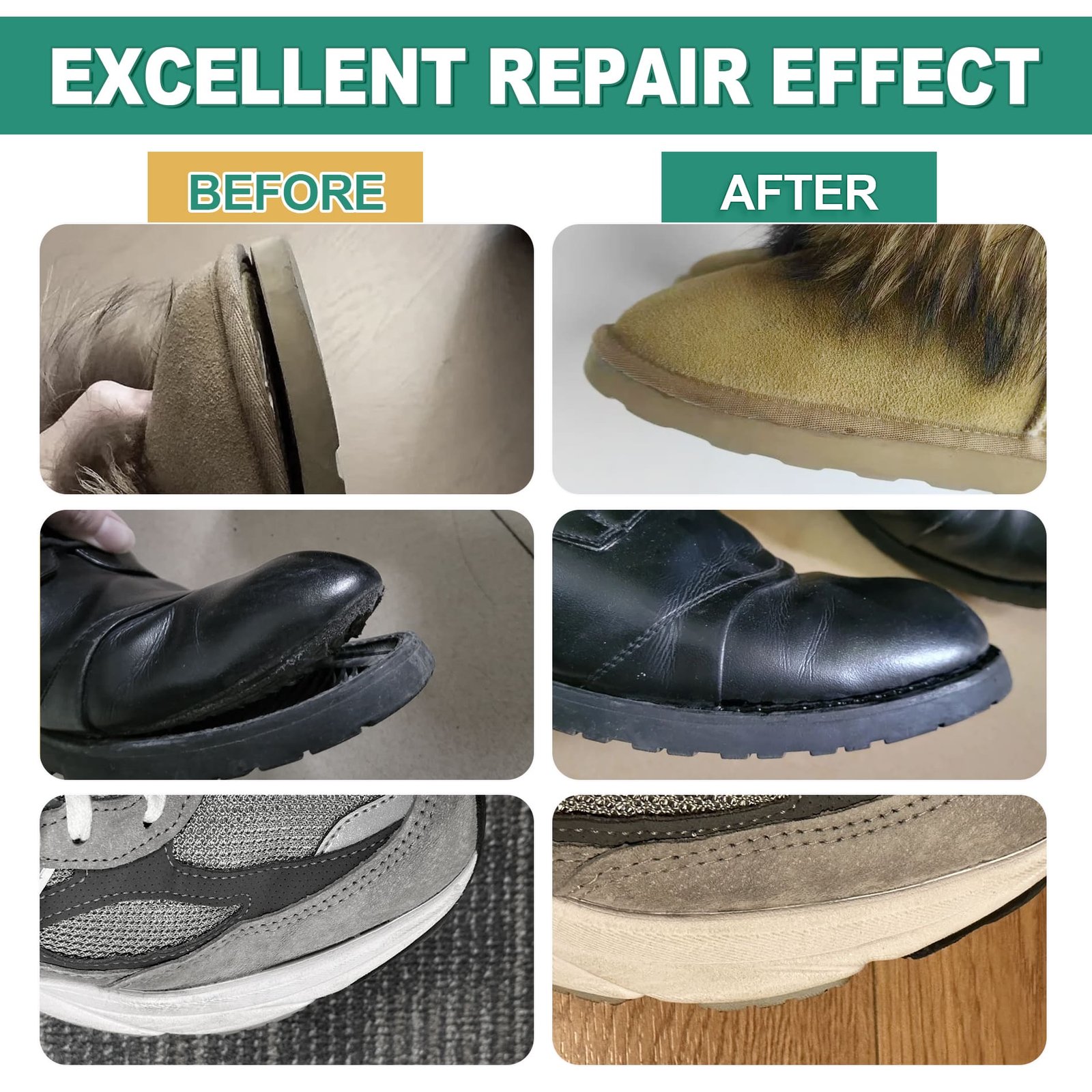
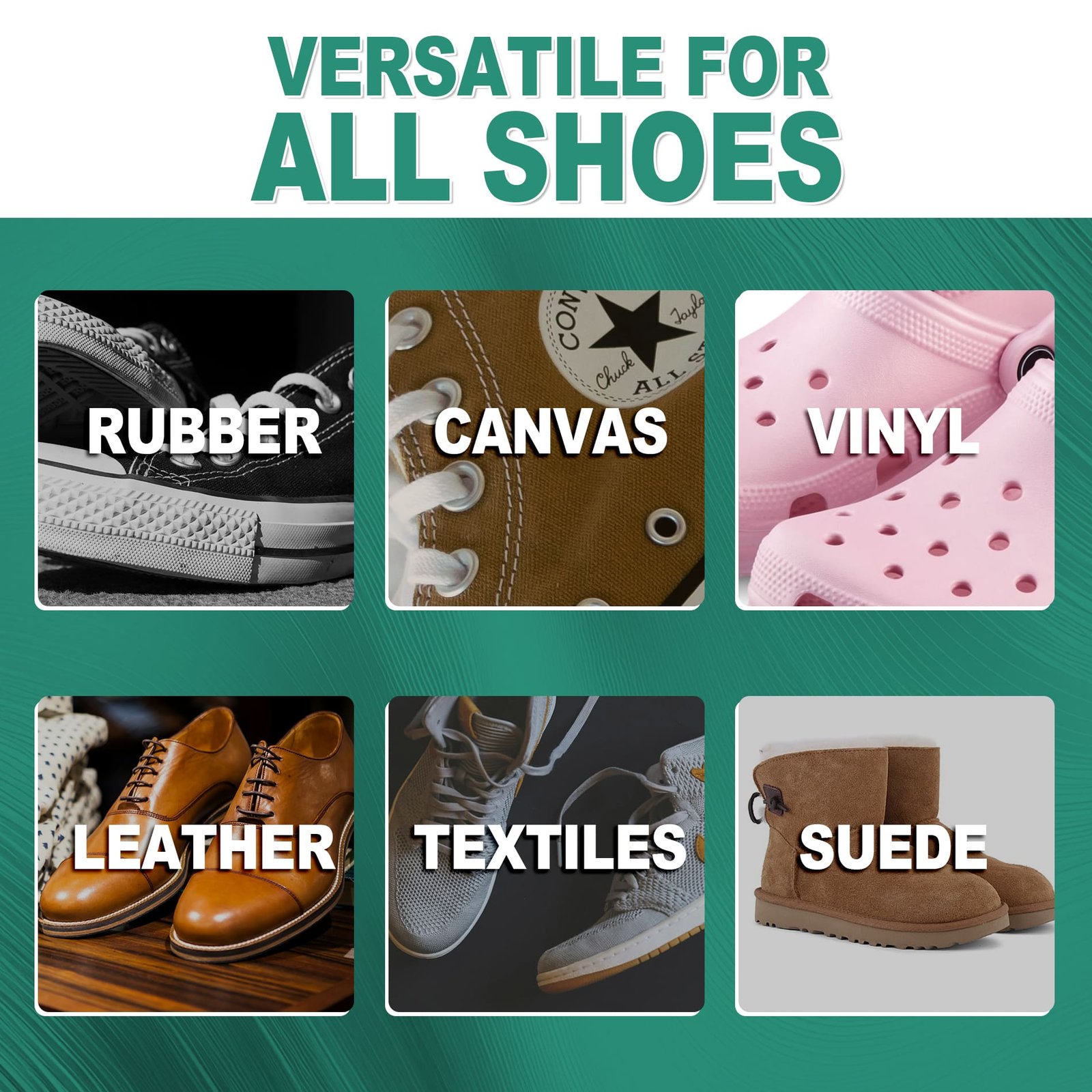
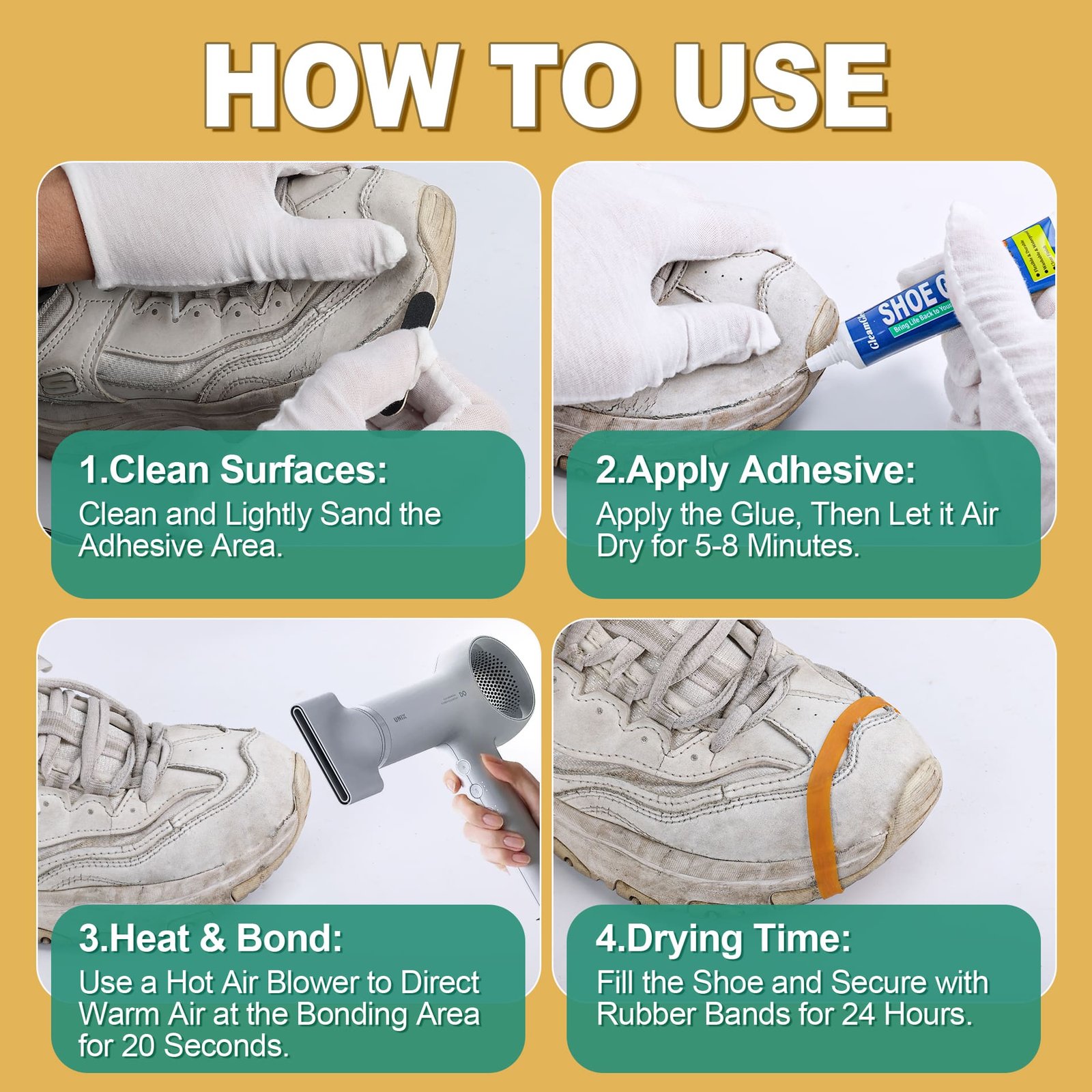
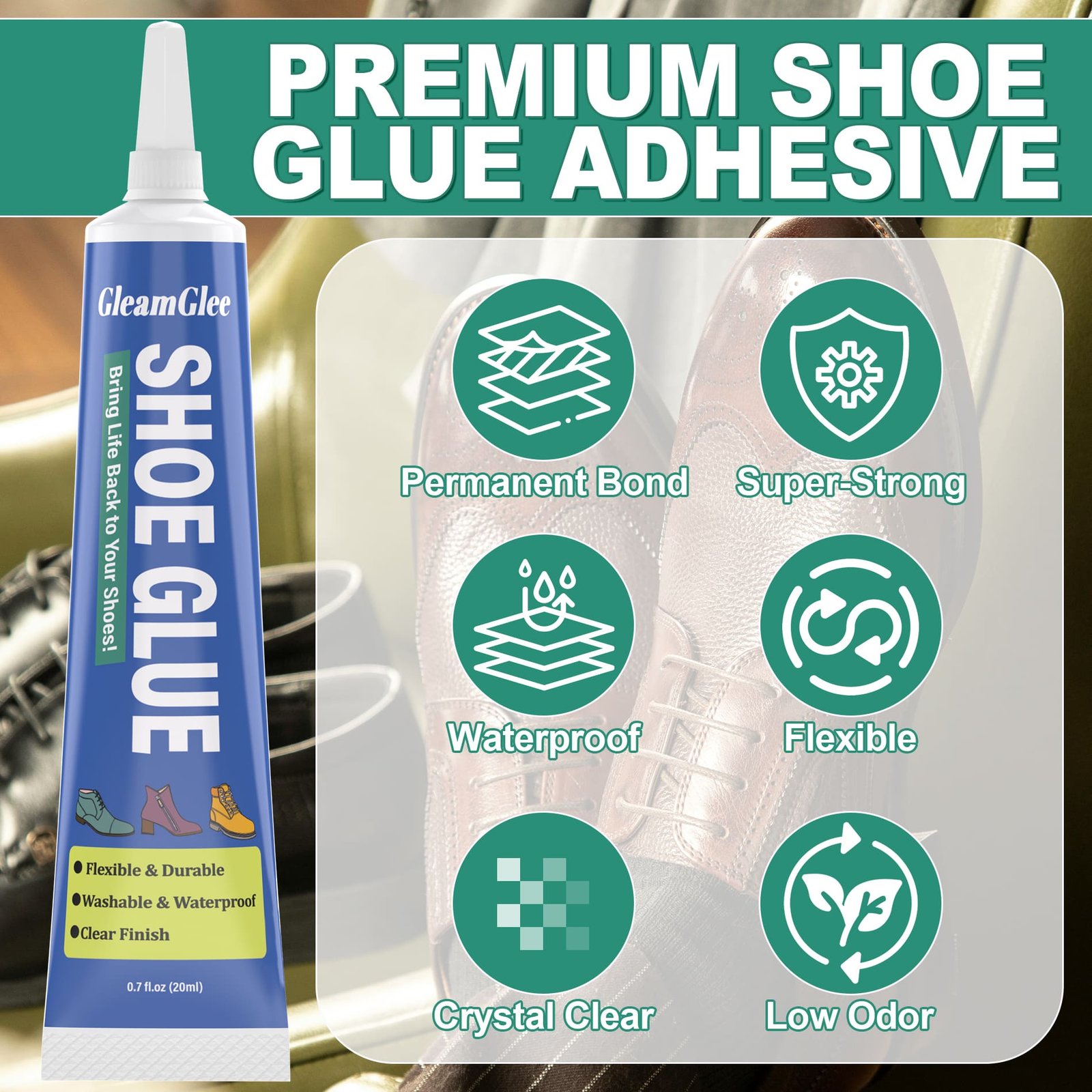
| What Leather Shoe Owners Need | How GleamGlee Helps |
|---|---|
| Clean-looking repair | Clear transparent finish |
| Walking flexibility | Elastic bond that resists cracking |
| Daily moisture resistance | Waterproof repair performance |
| Multi-material use | Leather, rubber, vinyl, canvas |
| Better application control | Precision metal tip |
| Surface preparation | Sandpaper included for smoother bonding areas |
| Pressure support | Rubber bands included to help hold repairs in place |
| More repair value | 20ml x 2 PCS for multiple shoe fixes |

For leather shoes, a flexible clear shoe glue is usually the smarter choice. The repair needs to hold, but it also needs to move.
Why Regular Super Glue Often Fails on Leather Shoes
Fast is not always better when the repair has to flex.
Super glue can be useful for small, hard, non-moving repairs. Leather shoes are different. A shoe sole bends. A leather upper shifts. A heel takes repeated impact. A repair around the sole edge has to survive motion, not just stick in place for a few minutes.
Many quick-drying glues also give very little time to align the repair cleanly. If the glue cures too fast, the shoe edge may dry crooked, stiff, or cloudy.
Why ordinary super glue may disappoint
- It may dry too rigid for bending shoe areas
- It can leave cloudy white marks on visible leather edges
- It gives less time to align sole and leather surfaces
- It may crack when the shoe flexes repeatedly
- It is not always ideal for larger leather-to-rubber bonding zones
- It can make a repair look rushed instead of clean
- It may work on day one but open again after walking
Best Glue Types for Leather Shoes: What Works and What to Avoid
The right choice depends on the repair area, material, and how much movement the bond needs to handle.
Different adhesives solve different problems. A glue that works on a craft project may fail on a walking shoe. A professional contact cement may be strong, but harder for casual repairs. A thick shoe repair paste may be durable, but less neat around visible leather edges.
For most everyday leather shoe repairs, flexible clear shoe glue offers the best balance: strong enough for common shoe damage, flexible enough for walking, cleaner-looking around visible edges, and easier to apply at home.
| Glue Type | Best For | Strength | Flexibility | Appearance | Ease of Use |
|---|---|---|---|---|---|
| Flexible Shoe Glue | Leather shoes, soles, heels, edge gaps | High | High | Clean / clear | Easy |
| Regular Super Glue | Tiny hard-material fixes | Medium-High | Low | May whiten | Easy |
| Contact Cement | Large sole reattachment | High | Medium-High | Less precise | Medium |
| Thick Shoe Repair Paste | Worn soles, protective buildup | High | Medium | Can look bulky | Medium |
| Craft Glue | Light fabric or paper repairs | Low | Low-Medium | Varies | Easy |
Best everyday choice
For leather shoes that need a clean repair, choose a glue that says it is made for shoes, dries clear, stays flexible, and works on leather and rubber. That combination matters more than a generic “strong glue” claim.
GleamGlee fits this middle ground well: easier than professional contact cement, cleaner than thick repair paste, and more flexible for shoes than ordinary household glue.
How to Repair Leather Shoes with Flexible Clear Shoe Glue
A cleaner repair comes from prep, thin application, steady pressure, and full curing.
A leather shoe repair is simple, but it should not be rushed. Better results usually come from using less glue, preparing the surface, holding the repair in place, and allowing enough curing time before wearing the shoes again.
1
Clean the Repair Area
Remove dust, loose dirt, old glue flakes, polish residue, and oil from the bonding area. Glue bonds better to a clean surface than to dirt or weak old adhesive.
2
Lightly Roughen Smooth Surfaces
For smooth rubber or leather bonding areas, lightly roughen the surface with the included sandpaper. Do not over-sand visible leather. The goal is to improve grip, not damage the shoe.
3
Keep the Area Dry
Do not apply glue to damp leather, wet soles, or surfaces with cleaning residue. Dry surfaces help the bond form more securely.
4
Apply a Thin, Even Layer
Use the precision metal tip to control the glue. A thin layer is usually better than too much adhesive, especially around visible leather edges.
5
Press and Align
Bring the leather, sole, heel, or patch area together carefully. Press firmly so both surfaces make even contact.
6
Secure the Repair
Use rubber bands, tape, a clamp, or a steady weight to keep pressure on the repair area while it cures. This is especially important for sole edges and heel gaps.
7
Let It Cure Before Wearing
Do not wear the shoes immediately after gluing. Give the repair enough time to cure before walking, bending, or exposing it to moisture.
For a cleaner invisible repair, wipe away extra glue before it cures. Once adhesive hardens outside the repair line, it becomes harder to remove neatly.
Why Shoe Glue Repairs Fail — and How to Avoid It
Most failed repairs happen because the repair was rushed.
A good shoe glue still needs the right conditions to work well. Leather shoes collect dust, oil, polish, moisture, and old adhesive. If those stay between the surfaces, the bond may not hold as expected.
Repair success comes down to four things:
- Clean surface
- Thin and even application
- Firm pressure
- Full curing time
| Common Mistake | What Can Happen | Better Repair Habit |
|---|---|---|
| Applying glue over dirt or oil | Bond peels away | Clean first |
| Wearing the shoes too soon | Repair opens under pressure | Allow full curing |
| Using too much glue | Messy visible overflow | Apply a thin layer |
| Not pressing parts together | Weak contact between surfaces | Tape, clamp, band, or weigh down |
| Leaving old loose glue behind | New glue bonds to weak residue | Remove flakes first |
| Repairing severe structural damage | Temporary or unsafe result | Consider professional repair |
A shoe glue repair should feel controlled, not rushed. Taking a few extra minutes before applying glue can make the finished repair cleaner and stronger.
When Shoe Glue Is a Smart Fix — and When It Is Not Enough
A small shoe problem can often be repaired at home. Severe damage may need a cobbler.
Shoe glue is excellent for many everyday leather shoe repairs, but it is not a magic fix for every damaged shoe. A reliable repair guide should be clear about both.
Good uses for GleamGlee Shoe Glue
- Small leather shoe sole separations
- Toe edge lifting
- Heel edge gaps
- Leather-to-rubber bonding areas
- Small boot side openings
- Loose insoles or patches
- Small holes and minor damaged areas
- Everyday footwear repairs before damage spreads
- Leather sneakers with peeling sole edges
- Casual boots with small side gaps
Repairs that may need more than glue
- Entire outsole fully detached
- Crumbling or peeling leather
- Large torn leather panels without backing
- Broken shoe structure
- Safety or work footwear with structural damage
- Oily, waxed, or wet surfaces that cannot be cleaned
- Deep damage that needs stitching, filling, or rebuilding
A small loose edge is a good DIY repair target. A shoe that has lost structure may need professional repair. Knowing the difference helps avoid disappointment and keeps repairs realistic.
Real Leather Shoe Repair Situations People Actually Search For
The repair may look small, but the right glue choice makes a big difference.

Dress Shoes for Work
A black leather dress shoe starts lifting near the front sole edge. The shoe still looks good, but the gap is visible when walking.
Best repair goal: Hold the edge flat without leaving a thick glue line.
Why GleamGlee helps: Clear finish and precision application help keep the repair cleaner around visible leather edges.

Brown Leather Boots
A side gap appears between the leather upper and rubber outsole after repeated wear.
Best repair goal: Bond leather and rubber while keeping the repair flexible.
Why GleamGlee helps: It works on leather and rubber, with waterproof performance for daily conditions.

Leather Sneakers
The front edge of a leather sneaker sole begins to peel after repeated bending.
Best repair goal: Create a flexible bond that can move with the toe area.
Why GleamGlee helps: Elastic drying helps reduce cracking and hardening over time.

Heel Edge Gaps
A heel edge feels loose, but the shoe is not fully damaged.
Best repair goal: Stop the gap before it becomes a larger separation.
Why GleamGlee helps: Strong, controlled application works well for small heel-area repairs.
Use in a ventilated area. Avoid contact with skin and eyes. Keep out of reach of children.
Why Trust GleamGlee for Shoe Repair Adhesives
A repair product should come from a brand that understands materials, application, and real footwear problems.
GleamGlee focuses on practical adhesive and care products made for everyday repair, cleaning, restoration, and maintenance. Its adhesive lineup covers shoe glue, fabric glue, leather glue, plastic glue, glass glue, book glue, construction adhesive, and more.
That matters because shoe repair is not only about glue strength. It is about matching adhesive performance to the material, pressure, movement, moisture, and application method.
GleamGlee Shoe Glue brings that thinking into a simple home repair kit:
- Clear adhesive for cleaner-looking repairs
- Flexible bond for walking and bending
- Waterproof hold for daily use
- Precision metal tip for controlled application
- Sandpaper for surface preparation
- Rubber bands to help hold repairs in place
- 20ml x 2 PCS format for multiple shoe fixes
For people who want a practical leather shoe repair without professional tools, this kit gives a more complete repair experience than a basic tube of glue.
GleamGlee Shoe Glue at a Glance
A clear, flexible shoe repair kit made for everyday leather shoe problems.
| Product | GleamGlee Shoe Glue |
|---|---|
| Main Use | Shoe repair adhesive |
| Best For | Leather shoes, soles, heels, patches, small holes |
| Materials | Leather, rubber, vinyl, canvas |
| Finish | Clear / transparent |
| Bond Style | Flexible, elastic, crack-resistant |
| Water Resistance | Waterproof repair hold |
| Application | Precision metal tip |
| Kit Includes | 20ml x 2 tubes, applicator, 2 sandpaper sheets, 2 rubber bands |
| Good For | DIY shoe repair, boots, sneakers, heels, dress shoes |
| Best Repair Type | Small to medium everyday shoe damage |
Keep good shoes in use longer
A lifting edge or heel gap does not always mean a shoe needs to be thrown away. With the right repair adhesive, many small leather shoe problems can be fixed at home before they grow.
Fix Leather Shoes Before the Damage Gets Worse
A loose edge today can become a fully separated sole tomorrow.
Leather shoes are worth saving when the damage is still small. A lifting sole edge, heel gap, or side opening does not always mean the shoes are finished. With the right adhesive, the repair can look cleaner, feel more flexible, and hold through daily wear.
GleamGlee Shoe Glue gives home users a practical way to repair leather shoes without messy white residue, stiff cracking, or complicated tools.
It is a smart choice for:
- Keeping good shoes in use longer
- Fixing small damage before it spreads
- Repairing leather-to-rubber sole gaps
- Making cleaner visible-edge repairs
- Handling everyday shoes, boots, heels, and sneakers
Get a clear, flexible shoe repair with GleamGlee.
FAQs About Shoe Glue for Leather Shoes
1. What is the best glue for leather shoes?
The best glue for leather shoes should bond leather and common sole materials while staying flexible after curing. A clear, waterproof shoe glue is usually better for visible leather shoe repairs than a stiff household glue.
GleamGlee Shoe Glue is a strong option for everyday leather shoe repairs because it is clear, flexible, waterproof, and suitable for leather, rubber, vinyl, and canvas.
2. Can regular super glue be used on leather shoes?
Regular super glue may work for tiny, non-flexing areas, but leather shoes bend while walking. Around sole edges, heels, and toe areas, a stiff glue may crack or peel after repeated movement.
For shoe repairs that need to flex, a dedicated flexible shoe glue is usually a better choice.
3. Does GleamGlee Shoe Glue dry clear?
Yes. GleamGlee Shoe Glue is designed with a clear transparent finish. This helps reduce visible repair marks around leather shoe edges, soles, heels, small gaps, and patches.
For the cleanest look, apply a thin layer and wipe away extra glue before it cures.
4. Is flexible shoe glue better for leather shoe soles?
Yes. Leather shoe soles and edges bend with every step, especially near the toe and front sole area. A flexible bond helps reduce cracking, hardening, and early separation.
This is why flexible shoe glue is often a better match for leather shoes than hard household glue.
5. Can shoe glue bond leather to rubber?
Yes. Many leather shoes have rubber or synthetic outsoles, so leather-to-rubber bonding is one of the most common shoe repair needs.
GleamGlee Shoe Glue is made for leather, rubber, vinyl, and canvas, making it useful for common footwear repair situations.
6. Is waterproof shoe glue important?
For daily shoes, yes. Shoes may meet rain, damp floors, puddles, cleaning moisture, or outdoor wear. A waterproof bond helps the repair stay more secure in real use.
Water resistance is especially useful for boots, leather sneakers, work shoes, and everyday walking shoes.
7. How long should shoe glue cure before wearing repaired shoes?
Do not wear the shoes immediately after gluing. Let the repair cure fully before walking, bending, or exposing the area to water.
Larger sole repairs usually need more pressure and patience than small edge repairs. Holding the repair in place while it cures can improve results.
8. Will shoe glue leave visible marks on leather shoes?
A clear shoe glue can help create a cleaner-looking repair, but application matters. Use a thin layer, align the surfaces carefully, press evenly, and wipe away extra glue before it hardens.
Too much glue can squeeze out and create a visible repair line.
9. Can GleamGlee Shoe Glue be used on leather boots?
Yes. GleamGlee Shoe Glue can be used on leather boots, especially for sole edge gaps, side separations, heel areas, patches, and small damaged spots where a flexible waterproof bond is useful.
For severe boot damage or structural failure, professional repair may be better.
10. When should shoe glue not be used?
Do not rely on shoe glue alone for severe structural damage, fully detached outsoles without proper pressure, crumbling leather, large tears that need stitching, or safety footwear damage.
Shoe glue is best for small to medium everyday repairs where the bonding surfaces can be cleaned, aligned, pressed, and cured properly.





















