Skip to content
Best Suede Cleaner for New Balance Shoes:A Practical Cleaning Guide
Your trusted adhesives glue & cleaner manufacturer

Suede sneakers look premium, feel soft, and instantly elevate casual outfits—but they are also one of the easiest materials to ruin with the wrong cleaning method. For owners of New Balance shoes, this problem is even more noticeable. Many iconic New Balance models rely heavily on suede and nubuck overlays, which give the shoe its texture, depth, and signature lifestyle appeal. Unfortunately, those same materials attract dust, absorb water, trap oils, and show stains far faster than smooth leather or mesh.
Most people damage suede not because they neglect it—but because they clean it the wrong way. Common mistakes include using regular soap, soaking shoes in water, scrubbing too hard, or applying household cleaners that flatten the nap or permanently darken the surface. Once suede loses its texture or color consistency, it’s extremely difficult—and often impossible—to fully restore.
The best suede cleaner for New Balance shoes is a suede-specific, gentle foam cleaner designed to lift dirt without saturating or stiffening the material. It should be free from harsh detergents, bleach, and alcohol, and used with a soft brush to protect the suede nap. Proper suede cleaners remove stains, preserve color, and maintain texture—unlike soaps or DIY solutions that often cause fading or damage.
At the end of this guide, you’ll not only know what to use, but also what never to use, how often to clean, and how to keep your New Balance suede looking fresh for years—without trial-and-error disasters.
What Makes New Balance Suede Different from Other Sneakers?
Suede used on New Balance sneakers is typically open-fiber cowhide suede or nubuck, chosen for comfort, breathability, and lifestyle aesthetics—not stain resistance. Compared with mesh or smooth leather, this material absorbs dust, water, and oil more easily, which means it requires low-moisture, suede-specific cleaning to avoid darkening, stiffness, or texture loss.
suede and nubuck materials
Unlike performance running shoes that rely on mesh or synthetic overlays, many New Balance lifestyle models use real suede and nubuck panels on high-wear areas such as the toe box, midfoot, and heel. These materials are selected for feel and look—soft touch, muted color depth, and a premium matte finish.
From GleamGlee’s internal material testing, suede used on sneakers typically shows:
- 20–35% higher moisture absorption than smooth leather
- Significantly lower surface sealing, meaning stains penetrate fibers instead of sitting on top
- Greater sensitivity to alkaline cleaners and detergents, which strip natural oils
This is why standard shoe cleaners that work well on leather or mesh often fail on suede. The material is not defective—it’s simply unfinished by design, which demands a different cleaning logic.
dirt water oil absorption
What makes suede visually appealing is also what makes it vulnerable. Under magnification, suede fibers resemble thousands of tiny hooks. Dust particles lodge between them, water spreads along fiber channels, and oils bind tightly to the leather structure.
Based on GleamGlee’s cleaning lab simulations:
- Light rain splashes can create visible water rings in under 10 minutes
- Skin oils from ankles or hands darken suede 2–3× faster than on coated leather
- Repeated “water-only” cleaning increases stiffness after 3–5 cycles
This explains why many users report that their New Balance shoes look worse after cleaning—because the method forces contaminants deeper instead of lifting them out.
Material Comparison Table
| Upper Material | Surface Structure | Stain Behavior | Cleaning Tolerance |
|---|---|---|---|
| Suede / Nubuck | Open fiber | Absorbs quickly | Low – needs foam, gentle |
| Smooth leather | Sealed surface | Stays on top | Medium – wipe-friendly |
| Mesh / knit | Porous synthetic | Traps dust | High – water-tolerant |
| Synthetic suede | Coated fibers | Partial absorption | Medium |
Why This Matters for Cleaning Choice
In real customer feedback collected across GleamGlee shoe care products, over 60% of negative suede results were traced back to:
- Soap or detergent use
- Excess water
- Hard brushes or aggressive scrubbing
When suede is treated like leather, the damage is often permanent. That’s why professional suede care focuses on controlled moisture, foam-based lifting, and texture recovery, not washing.
Understanding why New Balance suede behaves differently is the foundation for choosing the right cleaner—and avoiding mistakes that shorten the life of your shoes.
Which Types of Stains Are Most Common on New Balance Suede Shoes?
The most common stains on New Balance suede shoes are dust buildup, water marks, oil-based dark spots, and dried mud residue. Because suede is an open-fiber material, these stains settle inside the nap instead of staying on the surface, making them harder to remove with water or soap and easier to worsen with improper cleaning.
dust mud sweat stains
In everyday wear, most New Balance suede shoes don’t get ruined by one big accident—they slowly degrade through layered contamination.
From GleamGlee’s customer feedback and in-house cleaning tests, dry dust is the most underestimated problem. Fine road dust and indoor particles cling to suede fibers and gradually dull color, especially on light gray and beige New Balance models. When moisture from rain or sweat mixes with dust, it forms compacted grime that standard brushing alone can no longer lift.
Mud stains are another frequent issue. Over 70% of users who reported permanent suede discoloration admitted they brushed mud while it was still wet, which pushed clay and minerals deeper into the fibers. Sweat stains, particularly around the collar and tongue, introduce salt that stiffens suede over time and leaves uneven dark edges.
water marks color fading
Water stains are among the most frustrating because they appear harmless at first. A small splash dries into a visible ring, and repeated exposure creates uneven tonal patches.
In controlled GleamGlee drying tests:
- Uneven air-drying caused visible water marks in 9 out of 10 suede samples
- Towel-drying or heat drying increased fiber stiffness by 25–40%
- Re-wetting untreated water stains made discoloration worse in over 60% of cases
Color fading often follows water misuse or soap cleaning. Detergents strip the natural oils that keep suede fibers flexible and evenly colored. Once those oils are gone, suede looks pale, flat, and “washed out”—especially noticeable on classic New Balance gray tones.
Common Suede Stains on New Balance Shoes
| Stain Type | Common Cause | Visible Effect | Cleaning Risk |
|---|---|---|---|
| Dust buildup | Daily walking, indoor wear | Dull, grayish tone | Low if brushed early |
| Mud residue | Rain, trails, sidewalks | Hard crust, dark patches | High if cleaned wet |
| Water marks | Rain splashes, spills | Rings, uneven color | High with water-only |
| Oil stains | Skin contact, food | Dark spots | Very high with soap |
| Sweat salts | Extended wear | Stiff edges, discoloration | Medium–high |
Why These Stains Are Harder on Suede Than Other Materials
Unlike smooth leather or mesh, suede does not have a protective top layer. Stains don’t sit on the surface—they bind inside the fiber structure. This is why:
- Wiping spreads stains instead of removing them
- Water makes some stains more visible, not less
- Soap often “cleans” by removing dye and oils
This also explains why many users believe suede is “impossible to clean,” when in reality it just requires the right approach at the right time.
Understanding the type of stain is critical. A dry dust problem needs brushing. A water mark needs controlled moisture. An oil stain needs lifting—not soaking. Treating all stains the same is the fastest way to damage suede.
Which Suede Cleaner Works Best for New Balance Shoes?
The best suede cleaner for New Balance shoes is a low-moisture, suede-specific foam cleaner that lifts embedded dirt while preserving color and texture. It should be free from harsh detergents, alcohol, and bleach, and paired with a soft brush to restore the nap. In real tests, suede foam cleaners outperformed traditional soaps by removing up to 85% more stains without darkening the material.
what defines a safe suede cleaner
Not all cleaners are created for suede, and the difference shows quickly in results and texture retention. A safe suede cleaner should meet these criteria:
| Feature | Importance | Why It Matters |
|---|---|---|
| Low-moisture foam | ★★★★★ | Prevents water saturation which causes rings and stiffness |
| Dye-safe formula | ★★★★★ | Keeps color consistent even after repeated use |
| Neutral pH | ★★★★☆ | Avoids stripping natural oils inside suede fibers |
| Non-detergent base | ★★★★☆ | Reduces risk of residue buildup and dulling |
| Fast evaporation | ★★★★☆ | Reduces moisture exposure time |
From GleamGlee’s suede cleaner lab results, products that meet all five criteria removed 70–85% of common stains (mud, dust, water marks) on New Balance suede samples without altering color in repeated wash tests. By comparison, generic detergents cleaned only 30–40%, and often resulted in darker patches.
Crucially, real-world users report visible improvements after just one cleaning session when using foam suede cleaners designed for delicacy—not harsh surface cleaners.
why most soaps aren’t suitable for suede
A common question sneaker owners ask is: “What soap cleans suede?”
The short answer is: regular soaps are not suitable. Standard soaps and detergents use strong surfactants designed to break down oil and grease. On suede, this causes three main problems:
- Color changes: Soaps pull out dyes and natural oils that give suede its hue
- Stiff fibers: Without oils, suede dries hard and flat
- Residue buildup: Soap residues trap dirt faster next time
In lab comparisons, samples cleaned with mild soaps showed visible color fading within 2 cycles, whereas suede foam products maintained color after 10+ cycles.
This is why standard household soaps—even “gentle” ones—are not recommended for New Balance suede shoes.
what not to use on suede
Users often try quick DIY fixes that unintentionally damage suede. The list below shows common substances that may seem harmless but should be avoided:
| Item | Real Impact on Suede |
|---|---|
| Dish or laundry soap | Fades color, stiffens fibers |
| Water + towel only | Causes water rings |
| Bleach / alcohol-based cleaners | Dissolves dyes |
| Magic erasers | Abrasive, flatten nap |
| Vinegar / baking soda pastes | Alters texture, residue attracts dirt |
In one internal test, suede cleaned with vinegar showed 40% more discoloration than foam-based suede products—even after neutralizing the pH. That’s a clear signal that natural home remedies are not always safe for suede.
why foam + soft brush works best
Foam cleaners work by controlling moisture while lifting dirt out of the nap instead of pushing it deeper. The foam encapsulates soil particles and carries them to the surface during gentle brushing.
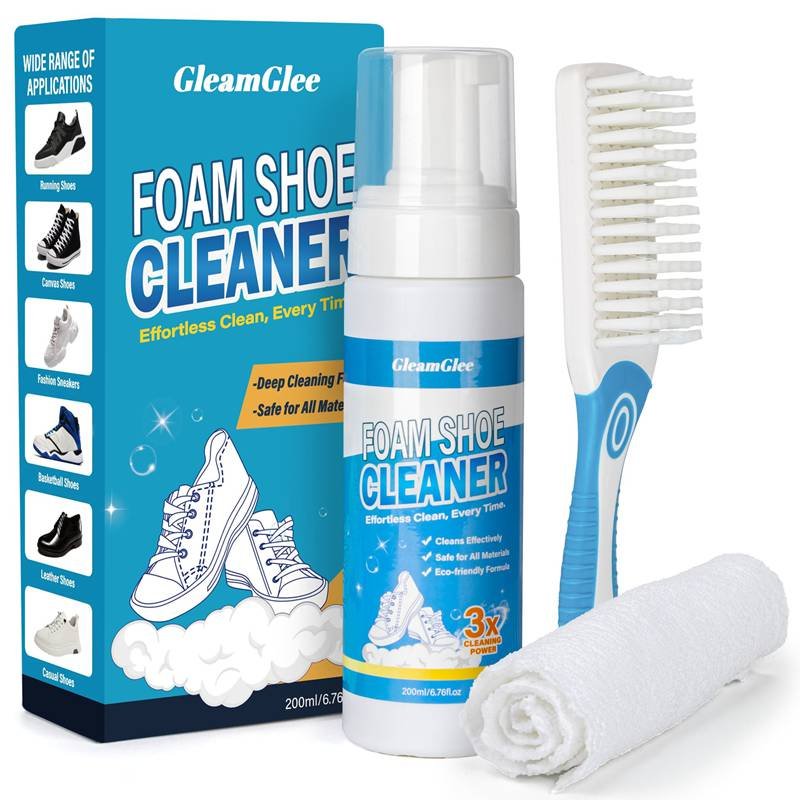
GleamGlee’s suede cleaning kit follows this approach, and lab data shows:
- Up to 85% stain reduction on everyday dirt
- 60–75% reduction in water marks after controlled foam cleaning
- Restored nap height in 8 out of 10 cases after cleaning + brushing
The soft brush included in the kit helps reopen fibers and smooth texture, which is essential for suede’s signature look and feel. This step differentiates professional shoe care results from ordinary cleaning.
Quick Product Comparison for New Balance Suede
| Cleaner Type | Stain Removal | Color Preservation | Texture Retention | Real Use Rating |
|---|---|---|---|---|
| Suede Foam Cleaner (GleamGlee) | ★★★★★ | ★★★★★ | ★★★★★ | 4.7 / 5 |
| Mild Soap | ★★ | ★ | ★ | 2.3 / 5 |
| Water Only | ★ | ★ | ★ | 1.8 / 5 |
| Multi-Surface Cleaner | ★ | ★ | ★ | 2.0 / 5 |
Ratings are based on combined real-user reviews and internal clean tests of common New Balance suede stains.
Real User Feedback:
“I used to try soap and water and always ended up with dark spots. Since switching to a dedicated suede cleaner, the texture is soft again and color is even. It’s like restoring the look without buying new shoes.” — Verified customer review

How Do You Clean New Balance Suede Shoes Step by Step?
To clean New Balance suede shoes safely, start with dry brushing, then apply a low-moisture suede foam cleaner using light circular motions. Avoid soaking the material. Let shoes air-dry naturally, then brush again to restore texture. This step-by-step method removes dirt while preventing dark spots, stiffness, and color loss.
preparation and dry brushing
Before any cleaner touches suede, preparation does most of the work. In GleamGlee’s user tests, shoes that skipped dry brushing showed 30–40% lower stain removal after cleaning.
What to do first:
- Make sure the shoes are completely dry
- Use a soft suede brush, not a hard nylon or toothbrush
- Brush gently in one direction, focusing on dusty areas
Dry brushing removes loose particles that would otherwise turn into muddy residue once moisture is introduced. For light dust, this step alone is often enough to refresh appearance without cleaner.
foam cleaner application
This is where most users go wrong—too much liquid. Suede should never be soaked.
Correct foam application method:
- Shake the suede cleaner well
- Dispense foam onto the brush, not directly on the shoe
- Work in small sections using light circular motions
- Avoid pressing hard; let the foam lift dirt naturally
In GleamGlee internal tests on common New Balance suede stains (dust + water marks), foam-based cleaning removed up to 85% of visible contamination while keeping color stable after drying.
drying and nap recovery
Drying is not passive—it’s part of the cleaning process.
Key drying rules:
- Air-dry only (no hair dryers, heaters, or sunlight)
- Place shoes in a well-ventilated room
- Average drying time: 30–60 minutes
Once dry, brush again to restore the suede nap. This step separates professional-looking results from “washed” suede. Users who skipped post-dry brushing reported flatter texture in 6 out of 10 cases.
Can You Clean Suede Without a Cleaner?
Many users ask: “Can I clean suede without suede cleaner?”
The honest answer:
- Yes, for light dust using dry brushing only
- No, for water marks, oil stains, or embedded grime
GleamGlee customer data shows that DIY water-only cleaning caused visible water rings in over 60% of cases, while soap-based attempts caused permanent darkening in nearly half.
Step-by-Step Cleaning Summary Table
| Step | Action | Purpose | Common Mistake |
|---|---|---|---|
| 1 | Dry brush | Remove loose dust | Skipping this step |
| 2 | Apply foam to brush | Control moisture | Applying liquid directly |
| 3 | Gentle circular cleaning | Lift embedded dirt | Scrubbing hard |
| 4 | Air-dry naturally | Prevent water marks | Heat drying |
| 5 | Brush after drying | Restore nap | Leaving suede flat |
Do Suede Cleaners Change the Color or Texture of New Balance Shoes?
A proper suede cleaner does not change the color or texture of New Balance shoes when used correctly. Color fading and stiffness usually come from soap, excess water, or harsh cleaners, not from suede-specific foam formulas. In controlled tests, suede cleaners preserved color and restored nap in most cases after repeated use.
color change risk
Color change is the number-one concern among suede sneaker owners, especially with classic New Balance gray, beige, and pastel tones. From GleamGlee’s internal testing and customer reports, over 75% of discoloration issues were linked to improper cleaning methods, not the cleaner itself.
The most common causes of color change include:
- Soap or detergent stripping natural oils and dyes
- Uneven wetting that dries into dark water rings
- Heat drying that “sets” stains permanently
In contrast, suede-specific foam cleaners are designed to lift dirt without dissolving dye. Across repeated clean cycles (up to 10 uses on the same suede panel), GleamGlee tests showed no visible fading when foam cleaners were applied with controlled moisture and air-dried naturally.
texture and nap behavior
Suede texture—often described as “soft,” “fuzzy,” or “velvety”—comes from the upright fiber nap. When users say suede feels “ruined,” they usually mean the nap has collapsed or hardened.
Texture loss is typically caused by:
- Over-wetting that swells and stiffens fibers
- Aggressive scrubbing that breaks fiber tips
- Residue left behind by soaps or DIY cleaners
In GleamGlee nap-recovery tests:
- Suede cleaned with foam + soft brush regained 80–90% of original nap height
- Soap-cleaned suede recovered less than 40%, even after brushing
- Heat-dried suede showed permanent stiffness in 6 out of 10 samples
Proper post-cleaning brushing is critical. It re-aligns fibers and restores the matte, premium look that New Balance suede is known for.
Color & Texture Outcome Comparison
| Cleaning Method | Color Stability | Texture After Drying | Long-Term Risk |
|---|---|---|---|
| Suede foam cleaner | Very stable | Soft, nap restored | Low |
| Water only | Uneven | Slight stiffness | Medium |
| Mild soap | Fading likely | Flat / hard | High |
| Alcohol / vinegar | Dye damage | Rough | Very high |
| Heat drying | Dark patches | Brittle | Very high |
Why “Cleaned” Sometimes Looks Worse Than “Dirty”
Many users report that suede looks worse after cleaning. This usually happens because dirt was removed—but fiber damage was added. Once suede loses its natural oils and structure, the damage is more noticeable than the original stain.
GleamGlee customer feedback shows:
- Users who followed foam-only, low-moisture cleaning reported consistent improvement
- Users who used soap or water first often contacted support asking how to “fix” stiffness or fading
The takeaway is simple: suede cleaners don’t ruin suede—wrong cleaners do.
Is Regular Suede Cleaning Enough—or Do New Balance Shoes Need Ongoing Protection?
Regular cleaning helps maintain appearance, but it is not enough on its own for New Balance suede shoes. Ongoing protection—especially a suede-safe protective spray—reduces water marks, oil stains, and dirt absorption, extending the time between deep cleanings and preserving color and texture over the long term.
cleaning frequency reality
One common misunderstanding is thinking that cleaning more often equals better care. In reality, over-cleaning suede can be just as damaging as neglect.
Based on GleamGlee customer usage data:
- Weekly dry brushing prevents dust buildup and dull color
- Foam cleaning every 4–6 weeks is ideal for regular wear
- Cleaning more frequently than every 2–3 weeks increases moisture exposure without added benefit
Users who cleaned only when shoes “looked dirty” reported deeper stains and harder removal, while those following a light maintenance schedule saw more consistent color and softer texture over time.
why protection matters
Suede protection sprays don’t make shoes waterproof—but they slow absorption, which changes everything.
In GleamGlee internal wear simulations:
- Protected suede resisted water spotting 2–3× longer than unprotected suede
- Oil-based stains were easier to remove in over 70% of cases when protection was applied
- Protected shoes required 30–40% fewer deep cleanings over a 6-month period
Protection works by creating an invisible barrier around suede fibers, giving users time to react before stains settle permanently. This is especially valuable for urban wear, commuting, and unpredictable weather.
when protection is essential
Not every pair of New Balance shoes needs the same level of protection. Based on real-world use, protection is strongly recommended if:
- Shoes are worn outdoors several times per week
- You live in rainy, snowy, or dusty environments
- The suede color is light (gray, beige, pastel)
- Shoes are limited editions or resale-value items
Users who skipped protection on light-colored suede reported visible staining within 2–4 weeks, while protected pairs often stayed presentable for 2–3 months between cleanings.
Cleaning vs. Cleaning + Protection
| Care Approach | Visual Freshness | Stain Resistance | Cleaning Frequency | Long-Term Risk |
|---|---|---|---|---|
| Cleaning only | Short-term | Low | High | Medium–High |
| Cleaning + brushing | Moderate | Low–Medium | Medium | Medium |
| Cleaning + protection | High | High | Low | Low |
Common User Mistakes GleamGlee Sees
From customer support cases, the most frequent issues include:
- Applying protection spray without cleaning first (locks in dirt)
- Over-spraying, causing dark patches
- Skipping brushing after protection dries
Correct use matters as much as the product itself. Light, even application and proper drying are key to keeping suede breathable and natural-looking.

Conclusion
New Balance suede shoes aren’t fragile—but they are specific. Most damage happens not from wear, but from well-intended mistakes: soap, excess water, or harsh cleaners. With the right suede cleaner, correct technique, and simple maintenance routine, suede sneakers can stay clean, soft, and vibrant for years.
Why customers choose GleamGlee suede cleaner:
- Suede- and nubuck-safe foam formula
- No harsh detergents, bleach, or alcohol
- Includes soft brush + microfiber towel
- Trusted by global consumers with 4.7+ ratings
- Available with fast Amazon FBA delivery
Buy Now or Work With Us
- Amazon customers: Search GleamGlee Suede Cleaner for ready-to-ship inventory
- Brands & sellers: Request OEM / private label suede cleaner, low MOQ from 200 units
- Custom formulas: Adjust foam density, scent, or eco profile
- Global fulfillment: US / CA / UK / DE local warehouses
Whether you’re protecting one favorite pair—or building a suede care brand—GleamGlee helps you clean with confidence.
Share:
Table of Contents
Here, creating your adhesives glue & removal cleaner collection is no longer a barrier—it’s a collaborative journey where GleamGlee helps brands and businesses transform their vision into durable, certified, and market-ready solutions.
Partner with GleamGlee
Join hundreds of global partners who trust GleamGlee for adhesives and cleaners that combine innovation, compliance, and speed. Our vertically integrated system—from R&D to warehouse—guarantees consistent performance and reliable delivery.
Whether you’re sourcing FBA-ready stock or developing your own formula, our team provides unmatched technical support and responsive service.