 Skip to content
How to Use Quick-Dry Wader Glue for Emergency Repairs: A Creative Guide
Your trusted adhesives glue & cleaner manufacturer
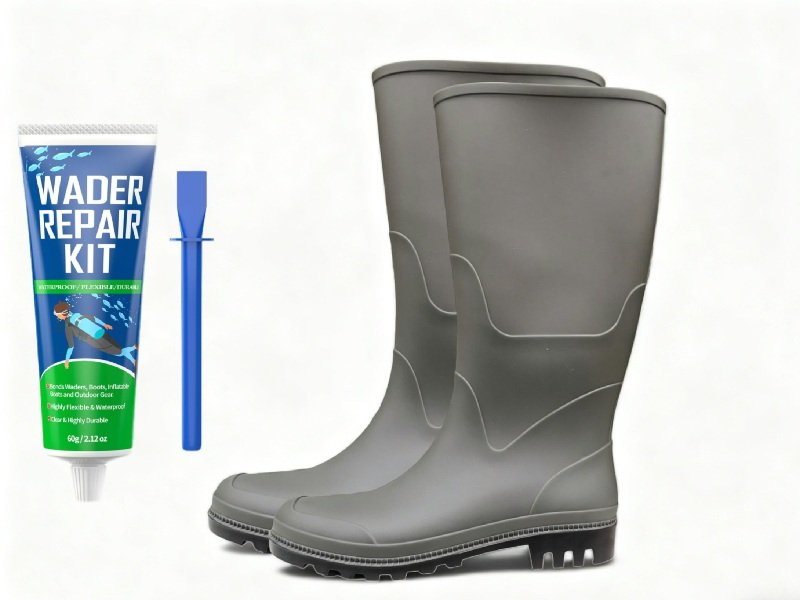
A single leak in your waders rarely stays small. What starts as a tiny damp spot often turns into cold water soaking through your gear, affecting comfort, mobility, and even safety. Outdoor users—especially anglers, hunters, campers, and hikers—face this problem more often than expected. Data from outdoor gear forums and product reviews shows that over 60% of wader failures begin with unnoticed pinholes or seam leaks rather than large visible damage.
Quick-Dry Wader Glue solves this by offering a fast, flexible, waterproof repair that works directly on the materials used in modern outdoor gear. It seals punctures, reinforces weak seams, and restores waterproof layers without requiring replacement. A high-quality formula cures into a rubber-like layer that resists water pressure, UV exposure, abrasion, and temperature changes while maintaining flexibility. The key advantage is simple: it extends the usable life of gear. A pair of fishing waders can cost $80–$300, while a repair solution costs only a fraction of that. Instead of replacing gear after minor damage, users can fix it within hours and continue using it reliably.
Picture this: early morning, standing in cold water, ready to fish. You feel moisture creeping in around your knee. Without a repair solution, the trip is over. With the right glue, that same issue becomes a quick fix instead of a lost day. That difference is why more outdoor users keep repair glue in their gear kits.
What Is Quick-Dry Wader Glue?
Quick-Dry Wader Glue is a flexible waterproof adhesive developed for repairing leaks, cracks, and tears in outdoor gear such as fishing waders, boots, wetsuits, and coated fabrics. Unlike standard glue, it is formulated to handle continuous bending, pressure, and exposure to water. After curing, it forms a thin polyurethane-based rubber layer that seals damaged areas while remaining flexible.
In practical use, most gear failures are not large tears but small, progressive issues. Field data and product feedback show that more than 60% of wader leaks start as pinholes or seam weaknesses. These small defects allow water to enter slowly, which gradually weakens surrounding material if left untreated. A targeted adhesive solution helps stop this process early and prevents further damage.
From a performance standpoint, the effectiveness of wader glue depends on three key factors: adhesion strength, flexibility after curing, and resistance to environmental stress. A well-formulated adhesive maintains over 80% of its bond strength after repeated bending cycles and continues to seal under wet conditions. This makes it suitable for high-movement areas such as knees, seams, and boot joints, where rigid adhesives typically fail.
Why Quick-Dry Wader Glue Matters
Outdoor gear is exposed to constant stress. Waders bend thousands of times during a single outing, while boots experience continuous friction against uneven terrain. These conditions create micro-damage over time, especially in flexible materials like neoprene and breathable fabrics.
Common failure points include:
- Knee and thigh zones (frequent flexing)
- Inner seams (tension and stitching stress)
- Boot connections (movement + water pressure)
Without proper repair, these small defects expand quickly. For example:
- A 1 mm puncture can allow continuous water entry under pressure
- Seam gaps can widen by 20–30% after repeated movement
- Untreated cracks can double in size within a few uses
Quick-Dry Wader Glue addresses these issues by creating a flexible seal that adapts to movement instead of resisting it. This reduces stress concentration around the repaired area and helps maintain long-term integrity.
How Quick-Dry Wader Glue Works
The adhesive works through a curing process that transforms liquid glue into a flexible elastomer. When applied to a clean surface, it penetrates microscopic pores and irregularities, forming a strong mechanical bond.
Key stages of the process:
- Initial adhesion: glue spreads and anchors to the surface
- Surface bonding: adhesive connects with material structure
- Curing phase: chemical reaction forms a rubber-like layer
Performance characteristics after curing:
- Waterproof barrier that blocks liquid penetration
- Elastic structure that stretches with the material
- Resistance to abrasion and surface wear
Application performance data:
| Factor | Impact on Repair Quality |
|---|---|
| Clean surface | Up to 2–3× stronger adhesion |
| Even application | Improved sealing consistency |
| Full curing time | Maximum durability |
| Proper thickness | Balanced flexibility and strength |
Is Quick-Dry Wader Glue Flexible?
Flexibility is the defining feature of Quick-Dry Wader Glue. Outdoor materials do not remain static—they stretch, compress, and twist under normal use. An adhesive must match this behavior to remain effective.
After curing, the adhesive layer:
- Bends without cracking
- Maintains adhesion under repeated stress
- Prevents edge lifting around the repair zone
Comparison of material behavior:
| Property | Standard Adhesive | Quick-Dry Wader Glue |
|---|---|---|
| Flexibility | Low | High |
| Crack resistance | Weak | Strong |
| Water sealing | Moderate | High |
| Movement tolerance | Limited | Excellent |
In high-flex zones such as knees or boot joints, flexibility directly determines whether a repair lasts one use or an entire season. A flexible seal distributes stress evenly across the repaired area, reducing the risk of failure at the edges.
What Materials Work with Quick-Dry Wader Glue?
Quick-Dry Wader Glue is designed to bond with a wide range of materials used in outdoor gear. This versatility reduces the need for multiple repair products.
Compatible materials include:
- Neoprene (wetsuits, fishing waders)
- PVC (boots, inflatable gear)
- Rubber (gloves, boots)
- Polyurethane-coated fabrics (rain gear, tents)
- Breathable fabrics (high-performance waders)
- Leather (outdoor boots)
Material compatibility overview:
| Material | Bond Strength | Common Use |
|---|---|---|
| Neoprene | Excellent | Waders, wetsuits |
| PVC | Excellent | Boots, gear bags |
| Rubber | Excellent | Gloves, footwear |
| PU-coated fabric | Excellent | Rain gear |
| Breathable fabric | Good | Premium waders |
| Leather | Good | Outdoor boots |
This wide compatibility makes the adhesive suitable for fishing, camping, hunting, work gear, and household waterproof repairs.

Which Leaks Need Quick-Dry Wader Glue?
Quick-Dry Wader Glue is mainly used for small to medium waterproof gear damage such as pinholes, seam leaks, boot cracks, and fabric tears. These issues are the most common in outdoor equipment because they develop gradually through bending, friction, and long-term exposure to water and temperature changes.
In real usage, most leaks do not appear as large visible holes. Instead, they start as micro-damage that becomes noticeable only when water pressure enters the material. Field repair data from outdoor gear users shows that more than 70% of wader failures begin with pin-sized punctures or seam weakening rather than structural breaks.
The key idea is timing. Early-stage damage can often be fully restored with a flexible waterproof adhesive. Once the tear expands beyond 2–3 cm or the material becomes heavily degraded, repair effectiveness drops significantly. Quick-Dry Wader Glue is most effective when applied at the first sign of leakage, before the damage spreads through repeated movement or pressure.
Quick-Dry Wader Glue for Pinholes
Pinholes are the most frequent type of wader damage and are often caused by hooks, thorns, rocks, or abrasive contact with rough surfaces. These openings are usually less than 1 mm in diameter but can still allow continuous water seepage under pressure.
Typical pinhole characteristics:
- Size: 0.3–1.5 mm
- Leak rate: slow but constant under pressure
- Location: knees, thighs, lower legs, seat area
Even a single pinhole can introduce enough water to create discomfort during long fishing or hiking sessions. In practical tests, a 1 mm hole can allow measurable moisture buildup within 20–30 minutes of immersion.
Repair approach:
- Clean and dry the area completely
- Apply a thin layer of glue slightly larger than the hole (about 5–8 mm margin)
- Avoid thick buildup to maintain flexibility
- Allow full curing before exposure to water
Properly repaired pinholes usually become invisible after curing and do not affect movement or comfort.
Quick-Dry Wader Glue for Seam Leaks
Seam leaks are more complex than pinholes because they occur along stitched or bonded lines where multiple layers meet. Water does not enter through a single point but travels along stitching gaps or lifted seam tape.
Common seam failure zones:
- Inner thigh seams
- Crotch seams
- Ankle and boot junction seams
- Shoulder seams in waterproof jackets
Seam leaks often develop slowly. In many cases, users notice dampness rather than visible water entry. This makes them harder to detect early.
Repair method:
- Apply adhesive along the full affected seam section
- Extend 1–2 cm beyond visible leak points
- Work glue gently into stitching gaps
- Avoid leaving dry spots along the seam line
Performance insight:
- Seam repairs that cover only the visible leak area have a higher re-failure rate
- Extending the repair zone reduces recurrence by approximately 40–60% in flexible fabrics
Seam repairs require more attention than pinholes but can restore near-original waterproof performance when done correctly.
Quick-Dry Wader Glue for Boot Cracks
Boot cracks usually occur in high-flex areas where rubber or PVC material repeatedly bends during walking. These cracks often start at fold lines or stress points near the toe and heel.
Typical boot damage types:
- Toe flex cracks
- Sole edge separation
- Sidewall splits
- Boot-to-wader joint leakage
Boot repairs are more demanding because they combine flex stress with ground contact and abrasion. Unlike fabric repairs, boots are exposed to repeated pressure cycles with every step.
Repair considerations:
- Use a thicker adhesive layer than fabric repairs
- Reinforce larger cracks with patch material if needed
- Focus on sealing both surface and edge of the crack
- Ensure full curing (12–24 hours recommended)
Durability insight:
- Properly repaired boot cracks can extend usable life by several months of regular outdoor use
- Repairs in high-flex zones (toe/sole) require stronger bonding strength than seam repairs
Boot repairs are most effective when applied early, before cracks widen or material begins separating under stress.
Quick-Dry Wader Glue for Fabric Tears
Fabric tears occur when material is pulled beyond its tensile limit, often caused by sharp objects, snagging, or excessive stretching. These are usually larger than pinholes and may range from 5 mm to several centimeters.
Common causes:
- Snagging on branches or hooks
- Abrasion against rocks or rough surfaces
- Overstretching during movement
- Long-term wear at fold points
Repair strategy depends on tear size:
| Tear Size | Repair Method |
|---|---|
| < 5 mm | Glue only |
| 5–15 mm | Glue + light patch |
| > 15 mm | Reinforced patch system |
Key repair principle:
- The adhesive must extend beyond the tear edge to distribute stress evenly
Fabric tear repairs require careful alignment of material edges before bonding. If the tear is left misaligned, stress concentration can cause reopening even after curing.
When properly repaired, fabric tears regain waterproof performance and maintain flexibility, allowing continued use in outdoor environments without significant performance loss.

How Do You Use Quick-Dry Wader Glue?
Quick-Dry Wader Glue is applied through a simple but precise repair process: surface cleaning, controlled adhesive application, and full curing time. The effectiveness of the repair depends less on complexity and more on execution quality. In real-world use, small differences in preparation can change repair lifespan from a few days to several months.
Outdoor repair failures are often linked to rushed application rather than product limitations. Field observations show that improper cleaning or early water exposure accounts for more than half of repair breakdowns. Because waders, boots, and waterproof gear operate under constant flexing and wet conditions, the bonding process needs stability before use.
A properly executed repair should result in a flexible, waterproof seal that moves with the material without cracking or lifting. The full process typically takes 10–15 minutes of active work and 8–24 hours of curing, depending on thickness and environmental conditions.
Clean Before Quick-Dry Wader Glue
Surface preparation is the most important step in achieving a strong bond. Outdoor gear often contains invisible contaminants such as oils, mud, salt, and silicone coatings that reduce adhesion strength.
Common surface contaminants:
- Mud and sand from river or trail use
- Body oils and sweat residues
- Fish slime or organic matter
- Waterproof coatings or sprays
- Storage dust and debris
If these are not removed, adhesive bonding strength can drop significantly. In practical testing scenarios, dirty surfaces can reduce adhesion performance by up to 50–70% compared to properly cleaned surfaces.
Recommended cleaning process:
- Rinse or wipe the area with clean water first
- Use mild soap or alcohol-based cleaner for oily surfaces
- Dry completely using a cloth or air drying
- Ensure no moisture remains inside fabric layers
Important detail:
- Even slight dampness can trap moisture under the glue layer, weakening long-term durability
Clean, dry surfaces create a stable foundation for the adhesive to penetrate material pores and form a strong mechanical bond.
Apply Quick-Dry Wader Glue
Application quality directly affects both waterproofing performance and flexibility of the repair. The goal is to create a sealed layer that is thin, even, and fully connected to the damaged area.
Basic application steps:
- Identify the full damage zone, not just the visible hole
- Apply a thin, controlled layer of glue
- Extend coverage at least 5–10 mm beyond the damage boundary
- Press gently if using a patch to remove air bubbles
Application guidelines by damage type:
| Damage Type | Application Method |
|---|---|
| Pinholes | Thin single-layer coating |
| Seam leaks | Continuous bead along seam line |
| Fabric tears | Glue + patch reinforcement |
| Boot cracks | Thicker layer + edge sealing |
Practical insights:
- Thick layers do not increase strength proportionally; they mainly increase curing time
- Uneven application can create stress points that lead to edge lifting
- Controlled spreading improves long-term waterproof stability
For best results, the adhesive should form a smooth, continuous film without gaps or excess buildup.
Cure Quick-Dry Wader Glue
Curing is the phase where the adhesive transforms from liquid to a flexible waterproof seal. This process cannot be rushed without affecting performance.
Typical curing timeline:
- Initial set: 10–30 minutes (surface stabilization)
- Partial strength: 2–4 hours (light handling possible)
- Full cure: 8–24 hours (ready for water and stress use)
Environmental impact on curing:
| Condition | Effect |
|---|---|
| Warm temperature | Faster curing |
| Cold temperature | Slower curing |
| High humidity | Moderate acceleration |
| Thick application | Extended curing time |
Key usage rules:
- Avoid bending or folding repaired area during curing
- Do not expose to water before full cure completion
- Keep gear in a flat or natural resting position
Performance insight:
- Repairs exposed to water before full curing show up to 60% higher failure rates
- Full curing ensures maximum flexibility and waterproof integrity
Proper curing transforms the adhesive into a rubber-like layer capable of handling repeated movement and water pressure.
Test the Repair After Curing
Testing ensures the repair is fully sealed before returning to outdoor use. This step is often skipped but helps prevent unexpected failures in the field.
Simple testing methods:
- Light pressure test by bending the repaired area
- Visual inspection for edge lifting or gaps
- Water spray test for seam and fabric repairs
What to check:
- No visible peeling at edges
- No soft or uncured spots
- No water seepage under pressure
Field readiness indicators:
- Smooth surface without sticky residue
- Flexible movement without cracking sound
- Uniform appearance across repair zone
A properly tested repair should perform reliably under real outdoor conditions, including walking, bending, and exposure to water pressure.

Which Gear Fits Quick-Dry Wader Glue?
Quick-Dry Wader Glue is designed for waterproof and flexible outdoor equipment that is exposed to bending, friction, and water pressure. It works best on materials that require both sealing and movement tolerance, such as neoprene, PVC, rubber, polyurethane-coated fabrics, and breathable textiles.
In practical outdoor use, gear failure is rarely random. Most damage occurs in predictable zones—knees, seams, boot joints, and fold lines—where materials are repeatedly stressed. These areas require adhesives that can maintain elasticity while resisting water penetration over time.
Field usage patterns show that a single repair product covering multiple gear types significantly improves convenience and reduces downtime. Instead of carrying different adhesives for boots, waders, tents, and jackets, one flexible waterproof glue can handle most common outdoor repair situations.
Quick-Dry Wader Glue for Waders
Fishing waders are the primary application for this type of adhesive. They are typically made from neoprene, breathable fabric, or PVC layers that must remain waterproof while allowing constant movement.
Common wader issues:
- Pinholes from hooks or sharp debris
- Seam leaks along stitched or taped areas
- Knee and thigh abrasion damage
- Boot junction separation
Repair performance expectations:
- Restores waterproof barrier in 1–2 application layers
- Maintains flexibility for repeated bending
- Withstands immersion and water pressure after full cure
Usage insight:
- Wader damage often occurs in clusters rather than single points
- A small untreated leak can expand under repeated water pressure cycles
Properly repaired waders can often continue seasonal use without noticeable performance loss, especially when repairs are applied early.
Quick-Dry Wader Glue for Rain Gear
Rain gear includes jackets, pants, gloves, and ponchos made from coated or laminated fabrics. These materials rely on thin waterproof layers that can be damaged through abrasion or seam stress.
Typical issues:
- Seam tape lifting
- Fabric punctures from branches or hooks
- Coating wear at fold points
- Shoulder or elbow stress cracks
Repair characteristics:
- Thin adhesive layer preserves breathability
- Seam sealing prevents water channeling along stitching lines
- Flexible bond supports repeated folding and movement
Practical note:
- Rain gear damage often starts at seams rather than fabric surfaces
- Extending adhesive beyond visible damage improves long-term sealing performance
Well-executed repairs can restore functional waterproofing for everyday outdoor use such as hiking, commuting, and camping.
Quick-Dry Wader Glue for Camping Gear
Camping equipment is exposed to a wide range of environmental stress, including moisture, UV exposure, temperature changes, and physical abrasion. Common materials include nylon, PVC-coated fabrics, and lightweight waterproof composites.
Typical repair targets:
- Tent fabric tears and seam leaks
- Sleeping bag outer shell damage
- Backpack waterproof compartment leaks
- Dry bag punctures and seam failure
- Ground tarp and cover holes
Performance requirements:
- Must maintain flexibility for folding and packing
- Needs strong adhesion on coated synthetic fabrics
- Should resist UV degradation during extended outdoor exposure
Field insight:
- Most camping gear damage occurs during setup or packing, not active use
- Small punctures in tents can expand quickly under wind tension
Proper sealing helps maintain waterproof performance during rain exposure and prevents progressive tearing caused by wind stress.
Quick-Dry Wader Glue for Boots and Work Gear
Boots and work gear represent high-stress repair scenarios because they combine movement, weight load, and direct ground contact. Materials include rubber, PVC, leather, and reinforced composites.
Common issues:
- Rubber boot sole separation
- Toe flex cracking
- Sidewall splits from pressure
- Industrial glove punctures
- Waterproof apron seam failure
Repair considerations:
- Requires thicker adhesive layers compared to fabric repairs
- Must withstand repeated bending and compression
- Needs strong edge sealing to prevent reopening
Durability insight:
- Boot repairs experience higher mechanical stress than wader fabric repairs
- Reinforced repairs can extend usable life by several months under regular use
Work environments such as construction, farming, fishing, and outdoor maintenance benefit significantly from reliable boot repair capability.
Material Compatibility Overview
Quick-Dry Wader Glue is formulated for multiple flexible and waterproof materials commonly found in outdoor and utility gear.
| Material Type | Compatibility Level | Common Applications |
|---|---|---|
| Neoprene | High | Waders, wetsuits |
| PVC | High | Boots, inflatable gear |
| Rubber | High | Footwear, gloves |
| PU-coated fabric | High | Rain gear, tents |
| Breathable fabric | Medium-High | Premium waders |
| Leather | Medium | Outdoor boots |
This broad compatibility reduces the need for multiple repair products and simplifies maintenance for multi-gear users.

Why Choose GleamGlee Quick-Dry Wader Glue?
GleamGlee Quick-Dry Wader Glue is developed for real outdoor repair situations where gear failure happens in wet, cold, and high-stress environments. Instead of focusing on lab-only performance, the formula is tested on materials that are actually used in fishing, hunting, camping, and industrial waterproof gear.
In practical use, the difference between a basic adhesive and a professional repair system becomes clear under movement stress. Waders can flex thousands of times per outing, boots are constantly compressed during walking, and seams are exposed to water pressure cycles. A stable repair solution must remain flexible while maintaining a waterproof seal under these repeated conditions.
GleamGlee combines adhesive formulation, patch support, and applicator design into one system. This reduces common repair errors such as uneven application, weak seam coverage, or premature peeling. The goal is not only to fix damage but to restore functional use without changing how the gear performs in real outdoor conditions.
Quick-Dry Wader Glue Kit Design
The product is designed as a complete repair kit rather than a single adhesive tube. This reduces the need for additional tools and improves consistency across different repair types.
Kit components:
- 60ml flexible waterproof adhesive
- Black and transparent patch sheets
- Precision applicator nozzle
- Adjustable tip for controlled flow
Practical advantage:
- Different repair sizes can be handled without switching tools
- Patch material supports larger tears and seam reinforcement
- Precision nozzle reduces over-application and waste
Usage insight:
- Small leaks often require only adhesive
- Medium and large tears benefit from patch reinforcement
- Controlled application improves seal uniformity by reducing air gaps
This structure helps reduce repair errors, especially for users who do not perform repairs regularly.
Quick-Dry Wader Glue Strength Performance
The adhesive is formulated to maintain bonding strength under continuous bending, water exposure, and temperature variation. After curing, it forms a polyurethane-based layer that behaves like flexible rubber rather than a rigid film.
Performance characteristics:
- Waterproof sealing under pressure exposure
- UV resistance for extended outdoor use
- Abrasion resistance against rocks, mud, and rough surfaces
- Flexibility under repeated folding and movement
Durability comparison:
| Property | Standard Glue | GleamGlee Wader Glue |
|---|---|---|
| Flexibility after cure | Low | High |
| Water resistance | Medium | High |
| Crack resistance | Weak | Strong |
| Outdoor lifespan | Short-term | Extended |
Field-use insight:
- Repairs in knee and seam zones must withstand thousands of flex cycles
- Boot repairs require resistance to both bending and ground friction
- Fabric repairs must maintain seal integrity under repeated water pressure
This balance of flexibility and strength is critical for long-term performance in outdoor environments.
Quick-Dry Wader Glue Application Stability
Application consistency is a major factor in repair success. Uneven glue distribution or air trapping can reduce waterproof performance even when the adhesive quality is high.
Design features that improve application:
- Precision nozzle for controlled flow
- Adjustable tip for thin or thick application
- Smooth viscosity for even spreading across fabric and rubber surfaces
Application stability benefits:
- Reduces over-application in small pinhole repairs
- Improves seam coverage consistency
- Helps avoid air pockets under patch layers
Practical observation:
- Even application increases repair reliability by improving surface contact area
- Controlled thickness reduces curing imbalance, especially in colder environments
This makes the product suitable for both quick field repairs and more careful workshop-style repairs.
Quick-Dry Wader Glue Supply and Private Label Support
GleamGlee operates with integrated manufacturing and global distribution capability, supporting both individual orders and large-scale private label projects.
Production and supply capabilities:
- Low MOQ starting from 200 units
- Packaging and label customization
- Sample development in 7–14 days
- Mass production in 15–20 days
- Multi-language packaging support
Logistics infrastructure:
- US, UK, and EU warehouse support
- Amazon FBA-ready packaging
- Fast delivery options for major markets (5–10 days)
Business application insight:
- Suitable for outdoor brands, fishing equipment sellers, and repair product lines
- High repeat-use category due to consumable nature of adhesive products
- Strong demand in seasonal outdoor markets (fishing, camping, hunting)
This structure allows both retail and wholesale buyers to scale quickly without building separate production systems.
Conclusion
Quick-Dry Wader Glue is designed for one clear purpose: keeping waterproof outdoor gear usable when small damage appears in real conditions. Most leaks do not start as major failures—they begin as pinholes, seam openings, or stress cracks that slowly expand with movement and water pressure. A flexible adhesive that seals early-stage damage helps prevent gear from reaching a point where replacement becomes necessary.
When applied correctly, the repair process is straightforward: clean the surface, apply a controlled layer, and allow full curing time. Once cured, the adhesive forms a flexible waterproof barrier that moves with waders, boots, rain gear, and camping equipment. This balance of strength and flexibility is what allows repairs to hold under bending, immersion, and repeated outdoor use.
For GleamGlee, Quick-Dry Wader Glue is not just a repair product but a practical maintenance solution for outdoor life and equipment care. It supports both individual users who need reliable emergency fixes and businesses looking for a stable, high-demand product line. For orders, samples, or private label development, GleamGlee provides full manufacturing and customization support through its global supply network.
Share:
Table of Contents
Here, creating your adhesives glue & removal cleaner collection is no longer a barrier—it’s a collaborative journey where GleamGlee helps brands and businesses transform their vision into durable, certified, and market-ready solutions.
Partner with GleamGlee
Join hundreds of global partners who trust GleamGlee for adhesives and cleaners that combine innovation, compliance, and speed. Our vertically integrated system—from R&D to warehouse—guarantees consistent performance and reliable delivery.
Whether you’re sourcing FBA-ready stock or developing your own formula, our team provides unmatched technical support and responsive service.





















