Skip to content
PVC Glue for Insta-Bed Air Mattress Repair : A Useful Guide for Fixing Leaks
Your trusted adhesives glue & cleaner manufacturer

A leaking Insta-Bed air mattress can turn a normal night into a frustrating one very quickly. At first, the bed may look fine after inflation. The surface feels firm, the pump works, and no obvious hole can be seen. Then, a few hours later, the sleeper feels lower to the ground. By morning, the mattress is soft, sagging, or nearly flat. For many households, this happens right before guests arrive, during a camping trip, or after the mattress has been stored for months in a closet, garage, car trunk, or basement. The problem is often much smaller than it feels. A pinhole, a tiny scratch, a weak seam spot, or a small puncture on the bottom panel can release enough air to ruin the mattress overnight.
PVC glue for Insta-Bed air mattress repair is used to seal small holes, pinholes, surface cracks, and some seam leaks on PVC or vinyl air beds. The repair works best when the surface is clean and dry, the patch is larger than the damaged area, the glue is spread evenly, and the mattress cures for 24 hours before full inflation.
The real goal is not simply sticking a patch over a hole. The goal is rebuilding an airtight, flexible seal that can hold air pressure while the mattress bends under body weight. This guide explains what PVC glue does, why Insta-Bed leaks happen, which glue and patch features matter, and how to judge whether a repair is worth trying before replacing the mattress.
What Is PVC Glue?
PVC glue is an adhesive used to bond polyvinyl chloride, vinyl, and similar flexible plastic materials. For Insta-Bed air mattress repair, it is normally used together with a repair patch to seal pinholes, punctures, short cracks, and small surface tears. The important point is flexibility. An air mattress expands when inflated, compresses under body weight, and bends during storage, so the glue must hold an airtight seal without drying into a brittle, hard layer.
A small air mattress leak can be surprisingly serious. A pinhole only 1–3 mm wide may not be easy to see, but it can release air slowly through the night. The mattress may feel firm at 10 p.m. and noticeably soft by morning. This is why PVC glue should not only “stick” the patch down. It needs to close the leak path, bond the patch to healthy surrounding material, and resist peeling when the surface is under pressure.
For most Insta-Bed air mattress repairs, the best result comes from a clean, dry surface, a patch that extends at least 25–50 mm beyond the damaged area, a thin even layer of PVC glue, firm pressing, and about 24 hours of curing before full inflation. Fast repair is tempting, especially when the bed is needed the same night, but early inflation is one of the most common reasons a patch lifts or leaks again.
PVC Terminology Explained
PVC stands for polyvinyl chloride, a widely used plastic material found in many inflatable products, flexible sheets, pipes, flooring, rain gear, pool products, and repair patches. In the air mattress repair category, the word “PVC” is often used together with “vinyl” because many inflatable beds and pool products use flexible vinyl or PVC-style material. These surfaces are smooth, air-holding, and foldable, which makes them different from hard plastic shells or rigid PVC pipe.
It is important to understand the difference between flexible PVC glue and rigid PVC pipe cement. PVC pipe cement is normally made for plumbing pipes and fittings. It works on hard PVC by softening the pipe surface and creating a strong joint. That does not mean it is the best choice for an Insta-Bed air mattress. Air mattresses need a repair that stays flexible after curing. A hard, stiff repair can crack, peel, or feel uncomfortable when the mattress bends.
Here are the key terms often seen in air mattress repair:
| Term | Simple Meaning | Why It Matters for Insta-Bed Repair |
|---|---|---|
| PVC | Polyvinyl chloride plastic | Common material type for inflatables and patches |
| Vinyl | Flexible PVC-style plastic sheet | Often used in air mattresses and pool inflatables |
| Patch | Extra repair sheet placed over the leak | Spreads air pressure across a wider area |
| Curing | Time needed for glue to build strength | Usually about 24 hours before full inflation |
| Airtight seal | Repair area blocks air escape | Main goal of air mattress repair |
| Flexible bond | Glue bends with the mattress | Helps prevent cracking and edge lifting |
| Pinholes | Very small holes, often 1–3 mm | Common cause of slow overnight deflation |
| Seam leak | Air escapes near joined material edges | Harder than flat-panel puncture repair |
For Insta-Bed repair, the correct product should be understood as flexible PVC repair glue, not ordinary craft glue, not quick tape, and not rigid pipe cement. The repair must handle air pressure, bending, storage folds, and repeated inflation. That is why the adhesive and patch need to work as one repair system.
PVC Glue Basics
PVC glue works by forming a bonding layer between the mattress surface and the repair patch. Once the glue cures, the patch becomes a reinforced cover over the damaged area. The patch should not only sit directly on top of the visible hole. It should cover enough healthy material around the leak so the air pressure is spread over a wider surface.
For a small pinhole, a round patch is often a better choice because it has no corners. Corners can become weak points if the mattress flexes. For a longer scratch or short tear, a rectangular patch usually works better because it covers more length. The glue should be applied thinly and evenly under the entire patch area. A thick lump of glue may look stronger, but it can cure unevenly, trap air, or make the patch lift at the edge.
A useful repair ratio is simple:
| Damage Type | Suggested Patch Margin | Better Patch Shape | Repair Note |
|---|---|---|---|
| 1–3 mm pinhole | 25–30 mm beyond hole | Round patch | Best success on smooth panels |
| 3–5 mm puncture | 30–40 mm beyond hole | Round or rectangular patch | Clean surface carefully |
| 5–20 mm scratch | 40–50 mm beyond damage | Rectangular patch | Cover full scratch line |
| Small seam-edge leak | 50 mm or more when possible | Rectangular patch | Needs firm pressure along seam |
| Bottom scuff leak | Cover full worn area | Round or rectangular patch | Remove dust and floor grit first |
Good PVC glue should dry into a firm but flexible layer. It should not remain wet and slippery, and it should not become so hard that the repaired area cracks when folded. For air mattress use, flexibility is not a bonus feature. It is part of the repair strength.
PVC Glue vs Regular Glue
Regular glue is often not suitable for Insta-Bed air mattress repair because the mattress surface is flexible and pressurized. The repair area moves every time the mattress is inflated, deflated, folded, or slept on. A glue that works well on paper, wood, ceramics, or hard plastic may fail quickly on vinyl air bed material.
Super glue is one of the most common wrong choices. It dries fast and feels strong at first, but it often becomes too rigid. When the mattress bends, the glued area may crack or separate from the vinyl. Tape is another common short-term method. It may slow the leak for a few hours, but air pressure can lift the edges, especially on curved or dusty surfaces. Hot glue can create a thick raised spot and may not bond evenly to smooth vinyl. Craft glue usually lacks the air-sealing strength needed for a mattress under pressure.
PVC glue with a compatible patch is more suitable because it is designed for flexible plastic repair. The patch spreads the load, while the glue seals the gap between the patch and the mattress. This gives the repair a better chance of holding through a full night of use.
| Repair Material | Good for Insta-Bed? | Main Weakness |
|---|---|---|
| Flexible PVC glue + patch | Yes | Needs clean surface and curing time |
| Super glue | Usually no | Too stiff after drying |
| Packing tape | Temporary only | Edge lifting under air pressure |
| Duct tape | Temporary only | Poor long-term sealing on vinyl |
| Hot glue | Not recommended | Thick, uneven, may peel |
| Craft glue | Not recommended | Weak airtight sealing |
| Rigid PVC pipe cement | Not ideal | Too harsh or stiff for flexible air beds |
The fastest glue is not always the best repair glue. For an air mattress, the better choice is the adhesive that stays sealed after hours of pressure and movement.
PVC Glue for Air Pressure
An Insta-Bed air mattress is always pushing against the repair from the inside. When the bed is inflated, internal air pressure presses outward on every panel. When someone lies down, that pressure shifts toward the sides, seams, and weaker areas. This is why a patch that looks fine right after application can still fail during sleep if the glue has not cured or the patch is too small.
The repair should be designed around pressure control. A 2 mm hole should not be covered with a 5 mm dot of glue only. The patch should cover a much larger area so the force is not concentrated at one point. The glue should reach the patch edge evenly, without dry gaps. The patch should be pressed from the center outward to remove trapped air. Even a tiny air channel under the patch can become a slow leak.
Practical air-pressure repair rules:
- Keep the mattress deflated while applying PVC glue.
- Use a patch much larger than the visible hole.
- Press the patch firmly from center to edge.
- Wait around 24 hours before full inflation.
- Inflate slowly after curing instead of filling to maximum firmness immediately.
- Test the patch edge with soapy water before sleeping on the mattress.
For overnight use, the repair should pass two tests. First, no bubbles should appear around the patch when soapy water is applied. Second, the mattress should stay firm for several hours after inflation. A quick 5-minute test is not enough for slow leaks. Slow leaks are the reason many air mattresses feel fine at first and fail by morning.
PVC Glue Material Fit
PVC glue performs best when it bonds to smooth PVC, vinyl, or similar flexible plastic surfaces. On an Insta-Bed air mattress, smooth side panels and bottom panels are often easier to repair than heavily textured or flocked top surfaces. Smooth material allows the glue and patch to make close contact. Textured or fabric-like surfaces may reduce bonding strength because fibers can sit between the adhesive and the actual vinyl layer.
Before repair, the material around the leak should be checked carefully. If the surface feels strong, smooth, and flexible, repair success is usually higher. If the surface feels thin, brittle, sticky, cracked, or badly stretched, the patch may not hold as long. The glue needs healthy surrounding material to grip. A small hole in strong vinyl is very different from a long split in aged material.
Surface difficulty can be judged like this:
| Surface Area | Repair Difficulty | What to Watch |
|---|---|---|
| Smooth side panel | Easy | Clean and dry before patching |
| Smooth bottom panel | Easy to medium | Remove dust, grit, and floor residue |
| Curved corner | Medium | Patch must sit flat without wrinkles |
| Seam edge | Medium to hard | Needs wider patch and strong pressure |
| Flocked top | Medium to hard | Fibers may weaken direct bonding |
| Pump housing area | Hard | Leak may come from component, not surface |
| Long split seam | Hard | Structural damage may reopen |
PVC glue is also useful for many related inflatable products because the material needs are similar. It can help repair inflatable pools, pool floats, swim rings, inflatable chairs, camping mats, kayaks, rafts, SUP boards, and some rubber-style inflatables. The same rule applies across these products: the repair works best when the surface is clean, dry, flexible, and strong enough to hold a patch.

Why Does Insta-Bed Leak?
An Insta-Bed air mattress usually leaks because the PVC or vinyl surface has been punctured, stretched, rubbed, folded too tightly, or stressed around seams and valve areas. Most leaks are not large open tears. More often, the problem is a tiny pinhole, a short scratch, a worn bottom spot, or a small seam-edge gap that releases air slowly over several hours.
A hole as small as 1–3 mm can make an air mattress noticeably softer by morning. The bed may feel firm after inflation, but once body weight is added, internal air pressure shifts toward weaker areas. If the leak is on the bottom panel, side wall, or seam edge, air may escape slowly enough that the damage is hard to hear or see. This is why many air mattress leaks feel “mysterious” at first.
PVC glue becomes useful when the leak is caused by surface damage rather than complete structural failure. Pinholes, small punctures, short cuts, and minor seam-edge leaks can often be repaired with a flexible PVC glue and a suitable patch. The repair becomes harder when the material is brittle, the seam has split open, the flocked surface blocks adhesion, or the leak comes from a pump or valve component instead of the mattress skin.
PVC Glue Leak Spots
The most common leak areas on an Insta-Bed air mattress are the bottom panel, side wall, seams, valve area, and pump area. The bottom panel often has the highest risk because it touches floors, carpets, camping grounds, storage shelves, car trunks, and rough surfaces. Even a small grain of sand, wood splinter, pet claw mark, or sharp plastic edge can create a pinhole when the mattress is inflated and pressed under body weight.
Side-wall leaks are also common because the side wall stretches every time the mattress is inflated. It also rubs against bed frames, walls, tent fabric, furniture corners, or storage bags. A side leak may not be easy to see when the mattress is flat. It often becomes more visible only after inflation because the material expands and opens the damaged point slightly.
Seams are more sensitive because they are joined areas under tension. When the mattress is filled with air, the seam carries pulling force from two directions. When someone sits or lies on the bed, that pressure increases. A small seam leak can release air along the seam channel before the bubbling point appears. That is why seam leaks may seem to move during testing.
The valve or pump area should also be checked, but it should not be blamed too quickly. Many people assume the pump is broken when the bed deflates, but a small bottom puncture is often the real cause. If bubbles appear directly around the pump housing or valve edge, the repair may be more complicated than a flat surface patch.
| Leak Area | Common Cause | Repair Difficulty | PVC Glue Repair Chance |
|---|---|---|---|
| Bottom panel | Floor grit, pet claws, rough storage | Easy to medium | High if surface is clean |
| Side wall | Rubbing, stretching, furniture contact | Easy to medium | High on smooth vinyl |
| Top flocked area | Sharp object, pet damage, heavy use | Medium to hard | Depends on fiber texture |
| Seam edge | Overinflation, folding stress, old material | Medium to hard | Possible if damage is small |
| Valve area | Loose cap, dirt, seal wear | Medium | Depends on leak source |
| Pump housing | Component stress or housing gap | Hard | Case-by-case |
| Large seam split | Heavy pressure or aged material | Hard | Low to limited |
Before using PVC glue, the leak location should be identified clearly. A repair patch works best when it is placed over the exact air escape point and bonded to healthy material around it. Guessing the location usually wastes patches and may leave the real leak untouched.
PVC Glue for Pinholes
Pinholes are one of the most common reasons an Insta-Bed air mattress slowly loses air overnight. A pinhole may be only 1–3 mm wide, but it can release enough air to make the mattress sag after several hours. These tiny holes often come from pet claws, floor debris, rough camping ground, sharp storage items, or dragging the mattress across a textured surface.
Pinholes are usually good candidates for PVC glue repair because the surrounding material is often still strong. A clear round patch works well because it covers the hole evenly and has no sharp corners that can lift. The patch should be much larger than the pinhole. A 2 mm hole should not be repaired with only a small dot of glue. A patch around 30–50 mm wide gives the glue enough surface area to grip and helps spread pressure away from the puncture.
The mistake many people make is using too little patch area. The visible hole looks tiny, so the repair looks easy. But an air mattress is pressurized. Once inflated, air pushes outward against the patch. If the patch margin is too narrow, pressure gathers near the patch edge and may create another slow leak. A larger patch may look slightly more noticeable, but it usually holds better.
A good pinhole repair should follow these rules:
- Inflate the mattress first and confirm the exact leak point.
- Mark the hole before deflating the mattress.
- Clean an area larger than the patch size.
- Dry the surface completely before applying PVC glue.
- Use a round patch when the damage is small and circular.
- Press from the patch center toward the edge.
- Let the repair cure for about 24 hours before full inflation.
| Pinhole Size | Suggested Patch Size | Glue Layer | Repair Outlook |
|---|---|---|---|
| Under 1 mm | 30 mm or larger | Very thin | Strong |
| 1–3 mm | 30–50 mm | Thin and even | Strong |
| 3–5 mm | 40–60 mm | Full patch coverage | Good |
| Multiple close pinholes | One larger patch | Even coverage across all holes | Good if surface is healthy |
| Pinhole on seam | Larger rectangular patch | Controlled layer along seam | Medium |
A repaired pinhole should be tested with soapy water after curing. No bubbles around the patch edge means the seal is working. If the mattress still softens but the patch does not bubble, another leak may exist elsewhere.
PVC Glue for Seams
Seam leaks are more difficult than pinholes because the seam is a stress line. It is where two sections of material are joined, and it carries pressure every time the mattress is inflated. When someone lies on the bed, the seam may stretch more than a flat panel. This makes the repair more sensitive to patch size, glue coverage, and curing time.
A small seam-edge leak may be repairable with PVC glue if the seam has not fully split open. The patch must cover more than the bubbling point because air can travel along the seam before escaping. A rectangular patch is usually better than a small round patch for this type of damage. It can cover the leak path and give the glue more area to grip on both sides of the seam.
The repair surface around a seam is not perfectly flat. This creates a risk of small air channels under the patch. If the patch does not sit tightly along the seam curve, air may continue to escape. Pressing is especially important here. A squeegee, thumb pressure, or smooth tool should be used to work the patch into the seam shape without leaving gaps.
Seam leaks are less reliable when the seam has opened widely, the mattress material is stretched, or the edge keeps pulling apart under pressure. In these cases, PVC glue may slow the leak but may not restore full strength. If the seam split is longer than 25–30 mm or the surrounding material looks distorted, replacement may be more realistic.
| Seam Problem | What It Looks Like | Repair Method | Expected Result |
|---|---|---|---|
| Tiny seam bubble | Bubbles appear at one small point | Larger rectangular patch | Often repairable |
| Short seam-edge gap | Air escapes along a small line | Patch across seam with firm pressure | Possible |
| Fold-line seam leak | Leak appears after storage | Clean, flatten, patch widely | Medium success |
| Long seam split | Seam visibly separates | Large patch may not hold | Limited |
| Stretched seam area | Material looks pulled or warped | Patch may lift under pressure | Uncertain |
For seam repair, curing time is especially important. The mattress should stay deflated and flat for about 24 hours. After curing, it should be inflated slowly and tested before overnight use. Filling the mattress too firmly right away can put sudden stress on the seam and weaken the repair before it has proven itself.
PVC Glue Leak Testing
Leak testing should happen before and after repair. Before repair, testing confirms the exact damaged area. After repair, testing confirms whether the patch is airtight. This step is important because slow leaks can be difficult to hear, and an air mattress may lose pressure over several hours without making an obvious sound.
The soapy water method is one of the most practical ways to find a leak. Mix water with a small amount of dish soap, then apply it to suspected areas while the mattress is inflated. Bubbles will grow where air escapes. Start with the most likely areas: bottom panel, side wall, seams, valve, and pump area. Work in sections instead of wetting the whole mattress at once. This makes it easier to spot small bubbling.
After the leak is found, mark it before deflating the bed. A washable marker or small tape mark beside the hole works well. Do not place tape directly over the leak if adhesive residue may remain. Once the mattress is deflated, the surface must be cleaned and dried fully before PVC glue is applied.
After the patch cures, test again. Inflate the mattress slowly, then apply soapy water around the patch edge. Watch for bubbles for at least 30–60 seconds. Some leaks are slow and may not bubble immediately. If no bubbles appear, leave the mattress inflated for several hours before sleeping on it. This longer test is useful because many Insta-Bed leaks only become obvious after time and pressure.
| Test Stage | What to Do | Time Needed | Pass Sign |
|---|---|---|---|
| Before repair | Inflate and listen | 5–10 minutes | Leak area narrowed |
| Bubble test | Apply soapy water | 5–20 minutes | Bubbles show leak point |
| Surface check | Inspect damage area | 2–5 minutes | Material is repairable |
| After curing | Inflate slowly | 5 minutes | Patch stays flat |
| Patch test | Soap around patch edge | 1–3 minutes | No bubbles |
| Hold test | Leave inflated | 2–6 hours | Mattress stays firm |
If air loss continues after the repaired patch passes the bubble test, the mattress likely has another leak. The bottom panel should be checked again first, followed by seams and valve areas. Repair success depends on finding every leak, not just the first one.
Which PVC Glue Works?
The PVC glue that works best for Insta-Bed air mattress repair should bond to flexible vinyl or PVC, stay slightly flexible after curing, and seal air pressure without lifting at the patch edge. A strong repair does not come from glue alone. It comes from the right match of adhesive, patch size, surface preparation, pressure, and curing time.
For most air mattress leaks, a flexible PVC repair glue with a compatible patch is more reliable than fast household glue, tape, or rigid plastic cement. The mattress surface expands when filled with air and shifts when weight is placed on it. If the glue dries too hard, the repair may crack. If the patch is too small, air pressure may push against the edge. If the adhesive does not resist moisture, the patch may soften during cleaning, storage, camping, or poolside use.
A practical PVC glue should meet five basic repair needs: strong adhesion, flexible curing, waterproof sealing, patch compatibility, and controlled application. For an Insta-Bed air mattress, a complete repair kit is often better than buying only a tube of glue because the patch shape, patch thickness, nozzle control, and pressing tool all affect the final result. A clean, flat, well-pressed patch with a 24-hour cure usually performs better than a thick, rushed, messy repair.
PVC Glue Bond
A good PVC glue bond must do two jobs at once: hold the patch tightly and block air from escaping. On an Insta-Bed air mattress, the repair area is under constant pressure after inflation. Even a small pinhole can keep pushing air against the patch for hours. If the glue layer has tiny dry spots, trapped air, or weak edges, the leak may return even though the patch looks attached.
The best bonding result usually comes from a thin, full-coverage glue layer. The adhesive should cover the leak and the full area under the patch, not only the center hole. A thick glue lump can look stronger, but it may cure unevenly and create a raised repair spot. A flat glue layer gives more contact with the mattress surface and helps the patch sit smoothly.
Important bond factors include:
- Clean surface: dust, oil, soap residue, and pet hair weaken adhesion.
- Dry repair area: moisture can stop the glue from gripping the vinyl.
- Wide patch margin: more contact area spreads air pressure.
- Firm pressing: pressure removes air bubbles under the patch.
- Full cure: 24 hours gives the bond time to strengthen before inflation.
| Bond Factor | Better Repair Standard | Risk If Ignored |
|---|---|---|
| Surface cleanliness | Clean at least 3–4 inches around leak | Patch edge may peel |
| Glue thickness | Thin and even | Patch may slide or cure unevenly |
| Patch margin | 25–50 mm beyond damage | Air pressure may lift edge |
| Pressing time | 1–3 minutes of firm pressure | Air pockets may remain |
| Curing time | Around 24 hours | Patch may fail during use |
For smooth side panels and bottom panels, a well-prepared PVC glue bond usually has a strong chance of success. For flocked top surfaces, seam edges, or pump-area leaks, bonding is more difficult because the surface is less flat or the pressure is less evenly distributed.
PVC Glue Patch Match
The right patch often matters as much as the glue. A patch that is too small, too stiff, or shaped poorly for the damage can fail even when the adhesive is strong. For Insta-Bed air mattress repair, patch shape should match the leak shape and location.
Round patches are often better for pinholes and small circular punctures. They have no sharp corners, so the edges are less likely to lift when the mattress bends. Rectangular patches are better for longer scratches, short cuts, bottom scuffs, and small seam-edge leaks because they cover more length. Clear patches are useful for visible side panels or top areas because they keep the repair cleaner-looking. Blue or colored patches are practical for the bottom panel, outdoor gear, or places where appearance is less important.
A patch should always cover healthy material around the leak. The visible hole may be only 2 mm, but the patch still needs a much wider grip area. On a pressurized mattress, the patch is not only covering damage; it is spreading force.
| Leak Type | Better Patch Choice | Suggested Coverage |
|---|---|---|
| Tiny pinhole | Clear round patch | 30 mm or larger |
| Small puncture | Round or rectangular patch | 30–50 mm beyond hole |
| Short scratch | Clear rectangular patch | Cover full scratch plus both ends |
| Bottom scuff | Blue or clear patch | Cover full worn area |
| Small seam leak | Larger rectangular patch | Extend across seam line |
| Visible side leak | Clear patch | Wide coverage with cleaner appearance |
Patch thickness should also stay practical. A patch that is too thin may stretch or wrinkle. A patch that is too thick may not bend well with the mattress. For air mattress repair, the patch should feel flexible enough to move with the surface while still strong enough to reinforce the damaged spot.
PVC Glue Waterproof Use
Waterproof performance is important even when the Insta-Bed air mattress is used indoors. Air mattresses are often cleaned with a damp cloth, stored in garages or basements, used in tents, placed on cool floors, or packed near pool and camping gear. Moisture can weaken poor adhesives, especially around patch edges. A waterproof PVC glue helps the repair stay sealed in more real-life conditions.
For pool, camping, and outdoor inflatables, waterproofing becomes even more important. Pool floats, inflatable loungers, swim rings, kayaks, rafts, SUP boards, and camping mats face water, sunlight, sunscreen residue, dirt, and temperature changes. A repair glue that works only in dry indoor conditions may not last well in these environments.
Waterproof PVC glue should still stay flexible after curing. A hard waterproof patch may resist moisture but crack when folded. A flexible waterproof bond is more suitable for products that inflate, deflate, roll, and bend.
Useful waterproof repair standards:
- The surface must be fully dry before applying glue.
- Water products should cure for 24 hours before contact with water.
- Patch edges should be pressed carefully to prevent water entry.
- Outdoor inflatables should be tested before use, especially on water.
- Repaired items should be dried before long storage.
| Product Type | Moisture Risk | PVC Glue Requirement |
|---|---|---|
| Guest air mattress | Damp cleaning, humid storage | Water-resistant bond |
| Camping mattress | Wet tent floor, outdoor air | Flexible waterproof repair |
| Pool float | Direct water exposure | Waterproof patch seal |
| Inflatable kayak | Water pressure and movement | Strong waterproof bond |
| SUP board | Sun, water, pressure | Waterproof and UV-resistant repair |
| Inflatable pool | Constant water contact | Wide sealed patch area |
A waterproof formula is not only about water exposure. It also gives the repair more confidence when the item is moved between indoor, outdoor, travel, and seasonal storage conditions.
PVC Glue Application Control
Application control is one of the easiest ways to improve repair quality. The glue may be strong, but if it comes out too fast, spreads unevenly, or creates a thick messy layer, the patch may not seal well. For Insta-Bed air mattress repair, a precision nozzle is especially useful because many leaks are tiny and located in narrow areas.
A metal nozzle helps place glue directly over pinholes, along short scratches, or near seam edges without flooding the surface. This reduces waste and keeps the repair flatter. A flatter repair is usually better because it creates more even patch contact and feels less raised after curing. When glue is squeezed out in a large blob, the patch can slide, wrinkle, or trap air underneath.
A squeegee or applicator also improves the final result. The applicator helps spread glue evenly across the patch area. The squeegee helps press the patch from center to edge, pushing out trapped air and improving surface contact. These small tools are especially helpful for people repairing air mattresses at home without professional repair equipment.
A controlled application process should look like this:
- Apply glue only after the surface is clean and dry.
- Use a thin layer, not a thick pile.
- Cover the full area under the patch.
- Place the patch carefully the first time.
- Press from the center outward.
- Check all patch edges before curing.
| Application Problem | What It Causes | Better Method |
|---|---|---|
| Too much glue | Patch slides or cures unevenly | Use a thin layer |
| Glue only on the hole | Patch edge may leak | Cover full patch area |
| No pressing tool | Air bubbles remain | Use squeegee or flat tool |
| Patch moved repeatedly | Uneven glue layer | Position carefully once |
| Early inflation | Weak bond under pressure | Wait about 24 hours |
| No final test | Slow leak may remain | Test with soapy water |
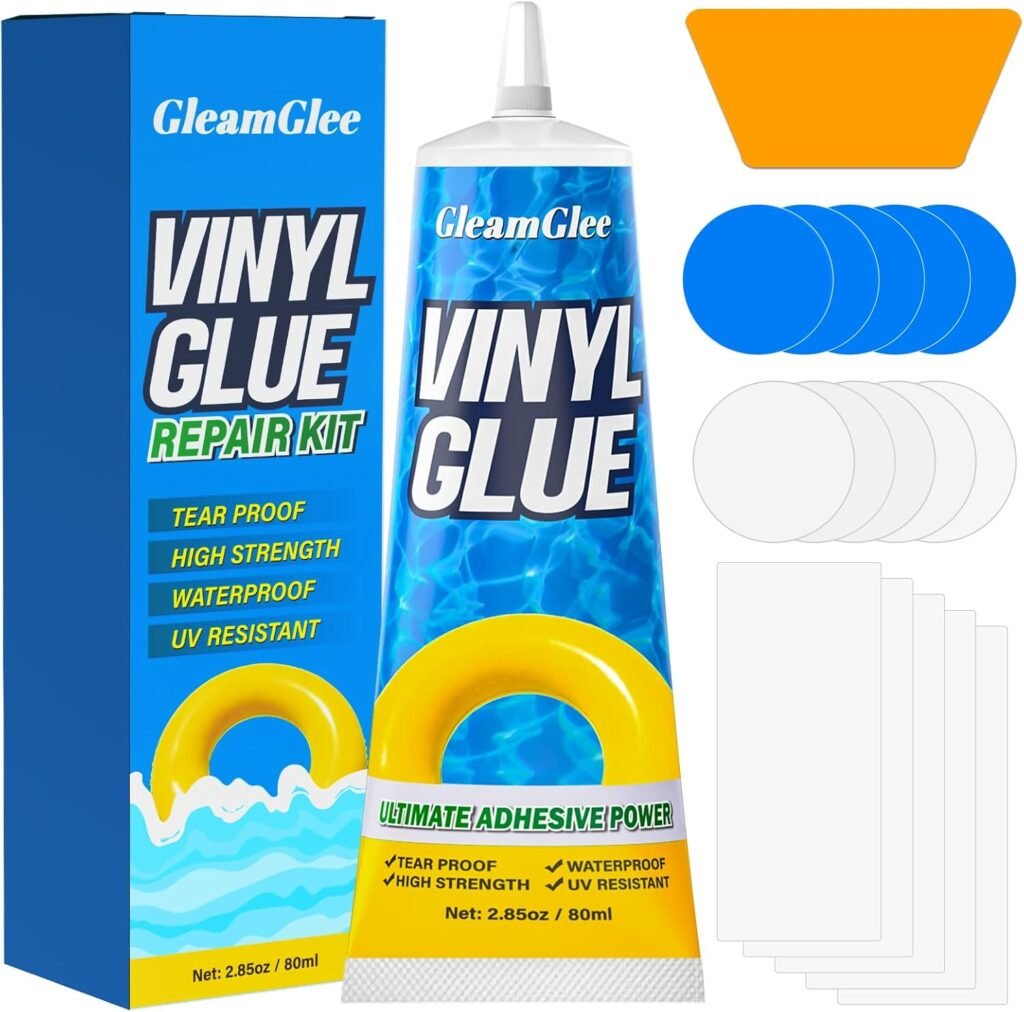
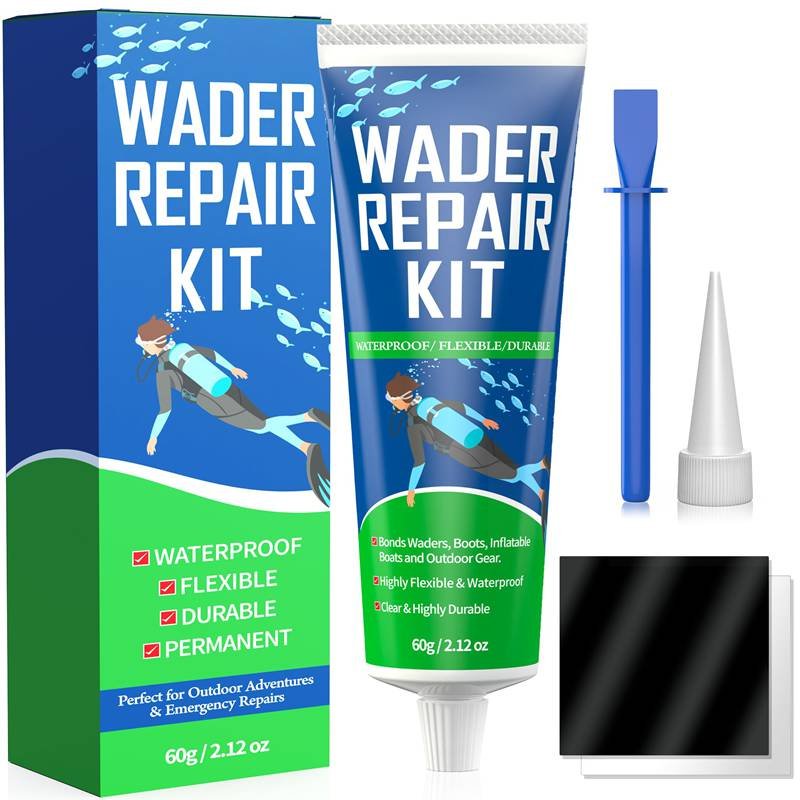
For a complete repair kit, glue strength, patch variety, nozzle precision, and pressing tools should work together. This is why a kit like GleamGlee PVC Glue is practical for Insta-Bed air mattress repair: it includes the adhesive, multiple patch options, an applicator, a rubber squeegee, and a precision metal nozzle, giving the repair a better chance of staying clean, flat, flexible, and airtight.
How to Use PVC Glue?
Using PVC glue on an Insta-Bed air mattress is not difficult, but the repair needs patience. The mattress must be checked, cleaned, patched, pressed, and cured in the right order. Most failed repairs are not caused by weak glue. They are caused by missed leaks, dirty surfaces, patches that are too small, too much glue, or inflating the mattress before the adhesive has reached enough strength.
For a normal pinhole or small puncture, the whole repair usually takes less than 30 minutes of hands-on work, but the curing time should be about 24 hours before full inflation. This waiting time matters because an air mattress works under constant pressure. Once the mattress is filled, air pushes against the patch from inside. If the glue is still soft, that pressure can open a tiny gap along the patch edge and cause another slow leak.
A good PVC glue repair should look flat, clean, and slightly wider than the damaged area. The patch should not barely cover the hole. It should grip healthy material around the leak. For most small air mattress holes, a patch margin of 25–50 mm beyond the damage gives a stronger seal. The glue layer should be thin and even, not thick and lumpy. A well-pressed patch with full curing has a much better chance of holding through a full night of use.
PVC Glue Leak Check
The first step is finding the exact leak. This is where many repairs go wrong. An Insta-Bed air mattress may lose air from one tiny pinhole, but it may also have two or three small leaks if it has been used on rough flooring, stored with sharp objects, or taken outdoors. Patching only the first visible spot may not solve the problem if another leak is still open.
Start by inflating the mattress until it is firm enough to create pressure. Do not overinflate it. A very tight mattress can stretch the seams and make testing less accurate. Move the mattress to a quiet area and listen for a soft hiss. Check the bottom panel first if the mattress has been used on the floor, carpet, garage, tent, or patio. Then check the side walls, seams, valve, and pump area.
If the leak cannot be heard, use soapy water. Mix water with a small amount of dish soap and apply it to suspected areas. Bubbles will appear where air escapes. Work in sections instead of covering the whole mattress at once. Slow leaks may take 30–60 seconds to form visible bubbles, so do not wipe the area too quickly.
After finding the leak, mark it before deflating the mattress. A washable marker works well. Tape can also be placed beside the hole, but it should not cover the hole directly because adhesive residue may affect the repair. Once the leak is marked, continue checking nearby areas for a second leak.
| Leak Check Area | What to Look For | Repair Note |
|---|---|---|
| Bottom panel | Pinholes, scratches, floor scuffs | Most common hidden leak area |
| Side wall | Small cuts, rub marks, stretched spots | Usually repairable if smooth |
| Seam edge | Bubbles along joined line | Needs wider patch and careful pressing |
| Valve area | Air around cap or seal | Check whether cap is fully closed |
| Pump area | Bubbles near housing | May be harder than surface repair |
| Flocked top | Tiny holes hidden in fibers | Needs extra cleaning and larger patch |
Useful leak-check rules:
- Inflate first, then search for the leak.
- Check the bottom panel before assuming the pump is faulty.
- Use soapy water for slow leaks that cannot be heard.
- Mark every leak before deflating.
- Dry all soapy water before applying PVC glue.
- Check for more than one leak before starting the repair.
PVC Glue Surface Prep
Surface preparation decides how well the patch bonds. PVC glue needs direct contact with the mattress surface. Dust, oil, lint, pet hair, moisture, soap residue, or old tape adhesive can weaken the repair. Even a strong glue may peel if it is applied over a dirty or damp surface.
After deflating the mattress, clean an area larger than the patch. If the patch is 50 mm wide, clean at least 80–100 mm around the leak. Use a soft cloth with mild soap and water to remove dirt and oils. If the bottom panel has floor grit, wipe it more than once. If the mattress was stored in a garage or basement, dust may sit in tiny surface texture and must be removed carefully.
The surface must be completely dry before glue is applied. Moisture under the patch can create weak spots and cloudy areas. Let the repair area air-dry after wiping. For faster drying, use a clean dry cloth and leave the mattress open in a dry room. Do not use strong heat, hair dryers on high heat, or open flames, because excessive heat can deform vinyl material.
The repair area should also lie as flat as possible. Wrinkles under a patch can create small channels where air escapes. If the leak is on a side wall, position the mattress so that area rests flat. If the leak is near a seam, gently smooth the surface without stretching it. If the leak is on a flocked or velvet-like top surface, repair is more difficult because fibers reduce direct bonding. In that case, use a larger patch and press more carefully.
| Surface Condition | Repair Risk | Better Preparation |
|---|---|---|
| Dusty bottom panel | Patch edge may lift | Clean wider area twice |
| Damp surface | Glue may not bond | Dry fully before repair |
| Oily surface | Weak adhesion | Wipe with mild soap and dry |
| Wrinkled surface | Air channels under patch | Flatten before gluing |
| Flocked surface | Poor direct contact | Use larger patch and firm pressure |
| Old tape residue | Uneven bonding | Remove residue gently first |
Surface preparation checklist:
- Deflate the mattress fully.
- Clean wider than the patch size.
- Remove dust, oil, lint, and hair.
- Dry the surface completely.
- Test-place the patch before applying glue.
- Keep the leak mark visible.
- Make sure the patch can sit flat.
A clean surface often improves repair strength more than adding extra glue.
PVC Glue Application
PVC glue should be applied in a thin, even layer. Too much glue is one of the most common repair mistakes. A thick layer may look strong, but it can cure unevenly, trap air bubbles, squeeze out around the patch, or make the patch slide. A thin layer with full patch coverage usually gives a cleaner and stronger result.
Choose the patch before opening the glue. For a pinhole or small puncture, a round clear patch is usually a good choice. For a short scratch or small tear, a rectangular patch gives better coverage. For bottom-panel repairs where appearance is less important, a blue patch can work well. The patch should extend beyond the damaged area on all sides. For small leaks, a 25–50 mm margin is a practical target when space allows.
Apply the PVC glue over the leak and across the patch contact area. The glue should cover the full area under the patch, not just the hole. A precision metal nozzle helps control the amount, especially on tiny pinholes and seam-edge leaks. If an applicator is included, spread the glue evenly so there are no dry gaps or thick puddles.
Place the patch carefully over the glued area. Try to position it correctly the first time. Sliding the patch around too much can move the glue away from the leak or create uneven coverage. Once the patch is in place, press from the center outward. This pushes trapped air toward the edge and helps the patch sit flat.
| Damage Type | Better Patch Choice | Glue Method |
|---|---|---|
| 1–3 mm pinhole | Clear round patch | Thin layer over hole and patch area |
| 3–5 mm puncture | Round or rectangular patch | Full patch coverage |
| Short scratch | Clear rectangular patch | Cover full scratch line |
| Bottom scuff | Blue or clear patch | Cover worn surface fully |
| Small seam leak | Larger rectangular patch | Controlled glue along seam path |
| Flocked top leak | Larger clear patch | Thin layer with firm pressure |
Application rules:
- Do not apply glue while the mattress is inflated.
- Do not use a glue blob only on the hole.
- Do not touch the cleaned area with oily fingers.
- Do not make the patch barely cover the leak.
- Do not stretch the mattress during patch placement.
- Do not move the patch repeatedly after contact.
A good application should look flat and controlled. The patch edge should sit close to the mattress surface, with no obvious dry gaps, wrinkles, or lifted corners.
PVC Glue Curing
Curing is the time PVC glue needs to build strength. The patch may feel attached after a short period, but that does not mean it is ready for full mattress pressure. For an Insta-Bed air mattress, a 24-hour cure before full inflation is the safer standard. This is especially important for seam repairs, bottom punctures, and larger patches.
During curing, the mattress should stay deflated and still. Do not fold it, roll it, sit on it, or inflate it. Keep the repair area flat. If the patch is on a flat panel, place a smooth weight over it after pressing. A book or flat board can help maintain contact. The weight should be clean and smooth, not sharp or textured. If the patch is on a side wall, position the mattress so gravity does not pull the patch away.
Room conditions matter. A dry room with moderate temperature helps the repair cure more predictably. A cold, damp room can slow curing. Dusty airflow can contaminate the patch edge. Keep pets and children away from the repair area until the glue has cured.
After 24 hours, inflate the mattress slowly. Do not fill it to maximum firmness immediately. Add air gradually and inspect the patch. If the patch edge stays flat, continue inflating to normal sleeping firmness. Then test the repair with soapy water. Apply the soapy mixture around the patch edge and watch for bubbles for at least 30–60 seconds.
| Curing Stage | Recommended Action | Reason |
|---|---|---|
| First 10 minutes | Keep patch still | Prevent slipping |
| First 1 hour | Avoid touching or lifting edges | Allows early setting |
| 1–24 hours | Keep mattress deflated and flat | Builds stronger bond |
| After 24 hours | Inflate slowly | Prevents sudden pressure stress |
| Final test | Use soapy water around patch | Confirms airtight seal |
| Overnight use | Use only after passing test | Reduces risk of deflation |
Final repair checks:
- Patch edge stays flat after inflation.
- No bubbles appear during soapy water test.
- Mattress holds air for several hours.
- Repair area does not feel overly hard or raised.
- No new hiss appears near the patch.
- If air loss continues, check for another leak.
If bubbles appear at one patch edge, deflate the mattress, dry the area, and inspect the gap. A small edge gap may sometimes be sealed with a controlled amount of additional PVC glue. If the patch has lifted widely, the surface may not have been clean enough, the patch may have been too small, or the mattress may have been inflated too early.

What PVC Glue Tips Help?
The best PVC glue repair tips are simple: use less glue than expected, make the patch larger than the leak, press the patch firmly, and wait long enough before inflation. For an Insta-Bed air mattress, a clean flat repair usually lasts better than a thick messy repair. The repair should look smooth, sealed, and slightly wider than the damaged area.
Most air mattress patch failures come from small handling mistakes. The leak may be found correctly, but the surface is still damp. The patch may cover the hole, but not enough surrounding material. The glue may be strong, but too much of it makes the patch slide. The mattress may be repaired well, but inflating it after one or two hours can break the seal before the adhesive has built full strength.
Good repair habits save time, money, and frustration. A small pinhole can often be repaired with a round patch, while a short scratch or seam-edge leak usually needs a rectangular patch with a wider margin. After patching, the mattress should stay deflated for about 24 hours. The repaired area should then be tested with soapy water and left inflated for several hours before overnight use.
PVC Glue Amount
The right amount of PVC glue is usually a thin, even layer, not a thick pile. On an Insta-Bed air mattress, the glue must seal the hole and bond the patch to the surrounding vinyl surface. If too little glue is used, dry gaps can remain under the patch. If too much glue is used, the patch may slide, wrinkle, or cure unevenly. The best repair sits in the middle: enough glue to wet the full patch area, but not so much that the repair becomes raised and messy.
A practical rule is to cover the full area under the patch, not only the visible hole. A 2 mm pinhole still needs glue spread under the full patch because air pressure can travel toward the patch edge. The patch edge is often where a weak repair starts leaking again. When glue reaches the full patch area evenly, the repair has a better chance of sealing all possible air paths.
For small pinholes, a light controlled layer is enough. For longer scratches, the glue should follow the full damaged line and cover the surrounding patch area. For seam-edge leaks, the glue should be placed carefully along the leak path without forming a thick ridge. A precision metal nozzle helps because it releases glue in a controlled line instead of a large blob.
| Leak Type | Better Glue Amount | Patch Choice | What to Avoid |
|---|---|---|---|
| Tiny pinhole | Very thin layer over full patch area | Clear round patch | Glue blob only on the hole |
| 1–3 mm puncture | Thin even coat | Round or small rectangular patch | Patch sliding from excess glue |
| Short scratch | Thin layer along full scratch | Clear rectangular patch | Dry ends outside the glue area |
| Bottom scuff leak | Even layer over worn zone | Blue or clear patch | Dust mixing into wet glue |
| Small seam leak | Controlled line plus patch coverage | Larger rectangular patch | Thick glue ridge along seam |
Good glue control should leave the patch flat. A flat patch usually means better contact, less trapped air, and lower edge stress when the mattress is inflated.
PVC Glue Patch Size
Patch size matters more than many people expect. A small hole does not mean a tiny patch is enough. Air inside the mattress pushes outward continuously, especially when body weight is added. If the patch barely covers the hole, pressure gathers near the edge and can create a slow leak. A larger patch spreads pressure across more healthy material and gives the glue more surface to hold.
For most Insta-Bed air mattress repairs, the patch should extend at least 25–50 mm beyond the damaged area when space allows. A 1–3 mm pinhole can often use a round patch around 30–50 mm wide. A short tear or scratch should use a rectangular patch that covers the full length plus extra space on both ends. Seam-edge leaks usually need more coverage because air may travel along the seam before escaping.
Patch shape should match the damage. Round patches work well for pinholes because there are no corners to lift. Rectangular patches work better for long damage lines and seam areas. Clear patches are useful on visible surfaces because they keep the repair cleaner-looking. Blue patches are practical on the bottom panel, outdoor inflatables, or areas where visibility helps locate the repair later.
| Damage Size | Suggested Patch Margin | Better Patch Shape | Repair Note |
|---|---|---|---|
| Under 1 mm | 25–30 mm beyond leak | Round patch | Good for tiny pinholes |
| 1–3 mm | 30–50 mm beyond leak | Round patch | Stronger than a tiny cover |
| 3–5 mm | 40–50 mm beyond leak | Round or rectangular patch | Needs full glue coverage |
| 5–20 mm scratch | 40–60 mm beyond both ends | Rectangular patch | Cover the full line |
| Small seam leak | 50 mm or more if possible | Rectangular patch | Press firmly along seam |
A patch that is too large can be slightly more visible, but a patch that is too small can fail. For a guest bed, camping mattress, or backup air mattress, holding air is more important than making the repair almost invisible. A clear patch gives a cleaner balance between appearance and coverage.
PVC Glue Pressing
Pressing the patch firmly helps remove trapped air, spread the glue evenly, and seal the edges. This step is easy to overlook, but it has a direct effect on repair strength. A patch that is simply placed on wet glue may look attached, but small air pockets can remain underneath. Those pockets can become leak paths after inflation.
The patch should be pressed from the center outward. This movement pushes air and extra glue toward the edges. A rubber squeegee works well because it spreads pressure evenly without cutting or scratching the patch. If a squeegee is not available, a smooth plastic card or flat tool can help, but sharp edges should be avoided. For seam areas, pressure should follow the curve of the seam so the patch does not bridge over a gap.
Pressing time should be long enough to make full contact. For a small patch, 1–2 minutes of steady pressure is usually more useful than a quick tap. For larger patches or seam repairs, 3–5 minutes of careful pressing may be needed. After pressing, the patch edge should be checked from all sides. If an edge looks dry, raised, or loose, a small amount of glue may be needed before curing.
Good pressing details include:
- Press from the center toward the outer edge.
- Use steady pressure instead of quick rubbing.
- Check all edges before leaving the repair to cure.
- Do not slide the patch after pressing starts.
- Use a smooth weight on flat repairs during curing.
- Avoid bending the repair area while the glue is setting.
| Pressing Problem | What Happens Later | Better Method |
|---|---|---|
| Only pressing the center | Edge may leak | Press center to edge |
| Moving patch repeatedly | Glue layer becomes uneven | Place patch once and press |
| No pressure on seam curve | Air channel may remain | Press along seam shape |
| Using sharp tool | Patch may scratch or tear | Use rubber squeegee |
| No edge check | Loose corner may lift | Inspect all edges before curing |
The repair should look flat, smooth, and fully seated. If the patch looks raised or uneven before curing, it is more likely to fail after inflation.
PVC Glue Curing Tips
Curing time is one of the most important parts of an Insta-Bed air mattress repair. The patch may feel attached after a short time, but the glue still needs time to build strength underneath. For air mattress repair, about 24 hours of curing before full inflation is a safer standard. This is especially important because internal air pressure can push against weak spots before the bond is ready.
During curing, the mattress should remain deflated and still. Do not fold it, roll it, sit on it, inflate it, or place bedding on it. The repair area should stay flat. If the patch is on a flat panel, a smooth book or board can be placed over it to keep gentle pressure on the patch. The weight should not be sharp, dirty, or too heavy. For side-wall repairs, position the mattress so the patch is not hanging downward.
Room conditions also matter. A cool damp room can slow curing, while a dry room with moderate temperature helps the glue set more predictably. The repair should be kept away from dust, pet hair, children, and direct heat. Strong heat may damage vinyl material, so curing should not be forced with high-temperature tools.
After curing, inflate the mattress slowly. Do not immediately fill it to maximum firmness. Watch the patch as air pressure builds. If the patch edge stays flat, continue inflating to normal comfort level. Then test the patch with soapy water. No bubbles around the edge means the seal is working at that moment. Leaving the mattress inflated for several hours gives a better test for slow leaks.
| Curing Stage | Recommended Action | Reason |
|---|---|---|
| First 10 minutes | Do not move the patch | Prevents slipping |
| First 1 hour | Keep surface flat | Allows early setting |
| 1–24 hours | Keep mattress deflated | Builds stronger bond |
| After 24 hours | Inflate slowly | Avoids sudden pressure shock |
| Final test | Check with soapy water | Confirms airtight seal |
| Hold test | Leave inflated 2–6 hours | Catches slow leaks |
If bubbles appear after curing, the repair should be inspected before use. A small edge gap may sometimes be sealed with a careful extra line of PVC glue. If the patch lifts widely, the surface may have been dirty, damp, wrinkled, or inflated too early. In that case, the repair area may need to be cleaned and patched again with a larger patch.
Do PVC Glue Repairs Last?
PVC glue repairs can last well when the leak is small, the mattress surface is clean, the patch is large enough, and the glue is allowed to cure fully before inflation. On an Insta-Bed air mattress, the strongest repairs are usually pinholes, small punctures, and short surface cuts on smooth PVC or vinyl panels. These repairs often hold much better than temporary tape because the patch and glue work together to create a flexible airtight seal.
Repair life depends on the damage location. A small hole on a flat side panel is easier to repair than a seam split or pump-area leak. Flat surfaces give the patch more direct contact. Seam areas carry more tension, so the patch must fight pulling force from more than one direction. Bottom panels may repair well, but only if floor dust, grit, and storage dirt are removed carefully before gluing. Flocked or velvet-like top surfaces are harder because the surface fibers reduce direct contact with the vinyl layer.
A PVC glue repair should not be judged only by how it looks after application. The real test is whether the mattress stays firm under air pressure for several hours. A patch may look dry after 30 minutes, but the bond may not be strong enough for full inflation. Waiting around 24 hours before pressure testing gives the repair a much better chance of lasting through overnight use, repeated inflation, folding, and storage.
PVC Glue Repair Life
The life of a PVC glue repair depends on five main factors: leak size, patch coverage, surface condition, curing time, and later use. A tiny pinhole on smooth vinyl can often be repaired very successfully because the patch bonds to strong surrounding material. A long tear or stretched seam is less reliable because the surrounding material may keep pulling apart under pressure.
For an Insta-Bed air mattress used as an occasional guest bed, a good repair may last through many uses if the patch is not folded sharply or scraped across the floor. For a camping mattress used outdoors, repair life may be shorter because the patch faces rough ground, moisture, repeated rolling, and temperature changes. The same glue can perform differently depending on how the mattress is handled after repair.
A useful way to judge repair life is by location:
| Leak Location | Repair Outlook | Main Risk | Better Handling |
|---|---|---|---|
| Smooth side panel | Strong | Patch too small | Use wide clear patch |
| Smooth bottom panel | Strong if cleaned well | Dust and floor grit | Clean wider area twice |
| Small top puncture | Medium | Flocked fibers | Use larger patch and firm pressure |
| Short surface scratch | Good | Patch not long enough | Use rectangular patch |
| Small seam-edge leak | Medium | Tension along seam | Use wider patch and longer pressing |
| Pump-area leak | Uncertain | Component or housing issue | Test source before patching |
| Long seam split | Low to medium | Structural pulling | Replacement may be more practical |
Repair life improves when the patch extends at least 25–50 mm beyond the damaged area. The glue layer should cover the full patch contact area, not only the center hole. If the patch edge is dry, raised, or poorly pressed, air pressure can slowly open the repair. A flat patch with sealed edges usually lasts longer than a thick patch with uneven glue underneath.
PVC Glue Strength
PVC glue strength is not only about how hard the adhesive becomes. For an air mattress, strength means the repair can stay sealed while the surface bends, stretches, and carries pressure. A very hard glue may feel strong on a rigid object, but it can crack on a flexible mattress. A good PVC glue repair should feel firm, sealed, and flexible enough to move with the material.
The strongest repair usually has three layers working together:
- The mattress surface must be clean, dry, and strong.
- The PVC glue must spread evenly under the patch.
- The patch must cover healthy material around the leak.
If any one of these layers is weak, the repair may fail. For example, strong glue cannot make up for a dusty surface. A large patch cannot hold well if the glue only sits in the center. A clean repair can still fail if the mattress is inflated before curing.
A simple repair strength check can be done after curing:
| Strength Check | Pass Sign | Warning Sign |
|---|---|---|
| Patch edge | Fully flat | Raised corner or dry gap |
| Surface feel | Firm but flexible | Hard lump or soft wet area |
| Bubble test | No bubbles after 30–60 seconds | Bubbles at edge |
| Inflation test | Patch stays flat | Patch stretches or lifts |
| Hold test | Mattress stays firm for 2–6 hours | Noticeable softening |
| Overnight test | Normal firmness by morning | Sagging or partial deflation |
A repair that passes the bubble test and several-hour hold test is much more trustworthy for sleep. A quick 5-minute inflation check is not enough because many air mattress leaks are slow. The mattress may seem fine at first, then lose pressure after body weight has been on it for several hours.
PVC Glue Flexibility
Flexibility is one of the biggest reasons PVC glue can work better than rigid household adhesives on Insta-Bed air mattress repair. The mattress does not stay in one shape. It expands during inflation, compresses when weight is added, bends when stored, and may be folded after use. The repair has to move with the surface rather than fight against it.
A repair that dries too stiff can create a hard edge. That hard edge may become a stress point when the mattress bends. Over time, the patch may crack, peel, or lift at one side. A flexible PVC glue repair spreads movement more naturally across the patch area. This is especially important on side walls, bottom panels, camping mattresses, and any area that may be folded during storage.
Flexibility also affects comfort. A thick, hard repair on the top surface can feel raised under a sheet. A thin, flat repair is less noticeable. For visible or contact areas, clear patches and controlled glue application help keep the repair lower and cleaner.
To protect flexibility after repair:
- Do not overinflate the mattress until it feels drum-tight.
- Avoid folding directly through the patch.
- Store the mattress loosely when possible.
- Keep the repair area away from sharp creases.
- Use a groundsheet under the mattress during camping.
- Recheck patch edges after the first few uses.
The repair should bend with the mattress without cracking. If the patch feels stiff, sharply raised, or separated at the edge, it may need attention before the next use.
PVC Glue Failure Signs
PVC glue repairs usually give warning signs before fully failing. The most common signs are edge lifting, small bubbles during testing, a soft mattress after several hours, or a patch that feels raised and uneven. These signs should not be ignored because a small gap can become a bigger leak after overnight pressure.
The first area to inspect is the patch edge. If one corner or side is lifting, air may be escaping under the patch. This is common when the patch was too small, the surface was damp, or the mattress was inflated too early. If the lifted area is small and clean, it may sometimes be sealed with a careful extra line of PVC glue. If the patch has lifted widely, it is usually better to remove loose material, clean the surface again, and apply a larger patch.
Another sign is slow deflation even when the patch looks fine. This may mean there is another leak elsewhere. Air mattresses often have more than one pinhole, especially after outdoor use or rough storage. If the repaired patch passes the soapy water test but the mattress still softens, check the bottom panel, seams, and valve area again.
| Failure Sign | Likely Cause | Better Next Step |
|---|---|---|
| Bubbles at patch edge | Edge not sealed | Add controlled glue or repatch |
| Patch corner lifting | Patch too small or weak pressure | Repress if wet, repatch if cured |
| Patch slides during curing | Too much glue | Remove, clean, use thinner layer |
| Mattress softens overnight | Second leak or weak repair | Retest full mattress |
| Hard cracked repair | Wrong glue or too thick layer | Repatch with flexible PVC glue |
| Cloudy wet patch area | Moisture trapped under patch | Dry fully and repair again |
| Leak along seam after patch | Seam tension still active | Use larger rectangular patch or replace |
A repair is most reliable when the patch remains flat, no bubbles appear, and the mattress holds firmness through a several-hour test. If the mattress is needed for guests, the safest plan is to repair it at least one day early, test it before bedtime, and avoid overinflation during use.

Is GleamGlee PVC Glue Good?
GleamGlee PVC Glue is a practical choice for Insta-Bed air mattress repair because it is built as a complete inflatable repair kit, not just a tube of adhesive. The kit includes 80ml PVC glue, 5 blue round patches, 5 clear round patches, 5 clear rectangular patches, a rubber squeegee, and an applicator. This gives enough material for several small repairs and gives different patch choices for pinholes, bottom-panel leaks, short cuts, and seam-side damage.
For an Insta-Bed air mattress, the most useful part of the kit is the repair structure. A small pinhole does not need the same patch as a longer scratch. A visible side-panel repair does not need the same color patch as a hidden bottom-panel repair. A seam-edge leak needs wider coverage and more careful pressing than a flat puncture. GleamGlee includes different patch shapes so the repair can match the actual damage instead of forcing one patch style onto every leak.
The glue is designed for PVC, vinyl, rubber-style inflatables, and related flexible materials. It is made to form a waterproof, flexible, and durable repair after curing. This matters for air mattresses because the repaired area must handle inflation, deflation, body weight, storage folds, damp cleaning, and sometimes outdoor use. For best results, the repaired mattress should stay deflated for about 24 hours before full inflation, and the patch should be tested with soapy water before overnight use.
GleamGlee PVC Glue Kit
The GleamGlee PVC Glue Kit is useful because it includes the main items needed for a proper inflatable repair. Many failed air mattress repairs happen because the adhesive is used without the right patch size, without enough pressure, or without clean application tools. The kit solves these common problems by including several patch types and pressing tools in one set.
The 80ml glue volume is enough for multiple small repairs. This is helpful because air mattresses, pool floats, camping mats, and inflatable chairs may develop more than one leak over time. A small tube may be enough for one pinhole, but not enough for a home repair drawer, pool storage box, or camping kit. The larger volume gives more practical use across different inflatable products.
The patch selection is also important. Clear round patches work well on small pinholes and visible areas. Clear rectangular patches are better for longer scratches, short tears, or seam-side leaks. Blue round patches are useful on bottom panels, darker outdoor items, or areas where appearance is less important. The rubber squeegee helps press the patch evenly, while the applicator helps spread glue without using fingers.
| Kit Part | Quantity / Feature | Best Repair Use |
|---|---|---|
| PVC glue | 80ml | Multiple repairs on PVC, vinyl, and rubber-style inflatables |
| Blue round patches | 5 pieces | Bottom panels, outdoor gear, less visible areas |
| Clear round patches | 5 pieces | Pinholes, small punctures, visible side panels |
| Clear rectangular patches | 5 pieces | Short tears, scratches, seam-side leaks |
| Rubber squeegee | Included | Pressing patch evenly and removing trapped air |
| Applicator | Included | Spreading glue cleanly over repair area |
| Metal nozzle | Precision design | Placing glue on small holes and narrow areas |
This kit format makes repair more controlled. The result is usually cleaner than using random household glue, oversized tape, or mismatched patch material.
GleamGlee PVC Glue Strength
GleamGlee PVC Glue is designed to create a strong seal on flexible inflatable materials. For an Insta-Bed air mattress, strength means more than sticking power. The repair must block air, hold the patch edge, and stay flexible when the mattress moves. A stiff adhesive may feel strong at first, but it can crack when the bed is folded or compressed. A flexible PVC repair is better suited for air mattresses because the surface changes shape during use.
The glue and patch system is suitable for small holes, pinholes, cracks, and larger surface tears within a repairable range. It is especially useful on smooth vinyl or PVC panels where the patch can make full contact with the surface. Bottom-panel punctures, side-wall holes, and short scratches are strong repair cases when the surface is cleaned and dried before gluing.
The repair should be judged after curing, not immediately after application. The bond becomes more reliable after the mattress stays deflated for about 24 hours. After curing, the mattress should be inflated slowly and checked with soapy water. No bubbles around the patch edge means the repair is sealed at that point. If the mattress stays firm for several hours, the repair is more dependable for overnight use.
| Repair Factor | Better Result with GleamGlee PVC Glue | Why It Matters |
|---|---|---|
| Flexible bond | Patch moves with air mattress surface | Reduces cracking and edge lifting |
| Waterproof seal | Repair resists damp cleaning and outdoor moisture | Useful for home, pool, and camping use |
| Patch coverage | Multiple patch shapes cover different leak types | Improves pressure distribution |
| Precision application | Metal nozzle controls glue amount | Helps avoid messy raised repairs |
| Pressure tool | Squeegee improves contact | Reduces trapped air under patch |
| Full curing | About 24 hours before full inflation | Builds stronger air seal |
The strongest results come from matching the patch to the damage and avoiding early inflation. The glue performs best when the repair method is careful, flat, and patient.
GleamGlee PVC Glue Nozzle
The precision metal nozzle is a useful detail for Insta-Bed air mattress repair because many leaks are extremely small. A pinhole may be only 1–3 mm wide, and applying glue from a wide opening can make the repair messy. Too much glue may cause the patch to slide, wrinkle, or cure unevenly. The metal nozzle helps place the glue exactly where it is needed.
This is especially helpful for pinholes, seam-edge leaks, narrow scratches, and curved side-wall areas. On a seam, the glue must follow the leak path without forming a thick ridge. On a pinhole, the glue must cover the hole and the patch area without flooding the surface. A controlled line of glue makes it easier to keep the repair flat and clean.
Cleaner application also helps reduce waste. A small leak does not need a large amount of adhesive. With a precision nozzle, the glue can be placed in a thin layer, then spread with the applicator before the patch is pressed down. This gives better control over coverage and reduces the chance of glue squeezing heavily from the patch edges.
| Repair Area | Why Nozzle Control Helps | Better Application Method |
|---|---|---|
| Tiny pinhole | Prevents excess glue | Apply small amount over hole and spread thinly |
| Side-wall leak | Keeps patch area neat | Use controlled glue layer under clear patch |
| Seam-edge leak | Follows narrow leak path | Apply along seam, then cover with rectangular patch |
| Bottom-panel scuff | Reduces waste | Spread evenly across worn area |
| Curved corner | Avoids glue pooling | Apply small sections and press carefully |
A good nozzle does not replace proper patching, but it makes the repair easier to control. For air mattresses, a flat, even repair is usually stronger than a thick and messy one.
GleamGlee PVC Glue Uses
GleamGlee PVC Glue can repair more than an Insta-Bed air mattress. The same kit can be used on many PVC, vinyl, and rubber-style inflatables around the home, pool, campsite, and outdoor storage area. This makes the product more useful than a single-use air bed patch.
For home use, it can repair air mattresses, guest beds, inflatable sofas, inflatable chairs, travel pillows, and footrests. These items often leak after storage, folding, pet contact, or floor punctures. For pool and water products, it can repair inflatable pools, pool floats, loungers, swim rings, armbands, and inflatable pool toys. The waterproof repair design is important in these situations because patch edges may face water, cleaning, sun, and repeated handling.
For outdoor and sports inflatables, it can repair kayaks, rafts, boats, SUP boards, fishing float tubes, buoys, and inflatable markers. These products need a repair that remains flexible and water-resistant. For camping and travel, it can repair inflatable sleeping pads, camping mats, inflatable chairs, portable sofas, and small airframe leaks in inflatable tents or shelters.
| Product Category | Repair Examples | Practical Benefit |
|---|---|---|
| Home inflatables | Insta-Bed, guest beds, inflatable chairs | Restores comfort and air retention |
| Pool products | Floats, loungers, swim rings, pool toys | Keeps summer items usable |
| Outdoor inflatables | Kayaks, rafts, SUP boards, boats | Handles water and movement better |
| Camping gear | Sleeping pads, mats, portable chairs | Useful for travel and emergency repair |
| Event inflatables | Bounce houses, slides, decorations | Extends seasonal and event use |
| Travel items | Pillows, footrests, small inflatables | Saves compact gear from small punctures |
The broad repair range gives the kit better value. A small air mattress leak may be the first reason to buy it, but the same kit can stay useful for pool season, camping trips, outdoor gear, and household inflatable repairs.

Conclusion
PVC glue for Insta-Bed air mattress repair is a practical solution when the damage is a pinhole, small puncture, short scratch, bottom-panel leak, or minor seam-edge leak. The repair works best when the leak is found accurately, the surface is cleaned and dried fully, the patch is larger than the damaged area, and the glue is given enough time to cure. For most small leaks, waiting about 24 hours before full inflation gives the patch a much better chance of holding through overnight pressure.
A good repair should be flat, flexible, and airtight. Too much glue, a tiny patch, early inflation, or poor surface cleaning can weaken the result, even when the adhesive itself is strong. Round patches are useful for pinholes, rectangular patches work better for scratches and seam-side leaks, and clear patches help keep visible repairs cleaner. After curing, the mattress should be tested with soapy water and left inflated for several hours before guest use or camping use.
GleamGlee PVC Glue is a strong choice for this kind of repair because it includes 80ml glue, clear round patches, clear rectangular patches, blue round patches, a rubber squeegee, an applicator, and a precision metal nozzle. It can repair Insta-Bed air mattresses as well as pool floats, inflatable pools, kayaks, rafts, SUP boards, camping mats, inflatable chairs, swim rings, and other PVC or rubber-style inflatables. For branded product orders, wholesale supply, or customized PVC repair kit projects, GleamGlee can support product packaging, private label design, low MOQ customization, and global delivery.
Share:
Table of Contents
Here, creating your adhesives glue & removal cleaner collection is no longer a barrier—it’s a collaborative journey where GleamGlee helps brands and businesses transform their vision into durable, certified, and market-ready solutions.
Partner with GleamGlee
Join hundreds of global partners who trust GleamGlee for adhesives and cleaners that combine innovation, compliance, and speed. Our vertically integrated system—from R&D to warehouse—guarantees consistent performance and reliable delivery.
Whether you’re sourcing FBA-ready stock or developing your own formula, our team provides unmatched technical support and responsive service.