Skip to content
What Plastic Glue Works for Gundam Repair : A Model Guide
Your trusted adhesives glue & cleaner manufacturer

A Gundam model can look perfect on the shelf, but one tiny broken peg can change everything. A shoulder armor clip stops holding. A V-fin snaps while sanding. A hand peg breaks inside the wrist. A clear effect part cracks when removed from the runner. For model builders, the problem is not only the broken part. The bigger worry is making the repair look messy, cloudy, thick, crooked, or permanently stuck in the wrong position.
Plastic glue for Gundam model repair is used to bond broken plastic parts such as armor panels, pegs, weapons, hands, backpacks, clear parts, and small detail pieces. A good repair glue should match the plastic type, dry clear, cure fast, apply in tiny controlled drops, and create a strong bond without flooding panel lines or locking moving joints.
Gundam repair needs a different mindset from normal plastic repair. A storage box crack can tolerate a visible glue line. A Gundam face vent, V-fin, beam saber handle, or finger part cannot. The repair area may be only 2-5 mm wide, and the repaired part may still need to fit into another piece. That is why the right plastic glue matters, but control matters even more. One clean drop can save a rare part; one heavy squeeze can ruin a finished build.
What Is Plastic Glue for Gundam?
Plastic glue for Gundam is a repair adhesive used to bond broken, cracked, or separated plastic model parts. It is mainly used on small armor pieces, pegs, weapons, hands, backpacks, clear parts, model accessories, and custom detail parts. A good plastic glue for Gundam should hold strongly, dry clear, cure quickly, and apply in tiny controlled drops without covering molded details.
Gundam model repair is different from normal plastic repair because the parts are small, visible, and often designed with tight snap-fit tolerances. A broken hand peg may only be 2–4 mm wide. A V-fin tip may have almost no bonding area. A cracked armor panel may sit beside a panel line, decal, painted edge, or molded vent. If too much glue is used, the part may still bond, but the model can look messy or stop fitting correctly.
Plastic glue works best when the repair area is clean, aligned, and stable. It is not meant to replace every broken joint or fix every moving part by force. Some parts only need a tiny clear bond. Some stressed pegs need longer curing time. Some soft joint parts may not bond well. Before applying glue, the broken part should be checked for plastic type, contact area, movement, and whether the repair will be visible after assembly.
| Gundam Repair Area | Common Damage | Glue Need | Main Risk |
|---|---|---|---|
| V-fin / antenna | Thin tip snaps | Tiny clear bond | Visible glue bead |
| Hand peg | Peg breaks in wrist | Strong small-area bond | Peg becomes too thick |
| Armor panel | Crack or tab break | Clean seam repair | Panel line gets filled |
| Weapon handle | Grip snaps | Fast alignment | Crooked weapon position |
| Backpack connector | Peg or clip breaks | Stronger stress bond | Part falls during display |
| Clear effect part | Crack or separation | Transparent finish | Cloudy repair mark |
| Inner frame | ABS-style stress break | Strong bond with curing time | Weak repair under posing |
| Small detail part | Vent, fin, trim breaks | Precision application | Glue covers molded detail |
What Plastic Glue Does
Plastic glue reconnects separated Gundam plastic parts by creating a bond between the broken contact surfaces. On a model kit, the repair is not only about making two pieces stick together. The repaired part still needs to keep its original shape, fit back into the model, match the surrounding surface, and survive normal handling. A clean repair should not thicken a peg, blur a panel line, freeze a joint, or leave a cloudy mark on a visible part. For small Gundam repairs, glue placement matters more than glue volume. One controlled micro-drop can restore a broken part neatly, while a heavy squeeze can create overflow that is harder to fix than the original break.
Key functions of plastic glue in Gundam repair:
- Reattaches broken armor tabs so panels can sit back in the correct position.
- Bonds small pegs, weapon handles, shield clips, and backpack connectors when the broken faces still match.
- Helps close fine cracks on armor parts before sanding, repainting, or topcoating.
- Repairs visible details such as V-fin tips, vents, thruster rims, rifle scopes, and decorative trims.
- Secures non-moving custom plastic details during kitbashing or modification.
- Creates a cleaner repair on colored or clear pieces when the glue dries transparent.
- Reduces the need for heavy mechanical fixing on small display parts.
Plastic glue should be used only where the bond is needed. If the glue spreads into a socket, hinge, ball joint, or rotation point, the model may lose movement. If it spreads across the outside surface, the repair may become visible after drying.
Why Gundam Parts Break
Gundam parts break because many kit pieces are thin, tight, or placed under repeated stress during assembly, posing, painting, and disassembly. A part may not break when first installed, but it can weaken after being removed several times, pushed into a tight socket, painted too thickly, or twisted at the wrong angle. Small pegs are especially vulnerable because they carry force through a narrow area. V-fins, hands, shield mounts, backpack pegs, weapon grips, skirt armor clips, and shoulder tabs are common break points. Once one of these pieces breaks, the model may still look complete, but posing, holding accessories, or displaying the kit becomes much harder.
Common reasons Gundam parts break:
- Cutting too close to the part with dull nippers, leaving stress marks or tiny cracks.
- Twisting parts off the runner instead of cutting and trimming cleanly.
- Pressing a peg into a socket without checking alignment first.
- Moving a joint against its intended direction of rotation.
- Painting, priming, or topcoating a peg, making the fit tighter than before.
- Repeatedly removing armor pieces during customization or detailing.
- Forcing ABS-style frame parts into tight connections.
- Sanding a peg too unevenly, creating a weak point.
- Dropping the model from a shelf or display stand.
- Pulling weapons, hands, or effect parts out too quickly.
The repair plan should match the type of break. A clean snapped armor tab is easier to glue than a stretched joint peg. A decorative part can often be bonded permanently. A moving or weight-bearing part needs more curing time and may need reinforcement if the contact area is too small.
| Break Type | What It Looks Like | Repair Difficulty | Repair Note |
|---|---|---|---|
| Clean snap | Two flat faces match well | Low to medium | Good for glue repair |
| Peg split | Peg cracks along length | Medium | Needs careful alignment |
| Twisted break | Plastic is stretched or uneven | High | May need trimming or support |
| Missing plastic | Gap remains after dry fit | High | Glue alone may not fill strength |
| Clear crack | Visible line through part | High | Use minimal clear glue |
| Painted break | Paint covers contact area | Medium to high | Bonding face may need cleaning |
Which Gundam Plastics Matter
Gundam model kits can include different plastics, and each plastic can affect the repair result. Outer armor parts are often PS-style plastic. Inner frames, structural connectors, or joint-related pieces may use ABS-style plastic. Clear parts may be acrylic-like or other transparent plastics. Softer polycap-style pieces can be more difficult to glue reliably. Since these materials do not always react the same way, plastic glue should be chosen and applied based on the part, not only the damage. The easiest way to check material is to look at the runner label or instruction manual. Leftover runner pieces are also useful for testing glue before repairing the actual model part.
Main Gundam plastic types and repair concerns:
| Plastic Area | Common Use on Gundam | Repair Concern | Practical Glue Advice |
|---|---|---|---|
| PS-style plastic | Armor, weapons, outer panels | Visible glue marks | Use small drops and clear finish |
| ABS-style plastic | Inner frames, connectors, joints | Stress during movement | Cure longer before posing |
| Clear plastic | Visors, sensors, effects, stands | Clouding or smears | Test first, apply to hidden edge |
| PE-like soft parts | Polycaps, flexible sockets | Weak glue grip | Avoid relying on glue for active joints |
| Painted plastic | Custom builds, finished armor | Glue bonds paint instead of plastic | Clean hidden contact face if possible |
| Unknown plastic | Third-party kits, custom parts | Unpredictable reaction | Test on spare material first |
Practical material-checking tips:
- Check runner marks before repair, especially for ABS and clear parts.
- Test glue on leftover runner if the part is rare, visible, or expensive.
- Avoid gluing soft polycaps as a main structural repair.
- Give ABS-style stressed repairs at least 24 hours before movement.
- Keep glue away from rotating sockets and hinge faces.
- Use the smallest amount on clear parts to avoid visible marks.
- For painted parts, expose a tiny hidden bonding surface when possible.
A strong glue can fail if the plastic surface is unsuitable, dirty, too small, or still under heavy stress. Material awareness makes the repair more predictable.
Is Plastic Glue Safe
Plastic glue is safe for Gundam repair when it is applied in very small amounts and kept only on the bonding surface. Most damage comes from overuse, poor placement, or moving the part too soon. A fast-drying glue may grab in seconds, but a stressed peg, frame part, or backpack connector still needs more time before it can handle pressure. The glue should not be allowed to run into ball joints, hinges, wrist sockets, waist connectors, knee joints, elbow joints, or transformation mechanisms unless the part is meant to be fixed permanently. Safety in model repair means protecting the model’s shape, movement, finish, and detail.
Safe use habits for plastic glue on Gundam models:
- Dry-fit the broken parts before applying glue.
- Clean sanding dust, hand oil, old glue, or loose paint from the bonding face.
- Apply glue with a precision nozzle instead of squeezing from a wide opening.
- Use a micro-drop first; add more only if needed.
- Keep glue away from panel lines, decals, painted surfaces, and clear fronts.
- Hold the part steady during the first set time.
- Do not test the repaired peg in a socket immediately.
- Let stressed parts cure longer before posing.
- Use tweezers for tiny parts to avoid finger marks and misalignment.
- Test clear plastic before repairing the visible piece.
Common safety problems and how to avoid them:
| Problem | Cause | Better Method |
|---|---|---|
| White or cloudy mark | Too much glue or poor airflow near clear parts | Use less glue and test first |
| Frozen joint | Glue enters moving socket | Keep glue away from movement areas |
| Thick peg | Glue squeezes around peg surface | Apply only to break face |
| Crooked part | No dry-fit before gluing | Align first, then glue |
| Weak bond | Dust, paint, or oil on contact surface | Clean contact point |
| Visible glue blob | Too much pressure on tube | Use fine nozzle and micro-drop |
| Repair breaks again | Part stressed too soon | Cure longer before use |
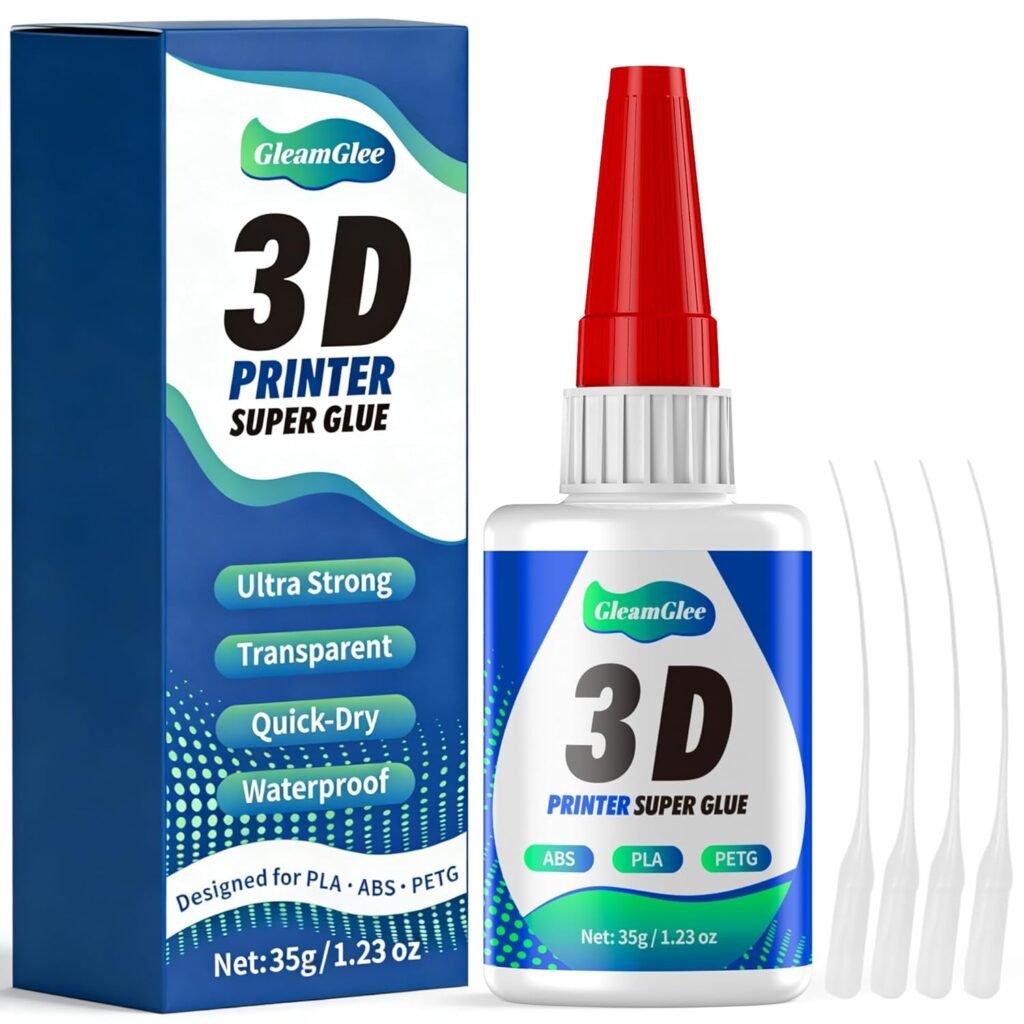
GleamGlee plastic glue is suitable for precision repairs because it dries clear, cures quickly, bonds plastics such as PVC, ABS, acrylic, and more, and includes fine-tip nozzles for controlled application. For Gundam models, that control is one of the most important parts of a clean repair.
Which Plastic Glue Fits Gundam?
The right plastic glue for Gundam depends on the part material, repair location, and whether the piece needs to move after repair. PS armor, ABS frame parts, clear pieces, and painted parts do not behave the same way. A clean repair starts with checking the runner mark, testing on spare plastic when possible, and using a glue that can be applied in tiny controlled drops.
For Gundam model repair, the best glue is not always the strongest glue in the tube. A V-fin needs a nearly invisible repair. A hand peg needs strength without becoming thicker. A backpack connector needs a bond that can handle display weight. A clear effect part needs transparency. A painted armor panel needs careful placement so the finish is not damaged. Each repair has a different priority.
GleamGlee plastic glue fits many Gundam repair needs because it offers fast curing, a crystal-clear finish, strong bonding for plastics such as PVC, ABS, acrylic, and more, plus fine-tip nozzles for precise application. For model work, the nozzle is as important as the formula. A wide glue opening can flood a 2 mm peg or panel line, while a fine nozzle can place glue exactly on the broken face.
| Gundam Part Type | Common Material | Best Glue Feature | Repair Priority |
|---|---|---|---|
| Outer armor | PS-style plastic | Clear, controlled glue | Clean visible seam |
| Inner frame | ABS-style plastic | Strong bond | Stress resistance |
| Clear part | Clear plastic / acrylic-like plastic | Transparent finish | No clouding |
| Painted armor | Painted PS or ABS | Tiny application | Protect finish |
| Weapon handle | PS / ABS | Fast alignment | Straight grip |
| Hand peg | PS / ABS | Strong micro-bond | Keep original size |
| Backpack connector | ABS / PS | Stronger cure | Load support |
| Custom detail | Mixed plastic | Precision nozzle | Accurate placement |
Plastic Glue for PS Parts
Plastic glue for PS parts is useful because many Gundam outer armor pieces, weapons, shields, panels, and decorative components are commonly made from PS-style plastic. These parts are often visible on the finished model, so the repair must be clean as well as strong. A broken shoulder plate, V-fin edge, shield corner, rifle piece, or skirt armor tab may not carry much weight, but the repair line can be easy to notice if the glue is too thick or placed badly. For PS parts, a clear glue with a fine nozzle is helpful because the glue can be placed only on the broken edge without covering molded detail.
Key points for PS Gundam repair:
- PS armor usually benefits from a small, clean glue line rather than a heavy bead.
- Broken faces should be dry-fitted before glue is applied.
- Panel lines, molded vents, and raised details should be protected from overflow.
- If the part will be painted later, the repair can be sanded after full curing.
- If the part will stay unpainted, glue clarity and neat placement matter more.
- A fine nozzle helps repair thin edges without spreading glue across the surface.
- For V-fin tips, apply glue to the contact face only, not the visible outer face.
- For armor cracks, apply from the back side when possible to keep the front cleaner.
| PS Repair Area | Suggested Glue Amount | Best Method | Risk to Avoid |
|---|---|---|---|
| V-fin tip | Micro-dot | Hold with tweezers | Thick glue bead |
| Armor crack | Thin line | Press edges together | Filled panel line |
| Shield edge | Small dots | Align edge first | Uneven seam |
| Rifle body | Thin contact layer | Hold straight | Crooked part |
| Skirt armor tab | Tiny dot | Cure before reinstalling | Tab gets too thick |
For PS parts, the repair should look light. If too much glue squeezes out, do not wipe it across the surface while wet. Wiping wet glue can spread the mark and make cleanup harder. It is often safer to let the repair cure, then trim or sand carefully if the area will be painted. On unpainted visible armor, prevention is the best method.
Plastic Glue for ABS Parts
Plastic glue for ABS parts needs more attention because ABS-style pieces are often used in structural areas, frames, connectors, and joint-related sections. These parts may not be as visible as outer armor, but they usually carry more stress. A repaired ABS shoulder frame, hip connector, wrist peg, backpack mount, or inner support may look fixed after bonding, yet fail again if it is moved too soon or placed under pressure before full curing. For ABS Gundam parts, bond strength, curing time, and stress control matter more than surface beauty.
Important ABS repair checks:
- Check whether the ABS part moves, rotates, or supports weight.
- Do not rely on glue alone if the broken piece has very little contact area.
- Let repaired ABS parts cure longer before posing or reinstalling.
- If a socket is too tight, reduce the fit pressure before using the repaired peg.
- Avoid glue overflow around moving surfaces.
- Use a small amount first, because excess glue can interfere with frame assembly.
- For backpack or weapon mounts, test display weight slowly after curing.
- If the part breaks again in the same place, reinforcement may be needed.
| ABS Repair Type | Stress Level | Glue Use | Extra Care |
|---|---|---|---|
| Inner frame detail | Low to medium | Small bond | Cure before assembly |
| Shoulder connector | High | Strong bond | Avoid immediate movement |
| Hip or waist peg | High | Small precise bond | May need reinforcement |
| Backpack mount | High | Strong bond | Test weight slowly |
| Wrist connector | Medium | Tiny glue amount | Keep socket fit clean |
| Knee / elbow frame | High | Careful repair | Keep hinge movement free |
ABS repair often fails because the repaired part is forced back into a tight fit too soon. A fast-drying glue may hold quickly, but a structural repair should not be treated as fully strong after a few seconds. For a peg, connector, or load-bearing frame part, waiting 24 hours before full stress is much safer. If the repaired piece goes into a tight socket, lightly check the fit first instead of pushing hard.
Plastic Glue for Clear Parts
Plastic glue for clear parts must be used with the most care because clear plastic shows glue mistakes immediately. A small overflow mark on a gray inner frame can stay hidden, but a tiny smear on a clear visor, beam effect, sensor lens, display stand, or transparent armor part can become obvious from every angle. Clear parts also catch light, so even transparent glue can look raised if too much is used. For clear Gundam repair, the best glue is one that dries clear and can be applied in a very small amount.
Clear part repair rules:
- Test glue on a leftover clear runner before repairing the actual part.
- Apply glue only to the hidden edge or contact surface.
- Do not place glue on the front visible face of the clear part.
- Avoid sliding the part after glue touches it, because this spreads adhesive.
- Use tweezers carefully so the part does not shift during curing.
- Keep the repair area open while curing; do not seal it tightly right away.
- Use less glue than on normal colored plastic.
- If the part is load-bearing, allow longer curing time before use.
| Clear Part | Common Problem | Best Glue Method | Risk to Avoid |
|---|---|---|---|
| Clear visor | Edge crack | Tiny edge dot | Front-face smear |
| Beam effect | Split or crack | Minimal glue line | Cloudy repair line |
| Clear shield | Broken corner | Back-side application | Visible glue ridge |
| Display stand | Stress crack | Strong small bond | Early load testing |
| Sensor lens | Loose piece | Micro-dot | Glue fogging |
| Clear armor | Separated tab | Hidden contact glue | Fingerprints in glue |
GleamGlee plastic glue dries transparent, which helps when repairing clear pieces, but clear repair still needs careful placement. A clear glue blob is still visible because it reflects light differently from the surrounding plastic. The safest method is to apply a tiny amount, press the part once into the correct position, and avoid moving it while the bond starts to set.
Plastic Glue for Painted Parts
Plastic glue for painted parts requires a different approach because the glue may touch primer, paint, topcoat, panel liner, decals, or weathering instead of bare plastic. If the glue bonds mostly to the paint layer, the repair may be weaker. If excess glue spreads onto the finished surface, wiping or sanding can damage the paint. Painted Gundam repairs often happen late in a build, when the model already has time, detail, and finish work invested. A careful, low-glue method is much safer than trying to fix the part quickly.
Painted Gundam repair tips:
- Dry-fit the broken part before applying glue.
- Keep glue away from decals, panel lines, and topcoat when possible.
- If the bonding face is hidden, gently expose a tiny bare-plastic area.
- Use a fine nozzle to place glue only on the contact point.
- Do not wipe wet glue across painted armor.
- Hold the part steady so it does not slide and mark the finish.
- Let the repair cure before touching up paint.
- For visible edges, use less glue and build strength slowly if needed.
| Painted Repair Area | Main Concern | Better Method |
|---|---|---|
| Painted V-fin | Glue mark on front view | Tiny hidden contact dot |
| Painted armor tab | Weak bond to paint layer | Expose small hidden plastic face |
| Decal area | Decal damage | Keep glue away from decal edge |
| Weathered panel | Finish smear | Avoid wiping wet glue |
| Painted weapon | Crooked alignment | Dry-fit in hand first |
| Custom part | Placement error | Mark position before gluing |
Painted parts need patience because cleanup options are limited. Bare plastic can often be sanded and repainted, but a finished paint layer is easier to damage. If the repair is structural, it may be better to remove a tiny amount of paint from the hidden bonding face so the glue reaches plastic. If the repair is purely decorative, a micro-dot of clear glue may be enough. The main goal is to keep the repair strong without making the finish look touched.

How to Use Plastic Glue?
Plastic glue should be used on Gundam model repair with a small amount, steady alignment, and enough curing time. The correct method is to check the damaged part, clean the contact area, apply a tiny amount of plastic glue with a precision nozzle, press the parts together, then let the repair cure before posing, sanding, painting, or reinstalling the part.
Gundam parts are small, and many repair points are only a few millimeters wide. A broken peg, V-fin tip, armor tab, rifle handle, shield connector, or backpack joint does not need a large amount of glue. Too much glue can squeeze out, thicken the peg, fill panel lines, damage paint, or freeze a moving joint. A clean repair usually comes from careful preparation and a controlled micro-drop, not from adding more adhesive.
Before applying plastic glue, the broken part should be checked like a model assembly step. The two broken faces should match closely. The part should be clean and dry. The repair should not block movement unless the part is meant to stay fixed. If the part is painted, clear, or load-bearing, extra care is needed. GleamGlee Plastic Glue works well for precision repair because it dries clear, cures quickly, bonds plastics such as PVC, ABS, acrylic, and more, and includes fine-tip nozzles for tiny repair areas.
| Repair Step | What to Do | Time Needed | Main Risk |
|---|---|---|---|
| Step 1 | Check the broken part | 1–3 minutes | Gluing a misaligned part |
| Step 2 | Clean the contact area | 1–2 minutes | Weak bond from dust or oil |
| Step 3 | Apply tiny glue amount | 5–20 seconds | Glue overflow |
| Step 4 | Press and hold | 30 seconds–3 minutes | Crooked position |
| Step 5 | Let cure fully | 12–24 hours for stressed parts | Repair breaks again |
Step 1: Check Gundam Damage
Before using plastic glue, the damaged Gundam part should be inspected carefully under bright light. A clean snap, a split peg, a cracked armor tab, and a twisted joint break all need different repair handling. If the broken faces still fit together tightly, the repair can be clean and strong. If part of the plastic is missing, crushed, stretched, or bent, glue alone may not restore the original shape. A dry-fit check is important: press the two broken pieces together without glue and look from the front, side, and top. The part should sit straight before adhesive is added. Once fast glue grabs, correcting the angle becomes harder and may create a visible repair line.
Key checks before applying plastic glue:
- Check whether the part is decorative, structural, or moving.
- Test-fit both broken faces without glue first.
- Look for missing plastic, stretched edges, or crushed corners.
- Check whether the repaired part still needs to fit into a socket.
- Make sure the broken piece is not upside down or reversed.
- Check nearby panel lines, decals, paint, or clear surfaces.
- Decide whether the part needs support while curing.
- For pegs, check whether the repaired peg will become too thick after gluing.
| Damage Type | What It Means | Repair Difficulty | Better Action |
|---|---|---|---|
| Clean snap | Broken faces match well | Low to medium | Glue directly with tiny amount |
| Split peg | Peg cracked along the side | Medium | Align tightly and cure longer |
| Twisted break | Plastic stretched or uneven | High | Trim or adjust before gluing |
| Missing section | Gap remains after dry fit | High | Glue alone may not be enough |
| Clear crack | Visible line in transparent part | High | Use minimal glue and test first |
| Painted break | Paint covers bonding face | Medium to high | Clean hidden contact area |
For a V-fin, face detail, hand peg, weapon handle, or backpack connector, alignment should be decided before opening the glue. Small parts shift easily, and even a 1 mm angle mistake can look obvious on a finished model.
Step 2: Clean Gundam Parts
The contact area should be clean before plastic glue is applied. Gundam parts often carry sanding powder, cutting dust, skin oil, primer, paint, topcoat, panel liner, or tiny plastic crumbs. These small residues can weaken the bond because the glue touches dust or paint instead of the plastic surface. For bare plastic, a soft brush, cotton swab, or dry microfiber cloth is usually enough. For a crack with sanding powder inside, remove the powder first so the broken faces can meet tightly. For painted pieces, cleaning should be lighter and more targeted, because rubbing too hard may damage the finish or expose uneven paint edges.
Useful cleaning habits before gluing:
- Remove sanding dust from cracks, tabs, and peg ends.
- Use a dry brush for small molded details.
- Avoid touching the cleaned bonding face with fingers.
- Remove loose paint flakes if the break happened on a painted part.
- If possible, expose a tiny hidden bare-plastic area for a stronger bond.
- Do not use heavy liquid cleaning on painted or clear parts unless tested.
- Let the part dry fully before applying glue.
- Remove old glue only if it is loose, uneven, or blocking alignment.
| Surface Condition | Common Cause | What It Can Do | Better Fix |
|---|---|---|---|
| White sanding dust | Sanded crack or seam | Weakens contact | Brush out before gluing |
| Finger oil | Handling tiny parts | Reduces bond quality | Wipe gently before repair |
| Thick paint on break face | Painted build damage | Glue bonds paint layer | Expose hidden plastic if possible |
| Loose old glue | Previous repair | Creates uneven fit | Trim loose glue carefully |
| Clear plastic smudge | Fingerprints or polish | Visible mark after repair | Clean gently, avoid scratching |
| Burrs on break edge | Cutting or snapping | Prevents flush fit | Trim lightly before bonding |
For a small peg or tab, even a thin layer of paint can change the fit. If the peg becomes thicker after repair, it may break again when pushed into the socket. A clean contact point and a small glue amount help keep the repaired part close to its original size.
Step 3: Apply Plastic Glue
Plastic glue should be applied in a tiny amount, directly to the bonding face. For most Gundam repairs, the glue amount should be smaller than expected. A 2–4 mm peg may only need a pinpoint dot. A thin armor crack may need a narrow line along the inside edge. A V-fin tip may need only a touch of glue at the break face. GleamGlee Plastic Glue includes fine-tip nozzles, which helps place glue into small cracks, broken pegs, detail parts, clear edges, and narrow seams without flooding the surrounding plastic. The nozzle should be placed close to the break before squeezing, so glue goes exactly where it is needed.
Better glue application habits:
- Use a precision nozzle instead of applying from a wide opening.
- Apply glue to one side first, not both sides heavily.
- Use micro-drops for pegs, V-fins, and tiny details.
- Keep glue away from sockets, hinges, ball joints, and rotation points.
- Do not apply glue directly over decals or panel lining.
- For clear parts, place glue only on hidden contact edges.
- For painted parts, use a tiny amount and avoid wiping wet glue.
- Add more only if needed after the first small application.
| Part Size / Repair Area | Suggested Glue Amount | Application Method | Risk to Avoid |
|---|---|---|---|
| 1–2 mm detail | Pinpoint touch | Touch nozzle lightly | Covering molded detail |
| 2–4 mm peg | Micro-dot | Apply to break face only | Thickening peg surface |
| 5–15 mm armor crack | Thin line | Apply from back if possible | Filling panel line |
| V-fin tip | Tiny dot | Hold with tweezers | Visible glue bead |
| Clear part edge | Minimal edge dot | Hidden side only | Clouding or smearing |
| Painted part | Tiny hidden dot | Contact face only | Damaging finish |
| Backpack peg | Small controlled dot | Align straight first | Weak stress bond |
If excess glue appears, avoid wiping across visible plastic immediately. Wet glue can smear and make the mark wider. On hidden areas, it is often better to let the glue cure and trim carefully later. On visible areas, prevention is much safer than cleanup.
Step 4: Press and Cure
After applying plastic glue, the parts should be pressed together in the correct position and held steady until the bond begins to set. Alignment during the first minute is very important. A weapon handle must stay straight so it fits into the hand. A V-fin must stay centered so the head does not look uneven. A peg must stay vertical so it can enter the socket again. A clear part should not slide around because glue can spread across the visible surface. Fast-drying glue can grab quickly, but a repaired part should still be given enough time before handling or stress. Initial hold and full strength are not the same thing.
Good pressing and curing habits:
- Press the pieces together only after alignment is clear.
- Use tweezers, tape, clips, or a small support block for tiny parts.
- Do not squeeze so hard that glue floods out.
- Keep the part still during the first set.
- Let decorative repairs rest before touching.
- Let stressed pegs cure much longer before reinstalling.
- Do not sand, paint, or topcoat until the repair is fully hardened.
- Test movement slowly after curing, especially on joint-related parts.
| Repair Type | First Hold Time | Light Handling | Safer Stress Time |
|---|---|---|---|
| Tiny detail part | 30–60 seconds | 10–30 minutes | 12–24 hours |
| V-fin tip | 30–60 seconds | 30 minutes | 24 hours |
| Armor crack | 1–3 minutes | 1 hour | 12–24 hours |
| Weapon handle | 1–2 minutes | 1 hour | 24 hours |
| Hand peg | 1–2 minutes | 1–2 hours | 24 hours |
| Backpack connector | 2–3 minutes | Several hours | 24 hours or more |
| ABS frame repair | 2–3 minutes | Several hours | 24 hours or more |
| Clear part | 1–2 minutes | 1 hour | 24 hours |
The repaired part should not be pushed into a tight socket too soon. If a peg was repaired, check the socket fit gently after curing. If the fit is too tight, lightly adjust the socket or peg instead of forcing it. Many repaired Gundam parts fail again because they are stressed before the glue has fully hardened. A clean repair needs both accurate placement and enough curing time.
What Gundam Repairs Need Plastic Glue?
Plastic glue is most useful for Gundam repairs where a broken part needs to be bonded back into a fixed position, a cracked plastic edge needs to be closed, or a small detail needs to stay attached without adding visible bulk. It works well on broken pegs, armor cracks, weapon handles, V-fin tips, backpack clips, shield tabs, small vents, clear parts, and custom plastic details when the bonding surface is clean and the parts still fit together well.
Not every Gundam repair should be solved with glue. Moving joints, soft polycaps, ball sockets, transformation hinges, and tight rotating parts need caution because glue can freeze movement or create uneven friction. A loose joint may need fit adjustment instead of permanent bonding. A broken peg that carries weight may need longer curing time or extra support. A decorative armor tab is much easier to glue than a hip joint that must move repeatedly.
Before using plastic glue, check three things: whether the repair area moves, whether the break has enough contact surface, and whether the repaired part must still fit into another socket. GleamGlee Plastic Glue is useful for many Gundam repair jobs because it dries clear, cures quickly, bonds plastics such as PVC, ABS, acrylic, and more, and comes with fine-tip nozzles for controlled application on small model parts.
| Gundam Repair Type | Plastic Glue Fit | Difficulty | Main Concern |
|---|---|---|---|
| Broken V-fin tip | Very good | Medium | Visible glue mark |
| Broken hand peg | Good | Medium to high | Peg becomes too thick |
| Armor crack | Very good | Medium | Panel line or paint damage |
| Weapon handle | Good | Medium | Crooked alignment |
| Backpack connector | Good with caution | High | Load stress after repair |
| Clear effect part | Good with caution | High | Clouding or visible seam |
| Loose ball joint | Not ideal | High | Joint may freeze |
| Soft polycap | Poor | High | Weak bond reliability |
| Small detail part | Very good | Low to medium | Glue covers molded detail |
Plastic Glue for Broken Pegs
Plastic glue is often needed for broken Gundam pegs because pegs are small, stressed, and easy to snap during assembly, disassembly, or posing. Hand pegs, weapon pegs, shield connectors, backpack ports, waist tabs, shoulder armor pegs, and skirt armor clips are common repair points. The difficult part is not only bonding the peg back together. The repaired peg must still keep its original size and shape. If too much glue squeezes around the outside, the peg may become thicker and no longer fit into the socket. If the socket is tight and the repaired peg is forced in too early, the same break can happen again.
Key repair points for broken pegs:
- Dry-fit the peg before applying glue to check whether the broken faces still match.
- Apply glue only to the break face, not around the outer peg surface.
- Keep the peg straight during curing; even a small angle change can affect fit.
- Let the peg cure fully before inserting it back into the socket.
- If the socket is too tight, adjust the fit gently before reinstalling.
- For load-bearing pegs, avoid immediate posing after repair.
- If the peg supports a heavy backpack or weapon, glue alone may not be enough.
- For tiny 2–4 mm pegs, use a micro-drop rather than a visible bead.
| Broken Peg Area | Repair Risk | Glue Amount | Safer Handling |
|---|---|---|---|
| Hand peg | Peg thickens and will not fit | Micro-dot | Cure 24 hours before use |
| Weapon peg | Grip becomes crooked | Tiny dot | Test weapon position first |
| Shield connector | Breaks under display weight | Small dot | Avoid heavy posing early |
| Backpack peg | High load stress | Small controlled dot | Cure longer, test slowly |
| Skirt armor peg | Easy to misalign | Micro-dot | Hold straight while setting |
| Shoulder armor tab | Tight socket stress | Tiny contact dot | Reduce socket pressure if needed |
A repaired peg should never be treated like a fresh factory peg immediately. It may feel attached after a short time, but the bond still needs time to harden. For small display parts, several hours may be enough for light handling. For stressed pegs, 24 hours is safer before putting the model back into a tight socket or posing it.
Plastic Glue for Loose Joints
Plastic glue can help with some loose Gundam parts, but it should not be used blindly on active moving joints. A loose decorative armor plate, a loose backpack cover, a fixed connector, or a cracked non-moving tab can often be glued successfully. A loose elbow, wrist, hip, knee, ankle, shoulder, or ball joint is different. These areas need movement. If glue enters the socket or hinge, the joint can become stiff, rough, uneven, or completely locked. The real question is whether the part is supposed to move after repair. If movement is still needed, glue should be kept away from the friction surface.
When plastic glue may help loose areas:
- A fixed armor panel keeps falling off.
- A decorative joint cover no longer clips securely.
- A backpack detail piece is loose but does not need movement.
- A cracked connector needs to stay in one fixed position.
- A display-only pose will not require repeated movement.
- A small non-moving tab has broken and needs reattachment.
When plastic glue should be used with caution:
- Ball joints that need rotation.
- Polycaps or soft sockets.
- Elbow, knee, hip, wrist, and ankle joints.
- Shoulder frames with tight movement.
- Transformation mechanisms.
- Hinges that need folding or sliding.
| Loose Part Type | Glue Use | Main Risk | Better Repair Choice |
|---|---|---|---|
| Loose armor cover | Good | Glue overflow | Tiny hidden glue dot |
| Loose decorative panel | Good | Misalignment | Dry-fit first |
| Loose ball joint | Risky | Frozen movement | Fit adjustment instead |
| Loose polycap | Poor | Weak bond | Replace or tighten fit |
| Loose backpack cover | Good | Uneven seating | Press flat while curing |
| Loose hinge joint | Risky | No movement after repair | Keep glue away from hinge |
For loose joints, plastic glue is better for fixing broken material than adjusting friction. If a joint is loose because the socket is worn, glue inside the socket may make it permanently stiff or uneven. If a joint is loose because a peg is cracked, repair the crack first, let it cure, then test the fit gently. The goal is to restore the part without turning a movable joint into an accidental fixed joint.
Plastic Glue for Armor Cracks
Plastic glue works very well for many Gundam armor cracks because armor pieces are usually fixed, visible, and made from hard plastic. Cracks may appear on shoulder armor, skirt armor, shield edges, leg panels, chest vents, backpack covers, and weapon shells. These parts often have clean surfaces and enough contact area for a strong repair. The challenge is appearance. Armor cracks often sit near panel lines, raised details, decals, paint edges, or topcoat. Too much glue can fill a panel line, leave a raised seam, soften paint, or create a glossy spot on the surface.
Practical armor crack repair points:
- Check whether the crack closes tightly before applying glue.
- Apply glue from the back side when possible to protect the front surface.
- Use a thin line, not a heavy bead.
- Keep glue away from panel lines and molded detail.
- Hold the crack closed until the glue begins to set.
- Let the armor cure fully before sanding or repainting.
- If the part is painted, avoid wiping wet glue across the surface.
- If the crack is on clear armor, test first and use minimal glue.
| Armor Crack Area | Best Glue Placement | Main Concern | Repair Tip |
|---|---|---|---|
| Shoulder armor | Back side of crack | Visible seam | Press edges evenly |
| Shield edge | Broken contact edge | Raised glue line | Use small dots |
| Skirt armor | Hidden tab or inner crack | Fit change | Check socket fit after cure |
| Leg armor panel | Inside crack line | Panel line damage | Keep glue narrow |
| Chest detail | Hidden back edge | Detail blur | Use precision nozzle |
| Backpack cover | Inner surface | Uneven closure | Hold flat while setting |
A cracked armor piece should not be sanded too soon. Even if the glue feels dry on the outside, the repair line may still be soft inside. Sanding early can pull at the seam or reopen the crack. For a cleaner finish, let the repair harden fully, then sand lightly if needed. If the kit will be painted, the repaired crack can often be blended well after curing.
Plastic Glue for Small Details
Plastic glue is especially useful for small Gundam details because many tiny parts are decorative, fixed, and easy to break or lose. Face vents, antenna tips, rifle scopes, thruster rings, shield hooks, backpack fins, hand covers, waist vents, skirt tabs, sensor parts, and custom plastic add-ons all need careful placement. These repairs usually do not carry much load, but they are often highly visible. A tiny glue mistake can cover molded lines, thicken a delicate edge, or make the repair look rough. Precision matters more than strength for many small detail repairs.
Useful tips for small Gundam details:
- Work over a tray, cutting mat, or white paper so tiny pieces are easier to find.
- Use tweezers for parts under 5 mm.
- Test the placement before applying glue.
- Apply glue to the base of the detail, not the whole piece.
- Use a fine-tip nozzle to avoid flooding surrounding plastic.
- Hold the part steady until it grips.
- Do not touch the repair line before it hardens.
- Let small details cure before topcoat, sanding, or handling.
| Small Detail Type | Repair Need | Glue Amount | Main Risk |
|---|---|---|---|
| V-fin tip | Precise visible repair | Micro-dot | Bulky front edge |
| Face vent | Tiny placement | Pinpoint touch | Covered molded detail |
| Rifle scope | Straight alignment | Tiny dot | Crooked detail |
| Thruster ring | Clean edge bond | Thin contact dot | Glue on outer rim |
| Shield hook | Functional small tab | Micro-dot | Weak if stressed early |
| Backpack fin | Thin edge bond | Tiny line | Misalignment |
| Custom plastic plate | Fixed placement | Small dots | Wrong position |
Small details should be positioned before glue sets. Sliding the piece after glue touches the surface can spread adhesive and leave marks. If the detail is visible from the front, use less glue than normal and hold it carefully. GleamGlee Plastic Glue’s fine-tip nozzles help with this type of work because the glue can be placed exactly where the small part touches the model, not across the surrounding surface.

What Plastic Glue Mistakes Hurt Gundam?
Plastic glue mistakes hurt Gundam models when the glue is used like a normal household adhesive instead of a precision repair tool. Gundam parts are small, detailed, and tightly fitted. A drop that looks small on the nozzle may be too much for a 2–4 mm peg, a V-fin tip, a hand connector, or a thin armor tab. Once excess glue spreads into a panel line, socket, hinge, or painted area, the repair can become harder than the original break.
The most common problems are too much glue, the wrong plastic type, glue entering moving joints, and parts being moved before the bond is fully cured. These mistakes can cause white marks, cloudy clear parts, thick peg edges, frozen joints, weak repairs, crooked weapons, damaged paint, and broken parts that fail again during posing. The repair may look fixed at first, but the problem often appears when the model is reassembled.
A cleaner repair starts with less glue, slower handling, and better part checking. The broken faces should be dry-fitted first. The contact area should be clean. The glue should stay only on the bonding surface. Moving parts should be protected from glue. Stressed parts should cure longer before use. For Gundam model repair, a neat micro-drop placed correctly is usually stronger and safer than a large amount applied in a hurry.
| Plastic Glue Mistake | What Happens | Most Affected Parts | Better Repair Habit |
|---|---|---|---|
| Too much plastic glue | Overflow, thick edges, visible marks | V-fin, hand peg, armor seams, face vents | Use micro-drops with a fine nozzle |
| Wrong plastic type | Weak bond or surface damage | ABS frame, clear parts, PE-like joints | Test on runner or hidden area |
| Glue on moving joints | Joint becomes stiff or frozen | Wrist, elbow, knee, hip, shoulder, ankle | Keep glue away from rotation points |
| Moving parts too soon | Repair breaks again | Pegs, backpack mounts, weapon handles | Cure longer before stress |
| Dirty repair surface | Bond fails or gaps remain | Sanded cracks, painted parts, old repairs | Clean contact face first |
| Poor alignment | Part sets crooked | Weapons, V-fin, backpack fins, armor tabs | Dry-fit before gluing |
| Wiping wet glue | Smear becomes larger | Clear parts, painted armor, visible panels | Prevent overflow; trim after curing if safe |
Too Much Plastic Glue
Too much plastic glue is the fastest way to turn a small Gundam repair into a visible mistake. A model kit has tiny contact points, narrow panel lines, molded vents, socket openings, and painted surfaces close to the repair area. When too much glue is applied, it has nowhere to go. It squeezes out around the broken edge, fills detail lines, thickens pegs, creates raised spots, or runs into joints. A broken part may still bond, but the repaired area can look bulky or no longer fit correctly. This is especially frustrating on V-fins, hand pegs, weapon handles, clear parts, face vents, and armor seams where even a tiny glue bead can be easy to see.
Key signs that too much glue was used:
- Glue squeezes out around the repair line after pressing.
- A peg becomes thicker and no longer fits into the socket smoothly.
- A panel line looks filled or rounded after drying.
- Clear parts show a raised glossy edge or cloudy area.
- Painted parts show a shiny patch, stain, or softened finish.
- The repaired part feels stuck to a nearby moving piece.
- Molded details look less sharp than before repair.
Better glue control methods:
- Apply glue only to the broken contact face, not the surrounding area.
- Use a fine-tip nozzle and squeeze very lightly.
- Start with one micro-drop; add another only if needed.
- For small pegs, keep glue away from the outside cylinder surface.
- For armor cracks, use a thin line from the back side when possible.
- For V-fins and face details, apply glue with the nozzle barely touching the break.
- Do not wipe wet glue across a visible surface; it can spread the mark wider.
| Repair Part | Bad Glue Amount | Better Glue Amount | Main Reason |
|---|---|---|---|
| V-fin tip | Visible bead | Pinpoint dot | Keeps front edge sharp |
| 2–4 mm hand peg | Ring around peg | Dot on break face | Prevents thick fit |
| Armor crack | Heavy bead | Thin hidden line | Protects panel lines |
| Clear effect part | Full edge coating | Tiny hidden edge dot | Reduces visible marks |
| Weapon handle | Glue on both sides heavily | Small dot on one face | Keeps handle straight |
| Face vent | Wide spread | Micro-touch | Protects molded detail |
Wrong Gundam Plastic
Using plastic glue without checking the Gundam plastic type can cause weak repairs, surface damage, or unexpected marks. Gundam kits can include PS-style armor, ABS-style frames, clear plastic parts, painted plastic, and softer PE-like joint parts. These plastics do not always bond the same way. A glue that works well on a fixed PS armor piece may not hold well on a soft polycap. A glue that bonds ABS may still need longer curing time because frame pieces usually carry more stress. Clear parts need even more care because glue marks are easy to see. Painted parts can also be tricky because the glue may bond to the paint layer instead of the plastic underneath.
How to check before repair:
- Look at the runner mark near the part: PS, ABS, PE, or other material code.
- Check the instruction manual if the runner mark is unclear.
- Use leftover runner plastic for a small glue test.
- For clear parts, test on a clear runner before touching the real piece.
- For painted parts, check whether the bonding face has paint, primer, or topcoat.
- For soft joint parts, avoid relying on glue for repeated movement.
- For unknown third-party parts, test in a hidden area first.
Common plastic-related repair problems:
| Plastic Situation | What Can Go Wrong | Better Approach |
|---|---|---|
| PS outer armor | Overflow looks obvious | Use tiny clear glue line |
| ABS inner frame | Repair fails under movement | Cure longer and reduce stress |
| Clear plastic | Clouding or visible glue edge | Test first, use minimal glue |
| PE-like soft joint | Glue may not hold well | Avoid structural glue repair |
| Painted plastic | Glue bonds paint, not plastic | Expose tiny hidden plastic face |
| Unknown plastic | Reaction is unpredictable | Test on spare or hidden area |
Practical repair notes:
- PS-style armor is usually easier to repair when the break is clean and fixed.
- ABS-style parts should be given more curing time before posing.
- Clear plastic should never be flooded with glue.
- PE-like parts, especially soft joint pieces, are often poor glue candidates.
- Painted repairs need tiny glue placement and careful surface preparation.
- A strong formula still needs a suitable surface to bond properly.
The safest habit is to test before repairing rare, expensive, painted, or clear parts. A 30-second test on a runner can prevent a permanent mark on the model.
Glue on Moving Joints
Glue on moving joints can ruin the function of a Gundam model. A joint may look like a small repair area, but it often includes rotation surfaces, friction sockets, hinges, ball joints, sliding tabs, and tight clearances. If plastic glue enters these areas, the joint may become stiff, uneven, squeaky, locked, or fully frozen. Trying to force the joint afterward can break the repair or damage a nearby part. This mistake happens most often around wrists, elbows, knees, hips, shoulders, ankles, waist joints, transformation mechanisms, and hand sockets.
Before gluing near a joint, separate the repair area from the movement area:
- The broken plastic face is the repair area.
- The socket, hinge, ball surface, or rotating peg is the movement area.
- Glue should stay on the repair area only.
- If the movement area gets glue, the joint may lose function.
- If the part is meant to stay in one fixed display pose, permanent gluing can be planned.
- If the part still needs movement, glue placement must be extremely controlled.
High-risk joint areas:
| Joint Area | Glue Risk | Safer Handling |
|---|---|---|
| Wrist peg | Hand may stop rotating | Glue only the broken peg face |
| Elbow hinge | Arm becomes stiff | Keep hinge gap clean |
| Knee joint | Leg movement locks | Avoid glue near hinge plates |
| Hip ball joint | Pose range becomes uneven | Do not glue inside socket |
| Shoulder frame | Arm may freeze or loosen unevenly | Repair broken tab only |
| Ankle joint | Foot angle becomes fixed | Keep rotation surface dry |
| Transformation hinge | Mechanism stops folding | Avoid glue in moving channel |
Better habits near moving parts:
- Remove the moving part from the model if possible before repair.
- Keep the joint open and visible while applying glue.
- Use the smallest possible amount.
- Apply glue from the outside of the break, away from the socket.
- Move nothing until the glue is no longer wet.
- After full curing, test movement slowly.
- If movement feels tight, do not force it; inspect the area first.
Plastic glue should repair the broken plastic, not become the new joint surface. If a joint is loose, glue is not always the right fix. A worn socket, loose ball joint, or soft polycap may need fit adjustment instead of permanent bonding.
Moving Parts Too Soon
Moving repaired Gundam parts too soon is a common reason repairs fail again. Fast-drying plastic glue may grab in seconds, but early grip is not the same as full strength. A V-fin tip may stay attached after one minute, but a hand peg, backpack connector, waist tab, or ABS frame part needs much more time before it can handle pressure. When a repaired part is pushed back into a tight socket too early, the bond can crack before it has hardened. The repair may look like the glue failed, but the real issue is early stress.
Parts that need longer curing time:
- Hand pegs that go back into tight wrist sockets.
- Backpack connectors that carry heavy units.
- Shield mounts that support large accessories.
- Weapon handles inserted into tight hands.
- ABS frame parts that move or carry weight.
- Armor tabs that snap into pressure-fit slots.
- Clear stands or display connectors under load.
- Any repaired peg smaller than 4 mm with limited contact area.
Safer waiting guide:
| Repaired Part | Light Handling | Safer Reinstallation | Safer Posing / Stress |
|---|---|---|---|
| Tiny detail part | 10–30 minutes | 1 hour | 12–24 hours |
| V-fin tip | 30 minutes | 1–2 hours | 24 hours |
| Armor crack | 1 hour | 2–4 hours | 12–24 hours |
| Weapon handle | 1 hour | 4–6 hours | 24 hours |
| Hand peg | 1–2 hours | 12 hours | 24 hours |
| Backpack connector | Several hours | 12–24 hours | 24+ hours |
| ABS frame part | Several hours | 12–24 hours | 24+ hours |
| Clear display part | 1–2 hours | 12 hours | 24 hours |
Better curing habits:
- Place the repaired part flat while curing.
- Do not test the bond by bending it with fingers.
- Do not push a peg back into a socket until the glue has hardened.
- If a socket feels tight, adjust the fit before inserting the repaired peg.
- Avoid posing repaired structural parts on the same day when possible.
- Let painted repairs cure before sanding, touching up, or topcoating.
- For heavy backpacks or weapons, test weight slowly after curing.
A repair can feel successful after seconds, but long-term strength comes from enough curing time. Waiting one day is often easier than repairing the same broken peg twice.
Why Choose GleamGlee Plastic Glue?
GleamGlee Plastic Glue fits Gundam model repair because it solves the most common pain points in small plastic repair: the part is tiny, the repair area is visible, and the glue cannot overflow. A Gundam V-fin, hand peg, backpack connector, rifle handle, armor tab, or clear effect part may only have a few millimeters of bonding area. If the glue is too thick, too slow, too cloudy, or hard to control, the repaired part may look messy even if it sticks.
For Gundam repair, glue strength is only one part of the result. A good plastic glue also needs a clean finish, fast initial hold, and accurate application. GleamGlee Plastic Glue dries 100% transparent, cures quickly, and bonds plastics such as PVC, ABS, acrylic, and more. Each tube includes 4 precision nozzles, while the 2-pack includes 8 nozzles, making it easier to repair cracks, pegs, clear parts, and small model details without flooding nearby panel lines or sockets.
The product is also useful beyond Gundam models. The same glue can repair model cars, planes, trains, acrylic craft parts, 3D printed items, plastic toys, small household parts, electronics casings, and hobby accessories. For builders who keep one repair tool on the desk, this matters. The glue should handle small model work but still be strong enough for everyday plastic repair.
| Gundam Repair Need | Common Problem | GleamGlee Plastic Glue Feature |
|---|---|---|
| Broken pegs | Small contact area | Strong plastic bond |
| Armor cracks | Visible repair line | Clear drying finish |
| V-fin repair | Easy glue overflow | Fine-tip nozzle |
| Clear parts | Cloudy marks | Transparent finish |
| ABS parts | Stress during posing | Stronger bond after curing |
| Small details | Hard to control glue | Precision application |
Fast Plastic Glue Cure
Fast curing is useful for Gundam model repair because many parts are too small to hold for long. A V-fin tip, weapon handle, hand peg, or small armor tab can shift with slight finger pressure. If the glue takes too long to grab, the part may move before the repair sets, leaving a crooked weapon grip, tilted antenna, or uneven armor edge. GleamGlee Plastic Glue gives a quick initial hold, which helps keep tiny parts in the correct position during the first repair stage.
Fast cure should still be used with patience. A repaired part may feel fixed after a short time, but stressed parts need longer curing before posing or reinstallation. A broken hand peg, backpack connector, ABS frame piece, or shield mount should not be pushed back into a tight socket immediately. The quick set helps alignment; the full cure helps strength.
For simple display details, light handling can usually happen sooner. For parts that carry weight or move, waiting longer is safer. This is especially important for Gundam models because many repaired areas are small and under pressure during assembly.
| Repair Part | Why Fast Cure Helps | Extra Care |
|---|---|---|
| V-fin tip | Keeps the thin part aligned | Avoid touching too soon |
| Weapon handle | Holds grip straight | Test in hand after curing |
| Hand peg | Keeps peg vertical | Do not insert too early |
| Armor tab | Reduces shifting | Keep glue away from socket |
| Backpack connector | Helps first hold | Give longer curing time |
Clear Gundam Repair Finish
A clear finish matters because many Gundam repairs happen on visible parts. Armor panels, V-fins, shields, weapons, beam effects, clear visors, and sensor details can all show glue marks if the adhesive dries cloudy, yellow, or raised. GleamGlee Plastic Glue dries 100% transparent, which helps keep repairs cleaner on colored plastic, acrylic pieces, and clear model parts.
Clear drying is especially useful for unpainted kits. Not every builder repaints a model after repair. Many people only want to fix a broken part and keep the original plastic color. A transparent glue line is easier to hide than a white or yellowish repair mark. On clear parts, the advantage is even more obvious, because any cloudy glue edge can catch light and look distracting.
Still, clear glue must be applied carefully. A thick transparent blob can still be visible because it reflects light. For best results, use a small amount on the hidden contact edge and avoid sliding the part after glue touches the surface.
| Repair Area | Clear Finish Benefit |
|---|---|
| V-fin | Less visible front repair |
| Clear visor | Cleaner transparent look |
| Beam effect | Reduced cloudy edge |
| Armor crack | Neater seam on colored plastic |
| Rifle detail | Less obvious bonding point |
| Acrylic display part | Cleaner repair line |
Precision Plastic Glue Nozzles
Precision nozzles are one of the most important features for Gundam repair. Many model parts are extremely small, and a normal glue opening can release too much adhesive at once. A hand peg may only be 2–4 mm wide. A V-fin tip may need only a pinpoint touch. A face vent or rifle scope can be ruined if glue spreads over the molded detail.
GleamGlee Plastic Glue includes 4 fine-tip nozzles per tube, and the 2-pack includes 8 nozzles. This gives better control for repeated small repairs. The nozzle helps place glue directly on the broken face instead of around the whole part. It also helps keep glue away from sockets, hinges, panel lines, painted surfaces, and clear fronts.
For Gundam builders, the applicator is not just packaging. It affects the repair result. A strong glue with poor control can still create a messy repair. A fine nozzle allows the glue to be used like a detail tool, especially on cracks, pegs, vents, weapons, and custom parts.
| Repair Job | Fine Nozzle Advantage |
|---|---|
| Hand peg | Places glue only on break face |
| V-fin | Prevents bulky glue bead |
| Armor crack | Keeps glue line narrow |
| Clear part | Helps apply from hidden edge |
| Small vent | Protects molded detail |
| Backpack clip | Keeps glue out of socket |
Strong Gundam Model Bond
A strong bond is needed when the repaired Gundam part must survive handling, posing, or reassembly. Decorative details only need light holding power, but pegs, connectors, weapon handles, backpack mounts, shield tabs, and ABS frame pieces need stronger bonding. GleamGlee Plastic Glue is designed for durable plastic repair on PVC, ABS, acrylic, and more, making it useful for both visible model parts and hidden structural repairs.
Bond strength depends on more than glue formula. The broken faces should be clean, aligned, and held steady during the first set. If dust, sanding powder, paint, or oil stays on the contact area, the repair may weaken. If a peg is pushed back into a tight socket too early, the bond may crack before full curing.
For high-stress Gundam repairs, curing time is important. A backpack connector or hand peg should be left longer before testing. If the socket is tight, forcing the repaired part can break it again. A strong glue works best when the repair is given enough time and the fit is checked carefully before reuse.
| Repair Type | Bond Need | Practical Note |
|---|---|---|
| Small detail | Light bond | Keep surface clean |
| Armor crack | Medium bond | Press edges evenly |
| Weapon handle | Medium bond | Align before curing |
| Hand peg | Strong bond | Cure before insertion |
| Backpack connector | Strong bond | Test weight slowly |
| ABS frame part | Strong bond | Give longer curing time |
Conclusion
Plastic glue for Gundam model repair is most useful when the repair needs strength, clean placement, and a neat finish. Broken pegs, armor cracks, V-fin tips, weapons, clear parts, backpack connectors, and small detail pieces all need careful handling because Gundam models have tight fits and visible surfaces. The best repair does not come from using more glue. It comes from checking the damage, cleaning the contact area, applying a tiny controlled amount, aligning the part accurately, and giving the bond enough time to cure before posing or reinstalling.
GleamGlee Plastic Glue is designed for these real repair needs. Its fast-drying formula helps tiny parts stay in place during alignment. Its crystal-clear finish helps reduce visible repair marks. Its strong bonding ability works on plastics such as PVC, ABS, acrylic, and more. Its fine-tip nozzles make it easier to repair tiny cracks, pegs, clear parts, weapon handles, model details, and household plastic items without messy overflow. For hobby builders, it is a practical repair tool. For retailers, model accessory stores, Amazon sellers, and DIY repair brands, it is also a product with clear use cases and strong everyday demand.
GleamGlee welcomes orders for branded plastic glue products as well as customized private-label projects. As an adhesives glue and cleaners manufacturer based in Dongguan, China, GleamGlee can support formula development, nozzle selection, tube or packaging design, label printing, multilingual instructions, sample preparation, bulk production, and FBA-ready supply. Brands can contact GleamGlee to develop plastic glue for Gundam model repair, model kits, toys, household plastics, automotive parts, acrylic crafts, 3D printed items, and other plastic repair markets.
Share:
Table of Contents
Here, creating your adhesives glue & removal cleaner collection is no longer a barrier—it’s a collaborative journey where GleamGlee helps brands and businesses transform their vision into durable, certified, and market-ready solutions.
Partner with GleamGlee
Join hundreds of global partners who trust GleamGlee for adhesives and cleaners that combine innovation, compliance, and speed. Our vertically integrated system—from R&D to warehouse—guarantees consistent performance and reliable delivery.
Whether you’re sourcing FBA-ready stock or developing your own formula, our team provides unmatched technical support and responsive service.