Skip to content

A tiny PVC leak can feel much bigger than it looks. An air mattress may seem firm at night, then slowly sink by morning. A pool float may hold air for ten minutes, then become soft as soon as someone sits on it. A small inflatable pool may lose water from one corner, even though the tear is almost invisible. Most of these problems do not mean the product is finished. They usually mean the surface needs a clean, controlled repair with the right PVC glue, the right patch, and enough curing time.
To apply PVC glue correctly, find the leak first, clean and dry the surface, choose a patch larger than the damaged area, apply a thin even layer of PVC glue, place the patch carefully, press it flat, and let it cure for about 24 hours before inflating, filling, or using the item again. The strongest repairs usually come from dry surfaces, thin glue layers, firm pressure, and patient curing.
The mistake many people make is rushing the repair because the product looks simple. But PVC items often deal with air pressure, water pressure, body weight, heat, sunlight, folding, and stretching. A repair that looks fine after five minutes may fail once the mattress is inflated or the pool float goes back into water. A better repair starts before the glue even touches the surface.
What Is PVC Glue?
PVC glue is a repair adhesive designed to seal holes, cracks, and seam leaks on PVC, vinyl, and similar flexible materials used in inflatables and outdoor gear. It works by bonding a patch to the damaged surface, creating a sealed layer that blocks air or water loss. In real use, it is commonly applied to air mattresses, inflatable pools, kayaks, boats, pool floats, camping mats, and bounce houses. Unlike general-purpose glue, PVC glue is made to handle pressure changes, bending, stretching, and outdoor exposure after curing.
For customers, the key expectation is simple: stop the leak and restore normal use. A good PVC glue should not just “stick,” but hold under real conditions such as body weight on an air mattress, water pressure in a pool, or movement in a kayak. When applied correctly, it forms a flexible layer that moves with the material instead of cracking or peeling. Most reliable repairs also depend on a patch system, where the glue acts as the bonding layer and the patch spreads the stress across a wider surface.
PVC Glue Basics
PVC glue works best when it is used as part of a patch repair system rather than as a standalone filler. The glue creates a chemical and physical bond between the PVC surface and the patch material. Once cured, it forms a flexible seal that can handle repeated pressure changes. For example, an air mattress may expand and contract every night, and a pool float may bend when someone sits on it. The glue must stay elastic enough to move with these changes without breaking the seal.
In practical use, a small amount of glue is usually enough. A thin layer spreads more evenly and allows the patch to sit closer to the PVC surface. If the glue is too thick, it can create uneven curing, trapped air bubbles, or edge lifting over time. Most PVC repair failures come from application errors rather than product failure—such as using too much glue, applying on a wet surface, or not allowing full curing time.
A reliable PVC glue system should support:
| Requirement | Real Use Expectation |
|---|---|
| Air sealing | Prevent slow deflation in mattresses and floats |
| Water resistance | Works for pools, boats, and inflatables |
| Flexibility | Handles bending, folding, and pressure changes |
| Surface adhesion | Bonds to PVC, vinyl, and rubber-like materials |
| Long-term durability | Holds after repeated daily use |
PVC Glue Uses
PVC glue is mainly used to repair everyday inflatable and flexible products that develop small leaks over time. In most cases, the product itself is still functional—the issue is localized damage such as a pinhole, seam separation, or small tear. Air mattresses are one of the most common examples, where slow air loss is often caused by tiny punctures that are difficult to see. Pool floats and inflatable pools also frequently develop edge leaks after friction, sun exposure, or contact with rough surfaces.
Outdoor gear creates another common repair category. Kayaks, inflatable boats, paddleboards, and fishing float tubes are exposed to water pressure, rocks, and movement, which can lead to surface scratches or seam stress. Camping products like inflatable mats, chairs, and tents can also lose air through fold points or ground contact. In all these cases, PVC glue is used to restore usability without replacing the full product.
Typical real-world applications include:
| Product Type | Common Issue | Repair Result |
|---|---|---|
| Air mattress | Pinholes from floor contact | Restores overnight air hold |
| Pool float | Small puncture or seam leak | Prevents slow deflation in water |
| Inflatable pool | Wall crack or corner leak | Maintains water level stability |
| Kayak / boat | Surface tear or scrape leak | Restores water tightness |
| Camping mat | Fold-line air leakage | Improves sleeping comfort |
| Bounce house | Small seam splits | Restores safe air pressure |
Clear patch systems are often preferred for visible products because they keep the repair less noticeable. This is especially important for household items used around guests, pool areas, or outdoor events, where appearance still matters after repair.
Which PVC Glue Works Best?
The best PVC glue for real repair work is the type that can handle pressure, movement, and moisture after curing, not just initial sticking power. In everyday use, PVC products like air mattresses, inflatable pools, kayaks, and pool floats are constantly bending, stretching, or holding air and water pressure. Because of this, the glue needs to stay flexible after it dries, rather than becoming hard or brittle. A strong bond alone is not enough—if it cracks when the product is inflated or folded, the repair will fail even if it looked fine at first.
A good PVC glue also needs to work well with patches. Most successful repairs are not “glue only” fixes. They are patch systems where the glue acts as the bonding layer between the PVC surface and the patch. This means the glue must spread evenly, hold under pressure, and cure into a stable layer that does not separate at the edges. For outdoor and water-based products, resistance to moisture, sunlight, and temperature changes is also important because these conditions directly affect how long the repair lasts in real use.
Waterproof PVC Glue
Waterproof PVC glue is essential for any product that touches water, including inflatable pools, pool floats, kayaks, boats, swim rings, and water toys. Even air mattresses and camping gear can be affected by moisture from damp floors or outdoor conditions. The main requirement is that the glue should not soften, peel, or lose adhesion after exposure to water once it has fully cured.
In practical use, waterproof performance depends on both material and application. Even strong waterproof glue can fail if it is applied on a wet or dirty surface. Water trapped under the patch can create a weak layer that slowly breaks the seal. This is why drying the surface before application is just as important as the glue itself. When properly applied, waterproof PVC glue helps the patch stay sealed even under repeated water pressure, such as when someone sits on a pool float or when a kayak moves through waves.
| Use Situation | Waterproof Requirement |
|---|---|
| Inflatable pool | Must resist constant water pressure |
| Pool float | Must hold while sitting and movement in water |
| Kayak / boat | Must stay sealed during motion and splashes |
| Swim ring | Must remain airtight under repeated use |
| Water toys | Must survive frequent water exposure |
Flexible PVC Glue
Flexibility is one of the most important features of PVC glue because inflatable products are not static. An air mattress expands when filled, compresses under body weight, and shifts air pressure during sleep. A pool float bends when someone sits on it and stretches when lifted. A kayak or inflatable boat constantly flexes as it moves through water. If the glue becomes too rigid after drying, it may crack or lift at the edges when the material moves.
Flexible PVC glue solves this by forming a bond that moves with the surface instead of resisting it. This helps reduce edge peeling and improves long-term durability, especially in areas where stress is repeated, such as seams, corners, and fold lines. In real-world conditions, flexibility often determines whether a repair lasts a few days or several months of regular use.
Key situations where flexibility matters most:
| Product | Movement Stress |
|---|---|
| Air mattress | Body weight + nightly pressure changes |
| Pool float | Sitting, bending, and lifting |
| Kayak / paddleboard | Water movement + impact stress |
| Bounce house | Continuous jumping pressure |
| Camping mat | Folding and ground contact |
Clear PVC Glue
Clear PVC glue and transparent patch systems are mainly used when appearance matters after repair. Many inflatable products are used in visible environments such as swimming pools, outdoor parties, guest rooms, or travel settings. In these cases, a visible patch can make the product look worn even if the repair is strong. Clear patches help reduce this visual impact by blending more naturally with the surface.
In practice, clear PVC glue systems are chosen for items like air mattresses used for guests, pool floats used in social settings, decorative inflatables, and light-colored or transparent PVC products. The goal is not only to fix the leak but to keep the item looking clean and usable. A well-placed clear patch can make a repair almost unnoticeable from a short distance, especially when the surface is smooth and properly cleaned before application.
Clear patch selection depends on damage type and visibility:
| Damage Type | Best Patch Choice |
|---|---|
| Small pinhole | Clear round patch |
| Visible surface area | Clear patch for cleaner finish |
| Long tear | Clear rectangular patch |
| Decorative inflatables | Clear patch preferred |
| Dark or hidden area | Blue patch also acceptable |
How to Prepare PVC?
PVC preparation is the most important stage in any glue repair because it directly affects how long the patch will hold. Most repair failures do not come from weak glue, but from poor surface preparation. PVC items like air mattresses, inflatable pools, kayaks, and camping gear often collect dust, moisture, oils, sunscreen, or invisible residue from storage and outdoor use. If these are not removed, the glue will bond to the dirt layer instead of the PVC surface itself, which leads to weak sealing and early peeling.
Good preparation means creating a clean, dry, smooth bonding area that is slightly larger than the patch itself. The repair zone should be free from water, oil, sand, and old adhesive, and it should stay flat during application. Even small mistakes at this stage—like leaving moisture in seams or skipping cleaning beyond the hole—can shorten the repair life significantly, especially under air or water pressure.
Step 1: Find the Leak
The first step is to locate the exact leak point, which is often harder than the repair itself. Small PVC holes can lose air very slowly, so the damage may not be obvious at first glance. For air mattresses, the leak may only appear after several hours of sleeping pressure. For pool floats or inflatable pools, the leak may show only when the item is fully inflated or placed under water pressure.
A practical way to find leaks is to inflate the product slightly and listen for a soft air escape sound. If the leak is not visible, apply soapy water to suspected areas such as seams, corners, and valve zones. Bubbles will form where air escapes. On water-related inflatables, gently press sections under water and watch for rising air bubbles. Once the leak is found, mark it with a small pen dot or light tape near the area so it can be easily relocated after cleaning and drying.
Step 2: Clean the PVC
Cleaning the surface is not just about appearance—it directly affects bonding strength. PVC surfaces often contain invisible layers of oil, sunscreen, dust, chlorine residue, or dirt from outdoor use. These layers prevent glue from reaching the actual material and create weak adhesion points. Even a strong PVC glue cannot fully compensate for a contaminated surface.
Use a clean cloth to wipe around the damaged area, extending at least 2–3 cm beyond the patch size. For pool or beach items, make sure sunscreen and chemical residue are fully removed. For camping gear, remove soil, sand, and grass particles carefully. Avoid using strong solvents that may damage the PVC surface or make it too smooth for proper bonding.
| Surface Condition | What Happens If Not Cleaned |
|---|---|
| Oil or sunscreen | Patch may slowly peel off |
| Dust or sand | Creates weak bonding layer |
| Chlorine residue | Reduces long-term adhesion |
| Old glue residue | Prevents even patch contact |
Step 3: Dry the PVC
Drying is critical because even small moisture trapped under the patch can weaken the entire repair. PVC surfaces may look dry on the outside but still hold water inside seams, folds, or textured areas. This hidden moisture becomes a barrier between glue and material, leading to bubble formation or edge lifting after use.
After cleaning, allow the area to air-dry fully. If possible, use a dry cloth first and then leave the surface undisturbed for a short period. Pay special attention to valves, seams, and curved areas where water tends to collect. For outdoor repairs, avoid working in humid or rainy conditions, and do not rush this step even if the surface looks dry at first touch.
Step 4: Cut the Patch
Cutting the patch correctly helps distribute pressure evenly and prevents future edge lifting. A patch that is too small will fail under inflation or water pressure, while a patch that is too large may be difficult to apply smoothly on curved surfaces. The best approach is to ensure the patch extends beyond the damaged area on all sides.
For pinholes, round patches are usually more stable because they reduce corner lifting. For cracks or longer tears, rectangular patches provide better coverage. If cutting a custom patch, slightly round the edges to reduce sharp corners that may peel over time. Always test the patch size by placing it over the damage before applying glue.
| Damage Type | Recommended Patch Margin |
|---|---|
| Small hole | At least 2–3 cm overlap |
| Short tear | Covers both ends fully |
| Long crack | Wide rectangular coverage |
| Seam leak | Matches flat bonding area |
Proper patch sizing ensures that the glue bonds to healthy PVC material around the damage, not just the weakened center area.

How to Apply PVC Glue?
Applying PVC glue correctly is the stage where preparation turns into a real repair. At this point, the surface should already be clean, dry, and properly patched to size. Most repair failures happen here not because the glue is weak, but because of application errors such as using too much adhesive, placing the patch incorrectly, or trapping air underneath. PVC materials like air mattresses, inflatable pools, kayaks, and camping gear all require a controlled, even application so the patch bonds tightly across the entire surface.
The goal is simple: create full contact between glue, patch, and PVC surface without gaps, bubbles, or uneven pressure points. A thin, even glue layer combined with steady pressing usually performs better than heavy application. Once the patch is placed, it should not be moved or adjusted repeatedly, because sliding can break the glue layer and weaken adhesion. After placement, the repair should be left untouched so the bonding process can begin properly.
Step 1: Add PVC Glue
The first step is to apply a controlled layer of PVC glue onto the prepared surface. The glue should be spread evenly over the area where the patch will sit, not just directly on the hole. Covering a slightly wider area helps the patch bond to strong surrounding PVC material, which improves long-term durability under pressure.
Avoid applying too much glue. A thick layer may look stronger but often creates problems such as slow curing, uneven bonding, or patch movement. Instead, aim for a thin, consistent coating that lightly wets the surface. For small leaks like pinholes, only a small amount is needed. For longer cracks or seam repairs, the glue should follow the shape of the damage with a slightly wider margin.
| Repair Situation | Glue Application Guide |
|---|---|
| Small pinhole | Light, precise layer covering patch zone |
| Short tear | Even layer across full patch area |
| Seam leak | Controlled line application along seam |
| Curved surface | Thin layer to prevent running or pooling |
A metal nozzle or fine applicator helps improve accuracy, especially on small or hard-to-reach areas like valves or tight seams. The key is control, not volume.
Step 2: Place the Patch
Once the glue is applied, place the patch immediately while the adhesive is still workable. Position it carefully so the damage sits in the center of the patch. After contact, avoid repositioning because sliding can push glue unevenly and create weak bonding areas underneath.
Start by lowering one side of the patch and gently rolling it down onto the surface to reduce trapped air. This helps prevent bubbles that can weaken the seal later. The patch should lie flat across the entire glued area without raised edges or wrinkles.
For best results, use the following placement method:
| Action | Purpose |
|---|---|
| Center alignment | Ensures full coverage of damage |
| Gradual placement | Reduces trapped air pockets |
| No repositioning | Prevents glue disruption |
| Flat surface contact | Improves bonding strength |
Clear patches require extra care during placement because air bubbles are more visible. Taking a few extra seconds to align properly usually improves both appearance and durability.
Step 3: Press It Flat
Pressing is one of the most important steps in the entire PVC repair process. After placing the patch, apply firm and even pressure starting from the center and moving outward. This helps push out trapped air and spreads the glue evenly under the patch.
Use fingers or a rubber scraper to apply pressure. The goal is steady compression, not sliding or dragging. If the patch shifts during pressing, lift and reapply rather than forcing it into place. Edge pressure is especially important because most leaks happen when patch edges are not fully sealed.
| Pressing Area | What to Check |
|---|---|
| Center | No air bubbles under patch |
| Edges | Fully sealed with no lifting corners |
| Surface | Smooth and wrinkle-free |
| Overall contact | No gaps between patch and PVC |
A properly pressed patch should feel flat and stable immediately, even before curing begins.
Step 4: Let It Cure
After pressing, the repair must be left undisturbed. At this stage, the glue is still forming its internal bond with the PVC surface and patch. Even if the patch looks secure, applying pressure too early can weaken the seal and cause slow leaks later.
Place the repaired item on a flat surface and avoid inflating, folding, or moving it. For inflatable products, keeping the area flat and relaxed helps the adhesive settle evenly. The bond will continue strengthening over time, with full performance typically achieved after around 24 hours.
| Curing Stage | What to Do |
|---|---|
| First few hours | Keep completely still |
| 6–12 hours | Avoid any pressure or inflation |
| 24 hours | Safe for normal use testing |
Rushing this step is one of the most common reasons PVC repairs fail even when the application looks correct. A stable curing period is what turns a simple patch into a long-lasting repair.
How Long Does PVC Glue Dry?
PVC glue does not “fully work” the moment it looks dry on the surface. Drying happens in stages, and each stage affects how strong the repair will be under real use. In practical terms, most PVC repairs on air mattresses, inflatable pools, kayaks, and similar products go through an early set phase, a working hold phase, and a full curing phase. The surface may feel stable within minutes or hours, but internal bonding continues to strengthen long after that.
The most important thing to understand is that drying time is affected by glue thickness, temperature, humidity, and how well the surface was prepared. A thin, evenly applied layer on a clean and dry surface will always cure faster and more reliably than a thick layer applied on a damp or dirty surface. Even high-quality PVC glue can fail if the timing is ignored and the item is used too early.
First Set Time
The first set time is the stage where the patch starts to stay in place but is not yet strong enough for pressure. In many PVC repairs, this can happen within 10–30 minutes depending on conditions. At this point, the patch usually no longer shifts when lightly touched, and the glue surface begins to lose its wet appearance.
However, this stage is often misunderstood. A patch that feels “fixed” during the first set can still fail if the product is inflated, filled with water, or bent. The bond underneath is still forming, and air or water pressure can easily break weak points before they fully stabilize.
Typical first set behavior:
| Condition | What You May Notice |
|---|---|
| Surface touch | Slightly tacky or semi-dry feel |
| Patch movement | Mostly stable but not pressure-ready |
| Glue state | Still curing beneath surface layer |
| Safe use | Not recommended for inflation or load |
During this stage, the repair should be left untouched. Even small movements, pressing edges, or checking too frequently can disturb alignment and weaken bonding.
24-Hour Cure
The 24-hour curing stage is where PVC glue reaches its reliable strength. This is the period where the adhesive fully bonds with the PVC surface and patch material, creating a stable seal that can handle air pressure, water pressure, bending, and regular use. For most inflatable products, this is the safest point before reinflation or refilling.
In real use situations, 24 hours is especially important because PVC products are rarely used in static conditions. An air mattress supports body weight overnight. A pool float bends under sitting pressure. A kayak moves through water and absorbs external force. Without full curing, even a small stress point can reopen a weak seal.
Practical curing expectations:
| Time Range | Bond Strength Level | Recommended Action |
|---|---|---|
| 0–1 hour | Initial hold | Do not touch or press |
| 1–6 hours | Partial bonding | Keep completely still |
| 6–12 hours | Increasing strength | Avoid inflation or bending |
| 12–24 hours | Near full strength | Still avoid heavy pressure |
| After 24 hours | Fully cured | Safe for normal use testing |
Temperature also affects curing speed. Warmer environments generally help the glue set faster, while cold or humid conditions slow down the process. For outdoor items like pools, boats, or camping gear, waiting the full 24 hours is the safest approach before exposing the repair to real pressure.
Refill or Inflate
Refilling or inflating is the final test stage, but it should always be done gradually. Even after 24 hours, a sudden burst of air or full water load can stress the repair if the patch edge has not fully settled. Slow inflation or partial filling allows the repair area to adjust without shock pressure.
For air-based products, start with light inflation and check the patch area carefully. The surface should remain flat, with no lifting edges or small air bubbles forming around the patch. For water-based products, such as inflatable pools or kayaks, begin with a small amount of water and inspect the repair zone before full use.
Safe testing approach:
| Product Type | Testing Method |
|---|---|
| Air mattress | Inflate slowly and check overnight stability |
| Pool float | Inflate partially before full use |
| Inflatable pool | Fill in stages and inspect seams |
| Kayak / boat | Test in calm water before full activity |
| Camping mat | Light inflation before regular use |
If any air leakage or edge lifting appears during testing, the repair should be deflated again and rechecked. In most cases, the issue is related to surface preparation or insufficient pressure during patching rather than the glue itself.

What PVC Glue Mistakes Matter?
Most PVC glue failures do not happen because the product is weak, but because small application mistakes reduce bonding strength. Air mattresses, inflatable pools, kayaks, and camping gear are all exposed to real pressure changes, so even a tiny error during repair can turn into slow air leaks, edge lifting, or patch separation over time. The most common issues come from applying too much glue, working on a wet surface, not pressing the patch correctly, or using the product too soon after repair.
In real repair situations, these mistakes are easy to overlook because the patch often looks fine immediately after application. The problem usually appears hours or days later when air pressure, water pressure, or bending stress starts testing the weak points. Understanding these mistakes helps improve repair success without changing the glue itself—just improving how it is used.
Too Much Glue
Using too much PVC glue is one of the most common repair problems. Many users assume that more glue creates a stronger bond, but in real PVC repairs, excessive glue often creates the opposite effect. Thick layers take longer to cure, trap air bubbles, and prevent the patch from sitting flat against the surface.
When glue is applied too heavily, it can also squeeze out from under the patch during pressing. This creates uneven edges and weak contact zones where air or water can slowly enter. Over time, these weak points are usually the first areas to fail, especially on items that flex or inflate repeatedly.
| Over-Application Result | What Happens in Use |
|---|---|
| Thick glue layer | Slow curing and weak internal bonding |
| Glue overflow | Messy edges and poor sealing |
| Patch sliding | Misaligned repair area |
| Air trapped inside | Bubble formation under patch |
| Uneven pressure | Early edge lifting |
A thin, controlled layer always performs better than a heavy coating. The glue should support adhesion, not act as a filler.
Wet PVC Surface
Applying PVC glue on a wet or damp surface is another major reason repairs fail. Even if the surface looks dry, moisture can still remain inside seams, folds, or textured areas. When glue bonds over trapped water, it cannot properly connect with the PVC material, leading to weak adhesion and early leakage.
This issue is especially common with pool products, inflatable toys, kayaks, and boats because they are used directly in water. It also appears in camping gear that has been exposed to dew, rain, or damp ground. The repair may look fine at first, but once pressure is applied, water or air finds the weak point under the patch.
| Moisture Source | Hidden Risk |
|---|---|
| Pool water residue | Weak bonding under patch |
| Seams and folds | Trapped hidden moisture |
| Damp ground contact | Slow adhesive failure |
| Humidity exposure | Reduced long-term strength |
| Valve areas | Moisture accumulation spots |
A fully dry surface is not optional—it is a core requirement for long-lasting PVC repair. Even strong glue cannot compensate for moisture under the bonding area.
Weak Patch Pressure
Weak or uneven pressure during patching often leads to hidden air pockets under the repair. These pockets are not always visible immediately, but they become weak points once the product is inflated or filled. Air or water pressure naturally pushes toward the weakest area, and any unpressed section becomes a potential leak path.
This mistake usually happens when users press only the center of the patch or do not use enough force along the edges. PVC repairs require even pressure from the center outward so trapped air is fully pushed out and the patch sits completely flat.
| Pressing Issue | Long-Term Effect |
|---|---|
| Center-only pressing | Edge lifting over time |
| Uneven pressure | Weak bonding zones |
| Air bubbles left inside | Slow leak formation |
| No edge sealing | Patch peeling risk |
| Incomplete contact | Reduced durability |
Using a rubber scraper or firm hand pressure helps distribute force evenly. The goal is not just sticking the patch down, but ensuring full surface contact across the entire repair area.
Early Use
Using the repaired item too soon is a mistake that often destroys otherwise correct repairs. Even if the patch looks dry or firm, the internal bonding process may still be incomplete. Inflating, filling with water, folding, or applying weight too early can break weak bonds before they fully stabilize.
This issue is especially common with air mattresses and pool floats because users want to test the repair quickly. However, PVC glue reaches reliable strength only after sufficient curing time. Early pressure can force air into weak points or separate edges that have not fully bonded.
| Early Use Action | Result Risk |
|---|---|
| Immediate inflation | Patch edge lifting |
| Early weight load | Air mattress slow leak |
| Water filling too soon | Pool seam failure |
| Folding before cure | Weak bond separation |
| Repeated testing | Hidden damage growth |
A safer approach is to wait a full curing period before any real use. Even if the repair feels stable after a few hours, allowing enough time ensures the bond develops full strength and reduces the chance of repeat leaks.
Conclusion
Learning how to apply PVC glue correctly can turn a frustrating leak into a simple repair. The key is not only the glue itself. The surface must be clean, dry, and properly prepared. The patch must be large enough to cover the damaged area with extra margin. The glue should be applied thinly and evenly. The patch should be pressed flat from the center outward. Most importantly, the repair should cure for about 24 hours before the product is inflated, filled, folded, or used again.
For air mattresses, inflatable pools, kayaks, pool floats, boats, camping mats, and outdoor inflatables, a good PVC repair kit can save money, reduce waste, and extend product life. Clear patches help keep repairs neat. A metal nozzle helps control glue placement. A flexible waterproof bond helps the repaired area survive real movement, pressure, moisture, and outdoor use.
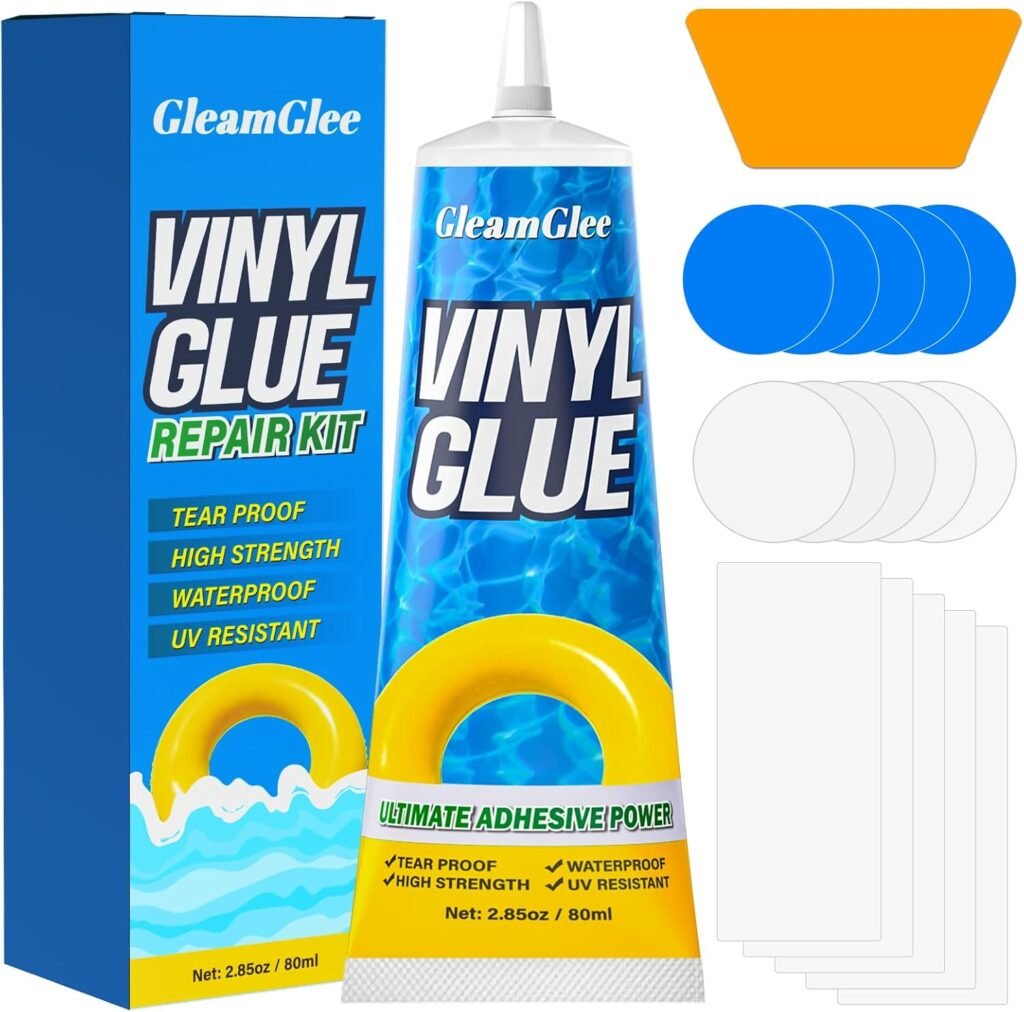
GleamGlee PVC Glue gives users a practical repair solution and gives business customers a strong product category for household, pool, camping, and outdoor markets. Whether ordering GleamGlee branded products or requesting a customized PVC glue repair kit, customers can contact GleamGlee for product details, samples, packaging options, private-label support, and quotation service.