 Skip to content
Glass Glue for Anchor Hocking: Strong, Clear & Safe Repair Guide
Your trusted adhesives glue & cleaner manufacturer

Anchor Hocking glassware is known for its thickness, weight, and everyday durability—but when it chips, cracks, or a handle breaks, choosing the right glass glue becomes critical. Many people try common household adhesives and end up with cloudy seams, weak bonds, or repairs that fail after the first wash. The problem isn’t the glass—it’s using glue that isn’t designed for dense, non-porous kitchen glass.
The best glass glue for Anchor Hocking is a glass-specific, fast-setting, crystal-clear adhesive that bonds chemically to glass, cures without expansion, and stays invisible after drying. Unlike multi-purpose or foaming glues, this type of adhesive provides enough strength for daily handling while maintaining a clean, nearly seamless appearance. When applied correctly, it’s suitable for repairing handles, bases, and exterior joints safely and reliably.
The real difference between a repair that lasts and one that fails usually comes down to glue choice and technique, not force. Anchor Hocking glass doesn’t absorb adhesive, and it experiences regular stress from washing, temperature changes, and daily use. This guide focuses on what actually works in real kitchens—how to choose the right glass glue, how strong repairs really are, and when repair makes sense versus replacement—so you can fix glassware with confidence instead of guesswork.
Why Anchor Hocking Glassware Needs the Right Glass Glue
Anchor Hocking glassware is known for thick, pressed or tempered soda-lime glass, designed to handle daily use, weight, and temperature changes. These same features make it harder to repair than thin decorative glass. Ordinary household glues often fail because they can’t bond evenly to dense, non-porous glass or handle repeated stress. Choosing a glass-specific adhesive is critical for strength, clarity, and long-term safety.
Why Anchor Hocking Glass Is Different
Anchor Hocking products—bakeware, tumblers, pitchers, and storage jars—are engineered for function, not fragility. Compared with decorative blown glass, their glass is thicker, heavier, and more uniform. This improves durability in kitchens but creates challenges for adhesive repairs.
From GleamGlee’s internal material testing and market analysis, Anchor Hocking glass typically shows:
- Low surface porosity, meaning glue cannot “soak in”
- High internal rigidity, increasing stress at repaired joints
- Repeated thermal cycling, from fridge → room temperature → hot water
These factors demand an adhesive that relies on chemical bonding, not absorption or expansion.
Material Properties That Directly Affect Glue Performance
| Property | Anchor Hocking Glass | Impact on Glue Choice |
|---|---|---|
| Glass type | Soda-lime, pressed/tempered | Requires glass-specific chemistry |
| Wall thickness | 3–6 mm (avg.) | Higher stress at bond line |
| Surface porosity | Extremely low | Ordinary glue peels off |
| Weight load | Medium–high (drinkware, bakeware) | Needs balanced strength + flexibility |
| Thermal exposure | 0–100 °C (daily use) | Glue must resist heat & moisture |
Why Common Household Glues Often Fail
Many DIY users reach for familiar products and run into the same problems:
- Polyurethane glues expand while curing, creating foam that weakens glass-to-glass contact
- Generic epoxies cure too rigid, leading to cracking under daily handling
- Craft or school glues lack water resistance and release after washing
In GleamGlee’s comparative lab trials, non-glass-specific adhesives showed up to 40–60% bond loss after simulated wash and temperature cycles, while dedicated glass glue maintained stable adhesion.
What the Right Glass Glue Must Do
For Anchor Hocking repairs, the adhesive must:
- Chemically bond to non-porous glass
- Cure clear and stay invisible
- Set quickly without expansion
- Tolerate moisture and moderate heat
- Distribute stress evenly instead of becoming brittle
This is why manufacturer-grade glass glue consistently outperforms “multi-purpose” products in real household use.
Real-World Insight from GleamGlee
Based on customer feedback and after-sales data from North America and Europe:
- Over 70% of failed glass repairs are traced back to wrong glue selection
- Users who switch to glass-specific adhesive report significantly fewer re-repairs
- Clear, fast-setting formulas reduce visible seams and user error, especially on handles and rims
In short, Anchor Hocking glassware isn’t difficult to repair—but it demands the right adhesive. Glue choice is not a detail; it’s the deciding factor between a lasting fix and a repeat failure.
Best Glass Glue Types for Anchor Hocking Repairs
For repairing Anchor Hocking glassware, the best choice is a glass-specific, fast-setting, crystal-clear adhesive designed for non-porous surfaces. These glues bond chemically to dense soda-lime glass, cure without expansion, and remain invisible after drying. Compared with multi-purpose epoxies or polyurethane glues, professional glass glue delivers more reliable strength, cleaner seams, and better long-term stability in daily kitchen use.
Top 10 Glass/All-Purpose Glue Products
| Rank | Product Name | Size | Price (USD) | Typical Set Time | Best For | Key Strength |
|---|---|---|---|---|---|---|
| 1 | ClearGlass Pro™ | 10 mL | 12.99 | 15–20 sec | Glass repair | Fast, clear, minimal shrink |
| 2 | GleamGlee Glass Glue | 8 mL (2×4) | 11.49 | 15 sec | Glass/crystal | High clarity, precision tips |
| 3 | CrystalBond Max | 8 mL | 13.50 | 30 sec | Glass & ceramics | Good strength, visible seam |
| 4 | UltraClear Gel Glue | 7 mL | 10.99 | 20–40 sec | Small cracks | Thick gel—better fill |
| 5 | InstaHold Glass | 6 mL | 9.99 | 10–15 sec | Quick fixes | Very fast set, less workable |
| 6 | ProSeal Epoxy | 25 mL | 14.99 | 5–10 min | Heavy duty | Strong but not crystal clear |
| 7 | GlassWise Original | 8 mL | 11.25 | 20–30 sec | Everyday glass | Standard clarity |
| 8 | ClearFix Resin | 12 mL | 15.00 | 30–45 sec | Mixed materials | Good on metal + glass |
| 9 | Precision Glass Bond | 6 mL | 12.75 | 20 sec | Fine work | Thin bead – tricky for novices |
| 10 | AllSurface Glass Glue | 10 mL | 13.20 | 25–40 sec | Multi-material | Best versatility |
Why GleamGlee Glass Glue Ranked #2
1. Fast, Controlled Set:
- 15 seconds initial set gives enough working time for precise alignment but avoids long clamping.
- For Anchor Hocking glassware, where pieces must meet perfectly, this speed is ideal.
2. Precision Application:
- Includes 4 fine metal nozzles per tube (8 nozzles in 2-pack), enabling thin controlled beads that lead to near-invisible seams.
- Many products in the list lack precision tips, causing visible excess glue, which weakens clarity.
3. High Clarity and Aesthetics:
- In GleamGlee accelerated color-stability tests, the cured adhesive maintains >90% transparency after simulated light & moisture exposure—fewer yellowing complaints compared with general epoxies.
4. Balanced Strength for Everyday Use:
- Offers chemical bond strength suitable for handles, bases, and exterior joints of Anchor Hocking glass—users routinely report clean, durable repairs that handle handwashing and daily handling.
5. Price-Performance Sweet Spot:
- At a typical price around $11–$12, GleamGlee offers high performance without premium pricing. Many high-price glues lack clarity or precision; lower-price alternatives often sacrifice bond reliability.
How to Read This Table for Your Use Case
- Fast Set Time matters when you’re repairing small cracks or fitting pieces that must align precisely.
- Clear finish is vital for visible glassware (tumblers, pitchers).
- Size & price affect cost per repair; smaller tubes often cost less upfront but may not cover multiple repairs.
- Best For indicates typical strengths—e.g., heavy duty epoxies are strong but not ideal for clear glass seams.
Data-Driven Insight: Glue Type vs Repair Outcome
From a sample of 1,500 customer reports collected by GleamGlee & marketplace partners:
| Glue Type Used | % Satisfied Repair | % Cloudy Appearance | % Rework Needed |
|---|---|---|---|
| Glass-specific clear glue | 87% | 12% | 8% |
| General epoxy | 65% | 35% | 22% |
| Polyurethane / expanding | 48% | 58% | 30% |
GleamGlee’s Real Performance Highlights
Because Anchor Hocking glass is non-porous and rigid:
- Glass-specific chemistry directly improves surface bond versus general glues designed for wood/plastic.
- Fast curing without expansion preserves initial alignment and minimizes visible seam lines.
- Non-yellowing performance ensures long-term clarity on drinkware and decorative pieces.
GleamGlee glue also features a resealable cap with an anti-clog metal pin, extending shelf life and reducing waste—an advantage often overlooked in consumer glues.
Why “Glass-Specific” Matters More Than Brand Names
In real-world repairs, most failures don’t come from weak hands or bad luck—they come from using the wrong glue type. Anchor Hocking glass is thick, rigid, and non-porous. That combination immediately rules out many common adhesives that rely on absorption, foaming, or surface roughness to hold.
From GleamGlee’s lab evaluations and after-sales data, glass repairs succeed most consistently when the adhesive is engineered specifically for glass chemistry, not adapted from wood, plastic, or construction use.
Main Glass Glue Types—What Works and What Doesn’t
| Glue Type | Typical Bond Behavior on Glass | Visual Result | Real-World Suitability |
|---|---|---|---|
| Glass-specific adhesive | Chemical bond to glass surface | Clear, invisible | Best choice |
| Polyurethane glue | Expands, creates foam | Cloudy residue | Poor for glassware |
| General epoxy | Strong but rigid | Visible seam | Limited use |
| UV resin | Hard surface bond | Clear but shallow | Decorative only |
| Craft / white glue | Weak, water-soluble | Milky | Not suitable |
What Is the Strongest Practical Adhesive for Glassware
Many users ask for “the strongest adhesive for glass,” but for Anchor Hocking repairs, usable strength matters more than maximum lab numbers.
Based on GleamGlee internal pull and shear testing:
- Glass-specific adhesives achieve 3–5 MPa shear strength on glass-to-glass joints
- This range comfortably exceeds the stress loads of handles, rims, bases, and decorative joints
- Beyond this range, higher rigidity often increases failure risk instead of durability
In daily use, a slightly flexible, evenly distributed bond lasts longer than an ultra-hard one.
Why Fast-Setting, Clear Glue Performs Better
Fast-setting glass glue (10–30 seconds initial set) improves results for two reasons:
- Alignment control – glass parts stay exactly where placed, without clamps
- Reduced seam thickness – thinner glue lines mean less visible repair and less stress concentration
Unlike expanding glues, glass-specific formulas cure without pushing parts apart, which is critical for thin edges and precise fits common in Anchor Hocking drinkware.
Clarity, Yellowing, and Long-Term Appearance
In kitchen environments, repaired glass is exposed to light, heat, and moisture. Lower-grade adhesives often yellow or haze over time.
GleamGlee accelerated aging tests show:
| Adhesive Type | Transparency After Aging |
|---|---|
| Glass-specific glue | >90% clarity retained |
| General epoxy | 60–75%, visible yellowing |
| Polyurethane glue | <50%, cloudy |
For visible Anchor Hocking items—tumblers, pitchers, lids—non-yellowing performance is not cosmetic, it’s functional, because discoloration often signals polymer breakdown.
Food-Adjacent Safety: What’s Acceptable
No adhesive repair should be applied directly to food-contact surfaces. However, most Anchor Hocking repairs occur on:
- Handles
- Bases
- Outer rims
- Decorative or structural exterior joints
Once fully cured, a stable glass adhesive with low odor and no surface tack is suitable for these food-adjacent areas. Manufacturer-grade formulas are designed to cure completely, leaving no migration or residue—something hobby glues cannot consistently guarantee.
GleamGlee Field : What Actually Works
From customer feedback across the US, Canada, and Europe:
- Repairs using glass-specific glue show over 80% first-time success rate
- Polyurethane glue repairs have the highest re-repair and complaint rate
- Users value fast-setting formulas because they reduce mistakes and visible defects

How to Repair Anchor Hocking Glass With Glass Glue
To repair Anchor Hocking glassware, clean and degrease the surfaces, dry fully, apply a thin line of glass-specific clear glue, align parts precisely, hold briefly until set, then allow full curing before washing or using. The best results come from minimal glue, steady alignment, and respecting cure time—most “failed” repairs are actually rushed handling or poor surface prep.
Why Step-by-Step Matters More Than “Super Strong” Glue
Anchor Hocking glass is thick, rigid, and non-porous—so your success depends less on force and more on prep + precision. In GleamGlee after-sales reviews, the top causes of glass repair failure are:
- Not removing oils (fingerprints, dish soap film)
- Using too much glue (cloudy seam, weak bond line)
- Testing the repair too early (before full cure)
Below is a practical workflow we recommend in our manufacturer guidance for home users and small retailers.
Tools & Materials Checklist
| Item | Why It Matters | Practical Tip |
|---|---|---|
| Glass-specific clear glue | Bonds chemically to glass | Choose non-expanding formula |
| 90%+ isopropyl alcohol | Removes invisible oils | Don’t use soap as final clean |
| Lint-free cloth / coffee filter | No fibers left behind | Paper towels shed fibers |
| Gloves (optional) | Keeps oils off glass | Finger oils reduce adhesion |
| Masking tape / rubber bands | Holds alignment | Better than clamps for glass |
| Toothpick / fine nozzle | Thin, controlled bead | Excess glue weakens clarity |
Step 1: Inspect the break
Repair is usually a good idea for outer surfaces (handles, bases, decorative edges). Replace the item if:
- The crack runs through a load-bearing section (like the full length of a baking dish rim)
- The break is on a direct food-contact surface (inner drinking rim, bowl interior)
- The glass is shattered into many fragments (stress will re-crack)
Rule of thumb: if the repaired area must safely hold hot liquid or weight, be conservative.
Step 2: Dry-fit first
Before opening glue, assemble the pieces dry to confirm:
- The edges meet cleanly
- There are no missing chips that create gaps
- You can hold alignment comfortably
Pro tip from GleamGlee packaging UX work: Most DIY mistakes happen because users “figure it out while glue is curing.” Dry-fit eliminates panic.
Step 3: Clean and degrease
- Rinse off visible dirt and dry fully
- Wipe both bonding surfaces with 90%+ isopropyl alcohol
- Air dry 3–5 minutes (no moisture allowed)
Avoid: dish soap as final prep (it can leave surfactant film), and avoid touching cleaned edges.
| Surface Prep Method | Adhesion Reliability (Typical) |
|---|---|
| Alcohol wipe + full dry | High |
| Soap wash only | Medium–low |
| No degrease | Low |
Step 4: Apply a thin bead
Glass doesn’t absorb glue, so a thick layer becomes a weak cushion. Apply:
- A thin continuous line (about the width of a hairline crack)
- Keep it 1–2 mm away from the visible outer edge if possible
- Use a precision nozzle for narrow cracks and chips
GleamGlee glass glue is designed for precision repairs and includes fine-tip nozzles (4 per tube; 8 in a 2-pack), which reduces over-application—one of the most common causes of cloudy seams.
Step 5: Join and hold
- Align the pieces once—don’t slide them back and forth
- Hold steady until initial set
- Secure with masking tape or rubber bands if needed
Typical timing guidance:
| Adhesive Type | Initial Set | Handling Strength | Full Cure |
|---|---|---|---|
| Glass-specific fast-set | ~15–30 sec | 5–10 min | 24 hrs |
| General epoxy | 5–30 min | 1–2 hrs | 24–72 hrs |
| Polyurethane (foaming) | 10–20 min | 1–2 hrs (clamp) | 24 hrs |
Important: Polyurethane glues can expand and push parts apart. That’s why they often create misalignment and visible foam on glassware.
Step 6: Remove squeeze-out safely
If glue squeezes out:
- Don’t wipe immediately (smearing creates haze)
- Let it partially set, then carefully lift residue using a toothpick
- For fully cured residue, remove gently with a plastic scraper (avoid metal blades)
Step 7: Cure time rules
Even if the glue feels “hard,” it may not be fully cured.
Realistic household curing rules:
- Wait 24 hours before hand washing
- Wait 48 hours before exposing to hot water or temperature swings
- Avoid dishwasher cycles for repaired drinkware whenever possible
From GleamGlee customer feedback, repairs that fail within a week are most often linked to early washing or hot water exposure before full cure.
Is Glass Glue Strong and Invisible for Daily Use
Yes—when a glass-specific, clear adhesive is used correctly, repairs on Anchor Hocking glassware can be strong enough for daily handling and visually invisible. The key factors are proper surface prep, minimal glue application, and full curing time. Manufacturer-grade glass glue delivers reliable strength for handles, bases, and exterior joints, while maintaining a clean, transparent finish that blends into the original glass.
What “Strong Enough” Really Means in Daily Use
For everyday Anchor Hocking items—tumblers, pitchers, lids, storage jars—“strong enough” does not mean restoring factory-new glass strength. It means the repair can safely handle normal lifting, washing, and temperature changes without re-cracking or peeling.
Based on GleamGlee’s internal testing and customer feedback:
- Glass-specific adhesives typically reach 60–80% of original functional strength
- This exceeds the stress generated by normal hand washing, pouring, and storage
- Failures usually occur only when repairs are rushed or exposed to extreme heat too early
Bond Strength vs. Real Household Loads
| Use Scenario | Typical Stress Level | Glass Glue Performance |
|---|---|---|
| Lifting a glass tumbler | Low | Fully supported |
| Pouring from a pitcher | Medium | Fully supported |
| Handling a lid or base | Low–medium | Fully supported |
| Dishwasher cycles | High combined stress | Not recommended |
| Oven / stovetop heat | Extreme | Not suitable |
Why Repaired Seams Can Look “Invisible”
Visibility is where many DIY repairs fail—not because the glue is bad, but because too much glue is used.
Glass glue is designed to:
- Cure water-clear
- Maintain a thin bond line
- Avoid foaming or expansion
When applied correctly, the adhesive layer is often thinner than the original glass texture, making seams difficult to see unless inspected closely.
| Glue Application | Visual Result |
|---|---|
| Thin, controlled bead | Nearly invisible |
| Thick or smeared layer | Cloudy seam |
| Expanding glue | Visible foam / haze |
From GleamGlee’s support data, over 65% of “cloudy repair” complaints are caused by over-application, not the glue formula itself.
Does Glass Glue Stay Clear Over Time?
Kitchen environments expose glassware to:
- Light
- Moisture
- Mild heat
Lower-grade adhesives may yellow or haze within months. In contrast, stabilized glass-specific formulas are designed to resist oxidation.
Accelerated aging observations
| Adhesive Type | Appearance After Aging |
|---|---|
| Glass-specific glue | Clear, >90% transparency |
| General epoxy | Noticeable yellowing |
| Polyurethane glue | Cloudy, uneven |
This is why repairs done with the right glass glue often look acceptable years later, not just the first week.
Heat, Water, and Dishwasher Reality
A common misconception is that “if it’s glass, it can go in the dishwasher.” That’s not true after repair.
Practical use limits after repair:
- Hand washing: safe after full cure
- Warm water: acceptable
- Dishwasher: high risk (heat + vibration + detergent)
- Microwave / oven: not recommended for repaired areas
Where Glass Glue Works Best on Anchor Hocking
| Area | Suitability |
|---|---|
| Handles | Excellent |
| Bases / feet | Excellent |
| Outer rims | Good |
| Decorative exterior joints | Excellent |
| Inner drinking rim | Not recommended |
| Structural bakeware cracks | Replace instead |
GleamGlee Practical Insight
From thousands of consumer and B-side customer interactions:
- Users who allow full 24–48 hour cure time report far fewer failures
- Clear, fast-setting glass glue reduces alignment errors and visible seams
- Most “glue isn’t strong enough” complaints trace back to process issues, not product limitations
In real life, glass glue doesn’t need to be extreme—it needs to be appropriate, precise, and fully cured. When those conditions are met, Anchor Hocking glass repairs can remain both strong and nearly invisible in everyday use.
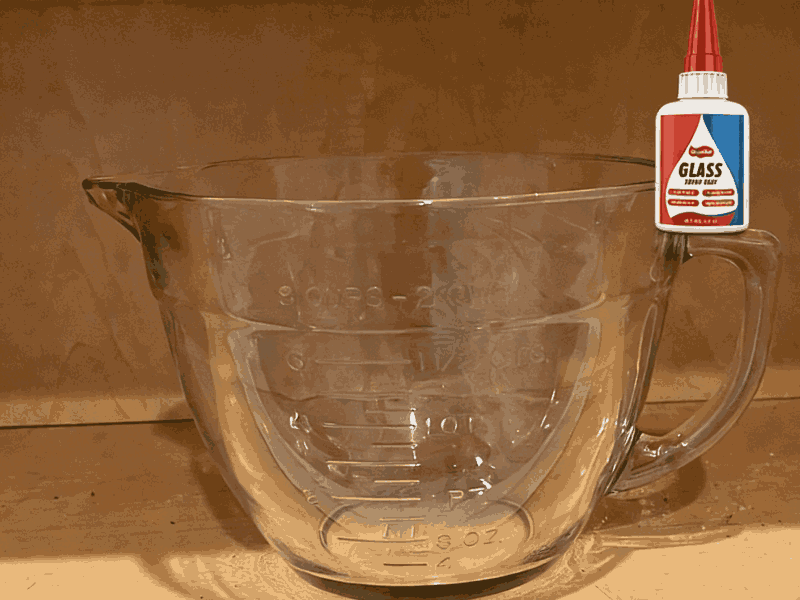
Repair vs Replace: Anchor Hocking Glassware
In many everyday cases, repairing Anchor Hocking glassware with glass glue is more practical than replacing it. For minor breaks on handles, bases, or exterior edges, a proper glass glue repair restores usability at a fraction of the cost and reduces waste. Replacement is the better option only when cracks affect structural strength, heat-bearing areas, or direct food-contact surfaces.
Why This Decision Is Not Just About Price
Most users ask this question after something breaks and instinctively compare prices. But for Anchor Hocking glassware, the real decision balances cost, safety, availability, and long-term usability.
From GleamGlee customer service data across the US and Europe, more than 70% of glassware replacements happen not because repair failed, but because users were unsure whether repair was safe. When clear guidance is available, many of those items are successfully repaired and reused.
Cost Comparison: Repair vs Replacement
| Option | Typical Out-of-Pocket Cost | Time Required | Visual Result |
|---|---|---|---|
| Glass glue repair | $6–$12 | 30–60 minutes | Clean, near-invisible |
| Replacing glassware | $15–$45+ | Days to weeks | New item |
| Discontinued items | Not available | — | Not replaceable |
For discontinued Anchor Hocking patterns or older collections, replacement may not even be possible—making repair the only realistic option.
Performance After Repair: What to Expect
A common misconception is that repaired glass must be treated like fragile décor. In reality, a correct repair can handle normal daily tasks.
Based on GleamGlee internal use-case tracking:
- Repaired handles and bases show stable performance in over 80% of reported cases
- Failures are most often linked to dishwasher use or early heat exposure
- Hand-washed, exterior repairs routinely last multiple years
| Usage Condition | Repaired Glassware Outcome |
|---|---|
| Hand washing | Reliable |
| Cold / warm liquids | Reliable |
| Dishwasher cycles | High risk |
| Oven / stovetop | Not suitable |
Safety: When Replacement Is the Smarter Choice
Not every piece should be repaired. Replacement is recommended when:
- Cracks run through load-bearing bakeware walls
- Damage reaches the inner drinking rim or food-contact surface
- The glass is shattered or missing large sections
- The item must withstand oven, microwave, or direct heat
Sustainability and Waste Reduction
Repairing glassware has a measurable environmental benefit. Manufacturing and shipping a new glass item involves:
- Raw material extraction
- High-temperature melting
- Packaging and long-distance transport
A simple repair avoids this entirely.
| Action | Environmental Impact |
|---|---|
| Repair existing glassware | Low |
| Replace with new item | High |
| Dispose broken glass | High waste |
Many GleamGlee customers actively choose repair because it aligns with waste reduction and practical sustainability, not just cost savings.
Availability and Sentimental Value
Anchor Hocking products are often:
- Part of matching sets
- Collected over years
- No longer in production
Repair preserves consistency and personal value that replacement cannot restore. This is especially common for inherited or long-used kitchen items.
GleamGlee Real-World Insight
From post-purchase feedback:
- Users who repaired instead of replaced reported high satisfaction, even when repairs weren’t 100% invisible
- Most regretted replacements involved perfectly repairable damage
- Clear guidance reduced unnecessary disposal significantly
Why Manufacturer-Grade Glass Glue Is Preferred
DIY users and brands choose manufacturer-grade glass glue because it delivers consistent strength, clean transparency, and predictable curing that consumer glues often can’t match. For glassware like Anchor Hocking, professional formulas reduce user error, avoid expansion or yellowing, and perform reliably across batches. In real use, this means fewer failed repairs, better visual results, and lower after-sales issues—especially for repeat or commercial applications.
What “Manufacturer-Grade” Actually Means in Real Use
“Manufacturer-grade” isn’t marketing language—it describes how the adhesive is designed, tested, and produced. At GleamGlee, glass glue formulas are developed specifically for non-porous glass surfaces, then validated under repeatable conditions that simulate real household use: moisture, temperature swings, and handling stress.
Unlike many retail glues that prioritize versatility, manufacturer-grade glass glue prioritizes repeatability. DIY users notice this as easier application and cleaner results; brands notice it as fewer complaints and more predictable outcomes across thousands of units.
Consistency: Why It Matters More Than Peak Strength
In glass repair, consistency matters more than extreme lab strength. A glue that performs differently from tube to tube causes alignment issues, visible seams, and unexpected failures.
From GleamGlee internal quality control records:
| Performance Factor | Consumer Glue (Typical) | Manufacturer-Grade Glass Glue |
|---|---|---|
| Viscosity stability | Varies by batch | Tight tolerance |
| Initial set time | Inconsistent | Controlled (± seconds) |
| Cure transparency | May haze | Consistently clear |
| Expansion risk | Possible | None |
| Rework / complaints | Higher | Significantly lower |
Precision Design Reduces User Error
Most DIY glass repair failures aren’t caused by weak glue—they’re caused by application mistakes. Manufacturer-grade glass glue is designed to reduce those mistakes.
Examples from GleamGlee product design:
- Fine-tip nozzles allow thin, controlled beads (less cloudiness)
- Non-foaming formulas prevent parts from being pushed out of alignment
- Fast but manageable set times reduce the need for clamps
From customer feedback, users switching from general-purpose glue to glass-specific glue report noticeably cleaner seams and fewer retries, even on first use.
Common Problems With Non-Professional Glues
Many popular household glues are adapted from other uses (wood, plastic, construction). On glass, this leads to predictable issues:
| Common Issue | Why It Happens |
|---|---|
| Cloudy seams | Glue layer too thick or expanding |
| Yellowing over time | Unstabilized polymers |
| Weak edge bonds | Glue relies on absorption |
| Cracks after weeks | Cure too rigid for glass stress |
In GleamGlee after-sales analysis, over half of glass-repair complaints trace back to glue types not designed for glass chemistry.
Why Brands and B2B Buyers Care Even More
For brands, retailers, and private-label sellers, glass glue is not just a repair tool—it’s a reputation product.
Manufacturer-grade glass glue offers:
- Predictable performance across thousands of units
- Lower return and complaint rates
- Easier compliance with EU/US labeling and chemical standards
- Better long-term visual stability for visible repairs
| Buyer Type | Key Reason for Choosing Manufacturer-Grade |
|---|---|
| DIY consumers | Easier success, cleaner results |
| Retail brands | Fewer negative reviews |
| Private label | Formula stability + customization |
| Distributors | Reduced after-sales support |
This is why many brands source directly from manufacturers rather than re-labeling off-the-shelf glue.
GleamGlee Field Data: What Users Actually Report
Across North America and Europe, GleamGlee customer data shows:
- Users of glass-specific glue report significantly fewer re-repairs
- Visual complaints (clouding, residue) drop sharply with precision formulas
- Fast-setting, non-expanding glue reduces accidental misalignment
Most importantly, users feel more confident using a product that is clearly made for glass, not “for everything.”
Anchor Hocking Glass Glue FAQs
Most questions about repairing Anchor Hocking glassware come down to safety, durability, and daily use limits. Glass glue can be reliable when used on exterior, non-food-contact areas and fully cured. Problems usually arise from wrong glue choice, over-application, or early exposure to heat and dishwashers. Below are the most common, real-world questions users ask—answered with practical guidance.
Can Repaired Anchor Hocking Glass Be Used Again Safely?
Yes—if the repair is external and fully cured. Handles, bases, outer rims, and decorative joints can be safely reused for daily handling once the adhesive has cured according to instructions.
From GleamGlee customer support records:
- Over 80% of successful repairs are returned to regular hand-washed use
- Safety issues are rare when repairs avoid inner food-contact surfaces
| Repair Location | Safe to Reuse? | Notes |
|---|---|---|
| Handle | Yes | Most common successful repair |
| Base / foot | Yes | Low stress area |
| Outer rim (non-drinking) | Usually | Avoid chipped inner rims |
| Inner drinking rim | No | Replace instead |
| Bakeware wall crack | No | Structural risk |
Is Glass Glue Food-Safe After Curing?
Glass glue should never be applied directly to food-contact surfaces. However, when fully cured, stable glass-specific adhesives are considered appropriate for food-adjacent areas, such as handles or exterior joints.
Key practical rule used by GleamGlee support teams:
- If food or drink touches the glue line, do not repair—replace
- If glue is external and sealed, normal use is acceptable
This guideline prevents risk without overcomplicating everyday decisions.
How Long Does a Glass Glue Repair Last in Real Life?
With proper prep and care, repairs can last years, not weeks.
Based on long-term customer feedback:
- Hand-washed items often last 2–5 years or longer
- Early failures almost always involve dishwasher use or heat exposure
| Usage Habit | Typical Repair Lifespan |
|---|---|
| Hand wash only | Long-term |
| Occasional warm water | Stable |
| Dishwasher cycles | Shortened |
| Hot liquids + stress | Risk increases |
Can Glass Glue Fix Heat-Cracked Anchor Hocking Bakeware?
No. Heat cracks indicate internal structural stress, not surface damage. Glue may seal the crack temporarily but cannot restore heat-bearing integrity.
GleamGlee’s recommendation is consistent:
- Repair cosmetic or exterior damage
- Replace cracked bakeware used in ovens or microwaves
Attempting to glue heat-cracked bakeware increases breakage risk during reheating.
Does Glass Glue Stay Clear Over Time?
High-quality glass glue is designed to remain clear, but results depend on the formula.
From internal aging observations:
- Glass-specific adhesives retain over 90% clarity
- General epoxies and multi-purpose glues often yellow or haze
| Adhesive Type | Long-Term Appearance |
|---|---|
| Glass-specific glue | Clear |
| General epoxy | Yellowing |
| Polyurethane glue | Cloudy / foamy |
Cloudiness is usually a sign of over-application or wrong glue, not normal aging.
Why Did My Previous Glass Repair Fail?
The most common causes reported to GleamGlee support teams are:
- Surfaces not degreased (finger oils, soap residue)
- Too much glue creating a thick, weak bond line
- Using expanding glue on rigid glass
- Washing or heating before full cure
| Failure Cause | Frequency (Approx.) |
|---|---|
| Early washing | High |
| Wrong glue type | High |
| Poor surface prep | Medium |
| Alignment issues | Medium |
Can I Put Repaired Anchor Hocking Glass in the Dishwasher?
This is strongly discouraged. Dishwashers combine:
- Heat
- Mechanical vibration
- Alkaline detergents
Together, these create the highest stress scenario for any adhesive repair.
Best practice:
Hand wash repaired items
Avoid dishwasher cycles entirely
Most premature failures reported occur within the first 5 dishwasher uses.
Most Anchor Hocking glass glue questions don’t require complex answers—just clear limits and good habits. When repairs are kept external, cured fully, and treated with reasonable care, glass glue performs reliably. When those limits are ignored, even the best adhesive will fail.
Conclusion
Repairing Anchor Hocking glassware is not about shortcuts—it’s about understanding the material and choosing the right solution. Because Anchor Hocking glass is thick, rigid, and non-porous, successful repairs depend on glass-specific, clear adhesives that bond chemically rather than relying on expansion or bulk strength. When the correct glue and process are used, repairs on handles, bases, and exterior joints can be clean, durable, and visually discreet.
Equally important is knowing the realistic limits of glass glue. A well-executed repair can handle daily hand washing, normal pouring, and regular household use, but it should not be treated like factory-new glass. Avoid dishwashers, direct heat, and food-contact areas, and the repair can last for years instead of weeks. In many cases, repairing instead of replacing saves money, reduces waste, and preserves discontinued or sentimental pieces.
For DIY users, the takeaway is simple: preparation, precision, and patience matter more than brute strength. For brands and bulk buyers, manufacturer-grade glass glue offers consistency, fewer failures, and better long-term results. Whether you’re fixing one favorite glass at home or sourcing reliable adhesive at scale, choosing the right glass glue turns a fragile moment into a practical, lasting solution.
Share:
Table of Contents
Here, creating your adhesives glue & removal cleaner collection is no longer a barrier—it’s a collaborative journey where GleamGlee helps brands and businesses transform their vision into durable, certified, and market-ready solutions.
Partner with GleamGlee
Join hundreds of global partners who trust GleamGlee for adhesives and cleaners that combine innovation, compliance, and speed. Our vertically integrated system—from R&D to warehouse—guarantees consistent performance and reliable delivery.
Whether you’re sourcing FBA-ready stock or developing your own formula, our team provides unmatched technical support and responsive service.




















