Skip to content

Floral Glue for Table and Party Decor: A Refined Guide
Your trusted adhesives glue & cleaner manufacturer

A centerpiece can look flawless on a florist’s worktable and still arrive at the venue with a turned flower head, a loose ribbon edge, or greenery that has shifted just enough to spoil the intended shape. Table and party arrangements are handled far more than most guests realize. They may be assembled off-site, refrigerated, packed, driven across town, carried through a venue, repositioned by staff, photographed from every angle, and displayed for several hours. Floral adhesive becomes valuable because it solves these small but highly visible positioning problems without forcing every detail to depend on wire, pins, or bulky structural mechanics. The best results come from treating glue as a precision tool rather than a substitute for good floral design.
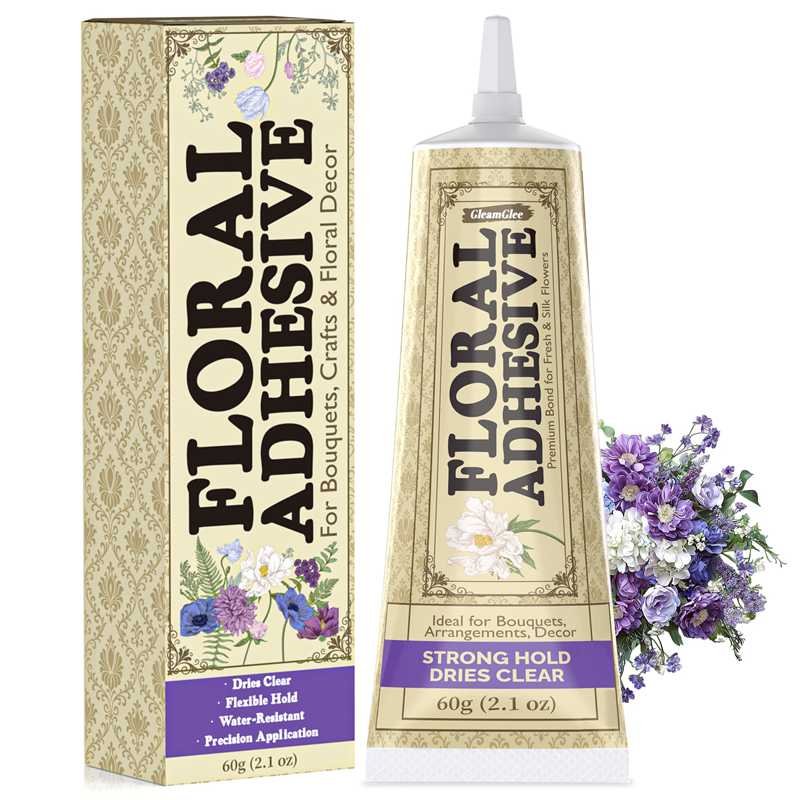
Floral glue for table and party decor is used to secure lightweight flowers, greenery, ribbon, floral foam details, artificial blooms, glass accents, ceramic containers, fabric, and other decorative elements while keeping attachment points discreet. A suitable product should dry cleanly, remain flexible, work with the intended floral materials, and tolerate normal handling, moisture, transportation, and event conditions without dominating the appearance of the finished arrangement.
That combination becomes especially important at weddings, birthdays, receptions, showers, restaurant events, and other celebrations where decorations are viewed from only a few feet away. A guest may never notice the mechanics inside a beautiful centerpiece, but they will notice a ribbon lifting from a vase or a flower lying on the table before dinner begins. Good floral mechanics are successful precisely because people do not think about them.
What Is Floral Glue for Table Decor?
Floral glue is a specialized adhesive used to hold flowers, greenery, ribbons, foam details, and lightweight decorative components in carefully controlled positions. In table decor, it is particularly helpful when an attachment needs to remain visually discreet and flexible. It usually works alongside stems, floral foam, wire, tape, grids, containers, and frames rather than replacing these structural methods completely.
How Floral Glue Works
Floral adhesive works best when it is assigned a specific job inside an arrangement. It might prevent a small flower from rotating around a vase rim, keep a ribbon overlap from lifting, hold greenery against the edge of floral foam, or secure a decorative bloom to a place card. These are precise finishing tasks where a bulky clip, pin, or piece of visible wire could interfere with the appearance of the design. Using adhesive only where it solves a real positioning problem also makes later adjustments easier and avoids creating an arrangement that feels unnecessarily rigid.
The bond should generally be created between prepared contact points rather than by coating a wide area. Experienced florists often position the flower or decorative element before applying glue, confirm the angle from several viewing directions, and then use only enough adhesive to hold the component securely. This approach is particularly useful on transparent glass, narrow ribbon, small flower heads, and other materials where excess glue may remain noticeable even after the formulation dries clear. A fine dispensing tip offers better control when the working area is only a few millimeters wide.
Is It Suitable for Fresh Flowers?
Fresh flowers are more difficult to bond than ordinary craft materials because they contain moisture, change shape, bruise easily, and often have waxy, textured, or fragile surfaces. A floral adhesive intended for fresh arrangements should therefore be used at stronger and less visible areas whenever possible, such as the base of a flower head, a firm stem contact point, or the underside of suitable greenery. Applying large amounts directly across thin petals usually adds little structural value and may make the finished flower look less natural.
Testing becomes more important when a project uses unfamiliar flowers or preserved materials. Roses, orchids, hydrangeas, waxy foliage, dried botanicals, and treated greenery do not behave identically, so one representative sample can reveal useful information before a full event batch is produced. A waterproof floral formulation may be designed for damp stems and normal floral moisture, but that does not mean a surface covered in standing water or heavy condensation should be treated as automatically ready for bonding. Clean contact and careful handling still matter.
Glue, Wire, Tape, or Hot Glue?
The right floral mechanic depends on what the component is expected to do. Wire and tape are excellent for bouquet construction, stem reinforcement, wearable flowers, and shapes that need mechanical support. Floral foam can hold stems and establish the overall volume of a centerpiece, while frames, ties, clamps, and other systems are needed for large installations. Floral glue is strongest as a finishing and positioning method when the design needs a small, discreet connection without adding visible hardware.
Hot glue remains useful for many artificial-flower and dry craft applications because it sets quickly and is familiar to decorators. However, heat can be inconvenient around fresh flowers, thin fabrics, delicate plastics, or detailed work where the operator wants more precise placement. Cold-applied floral adhesive avoids the heating step and can be easier to use in small contact zones. Professional arrangements frequently combine several methods because no single mechanic is ideal for every structural and decorative task.
| Floral Task | Commonly Suitable Method | Main Purpose |
|---|---|---|
| Small flower on place card | Floral glue | Discreet decorative attachment |
| Ribbon around glass vase | Floral glue | Hold overlap or edge |
| Bouquet construction | Wire and floral tape | Mechanical support |
| Fresh stems in centerpiece | Foam, grid, or vase mechanics | Positioning and hydration |
| Lightweight foam detail | Floral glue | Controlled finishing |
| Large floral arch | Frame, ties, clamps, wire | Load-bearing stability |
| Artificial craft accent | Compatible floral or craft adhesive | Decorative bonding |

Which Materials Can Floral Glue Bond?
Floral glue can be useful with fresh and artificial flowers, floral foam, ribbon, fabric, plastic, glass, ceramic, and selected craft surfaces when the formulation is compatible with them. Mixed-material arrangements are common in weddings and parties, so the most reliable approach is to test the actual flower, container, ribbon, foam, or decorative surface before repeating the same bond across a large production run.
Fresh and Artificial Flowers
Fresh flowers and artificial flowers may appear together in a centerpiece, yet they create very different bonding conditions. Fresh material can be damp, soft, waxy, irregular, or easily bruised, while artificial flowers may contain fabric petals, molded plastic, coated wire, foam, and synthetic foliage in a single stem. A versatile floral adhesive can simplify mixed arrangements, but the florist still needs to identify the actual contact material instead of assuming every flower surface will respond in the same way.
Fresh flower bonding is normally more successful when adhesive is placed at a concealed structural area rather than across visible petals. Artificial flowers allow greater handling freedom, but smooth plastics and coated fabrics can still vary considerably in surface energy and texture. Reusable arrangements introduce another consideration because the bond may face repeated packing, storage, transport, and installation. For events that combine fresh focal blooms with artificial fillers or preserved details, a flexible adhesive can help the entire arrangement tolerate movement without making each connection excessively rigid.
Foam, Glass, and Ceramic
Floral foam is primarily a stem-positioning material, so adhesive normally plays a secondary role around its surface. It can help secure lightweight moss, leaves, small flower heads, preserved accents, ribbon, or other finishing details that do not insert cleanly into the foam. Excessive pressure should be avoided because a strong adhesive bond is not useful if the foam itself becomes crushed or tears away around the contact area during transport.
Glass and ceramic create very different challenges. Clear glass exposes almost every mistake, including fingerprints, polishing residue, condensation, and visible adhesive squeeze-out. Ceramic surfaces vary from highly glazed and smooth to matte, textured, or porous. A bond that works well on one vase may behave differently on another finish, so actual-container testing is preferable for important event work. Precision application is especially helpful here because reducing excess adhesive improves both appearance and consistency across multiple centerpieces.
Ribbon, Fabric, and Craft Surfaces
Ribbon can be deceptively difficult because a strong bond may still look poor if the adhesive soaks through, darkens the material, or produces a stiff patch. Satin, organza, velvet, cotton, and synthetic ribbons all respond differently, which makes a hidden test valuable when the material is thin or expensive. Small glue points placed beneath overlaps, flower heads, or decorative folds are usually more attractive than coating an entire strip.
The same principle applies to fabric, plastic, acrylic, card, wood, dried flowers, preserved botanicals, gift boxes, and lightweight decorative panels. Dried flowers deserve particularly gentle handling because brittle stems can break under pressure even when the adhesive itself performs well. A product capable of bonding several craft materials can reduce the number of adhesives kept in a florist’s studio, but versatility should never become an excuse to skip compatibility testing on unusual coatings, paints, or specialty surfaces.
| Material | Main Concern | Practical Check Before Production |
|---|---|---|
| Fresh flowers | Moisture and delicate tissue | Test a spare bloom or stem |
| Artificial flowers | Mixed plastic and fabric surfaces | Check the actual contact material |
| Floral foam | Fragile structure | Avoid crushing or tearing |
| Glass | Visible residue | Clean thoroughly and use small glue points |
| Ceramic | Glazed, matte, or porous finish | Test the exact container |
| Ribbon | Staining or stiffness | Test a hidden section |
| Dried flowers | Brittleness | Minimize pressure during bonding |
| Plastic or acrylic | Smooth surface | Confirm adhesion before batch assembly |
How Do You Glue Floral Centerpieces?
To glue floral centerpieces cleanly, complete the main structure first, decide which details genuinely need adhesive, prepare the contact surfaces, and use small controlled amounts at hidden points. The connection should become stable before the arrangement is repeatedly moved or packed. Floral glue is most effective for finishing details, while stems, foam, grids, containers, wire, or frames provide the primary support.
Prepare Before You Glue
One of the easiest ways to create a messy glue joint is to apply adhesive before deciding where the flower belongs. When the piece is moved several times after glue has already been dispensed, the contact area becomes larger, surrounding petals may collect residue, and the final position may still feel uncertain. Dry-positioning first solves most of these problems because the designer can evaluate height, direction, spacing, and balance without committing to the bond.
For repeated event work, one approved sample arrangement is extremely useful. If thirty centerpieces will share the same design, the first completed piece can establish where glue is used, how much is applied, which flowers rely on stems alone, and which details need mechanical reinforcement. This turns assembly into a repeatable process rather than thirty separate improvisations. Surface preparation should also happen before production begins, especially with glass and glazed ceramics where fingerprints, polish, dust, or condensation can reduce consistency.
Control the Amount
In visible floral work, additional adhesive is not automatically beneficial. Too much product can squeeze around flower bases, create glossy patches on glass, harden ribbon, collect dust, or make a delicate connection appear bulky. Small flowers and finishing details usually benefit more from accurate placement than from large adhesive volume, especially when the designer can conceal the bond beneath foliage or within the natural shape of the arrangement.
A precision nozzle becomes increasingly valuable as production volume rises. A single home centerpiece may contain only a few glue points, but an event with thirty centerpieces and eight adhesive-assisted details on each piece creates roughly 240 repeated applications. If every application requires wiping away excess glue or repositioning the component, a small inefficiency becomes a meaningful production problem. Controlled dispensing helps maintain similar glue amounts between different arrangements and between different people working on the same event.
Hide the Contact Point
Round-table centerpieces should be inspected as three-dimensional objects rather than front-facing arrangements. Guests sitting on opposite sides may see completely different parts of the vase and flowers, while photographers often shoot from above or at table level. A glue point hidden from the florist’s working position may therefore become obvious once the arrangement is placed in the room. Checking from seated eye level, standing height, and the opposite side catches many of these problems before transport.
Clear-drying adhesive is useful, but it should not be treated as a substitute for thoughtful placement. Thick transparent glue can still reflect light, create visible edges, or stand out against glass and dark foliage. The cleanest results come from using flower bases, leaves, ribbon folds, container rims, and overlapping decorative elements as natural concealment. When guests see only flowers and composition rather than the mechanics underneath, the adhesive has performed exactly as intended.
| Centerpiece Component | Primary Support | Typical Adhesive Role |
|---|---|---|
| Main flower stems | Vase, foam, grid, or mechanics | Usually minimal |
| Small side blooms | Stem placement | Prevent rotation or shifting |
| Ribbon | Container wrap | Hold edge or overlap |
| Moss or greenery | Foam or base | Secure lightweight finishing |
| Table-number flower | Card or holder | Decorative attachment |
| Exterior vase bloom | Container surface | Hold concealed contact point |
| Heavy accessory | Mechanical support | Secondary stabilization only |

Which Party Decor Projects Work Best?
Floral glue works especially well for wedding centerpieces, birthday tables, bridal showers, place settings, floral gift displays, table numbers, vases, chair details, flower boxes, and selected backdrop accents. These projects benefit from precise attachment because the decorations are viewed closely. Larger installations can also use adhesive for finishing details, but major structural weight should remain supported by appropriate frames, ties, clamps, wire, or other reliable mechanics.
Wedding and Reception Tables
Wedding centerpieces are strong candidates for adhesive-assisted finishing because they experience repeated handling between the studio and the reception table. An arrangement may be completed the night before, placed in cold storage, loaded into transport trays, driven for an hour, carried through a service entrance, moved again by venue staff, and adjusted just before guests arrive. A small decorative component that remains secure through this process contributes directly to the professional appearance of the final setup.
Glue is particularly useful for flower heads positioned around vase rims, greenery arranged around candle cylinders, ribbon on decorative containers, lightweight blooms on table numbers, and finishing elements that stems cannot hold at the intended angle. Repeated designs benefit from standardized attachment methods. If twenty-five tables use the same centerpiece, deciding in advance which elements are glued, wired, taped, or mechanically supported reduces variation and makes it easier for a team to produce consistent work under event deadlines.
Place Settings and Small Details
Place settings bring floral materials into contact with paper, fabric, acrylic, ribbon, napkins, favor boxes, menu cards, table numbers, glassware, and decorative packaging. These smaller pieces often sit directly in front of each guest, which means the quality of the glue application is easier to notice than it would be on a distant stage decoration. A small preserved flower attached neatly to a name card can feel luxurious, while a visible adhesive patch can make the same item look homemade in the wrong way.
The scale of these details makes controlled application more important than maximum bond strength. Glue should normally remain behind the flower base, under a ribbon overlap, or within another naturally concealed area. Food-related decor requires additional caution because ordinary floral adhesive should not be assumed to be approved for direct food contact. Flowers used near cakes, desserts, or serving surfaces should be separated from edible areas through appropriate picks, barriers, toppers, holders, or other systems suitable for the specific application.
Gift Displays and Outdoor Decor
Gift tables, flower boxes, baskets, welcome signs, retail displays, hotel-lobby arrangements, and decorative packaging often rely heavily on artificial or preserved flowers because the materials can be prepared early and remain visually consistent. Floral glue can help keep these details in position during handling while allowing the designer to work with ribbon, plastic, acrylic, paperboard, ceramic, or other supporting materials commonly used in event presentation.
Outdoor decor introduces more demanding conditions, including wind, humidity, condensation, direct sunlight, cold temperatures, and repeated movement. Adhesive can still secure small flowers, ribbon ends, and finishing greenery, but the main installation should have independent mechanical support whenever failure could create a hazard. Arches, suspended arrangements, vehicle decorations, flower walls, and large backdrops should rely on suitable frames, ties, wire, clamps, bases, or engineered hardware, with adhesive serving as the finishing layer rather than the primary safety system.
How Do You Avoid Floral Glue Mistakes?
Most floral glue problems come from excessive application, poor surface preparation, unsuitable materials, moving the decoration before the bond becomes stable, or expecting adhesive to perform a structural job. Cleaner results come from testing unfamiliar surfaces, using the smallest practical glue point, allowing appropriate setting time, hiding attachment areas, and checking every arrangement before it leaves the workroom and again after it reaches the venue.
Understand Bond Failure
When a flower comes loose, the adhesive is often blamed immediately, but the real failure may have occurred somewhere else. A painted coating can separate from a vase, floral foam can tear, a brittle dried stem can break, or a smooth plastic surface may never have created enough effective contact. Looking closely at what actually separated provides more useful information than simply deciding that the glue was either strong or weak.
Professional troubleshooting asks where the failure occurred. If adhesive remains attached to the flower but not the vase, the vase surface may have been contaminated or unsuitable. If adhesive remains on both sides but part of the flower tears away, the plant material may have been the weakest component. If an entire joint moves before stabilizing, handling time may be the problem. Understanding these different failure modes allows the florist to correct preparation, surface choice, load, or technique instead of adding more adhesive to the next arrangement without solving the original cause.
Keep Adhesive Out of Sight
Visible adhesive is often caused by excess volume rather than by the basic color of the formulation. A clear adhesive can still reflect light when it forms a thick bead, and a transparent line can become obvious on glass when photographed with flash or directional lighting. Thin ribbon may also show a darker or stiffer area if too much product is applied beneath it, especially when the decoration is viewed close to the table surface.
The most reliable solution is to decide where the glue will be hidden before dispensing it. Flower bases, foliage, ribbon overlaps, vase rims, card decorations, and layered materials all create natural concealment. A fine metal nozzle helps because reducing the amount at the start is easier than trying to wipe excess adhesive away after a flower has already been placed. The aim is a secure connection that disappears visually once the complete design is viewed under normal event lighting.
Manage Moisture, Weight, and Transport
A waterproof floral formulation can be valuable around fresh stems, floral foam, humid venues, and normal condensation, but moisture resistance should not be interpreted as permission to bond through heavy surface water or contamination. Removing unnecessary condensation and working with clean contact points improves consistency. Unusual preserved flowers, waxy foliage, specialty plastics, and coated decorative materials should also be tested because surface treatments can matter as much as the basic material category.
Weight creates a separate issue. If a decoration could injure someone, fall into a walkway, damage venue property, or collapse an overhead installation, its load should be carried by proper structural mechanics rather than adhesive alone. Transport then becomes the final test. Finished centerpieces should have enough time to stabilize according to product instructions and should be separated or supported so neighboring arrangements cannot press against delicate glue points during braking, turning, loading, and unloading.
A practical professional inspection can include:
- Check each centerpiece from all visible sides before packing.
- Confirm exterior blooms, greenery, and ribbon ends remain secure.
- Prevent containers from sliding inside transport trays or vehicles.
- Keep finished arrangements away from heavy equipment and stacked boxes.
- Inspect each arrangement again after it is placed at the venue.
- Carry a small floral repair kit for genuine last-minute adjustments.
Which Floral Glue Is Best for Events?
The most useful floral glue for event work combines flower compatibility, a clean finish, flexible bonding, moisture resistance, controlled dispensing, and dependable performance on common floral and craft materials. Professional users should also consider packaging quality, application consistency, storage, technical information, and supply reliability because repeated event production depends on predictable performance rather than a single impressive bond made under ideal conditions.
Clear, Flexible, and Moisture Resistant
Clear drying, flexibility, and moisture resistance address different problems in event design. A clean finish helps preserve close-up appearance around glass, flowers, and ribbon. Flexibility can help the joint tolerate movement as arrangements are carried, transported, and adjusted. Moisture resistance is useful around fresh stems, hydrated floral foam, humid rooms, and outdoor setups where completely dry craft conditions cannot always be maintained.
These characteristics should be considered together rather than treated as isolated marketing claims. A very rigid adhesive may create a hard connection that does not move naturally with a flexible arrangement, while a clear product applied too heavily can still remain visible. A waterproof formulation will not solve a structurally weak installation. The most practical floral adhesive balances the needs of the finished design and gives the operator enough control to use the product only where it adds real value.
| Performance Feature | Practical Event Benefit |
|---|---|
| Clear-drying finish | Cleaner close-up appearance |
| Flexible bond | Better tolerance of normal movement |
| Moisture resistance | More practical around fresh floral work |
| Fresh-flower compatibility | Suitable for delicate event materials |
| Mixed-material use | Useful across foam, ribbon, glass, ceramic, and plastic |
| Precision dispensing | Reduces excess adhesive and cleanup |
| Consistent formulation | Supports repeated commercial production |
Fast, Controlled Application
Application efficiency matters much more when production moves beyond a single arrangement. A wedding studio preparing dozens of centerpieces, bouquets, corsages, and table details repeats the same bonding motions hundreds of times. A nozzle that dispenses too much product or clogs frequently can create wasted adhesive, inconsistent joints, and additional cleanup across the entire order, even if the formulation itself eventually produces an acceptable bond.
A fine metal nozzle is useful because it can reach narrow areas around flower bases, foam edges, ribbon overlaps, and closely spaced greenery. The value is especially noticeable when several team members need to reproduce the same design. Controlled flow helps establish a consistent working method, while fast-setting behavior can reduce the amount of time each worker spends holding tiny decorative parts in position. In cooler or unusual environments, representative testing remains important because event conditions may differ substantially from those in a comfortable indoor studio.
What Professionals Should Evaluate
Florists should evaluate adhesive using the materials and processes they actually use rather than relying solely on general product descriptions. A useful test can include the studio’s most common flowers, one glass container, one ceramic finish, a typical ribbon, floral foam, and one artificial or preserved material. Building a representative sample and then moving, handling, and inspecting it gives a much clearer picture of real performance.
Retailers and private-label floral brands have additional concerns because consistency must extend beyond the formula itself. Packaging, nozzle quality, labeling, multilingual instructions, safety documentation, batch quality control, fill volume, carton configuration, and production scheduling can all influence whether the finished product succeeds commercially. For customized programs, mature floral-glue formulations can often be paired with brand-specific packaging, precision applicators, and regionally appropriate labels without requiring every project to begin with a completely new formula.
Small pilot quantities can also reduce risk when a company is testing a new floral adhesive line or entering a seasonal market. Custom programs may begin at relatively low quantities such as approximately 200 units depending on packaging and project requirements, while sample development commonly requires more time than a simple packaging change. Commercial customers should confirm actual production and documentation requirements with the manufacturer before setting launch dates, particularly when products are intended for several international markets.

Conclusion
Floral glue is most valuable when it solves the small positioning challenges that determine whether a centerpiece looks carefully designed or slightly unfinished. It can secure a flower at the edge of a vase, hold ribbon neatly beneath an arrangement, keep light greenery against floral foam, stabilize a decorative place-card bloom, or help a mixed-material party display survive transportation without making the mechanics obvious to the guest.
The strongest results come from combining adhesive with sound floral mechanics instead of expecting glue to perform every structural role. Stems, foam, grids, wire, containers, frames, ties, and other supports should carry the major loads, while floral adhesive handles precise decorative connections. Testing unfamiliar materials, controlling glue volume, preparing surfaces, allowing adequate setting time, and inspecting arrangements from multiple angles all improve both appearance and reliability.
For home decorators, these practices mean fewer loose flowers and cleaner-looking party tables. For working florists and event studios, they also create more repeatable production and fewer venue repairs. For floral-product brands and retailers, the same principles extend to the product itself: a useful adhesive needs consistent formulation, practical packaging, precise dispensing, appropriate documentation, and dependable manufacturing behind it.
A centerpiece may occupy only a small part of a dining table, but it can appear in dozens or hundreds of photographs during an event. Guests may never know how a flower was secured or how many mechanical decisions were made before the doors opened. That invisibility is a sign of good work. When every detail remains where it belongs and the mechanics disappear into the design, the floral adhesive has done exactly what it was supposed to do.

Frequently Asked Questions
Can You Use Floral Glue on Fresh Flowers?
Yes, floral adhesive formulated for fresh floral work can be used on suitable flower bases, stems, greenery, and other controlled contact areas. Fresh flowers are delicate and vary significantly by species, surface texture, moisture level, and treatment, so adhesive should be applied sparingly rather than spread across thin petals. Testing a spare bloom before an important wedding or large event is a sensible way to confirm compatibility and appearance.
What Glue Is Best for Floral Centerpieces?
The best adhesive depends on the flowers, container, decorative materials, moisture conditions, and structural design of the centerpiece. For detailed floral work, a clear-drying, flexible, moisture-resistant floral adhesive with controlled dispensing is generally more practical than a bulky general-purpose product. Main stems and heavy accessories should still be supported by appropriate foam, grids, wire, frames, or other floral mechanics instead of relying entirely on adhesive.
Can Floral Glue Stick Flowers to Glass?
Floral glue can bond selected flowers and decorative components to glass when the formulation is compatible and the surface is properly prepared. Glass should be clean, dry, and free from fingerprints, polish, dust, and unnecessary condensation. Because transparent surfaces reveal excess adhesive easily, small concealed glue points are preferable. Testing the exact vase or glass container before producing a large batch can prevent visible residue and inconsistent bonding.
Can You Use Floral Glue on Floral Foam?
Floral adhesive can be useful for securing lightweight flower heads, greenery, moss, ribbon, preserved botanicals, and other finishing details to floral foam. It should normally support the design rather than replace the foam’s main job of positioning stems. Excessive pressure or heavy decorative loads can damage the foam itself, so larger or heavier components should use appropriate floral picks, wire, frames, or other mechanical support.
Is Floral Glue Waterproof?
Some professional floral adhesives are formulated to resist moisture and are suitable around fresh stems, hydrated floral foam, humid venues, and selected outdoor arrangements. However, waterproof or moisture-resistant performance does not mean every wet surface can be bonded without preparation. Standing water, heavy condensation, dirt, and unstable coatings can still interfere with adhesion. Always follow the product instructions and test unusual conditions before an important event.
Is Floral Glue Better Than Hot Glue for Flowers?
Floral glue and hot glue serve different purposes. Cold-applied floral adhesive can be more convenient for fresh flowers, delicate materials, ribbon, and detailed work where heat is undesirable. Hot glue remains useful for many dry artificial-flower and craft projects because it sets quickly. Neither method is automatically superior in every situation, and professional florists frequently use adhesive alongside wire, tape, foam, ties, and other mechanics depending on the design.
How Do You Keep Flowers Attached to a Centerpiece?
Start by giving the arrangement a reliable primary structure using stems, floral foam, grids, containers, wire, or other appropriate mechanics. Floral glue can then secure the smaller details that tend to rotate, lift, or shift. Prepare the contact surface, position the flower before applying adhesive, use a controlled amount, allow the bond to stabilize, and inspect the arrangement again after transport and final venue placement.
Share:
Table of Contents
Here, creating your adhesives glue & removal cleaner collection is no longer a barrier—it’s a collaborative journey where GleamGlee helps brands and businesses transform their vision into durable, certified, and market-ready solutions.
Partner with GleamGlee
Join hundreds of global partners who trust GleamGlee for adhesives and cleaners that combine innovation, compliance, and speed. Our vertically integrated system—from R&D to warehouse—guarantees consistent performance and reliable delivery.
Whether you’re sourcing FBA-ready stock or developing your own formula, our team provides unmatched technical support and responsive service.