 Skip to content
What Fast Drying Book Glue Works Best :A Quick Repair Guide
Your trusted adhesives glue & cleaner manufacturer
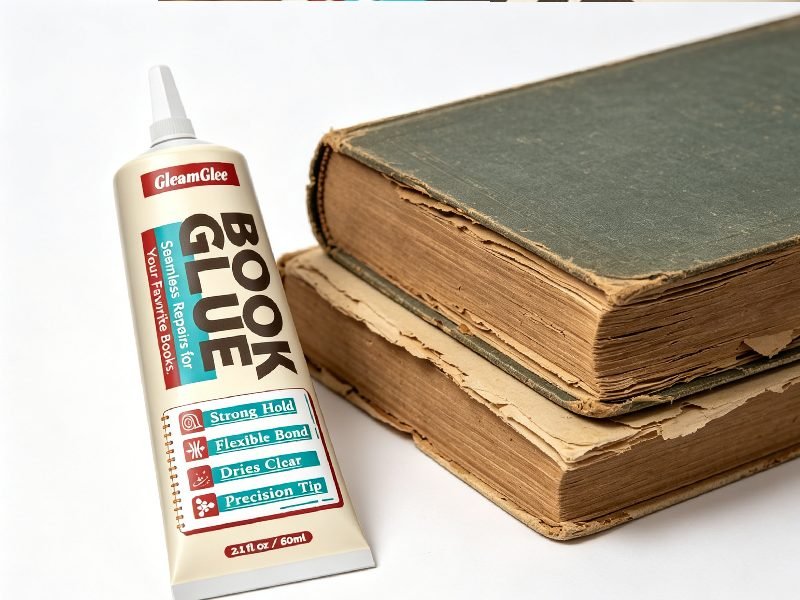
A damaged book often starts with one small problem. A single page slips out. A paperback spine opens too far. A cookbook cover begins to peel after months of kitchen use. At first, tape looks like the quickest answer, but tape usually creates a second problem: yellow marks, shiny strips, stiff page edges, and sticky residue that becomes harder to fix later. Fast drying book glue is made for people who want a neater repair without turning a favorite book into something that looks patched.
Fast drying book glue helps repair loose pages, cracked spines, detached covers, journals, notebooks, photo albums, and paper crafts with a clear, controlled bond. The best book glue should dry transparent, apply in a thin line, hold paper securely, and keep the repaired area flexible enough for normal page turning.
The real question is not only how fast the glue dries. A good repair also needs clean application, low mess, paper-safe performance, and enough strength for repeated opening and closing. A student may need a workbook ready for class. A parent may need to fix a child’s favorite bedtime book. A library may need to keep borrowed books in circulation instead of removing them from the shelf. In each case, the repair should look clean, feel natural, and last through real handling. This guide explains how fast drying book glue works, which books need it most, and how GleamGlee book glue can support both daily book repair and custom product sourcing.
What Is Fast Drying Book Glue?
Fast drying book glue is a paper-focused adhesive made for repairing loose pages, cracked spines, detached covers, journals, notebooks, photo albums, and bookbinding projects. It is different from ordinary craft glue because it must bond thin paper and thicker cover material without leaving heavy stains, hard glue ridges, or yellow repair marks.
A good fast drying book glue should give enough working time to align the page correctly, then start holding the repair in place without a long wait. The repair should dry clear, stay neat along the spine, and remain flexible enough for the book to open and close. Speed is useful, but clean drying and controlled application are more important for books that will be handled again.
In real book repair, most problems happen in narrow spaces: a 1–2 mm page edge, a small spine split, a lifted cover seam, or a thin paper layer inside a journal. This is why GleamGlee book glue uses a fine metal nozzle. It helps place a thin line of glue exactly where the bond is needed, reducing waste, paper wrinkles, and accidental sticking between pages.
| Feature | Why It Matters in Book Repair | Poor Result Without It |
|---|---|---|
| Fast drying | Reduces waiting time for small repairs | Pages shift before setting |
| Clear finish | Keeps pages and covers looking clean | Yellow or cloudy repair marks |
| Fine nozzle | Places glue in narrow spine gaps | Too much glue spreads onto pages |
| Flexible bond | Allows normal page turning | Spine cracks again after opening |
| Thin application | Reduces wrinkles and paper waves | Thick glue ridges or stiff edges |
| Paper compatibility | Works on books, journals, crafts, albums | Stains, curling, weak adhesion |
What Is Book Glue?
Book glue is an adhesive used to bond paper, page edges, book spines, covers, journals, photo albums, scrapbooks, and handmade book projects. Its job is not only to “stick paper together.” It needs to hold pages in place while keeping the repaired area thin, clean, and usable after drying.
For a loose page, book glue is usually applied along the inner page edge, not across the full page. For a cracked spine, it should sit inside the spine gap, not spread over the printed text. For a lifted cover, it should go under the separated cover area, then be pressed flat. This controlled method helps the book keep its original shape.
Book glue is useful for:
- Reattaching single loose pages in novels, textbooks, journals, and manuals.
- Reinforcing cracked spines in paperbacks, cookbooks, and workbooks.
- Fixing covers on softcover books, board books, planners, and notebooks.
- Repairing paper crafts, cards, invitations, postcards, scrapbooks, and albums.
- Supporting handmade journals, sketchbooks, guest books, and small binding projects.
The best book glue should not feel bulky after drying. A repaired page should turn naturally. A repaired spine should not feel like a hard plastic strip. A repaired cover should close smoothly without pulling the first page out of place. This is why thin application and clear drying matter as much as bonding strength.
Why Use Fast Drying Book Glue?
Fast drying book glue is useful when a book needs a quick, clean repair without the messy look of tape. It is helpful for school books, library books, office manuals, cookbooks, planners, journals, children’s books, and craft projects that need to return to use soon.
The drying speed matters most in small repairs. A single loose page, a lifted corner, or a narrow spine crack can often be stabilized faster when the glue starts setting quickly. This reduces movement while the book is being pressed. If the glue stays wet too long, pages may slide out of line, covers may shift, and thin paper may absorb too much moisture.
A practical fast drying book glue should balance three time points:
| Repair Stage | What Happens | Practical Handling |
|---|---|---|
| First contact | Glue grips the paper surface | Align the page before pressing |
| Early setting | Page or cover starts staying in place | Keep the book closed and flat |
| Stronger drying | Bond becomes more stable | Open gently before normal use |
Fast drying does not mean the book should be used immediately. A small page repair may feel stable sooner, but a spine or cover repair still benefits from longer pressing. For books that receive daily use, such as textbooks or cookbooks, leaving the repair under flat weight for several hours gives a cleaner and stronger result.
Is Book Glue Better Than Tape?
Book glue is usually better than tape for book repairs that need to look clean and last longer. Tape is fast, but it sits on top of the page. It often turns yellow, becomes brittle, peels at the edges, and leaves sticky residue. Once tape residue spreads into paper fibers, later repair becomes harder.
Book glue works differently. It repairs the damaged contact area instead of covering it from the outside. A loose page can be bonded back into the spine. A cover seam can be attached where it originally failed. A cracked paperback spine can be reinforced from inside the gap. When applied correctly, the repair is less visible and more natural to handle.
Common tape problems include:
- Yellow strips on white or cream paper after aging.
- Shiny repair lines that distract from reading.
- Stiff page edges that do not turn naturally.
- Sticky residue that attracts dust.
- Peeling corners that invite more tearing.
- Difficulty repairing the same area later.
For temporary notes or non-important papers, tape may be acceptable. For books worth keeping, book glue is usually the cleaner choice. It is especially useful for cookbooks, journals, children’s books, textbooks, photo albums, religious texts, family keepsakes, and handmade projects where appearance and page movement still matter.
What Makes Fast Drying Book Glue Different?
Fast drying book glue is different because it must work on materials that move, bend, and absorb moisture unevenly. Paper is sensitive. Thin paper can wrinkle if too much liquid is used. Glossy paper can resist bonding. Older paper can become brittle. Book covers may be thicker than inner pages, so they need a bond that handles tension near the spine.
Ordinary glue may stick paper together, but it is not always suitable for book repair. Some glues dry too hard. Some stay wet too long. Some leave cloudy marks. Some come out too quickly from the bottle and flood the spine. A useful book glue should match the repair environment: narrow application, clear finish, controlled drying, and flexible handling.
GleamGlee book glue is made for books and paper projects, including book restoration, custom binding, rare book repair, greeting cards, invitations, postcards, scrapbooks, photos, vellum, and DIY paper crafts. The fine metal nozzle is especially important because many repairs need only a small line of adhesive. Less glue often gives a stronger-looking and cleaner-feeling repair.
For daily use, the difference can be seen after the book dries:
| Repair Detail | Good Fast Drying Book Glue | Wrong Glue or Poor Application |
|---|---|---|
| Page edge | Thin, clean, aligned | Wavy, thick, uneven |
| Spine | Flexible enough to open | Hard, cracked, bulky |
| Cover seam | Flat and secure | Raised edge or glue overflow |
| Appearance | Clear and discreet | Yellow, cloudy, or shiny |
| Handling | Book opens naturally | Pages stick or pull apart |
Which Books Need Book Glue?
Books need book glue when pages, covers, spines, or bindings begin to loosen but the book is still worth keeping, reading, lending, studying, or displaying. The best repair candidates are books with clean loose pages, small spine cracks, lifted covers, separated paper layers, or weak binding edges that can still be aligned properly.
Book glue is most useful for daily-use books such as textbooks, cookbooks, children’s books, paperback novels, journals, planners, manuals, photo albums, scrapbooks, and handmade notebooks. These books often fail from repeated opening, backpack pressure, kitchen handling, shelf pulling, or long-term paper aging. A thin line of clear book glue can often extend the book’s useful life without the stiff look of tape.
Not every damaged book should be repaired the same way. A school textbook needs strength and pressure. A cookbook needs a dry, clean surface before repair. A children’s book needs flat pressing because thick board pages can lift. A vintage book needs a lighter touch because old paper may be brittle. The safest repair starts by matching the glue method to the book type and damage level.
| Book Type | Common Damage | Why Book Glue Helps | Repair Difficulty |
|---|---|---|---|
| Textbooks | Loose pages, cracked spine, cover lift | Keeps study material usable and reduces replacement cost | Medium |
| Cookbooks | Split spine, loose recipe pages, peeling cover | Saves frequently used recipes and handwritten notes | Medium |
| Children’s Books | Torn pages, board cover separation, loose corners | Restores favorite books after rough handling | Easy to Medium |
| Paperback Novels | Spine cracking, single pages falling out | Prevents more pages from loosening | Easy |
| Journals & Planners | Loose sheets, weak cover hinge | Protects personal notes and daily records | Easy |
| Office Manuals | Page groups separating, covers wearing out | Avoids reprinting frequently used documents | Easy to Medium |
| Photo Albums | Insert pages lifting, paper layers separating | Helps preserve memory books neatly | Medium |
| Vintage Books | Loose pages, worn cover, weak spine | Stabilizes old books when damage is minor | Medium to High |
Which Loose Pages Need Book Glue?
Loose pages need book glue when the page has separated from the spine but still has a clean inner edge and can be placed back into its original position. This is one of the most common book repair problems. It happens in novels, textbooks, workbooks, manuals, cookbooks, journals, and religious texts after repeated opening or pressure on the binding.
A single loose page is usually easier to fix than a loose page group. For one page, the glue should be applied only along the inner edge, usually in a thin 1–2 mm line. The page must be aligned with the top, bottom, and outer edges of the surrounding pages before pressing. If the page dries even slightly crooked, the book may feel uneven every time it is opened.
For several loose pages, first check whether they belong together as a folded section or separate sheets. If the pages were originally connected as a group, they should be kept square before gluing. Randomly repairing each page one by one may make the page block uneven or too tight near the spine.
Useful checks before repairing loose pages:
- Confirm the page number and page order before applying glue.
- Make sure the loose page is not upside down or reversed.
- Remove paper dust from the inner edge.
- Apply glue only to the edge that originally touched the spine.
- Close the book slowly and check alignment before pressing.
- Use wax paper if glue may touch nearby pages.
| Loose Page Condition | Can Book Glue Help? | Repair Advice |
|---|---|---|
| Clean single page edge | Yes | Apply a thin glue line on the inner edge |
| Slightly torn inner edge | Yes, with care | Use less glue and press gently |
| Page group detached together | Yes | Keep the group squared before gluing |
| Page missing large pieces | Limited | Glue may stabilize but cannot replace missing paper |
| Page heavily oily or wet | Not immediately | Dry and clean first before repair |
| Brittle antique page | Use caution | Test first or seek professional help |
A clean loose-page repair should not feel thick after drying. The page should turn naturally and sit flush with the surrounding sheets. If the repaired edge feels stiff, too much glue was probably used. If the page pulls loose again, the page may not have been pressed long enough, or the inner edge may have been dirty, glossy, oily, or badly damaged before repair.
Which Spines Need Book Glue?
Book spines need book glue when the binding line starts to crack, split, loosen, or pull away from the page block. Spine damage is common in paperbacks, cookbooks, textbooks, workbooks, office manuals, catalogues, and frequently used reference books. Early repair is important because a small spine crack can quickly turn into several loose pages.
The spine carries most of the book’s movement. Every time the book opens, pressure concentrates along the binding line. If the repair is too stiff, the spine may crack beside the glued area. If the glue layer is too thick, the book may no longer close properly. A good spine repair uses a narrow line of book glue inside the crack, followed by careful closing and flat pressing.
Spine damage is easier to repair when the pages are still mostly attached. Once the page block separates into several groups, the repair becomes more complex. The book may still be fixable, but alignment becomes more important. The page block must stay square, or the book may dry with uneven edges.
Spine repair warning signs:
- The book opens too widely at one section.
- A visible gap appears between the pages and the cover.
- Pages near the middle begin to lift as a group.
- The cover still holds, but the inner binding line is cracked.
- The book makes a cracking sound when opened.
- The same page section keeps loosening after use.
| Spine Damage Level | Repair Method | Expected Result |
|---|---|---|
| Hairline spine crack | Thin glue line inside gap | Prevents crack from widening |
| Small loose section | Glue page group edge and press | Restores page block stability |
| Cover pulling from spine | Apply glue under cover seam | Improves cover support |
| Fully split paperback | More careful section repair needed | May work if pages still align |
| Old brittle spine | Minimal glue only | Stabilizes but may not fully restore |
| Spine with tape residue | Difficult | Clean contact area is needed |
For spine repair, the book should not be forced flat immediately after drying. Open it gently at first. A repaired spine needs gradual movement. This is especially important for cookbooks, study books, and manuals that people tend to open wide on a table. A slow first opening helps the bond settle without tearing the repaired line.
Which Covers Need Book Glue?
Covers need book glue when a softcover begins to peel, a hardcover hinge loosens, a board book cover separates, or the first and last pages start pulling away from the cover. Cover damage is common because covers receive the most handling. People pull books from shelves by the cover, bend them backward, stack weight on them, or carry them in bags.
A cover repair should focus on the original contact area. The glue should go under the lifted section, not over the outside surface. For a softcover book, this may be the inner spine seam or the first page connection. For a hardcover, the damage may be near the hinge where the cover board meets the page block. For a children’s board book, the repair may be between thick paperboard layers.
Too much glue can create a raised, uneven cover. This is especially noticeable on journals, planners, photo books, and gift books. A thin layer is usually enough. After gluing, the cover should be pressed from the spine outward to remove air pockets and keep the surface flat. If glue squeezes out, it should be wiped away before drying.
Cover repair is especially useful for:
- Softcover novels with peeling front or back covers.
- Children’s books with separated board covers.
- Planners and journals with lifted covers.
- Cookbooks with covers pulling near the spine.
- Manuals with covers worn from repeated use.
- Photo books and memory books with loose cover edges.
- School workbooks with covers separating from pages.
| Cover Type | Common Problem | Book Glue Use |
|---|---|---|
| Softcover | Cover peels from spine | Thin glue layer under cover seam |
| Hardcover | Inner hinge loosens | Controlled glue along hinge area |
| Board book | Cover layer separates | Thin glue between board layers |
| Journal | Cover lifts from page block | Reattach and press flat |
| Cookbook | Cover pulls from repeated opening | Reinforce seam with thin glue |
| Workbook | Front cover tears loose | Glue and press before pages detach |
After cover repair, check that the book still opens naturally. If the cover pulls the first page too tightly, it may have been pressed in the wrong position. If the cover feels lumpy, too much glue was applied. A good repair should restore the cover’s function while keeping the book comfortable to hold and read.
Are Old Books Safe with Book Glue?
Old books can be repaired with book glue when the damage is minor, the paper is stable, and the book is meant for practical use rather than high-value conservation. Common repair cases include loose pages, small spine gaps, lifted covers, worn journals, family cookbooks, old notebooks, and personal religious texts. The repair goal should be stabilization, not making the book look brand new.
Older paper needs more care because it may absorb glue unevenly or tear under pressure. Some old books have brittle pages that crack when bent. Some have dry cloth spines, flaking covers, or weak stitching under the paper. In these cases, heavy glue application can make the damage worse. A very thin amount, placed only where needed, is safer.
Before using book glue on an old book, inspect the condition closely:
- Does the paper bend without cracking?
- Is the loose page complete enough to reattach?
- Is the spine only slightly loose, or fully broken?
- Are there old tape marks or hardened glue?
- Is the book rare, valuable, or historically important?
- Is the book mainly for family use and light reading?
| Old Book Condition | Book Glue Suitability | Best Action |
|---|---|---|
| Loose page, stable paper | Suitable | Use a thin edge line and light pressure |
| Small cover lift | Suitable | Glue only the lifted area |
| Slight spine gap | Suitable with care | Apply a narrow glue line inside the gap |
| Brittle paper | Risky | Use very little glue or avoid home repair |
| Rare collectible edition | Not recommended | Seek professional restoration |
| Old tape residue | Difficult | Avoid gluing over sticky residue |
| Family keepsake | Possible | Test hidden area first and press gently |
| Moldy or damp book | Not suitable | Dry and address moisture first |
GleamGlee book glue dries clear and applies precisely, which helps when repairing older books that need a discreet finish. Still, old books should be handled slowly. Do not force the spine open. Do not coat large areas with glue. Do not use heavy clamps that could dent the cover or crush fragile pages. For valuable antiques, professional book restoration is the safer choice. For worn but usable old books, careful book glue repair can keep them readable and protected for longer.

How to Use Fast Drying Book Glue?
Fast drying book glue works best when the damaged area is clean, the glue line is thin, the page or cover is aligned before pressing, and the book is left closed long enough for the repair to settle. The goal is not to use more glue. The goal is to put a controlled amount exactly where the book has separated.
Most failed book repairs come from three simple mistakes: too much glue, poor alignment, and opening the book too soon. A thick glue layer can wrinkle paper, create hard ridges, stick nearby pages together, or make the spine too stiff. A crooked page can dry out of line and remain uneven. A repair opened too early may pull apart before the bond becomes stable.
For best results, treat book repair like a small precision task. Work under good light, prepare wax paper or clean release paper, keep a flat weight nearby, and check the page position before the glue starts setting. GleamGlee fast drying book glue is equipped with a fine metal nozzle, which helps place glue in narrow page edges, spine gaps, cover seams, journals, albums, and craft paper layers without flooding the repair area.
| Repair Type | Glue Placement | Amount Needed | Pressing Advice |
|---|---|---|---|
| Single loose page | Inner page edge | 1–2 mm thin line | Close book and press flat |
| Small spine crack | Inside spine gap | Thin continuous line | Press for several hours if possible |
| Softcover lift | Under lifted cover area | Thin even layer | Press from spine outward |
| Board book cover | Between separated board layers | Light thin spread | Use flat weight to prevent warping |
| Journal loose sheet | Binding edge of loose sheet | Narrow edge line | Keep pages squared |
| Photo album page | Page edge or hidden paper area | Small dots or thin line | Test coated paper first |
Step 1: Clean the Book
Before applying fast drying book glue, clean the damaged area carefully. Dust, paper crumbs, dried glue flakes, food residue, pencil powder, and loose fibers can weaken the repair because the glue may bond to dirt instead of paper. A dry soft brush, clean cloth, or gentle fingertip movement is enough for most repairs. Avoid water unless the paper can dry completely before gluing.
This step is especially important for cookbooks, school books, children’s books, and office manuals. Cookbooks may have flour, oil, or dried food near the spine. Textbooks may contain eraser dust and loose paper fibers. Children’s books may have sticky marks around torn corners. If these are not removed, the glue line may look clean at first but fail after repeated opening.
Open the book only as much as needed to reach the damaged area. Do not force a cracked spine flat, because that can turn a small repair into a larger split. If a loose page has rough fibers along the inner edge, do not pull them aggressively. Remove only loose debris that blocks contact. The repair surface should be dry, clean, and able to sit flat against the matching page block, cover, or spine area.
Step 2: Apply Book Glue
Apply book glue in a thin, controlled line. For a loose page, place the glue along the inner page edge that originally attached to the spine. For a spine crack, place the glue inside the gap, not across the printed page surface. For a cover repair, apply a thin layer under the lifted cover or hinge area. The glue should stay inside the repair zone.
A common mistake is squeezing out a thick bead because it “looks stronger.” In book repair, too much glue usually causes more problems. It can spread into nearby pages, create a raised ridge, make paper curl, or leave a stiff section that cracks after use. A thin 1–2 mm line is often enough for loose page repair. Larger cover repairs can use a light spread, but the layer should still be thin and even.
GleamGlee book glue’s fine metal nozzle is useful because many book repair points are narrow. It helps reach page edges, spine gaps, book corners, journal seams, and scrapbook layers with less waste. After applying the glue, check for excess immediately. If glue squeezes out before pressing, remove it gently with a clean tool or lint-free cloth. Do not rub wet paper hard, because damp paper can pill, tear, or lose surface texture.
| Damage Area | Correct Glue Method | What to Avoid |
|---|---|---|
| Loose page | Thin line on inner edge | Coating the full page margin |
| Spine crack | Small line inside crack | Filling the spine with thick glue |
| Cover lift | Thin layer under cover | Spreading glue on the outside cover |
| Journal seam | Narrow line along loose sheet | Letting glue run between pages |
| Photo album | Small hidden dots or line | Gluing directly under important photos |
| Craft paper | Light edge or corner glue | Overwetting thin decorative paper |
Step 3: Press the Book
After applying book glue, align the page, cover, or spine before pressing. For a loose page, match the top, bottom, and outer edge with the surrounding pages. For a cover repair, close the cover slowly and check that it does not pull the first or last page out of place. For a spine repair, make sure the book closes straight and the page block is not twisted.
Use wax paper, parchment paper, or clean release paper near the repair if glue may touch another page. This small step prevents accidental page sticking. It is especially useful when repairing loose pages, children’s books, journals, albums, and books with thin paper. After placing protection, close the book carefully and add flat weight on top. A smooth board with several heavy books works well for home repair.
Pressure should be even, not extreme. Too little pressure leaves gaps. Too much pressure in one small area can push glue out or dent the cover. For a paperback, flat weight may be enough. For a thick textbook or board book, longer pressing gives better results. The book should stay square while drying. If the book dries at an angle, the pages may become uneven and the spine may feel crooked during later use.
| Pressing Method | Best Use | Caution |
|---|---|---|
| Heavy books on top | Paperbacks, notebooks, journals | Keep weight centered |
| Flat board + weight | Textbooks, covers, cookbooks | Helps distribute pressure |
| Light hand pressure first | Small loose page repair | Do not move page after alignment |
| Binder clips with protection | Small cover corners | Avoid dents or clamp marks |
| Book press | Repeated repair work | Use moderate pressure only |
Step 4: Let Book Glue Set
Let the book glue set before opening the repaired area. Fast drying book glue may begin holding quickly, but the deeper bond still needs time to become stable. A repair can feel dry on the surface while the inner glue line is still soft. Opening the book too early can pull the page loose again, weaken the spine, or shift the cover.
Drying time depends on glue amount, paper thickness, room humidity, and the repair type. A thin single-page repair usually sets faster than a cover repair or spine repair. Glossy paper and coated photo pages may need more time because they absorb less moisture. Thick covers, board books, and cookbooks also benefit from longer pressing because the repair area carries more tension.
A practical rule is to handle small page repairs gently after the glue is no longer tacky, but give spine and cover repairs several hours of rest whenever possible. For important books, overnight pressing is safer. When reopening the book, start with a small angle. If the repair pulls, feels soft, or makes a separating sound, close it again and allow more time.
| Repair Type | Suggested Resting Habit | First Use After Repair |
|---|---|---|
| Single loose page | At least 30–60 minutes under pressure | Turn gently |
| Narrow spine crack | Several hours under flat weight | Avoid opening flat |
| Softcover repair | 2–6 hours preferred | Open slowly from the cover |
| Board book repair | 4–8 hours or overnight | Check for edge lift |
| Cookbook repair | Several hours or overnight | Avoid laying flat immediately |
| Photo album repair | 2–4 hours preferred | Check for tackiness before closing tightly |
The cleanest repairs come from patience. A fast drying formula reduces waiting, but it does not remove the need for proper pressing. Thin glue, accurate alignment, and enough rest time create a stronger-looking repair than rushing the book back into use. For schools, libraries, offices, and craft rooms, setting repaired books aside in a small “drying area” helps prevent early handling and keeps repairs neater.
What Book Glue Tips Help?
The best book glue tips are practical: use a thin line, repair only the failed area, keep pages aligned, press the book flat, protect nearby pages with wax paper, and let the repair rest before opening the book widely. Clean book repair depends more on control than on glue volume.
Most book repair problems come from over-application. Too much glue can wrinkle paper, create a hard ridge near the spine, stick nearby pages together, or make the repaired area too stiff to open naturally. A thin 1–2 mm glue line is often enough for a loose page, while a cover lift usually needs only a light, even layer under the separated section.
Fast drying book glue gives better results when the repair is treated as a small precision job. Prepare the book first, apply less glue than expected, check alignment before pressing, and allow extra setting time for high-stress areas such as spines, covers, cookbooks, and textbooks. These simple habits can make the repair cleaner, flatter, and longer lasting.
| Book Glue Tip | Why It Matters | Best Used For |
|---|---|---|
| Use a thin glue line | Prevents wrinkles, stiffness, and squeeze-out | Loose pages, spine cracks |
| Clean the repair area first | Helps glue bond to paper instead of dust or residue | Cookbooks, textbooks, manuals |
| Align pages before pressing | Keeps the page block neat after drying | Journals, novels, textbooks |
| Use wax paper | Stops nearby pages from sticking together | Loose page repairs, albums |
| Press with flat weight | Improves contact and keeps repair smooth | Covers, spines, board books |
| Let repair rest longer | Gives the bond more stability | High-use books, cookbooks |
| Avoid old tape residue | Tape can block adhesion and leave stains | Previously repaired books |
| Repair early | Small cracks are easier to fix than full separation | Libraries, schools, offices |
How Much Book Glue Is Enough?
Enough book glue means the damaged surfaces are lightly covered and able to touch each other closely after pressing. For a single loose page, a narrow line along the inner edge is usually enough. For most page repairs, the glue line should be thin enough that it does not squeeze heavily onto nearby pages when the book is closed.
A common mistake is applying glue as if filling a gap with putty. Books do not need thick glue piles. Paper repairs work best when the adhesive layer is thin and even. If glue squeezes out more than a small trace after pressing, too much was applied. If the page edge becomes wavy after drying, the glue layer was likely too wet or too wide.
Different repairs need different amounts:
| Repair Area | Suggested Glue Amount | What Too Much Glue Causes |
|---|---|---|
| Single loose page | 1–2 mm thin line | Page waves, stuck pages |
| Small spine crack | Thin line inside the gap | Stiff spine, bulky binding |
| Cover corner | Small dots or light smear | Raised corner, glue overflow |
| Softcover lift | Thin even layer | Cover lump, uneven closing |
| Board book layer | Light spread between layers | Warping, thick edge |
| Scrapbook paper | Small dots or edge line | Paper curl, visible marks |
For larger cover repairs, apply glue in sections instead of coating the whole area at once. This gives more control and reduces the chance of trapped air bubbles. For thin paper, use even less glue because it absorbs moisture faster. For thicker covers or cardstock, a slightly wider spread may be acceptable, but the layer should still be thin enough to press flat.
The safest rule is simple: start small. It is easier to add a tiny amount before pressing than to remove excess glue after it spreads into the page block. GleamGlee book glue’s fine metal nozzle helps control this amount, especially on narrow spine lines, loose page edges, journals, albums, and delicate craft paper.
How Should Book Glue Dry?
Book glue should dry clear, flat, and smooth. After drying, the repaired area should not feel sticky, cloudy, raised, brittle, or overly stiff. A repaired page should turn naturally, and a repaired spine should open without cracking beside the glue line. If the repair feels hard like a plastic strip, too much glue was probably used.
Drying quality depends on glue amount, paper type, pressure, and room conditions. Thin book paper dries differently from glossy magazine paper. Kraft paper absorbs glue more quickly than coated photo paper. A humid room slows drying, while a very dry room can make thin paper curl if too much adhesive is applied.
| Drying Result | Good Sign | Problem Sign |
|---|---|---|
| Page repair | Page lies flat and turns smoothly | Page edge feels wavy or stiff |
| Spine repair | Book opens gently without cracking | Spine feels bulky or hard |
| Cover repair | Cover closes evenly | Cover edge lifts or feels lumpy |
| Photo album repair | Page stays flat without visible marks | Glue spot shows through |
| Craft repair | Paper layers stay smooth | Corners curl or bubble |
Clear drying is especially important on visible areas. White paper, cream paper, light covers, photo albums, invitations, journals, and scrapbooks show glue marks more easily than dark or thick materials. A transparent finish helps preserve the original appearance, but the glue still needs to be applied thinly. Even clear glue can look noticeable if it dries in a thick ridge.
For the cleanest dry finish, keep the book closed and pressed while setting. Do not keep checking the repair every few minutes, because repeated opening can shift the page before the bond settles. When reopening the book, start with a small angle. If the repaired area pulls or feels tacky, close it again and give it more time.
Do Books Need Book Glue Clamping?
Many book repairs need pressing or light clamping because glue works better when both surfaces stay in close contact while drying. Pressing keeps loose pages aligned, helps covers dry flat, and reduces gaps in spine repairs. Without pressure, the repair may dry unevenly, leaving lifted edges, loose corners, or weak contact points.
A flat weight is often safer than a strong clamp. Heavy books, a smooth board, or a small book press can spread pressure evenly across the repaired area. Metal clamps can work for small corners, but they should be padded with cardboard or cloth to prevent dents. Pressure should hold the repair in place, not crush the book.
| Pressing Method | Suitable Repair | Practical Note |
|---|---|---|
| Heavy books | Paperbacks, journals, notebooks | Easy home method |
| Flat board + weight | Covers, cookbooks, textbooks | Gives more even pressure |
| Small book press | Repeated book repair work | Useful for libraries or craft studios |
| Binder clips with padding | Cover corners, small edges | Avoid direct clamp marks |
| Hand pressure first | Single-page alignment | Only for initial positioning |
Wax paper is helpful during pressing. Place it between the repaired area and any page that might accidentally touch wet glue. This is especially important for loose page repair, photo albums, children’s books, journals, and thin paper books. Without a barrier, even a small amount of squeeze-out can glue two pages together.
Pressing time should match the repair stress. A single page may need less time than a spine or cover repair. Textbooks, cookbooks, and children’s books usually benefit from longer pressing because they face repeated handling. If the repaired area must bend during use, press it longer and open it gently the first few times.
What Book Glue Mistakes Hurt?
The most damaging book glue mistakes are using too much adhesive, gluing dirty surfaces, skipping page alignment, pressing unevenly, opening the book too soon, and repairing over tape residue. These mistakes can turn a small problem into a messy, stiff, or short-lived repair.
Old tape residue is a serious issue. Tape leaves a slick or sticky layer that can block glue from bonding directly to paper. It can also yellow over time and attract dust. If tape was already used, inspect the area carefully. Do not simply pour book glue over tape. If clean paper contact is still available near the damaged area, glue can sometimes be applied there, but old tape often makes the repair less reliable.
Common mistakes and better methods:
| Mistake | What Happens | Better Method |
|---|---|---|
| Using a thick glue bead | Paper wrinkles or spine hardens | Use a thin, controlled line |
| Gluing over crumbs or dust | Weak bond after drying | Clean dry debris first |
| Ignoring page order | Page dries in wrong position | Check page number before gluing |
| Skipping wax paper | Nearby pages stick together | Add a barrier before pressing |
| Opening too soon | Repair pulls apart | Let the bond settle longer |
| Forcing spine flat | Crack becomes larger | Open only enough to apply glue |
| Using tape first | Leaves residue and stains | Use book glue directly when possible |
| Pressing with uneven weight | Cover dries lumpy or crooked | Use flat, centered pressure |
Another mistake is treating every book the same. A thin Bible page, glossy magazine, children’s board book, paperback novel, and handmade journal all respond differently. Thin paper needs less glue. Glossy paper needs more drying time. Board books need flat weight to avoid warping. Old books need lighter pressure and smaller glue amounts.
A good repair should feel almost invisible during use. The book should open naturally, the repaired page should stay aligned, and the cover should close without pulling. When the repair looks bulky, feels stiff, or fails after a few openings, the problem is usually not the idea of using book glue. It is usually the amount, placement, pressure, or drying time.
Is Book Glue Safe for Paper?
Book glue is safe for paper when it is made for book and paper repair, applied in a thin controlled line, and allowed to dry under flat pressure. The safest repair does not soak the page, cover printed text, or leave a thick hard edge near the spine. For most book repairs, less glue creates a cleaner and stronger-looking result than more glue.
Paper safety depends on both the glue and the method. Thin paper, glossy paper, photo paper, kraft paper, cardstock, vellum, and old book paper all react differently. A normal novel page may handle a thin glue line well, while a thin Bible page, coated photo page, or brittle vintage page needs much lighter application and testing first.
GleamGlee book glue is designed for books, paper, vellum, photos, scrapbooks, postcards, invitations, and DIY paper projects. It dries transparent and is made to preserve pages without yellowing, stains, or visible damage when used correctly. The fine metal nozzle also helps reduce one of the biggest paper repair risks: applying too much glue in one place.
| Paper Type | Common Thickness / Feel | Repair Risk | Safer Book Glue Method |
|---|---|---|---|
| Standard novel paper | Around 55–80 gsm | Low to medium | Thin glue line on the inner edge |
| Textbook paper | Around 70–100 gsm | Medium | Press flat and avoid excess moisture |
| Bible-style thin paper | Around 25–45 gsm | High | Very small amount, test first |
| Glossy magazine paper | Coated surface | Medium to high | Use less glue and allow longer drying |
| Photo album paper | Coated or layered | Medium to high | Glue hidden edges, not image centers |
| Kraft paper | Thicker, absorbent | Low to medium | Thin even layer, press flat |
| Cardstock | Around 160–300 gsm | Low | Light spread or small dots |
| Vellum | Translucent, mark-prone | High | Test first, use tiny dots |
| Old brittle paper | Dry, fragile fibers | High | Minimal glue and gentle pressure |
Does Book Glue Dry Clear?
Book glue should dry clear when used on visible book pages, covers, journals, albums, and paper crafts. A transparent finish matters because book repairs are often seen every time the book is opened. If the glue dries yellow, cloudy, shiny, or raised, the repair may look messy even if the page is firmly attached.
Clear drying is especially important for white paper, cream paper, children’s picture books, cookbooks, journals, photo albums, invitations, postcards, and scrapbooks. These items often have light backgrounds where even a small glue mark can stand out. A transparent book glue helps the repair stay discreet, but the final look still depends on the amount used.
A thin glue line usually dries cleaner than a thick bead. Even a clear glue can become visible if it dries as a raised ridge along the page edge. For a loose page, the glue should sit on the inner edge that touches the spine. For a cover seam, it should stay under the lifted cover area. For craft paper, small dots or narrow lines are usually cleaner than broad wet patches.
| Clear Drying Result | Good Sign | Problem Sign |
|---|---|---|
| Loose page repair | Page edge looks neat and flat | Inner margin looks shiny or stiff |
| Spine repair | Crack is less visible after drying | Thick glue ridge appears in the spine |
| Cover repair | Cover lies flat without cloudy marks | Glue squeezes onto outside cover |
| Scrapbook repair | Paper layer stays smooth | Corners curl or glue shows through |
| Photo album repair | Bond stays hidden at edge | Wet spot appears under photo area |
To keep the finish clear, wipe away excess glue before it dries. Use a clean tool, cotton swab, or lint-free cloth, but avoid rubbing wet paper too hard. Damp paper can pill, tear, or lose its surface texture. Pressing the book flat also helps the glue dry thinner and more evenly.
Does Book Glue Yellow Pages?
A good book glue should not yellow pages when applied correctly. Yellow marks usually come from unsuitable adhesives, aging tape, heavy glue buildup, heat, sunlight, humidity, or old paper oxidation. Clear book glue is a better choice than ordinary tape for long-term book repair because it bonds the damaged area without leaving a visible plastic strip on top of the page.
Yellowing risk increases when too much glue is used. A heavy wet layer can soak into paper fibers, especially on thin or absorbent pages. Once the paper absorbs too much liquid, the repair area may look darker, wavy, or slightly stained after drying. The safest method is to apply a thin line only where the page, spine, or cover originally separated.
Old tape is one of the biggest causes of yellow repair marks. Tape adhesive can darken over time, become sticky, and leave residue that attracts dust. If a book already has tape residue, do not simply add book glue on top of it. Glue bonds best to clean paper, not to an old sticky film. If clean paper contact remains near the damaged area, apply glue there instead.
| Cause of Yellow Marks | What Happens | Better Repair Habit |
|---|---|---|
| Old tape | Yellow strip, sticky residue | Use book glue before tape is applied |
| Too much glue | Darkened or wavy page edge | Use a thin 1–2 mm line |
| Wet paper | Weak fibers and stains | Let the paper dry fully first |
| Sunlight exposure | Paper ages faster | Store repaired books away from harsh light |
| Grease or food residue | Weak bonding and stains | Clean dry residue before repair |
| Wrong household glue | Cloudy or hard repair marks | Use glue made for books and paper |
GleamGlee book glue is designed to dry transparent and avoid yellowing when used properly. For white pages, vintage paper, and sentimental books, apply less than expected and test first if the surface looks delicate. A neat repair should hold the page without changing the color of the paper around it.
Is Book Glue Safe for Photos?
Book glue can be safe for photo albums, memory books, postcards, and photo-related paper crafts when it is used carefully and kept away from the main image surface. Photos and coated album sheets are more sensitive than normal book paper because they may have glossy coatings, printed layers, or laminated surfaces that show marks more easily.
For photo work, glue should be placed on hidden edges, album page corners, paper backing, or mounting areas rather than directly under the center of an important image. Thick dots under a photo can create bumps. Wet patches can show through thin album paper. If the photo is valuable or irreplaceable, test the glue on a less important material first.
Photo albums often fail at the page edge, insert pocket, spine fold, or decorative paper layer. These areas can usually be repaired with a small amount of book glue. Use small dots or a very thin line, then press gently with clean paper or wax paper as a barrier. Avoid heavy pressure directly on glossy photo surfaces because it may leave marks.
| Photo Project | Safer Glue Placement | What to Avoid |
|---|---|---|
| Photo album page | Edge or paper backing | Thick glue under the photo center |
| Scrapbook photo | Corners or hidden support areas | Wet glue across the full image back |
| Postcard repair | Torn paper edge | Glue over printed front design |
| Memory book | Page seam or decorative layer | Excess glue near handwriting |
| Invitation with photo | Small hidden dots | Glue bleeding through thin paper |
| Album insert pocket | Loose pocket edge | Sealing the pocket shut |
GleamGlee book glue can be used for photos, scrapbooks, postcards, invitations, and memory books, but careful application is still important. Photo projects are often kept for years, so the repair should be clean, flat, and barely visible. A small amount of glue placed well is safer than a larger amount spread across the whole surface.
Can Book Glue Fix Vintage Books?
Book glue can fix some vintage books when the repair is small, the paper is stable, and the book is meant for personal use. Loose pages, small spine gaps, lifted covers, and worn journals can often be stabilized with a thin line of clear book glue. The goal should be to keep the book usable, not to rebuild it with heavy adhesive.
Vintage books need slower handling because old paper may be dry, brittle, or weakened by age. Some pages crack when bent. Some covers flake at the corners. Some spines contain older glue, thread, cloth, or paper layers. If the book has historical, resale, or collectible value, professional restoration is safer than home repair.
Before using book glue on an old book, check the condition carefully. If the page bends gently without breaking, a small repair may be possible. If the paper cracks, flakes, or tears with light touch, avoid heavy glue. If the spine is fully broken into several sections, a simple glue repair may not be enough. If old tape residue is present, the repair area may be harder to bond cleanly.
| Vintage Book Condition | Can Book Glue Help? | Recommended Action |
|---|---|---|
| One loose page, stable paper | Yes | Thin glue line and gentle pressing |
| Small cover lift | Yes | Glue only the lifted area |
| Narrow spine gap | Yes, with care | Apply a small line inside the gap |
| Brittle page edges | Risky | Use minimal glue or avoid home repair |
| Rare collectible edition | Not recommended | Use professional restoration |
| Old tape on spine | Difficult | Avoid gluing over sticky residue |
| Family cookbook | Often yes | Clean dry residue first |
| Old journal or diary | Often yes | Test hidden area before repair |
For vintage book repair, use less pressure than with a modern textbook. Heavy clamps can dent covers or crush fragile pages. A flat board with moderate weight is safer. Use wax paper near the repair to stop accidental sticking, and allow longer drying time. After drying, open the book gently and avoid forcing the spine flat.
GleamGlee book glue’s clear finish and precise metal nozzle make it useful for discreet repairs on older everyday books, family keepsakes, worn cookbooks, journals, and personal reading copies. For rare antiques, museum items, signed editions, or valuable religious texts, a conservator is the better choice. For books that simply need to stay readable at home, careful book glue repair can extend their life without the harsh look of tape.

Where Can Book Glue Be Used?
Book glue can be used for loose pages, cracked spines, lifted covers, journals, planners, textbooks, cookbooks, children’s books, photo albums, scrapbooks, handmade notebooks, office manuals, invitations, postcards, and paper craft projects. It is most useful when the repair area is narrow, the finish needs to stay clean, and tape would look too obvious or become stiff over time.
The strongest use cases are books and paper items that are handled often but are not badly destroyed. A single loose page, a peeling cover corner, a cookbook spine gap, or a planner sheet that starts lifting can usually be repaired with a thin line of clear book glue. The repair should stay close to the original binding area, so the book can still open, close, and lie naturally in the hand.
GleamGlee book glue is suitable for books, paper, kraft paper, vellum, photos, greeting cards, invitations, postcards, scrapbooks, DIY projects, and handmade bookbinding. Its fine metal nozzle helps apply glue in thin lines and small dots, which is important for book repair because most useful glue areas are only a few millimeters wide. This makes it practical for home repair, schools, libraries, offices, craft rooms, stationery projects, and small publishing samples.
| Use Area | Common Problem | Best Book Glue Method | Main Benefit |
|---|---|---|---|
| Textbooks | Loose pages, weak spine, cover lift | Thin line along page edge or spine gap | Keeps study books usable |
| Cookbooks | Split spine, greasy page edges, peeling cover | Clean dry residue first, then apply thin glue | Saves marked recipes |
| Children’s books | Torn pages, board cover separation | Light glue layer and flat pressing | Repairs favorite books quickly |
| Journals | Loose sheets, cover hinge lift | Align page block before pressing | Protects notes and daily records |
| Photo albums | Page inserts lifting, paper layers separating | Small dots or hidden edge glue | Keeps memory pages neat |
| Scrapbooks | Decorative paper corners lifting | Small dots, light pressure | Reduces visible glue marks |
| Office manuals | Page groups separating | Re-glue section edge and press | Avoids reprinting |
| Handmade books | Binding edge needs assembly | Thin controlled spine glue | Creates cleaner DIY books |
Can Book Glue Fix Textbooks?
Book glue can fix textbooks when the damage is still manageable, such as one loose page, a small cracked spine, a lifted softcover, or a workbook section that has started to separate. Textbooks are often expensive to replace and receive heavy daily use, so a quick repair can help extend their service life through a semester or school year.
Textbook damage usually comes from repeated backpack pressure, wide opening on desks, page pulling, and heavy stacking. The spine is often the first weak point. Once the spine cracks, individual pages or page groups may begin to loosen. A thin line of fast drying book glue can help stabilize the damaged area before more pages fall out. For one loose page, apply glue only to the inner page edge, align it with nearby pages, close the book carefully, and press it flat.
For schools, study rooms, and offices, small repairs can reduce waste and replacement costs. If 10 textbooks each have one loose page, replacing the books makes little sense. A repair station with book glue, wax paper, a soft brush, and flat weights can handle these small issues quickly. For thick textbooks, longer pressing is better because the repaired area carries more stress when the book is opened.
| Textbook Damage | Repair Difficulty | Recommended Method | Extra Note |
|---|---|---|---|
| One loose page | Easy | 1–2 mm glue line on inner edge | Check page number first |
| Small spine crack | Medium | Thin glue line inside crack | Do not force the book flat |
| Cover peeling | Medium | Light layer under cover seam | Press from spine outward |
| Loose page group | Medium to hard | Keep group squared before gluing | Press longer |
| Fully broken spine | Hard | May need structured repair | Simple glue may not be enough |
A repaired textbook should not be thrown back into a backpack immediately. Let the glue set under flat weight, then open the book gently the first few times. Avoid bending the spine backward after repair. If the book is used daily, overnight pressing gives a cleaner and more stable result than a short rest.
Can Book Glue Repair Cookbooks?
Book glue can repair cookbooks with loose recipe pages, cracked spines, peeling covers, and weakened binding areas. Cookbooks are exposed to more stress than many other books because they are opened repeatedly to the same pages, placed on kitchen counters, touched with damp hands, and sometimes exposed to flour, oil, steam, or food residue.
Before repairing a cookbook, the damaged area must be dry and clean. Glue should not be applied over oil, wet stains, crumbs, or sticky residue. Dry crumbs can be brushed away with a soft brush. Light dust can be wiped with a dry cloth. Greasy areas near the binding are harder because glue may not grip well. If the inner page edge is oily, the repair may need a cleaner contact point or a smaller controlled glue area.
Cookbooks often need flexible repairs. A thick glue layer can make the spine too rigid, especially if the cookbook is usually opened wide while cooking. A thin glue line is better because it holds the page while allowing the book to open more naturally. For frequently used recipes, reinforce early when the page first begins to loosen. Waiting until the whole section falls out makes alignment much harder.
| Cookbook Issue | What to Check First | Glue Method | Practical Tip |
|---|---|---|---|
| Loose recipe page | Is the edge dry and clean? | Thin inner-edge line | Keep text area untouched |
| Cracked spine | Is the crack narrow? | Small line inside spine gap | Close and press flat |
| Peeling cover | Is the cover still aligned? | Thin layer under lifted area | Press from spine outward |
| Greasy binding area | Is clean paper exposed? | Glue only clean contact points | Avoid oil-covered paper |
| Loose favorite recipe section | Are pages still in order? | Glue group edge carefully | Press longer than one page |
A repaired cookbook should be opened gradually after drying. Do not lay it fully flat immediately. If the repair is near a favorite recipe, use a book stand for the first few uses to reduce pressure on the spine. This small habit helps prevent the same page from pulling loose again.
Can Book Glue Bind Journals?
Book glue can bind journals, planners, sketchbooks, notebooks, guest books, diaries, and handmade paper books. It can secure loose sheets, attach covers, reinforce spine strips, fix lifted endpapers, and help assemble custom stationery projects. Clean alignment is very important because even a slight page shift can be noticeable in a journal used every day.
Journals are different from books that are only read. They are opened, written in, carried in bags, pressed under hands, and sometimes folded back slightly during writing. The repair or binding area must stay smooth. If too much glue is applied, the page edge can become stiff and uncomfortable to write near. If the cover hinge is glued crooked, the journal may not close flat.
For journal repair, square the page block before pressing. This means the top, bottom, and outer page edges should line up evenly. Apply book glue in a thin line along the loose sheet edge or cover hinge. Place wax paper near the repair if glue may touch other pages. Then close the journal carefully and press it with a flat board or smooth weight.
| Journal Use | Glue Placement | Best Practice |
|---|---|---|
| Loose diary sheet | Inner edge of loose page | Align before closing |
| Planner cover lift | Under lifted cover seam | Press flat overnight if possible |
| Handmade journal | Spine edge of page block | Work in small sections |
| Sketchbook repair | Loose binding edge | Avoid glue near drawing surface |
| Guest book | Cover hinge or page edge | Keep page block square |
| Notebook fix | First or last page seam | Use wax paper barrier |
For handmade journals, book glue can also support small-batch craft production. It works for memory books, sketchpads, guest books, travel journals, and personalized notebooks. A fine nozzle helps place glue along narrow binding lines without flooding the paper. For thicker journals, pressing time should be longer because the spine has more tension.
Can Book Glue Help Crafts?
Book glue can help with paper crafts such as scrapbooks, photo albums, greeting cards, invitations, postcards, paper models, vellum projects, handmade calendars, memory books, decorative covers, and mixed-paper art. It is useful when a project needs clean bonding, controlled placement, and a clear finish after drying.
Craft projects often fail at corners and edges. Scrapbook paper lifts. Cardstock layers separate. Photo album inserts come loose. Invitations may need small hidden glue points. Vellum may show adhesive marks if too much is used. A book glue with a fine nozzle helps apply small dots or thin lines instead of large wet patches. This is important for neat craft work because visible glue can make handmade items look unfinished.
Different craft materials need different glue amounts. Cardstock can usually handle a little more adhesive than thin decorative paper. Vellum needs testing because it is translucent and marks easily. Photo paper should not receive thick glue under the image center. Kraft paper absorbs more quickly, while glossy paper may take longer to dry. The safest habit is to test first, use a small amount, and press lightly.
| Craft Material | Glue Amount | Common Risk | Better Method |
|---|---|---|---|
| Scrapbook paper | Small dots or thin edge line | Curling corners | Press under clean paper |
| Cardstock | Thin line or light spread | Raised edges | Use even pressure |
| Vellum | Tiny dots only | Visible glue marks | Test before final use |
| Photo paper | Hidden edge dots | Bumps under photo | Keep glue away from image center |
| Postcards | Thin edge repair | Glossy surface marks | Use less and dry longer |
| Invitations | Small hidden dots | Wrinkled paper | Apply lightly and press flat |
| Paper models | Narrow seam line | Messy overflow | Hold edges until set |
GleamGlee book glue is useful for craft rooms, stationery shops, DIY workshops, school activities, and handmade paper product lines. It can support both repair work and new projects, from fixing an old scrapbook to assembling a handmade guest book. For craft sellers and stationery brands, the same product can be positioned across book repair, paper craft, photo album repair, journal making, and card projects.
Why Choose GleamGlee Book Glue?
GleamGlee book glue is a practical choice because it is made for real book and paper repair: loose pages, cracked spines, lifted covers, journals, photo albums, scrapbooks, invitations, postcards, and handmade book projects. It dries clear, applies through a fine metal nozzle, and helps repairs look cleaner than tape.
For daily use, the biggest advantage is control. Many book repairs fail because too much glue is squeezed into a small area. Pages wrinkle, spines become stiff, or nearby sheets stick together. GleamGlee book glue is designed to place adhesive in a narrow line, which is exactly what most book repairs need. A loose page may only need a 1–2 mm glue line along the inner edge. A small spine crack may need only a thin bead inside the gap. A cover lift may need a light layer under the separated section, not a thick coat over the outside surface.
For retail, Amazon, stationery, craft, school, and repair product lines, GleamGlee also provides strong supply support. The company is an adhesives glue and cleaners manufacturer based in Dongguan, Guangdong, China, with R&D, production, packaging, label printing, and raw material support in one system. This makes it easier to order ready GleamGlee book glue, request bulk pricing, develop private label packaging, adjust product positioning, or build a complete book repair kit.
| GleamGlee Book Glue Feature | What It Solves | Practical Value |
|---|---|---|
| Fine metal nozzle | Too much glue in small repair areas | Cleaner loose-page and spine repair |
| Clear drying finish | Yellow marks or visible glue stains | Better appearance on pages and covers |
| Paper-focused use | Wrong glue damaging paper | Safer for books, journals, crafts, albums |
| Fast drying handling | Long waiting time for small repairs | Easier daily repair at home, school, office |
| Flexible repair feel | Hard spine or stiff page edge | Book opens more naturally after repair |
| Multi-use paper bonding | One glue for only one task | Works for books, cards, albums, scrapbooks |
| Private label support | Hard to launch a repair product line | Easier packaging, label, and product setup |
| Low MOQ from about 200 units | High startup order pressure | Better for market testing and niche products |
Why Is Book Glue Precise?
GleamGlee book glue is precise because it uses a fine metal nozzle that helps place glue exactly where the repair is needed. This matters because most book damage happens in narrow areas: page edges, spine cracks, cover seams, journal hinges, scrapbook corners, and photo album inserts.
A loose page does not need glue across the whole margin. It usually needs a thin line along the inner edge. A cracked spine does not need to be filled like a wall gap. It needs controlled adhesive inside the split so the page block can close straight. A lifted cover does not need a thick visible layer. It needs a thin spread under the separated section, followed by flat pressure.
Precision reduces four common repair problems:
- Less glue squeeze-out between nearby pages.
- Lower risk of paper wrinkles and waves.
- Cleaner repair lines on white or cream paper.
- Better control on journals, albums, invitations, and crafts.
For product listings, packaging, or instruction cards, the precision nozzle is easy to explain with a simple use scene: apply a narrow line, align the page, close the book, and press flat. It is a small packaging detail, but it directly affects repair quality. For people who do not have bookbinding tools, the nozzle gives them better control from the first use.
| Repair Area | Why Precision Matters | Suggested Application |
|---|---|---|
| Loose page | Keeps glue away from text | 1–2 mm line on inner edge |
| Spine crack | Avoids hard glue buildup | Thin line inside the gap |
| Cover seam | Prevents outside glue marks | Light layer under lifted cover |
| Journal binding | Keeps page block square | Narrow line along sheet edge |
| Photo album | Reduces visible marks | Small hidden dots or edge line |
| Scrapbook | Prevents paper curling | Small dots or thin corner lines |
Why Does Book Glue Dry Clear?
GleamGlee book glue dries clear, which is important because book repairs are usually visible. A repair may be strong, but if it dries yellow, cloudy, shiny, or raised, the book still looks damaged. A clear finish helps pages, covers, journals, albums, and paper crafts stay neat after repair.
Clear drying is especially useful for white pages, cream paper, children’s picture books, cookbooks, photo albums, invitations, postcards, scrapbooks, handmade journals, and light-colored covers. These materials show stains more easily than dark covers or thick craft board. A transparent finish helps hide the repair line when the glue is applied thinly and pressed flat.
This feature also answers one of the most common concerns before purchase: “Will the glue leave marks?” People repairing books often care about appearance because the item is still used, saved, displayed, or given as a gift. A family cookbook with handwritten notes, a child’s favorite storybook, a personal journal, or a memory album should not look like it was patched with yellow tape.
Clear drying works best with good repair habits:
- Use a thin glue line instead of a thick bead.
- Wipe away excess glue before it dries.
- Keep the book pressed flat while setting.
- Avoid spreading glue across printed text or photos.
- Test delicate paper before larger repair.
| Material | Why Clear Drying Matters | Repair Note |
|---|---|---|
| White book paper | Marks show easily | Apply only on inner edge |
| Cookbooks | Pages often have photos and notes | Keep glue away from recipe text |
| Children’s books | Pictures need to stay clean | Wipe squeeze-out quickly |
| Photo albums | Visible glue can ruin the page look | Use hidden edge bonding |
| Invitations | Presentation matters | Use tiny dots or thin lines |
| Scrapbooks | Decorative layers are visible | Press flat under clean paper |
Why Is Book Glue Easy to Use?
GleamGlee book glue is easy to use because the repair steps are simple: clean the damaged area, apply a thin line, align the page or cover, press the book flat, and let the glue set. It does not require professional bookbinding tools for common loose-page, cover, journal, and craft repairs.
Ease of use matters because many repairs happen in ordinary settings. A parent fixes a board book at the kitchen table. A teacher repairs a classroom reader between lessons. A student fixes a workbook before school. A library worker handles a small spine crack before the damage spreads. A craft maker binds a handmade journal in small batches. In all of these situations, the product should feel controlled, clean, and understandable.
GleamGlee book glue helps reduce confusion through three practical details. First, the fine nozzle shows where the glue should go. Second, the clear finish reduces fear of obvious stains. Third, the paper-focused formula makes it suitable for books, paper, vellum, photos, postcards, invitations, scrapbooks, and DIY projects.
Good product instructions can make the experience even easier. For branded or private label orders, GleamGlee can support simple packaging directions, icons, and multilingual use steps. This is useful for Amazon listings, retail packaging, craft stores, school supply packs, and book repair kits.
| Use Step | What to Say on Packaging | Why It Helps |
|---|---|---|
| Clean | Remove dust and loose paper fibers | Improves contact |
| Apply | Use a thin line only | Prevents excess glue |
| Align | Match page edges before pressing | Keeps book neat |
| Protect | Use wax paper if needed | Stops pages sticking together |
| Press | Keep book flat while drying | Improves repair shape |
| Rest | Open gently after setting | Protects the new bond |
Why Trust GleamGlee Book Glue?
GleamGlee book glue is supported by a manufacturer with adhesive product development, packaging design, production, label printing, raw material support, and export experience. This matters for product consistency, packaging quality, order flexibility, and long-term supply planning.
For the product itself, GleamGlee book glue is made for book restoration, bookbinding, paper crafts, rare book repair, custom bindings, greeting cards, invitations, postcards, scrapbooks, photos, vellum, and DIY projects. It dries transparent and uses a precision metal nozzle for cleaner application. These features match the most common book repair concerns: neat appearance, controlled use, paper compatibility, and practical bonding strength.
For business cooperation, GleamGlee has clear manufacturing advantages. The company has more than 25 chemists, materials scientists, and process engineers supporting formula development and testing. More than 18 design specialists support product packaging, labels, instructions, and e-commerce visuals. The production system includes daily chemical processing, packaging materials, label printing, and raw material facilities, helping control formula, bottle, nozzle, label, and carton details in one supply chain.
| GleamGlee Capability | Concrete Data | Value for Book Glue Projects |
|---|---|---|
| R&D team | 25+ specialists | Formula testing and product improvement |
| Design team | 18+ specialists | Packaging, labels, icons, instructions |
| Production capacity | 12M+ units annually in processing plant | Supports bulk and repeat orders |
| Packaging resources | 3000+ molds | More tube, bottle, cap, and nozzle options |
| Custom MOQ | From about 200 units | Easier private label testing |
| Sample timing | Usually 7–14 days | Faster product review |
| Mass production | Around 20 days, rush about 15 days | Better launch planning |
| Certifications | ISO 9001, ISO 14001 | Quality and environmental management support |
| Market support | CLP, REACH, UKCA, GHS label experience | Helps prepare for EU, UK, and US markets |
| Warehousing | US, UK, Germany, Canada FBA-related support | Better fit for regional sales planning |
GleamGlee can support ready branded book glue orders as well as private label projects. A stationery store may need a clean paper repair glue. An Amazon seller may need a fast drying book glue with strong listing images and clear usage scenes. A craft brand may want packaging focused on journals, scrapbooks, and albums. A school supplier may want multi-pack repair glue for textbooks and classroom books. A distributor may need carton information, samples, labels, and stable repeat production.
This makes GleamGlee book glue useful not only as a repair product, but also as a product line opportunity. It can be sold as a single book glue, part of a book repair kit, a craft adhesive, a school repair supply, a journal-making tool, or a paper project glue. For ordering, bulk pricing, samples, packaging design, private label development, or custom formula discussion, GleamGlee can provide practical support from product concept to finished goods.
Conclusion
Fast drying book glue is a practical repair choice for books that are still worth keeping, reading, studying, sharing, or displaying. It helps fix loose pages, cracked spines, lifted covers, journals, textbooks, cookbooks, children’s books, photo albums, scrapbooks, and paper crafts without the stiff, yellow, or messy look that tape often leaves behind. A clean repair depends on simple but important habits: use a thin glue line, keep the damaged area clean, align pages before pressing, protect nearby sheets with wax paper, and let the book rest before opening it widely again.
GleamGlee book glue is designed for these real repair needs. Its clear drying finish helps pages and covers stay neat, while the fine metal nozzle makes it easier to place glue in narrow areas such as page edges, spine gaps, cover seams, journal hinges, and craft paper corners. For home users, schools, offices, libraries, and craft rooms, it offers a simple way to extend the life of everyday books and paper projects. For frequently used items like textbooks, cookbooks, planners, and children’s books, early repair can prevent small damage from becoming a full binding failure.
For retailers, Amazon sellers, stationery brands, school supply companies, craft brands, and distributors, GleamGlee can also support branded book glue orders and private label customization. With adhesive R&D, packaging design, label printing, production capacity, low MOQ customization, sample support, and global logistics experience, GleamGlee can help develop fast drying book glue as a single product, a book repair kit, a paper craft adhesive, or part of a wider repair and care product line. Customers interested in ready products, bulk pricing, custom packaging, or formula development can contact GleamGlee to discuss samples, quotations, and tailored book glue solutions.
Share:
Table of Contents
Here, creating your adhesives glue & removal cleaner collection is no longer a barrier—it’s a collaborative journey where GleamGlee helps brands and businesses transform their vision into durable, certified, and market-ready solutions.
Partner with GleamGlee
Join hundreds of global partners who trust GleamGlee for adhesives and cleaners that combine innovation, compliance, and speed. Our vertically integrated system—from R&D to warehouse—guarantees consistent performance and reliable delivery.
Whether you’re sourcing FBA-ready stock or developing your own formula, our team provides unmatched technical support and responsive service.




















