Skip to content
Is Fabric Glue for Uniqlo a Smart Choice: A Simple Guide
Your trusted adhesives glue & cleaner manufacturer

A lot of people buy Uniqlo for the same reason: the clothes are easy to wear, easy to match, and easy to keep in rotation. A pair of jeans works for months or years. A basic T-shirt becomes a weekly go-to. A lightweight jacket, skirt, hoodie, or cotton shirt often gets worn far more than expected. The problem is that daily wear creates daily damage. Hems loosen. Pocket edges wear out. Small tears appear near seams. Decorative details start lifting. In many homes, these are not serious enough to throw the item away, but they are annoying enough to stop wearing it. That is where fabric glue becomes useful. For many small clothing problems, fabric glue offers a faster and simpler repair path than sewing, especially for people who do not own a sewing machine or do not want visible stitch marks on casual clothes. A good fabric glue can help keep clothes neat, flexible, washable, and wearable without turning a ten-minute fix into a full repair project.
For most small clothing repairs, fabric glue for Uniqlo is a practical choice. It works especially well for hems, patches, decorative trims, minor seam support, and light fabric damage on items like jeans, cotton shirts, skirts, children’s clothing, and home textiles. The best results come from a glue that dries clear, stays soft after drying, and holds up through normal washing and ironing after full cure.
Think about a favorite pair of Uniqlo jeans with a worn corner near the pocket, or a shirt that still looks great except for one loose cuff edge. Most people do not want to replace the whole item because of one small problem. They want a repair that is quick, neat, affordable, and comfortable to wear afterward. That is why fabric glue is no longer just a craft product. For many customers, it has become a practical wardrobe tool. In the rest of this article, the focus is simple: what fabric glue for Uniqlo really means, which repairs it handles well, where it performs best, and why the right formula makes such a big difference in real daily use.
What Is Fabric Glue for Uniqlo?
Fabric glue for Uniqlo is a no-sew clothing repair adhesive used to fix, adjust, or decorate fabric items such as jeans, cotton shirts, skirts, kids’ clothing, light jackets, and home textiles. In simple terms, it helps bond fabric to fabric without using a needle and thread. For most customers, its real value is very practical: it saves time, keeps repairs looking cleaner, and helps extend the life of clothes that are still worth wearing.
For everyday users, this matters because many clothing problems are small but annoying. A hem opens by 2 to 5 cm. A patch corner lifts. A cuff edge starts to peel away. A child’s school hoodie gets a small tear. A decorative ribbon or sequin detail comes loose. These are not always serious enough to send to a tailor, but they are noticeable enough to make the clothing look worn or unfinished. That is where fabric glue becomes useful. It turns a repair that might otherwise be delayed for weeks into a simple task that can often be done in less than 10 minutes of hands-on time, with full curing in 24 hours.
For Uniqlo users in particular, fabric glue makes sense because many Uniqlo pieces are daily basics. People wear them often, wash them often, and want them to stay neat for as long as possible. A good fabric glue is not just about sticking two pieces of cloth together. It also needs to do four things well at the same time:
- bond strongly enough for regular use
- dry clear enough to avoid obvious marks
- stay soft enough for comfort
- hold up after washing and ironing once fully cured
That is why not every glue is suitable for clothing. A general-purpose adhesive may bond hard, yellow over time, or make the fabric stiff. A proper fabric glue is designed to work more naturally with textiles.
What does fabric glue for Uniqlo do?
Fabric glue for Uniqlo is mainly used for small clothing repairs, light alterations, decorative attachment, and quick no-sew fixes. Its purpose is not to replace every sewing job. Its purpose is to handle the kinds of clothing problems people face every week and solve them faster, more neatly, and with less effort.
In real use, fabric glue can help with:
- hemming pants, skirts, or curtains
- attaching patches to jeans, uniforms, or children’s clothing
- fixing loose seams in low-stress areas
- securing cuffs, collars, or inner fabric edges
- attaching appliqués, sequins, rhinestones, and ribbons
- repairing light damage on bags, hats, costumes, and soft accessories
The reason customers like this kind of product is simple: they want a repair that feels worth doing. If a pair of Uniqlo trousers needs only a small hem repair, many people do not want to spend money on tailoring. If a cotton shirt has a loose trim edge, they may not want visible hand-stitching. If a child’s clothing needs a patch before the next school day, speed matters more than traditional sewing technique.
Here is how customers usually compare their options:
| Clothing problem | Ignore it | Sew it | Use fabric glue |
|---|---|---|---|
| Small hem opening | Clothing looks untidy | Strong but takes time | Fast and neat |
| Patch on jeans | Damage gets worse | Works but visible stitching possible | Clean no-sew option |
| Loose trim or ribbon | Decoration may fall off | Time-consuming for small detail | Quick detail repair |
| Minor seam edge issue | May spread in washing | Better for heavy repair | Good for light support |
| Costume or school project | Delays the project | More tools needed | Fastest option |
That is why fabric glue is often best understood as a wardrobe maintenance product. It helps people keep clothes wearable, presentable, and useful without turning every repair into a full sewing job.
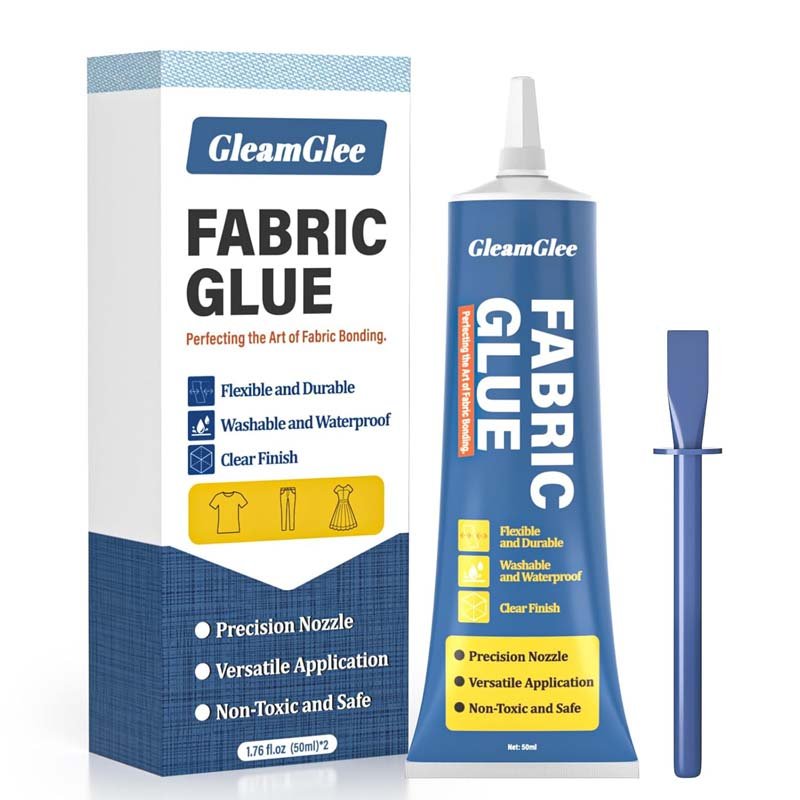
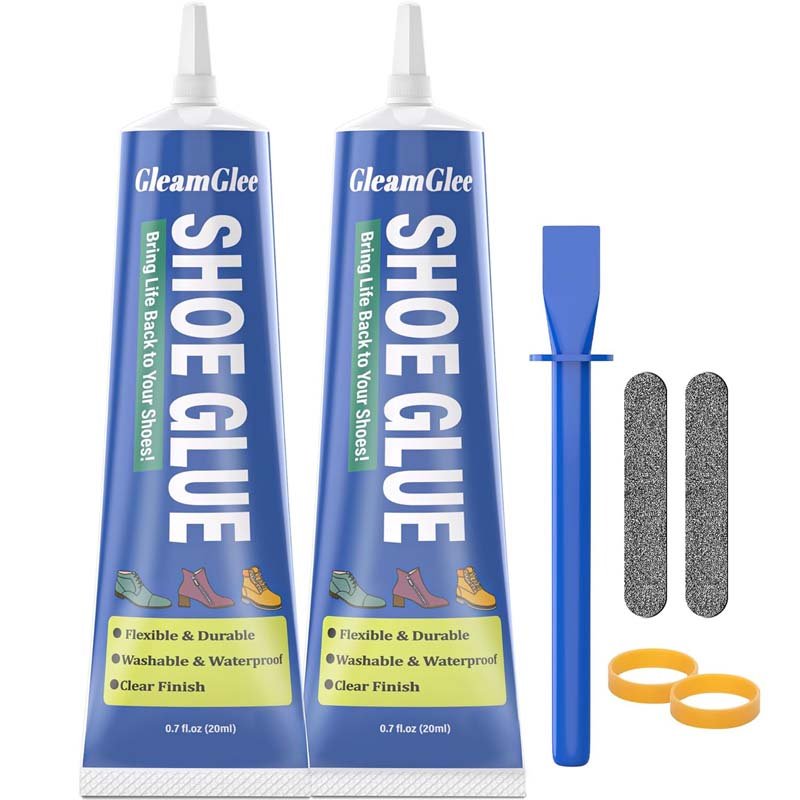
For a product like GleamGlee Fabric Glue, the key performance areas are closely tied to what customers actually ask about before they buy:
| Product feature | What it means in real life |
|---|---|
| Ultra-strong fabric bond | The repair is less likely to open during daily wear |
| Transparent, non-yellowing finish | The repair looks cleaner on visible clothing |
| Flexible after drying | The bonded area feels softer and moves better |
| Washable and ironable | The repair fits normal clothing care routines |
| Precision nozzle | The glue is easier to apply neatly on small areas |
For most home users, these are not abstract product claims. They directly affect whether the item gets worn again with confidence.
What clothes can fabric glue for Uniqlo fix?
Fabric glue for Uniqlo can fix a wide range of everyday fabric items, but the best results usually come from light-to-medium repair jobs rather than heavy structural damage. In other words, it is excellent for many common clothing problems, but it is not the right answer for every torn seam or every high-stress stretch area.
The most common clothing types it can help with include:
- jeans
- cotton T-shirts
- casual shirts
- skirts and pants
- children’s clothing
- hoodies and sweatshirts
- hats, fabric bags, and backpacks
- curtains, table runners, pillow covers, and other home textiles
The most common repair types include:
- patch attachment
- hem repair
- decorative trim repair
- small tear support
- lining edge repair
- embellishment attachment
- no-sew clothing adjustments
A useful way to understand this is to match the garment with the repair need.
| Garment type | Common issue | Is fabric glue a good fit? | Why |
|---|---|---|---|
| Uniqlo jeans | Worn area, patch, hem edge | Yes | Denim works well with localized repair |
| Cotton shirt | Loose cuff, trim, small edge opening | Yes | Clear finish matters and glue can stay discreet |
| Skirt or casual pants | Hemming | Yes | One of the easiest home uses |
| Kids’ clothing | Patch, badge, costume fix | Yes | Fast repair saves time and extends wear |
| Hoodie | Small patch or trim repair | Yes | Good for visible everyday fixes |
| Knitwear | Stretch damage | Limited | Needs more care and sometimes sewing support |
| Technical outerwear | Thin or coated fabric problem | Limited | Fabric compatibility matters more |
| Bag lining | Loose inner edge | Yes | Controlled nozzle helps on detail work |
Customers often get the best value from fabric glue when the repair meets three conditions:
- the damaged area is not under extreme tension
- the surfaces can be pressed together cleanly
- the repair needs to stay neat and flexible
That is why fabric glue is especially popular for clothing items people wear often but do not want to replace over a small flaw. A pair of jeans may still have 90% of its life left. A cotton shirt may fit perfectly except for one opening seam. A school uniform may only need one patch to stay usable for another season. In those cases, a low-cost no-sew repair makes a lot of sense.
From a cost perspective, this is also where the product becomes attractive. If one 50g tube can handle multiple small repairs across jeans, shirts, kids’ clothing, home textiles, and decorative work, the value per use becomes quite strong.
| Pack size | Estimated use style | Best for |
|---|---|---|
| 50g single tube | Several small repairs or 1–3 medium projects | Home users, occasional repair |
| 50g two-pack | Repeated household use or resale convenience | Families, frequent DIY users, e-commerce sellers |
This is one reason GleamGlee’s 50g single and 50g two-pack options are practical. They fit both everyday household demand and broader retail or bundled-sales demand.
Is fabric glue for Uniqlo good for small repairs?
Yes, small repairs are where fabric glue for Uniqlo gives the best value. In fact, this is the area where many customers see the biggest benefit because the repair is often too minor for professional alteration, but still too visible to ignore.
Most small repairs fall into one of these common situations:
- the damage is easy to see during wear
- the damage may get worse after washing
- the fix does not justify paying a tailor
- the customer wants the repair done the same day
For these situations, fabric glue is often the most practical choice because it reduces three common barriers:
- time
- skill
- cost
A simple small repair with fabric glue can often follow this rhythm:
- Clean and dry the area
- Apply a thin even layer
- Press the surfaces together
- Let it set for 6 to 10 minutes
- Allow 24 hours for full cure
That makes it especially useful for people who do not sew, do not have a machine, or simply want a faster option for daily wardrobe maintenance.
Here is why small repairs are such a strong use case:
| Small repair type | Why customers delay fixing it | Why fabric glue helps |
|---|---|---|
| Hem edge opening | Seems too minor for a tailor | Quick no-sew fix |
| Patch corner lifting | Easy to ignore until it worsens | Fast edge reattachment |
| Loose decorative detail | Stitching feels inconvenient | Precise application works well |
| Light cuff or collar edge issue | Hand sewing may look messy | Clear finish looks cleaner |
| Small tear support | Users worry it will grow in washing | Fast repair before damage spreads |
Customers also care a lot about how the repaired area feels after 24 hours. A repair may be small, but if it becomes stiff or obvious, they may stop wearing the item anyway. That is why the quality of the formula matters so much. GleamGlee Fabric Glue is better suited to these repairs because it is built around the actual pain points customers talk about most:
- dries clear instead of leaving obvious marks
- stays soft and flexible after drying
- supports washing and ironing after full cure
- comes with a precision nozzle for better control
- includes an anti-clog cap design for easier reuse
For small clothing repairs, those details are not minor. They directly affect whether the customer feels the repair was successful.
There is also a strong money-saving angle here. Many Uniqlo items are affordable, but that does not mean people want to replace them quickly. If a $20 to $60 clothing item can be kept in rotation with a repair that takes less than 10 minutes of active work, the value is easy to understand.
| Option | Approximate effort | Cost impact | Best for |
|---|---|---|---|
| Replace the item | Low effort, higher total cost | Highest | Only if repair is not worth it |
| Tailor repair | Moderate effort, outside service needed | Medium | Better for more serious damage |
| DIY sewing | Moderate time and skill | Low to medium | Good if the user sews well |
| Fabric glue repair | Low time and easy process | Low | Best for many small daily repairs |
That is why small repairs are the strongest proof of what fabric glue can do. They are common, they are visible, they affect whether people keep wearing the garment, and they are exactly the type of problem customers want solved quickly.
Which Fabric Glue for Uniqlo Is Best?
The best fabric glue for Uniqlo is the one that gives the most balanced result in real clothing use. That means it should bond well, dry clear, stay flexible, feel comfortable after drying, and hold through normal washing once fully cured. For most customers, the best fabric glue is not the one with the most aggressive “super strong” claim on the package. It is the one that makes the repair look clean, feel natural, and last long enough to keep the clothing in regular use.
This matters because Uniqlo clothing is usually bought for daily wear, not for display. People wear these clothes to work, school, travel, shopping, and home life. So when they repair them, they want five things at the same time:
- the repair should hold during daily wear
- the repaired area should not look messy
- the bonded part should not become stiff
- the item should still be washable
- the glue should be easy to apply without sewing skills
That is why the best fabric glue for Uniqlo usually has these core features:
| Key factor | Why customers care | What a good fabric glue should do |
|---|---|---|
| Bond strength | The repair should not reopen quickly | Hold hems, patches, trims, and light seam support |
| Clear drying | Visible glue marks ruin the look | Dry transparent and neat |
| Flexibility | Stiff clothing feels uncomfortable | Stay soft after curing |
| Wash resistance | Clothing must survive laundry | Hold after normal washing and ironing |
| Precision application | Small repairs need control | Use a fine nozzle or controlled flow |
| Reusability | Customers want value from one tube | Resist clogging and stay usable between jobs |
For most home users, the “best” fabric glue is really the one that gives the fewest regrets after 24 hours. If the repair still looks neat, the fabric still feels wearable, and the bond stays after washing, then the product has done its job well.
GleamGlee Fabric Glue fits this standard closely because its product facts match the real things customers check before they decide whether a fabric repair was worth doing:
- ultra-strong fabric bond
- transparent, non-yellowing finish
- soft and flexible after drying
- washable and ironable after full cure
- precision nozzle with anti-clog cap
- available in 50g single tube and 50g two-pack
For Uniqlo clothing, that combination is especially useful because many garments are simple in design and frequently worn. A messy or hard repair stands out quickly. A clean and flexible repair blends in better and gives the garment a longer usable life.
Which fabric glue for Uniqlo works on denim?
Denim is one of the most important test areas for fabric glue because jeans are worn hard, washed often, and repaired in places people can easily see. A fabric glue that works well on denim usually earns more trust from customers because denim puts pressure on the repair in a very real way. Knees bend, pocket edges rub, hems drag, and patch corners lift if the bond is weak.
For denim, customers usually repair the following areas:
- worn spots near pockets
- patch repairs on knees or thighs
- hem openings
- decorative patches
- light edge reinforcement
- inner fabric support on small weak areas
The challenge with denim is that it needs more than just sticking power. The best fabric glue for denim has to balance strength and comfort. If the bond is too weak, the patch lifts. If the bond is too hard, the jeans feel rough and uncomfortable when worn. If the glue dries yellow or cloudy, the repaired area looks worse than before.
Here is what customers often care about most when repairing denim:
| Denim concern | Why it matters in real use | What the glue should do |
|---|---|---|
| Patch corners lifting | This is the first part that often fails | Hold corners down evenly |
| Hem wear | Hems rub against shoes and ground | Stay bonded while bending |
| Repeated washing | Jeans are washed often | Keep hold after full cure |
| Stiffness after drying | Hard repair zones feel uncomfortable | Stay flexible after curing |
| Visible glue marks | Denim repairs are often easy to see | Dry clean and clear |
A good denim repair usually comes down to four practical rules:
- use a thin even layer, not a thick one
- press the patch or fold firmly and evenly
- give the repair a full 24 hours to cure
- avoid choosing glue-only repair for very large high-stress structural damage
For denim, GleamGlee works well because its product design matches the kind of results denim users want:
- strong bond for patching and hemming
- flexible dried finish for comfort in movement
- transparent appearance around visible patch edges
- precise nozzle for controlled placement
- washability after full cure
This is important because jeans are one of the few clothing items where customers can quickly tell whether the repair product was worth buying. If a denim patch still looks good and stays down after repeated wear, trust in the product goes up immediately.
From a value perspective, denim is also one of the strongest repair categories. A pair of Uniqlo jeans may still have most of its useful life left even if one area starts wearing out. If a small repair keeps those jeans usable for several more months or longer, the cost of one tube of fabric glue becomes very easy to justify.
| Item | Common repair | Estimated replacement avoidance value |
|---|---|---|
| Uniqlo jeans | Patch or hem repair | Often saves replacing a full pair |
| Kids’ denim | Knee patch | Extends wear during growth stage |
| Casual denim skirt | Hem or trim repair | Restores appearance with low cost |
| Denim jacket | Decorative patch or edge fix | Helps keep a higher-attachment item in use |
That is why denim remains one of the strongest signs of whether a fabric glue is actually practical for everyday wardrobes.
Which fabric glue for Uniqlo works on cotton?
Cotton is different from denim because appearance usually matters even more. On a cotton T-shirt, shirt, blouse, skirt, or soft casual item, customers tend to notice glue marks, stiffness, and uneven texture very quickly. A repair that technically holds but looks shiny, bulky, or rough can still make the garment feel “not worth wearing.” That is why the best fabric glue for Uniqlo cotton items needs control and a clean finish, not just raw adhesion.
Common cotton repair situations include:
- fixing a loose cuff edge
- supporting a small seam opening
- attaching a light patch
- securing ribbon or trim
- repairing hem edges
- fixing small decorative details
The main problem with cotton is that it shows mistakes more easily. If too much glue is used, it may spread into the fabric and leave a visible line. If the glue dries stiff, the repaired area may feel unnatural against the skin. If the application is messy, the repair can stand out on plain fabric, especially on lighter colors.
Here is how customers usually judge fabric glue performance on cotton:
| Cotton repair result | What customers think |
|---|---|
| Clear and soft finish | “This still looks wearable” |
| Slightly visible but neat repair | “Good enough for normal use” |
| Thick edge or stiff zone | “The clothing feels awkward now” |
| Yellow or shiny residue | “It looks older or damaged” |
| Uneven patch border | “The repair looks homemade in a bad way” |
That is why a fine nozzle matters much more on cotton than many people realize. Good cotton repair is not only about formula quality. It is also about how well the user can place the glue. A precise applicator helps reduce overspill, keeps the repair line narrower, and makes the result more acceptable on visible clothing.
For cotton garments, the best fabric glue should deliver:
- a transparent finish
- a softer cured feel
- enough grip for normal wear
- washability after full cure
- controlled flow for detailed placement
GleamGlee is a strong fit here because its features answer these exact pain points:
| GleamGlee feature | Why it matters on cotton |
|---|---|
| Clear, non-yellowing finish | Helps repairs blend in on plain fabric |
| Flexible after drying | Makes shirts, cuffs, and hems feel more natural |
| Precision nozzle | Helps control glue on visible areas |
| Washable and ironable | Supports normal care routines |
| Easy-use format | Better for non-professional users |
For many customers, cotton is actually the real trust test. People may forgive a more visible repair on work jeans or kids’ play clothes. They are less forgiving on a cotton shirt they wear outside, to work, or in everyday public settings. So if a fabric glue performs well on cotton, it usually feels like a more reliable clothing repair product overall.
From a practical angle, cotton repairs are also very common in the home. One tube of the right glue may be used across:
- T-shirts
- cotton shirts
- skirts
- children’s clothing
- costume pieces
- home textiles such as table runners and pillow covers
That broad usability improves value per purchase and makes cotton performance especially important for repeat buying.
Which fabric glue for Uniqlo works for patches?
Patches are one of the most useful and most visible applications for fabric glue. They are popular because they solve two needs at the same time: repair and appearance. A patch can cover damage, reinforce a weak area, and also make the clothing look more intentional. That is why patch use is so common on jeans, school clothing, children’s items, bags, hoodies, and casual fashion pieces.
For patch work, customers usually care about these questions:
- Will the patch stay flat?
- Will the corners lift after washing?
- Will glue show around the edge?
- Will the patch feel too stiff?
- Can I do it neatly at home without sewing?
The best fabric glue for Uniqlo patch work needs to handle both the center area and the patch edges well. In real use, the corners and perimeter are the weak points. A patch may look fine when first pressed down, but if the edges are not bonded properly, it starts peeling after movement or washing.
Here is what good patch glue has to do:
| Patch requirement | Why it matters | What customers want |
|---|---|---|
| Strong perimeter hold | Corners usually fail first | No lifting after normal use |
| Clear drying | Visible extra glue looks messy | Cleaner border appearance |
| Flexibility | Patch should move with the garment | Better comfort and more natural look |
| Wash durability | Clothing needs to survive care cycles | Longer-lasting repair |
| Easy placement | Small or shaped patches need accuracy | Less mess, better alignment |
Patch work is especially attractive for Uniqlo clothing because many items are simple enough that a patch can work as both a repair and a design refresh. A worn area on jeans can become a feature instead of a flaw. A child’s clothing repair can be turned into something fun. A plain hoodie or tote bag can be customized instead of replaced.
Common patch uses include:
- denim knee repair
- patching worn pocket areas
- school uniform badges
- decorative patches on casual jackets
- repair patches on children’s pants
- applique-style updates on bags and soft accessories
GleamGlee works well for patch application because its product features are closely aligned with patch-use demands:
- strong fabric bond
- clear, non-yellowing finish
- flexible dried result
- washable and ironable after cure
- fine-point nozzle for better edge control
That edge control matters more than many customers expect. A patch can fail even when the glue itself is good if the border gets too much glue, too little glue, or poorly distributed glue. A precise nozzle helps the user place the adhesive more evenly, especially around corners and narrow edges.
Patching is also one of the strongest value categories in clothing repair. Instead of discarding a garment because of one damaged area, customers can often restore function and improve appearance at the same time. That makes patch-friendly fabric glue feel more worthwhile than a product limited to only one narrow use.
| Patch scenario | Why customers like this repair |
|---|---|
| Repairing jeans | Saves a favorite item and keeps it wearable |
| Fixing children’s clothes | Fast, low-cost solution before damage spreads |
| Decorative patching | Adds style while hiding wear |
| Uniform or school use | Practical and quick |
| Costume work | Faster than sewing for event deadlines |
For both direct users and business customers, patches are also one of the easiest repair categories to demonstrate visually. Before-and-after results are obvious, which makes patch-based content strong for e-commerce images, short videos, product packaging, and listing graphics. That is one more reason patch performance plays such a big role in deciding which fabric glue feels “best” in real use.
Which fabric glue for Uniqlo works best for real daily use?
For real daily use, the best fabric glue for Uniqlo is the one that keeps working after the first repair. It should be easy to store, easy to reuse, and versatile enough to handle more than one job around the home. Customers usually do not want a fabric glue that is only good for one perfect test case. They want one tube that can help with jeans one week, a shirt hem the next, and a school project or costume repair later on.
That is why daily-use performance usually comes down to these seven questions:
- Is it easy to apply neatly?
- Does it dry clear enough for visible clothing?
- Does it stay soft enough for comfort?
- Does it hold through washing?
- Can I use it on more than one type of fabric task?
- Will the nozzle clog after the first use?
- Does the pack size feel worth the money?
Here is a simple daily-use comparison framework:
| Daily-use factor | Why it matters in real life | Strong result looks like |
|---|---|---|
| Ease of use | Most users are not sewing experts | Quick, low-stress repair process |
| Clean finish | Clothing still needs to look presentable | Less visible glue marks |
| Flexibility | Clothes move all day | Repair does not feel hard or brittle |
| Durability | Clothing gets washed and worn repeatedly | Repair stays usable |
| Versatility | Households have different repair needs | One product handles many tasks |
| Storage reliability | Users do not finish a tube at once | Product still usable next time |
| Value | Customers compare cost with replacement | Multiple repairs from one tube |
This is where GleamGlee has a practical advantage for many households. It is not only positioned as strong fabric glue, but as a product that fits repeated real-world use:
- 50g single tube for regular home repair needs
- 50g two-pack for families, frequent use, or stronger value perception
- suitable for clothing, jeans, curtains, ribbons, sequins, trims, patches, accessories, and DIY work
- anti-clog cap design improves the chance of successful second and third use
For many customers, reusability is a hidden buying factor. A fabric glue may perform well once, but if the nozzle hardens shut after storage, people feel they wasted money. That is why packaging design affects satisfaction almost as much as formula strength.
From a customer point of view, the best fabric glue is the one that earns a place in the drawer instead of being used once and forgotten. From a seller’s point of view, that same quality matters because repeat-use products get better reviews, better repeat orders, and stronger word of mouth.
So when customers ask which fabric glue for Uniqlo is best, the most honest answer is this: the best one is the product that gives clean-looking, flexible, washable, repeatable results across the kinds of small clothing repairs people actually have. That is why GleamGlee Fabric Glue is such a strong match. It is built for the way people really repair clothes, not just for how fabric glue sounds on a label.
How to Use Fabric Glue for Uniqlo?
Using fabric glue for Uniqlo correctly is less about doing something complicated and more about doing a few simple steps well. Most people do not fail because the product is weak. They fail because they rush the repair, use too much glue, or treat clothing glue like a general household adhesive. For Uniqlo garments, that approach usually gives a repair that looks too obvious, feels too stiff, or comes loose too early. A better result comes from a controlled method: prepare the fabric carefully, apply a thin layer, press the surfaces evenly, and give the repair enough time to cure before wearing or washing.
This matters because Uniqlo clothing is usually worn often and judged closely. A hem on pants, a patch on jeans, or a trim repair on a shirt needs to do more than hold for one day. It needs to stay presentable through normal movement and normal care. In practical terms, that means the repair should meet three standards at once: it should look neat, feel comfortable, and last long enough to make the repair worthwhile. GleamGlee Fabric Glue fits this kind of use because the product is designed for strong fabric bonding, a clear finish, flexible feel after drying, and easy control through a precision nozzle. The working rhythm is also realistic for home users: about 6 to 10 minutes to set, and about 24 hours for full cure.
A useful way to think about it is this: a good fabric glue repair is not about speed alone. It is about saving a garment in a way that still feels wearable. If a pair of Uniqlo jeans, a cotton shirt, or a child’s hoodie still looks good after repair and still feels normal in wear, then the glue has done its job properly.
How do you prepare fabric glue for Uniqlo use?
Preparation is where the quality of the repair really begins. A lot of users skip this because the damage looks small, but clothing repairs usually fail at the surface level first. If the fabric has dust, skin oil, detergent residue, moisture, or loose lint around the repair area, the glue may bond to that layer instead of bonding properly to the fabric itself. The result may look acceptable in the first hour, but after bending or washing, the repair weakens quickly.
For most Uniqlo repairs, preparation should stay simple and focused. First, make sure the area is completely clean and dry. If it is a hem, smooth the fold first and check that the line sits straight. If it is a patch, place the patch before applying glue and confirm that it is centered correctly. If it is a small tear or edge opening, trim loose threads so the repair line looks cleaner and presses together more evenly. These small steps usually take only a few minutes, but they improve both bond quality and final appearance.
The effect of good preparation is easy to understand in practical terms:
| Preparation quality | What usually happens after curing |
|---|---|
| Clean, dry, flat fabric | Better hold and cleaner-looking repair |
| Slight dust or loose fibers left in place | Repair may hold, but edges look rougher |
| Damp or unclean fabric | Higher chance of early lifting |
| Poor alignment before gluing | Repair may hold, but garment looks off |
This is especially important on common Uniqlo fabrics like denim and cotton. Denim often has worn fibers around damaged areas, so trimming and cleaning improve patch adhesion. Cotton tends to show visible glue mistakes more easily, so smooth preparation helps the repair blend in better. In many households, one careful preparation step can be the difference between a repair that lasts through washing and one that has to be redone.
How do you apply fabric glue for Uniqlo neatly?
The cleanest repairs usually come from using less glue, not more. That may sound counterintuitive, but on clothing, too much glue often causes the very problems customers dislike most. It can spread past the repair line, create visible edges, make the area feel hard, or leave a shine on the fabric. A thin, even layer usually gives a better result because it allows the fabric surfaces to bond without flooding the area.
For most Uniqlo clothing repairs, the best method is to work on a flat surface and apply the glue with control. If you are fixing a hem, apply a narrow line inside the fold rather than squeezing glue all the way to the visible edge. If you are attaching a patch, make sure the glue reaches the perimeter well, because patch corners and borders are the first parts to lift during wear and washing. If you are securing trim, ribbon, or decorative fabric details, the application should stay especially narrow and neat because appearance matters more in visible areas.
This is where GleamGlee’s precision nozzle becomes a practical advantage. On clothing, control is part of product performance. A formula can be strong, but if too much comes out too fast, the result still looks messy. A finer tip gives the user more control over patch borders, folded hems, shirt edges, cuffs, and smaller visible repairs.
Here is how application quality usually affects the result:
| Application style | Likely result |
|---|---|
| Thin and even | Cleaner finish, better comfort, more natural look |
| Slightly heavy but controlled | Acceptable hold, but repair may look more visible |
| Thick glue layer | Higher chance of stiffness and visible seepage |
| Uneven coverage | Corners or edges may weaken earlier |
In real home use, a neat repair also depends on resisting the urge to overwork the area. Once the surfaces are aligned and pressed together, it is usually better to leave them alone rather than lifting and readjusting repeatedly. Repositioning after glue has started to grab often leads to rougher edges and a less even finish. Customers usually get the best-looking result when they decide the position first, apply carefully once, and then press the repair into place with steady, even contact.
How long does fabric glue for Uniqlo need to dry?
Drying time is one of the most misunderstood parts of clothing repair. Many users see that the fabric is holding together after a few minutes and assume the repair is finished. In reality, there is a big difference between the initial set and the full cure. The repair may feel stable enough to stay in place early on, but it still needs more time to develop real strength for daily wear, movement, washing, and ironing.
With GleamGlee Fabric Glue, the timing is practical and easy to work with. The repair usually sets in about 6 to 10 minutes, which means the two fabric surfaces begin holding together fairly quickly. But full cure takes about 24 hours. That full day matters because clothing is not a static surface. A hem bends when you walk. A patch flexes when you sit. A cuff moves constantly through the day. If the garment is worn, folded sharply, washed, or ironed too early, the repair may weaken before it has fully developed.
A simple way to understand the timeline is this:
| Time stage | What it means for the repair |
|---|---|
| First 10 minutes | Fabric starts holding together |
| First 1–2 hours | Bond builds, but should not be stressed |
| Same day | Repair may look ready, but is still curing |
| After 24 hours | Repair is ready for normal use and care |
This is why patience improves repair strength so much. A user may spend only 5 to 10 minutes doing the actual repair, but the decision to let it cure fully is what often determines whether the result lasts through washing and repeated wear. In practical home use, one of the safest habits is to do the repair in the evening and leave the garment flat overnight. That works especially well for jeans patches, pant hems, shirt edges, children’s clothing repairs, and other daily-use items.
How do you use fabric glue for Uniqlo on hems, patches, and small repairs?
The method should stay the same in principle, but the focus changes slightly depending on the repair. For hems, the main goal is to keep the fold line straight and the glue line narrow. A hem repair succeeds when it stays in place without creating a thick, crunchy edge. For patches, the main goal is even contact, especially around the corners and perimeter. A patch can look secure at first but still fail at the edges if the border is not bonded well. For small repairs such as cuff edges, trim attachment, or light tear support, the goal is usually appearance first and strength second. The repair needs to be neat enough that the clothing still looks good in regular wear.
This is why different repair types have different pressure points:
| Repair type | Main thing to get right |
|---|---|
| Hem | Straight fold and narrow glue line |
| Patch | Strong edge and corner contact |
| Small tear support | Careful alignment and minimal glue |
| Trim or ribbon repair | Clean visible finish |
Most customers get better results when they do not try to treat all repairs as “more glue equals more strength.” On hems, extra glue often leaks out and becomes visible. On patches, too much glue at the border can make the edge hard and obvious. On small decorative or visible repairs, heavy application usually harms the look of the garment more than it helps the bond.
That is why fabric glue works best when used as a controlled clothing repair solution rather than a heavy adhesive. For Uniqlo garments, that approach makes sense because the clothing is often simple, wearable, and worth keeping presentable. A neat repair on a pair of jeans or a shirt is often all the customer really wants: not perfection, just a clean result that keeps the item in rotation longer.
What should you avoid when using fabric glue for Uniqlo?
Most poor results come from a small number of repeat mistakes. The first is using too much glue. This often causes stiffness, visible residue, and a less natural-looking finish. The second is rushing the process, especially by wearing or washing the garment too soon. The third is applying glue to fabric that has not been cleaned or lined up properly first. These mistakes are common because users want a fast fix, but they often reduce both appearance and durability.
A practical way to avoid problems is to remember the three most important rules: keep the surface clean, keep the glue layer thin, and respect the cure time. Those three habits solve most of the issues that make customers think fabric glue “doesn’t work.”
Here is how the common mistakes usually affect the result:
| Mistake | Most likely effect |
|---|---|
| Too much glue | Messier appearance and stiffer feel |
| Dirty or damp fabric | Weaker hold and earlier lifting |
| Crooked alignment | Repair holds, but garment looks untidy |
| Wearing too soon | Bond weakens before full strength develops |
| Washing before 24 hours | Higher chance of repair failure |
In everyday use, fabric glue for Uniqlo works best when the repair stays focused. The process does not need many complicated steps, and it does not need a lot of extra tools. What it needs is careful preparation, a clean application, and enough patience for the bond to finish curing. When those parts are done well, the repair usually looks better, feels better, and lasts longer.
Is Fabric Glue for Uniqlo Strong?
Fabric glue for Uniqlo is strong enough for many of the repairs people actually do at home, but the strength has to be judged in a practical way. Most customers are not asking whether the glue is “industrial grade.” They are asking whether it can keep a hem closed, hold a patch on jeans, stay neat after washing, and let the clothing remain comfortable in daily wear. For those kinds of tasks, a good fabric glue can perform very well. For very large seam failures or damage in high-stretch, high-tension zones, glue alone is usually not the best choice. The real answer is not simply yes or no. It depends on where the repair is, how much stress that area takes, and whether the glue was used correctly.
For Uniqlo clothing, that distinction matters because the garments are usually daily basics. They are worn often, washed often, and expected to feel simple and clean. A repair only feels strong to the customer if it does three things at once: it keeps holding, it still looks presentable, and it does not make the garment uncomfortable. That is why strength in fabric glue is not only about bonding power. It is also about flexibility, wash resistance, and wear comfort. GleamGlee Fabric Glue is a better fit for this kind of clothing use because its product facts line up with what customers actually care about most: strong bond, clear drying, soft flexibility after curing, and washable, ironable performance after full cure.
A useful way to think about strength is this: if the repair still looks good after 24 hours, still feels natural during wear, and still stays together after normal washing, then for most households, it is strong enough.
Is fabric glue for Uniqlo washable?
Washability is one of the clearest ways customers judge whether a fabric glue is truly strong. A repair that looks good on the first day but opens in the wash does not feel like a real solution. That is why this question matters so much. In everyday clothing use, a glue only becomes valuable when it survives the normal care routine of the garment. For Uniqlo clothing, that often means repeated washing on jeans, shirts, skirts, children’s clothing, hoodies, and other basics that stay in regular rotation.
GleamGlee Fabric Glue is designed to be washable and ironable after full cure, which is a very important practical advantage. But washable performance is not only about the formula. It also depends on how the repair was done. In real home use, the biggest difference in wash performance usually comes from four things: whether the fabric was cleaned first, whether the glue was applied in a thin even layer, whether the surfaces were pressed together properly, and whether the repair was allowed the full 24 hours to cure before washing.
This is why two customers can use the same glue and get different results. One person repairs a hem, leaves it overnight, and washes it the next day with no issue. Another repairs a patch in the afternoon and washes the clothing the same evening, then thinks the glue is weak. In many cases, the issue is not the product. It is the curing time.
Here is a practical view of how washable strength usually works:
| Repair type | Wash durability when used correctly | Why |
|---|---|---|
| Hem repair | Strong | Flat fold gives good bonding contact |
| Patch repair | Strong | Good border pressure helps edges stay down |
| Trim or ribbon repair | Medium to strong | Good if the area is not under heavy pull |
| Small tear support | Medium | Depends on fabric stress and repair size |
| Major seam damage | Lower | Better with sewing support |
Washability also changes with the garment itself. A denim patch on relaxed jeans usually behaves differently from a repair in a tight stretch area. A cuff edge on a cotton shirt is not under the same kind of stress as a waistband seam or underarm seam. That is why customers get better results when they ask not only, “Is it washable?” but also, “Is this the right type of repair for washable glue use?”
From a value perspective, washability is where the product proves its worth. If one repair survives several wear-and-wash cycles, many customers feel the tube has already paid for itself. If a small repair saves one pair of jeans, one child’s school item, or one favorite shirt from early replacement, the product cost becomes very easy to justify.
Does fabric glue for Uniqlo stay flexible?
Flexibility is one of the most important parts of repair strength because clothing moves constantly. A bond can feel firm on the table and still fail in real wear if it becomes too hard or brittle. People sit, bend, walk, stretch their arms, fold cuffs, and wash garments over and over again. If the repaired area turns stiff, the user notices it immediately. If the bond cracks or the patch edge starts lifting after movement, the repair no longer feels strong, even if it held well on day one.
This matters especially for Uniqlo clothing because comfort is a big part of why people buy it. A pair of jeans, a cotton shirt, a hoodie, a skirt, or a child’s basic top is expected to feel easy to wear. So if the repaired area becomes rough, overly hard, or unnatural in movement, the garment loses some of its value even if it technically stays bonded.
GleamGlee Fabric Glue is designed to dry soft and flexible rather than hard and brittle. That makes it better suited to fabric repairs that have to move with the garment. In practical terms, this kind of flexibility is most noticeable on patch repairs, hems, cuffs, collar edges, trim attachment, and children’s clothing. These are all areas where the repair needs to hold but also bend naturally.
A flexible bond helps in three very practical ways:
| Benefit | What it means for the wearer |
|---|---|
| Better comfort | The repair feels less obvious during use |
| Better appearance | The garment hangs and folds more naturally |
| Better wear performance | Less chance of cracking in motion |
This is why “strong” in clothing repair should not mean “rock hard.” For many household users, a repair feels stronger when they stop noticing it. If the patch moves naturally, the hem stays neat, and the shirt edge does not scratch or pull, then the bond feels more trustworthy in daily life.
From a customer point of view, flexibility also affects repeat buying. If the first repair feels comfortable after drying, users become more confident about using the glue on other clothing and textile items. If it feels stiff and awkward, they may never use the product again even if the bond technically held.
Can fabric glue for Uniqlo handle daily wear?
Yes, for many repair types it can handle daily wear very well, but daily wear has to be understood realistically. Most customers are not trying to rebuild a fully torn garment with glue. They are trying to keep an item neat, wearable, and in use. That is exactly the situation where fabric glue performs best. It works especially well for hems, patches, decorative trims, small tear support, minor seam reinforcement, and light edge repairs. These are the repairs that affect appearance and usability the most, but usually do not justify tailoring or replacement.
Daily wear puts a repair through repeated low-to-medium stress: walking, sitting, folding, normal rubbing, regular washing, and repeated handling. A good clothing glue needs to survive that pattern without making the garment feel strange. This is why balanced performance matters more than extreme bonding claims. A repair that holds but becomes uncomfortable is not a good daily-wear repair. A repair that looks clean, feels natural, and survives normal use is much more valuable.
Here is a realistic daily-wear guide:
| Repair area | Daily-wear suitability | Practical note |
|---|---|---|
| Hems | Very good | One of the best glue uses |
| Patches on denim | Very good | Strong if edges are bonded well |
| Decorative trims | Very good | Works well when appearance matters |
| Light cuff or collar repairs | Good | Best with neat controlled application |
| Small seam support | Good | Better before damage becomes large |
| Large high-stress seam | Limited | Often better with sewing help |
For many households, this is enough. The goal is not to replace garment construction entirely. The goal is to avoid throwing away clothing because of one moderate problem. If a hem stays in place, a patch stays flat, or a child’s hoodie keeps going for another season, then the glue has done something very valuable.
There is also a simple money-saving logic behind this. A small repair often takes less than 10 minutes of active work, and one 50g tube can usually cover multiple repairs if used carefully. If that saves even two or three frequently worn items, the value becomes obvious.
| Item | Common repair | Why the repair feels worthwhile |
|---|---|---|
| Jeans | Patch or hem | Saves a heavily used favorite item |
| Shirt | Edge or trim repair | Keeps a good-fit basic in use |
| Kids’ clothing | Badge, patch, small tear | Delays replacement during growth |
| Skirt or pants | Hem adjustment | Quick improvement in appearance |
That is why fabric glue for Uniqlo often feels strongest not in dramatic repairs, but in ordinary ones. It helps the clothing keep doing its job.
Is fabric glue for Uniqlo strong enough for hems, patches, and small repairs?
Yes, and these are actually the repair types where fabric glue usually performs best. Hems, patches, and small repairs are ideal because they combine high visual importance with manageable stress levels. Customers care about these repairs because they are visible, but they usually do not require the kind of major structural rebuilding that only stitching can provide.
Hems are one of the strongest uses for fabric glue because the repair area is usually flat, easy to align, and simple to press evenly. A clean hem repair on pants, skirts, sleeves, or curtains can restore the look of the item quickly without much active effort. Patches are another strong category because they do two jobs at once: they cover damage and reinforce the weak area. This is especially useful on jeans, children’s clothing, schoolwear, and casual basics. Small repairs such as loose trim, cuff edges, ribbon details, or light tear support are also a good fit because the problem is often too minor for tailoring but too visible to ignore.
A concentrated look at these repair types makes the value clear:
| Repair type | Why glue works well | What customers gain |
|---|---|---|
| Hem | Flat bonding area | Clean no-sew repair |
| Patch | Reinforces and covers damage | Better appearance and longer wear |
| Small edge repair | Easy localized application | Faster fix before damage spreads |
| Decorative detail | Precision matters more than stitching strength | Cleaner visible result |
For these jobs, strength is really about usefulness. If the repair stays closed, stays presentable, and keeps the garment wearable, then it is strong enough for what the customer actually needs.
When is fabric glue for Uniqlo not enough on its own?
An honest answer helps customers use the product better: fabric glue is not the best standalone solution for every clothing problem. It is less suitable on its own for major seam failures, large tears under heavy tension, damage in strong stretch zones, and repairs where the original construction of the garment is carrying a lot of force. In those cases, stitching or a combined method is usually more reliable.
That does not make the glue weak. It simply means it has a best-use range. Just like sewing is better for some jobs and faster for others, fabric glue has its strongest zone of performance. Customers usually appreciate that kind of clarity because it helps them avoid disappointment and use the product where it delivers the highest value.
A simple guide looks like this:
| Repair situation | Glue alone | Better option |
|---|---|---|
| Small hem opening | Yes | Glue works well |
| Patch on worn denim | Yes | Glue works well |
| Loose trim or edge | Yes | Glue works well |
| Small seam support | Sometimes | Depends on stress level |
| Large seam split | Usually no | Sewing or tailor repair |
| Major stretch-zone damage | Usually no | Sewing support recommended |
This is the practical way to answer the strength question. For many of the repairs people actually face on Uniqlo clothing, fabric glue is absolutely strong enough. It becomes less suitable only when the repair moves from surface bonding into full structural rebuilding.
What makes GleamGlee fabric glue strong in real use?
What makes GleamGlee strong in real use is that its performance is built around the way clothing is actually worn and repaired. It combines the key things customers need from fabric glue instead of focusing on only one claim. The bond is designed to be strong, but the finish is also clear and non-yellowing. The repair is meant to hold, but also to stay flexible enough for normal movement. The product works for daily clothing care because it supports washing and ironing after full cure, and its precision nozzle makes it easier to apply the glue neatly where it is needed.
That combination matters because most customers do not judge strength in technical terms. They judge it by very ordinary questions:
- Did the patch stay down?
- Did the hem still look neat?
- Did the repair survive washing?
- Did the clothing still feel comfortable?
- Did I keep wearing the item instead of replacing it?
That is the real standard. And for hems, patches, decorative fixes, and many small daily repairs on Uniqlo clothing, GleamGlee gives a strong answer because it is built around actual wardrobe use, not just around a label claim.

Why Choose GleamGlee Fabric Glue for Uniqlo?
Choosing fabric glue is not only about finding something that sticks. Most customers are really comparing three things at the same time: repair quality, ease of use, and overall value. They want the repair to look clean, hold through daily use, and feel worth the money. That is why GleamGlee Fabric Glue stands out for Uniqlo clothing repairs. It is built around the exact problems people face most often with everyday garments: loose hems, patch repairs, small tears, decorative details, worn denim areas, and clothing adjustments that are too small for a tailor but too visible to ignore.
For Uniqlo users, this matters even more because many pieces are basic wardrobe staples. People wear them often, wash them often, and want them to stay neat for as long as possible. A good fabric glue should help extend the life of those clothes without making them stiff, messy, or uncomfortable. GleamGlee answers that need with a formula and package design that match real home-use expectations:
- strong bond for fabric-on-fabric repairs
- clear and non-yellowing finish
- soft and flexible after drying
- washable and ironable after full cure
- precision nozzle for controlled application
- anti-clog cap for easier reuse
- 50g single-tube and 50g two-pack options for different buying habits
That combination is important because customers do not judge a clothing repair product by only one feature. They notice everything together: how easy it is to apply, how the repair looks after 24 hours, how it feels when worn, and whether it still holds after washing. For many users, a product becomes worth repurchasing only when it succeeds in all of those areas.
There is also a value angle here. A fabric glue that helps save even two or three clothing items can quickly justify its cost. If one tube helps repair a pair of jeans, one shirt hem, and one child’s school patch, the cost per repair becomes very low compared with tailoring or replacement.
| What customers compare | Low-value product result | Better-value product result |
|---|---|---|
| Application | Messy and hard to control | Easy, clean, and precise |
| Appearance after repair | Visible marks or stiffness | Cleaner, more wearable finish |
| Durability | Repair opens again quickly | Holds through normal use |
| Reuse | Nozzle clogs after one job | Better second and third use |
| Total value | One repair, then wasted tube | Multiple repairs from one pack |
That is where GleamGlee becomes a practical choice, not just another adhesive option. It is designed for clothing users who care about appearance and comfort, and also for business customers who need a product with stronger selling points, better packaging potential, and reliable supply support.
Why is GleamGlee fabric glue for Uniqlo easy to use?
Ease of use is one of the biggest reasons a customer ends up liking or disliking a fabric glue. Many people only repair clothes occasionally. They are not sewing experts, they do not own special tools, and they want the repair process to feel simple enough that they can finish it in one try. If the glue is hard to control, dries badly at the opening, or requires too much guesswork, customers lose confidence quickly.
GleamGlee is easier to use because its process is straightforward and matches how people actually repair clothing at home:
- clean and dry the area
- apply a thin even layer
- press the fabric together
- let it set for about 6 to 10 minutes
- allow about 24 hours for full cure
That is a realistic method for ordinary users. It does not require stitching skills, color-matched thread, or a sewing machine. For someone fixing a loose hem, patching jeans, or attaching a decorative trim, that simplicity makes a big difference.
The package design also helps reduce frustration. The precision nozzle gives users better control over small repair zones such as:
- patch corners
- hems
- cuffs
- collars
- ribbon edges
- sequins and decorative details
- small lining repairs
This matters because a lot of repair mistakes happen from poor control, not from bad intention. If too much glue comes out, the repair can look messy. If the nozzle clogs after one use, the rest of the tube may go to waste. GleamGlee addresses this with a fine-point tip and an anti-clog cap design, which improves the chance of successful reuse.
A simple way to measure ease of use is to ask how much active effort the customer really spends.
| Repair type | Approximate active repair time with glue | Why customers like it |
|---|---|---|
| Small hem repair | 5–10 minutes | Faster than hand sewing |
| Patch placement | 6–12 minutes | Easier for non-sewers |
| Ribbon or trim fix | 5–8 minutes | More precise than many general glues |
| Small tear support | 5–10 minutes | Quick before damage spreads |
| Kids’ costume or school fix | 5–15 minutes | Works under time pressure |
For many users, this kind of speed is the real benefit. They are not trying to become expert repairers. They are trying to solve a clothing problem before the next wear, the next wash, or the next school day.
GleamGlee also fits different household buying styles:
| Pack option | Best for | Why it works |
|---|---|---|
| 50g single tube | Occasional home users | Enough for several small repairs |
| 50g two-pack | Families or frequent users | Better value and backup convenience |
This makes the product easier to position for both individual users and sellers. A single tube works well for small wardrobe maintenance. A two-pack is more attractive for families, DIY users, and e-commerce listings that want a stronger value message.
For direct customers, easy use means less stress and better first results. For private-label or wholesale customers, it means fewer usage complaints and a product that is simpler to explain in packaging, listings, and videos.
Why does GleamGlee fabric glue for Uniqlo look clean?
A repair can be strong and still feel disappointing if it looks obvious. That is especially true for Uniqlo clothing, where the design is often simple, clean, and easy to style. A thick glue line, yellow mark, stiff edge, or shiny patch border can make the repaired item feel less wearable, even when the bond itself is fine. That is why appearance matters almost as much as holding power.
GleamGlee performs well here because it is designed to dry transparent and non-yellowing while remaining soft and flexible after curing. Those two points are extremely important for clothing repairs.
Customers usually notice appearance problems in these areas first:
- around patch edges
- on light-colored cotton shirts
- on plain T-shirts and tops
- at hems and cuffs
- on visible ribbon or trim work
- near decorative elements such as sequins or appliqués
A cleaner-looking repair gives the customer more confidence to keep wearing the garment. In real life, that is a major success point. If a repair technically works but the user feels embarrassed by how it looks, the clothing still ends up unused.
Here is how appearance usually affects customer satisfaction:
| Repair appearance | Customer reaction |
|---|---|
| Clear, tidy, flexible finish | “I can still wear this confidently” |
| Slightly visible but neat | “This is fine for daily use” |
| Thick edge or visible glue spread | “It looks messy” |
| Yellow or cloudy mark | “The clothing looks older now” |
| Stiff or shiny patch area | “The repair feels obvious” |
This is why the formula and the applicator both matter. A clear-drying formula helps the repair blend in, but a precision nozzle helps keep the glue where it belongs in the first place. On simple everyday garments, that control is very important.
For example, on a patch repair, the user usually wants:
- strong border hold
- no obvious glue around the corners
- enough flexibility that the patch does not look rigid
On a hem repair, the user wants:
- a narrow, tidy bond line
- no seep-through
- no crunchy folded edge
On a cotton shirt trim repair, the user wants:
- a discreet finish
- no stiff spot against the skin
- no visible residue on the outer fabric
These details shape whether the garment stays in rotation.
From a business perspective, clean-looking performance is also easier to sell. A product that can show neat before-and-after results works better in:
- Amazon images
- A+ content
- social video demonstrations
- retail packaging claims
- influencer repair content
That is one reason GleamGlee has stronger commercial potential. The product’s visual results are easier for customers to understand and easier for sellers to demonstrate.
Why is GleamGlee fabric glue for Uniqlo a good choice for daily wear?
A fabric glue is only truly useful if it performs in normal life, not just during the first ten minutes after application. Daily wear is where customers decide whether the repair was actually worth doing. A good daily-wear glue needs to handle movement, repeated folding, normal washing, and the small stresses that happen when clothes are worn over and over.
GleamGlee is a good fit for daily wear because its performance is built around the kinds of repairs customers actually make most often:
- trouser and skirt hems
- denim patch repairs
- shirt cuff and collar edges
- children’s clothing repairs
- ribbon and trim attachment
- bag lining support
- decorative clothing changes
The reason it works well in daily use is balance. It does not rely on only one strong point. Instead, it combines:
- bond strength
- flexibility
- washability
- cleaner appearance
- practical application control
That balance is what makes a clothing repair feel successful after a week, not just after the first hour.
A useful way to think about daily-wear value is to look at how long the repair stays meaningful.
| Clothing situation | What customers want after repair |
|---|---|
| Favorite jeans | Patch should stay down and still feel comfortable |
| Everyday shirt | Repair should not look obvious in public |
| Kids’ clothing | Should survive movement and repeated use |
| Basic skirt or pants | Hem should stay neat after normal wear |
| School or costume item | Fast repair should still look presentable |
In many of these cases, the replacement value is much higher than the repair cost. If one small repair keeps a $20 to $60 garment in regular use, the return is easy for customers to understand.
| Item type | Common repair | Why glue is good value |
|---|---|---|
| Jeans | Patch or hem repair | Extends wear life without replacement |
| Cotton shirt | Trim or edge repair | Keeps a good-fit item usable |
| Children’s clothes | Badge, patch, small tear | Saves replacement during growth stage |
| Skirts and pants | Hem adjustments | Low-cost no-sew solution |
| Home textiles | Curtain or cushion edge fix | Useful beyond clothing alone |
This broad usefulness also matters for family households. One product can serve multiple needs across clothing, accessories, and light home textile jobs. That improves value per tube and makes the purchase feel more practical.
For sellers and distributors, strong daily-wear relevance also means the product has broader market reach. It is not limited to one narrow use case. It can be sold into:
- clothing repair
- denim patching
- family wardrobe care
- kids’ clothing fixes
- DIY crafting
- costume preparation
- home textile repair
That wider range makes it easier to build bundles, stronger marketplace listings, and better educational content around the product.
Why is GleamGlee fabric glue for Uniqlo a strong choice for B2B customers?
For business customers, the question is bigger than whether the glue works on a shirt or jeans. They also need to know whether the supplier behind the product is stable, scalable, and capable of helping them sell or launch successfully. This is where GleamGlee has a major advantage.
The company’s strength is not only in the product formula. It also comes from its manufacturing, packaging, design, and export system. Based on the information you provided, GleamGlee offers a much stronger commercial foundation than a simple trading supplier.
Here are some of the most important business-side strengths:
| Capability | What it means for B2B customers |
|---|---|
| 25+ chemists, material scientists, and engineers | Stronger formula support and product development |
| 4 specialized factories | Better production control and faster coordination |
| 12+ million annual unit output | Better supply confidence for scaling orders |
| 3000+ packaging molds | More packaging options and customization flexibility |
| 18+ designers | Faster package design and stronger listing support |
| 2-day print-ready design turnaround | Faster launch speed |
| 7–14 day sampling | Practical for new product testing |
| About 20-day mass production | Better planning for launches and replenishment |
| MOQ from 200 units | Easier entry for new brands and private label |
| Multilingual packaging capability | Better support for US, EU, UK, and other markets |
| Overseas warehouses in US, UK, DE | Faster regional logistics support |
| FBA-ready capability | Useful for Amazon sellers |
| 40+ country service coverage | Stronger export experience |
For B2B customers, these points solve real concerns:
- Can the formula remain consistent across larger orders?
- Can the supplier support packaging and label work?
- Can the product be localized for different markets?
- Can the order move quickly enough for seasonal demand?
- Can the supplier help with Amazon or retail-ready packaging?
- Can the brand scale without changing suppliers too early?
GleamGlee’s private-label and custom support is especially valuable for:
- Amazon sellers
- Shopify brand owners
- distributors
- chain-store suppliers
- startup repair brands
- home-care and DIY category brands
- importers looking for ready export support
The company can support:
- OEM and ODM projects
- custom formula development
- private-label packaging
- multilingual instructions and compliance-ready labels
- FBA-oriented product preparation
- packaging and visual design support
- lower-MOQ market testing
That makes GleamGlee more than a product source. It becomes a launch and scale partner.
Why is GleamGlee fabric glue for Uniqlo a stronger overall value choice?
A stronger value choice means the product makes sense from more than one angle. For direct customers, the value comes from saving clothing, reducing replacement costs, and making repairs easier. For B2B customers, the value comes from product performance plus supply reliability plus customization support.
For end users, the value often becomes clear after just a few repairs:
| Repair example | Approximate customer value logic |
|---|---|
| Repair one pair of jeans | May save replacing a frequently worn item |
| Fix one shirt hem | Saves time and keeps the shirt in use |
| Repair one child’s patch or badge | Quick low-cost solution before next wear |
| Reattach ribbon or trim | Restores appearance without tailoring |
| Fix a curtain edge or fabric accessory | Adds extra use beyond clothing |
If one 50g tube handles several of these jobs, the cost per use becomes very low. That is one reason fabric glue is attractive in households that prefer repairing over replacing.
For business customers, overall value comes from the combined package:
- product features that are easy to sell
- clean and visible use cases
- repeat-purchase potential
- strong e-commerce storytelling
- customization and packaging support
- supply and export readiness
That combined value is what makes GleamGlee stand out. It is not only a fabric glue that works well on Uniqlo clothing. It is also a product backed by real development capability, manufacturing depth, packaging speed, and global-selling experience.
So when customers ask why they should choose GleamGlee Fabric Glue for Uniqlo, the most practical answer is this: it helps clothing repairs look cleaner, feel more natural, and last more reliably, while also being easy to use and supported by a supplier that can serve both direct buyers and serious business customers.
Conclusion
If your goal is to keep Uniqlo clothing looking good without turning every small repair into a sewing project, fabric glue is a very smart solution. It works especially well for hems, patches, trims, decorative details, light tears, and minor seam support. The biggest advantages are speed, convenience, clean appearance, and better value from clothes you already own. Instead of replacing an item because of one loose edge or small damaged area, you can often restore it in a simple and affordable way at home.
What makes the difference is choosing a fabric glue that performs like a clothing repair product, not just a general adhesive. It needs to bond well, dry clear, stay flexible, and hold up after normal care. GleamGlee Fabric Glue checks those boxes in a way that fits real daily use. It is designed for clean no-sew repairs, easy handling, and repeat use across a wide range of fabric tasks, from jeans and shirts to curtains, costumes, and accessories. For households, that means fewer discarded clothes and more quick repair wins. For online sellers, it means a product with clear use cases and easy visual selling points.
For companies, brands, distributors, and Amazon sellers looking for more than a retail-ready product, GleamGlee also offers a strong manufacturing and customization advantage. You can order branded products directly, or inquire about private label, OEM, ODM, custom packaging, and low-MOQ development. With integrated R&D, production, packaging, multilingual design, and global logistics support, GleamGlee is well positioned to help both direct customers and business clients move from product idea to market launch faster and more confidently. If you want to order GleamGlee Fabric Glue or request a quotation for custom fabric glue products, now is a strong time to start the conversation.
Share:
Table of Contents
Here, creating your adhesives glue & removal cleaner collection is no longer a barrier—it’s a collaborative journey where GleamGlee helps brands and businesses transform their vision into durable, certified, and market-ready solutions.
Partner with GleamGlee
Join hundreds of global partners who trust GleamGlee for adhesives and cleaners that combine innovation, compliance, and speed. Our vertically integrated system—from R&D to warehouse—guarantees consistent performance and reliable delivery.
Whether you’re sourcing FBA-ready stock or developing your own formula, our team provides unmatched technical support and responsive service.