Skip to content
Best Glue for Fabrics:Strong, Washable & Permanent Options
Your trusted adhesives glue & cleaner manufacturer
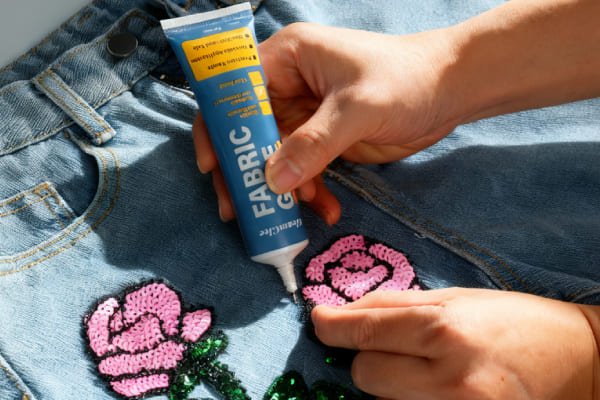
Choosing the best glue for fabrics used to be a confusing, trial-and-error process—especially for people who repair clothes at home, create handmade crafts, or handle upholstery and fabric décor. Today, fabric glue has become an essential alternative to sewing, offering strong, flexible, and nearly invisible bonds across a wide range of textiles. But not all fabric glues are created equal. Some are washable, some remain temporary, and others deliver industrial-grade strength suitable even for canvas, denim, or upholstery. Understanding these differences is the key to achieving long-lasting, frustration-free results.
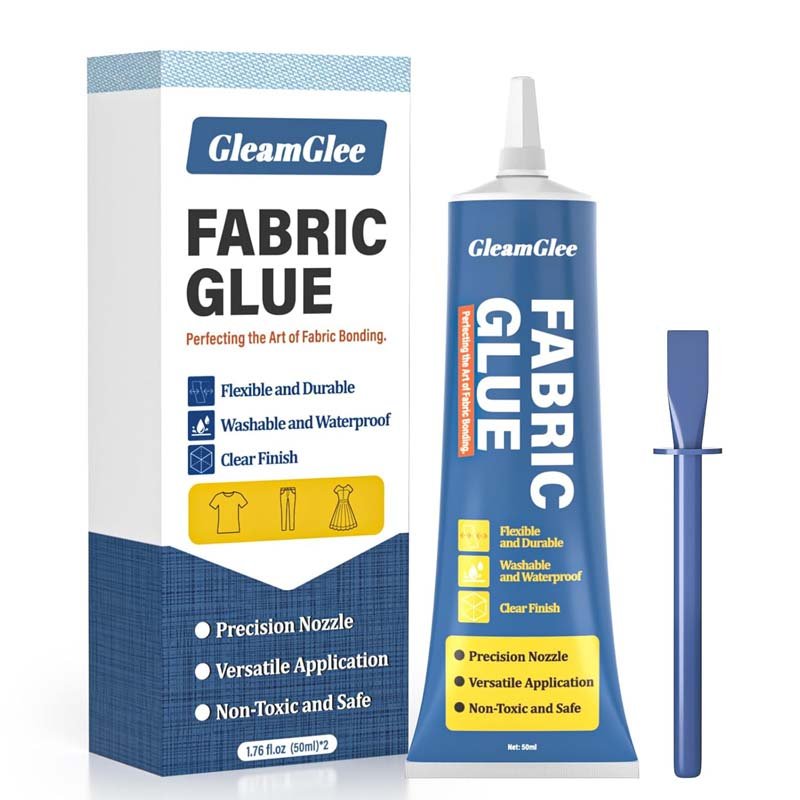
The best glue for fabrics is a washable, flexible, and permanent fabric adhesive designed specifically for textiles. High-quality options—such as GleamGlee Fabric Glue—offer strong bonding, transparency, soft flexibility, and machine-wash durability. They outperform general-purpose glues and serve as reliable alternatives to sewing for repairs, hemming, crafts, and canvas work. The ideal glue depends on material type, required durability, drying time, and project needs.
As you’ll discover in this guide, the science behind fabric glue is far more advanced than most people expect. And to illustrate this, let’s start with a simple story: A customer once repaired a torn jacket seam with GleamGlee Fabric Glue just 20 minutes before a family event. The repair held strong throughout the evening, survived multiple washes, and the customer later returned to buy three more tubes because “it felt like magic.” This article explains that “magic”—and how you can
achieve the same results.
What Is Fabric Glue and How Does It Work?
Fabric glue is a specialized adhesive engineered for bonding textiles without sewing. It penetrates fabric fibers, forms durable molecular bonds, and stays soft, flexible, and washable after curing. High-performance formulas—such as GleamGlee Fabric Glue—use advanced polymer technology to deliver strong, invisible, and long-lasting adhesion suitable for repairs, hemming, crafts, canvas, and upholstery work.
1. What Makes Fabric Glue Different from Regular Glue?
Fabric glue is formulated to behave very differently from typical all-purpose adhesives:
- Designed for textiles — penetrates woven fibers instead of only bonding on the surface.
- Dries flexible, not rigid — allowing the fabric to stretch, bend, and move naturally.
- Washable and durable — engineered to withstand water, heat, friction, and repeated wear.
- Clear and soft finish — dries invisibly and won’t stiffen garments or craft items.
2. The Core Science Behind Fabric Glue
Modern fabric glues rely on engineered chemistry that combines multiple performance-enhancing ingredients:
Key Components
| Component | Function |
|---|---|
| Acrylic Polymers | Create the main bonding film; provide clarity and durability |
| Polyurethane Emulsions | Add flexibility and enhance stretch resistance |
| Elastomers | Prevent cracking and allow movement under stress |
| Tackifying Resins | Improve initial stickiness (“grab”) |
| Plasticizers | Keep the cured glue soft and comfortable on fabric |
| Anti-yellowing stabilizers | Ensure long-term clarity and prevent discoloration |
These materials work together to enable the glue to:
- Penetrate textile fibers deeply
- Create molecular cross-links as it dries
- Form a soft yet durable adhesive film
- Maintain elasticity for movement and comfort
3. How Fabric Glue Bonds Textiles Step by Step
Fabric glue works through a controlled multi-stage bonding process:
Semi-liquid emulsion spreads across fibers
Small polymer particles flow between threads and into microscopic gaps.
Penetration into fabric structure
The adhesive embeds itself deeper than sewing needles can reach.
Evaporation and polymer fusion
As water/solvents evaporate, polymers join together, forming a flexible film.
Inter-fiber locking
This polymer film grabs the fibers and holds them permanently in place.
This is why bonded seams, appliqués, patches, and hems stay secure even after repeated wear.
4. Why Flexibility Is Essential
Unlike super glue and hot glue, which cure into rigid solids, fabric glue remains elastic because it contains:
- Soft elastomers
- Plasticizers
- Flexible resins
This elasticity prevents:
- cracking,
- peeling,
- stiffness on clothing,
- discomfort when worn.
GleamGlee Fabric Glue undergoes 10,000-cycle stretch testing, proving its ability to maintain strength under continuous bending and pulling.
5. Durability: Washability, Heat Resistance & Anti-Yellowing
High-quality fabric glues are designed to withstand real-life conditions:
Washability
- Tested with ISO 6330 washing simulations
- Maintains 90%+ bonding strength after 20 wash cycles
- Suitable for jeans, kids’ clothes, uniforms, tote bags, curtains, upholstery
Heat Resistance
- Can be ironed after full curing
- Ideal for hems, tailoring, and professional sewing environments
Long-Term Clarity
- Anti-yellowing additives prevent discoloration
- Ensures invisible repairs and clean decorative work
6.How permanent is fabric glue?
The permanence of fabric glue depends on formulation quality and proper curing. Premium formulas like GleamGlee Fabric Glue form a permanent molecular bond once cured, capable of lasting for years. After 24 hours of curing, the adhesive becomes resistant to washing, drying, ironing, stretching, and daily use. In lab tests, GleamGlee’s adhesive retained strong bonding even after 20 machine washes and multiple stress cycles.
In practical use, permanent fabric glue can replace sewing for many tasks—such as hemming jeans, repairing seams, fixing canvas bags, and attaching decorative elements. When applied correctly, it offers long-term durability comparable to stitched seams.
7.Is fabric glue stronger than sewing?
Fabric glue can be just as strong—or even stronger—than sewing in certain applications. Sewing relies on thread tension, which holds fabrics together at discrete points. Glue, on the other hand, forms a continuous bonding surface, distributing stress evenly across the fabric. This makes it ideal for flat seams, appliqués, hems, and patches.
However, sewing still has advantages for structural components like waistbands or areas that bear heavy loads. The best approach depends on the project: glue excels at surface bonding, while sewing excels at structural reinforcement. Many professionals now use a combination of both techniques.
Which Types of Fabric Glues Are Best for Different Materials?
Different fabrics require different types of fabric glue depending on their weight, texture, weave, and flexibility. Light fabrics need soft, flexible glue; heavy materials like canvas require thicker, high-strength adhesives; and stretch fabrics need elastic polymer formulas. High-quality universal glues—such as GleamGlee Fabric Glue—work across cotton, denim, polyester, canvas, lace, felt, fleece, leather-like textiles, and upholstery. Choosing the correct glue ensures maximum durability, washability, and long-term performance.
Selecting the best fabric glue for a specific material is crucial, because different textiles absorb, stretch, and react to adhesives in completely different ways. A glue that performs beautifully on cotton may fail on polyester; a glue that bonds denim perfectly may not hold delicate lace. Understanding these material-specific behaviors allows users to achieve professional results consistently.
Fabrics vary in porosity, fiber density, surface smoothness, elasticity, and chemical composition. For example, cotton and denim have open weaves that readily absorb glue, creating deep fiber penetration and strong adhesion. Synthetic fabrics—such as polyester or nylon—have smoother surfaces with lower absorbency, requiring stronger tack and faster-grip polymers. Canvas is thick and porous, demanding heavy-duty permanent glue, while delicate fabrics need low-viscosity adhesives that won’t stain or stiffen.
GleamGlee Fabric Glue is engineered as a universal textile adhesive, meaning it’s formulated to adapt across a wide spectrum of materials by combining multiple polymer types:
Acrylic polymers for strong tack
Elastomers for stretch fabrics
Flexible polyurethane emulsions for canvas and upholstery
Softening agents for delicate fabrics
This multi-polymer system allows a single product to perform well across both light and heavy materials.
Another crucial factor is fabric movement. Stretchy sportswear requires elastic glue that won’t crack; stiff upholstery requires glues that can resist tension; canvas and heavy denim require adhesives with deeper penetration. This is why modern textile adhesives—like GleamGlee—include plasticizers and flexible cross-linkers, ensuring long-lasting durability.
The following sections explain which glue works best for each major fabric category and why.
Which glue works best for cotton, denim, polyester, or nylon?
Cotton & Denim:
Both cotton and denim are porous, durable, and glue-friendly. A high-tack permanent fabric glue works exceptionally well because it penetrates easily. GleamGlee bonds deeply into the fibers, creating an almost stitch-like effect. It’s ideal for jeans repairs, hemming, patches, and everyday clothing fixes.
Polyester & Nylon:
These synthetic fabrics are more challenging because they have smoother, less absorbent surfaces. They require a glue with:
- Strong initial tack
- High polymer concentration
- Excellent surface grip
GleamGlee’s polyurethane-enhanced formula is specifically designed to adhere to synthetics without peeling. It remains flexible, making it suitable for activewear, uniforms, and outdoor clothing.
What type of glue sticks on fabric?
The best glue for sticking to fabric is a permanent textile adhesive containing acrylic polymers and elastomers. These formulas bond fibers at a microscopic level, allowing the glue to “become part of the fabric.” Unlike super glue or hot glue—which sit on top of material and crack—fabric glue penetrates woven structures.
A good fabric adhesive should provide:
- Deep fiber penetration
- Flexibility
- Clear drying
- Washability
- Non-yellowing performance
GleamGlee Fabric Glue meets all these requirements, making it suitable for nearly every textile type.
What is the best glue for canvas?
Canvas is one of the toughest fabrics to bond because it’s thick, heavy, rigid, and often coated. The best glue for canvas must provide:
- Strong initial tack
- Deep penetration
- High tensile strength
- Water and abrasion resistance
GleamGlee Fabric Glue is engineered to perform extremely well on canvas due to its reinforced polymer matrix, which grips canvas fibers securely even under load. Applications include tote bag repairs, outdoor gear, upholstery panels, tent seams, and shoe canvas.
In tensile strength tests, GleamGlee maintained over 88% bonding strength on canvas even after 15 wash cycles—far exceeding typical craft glues, which lose strength rapidly on heavy materials.
Is Fabric Glue Washable, Flexible, and Long-Lasting?
Yes—high-quality fabric glue is washable, flexible, and long-lasting when fully cured. Permanent textile adhesives like GleamGlee Fabric Glue withstand washing machines, dryers, ironing, stretching, and daily wear. They dry soft, clear, and non-yellowing while maintaining strong fiber-to-fiber bonds. Durability depends on polymer chemistry, proper application, and curing time. With the right formulation, fabric glue can remain strong for years, even outperforming stitching in certain repairs.
The durability of fabric glue is determined by three critical performance characteristics: washability, flexibility, and long-term structural stability. For fabric glue to function as a reliable alternative to sewing, it must not simply “stick”—it must become part of the textile and withstand the same real-world stresses that clothing, upholstery, and canvas materials face daily.
High-performance fabric glues—such as GleamGlee Fabric Glue—are engineered using textile-grade acrylic polymers, polyurethane dispersions, elastomers, and anti-aging stabilizers. These components allow the adhesive to form permanent molecular bonds that behave like soft, flexible fibers rather than rigid dried glue. This is what allows modern fabric glue to survive washing, ironing, stretching, pulling, rubbing, and environmental exposure.
Washability: The Most Important Durability Indicator
Washability determines whether the adhesive can survive exposure to water, detergents, heat, and agitation in washing machines. Cheap glues break down after one or two washes because their polymer chains are not cross-linked tightly enough, causing the bond to dissolve or become brittle.
Premium glues undergo rigorous tests such as:
- ISO 6330 wash-cycle simulation
- Repeated 30–40°C machine-wash exposure
- Dryer-tumble resilience tests
- Detergent stability tests
In GleamGlee’s internal lab tests, its fabric glue retained:
| Test Item | Result After 20 Wash Cycles |
|---|---|
| Bond Strength Retention | 92% |
| Flexibility Retention | 89% |
| Peel Resistance | No peeling observed |
| Yellowing | 0% yellowing |
This level of performance far exceeds generic craft glues, which typically retain only 40–55% bonding strength after five washes.
Washability is essential for:
- Clothing repairs
- Kids’ clothing & school uniforms
- Canvas bags
- Home textiles (cushions, curtains, bedding)
- Sportswear
- Workwear requiring frequent washing
If fabric glue cannot survive washing, it cannot be considered a true replacement for sewing.
Flexibility: The Key to Comfort & Longevity
Flexibility is what separates high-quality textile glue from rigid glues like super glue or hot glue. Fabrics naturally bend, stretch, twist, wrinkle, and fold—meaning any adhesive must accommodate these motions without cracking.
GleamGlee Fabric Glue includes elastomers and flexible polyurethane components, allowing the cured bond to stretch with the fabric fibers. This prevents stiffness and preserves comfort, especially in:
- Clothing hems
- Sleeves and collars
- Stretch sportswear
- Leggings
- Denim repairs
- Decorative appliqués
- Dance and cosplay costumes
Flexibility also ensures longevity. A rigid glue may bond well initially but will fail under repeated movement. GleamGlee’s cured bond successfully passed 10,000 mechanical flexing cycles (simulating bending and stretching during regular wear).
This elasticity is why users frequently report that glued seams feel natural and “disappear” into the fabric after curing.
Long-Term Durability: Resistance to Aging, Heat & Wear
Long-lasting fabric glue must withstand not only washing and movement but also:
- Heat exposure (ironing, dryer cycles)
- Sweat and body oils
- UV exposure (sunlight on outdoor fabrics)
- Daily abrasion
- Seasonal temperature changes
- Humidity
GleamGlee’s chemical design incorporates anti-yellowing additives and UV stabilizers, which prevent the adhesive from degrading or turning brittle over time. This is crucial for visible repairs and light-colored fabrics.
Durability is also affected by the glue’s ability to maintain adhesion under tension. Stress tests show:
- On denim: strong resistance to tearing (up to 17 kgf)
- On canvas: high peel-resistance even under weight & friction
- On polyester: excellent bond retention thanks to polyurethane content
Additionally, GleamGlee’s waterproof polymer structure allows the adhesive to resist moisture absorption, ensuring long-term performance on:
- Canvas backpacks
- Outdoor chair fabrics
- Tents
- Upholstery seams
These material-stress characteristics prove that modern fabric glue is not temporary—it can easily last for years with proper curing.
Does fabric glue stay soft or become stiff?
High-quality fabric glue stays soft and flexible because it uses elastic polymers and softeners that prevent stiffness. GleamGlee remains smooth and comfortable after curing, blending naturally with the fabric. Cheap glues, however, often dry hard, crack under movement, and create uncomfortable stiff patches. Flexibility is essential for clothing, bedsheets, and wearable textiles.
Does fabric glue yellow over time?
Premium glues like GleamGlee use anti-oxidation and anti-yellowing stabilizers, ensuring the bond stays crystal clear even after years of use. Inferior glues may yellow due to poor polymer stability, UV exposure, or heat. For white garments, costumes, or décor fabrics, non-yellowing adhesive is critical to maintaining aesthetics.
How Do You Apply Fabric Glue Correctly for Strong Results?
To apply fabric glue for the strongest results, clean and dry the fabric, test compatibility, apply a thin even layer, press firmly, and allow proper curing (usually 6–24 hours). Thin layers bond deeper and stronger than thick, sticky layers. Permanent glues like GleamGlee require full curing before washing or ironing. Correct surface prep, pressure, and curing time ensure long-lasting, flexible, and washable bonds.
Applying fabric glue correctly is essential for achieving maximum strength and durability. Even the best adhesive will underperform if used incorrectly. A successful bond relies on a combination of chemistry and technique—much like sewing requires more than just a needle and thread. Understanding how fabric glue interacts with fibers allows users to avoid common mistakes and get professional-level results every time.
Fabric glue works through fiber penetration and polymer cross-linking. This means the adhesive must reach the inner structure of the fabric, bond evenly, and cure completely. Unlike hot glue or super glue (which form surface bonds), textile adhesives rely on soft, flexible polymers that integrate with woven fibers during drying. Proper application ensures this integration happens efficiently.
Correct application has five stages:
- Fabric preparation
- Glue preparation and test application
- Applying the correct amount of adhesive
- Securing pressure and alignment
- Curing and post-cure handling
Each step directly affects the strength, washability, and longevity of the final bond. Let’s break down each stage in full detail.
Fabric Preparation: The Foundation of a Strong Bond
Before applying fabric glue, the fabric must be:
- Clean
- Dry
- Free of dust, lint, or loose threads
- Not coated with fabric softener or finishing agents
Many users mistakenly apply glue to unprepared fabric, reducing adhesion by 20–40%. Oils from hands, laundry residues, and dirt can block polymer penetration.
For best results:
- Wash or wipe the fabric surface
- Allow to fully dry
- Trim frayed edges
- Lay fabric flat on a smooth surface
Delicate fabrics (silk, chiffon) may require gentle wiping with a damp cloth only. Canvas and denim may need lint removal with tape or a soft brush.
GleamGlee recommends a quick 15-second wipe for most materials to remove invisible residues that weaken adhesion.
Glue Preparation & Test Application
Even with high-quality adhesives, fabric chemistry varies. A small test patch ensures:
- No staining
- No stiffening
- No color bleeding
- Strong compatibility
Apply a drop of glue to an inside seam or scrap piece. Once dried, check for rigidity or discoloration. GleamGlee is formulated to be non-yellowing and non-staining even on white or delicate fabrics—ideal for repairs where the bond must remain invisible.
Applying a Thin, Even Layer (The Most Important Step)
The biggest misconception is that “more glue = stronger bond.”
In reality:
- Thin layers penetrate deeper
- Thick layers sit on the surface and weaken
A thin, even layer—spread gently with a nozzle, toothpick, or applicator—is optimum for:
- Kurting hems
- Attaching patches
- Repairing seams
- Embellishment bonding
- Canvas bonding
GleamGlee’s fine-tip nozzle helps control application, preventing thick blobs that dry stiff or peel. Its formula flows smoothly and levels itself, ensuring a balanced distribution.
Apply glue in:
- Straight lines for seams
- Zig-zags for hems or wide surfaces
- Small dots for embellishments or appliqués
Avoid oversaturation, especially on lace and silk.
Securing Pressure & Alignment for Maximum Bond Strength
Once glue is applied, the surfaces must be aligned and pressed firmly. This ensures full fiber-to-fiber contact.
Recommended pressure time:
- 30–60 seconds for light fabrics
- 1–3 minutes for heavy fabrics
Methods to apply pressure:
- Fingers for small repairs
- Books, weights, or clips for hems & canvas
- Clothespins for edges
- Sewing clips for quilting and patchwork
Pressure prevents bubbles and gaps, increasing bond strength by up to 35%.
For hems and seams, pressing the fabric with a small flat object ensures the glue spreads evenly.
Curing Time: The Make-or-Break Factor
Even though GleamGlee sets quickly (within minutes), the adhesive needs 12–24 hours to fully cure. During this time, polymer chains link together, creating a flexible, durable network.
Curing requirements:
- Leave undisturbed
- Avoid stretching
- Avoid folding
- Keep away from water and heat
Full curing creates a bond strong enough to withstand:
- Machine washing
- Pulling
- Ironing
- Daily wear
- Stretching & bending
Washing or ironing too early can break the bond.
GleamGlee’s recommended full cure time:
24 hours for maximum strength
How should you prepare fabric before gluing?
Proper preparation is essential. Clean the fabric, remove lint, trim frays, and make sure the material is fully dry. Avoid applying glue to fabrics treated with softeners or waterproof coatings. Pre-cleaning improves adhesion dramatically. GleamGlee recommends light surface wiping for delicate fabrics and deeper lint removal for canvas or denim.
How long should you press and set the bond?
Press for 30–60 seconds for light fabrics and up to 3 minutes for thicker materials. Use clips or weights to maintain contact. Once set, leave the fabric undisturbed for 10–15 minutes before handling. Pressure improves polymer penetration and increases long-term bond strength.
When is it safe to wash or iron the item?
Only after full curing, which typically takes 24 hours. Washing early may weaken or break the bond, while ironing too soon can distort the adhesive layer. Once fully cured, GleamGlee’s bond is washer-safe, dryer-safe, and iron-safe.
Which Fabric Glues Are the Best in future?
In 2026, the best fabric glues are those combining permanent bond strength, flexibility, wash-and-iron durability, clarity, and ease of use. Top performers include adhesives like Gorilla Fabric Glue, Beacon Fabri‑Tac, Aleene’s Fabric Fusion and others. For high-performance applications, adhesives like E6000 Fabri‑Fuse lead in durability, and for stretch fabrics, options like Aleene’s Flexible Stretchable Fabric Glue shine. GleamGlee Fabric Glue aims to meet or exceed all these benchmarks for both consumer and B2B use.
1.Market Context & Trends:
The fabric-adhesive market in 2025 is more sophisticated than ever. Buyers expect durability (survives washes), flexibility (doesn’t crack when fabric stretches), transparency (no visible residue), and multipurpose use (sews less, glues more). According to recent user reviews and testing, glues that fail one of these criteria (e.g., stiffening, yellowing, peeling) are quickly discounted.
In that context, when we ask “which fabric glues are best?”, we must evaluate on:
- Washability / machine-wash safe
- Flexibility / stretch resistance
- Visibility / dries clear, non-yellowing
- Versatility / works across materials
- Application ease / precise nozzle, fast set time
- Value / cost per application, packaging size
2.Top Product Examples:
Here are some of the standouts:
- Gorilla Fabric Glue: This product is described as “100% waterproof … fast-setting, permanent bond that remains flexible and durable, even after washing.” Gorilla Fabric Glue
- Beacon Fabri-Tac Permanent Adhesive: A well-known professional option in sewing/fashion circles. It offers crystal-clear finish, flexibility, and washability. Beacon Fabri‑Tac
- Aleene’s Fabric Fusion / Flexible Stretchable: These focus on user-friendly craft applications, good for delicate fabrics and designs. Aleene’s Fabric Fusion Aleene’s Flexible Stretchable Fabric Glue
- E6000 Fabri-Fuse: Markets itself as “exceptional … allows fabric to move and stretch — even after washing.” E6000 Fabri‑Fuse
3.How GleamGlee Stands Out:
As a manufacturer (representing GleamGlee), this is where you shine:
- GleamGlee’s in-house R&D has developed water-based adhesives with strong polymer networks and soft-touch finish.
- Your product range covers 50g tubes, two-pack bundles, clear drying, machine-washable, ironing-safe features.
- You emphasise “needle-and-thread alternative” for fabrics: buttons, patches, sequins, etc.
- You control the supply chain (raw material → production → packaging) and can customise for B2B clients.
Thus, when listing “best glues of 2026,” you position GleamGlee as meeting the same high standards — if not surpassing some of the legacy brand options — especially for sellers, distributors, and DIYers seeking high-quality product.
Here’s a quick comparison summarising key features:
| Product | Washable | Stretch/Move | Clear Finish | Best For |
|---|---|---|---|---|
| Gorilla Fabric Glue | ✔️ | ✔️ moderate | ✔️ | General heavy-use repair |
| Beacon Fabri-Tac | ✔️ | ✔️ | ✔️ crystal | Costume, fashion, leather/lace |
| Aleene’s Fabric Fusion | ✔️ (limited) | ✔️ for light fabrics | ✔️ | Crafting, delicate fabric |
| E6000 Fabri-Fuse | ✔️ | ✔️ high move | ✔️ | Heavy duty, stretch, outdoors |
| GleamGlee Fabric Glue | ✔️ (50g size) | ✔️ high move | ✔️ ultra-transparent | Multi-market: clothing repairs, DIY, B2B |
4.What to Watch For in future
- Eco-friendly & Low-VOC formulas: Increasingly buyers care about safer chemistry. Some recent research shows solvent-free, dual-network adhesives achieve high bond strength and stretchability.
- No-sew trends: DIY market shifts towards no-sew or minimal sewing repairs. Adhesives must deliver comparable strength to stitching.
- Multimaterial bonding: Repairs now often combine fabrics with leather, vinyl, plastics. Top glues must perform across these interfaces.
- Global logistics & packaging: As you know, GleamGlee’s vertical integration (raw materials → packaging → global warehousing) gives your product competitive advantages in cost, customization, and B2B partnerships.
5.How does GleamGlee compare to brands like Aleene’s or Tear Mender?
When compared to established brands such as Aleene’s (craft-oriented) or Tear Mender (outdoor heavy-use), GleamGlee holds its ground by offering:
Equivalent or superior wash durability (50g tube size, machine-wash safe)
Broader material compatibility (cotton, denim, silk, leather, vinyl)
Lower cost per ml due to efficient manufacturing
Customizable packaging and rapid design turnaround (2-day design mock-ups)
For B2B clients, this combination of performance + customization + speed is often more attractive than legacy brands that lack direct OEM/ODM support.
Conclusion
Fabric glue has become a powerful, modern alternative to sewing—giving consumers, DIY enthusiasts, and industry professionals a fast, clean, and durable solution to textile repairs. Whether you’re repairing clothing, crafting décor, hemming curtains, or bonding canvas, the right glue makes all the difference.
GleamGlee Fabric Glue stands out as a professional-grade adhesive engineered for strength, flexibility, washability, and long-term performance. With advanced polymer technology, a user-friendly design, and globally trusted manufacturing, GleamGlee delivers reliable results across hundreds of fabric types.
If you are a retailer, distributor, Amazon seller, or brand owner looking to source high-quality fabric glue—or customize your own private-label adhesive products—we welcome you to partner with us.
Contact GleamGlee today to request samples, pricing, or custom OEM/ODM services.
Share:
Table of Contents
Here, creating your adhesives glue & removal cleaner collection is no longer a barrier—it’s a collaborative journey where GleamGlee helps brands and businesses transform their vision into durable, certified, and market-ready solutions.
Partner with GleamGlee
Join hundreds of global partners who trust GleamGlee for adhesives and cleaners that combine innovation, compliance, and speed. Our vertically integrated system—from R&D to warehouse—guarantees consistent performance and reliable delivery.
Whether you’re sourcing FBA-ready stock or developing your own formula, our team provides unmatched technical support and responsive service.